NORWAY NEWS – latest news, breaking stories and comment – NORWAY NEWS
  • Home
  • About us
  • News
  • Other News
    • Africa and Norway
    • Asia and Norway
    • Asylum
    • Breaking News
    • China and Norway
    • Corruption in Norway
    • Crimes
    • Defence
    • Diplomatic relations
    • Economics
    • Environment
    • Farming
    • Featured
    • Health
    • Killing
    • Media Freedom
    • Middle East and Norway
    • NATO and Norway
    • Nobel Peace Prize
    • Norwegian Aid
    • Norwegian American
    • Oil & Gas
    • Peace Talks
    • Politics
    • Racism in Norway
    • Religion
    • Royal House
    • Russia and Norway
    • Science
    • Sex scandal
    • Sports
    • Spy War
    • Srilanka and Norway
    • Svalbard
    • Taiwan and Norway
    • Terrorist
    • Travel
    • Video clips
  • Disclaimer
  • Contact us
NORWAY NEWS – latest news, breaking stories and comment – NORWAY NEWS
  • Home
  • About us
  • News
  • Other News
    • Africa and Norway
    • Asia and Norway
    • Asylum
    • Breaking News
    • China and Norway
    • Corruption in Norway
    • Crimes
    • Defence
    • Diplomatic relations
    • Economics
    • Environment
    • Farming
    • Featured
    • Health
    • Killing
    • Media Freedom
    • Middle East and Norway
    • NATO and Norway
    • Nobel Peace Prize
    • Norwegian Aid
    • Norwegian American
    • Oil & Gas
    • Peace Talks
    • Politics
    • Racism in Norway
    • Religion
    • Royal House
    • Russia and Norway
    • Science
    • Sex scandal
    • Sports
    • Spy War
    • Srilanka and Norway
    • Svalbard
    • Taiwan and Norway
    • Terrorist
    • Travel
    • Video clips
  • Disclaimer
  • Contact us
Friday, May 15, 2026
NORWAY NEWS – latest news, breaking stories and comment – NORWAY NEWS
  • Home
  • About us
  • News
  • Other News
    • Africa and Norway
    • Asia and Norway
    • Asylum
    • Breaking News
    • China and Norway
    • Corruption in Norway
    • Crimes
    • Defence
    • Diplomatic relations
    • Economics
    • Environment
    • Farming
    • Featured
    • Health
    • Killing
    • Media Freedom
    • Middle East and Norway
    • NATO and Norway
    • Nobel Peace Prize
    • Norwegian Aid
    • Norwegian American
    • Oil & Gas
    • Peace Talks
    • Politics
    • Racism in Norway
    • Religion
    • Royal House
    • Russia and Norway
    • Science
    • Sex scandal
    • Sports
    • Spy War
    • Srilanka and Norway
    • Svalbard
    • Taiwan and Norway
    • Terrorist
    • Travel
    • Video clips
  • Disclaimer
  • Contact us
Copyright 2025- All Right Reserved Norway News
Science

Additional financial measures to mitigate the economic effects of the coronavirus crisis

by Nadarajah Sethurupan April 6, 2020
written by Nadarajah Sethurupan

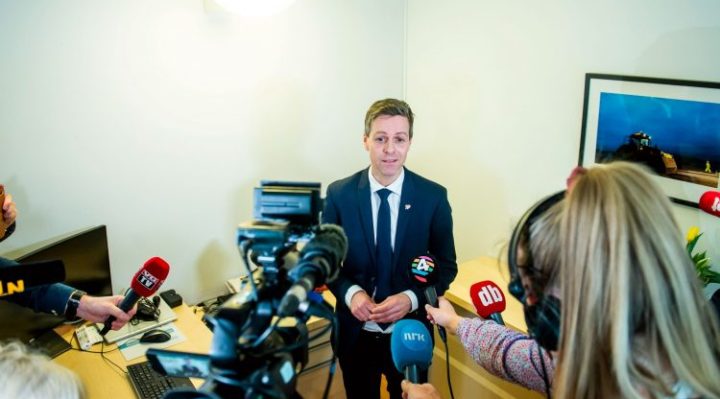
The Government today proposed additional financial measures to soften the impacts of the coronavirus outbreak in Norway. The newly submitted measures are directed at industries, companies and certain groups that have been particularly hard hit during the pandemic and are inadequately covered by the measures previously adopted.

The Government is taking a three-phase approach to financial measures related to the coronavirus outbreak. In the first phase, the Government and the Storting introduced targeted measures to quickly meet acute financial challenges: securing income for workers and liquidity for companies to avoid mass dismissals and bankruptcies.

We are now in phase two. In this phase, the Government has proposed specific measures aimed at industries, companies and certain groups that have been particularly hard hit by the virus and the associated COVID-19 disease. Such measures include, among many others, a compensation scheme for companies severely affected by the outbreak and an extension of the guarantee scheme for loans to small and medium-sized businesses.

‘The powerful package of measures we are presenting today will help those who so far have not been well enough compensated. The measures are aimed at the many companies that have suddenly lost a large part of their income, apprentices who are temporarily laid off or lose their jobs, students who lose part-time jobs and people who need to build up their skills for when the crisis is over,’ said Minister of Finance Jan Tore Sanner (Conservative Party).

‘The measures we have adopted and proposed will ensure a greater degree of compensation for persons temporarily laid-off or unemployed as well as students, apprentices and self-employed persons. We are also ensuring liquidity for start-ups and for small, medium-sized and large companies. In addition, the enterprises most affected will receive compensation for a proportion of their fixed costs,’ said Mr Sanner.

In phase three, the Government will consider broader measures to increase economic activity when the virus outbreak subsides and infection control measures are scaled back.

‘We are continually analysing the situation and closely monitoring the effects of the measures already being implemented. We are studying different scenarios of how the economy is likely to develop going forward and will propose measures as needed in the months ahead,’ the Minister of Finance said.

Key measures in the latest Proposition to the Storting:

  • Compensation scheme for enterprises with reduced income due to the coronavirus – NOK 50 billion (announced 27 March, submitted 3 April)
    The Government proposes that enterprises with at least a 30 per cent drop in revenue as a result of the virus outbreak should be eligible for government support. The amount of support will depend, among other things, on the amount of lost revenue, the size of the enterprise’s unavoidable fixed costs and whether the enterprise has been ordered by the government to close.
  • Help for students who have lost work income – NOK 1 billion(Storting resolution, new proposal)
    The deadline to apply for loans and grants from Norway’s State Educational Loan Fund has been extended to 15 April, and the semester’s remaining financial support to students will be paid out in April. In addition, students who have lost income may apply for a supplemental loan of NOK 26 000. The Storting, in connection with its consideration of Prop. 67 S (2019-2020), has allocated NOK 1 billion to convert some of that supplement loan money into a grant. Applicants who confirm that they have lost income and can document their loss at the request of the Loan Fund will be able to convert NOK 8 000 into a grant.
  • Temporary benefit for apprentices – NOK 250 million (Storting resolution, new proposal) 
    The Government is following up the Storting’s petition to introduce a temporary scheme providing apprentices with compensation equivalent to apprentice salary in case of unemployment or temporary layoff. A temporary scheme is therefore being established to give apprentices compensation equivalent to 100 per cent of salary up to 1.5 times the National Insurance Scheme’s basic amount (G), and 62.4 per cent of salary between 1.5 G and 6 G, with ‘salary’ being the apprentice’s salary upon temporary layoff or termination of the apprenticeship. For 3 G of income this will provide a compensation rate of just over 80 per cent. It is assumed that the scheme will cover about 5 000 people who will receive the benefit for an average of three months. The scheme includes both laid-off apprentices and others who lose their jobs. The Government proposes an allocation of NOK 250 million.
  • Compensation for reduced parental payment to after-school care (SFO) – NOK 1 billion (new proposal)
    Parents will not be paying for day-care or after-school care (SFO) while the programmes are closed as a result of infection control measures. As things now stand, day-care centres and after-school programmes are to be closed from 13 March to 13 April. The Government proposes to compensate day-care centres and after-school programmes for the loss of parental payment. The Government therefore proposes to increase transfers to municipalities by NOK 1 billion. The Government also proposes setting aside NOK 10 million for an application-based after-school care programme at publicly funded schools and NOK 0.5 million for the Longyearbyen Community Council. Compensation for parental payment shortfalls and ordinary support will be reduced if employees are temporarily laid off or if parental payments already received are not refunded.
  • Skills development measures – NOK 190 million (Storting resolution, new proposal)
    The Storting has allocated NOK 150 million for this purpose. The Government is now proposing how to distribute this allocation and, furthermore, to set aside an additional NOK 40 million for the measures within the applicable allocation. The purpose is to improve the skills of unemployed and laid-off persons. The package includes six new three-part business sector programmes for skills development, upscaling of existing digital services, and rapid admission to existing university and university college programmes. There are additional funds for basic skills training for unskilled persons in hard-hit industries. The Storting has also allocated NOK 250 million to the framework grant for county administrations with a focus on skills-development measures, including internal company training, upper secondary instruction and vocational schools, under county administration auspices.
  • NOK 3 million to simplify home-based instruction (new proposal) 
    In order to support the high level of effort and commitment around Norwegian schooling, the Ministry of Education and Research is establishing a temporary grant scheme to fund initiatives that support home-based learning services in connection with the coronavirus crisis. To qualify, such services must have no commercial purpose. The grant scheme will be searchable and is to be run under the auspices of the Directorate for Education and Training. The Government proposes setting aside NOK 3 million for this scheme within the applicable allocation.
  • Coronavirus information for immigrant groups – NOK 6.6 million
    The Government is providing NOK 6.6 million in grants for integration efforts directed by voluntary organisations. The money is to be distributed to the Red Cross, Caritas, Norwegian voluntary centres, the Norwegian Women’s Public Health Association, KIT (Kristent Interkulterelt Arbeid) and Norwegian People’s Aid. The Government proposes setting aside NOK 3 million for this purpose within the applicable allocation.
  • Temporary purchase of basic rail transport services – NOK 550 million
    Due to reduced travel activity, ticket revenues for the railway companies have dropped significantly. The Government proposes NOK 550 million to accommodate the possibility of temporary supplementary agreements between the central government and the railway companies to maintain basic train service for work trips.
  • Deferred taxes affecting the brewery industry in particular – NOK 14 million (Storting decision, new proposal)
    Payment of the alcoholic beverage tax, non-alcoholic beverage tax and beverage packaging tax will be postponed to 18 June 2020 from 18 April and 18 May, respectively. This measure will improve the liquidity of businesses subject to the taxes.
  • Deferred taxes affecting the fuel industry in particular – NOK 18 million (Storting decision, new proposal)
    Payment of the CO2 tax, road tax on fuel and basic tax on mineral products will be postponed to 18 June 2020 from 18 April and 18 May, respectively. The proposal will improve the liquidity of businesses subject to the taxes.
  • Temporary CO2 tax exemption on natural gas and LPG – NOK 40 million (Storting decision, new proposal)
    The CO2 tax on natural gas and LPG delivered for chemical reduction or electrolysis, metallurgical and mineralogical processes is set at NOK 0 with effect from 1 April 2020. The reduced rate applies to both regulated and unregulated activities under the Emissions Trading System (ETS), and will reduce costs for the relevant processing industry enterprises – about 40 of them altogether. The aim, consistent with the Storting resolution, is to gradually raise the tax rates again in advance of 2024.
  • The horse racing tax (totalisatoravgift) is suspended for 2020 – NOK 100 million (new proposal)
    As a consequence of the coronavirus situation, horse racing events in Norway have not been allowed since 12 March. This has led to a decline in Norwegian Rikstoto’s revenue, which in turn could lead to reduced support to the Norwegian horse industry. In order to keep the horse racing tax from limiting Norsk Rikstoto’s ability to distribute support in 2020, suspension of the tax is proposed for 2020 with effect from 1 January 2020.
  • Expansion of the loan guarantee scheme for small and medium-sized enterprises (adopted April 2) 
    Under the guarantee scheme for loans to small and medium-sized businesses, which was opened for use last Friday, the central government guarantees 90 percent of each bank loan. The Ministry of Finance yesterday adopted regulations that also allow larger companies to use the scheme, including companies with more than 250 employees.
  • Temporarily laid-off employees with private occupational pension schemes (new proposal) The Government proposes temporary legislative amendments enabling employers to decide that employees being temporarily laid off can continue as members of the pension scheme. The amendments would apply to private sector employers whose employees are currently removed from the company’s pension scheme if they are temporarily laid off as a result of operating cutbacks, etc. The employer may choose whether laid-off employees are to retain the pension scheme’s insurance cover. Temporarily laid-off employees who are not permitted to retain insurance cover will be entitled to take out individual insurance (continuation insurance). The employees will in any case receive the benefit of the employer’s paying for administration and management of the employees’ pension funds as long as they are members of the scheme.
  • NOK 20 million for the reindeer industry grazing crisis
    The crisis is due to deep snow and ice covering grazing lands and preventing the reindeer from obtaining sufficient food by natural grazing. During negotiations on the reindeer herding agreement for 2020/2021, the industry’s emergency contingency fund was increased by NOK 10 million as a result of the serious situation. The crisis has persisted, and applications submitted to the emergency contingency fund have exceeded the fund’s balance. If no action is taken, a large number of animals may die of starvation. The funds will be used to pay for crisis measures such as procurement and transport of supplemental feed.
April 6, 2020 0 comments
0 FacebookTwitterPinterestEmail
China and Norway

China’s toxic lackey: The head of the WHO accused of parroting China’s lies and failing to expose it’s cover-ups

by Nadarajah Sethurupan April 6, 2020
written by Nadarajah Sethurupan

Total deaths started to spiral in China from coronavirus and fear grew around the world, it was chosen as venue for the key meeting between President Xi Jinping and Tedros Adhanom Ghebreyesus, director-general of the World Health Organisation (WHO).

Eight days earlier, Chinese authorities had finally admitted their mysterious new disease could be spread by humans – after initially detaining doctors who sought to alert citizens, covering up crucial data and rebuffing help from outside experts.

Yet during those crucial talks in late January, Xi insisted the state’s priority was the health of its people. ‘The epidemic is a devil,’ he declared. ‘We will not let it hide.’

Breathtaking words from the head of a United Nations body responsible for defending global health. But Tedros and his top officials have ceaselessly promoted China’s pretence that it is the hero of this cruel pandemic – not, as many argue, the villain.

AS THIS virus sparks global catastrophe, there are growing fears that the man leading a crucial international organisation heavily funded by the US and Britain is promoting Chinese interests.

‘It is pretty much clear he is a shield for Beijing,’ said a senior British Cabinet source. ‘His comments congratulating China for exemplary handing of the crisis are not borne out by the reality of events.’

Similar concerns are heard elsewhere, especially in the US. Republican senator Marco Rubio has said he is deeply disturbed how the organisation ‘parroted’ Chinese lies and accused Tedros of ‘favouritism’.

The Ethiopian, who has a doctorate in philosophy from Nottingham University, was previously a senior figure in one of Africa’s most repressive regimes which was strongly backed by Beijing.

He won the top job at WHO with support of China despite controversy over his time as Ethiopia’s health minister and contested claims about covering up cholera epidemics in the country in 2006, 2009, and 2011.

Tedros has also been condemned for seeking to honour the Zimbabwean despot Robert Mugabe.

Taro Aso, Japan’s deputy prime minister, is searing in his criticism. He savaged the WHO for its failure to protect public health and backing Beijing’s ‘spin’, concluding that it should be renamed the ‘Chinese Health Organisation’.

The cause of Aso’s anger was an incident nine days ago that exposed the extent of the WHO’s kowtowing to China and its flawed co-ordination of a rapid global response to this major public health threat.

It involved Bruce Aylward, a Canadian doctor and WHO assistant director-general who led its mission, when permitted, into Wuhan, the Chinese city where the virus erupted, and who has since played a leading role in speaking to the media.

Aylward regularly extols China’s ‘aggressive response’ to the virus, which has even included welding people’s doors shut to lock them in their homes. He says the government ‘is really good at keeping people alive’ and that if he had Covid-19, he would want to be treated in China.

Yet this is the nation that failed to clamp down on wild animal markets widely blamed for fostering the new virus, despite having seen the seemingly similar emergence of SARS in 2002, and then thwarted efforts to contain the disease for several crucial weeks.

During this time, hundreds of millions of people were on the move for Chinese new year festivities and a public feast was held in Wuhan for 40,000 residents.

Aylward condemns those who see China as an ‘evil’ regime. Yet this is a Communist dictatorship that banned families from having more than one child, controls 1.4 billion citizens with a sophisticated surveillance system, murders religious practitioners to transplant their organs, and locks Muslim minorities in hellish prison camps.

China also refuses to recognise neighbouring Taiwan. So when a journalist asked Aylward during a video call about the island nation’s laudable response to the epidemic, he pretended not to hear and then seemed to hang up.

The reporter, Yvonne Tong, dialled back but the WHO official swept her aside, saying: ‘We’ve already talked about China – and when you look across all the different areas of China, they’ve done quite a good job.’

This could have been the craven response of a Beijing bureaucrat. Taiwan is, after all, a fiercely independent nation with freedoms and democracy enjoyed by its 24 million citizens that offer a glaring contrast to life in its giant autocratic neighbour.

‘Wow, can’t even utter ‘Taiwan’ in the WHO?,’ tweeted Joseph Wu, Taiwan’s foreign minister, in shocked response. China wants to re-absorb Taiwan, a refuge seven decades ago for the nationalist forces defeated by Mao’s communists.

Under President Xi, China has ramped up bullying of nations, firms or global organisations that show any support to Taiwan.

The WHO, like other UN bodies, appeases China to the extent that Taiwanese passport-holders are unwelcome in its buildings. Taiwan has been stopped from even attending the WHO’s influential assembly meetings as observers.

Other major global organisations slavishly toe Beijing’s line by excluding Taiwan. But amid the worldwide threat from coronavirus, this raises critical questions over whether international politics has hampered efforts to protect public health.

It seems the new virus first began appearing in Wuhan last November to the bafflement of local doctors. On December 31, China reported a cluster of pneumonia-like cases to the WHO.

On the same day, Taiwan tipped off the Geneva-based body that it had learned of medical staff in China falling ill – a clear sign of human-to-human transmission. Yet it said the information was not shared since the nation is excluded from a key WHO platform.

Chen Chien-jen, Taiwan’s vice-president and an epidemiologist, said the WHO’s failure to obtain first-hand information on human transmission led to crucial delay. ‘An opportunity to raise the alert level both in China and the wider world was lost.’

The WHO confirms receiving an email mentioning ‘news reports of atypical pneumonia reported in Wuhan, and that Wuhan authorities said they believed it was not SARS’ but denies there was any mention of medical staff falling ill.

There are suggestions Chinese authorities knew of human-to-human transmissions early in January, even as they detained doctors desperately trying to warn about a potential epidemic and accused them of spreading false ‘rumours’.

Taiwan sent its own team to Wuhan in mid-January after failing to obtain clarification through official channels, which confirmed human transmission.

There have also been credible claims on Chinese social media, repeated by online news reports, that an infected disease specialist in Wuhan alerted a senior WHO official in Asia because they had trained together and remained friends.

On January 11, a Chinese government respiratory expert who initially said the virus was ‘under control’ admitted he might have been infected in Wuhan.

Media reports show medical staff were being treated in hospital for symptoms by January 15. Yet on January 14, the WHO confidently told the world that ‘the Chinese authorities have found no clear evidence of human-to-human transmission of the novel coronavirus identified in Wuhan’.

Three days later, a WHO official intimated it was being transmitted among humans, and this was eventually confirmed by China after three more days.

Tedros, the WHO’s director-general, finally confirmed coronavirus as a public health emergency of international concern after returning from his back-slapping trip to Beijing. By this time, the disease had already spread to 18 more countries on four continents.

Days later an Australian member of the WHO’s emergency committee broke ranks to call China’s response ‘reprehensible’, saying cases might have been restricted if it had not hidden data. There remain suspicions the true death toll in China is still being kept secret from outsiders.

Beijing reacted furiously as countries began closing borders to China. Its stance was supported by Tedros, who claimed the ‘small’ number of cases could be managed without extreme measures.

Now, of course, the pandemic has crashed the global economy and closed down dozens of countries.

Tedros has tried to defuse criticism with celebrity endorsement, discussing the pandemic last weekend with pop star Lady Gaga and tweeting thanks for ‘her continuing efforts to show compassion and kindness to the world’.

He boasted that she was ‘ready to support WHO in any way possible in the fight against Covid-19’.

So why would Tedros be so sympathetic to China? Perhaps it goes back to his time as a top Ethiopian politician. He served in senior roles under Meles Zenawi, who ran a brutal dictatorship with close ties to Beijing, which admired the regime’s authoritarian model of development.

Intriguingly, Tedros was accused of covering up three outbreaks of cholera during his seven years as health minister, although the claims were dismissed as dirty tactics to try to derail his bid to become the WHO boss.

Shortly after starting his new job with the WHO in 2017, he appointed Robert Mugabe as a ‘goodwill ambassador’, only to back down after furious protests from human rights groups pointing out the despot had devastated Zimbabwe’s health service while wrecking his nation.

Mugabe, as head of the African Union and a close ally of China, had helped him win the WHO post. Beijing also used its financial muscle to build support among developing nations, with Xi said to see the achievement as a sign of China’s growing strength.

Some US think-tanks have raised fears over China’s abuse of global bodies, as part of its mission to extend influence across the world – a strategy confirmed by Lianchao Han, a pro-democracy activist who once worked in China’s foreign office. ‘

At first they just wanted to participate to show they were a global power. Now China’s strength has increased, they want to dominate and direct global bodies to push their agenda and model of governance,’ he said.

This is not the first time WHO’s dismal response to a health crisis has damaged its reputation. Six years ago there was huge criticism of its pathetic reaction to the devastating ebola outbreak in West Africa, which killed more than 11,000 people.

WHO took several months to acknowledge there was an international health emergency, even rebuking one charity that pleaded for help. Much of the fury centred on Tedros’s inept predecessor Margaret Chan, the first Chinese citizen to lead a UN body.

The British and US governments fund about a quarter of WHO’s $2.2 billion annual budget, while China gave $44.3 million last year.

The WHO has been criticised for spending more on travel than tackling some of the biggest health issues. Set up in 1948, it has huge responsibility, from curbing obesity to preparing for global emergencies, but like other UN organisations often struggles to balance rival national interests.

When I asked the WHO if Tedros or Aylward had defended the detained doctors in China, I was told to contact another UN body with a human rights mandate.

Tedros’s behaviour contrasts sharply with Gro Harlem Brundtland, a Norwegian predecessor who attacked China for similar attempts to cover up SARS.

But Tedros’s supporters say he is adopting a pragmatic approach and deserves plaudits for skilfully marshalling a global response to a pandemic.

A source in one funding body said: ‘It would have been easy in early days of this epidemic to cut up rough with China but they would have pulled up the drawbridge and shared less data, which is inimical to wider public health.’

Above all, this pandemic proves the world needs an effective and fearless health body, yet the existing one keeps failing.

Tory MP Bob Seely, a member of the Foreign Affairs Select Committee, says: ‘We are seeing the horrible damage that a pandemic can do while the WHO has soft-pedalled on China. If we want to protect the world against future pandemics, for the sake of everyone of the planet it is vital that we have a non-partisan WHO.’

(dailymail-UK)

April 6, 2020 0 comments
0 FacebookTwitterPinterestEmail
Science

Covid-19 and seeing the reality of existence

by Nadarajah Sethurupan April 4, 2020
written by Nadarajah Sethurupan

(by Vipula Wanigasekera) Humans are locked down inside their homes, away from the rat race, deprived of enjoyment of wealth, position and fame. It is undeniable that Covid-19 does not recognize what is considered important in material world when it hits the human race wherever they are, if exposed. Ironically, this is no contagion for any other beings.

Much has been written on what Covid-19 has shown to the world already. There is however a promising chance to be seized specially by those who for sure, believe their lives are not going to be the same hereafter hence the need to clarify the so-called correlations of what they hitherto learnt in schools, colleges and spiritual ashrams. This is an invitation to a probe at one’s life story from a different perspective at this time of apparent despair.

One way or another, explicitly or otherwise, everyone including spiritual seekers, look for something better for ‘ the subtle egoic self, in the next moment’- both being fallacious and yet the ambitious world would embrace them regardless of the goal being ‘ ‘whatever success in the physical world and ‘enlightenment’ in spirituality.

Mankind has gone through these experiences from Spanish Flu to Bird Flu over the last few centuries and yet the true nature of life is overlooked, not only because we are trapped inside the mind made – four dimensional illusion, but our reluctance to go against the ‘ common wave’ in which the humanity is defined and interpreted in many fields from engineering to business and religion to science.

Covid-19 was hardly expected in this magnitude despite there were some predictions, underpinning the uncertain and changing movement of existence. Except for the humor in social media, there is suffering across the world and yet people do not believe that there was suffering all along, that was termed in modern days as anxiety, stress, worries, depression and earlier days as anger, hatred, grief, misery caused by diseases, hunger and poverty etc.

The belief in the ‘free will and choice’ – the biggest delusion in the human history which, the Covid -19 is revealing to some extent as an expression of the universe which calls for one response from the humanity, just one – Compassion!

Before we return to where we were prior to the onset of the pandemic, and some may not get there, grasp the possibility that the truth may not be what you thought it was. Is there a way out of the character in the movie, or the dream which is real only when dreaming?

Seeing this could well be the freedom which can hardly be expressed through the language.

www.nondualitysrilanka.com

vwanigasekera@gmail.com

Dr.Vipula Wanigasekera

( Dr.Vipula Wanigasekera is a Non-Duality and Buddhist Mediation teacher. He is a former Sri Lankan diplomat in Norway, tourism official and an academic who entered the study of spirituality.)

April 4, 2020 0 comments
0 FacebookTwitterPinterestEmail
Russia and Norway

US to end Russian sanctions if Venezuela exit confirmed

by Nadarajah Sethurupan April 3, 2020
written by Nadarajah Sethurupan

The US will lift sanctions on Russian state-controlled Rosneft’s trading arm if it has effectively withdrawn from Venezuelan business, US special envoy for Venezuela Elliott Abrams said today.

“If Rosneft Trading has nothing to do with Venezuela” and has legally transferred its activities to another Russian entity, the sanctions would be lifted, Abrams said. “We will judge this on the ground.”

Abrams confirmed that the US government has been in contact with Russia over its proposal, unveiled on 31 March, that lays out a step-by-step political transition plan for Venezuela, under which sanctions would be gradually eased. Oil sanctions in particular would be “suspended” once a plural Council of State was formed, and definitely lifted once elections that were certified free and fair take place, Abrams said today.

After unveiling the transaction, Rosneft pressed the US to lift the sanctions on its subsidiaries. “We took this decision in the interests of our shareholders, as a publicly traded international company,” Rosneft spokesman Mikhail Leontyev told Russian state-owned Tass news agency on 28 March. “And we have a right to expect, indeed, that the US regulators fulfill their public promises (to lift sanctions)”.

The US sanctions on Venezuela are aimed at removing President Nicolas Maduro to make way for a transition government and new elections. Russia as well as China and other countries still recognize the Maduro presidency, in contrast to the US and Western allies that recognize opposition leader Juan Guaido as interim president instead.

Below is a full rush transcript of the Press Briefing by Special Representative for Venezuela Elliott Abrams. U.S. Department of State.

Special Representative Abrams:  Let me just make a few remarks to begin.  Venezuela’s terrible political and economic crisis must be brought to an end so that the country can return to democracy and begin to recover.  The millions of Venezuelans who have had to leave their country must have hope for a reason to return.  The United States believes this cannot happen while the Maduro regime remains in power.  And we also know that Venezuelans need to see a path forward that treats all parties fairly and provides guarantees for the future.  

So this week, we announced a framework for a democratic transition.  The basic outline is simple:  We call for a transitional government that would govern for nine to 12 months and hold free and fair presidential and parliamentary elections.  The United States will recognize the results of a free and fair election no matter which party wins.  What we oppose is the abuse of state power that enables one party to rule indefinitely.  The National Assembly under our proposal would elect four members of a Council of State – two from the democratic coalition led by Juan Guaido and two from the PSUV – the PSUV, the governing Chavista party – with mutual vetoes.  Each of the four must be acceptable to both sides, and those four would select a fifth person who would act as interim president.  And that person under our proposal may not run for president in those elections.  This proposal follows on suggestions made by the team representing Juan Guaido and the National Assembly last year in Barbados and repeated by Guaido last weekend. 

Venezuela also needs a renovation of its supreme court and its national electoral commission.  And new members under our proposal would be chosen by the National Assembly, again, with each side having veto power.  The National Constituent Assembly would be dissolved.  Basic political rights would need to be respected, so no more censorship, freedom for all political prisoners, return of exiled members of the National Assembly, foreign security forces would have to leave the country.  The United States would lift personal sanctions related to each individual office holder’s position. 

I was saying that when individuals who are holding office in the constituent assembly, in the supreme court, the electoral council, leave those positions, the sanctions on them that are based on their holding those positions would be lifted.   

Once the Council of State’s in place and governing and foreign security forces are gone, the United States would suspend sanctions on the government, on PDVSA, and on the oil sector.  And those sanctions would be permanently revoked once the elections are held and, of course, observers agree they were free and fair.   

So again – and we will respect – the United States will respect the outcome of a free and fair election no matter who wins.  The military will obviously play an important role in Venezuela in determining what peaceful change looks like and in shaping the future.  Today, the Venezuelan police and military are suffering, as all citizens are.  They can barely afford to feed their families and cannot afford medical care or medicines.  Venezuela faces a great security challenge from drug traffickers, terrorist groups, and criminal gangs.  And it needs security forces that are better paid, trained, and equipped to secure the nation’s borders and maintain peace.  The armed forces’ support of this democratic transition framework would be a key step in that direction.  

We also call – last point – we also call for a truth and reconciliation commission and an amnesty law, as have been created in almost every country moving from dictatorship to democracy.  And we urge that as soon as the Council of State takes over as the interim government, the international community and the international financial institutions begin programs for Venezuela that will help cope with the crisis, especially focusing on water, electricity, and the medical system.   

That’s the basic plan.  There are, of course, more details.  But most of the questions that arise, of course, must be answered by Venezuelans as we hope they work together for a better future.  Thanks, and I’d be happy to answer some questions. 

Question :  Nicolas Maduro has already rejected the plan proposed by the State Department.  In the region, there is no dialogue between Maduro and Colombia and Brazil.  Under these conditions, which actor could put the proposal on the negotiating table between the two parties? 

Special Representative Abrams:  First, the immediate rejection by Maduro or a spokesman for Maduro was obvious, it was predictable.  We thought it would happen.  What’s really important is not what they say in public; it’s what happens in private within the government, within the regime, within the Chavista party and movement, within the army as people look at the proposal and think about what it might mean for Venezuela and what it might mean for they themselves. 

Who could put this on the table for negotiation?  Well, the church is certainly a possibility.  I would think the most logical possibility may be Norway, which led the negotiations – or hosted the negotiations last year in Oslo and Barbados.  But if the regime is willing to think about it and negotiate, that probably will not be a problem. 

Question:  In the possibility of free and fair elections that is mentioned in your plan, could Nicolas Maduro run for those elections?  And the other question I have is why in the framework is it specified that Colombia, Peru, and other countries drop the referral to the International Court? 

Special Representative Abrams:  The plan as we’ve drawn it up suggests that there’s only one person in Venezuela who cannot run, and that is whoever serves as the transitional president, the interim president, under the Council of State.  And we took that view because in a fragile situation like Venezuela, we thought nobody is going to believe that someone is going to run the government and also be a candidate and everything will be fair.  So yeah, Nicolas Maduro could run, Juan Guaido could run.  We’ve looked at a year of opinion polls, and the approval rating for Nicolas Maduro is somewhere between 12 and 15 percent, so we think in a free election he has zero chance of winning, which is why Secretary Pompeo said he won’t be governing Venezuela again. 

As to the International Criminal Court referral, our thought was that this is a piece of the situation that should – it’s part of the current crisis and that it should be removed once the country begins to move into preparations for a democratic opening and then is in a democratic opening.   

Question:   Formerly Russian Rosneft and Rosneft Trading now have nothing to do with Venezuela.  Does is mean you can waive sanctions imposed on the latter one?  When do you expect this could be considered?

Special Representative Abrams:  In principle, that’s correct.  If Rosneft Trading has nothing to do with Venezuela, then the sanctions that are based on its conduct in Venezuela or with respect to Venezuela should be lifted.  I don’t know if that’s true yet.  I have seen the press reports, but I – it’s not clear to me, for example, whether legally the transfer of activities has taken place, the transfer of funds from the Russian state, the transfer of activities to a new company that apparently was going to be formed to take over these activities.  We will judge this on the ground.  What’s happened to Rosneft’s activities with Venezuelan oil, trading Venezuelan oil? 

If the facts are that Rosneft Trading is no longer involved, then the sanctions – it would be lifted, yes. 

Question:  The Venezuelan case passed from being a political cause to a criminal cause and this hardened the case.  Diosdado Cabello said yesterday in his TV show that the United States is making a joke of those who believe in military intervention.  Textually he said, “If they put a foot there, we will go against them.”  Is this considered as a threat if Nicolas Maduro regime interferes in anti narcotic operations?  What will be the scenario? 

Special Representative Abrams:  Well, two things there.  First, on the indictments by the Department of Justice – those are very serious charges against Maduro, Cabello, and others.  They are drug-trafficking charges.  It’s hard to think of anything much more serious than that.  And the – those charges were made because these individuals have made millions and tens of millions and probably hundreds of millions of dollars from permitting drug trafficking.  That is, basically they take bribes to permit drugs to move through Venezuela and then north across the Caribbean.  Those are no kind of trick and no kind of joke. 

As you know, yesterday President Trump and the Secretary of Defense announced additional activities on both the Caribbean and Pacific side meant to stop drug trafficking activities, and we know that those activities continue.  Everyone on this call may be primarily concerned about the coronavirus crisis, the political crisis in Venezuela, and the economic crisis. Drug traffickers are not.  They are continuing their activities.  And so those military activities are meant to stop them, to interfere with what they’re doing. 

As to the possibility of Venezuelan interference with those operations, I think that is, frankly, inconceivable.  I think that the Venezuelan military consists of intelligent professionals who can measure today’s strength of the Venezuelan military after years and years of inadequate budgets.  And I think they’re much too intelligent to come into a confrontation with the United States. 

Question:  Why does your government include Argentina amount those who support President Trump’s recent initiative called the Democratic Framework for Venezuela?  The Argentine Government would not be supporting that initiative.  So what, Mr. Abrams, is the position of the Argentine Government?  And Nicolas Maduro called President Alberto Fernandez to thank him for his position on Venezuela.  That is not the same as that of the United States.

Special Representative Abrams:  One thing has been clear about the position of Argentina, and that is that Argentina supports democracy throughout Latin America.  And President Fernandez has spoken several times about the need for democratic opening in Venezuela. 

What exactly is the official reaction to the American proposal this week?  That really isn’t a question for me.  It’s a question for spokesmen for the Government of Argentina.  

But we have – I can tell you this, there’s a very open and fluid communication between the United States Government and the Government of Argentina.  And we know that Argentina supports in Venezuela and everywhere else democratic procedures. 

Question:  I just wanted to ask you again about the military operation that President Trump announced yesterday in regard to the Caribbean.  Now, this was billed as a narcotics operation, but I wondered whether the assets that are being deployed there could also be used potentially for a naval blockade of Venezuela, which is something the President has spoken about before; or for some kind of operation similar to the 1989 invasion of Panama, against General Noriega, who also faced similar charges to the ones to President Maduro? 

Special Representative Abrams:  Well, you see the American policy in the proposal that we made on Tuesday.  It is for a peaceful, democratic, political opening in Venezuela that would lead to a transitional government, where both sides politically would be fairly represented. 

You’re asking a sense of fact question, I guess, about whether military forces can be used in a variety of ways.  And I suppose the factual answer to that is, of course, they can be used in a variety of ways. 

But they are there to interdict the very large amounts of drugs that are moving toward our country not least through Venezuela and with, in many cases, with the cooperation of the regime. 

And we have many examples of this where, for example, drug flights are stopped in Venezuela if there has been no payoff of regime officials, and they are permitted if a payoff is made.  And we’ve seen a real increase over the last couple of years in the number of these small planes flying north out of Venezuela carrying drugs. 

Of course, that’s not the only way drugs get to the United States.  But the President is determined to interfere with the use of the Caribbean as a path to bring drugs into the United States. 

Question:  what would be the other option if Maduro does not accept this proposal?

Special Representative Abrams:  Well, we’ve seen him, of course, reject the proposal.  But that, as I said, is predictable.  And we think the real question is what happens in the coming weeks as people in Venezuela think about the proposal.  

I’m afraid that the other option in the near future is for the terrible situation in Venezuela to continue and even to get worse.  You saw Maduro appeal to the IMF for a $5 billion loan.  And the IMF immediately rejected his request, saying that it did not have – Venezuela did not have a government that had international recognition. 

So if the Maduro regime stays in place, one can predict, I think, greater economic and social problems for Venezuela, which is why we’re hopeful that there is a good deal of public and private messaging to the regime.  And we have asked a number of governments to send those messages, suggesting that this is a real opening and opportunity for Venezuela to engage and try to find solutions to the country’s problems. 

Question:  My question goes back to the charges from the Department of Justice.  In the past few days from both people from the State Department and people from the Justice Department we have heard that the justice system in the United States is independent, and that the charges are different from the framework proposed by the State Department.   

Do you see these charges being part of a negotiation with Maduro and his inner circle?  Do you see it as a way to force Maduro to the negotiation table?  Or do you really see them as a two different – completely different negotiations, and that even if Maduro relinquished powers, he will still have to face the charges presented by the Department of Justice? 

Special Representative Abrams:  We in the American system, the bringing of criminal charges is completely independent from foreign policy.  We in the State Department were informed that U.S. attorneys in Florida and New York would be bringing these charges.   

We were not asked our opinion or our permission because that’s not the American system.  Nor can we negotiate over them.  

That is, we in the State Department can engage in political negotiations with other regimes, other governments, other foreign embassies.  But when people raise a question about indictments, what we tell them is you need to talk to the Justice Department.  We cannot negotiate over those indictments. 

What many people do in Venezuela where these are not the first indictments for drug trafficking and for other crimes, many people hire lawyers and start negotiating with the Department of Justice. 

 I don’t know about all those cases, but I know about a few of them, and there – you would be surprised at the number of regime officials over the last several years who have, in fact, hired lawyers to begin a negotiating process at the Department of Justice. 

We do not have an extradition treating with Venezuela, so I guess it’s true that if the people who are under indictment never left Venezuela or only went to a country with which we also do not have an extradition treaty – for example, Cuba, Russia – they would be beyond the possibility of being reached by our system of justice. 

But we view these as separate issues.  The indictment deals with Maduro as an individual.  The proposal deals with Venezuela as a country, as a government, as a society. 

Question:  I wanted to ask if the U.S. administration is in contact with President Nicolas Maduro over your framework, if you have had any direct engagement with him or his circle, so to say, regarding all this? 

Special Representative Abrams:  Of course, the proposal was made public on Tuesday.  Not much time has gone by.  But the answer is:  No, we do not have that relationship with the Maduro regime. 

As you know the U.S. embassy in Caracas was closed.  U.S. diplomats were withdrawn, and the representatives of the Maduro regime were withdrawn from Washington.  Juan Guaido’s team, because he is respected now by 58 countries as the legitimate interim president of Venezuela, Juan Guaido’s ambassador is in Washington.  We have not. 

We have had contact on the situation in Venezuela with Russia, with the Government of Russia over the situation there and the American proposal.  We have not had contact with the Maduro regime.  

Question:  I was wondering if you could tell us your reaction to the comments from retired General Cliver Alcala before he surrendered.  He said that he had a contract with the Juan Guaido administration to free Venezuela.  Do you know what he was talking about?  And have you or any other U.S. officials met with him since he’s been living pretty openly in Colombia the past two years? 

Special Representative Abrams:  I’ve never met with Cliver Alcala.  I cannot tell you if any American officials have ever met with him.   

It’s pretty clear, I think, that the wild allegation he made while still in Bogota against Juan Guaido is a lie because Guaido is not involved in any form of violence or seeking any form of violence or any form of military coup. 

What he is seeking is what he proposed in Barbados last year.  And that construct is the one on which we have built the U.S. proposal, which is a transitional government. 

I think these were really despicable and quite dangerous charges that Alcala threw out when he was in Bogota and then really about 24 hours later, he surrendered himself to the United States and has left Colombia. 

Presumably we’ll find out more – or at least the Department of Justice will – about what he was doing in Colombia.  But I think clearly he was put up to making those terrible charges by the regime, and then realized he’d better get out of Colombia and get to a place where at least he was physically safe, which was the United States. 

Question:  What is the United States position of the meeting held last week between Delcy Rodriguez and the prime minister of Trinidad and sanctions imposed to her?  Yesterday, we spoke with Mr. Story, and he said that the United States has contact with some people related to Maduro.  Jorge Arreaza is one of them.  Can you explain a little more? 

Special Representative Abrams:  Well, we do think that because of the sanctions on Delcy Rodriguez, she should not be received anywhere.  As you know there was quiet a controversy – still is – in Spain about her visit there a few weeks ago.  

It’s become a controversial matter in Spanish politics because under EU sanctions, no EU country should allow her to enter the country.  So we would hope that countries would not permit her to make those visits.  

As to contacts, there are always going to be some contacts with the regime.  At least because – well, there are several reasons.  For one thing, they retain a seat in the United Nations, so there need to be communications between our charge, Mr. Story, and Arreaza over things like visits to UN headquarters, participation in UN delegations, the fact that they retain a UN mission in New York.  So these contacts do continue.   

We also have a presence – a physical presence in Caracas that is all the buildings that were part of the U.S. embassy and the residences that American diplomats lived in.  So there’s also communications from time to time about that. 

And there could also be communication for other practical reasons.  For example, the treatment of American citizens who live in Venezuela and these days may wish to leave Venezuela. 

So those kinds of very practical communications do take place, and they will continue to take place.  But we have no dialogue with the regime over broader political issues right now. 

We have said that if a political negotiation restarts, based on our plan or on any – really any plan for return to democracy in Venezuela, the United States will seek to make those a success and do what we can as we know many, many other governments would to try to make those negotiations fruitful and successful.   

Thank you. 

April 3, 2020 0 comments
0 FacebookTwitterPinterestEmail
Asia and Norway

WHO Hails India’s Lockdown Package

by Nadarajah Sethurupan April 2, 2020
written by Nadarajah Sethurupan

Addressing a press briefing on Wednesday, WHO Director-General Dr. Tedros Adhanom Ghebreyesus hailed India’s financial package and stressed the need for other governments to follow suit at a juncture when many countries have enforced a lockdown. Maintaining that staying at home can have serious consequences for the most vulnerable sections of society, he called upon the nations to introduce social welfare measures to ameliorate the woes of the people.

https://www.youtube.com/watch?v=6aVQ7oTzAUI&feature=youtu.be

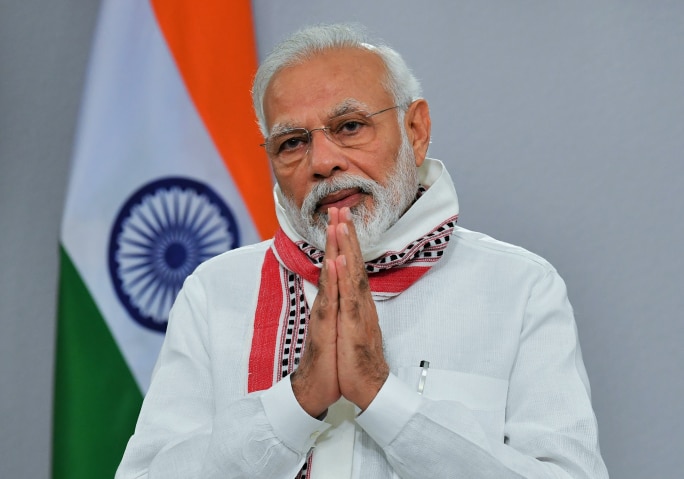
He acknowledged that Prime Minister Narendra Modi had unveiled a comprehensive 24 billion dollars package including free ration for the disadvantaged, cash transfers to poor women and free cooking gas for the next three months. At the same time, he appealed for debt relief to developing countries for ensuring that they can implement such social welfare schemes.

In India, Prime Minister Modi has announced a $24 billion package, including free food rations for 800 million disadvantaged people, cash transfers to 204 million poor women and free cooking gas for 80 million households for the next 3 months. The WHO hailed India’s relief package and stressed the need for other governments to follow suit at a juncture when many nations have enforced a lockdown.

“Countries are asking people to #stayhome and shutting down population movement to limit #COVID19 transmission. These steps can have unintended consequences for the poorest and most vulnerable,” said Dr Ghebreyesus on Twitter.

“My appreciation to Prime Minister @narendramodi for announcing a $24 billion package to support Flag of India’s vulnerable populations during #COVID19 crisis, including: free food rations for 800M disadvantaged people; cash transfers to 204M poor women and; free cooking gas for 80M households,” said the WHO chief.

Twenty-eight hospitals of the Army, Air Force, and Navy across the country have been earmarked as COVID-19 hospitals. This is done to handle and treat coronavirus cases, which is part of the measure of the defense forces to help the civil authorities.

Lieutenant General Anup Banerji, DG, of Armed Forces Medical Services, shared this development. Separately, five hospitals of the three defence services can carry out testing for COVID-19. These include Army Hospital Research and Referral, Delhi; Command Hospital Air Force, Bangalore; Armed Forces Medical College, Pune; Command Hospital Lucknow; and Command Hospital Udhampur. Six additional hospitals are also being equipped with the resources to begin such testing.

With the gradual increase in infected cases to 1,071, as per the detail shared by Ministry of Health on Monday, vigorous identification of emerging hotspots is on, and the isolation clusters are being put in place to avoid the possible community transmission.

Finally, the WHO chief had a note of concern for the developing countries of the world, stating that several of these countries will struggle to implement social welfare programs of this nature. However, as he said, “broad and expedited agreement on debt relief is essential to enable them to care for their people and avoid economic collapse.”

Last week, Prime Minister Narendra Modi announced a 21-day nationwide lockdown as a precautionary measure to control the spread of coronavirus.

April 2, 2020 0 comments
0 FacebookTwitterPinterestEmail
Terrorist

Terrorism is not stopping while we are dealing with this Virus – USA

by Nadarajah Sethurupan April 2, 2020
written by Nadarajah Sethurupan

The COVID-19 crisis has ravaged many countries across the globe—and it has also presented an opportunity for extremist groups across the ideological spectrum to spread hate. As is often the case in times of uncertainty, extremists and terrorists have jumped at the chance to exploit confusion and fear, reach new audiences, and serve their own interests.

Kay Bailey Hutchison, U.S. Ambassador to NATO, responding in a Media briefing, she said that “We are quarantining where necessary, we are treating where necessary, and we are going to take care of our military professionals at the same time to let them do their jobs, because terrorism is not stopping while we are dealing with this virus. And we must all come together to keep our eye on that ball”.

Iraq is having serious problems with their government and with this coronavirus. So we’re helping in humanitarian ways, but also went to help assure that ISIS is not reformed in Iraq, or that Iranian militias are not able to do more damage than they already have in Iraq.

“In Afghanistan we will have a number of briefs on what is going on in Afghanistan. We’re on the cusp of a peace talk that is intra-Afghan, and we are hoping that the group that has been selected by the government – that is widely representative of the different peoples of Afghanistan – will be able to sit down with the Taliban representatives and hammer out a peace agreement that will help the people of Afghanistan”, she told reporters in a briefing.

Below is a full rush transcript of the Press Briefing by Ambassador Kay Bailey Hutchison U.S. Permanent Representative to NATO

Ambassador Hutchison:  It is going to be a very important foreign ministerial at NATO tomorrow, Thursday, and while the overriding interest of all of our countries right now is the coronavirus, which is affecting all of our allies, and really this pandemic is new for NATO because we haven’t had a universal crisis of this magnitude since NATO was formed in 1949.

So we are trying to come together, and NATO is doing a great job of coordinating our coronavirus countries of need, asking for certain items.  We’re sharing.  We’re – for instance, the United States, if we have surplus things, we share.  

We are giving enormous sums to the international organizations, the World Health Organization, WHO, and as well as direct assistance to some of our allies like Italy, Spain, and Romania that are taking heavy losses.  So we are coming together, we are a clearing point for our allies, and our partners as well.

As they have needs and equipment, or medical help, or medical professionals, we are trying to help guide our other allies who are willing to help.  I will call out that Turkey this morning has sent help directly, a whole planeload to both Turkey and to Spain, and those are just some examples.  We are giving heavily in those areas as well, and I will say that I’m very proud to see our U.S. Navy hospital ships, Mercy and Comfort, that we – when I was in the Senate, I helped protect the two and keep those ships going, because we want it to be available for foreign needs. 

But now they’re helping our own people, so I’m very proud that our U.S. Navy is stepping up and saying we have this capacity, our people need it, and we’re going to offload many of the patients in hospitals that are not affected by corona, to protect them from being affected by it.  So we’re very, very pleased that our military investments have also helped all of our allies in these humanitarian needs that they are facing.

In addition, at the ministerial tomorrow we will – our foreign ministers will be discussing keeping going in the missions that we have.  We can’t take a break from our responsibilities in Afghanistan, Iraq, enhanced forward presence in Europe, in Kosovo.  So we are, we – President Trump asked NATO to do more in Iraq.  The ministers will be discussing phase one of an answer to the President to say that we will start planning, hopefully to go into Iraq when the time is right.

Right now Iraq is having serious problems with their government and with this coronavirus.  So we’re helping in humanitarian ways, but also went to help assure that ISIS is not reformed in Iraq, or that Iranian militias are not able to do more damage than they already have in Iraq.

In Afghanistan we will have a number of briefs on what is going on in Afghanistan.  We’re on the cusp of a peace talk that is intra-Afghan, and we are hoping that the group that has been selected by the government – that is widely representative of the different peoples of Afghanistan – will be able to sit down with the Taliban representatives and hammer out a peace agreement that will help the people of Afghanistan.

But we are very cautious about the results there, because we want the leaders of government, the political leaders to come together and be unified in this effort, and we want the Taliban to keep its word that violence will be lowered.  And the Afghan soldiers have taken attacks by the Taliban just in the last few weeks that must stop, so that the Afghan people can have their own government that will serve them in peace.  That’s our goal. 

So we’re going to have a lot of discussions at the ministerial about our real core efforts, but a lot of the discussion will be about the coronavirus, and how we can come together and help each other to get through this terrible pandemic.  

Question:  The Coronavirus is causing problems on the USS Roosevelt aircraft carrier.  How can the U.S. and NATO keep an active military presence when the virus spreads so quickly between troops, sailors, et cetera, who are in groups?

Ambassador Hutchison:  Yes, that’s a very good question because, of course, in a ship like that the quarters are very close, and the commander of that ship did reach out and say we must treat the people who might have this virus, we need the testing equipment.  And the acting Secretary of the Navy has responded to say, of course, we’re going to take care of those who are showing symptoms.  They will be able to be tested and the ship will probably be paused for a couple of weeks as the sailors that are affected are able to be treated, and the others are kept safe, and they will then pick up operations.

But I think as I have said earlier, we are continuing all of our military activities that are missions that are ongoing right now.  We’re not slowing down at all.  At the same time, we are protecting our troops that are in the field.  We are quarantining where necessary, we are treating where necessary, and we are going to take care of our military professionals at the same time to let them do their jobs, because terrorism is not stopping while we are dealing with this virus.  And we must all come together to keep our eye on that ball.

Question:  Would you welcome cooperation between Russia and NATO in the fight against coronavirus?  Do you view the presence of Russian military medics in Italy as a threat to the alliance or is it a good thing? 

Ambassador Hutchison:  Well, I think this is a time when it is a humanitarian crisis, it’s a health crisis, and any help that we can give each other, we should, and I think we will all be trying to go to the places where the crisis is the worst and try to get those areas back on track, and then be available to help the next ones that might be getting in a worse situation.

We’re seeing this sort of cascade in a way that goes in waves.  So this is a time when, if we can, if we have the ability to help each other, we should and we will.

Question:  On Monday, March 30th, North Macedonia’s flag began to fly over the NATO headquarters.  What is your message for the newest, 30th member of the alliance?”

Ambassador Hutchison:  We are so proud to have North Macedonia now as a full ally member of NATO.  They have shown such great courage, the people of North Macedonia, in taking the political decision and going forward.  They’ve worked for 20 years to become a member of NATO, and we are very proud to welcome them, and to also show that the door to NATO is open to countries that want democracies, freedom, free press, and human rights, and rule of law.

These are the basic values that NATO members have and have sworn to protect, and Macedonia, North Macedonia has come in with the reforms that are necessary, and we are very proud to call them an ally.

Question:  How concerned are you that Russia is taking advantage of COVID-19 to undermine NATO’s security?”

Ambassador Hutchison:  Well, I think that it’s very important that we not close our eyes to the disinformation that has gone out, some by Russia, some by China, that is trying to lay blame on others for this crisis.  This is not the time for blame and it’s not the time to try to divide our publics, either. 

So we’re very aware of the disinformation that has gone out and we are going to show the facts, and the facts are that we are coming together, we’re doing everything we can as free democracies that are helping each other in this time of need.

So there’s no reason for malign influence from Russia or China, or any other group at a time like this.

Question:  Will the pandemic change U.S. force posture in Europe, particularly in the context of its increasing presence in Poland and NATO’s eastern flank?

Ambassador Hutchison:  We are totally committed to Europe.  In fact, this is not a time when we would be lowering our numbers of troops.  We want our troops to stay in place, and we want to protect them and give them health care, where needed, in place.  Traveling and spreading the virus is not in anyone’s interest.  

We are committed in Europe, we are committed to Poland, we are committed to the Baltic.  We are committed to the absolute security of our NATO allies, as well as our partners, like Ukraine and Georgia, where there are encroachments by Russia of their sovereign needs.  So we’re there, we are not going to change, and we are certainly not leaving Europe because of the coronavirus.  We are staying put and treating in place.

Question:  What lessons should NATO learn from the coronavirus crisis?  What specific topics should the group of experts co-chaired by Thomas de Maiziere and Wess Mitchell work on?

Ambassador Hutchison:  We’ve never had a pandemic that has affected every NATO ally at the same time.  So we are working in ways to coordinate what the needs are of our different allies and our partners, and I think we are becoming the sort of central point at which information is spread.

We are also using our military assets for these humanitarian and health care needs, which shows the importance of the defense investments that our heads of state agreed to, to spend 2 percent on defense.  And some of the capabilities that we’re seeing right now are defense capabilities that are going toward health care and humanitarian purposes.  So I think we are learning a lot, we are going to take this as a way to be prepared, better prepared, for this kind of pandemic in the future.  And I think it’s been a good experience.

On the reflections process, I think that what we have is a group of people, put together by the Secretary General, who will look at the long term for NATO, which is certainly something that any organization should do, to be seeing what are the risks for the future, what should we be preparing for.  We are a deterrence and defense alliance.  We are not an offense, we’re a defense.  So we need to know what the offenses are going to be out there in the future and prepare for that.

And I think we’ve already shown in many ways that we have done that, by adopting space as an operable area that we may have to have a defense in because of malign influence, social media, even the use of artificial intelligence.  So most certainly we’ve learned a lot already.

But let’s look at NATO in the future, and perhaps the bigger adversaries that we might have with the different kinds of weapons that might be used.  And I think this reflections group could look at how a group of 30 allies can function better, function more in a speed of relevance to address the concerns and risks that we face.  And when you’re talking about 30 people that – 30 governments that have differing priorities but the same values, we need to find a way that we can move forward together, even if we don’t agree on every single point.  So that might be something that the reflections process would take up, and look at more thoughtfully than any of us who are on the front lines right now could, and make suggestions.  And then I think that could be a positive result.

Moderator: Does COVID-19 weaken U.S. commitment to Europe and NATO’s collective defense capabilities?

Ambassador Hutchison:  I think that COVID-19 has most certainly thrown us all off course for a bit, and we are all dealing with it together.  And I think we had a meeting of our NATO ambassadors yesterday, and we talked about what we are doing together, and the responses that we have gotten from our allies and also our partners where the effects are strongest, where the results must be delivered immediately to save the deaths that we are seeing from this horrible pandemic.

And I think it’s making us stronger in many ways.  And our partners – UK – are doing their part, as well.  They’re in lockdown, just like we are right here in Brussels, like we are in the United States in many of our cities.  And it’s hard.  It’s hard to do that, because we’re all social people.  We want to be together.  But we have to sacrifice now for the greater good, and I think we’re doing it.  And we’re sharing the costs, and we’re sharing the equipment, and we’re sharing the information.  And I will just reiterate that our defense investments are really coming through here.  Our militaries are building more hospitals, like they would on a battlefield, the temporary hospitals, because we have such an overflow right now.

At the same time, our great entrepreneurs in science are looking for the testing.  And it looks like we may have a potential in that field for a test that is very much quicker to get the results, so that we can treat people more quickly and stop the spread more quickly.  And the same in looking for a vaccination that will either protect us or treat this virus.  So we are putting our scientific and entrepreneurial spirit together with the military investments that we have made that can build these quick, temporary hospitals, so that people can be treated. 

And I think we are going to get a grip on this so that we will learn how to do it more quickly next time.  But I think our NATO alliance is at the forefront of making these strides that will protect us more in the future.

Question:  Are you concerned about NATO members’ willingness to invest in defense in post-pandemic times?  Some voices in Europe are already calling for slashing defense budgets or canceling weapons purchases to direct more money towards health care and the economy.”

Ambassador Hutchison:  Well, it’s a really good question, and a very tough call.  And we will do everything to assure that we have that military spending that has shown to be very important in this humanitarian and health care crisis.  But all of our economies are suffering, there is no doubt about it.  So we know there will be hard choices, but we believe the security choice is the most important, because terrorism is not going to stop.  Aggression from adversaries is not going to stop.  Testing of ballistic missiles that could harm us is not going to stop. 

So we must, as democracies, though we are much more egalitarian, much more aware of the needs of our people, we are going to have to put security absolutely at the top, which will accrue to our health care benefits and our ability to address a pandemic as we are facing right now.

Question:  NATO recently welcomed North Macedonia as its 30th member.  What does this enlargement mean for aspirant countries like Georgia, Ukraine, and Bosnia and Herzegovina?

Ambassador Hutchison:  We are committed to all of those countries to become the future members of NATO.  We want all of them.  

And we have been to Georgia, we have been to Ukraine.  We want their reforms to come forward so that they can prevail over the Russian misinformation and actual border-enforcing of parts of their countries – Georgia and Ukraine.  Russia must let those countries have their sovereign rule, their sovereign territory, their boundaries, and we are very intent on helping Georgia and Ukraine continue to respond to the Russian aggression that has taken over parts of their countries.  And we are not going to let down on those efforts.  

So we have an open door.  I think that’s what the accession of North Macedonia shows.  And we are helping our partners, Georgia and Ukraine.  We are giving them a package that will be discussed tomorrow at the foreign ministerial.  I believe the foreign ministers will approve a package that continues to build on our support and help for Georgia and Ukraine, and we are working with the Government of Bosnia and Herzegovina to try to get their reforms in place and make sure that their minorities are working with their majority to have a government that can produce those reforms in that very important area, as well.

Question: There are reports regarding increasing – the increasing possibility of a new round of escalation and military confrontation between the Assad regime and Turkey.  Turkey has requested support from NATO, and also bilateral military support from the U.S.  What kind of support has Turkey received?

Ambassador Hutchison:  Yes, we are very much on Turkey’s side against the aggression that they are facing.  And we know that the Russians are backing the Syrian regime, and that’s a tough thing for Turkey.  And we hope that Turkey will be able to push back on the Syrian aggression that’s backed by Russia that has already killed many Turkish soldiers.  

And we hope that we will be able to put together the package that would help Turkey, and we hope that Turkey will also not put the Russian missile defense system in their country that is deterring some of the capabilities that we would be able to give them to fight against the Syrian aggression.

We do want the area in Idlib, where the civilians are really trapped, to be protected, and I think the Turkish soldiers agree with that; they’re trying to do it.  The Assad regime is killing innocent people, innocent civilians, and they’re doing it with Russian help, and that is untenable.  So we hope that the Turks, because they’re being the victims of Russian-Syrian aggression, will take out the missile defense system that is in the middle of Ankara and let us have the freedom to help them completely to protect those innocent civilians in Syria.  And then, of course, we hope that the final result in Syria is the ability for the Syrians to control their own destiny through a reform process that would allow them a voice in their new government.

Ambassador Hutchison:  Well, I thank you for all the questions that have come in.  We so appreciate the alliance and our partners, and having the ministerial tomorrow, which is going to be virtual for the first time.  We don’t like that because we really like to be able to get together and talk bilaterally as well as in NATO about our common risks and deterrence efforts, and, of course, now with this pandemic we can’t really get together in person.  So we’re doing a virtual ministerial where we are going to have good results, we believe, because the discussion will be had the same as if they were there together, and we think that the absolute focus on our publics right now, on the coronavirus, and the expansion of our efforts in Iraq to allow those people to have their own government, to have new elections and make sure that ISIS doesn’t rise again in Iraq, and to also make sure that the Iranian militias don’t come into Iraq and sow malign influence there, and we are going to try to keep on track with Afghanistan so that the peace talks that would be an Afghan-led peace agreement so that the people can live together in harmony in Afghanistan will stay on course.

So, all of those things.  It’s a big agenda, but we’re not losing our focus at the same time that we are trying to protect our people from travel and society that would cause this pandemic to get worse.

April 2, 2020 0 comments
0 FacebookTwitterPinterestEmail
Environment

Another country to introduce random coronavirus spot testing

by Nadarajah Sethurupan April 1, 2020
written by Nadarajah Sethurupan

Norwegian health authorities say they are set to start performing random coronavirus tests, following the experiment Iceland has done.

Citing officials at the Norwegian Institute of Public Health, Norwegian public broadcaster NRK said on Sunday that such random testing among all citizens will provide answers to two key questions: how many of those who appear to be infected actually have the coronavirus and how wide the spread of the virus is.

A nurse holds a swabs and test tube kit to test people for COVID-19. Credit: Paul Sancya/AP

NRK said Iceland, with its 12,000 random tests among its population of 340,000, has the largest number of tests per capita in the world.

Norway, with a population of 5.4 million, has so far reported 4054 coronavirus cases with 25 deaths.

April 1, 2020 0 comments
0 FacebookTwitterPinterestEmail
Defence

Milrem Robotics to deliver UGVs to UK Defence

by Nadarajah Sethurupan April 1, 2020
written by Nadarajah Sethurupan

Milrem Robotics is to deliver two unmanned ground vehicles to the Defence Science and Technology Laboratory (DSTL) of the United Kingdom.

DSTL whose purpose is to maximise the impact of science and technology for the defence and security of the UK, is procuring the unmanned vehicles to explore the capabilities and limitations of these autonomous systems in areas such as mobility, vulnerabilities and safety.

Milrem Robotics will supply the vehicles to DSTL in partnership with leading defence technology company, QinetiQ, who will integrate autonomous functions to the vehicles and arrange transfer to the end user.

In cooperation with QinetiQ, Milrem Robotics is participating in two UK large-scale robotics programs – JTARR (Joint Tactical Autonomous Resupply and Replenishment) and RPV (Robotic Platoon Vehicle).

“The United Kingdom has a clear view on the importance of robotics on the battlefield and its impact on defence capabilities. This is illustrated by the two large-scale robotics programs in which Milrem Robotics is currently participating in the UK,” said Kuldar Väärsi, CEO of Milrem Robotics.

DSTL follows similar organizations in the Netherlands, Norway and Germany who have also opted for the THeMIS platform. For example, the German Federal Office of Bundeswehr Equipment, Information Technology and In-Service Support has acquired one platform for similar testing and evaluation by the German armed forces. 

In addition, the THeMIS UGV has been delivered to France, US and Indonesia in logistics configuration intended to provide combat support and carry supplies with an option to integrate additional kinetic or non-kinetic payloads.

April 1, 2020 0 comments
0 FacebookTwitterPinterestEmail
Economics

Norwegian borders to open for entry by some EEA nationals

by Nadarajah Sethurupan April 1, 2020
written by Nadarajah Sethurupan

Norway is opening its borders for seasonal workers from EEA countries in the agricultural, horticultural and forestry sectors and the food industry.

The Ministry of Justice and Public Security has adopted amendments to the Regulations relating to rejection etc. of foreign nationals without a residence permit. One of these will allow nationals of EEA countries to enter Norway if they are to work in a sector where there is a critical need for labour. These amendments are vitally important for the agricultural sector.

‘I have been working hard to put these arrangements in place. Spring is just round the corner, and now it will be possible for EEA nationals who have been given jobs in the agricultural sector in Norway to come here and start work. This amendment will mean a lot to producers who are experiencing a shortage of workers at this critical time,’ said Minister of Agriculture and Food Olaug Bollestad.

According to the amendment, workers from an EEA country who are to start a job in sectors including agriculture, horticulture, forestry and the food industry are not to be refused entry to Norway.

  • The revised circular from the Ministry of Justice and Public Security is available here (English version will be available soon)

Anybody who comes to Norway is required under the COVID-19 Regulations to undergo quarantine for a 14-day period after arrival.

The closure of Norway’s borders and the quarantine restrictions that have been introduced in response to the COVID-19 pandemic are resulting in a lack of foreign labour in the agricultural sector. The problems are particularly serious for fruit and vegetable producers, who need many thousands of seasonal workers in the course of the year. 

‘It is vital for Norway to have access to foreign workers with the right expertise. The fruit and vegetable sector is specialised, and needs personnel with a variety of backgrounds. Many seasonal workers from other countries have the expertise we need. We are also continuing efforts to introduce incentives to encourage Norwegians to look for work in the agricultural sector,’ said Ms Bollestad.

April 1, 2020 0 comments
0 FacebookTwitterPinterestEmail
Norwegian Aid

Norway to contribute to new UN Fund to Fight Coronavirus

by Nadarajah Sethurupan April 1, 2020
written by Nadarajah Sethurupan

‘We are pleased that the UN acted so quickly on our proposal to establish a global fund to respond to the Covid-19 pandemic. Norway is providing a first contribution of NOK 150 million to enable the work of the fund to get under way as soon as possible. We urge other countries to contribute too,’ said Minister of Foreign Affairs Ine Eriksen Søreide.

Today, UN Secretary-General António Guterres announced the establishment of the new United Nations Covid-19 Response and Recovery Multi-Partner Trust Fund to assist countries in responding to the Covid-19 pandemic and to stimulate recovery as quickly as possible once the crisis is over. Norway has been a strong advocate for the establishment of a fund of this kind.    

‘The new fund will help to ensure a coordinated international effort to limit the long-term negative consequences of the Covid-19 pandemic. Norway is now providing an important initial contribution, and we will consider further contributions in the time ahead,’ said Minister of International Development Dag-Inge Ulstein.

The aims of the fund, as identified by UN Secretary-General Guterres, is to both enable countries’ authorities to tackle the health emergency, to reduce the social and economic impact of the pandemic, and to assist countries in the post-crisis recovery. The Secretary-General’s intention is for this to be a flexible funding instrument that will make it possible to respond quickly to the needs of individual countries. The UN’s aim is to mobilise USD 1 billion for the fund in 2020 and USD 2 billion in total.   

‘The UN has a leading role to play in the response to the pandemic. The new fund will promote a coordinated UN response at country level in support of national governments. It is intended to meet more long-term needs as well as providing immediate emergency aid for the implementation of pandemic response measures. It is important to do what we can to enable UN organisations to carry out this work as effectively as possible,’ Ms Eriksen Søreide said.

The fund is designed to complement the UN’s Global Humanitarian Response Plan and WHO’s Strategic Preparedness and Response Plan.

(Ministry of Foreign Affairs)

April 1, 2020 0 comments
0 FacebookTwitterPinterestEmail
Asia and Norway

Indian Prime Minister’s video conference with the Heads of Missions

by Nadarajah Sethurupan April 1, 2020
written by Nadarajah Sethurupan

Prime Minister of India Shri Narendra Modi held a video conference with the Heads of all of India’s Embassies and High Commissions worldwide at 1700 hrs today. This conference—the first such event for Indian Missions worldwide—was convened to discuss responses to the global COVID-19 pandemic.

Prime Minister noted that extraordinary times require extraordinary solutions, which was why even in this globalized era, most of the world had quarantined itself. This was an unavoidable step taken to fight this pandemic, but it was also hugely consequential, as the closure of the globalized system has had an extensive and far-reaching impact upon the international transport system, financial markets and the global economy.

Prime Minister said that India had taken unprecedented and early steps in response to this pandemic from mid-January this year, to reduce the risk of importing the infection, and thereafter to prevent a large outbreak. This included the world’s largest quarantine and lock-down, implemented by India.

The Prime Minister complimented Heads of Missions for their efforts to evacuate Indians stranded abroad in some of the epicentres of the crisis. He also exhorted them to take steps on five specific counts:

i) To ensure their own health and safety, and that of their teams and families;

ii) To attend to Indians who remain in various foreign countries, given the uncertainty of continuing international travel restrictions. He called on Heads of Indian Missions to help boost the morale of such compatriots abroad, and to help them address issues arising from their unplanned stay abroad, with their host Governments, and also to address other problems Indians might face abroad, including arranging shelter, where necessary and feasible;

iii) To stay alert and identify in their countries of accreditation best practices, innovations, scientific breakthroughs and sources to procure medical equipment, for India’s fight against COVID-19. He also advised Heads of Mission to suitably publicize the newly-established PM-CARES Fund to mobilize donations from abroad;

iv) Since this crisis also impacts upon the economy, PM advised Heads of Mission to also focus on ensuring that commerce in essential supplies, logistics chains, remittances and so on are unaffected, through their coordination with foreign partners;

v)To continue to pay close attention to the evolving international political and economic situation, especially in the context of the COVID-19 pandemic.

In response, ten Heads of Mission, in Beijing, Washington DC, Tehran, Rome, Berlin, Kathmandu, Abu Dhabi, Kabul, Male, and Seoul offered their perspectives to PM and the rest of the audience. They shared feedback regarding appreciation in their countries of accreditation of the resolute measures taken by India to combat this pandemic.

Heads of Missions outlined their efforts to help Indians stranded abroad, in particular, students and workers. They also reported efforts to identify medicine, medical devices, technologies, research and other measures which might help in India’s own national effort to fight this pandemic. Heads of Mission also reported lessons learned in other countries, and their best practices, in the global fight against COVID-19. In our neighbourhood, Heads of Mission underlined measures to assist the national responses of those countries, using the special fund created at India’s initiative for SAARC countries to combat COVID-19. The Heads of Mission also expressed gratitude for the guidance and inspiration from PM for their work.

In conclusion, Prime Minister emphasized that India’s Missions abroad may well be far from home, but they remain full participants in India’s fight against COVID-19. He emphasized that the unity and alertness of all Indians would help safeguard the nation’s future.

April 1, 2020 0 comments
0 FacebookTwitterPinterestEmail
Science

Bosnians in Norway tested positive for Coronavirus

by Nadarajah Sethurupan March 31, 2020
written by Nadarajah Sethurupan

Ambassador of Bosnia and Herzegovina to Norway Nedim Makarevic said that as of today, the number of coronavirus infected in Norway has increased to 4,245. He noted that the number of deaths increased to 26 and the number of hospitalized to 316.

“The Norwegian Institute of Public Health estimates that many more are infected with coronavirus than published on its official website, as people with milder symptoms are not even tested. The Institute estimates that there are around 28,000 people infected in Norway. A total of 85,136 people were tested by Sunday 29 March, which is one of the highest percentages per capita in the world,” Makarevic said.

“We have reports that two Bosnian citizens in Norway are infected with the coronavirus, but the source did not want to reveal the names of those infected,” Makarevic said.

He stresses that all state and public institutions in Norway have been closed in accordance with the Government’s Declaration of Emergency until April 13th this year.

“Borders are closed to all foreigners except those who are permanently resident and they must be in quarantine for 14 days after entering Norway. There is still a shortage of disinfectants, gloves and masks. Due to the cancellation of flights from Norway abroad, there are currently 42 of our citizens who are unable to return to BiH and hold Schengen visas. The Norwegian authorities have announced on their official UDI website that the foreigner will have no problems staying after the visa expires if such a stay is necessary due to the cancellation of flights,” Makarevic said.

March 31, 2020 0 comments
0 FacebookTwitterPinterestEmail
Oil & Gas

40th Anniversary of Norway’s Worst Offshore Disaster

by Nadarajah Sethurupan March 30, 2020
written by Nadarajah Sethurupan

It was March 27th, 1980. The Alexander Kielland offshore accommodation unit was linked to the Edda platform in the Ekofisk area of the North Sea, offshore Norway.

Workers aboard were weather-bound to the floatel, because of the fog, and then the storm began to blow up, meaning helicopters couldn’t fly, and everything was shut down for the day.

With the weather turning worse, a decision was made to remove the gangway that was connecting the gangway from the platform.

Broken Chain Monument in Norway. Built to honor the victims of the Alexander Kielland disaster – Image by Robert Rozbora – AdobeStock

At 18:00, there were 212 people on board the Alexander Kielland. “After 15 minutes or so, we heard a very powerful thump,” one of the crewmembers recalls in a 20-minute movie shared by the Petroleum Safety Authority last week.

Then came a much bigger bang, recalls another one, and the rig began to tip over. 

“I managed to send a brief emergency message, ‘Mayday, mayday Kielland is capsizing,’ a survivor recalls.

One of the five support columns at Kielland had torn off, the floatel listed, took in water and overturned in 20 minutes.

123 died, 89 survived

“Events developed so quickly that few of the 212 people on board managed to get to their cabin to fetch a survival suit. Only eight managed to put one on – and four of those survived.

“Three of the seven lifeboats, with space for 50 people, were crushed by waves hitting the rig columns during lowering. Only two of the boats, therefore, remained usable.

“And nobody on board managed to operate the release mechanism for the liferafts, which were capable of accommodating 400 people.

“Temperatures of 7°C in the air and 4°C in the sea meant that those who fell into the water had little chance. A few managed to swim to the Edda platform and were hoisted on board. But 123 people died in the North Sea that evening. Eighty-nine survived,” Inger Anda, Director of communication and public affairs for the Petroleum Safety Authority, wrote in an article last week.

A turning point for the industry

According to the Norwegian offshore safety body’s director-general Anne Myhrvold, the loss of Alexander L Kielland marked a turning point on the Norwegian continental shelf (NCS). She believes it has been crucial for offshore safety work.

“This was a turning point not only for the industry but also for the whole country,” Myhrvold said. “We’ve worked differently on safety since 1980 –  on regulatory roles, development of the regulations and not least clarifying the responsibility of the companies. They’re the ones responsible for safety – every single day.

“Although much safety work had also been done before the Kielland, this disaster revealed weaknesses with emergency preparedness, training, the division of responsibility, regulation and government follow-up.”

“Important and lasting changes and improvements were therefore made to the regime in the following years.”

Myhrvold said that following the incident, large parts of the safety regime were reviewed and reshaped.

“Changes to the regulations and the division of responsibility form the basis for today’s system and the high level of safety we now enjoy,” she said.

“The specific lessons from the disaster have long since been followed up, Myhrvold says. “But Kielland still has great value, and illustrates the huge consequences a major accident can have – for individuals and families, for the industry and for society. It shows what can go wrong when safety and emergency preparedness are inadequate. “

We can’t be satisfied

“We see that much good work is being done to improve safety, but we nevertheless still witness serious incidents,” she says. “Some of these have been very critical, and it would not have taken much to turn them into a major accident.

“That means we can’t be satisfied. We must work better throughout. The companies must constantly make systematic efforts to avoid things going wrong.”

“They must also ask themselves whether they are taking an integrated approach to humans, technology and organization and whether their solutions are sufficiently robust to cope with the unforeseen. Work on these and other issues related to improving safety is crucial.

“It’s our duty to learn from Kielland and other incidents, and to use these lessons in such a way that we avoid a new major accident.”

March 30, 2020 0 comments
0 FacebookTwitterPinterestEmail
Science

Norway to carry out random virus tests

by Nadarajah Sethurupan March 30, 2020
written by Nadarajah Sethurupan

Norwegian health authorities say they are set to start performing random coronavirus tests, following the experiment Iceland has done.

Citing officials at the Norwegian Institute of Public Health, Norwegian public broadcaster NRK said on Sunday that such random testing among all citizens will provide answers to two key questions: how many of those who appear to be infected actually have the coronavirus and how wide the spread of the virus is.

NRK said Iceland, with its 12,000 random tests among its population of 340,000, has the largest number of tests per capita in the world.

Norway, with a population of 5.4 million, has so far reported 4054 coronavirus cases with 25 deaths.© AAP 2020

March 30, 2020 0 comments
0 FacebookTwitterPinterestEmail
NATO and Norway

NATO forces conduct drills with French Carrier Strike Group

by Nadarajah Sethurupan March 29, 2020
written by Nadarajah Sethurupan

French carrier strike group and its flagship, the aircraft carrier Charles de Gaulle, trained with the Standing NATO Maritime Group One (SNMG1) for four days last week, NATO MARCOM has announced on 23rd March. The combined exercises ran between 19-22 March bringing together warships from Belgium, Denmark, France, Germany, Norway, Portugal, Spain and the United Kingdom on the east coast of Denmark.

The exercises were conducted between 19-22 March on the east coast of Denmark

“The interaction with the French carrier strike group provides valuable opportunities for both the carrier strike group and us. The ability to train and develop our procedures, communication and interaction is ultimately what tie us together as allied forces. It enhances our readiness and our ability to fight war. Obviously it also enhances the cohesion within the Alliance. Together NATO allies constitute a powerful naval force,” said Commodore Yngve Skoglund, Commander of SNMG1.
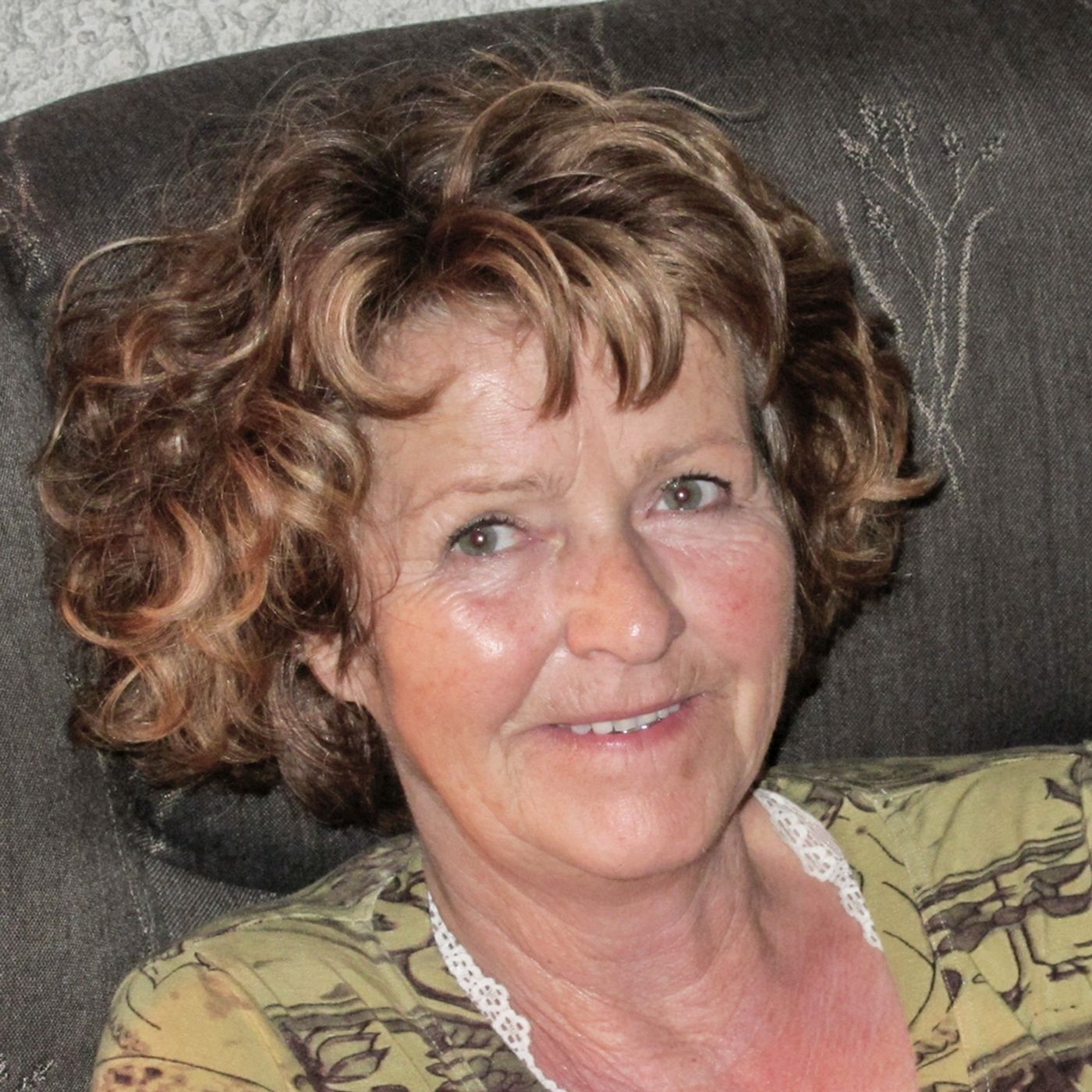
The aircraft carrier Charles de Gaulle and its strike group left France in January for operations in the Mediterranean Sea. The group has now deployed to the Atlantic Ocean and the North Sea.
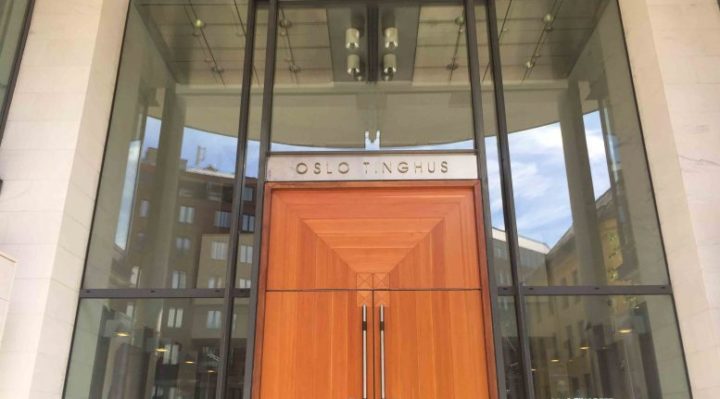
March 29, 2020 0 comments
0 FacebookTwitterPinterestEmail
China and Norway

China refuses to allow discussion on virus in UNSC

by Nadarajah Sethurupan March 29, 2020
written by Nadarajah Sethurupan

China, which is being held responsible for the Wuhan Coronavirus outbreak throughout the world is reportedly not allowing the global issue to be discussed in the United Nations Security Council (UNSC). Many countries want to pass a proposal on the global issue but China is constantly putting obstructions.

While Coronavirus has already claimed thousands of human life across the world, the United Nations have been failing in discussing the epidemic yet because of veto by China. The pandemic that broke out in Wuhan province of China has infected more than 4.3 lakh people around the globe.

But the intergovernmental body United nations hasn’t started discussions over this serious problem. Neither the United Nations General Assembly of 193 members, nor the 15 member UN Security Council has discussed the matter yet, reports Media.

When Chinese Ambassador Zhang Jun was asked questions related to the discussion on COVID-19, he said that it is not on the agenda of the United Nations Security Council. The United Nations Security Council is alleged to be divided on its proposal on the pandemic. China has also objections regarding the terminology of the proposal.

According to reports, China and some other countries are blocking a draft to discuss the pandemic at the UNSC. The draft proposal prepared by Estonia highlights “growing concern about the unprecedented extent of the COVID-19 outbreak in the world, which may constitute a threat to international peace and security.”

The draft also calls for “full transparency” over the outbreak, which clearly refers to growing criticism that China is hiding vital details about origin about the Virus, making China uncomfortable over the terminology of the draft. None other US president Donald Trump has been alleging that China is misleading the world on the issue. Non-permanent member South Africa opposed the draft first, and later China and Russia also blocked it, reports say.

Another important aspect here is that China is the President of the UN Security Council for March. The President decides what issues will be discussed in the UNSC. Although the term of President changes every month, as a permanent member China has veto power so it can continue to block the issue to be taken up by UNSC.

The workings of the United Nations, headquartered at New York, has also virtually come to a halt, as the city is worst hit by Wuhan Coronavirus in the US. The meetings of the United Nations are also being conducted through video conferencing.

The G20 countries will be discussing the epidemic on Thursday with a common strategy. After the meeting of SAARC countries through video conferencing, Prime Minister Modi has also suggested the video conference meeting for G20 countries.

March 29, 2020 0 comments
0 FacebookTwitterPinterestEmail
Economics

Norway’s sovereign fund loses US$124 billion as markets crash

by Nadarajah Sethurupan March 28, 2020
written by Nadarajah Sethurupan

Norway’s sovereign wealth fund, the world’s largest, has lost 1.33 trillion Norwegian crowns (US$124 billion) so far this year as stock markets have plunged due to the coronavirus pandemic, it said on Thursday (Mar 26).

The fund is now worth US$930 billion, down from more than US$1 trillion at the end of last year. Its investment portfolio dropped 16.2 per cent, all but erasing the 20 per cent gains made last year, while its stock market portfolio – its main asset class – has lost 22.8 per cent of its value, it added.

FILE PHOTO: A general view of the Norwegian central bank in Oslo, Norway March 6, 2018. REUTERS/Gwladys Fouche/File Photo

Separately, Norway’s central bank said earlier on Thursday it had appointed a new chief executive for the fund and would announced the name at a news conference.

The long-awaited appointment of a new CEO comes at a turbulent time for financial markets, with the coronavirus outbreak and a plunge in oil prices.

Outgoing CEO Yngve Slyngstad, announced last October that he would step down after 12 years on the job. During his tenure, the fund’s value rose sharply thanks to rising stock markets and solid income from Norway’s oil and gas industry.

Formally known as Norges Bank Investment Management, a unit of the central bank, the asset manager places proceeds from Norway’s oil and gas industry in foreign stocks, bonds and real estate.

Source: Reuters/nh

March 28, 2020 0 comments
0 FacebookTwitterPinterestEmail
Srilanka and Norway

Over 17,000 overseas Sri Lankans register on ‘Contact Sri Lanka’

by Nadarajah Sethurupan March 28, 2020
written by Nadarajah Sethurupan

Over 17,457 Overseas Sri Lankans (OSL) had by Saturday noon (28 March), registered on the ‘Contact Sri Lanka’ Online Portal of the Ministry of Foreign Relations. Of these, 6773 are from the Middle East region, 1892 from Europe, 1302 from South Asia, 1028 from North America and over 6000 from other parts of the world.

This portal jointly created by the Ministry of Foreign Relations and the Information & Communication Technology Agency of Sri Lanka (ICTA) for the benefit of Overseas Sri Lankans, was launched on Thursday (26 March 2020). It is hosted on the Ministry web page www.mfa.gov.lk and can also be accessed at www.contactsrilanka.mfa.gov.lk. A dedicated team of officials have been assigned by the Ministry of Foreign Relations to respond to queries.

A bulk of the 700 inquiries received through ‘Contact Sri Lanka’ so far, relate to the possibility of return to the country. However in light of the special request made by the Government yesterday (27 March) to Sri Lankan expatriates urging them to safely remain where they are now until the risk of  COVID-19 virus is minimized and the disease is contained in Sri Lanka, the Ministry has taken several measures through its Mission network to continue to facilitate and address the immediate concerns of the Overseas Sri Lankans. Other common inquiries include the welfare of student populations, extension of visa, lack of financial support for those unemployed, non-payment of salaries, closing down of commercial establishments and questions on quarantine upon arrival.

Over the past two weeks since disruptions to travel, Sri Lanka Missions abroad have been particularly vigilant and prompt in taking action towards addressing the impending issues faced, particularly by the student populations. Some of the measures put in place included ensuring that hostels remain open, that food supply/provision is maintained by the respective establishments, and that if they require medical assistance they are directed to medical facilities, wherever possible, to seek extensions of university/school payments of students. The Missions have also been directed to maintain close engagement with educational establishments with Sri Lankan students and the student community to continue to provide for their welfare.

With respect to Sri Lankan employees in the Middle East and Asia in particular, Missions will work with host governments to secure fair treatment and concessions for Sri Lankan expatriate workers to the maximum extent possible. This includes safeguarding the rights of the workers in relation to payment of salaries and ensuring job security.

As for the broader population of Sri Lankans, Missions have also been requested to liaise with Sri Lanka Associations, organizations and places of worship established by Sri Lankans, in providing assistance to those Sri Lankans facing difficulty and are in need of assistance in the face of the rapidly evolving situation.  The Missions have been requested to mobilize to provide basic sustenance and medical facilities, in full measure.

Earlier on 18 March, Sri Lanka requested foreign governments to facilitate appropriate visa extensions for Sri Lankans currently visiting their countries, in view of the control measures issued by most countries due to COVID-19. A number of states have positively responded to this request, and the Sri Lanka Missions have been asked to communicate the modalities for this process to those affected, while engaging other host Governments to work out reciprocal arrangements, as Sri Lanka extended this facility to all foreign nationals presently in Sri Lanka since mid-March.Ministry of Foreign RelationsColombo28 March 2020

March 28, 2020 0 comments
0 FacebookTwitterPinterestEmail
Terrorist

Terror convict Mullah Krekar extradited to Italy

by Nadarajah Sethurupan March 28, 2020
written by Nadarajah Sethurupan

Faraj Ahmad Najmuddin aka Mullah Krekar was extradited to Italy from Norway Thursday to serve time for international terrorism.

He landed at Fiumicino and was taken to Rome’s Rebibbia Prison.

Krekar was sentenced last July 15 to 12 years in jail together with another five defendants, like him of Kurdish-Iraqi origin, for “association with terrorism purposes, also international”.

March 28, 2020 0 comments
0 FacebookTwitterPinterestEmail
China and Norway

NGOs Calls on Norway Oil Fund to Divest from Hikvision and Dahua

by Nadarajah Sethurupan March 28, 2020
written by Nadarajah Sethurupan

The Norwegian Uyghur Committee, Norwegian Helsinki Committee, Norwegian PEN, Rafto Foundation for Human Rights, Uyghur Human Rights Project and the World Uyghur Congress have jointly published an open letter calling on the Government Pension Fund of Norway to divest from Chinese technology companies Hikvision Digital Technology and Zhejiang Dahua Technology, due to their involvement in serious and ongoing human rights violations in the Uyghur Region in China. The full text of the letter continues below:

We, a coalition of six human rights organizations, write to express our serious concerns regarding investments held by the Government Pension Fund of Norway (also known as the “Oil Fund”), in Chinese technology companies Hikvision Digital Technology and Zhejiang Dahua Technology, both of which are directly implicated in gross and continued human rights violations in the Uyghur region of China. The Fund must take immediate steps to divest from both companies.

Hikvision, the world’s largest maker of surveillance cameras, and Dahua, a large provider of video surveillance products and services, have both won more than $1 billion worth of Chinese government- backed contracts in the Uyghur region since 2016.

Hikvision and Dahua products and services have been used by the Chinese government to monitor and suppress Uyghurs, Kazakhs and other religious and ethnic groups, including the mass arbitrary detention of at least 1 million in internment camps. The issue has been repeatedly raised by human rights groups, the European Union, the UN and by the Norwegian Government itself, on a number of occasions.

Both companies were added to a US trade blacklist in October 2019 which includes 20 Chinese public security bureaus and six other companies, all implicated in human rights violations against Uyghurs and other Turkic Muslims including mass detention and surveillance.

The Oil Fund makes clear its focus on responsible investment. It recognizes a set of international standards which includes integrating human rights into company policies and strategy, reporting on salient human rights issues, and engaging transparently on human rights through grievance mechanisms. The Oil Fund also has expressed its support for, and compliance with, the UN Guiding Principles on Business and Human Rights.

These standards could not be further from those adopted by Hikvision and Dahua. Both companies qualify for observation or exclusion according to section 3 (a.) of the Fund’s own guidelines:

“Companies may be put under observation or be excluded if there is an unacceptable risk that the company contributes to or is responsible for: a) serious or systematic human rights violations, such as murder, torture, deprivation of liberty, forced labour and the worst forms of child labour […]”

Norway’s Oil Fund is by no means the only culprit, however. A growing number of investment funds, corporations and other entities have publicly disclosed investments in these companies and continue to do so.

While immediate divestment will not solve the human rights crisis, it would send a clear signal to these investors that the world’s largest sovereign wealth fund is not interested in supporting those that participate in, or enable, gross and systematic human rights violations. It would likewise ensure that the Oil Fund does not continue to profit from those violations going forward.

While we acknowledge that the Fund’s Ethical Council has indicated greater attention to investigating whether technology companies’ tools are being used for “improper surveillance”, the time is now to seriously reassess its investments in Hikvision and Dahua and to take appropriate action to ensure it complies with its own ethical standards.

Sincerely,

Norwegian Uyghur Committee

Norwegian Helsinki Committee 

Norwegian PEN

Rafto Foundation for Human Rights 

Uyghur Human Rights Project World Uyghur Congress

For media inquiries, please contact:

Adiljan Abdurihim, Norwegian Uyghur Committee: info@uigurene.no

Peter Irwin, Uyghur Human Rights Project: pirwin@uhrp.org

Ryan Barry, World Uyghur Congress: ryan.barry@uyghurcongress.org

March 28, 2020 0 comments
0 FacebookTwitterPinterestEmail
Norwegian Aid

Norway proposes global fund to fight coronavirus

by Nadarajah Sethurupan March 28, 2020
written by Nadarajah Sethurupan

Norway proposed today the creation of a global fund for the fight against the Covid-19 under the auspices of the United Nations Organization (UNO), in view of the increase of infected and dead people in more than 160 countries.

Foreign Minister Ine Eriksen Soreide said that a multilateral foundation would help developing countries with weak health systems to cope with the pandemic, offer partners predictability and contribute to greater effectiveness.

She added that the initiative is supported by the UN Under-Secretary-General, Amnima Mohamed, who could present the proposal in a few days.

The World Health Organization has recorded about 350,000 cases, 15,300 deaths and more than 100,000 people recovered from the virus that emerged in December in the Chinese city of Wuhan, with its current epicenter in Europe.

March 28, 2020 0 comments
0 FacebookTwitterPinterestEmail
Asia and Norway

Violence erupts in China as people try to leave coronavirus-stricken Hubei province

by Nadarajah Sethurupan March 28, 2020
written by Nadarajah Sethurupan

Violent clashes erupted on a bridge between China’s virus-stricken Hubei province and neighbouring Jiangxi province, days after authorities relaxed an epidemic lockdown.

Police vehicles were overturned and police scuffled with each other amid large crowds of shouting people, according to a series of videos posted to Chinese social media. The confrontation came after authorities in Jiangxi blocked entry to people from Hubei, local media reported.

Hubei this week lifted its lockdown of areas of the province outside Wuhan.

But deep distrust has taken root across China toward people from Hubei, fuelled by fear of COVID-19, which spread widely in the province, as well as skepticism of official reassurances that the epidemic has been successfully suppressed. People from Hubei have been refused entry to hotels and their homes, even if they were not in Hubei during the past two months. On social media, people have reported being barred from entering Beijing merely because their hometown is in Hubei.

Now, the release of lockdown measures means large numbers of people from Hubei are attempting to move elsewhere in China, threatening new hostilities.

On Friday, videos of the bridge confrontation showed a line of uniformed officers behind riot shields positioned across the bridge, blocking movement from Hubei province across the Yangtze River into Jiujiang, a city in Jiangxi. A large crowd marched toward the blockade chanting “Let’s go, Hubei!” In another video, Ma Yangzhou, the secretary of the party committee in Huangmei County on the Hubei side, urges people to disperse. “It’s dangerous for you to gather like this on the bridge,” he said, citing both the block to transportation and “the risk of virus infection.”

The clashes took place between 3 p.m. and 6 p.m., a worker at a toll booth on the bridge told the Globe and Mail in an interview Friday evening. “It was on the middle of the bridge somewhere that the block was put in place,“ said Ms. Huang, the worker. The Globe is not identifying her by her full name because she is not authorized to speak to foreign media. On Friday evening, digital mapping apps showed the bridge closed from both sides, citing “construction.”

In a brief commentary published on its Twitter-like Weibo account, the state-owned People’s Daily called the bridge conflict “regrettable.”

“The people of Hubei have made great efforts and significant contributions to winning the battle against the epidemic,” the commentary said. “People from all sectors of society have also been calling for the acceptance of Hubei’s migrant workers. However, it’s undeniable that some individuals of some regions have intentionally or unintentionally discriminated against Hubei people, set up obstacles for them to return to work” and discriminated against them.

According to official government policy, those who live outside Wuhan and are considered healthy have been allowed to resume travels since Wednesday. Authorities reopened railways and long-distance bus service, and pledged to completely remove all highway roadblocks by Friday. The desire to leave Hubei is substantial: Qichun County in the city of Huanggang counts one million residents, but has said 216,000 need to leave for work.

Hubei province has reported only a single new case in the past week. The province counts nearly 68,000 confirmed cases and says 3,174 people have died from COVID-19 since the outbreak began late last year.

On Friday, authorities downgraded the virus risk classification of Wuhan from “high risk” to “medium risk.” The tight lockdown measures in the city are scheduled to ease on April 8.

But even as Chinese authorities push to resume normal life, skepticism is growing about the accuracy of the virus numbers in the region. Health authorities have acknowledged that their tally of confirmed cases does not include people who have the virus but have not shown symptoms. Those asymptomatic cases are believed to number in the tens of thousands.

New questions have also emerged about the accuracy of the official death toll. Earlier this week, authorities began to distribute to family members the ashes of their cremated loved ones. Photos taken by people at funeral homes showed long lines and large numbers of remains. Photos published by Caixin Media from one of Wuhan’s eight funeral homes showed well in excess of 1,000 boxes containing remains.

March 28, 2020 0 comments
0 FacebookTwitterPinterestEmail
Science

Covid-19 pandemic: Government strengthens humanitarian efforts

by Nadarajah Sethurupan March 27, 2020
written by Nadarajah Sethurupan

The Covid-19 pandemic is exacerbating an already difficult situation for populations in countries affected by humanitarian crises. Refugees and internally displaced persons will be especially vulnerable to coronavirus infection even as they continue to need protection, shelter, food, water and basic health services.

The Norwegian Government is now strengthening its humanitarian efforts by setting aside more money for the global humanitarian response to the pandemic and by giving more flexibility to humanitarian organisations, enabling them to better respond to the pandemic’s direct and indirect consequences.

‘I fear that the already grave humanitarian situation for the people of Afghanistan, Syria and many other countries in crisis will become even worse. That is why we are now increasing our earmarked humanitarian support for responses to the coronavirus pandemic, from NOK 10 million to NOK 100 million,’ said Minister of Foreign Affairs Ine Eriksen Søreide.

Currently, the recorded number of Covid-19 infected people in countries receiving humanitarian aid is relatively low, but the pandemic is already putting extraordinary pressure on humanitarian organisations. In the time ahead, a great deal of flexibility will be needed to ensure that the organisations can quickly prioritise efforts where the need is greatest at any time.

‘We are now informing our closest humanitarian partners that they will be given more flexibility to redirect humanitarian funds on a need basis. At the same time, we are increasing the portion of our humanitarian budget held in reserve so we can respond quickly as new needs arise,’ the Foreign Minister said.

To date, Norway has contributed NOK 10 million from the humanitarian budget to the World Health Organization (WHO) to help it respond to the Covid-19 pandemic. In addition, Norway has contributed NOK 15 million through its share of the UN Central Emergency Response Fund (CERF). The additional NOK 90 million will support the implementation of the UN Global Humanitarian Response Plan  to the Covid-19 pandemic, which is launched today.

Norway has a total humanitarian budget of just over NOK 5.5 billion for 2020. The support is provided mainly to the UN, Norwegian humanitarian organisations and the International Red Cross and Red Crescent movement.

March 27, 2020 0 comments
0 FacebookTwitterPinterestEmail
Oil & Gas

DNO announces $300m budget cut; focus on Kurdistan

by Nadarajah Sethurupan March 27, 2020
written by Nadarajah Sethurupan

DNO ASA, the Norwegian oil and gas operator, today announced a 30 per cent or $300 million reduction in its 2020 budget to shore up its balance sheet in the face of unprecedented market convulsions and plunging oil prices triggered by the coronavirus pandemic. Steps have already been taken to suspend most discretionary drilling and capital projects across the company’s portfolio and to focus instead on key projects in its core operating area in the Kurdistan region of Iraq, it said. 

The company has also initiated staff reductions, cancelled the first half 2020 dividend, discussed modalities for cost reductions with its suppliers and contractors and frozen new ventures. “We demonstrated our resilience and nimbleness during the regional geopolitical pandemonium triggered by ISIS some five years ago and can ramp up operations quickly once the coronavirus is put back in the bottle,” said Bijan Mossavar-Rahmani, DNO’s Executive Chairman. 

Meanwhile, among the company’s priorities is completion of testing of the Baeshiqa-2 exploration well in Kurdistan starting late March. The company previously reported that the well flowed light oil and sour gas to surface and that testing of remaining reservoirs would resume following a well workover program, now completed, to assess commerciality. 

DNO also remains committed to complete its $100 million Peshkabir-to-Tawke gas capture, transport and reinjection project in Kurdistan to reduce CO2 emissions at the Peshkabir field and boost oil recovery at the Tawke field. Gas reinjection will commence in early April. But the company’s exploration, appraisal and development drilling campaign, historically the most active among the international oil companies in Kurdistan, has been scaled back, as both DNO and contractor staff movements and rotations have been impacted by border closings, quarantines and other coronavirus travel restrictions, the company said. 

By the end of March, the number of active drilling rigs deployed by DNO in Kurdistan will drop to two (including one workover rig) from six (two workover rigs) at the beginning of the year. Production at the Tawke and Peshkabir fields has already started to slide to below 115,000 barrels of oil per day. DNO’s ability to maintain its level of spending has also been strained by interruptions and delays to monthly payments for its oil exports from Kurdistan; the last payment received in January covered September 2019 exports. 

“We have every confidence that payments will be forthcoming from Kurdistan, as they always have, but timing and regularity will drive our ability, and that of other companies, to plan and execute investments necessary to grow, even maintain, oil production,” Mossavar-Rahmani said. The company will suspend guidance, including on production, until it has more visibility on the course of the pandemic and the direct and indirect impact on DNO’s operations and financial position, it said. 

The board of directors, in light of oil market turmoil and uncertainty, has decided not to make use of the authorisation granted at the 2019 Annual General Meeting to pay dividends for first half 2020 but remains committed to the programme and at the next shareholder meeting will request authorisation to resume dividend distributions once circumstances permit, it said. The company today also released its 2019 annual report and accounts and 2019 annual statement of reserves and resources. 

DNO had a record year in 2019 with annual revenues of $971 million, up 17 percent from year earlier levels, Company Working Interest (CWI) production was up 28 per cent year-on-year to a record 104,800 barrels of oil equivalent per day (boepd) and the largest drilling programme in the company’s 48-year history.  

Notwithstanding strong underlying performance, 2019 results were impacted by non-recurring items as well as lower oil prices and increased exploration expenses resulting in operating profit of $76 million. Year-end 2019 CWI proven and probable (2P) reserves stood at 345 million barrels of oil equivalent (MMboe) down from 376 MMboe at year-end 2018 after adjusting for production during the year and technical revisions, offset partly by reserves added through the acquisition of Faroe Petroleum plc in 2019.  Proven (1P) reserves stood at 206 MMboe and proven, probable and possible (3P) reserves at 540 MMboe. 

On a gross basis, at the Tawke licence in the Kurdistan region of Iraq containing the Tawke and Peshkabir fields, year-end 2019 2P reserves stood at 400 million barrels (MMbls) (502 MMbbls in 2018), of which 1P reserves represented 228 MMbbls. Gross 3P reserves stood at 641 MMbbls. Broken down by field, Tawke field gross 2P reserves at the Tawke field stood at 284 MMbbls (376 MMbbls in 2018) after adjusting for 2019 production of 25 MMbbls and a downward technical revision of 67 MMbbls; of the total remaining 2P reserves, gross 1P reserves represented 176 MMbbls.  Gross 3P reserves at yearend 2019 stood at 421 MMbbls. At the Peshkabir field, gross 2P reserves stood at 116 MMbbls at yearend 2019 (126 MMbbls in 2018) of which gross 1P reserves represented 51 MMbbls.  Gross 3P reserves stood at 220 MMbbls. 

Across its North Sea portfolio at year-end 2019 (87 licences in Norway and 12 in the United Kingdom), on a CWI basis, DNO’s 2P reserves stood at 70 MMboe (1P reserves of 49 MMboe, 3P reserves of 102 MMboe and 2C resources of 149 MMboe). – TradeArabia News Service

March 27, 2020 0 comments
0 FacebookTwitterPinterestEmail
Science

20,200 people in Norway may be infected with the coronavirus

by Nadarajah Sethurupan March 25, 2020
written by Nadarajah Sethurupan

A company that collects data from Norwegian GPs reported that 20,200 people are registered as infected or suspected of being infected by the Coronavirus.

The company, PasientSky released the figures on NRK Dagsrevyen on Monday evening.

Oslo.Corona testing of staff at Ullevål Hospital .Photo: Ole Berg-Rusten / NTB scanpix

The figures are based on reports from 40 per cent of the Norwegian doctors’ offices, where patients have had consultation either physically or over the phone.

The patients in question have been diagnosed with covid-19, which means they are most likely to have the virus. The Directorate of Health has asked to obtain the figures from PasientSky, but warned that the figures must be interpreted cautiously.

“There will be patients who are suspected of having the illness but do not actually have it,“ said Division Director Johan Torgersen of the Directorate of Health.

Torgersen says the numbers are important, so that they can monitor how the Coronavirus affects the GP service.

“It is important to note that the virus places great pressure on the GPs,”he added. 

March 25, 2020 0 comments
0 FacebookTwitterPinterestEmail
Newer Posts
Older Posts

Norwegian Nobel Prize 2024

101207 The Norwegian Nobel Committee has decided to award the Nobel Peace Prize for 2024 to Japan’s Hiroshima bomb survivor group Nihon Hidankyo.

Special Interest

  • Africa and Norway
  • Asia and Norway
  • Asylum
  • China and Norway
  • Corruption in Norway
  • Crimes
  • Defence
  • Diplomatic relations
  • Economics
  • Environment
  • Farming
  • Killing
  • Media Freedom
  • Middle East and Norway
  • NATO and Norway
  • Nobel Peace Prize
  • Norwegian Aid
  • Norwegian American
  • Oil & Gas
  • Peace Talks
  • Politics
  • Racism in Norway
  • Religion
  • Russia and Norway
  • Royal House
  • Science
  • Sex scandal
  • Sports
  • Spy War
  • Srilanka and Norway
  • Svalbard
  • Terrorist
  • Taiwan and Norway
  • Video clips

Follow Us

Recent Posts

  • Malaysia condemns Norway over revoked missile export license

    May 14, 2026
  • Romania secures nearly EUR 600 Mil in new EEA and Norway Grants funding period

    May 14, 2026
  • Indian PM Modi’s upcoming visit to Norway

    May 14, 2026
  • Suspected Chinese citizen tried to collect satellite data in Norway

    May 8, 2026
  • Norwegian hydrogen plant in southwestern Estonia

    May 8, 2026
  • Syria, Norway discuss investment cooperation

    May 2, 2026

Social Feed

Social Feed

Editors’ Picks

Norway opens market for Sri Lankan fish exports...

May 13, 2016

Sri Lanka – Nordic Business Council holds discussions...

May 15, 2016

Good governance to Sri Lanka

May 15, 2016

Shock and Joy in Sri Lanka – Erik...

May 15, 2016

Sri Lanka-Norway plenty of new opportunities for business–...

May 15, 2016

NORWAY NEWS is an online news site, written in English, dedicated to Norwegian affairs at home and abroad. Norway News.com is published online. It is a daily online newspaper in existence since May, 2003. The site is run by an Independent Journalist.

Facebook Twitter Youtube

Useful Links

    • Work With Us
    • Contact Us
    • Collaboration
    • Data Collection
    • Workplace
    • Adverstising
    • Privacy Policy
    • International Collab
    • Feedback
    • Terms of Use
    • About Our Ads
    • Help & Support
    • Entertainment
    • News Covering
    • Technology
    • Trending Now

Politics

Syrian, Norway to boost cooperation on mine clearance
Erna to step down as Conservative Party leader in 2026
Norwegian Labour Party on re-election win

Latest Articles

Malaysia condemns Norway over revoked missile export license
Romania secures nearly EUR 600 Mil in new EEA and Norway Grants funding period
Indian PM Modi’s upcoming visit to Norway
Suspected Chinese citizen tried to collect satellite data in Norway

Norway News 2025 . All Right Reserved. Designed and Developed by Norway News

  • Home
  • About us
  • Disclaimer
  • Contact us
NORWAY NEWS – latest news, breaking stories and comment – NORWAY NEWS
  • Home
  • About us
  • News
  • Other News
    • Africa and Norway
    • Asia and Norway
    • Asylum
    • Breaking News
    • China and Norway
    • Corruption in Norway
    • Crimes
    • Defence
    • Diplomatic relations
    • Economics
    • Environment
    • Farming
    • Featured
    • Health
    • Killing
    • Media Freedom
    • Middle East and Norway
    • NATO and Norway
    • Nobel Peace Prize
    • Norwegian Aid
    • Norwegian American
    • Oil & Gas
    • Peace Talks
    • Politics
    • Racism in Norway
    • Religion
    • Royal House
    • Russia and Norway
    • Science
    • Sex scandal
    • Sports
    • Spy War
    • Srilanka and Norway
    • Svalbard
    • Taiwan and Norway
    • Terrorist
    • Travel
    • Video clips
  • Disclaimer
  • Contact us
NORWAY NEWS – latest news, breaking stories and comment – NORWAY NEWS
  • Home
  • About us
  • News
  • Other News
    • Africa and Norway
    • Asia and Norway
    • Asylum
    • Breaking News
    • China and Norway
    • Corruption in Norway
    • Crimes
    • Defence
    • Diplomatic relations
    • Economics
    • Environment
    • Farming
    • Featured
    • Health
    • Killing
    • Media Freedom
    • Middle East and Norway
    • NATO and Norway
    • Nobel Peace Prize
    • Norwegian Aid
    • Norwegian American
    • Oil & Gas
    • Peace Talks
    • Politics
    • Racism in Norway
    • Religion
    • Royal House
    • Russia and Norway
    • Science
    • Sex scandal
    • Sports
    • Spy War
    • Srilanka and Norway
    • Svalbard
    • Taiwan and Norway
    • Terrorist
    • Travel
    • Video clips
  • Disclaimer
  • Contact us

Editor’s Picks

  • UN concern over Sri Lanka’s cases of enforced disappearances

    October 8, 2025
  • UN Human Rights Council Resolution on Sri Lanka’s Path to Reconciliation

    October 7, 2025
  • International should support Sri Lanka: Solheim

    October 4, 2024
  • Norwegian Meets Sri Lankan’s Challenges

    May 3, 2024
  • Norwegian Ambassador meets JVP in Sri Lanka

    May 2, 2024
  • “The man who didn’t run away” – Eric Solheim

    April 30, 2024

Newsletter

@2025 - All Right Reserved. Designed and Developed by Norway News