NORWAY NEWS – latest news, breaking stories and comment – NORWAY NEWS
  • Home
  • About us
  • News
  • Other News
    • Africa and Norway
    • Asia and Norway
    • Asylum
    • Breaking News
    • China and Norway
    • Corruption in Norway
    • Crimes
    • Defence
    • Diplomatic relations
    • Economics
    • Environment
    • Farming
    • Featured
    • Health
    • Killing
    • Media Freedom
    • Middle East and Norway
    • NATO and Norway
    • Nobel Peace Prize
    • Norwegian Aid
    • Norwegian American
    • Oil & Gas
    • Peace Talks
    • Politics
    • Racism in Norway
    • Religion
    • Royal House
    • Russia and Norway
    • Science
    • Sex scandal
    • Sports
    • Spy War
    • Srilanka and Norway
    • Svalbard
    • Taiwan and Norway
    • Terrorist
    • Travel
    • Video clips
  • Disclaimer
  • Contact us
NORWAY NEWS – latest news, breaking stories and comment – NORWAY NEWS
  • Home
  • About us
  • News
  • Other News
    • Africa and Norway
    • Asia and Norway
    • Asylum
    • Breaking News
    • China and Norway
    • Corruption in Norway
    • Crimes
    • Defence
    • Diplomatic relations
    • Economics
    • Environment
    • Farming
    • Featured
    • Health
    • Killing
    • Media Freedom
    • Middle East and Norway
    • NATO and Norway
    • Nobel Peace Prize
    • Norwegian Aid
    • Norwegian American
    • Oil & Gas
    • Peace Talks
    • Politics
    • Racism in Norway
    • Religion
    • Royal House
    • Russia and Norway
    • Science
    • Sex scandal
    • Sports
    • Spy War
    • Srilanka and Norway
    • Svalbard
    • Taiwan and Norway
    • Terrorist
    • Travel
    • Video clips
  • Disclaimer
  • Contact us
Friday, May 15, 2026
NORWAY NEWS – latest news, breaking stories and comment – NORWAY NEWS
  • Home
  • About us
  • News
  • Other News
    • Africa and Norway
    • Asia and Norway
    • Asylum
    • Breaking News
    • China and Norway
    • Corruption in Norway
    • Crimes
    • Defence
    • Diplomatic relations
    • Economics
    • Environment
    • Farming
    • Featured
    • Health
    • Killing
    • Media Freedom
    • Middle East and Norway
    • NATO and Norway
    • Nobel Peace Prize
    • Norwegian Aid
    • Norwegian American
    • Oil & Gas
    • Peace Talks
    • Politics
    • Racism in Norway
    • Religion
    • Royal House
    • Russia and Norway
    • Science
    • Sex scandal
    • Sports
    • Spy War
    • Srilanka and Norway
    • Svalbard
    • Taiwan and Norway
    • Terrorist
    • Travel
    • Video clips
  • Disclaimer
  • Contact us
Copyright 2025- All Right Reserved Norway News
Defence

Americans struggling to get home during coronavirus pandemic

by Nadarajah Sethurupan March 24, 2020
written by Nadarajah Sethurupan

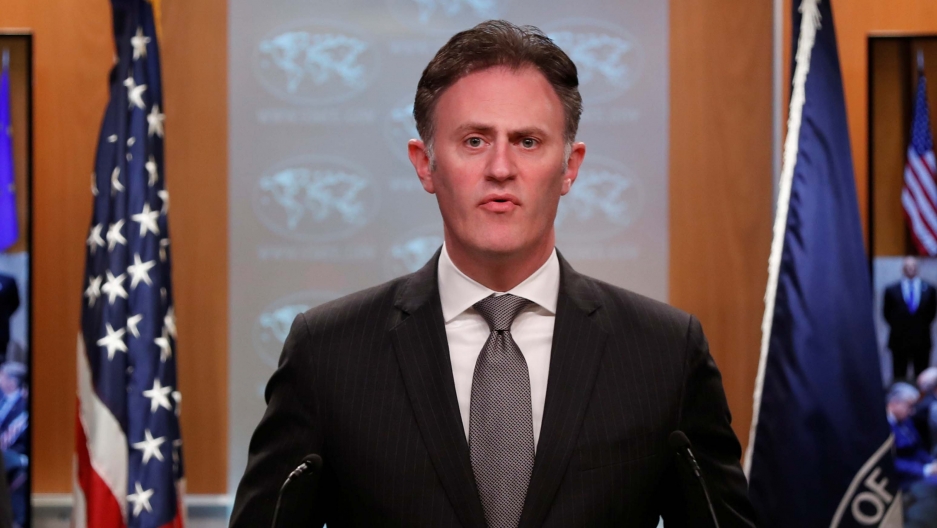
About 13,500 Americans are stranded abroad and have reached out to the State Department for help in returning to the United States since the start of the coronavirus pandemic, a senior State Department official said Monday.

A repatriation task force is “working around the clock” to help Americans get home, said the official, who was authorized to speak only on condition of anonymity.

Since the effort began, the State Department has repatriated 5,000 Americans from 17 countries and will bring home “thousands more in the coming days and weeks,” the official said.

“We’re hearing about people who are in very remote locations and very remote parts of the world. It’s complicated,” the senior State Department official said. “I’m hesitant to give a guarantee we can move every single person. We are moving very large numbers of people, and we will continue this effort.”

Below is a full rush transcript of the press Briefing With Senior State Department Officials On COVID-19: Updates on Health Impact and Assistance for American Citizens Abroad

SENIOR STATE DEPARTMENT OFFICIAL ONE:  The COVID-19 pandemic is an unprecedented global challenge, one that has affected a great number of Americans abroad.  Here at the Department of State, we’re rising to meet that challenge.  We’re working around the clock to bring U.S. citizens who are stranded overseas back home.  Our consular officers posted overseas and our local – their local employee colleagues have been working night and day to help Americans get on flights.  And, as just said, there’s a 24-7 task force here in Washington supporting that effort.

Though we stood up the task force last week, this was not our first effort to bring Americans home in response to this pandemic.  We evacuated over 800 people from Wuhan and over 300 from the Diamond Princess in Japan.  In date – in total to date, we have brought home more than 5,000 Americans from 17 countries, and we’re bringing home thousands more in the coming days and weeks.  This is truly an unprecedented effort to bring Americans from every region of the world in these rapidly changing conditions on the ground.

We urge all Americans traveling overseas at any time, but particularly now, to enroll in our Smart Traveler Enrollment Program at step.state.gov.  This is how embassies communicate important health and safety information to U.S. citizens in real time.  If you are not involved – excuse me, enrolled – you may be missing the most up-to-date information from the embassy during this crisis.

And I would like to just relate a little bit of a brief exchange I had with one of our ambassadors just an hour ago in one of the regions that is not yet heavily affected by the crisis.  The ambassador asked me what advice we should – he should be giving U.S. citizens, and I said you should do something along the lines of, “Consider whether you are ready to ride out an undetermined period of time where you are now, or do you want to go to the United States to wait out events?  If it’s the latter, do so now,” and that last bit all caps.  

That is our advice to people:  Avail themselves of commercial opportunities probably still exist.  Enroll in STEP so that if we have to help you get on subsequent flights or subsequent means of transportation, we can do so.

SENIOR STATE DEPARTMENT OFFICIAL TWO:  The bureau remains first and foremost focused on our 75,000-person workforce in over 220 locations around the world and is working very closely with our consular colleagues and folks at post to assist American citizens overseas, whether they are stranded and looking for a ride home or find themselves infected with coronavirus.  We are part of a broader interagency effort, and any movement of American citizens or chief of mission personnel during a pandemic outbreak is complex and requires the partnership of HHS, DHS, and others, and I’ll leave it there pending your questions.

QUESTION:  Do you have an updated total of the number of State Department employees who have tested positive?  And when you say that thousands more Americans are coming home in the coming weeks, this – this is due to your efforts in – or organizing charter flights or get – and such or something – or they’re just coming back on their own? 

SENIOR STATE DEPARTMENT OFFICIAL TWO:  So the domestic numbers are easier to quantify just based on communications with posts abroad.  Obviously, this is a rapidly evolving situation, especially in the overseas environment.  I can tell you we’re still at single digits here in the United States with cases – one each, two each, three each in Washington; Houston; Boston; New York; Quantico, Virginia; and Seattle.  So the numbers themselves are – overseas are still double-digit.  We’re looking at less than 30 scattered over 220 posts around the world, and it remains a challenge.  Obviously, the – this type of outbreak, had we known earlier what the epidemiology was and had some of that data, perhaps we would have a better feel for how this was going to move across our overseas posts.  But we are keeping pace with it.  And again, the number at this point is less than 30.  Over.

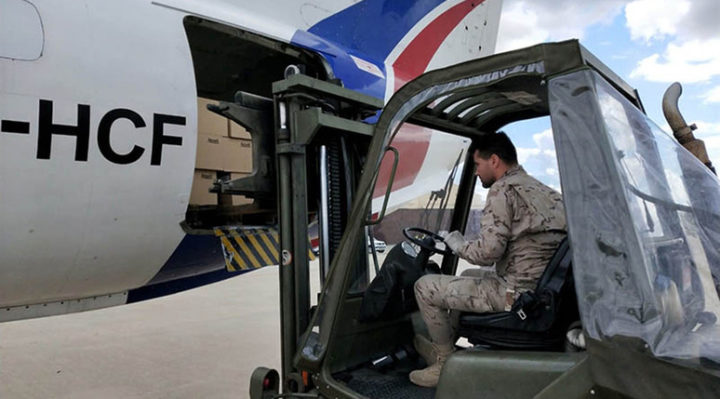
SENIOR STATE DEPARTMENT OFFICIAL ONE:  We are encouraging people to, as I said at the top, to avail themselves of commercial means while they still exist.  That is the case in a number of parts of the world, but that window is closing fast.  So what we are doing after that is we are using a variety of different means.  For example, out of Central America we had some U.S. military DOD craft, aircraft return who have carried some folks back on a space-available basis.  So for example, out of Honduras I think the number was 90 sometime late last week or over the weekend.  We’re also facilitating through the Economic Bureau, we’re helping private charters go into places.  So some mission groups have asked for our help in getting the necessary permissions for their privately chartered aircraft to go in.

We are using in some cases – and I expect this will be happening in an expanded fashion as we go out from here – we’re using what’s called the K Fund.  It’s a special fund authorized by Congress to allow us to meet unexpected emergencies.  We have organized a number of flights already on the K Fund, K Fund charters, and there are going to be more of those starting today, in fact.

We’re tracking some 13,500 U.S. citizens abroad who are seeking assistance in being repatriated.  

QUESTION:  You mentioned there’s 13,500 Americans.  Is that the estimated number of Americans stranded abroad?  And do you have a breakdown of the numbers in different geographic areas?  And finally, how many Americans have enrolled in STEP? 

SENIOR STATE DEPARTMENT OFFICIAL ONE:  I don’t have the exact numbers for you, but let me say this:  We estimate there are some 10 million U.S. citizens living abroad.  Mexico alone has a million to a million and a half U.S. citizens living there.  But that is not the entire universe of people who would be seeking to return to the United States.  A vast, vast majority of those people are resident in those countries; they’re at home in those countries.  The people who are seeking our assistance at the moment are what we might consider the expats, or tourists who are overseas temporarily.  They’re the ones whose homes are here in the United States, in other words trying to come home to ride out this crisis.

So we’re not looking at a total would-be evacuee population of 10-plus million.  It’s much, much smaller than that.  As I said, we have so far seen 13,500 or so thousand U.S. citizens who have requested some form of assistance and registered with us seeking some form of assistance in returning home.

QUESTION:  Two things.  First, for the Senior Official One, can you respond to Senator Menendez’s letter yesterday in which he calls for the administration to invoke authorities within the Civil Reserve Air Fleet readiness program to facilitate chartering these flights to get people back, and in which he also calls for the military or the Department of Defense to make military aircraft available.

And then secondly, for Senior Official Two, as I’m sure you’re aware, the U.S. Ambassador to South Africa Ambassador Marks self-quarantined on Thursday at least four days after she returned to South Africa from the United States after having spent time among other things on a U.S. Naval vessel.  Why did she self-quarantine on Thursday?  Was there something that happened between Monday and Thursday that caused her to do that, some kind of exposure?  And if not, why didn’t she self-quarantine immediately upon return to South Africa?  Or indeed, why did she return to South Africa in the first place if she had a potential exposure? 

SENIOR STATE DEPARTMENT OFFICIAL ONE:  With regard to MilAir, with regard to using those assets, we are in conversations with the Department of Defense through what is called the ExecSec – ExecSec process.  They are one of the options that we might find ourselves calling on down the road.  At the moment, though, we are finding that – excuse me – that laying on charters via the K Fund, via other mechanisms we have here in the State Department is an efficient way to do this.

As I said, we are also helping private carriers increase the number of flights they have.  So, for example, going into Peru, our Economic Bureau is facilitating conversation amongst the U.S. Government agencies involved in providing this end of the regulatory approval while our embassy in Lima is working with the Peruvian authorities on getting the necessary regulatory approvals down there.  

And so we’re able to increase the capacity that way.  This is a – whole-of-government is a cliche. 

QUESTION:  What about the question that I had regarding Ambassador Marks and why she did not self-isolate prior to Thursday? 

SENIOR STATE DEPARTMENT OFFICIAL TWO:  I can’t speak on an individual case, but I can give you from a policy perspective and sort of the way we’re addressing the disparate self-quarantine and isolation requirements in over 220 locations around the world.  First, we’re not tracking any specific exposure to any specific individual at the ambassadorial level, but I can tell you when any traveler from the State Department returns to a host nation, we respect – to the extent that we can we respect their requirements.  It’s the right thing to do, and I think we would expect their diplomats to do the same when they come to the United States.

QUESTION:  When it comes to the number of State Department employees in consulates and embassies abroad, can you tell us how many authorized departures there have actually been so far, and have you developed any contingency plan for personnel if the situation worsens?

SENIOR STATE DEPARTMENT OFFICIAL ONE:  Yes, and we have done so already in some places where air travel has become more complicated.  When we do that, if we have to charter an aircraft to bring out what we call chief of mission personnel and there’s additional space available on those flights, we will make those additional seats available to private U.S. citizens seeking to depart those countries.  So this is an ongoing dynamic situation as the virus spreads and more and more posts go on authorized or ordered departure, yes, we are taking account of this.  We are bringing those officers back to the United States, and in a great many cases, certainly I know in the Bureau of Consular Affairs, we’re putting those people to work here assisting the task force, as we mentioned earlier, or otherwise assisting in dealing with this worldwide crisis.  

QUESTION:  Can you say how many K Fund charters there have been, and does that include the medical students stuck in Peru?  I know there’s been a lot of claims that there is a flight ready to go pick them up and they’re waiting on getting some red tape cleared from the State Department.

And then what should we be telling people who are reaching out to us, quite frankly, stuck in other countries, and saying they’re not getting any response?  Should they contact the embassy, contact the airline?  And should we be telling them that they – there will be a way to get them home one way or another at some point, or can you not guarantee that for every country around the world at this point? 

SENIOR STATE DEPARTMENT OFFICIAL ONE:  With regard to the people in Peru, maybe I could ask you to elucidate a little bit on the question of red tape.  I think I know what you’re referring to, but I want to make sure I’m responding to your question.

QUESTION:  I believe at the university or a private company that says they have a plane that could go pick them up, and they’re saying that they are waiting and waiting to get the correct clearance and they’re waiting on the State Department.  Is that something that’s being worked through?

SENIOR STATE DEPARTMENT OFFICIAL ONE:  I don’t know the particulars of the case, but this is what I referred to earlier.  The State Department, the Economic Bureau here, is working, I mean, round the clock assisting with putting together the FAA, CBP, et cetera, TSA regulatory approvals on this end, and whatever the regulatory approvals are on the other end.  We are – we in the State Department are facilitating the communications, so it might be that we haven’t fully achieved that yet.  I have heard my colleagues in the Economic Bureau say that, at least at this end, the U.S. end, everybody is lashed up and ready to move very quickly and is moving quickly.  In some cases, it’s at the other end.  In this case, maybe in Peru we don’t yet necessarily have all the necessary Peruvian authorization.

We need to be aware of the fact that the Peruvian capacity for handling these flights is very limited.  They’ve been – due to COVID infections in their civil airport in Lima, they’ve had to close that airport and they’re operating out of the military, the other side of the airport, which has much, much, much less in the way of capacity, so they are able to process far fewer flights through.  I don’t know the particulars of this case, but that could explain it, that the Peruvians have not yet granted authority.

You asked about people who have not had contact with the department.  I hope that they have enrolled in STEP, and I sincerely hope that they’ve heard back through what we call a MASCOT message.  The messages get pushed out to STEP enrolees.  As a test of the system, I enrolled myself in STEP last night saying I was in Peru and would be for the next 10 days, and I’ve already received two messages from the embassy.  So if you’re hearing otherwise, it would be good to know.

QUESTION:  Could you just sort of flesh this out what the message is to people overseas?  Are you confident that there will be a way for everyone who wants to come home to come home at some point, or can you not make that promise quite yet?

SENIOR STATE DEPARTMENT OFFICIAL ONE:  We are hearing about people who are in very remote locations in very remote parts of the world.  It’s complicated.  I mean, again, going back to the case of Peru, we are tracking a number of people who are in Iquitos.  The only way in and out of Iquitos is by air.  We are working with the Peruvians to try to get permission – and the Peruvians have shut down internal air travel.  We’re trying to get permission to move those people by air to Lima so we can bring them out.

I’ve heard about individual people in remote areas in Peru, in Samoa, in Banda – in Aceh in Indonesia.  So I am hesitant to give a guarantee we can move every single person.  We are moving very large numbers of people and we will continue this effort.  

MODERATOR TWO:  To reiterate the point from the beginning of the call, this is an unprecedented effort.  These are historic times, and the department is rising to the challenge.  Safety and welfare of U.S. citizens abroad is our first priority, and we will continue to work 24/7 on the task that we’ve been given for the American people.

QUESTION:  I just wanted to clarify.  You mentioned 5,000 people already repatriated.  Those are people who were brought home with charters or DOD flights by the – organized by the State Department?  Is that correct? And then when you mentioned 13,500, what was this figure exactly about? And then one other thing.  The President yesterday talked about the case of a young woman that was brought back, but he wouldn’t elaborate.  Do you have more details about that woman who was horribly treated and then brought back to the U.S.?  

SENIOR STATE DEPARTMENT OFFICIAL ONE:  I cited some 5,700 people have been brought back.  The vast – the great majority of those were coming back through State charters – State Department chartered aircraft.  Some 800 – 800-plus out of Wuhan, China back on – in late January, 300-plus out of Yokohama, Japan, approximately 1,200 came out of Morocco last week.  We’ve had other – we had other people come out of Central America recently.  We’re looking at now 16 or so flights in the next five days, and we’ve got, at this point, about 1,600 passengers – over 1,600 passengers identified for those flights.  There’s room for more.

That 13,500 number I gave, those are the people who have reached out to our posts in all parts of the world, saying they’re interested in our assistance.  So what we do when we have space on a flight coming out, we reach out to those people and say we have space, a plane leaving at X hour on Y day, if you’re interested, let us know.  We are then prioritizing amongst those people, taking account of, really, vulnerability.  If we have somebody who is 70 years old with an underlying condition such as diabetes or heart disease, that person is going to get a higher priority on one of those flights than the hale and hearty 20-year-old.

QUESTION:  Just following up on the 13,500, how many countries do they represent?  The K Fund flight – I guess you sort of answered that in saying that you’ve got 16 flights over the next two days – those are all charter flights, correct you mentioned testing State Department people overseas.  Have you run into the same shortages of tests and problems that the United States is experiencing? 

SENIOR STATE DEPARTMENT OFFICIAL ONE:  I can’t tell you exactly what countries are involved in that number of 13.5 I gave you, but they are worldwide.  I’m sure that there are countries somewhere. It’s probably – it’s not every single country worldwide.  It’s certainly every single region of the world, but specific number of countries I do not have.

K Fund – you asked about the K Fund and chartering.  Yeah, we’re scheduling – those are chartered planes – those K Fund charter planes – over the next, whatever, some five days or so.  In some other cases, we’re – they’re DOD back halls.  We’re also working with the Department of Homeland Security.  They’re flying planes into Central America and they are prepared to bring folks back on those aircraft.  So it’s a variety of different U.S. Government aircraft.  

SENIOR STATE DEPARTMENT OFFICIAL TWO:  With regard to testing, there are essentially three scenarios overseas.  In the first scenario, it’s in a very modern country – UK, France, and so forth, and we rely on testing on the host nation medical infrastructure, and we’ve not had problems where we’ve needed testing – getting testing for chief of mission personnel.

At the other end of the spectrum are places that don’t have testing, and those – there is no deployable test that we can put in our embassies overseas.  And so in those countries where there is no host nation testing, if we have a case that we’re following, which to date we’re not, the intent is to care for them as – assume that they have coronavirus and treat them accordingly.  Provide care in place, and medically evacuate them when we otherwise would for someone who had a bacterial pneumonia or a bad case of influenza.

And there are cases in the middle – or places in the middle where there is host nation testing available, but to subject the individual to the test may trigger an interaction with a host nation government where there’s a movement by a host nation to forego Vienna protections and place the person in institutional quarantine.  While we’ve not faced that problem, we have plans for that problem, and the plan on that, quite frankly, is to medically evacuate them then, and at that time, bring them back to the States and put them in an appropriate facility.

We’re working with industry right now.  We anticipate and hope that there will be emergencies authorization of another testing platform that we will be able to deploy to our embassies overseas in the coming week or two.

QUESTION:  Could I follow up on one thing that said, please?  You said flights that Homeland Security is sending down to parts of Latin America would bring American – these would be deportation flights, so flights that are deporting migrants would then bring stranded Americans back?  Is that correct?

SENIOR STATE DEPARTMENT OFFICIAL ONE:  DHS, ICE ERO has indicated a willingness to use those planes for that purpose, yes.

QUESTION:  I was wondering if you guys have heard any complaints about the website and that people insert information and they don’t end up hearing back.  It sounds like you’ve tested it out yourself, but I wonder if there is an effort to address that issue at all that some people are having.

SENIOR STATE DEPARTMENT OFFICIAL ONE:  we recognize it’s an issue.  What we’ve found – a colleague of mine tried to do what I did, tried to register for a trip to Peru, didn’t quite get the data put in correct, and therefore didn’t hear anything back and thought, “Oh my God, the system doesn’t work.”  So sometimes it’s a question of operator error.  Other times it is – it can be a question of the system getting overloaded.  I mean, here we are asking through this unprecedented effort to get people to register through STEP.  

There’s going to be some latency issues, but we are trying to address those.  Just in the last 24 hours, the Bureau of Consular Affairs has doubled our – the – I’m not a computer guy – doubled the capacity of the system to process cases by bringing up another server center to handle this.  So we hope this addresses the latency and other issues we had seen. 

QUESTION:  And do you guys feel like you have the capacity in general to deal with this global crisis?  There’s obviously been some complaints on the Hill from lawmakers that feel like it really has been a scramble.  How have you guys responded to that?

SENIOR STATE DEPARTMENT OFFICIAL ONE:  It has been a lot of hard work, and it is going to be a lot of hard work going forward, but yes, we are dealing with this.  Yeah, we are devoting all of our resources to this.

For example, we have instructed posts worldwide, all posts worldwide, to suspend routine visa services.  So those posts in China or Mexico or wherever they are where we have hundreds of officers doing visa services and we have thousands of locally employed staff assisting in doing those visa services, we are largely shutting down those routine visa services so we can devote all of that officer and locally employed staff time to American citizen services.

The officers who are coming home – the consular officers who are coming home on authorized or ordered departure we are in large part putting to work doing what we call ACS work, American Citizen Services work.  We have a number of them working on the task force now, and we will have – probably have more by the end of the day and more by the end of tomorrow.  So we are devoting all available resources to addressing this crisis.  Over.

QUESTION:  I was wondering if you could elaborate a little further on those (inaudible) cases, how many are contractors versus staffers, how many are locally employed staff versus Foreign Service officers?

Then, how many folks are actually working on the repatriation task force?  And what message do you have to Americans who are really scared, they feel like they’re not being heard right now?

SENIOR STATE DEPARTMENT OFFICIAL ONE:  How many – is the question how many people are on the task force?  I think with each passing minute it’s more.  It’s a little bit hard to say only because we have a certain number of people working in a task force room, but of course, we’re trying to be socially distant these days, so we have people sort of dispersed across the Washington area and elsewhere who are working task force issues.  But they’re also working their daytime jobs, so it’s a little bit difficult to say specifically that we’ve got X number of people.

I can put it this way:  As the head of the task force, I can call on any resources within the Bureau of Consular Affairs to address task force issues, and we have a very, very large workforce.  We’re some 14,000 worldwide.  We are also able to pull in representatives from the regional bureaus, from other functional bureaus.  

I mentioned already the Economic Bureau.  Diplomatic Security is in there.  Bureau of Legislative Affairs is in there.  Our colleagues from Global Public Affairs are in the room.  I know I’m leaving some out, but it is a very large group, some of whom are physically present in the task force room, the vast, vast majority of whom are not.  They are working in a dispersed fashion.  

QUESTION:  And then, any message to Americans abroad who are scared and feel like they’re not being heard?

SENIOR STATE DEPARTMENT OFFICIAL ONE:  I’m going to go back to what I said in the beginning.  If you are a U.S. citizen and you are abroad at the moment, take a look at your circumstances; determine whether this is a place where you would be willing to hunker down for an indeterminate period of time as airspace and borders, et cetera, close down.

Now, if you’re at home in central Mexico and that’s where you live, fine.  But if you are somewhere where you think no, this is not where I would want to be over the long haul, take advantage of existing commercial opportunities and get out now.  If the borders have closed – or actually, even before the borders close, people should register with us, make contact with the U.S. embassy or consulate in their area, and then listen carefully for instructions and advice from that embassy or consulate.

When the time comes, assuming the time comes to try to organize a repatriation flight, the only way we’re going to be able to find somebody is if they’ve registered with us in STEP and provided in pretty detailed information about who they are, how to get in touch with them, et cetera.  That’s how we build the manifest for these flights.

March 24, 2020 0 comments
0 FacebookTwitterPinterestEmail
Defence

British Royal Marines launched surprise raids on Norway coastline

by Nadarajah Sethurupan March 24, 2020
written by Nadarajah Sethurupan

Royal Marines surprised ‘enemy forces’ by launching a series of daring raids on the Norwegian coastline during demanding winter exercises. Deep within the Arctic Circle, the first objective of the mission saw commando forces launch an amphibious attack from UK flagship HMS Albion using boats operated by Norwegian allies.

Embarking on the Royal Norwegian Navy’s CB90-class fast assault craft and Skjold-class corvette, a commando team covertly infiltrated the enemy positions set along the Norwegian fjords of Senja Island, more than 685 miles north of capital Oslo. The commandos’ mission was to cause havoc amongst their adversaries.

The Royal Marines use “Hippo” BRVs (Beach Recovery Vehicles) now based on Leopard 1 main battle tank chassis. In 1944, the first specialized vehicles of this type used on D-Day were Sherman BARVs (Beach Armoured Recovery Vehicles) (Picture source: Royal Navy)

In addition to adopting progressive tactics, the unit embraced Future Commando Force development by operating as 12-man teams, with each commando bringing unique skills and individually chosen for the mission at hand.

Having been maneuvered into position off the coast by the Norwegians, the teams (drawn from 45 Commando’s Recce Troop, Joint Terminal Attack Controllers and gunners from 29 Commando Royal Artillery, and Royal Engineers from 54 Commando Royal Engineers) silently landed ashore via small raiding boats operated by Plymouth-based 47 Commando.

The commandos then coordinated a salvo of artillery fire and air support onto the enemy target, quickly destroying their position and allowing the amphibious task group to gain a foothold on mainland Norway.

It was before the outbreak of the coronavirus crisis…

March 24, 2020 0 comments
0 FacebookTwitterPinterestEmail
Asia and Norway

Kazakhstan: extra-measures against coronavirus, massive support to businesses

by Nadarajah Sethurupan March 23, 2020
written by Nadarajah Sethurupan

President of Kazakhstan, Kassym-Jomart Tokayev, in a televised address to the nation, explained the government’s extraordinary measures to contain the novel Covid-19 coronavirus. He also announced a package of state support for businesses, healthcare, and the social sphere.

Since January, Kazakhstan has taken strict measures to prevent the entrance of the coronavirus in the country. From the early days, the authorities introduced a stringent quarantine system for people arriving from unfavorable epidemiological zones. Kazakhstan registered the first Covid-19 case on 13 March. As of 18 March, the number of infected was 35 people. 1665 people are at in-patient quarantine; 1076 people are at home quarantine.

On 16 March, the country introduced a one-month state of emergency, which includes tightening public security and a ban on mass events.

“Many of us made plans for the upcoming holidays [Nauryz is a spring equinox, one of the favorite holidays for the Kazakhs], some wanted to attend concerts, sports competitions, other events. Unfortunately, for the sake of our nation’s health, we will have to refrain from all these,” the President explained.

The restriction on the functioning of large trade entities has been introduced, but grocery and essential goods stores will continue to work. Entertainment centers, cinemas, theaters, galleries, and many other facilities are closed. Schoolchildren are on early vacations, university, and college students have been transferred to online education. The Government introduced restrictions on an entry in and exit from the territory of Kazakhstan.

However, these measures do not apply to freight transport. The sanitary-epidemiological regime has been tightened at checkpoints on the state border, at stations and airports.

“The Government has allocated reserve funds for the purchase of medicines, test systems, and laboratory equipment. There is a sufficient number of beds in hospitals in the country,” Tokayev said.

The President also announced measures to support the economy due to the global crisis. He reminded that the country had accumulated international reserves of about $90 bn. “This is a serious guarantee to ensure the stability of our economy and fulfilling the government’s social obligations,” Tokayev said.

At least 300 bn tenge ($690 m) will be allocated to support entrepreneurs and create new jobs.

Additionally, the Government plans to subsidize loans and introduce tax incentives, and manufacturers will be provided with additional liquidity of up to 400 bn tenge ($920 m). According to Minister of National Economy, Ruslan Dalenov, this will “maintain business activity and create 200 thousand new jobs”.

It is also planned to provide deferred payments for up to 90 days to individual entrepreneurs and small and medium-sized businesses affected by the crisis. Mr.Dalenov said that agriculture would get increased lending and tax incentives. “It is supposed to exempt from VAT on the import of biological assets, including cattle and breeding chickens. Also, almost 7 thousand agricultural producers will be exempted from paying tax on agricultural land,” the Minister added.

March 23, 2020 0 comments
0 FacebookTwitterPinterestEmail
Science

Norway mobilises international support for vaccine development effort

by Nadarajah Sethurupan March 22, 2020
written by Nadarajah Sethurupan

Several countries are now supporting Norway’s appeal for funding for the development of a vaccine against the Covid-19 virus. Germany, Sweden, Finland and Denmark are among the countries that are now pledging millions.

Prime Minister Erna Solberg and Minister of International Development Dag-Inge Ulstein launched a concerted effort to mobilise funding from donors in January, following a meeting with Richard Hatchett, Chief Executive Officer of the Coalition for Epidemic Preparedness Innovations (CEPI).

Prime Minister Erna Solberg has been in direct contact with Angela Merkel, Emmanuel Macron, Justin Trudeau and several other heads of state and government to raise the funding needed for the development of a vaccine. Mr Ulstein and Minister of Health and Care Services Bent Høie have also been contacting their colleagues in other countries. In the last few days, Germany has promised to provide NOK 1.6 billion (EUR 140 million) and Finland has announced a contribution of NOK 29 million, and on Tuesday Denmark pledged to provide NOK 15 million. The most recent pledge came from Sweden.   

Norway announced as early as January that it was allocating NOK 36 million to CEPI’s work to develop a vaccine against Covid-19. This funding is in addition to Norway’s ordinary contributions to CEPI, which will total NOK 1.6 billion for the period 2017-2025.

‘Nevertheless, we are still USD 250 million short of the funding we need to reach our goal of USD 1 billion in contributions to CEPI. It is important to get more countries and other actors on board so that we can work together to improve global health security,’ Mr Ulstein said. 

‘Physical borders are being closed all over the world, but cooperation across national borders is now more essential than ever. World leaders need to stand together to respond to this crisis and must put any conflicts aside. The only way we are going to get through this without suffering intolerable losses is by standing together,’ he said.  

‘It is now vital that neither countries nor commercial actors exploit the very difficult situation we are in to enrich themselves at the expense of the millions of people who risk falling ill. We must ensure that any vaccine that is developed is fairly distributed. Our hope is that a vaccine, or several vaccines, will be available in about 12 to 18 months’ time,’ Mr Ulstein said.  

The situation in Africa is particularly worrying now. According to the World Health Organization (WHO), countries in Africa have limited capacity to test for infection, and well-functioning health institutions and protective equipment for front-line health workers are in short supply. A major outbreak of the virus on the continent would cause suffering on a catastrophic scale.  

The Ebola outbreak in West Africa in 2014-2015 showed that the world needs to be far better prepared to prevent outbreaks of infectious diseases from spreading, and from affecting and killing large numbers of people.

‘The situation we are now in highlights only too clearly how vulnerable the world still is to outbreaks of this kind and how vital it is for world leaders to find solutions that can make us better prepared to deal with them. Norway is proud to have been involved in establishing CEPI and to be contributing to the efforts to develop vaccines against infectious diseases that we know can lead to major epidemics. Global health security needs to be improved, and vaccines are our best insurance against epidemics of this kind,’ Mr Ulstein said.

About CEPI 

  • Full name: Coalition for Epidemic Preparedness Innovations (CEPI), with headquarters in Oslo, Norway
  • Established in 2017 in the aftermath of the Ebola crisis to develop vaccines to stop future epidemics faster than has been possible using traditional approaches.
  • The idea was conceived in Norway. Norway, Germany, Japan, India, the Bill & Melinda Gates Foundation and the Wellcome Trust were key contributors to the establishment of CEPI.
  • Norway is providing a total of NOK 1.6 billion to CEPI (2017-2025).

March 22, 2020 0 comments
0 FacebookTwitterPinterestEmail
Media Freedom

Large compensation scheme for culture, voluntary sector and sport

by Nadarajah Sethurupan March 21, 2020
written by Nadarajah Sethurupan

‘It is a very demanding time for the culture, voluntary and sport sectors, with businesses, organisations, clubs, associations and individuals seeing their income completely or partially disappear almost overnight. The Government will do what we can to help remedy the situation, and I am pleased to present a set of robust measures,’ said Minister of Culture and Equality Abid Q. Raja.

The package presented today consists of a compensation scheme for cultural life which will amount to about NOK 300 million and a similar one for sport and voluntary sector activities of about NOK 600 million. The scheme is intended to compensate for loss of income from ticket sales and participation fees as well as additional expenses associated with events that have had to be cancelled or postponed due to the coronavirus.

Credit: Marius Bakke/Norwegian Ministry of Culture

‘I am very pleased the Government is able to present a very good compensation scheme specially targeted for the fields of culture, voluntary service and sport,’ the Minister of Culture and Equality said.

‘In conjunction with the measures already presented ­– like the Government’s agreement not to demand repayment of grants for culture and voluntary sector purposes, a targeted effort to compensate freelancers and self-employed persons on the basis of their income the past three years, including a social assistance scheme for the first 17 days, and the state’s assumption of most of the bill for layoffs – we have managed all in all to assemble a good package for the sector. And now we’re moving out this comprehensive scheme that will benefit a great many actors.’

Mr. Raja added: ‘We will nevertheless remain in dialogue with organisations, associations, clubs, companies and other bodies and consider additional measures on an ongoing basis. We’re in the midst of a demanding period for the entire sector, but the Government has said we will do what we can to save jobs, and this scheme will help to do just that.’

The schemes will be administered respectively by Arts Council Norway and the Gaming and Foundation Authority, with the technical system for both schemes situated within the Gaming and Foundation Authority. Initially, compensation will be provided for events that were supposed be held between 5 March and the end of April.

March 21, 2020 0 comments
0 FacebookTwitterPinterestEmail
Media Freedom

Norway Offers COVID-19 Data Privacy Guidance Related To Work, Health, E-learning

by Nadarajah Sethurupan March 21, 2020
written by Nadarajah Sethurupan
General:

This is not the time for strict enforcement of data protection. We are showing agility during this crisis.

Work:
  • Information that someone is infected with coronavirus is health information.
  • Information that someone has been quarantined or returned from a so-called “risk area” is not health information.
  • Employers should not disclose information that individual employees are infected or quarantined.
Health
  •  For medical care by video, you must have a data processing agreement in place and conduct a DPIA. To this end, choose a video service which is recognized and can demonstrate that it will adequately protect your privacy.
  • The special regulations that apply to health personnel and protection against infection most likely provide sufficient legal basis under Art. 6 and 9 GDPR . To process health data under Art 9.2(g) [public interest], (h) [preventive or occupational medicine] or (i) [public health per state law] GDPR + additional provision in Norwegian law.
E-learning
  • Try to ask before using solutions not previously approved by the school.
  • When use is done – delete all unnecessary information.

Read the full text of the guidance.

[View source.]

March 21, 2020 0 comments
0 FacebookTwitterPinterestEmail
Terrorist

Turkey deports Terrorist to Norway

by Nadarajah Sethurupan March 21, 2020
written by Nadarajah Sethurupan

Turkey deported another foreign terrorist fighter – a member of the Daesh terrorist organization – to his home country of Norway, the Turkey Interior Ministry said Thursday.

Ankara is moving forward with its campaign to repatriate all terrorists with foreign nationalities amid a series of counterterrorism operations. As part of Turkey’s ramped-up efforts to repatriate foreign terrorists, the Interior Ministry said on Nov. 9 that the country would begin extraditing captured Daesh terrorists to their home countries.

Turkey has been actively conducting military and police operations against Daesh inside the country and abroad. (DHA Photo)

There were more than 1,000 foreign terrorist fighters in Turkey’s repatriation centers. Almost 780 of them were deported back to their countries of origin in 2019, said Turkey’s Interior Minister Süleyman Soylu.


The issue of the handling of Daesh members and their families detained in Syria, including foreign members of the terror group, has been controversial, with Turkey arguing foreign-born terrorists should be returned to their countries of origin.

Turkey has long voiced calls for returning foreign fighters to their respective countries as the best possible solution among other unfavorable alternatives. By being returned to the European Union, the detainees might be prosecuted and thus prevented from being further radicalized in camps filled with fellow former combatants.

Ankara has said several European countries turned down its efforts to send Daesh members back to their countries.

The issue of repatriating citizens who fought for Daesh in Syria remains a divisive problem in Europe, with many countries refusing to accept the terrorists.

Turkey has criticized Western countries for refusing to repatriate their citizens who left to join Daesh in Syria and Iraq, and stripping some of them of their citizenship. Although the 1961 New York Convention made it illegal to leave people stateless, several countries, including Britain and France, have not ratified it, and recent cases have triggered prolonged legal battles. The U.K. alone has stripped more than 100 people of their citizenship for allegedly joining terrorist groups abroad.


The first batch of former Daesh terrorists to be repatriated from 28 detainment centers based in 23 of Turkey’s provinces were of German, Danish and U.S. origin. Of these, the U.S. citizen had requested to be sent to Greece yet was left in a buffer zone when the country did not accept him. Terrorist fighters from Germany, the U.K., the Netherlands and Belgium have all been successfully sent back, followed by an Irish citizen, according to the Interior Ministry.

“No matter what, we will send Daesh members back. We are not their hotel,” Soylu said at the beginning phase of the process.

Turkey recognized Daesh as a terrorist organization in 2013. Since then, the country has been attacked by Daesh terrorists numerous of times, including 10 suicide bombings, seven bombings and four armed attacks, which killed 315 people and injured hundreds more.

In response, Turkey has launched military and police operations inside the country and abroad. Turkey has been actively conducting counterterrorism operations against Daesh since 2016. Since then, 4,517 of the 13,696 suspects detained in 4,536 operations have been arrested. Over the course of the operations, 1,018 terrorists were either killed, injured or surrendered. In order to apprehend Daesh suspects, 64 risk analysis units that include experts on terrorism and intelligence were formed across the country. The units regularly monitor suspects that operate within their region, as well as all other developments regarding the terrorist group, both within and outside the country.

March 21, 2020 0 comments
0 FacebookTwitterPinterestEmail
Economics

World’s largest sovereign wealth fund invests $36.3m in TMG

by Nadarajah Sethurupan March 20, 2020
written by Nadarajah Sethurupan

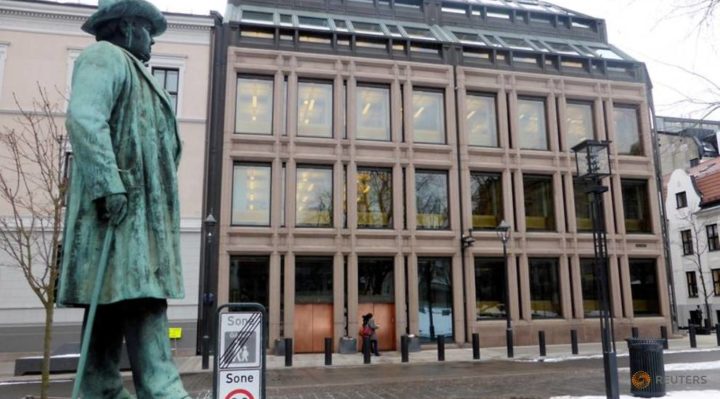
The Government Pension Fund of Norway (also known as the Oil Fund), the largest sovereign wealth fund in the world, increased its investments in Egyptian shares to $530.2m last year, distributed on 41 listed companies. The real estate sector has the large share of the Norwegian fund’s investments in the Arab region, with total investments of $297.7m worth shares in 13 Arab real estate companies, topped by Talaat Moustafa Group (TMG).

Oil Fund’s investments in 7 Egyptian real estate firms amount to $96.5m

Given the recent growth in the real estate sector in Egypt, the Oil Fund increased its investments in Egyptian real estate companies last year, with total investments amounting to $96.5m in seven firms. TMG had the largest share of them.

The fund’s investments in TMG recorded $36.3m worth shares, representing 3.46% of the company’s stocks. Madinet Nasr Housing and Development came second with investments of $21.5m worth shares, representing 4.97% of the company’s stocks. Heliopolis Company for Housing and Development ranked third with investments of $15.2m worth shares, followed by Sixth of October Development and Investment Company (SODIC) with investments of $ 8.1bn worth of shares, while Palm Hills Development had $7.3m worth shares, and then Orascom Development Egypt with $6.6m worth shares. The United Company for Housing and Development had the least investments from the Oil Fund, amounting to about $1.5m worth shares, representing 2.98% of the company’s stocks.

10% increase in TMG’s net profits in 2019

TMG’s net profits increased to about $1.9bn at the end of 2019, a growth of 10% compared to $1.7bn in 2018.

The group achieved 7% growth in revenues, to reach EGP 11.7bn, compared to EGP 10.9bn in the same comparison period.

The company’s gross profits for the fiscal year ending 31 December 2019 increased to EGP 4.5bn, compared to about EGP 4bn in the comparison year.

On the independent business level, the financial statements of TMG Holding showed an increase in net profits by 52% to EGP 471.1m, compared to EGP 309.8m. Revenues achieved 22% growth in the last fiscal year to EGP 1.1bn, compared to EGP 948.7m in the comparison period.

TMG’s real estate sales record EGP 20.4bn in 2019

TMG announced early January that it had achieved real estate sales of EGP 20.4bn last year.

The group said in a statement to the Egyptian Exchange, that its sales had slight decrease in 2019 by EGP 900m (4% only), due to the slowdown in the real estate market in the second half of 2019, which prompted some developers to provide selling offers that include longer instalments with no down payments, or cut prices to increase sales.

The group attributed the slight decrease in its sales to the acquisition of four schools in Al Rehab and Madinaty cities in 2018, while selling one school in 2019 for EGP 300m. It also started offering Celia project’s units in the New Administrative Capital for sale in 2018, which benefited from the great demand for the group’s projects in new geographical regions.

Al Rehab: first integrated city by the private sector in Egypt

Al Rehab, established by TMG, is the first integrated residential city by the private sector in Egypt, as it was developed to accommodate about 200,000 people, on an area of ​​10m sqm.

Al Rehab offers high-end housing and vast green areas, in addition to an integrated set of services, such as shopping centres and markets, healthcare, international schools, sports and social clubs, private external and internal transportation network, and other services.

Madinaty: largest private sector project in the Middle East

In 2006, Hisham Talaat Moustafa laid the foundation stone for establishing Madinaty city, the largest integrated urban project established by the private sector in Egypt and the Middle East, on an area of ​​8,000 feddan (33m sqm), to include 120,000 housing units. Its population is expected to reach one million people.

Madinaty has various residential areas, including villas and buildings, wide green areas, and golf courses, in addition to the daily services for residents and recreational areas. It also includes on its outskirts many services to meet the needs of both Madinaty and neighbouring cities.

Celia: largest private sector project in New Capital

TMG invested in the New Administrative Capital to establish Celia, the largest private sector project to date in the city, on an area of ​​500 feddan, with investments amounting to EGP 33bn.

Talaat Moustafa’s interest in the New Capital caught the attention of other Egyptian and Arab investors to the city that the Egyptian government is building.

New Capital is perfectly centralised between Madinaty, New Cairo, and Badr City, and it is only 60 km from Ain Sokhna.

Life in Celia stands out in many different forms. It includes international schools, sports clubs, a Roman theatre, malls, and other facilities and services.

Oil Fund’s historic results

“2019 has been a very good year for the fund. The market value of the fund increased by 1,832 billion kroner ($191.98bn) to 10,088 billion kroner($1057.17bn) at the end of the year. This is the greatest increase in value in a single year in the fund’s history”, says Øystein Olsen, Chair of Norges Bank’s Executive Board.

The fund amounted to a total of 10,088 billion kroner as at 31 December 2019, of which 70.8 percent was invested in equity, 2.7 percent in unlisted real estate and 26.5 percent in fixed income.

The krone depreciated against several of the main currencies in the course of the year. This contributed to an increase in the fund’s value of 127 billion kroner. The transfer of capital from the Norwegian government was 18 billion kroner for the year as a whole.

March 20, 2020 0 comments
0 FacebookTwitterPinterestEmail
Asia and Norway

Norwegian multinational to develop 70-mln-USD solar plant in Indonesia

by Nadarajah Sethurupan March 19, 2020
written by Nadarajah Sethurupan

Multinational Scatec Solar plans to invest 70 million USD to build a 70MW solar photovoltaic plant in Labuan Bajo, a famous tourist destination in Indonesia’s East Nusa Tenggara.

The plant’s capacity is five times that of Indonesia’s current largest solar power plant, the 15MW Likupang solar farm in North Sulawesi. The Oslo-based firm intends to begin construction of the 100-hectare facility later this year and start its operation by 2022, a year before the province hosts a G20 summit.

In Asia, Malaysia is Scatec’s biggest operating country, said Southeast Asia representative Jeevaneswaran “Jeevan” Ramoo, adding next in development are Vietnam and Indonesia.

Despite Indonesia’s commitment to boost usage of renewables, investments into the sector have been deterred by unfavourable regulations such as tight local content requirements.

Scatec itself faces challenges in acquiring solar photovoltaics for the Labuan Bajoplant due to local content requirement regulations. The company is evaluating local manufacturing quality and prices, said Jeevan.

The Norwegian company will be developing the Labuan Bajo plant with Indonesian renewables company PT Arya Watala Capital and tourism developer PT Flores Prosperindo.

Watala managing director Mada Ayu Habsari said that the company saw ample growth room for electricity consumption in Labuan Bajo because the beachfront is among the 10 areas slated to become tourism hotspots under a governmental programme.

Prosperindo president director Alfonso Pardede was also confident about growth room for electricity consumption in East Nusa Tenggara, citing the province’s electrification rate of 85 percent – the lowest in Indonesia./.

March 19, 2020 0 comments
0 FacebookTwitterPinterestEmail
NATO and Norway

Thales mine hunting sonar used by Royal Navy to clear waters in Oslo

by Nadarajah Sethurupan March 18, 2020
written by Nadarajah Sethurupan

Thales UK’s most advanced new mine countermeasures (MCM) 2093 wideband variable depth sonar installed on HMS Grimsby has been part of a two-week joint NATO operation that has led to 38 pieces of ordnance being found – 18 by HMS Grimsby alone.

During the joint operation, four ships were involved with the sonar on HMS Grimsby performing exceptionally well in the deep and cold water conditions.

Although operationally proven, an evolving mine warfare environment prompted Thales UK to develop the enhanced 2093 wideband variant, under the 2093 Capability Sustainment Programme (CSP) for the Royal Navy, providing a step-change improvement in threat recognition capability and range. This capability has now spectacularly proved it’s worth in difficult conditions, making shipping channels and inlets safer for marine traffic.

Nathan Noall, Project Manager for 2093 CSP at Thales UK, said: “This is a great result for the new Thales 2093 Wideband Sonar, proving that the outstanding performance has real world application to provide safety for marine traffic worldwide. We are very proud to provide the Royal Navy with this exceptional capability.”

2093 Wideband: technical details

2093 Wideband is a multi-frequency variable depth sonar system designed to counter the threat of modern mines in both deep and shallow water. 

Its sonar transmitters and receivers are contained within a towed body which is lowered below the ship, penetrating oceanic thermocline layers which can cause sonar interference.
The new 2093 wideband capability has evolved from Thales’s world-leading 2193 sonar, which has been in service on the Royal Navy’s Hunt-class minehunters for a decade, giving 2093 an extensive deep water performance previously only seen in shallow waters. Pulse compression technology allows long range detection and classification of new generation, low target strength mines, while wider fields of view and multiple search and classification frequencies ensure that the critical mine hunting parameters of ‘coverage rate’ and ‘speed of advance’ are maximised under any operational conditions. The 2093 wideband’s human-computer interface has also been converged with 2193, making familiarisation training quicker for sonar operators from Hunt Class ships.

You can find out more about out Maritime Systems here.

March 18, 2020 0 comments
0 FacebookTwitterPinterestEmail
Environment

COVID-19: Norway to close airports for international traffic

by Nadarajah Sethurupan March 17, 2020
written by Nadarajah Sethurupan

Norwegian Prime Minister Erna Solberg has announced plans to restrict the entry of non-resident foreigners into its airports to limit the spread of the coronavirus (COVID-19) in the country.

Forbes quoted Solberg as saying: “These last days have been completely unreal for me and it has certainly been the same for all of you.

“This affects our everyday lives, our healthcare system and our economy. Many people feel that everyday life has been turned on its head. I thank everyone on the front line, in the healthcare system and everywhere else.”

However, she added that the country will not be able to close the border completely as Norway needs to import pharmaceuticals, food and other essential items.

On 13 March, Avinor announced its plans to temporarily suspend commercial traffic operations at its nine short-runway airports (STOL airports) from 18 March.

This move is expected to help in the transfer of personnel and equipment to other Norwegian airports.

Avinor CEO Dag Falk-Petersen said: “Avinor’s employees will also be exposed to infection, be quarantined, or need to take care of their children or other persons in their care.

“To ensure that we have an operational network of airports, we are now freeing up resources in order to increase robustness at other airports, and with that, securing our operational capability over time

“We will organise transportation for passengers from affected airports to the nearest operational airport.”

Traffic from Vardø Airport will be redirected to Vadsø, Berlevåg to Båtsfjord, Sørkjosen to Tromsø, Stokmarknes to Andøya, Svolvær to Leknes or Evenes, Mo i Rana and Mosjøen to Sandnessjøen, Førde to Sogndal or Florø and Sandane to Ørsta/Volda or Florø.

In a similar move, Denmark has also closed its border to foreign travellers as of 14 March.

The Covid-19 pandemic has so far killed more than 6,500 and infected more than 169,000 people worldwide.

Norway has reported 1,256 confirmed cases with three deaths so far.

March 17, 2020 0 comments
0 FacebookTwitterPinterestEmail
Norwegian Aid

NOK 100 billion worth of guarantees and loans in crisis support for businesses

by Nadarajah Sethurupan March 17, 2020
written by Nadarajah Sethurupan

The government has proposed two new loan measures, providing support of a total of NOK 100 billion. The package will improve Norwegian businesses’ access to the necessary liquidity in the challenging situation they are now facing.

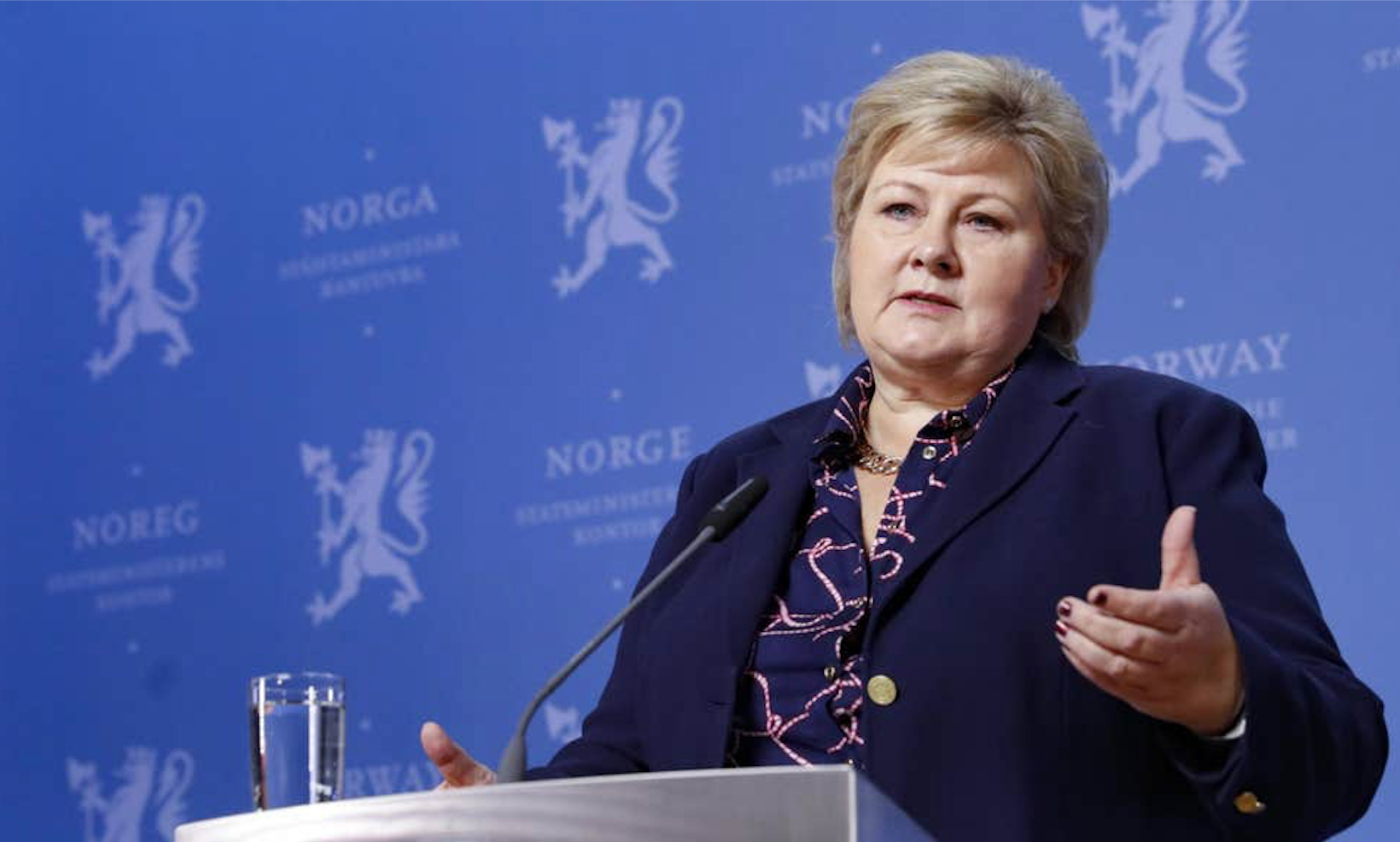
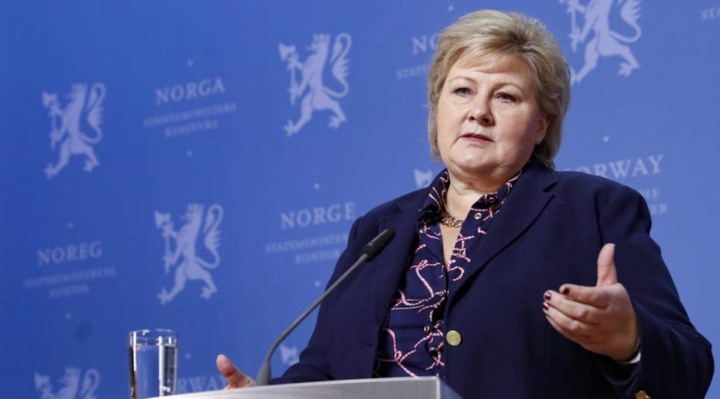
“The Norwegian economy is currently facing a very challenging situation. The government will do what is needed and provide the necessary funding to safeguard the Norwegian economy and support Norwegian businesses, large and small”, says Prime Minister Erna Solberg.

When the government presented the first support package March 13th, it announced further measures would be provided shortly. The two loan packages now proposed are part of these additional measures.

“Many businesses are currently being left with small or no revenues, while still having to pay their fixed costs. This means they could soon be facing liquidity problems. The measures we are announcing today will help in this situation. Together with other measures proposed by the government, this will support confidence in the capital markets and help secure financing for Norwegian businesses. This is crucial to ensure people will still have a job to go back to, once the crisis has passed”, says Minster of Finance, Jan Tore Sanner.

State loan guarantees for new loans to small and medium-sized enterprises
The government has proposeed to establish a state guarantee targeted at bank loans to small and medium-sized enterprises suffering losses as a result of the extraordinary situation arising from the spread of the corona virus. The initial package of NOK 50 billion will be increased if needed.

The Ministry of Finance and the bank industry are currently in dialogue about how to implement the guarantee framework in the most effective manner. This includes ensuring the framework is used according to the stated purpose and establishing how the government will monitor the banks.

Reinstating the Government Bond Fund
The Government has further propose to reinstate the Government Bond Fund. This will contribute to increased liquidity and access to capital in the Norwegian bond market, where larger companies typically raise their funding.

“The Government Bond Fund will provide up to NOK 50 billion, to be invested in bonds issued by Norwegian companies. This is a measure we have positive experience with from the 2008 financial crisis”, says the Minister of Finance.
The fund will be managed by Folketrygdfondet, which is the state’s fund manager for the Government Pension Fund Norway.

“We are working on the final details for both measures and will present a proposition to the Parliament as soon as possible”, says the Minister of Finance.
March 17, 2020 0 comments
0 FacebookTwitterPinterestEmail
Environment

Covid-19 in vulnerable countries –calls for concerted international effort

by Nadarajah Sethurupan March 17, 2020
written by Nadarajah Sethurupan

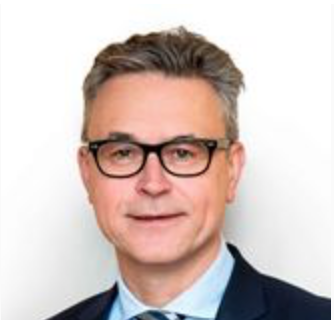
‘The coronavirus knows no borders. If we are to combat this pandemic, we must immediately implement the necessary preventive measures both here in Norway and at the global level. A coordinated international effort is now vital to save lives and limit the long-term negative consequences of the Covid-19 pandemic, including the economic consequences,’ said Minister of International Development Dag-Inge Ulstein. 

We are seeing societies that have good emergency preparedness systems and strong health services being paralysed by the Covid-19 pandemic. There are major concerns about what will happen when the virus spreads in more vulnerable countries with weak health systems. 

According to the World Health Organization (WHO), there is a need for an additional NOK 5.7 billion (USD 571 million) globally to ensure that the necessary infection prevention and control measures are in place to deal with the Covid-19 outbreak, which has now been declared a pandemic. In its Covid-19 Strategic Preparedness and Response Plan (SPRP), WHO calls for USD 675 million in funding for immediate and preventive measures, for the period February-April 2020. At a WHO meeting on Thursday 12 March, it emerged that pledges totalling USD 440 million had so far been made. 
In addition, the UN Refugee Agency (UNHCR) has called for USD 33 million in funding for its Covid-19 appeal, to boost preparedness, prevention and response activities to address the immediate public health needs of refugees, and the International Organization for Migration (IOM) has launched a USD 17 million strategic plan to help countries address the coronavirus outbreak. 
‘I am deeply concerned about the prospect of uncontrolled spread of Covid-19 in countries and regions that neither have the health services nor the resources needed to respond to this pandemic. The latest figures from WHO show that there are not many registered cases of infection in Africa, but there may be unreported cases. A lack of testing capacity and protective equipment, combined with inadequate health services in developing countries, will severely affect the people in these countries, who are already among the world’s most vulnerable. This will also contribute to the further spread of Covid-19. According to WHO, health workers on the front line in many poor countries with weak health systems simply do not have access to personal protective equipment,’ said Mr Ulstein. 

Although a number of countries have yet to register cases of Covid-19, we must be prepared for the fact that there may be unreported cases. There is also reason to believe that many countries do not have sufficient capacity to test people for infection or respond to outbreaks of the disease.

‘Not long ago, I was in Malawi. As yet there are no registered cases of infection there. They have started screening travellers at the country’s main airports, but only during the daytime. There are no isolation or treatment centres in the capital city. There are no laboratories that can test for Covid-19. The tests that have been taken so far have been sent to South Africa. We are receiving similar reports from a number of particularly vulnerable countries. I am especially concerned about countries like South Sudan, where a Covid-19 outbreak would have a major impact on the provision ofhumanitarian aid, on the ongoing conflict, and on food security. There is already considerable food insecurity, and parts of the population are affected by famine. To make matters even worse, large swarms of desert locusts are destroying food crops, and an outbreak of Covid-19 couldhave catastrophic consequences.

‘We need a coordinated international response, and WHO is playing a key role in this context. We are supporting WHO’s efforts to lead and coordinate the global response. WHO will continue to need our support in the time ahead,’ said Mr Ulstein.

Norway is also supporting the Coalition for Epidemic Preparedness Innovations (Cepi), which is working to develop a vaccine as quickly as possible. 

‘I know that Cepi is working tirelessly to develop a vaccine against Covid-19, but there is an urgent need for more funding. According to Richard Hatchett, CEO of Cepi, a further USD 475 million in pledges is needed by the end of March to fund Cepi’s work in the next three months and make it possible for Cepi to continue its efforts to develop a vaccine,’ said Mr Ulstein. 

‘Prime Minister Erna Solberg has contacted a number of heads of state and government to urge them to provide funding for Cepi and the global response to Covid-19. I was pleased to hear that Chancellor Angela Merkel has now announced that Germany will provide EUR 140 million to Cepi’s work,’ said Mr Ulstein. 

Norway was quick to support the urgent global response to the outbreak of coronavirus, Covid-19, providing NOK 10 million to WHO and NOK 36 million to Cepi. This funding came in addition to Norway’s ordinary contributions to Cepi (a total of NOK 1.6 billion for the period 2017-2025). 

Norway is also a major donor to the World Bank. The World Bank has set a good example, and has provided USD 12 billion in funding so that developing countries can strengthen their health systems. This funding can be used, for example, to improve access to health services that can protect people against the pandemic, enhance disease monitoring and reporting, and promote more effective emergency preparedness measures and closer cooperation with the private sector on reducing the negative impacts on the countries’ economies.  

March 17, 2020 0 comments
0 FacebookTwitterPinterestEmail
Oil & Gas

Covid-19 to hit jet fuel sector with 11% demand fall

by Nadarajah Sethurupan March 17, 2020
written by Nadarajah Sethurupan

The global pandemic, coronavirus (Covid-19), will lead to an 11% decline in jet fuel demand in 2020 hitting this sector the hardest with the real possibility of suspended flights in the second quarter of the year, Norway-based energy research center Rystad Energy’s report forecasted late Thursday. 

Global oil demand is projected to decrease 0.6% or by 600,000 barrels of oil per day (bpd) year-on-year due to the virus, which has started to lower global economic activity starting in China, according to the Covid-19 report of Rystad Energy. 

Total oil demand in 2019 was approximately 99.8 million bpd, and now this is projected to decline to 99.2 million bpd in 2020. 

“This is a severe downgrade compared to previous estimates and takes into account the quarantine lockdown in Italy, massive cancellations of flights by airlines, the travel ban between Europe and the U.S. and our simulations of the virus’ growth patterns this year,” the report said. 

The report forecasted that global demand for road fuels would stay largely flat in contrast to previous growth projections. Road fuel demand in 2019 is estimated at 49.7 million bpd while before the pandemic, Rystad Energy expected this demand to grow to 50.3 million bpd in 2020. 

Now, the global demand for road fuels is expected to reach only about 49.8 million bpd, the report showed. 

“Almost all of this reduction will occur due to reduced road traffic in the first half of 2020. In China alone, demand for gasoline and diesel road fuel was down by about 1.5 million bpd in February. Traffic in the country is now gradually returning to more normal levels,” it said in the report.

In Europe, a rising number of cities are implementing quarantines while further travel restrictions are expected in addition to those already in place in Italy.

“From this, we assume peak impact will be half of what was seen in China in terms of volume of reduced demand. However, it remains to be seen whether quarantines in Europe will last longer than those implemented in China,” Rystad Energy said in the report. 

Dramatic fall in flights 

According to the forecast, the jet fuel sector is to be hit the hardest because of the spread of Covid-19. 

Global air traffic will fall by approximately 16% in 2020 compared to the levels seen in 2019 when 190,000 flights were held per day. 

U.S. President Donald Trump announced a ban on air travel between Europe and the U.S., which will further impact the aviation industry that has already been suffering as the virus spreads.

“Many distressed airlines will now face heavy cost cuts, and many non-profitable routes are likely to be closed,” the report noted. 

Common summer air travel will occur later in the season, according to the report. 

“The global daily flight count in the first quarter of 2020 will be 8,000 flights lower than pre-coronavirus forecasts. For the second quarter, the reduction is projected to be 50,000 daily flights, dropping to 31,000 in the third quarter and 13,000 in the fourth quarter,” the report estimated. 

The forecasts are open for updates as the situation develops because of the spread of Covid-19.

March 17, 2020 0 comments
0 FacebookTwitterPinterestEmail
Russia and Norway

Norway’s new F-35 were scrambled to meet Russian anti-sub aircraft

by Nadarajah Sethurupan March 16, 2020
written by Nadarajah Sethurupan

A pair of F-35 fighter jets from Ørland air base followed two Tu-142s and one MiG-31 over the Norwegian and North Sea Saturday.

Russian maritime reconnaissance and anti-submarine warfare aircraft on Saturday came from the north and were first noticed by the air control station in Sørreisa, northern Norway, the Joint Head Quarters informs.Two F-16s from Bodø air station, north of the Arctic Circle, were scrambled to identify the Russian planes. When continuing further south outside Norwegian air space, another two F-35s took off from Ørland air base in southern Norway.

This is the first time Norway’s new F-35s were identifying Russian planes.

Norway’s F-16s from Bodø, the F-35s from Ørland and the British Typhoons are all part of NATO’s Quick Reaction Alert (QRA).

Even further south, over the North Sea, two British Typhoon fighter jets took over the mission to monitor the Russian planes.

March 16, 2020 0 comments
0 FacebookTwitterPinterestEmail
Environment

Norway to temporarily shut its airports

by Nadarajah Sethurupan March 16, 2020
written by Nadarajah Sethurupan

Norway is to temporarily close its airports from 16 March as part of wide-ranging restrictions aimed tackling the spread of the coronavirus pandemic.

”We have decided to close our airports, close our ports and we will have extensive border control along our border,” Norwegian prime minister Erna Solberg announced today. ”We do this because we do not want anyone who does not have a critical reason to be in Norway to come to the country.

”It wasn’t something we wanted, but now it’s necessary. We do what we need to do to protect ourselves from the infection. In practice, this means that no one is allowed to travel to Norway.”

Norwegian airports operator Avinor had already yesterday taken the decision to close nine small airports to commercial traffic from 16 March.

Solberg notes it will work to enable Norwegians who are travelling abroad to come home. ”We work well with Denmark and have ensured that Norwegians can travel through the country even though they have already closed their borders,” she says.

Neighbouring Denmark had yesterday announced it was closing its borders to foreign nationals with effect from 14 March. Copenhagen airport though remains open to transfer traffic and for Danish nationals.

March 16, 2020 0 comments
0 FacebookTwitterPinterestEmail
Environment

Stricter border controls being introduced – Norwegian airports not closing

by Nadarajah Sethurupan March 15, 2020
written by Nadarajah Sethurupan

The Government will close the border to foreign nationals who lack a residence permit in Norway. They will be turned away at the border under provisions of a Norwegian law relating to the control of communicable diseases. Temporary entry and exit controls will also be introduced at the internal Schengen border.

‘In the current situation, we must concentrate on stopping the spread of infection in Norway. It is essential that we do not import additional infection risk from other countries. The Government will ensure, however, that Norwegians who are now abroad and people who live or work in Norway can still enter the country,’ said Minister of Justice and Public Security Monica Mæland (Conservative Party).

In order to execute this, new regulations are being prepared pursuant to section 7-12 of Norway’s Act relating to control of communicable diseases, including rules on turning away foreign nationals who do not have a residence permit in Norway. Exemptions will be provided for EEA citizens and their family members who reside in Norway. Exemptions are also being prepared for EEA citizens who work in Norway.

‘In addition, a package of border control measures is on the way for which implementation authority already exists, including the reintroduction of internal border controls and a request for assistance from the health service to the police,’ Ms Mæland said.

Norwegian airports not closing

The Government will be closing the border to foreign nationals who lack a residence permit in Norway. They will be turned away at the border under provisions of a Norwegian law relating to the control of communicable diseases.

However, Norwegian airports are not closing. All Norwegian citizens and persons who live or work in Norway will continue to be let into the country. Exemptions will be provided for European Economic Area (EEA) citizens and their family members who reside in Norway. Exemptions are also being prepared for EEA citizens who work in Norway.

Aircraft from abroad will be landing at Norwegian airports in the coming week, allowing Norwegians to get home. We will also be contacting the authorities in other countries to help ensure that the airlines are permitted to fly Norwegians home to Norway. But in this situation we are unable to provide guarantees. The airports will be open for international flights enabling tourists/foreign nationals to travel out.

Temporary border controls

The police are instituting temporary entry and exit controls at the inner and outer Schengen border, but no border crossing points are being closed.

To limit the spread of infection by people arriving in Norway from other countries, extensive border controls are being introduced with effect from Monday 16 March at 8 a.m.

‘This will not impair domestic air traffic. Nor is there any reason to hoard goods. Transport and the provision of goods, including crucial products like medicines, will continue,’ said the Minister of Justice and Public Security.

March 15, 2020 0 comments
0 FacebookTwitterPinterestEmail
Asia and Norway

Wuhan Corona Virus – India’s response

by Nadarajah Sethurupan March 15, 2020
written by Nadarajah Sethurupan

India – Firstly, despite sharing a border of 3,488 kilometers with China, India has only reported 78 cases and 1 death- compare that with 596 cases and 8 deaths in the UK.

India is the only country in the world to evacuate its citizens 6 times (and counting) and evacuated the most number of foreign nationals.

The Indian Air Force evacuated a total of 723 Indians, 37 foreign nationals from Wuhan. India evacuated 119 Indians and 5 foreign nationals from Japan.

The IAF also evacuated 58 Indian pilgrims from Iran on the 10th of March. Total: 900 Indians and 48 foreign nationals.

India is leading the fight against COVID-19 in the South Asian region, offering diplomatic, humanitarian and medical assistance to its neighbors.

A total of 56 Virus Research Diagnostic Laboratories (VRDLs) has been set up in India to test its citizens as well as foreign citizens in a record time, with a plan to build 56 more VRDLs in the next month. This insane level of efficiency hasn’t caught the eye of the media.

India currently has one of the world’s most efficient and reliable testing systems, reducing the time taken to get test results back from 12-14 hours to four hours. US health officials have admitted that their system is failing and has testing has been very sluggish As a result, from Iran, Afghanistan up to Timor Leste, countries in Asia have been requesting India to help set up testing facilities in their countries.

India has sent 6 top scientists to set up a makeshift lab and testing facility in Iran to test 6000 of its citizens because Iranian officials refused to test Indians due to their high load. India plans to send 3 more airplanes in the next week to airlift its citizens.

India has provided 15 tonnes of medical assistance comprising masks, gloves and other emergency medical equipment to China.

India has sent Maldives a 14 member medical team comprising of pulmonologists, anesthetists, physicians & lab technicians and also a large composite of COVID-19 medical relief to assist Maldives health authorities.

India has screened 1,057,506 people from 30 airports and 77 seaports.

India has suspended all visas to India as well as visa-free travel facility for OCI cardholders. It has closed its border with Myanmar. The Indian nationals coming from COVID-19 hit nations after 15 February will be quarantined for 14 days. This in contrast with the UK with far more cases, but no quick action whatsoever.

India has the world’s biggest state-sponsored health assurance scheme, covering over 500 million beneficiaries (approximately 8 times the size of the UK).

Indian drug prices are among the cheapest in the world. Medbelle ranks India as one of the five countries with the lowest median prices for drugs around the world due to an elaborate price control mechanism for drugs and the government’s Jan Aushadi project to provide cheap affordable medicines to the poor.

China had silenced the doctor who identified COVID-19 and he died 6 weeks later. China let this brew. On the other hand, when Nipah virus was found in India in 2018, 3 doctors identified it and authorities immediately reported it to the WHO. 2000 quarantined and 17 died in total.

India would have NEVER allowed it to become a pandemic.

The Indian civilization, being one of the most advanced in the world, has been way ahead of its time with gifting the world the Namaste- which is now propagated by every world leader. Ancient India idealised vegetarianism and expounded Ayurveda, and as a result, did not come in contact with any serious threat from plagues/ diseases in its millenniums of existence. India NEVER created any pandemic in the history of its existence.

Though India is known for its chaotic system, it works very well and quickly during emergency situations like this and natural calamity. In contrast, those countries having a strong system respond to calamities  in a slow way thus affecting their people.

Norway – Norway is to shut its ports and airports from Monday in an attempt to curb the spread of coronavirus, although exemptions will be made for Norwegians returning from abroad as well as for goods, Prime Minister Erna Solberg said on Saturday.

The government is ready to do all that is needed to secure the economy, which has been hit by business shutdowns due to the virus outbreak, and will seek to import medical equipment from China, Solberg told a news conference.

“We’ve decided to shut our airports, close our ports and implement extensive controls along our border,” Solberg said.

Planes carrying Norwegian citizens will still be able to land in Norway, and the government is negotiating with Norwegian Air and SAS to bring nationals home, she said.

The transport of goods to and from Norway will also continue, she later added.

The Nordic country will implement extensive controls of its land entry points, but will not shut its 1,630-kilometre (1,000-mile) border with neighbouring Sweden, she said.

Norway recorded its second and third deaths linked to coronavirus on Saturday, Norwegian news agency NTB said. The official number of infected persons has risen to around 950.

March 15, 2020 0 comments
0 FacebookTwitterPinterestEmail
Africa and Norway

Norway assists Somalia en route to debt relief

by Nadarajah Sethurupan March 15, 2020
written by Nadarajah Sethurupan

Norway carried out a loan operation on 5 March that enabled Somalia to pay off all its debt arrears to the World Bank’s International Development Association (IDA). The loan of almost USD 366 million was repaid within 5 hours. The Norwegian central bank, Norges Bank, served as payment agent. The Storting approved the loan operation on 25 February.

This short-term bridge loan to the World Bank is an important element of an extensive, internationally coordinated operation to enable cancellation of a large part of Somalia’s debt obligations under the Heavily Indebted Poor Countries (HIPC) Initiative and restoration of Somalia’s access to financial support from multilateral financial institutions such as the World Bank, the African Development Bank and the International Monetary Fund (IMF). Due to its arrears, Somalia has been unable to obtain new loans for decades.

A group of Nigerian Policemen deployed in Somalia as part of the African Union peacekeeping mission patrol in Beledweyne, Somalia, on December 14, 2019. – The rains have inundated big areas surrounding Beledweyne area forcing thousands of people to leave their houses and look for humanitarian assistance while living in displacement camps. Due to climate change and human activities, cycles of floods and droughts have become more recurrent and completely unpredictable in Somalia exposing hundreds of thousands of people every year to vulnerability and displacement. (Photo by LUIS TATO / AFP) (Photo by LUIS TATO/AFP via Getty Images)

‘This is a major collective international effort, and the loan operation went exactly as planned,’ said Ine Eriksen Søreide, Norway’s Minister of Foreign Affairs. ‘We have been preparing this bridge loan since last August in cooperation with the Ministry of Finance, Norges Bank and the World Bank. It is very important for Somalia’s continued development that the country receives much-needed debt relief.’

After several decades of civil war and the collapse of state institutions, Somalia has carried out a series of political and economic reforms in recent years. Under the current government, public financial management reform efforts have been intensified in close cooperation with the International Monetary Fund (IMF) and the World Bank. It has been a top priority of the Somali Government to meet all the standard requirements for debt relief, which is essential if the country is to achieve sustainable economic growth in the long term. The Government is also committed to carrying out a national action plan to combat poverty – in a country that is one of the poorest in the world.

Bridge loans of this type have been issued before for a small number of countries, including Liberia and Myanmar. They are necessary because the international financial institutions themselves cannot forgive debt or finance repayment of outstanding loans to themselves by issuing new loans or grants. This is the first time Norway has made such a loan available. In practice, the loan worked by redeeming all of Somalia’s debt arrears to the World Bank (IDA). The loan immediately triggered release of a grant of equal size from IDA to Somalia. With an advance guarantee by the Somali Government, these funds were used to pay off the loan from Norway. Somalia will also receive $45 million in budgetary support from the IDA on grant terms as well as access to additional IDA support in future.  

‘I met Somalia’s Prime Minister, Hassan Ali Khaire, in Mogadishu last June. He has thanked Norway for standing behind Somalia. Somalia’s receipt of new concessional assistance from the World Bank, which was triggered by the Norwegian bridge loan, is a very positive development,’ said Ms Eriksen Søreide.

‘The World Bank is one of our most important partners in the pursuit of sustainable development and poverty reduction,’ said Minister of International Development Dag-Inge Ulstein. ‘Almost seven in 10 Somalis live below the poverty line. With the Somali Government now delivering on its economic reforms, it is very important that all of us who wish the country well are supportive. In exchange, we expect the authorities to increase investments in health, education and social services in a way that benefits the entire population of Somalia.’

In the spring of 2020 Somalia is also expected to receive extensive relief on its state-to-state debt. Somalia’s total foreign debt stands at about USD 5.6 billion, of which about 60 per cent is bilateral.

March 15, 2020 0 comments
0 FacebookTwitterPinterestEmail
NATO and Norway

The Military Committee heads north to visit founding Ally Norway

by Nadarajah Sethurupan March 15, 2020
written by Nadarajah Sethurupan

From 3 to 5 March 2020, the NATO Military Committee and its Chairman, Air Chief Marshal Sir Stuart Peach were in Norway. The programme included briefings at the NATO Joint Warfare Centre, in Stavanger, and visits to the Norwegian Joint Headquarters and the Air Base in Bodø.

The visit began at the Joint Warfare Centre which provides NATO’s training focal point for full spectrum joint operational-level warfare which includes tactics for offensive, defensive, stability, and support operations. The Military Representatives received briefings on topics such as Strategic Foresight; Emerging and Disruptive Technologies; Future Capabilities; Warfighting Capstone Concept; and Human Capital. “Visits like these allow us to better understand the role and mission of our subordinate headquarters. This was also an opportunity for us to look closely into topics that are becoming increasingly important to our daily work and that will ultimately inform our decision-making”, highlighted the Chairman of the NATO Military Committee, Air Chief Marshal Peach.

The NATO Military Committee then travelled to Bodø where they visited the Norwegian Joint Headquarters, the only allied facility north of the Arctic Circle that provides crucial situational awareness to the Alliance. The NATO Military Representatives were briefed on the situation in the High-North. “NATO has a clear interest in maintaining the stability, security and cooperation in the Arctic and therefore continually monitors the region for any presence, activity or behaviour that might pose a challenge to the security and stability of NATO and its Allies”, underscored the Chairman of the NATO Military Committee. 

The Military Representatives were then able to observe a Quick Reaction Alert demonstration where Norwegian F-16s scrambled to intercept hostile aircraft. “Over the last 70 years, Norway has played a vital role in NATO, in Europe, and beyond by preserving international security, contributing to our collective defence and strengthening our Alliance. Norwegian troops are contribution to our missions in Kosovo, Afghanistan and the eFP Battlegroup in Lithuania. Norway is also, once again, covering the Air Policing mission over Iceland but for the first time with F-35s. Norway helps to keep us safe and project stability beyond our borders”, commended Air Chief Marshal Peach.

March 15, 2020 0 comments
0 FacebookTwitterPinterestEmail
Defence

NATO Maps 35 WW II Underwater Mines, 3 Aircraft Bombs In Norway’s Oslofjord

by Nadarajah Sethurupan March 15, 2020
written by Nadarajah Sethurupan

As part of NATO’s latest ordnance disposal operations, Standing NATO Mine Countermeasures Group One (SNMCMG1) has mapped 35 underwater mines and 3 aircraft bombs from in the seabed of Norway’s Oslofjord.

Around 1,800 mines remain in the Oslofjord from World War II, endangering fishing and shipping in the area if they are not mapped and identified.

NATO Underwater mines detection operation in Norway’s Oslofjord

The operations were conducted with support from the Royal Norwegian Mine Warfare Datacentre, who embarked aboard the German flagship FGS Donau during the operations. During the recent years the RNoN Mine Warfare Datacentre have studied historical publications and logbooks, and have traced the actual amounts of mines used, and the precise position where they were dropped in the Oslofjord.

Historic ordnance disposal operation ran between Feb. 24 and 4 March. The operation identified 170 underwater objects in total, after which these were examined more closely by underwater remote controlled vehicles or divers.

“Sea mines are legal weapons, and we know that many navies have large amounts of them in stock. So it is highly likely that these will be used in crisis or war. They will hamper our way of living, stopping all logistics coming with merchant shipping. It will also hamper a nation’s ability to receive Allied reinforcements, if needed. No merchant or military unit except for the mine countermeasure vessels will enter an area with a mine threat.”– Commander of SNMCMG1 Henning Knudsen-Hauge

March 15, 2020 0 comments
0 FacebookTwitterPinterestEmail
Russia and Norway

Russia shutting borders with Poland and Norway over coronavirus

by Nadarajah Sethurupan March 15, 2020
written by Nadarajah Sethurupan

Russia will shut its land borders with Poland and Norway as of midnight on Saturday, in an effort to contain the spread of coronavirus.

An exception is being made for citizens from neighboring Belarus, official delegations and holders of Russian residence permits, according to a statementfrom the Russian government.

A Polish border post is pictured on July 3, 2016 in Zerdziny, northern Poland on the NATO nation’s frontier with alliance partner Lithuania and Russia’s Kaliningrad region. The 80-kilometre stretch of Polish-Lithuanian border sanwiched between Kaliningrad and Belarus is called the “Suwalki Gap” and its capture would amputate NATO’s three Baltic members and so shatter alliance credibility.. / AFP / JANEK SKARZYNSKI (Photo credit should read JANEK SKARZYNSKI/AFP via Getty Images)

“We ask Russians to minimise travel. Limiting foreign business trips and mass events in all regions, including entertainment, sports and business events is recommended. We ask everyone to keep calm, since these are preventive measures,” said Russian Prime Minister Mikhail Mishustin.

Authorities said there were 14 new confirmed cases of coronavirus in the last 24 hours, bringing the total number of infected people to 59, according to Russian media.

Russia had already taken measures to limit flights to and from the EU, Switzerland and Norway, starting Monday.

March 15, 2020 0 comments
0 FacebookTwitterPinterestEmail
Africa and Norway

Coronavirus: Norwegian Embassy in Ghana shuts down after staff tested positive

by Nadarajah Sethurupan March 14, 2020
written by Nadarajah Sethurupan

The Norwegian Embassy in Ghana has shut down after a key staff tested positive for Coronavirus.

All staff of the Embassy have been quarantined while contact tracing is being done by the Embassy together with the Ghana Health Service to contain the spread of the deadly virus.

A post on Facebook Friday, March 13, read “The Embassy of Norway can confirm that one of our colleagues has tested positive for the COVID-19 virus. The person is in quarantine and the Embassy is in close dialogue with Ghana Health Service.

“Routine contact tracing has commenced. All staff are also in quarantine, and we are fully committed to assist with containment,” the statement added.

“The Embassy is closed to the public until further notice, but staff are operating from home. We are thankful for the care and assistance offered by Ghana’s health authorities and WHO Ghana, and also for the compassion shown. We urge everybody to follow the preventive measures issued by the WHO and Ghanaian authorities,” the statement added.

Ghana on Thursday, March 12, confirmed two cases of the deadly virus. One of the infected persons is a Norwegian diplomat in Ghana, while the other is a Ghanaian who returned from Turkey.

So far the Coronavirus scourge has infected over 125, 000 people globally killing over 4600 people. However, over 60,000 people have also recovered from the infection.

March 14, 2020 0 comments
0 FacebookTwitterPinterestEmail
Science

Coronavirus Cases In Norway, Sweden Top 900

by Nadarajah Sethurupan March 14, 2020
written by Nadarajah Sethurupan

The number of coronavirus infection cases in Norway and Sweden passed 900 overnight, national health authorities said Saturday.

Norway recorded its second death from the coronavirus on Saturday, Oslo University Hospital said on Twitter. Norway’s first case of the virus was confirmed on Feb. 26, since when the total number of infected people has risen to 907, according to the official count by the Norwegian Institute of Public Health fhi.no, updated on Saturday.

The Norwegian Institute of Public Health registered 157 new cases over a 24 hour period ending at midnight on Friday, bringing the total to 907.

“223 people were infected in Norway, 646 abroad, and in 38 cases the site of the infection is being clarified,” it said in a situation report.

Norwegian Prime Minister Erna Solberg said her government was considering closing the borders.

Separately, the institute said that Health Director Bjorn Guldvog and several other top managers of the public health agency were in self-quarantine after an employee tested positive for the virus.

The Public Health Agency in neighboring Sweden said 924 people had come down with the COVID-19 viral disease as of Saturday afternoon. Slightly over half of them are men and the median age is 45.

March 14, 2020 0 comments
0 FacebookTwitterPinterestEmail
Environment

Norwegian elected president for the fifth session of the United Nations Environment Assembly (UNEA-5)

by Nadarajah Sethurupan March 14, 2020
written by Nadarajah Sethurupan

Minister of Climate and Environment Mr. Sveinung Rotevatn is confirmed as the president for the fifth session of the United Nations Environment Assembly. Mr. Rotevatn assumes this position after his predecessor Mr. Ola Elvestuen.  

The theme for UNEA-5 was decided in December 2019 to be Strengthening Actions for Nature to Achieve the Sustainable Development Goals. The theme allows UNEA to focus on critical measures to protect and restore nature and its vital role in achieving the Sustainable Development Goals. The Environment Assembly should also build upon the international milestones and conferences in 2020 on biodiversity, climate, oceans and ecosystems restoration that is collectively referred to as the Super Year for Nature. 

Sveinung Rotevatn. Credit: Snorre Tønset/KLD

‘Nature is the foundation for achieving the sustainable development goals. Nature is the solution we in many ways take for granted, but that we cannot afford to lose. Building on the super year for nature and the strong knowledge base on the critical status for nature, I hope we, in one year, can agree on significant opportunities and changes that need to happen to turn the trend for nature and the sustainable development goals,’ said Mr. Rotevatn.

As President, Mr. Rotevatn will play an important role in ensuring an ambitious Ministerial Declaration that responds to the challenges and opportunities ahead. The scientific knowledge underpins the need to scale up actions from where we are today. To make sure we hear inputs from stakeholders, Norway will host civil society global consultations, as well as a conference involving the private sector and academia. This will be in the context of a meeting of the UNEA- bureau and of the bureau of the Nairobi based Committee of Permanent Representatives, which will meet in Oslo in June to prepare UNEA-5.  

More nature – better lives

‘With more nature, we will live better lives. I look forward to a dialogue with governments and all stakeholders in the year to come about the transformative changes that need to happen to protect and restore biodiversity and the wide range of benefits we all depend on from nature. Let’s get started’, proclaimed the newly elected UNEA-president.

Mr. Rotevatn is committed to working closely with the UNEA-bureau, member States and all stakeholders in preparing a successful fifth session of the United Nations Environment Assembly.


The United Nations Environment Assembly is the world’s highest-level decision-making body on the environment, with a universal membership of all 193 Member States. The Assembly meets biennially in Nairobi, Kenya, to set priorities for global environmental policies and develop international environmental law. Through its ministerial declaration and resolutions, the Assembly provides leadership, catalyzes intergovernmental action on the environment, and contributes to the implementation of the UN 2030 Agenda for Sustainable Development.

March 14, 2020 0 comments
0 FacebookTwitterPinterestEmail
Newer Posts
Older Posts

Norwegian Nobel Prize 2024

101207 The Norwegian Nobel Committee has decided to award the Nobel Peace Prize for 2024 to Japan’s Hiroshima bomb survivor group Nihon Hidankyo.

Special Interest

  • Africa and Norway
  • Asia and Norway
  • Asylum
  • China and Norway
  • Corruption in Norway
  • Crimes
  • Defence
  • Diplomatic relations
  • Economics
  • Environment
  • Farming
  • Killing
  • Media Freedom
  • Middle East and Norway
  • NATO and Norway
  • Nobel Peace Prize
  • Norwegian Aid
  • Norwegian American
  • Oil & Gas
  • Peace Talks
  • Politics
  • Racism in Norway
  • Religion
  • Russia and Norway
  • Royal House
  • Science
  • Sex scandal
  • Sports
  • Spy War
  • Srilanka and Norway
  • Svalbard
  • Terrorist
  • Taiwan and Norway
  • Video clips

Follow Us

Recent Posts

  • Malaysia condemns Norway over revoked missile export license

    May 14, 2026
  • Romania secures nearly EUR 600 Mil in new EEA and Norway Grants funding period

    May 14, 2026
  • Indian PM Modi’s upcoming visit to Norway

    May 14, 2026
  • Suspected Chinese citizen tried to collect satellite data in Norway

    May 8, 2026
  • Norwegian hydrogen plant in southwestern Estonia

    May 8, 2026
  • Syria, Norway discuss investment cooperation

    May 2, 2026

Social Feed

Social Feed

Editors’ Picks

Norway opens market for Sri Lankan fish exports...

May 13, 2016

Sri Lanka – Nordic Business Council holds discussions...

May 15, 2016

Good governance to Sri Lanka

May 15, 2016

Shock and Joy in Sri Lanka – Erik...

May 15, 2016

Sri Lanka-Norway plenty of new opportunities for business–...

May 15, 2016

NORWAY NEWS is an online news site, written in English, dedicated to Norwegian affairs at home and abroad. Norway News.com is published online. It is a daily online newspaper in existence since May, 2003. The site is run by an Independent Journalist.

Facebook Twitter Youtube

Useful Links

    • Work With Us
    • Contact Us
    • Collaboration
    • Data Collection
    • Workplace
    • Adverstising
    • Privacy Policy
    • International Collab
    • Feedback
    • Terms of Use
    • About Our Ads
    • Help & Support
    • Entertainment
    • News Covering
    • Technology
    • Trending Now

Politics

Syrian, Norway to boost cooperation on mine clearance
Erna to step down as Conservative Party leader in 2026
Norwegian Labour Party on re-election win

Latest Articles

Malaysia condemns Norway over revoked missile export license
Romania secures nearly EUR 600 Mil in new EEA and Norway Grants funding period
Indian PM Modi’s upcoming visit to Norway
Suspected Chinese citizen tried to collect satellite data in Norway

Norway News 2025 . All Right Reserved. Designed and Developed by Norway News

  • Home
  • About us
  • Disclaimer
  • Contact us
NORWAY NEWS – latest news, breaking stories and comment – NORWAY NEWS
  • Home
  • About us
  • News
  • Other News
    • Africa and Norway
    • Asia and Norway
    • Asylum
    • Breaking News
    • China and Norway
    • Corruption in Norway
    • Crimes
    • Defence
    • Diplomatic relations
    • Economics
    • Environment
    • Farming
    • Featured
    • Health
    • Killing
    • Media Freedom
    • Middle East and Norway
    • NATO and Norway
    • Nobel Peace Prize
    • Norwegian Aid
    • Norwegian American
    • Oil & Gas
    • Peace Talks
    • Politics
    • Racism in Norway
    • Religion
    • Royal House
    • Russia and Norway
    • Science
    • Sex scandal
    • Sports
    • Spy War
    • Srilanka and Norway
    • Svalbard
    • Taiwan and Norway
    • Terrorist
    • Travel
    • Video clips
  • Disclaimer
  • Contact us
NORWAY NEWS – latest news, breaking stories and comment – NORWAY NEWS
  • Home
  • About us
  • News
  • Other News
    • Africa and Norway
    • Asia and Norway
    • Asylum
    • Breaking News
    • China and Norway
    • Corruption in Norway
    • Crimes
    • Defence
    • Diplomatic relations
    • Economics
    • Environment
    • Farming
    • Featured
    • Health
    • Killing
    • Media Freedom
    • Middle East and Norway
    • NATO and Norway
    • Nobel Peace Prize
    • Norwegian Aid
    • Norwegian American
    • Oil & Gas
    • Peace Talks
    • Politics
    • Racism in Norway
    • Religion
    • Royal House
    • Russia and Norway
    • Science
    • Sex scandal
    • Sports
    • Spy War
    • Srilanka and Norway
    • Svalbard
    • Taiwan and Norway
    • Terrorist
    • Travel
    • Video clips
  • Disclaimer
  • Contact us

Editor’s Picks

  • UN concern over Sri Lanka’s cases of enforced disappearances

    October 8, 2025
  • UN Human Rights Council Resolution on Sri Lanka’s Path to Reconciliation

    October 7, 2025
  • International should support Sri Lanka: Solheim

    October 4, 2024
  • Norwegian Meets Sri Lankan’s Challenges

    May 3, 2024
  • Norwegian Ambassador meets JVP in Sri Lanka

    May 2, 2024
  • “The man who didn’t run away” – Eric Solheim

    April 30, 2024

Newsletter

@2025 - All Right Reserved. Designed and Developed by Norway News