
NORWAY NEWS – latest news, breaking stories and comment – NORWAY NEWS
  • Home
  • About us
  • News
  • Other News
    • Africa and Norway
    • Asia and Norway
    • Asylum
    • Breaking News
    • China and Norway
    • Corruption in Norway
    • Crimes
    • Defence
    • Diplomatic relations
    • Economics
    • Environment
    • Farming
    • Featured
    • Health
    • Killing
    • Media Freedom
    • Middle East and Norway
    • NATO and Norway
    • Nobel Peace Prize
    • Norwegian Aid
    • Norwegian American
    • Oil & Gas
    • Peace Talks
    • Politics
    • Racism in Norway
    • Religion
    • Royal House
    • Russia and Norway
    • Science
    • Sex scandal
    • Sports
    • Spy War
    • Srilanka and Norway
    • Svalbard
    • Taiwan and Norway
    • Terrorist
    • Travel
    • Video clips
  • Disclaimer
  • Contact us
NORWAY NEWS – latest news, breaking stories and comment – NORWAY NEWS
  • Home
  • About us
  • News
  • Other News
    • Africa and Norway
    • Asia and Norway
    • Asylum
    • Breaking News
    • China and Norway
    • Corruption in Norway
    • Crimes
    • Defence
    • Diplomatic relations
    • Economics
    • Environment
    • Farming
    • Featured
    • Health
    • Killing
    • Media Freedom
    • Middle East and Norway
    • NATO and Norway
    • Nobel Peace Prize
    • Norwegian Aid
    • Norwegian American
    • Oil & Gas
    • Peace Talks
    • Politics
    • Racism in Norway
    • Religion
    • Royal House
    • Russia and Norway
    • Science
    • Sex scandal
    • Sports
    • Spy War
    • Srilanka and Norway
    • Svalbard
    • Taiwan and Norway
    • Terrorist
    • Travel
    • Video clips
  • Disclaimer
  • Contact us
Wednesday, March 11, 2026
NORWAY NEWS – latest news, breaking stories and comment – NORWAY NEWS
  • Home
  • About us
  • News
  • Other News
    • Africa and Norway
    • Asia and Norway
    • Asylum
    • Breaking News
    • China and Norway
    • Corruption in Norway
    • Crimes
    • Defence
    • Diplomatic relations
    • Economics
    • Environment
    • Farming
    • Featured
    • Health
    • Killing
    • Media Freedom
    • Middle East and Norway
    • NATO and Norway
    • Nobel Peace Prize
    • Norwegian Aid
    • Norwegian American
    • Oil & Gas
    • Peace Talks
    • Politics
    • Racism in Norway
    • Religion
    • Royal House
    • Russia and Norway
    • Science
    • Sex scandal
    • Sports
    • Spy War
    • Srilanka and Norway
    • Svalbard
    • Taiwan and Norway
    • Terrorist
    • Travel
    • Video clips
  • Disclaimer
  • Contact us
Copyright 2025- All Right Reserved Norway News
Racism in Norway

‘Serious warning’ to Norway

by Nadarajah Sethurupan February 27, 2017
written by Nadarajah Sethurupan

Eight Norwegian child welfare cases have been heard by the European Court of Human Rights (ECHR) in Strasbourg over the past 15 months in what a long-time human rights lawyer has called “an extremely serious warning to Norway”.

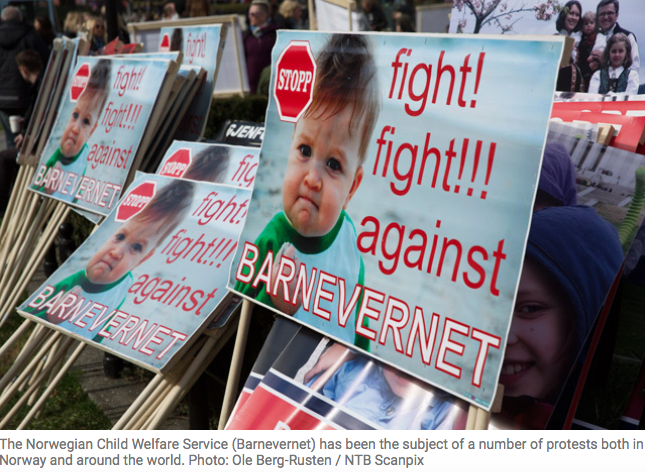
The Norwegian Child Welfare Service (Barnevernet) has long been accused of overreach in its efforts to protect children from potentially abusive situations.

The agency faced a wave of anger and worldwide protests last year that were largely spurred by the removal of five children from their Norwegian/Romanian parents. But although the Bodnariu family become a rallying point for both Romanians and the international Evangelical community, their case hardly stands alone.

Anders Henriksen, the head of section at the Norwegian Directorate for Children, Youth and Family Affairs (Bufdir), told The Local last year that a total of 1,664 children were taken into care in 2014. Of those, 424 had mothers who were born abroad, leading many to accuse the agency of “state kidnappings” over cultural differences.

Eight cases within 15 months

With eight seperate cases having been taken up by the ECHR since December 2015, a long-time human rights lawyer has warned that Norway needs to take action to address the high number of complaints about the agency.

Speaking to TV2 about a 2016 case in which a child was taken from his parents because his mother was diagnosed as having minor mental problems, Gro Hillestad Thune, who was a judge on the court in Strasbourg for 17 years, said there needs to be better oversight of Barnevernet.

“How in the world are we going to get control of this child welfare system in Norway? There are major indications that the requirements of Article 8 [of the European Convention on Human Rights, which protects residents’ ‘private and family life, his home and his correspondence’, ed.] were not met,” she told TV2 about the case invloving parents Aimee Hansen Løland and Arne Løland.

Although Aimee Løland’s diagnoses was refuted by two mental health experts, the Barnevernet decision to remove the couple’s child stood. Thune also said that the Norwegian authorities’ declaration that 69-year-old Arne Løland was “too old” to be a good father was also probably a violation of his human rights.

“Serious warning”

Thune told TV2 that the high number of cases recently taken up by the ECHR sends a very strong signal.

“It is an extremely serious warning to Norway from Strasbourg to the Norwegian authorities that [the ECHR] has taken on so many cases within an area like child welfare,” she said.

Czech MEP Tomáš Zdechovský, a leading voice amongst Barnevernet’s critics, called the court’s decision to take on so many betmarlo Norwegian child welfare cases “a breakthrough”.

“This means that the ECHR has found strong indications that human rights violations by Norway have occurred. It is obvious that the ECHR has noticed that there is something very dangerous happening in Norway,” he told The Local.

He added that he hoped the attention the cases have received in the European court system will “expose the system flaws” within the Norwegian Child Welfare Service.

Complaints from numerous countries

TV2 previously reported that child removals are now increasingly happening immediately after birth. In 2008, Barnevernet took over the care of 16 children immediately following their birth. By 2014, that number had tripled to 44.

With the increase in cases, there has also been a rise of voices critical of Norway’s child protection practices.

In an open letter, 170 Norwegian child protection professionals including lawyers and psychologists called Barnevernet a “dysfunctional organisation which makes far-reaching errors of judgement with serious consequences”.

And the criticism has extended far beyond Norway. Citizens of the Czech Republic, Russia, Lithuania, India, and Brazil, among other countries, have accused Norway of abusing its authority and ruining families. Even neighbouring Sweden has expressed concern about Barnevernet.

(thelocal)

February 27, 2017 0 comments
0 FacebookTwitterPinterestEmail
Taiwan and Norway

The King´s Choice screened in Taiwan.

by Geir Yeh Fotland February 26, 2017
written by Geir Yeh Fotland

The King´s Choice (Norwegian: Kongens Nei) screened in Taiwan this week. The film is an Irish-Norwegian co-production about German Nazi troops invading Norway on April 9th 1940 forcing Norway into World War II and five years with terror. The Nazis wanted King Haakon to surrender to save Norwegian lives. The king had in 1905 as Danish prince agreed to become king of Norway and had chosen the motto Everything for Norway.  So he told his government he would rather abdicate then surrender to the Nazis. He was forced to make a choice that ultimately affected the future of his country.
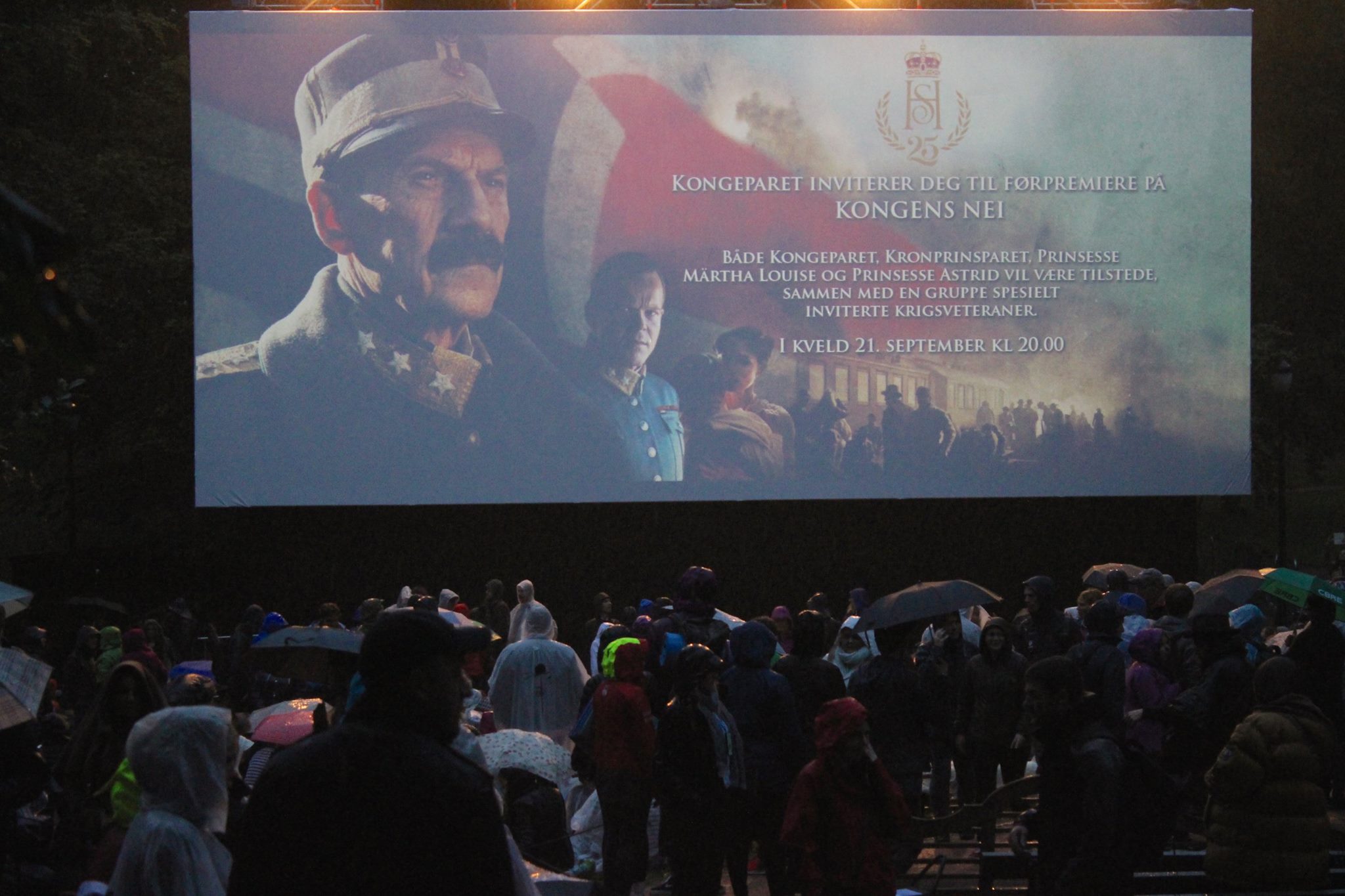
Last year King Haakon´s grandson King Harald of Norway celebrated his 25 years anniversary on the throne. To days before the movie was to be shown on Norwegian cinemas in September 2016, he invited the public to watch the movie for free together with him and his family outdoor in the park of the Royal Palace. The surroundings in the chilly and drizzly weather were excellent for the 10-12000 spectators as the movie was recorded in a winter forest.  King Harald  turned 80 years old on February 21st, 2017. Seen by 700 000 people, The King’s Choice is the most seen Norwegian film last year.  Norway picked the movie for Oscar consideration as Best Foreign-Language Film at the 89th Academy Awards, but it did not get an Oscar. The film was also screened at The 67th Berlin International Film Festival – Berlinale this month.
As a coincidence the film is shown in Taiwan at the same time as the country marks 70 years anniversary of the February 28 Incident that started the White Terror by the Koumintang party.


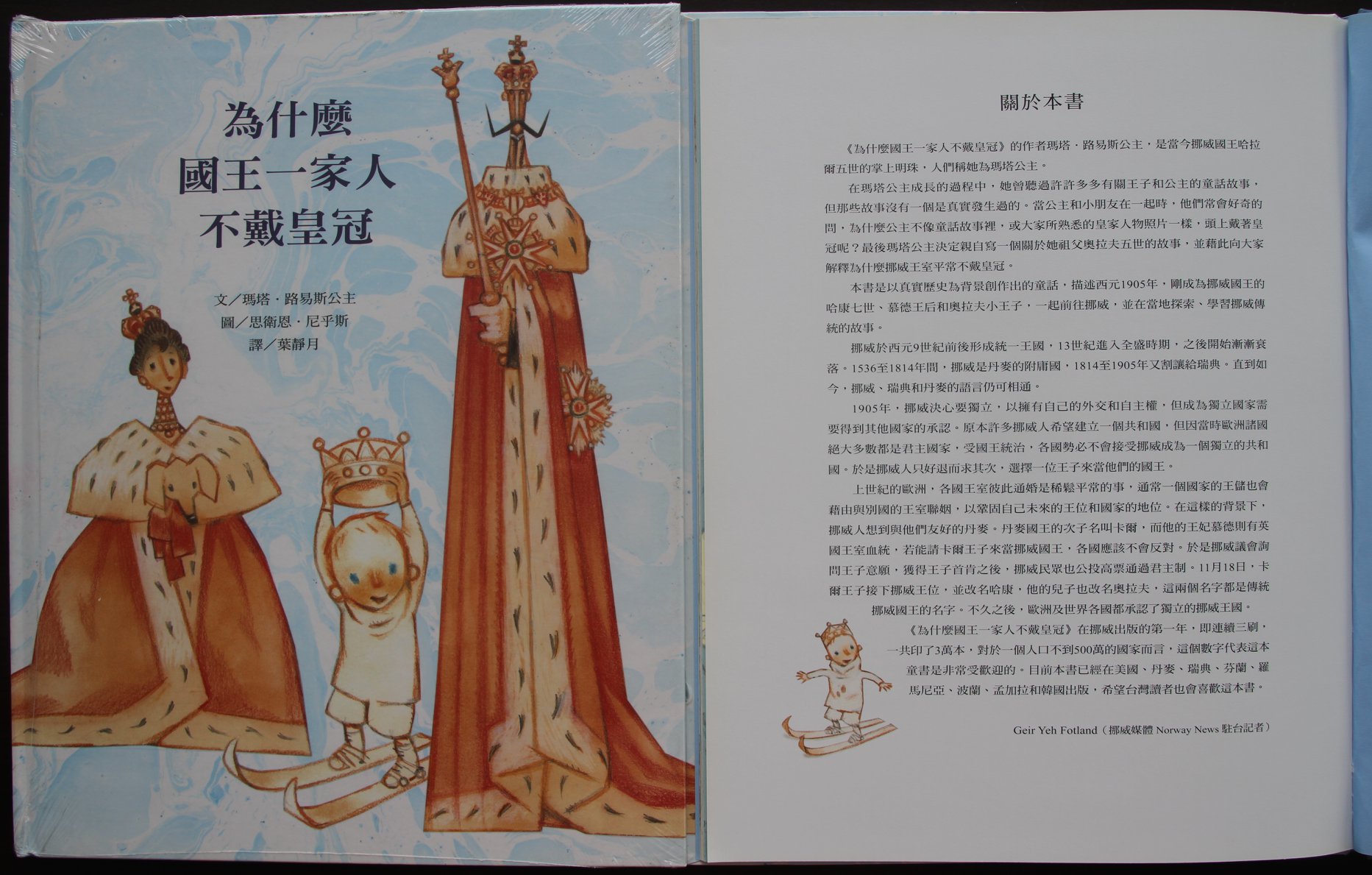
For children in Taiwan to learn about the royal family in Norway, Princess Märtha Louise, the daughter of King Harald, has written a book released in Chinese.
http://www.books.com.tw/activity/2014/07/king/?loc=008_005_1

The movie by director Erik Poppe is shown this week at Ambassador Cinema, Taipei, at SBC Cinema in Chungli and at MLD Cinema in Kaoshiung. Language: Norwegian/Danish/German with Chinese/English subtitles. 133 minutes.

Mr. Geir Yeh Fotland – Taiwan National Correspondent NORWAY NEWS.com , Email: – geiryeh@gmail.com, or news@norwaynews.com

February 26, 2017 0 comments
0 FacebookTwitterPinterestEmail
Defence

EXCLUSIVE: Inside NATO’s Decompression Chamber

by Nadarajah Sethurupan February 25, 2017
written by Nadarajah Sethurupan

At the start of the millennium, Britain, France and Norway got together to develop a world-class system that could rescue personnel trapped in a submarine hundreds of metres below the surface.
The NATO Submarine Rescue System has just been tested the furthest north it’s ever been, in the icy waters of the Arctic Circle.

However, the work doesn’t end when the submariners get back to the surface.

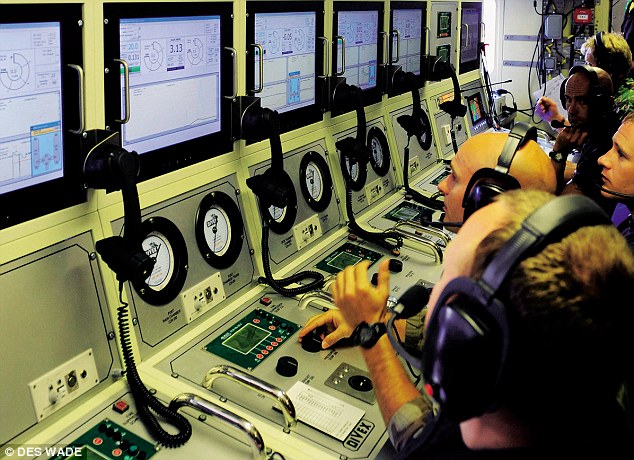
The NATO Submarine Rescue System is the best in the world because it has a portable hyperbaric chamber welded onto the ship.

No other system has anything like it.

After a casualty has been transferred straight from the back of the rescue vehicle they come into the Transfer Under Pressure System (TUP).

The TUP is a giant decompression chamber which is able to counteract the impact of nitrogen gas on the body, known as decompression illness, or the ‘bends’.

When a submarine gets into distress it’s likely that its inhabitants will be exposed to an increase in pressure, squeezing their oxygen levels and causing more nitrogen to form in the body.

The danger comes if a person returns to the surface too quickly and that nitrogen gas tries to escape.

To give a rescued submariner the best chance of survival they stay in the five chambers of the TUP system for hours, even days, as they are slowly brought back to normal surface pressure.

Looking after them are specially-trained submariners and divers, including Royal Navy reservists, who are on high readiness if the system is ever needed for real.

This is a tri-nation system and the roles between them are fully interchangeable.

The team play to their own country’s strengths, bringing different things to the table.

In a time of increased global tension a system like this has its place.

Exercise Northern Sun has been a test not only of the kit in an Arctic winter but of the impact of the cold on personnel too.

However, the relationship between the countries is as strong as ever, and the system is ready to rescue trapped submariners, whenever and wherever it’s needed.

(BtBs, N.Sethu)

February 25, 2017 0 comments
0 FacebookTwitterPinterestEmail
China and Norway

Norway’s Minister meets with China

by Nadarajah Sethurupan February 23, 2017
written by Nadarajah Sethurupan

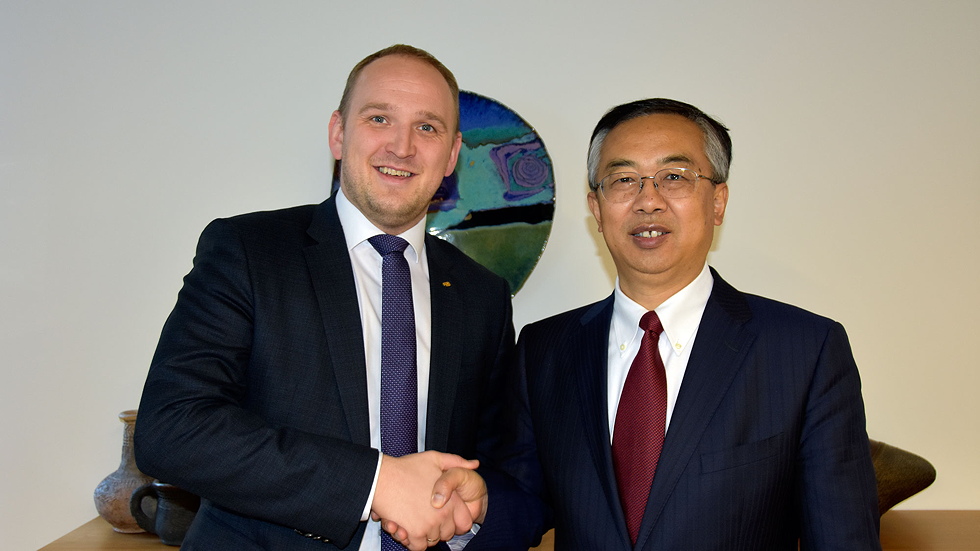
Jon Georg Dale, Minister of Agriculture and Food in Norway, met with the Chinese Ambassador to Norway, Wang Min, on 21 February 2017, to discuss opportunities for a collaboration in agriculture and food.
The two exchanged experiences on the research partnership between Norway and China facilitated by Norwegian Institute of Bioeconomy Research, NIBIO, opening for the export of genetic resource of cattle and trade policies in general. The Chinese Ambassador expressed that Norway has great expertise in practical farming and research in the agricultural sector.

China has a big focus on investing in research, developing technology and innovation, and in those fields, Norway is an important partner. An international research collaboration between the two countries can strengthen competitiveness and innovation.

“I am happy to have met the Ambassador. It was beneficial to discuss viewpoints on the research partnership between Norway and China, and to discuss further trade opportunities,” said Dale in a press release from the Norwegian Government.

Source: Regjeringen.no

February 23, 2017 0 comments
0 FacebookTwitterPinterestEmail
Africa and Norway

NOK 135 million in emergency aid to South Sudan

by Nadarajah Sethurupan February 23, 2017
written by Nadarajah Sethurupan

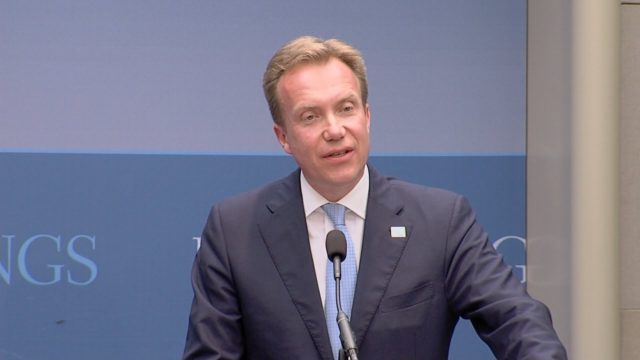
The humanitarian crisis in South Sudan is now so severe that the UN has declared a famine in parts of the country. ‘The situation is acute. We must act now to save lives. Norway is therefore providing NOK 135 million for emergency relief efforts in South Sudan,’ said Minister of Foreign Affairs Børge Brende.

One of the world’s most serious humanitarian crises is continuing to unfold in South Sudan. Armed conflict broke out in the country in December 2013, and there are still daily clashes between government and opposition forces. According to UN estimates, 7.5 million people are in need of humanitarian assistance. Around half of these are in urgent need of food.

‘It is the South Sudanese people who are paying the price for the conflict in the country. Sexual violence, abuse and other violations of human rights are widespread. The humanitarian crisis we are now witnessing is largely man-made. Norway consistently highlights this in our talks with the South Sudanese parties,’ said Mr Brende.

Mr Brende stressed once again that the responsibility for bringing an end to the conflict lies with the South Sudanese Government and the parties to the conflict.

‘The hostilities must cease if we are to be able to deliver emergency relief to all those in need of protection, food, drinking water, medical help and shelter. The rainy season will set in in a few months’ time. We must act now to get help through, while the roads are still dry and passable,’ Mr Brende said.

More than 3.4 million people have fled their homes. Of these, 1.5 million have fled to neighbouring countries. In addition to helping the population in South Sudan, Norway will also provide support to South Sudanese refugees in neighbouring countries. Every week, thousands of South Sudanese flee across the border to Uganda, which has received a total of 700 000 refugees. Most of the refugees are women and children.

The support provided by Norway will go primarily to efforts to improve food security, protection and education, and will be channelled through experienced humanitarian organisations: the UN, the International Committee of the Red Cross, and a number of Norwegian NGOs.

Norway has been one of the largest donors of humanitarian aid to South Sudan for several years, and in 2016 provided more than NOK 590 million in humanitarian support to the country.

February 23, 2017 0 comments
0 FacebookTwitterPinterestEmail
Russia and Norway

Norwegian Minister of Foreign Affairs to visit Russia

by Nadarajah Sethurupan February 23, 2017
written by Nadarajah Sethurupan

Børge Brende, Norway’s Minister of Foreign Affairs, has accepted an invitation to attend the ‘Arctic: Territory of Dialogue’ 4th International Arctic Forum set to take place on March 29–30 in Arkhangelsk, it was revealed during a meeting of the G20 Foreign Ministers in Bonn, Germany. The visit to Arkhangelsk by Mr. Brende will be the first time a Norwegian Foreign Minister has visited Russia in three years, say the Forum organizers.
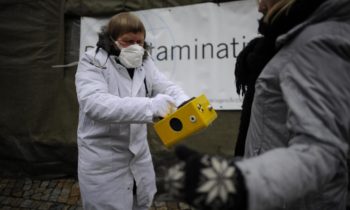
The ‘Arctic: Territory of Dialogue’ International Arctic Forum will be one of the most representative international forums to take place in Russia. It is expected to be attended by 1,500 participants from 14 countries, including the UK, Denmark, Canada, China, Norway, USA, Finland, Switzerland, Iceland, and Japan. Among the participants will be leaders of major Russian and international companies active in the Arctic, international experts, officials, and representatives of the scientific community.

The ‘Arctic: Territory of Dialogue’ programme, with the key theme of ‘People and the Arctic’, offers 12 themed sessions, roundtables and discussions, a plenary session to be addressed by the Russian President Vladimir Putin, an extended session of the State Commission for Arctic Development, and a number of special events including the Northern Cities Forum and the Arctic Business Forum.

February 23, 2017 0 comments
0 FacebookTwitterPinterestEmail
Science

Mysterious radiation in Norway

by Nadarajah Sethurupan February 23, 2017
written by Nadarajah Sethurupan

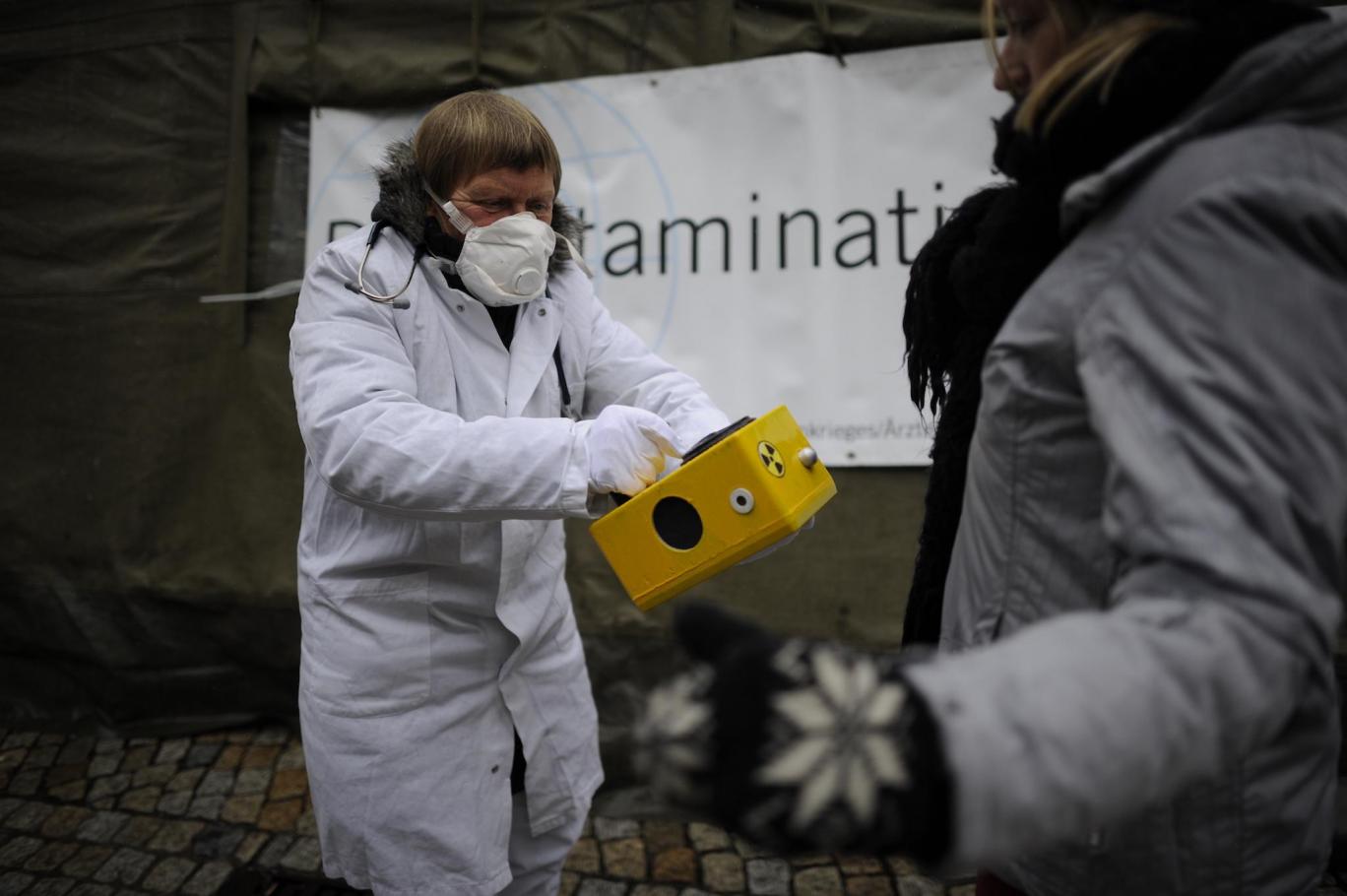
The unusual activity could be coming from a secret Russian nuclear missile launch, or from a hidden pharmaceutical business, but nobody is entirely sure.
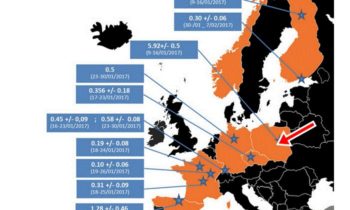
Mysterious radioactive spikes are being found across Europe – and nobody quite knows why.

Iodine-131, a man-made radioactive material, is being found in small amounts across the continent. It was found in northern Norway early in January, according to officials, but has been gradually moving across the rest of Europe ever since.

But despite finding the material in January, authorities didn’t announce that it had been found until recent days. That might be because it isn’t at all clear where it has come from or how it got to be spread out.

Further information makes the find even more unusual. Iodine-131 is usually found alongside other radioactive materials, but it wasn’t. And it has a short half-life – the time required for one half of the atoms of a radioactive substance to disintegrate – but a significant amount of it was found, meaning that it is likely that it was introduced very recently.

It isn’t clear where Iodine-131 would ever have been released from. The US has deployed specialised planes to fly over Europe and isolate it – but have mostly failed.
Conspiracy theorists have pointed to the fact that the spread appeared emanate from northern Norway, where Russia may have run a secret nuclear test. Iodine-131 is perhaps most closely associated with atomic bombs, and was found throughout the world after those were tested, as well as after accidents at the Chernobyl and Fukushima nuclear power plants.

But it is also being used to treat some cancers and other illnesses. The fact that the material was found on its own likely suggests that it had been isolated, and so makes it more likely that the leak came from a pharmaceutical company that hasn’t reported it to authorities.

It’s not possible to say where exactly those leaks would have come from, either. Changing winds mean that it isn’t possible to isolate the source, apart from a suggestion that it is likely it was released somewhere near eastern Europe.

There is no imminent threat from the amount of material that is currently being found in Europe, according to the French IRSN, or nuclear security body. The IRSN said that it had shared the findings with the “Ring of Five” – a group of similar bodies across Europe – so that they can be further investigated.

(independent)

February 23, 2017 0 comments
0 FacebookTwitterPinterestEmail
Asia and Norway

Norway’s telecom group Telenor to leave Indian market

by Nadarajah Sethurupan February 23, 2017
written by Nadarajah Sethurupan

Norwegian telecommunications group Telenor said Thursday it was leaving the Indian telecom market and transferring its businesses there to Bharti Airtel.
Bharti Airtel, India’s largest wireless operator, with 269 million subscribers, would add Telenor’s 44 million subscribers, employees and licenses to its business.

Telenor entered the Indian market in 2008, but has struggled amid tough competition.

Telenor chief executive Sigve Brekke said in a statement that the company had concluded “that the significant investments needed to secure Telenor India’s future business on a stand-alone basis would not have given an acceptable level of return.”

The non-cash transaction would not result in further writedowns, Telenor said. Its assets in India were estimated to be worth 300 million kroner (36 million dollars) in the fourth quarter of 2016.

The deal, which hinged on regulatory approvals in India, was expected to take 12 months to close.

In addition to Norway and neighbouring Demark and Sweden, Telenor has operations in Bangladesh, Bulgaria, Hungary, India, Malaysia, Montenegro, Pakistan, Serbia, Thailand and Ukraine.

(eblnews)

February 23, 2017 0 comments
0 FacebookTwitterPinterestEmail
Defence

Nuclear “sniffer” for a mission towards Norway

by Nadarajah Sethurupan February 23, 2017
written by Nadarajah Sethurupan

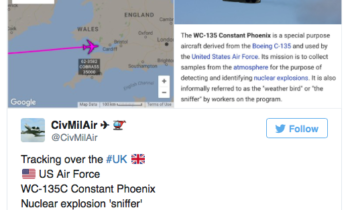
U.S. Air Force WC-135C Constant Phoenix Nuclear explosion “sniffer,” serial number 62-3582, deployed to RAF Mildenhall, UK, using radio callsign “Cobra 55.”
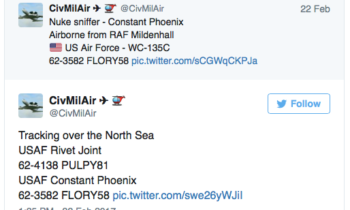
Whereas it was not the first time the Constant Phoenix visited the British airbase, the deployment to the UK amidst growing concern about an alleged spike in iodine levels recorded in northern Europe fuelled speculations that the WC-135 might be tasked with investigating the reason behind the released Iodine-131.

In fact, along with monitoring nuclear weapons testing, the WC-135 can be used to track radioactive activity, as happened after the Chernobyl nuclear plant disaster in the Soviet Union in 1986 and Fukushima incident back in 2011, by collecting particles and chemical substances in the atmosphere, days, weeks, or sometimes even month after they were dispersed.

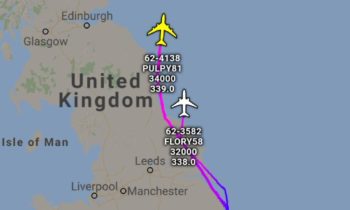
Whilst the reason of the deployment has yet to be confirmed (actually, there are still contradictory reports about the spike in Iodine-131) the WC-135 has departed for its first mission since it arrived at Mildenhall: on Feb. 22, at around 11.50LT, the nuclear “sniffer” aircraft has departed for a mission towards Norway and the Barents Sea.

The WC-135C (radio callsign “Flory 58”) was supported by two KC-135 tankers (“Quid 524” and “525”)suggesting it had just started a very long mission and somehow accompanied, along the same route, by an RC-135W (“Pulpy 81”) and another Stratotanker (“Quid 513”).

(N.Sethurupan)

February 23, 2017 0 comments
0 FacebookTwitterPinterestEmail
Srilanka and Norway

Norway ready to develop Sri Lankan ports – Ambassador

by Nadarajah Sethurupan February 21, 2017
written by Nadarajah Sethurupan

Norwegian ambassador to Sri Lanka Thorbjorn Gaustadsaether says that Norway is ready to invest in the Sri Lankan ports. “Norway is a small country.
We couldn’t do huge investment like China or India. But we have a good knowledge and expertise on the marine industry. We have advanced technology. There are many sections in a port such as Energy, container transport, terminal operations and supplying ship.”

“If Sri Lanka wants this kind of investment, we could contribute to that. We have advanced technology to control the environmental pollution caused by the emissions from the vessels.” “Norway has a very good exposure to energy, transport and terminals. We could do investments on these sectors of Sri Lankan ports,” he was quoted as saying by the media unit of the Ports and Shipping Ministry.

He said that geographically Sri Lanka is very well placed and that the country can definitely develop itself to be a very interesting spot for the maritime industry. “I see here lots of confident Sri Lankans that definitely like to take part in global value chain and global market where we could develop industries and businesses being competitive in the global market.”

“Norwegian ship owners and Norwegian maritime industry are aware of Sri Lanka. Norway ships have been sailing here for more than hundred years. Since 19th century they have been sailing to Asia including Sri Lanka,” he said. The Ambassador said that Norwegian ships are following the Sri Lankan marine industry very closely and that they have noted that Sri Lanka wants to have developed harbors between Singapore and Dubai. “In fact, everyone follow the maritime industry of this region.

They have attention on, is Sri Lanka good for transshipment operations? Does Sri Lanka have good docking facilities? Therefore facilities of the ports should be developed.” Mr. Gaustadsaether said that in addition to the port development, enhancing every section of the ports is a very important factor.

Everyone is looking these days at the costs for logistics, shortened delay time. The Norwegian ambassador said it is very important that Sri Lanka pays attention to these factors. There will also be opportunities for Sri Lankans to be recruited by Norwegian ships, he said.

“Norwegian ships have been very well recognized by the whole world. Quite a lot of people from different countries are working in Norwegian ships. Sri Lankans could take those opportunities. If they could develop their knowledge on the marine sector, there are many opportunities.”

(N.Sethu)

February 21, 2017 0 comments
0 FacebookTwitterPinterestEmail
Asia and Norway

Myanmar needs to initiate Rohingya repatriation: Norway

by Nadarajah Sethurupan February 21, 2017
written by Nadarajah Sethurupan

Visiting Norwegian foreign minister Borge Brende on Monday laid emphasis on creating a favorable environment for Rohingyas in Myanmar so that they can go back to their own homes from Bangladesh.
“I hope Myanmar will make it possible for these people (Rohingyas) to go to their own homes and feel safe,” he said while responding to a question at a dialogue in a city hotel.

The Norwegian foreign minister thinks State Counsellor of Myanmar Aung San Suu Kyi could have done many things in protecting Muslim minorities in Myanmar.

He expressed displeasure over the ‘unacceptable’ way Rohingyas are being treated in the Rakhine State of Myanmar by their government and maintained that the international community needs to put pressure on Myanmar to that end.

“If you’re not able to treat your minorities with dignity and inclusiveness, it shows you are lacking fundamental values,” said the Norwegian foreign minister mentioning that Myanmar needs to treat minorities with the highest values.

He appreciated Bangladesh’s support in hosting thousands of Myanmar nationals despite having its own challenges.

The foreign minister said Bangladesh is a country with a steady economic growth but it has lots of challenges.

Transparency is required in Bangladesh to reach the middle-income status, Brende was quoted as saying in a statement shared on official Facebook page of the Embassy.

The foreign minister used the opportunity to salute the impressive development in Bangladesh over the last 45 years.

The aim to become a middle-income country is within the reach, but Bangladesh has to ensure transparency in all sectors and scrap corruption to reach this goal, he added during a roundtable meeting with more than 50 young leaders through the Young Global Leaders network, moderated by Lutfey Siddiqi.

In addition to political talks, he met the Norwegian-Bangladeshi business community and witnessed the signing of a collaboration agreement between solar power producer Scatec Solar and the AK Khan Company.

The foreign minister arrived here on Monday as the first-ever foreign minister from any Nordic country to Bangladesh.

On his arrival, he was received by Secretary (Bilateral and Consular, Foreign Ministry) Kamrul Ahsan.

Bangladesh ambassador to Norway Md Golam Sarwar and Director General of Europe Wing of the Foreign Ministry were present.

During the visit, the Norwegian foreign minister will place a floral wreath at the Central Shaheed Minar in the first hour of February 21 to pay homage to the martyrs of the great Language Movement.

He will leave Dhaka on Tuesday, according to the Foreign Ministry here.

(prothom-alo)

February 21, 2017 0 comments
0 FacebookTwitterPinterestEmail
Asia and Norway

Norway not recognizing illegal “referendum”

by Nadarajah Sethurupan February 21, 2017
written by Nadarajah Sethurupan

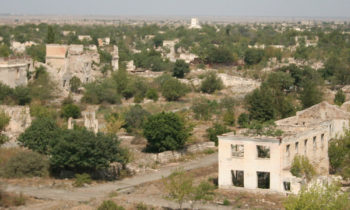
Latvia does not recognize the “independence” of Nagorno-Karabakh and the “referendum” which is held there, Latvian Ambassador to Azerbaijan Juris Maklakovs told Trend on February 20.
The so-called “constitutional referendum” is held on February 20 in the occupied Nagorno-Karabakh region of Azerbaijan, which is now ruled by a puppet regime controlled by Armenia.

Maklakovs stressed that Latvia supports territorial integrity of Azerbaijan and the efforts of the OSCE Minsk Group on the peaceful settlement of the Nagorno-Karabakh conflict.

Norwegian Embassy in Baku also said on February 20 that Norway recognizes neither the “independence” of Nagorno-Karabakh nor the “referendum” held there.

Earlier, Azerbaijan’s Foreign Ministry as well as the OSCE Minsk Group co-chair states, namely Russia, the U.S. and France, have also confirmed that they will not recognize the “referendum” in Nagorno-Karabakh.

Azerbaijani MP Bakhtiyar Sadigov, in turn, urged international organizations to react to the illegal “referendum” in Nagorno-Karabakh.

“By not reacting to the conduction of illegal “referendum” by Armenian separatists in Nagorno-Karabakh, international organizations harm their prestige,” he told Trend on February 20.

Sadigov said the “referendum” is designed for the domestic audience of Armenia and it has no legal force.

The MP added that international organizations have always applied double standards towards the issue.

“The four resolutions on the settlement of the Nagorno-Karabakh conflict, which were adopted by the UN Security Council, are still not implemented. And this organization does not respond to it,” the MP said.

He also noted that the OSCE Minsk Group and the co-chair countries undertook mediation in the settlement of the Nagorno-Karabakh conflict by peaceful means, but failed to achieve any results so far.

Azerbaijan and Armenia fought a lengthy war that ended with the signing of a fragile ceasefire in 1994. Since the war, Armenian armed forces have occupied 20 percent of Azerbaijan’s territory, including Nagorno-Karabakh and seven surrounding regions. More than 20,000 Azerbaijanis were killed and over 1 million were displaced as a result of the large-scale hostilities.

While the OSCE Minsk Group acted as the only mediator in resolution of the conflict, the occupation of the territory of the sovereign State with its internationally recognized boundaries has been left out of due attention of the international community for years.

Armenia ignores four UN Security Council resolutions on immediate withdrawal from the occupied territory of Azerbaijan, thus keeping tension high in the region.

(azernews)

February 21, 2017 0 comments
0 FacebookTwitterPinterestEmail
Norwegian Aid

Norway joins to combat Donald Trump’s aid ban

by Nadarajah Sethurupan February 21, 2017
written by Nadarajah Sethurupan

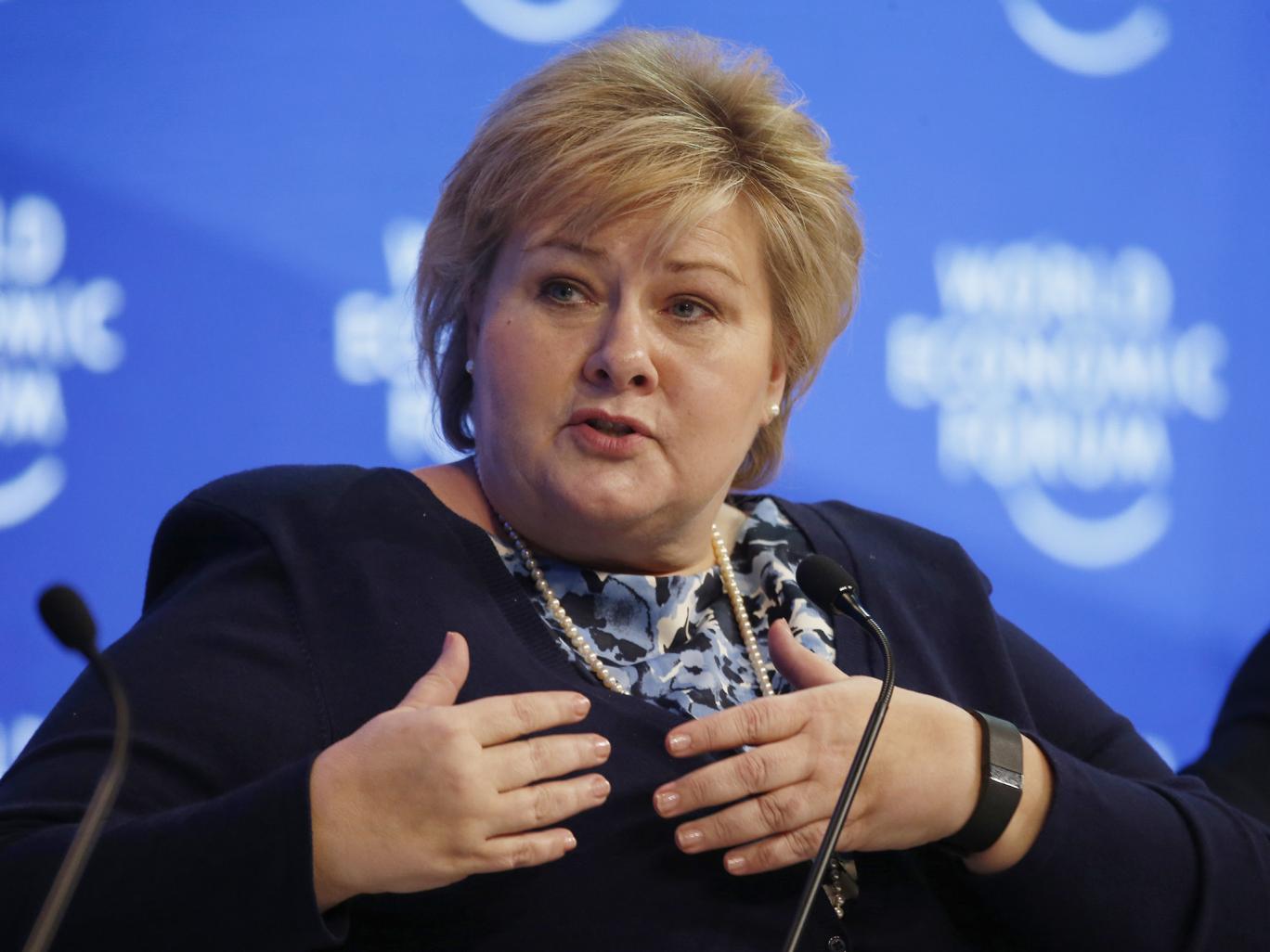
Prime Minister Erna Solberg says ‘a joint effort is particularly important’ in the face of pro-life pressure.
Norway has pledged millions of dollars to a global fund designed to help women access abortion services after Donald Trump cut support for health clinics across the world.

One of Mr Trump’s first actions as President was to reinstate the Mexico City Policy, which strips US funding from health clinics that provide abortion services. It forces NGOs to agree to “neither perform nor actively promote abortion as a method of family planning in other nations” as a prerequisite for receiving US cash, and applies whether or not American money is used to pay for the procedures.

In response, The Netherlands announced it would establish an international fund to finance projects relating to access for birth control, abortion and women’s education throughout developing countries.

Norway has pledged $10m (£8.05m) to the initiative, which aims to plug a $600m ($483m) funding gap over four years, Reuters reported. Belgium, Luxembourg, Sweden, Denmark, Finland, Canada and Cape Verde also back the scheme.

“At a time when this agenda has come under pressure, a joint effort is particularly important,” Prime Minister Erna Solberg said.

Mr Trump’s administration has taken a pro-life stance.

In January Vice President Mike Pence attended the anti-abortion March For Life, for which Mr Trump also tweeted his ” support”.

Mr Pence told marchers: “This administration will work with Congress to end taxpayer funding of abortion and abortion providers.” He added: “Life is winning again in America.”

And The Handmaid’s Tale author Margaret Atwood said she believed the rise of the right wing had boosted sales of her classic dystopian novel.

The 1985 book describes an America ruled by a totalitarian theocracy that employs a secret police force to maintain its grip. Abortion is banned and women are categorised into legitimate and illegitimate groups.

“Handmaids” – re-educated women who have broken a law – are forced to bear the children of “Commanders of the Faithful” the highest-ranking men. “Unwomen”, who may be sterile, feminists, or politically incompatible with the regime, are made to work in agricultural colonies.

Her claim followed a series of moves by conservative politicians to restrict access to abortions, and the leak of a draft executive order that would have enshrined conservative Christian beliefs on the subject, as well as on marriage and gender, in policy. It reportedly went unsigned by Mr Trump only after the intervention of his daughter, Ivanka, and her husband Jared Kushner.

(independent)

February 21, 2017 0 comments
0 FacebookTwitterPinterestEmail
Norwegian Aid

Norway provides NOK 64 million for efforts to prevent famine in Somalia

by Nadarajah Sethurupan February 21, 2017
written by Nadarajah Sethurupan

Somalia has once again been hit by a severe drought, which could quickly develop into a famine. ‘A large proportion of the population is affected by the drought, and over six million people are in need of food aid. Norway is now increasing its support for humanitarian efforts in the country by NOK 64 million, in an effort to prevent the situation from developing into a new, large-scale famine,’ said Minister of Foreign Affairs Børge Brende.

Just a few years after the major famine of 2011, Somalia has again been hit by drought. This time, the drought is affecting almost the whole country, and therefore threatening larger numbers of people and animals than six years ago. Over the last few months, there has been a dramatic deterioration in the humanitarian situation. Some 6.2 million people do not have enough food, and the situation is critical for around half of them, according to the UN.

‘The crisis is escalating fast. There are worrying reports that a growing number of people are facing food and water shortages, that the major rivers are drying up and that cattle and other animals are dying,’ said Mr Brende.

The additional funds from Norway will be channelled through the UN, the International Committee of the Red Cross (ICRC) and Norwegian humanitarian organisations that have many years’ experience of working in Somalia.

‘I am pleased that Somalia’s newly elected president, Mohamed Abdullahi ‘Farmajo’ Mohamed, has said that providing support for those affected by the drought is his number one priority. It is vital to ensure that people in need of assistance actually have access to aid. The unstable security situation and the armed conflict are still causing considerable problems, not least in the hardest hit areas that are also most in need of aid,’ said Mr Brende.

One of the lessons learnt from the famine of 2011 was that it is crucial to provide humanitarian assistance as quickly as possible to prevent illness, suffering, and death from starvation. It is estimated that 260 000 people died of starvation in 2011. The crisis forced several hundred thousand people to flee their homes, and further exacerbated the refugee crisis in Somalia’s neighbouring countries, Kenya and Ethiopia.

Last year, Norway provided almost NOK 400 million in aid to Somalia. This included support for efforts to promote food security through the World Food Programme and the UN Refugee Agency (UNHCR). Norway is also providing funding through the UN Central Emergency Response Fund (CERF), which has allocated NOK 150 million to Somalia for 2017.


February 21, 2017 0 comments
0 FacebookTwitterPinterestEmail
Norwegian American

Norwegian man who threatened USA police sentenced to 15 months

by Nadarajah Sethurupan February 20, 2017
written by Nadarajah Sethurupan

A Norwegian man who sent emails and posted tweets threatening to kill Portland police officers last summer has been sentenced to 15 months in prison.
Espen Brungodt, 29, was sentenced Thursday by U.S. District Court Judge D. Brock Hornby for making threatening interstate communications. He pleaded guilty on Sept. 26.

Police went on high alert after the threats on Aug. 3 because they came after the slayings of police officers in Baton Rouge, Louisiana, and Dallas. Those, in turn, had followed fatal police shootings of black men in Minnesota and Louisiana.

The threats led to the evacuation of the Cumberland County Courthouse because of its proximity to the police headquarters in Portland, along with a parking garage on Newbury Street, both of which were mentioned in the threats.

Brungodt allegedly “yearned” to be arrested and an affadavit filed after he was taken into custody indicated that he was satisfied with the effect of his threats. An FBI agent testified that Brungodt told him he had a mental disorder that caused him to become obsessed with the idea of being arrested in the U.S.

His emails said: “Time for more police to die. We are getting our Sig Sauer MCX .223-caliber rifles ready, and very soon, my partners will head down to Portland Police Department on 109 Middle St. There they will shoot and kill as many police officers as they can. Meanwhile, I will get into position at the top of Cumberland County Parking Garage on 188 Newbury St. I have booby trapped the garage with explosives, so don’t go there. Time to take action. More dead cops.”

Police searched the garage with bomb-sniffing dogs and found no explosives.

The emails were traced to Brungodt’s Portland hotel room, where he was arrested a few hours after sending the threats. He had been in the U.S. with his family on a nine-day vacation from their home in Bergen, Norway, and had been scheduled to leave the day after he sent the threats.

After Brungodt’s arrest, friends and acquaintances said the incident shocked them because Brungodt had never previously expressed any antipathy toward law enforcement and had no interest in violence or weapons.

Hornby, who sentenced Brungodt, said the email contained a “brutal threat of violence and death that resulted in complete disruption of public services and instilled public fear.”

But Hornby noted that Brungodt had a history of mental health problems and no criminal record, factors that argued for a lesser sentence than the five years and fine of $250,000 that he could have imposed.

As part of a plea agreement, the U.S. Attorney’s Office agreed that it will support a request by Brungodt to transfer his sentence to Norway, allowed under a treaty between the U.S. and Norway known as the International Prisoner Transfer Program, which began in 1977.

The program is designed to relieve some hardships on offenders who are imprisoned far from home, and to facilitate their rehabilitation.

If he serves his sentence in the U.S., Brungodt will be removed from the country after his jail term is completed and barred from re-entering in the future.

(pressherald)

February 20, 2017 0 comments
0 FacebookTwitterPinterestEmail
Crimes

Britons injured in Norway speedboat accident

by Nadarajah Sethurupan February 20, 2017
written by Nadarajah Sethurupan

A number of British tourists are in hospital after being thrown into the icy seas off Norway when their speedboat hit a water fountain near the town of Harstad.
Two boats carrying 24 people between them were returning from a sightseeing trip when one hit the fountain in the harbour, around 875 miles north of the capital Oslo.

Witnesses said the boats were travelling at high speeds and those aboard the one involved in the accident were thrown into the water “like dolls”.

Eleven people, including 10 British tourists, are thought to have been injured, and they were left in waters just above freezing for around 15 minutes before being rescued.

Three tourists suffered moderate injuries while seven had minor injuries, police said, while the driver is thought to be in a critical but stable condition.

The incident is thought to have happened at around 3pm local time (2pm GMT) and involved a rigid-inflatable boat (Rib).

The British group were on a tour with a local travel agent, a company co-owned by a member of the local police in Harstad and a former employee of the force, police said.

Neither was aboard the boat that hit the fountain but both witnessed the accident.

The Foreign Office said: “We are in contact with the Norwegian authorities following an incident in Harstad. We are ready to support British people affected.”

February 20, 2017 0 comments
0 FacebookTwitterPinterestEmail
Defence

Radioactive Iodine levels is detected in Norway ?

by Nadarajah Sethurupan February 20, 2017
written by Nadarajah Sethurupan

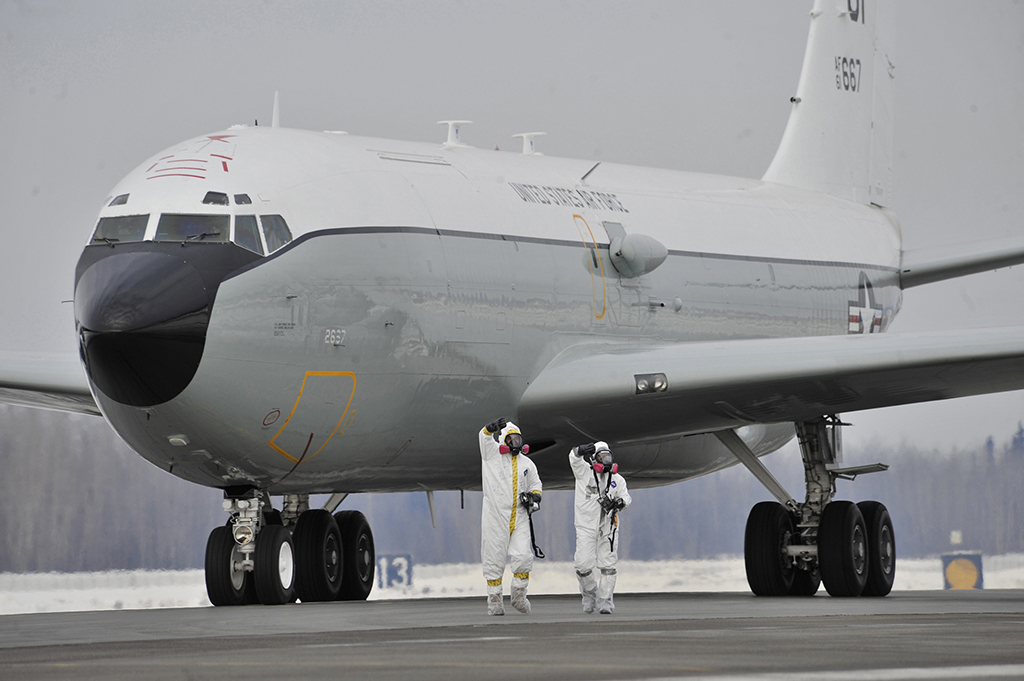
EIELSON AIR FORCE BASE, Alaska — Personnel from the 55th Aerospace Medicine Squadron and 55th Aircraft Maintenance Squadron report a “thumbs down,” which indicates the WC-135 Constant Phoenix aircraft is above acceptable levels of contamination and needs be parked in an isolated location to be decontaminated. This initial radiation survey was done every time the WC-135 landed after collecting air samples in international airspace over the Pacific as part of Operation Tomodachi. (Air Force photo by Staff Sgt. Christopher Boitz)

On Feb. 17, 2017, U.S. Air Force WC-135C Constant Phoenix Nuclear explosion “sniffer,” serial number 62-3582, using radio callsign “Cobra 55” deployed to RAF Mildenhall, UK.

As we have already reported the WC-135 is a derivative of the Boeing C-135 transport and support plane. Two of these aircraft are in service today out of the ten examples operated since 1963. The aircraft are flown by flight crews from the 45th Reconnaissance Squadron from Offutt Air Force Base while mission crews are staffed by Detachment 1 from the Air Force Technical Applications Center.

The WC-135, known as the “sniffer” or “weather bird” by its crews, can carry up to 33 personnel. However, crew compliments are kept to a minimum during mission flights in order to lessen levels of radioactive exposure.

Effluent gasses are gathered by two scoops on the sides of the fuselage, which in turn trap fallout particles on filters. The mission crews have the ability to analyze the fallout residue in real-time, helping to confirm the presence of nuclear fallout and possibly determine the characteristics of the warhead involved: that’s why the aircraft is important to confirm the type of explosion of today’s test.

Along with monitoring nuke testing, the WC-135 is used to track radioactive activity as happened after the Chernobyl nuclear plant disaster in the Soviet Union in 1986 and Fukushima incident back in 2011.

One of these aircraft was deployed near North Korea in anticipation of Kim Jong Un rocket launches then was spotted transiting the UK airspace in August 2013 raising speculations it was used in Syria thanks to the ability to detect chemical substances down wind from the attack area days, or weeks after they were dispersed.

Although they cross the European airspace every now and then, their deployment in the Old Continent is somehow rare. As of yet, there has been no official statement from the U.S. military about the reasons why such nuclear research aircraft was deployed there. However, many sources suggest the aircraft was tasked with investigating the spike in Iodine levels detected in northern Europe since the beginning of January.
Iodine-131 (131I), a radionuclide of anthropogenic origin, has recently been detected in tiny amounts in the ground-level atmosphere in Europe. The preliminary report states it was first found during week 2 of January 2017 in northern Norway.

Iodine-131 was also detected in Finland, Poland, Czech Republic, Germany, France and Spain, until the end of January.

However, no one seems to know the reason behind the released Iodine-131. Along with nuclear power plants, the isotope is also widely used in medicine and its presence in the air could be the effect of several different incidents.

Or, as someone speculates, it could have been the side effect of a test of a new nuclear warhead in Russia: an unlikely (considered the ability to detect nuke tests through satellites and seismic detectors) violation of Nuclear Test Ban Treaty.

Maybe the WC-135 will help authorities find out the origin of the Iodine-131.

(N.Sethu, the aviationist)

February 20, 2017 0 comments
0 FacebookTwitterPinterestEmail
NATO and Norway

NATO continues to adapt

by Nadarajah Sethurupan February 15, 2017
written by Nadarajah Sethurupan

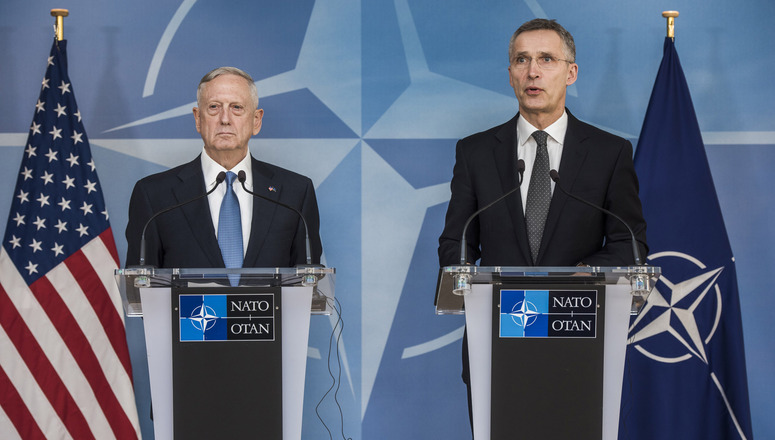
Left to right: James Mattis (US Secretary of Defense) and NATO Secretary General Jens Stoltenberg

NATO Secretary General Jens Stoltenberg welcomed US Secretary of Defense James Mattis to the meetings of NATO Defence Ministers on Wednesday (15 February 2017). Praising the US commitment to NATO, Mr. Stoltenberg stressed that the Alliance will continue to adapt to evolving challenges, including terrorism, with fairer burden-sharing among Allies.

USA’s Defense Secretary Jim Mattis, warned on Wednesday that the amount of American support for NATO could depend on whether other countries meet their own spending commitments.

“Americans cannot care more for your children’s future security than you do,” Mr. Mattis said in his first speech to NATO allies since becoming defense secretary. “I owe it to you to give you clarity on the political reality in the United States and to state the fair demand from my country’s people in concrete terms.”

“America will meet its responsibilities,” he said, but he made clear that American support had its limits.

In his speech to NATO defense ministers, Mr. Mattis repeated a call made by previous American secretaries of defense, for European allies to spend more on their militaries. What’s more, Mr. Mattis went further than his predecessors in apparently linking American contributions to the alliance to what other countries spend.

“If your nations do not want to see America moderate its commitment to this alliance, each of your capitals needs to show support for our common defense,” he said.
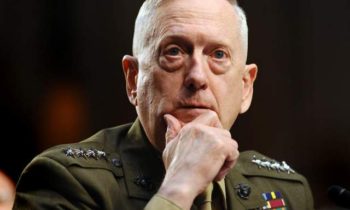
During his remarks on Wednesday, Mr. Mattis called for the adoption of a plan with fixed dates to make progress toward getting to 2 percent.

Mr. Trump is expected to visit NATO headquarters in May when the alliance holds its leaders’ summit meeting.

Joint press statements with NATO Secretary General Jens Stoltenberg and the US Secretary of Defense, Jim Mattis

So, good afternoon.

Secretary Mattis, it’s great to welcome you to NATO Headquarters.

We spoke on the phone on the first day when you had taken up your position as Secretary of Defence, but it’s great to welcome you here at NATO Headquarters and be able to congratulate you on your appointment and to say to you that I really look forward to working together with you.

You are an accomplished leader, you know NATO very well. You served as our Supreme Allied Commander for Transformation, and you made sure that NATO adapted to a new and more demanding security environment. But NATO has to continue to adapt and that’s exactly what we are going to address at our meeting today. How NATO continues to adapt to a new security environment.

This is a crucial time for our transatlantic Alliance. The challenges we face are the most complex and demanding in a generation. Neither Europe nor North America can tackle them alone. A strong NATO is good for Europe, a strong Europe is good for North America. And therefore, I welcome the US commitment to the transatlantic bond. This is a commitment which we can see not only in words but also in deeds. US troops and equipment are now arriving in Poland and the Baltic countries. This is a clear demonstration of US determination to stand with Europe in these troubled times.

At the same time, the US has been clear that we need more defence spending, and fairer burden-sharing. This has been my top priority since I took office in 2014. After many years of cuts, I am glad to say that we have turned a corner. Our latest figures, which we published yesterday, show that defence spending among European Allies and Canada increased by 3.8% in real terms in 2016. And that is roughly 10 billion US dollars. This is significant, but it is not enough. We have to continue to increase defence spending across Europe and Canada. So, we need to keep the momentum.
At our meeting, we will also assess what more NATO can do in the fight against terrorism. This is a concern to our people on both sides of the Atlantic and NATO must play our full part.

We have been helping to fight terrorism in Afghanistan for almost 15 years. We are training Iraqi officers and supporting the Counter-ISIL Coalition with AWACS surveillance planes.

Today, we will decide to set up a new Hub for the South at our Joint Force Command in Naples.

This will help us assess and address threats from the region. And it will complement the work of our new Intelligence Division here at NATO Headquarters.

So Secretary Mattis, this will be an important meeting. We have a lot of work ahead. And I really look forward to working with you, and once again welcome, I should rather say welcome back to NATO.

JIM MATTIS (United States Secretary of Defense): Thank you Secretary General, thank you very much for the warm welcome back to my second home. It is an important meeting as you point out and I think we’re here as you all know to chart the course of the alliance in the future. The events of 2014 were sobering and we must continue to adapt to what’s been revealed to us in terms of our security challenges.

The Alliance remains a fundamental bedrock for the United States and for all the transatlantic community bonded as we are together. As President Trump has stated he has strong support for NATO. And NATO is in the midst of transformation; it has always been adapting to the security challenges – this is nothing new. Perhaps the pace of change has certainly picked up a bit but this is something that we can deal with.

And it’s absolutely appropriate as a European minister of defence said last week: it’s a fair demand that all who benefit from the best defence in the world carry their proportionate share of the necessary cost to defend freedom. And we should never forget ultimately it is freedom that we defend here at NATO. And I do have confidence that we will prove once again that we can react to the changing circumstances; we’ve done so in the past – there’s every reason for confidence that we will move out purposefully together once again.

I am here to listen to my fellow ministers, to have an open conversation among friends and allies about where we’re going and our shared level of commitment. Thank you Secretary General Stoltenberg.

JENS STOLTENBERG: Thank you so much.

(NATO , N.Sethurupan)

February 15, 2017 0 comments
0 FacebookTwitterPinterestEmail
Diplomatic relations

Polish Speaker on Norway visit

by Nadarajah Sethurupan February 14, 2017
written by Nadarajah Sethurupan

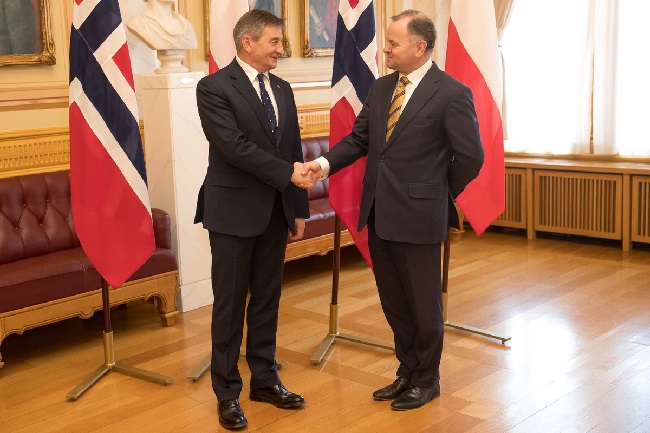
Polish Parliamentary Speaker Marek Kuchciński opens a two-day visit to Norway on Tuesday, at the invitation of Olemic Thommessen, President of the Norwegian Parliament.
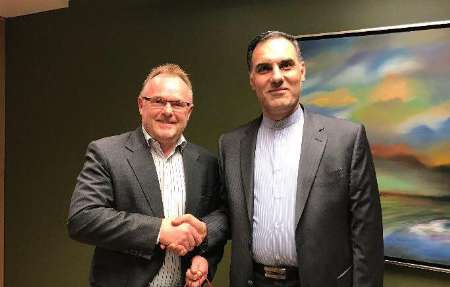
The programme of the visit includes talks with members of the Norwegian parliamentary commissions for foreign affairs and defence, as well as the heads of the Norwegian parliamentary delegations to the Parliamentary Assemblies of NATO, the Council of Europe, the Organisation for Security and Cooperation in Europe and the Joint Parliamentary Committee of the European Economic Area.

Kuchciński is also to discuss energy security, Eastern policy and bilateral economic cooperation with Prime Minister Erna Solberg and King Harald V.

The programme of the visit also includes a meeting with the Polish community in Norway and a wreath-laying ceremony at the memorial and graves of Polish WWII airmen and other Poles who lost their lives on Norwegian territory in 1940-1945.

(mk/rg)

February 14, 2017 0 comments
0 FacebookTwitterPinterestEmail
Norwegian Aid

Bulgaria May Lose Funding Under Two Eco Projects

by Nadarajah Sethurupan February 14, 2017
written by Nadarajah Sethurupan

Bulgaria may lose funding under two European projects financed by the Norwegian Financial Mechanism due to appeals of public procurement orders. This became clear at a press conference on Tuesday of Environment Minister Irina Kostova who presented her team and priorities.

A total of 38 projects are being implemented under the programme and the contracts were signed in 2015.

Both risk projects are being implemented by the Executive Environment Agency (ExEA) and are of a total value of EUR 2.2 M. Work on the projects must be completed by the end of April.

One of the projects is for the upgrade of a system for water management, while the second one is for monitoring of biological diversity.

After the second project is completed, Bulgaria should have an updated information system which allows for the collection of data and analysis of the state of bio diversity.

A total of BGN 900,000 have been utilised under the two projects so far.

“We are trying to help the working groups and make sure that the contracts are not terminated,” explained Kostova.

According to experts, a failure of the projects will tarnish Bulgaria’s reputation as an executor of contracts financed by the European Economic Area.

(novinite)

February 14, 2017 0 comments
0 FacebookTwitterPinterestEmail
Farming

Norway eager to expand fisheries cooperation with Iran

by Nadarajah Sethurupan February 14, 2017
written by Nadarajah Sethurupan

Minister of Fisheries of Norway, Per Sandberg, on Tuesday welcomed expansion of Iran-Norway cooperation in various fisheries and aqua culture domains.
Sandberg made the remarks in a meeting with Iran’s Ambassador to Oslo, Mohammad Hassan Habibollahzadeh.

Habibollahzadeh in turn referred to a project for production of 200,000 tons caged fish culture during sixth development plan of Iran, expressed Tehran readiness to develop cooperation with Norway in the field of fishery and aqua culture.

The ambassador said that vast coastlines in the northern and southern parts of Iran, production of fishery products, processing and re-export of the aqua products and joint venture project for manufacturing special equipment to grow fish and conduct related research are among grounds for bilateral cooperation.

Sandberg evaluated his past visit to Iran (October) as ‘positive’ and said Iran has great capacities in the field.

He talked about experiences and knowledge of Norway concerning advanced technologies in the field of caged fish culture and welcomed bilateral cooperation in the field.

Sandberg referred to extension of financial credit by the Norwegian credit institutes as an appropriate opportunity for fishery companies of Norway to implement joint venture projects with Iranian companies.

Transfer of technology in the fields of fisheries and aqua culture is among other areas of interest by Norway to cooperate with Iran.

(IRNA)

February 14, 2017 0 comments
0 FacebookTwitterPinterestEmail
Defence

Norwegian Army to receive air defence capability

by Nadarajah Sethurupan February 14, 2017
written by Nadarajah Sethurupan

The Norwegian Army is to be equipped with two new ground-based air defence systems, the country’s Ministry of Defence (MoD) announced on 6 February.
The move ends a policy that has been in place since the early 2000s, whereby ground-based air defence has been the responsibility of the Royal Norwegian Air Force (RNoAF).

Known as the Army Ground Based Air Defence project, the new system is expected to leverage the National Advanced Surface-to-Air Missile System (NASAMS) in service with the RNoAF. NASAMS is essentially a ground launching system for the Raytheon AIM-120 Advanced Medium-Range Air-to-Air Missile (AMRAAM). In addition, the programme will see the creation of a new short-range air defence (SHORAD) system for the Norwegian Army.

According to the MoD, the Forsvarsmateriell (Norwegian Defence Materiel Agency – NDMA) will now work with NASAMS manufacturer Kongsberg to define the final system solution for the army; and then place a production contract later this year. Deliveries of the new system to the army are expected to take place between 2018 and 2021.

In a statement, Kongsberg said, “Army Ground Based Air Defence is a highly mobile, short-range air defence system based on some existing elements in today’s structure in combination with the acquisition of some new elements. The system will reuse NASAMS command and control and its unique network solutions.”

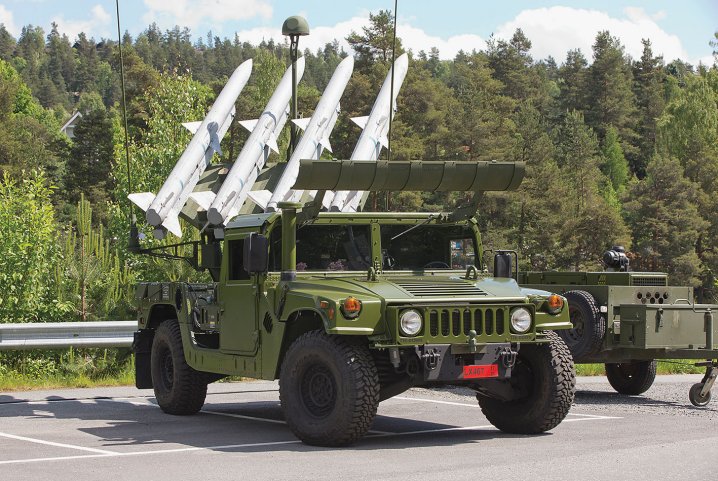
The RNoAF currently operates the updated NASAMS II system in two configurations: a six-round truck mounted/towed pedestal launcher, and a lightweight four-round launcher fitted to a High-Mobility Multipurpose Wheeled Vehicle (HMMWV). When ground launched, the AMRAAM missile has a range of 20 km.

The army’s new air defence system will be built around the RNoAF’s high-mobility NASAMS launcher for the mid-tier, while the SHORAD system will be based on a tracked launcher. Speaking to Jane’s on 14 February, a spokesperson for the MoD said that the SHORAD system would be armed with both guns and Diehl BGT IRIS-T short-range air-to-air missiles.

(Nicholas de Larrinaga, London – IHS Jane’s Defence Weekly)

February 14, 2017 0 comments
0 FacebookTwitterPinterestEmail
Diplomatic relations

Serbia to be “exporter of stability in region” – Norway

by Nadarajah Sethurupan February 14, 2017
written by Nadarajah Sethurupan

Serbia maintains good, stable relations with Norway, Serbian Deputy PM and Serbian FM Ivica Dacic said Tuesday, noting Norway was an important partner of Serbia and that bilateral economic cooperation should be boosted.
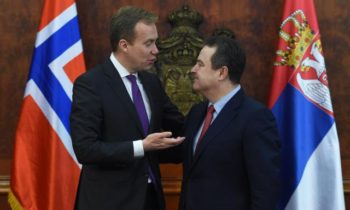
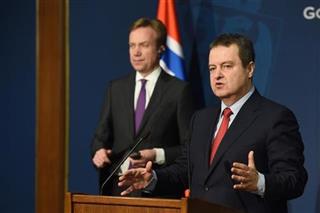
Speaking at a press conference after meeting with Norwegian FM Borge Brende, Serbian FM Dacic announced he would pay an official visit to Norway in April to discuss further strengthening of cooperation with the friendly country.

Foreign ministers of Serbia and Norway are to look into greater investment in Serbia, visiting Norway’s foreign minister Borge Brende said here Tuesday.

At a joint press conference after his meeting with Norwegian Foreign Minister Borge Brende in Belgrade, Dacic announced he would travel to Norway in April, where he would discuss “further strengthening of cooperation with this friendly country.”

Dacic said Prime Minister Aleksandar Vucic and he informed their guest about the strategic goal of Serbia – membership in the EU – as well as the desire for Serbia to be “an exporter of stability in the region, while open issues should be solved through dialogue, without any unilateral moves.”

Norway, said Dacic, is an important partner of Serbia, while Norway, according to its officials, sees Serbia as its “partner plus” in the region.

Serbia will support Norway’s desire to become a non-permanent member of the UN Security Council, he said, noting that regardless of the fact this issue will be on the agenda in 2020, “Serbia mist think long term.”

Noting that Norway is one of the largest bilateral donors to Serbia, Dacic said that this country has in the past 15 years supported Serbia with more than 250 million euros worth of various humanitarian and development projects, reforms in various sectors, and helped repair the damage caused by the 2014 floods, and with the migrant crisis.

Dacic said that the volume of trade with Norway is low compared to the opportunities and amounted to “50, 60 million euros” last year – “but can be much better.”

There are various areas for Norwegian investments in Serbia, Dacic said, adding, “we are interested in Norway’s experience.”

Brende told reporters that his country has “a strong partnership” with Serbia, supports its path towards the EU, and wants Serbia wants to be an exporter of stability in the region, given the “fragility and sensitivity,” especially when it comes to Bosnia-Herzegovina.

“A responsible leadership in Serbia is important in this sense,” said the Norwegian minister.

According to him, recent years have seen more and more investment from Norway, while the intention is to increase this further. Further strengthening of cooperation and increasing investments by Norwegian companies in Serbia will be discussed during Dacic’s visit, he said.

Noting that he visited Serbia for the first time during the floods, Brende said his country is “a friend of Serbia who has helped it.”

February 14, 2017 0 comments
0 FacebookTwitterPinterestEmail
Environment

Norway’s top researchers to run major plastics recycling project

by Nadarajah Sethurupan February 13, 2017
written by Nadarajah Sethurupan

Norway’s Norner Research will lead the Euro 2.5 million FuturePack project focusing on the development of new technologies for bioplastics and recycling of plastics packaging.
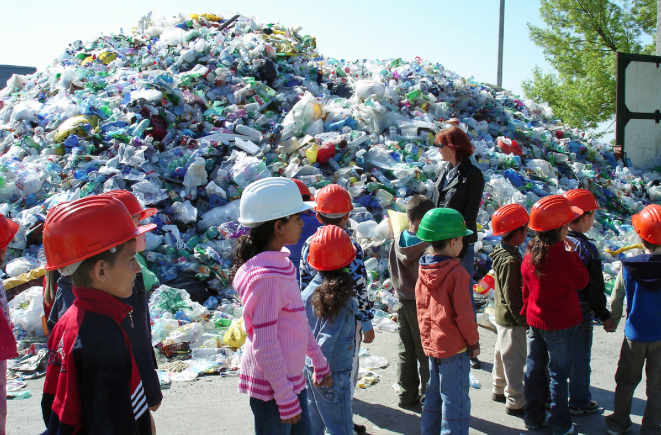
Over 60% of plastic packaging is recycled in Norway, mostly thanks to the 120 nationwide collection points operated by Grønt Punkt Norge (Green Dot Norway). The take-back organisation is also one of the parties funding the FuturePack project, together with the Norwegian Research Council and various industrial partners.

According to the consortium of companies backing the R&D initiative, packaging must become even more sustainable through increasing the share of bio-based and recycled materials, citing resource scarcity, carbon emissions and littering as important drivers for change.

Also under the FuturePack project, Norner will co-operate with leading institutes such as Nofima, the Paper and Fibre Research Institute, Østfoldforskning and NTNU IKP.

‘We see a significant need for increasing the development of new technology that can increase recycling of packaging, especially that which today is difficult to recycle,’ comments Eirik Oland of Grønt Punkt Norge. ‘To achieve high goals, research is required, and we are proud that this project received grants from the research council.’

Tine Rørvik, ceo of Norner, adds: ‘We have a strong strategic focus on sustainability and circular economy in the plastics value chain through projects in the field of recycling and bio-based materials. By long term co-operation with our international clients, we have also acquired significant competence in this field. However, more research and competence are needed to solve our global challenges and FuturePack is an important project to take new steps in the right direction.’

(recycling international)

February 13, 2017 0 comments
0 FacebookTwitterPinterestEmail
Oil & Gas

Norwegian Petroleum Directorate grants permit to expand Nyhamna gas facility

by Nadarajah Sethurupan February 13, 2017
written by Nadarajah Sethurupan

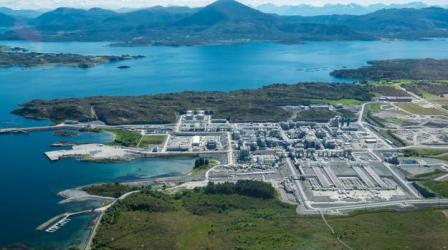
Image: NPD has granted consent for the expansion of Nyhamna gas plant. Photo: courtesy of Norwegian Petroleum Directorate.

The Norwegian Petroleum Directorate (NPD) has granted permission to expand the capacity at Nyhamna gas facility in Møre og Romsdal County.

The consent from the NPD will enable Ormen Lange field in the Norwegian Sea to increase production by 25-30 billion standard cubic meters (Sm3) of gas.

The first part of Nyhamna expansion includes expansion of the gas plant with land-based compression of gas from Ormen Lange.

A new compressor will be installed to maintain pressure at Nyhamna, when pressure decreases in the reservoir.

Tthe development of export and process facilities for Polarled will form the second part of the expansion proejct. This pipeline will carry gas from the future Aasta Hansteen field to Nyhamna.

Polarled compression and export are slated to begin in the autumn of 2018, while gas from the Dvalin field is expected to be produced in the autumn of 2020. The gas will also be transported through Polarled.

According to NPD, the expansion will increase Nyhamna’s export capacity from 70 to 84 million Sm3 per day.

The gas will be distributed through Sleipner A platform in the North Sea to the Easington gas terminal in northeast England.

Norwegian Sea development and operations assistant director Kalmar Ildstad said: “This is a large and important project for improved recovery, and onshore compression is the first step. The next step is compression closer to the field.”

The next project includes the increased gas production from Ormen Lange at a depth between 800m and 1100m through offshore compression solutions.

Shell, along with its partners, is testing various concepts to use compression when it requires.

Shell is the operator of Ormen Lange project with 17.81 stake, while other licensees include Petoro with 36.48%, Statoil with 25.35%, Dong with 14.02% and ExxonMobil with 6.34%.

(exploration and development)

February 13, 2017 0 comments
0 FacebookTwitterPinterestEmail
Newer Posts
Older Posts

Norwegian Nobel Prize 2024

101207 The Norwegian Nobel Committee has decided to award the Nobel Peace Prize for 2024 to Japan’s Hiroshima bomb survivor group Nihon Hidankyo.

Special Interest

  • Africa and Norway
  • Asia and Norway
  • Asylum
  • China and Norway
  • Corruption in Norway
  • Crimes
  • Defence
  • Diplomatic relations
  • Economics
  • Environment
  • Farming
  • Killing
  • Media Freedom
  • Middle East and Norway
  • NATO and Norway
  • Nobel Peace Prize
  • Norwegian Aid
  • Norwegian American
  • Oil & Gas
  • Peace Talks
  • Politics
  • Racism in Norway
  • Religion
  • Russia and Norway
  • Royal House
  • Science
  • Sex scandal
  • Sports
  • Spy War
  • Srilanka and Norway
  • Svalbard
  • Terrorist
  • Taiwan and Norway
  • Video clips

Follow Us

Recent Posts

  • Armenia, Norway hold political consultations in Oslo

    March 10, 2026
  • Police release images of suspect in U.S. embassy attack in Oslo

    March 10, 2026
  • Explosion reported outside US embassy in Oslo, police say

    March 8, 2026
  • Armenian envoy discusses cooperation with Norway

    March 6, 2026
  • Mongolia and Norway discuss issues of cooperation

    March 6, 2026
  • Norwegian FM: Israeli strike on Iran does not comply with international law

    February 28, 2026

Social Feed

Social Feed

Editors’ Picks

Norway opens market for Sri Lankan fish exports...

May 13, 2016

Sri Lanka – Nordic Business Council holds discussions...

May 15, 2016

Good governance to Sri Lanka

May 15, 2016

Shock and Joy in Sri Lanka – Erik...

May 15, 2016

Sri Lanka-Norway plenty of new opportunities for business–...

May 15, 2016

NORWAY NEWS is an online news site, written in English, dedicated to Norwegian affairs at home and abroad. Norway News.com is published online. It is a daily online newspaper in existence since May, 2003. The site is run by an Independent Journalist.

Facebook Twitter Youtube

Useful Links

    • Work With Us
    • Contact Us
    • Collaboration
    • Data Collection
    • Workplace
    • Adverstising
    • Privacy Policy
    • International Collab
    • Feedback
    • Terms of Use
    • About Our Ads
    • Help & Support
    • Entertainment
    • News Covering
    • Technology
    • Trending Now

Politics

Syrian, Norway to boost cooperation on mine clearance
Erna to step down as Conservative Party leader in 2026
Norwegian Labour Party on re-election win

Latest Articles

Armenia, Norway hold political consultations in Oslo
Police release images of suspect in U.S. embassy attack in Oslo
Explosion reported outside US embassy in Oslo, police say
Armenian envoy discusses cooperation with Norway

Norway News 2025 . All Right Reserved. Designed and Developed by Norway News

  • Home
  • About us
  • Disclaimer
  • Contact us
NORWAY NEWS – latest news, breaking stories and comment – NORWAY NEWS
  • Home
  • About us
  • News
  • Other News
    • Africa and Norway
    • Asia and Norway
    • Asylum
    • Breaking News
    • China and Norway
    • Corruption in Norway
    • Crimes
    • Defence
    • Diplomatic relations
    • Economics
    • Environment
    • Farming
    • Featured
    • Health
    • Killing
    • Media Freedom
    • Middle East and Norway
    • NATO and Norway
    • Nobel Peace Prize
    • Norwegian Aid
    • Norwegian American
    • Oil & Gas
    • Peace Talks
    • Politics
    • Racism in Norway
    • Religion
    • Royal House
    • Russia and Norway
    • Science
    • Sex scandal
    • Sports
    • Spy War
    • Srilanka and Norway
    • Svalbard
    • Taiwan and Norway
    • Terrorist
    • Travel
    • Video clips
  • Disclaimer
  • Contact us
NORWAY NEWS – latest news, breaking stories and comment – NORWAY NEWS
  • Home
  • About us
  • News
  • Other News
    • Africa and Norway
    • Asia and Norway
    • Asylum
    • Breaking News
    • China and Norway
    • Corruption in Norway
    • Crimes
    • Defence
    • Diplomatic relations
    • Economics
    • Environment
    • Farming
    • Featured
    • Health
    • Killing
    • Media Freedom
    • Middle East and Norway
    • NATO and Norway
    • Nobel Peace Prize
    • Norwegian Aid
    • Norwegian American
    • Oil & Gas
    • Peace Talks
    • Politics
    • Racism in Norway
    • Religion
    • Royal House
    • Russia and Norway
    • Science
    • Sex scandal
    • Sports
    • Spy War
    • Srilanka and Norway
    • Svalbard
    • Taiwan and Norway
    • Terrorist
    • Travel
    • Video clips
  • Disclaimer
  • Contact us

Editor’s Picks

  • UN concern over Sri Lanka’s cases of enforced disappearances

    October 8, 2025
  • UN Human Rights Council Resolution on Sri Lanka’s Path to Reconciliation

    October 7, 2025
  • International should support Sri Lanka: Solheim

    October 4, 2024
  • Norwegian Meets Sri Lankan’s Challenges

    May 3, 2024
  • Norwegian Ambassador meets JVP in Sri Lanka

    May 2, 2024
  • “The man who didn’t run away” – Eric Solheim

    April 30, 2024

Newsletter

@2025 - All Right Reserved. Designed and Developed by Norway News