NORWAY NEWS – latest news, breaking stories and comment – NORWAY NEWS
  • Home
  • About us
  • News
  • Other News
    • Africa and Norway
    • Asia and Norway
    • Asylum
    • Breaking News
    • China and Norway
    • Corruption in Norway
    • Crimes
    • Defence
    • Diplomatic relations
    • Economics
    • Environment
    • Farming
    • Featured
    • Health
    • Killing
    • Media Freedom
    • Middle East and Norway
    • NATO and Norway
    • Nobel Peace Prize
    • Norwegian Aid
    • Norwegian American
    • Oil & Gas
    • Peace Talks
    • Politics
    • Racism in Norway
    • Religion
    • Royal House
    • Russia and Norway
    • Science
    • Sex scandal
    • Sports
    • Spy War
    • Srilanka and Norway
    • Svalbard
    • Taiwan and Norway
    • Terrorist
    • Travel
    • Video clips
  • Disclaimer
  • Contact us
NORWAY NEWS – latest news, breaking stories and comment – NORWAY NEWS
  • Home
  • About us
  • News
  • Other News
    • Africa and Norway
    • Asia and Norway
    • Asylum
    • Breaking News
    • China and Norway
    • Corruption in Norway
    • Crimes
    • Defence
    • Diplomatic relations
    • Economics
    • Environment
    • Farming
    • Featured
    • Health
    • Killing
    • Media Freedom
    • Middle East and Norway
    • NATO and Norway
    • Nobel Peace Prize
    • Norwegian Aid
    • Norwegian American
    • Oil & Gas
    • Peace Talks
    • Politics
    • Racism in Norway
    • Religion
    • Royal House
    • Russia and Norway
    • Science
    • Sex scandal
    • Sports
    • Spy War
    • Srilanka and Norway
    • Svalbard
    • Taiwan and Norway
    • Terrorist
    • Travel
    • Video clips
  • Disclaimer
  • Contact us
Thursday, May 14, 2026
NORWAY NEWS – latest news, breaking stories and comment – NORWAY NEWS
  • Home
  • About us
  • News
  • Other News
    • Africa and Norway
    • Asia and Norway
    • Asylum
    • Breaking News
    • China and Norway
    • Corruption in Norway
    • Crimes
    • Defence
    • Diplomatic relations
    • Economics
    • Environment
    • Farming
    • Featured
    • Health
    • Killing
    • Media Freedom
    • Middle East and Norway
    • NATO and Norway
    • Nobel Peace Prize
    • Norwegian Aid
    • Norwegian American
    • Oil & Gas
    • Peace Talks
    • Politics
    • Racism in Norway
    • Religion
    • Royal House
    • Russia and Norway
    • Science
    • Sex scandal
    • Sports
    • Spy War
    • Srilanka and Norway
    • Svalbard
    • Taiwan and Norway
    • Terrorist
    • Travel
    • Video clips
  • Disclaimer
  • Contact us
Copyright 2025- All Right Reserved Norway News
Russia and Norway

Russian Railways Sign Agreement with Oslo Port

by Nadarajah Sethurupan December 18, 2019
written by Nadarajah Sethurupan

Kaliningrad Railway, a subsidiary of Russian Railways, has signed a memorandum of understanding on developing a multimodal transit container rail service between China and Europe via the ports of Kaliningrad and Norway.

Viktor Golomolzin, Head of Kaliningrad Railway, told the representatives of Norwegian transport market about the newly launched China – Europe – China block train via Baltiysk in Kaliningrad and Sassniz in Germany.

The transit time between China and Baltiysk made 8.5 days. 

December 18, 2019 0 comments
0 FacebookTwitterPinterestEmail
Srilanka and Norway

Norway facilitates disaster management in Sri Lanka

by Nadarajah Sethurupan December 18, 2019
written by Nadarajah Sethurupan

The two-day symposium held in Sri Lanka, , it is aiming to showcase NBRO’s innovations –geotechnical guideline for safe construction of building foundations, technical guideline on building demolition work in Sri Lanka, handbook on test methods and specifications for material and product section and Air Quality Monitoring network under its Research and Development Program.

Norwegian Ambassador to Sri Lanka Trine Joranli Eskedal said the seven- year long cooperation between the Norwegian Geo-technical Institute and the NBRO, had facilitated to introduce the advanced Norwegian technology such as ground penetrating Radars, using drones to look for landslides, building warning systems and effectively conducting ground water continuation assessments among other.

“During the last few weeks we have heard that there have been several losses of lives and a considerable number of people were affected by the adverse weather conditions which led to floods and landslides in some parts of the island. In many cases it is possible to forecast natural disasters and early action is more effective than responding after the disaster has risen,” she said.

Ambassador Eskedal said there was a clear connection between the need to climate change reduction and prevention of climate related and other natural disasters and the need for humanitarian efforts.

She noted that it was the poorest communities that were at most risk from natural disasters, and in particular women and children.

“Experiences tell us that early warning systems based on landslide monitoring and predictions are most economical in landslide risk reductions because of prevention is significantly lower than the price of reparation,” Eskedal said adding that technology used in landslide identification can analyze, monitor, make predictions, reduce risks, and enhance sustainable disaster management.

She said this year’s theme for the symposium ‘Equitable Resilience’ was important and there was a need to make fundamental change for transformation when some stresses and shocks which were unavailable takes place.

“Governments, natural and social scientist , engineers , lawyers, and policy makers, businesses, NGOs, civil society and all of the individual have to work together to have a critical resilience and reach to sustainable forms to the global challenges in to this era,” Eskedal said adding that trans-disciplinary research cooperation are critical on this matter.

Sri Lankan Defence Secretary Maj.Gen. Kamal Gunaratne (Retd) emphasising the urgent need for a holistic precautionary approach for disaster management, said bringing disaster management stake holders within the purview of Defence Ministry would facilitate the coordination and cohesiveness at all levels.

He said disaster management was not a process that could be tackled in isolation but needed careful coordination, cooperation and liaison among many state holders to be successful in any emergency situation.

“Being cognizant of this vital need, President Gotabaya Rajapaksa has made the decision to synergize all these capabilities which were under different establishments, under the Ministry of Defence to achieve efficiency and effectiveness as a cohesive outfit to face any disaster situation in future,” he said.

Maj.Gen. Gunaratne said with this new move the government would be able to focus more towards enhancing resilience empowering the people, to take appropriate action during and post disaster phase.

Referring to the 10 policy decisions, including sustainable environmental management, development of natural resources and a society based on technology which are more directly linked to the disaster resilience, taken by President Rajapaksa, he said all stake holders were urgently required to line up to achieve the desired efforts of resilience.

Maj.Gen. Gunaratne, who was the chief guest at the 10th Annual Research Symposium of the National Building Research Organisation (NBRO) held in Colombo, today, said even though, the people were not immune to the destructive impact of the forces of nature, the impact could be reduced when communities were prepared to face natural calamities and their disruption.

He said two calamities – Meeriyabedda landslide in Badulla district and the Samasarakanda landslide in Kegalle district and its flow-on impact in last few years were reminding the need of well preparedness by local communities to get them immune from natural disasters.

“There is an urgent need for a precautionary approach with proper understanding of the risk and the need for cohesive approach which is capable of ensuring much more prescient, precise and holistic risk governance in the future,” he stressed.
Reminding the assistance extended by the Tri- Forces and the Police in disaster responses and providing relief to affected communities, he said troops were not only engaged in disaster management but also led the rehabilitation and reconstruction process.

According to Maj.Gen. Gunaratne, resilience to a disaster had been a prime concern in the past but in today’s context, vulnerability is not only associated with disaster, but also to environmental, social, health, economic and other related issues.

“Climate change makes extreme weather effects more likely than ever before. The average temperature of the globe has already risen by 1°C. Heat waves, droughts, floods, and violent storms could become much more common in the decades to come, making disaster risk reduction even more urgent priority,” he said.
Maj.Gen. Gunaratne said the building physical infrastructure, such as transport and energy systems and commercial and residential buildings, had not taken into account with associated disaster risks.

“The resilience-based sustainable development must be comprehensive in nature, and it requires integrated responses to complex challenges and respect for national ownership and leadership,” he said adding that NBRO has tremendously worked in disaster mitigation while introducing guidelines and provide guidance through its research and innovations.

Appreciating the contribution and support given by the international stakeholders during disaster situations, he said it was vital to work together in a more collaborative manner in managing disasters , which were challenging and required modern technology and innovation.

He also called for greater collaboration between the institutions, including the NBRO, working in the humanitarian and development fields to facilitate the communities affected by disasters to rebuild their lives to face future disasters.

(MOD LK)

December 18, 2019 0 comments
0 FacebookTwitterPinterestEmail
Terrorist

Abducted JJ Ugland bulker crew released by pirates

by Nadarajah Sethurupan December 17, 2019
written by Nadarajah Sethurupan

Norwegian owner JJ Ugland has confirmed that nine crewmembers from 2014-built supramax bulker Bonita, who were held hostage by pirates, were released in Nigeria after 35 days in captivity.

The vessel was boarded by pirates on November 2 off Cotonou, Benin when it was at anchor waiting for a berth to discharge cargo. Nine crewmembers, including the captain, were kidnapped and taken off the vessel by pirates. The remaining crew onboard notified local authorities.

All of the crewmembers have gone through medical examinations and the doctor declared all nine fit to travel. After being safely transported out of Nigeria, the crewmembers have now safely arrived in Manila, where they will receive further care and follow up treatment.

“We are truly happy that the nine crewmembers are now reunited with their families and have their wellbeing at heart. I would on behalf of the company like to sincerely thank all parties that have contributed to resolving this difficult situation,” said Øystein Beisland, president of JJ Ugland.

December 17, 2019 0 comments
0 FacebookTwitterPinterestEmail
Economics

Norway’s Equinor buys half stake in Polish offshore project

by Nadarajah Sethurupan December 16, 2019
written by Nadarajah Sethurupan

Norway’s Equinor has acquired a 50-percent stake in a Polish offshore wind project, Baltyk I with a capacity of 1.56 GW, from Poland-based privately-owned energy producer Polenergia, the Norwegian company said in a Tuesday statement.

Norwegians added they now have half of the shares in Polenergia’s three planned wind farms with a total capacity of 3 GW. In 2018, Equinor bought a 50-percent share in Polenergia’s Baltyk II and Baltyk III offshore projects with a total output of 1.44 GW.

Equinor also said it would manage the construction preparation phase of the wind development projects at the site about 80 kilometres from the port of Łeba, at depths of between 25 and 35 metres.

“This acquisition strengthens our presence in the Baltic Sea,” Jens Okland, the state-controlled Norwegian firm’s vice-president, said. He added that Poland is a very important market for Equinor and the company is pleased to further deepen their presence in Poland and to work with Polenergia, which has an in-depth knowledge of the Polish energy market.

Equinor (formerly Statoil) operates wind farms off the coasts of Great Britain, Germany and Norway.

December 16, 2019 0 comments
0 FacebookTwitterPinterestEmail
Environment

Germany ponders storing CO2 beneath the North Sea

by Nadarajah Sethurupan December 15, 2019
written by Nadarajah Sethurupan

As part of a revised industrial energy strategy drafted by economy minister Peter Altmaier (CDU), the German government contemplates capturing and storing unavoidable CO2 emissions from industrial processes beneath the North Sea, writes Tagesspiegel Background. “Major European offshore potentials are available for the implementation of environmentally compatible CO2 storage.

This requires corresponding cooperation, especially with Norway, the Netherlands and Great Britain,” says the strategy. Germany will be keeping a close eye on the trials of Scottish company Pale Blue Dot Energy, which has a carbon capture and storage (CCS) project led by engineer and CCS expert Sam Gomersall, to sink carbon dioxide in exploited gas fields beneath the North Sea, writes Tagesspiegel.

“We can store the emissions of centuries for the United Kingdom there,” Gomersall told journalists in the British town of Aberdeen, the site of a gas processing plant called St. Fergus. Pale Blue Dot Energy has already calculated a storage fee for companies that want to get rid of their CO2 in St Fergus: the equivalent of around 14 euros per tonne, according to Tagesspiegel.

Scotland is not the only country offering to store its neighbours’ carbon – Norway has been driving this development for some time. Earlier this year, German chancellor Angela Merkel had already brought the controversial CCS process back to the political table, despite sceptics, who criticise the high cost of CCS and the unknown environmental effects of the technology. Merkel and her party, however, argue that CCS is a necessary measure in reaching net greenhouse gasneutrality.

December 15, 2019 0 comments
0 FacebookTwitterPinterestEmail
China and Norway

Op-Ed from Senior U.S. Official on Human Rights Day

by Nadarajah Sethurupan December 14, 2019
written by Nadarajah Sethurupan

China is everywhere.  Huawei is in control of virtually everything.  And so from the human rights perspective, China’s performance in Xinjiang is just – it truly dwarfs anything, even Siberia in World War II.  And so if you want to say who’s the worst human rights violator of all time, it has to be the – it has to be the Communist Party in China said Robert Destro, Bureau of Democracy, Human Rights, and Labor.

“We need to take China very seriously when it says “one country, two systems.”  Because Hong Kong is a signatory to some conventions that the PRC is not.  And so that offers us some opportunities to go after some of China’s bad behavior.  Labor is a particularly interesting one in the sense that not only do you have slave labor in Xinjiang, and worse – I mean, that’s another whole topic with the organ harvesting and that kind of stuff – but the – but they’re also undercutting labor markets in Italy, in Ethiopia.  All over – all over Africa, China is actually exporting prisoners to these other countries to work, which has the effect of undercutting those workers locally, plus we don’t need to get into the resource extraction where basically China – China has become the bedroom of the 21st century in terms of that” he said. 

Below is a full rush transcript of the press conference with Assistant Secretary Robert Destro, Bureau of Democracy, Human Rights, and Labor.

Assistant Secretary Destro:  Well, good morning,  I’ve been on the road.  Actually, I’m going to be heading back to the United States tonight.  And we started out in Bratislava for the meetings of the Organization for Security and Cooperation in Europe, and did some absolutely fascinating discussions.  There’s actually two conferences that go on when OSCE meets.  We were in the parallel conference with the civil society folks, and so we got to meet people from Ukraine, from Russia, from central – all across Central Asia.  We got to visit with prisoners who were tortured.  We got to meet with civil society – or civil human rights defenders.  And in one respect, I’d have to say that that’s a very sobering kind of conversation in the sense that you – you find it hard to imagine that people are – that these really, really wonderful people live under such circumstances where you always have to watch what you have to say, not unlike the situation that I was in when I first – when I had my first classified briefing, and I read the material in terms of the briefing and said, well, thank God I was born in the United States.  

So then we went from Bratislava, where we spent a couple of days, and went to – went over to Geneva, where we met with ambassadors from the like-minded countries, and then had a very, very – with ambassador – had a one-on-one with Ambassador Andrew Bremberg, who’s pretty new in his position, talking about ways in which we can engage the multilateral space in places on the margins either of the human rights group or, to, getting in some things like the International Labor Organization, which I can talk a little bit about later.  We then had an absolutely fascinating lunch with the ambassadors of the Organization of the Islamic Conference, which was very, very interesting, about things we could be doing together to reach into the Muslim world in a more effective way.  Then we took off and went down to Rome and had meetings at Embassy Vatican and with some colleagues from the World Food Program about how we would piggyback on top of some of the World Food Program’s programs in places like south – like in Sudan and Ethiopia.  And my view is once you take care of getting people fed, you then need to take a look in civil society and their human rights issues.  

So then after that we went to Brussels for a consultation we hadn’t done for about five years between the United States and the EU, and that took a day, and then we went to Berlin for a German foreign ministry conference, where I got to opine on a panel on artificial intelligence and human rights, which was really quite fun.  And we got up at 5:15 this morning and flew to London, and tonight we get to go home. 

Question: About Russia and Central Asia and what’s going on in that region.  Could you talk a little more about that, sir?

Assistant Secretary Destro:  Sure.  One of the – one of the reasons we went to the OSCE conference is to talk to all of the – as many as possible of the civil society advocates and human rights defenders who work in that whole band of – the whole band of East Europe and then into Central Asia.  So we were talking with people from Armenia, from Russia, from Ukraine, from Tajikistan, from Uzbekistan, from Kyrgyzstan.  I mean, it was – it was a little bit like a speed dating program because you were just kind of going through and talking to people.  But the number of stories was just fascinating, and I was privileged and before I left for Bratislava to have engaged back at the State Department in bilaterals with the – with – I’m sorry, with Belarus and with Turkmenistan, and that was – that was pretty interesting as well.  So it kind of rounded out the periphery of Russia and what the Russian Federation is up to with respect to the countries on – in what they often call the near abroad.  

So anyway, it’s a – that’s a fascinating discussion.  And I can tell you quite honestly that all of them are scared to death of their big neighbor, and it’s how do you avoid the fatal clutches of the Russian bear, and I was particularly – particularly [inaudible] in terms of the people we talked to from Belarus in light of the conversation – the bilateral discussions I had had with the deputy foreign minister from Belarus in Washington.  

Question:  I have two questions.  When you will participate in UNHRC human rights sessions?  Why staying away from that system? Also, briefly, elaborate to me about the human rights situation inside China. So can you briefly give me some information about China and UNHRC?

Assistant Secretary Destro:  Sure.  We – let’s start with your first question first, but I should preface it by saying how grateful I am to my friends in Norway.  I’ve spent way more years, since at least two – probably 14 years working with your Peace Research Institute of Oslo, and very, very good friends.  I’ve been to Norway many times and I have to say your work in the field of human rights is just – and peace-building is just exemplary.  So let me just kind of get that on the table first.

Let’s talk about the Human Rights Commission.  The United States has made its position pretty clear with respect to the Human Rights Commission.  You’ve got two big problems.  Actually, three.  The first one is just the management of it is not what we want to see.  It’s completely disorganized; it’s pretty dysfunctional; everybody recognizes that it’s dysfunctional.  Even the like-minded ambassadors, who will remain nameless, think it’s dysfunctional.  The question is, well, it’s dysfunctional but it’s the only Human Rights Commission we have.  The United States finally said, wait a minute.  We want to see some changes.

We’ve also got the pesky matter of Item 7, which is the permanent assault on Israel, and as long as there’s not going to be reasonable conversation about that topic.  And then you’ve got the – you’ve got the bad actors like Venezuela and Iran and others that are scarcely paradigms of the protection of human rights, and finally we just threw up our hands and said forget it.  And I think people were somewhat taken by surprise.  Would the United States consider coming back in?  Sure, we would, but there are certain things we want to see.  Did our allies encourage us to come back in?  Sure, they did.  We just reiterated the position I just told you about.

But Ambassador Bremberg and I are committed to doing a lot on the margins of the HRC, so the fact that we’re not in doesn’t mean we’re going to be quiet and not involved.  And then there are other multilateral organizations, in particular the ILO, and that segues nicely right into Xinjiang.

And the – what’s really interesting about – and this was Ambassador Bremberg’s observation, which I have to give him credit for.  I wasn’t smart enough to come up with it on my own.  But we need to take China very seriously when it says “one country, two systems.”  Because Hong Kong is a signatory to some conventions that the PRC is not.  And so that offers us some opportunities to go after some of China’s bad behavior.  Labor is a particularly interesting one in the sense that not only do you have slave labor in Xinjiang, and worse – I mean, that’s another whole topic with the organ harvesting and that kind of stuff – but the – but they’re also undercutting labor markets in Italy, in Ethiopia.  All over – all over Africa, China is actually exporting prisoners to these other countries to work, which has the effect of undercutting those workers locally, plus we don’t need to get into the resource extraction where basically China – China has become the bedroom of the 21st century in terms of that.

So it’s really – I mean, no matter where you go, and talking with our African friends and partners, they just say, look, China is everywhere.  Huawei is in control of virtually everything.  And so from the human rights perspective, China’s performance in Xinjiang is just – it truly dwarfs anything, even Siberia in World War II.  And so if you want to say who’s the worst human rights violator of all time, it has to be the – it has to be the Communist Party in China.  

Question:  What the United States is doing with the OIC, the Organization of Islamic —

Assistant Secretary Destro:  Well, one of the – one of the things I’ve been doing for the last 17 years, really, I’ve been involved in an ongoing – what we call an Abrahamic dialogue with Iran, which has now expanded into Iraq and Lebanon, where we really talk at great length to very senior religious, political, business and other figures across the religious landscape.  And when you have the privilege of getting to know some of the leading people, including people very close to Ayatollah Sistani, key people very close to the leadership in Iran – I’ve been to Iran twice and have been to Qom twice and have met many of the – many in the religious and business and political leaders.

So I have often thought that the United States interaction with the OIC is really a question of can you speak the language.  And so when we had the lunch at Ambassador Bremberg’s – at the embassy in Geneva, the conversation involved several of the countries in the organization and it was what can we do together to foster human rights, or how do we do that in a way that you’re not speaking Western human rights, you’re speaking about the kinds of justice questions that Islamic law tends to focus on.  And in the – and of course, if you’re going to be dealing with the OIC, you can’t be bothered by saying, well, you don’t talk about politics or religion.  You have to talk about both at the same time.  And as one of the ambassadors told us, he says, “I don’t think I’ve ever been to a lunch like this before,” where we literally put – we put women’s rights on the table, we put – we put terrorism on the table.  We put all of those kinds of issues because I’m of the view that a really successful meeting means that you have agreed on what you most disagree on, and then you can assign the homework after so that you can kind of figure out where the – where you can nibble around the edges of those issues.

So, I mean, that was just a fascinating meeting.  I was originally supposed to go to Abu Dhabi after this trip and participate in a big conference sponsored by the Alliance of Civilizations, where I was going to give a human rights speech.  But after all this trip I thought the last thing I want to do is fly another seven hours to the Middle East and 15 going back.  

Assistant Secretary Destro:  Well, thank you all for participating today.  As somebody who in the United States both teaches and litigates in the First Amendment space, I can’t tell you how grateful we are to have working journalists like you asking us tough questions.  That’s your job, and one of the things that really came across strongly when we were meeting with the civil society protectors and human rights defenders and journalists from Central Asia is, boy, am I glad I was born in the United States.  My sister happens to be a journalist, and the thought of going to jail for something you put in a podcast or something, a tweet that you send out, is just a pretty sobering proposition.  

So thank you all for doing what you do every day, and just remember that our door is open.  We’re always willing to answer questions just as long as you understand that I’m the kind of person who will actually tell you, “I don’t know, I’ll have to go find out.”  

So thanks, and thanks again, and have a very good day.

December 14, 2019 0 comments
0 FacebookTwitterPinterestEmail
Russia and Norway

The NEW START Treaty extension: American tricks

by Nadarajah Sethurupan December 14, 2019
written by Nadarajah Sethurupan

In 2021 the New Strategic Arms Reduction Treaty (New START) expires. Experts worry about the future of the US and Russian nuclear arsenals. After the US withdrawal from the Intermediate-range Nuclear Forces Treaty it was expected that the same destiny would overtake the NEW Start Treaty. Recently Russian President Vladimir Putin said that Moscow is ready to extend the agreement by the end of the year without any more conditions. “Our proposals have been on the table,” Mr. Putin claimed, “but we have got no response from our partners.”

 However, it seems that Donald Trump has ambitious idea of trilateral agreement. According to it, China should also join the new treaty along with Russia and the USA. In general, the idea is not bad. Though its realization triggers a question. Especially, when Chinese officials said previously that their country wouldn’t participate in such talks.  The director of the arms control department at China’s Foreign Ministry Fu Cong declared that by now Washington and Moscow have more than 6,000 nuclear warheads (According to the Treaty, the number of deployable American and Russian nuclear weapons should be no more than 1,550), while China has only about 300. So there is but one thing to do: either the USA reduces its arsenal to China’s limits or Beijing raises its arsenal to the American level.  It looks too fantastic.

So there is another approach: the USA and Russia could extend the New START and then they could begin talks on additional treaty that sets limits for China. Certainly, such proposition would take years to being approved.

Not only Russians, but both Democrats and Republicans consider the New Start Treaty working. If President D. Trump decides to renew the agreement even without including China, it will be a real foreign policy win for his administration. Moreover the new document can be a foundation for a new INF treaty. Without the START there will be crisis situation between two nuclear powers as there will be no limits for their nuclear arsenals. It undermines strategic stability and provokes nuclear arms race.

At the same time, facing the facts, the prolongation of the NEW Start is not what the Trump’s administration seeks.  It is believed that such agreements prevent Washington from the modernizing of its offensive nuclear weapons and creating new ones.  That’s why the USA can simply refuse to begin new negotiations under the pretext of China’s denial of its participation. It is the easiest way.

So, there is still some time till February, 2021, but nobody guarantees the positive forecast.

 ( NORWAY NEWS – Written by Valeria Shatskaya from Russia)

December 14, 2019 0 comments
0 FacebookTwitterPinterestEmail
China and Norway

Norwegian play ‘Garage’ tickles people of all ages in Beijing

by Nadarajah Sethurupan December 14, 2019
written by Nadarajah Sethurupan

Performed at Beijing’s Tianqiao Performing Arts Centre, the Norwegian production “Garage” is tickling people of all ages.

In one garage, two repairmen work on three unexpected eggs. The play, featuring the concept of “steampunk”, has rekindled some fond memories for adults, while the whole act seems to be fun and intriguing for the younger generation. “When they were working on the eggs, I saw they sprayed something from a pipe. I wonder what it was, medicine, water, or gas?” said young spectator Zhou Zhaoen.

No matter what it was, cooking eggs with strange metal implements in a garage is funny and weird enough on its own. But is there something else behind the plot? “One of the most important things we are talking about is food,” actor Paal Viken Bakke emphasized the importance of cherishing and sharing.

Laughter hardly subsided during the 50-minute play. The secret largely lies in how the stage is set up. When different mechanical problems arise, the two characters must think quickly to fix them, while coming up with other weird inventions.

Many of the stage props are nothing but waste metal, collected from shipyards, steel mills and recycling stations for waste metal. The engine used frequently in the play is a hundred years old! It was originally used in a fishing boat in Norway. It’s hard to imagine they could be the major and only stage set for a children’s play.

The team said their material is very popular with people of all ages, but there’s also an underlying theme to the production too – the importance of recycling and cherishing food.

December 14, 2019 0 comments
0 FacebookTwitterPinterestEmail
Svalbard

Danish intelligence: Russia is building new airbase in Arctic

by Nadarajah Sethurupan December 13, 2019
written by Nadarajah Sethurupan

In the Arctic archipelago of Franz Josef Land, Russia is building a new military airbase where it will station fighter aircraft. The new infrastructure will be ready in 2020, which is extremely concerning to Denmark, TV2 Norge reports, citing Danish military intelligence.

According to Danish intelligence, Russia’s new airbase in Franz Josef Land will be the northern-most in the world, which will help Russia to strengthen its hold over the Arctic. Satellite images show that work is currently underway to extend the base’s runway from 2,500 to 3,500 m.

“Russia started working on the runway in Nagurskoye in 2017 and is continuing to expand the base’s potential. When everything has been completed, Russia will be able to use Nagurskoye for its largest transport and anti-submarine aircraft, as well as bombers,” states an analytical report compiled by Danish intelligence.

The analysts believe that Russia is moving its defense away from the mainland part of the country, which will give it ample time to detect and ward off the threat of US precision attacks, especially the threat of reaching the mainland.

Once the new airbase is operational, Russia can significantly increase its offensive potential in the Arctic regions, which will enable it to reach Greenland.

“From this base, Russian aircraft will also be able to reach North-Eastern Greenland within a short time, and with long-range missiles or the support of refueling aircraft, they could even attack the Thule base,” observe the Danish military analysts.

Denmark has warned Russia that it will deploy its own military aircraft in Greenland if the Russian fighters based on Franz Josef Land infringe Greenland’s borders.

December 13, 2019 0 comments
0 FacebookTwitterPinterestEmail
Defence

The Norwegian Armed Forces received self-propelled howitzers K9

by Nadarajah Sethurupan December 12, 2019
written by Nadarajah Sethurupan

The Norwegian Armed Forces received the first 155 / 52-mm self-propelled howitzers K9 South Korean production, learned online Media. The first two self-propelled guns and one K10 ammunition transport vehicle arrived in Norway at the port of Drammen (Oslo) at the end of November. December 4 delivered equipment was officially transferred to the artillery division of the Norwegian motorized infantry brigade “North”.

The rollout of the first 155-mm K9 self-propelled gun for the Norwegian military took place on September 19 of this year at Hanwha Techwin in South Korean Changwon, later the first self-propelled guns and charging vehicle were shipped to Norway by sea. The main part of the equipment is scheduled for delivery in 2020 with an end in 2021. In Norway, the K9 self-propelled gun was called VIDAR.

According to the agreement signed in 2017 by the Norwegian Ministry of Defense and the South Korean company Hanwha Land Systems, the latter will supply the Norwegian army 24 self-propelled howitzers K9 Thunder with a new caliber 155 / 52 mm. At the same time, an option is provided for another 24 self-propelled guns. In addition to the howitzers themselves, the contract provides for the supply of six armored vehicles for transporting K10 ammunition on the same chassis, ammunition, simulators, related equipment, as well as training and full technical support for self-propelled guns for their entire service life.

In service with the Norwegian army K9 Thunder will replace the obsolete SAU M109A3GNM. The South Korean howitzer won the tender, in which the German Panzerhaubitze 2000 from Krauss-Maffei Wegmann, the French Caesar from Nexter and the modern-day M109 Krait from the Swiss company RUAG also participated.

The 155-mm / 52 self-propelled howitzer K9 Thunder (Thunder) was developed and manufactured by the South Korean association Samsung Techwin (now Hanwha Land Systems). In total, from 1999 to 2014, the South Korean army received 1136 self-propelled guns K9. Since 2004, the system has also been produced under license in Turkey (as T-155 Firtina).

K9 Thunder weighs 47 tons, powerful diesel in 1000 hp provides speeds of up to 67 km / h. Cruising range 480 km. Armed with the KNUMX 9-mm gun with a barrel length of 155 caliber, the rate of fire reaches 52 rounds per minute. Crew 15 people. The installation can hit targets with high accuracy from a distance of more than 5 km, and when using Excalibur smart shells, from a distance of more than 40 km.

December 12, 2019 0 comments
0 FacebookTwitterPinterestEmail
China and Norway

30th Anniversary of the Conferment of the Nobel Peace Prize to 14th Dalai Lama of Tibet

by Nadarajah Sethurupan December 11, 2019
written by Nadarajah Sethurupan

Thirty years ago, today, His Holiness the 14th Dalai Lama was awarded the prestigious Nobel Peace Prize in recognition of His unwavering commitment to peacefully restore freedom for Tibetans in Tibet. As we celebrate the 30th anniversary of the conferment of the Nobel Peace Prize, the 15th Kashag of the Central Tibetan Administration bows down in deep reverence and gratitude to our most revered leader His Holiness the Great 14th Dalai Lama of Tibet. On this occasion, the Kashag offers its greetings to the Tibetan people inside and outside Tibet, guests and dignitaries in attendance, and supporters of Tibet around the world. 

His Holiness has steadily undertaken the commitment to emphasize the importance of inculcating compassion, tolerance, and kindness to achieve peace and harmony among all human beings. While stressing the importance of religious harmony, He has advocated dialogue as a means to resolve any conflict. Even in the face of persecution, His Holiness has led the world with examples through his undeterred efforts to resolve the issue of Tibet non-violently.

As one of the world’s most beloved leader and a Nobel laureate, His Holiness’ timeless initiatives for the creation of a more peaceful world has, in turn, highlighted and garnered support for the Tibet cause globally.

Today also marks Human Rights Day and the 71st anniversary of the Universal Declaration of Human Rights. However, today in Tibet, the fundamental human rights enshrined in this landmark document are trampled upon by the Chinese Communist Party. Tibetans are subjected to harsh treatment for speaking up for their rights, which are also enshrined in the Chinese constitution, such as freedom of religion, language, and preservation of the environment. 

Tibetans in Tibet continue to protest against the Chinese government’s repressive policies. On 26th November, a 24-year-old Tibetan named Yonten self-immolated in Ngaba, eastern Tibet. Since 2009, 154 Tibetans have self-immolated in Tibet calling for freedom for Tibetans and the return of His Holiness the Dalai Lama. 

The Chinese government has further resorted to drastic restriction instead of earnestly addressing the plights of the Tibetan people. In 2018, China’s Public Security Bureau issued a circular listing 22 illegal activities making local initiatives for environmental protection, language preservation, and any expression of support for the Middle Way Approach as an organized crime. Since 2008 Tibetans have been facing severe restrictions on their freedom of movement both within and outside of Tibet. 

Recently, Lobsang Dorje, a 36-year-old monk from Kirti Monastery, was sentenced to three years imprisonment after being held incommunicado in detention for more than a year on suspicion of communicating with the international community. In another case, Sonam Palden, a 22-year-old monk, was forcefully arrested from his room at the Kirti monastery for unknown reasons and has not been heard since. Earlier this month, six Tibetan monks from Shedrup Monastery in Sershul, Kham, were arrested for their protest against China’s rule over Tibet. Three days later, two Tibetan young men in their early twenties, Yonten and Choegyal, were arrested for their roles in a similar protest. 

Such ongoing repression of Tibetan people is highlighted in the reports of the United Nations Human Right Council, and numerous resolutions from the European Union to the United States. For the past consecutive years, the Freedom House report has placed Tibet after Syria as the second- least free country. 

During the recently held 119th session of the United Nations Working Group on Enforced or Involuntary Disappearance, China responded to the experts’ question on whereabouts of the 11th Panchen Lama and his family China responded with the usual practice of unverifiable and insufficient information. China must release the Panchen Lama and his family together with Chadrel Rinpoche and all the other political prisoners. 

As far back as 1969, His Holiness has expressed that whether the institution of the Dalai Lama will continue or not must be decided by the Tibetan people. The resolutions of the recently held 3rd Special General Meeting and the 14th Tibetan Religious conference held in October and November consecutively expressed the genuine wish of the Tibetan people for the continuation of the institution of the Dalai Lama. It also strongly stated that His Holiness the Dalai Lama is the sole authority concerning the manner of reincarnation.

The aspiration of the Tibetan people made clear in the resolution was voiced by the US Ambassador at large for the International Religious Freedom, Samuel Dale Brownback, during his formal visit to the headquarters of the Central Tibetan Administration in October 2019.  The Ambassador expressed that “the United States government supports the Tibetan people, the Dalai Lama and that the role of picking a successor to the Dalai Lama belongs to the Tibetan Buddhist system, the Dalai Lama and other Tibetan Buddhist leaders. It does not belong to anybody else, not any government or any entity.”

His Holiness’s untiring efforts for the past 60 years have come to fruition with the successful establishment of the Tibetan community in exile, introduction of a democratic system of administration, revival of Tibetan language, religion and culture, provision of modern education to Tibetan children and advancement of the Tibet cause in the global arena. In recognition of His Holiness’s accomplishments and sacrifices, the year 2020 will be observed as the “Thank You, Dalai Lama” year. 

In observation of our gratitude to His Holiness, we must further indulge in meritorious acts for the accumulation of our collective good karma. We must all remember and work towards the fulfillment of His Holiness’ principal commitments and work towards our cause in unity. We will renew our efforts towards the same through various initiatives throughout the gratitude year. 

Taking this opportunity, we thank the kindness of India and its people and also remember the nations, leaders and supporters of the Tibet cause around the world for their unwavering effort to restore peace and freedom in Tibet. 

Finally, we ceaselessly pray for the long life of His Holiness the Dalai Lama. May all his holy wishes be fulfilled. May the non-violent cause of Tibet prevail.

December 11, 2019 0 comments
0 FacebookTwitterPinterestEmail
Nobel Peace Prize

Ethiopia’s Army receives Nobel Peace Prize in Oslo

by Nadarajah Sethurupan December 11, 2019
written by Nadarajah Sethurupan

Ethiopia’s Prime Minister Abiy Ahmed on Tuesday received the 2019 Nobel Peace Prize at a ceremony held at the Oslo City Hall in Norway’s capital.

Abiy received the Nobel Peace Prize for his efforts to achieve peace and international cooperation, and in particular for his decisive initiative to resolve the border conflict with neighboring Eritrea, according to the Nobel Committee. 

“The Horn of Africa today is a region of strategic significance. The global military superpowers are expanding their military presence in the area. Terrorist and extremist groups also seek to establish a foothold. We do not want the Horn to be a battleground for superpowers […],” Abiy said in a speech. 

“It is a saying shared in many African languages, which means: “For you to have a peaceful night, your neighbor shall have a peaceful night as well.

“For me, nurturing peace is like planting and growing trees. Just like trees need water and good soil to grow, peace requires unwavering commitment, infinite patience, and good will to cultivate and harvest its dividends,” he added.

Eritrea seceded from Ethiopia in 1993.

From 1998 to 2000, the two countries fought a war in which 70,000 people perished.

The two countries reached a peace deal last year, ending a 20-year military conflict, thanks to Abiy who initiated peace talks with Eritrea soon after he was elected as prime minister in April 2018.

December 11, 2019 0 comments
0 FacebookTwitterPinterestEmail
Srilanka and Norway

Ambassador of Norway calls on SL PM

by Nadarajah Sethurupan December 11, 2019
written by Nadarajah Sethurupan

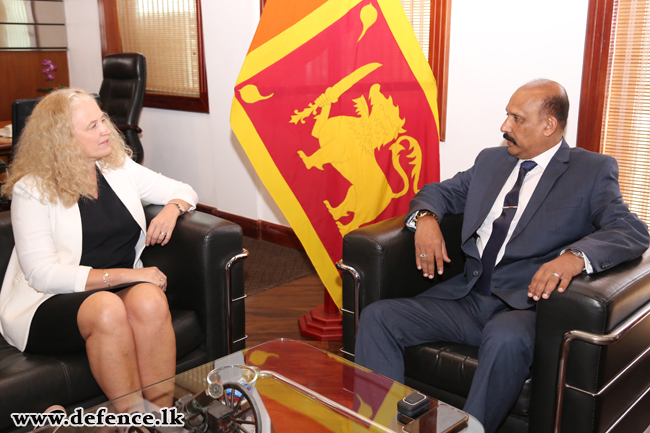
Sri Lankan Prime Minister Mahinda Rajapaksa met the Ambassador of Norway to Sri Lanka Trine Jøranli Eskedal this morning at Temple Trees.

Reiterating the historical bilateral relations the two countries have, both the Prime Minister and the Ambassador shared a mutual interest in further strengthening relations.

Cooperation in the fisheries sector was discussed at length.

December 11, 2019 0 comments
0 FacebookTwitterPinterestEmail
Diplomatic relations

U.S. Blacklists Foreign Officials, Support Networks for Alleged Corruption

by Nadarajah Sethurupan December 10, 2019
written by Nadarajah Sethurupan

The U.S. placed sanctions on six current or former foreign government officials and various support networks in Europe, Asia and Latin America for alleged corruption, the Senior U.S. Government Officials said Monday.

The designations, which were imposed under the Global Magnitsky program, come as the U.S. ramps up the use of sanctions in an effort to combat global corruption and human rights abuse.

The Treasury designated a total of 17 individuals and 29 entities, including two Venezuelan government officials who were blacklisted for alleged involvement in corrupt dealings including the sale of passports.

Below is a full rush transcript of the press conference with US Treasury Department, State Department, and NSC Officials on International Human Rights Day.

Senior Official #1:  I’m from the Treasury Department, and I’d like to thank you for joining us today on International Human Rights Day.

There’s a common misconception that serious human rights abuse is only prevalent in certain parts of the world.  It is not.  It is a global problem.  Serious human rights abuse undermines the rule of law and leads to the death of innocent civilians, ethnic cleansing, refugee crises, sexual violence, political instability, the perpetuation of conflict, and deprivation of fundamental human rights.

The United States is the world leader in combating human rights abuse and human rights violence.  As such, the United States is committed to upholding human rights for all people and will hold human rights abusers accountable wherever they are.

Today we are taking action against perpetrators and enablers of serious human rights abuse in Burma, Pakistan, Libya, Slovakia, South Sudan, and the Democratic Republic of Congo.  Our action today focuses on those who have killed or ordered the killing of innocents, including journalists, opposition members, and human rights lawyers.  Specifically, our targets include leaders of the Burmese military responsible for the murder of Rohingya villagers and other religious and ethnic minorities; a senior superintendent of police in Pakistan who repeatedly committed extrajudicial killings of civilians; a military commander who has ordered and carried out mass executions of unarmed detainees in Libya; a Slovakian businessman who murdered a journalist for exposing his corruption; five individuals responsible for the abduction and likely killing in South Sudan of two human rights activists in 2017; and members of the Allied Democratic Forces in the Democratic Republic of Congo, a group that uses rape, murder, and abduction of civilians as a weapon of war.

Treasury’s actions are designed to impose significant and tangible consequences on those who engage in and profit from serious human rights abuse against innocent civilians, including journalists, unarmed detainees, noncombatants, and ethnic minorities.  These actions encourage and support stability, the rule of law, and respect for human rights in the countries we will highlight today.

These designations taken today are pursuant to the Global Magnitsky Sanctions Program, which targets perpetrators of serious human rights abuse and corruption.  

Between 2017 and 2019, Treasury has designated over 700 persons with a nexus to corruption or human rights abuse under a variety of sanctions programs, over 190 of which have been pursuant to our Global Magnitsky Sanctions authorities.

Now, let me talk in a few more – a little more detail about some of the actions we’re taking today.  

First, I’d like to focus on Burma, where we are targeting members of the Burmese military, which has committed widespread, systematic, and brutal acts of violence against ethnic minority groups across Burma, including Rohingya villagers and groups in the Kachin and Shan states.  We are designating four Burmese military commanders for their roles in brutal military operations that include the rape, execution of, and systematic violence against civilians.  The commanders include – the commanders designated today are Min Aung Hlaing, who is the commander-in-chief of the Burmese security forces; Soe Win, who is the deputy commander and chief of the Burmese security forces; Than Oo, who is the leader of the 99th LID, and Aung Aung, a leader of the 33rd LID – both of which were deployed to Rakhine state, where these divisions participated in brazen acts of human rights abuse, including the systematic rape of civilians.

Let me turn next to Pakistan, where Treasury is designating Rao Anwar Ahmed Khan, a senior superintendent of police in Pakistan.  Anwar staged over 190 police encounters in the Malir district that led to the deaths of over 400 people, many of which were extrajudicial murders.  Anwar was also in charge of a network of police and criminal thugs responsible for extortion, land grabbing, narcotics, and murder.

In Libya, Treasury is designating Mahmood al-Werfalli for ordering mass executions of unarmed detainees as commander of the Al-Saiqa Brigade, part of the Libyan National Army currently conducting an offensive on Tripoli.  Since 2016, al-Werfalli has carried out or ordered the extrajudicial killings of 43 unarmed detainees in eight separate incidents.  Many of these executions were filmed and published on social media.

Treasury is also designating a prominent Slovak businessman, Marian Kocner.  Kocner threatened to kill a reporter, Jan Kuciak, who wrote more than a dozen articles exposing Kocner’s scheme to defraud the Slovak people of millions of euros through fraudulent tax returns, as well as his corrupt dealings and connections with Slovak police and prosecutors.  Kocner ultimately hired former Slovak intelligence service members to surveil Kuciak and hired a hitman that murdered the reporter and the reporter’s fiancée, Martina Kusnirova.  OFAC is not only designating Kocner for these actions but also is designating six entities owned or controlled by Kocner. 

Turning to South Sudan, Treasury is designating five individuals responsible for the abduction and likely murder of two human rights activists in 2017.  We continue to see the South Sudanese Government use extrajudicial killings as a means to silence dissent, limit freedom of press and speech, and enforce the political status quo.

Despite a UN-published panel of experts report detailing the allegations involving those designated today, we have not seen any indications that the South Sudanese Government intends to hold anyone accountable or take corrective measures.  More broadly, we are concerned that the same environment of impunity extends to South Sudan’s peace process.  The South Sudanese leadership continue to drag their feet and extend the deadline for forming a national unity government all while the people of South Sudan suffer economic hardship and violence.  The United States will work unilaterally and with international partners to hold all those responsible for human rights abuse and corruption accountable, as well as to take action against those impeding South Sudan’s peace process.

Lastly, I’d like to turn to DRC, where Treasury is designating members of the Democratic Republic of Congo’s Allied Democratic Forces, or ADF, which has repeatedly committed mass rape, killings, and abductions of civilians.  The ADF was designated by OFAC and the United Nations in 2014 and has continued to perpetuate widespread violence and innumerable human rights abuse through 2019.

Today, OFAC is designating a leader of the ADF, Musa Baluku, for his command responsibility in these human rights abuses, as well as five ADF commanders who have materially assisted the ADF through recruitment, logistics, administration, financing, intelligence, and operations coordination. 

In conclusion, today’s actions by the U.S. Treasury Department expose those who perpetuate and profit from human rights abuse and cuts off their access to the U.S. financial system.  The action today not only blocks all assets of these individuals and entities in U.S. jurisdiction, but prohibits U.S. persons from dealing with them.

With that, I’d like to turn it over to my colleague at the State Department. 

Senior Official #2:  I’d like to point out that the actions the Treasury Department is taking today are being carried out in close coordination with the Department of State and reflect our foreign policy objectives in each of the countries mentioned, as well as globally.  

Our aim is always to identify human rights challenges and use American influence and power to move every nation towards better, more consistent human rights practices.  And obviously a key component of that is promoting accountability, which we do – among other things – through the Global Magnitsky law.

In addition to the designations that were just mentioned by the Treasury Department, I want to mention two actions that the State Department is taking today in terms of visa denials.  These are being taken under section 31(c) of the Department of State’s Foreign Operations and Related Programs Appropriations Act of 2019.  

That provision allows the Secretary of State to deny visas to individuals when the Secretary has credible information that a foreign government official has been involved in a gross violation of human rights or significant corruption.  And that authority allows the Secretary to deny a visa not only to the perpetrator of the gross violation of human rights or act of corruption, but also to their immediate family members.  

Today the Department of State is designating Mr. Mohammad al-Otaibi, a former counsel general of Saudi Arabia in Istanbul, Turkey, for his involvement in gross violations of human rights, specifically for his complicity in the murder of Jamal Khashoggi.  This action today is another important step of ours in responding to Khashoggi’s killing.

Secondly, we are also designating Mr. Aslan Iraskhanov, head of the ministry of interior affairs for the city of Grozny, in the Chechen Republic of the Russian Federation, for his involvement in gross violations of human rights.  Specifically, in his prior position as head of the AA Kadyrov Police Unit, Mr. Iraskhanov was credibly alleged to be responsible for the summary execution of 27 men.

Senior Official #3:  This is the National Security Council.  Thank you, everyone, for joining us today for International Human Rights Day.  The United States reiterates its commitment to the promotion and protection of human rights globally.  All human beings are endowed with certain inalienable rights, and it is the duty of every government to protect these rights.

We acknowledge the truth that people around the world are empowered when human rights are protected by law.  On December 10th, 1948, inspired by the U.S. Bill of Rights, the United Nations General Assembly adopted the Universal Declaration of Human Rights.  Unfortunately, millions around the world still suffer from unjust imprisonment, religious persecution, and countless other human rights abuses.

The United States has long been at the forefront of addressing human rights.  We will always stand up for individual freedom and against all forms of oppression.  As part of this administration’s efforts to protect human rights, in July, the State Department hosted the second Ministerial to Advance Religious Freedom.  In September, President Trump was the first president to host a meeting at the United Nations General Assembly on religious freedom, calling on all nations to act to bring an end to religious persecution and stop crimes against people of faith.  

In January 2019, President Trump signed into law the Elie Wiesel Genocide and Atrocities Prevention Act, continuing this administration’s strong stance against the evils of mass atrocity and genocide.

In September 2019, President Trump launched the Atrocity Early Warning Task Force.  This White House-led interagency task force leads the United States Government’s efforts to prevent, mitigate, and respond to mass atrocities.  As President Trump has said, “We will never, ever be silent in the face of evil again … And we pledge: Never again.”  Thank you.

Question:  Can you detail U.S. Government efforts to prevent U.S. companies from unwittingly contributing to Chinese repression of the Muslim minority in Xinjiang?  Do you feel European countries are doing enough to prevent this?

Senior Official #2:  This is the State Department.  Let me first note that several weeks ago the Department of Commerce here in the United States designated a number of entities who we deemed – the Commerce Department deemed complicit in the human rights abuses taking place in Xinjiang.  And by designating those entities, we have signaled to American businesses, indeed to any business around the world, that doing business with such entities is problematic.  The Secretary himself has previously indicated the reputational risk of being involved with Chinese businesses complicit in Xinjiang.  And we continue to engage with American businesses in discussing with them what is going on in Xinjiang and encouraging them to take appropriate action so as not to contribute to the abuses taking place there.

Senior Official #1:  I think that’s great.  From the Treasury Department perspective, we, of course, work with the State Department and with the Commerce and with the entire U.S. Government interagency on a whole-of-government approach to deal with the repression in Xinjiang.

Question: What do you think could be done in the case of South Sudan?  Because to prosecute conflict in South Sudan many atrocities and human rights violations are committed.  Do you think those individuals will be accountable for what they did?

Senior Official #1:  Thank you for those questions.  This is the official from the Treasury Department.  As noted in the opening remarks, the U.S. Government is deeply concerned about the situation in South Sudan and is willing to use all tools at its disposal to call out, to highlight human rights abuse.  In today’s action, we’ve specifically highlighted an action involving the killing of two human rights activists in 2017.  But the issues in South Sudan are of great concern to the U.S. Government, and we’re looking at it from a very broad perspective.

The U.S. Government sanctions – the Treasury sanctions have power to block persons from the U.S. Government financial system, prohibit U.S. Government – the U.S. Government – U.S. persons from dealing with them, but they also play a role internationally in demonstrating to the world those individuals who engage in human rights, serious human rights abuse in South Sudan, and we would hope through a mixture of Treasury actions and diplomacy and outreach to highlight and get other governments to take similar action to impose the right amount of pressure on South Sudan.  I don’t know if my colleague at the State Department wants to add anything.

Senior Official #2:  Yes.  We’ve been very concerned about the human rights abuses taking place in South Sudan, that have taken place and continue to take place.  We’re also very concerned about the failure of the parties to finish the transition that they had previously agreed to.  As you know, that transition was supposed to conclude on November the 12th and has now been extended.  So leaders of those parties set that deadline, not the international community.  Further extension of this deadline would be seen as a lack of political will and cause concern about the ability of the parties to implement the peace agreement.

I should say that the United States is prepared to consider all possible levers, including economic sanctions, visa restrictions, and additional UN sanctions, if necessary, to try to ensure that this transition agreement is carried out.  We feel the people of South Sudan are on the edge of the abyss, and it is time for the elites to take responsibility and stop passing the buck.  Thank you.

Question:  Mr.Aivars Lembergs was designated on Magnitsky list as a corrupt oligarch who influences politicians.  So I don’t know if any of the agencies could give a little comment about that – that – yesterday’s announcement of the Department of Treasury ?

Senior Official #1:  This is the official from the Treasury Department.  Yes, thank you for picking up on our action yesterday in which we highlighted on International Anticorruption Day a prominent Latvian oligarch, Lembergs, and designated several of his companies to impose pressure on him for the corruption that he is engaged in.  

When we take an action like this, we strive to put as much information that we can make public into our press release.  I would refer you to our press release from yesterday, which would be the most expansive amount of evidence or information that we could put in the public domain at this time, to explain our action.

Senior Official #1:  I just want to thank everyone for listening to our remarks today and to note that, once again, that what a high priority exposing human rights abuse around the world remains for the U.S. Government.

Senior Official #2:  We appreciate your interest in these issues, and we will continue to use the tools we described today to address human rights violations and abuses wherever they may occur.

Senior Official #3:  This is the National Security Council, just to echo those two sentiments.  Thank you to everybody for joining the call and taking the time to report on human rights issues.  The administration remains dedicated to protecting human rights and holding violators accountable.  Thank you very much.

December 10, 2019 0 comments
0 FacebookTwitterPinterestEmail
Defence

Defender Europe 20 Drills To Build Readiness – U.S. Army Europe

by Nadarajah Sethurupan December 9, 2019
written by Nadarajah Sethurupan

The Defender Europe 20 military exercise has been designed to build strategic military readiness, US Brig. Gen. Sean Bernabe said during a press briefing on Monday. “Overall, the main focus is to build strategic readiness to practice moving large forces from the United States to Europe and then to practice moving these forces across Europe to training areas and give them a chance to build interoperability with NATO allies and partners.

The military exercise is scheduled to take place during the months of April and May across ten countries. Eighteen nations will participate in the drills and the United States will participate with 20,000 soldiers.

Bernabe noted that Defender Europe 20 is the biggest deployment of US military forces in Europe in 25 years, but emphasized that the US troops and equipment will return to the United States after completing the drills.

Most of the US troops participating in Defender Europe 20 will be moved to Europe by air while most part of the equipment will arrive by sea, Bernabe said.

The movement of troops and equipment will begin in February, Bernabe added.

Brigadier General Sean Bernabe
Deputy Chief of Staff, G3, U.S. Army Europe

Below is a full rush transcript of the press conference with Brigadier General Sean Bernabe Deputy Chief of Staff, G3, U.S. Army Europe.

Brigadier General Bernabe:  My name is Sean Bernabe.  I am the Deputy Chief of Staff for Operations for United States Army Europe.  As such, I oversee operations, training, and exercises for United States Army Europe.  I’m here today to answer your questions about the upcoming exercise Defender-Europe 20.  I assume you all are somewhat familiar with the exercise; let me just emphasize a few points up front.

The exercise Defender-Europe 20 is a Headquarters, Department of the Army-directed, U.S. Army Europe-led exercise designed to build strategic readiness for the United States Army.  Defender-Europe 20 will bring 20,000 U.S. Army soldiers with their assigned equipment from the United States to Europe, and then move those soldiers to training areas throughout Europe to participate in other, smaller exercises.  These other exercises have names you may recognize – for example, exercise Swift Response, the annual exercise featuring multinational parachute operations across Europe; or exercise Saber Strike, the biannual exercise featuring ground maneuver in Poland and the Baltic states; exercise Allied Spirit, focused on interoperability at the brigade level and below between allies and partners; or exercise Dynamic Front, the annual exercise designed to improve interoperability between allied and partner artillery units.

Of course, once these smaller exercises are complete, Defender-Europe 20 will redeploy those 20,000 U.S. forces back to the United States to prepare for their next mission.  

Question:  What kind of task will be expected of the U.S. Army in Poland?  Are American soldiers who stay in Poland going to be part of the Defender exercise?  Is the U.S. Army going to also cooperate with Polish soldiers and units?  What kind of operations are you going to perform?

Brigadier General Bernabe:  I will tell you that Poland will be one of the epicenters of one of those smaller, linked exercises I mentioned – in this case, exercise Allied Spirit.  Allied Spirit features a live wet gap crossing, so in other words a river crossing, that will take place at the Drawsko Pomorskie Training Area in northwestern Poland.  This will be a division-size exercise led by the United States Army 1st Cavalry Division, but with multinational participants, including the 12th Mech. from Poland and the 9th Mech. from Poland.  The 12th Mech. will serve as the assault force for the river crossing; the 9th Mech. will actually serve as the opposition force, providing a tough, realistic enemy force to practice against.  

Additionally, we’ll see – U.S. forces will see a multinational bridge company featuring German and British bridging capabilities, and then several enablers, to include fixed-wing and rotary-wing support from allies such as the Czech Republic and the United States.

You asked a question about the rotational armored brigade combat team forces.  So yes, some of those forces will participate in not only Allied Spirit – that wet gap crossing in Poland – but will also participate in another, smaller exercise, Saber Strike, near the Suwalki gap, as they practice moving from Poland into Lithuania.  

Of course, we’ll have support personnel and support units from many nations, to include the United States and Poland – altogether about 20,000 U.S. forces in Poland.  I also know that Poland has a national exercise occurring simultaneously.  That exercise is Anakonda.  I’m sure many of you are very familiar with that annual exercise.  And then U.S. Air Forces Europe also has an exercise, Astral Knight, that will occur in Poland at the same time.

So once again, Poland will be a large epicenter of exercise activity in the spring of 2020.

Question:  First of all, is the divisional – U.S. divisional headquarters, which is eventually going to be based in the headquarters forward that’s going to be based in Poland, is that participating in the exercise?  Do we know what the designation is yet?  As far as the Anglo-German bridging unit is concerned, is that the first time they’re operating, they’re building a bridge together in an exercise like this?  And then the final question is how does this all tie into the NATO’s Readiness Initiative, which was approved by NATO leaders last week?  I mean, would the Readiness Initiative even be achievable without U.S. forces?

Brigadier General Bernabe:  Okay, So first of all, yes, the next division headquarters forward has been designated, and that will in fact be the 1st Cavalry Division, and yes, they are participating in not only the command post exercise, the Joint Warfighting Assessment at Grafenwoehr, Germany, but they will also again command and control the live river crossing in Drawsko Pomorskie Training Area in Poland.  So yes, they will conduct those two smaller exercises and then, shortly thereafter, assume the mission as the division headquarters forward based in Poznan, Poland.

You asked a question about the multinational, multirole bridge company.  I don’t know that – I don’t think this is their first time operating together.  I do know we executed a live wet gap crossing as a part of Saber Guardian 19 across the Danube River in Romania, and we did have multinational bridging capability there.  So we have executed multinational river crossings.  There it was Romanian capability with U.S. capability.  Nonetheless, it is a great exercise to build our interoperability at that tactical level.  

How does all this tie to the NATO Readiness Initiative?  No direct tie, but I will tell you we are not only building strategic readiness by moving these 20,000 forces from the continental United States to Europe and then moving them across the continent to training areas, but then we’re also building tactical readiness with every one of these smaller exercises.  As we build that tactical readiness, as we give all of these units a chance to practice tactical tasks, and as we allow some of the key headquarters from the NATO force structure – for example, the Allied Rapid Reaction Corps, or Multinational Corps Northeast – as we allow them to practice commanding and controlling large-scale ground combat operations in simulation or in microcosm live exercises, we are certainly building readiness for NATO as a whole.

Hopefully I’ve answered your questions.

Question:  Could you talk a little bit about the part of the exercise that will be taking place in Georgia?  And also, is any part of the exercise directed against – specifically against Russia?

Brigadier General Bernabe:  I mentioned the smaller exercises.  One of those is the annual exercise Swift Response, which always features multinational airborne operations into various parts of Europe.  The current plan would actually – would put some airborne forces into Georgia for an airborne assault.  Again, that’s the current plan.  We’re still finalizing the plans for Swift Response 20.

I will tell you that in general, Defender 20 and the other smaller exercises I mentioned are not in response to anything in particular.  Overall, the main focus is to build strategic readiness, to practice moving large forces from the United States to Europe, and then to practice moving those forces across Europe to training areas, and then to give those forces a chance to build interoperability with NATO allies and partners and to build tactical readiness.

So, again, none of these exercises are in response to anything in particular.  They’re all about building readiness at the strategic and the tactical level.

Question:  I understand that the level command post will be established in Grafenwoehr, in Bavaria, but I assume that normally, or for the rest of the year, large exercises in the south of Germany will not be so much involved, more the north.  Is that correct?

Brigadier General Bernabe:  I think in about the neighborhood of 8,000 soldiers, in the Grafenwoehr area, primarily participating in the command post exercise known as the Joint Warfirghting Assessment.  Besides that, the live training that we’ll see will happen in the Bergen-Hohne Training Area in northern Germany.  There you will see the 116th Armored Brigade Combat Team, which is a National Guard armored brigade combat team out of the U.S. state of Idaho.  They will draw prepositioned equipment and they will execute live-fire training up to and including combined company live-fire exercises.  And again, that’ll be the live training you will see in northern Germany.

Other than those two events, Germany will see the transit of convoys moving from the seaports to the training areas in Poland or in the Baltic states, and will likely – we’ll also see the arrival of forces into airports and then the movement of those forces by ground convoy or by bus to those training areas.  But your description of the locality of the training is accurate.  A large number in the Grafenwoehr and Hohenfels area, another number up in the northern part in the Bergen-Hohne area, and then just besides that, the transiting of forces across Germany.

Question:  Finland is listed as a participant in the Defender-Europe exercise.  How would you assess Finland’s role in the exercise and Finnish defense forces as a partner of the U.S. military? 

Brigadier General Bernabe:  Yes, On the initial or the early versions of the concept slides for Defender-Europe 20, Finland was shown as a participant.  They are actually not participating directly in Defender-Europe 20, according to the current concept.  They do have plans to participate in a very small way in Saber Strike, exercise Saber Strike, providing a platoon, as I recall, in the Lithuania portion of that exercise.  And then they also will provide an artillery element to participate in Dynamic Front, the command post exercise in Grafenwoehr.  But again, not participating directly in Defender-Europe 20.  They were a part of the initial concept, but since then have decided not to be a participant.  Hopefully that answers your question.

Question:  What is the hardest aspect of moving 20,000 troops and equipment overseas?  Also, what is the easiest aspect of it?  And why is it important to state and to also show a deliberate departure from Europe at the end of the exercises? 

Brigadier General Bernabe:  I don’t think there’s anything easy about moving 20,000 forces from the United States to Europe.  It’ll be a heavy lift, if you will, a tall task for everybody involved, and that’s why we started planning this months ago.  That’s why the entire Army enterprise – frankly, the entire joint enterprise on the United States side – is completely engaged in this.  And frankly, our allies here on the continent are well postured as well to receive those forces at the four ports, seaports, of debarkation, and then to move them by convoy, by rail, by line haul, by bus across the continent rapidly and expeditiously.

So it’ll be difficult, but I can’t say enough about the work our allies and partners have done and are doing to make sure that this goes smoothly.

Question:  Why this exercise is so important for the U.S. Army and NATO? 

Brigadier General Bernabe:  Again, it’s about building strategic readiness.  For the last several years, the U.S. Army in particular has focused on building tactical readiness, and frankly, we’ve done a lot of great work on improving the tactical readiness of our forces throughout the Army in all three components: the regular Army, the National Guard, and the Reserves.  And we’ve realized that now is the time to focus once again on strategic readiness, building that strategic readiness – the ability to project those ready tactical units across distance to a point of need.  And again, that’s the primary purpose of exercise Defender-Europe 20 is to practice projecting 20,000 forces from the United States to Europe.  And then, of course, I think it’s important that we validate the infrastructure in Europe, our procedures and policies in Europe, to be able to move those forces quickly, efficiently, expeditiously to a point of need on the continent. 

So yes, I think it’s – it is very important for those reasons, and as always, every time we train here in Europe, we’re building our interoperability as an alliance, and we’ll have a chance to do that, to build that interoperability, at the theater level as we practice moving those forces across the continent, and then also at the tactical level as we practice river crossings, as we practice multinational airborne operations, as we practice maneuvering forces in the – through the Suwalki gap and in the Baltic states.

Question:  I’d like you to tell me a little bit more about the transit ways, the infrastructure used for moving those forces around, and what forces will conduct the logistics ?

Brigadier General Bernabe:  I will tell you that we are finalizing the details of the transit plan from the seaports to the training areas, for example.  But in general, we have four main avenues moving from those ports to the various training areas in Germany and Poland.  We are coordinating those with the local authorities and, in fact, we’ll very much appreciate the assistance that the local authorities will provide in escorting wheeled convoys, for example, across those routes and then especially through the most congested parts of those routes.  One key note, I think, is that we’re planning those movements for nighttime to minimize the friction that those movements could cause for normal civilian traffic.  

Of course, there’ll be several rail lines that we’ll use to move heavy equipment from ports to training areas, and frankly, I am not the expert to talk about which of those rail lines we’ll use.  But again, we are currently coordinating and will continue to coordinate with all the host nation transportation authorities to make sure that we have a smooth movement of all those forces across the continent.  

You asked the question of who’s providing logistic support for all these troops.  It’s really a combination of units and forces.  Certainly, the United States Army Europe will provide much of that support.  Among the 20,000 forces coming from the continental United States are logistics units.  And so, for example, the 1st Cavalry Division is deploying its sustainment brigade from Fort Hood, Texas, to help provide command and control of all the sustainment forces that will fuel and feed and maintain the equipment of all these forces training in Europe for the spring.

Certainly, our allies and partners will deploy some of their sustainment capacity to enable the support of these forces in the field.  We will contract some support in some places.  Probably in most situations some of the live support, especially as units arrive in the theater, as they prepare to depart, we’ll tend to provide some live support areas for them to use as they prepare to convoy across the continent, for example.  

So the sustainment is absolutely a multinational effort that’ll be commanded and controlled by the 21st Theater Sustainment Command, which is at U.S. Army Europe Headquarters under the command of a two-star U.S. general.

Question:  You’re saying 20,000 troops, but what equipment will they be bringing with them?  And I assume that you’re using a mode of trans – a number of modes of transport to cross the Atlantic, that you’re going to use aircraft and you mentioned seaports, obviously early kits coming in by sea.  And then how long will that all take to move all the stuff over?

Brigadier General Bernabe:  Thanks for your questions.  The operations officer for U.S. Army Europe, and I do spend much of my time focused on the logistics of this operation.  

Types of equipment:  So those 20,000 forces will bring their assigned equipment, with one exception.  I mentioned the 116th Armored Brigade Combat Team of the Idaho Army National Guard.  This armored brigade combat team will actually draw equipment from the Army prepositions stocks here in Europe.  So they will draw M1 tanks and M2 Bradley Fighting Vehicles and Paladin howitzers from our stockages here in Europe.  That is a training objective for Defender-Europe 20 is to practice the issuing of that equipment.

But the other brigades that are coming – for example, the 2nd Brigade of the 3rd Infantry Division coming from Fort Stewart, Georgia, will deploy its own organic equipment.  It will put its tanks and its Bradley Fighting Vehicles and its howitzers on a ship in Savannah, and move that across the Atlantic by ship to be offloaded at Bremerhaven, Germany.  Some of its equipment will come by military airlift, but that’s a very small portion.  For example, its high-end communication equipment will likely come that way.  And then its personnel, that brigade’s personnel, will move by air, most likely contract air, into an airport and they’ll land in an airport in close proximity to the seaport so that those soldiers can then marry up with their heavy equipment and then continue to move that equipment across the continent.

So that’s the general scheme of how the equipment will move across.  How long will it take?  We’ll start moving some of those forces as early as February.  With the case of the 2nd Brigade of the 3rd Infantry Division, for example, they’ll move into Poland a little bit ahead of the exercise to do some great training, some great live-fire training at the Drawsko Pomorskie Training Area before that exercise, Allied Spirit, kicks off.  And so they’ll be among the first to move, but we’ll be moving forces from February until April.  We’ll take a short hiatus over the Easter holiday just to keep those forces off the highways.  And then about mid-April we’ll be in high swing for the live – those smaller live exercises I mentioned in the beginning.

So that’s an overarching picture of the movement of the equipment to set conditions for Defender-Europe 20. 

Brigadier General Bernabe:  I appreciate everybody’s interest in this large exercise, Defender-Europe 20.  It is the largest deployment of U.S. forces to Europe in 25 years, and so certainly it has a lot of attention, and again, thank you for your interest.

The journalist from Army Magazine asked a question:  Why is it so important to emphasize the redeployment of forces back to CONUS?  And I’ll just end by saying, as always, we want to make sure that we train those soldiers hard, that they build that tactical readiness, and then we get them back to the continental United States so they can prepare for that next mission whenever it may be.  That’s our charter for the Army at large, for the enterprise at large, and so we’ll maintain our focus on getting those forces back to the continental United States as quickly as we can after all of these – all this great training is complete in Europe.

So again, I thank you for your interest and thank you for the chance to answer your questions today. 

December 9, 2019 0 comments
0 FacebookTwitterPinterestEmail
Environment

The top 10 most beautiful national parks in Europe

by Nadarajah Sethurupan December 6, 2019
written by Nadarajah Sethurupan

The era of Romanticism is long over and yet more people than ever are drawn to spend time at one with nature. From spring to autumn, neon-coloured hikers can be found in the mountains and in some areas, the gentle rustle of the wind mixes with the clanking of chains on mountain bikes, the splashing of idyllic waterfalls and the satisfied mooing of cows. Picturesque nature can be experienced particularly well in national parks – protected areas where the original character is to be preserved and where little or no human influence is exerted. 

In Europe alone there are several hundred national parks, all of which are worth a visit. It is not easy to make a decision as to which parks should not be missing from any nature lovers bucket list. That’s why Holidu, the search engine for holiday homes, is here to help! Using data from Google, Holidu has put together a ranking of the top ten most popular European national parks. Prepare to be inspired and begin planning your next trip to one of the breathtaking locations!

• Snowdonia National Park, Wales – 4,9 ★ out of 18.522 reviews

Europe’s most popular national park is located in Wales and is a park of superlatives: Snowdonia is not only the oldest national park in the country, but is also home to the highest mountain, Mount Snowdon, and the largest lake, Bala Lake. The verdant landscape extends over 2000 km², offering mountain ranges, clear lakes and plenty of fresh air. Deserted ruins provide mystical experiences and the countless sheep as well as the view of picturesque valleys complete the idyllic location. If you are not so much into long hikes and strenuous mountain tours, but would still like to experience the impressive landscape from the highest point, that’s not a problem. Just take the UK’s only public rack and pinion railway straight to the 1,085 metre peak of Mount Snowdon. The steam locomotive runs from around mid-March to the end of October and conquers an altitude difference of around 1,000 metres. Once you have reached the top, you will surely understand why the Welsh called this park “Eryri” – The Land of the Eagle. 

Good to know: Watch out for the monster at Bala Lake, “Teggie” (derived from the Welsh name of Bala Lake, Llyn Tegid). It is said to be up to no good.

• Bieszczady National Park, Poland – 4,9 ★ out of 10.295 reviews

Second place goes to the Bieszczady National Park in Poland, which covers 292 km² and is one of the most unspoiled landscapes in Europe. The reason for this is a sad one: in 1947 around 100,000 villagers were forcibly resettled as part of the “Operation Vistula”. As a result, the park is far away from civilization and is mainly inhabited by animals: bears, wolves, lynxes, big game and bisons live here in paradise. Since 70 percent of the park is closed to visitors, animals and nature are largely undisturbed. Those who visit this protected area and walk along the paths will find an almost original landscape and absolute peace. Picturesque scenes of rivers meandering in front of gentle hills with nobody to be seen for miles around. This park is an excellent alternative to crowded tourist magnets!

Good to know: In Wetlina, which is an excellent starting point for tours through the park, the small, rustic restaurant Chata Wedrowca is open from the beginning of May to the end of October and enchants its guests with wonderful blueberry pancakes. A must-have for anyone with a sweet tooth!

• Rila National Park, Bulgaria – 4,9 ★ out of 7.990 reviews

The top three of the most popular European national parks closes with Rila in Bulgaria. The protected area covers 80,000 hectares and contains the largest mountain in Bulgaria (Musala, 2,925 meters), 120 ice-age lakes, even more during snowmelt periods, and numerous idyllic hiking trails. For a special nature experience you should start the hike past the seven Rila lakes. The views are magical and let you forget everything else! Discover with your own eyes the fitting names of the lakes, some of which are called “Tear”, “Kidney” and “Twin”. Not to be missed: At 1,147 metres above sea level is the 10th century Rila Monastery, a UNESCO World Heritage site and one of the largest orthodox monasteries in the world. Further special objects of interest are the only active geyser of southeast Europe in Sapareva Banya in the north and the clay pyramids in Stob at the edge of the national park. 

Good to know: Those who aim high have to pack warm clothes for the greater part of the year. In nine out of twelve months, the temperature at the top of Musala is below zero. In summer it stays fresh and it rarely gets above 15°C.

• Ordesa and Monte Perdido National Park, Spain – 4,9 ★ out of 7.795 reviews

If you like fantasy movies, you will love the landscape in the Ordesa and Monte Perdido National Park! Barren mountain slopes, with dazzling colours in some places, remind you of the desolate region of Mordor, in the “Lord of the Rings”. The feeling is reinforced by the location of the national park in the region of Aragón and by the mountain Monte Perdido, “Lost Mountain”, which gives its name to the park. Not convinced yet? Then you should know that the National Park is also called the Grand Canyon of Spain, belongs to the UNESCO World Heritage and has a lot to offer! Picturesque valleys surrounded by rugged mountain ranges, deep gorges, rushing waterfalls and magnificent vantage points are just waiting to be discovered. During the summer months, only official buses are allowed into the National Park. But most of the area has to be explored on foot – the perfect way to immerse yourself in nature!

Good to know: God only knows where all the birds come from! In the Escuain valley, curious people have the chance to observe vultures and hunting birds nesting here.

• Saxon Switzerland National Park, Germany – 4,9 ★ out of 5.897 reviews

Next up is the Saxon Switzerland National Park in Germany. The rocky landscape of the Elbe Sandstone Mountains is unrivalled in this country and the motto of the national park “Bizarre Rocks – Wild Gorges” certainly does justice to the dramatic appearance. Whoever visits Saxon Switzerland and walks through the stages of the famous Painter’s Way will immediately understand how painters like Caspar David Friedrich were inspired by the landscape to create their romantic masterpieces. The National Park consists of three protection zones and a core zone. In the latter, a strict rule applies, and anyone who strays from the path should expect a fine. There is plenty to discover on the marked trails anyway: Walk through the bastion area, with a view of the world-famous Bastei Bridge and enjoy the stunning sight of Table Mountain Lilienstein. You won’t forget the impressions you take with you from a visit to Saxon Switzerland – and who knows, maybe you’ll paint your own picture afterwards?

Good to know: Boofen – spending the night outdoors on the rocks – is permitted in the national park. This tradition of the Erzgebirge is traditionally reserved for mountaineers.
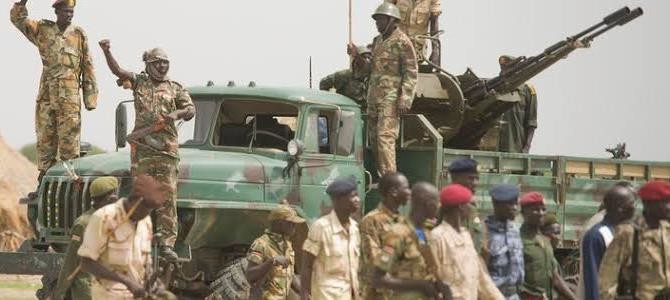
• Stołowe Mountains National Park, Poland – 4,9 ★ aus 5.752 Bewertungen

Dramatic rock formations are also waiting for you in Stołowe Mountains National Park. Bizarrely shaped rock formations made of sandstone and breathtaking Table Mountain structures take the visitor to a fantasy world. The nearly 64 km² large park consists almost completely of forests, which allow for extensive walking routes. The absolute highlight of the national park are the “mushroom rocks”, which stand like oversized mushrooms in the forest and intensify the feeling of being in a fairytale. Apart from that, the rock town and the rock labyrinth attract young and old alike. The highest mountain in the park, the Szczeliniec Wielki (919 metres), should also be visited. The impressive Table Mountain has been formed in the last 70 million years mainly by wind and water.
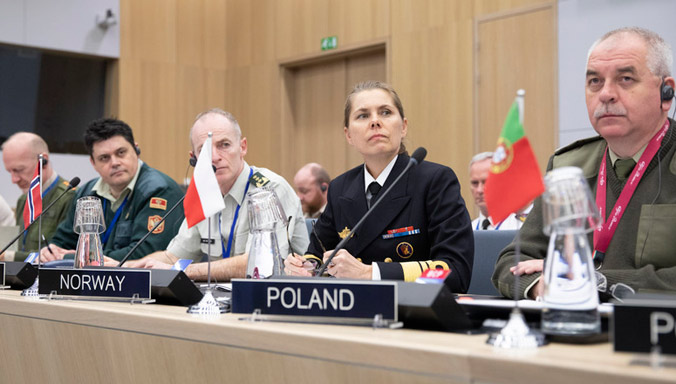
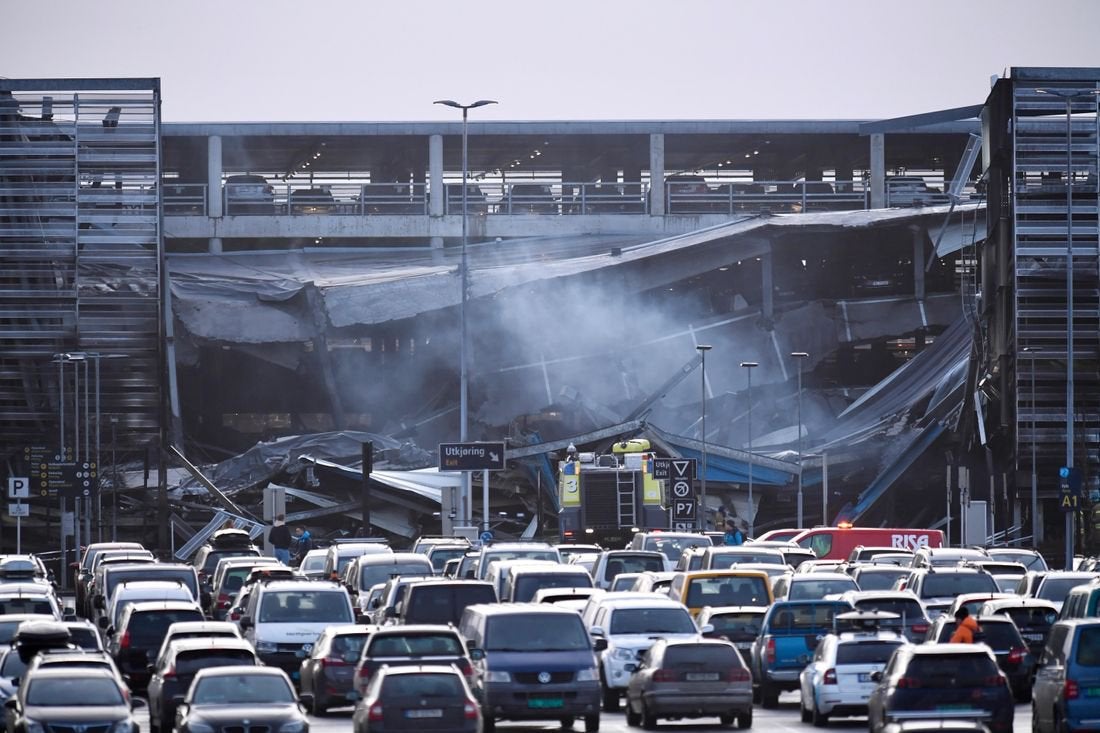
Good to know: Not far from the protected area you can visit the Kaplica Czaszek (Skull Chapel) in Czermna. According to a tradition that probably began in the 12th century, it is decorated with the bones of more than 3,000 people and in the crypt there are about 21,000 other bones.

• Durmitor National Park, Montenegro – 4,9 ★ out of 5.483 reviews

Those seeking an adventure will find what they are looking for in Durmitor National Park. Have you always wanted to try extreme sports? Then throw yourself into one of the following activities this national park offers for its visitors: Paragliding, rafting, dirt bike riding or flying with a zip line over the Tara Gorge – everything is possible here! Of course, the mountain massif, which has 48 peaks with a height of over 2,000 metres, can also be explored in peace and quiet and in winter the ski area attracts winter sports enthusiasts. In this UNESCO World Heritage Site, everyone gets their money’s worth! The biggest attractions are certainly the Black Lake near Zabljak, which in suitable weather reflects the surrounding landscape, and the Tara Gorge, which measures 1,300 metres at its deepest point. This deepest gorge in Europe is crossed by a 365 metre long bridge offering spectacular views! 

Good to know: The origin of the name “Durmitor” is not documented, but it probably comes from the Celtic words “dru mi tore”, meaning mountain full of water. This is true in any case, as there are over 18 glacial lakes in the national park.

• National Park Mount Olympus, Greece – 4,9 ★ out of 2.191 reviews

We are moving into the realm of the gods with the eighth place in the ranking of the most popular European national parks. The legendary Olympus was declared the first national park in Greece in 1938. According to ancient myths, Mytikas, the highest peak of Olympus (2,918 metres) was the place where the gods met, and Stefani (2,909 metres), the slightly lower summit, was the throne of Zeus, the father of the gods. If you get to these heights, you can certainly feel the sensation of being on top of the world. Two other peaks at similar altitudes, Skolio (2,911 metres) and Skala (2,866 metres), will also delight mountaineers. Information on hiking trails, monasteries and ancient sites in the area, as well as native plants and animals, can be found in the Visitor Centre close to Litochoro. The place is also an excellent starting point for your excursions.

Good to know: A special event is the annual Olympus Marathon, which brings Greek mythology to life: The route, which starts in Dion at the foot of Mount Olympus, is a reminder of the pilgrimage of the ancient Greeks, who climbed Zeus’ throne in his honour every year. The route is 44 kilometres in length and extends over 3,200 metres in altitude.

• Jotunheimen National Park, Norway- 4,9 ★ out of 2.058 reviews

From the gods to the giants: The Jotunheimen National Park in Norway is known as the “Empire of the Giants”, with over 250 peaks over 1,900 metres towering into the sky. The highest peak is Galdhøpiggen (2,469 meters). The highest heights in this national park are not necessarily the most popular destinations. Between mid-June and mid-September, park visitors push their way in large numbers along the Besseggen ridge – there are about 17,000 of them every month! The efforts are rewarded by magnificent views of the river, mountain lakes and beautiful peaks. Those who prefer solitude should visit less known valleys, e.g. Leirungsdalen, which is by no means less picturesque. What nature has created in this national park takes your breath away!

Good to know: The nature is extraordinary in the Jotunheimen National Park, where you can also observe animals that may not be commonplace for you: Reindeer and moose are the classics here, but lemmings can also be seen. Just be careful: according to some reports the lemmings are not shy of contact and may bite. 

• Vikos–Aoos National Park, Greece – 4,9 ★ out of 1.869 reviews

Greece, like Poland, is represented by two national parks in this ranking and closes the top ten with the Vikos Aoos National Park, located in a region called Zagori. The National Park is named after two gorges, of which the Vikos Gorge is the better known – partly because it is in the Guinness Book of Records. The reason: the ratio between the deepest spot and the lowest width is the largest in the world. A crooked stone staircase full of serpentines, the steps of Vradeto, lead directly down into the gorge. Also fascinating: the 45 villages of the Zagori region are connected by old stone arch bridges and winding donkey paths. Today they form the route network for day hikes and multi-day tours and provide idyllic panoramas that take you right back to the Middle Ages.

Good to know: Also in this park you can find various animal species: Besides brown bears, there are also wolves, red deer, wild boars and snakes in Vikos-Aoos as well as the usual suspects such as cows, sheep and numerous bird species. Typical of the park are also wild horses, and some of the visitors swear to hear them trot through the mountains from time to time.

December 6, 2019 0 comments
0 FacebookTwitterPinterestEmail
Spy War

US appeal to bar Huawei from 5G network

by Nadarajah Sethurupan December 6, 2019
written by Nadarajah Sethurupan

US deputy assistant secretary for cyber security Robert Strayer has stated unequivocally that “any country that deploys Huawei equipment in any part of its 5th generation infrastructure” would be reappraised as an intelligence partner.

European countries have been caught in the middle of a battle over 5G networks, as Washington lobbies its allies to avoid Huawei because of suspicions the company could be used by Beijing for cyberespionage – allegations the company has denied.

Other EU countries, including key markets Germany and the United Kingdom, have also resisted Washington’s entreaties to block Huawei, though they have yet to make a final decision. Hungary announced last month that Huawei will take part in the construction of its 5G wireless network.

Those decisions have contributed to at times strained relations between Washington and the EU, though there are signs that Europe is starting to take the U.S concerns more seriously.

Interview Robert Strayer, US State Department, about Huawei’s involvement in the UK’s 5G data network “We have to consider the risk that produces to our information sharing arrangements with them” (BBC News 10pm Bulletin – 29/04/2019 – ABSA627D)

Below is a full rush transcript of the press conference with Dr. Roslyn Layton Visiting Scholar at the American Enterprise Institute And Deputy Assistant Secretary Robert Strayer , Cyber and International Affairs and Information Policy Bureau of Economic and Business Affairs.

DAS Strayer:  We were very pleased to see the conclusions on 5G that the EU Council released on Tuesday.  Those make clear that in addition to looking at technical security risks, you also need to address nontechnical factors like the legal and policy frameworks where suppliers are governed by in their home countries, countries where they are headquartered.

Those nontechnical factors need to be addressed because, fundamentally, with regard to any technology that has software, that software can be updated instantaneously.  Within those updates can be compromises or vulnerabilities.  It’s also just simply impossible for any human to review tens of millions of lines of code to identify even one line that might be the cause of a disruption to the network or that would allow the unauthorized exfiltration of data. 

Furthermore on those conclusions, they specifically note that standardization and certification alone will not be sufficient to secure 5G networks.  They point out that additional measures are going to be required, and those would include these non-trust – these trustworthy measures that are nontechnical in nature.

We very much agree with the European Union’s conclusion that we need to build trust in 5G and protect our shared U.S. and European values like human rights, the rule of law, privacy, intellectual property rights, and protect – and transparency.

We also think that due to the 5G network architecture, there’s no part of the network that’s going to be safe for untrusted vendors.  We must secure both what has traditionally been called the core of the network as well as the periphery, or edge, of the network.  As 5G networks are built out, the important use cases will be at the edge.  We’ll see autonomous vehicles, telemedicine occurring in hospitals and other use cases at the edge of the networks, as well as automated manufacturing.  

There’s also important discussion within even the European Union Council conclusions about the ability to maintain lawful intercepts.  The lawful intercepts are going to occur at the edges of networks.  So the software that’s running those lawful intercept capabilities needs to be ones that are only the most trusted because, of course, that is the – that is putting in a front door for access to data.

We’re also very pleased to see yesterday as part of the NATO conclusions of the London declaration, highlighting the importance of 5G security for the future of NATO, and the commitment that nations in NATO made to secure their 5G networks.

So I’ll keep my remarks brief today just to allow time for your questions and allow Dr. Layton to speak.  And I’m going to say we very much look forward to partnering with countries in Europe to build a secure and vibrant 5G future.

Dr. Layton:  Yes.  Well, thank you, DAS Strayer.  

I want to make a few remarks based upon my research conducted in Copenhagen, where we focus on cybersecurity, as well as the report released by Strand Consult, also an organization I work with, which made a critical assessment of the cost to rip and replace Huawei and ZTE equipment from European mobile networks.  You can find this report at strandreports.com. 

Now, I think it’s very important that we do need to address companies such as Huawei and ZTE.  They are certainly not the only security problems posed by China and other countries.  I have founded a website called chinatechthreat.com to highlight the need for a holistic approach to cybersecurity, where it focuses on the equipment, the devices, the software, and the apps that comprise today’s modern mobile networks.

If you’ll note, the U.S. Vulnerability Database includes many commonplace items made in China which pose a security threat, such as Lenovo laptops, Lexmark printers, Hikvision cameras, and so forth.  You’re all probably familiar with the TikTok app, which is sending geolocation data to China.  

For good reason, NATO prohibits procurement from communist countries.  We don’t purchase fighter planes and tanks from China, nor should we be purchasing the vital inputs for our digital society from this country.  Now, some might suggest that we can isolate the threats by combining vulnerable elements to certain parts of the network.  That strategy might have worked in a 2G or 3G world, where the core was essentially a highway and the intelligence was in the apps, or the edge of the network.  But already in 4G, that typology falls away because the entire network is suffused with intelligence and capability.  There is processing going on, as DAS Strayer mentioned, of course, in the radio access part of the network, in the edge, but also in the core there’s network slicing.  So when you look at 5G, there’s no dumb part of the network.

Now, I think that there is something important going on from a European perspective, is that historically in the – or at least the last 10 to 15 years, the European telecom policy has focused on lowering prices at the – and unwittingly at the expense of security and quality.  If you’ll recall, around the year 2000, Europe was leading in telecommunications.  It had the top companies, most of the device manufacturers.  It led in the standards.  But that lead has been diminished significantly.  Europe once accounted for one-third of the world’s telecom investment; today it’s only 15 percent, and its revenue was half of the United States.  So the European policy has unwittingly brought about a real downturn in what could be a strength of the world in telecommunications.

And what’s important to know is that supposedly this argument that Huawei or ZTE equipment are such good quality or price, it has not helped Europe close the gap.  There’s a 100 billion dollar – euro – gap today to reach the connectivity goals, and the equipment that’s being used supposedly from Huawei and ZTE is not closing that gap.

I think the important point, just as DAS Strayer had mentioned, when we’re looking at all of these qualitative factors, that 5G is really a function of policy.  It’s not a function of any particular vendor.  I’m very pleased to see the Council make this declaration on 5G, but this is something they should have done two to three years ago.  Notably, the United States, they have a leadership position in 5G [inaudible] equipment.  This is a function of getting the relevant stakeholders onboard.  There is a harmonious federal, state, and local policy to fast-track the deployment of 5G.  It’s led, of course, by the President and his pronouncements about 5G.

So the good news for the European Union is that there are price-competitive alternatives to Huawei.  I describe this in the report that I mentioned, but to just put it in perspective, most of Europe’s mobile networks today are three to five years old.  They cannot be used for 5G.  The equipment itself will be obsolete.  The layout in terms of whether the kinds of antennas that are being used, the pole attachments, and so on – they are not usable for 5G.  So 70 to 80 percent of this equipment has to be replaced.  Forty percent of that said equipment is made up by Huawei and ZTE.  It’s a cost of about $3.5 billion to put in place.  Now, if you take out that portion and you divide it by the number of mobile subscribers in the EU – 465 million people – it amounts to about $7 per person.  That’s really a low amount, and the security is worth paying for, and I certainly think that European mobile operators can take on something as important as that.  They have made a big investment to comply with the General Data Protection Regulation; they can certainly keep the security of their customers at the forefront.

And just I want to close here with a point that’s important to be made, is that Europeans are very proud of the GDPR, and good for them, but if they’re going to take data protection seriously, they need to hold the Chinese vendors and all vendors of the world to the same account that are being demanded of European and American companies.  China’s surveillance society does not comport with the GDPR in any way, and we have already evidence that Europeans’ data is being syphoned out of the EU and brought to China, where it’s processed unlawfully.

Question:  The CEO of Huawei has said that he’d be willing to sell his company’s 5G technology to a Western company.  Is the U.S. Government interested in purchasing this technology, have private firms expressed interest, and would you work with an out-of-state Western company should they buy this technology?

Dr. Layton:  I am aware that Huawei has made that offer, but those particular patents that they’re offering really don’t have very much value.  They are not the standard, essential patents for 5G.  Those – the patents that are worth, that have value are owned by Qualcomm, Nokia, Ericsson, not by Huawei.  So that offer is really not worth very much.  I am not aware of a company that has taken them up on it.  Maybe they have, but that would only be something that could have some sort of marketing partnership, but there’s not a high value to that particular technology.

DAS Strayer:  My understanding is that there are no companies in the West that have even entertained this option.  That’s partly because or I’d say primarily because Ericsson, Nokia and Samsung have the components they need to provide the same level of functionality as Huawei offers to provide.  They’re providing – offering – making those offers to tele-companies around the world, including in Europe, to supply the cutting-edge 5G technology.  And in fact, when you open up the base stations, the key components – that is, the key microprocessing – it comes from companies like Qualcomm that Roslyn just mentioned.

In fact, I’d just put this whole statement by the CEO of Huawei in the category of things that they’ll say in order to get you to expand their market share around the world.  They’ve actually now acknowledged that they were not in negotiations with anybody.  In a Western legal system, and this is a small example of it, a CEO making that kind of statement that’s so misleading about their financial practices would likely be susceptible to fraud charges from investors.  We had a well-known case with Tesla in the United States, where a CEO claimed that he had investors that were willing to take the company private; when those didn’t materialize, of course, the SEC brought a lawsuit against him.  In the case here, there’s just no rule of law implications for the CEO of Huawei in China to make such statements.  In the West, there would be a totally different set of ramifications for making such kind of ludicrous statements.

Question:  I wonder, in Germany we have the stance of Deutsche Telekom, which is very pro-Huawei, which is heavily reliant on Huawei technology so far, and has been pushing for the inclusion of Huawei equipment in the 5G network also, and I wonder whether that has any repercussions on the ongoing talks between Sprint and T-Mobile in the U.S.  Does the U.S. Government make a connection here?

DAS Strayer:  Our process at the federal level has already completed to approve the T-Mobile/Sprint merger.  As you may know, a number of states’ attorneys general have filed lawsuits to hold up the merger, and so that’s where it stands, is with the states, or each individual state and their attorney generals’ separate lawsuits at this point.

Question:  Given that the U.S. and the European Union seem to be on the same page about the severity of potential security risks that 5G could pose, why do you think the conclusions drawn at the EU meeting earlier this week do not mention China or Chinese companies at all?

DAS Strayer:  In the United States we had an executive order signed by President Trump on May 15th to secure our ICT supply chains.  That resulted in regulations being promulgated by the Department of Commerce last week.  In those draft regulations, we do not mention China or Huawei by name.  We identify that we will apply a case-by-case basis to protect the national security interests in our telecom networks.  That’s the same proposal and same request that we’re making to governments around the world, that they set up a set of principles that will be – can be applied to protect their networks, the whole of their networks – not just the core, the edge as well – from untrusted vendors.  

So, in our view, you don’t need to name particular countries because there are generally applicable standards that can be applied to protect telecom networks without singling out any particular country in those regulations.

Dr. Layton:  I certainly agree that is the correct way to go forward with the policy.  What I would only say from the empirical perspective is if you look at the severity or the incidence of the particular kinds of vulnerabilities, the hacks, the various incidents, that they overwhelmingly come from China, and China as well is posing fronts on so many levels.  It’s not just mobile networks we’re worried about.  There’s satellite networks, there’s fixed-line networks.  And then, of course, on so many levels in terms of the types of equipment and devices and services.

So I think from a policy perspective, you need to have the right procedures and strategies, as DAS Strayer mentioned, but it shouldn’t overlook that there is a particular perpetrator, and you have to study those particular things and what’s going on so that the policy is correctly formulated.

Question:  I just wondered about your view on the ongoing German debate, which has essentially started as a proposed framework for a level playing field and equal scrutiny for all vendors, that we’ve seen calls from some lawmakers for an ex-ante ban on Huawei ?

Dr. Layton:  Well, I think the Germans, of course, will have their process for what they are going through.  What I would say is if we look at many countries have been through what Germany is going through now, and they have come to the conclusion that they have to take an ex-ante approach with Huawei – certainly what was the decision of the United States, and New Zealand, Australia, Japan, and so on – because there are just too many places where the cost of going through millions of lines of code, continued violations of trust, going to the actual plants in China, not being able to secure.  So it would be against the public interest to work with their firm. 

Now, I think that it’s conceivable such a firm could be in any kind of country, but it happens – they’re consistently happening to be in China.  

Again, the United States has taken this ex-ante approach with Huawei.  It has not hurt the United States to get a lead in 5G.  So there’s really no connection there between having leadership in 5G and working with this particular firm.

DAS Strayer:  I’m not going to comment on German political interactions, but I would just say that as I read the initial catalog approach to certifications, as I said in my opening comments, the approach of certification alone will be wholly insufficient to protect citizens and businesses in a world where software can be instantaneously updated and a compromise can be buried in millions of lines of code.  It is misleading and probably it’s hubris to think that you can use these certification processes to adequately protect yourself.  You need something more than just a certification.  

Question:  How does Deputy Assistant Secretary Strayer interpret the point made in the European Council’s conclusions that nontechnical factors should also be considered in the EU’s future security strategy for 5G?  What do these nontechnical factors refer to, exactly?

DAS Strayer:  Right.  So one of the nontechnical risks that were – was noted in the conclusions was the risk of the supplier of technology having to comply with legal and policy frameworks in a third country.  The risk assessment that was completed by the European Union on October 9th also noted additional risk profiles that should be considered, including the characteristics of ownership of the country – of the company, and as well as additional pressure that can be applied on the company.

So, in our view, a set of objective criteria need to be applied.  Those include, to just the first point about the legal and policy frameworks, is there an independent judiciary and rule of law in place so that a company can say that it does not want to comply with the mandates of the government where it’s headquartered?  In the case of China, of course, we know the National Intelligence Law requires all entities to comply with the mandates of the security and intelligence services, and to keep that cooperation secret.  Unlike in Western systems, there’s no independent judiciary so a company like Huawei cannot object in court to having to comply with those mandates.

We also think you can address those other risk profile issues noted in the October 9th risk assessment by seeking transparency about the ownership.  A company like Huawei is 99 percent owned by – it was claimed to be the employees, but it’s more likely controlled by the Chinese Communist Party.  There is limited transparency, very limited transparency about the ownership.  

And then, finally, as regards the funding, if a company is beholden to one government then financing could more easily be [inaudible] taking action by that government rather than doing what’s in the interests of consumers in other parts of the world where their technology is deployed.  So in the case of Huawei, because they receive tens of billions of dollars of financing from China, as well as in some cases zero percent loans to finance their sales, that means that the withholding potentially of that financing would be a very coercive measure that could be used against the company in the future.

Question: With yet another license extension having been awarded to Huawei recently, is the U.S. at sea in terms of dealing with the issue and is it struggling to formulate a coherent policy?

DAS Strayer:  Let me just step back a little bit from that just to explain some of the underlying facts, in case some of the reporters on the call aren’t fully familiar with all this.

But last – a year ago August, the United States sealed an indictment against Huawei and its CFO for evasion of U.S. sanctions related to Iran, telecommunications equipment being supplied by Huawei to Iran.  In order to complete that scheme of more than a decade of sales, they had – Huawei had to deceive banks about the financing payments.  They endeavored to engage in a scheme of bank and wire fraud around the globe.  So after we filed this indictment, we later sought extradition of the CFO from Canada in February, or late January, and then we also unsealed the indictment then. 

Because we have this indictment against Huawei violating our national security provisions as well as our foreign policy interests, we decided to put them on what’s called the Restricted Entities List, which limits the ability of manufactured products in the U.S. to go into Huawei products.  We do so because we want to enforce these very important national security rules, and one of the tools that we have is to limit – not be complicit in the undermining of our national security by seeing products manufactured in the U.S. go into companies that are undermining, really, free people’s interests around the world, especially with what’s going on in Iran right now.

So there has been no debate, no equivocation in the United States about keeping Huawei on this Restricted Entities List so long as they have not come forward or acknowledged any of these malign activities.  

We have, of course, allowed – to prevent disruptions to the market, we have allowed a temporary general license to be extended two times now.  That temporary general license prevents disruption; it also allows time and opportunity for companies to adjust their supply chains.  Supply chains are dynamic in this field, so we have responded with an additional temporary general license, as noted.  We will also allow some specific and limited licenses for particular activities.  

Question: The United States has repeatedly warned to limit cooperation with Europe if Huawei and other Chinese companies are involved in setting up 5G networks.  Could you please elaborate how far the U.S. is ready to go about that?  

DAS Strayer:  Well, so first, just to reiterate our general point, is that we’re not necessarily asking the Council’s conclusions to identify China specifically or Huawei in particular.  We want them to see – to establish robust enough security measures, particularly on the nontechnical side, on the trust side, that will fully protect their networks.

Now, with regard to how the future unfolds, we have very close relationships with Europe.  More data transmits between the United States and Europe than any other place on the globe.  We have our closest partnerships on law enforcement, on national security, on military affairs, as just noted in the NATO declaration, the London declaration.  We want to maintain those very close relationships and very close partnerships in Europe.  If there are the introduction of 5G components from untrustworthy vendors that can cause the compromise of data on networks in Europe, then we’ll have to reassess how we maintain levels of cooperation with them in such a robust manner.  That will be a very practical consideration that we will undertake in the future.  This isn’t a threat, it’s a – just a practical reality about how we’ll have to move forward.

Dr. Layton:  So what I would add there is that I think that there are many European countries which are aligned with the United States already, and they are looking for the U.S. to take leadership on this issue.  I think as you’ve seen just concluding, the NATO relationship, so many countries, especially countries in the European Union, who formerly lived through communist times.  They are extremely encouraged by the steps taken by the United States.  They have kept up their contributions because they recognize the kinds of threats that the world faces.  They have been occupied before.  They’re been invaded and they know all too well what this means.  So they’re looking for leadership from the United States. 

I think as well, the European Union is a democracy; there are different points of view.  There’s a free society.  There’s free exchange of ideas.  And that is part of what makes the strengths of the Western world.  So I’m actually quite confident that it is moving in the right direction, and as we’re going into this new 5G world, it is requiring a new way to understand how cybersecurity works, and many of the parties are coming together to what that means and what’s at stake.

DAS Strayer:  This is Rob Strayer.  If I just may offer one further point, it is that just from the U.S. perspective, we’re starting now to see the true evolution of 5G from being just telephone communications and the access that our smartphones need to have to the internet, to movement to the internet of things and much faster computing that will occur throughout the 5 – what will be 5G networks.  Just two days ago, Verizon, which is our largest telecom provider in the United States, announced a partnership with Amazon Web Services to put what they call mobilized computing – that is, computing at the edge – of their 5G networks.  That is the future.  That is why we’re so concerned that we not just try to secure the core of 5G networks, but we secure what was formerly considered the edge, or the periphery.  That’s because those smart components, the computing power, will be throughout 5G networks connecting the internet of things, devices, and very important critical infrastructure of the future.  

We can’t allow that infrastructure to be disrupted or the very important data to be exfiltrated for uses by authoritarian regimes.  

Dr. Layton:  I would just say that there’s a new EU government, which has begun here on December 1.  I think they have quite big ambitions.  The European Parliament has concluded a number of policies which want to protect the European citizens and have extremely high standards for companies working in Europe.  Those kinds of standards, they need – the Chinese companies have to be held to the same standard that’s expected of everyone else.  I think the good news going forward is because of the technological development, that there are – there are alternatives for 5G vendor network equipment.  They are price competitive.  They are of high quality.  So it’s actually a great time for Europe to pull together and look towards 5G. 

December 6, 2019 0 comments
0 FacebookTwitterPinterestEmail
Srilanka and Norway

Sri Lankan Ambassador to Norway recalled!

by Nadarajah Sethurupan December 6, 2019
written by Nadarajah Sethurupan

The services of 30 Sri Lankan Ambassadors including to Norway and High Commissioners have been terminated and they have been recalled by the Sri Lankan Foreign Affairs Ministry.

In 2018, Sri Lankan President Maithripala Sirisena’s decision to appoint an Australian resident with Sri Lankan citizenship as Ambassador to Norway has raised eyebrows among Sri Lankan MFA officials. Arusha Cooray is currently serving as Sri Lanka’s Ambassador to Norway, Finland and Iceland.

Sri Lankan New Foreign Affairs Minister Dinesh Gunawardena had notified them in writing yesterday (05) notifying them to return to the country by December 30th.

These political appointments had been made by the previous regime under UNP-SLFP.

It is also reported that an investigation would be held to determine if these Ambassadors/ High Commissioners had performed their duties properly during their service period.

The Sri Lankan Foreign Minister also hopes to make new appointments to these vacancies prior to the end of January.

Arusha Cooray is Sri Lanka’s ambassador to Norway, Finland, and Iceland. She holds a PhD in Economics from the University of New South Wales, Australia, and an MA (economics) and BA (economics) from the University of Colombo, Sri Lanka. She has lectured at the University of New South Wales, University of Sydney, Victoria University, University of Wollongong, University of Tasmania, Macquarie University, University of Colombo, and held a professorship in economics at the University of Nottingham Malaysia. Arusha has held visiting positions at the University of Oxford, United Nations Research Institute for Social Development, University of Gottingen, Australian National University, and Macquarie University.

Arusha is a fellow of the Centre for Poverty Analysis Sri Lanka and Centre for Applied Macroeconomic Analysis, Australian National University. Arusha has undertaken research on several issues and has published widely in academic journals including the Journal of Macroeconomics, Macroeconomic Dynamics, Oxford Economic Papers, Public Choice, among others. She has additionally been a consultant for international, governmental and private organizations and has contributed to economic debates with newspapers, research institutes, and banks.

December 6, 2019 0 comments
0 FacebookTwitterPinterestEmail
Srilanka and Norway

Norway Ambassador pledge fullest cooperation to SL’s plan of action with a new vision

by Nadarajah Sethurupan December 6, 2019
written by Nadarajah Sethurupan

A delegation from the Royal Norwegian Embassy in Sri Lanka headed by its Ambassador Trine Jøranli Eskedal met Sri Lankan new President Rajapaksa on Monday.

The delegation extended the good wishes of the Norwegian government and pledged their country’s fullest support to the Sri Lankan President.

Meanwhile, U.S. Ambassador Alaina B. Teplitz, Japanese Ambassador Akira Sugiyama and Italian Ambassador to Sri Lanka Rita Giuliana Mannella met with the Sri Lankan Premier at the Temple Trees.

December 6, 2019 0 comments
0 FacebookTwitterPinterestEmail
Norwegian Aid

New Oslo Action Plan to combat landmines

by Nadarajah Sethurupan December 6, 2019
written by Nadarajah Sethurupan

‘Under the Norwegian presidency, the new and ambitious Oslo Action Plan is being adopted to step up action against landmines. The Action Plan is an important step towards the goal of a mine-free world by 2025,’ said Minister of Foreign Affairs Ine Eriksen Søreide.

This week, Norway is hosting the Oslo Review Conference of the Mine Ban Convention. The Convention was adopted in Oslo 22 years ago, and forbids all use of anti-personnel mines. As a result, almost 58 million mines have been removed by clearing them from minefields or destroying stockpiles. However, 60 million people still live in areas where mines are a threat to life and health. 

‘Countries have now agreed that it is necessary to speed up mine clearance over the next five years. Under the new action plan, all countries will in the near future identify mined areas and put in place national plans for mine clearance in accordance with international standards. This will also be done in areas where armed non-state actors have deployed new mines, often of an improvised nature. This has resulted in the death and injury of growing numbers of civilians after many years when these numbers have fallen,’ said Ms Eriksen Søreide.  

The Oslo Action Plan covers the next five years, and was adopted today by the 164 states that are parties to the Mine Ban Convention.

‘For the first time, countries are to measure the progress they are making. I hope that this will raise awareness and inspire greater effort. Another new element is the requirement to provide appropriate mine risk education for everyone – women, men and children – living in affected areas. This will contribute to reduce the number of new mine accidents and protect displaced people who are returning to their homes,’ said Ms Eriksen Søreide.

In addition, the action plan highlights the need to ensure that people who have been injured by mines have access to healthcare and other services they need to be able to live independently and in dignity.

Important for the SDGs

The action plan will also be important in the efforts to achieve the Sustainable Development Goals. Most mine-affected countries are low-income countries that are dependent on international support for mine clearance.

‘If national authorities give priority to mine clearance and they have the necessary resources, far more countries will be able to declare themselves mine-free in the near future. The fact that countries have now agreed to mobilise more resources for global mine action is an important step forward. Norway will continue to be a major contributor to these efforts, as we have been for the past 20 years,’ said Ms Eriksen Søreide.

The conference, which began on Monday and ends today, has brought together more than 600 participants from national authorities, civil society, the UN and humanitarian organisations. The Convention’s clear prohibition on all use and trade in anti-personnel mines and the obligation to clear minefields, destroy stockpiles and assist survivors have saved countless lives and helped to make school routes safe, promote economic growth and ensure the inclusion of mine survivors and other people with disabilities. The prohibition on the use of mines is respected by most countries and non-state actors worldwide, including some that have not joined the Convention. Nevertheless, many challenges remain.

‘I would like to thank all our partners for their invaluable efforts. Moving forward, it is important that countries, the UN, the International Red Cross and Red Crescent Movement and civil society all pull together to implement the Action Plan and achieve our common goal of a mine-free world,’ said Ms Eriksen Søreide.

December 6, 2019 0 comments
0 FacebookTwitterPinterestEmail
Politics

Joint statement on joining Instex by Norway and Sweden

by Nadarajah Sethurupan December 6, 2019
written by Nadarajah Sethurupan

Belgium, Denmark, Finland, the Netherlands, Norway and Sweden are in the process of becoming shareholders of the Instrument in Support of Trade Exchanges (Instex), they say in a joint statement.

Belgium, Denmark, Finland, the Netherlands, Norway and Sweden attach the utmost importance to the preservation and full implementation of the Joint Comprehensive Plan of Action (JCPoA) on Iran’s nuclear programme by all parties involved. The nuclear agreement was unanimously endorsed by the UN Security Council and is a key instrument for the global non-proliferation regime and a major contribution to stability in the region.

In light of the continuous European support for the agreement and the ongoing efforts to implement the economic part of it and to facilitate legitimate trade between Europe and Iran, we are now in the process of becoming shareholders of the Instrument in Support of Trade Exchanges (Instex) subject to completion of national procedures. Instex was established by France, Germany and the United Kingdom in January 2019.

In this context, it is crucial for the Islamic Republic of Iran to return without delay to full compliance with the terms and provisions of the nuclear agreement.  

December 6, 2019 0 comments
0 FacebookTwitterPinterestEmail
Peace Talks

Process in Mozambique

by Nadarajah Sethurupan December 6, 2019
written by Nadarajah Sethurupan

On 6 August 2019, a final peace agreement was signed between the Government and the Mozambique National Resistance (Renamo). This agreement is the result of peace talks that have taken place since December 2016. It deals with the issues of decentralisation and electoral reform, the disarmament, demobilisation and reintegration (DDR) of Renamo soldiers, and includes the ceasefire agreement that was signed on 1 August.

Norway has participated in the international contact group for the peace process since 2017, and has provided an expert for the working group on DDR. The contact group follows the peace process between the Mozambican authorities and the opposition party Renamo, and supports the peace agreement that was recently entered into. In addition to Norway, the members of the group are Botswana, China, the EU, Switzerland, the UK and the US.

Following its liberation in 1975, Mozambique was ravaged by a protracted civil war that lasted from 1976 until 1992, when the parties signed a peace agreement in Rome. The conflict flared up again in 2013, and since then, relations between the parties have been tense. At the end of December 2016, the parties agreed to a temporary ceasefire and subsequently agreed on a framework for the peace process. A final ceasefire agreement was signed on 1 August 2019, followed by a final peace agreement on 6 August.

Bilateral cooperation between Norway and Mozambique began in 1977 and covers a wide range of areas, including natural resource management and good governance. Norway’s experience of managing petroleum resources is of relevance to Mozambique. Norway will continue to build on its already close cooperation with Mozambique by participating in the contact group.

December 6, 2019 0 comments
0 FacebookTwitterPinterestEmail
Nobel Peace Prize

New Executive Director appointed

by Nadarajah Sethurupan December 6, 2019
written by Nadarajah Sethurupan

Kjersti Fløgstad is appointed as the new Executive Director of the Nobel Peace Center succeeding Liv Tørres. She will start her new position after New Year.

Oslo, 4. desember 2019 -Kjersti Fløgstad has many years’ experience from the business sector, NGO’s and humanitarian work. As a leader, she has proven strong strategic capabilities. The board is happy and proud to present her as the new Executive Director of the Nobel Peace Center, said Chair of the Board Olav Njølstad.

Fløgstad worked as Secretary General for UNICEF Norway from 2000 through 2011 and worked as Consultant and Advisor on sustainability and social responsibility focusing on how businesses can contribute to the sustainability goals. She currently holds a position at DNB as a Social Responsibility Advisor.

-It is with both humbleness and joy that I take on the mission of continuing the impressive work that has been done by the staff and partners at the Nobel Peace Center. We shall continue to strengthen the Center’s role in setting the agenda for important, topical debate, said the newly appointed Executive Director, Kjersti Fløgstad.

December 6, 2019 0 comments
0 FacebookTwitterPinterestEmail
Environment

Norway to strengthen cooperation with the UN on marine plastic litter from shipping and fisheries

by Nadarajah Sethurupan December 6, 2019
written by Nadarajah Sethurupan

‘In the fight against marine litter, it is vital to strengthen the capacity to prevent pollution from shipping and fisheries in developing countries. Norway is therefore allocating NOK 40 million to a new project under the International Maritime Organization (IMO), which has a great deal of expertise in the field,’ said Minister of International Development Dag-Inge Ulstein.

Norway’s NOK 40 million contribution to IMO is for the establishment of the GloLitter project. The Food and Agriculture Organization of the United Nations (FAO) is also involved in this project. The funding from Norway will be used in implementing IMO’s action plan to prevent marine litter from shipping and fishing vessels.

‘Shipping and fisheries are a major source of marine litter, and Norway has considerable knowledge in this area. Through the The GloLitter project we will contribute to strengthen international efforts to fight plastic litter from shipping and fisheries. The Government is also working to achieve a comprehensive global agreement to combat marine plastic litter from all sources,’ said Minister of Climate and Environment, Ola Elvestuen.

Plastic litter and microplastic litter in rivers and the oceans is a growing environmental problem. Norway has been working systematically for some years to strengthen global governance structures to prevent marine litter. 

In 2018, the Government established a development programme to assist developing countries in combating marine litter. NOK 1.6 billion has been allocated to the programme for the period 2019-2022.

‘This new agreement is a vital element of the Government’s development programme to combat marine litter and microplastics and essential in the Government’s efforts to promote clean and productive oceans,’ Mr Ulstein said.

Norway’s Ambassador to the UK, Wegger Chr Strømmen, signed the agreement on behalf of Norway on 5 December.

This is the second agreement Norway has entered into with IMO in 2019. Earlier this year, Norway and IMO launched a project to promote green shipping in developing countries. GreenVoyage-2050, as the project is called, is part of IMO’s strategy to reduce greenhouse gas emissions from shipping.

‘The oceans are a vital source of food, jobs and welfare. These are three of the reasons why the combat against marine litter is so important for Norway. Norway is responsible for huge sea areas, and we therefore have a special responsibility to raise awareness of this issue,’ said Minister of Fisheries and Seafood Harald T. Nesvik.

(MFA)

December 6, 2019 0 comments
0 FacebookTwitterPinterestEmail
Africa and Norway

Norway to provide assistance for response to measles outbreak in Samoa

by Nadarajah Sethurupan December 6, 2019
written by Nadarajah Sethurupan

The Government of Samoa has declared a state of emergency in order to respond to the measles outbreak in the country, which is mainly affecting children. The World Health Organization (WHO) has asked European countries for assistance in responding to the epidemic. ‘The situation is grave. The health care system in Samoa does not have the capacity to deal with an outbreak of this scale, and capacity in the region is limited. Young children in particular are at risk of becoming seriously ill. I am pleased that Norway is able to respond positively to the WHO’s request for humanitarian support,’ said Minister of Foreign Affairs Ine Eriksen Søreide.

The measles outbreak in Samoa is escalating, and there is still a significant shortage of health workers, despite the fact that other countries in the region have sent health personnel to alleviate the situation. More than 4000 cases of infection have been confirmed. So far, 60 measles-related deaths have been recorded; 48 of these victims were children under four years of age. Samoa has a population of just 200 000. WHO’s assessment is that the outbreak has not yet reached its peak, and that the number of cases, and thus the strain on the local health services, will continue to increase. 

‘Norway has expertise that the local authorities in Samoa need in this situation, and our help will be a valuable contribution in the efforts to fight the outbreak,’ said Minister of Health and Care Services Bent Høie. 

On 30 November, Norway sent an emergency medical team (EMT) to Samoa. The team consists of medical doctors, public health experts, nurses, and experienced logistics personnel. The Norwegian Directorate for Civil Protection is responsible for this deployment, in cooperation with the Norwegian Institute of Public Health, the Norwegian Directorate of Health, the four regional health authorities, and the Norwegian Ministry of Foreign Affairs.

‘The emergency medical team was established in order to be able to be deployed at short notice to global health emergencies. I am glad that we can contribute and, at the same time, learn how to improve our expertise and our preparedness to tackle difficult medical situations,’ said Minister of Public Security Ingvil Smines Tybring-Gjedde. 

Other countries who are sending health workers include France, Australia, New Zealand, the UK, Japan and the US. 

‘The measles epidemic in Samoa is a reminder that measles is still a deadly disease that claims lives when not enough of the population is vaccinated. We must do what we can to help in crises such as this one. At the same time, working globally to prevent the spread of infectious diseases such as  measles, for example by providing support to Gavi, the Vaccine Alliance, is a key priority for the Government,’ said Minister of International Development Dag-Inge Ulstein.

(MFA)

December 6, 2019 0 comments
0 FacebookTwitterPinterestEmail
Newer Posts
Older Posts

Norwegian Nobel Prize 2024

101207 The Norwegian Nobel Committee has decided to award the Nobel Peace Prize for 2024 to Japan’s Hiroshima bomb survivor group Nihon Hidankyo.

Special Interest

  • Africa and Norway
  • Asia and Norway
  • Asylum
  • China and Norway
  • Corruption in Norway
  • Crimes
  • Defence
  • Diplomatic relations
  • Economics
  • Environment
  • Farming
  • Killing
  • Media Freedom
  • Middle East and Norway
  • NATO and Norway
  • Nobel Peace Prize
  • Norwegian Aid
  • Norwegian American
  • Oil & Gas
  • Peace Talks
  • Politics
  • Racism in Norway
  • Religion
  • Russia and Norway
  • Royal House
  • Science
  • Sex scandal
  • Sports
  • Spy War
  • Srilanka and Norway
  • Svalbard
  • Terrorist
  • Taiwan and Norway
  • Video clips

Follow Us

Recent Posts

  • Malaysia condemns Norway over revoked missile export license

    May 14, 2026
  • Romania secures nearly EUR 600 Mil in new EEA and Norway Grants funding period

    May 14, 2026
  • Indian PM Modi’s upcoming visit to Norway

    May 14, 2026
  • Suspected Chinese citizen tried to collect satellite data in Norway

    May 8, 2026
  • Norwegian hydrogen plant in southwestern Estonia

    May 8, 2026
  • Syria, Norway discuss investment cooperation

    May 2, 2026

Social Feed

Social Feed

Editors’ Picks

Norway opens market for Sri Lankan fish exports...

May 13, 2016

Sri Lanka – Nordic Business Council holds discussions...

May 15, 2016

Good governance to Sri Lanka

May 15, 2016

Shock and Joy in Sri Lanka – Erik...

May 15, 2016

Sri Lanka-Norway plenty of new opportunities for business–...

May 15, 2016

NORWAY NEWS is an online news site, written in English, dedicated to Norwegian affairs at home and abroad. Norway News.com is published online. It is a daily online newspaper in existence since May, 2003. The site is run by an Independent Journalist.

Facebook Twitter Youtube

Useful Links

    • Work With Us
    • Contact Us
    • Collaboration
    • Data Collection
    • Workplace
    • Adverstising
    • Privacy Policy
    • International Collab
    • Feedback
    • Terms of Use
    • About Our Ads
    • Help & Support
    • Entertainment
    • News Covering
    • Technology
    • Trending Now

Politics

Syrian, Norway to boost cooperation on mine clearance
Erna to step down as Conservative Party leader in 2026
Norwegian Labour Party on re-election win

Latest Articles

Malaysia condemns Norway over revoked missile export license
Romania secures nearly EUR 600 Mil in new EEA and Norway Grants funding period
Indian PM Modi’s upcoming visit to Norway
Suspected Chinese citizen tried to collect satellite data in Norway

Norway News 2025 . All Right Reserved. Designed and Developed by Norway News

  • Home
  • About us
  • Disclaimer
  • Contact us
NORWAY NEWS – latest news, breaking stories and comment – NORWAY NEWS
  • Home
  • About us
  • News
  • Other News
    • Africa and Norway
    • Asia and Norway
    • Asylum
    • Breaking News
    • China and Norway
    • Corruption in Norway
    • Crimes
    • Defence
    • Diplomatic relations
    • Economics
    • Environment
    • Farming
    • Featured
    • Health
    • Killing
    • Media Freedom
    • Middle East and Norway
    • NATO and Norway
    • Nobel Peace Prize
    • Norwegian Aid
    • Norwegian American
    • Oil & Gas
    • Peace Talks
    • Politics
    • Racism in Norway
    • Religion
    • Royal House
    • Russia and Norway
    • Science
    • Sex scandal
    • Sports
    • Spy War
    • Srilanka and Norway
    • Svalbard
    • Taiwan and Norway
    • Terrorist
    • Travel
    • Video clips
  • Disclaimer
  • Contact us
NORWAY NEWS – latest news, breaking stories and comment – NORWAY NEWS
  • Home
  • About us
  • News
  • Other News
    • Africa and Norway
    • Asia and Norway
    • Asylum
    • Breaking News
    • China and Norway
    • Corruption in Norway
    • Crimes
    • Defence
    • Diplomatic relations
    • Economics
    • Environment
    • Farming
    • Featured
    • Health
    • Killing
    • Media Freedom
    • Middle East and Norway
    • NATO and Norway
    • Nobel Peace Prize
    • Norwegian Aid
    • Norwegian American
    • Oil & Gas
    • Peace Talks
    • Politics
    • Racism in Norway
    • Religion
    • Royal House
    • Russia and Norway
    • Science
    • Sex scandal
    • Sports
    • Spy War
    • Srilanka and Norway
    • Svalbard
    • Taiwan and Norway
    • Terrorist
    • Travel
    • Video clips
  • Disclaimer
  • Contact us

Editor’s Picks

  • UN concern over Sri Lanka’s cases of enforced disappearances

    October 8, 2025
  • UN Human Rights Council Resolution on Sri Lanka’s Path to Reconciliation

    October 7, 2025
  • International should support Sri Lanka: Solheim

    October 4, 2024
  • Norwegian Meets Sri Lankan’s Challenges

    May 3, 2024
  • Norwegian Ambassador meets JVP in Sri Lanka

    May 2, 2024
  • “The man who didn’t run away” – Eric Solheim

    April 30, 2024

Newsletter

@2025 - All Right Reserved. Designed and Developed by Norway News