NORWAY NEWS – latest news, breaking stories and comment – NORWAY NEWS
  • Home
  • About us
  • News
  • Other News
    • Africa and Norway
    • Asia and Norway
    • Asylum
    • Breaking News
    • China and Norway
    • Corruption in Norway
    • Crimes
    • Defence
    • Diplomatic relations
    • Economics
    • Environment
    • Farming
    • Featured
    • Health
    • Killing
    • Media Freedom
    • Middle East and Norway
    • NATO and Norway
    • Nobel Peace Prize
    • Norwegian Aid
    • Norwegian American
    • Oil & Gas
    • Peace Talks
    • Politics
    • Racism in Norway
    • Religion
    • Royal House
    • Russia and Norway
    • Science
    • Sex scandal
    • Sports
    • Spy War
    • Srilanka and Norway
    • Svalbard
    • Taiwan and Norway
    • Terrorist
    • Travel
    • Video clips
  • Disclaimer
  • Contact us
NORWAY NEWS – latest news, breaking stories and comment – NORWAY NEWS
  • Home
  • About us
  • News
  • Other News
    • Africa and Norway
    • Asia and Norway
    • Asylum
    • Breaking News
    • China and Norway
    • Corruption in Norway
    • Crimes
    • Defence
    • Diplomatic relations
    • Economics
    • Environment
    • Farming
    • Featured
    • Health
    • Killing
    • Media Freedom
    • Middle East and Norway
    • NATO and Norway
    • Nobel Peace Prize
    • Norwegian Aid
    • Norwegian American
    • Oil & Gas
    • Peace Talks
    • Politics
    • Racism in Norway
    • Religion
    • Royal House
    • Russia and Norway
    • Science
    • Sex scandal
    • Sports
    • Spy War
    • Srilanka and Norway
    • Svalbard
    • Taiwan and Norway
    • Terrorist
    • Travel
    • Video clips
  • Disclaimer
  • Contact us
Thursday, May 14, 2026
NORWAY NEWS – latest news, breaking stories and comment – NORWAY NEWS
  • Home
  • About us
  • News
  • Other News
    • Africa and Norway
    • Asia and Norway
    • Asylum
    • Breaking News
    • China and Norway
    • Corruption in Norway
    • Crimes
    • Defence
    • Diplomatic relations
    • Economics
    • Environment
    • Farming
    • Featured
    • Health
    • Killing
    • Media Freedom
    • Middle East and Norway
    • NATO and Norway
    • Nobel Peace Prize
    • Norwegian Aid
    • Norwegian American
    • Oil & Gas
    • Peace Talks
    • Politics
    • Racism in Norway
    • Religion
    • Royal House
    • Russia and Norway
    • Science
    • Sex scandal
    • Sports
    • Spy War
    • Srilanka and Norway
    • Svalbard
    • Taiwan and Norway
    • Terrorist
    • Travel
    • Video clips
  • Disclaimer
  • Contact us
Copyright 2025- All Right Reserved Norway News
Middle East and Norway

Norway’s Minister of Defence on the situation in Iraq

by Nadarajah Sethurupan January 9, 2020
written by Nadarajah Sethurupan

Defence Minister Frank Bakke-Jensen’s comments after the attacks against two of the military camps of the anti-ISIL coalition in Iraq tonight:

We look very seriously at the attack on two of the coalition’s military camps in Iraq.

I am deeply concerned about the dramatic escalation we have seen in recent days. I urge all parties to help calm the situation and prevent it from escalating.

Norway has around 70 soldiers in Anbar, Iraq. There are no casualties. They are in good spirits, and have acted professionally in the demanding situation.

The safety of our personnel is our priority. Norway’s Armed Forces in Iraq monitor the situation closely and considers new measures as required. It is too early to say anything about this now.

We are in close dialogue with our coalition partners.

(MFA-NORWAY)

January 9, 2020 0 comments
0 FacebookTwitterPinterestEmail
Asia and Norway

Attack On Nankana Sahib: 4-Member Delegation To Pakistan

by Nadarajah Sethurupan January 9, 2020
written by Nadarajah Sethurupan

The Shiromani Gurdwara Parbhandhak Committee (SGPC), the apex body which manages Sikh shrines, will send a four-member delegation to Pakistan to take stock of the situation following a mob attack on Gurdwara Nankana Sahib.

Strongly condemning the mob attack on the historic Sikh shrine, SGPC chief Gobind Singh Longowal on Saturday appealed to the Pakistan government to take strict action against culprits.

“We strongly condemn the attack on Gurdwara Nankana Sahib in Pakistan and appeal to the Pakistan government to take stringent action against the culprits and also ensure safety of Sikhs living there,” Mr Longowal said on Saturday.

The delegation will also meet Pakistan’s Punjab Governor and Chief Minister (File)

“We will send a four-member delegation to Pakistan to take stock of the situation there,” he said, adding that the delegation would also meet Sikh families in Nankana Sahib.

“The delegation will also meet Pakistan’s Punjab Governor and Chief Minister,” he further said.

He said the delegation will comprise Rajinder Singh Mehta, Roop Singh, Surjit Singh and Rajinder Singh.

“We have spoken with the Gurdwara Nankana Sahib management committee…they told us the situation is normal now,” he said.

The SGPC chief said the sentiments of the Sikh community were hurt with the attack on Gurdwara Nankana Sahib.

Mr Longowal said that the SGPC would also take up this matter with the United Nations.

Punjab’s former chief minister Parkash Singh Badal also condemned the attack on Gurdwara Nankana Sahib.

“We request the Government of India to immediately take steps so that peace and harmony is restored,” he said.

A mob reportedly attacked Gurdwara Nankana Sahib where Sikhism founder Guru Nanak Dev was born.

Reports suggested that hundreds of angry residents at Nankana Sahib pelted the Sikh pilgrims with stones.

Punjab Chief Minister Amarinder Singh and the Shiromani Akali Dal (SAD) had on Friday expressed concern over the mob attack on the Nankana Sahib gurdwara.

January 9, 2020 0 comments
0 FacebookTwitterPinterestEmail
Asia and Norway

After Nankana Sahib attack, Sikh man killed in Pakistan’s Peshawar

by Nadarajah Sethurupan January 9, 2020
written by Nadarajah Sethurupan

A 25-year-old Sikh man, identified as Ravinder Singh, has allegedly been murdered in Peshawar, Pakistan. However, the alleged killer has not been identified yet.

The victim’s body was found in the Chamkani Police Station area in Peshawar.

Ravinder Singh was the brother of a journalist, Harmeet Singh, Pakistan’s first Sikh journalist in electronic media. Originally from Shangla in Khyber-Pakhtunkhwa province, Ravinder Singh lived in Malaysia. He had travelled to Pakistan for his wedding and was in Peshawar for the shopping.

Condemning the “targeted killing” of minority Sikh community member in Peshawar, India called upon the Pakistan government on Sunday to apprehend and punish the accused.

“India calls upon the Government of Pakistan to stop prevaricating and take immediate action to apprehend and give exemplary punishment to the perpetrators of these heinous acts,” the MEA said.

The alleged killing of the Sikh community member comes close on the heels of a Muslim mob’s attack on a revered Sikh shrine in Nankana Sahib, the birthplace of Guru Nanak, which took place on Friday.

India had on Friday strongly condemned vandalism at the revered Gurdwara Nankana Sahib in Pakistan and called upon the neighbouring country to take immediate steps to ensure the safety and security of the Sikh community there.

Breaking his silence on the incident, Imran Khan said on Sunday that there is a “major difference between the condemnable Nankana incident and the ongoing attacks across India on Muslims and other minorities”.

“The former is against my vision and will find zero tolerance and protection from the government including police and judiciary (sic),” he tweeted.

BJP leaders pointed to the attack on Gurdwara Nankana Sahib to gather support for the new law on citizenship that the government says gives hope to migrants who fled religious persecution in Pakistan and two other nations.

“Persecution of minorities in Pakistan is for real. Do those opposed to CAA [the Citizenship Amendment Act] still need more proof?” tweeted Union Minister Hardeep Singh Puri.

The Citizenship Amendment Act fast-tracks naturalisation for Pakistani, Afghan and Sikh illegal immigrants from six non-Muslim minority communities (including Sikhs and Hindus), who entered India on or before December 31, 2014.

Dozens have been killed in protests against the new law — most of them in Uttar Pradesh.

(indiatoday)

January 9, 2020 0 comments
0 FacebookTwitterPinterestEmail
Srilanka and Norway

Norwegian Ambassador meets Sri Lankan Defence Secretary

by Nadarajah Sethurupan January 8, 2020
written by Nadarajah Sethurupan

The Ambassador of Norway Trine Jøranli Eskedal made a call on the Sri Lankan Defence Secretary Maj. Gen. (Retd) Kamal Gunaratne today (08 January).

Welcoming the Ambassador and the Deputy Head of Mission in Sri Lanka, the Defence Secretary briefed them on the present situation and the development process of the country.

During the discussion Norwegian AmbassadorJøranli proposed to extend development assistance to Sri Lanka in areas such as disaster management and renewable energy development.

Sri Lankan Defence Secretary Maj. Gen. Gunaratne said that their assistance to fight against drugs would be appreciated.

Counsellor and the Deputy Head of Mission of the Norwegian Embassy Monika Svenskerud was also present at the occasion.

January 8, 2020 0 comments
0 FacebookTwitterPinterestEmail
Media Freedom

Democracy in Venezuela is not for Sale – USA

by Nadarajah Sethurupan January 7, 2020
written by Nadarajah Sethurupan

Carrie Filipetti, Deputy assistant secretary for Cuba and Venezuela, responded on Tuesday to the MEDIA during a press teleconference that if the security forces of the president in dispute, Nicolás Maduro, came to arrest Juan Guaidó, the United States would respond with more actions than have already been imposed to date.

“Russians and the Cubans is that they are willing to sacrifice their own strength and their own power to go down with Maduro.  We’re frankly surprised, because when they look at the Maduro regime, there – it’s clear that there’s incompetence, it’s clear that there’s undemocratic principles, there’s dictatorship, there’s violence, there’s intimidation, there’s harassment, there’s human rights violations.  And the Cubans and the Russians have decided to throw their weight behind that, both in terms of financial support, but also in terms of surveillance support and military support when it comes to the Cuban regime.   So we are very focused on making sure that these two pillars of support for the Maduro regime are no longer able to sustain it” , Carrie Filipetti said to Media.

Below is a full rush transcript of the press conference by Carrie Filipetti, Deputy Assistant Secretary of State for Cuba and Venezuela for the State Department’s Bureau of Western Hemisphere Affairs.

DAS Filipetti:  Thank you very much, As you all know, this past Sunday, January 5th, saw the reelection of Juan Guaido as the President of the National Assembly and, therefore, a continuation of his interim presidency this year.  Following this vote, which has 100 deputies out of 167 voting for President Guaido, dozens of countries have come out in support of his reelection and rejecting the violent attempts of the Maduro regime to block this vote.  

But what happened on Sunday is actually two stories.  First, there’s the story of Guaido’s re-election on Sunday.  But second, there’s the story of the regime’s approach to elections writ large, and this is a key story because it’s the origin of this crisis in the first place.  For years now, we’ve seen the regime’s violence and desperation.  UN High Commissioner for Human Rights Michelle Bachelet has highlighted this in a series of reporting about the dire human rights situation in Venezuela with Maduro’s death squads being responsible for over 7,000 extrajudicial killings in a period of 18 months and with hundreds of political prisoners continuing to languish in Venezuelan prisons.

We’ve seen reporting on the manipulation of humanitarian aid, the theft of hundreds of millions of dollars from food programs, and the violence and intimidation used to buy – try to buy the votes of deputies in advance of Sunday’s elections – in some cases, offering hundreds of thousands of dollars for a single vote.  

But what’s important to remember is that these efforts failed.  Democracy in Venezuela is not for sale.  And the 100 deputies who came out to El Nacional proved that.  Principles cannot be bought, and when the regime realized this, they panicked.  And in their desperation, they called on the military to abandon its traditional purpose of defending and protecting the constitution, and instead prioritize partisanship over the people.  We have all seen the images of Guaido and other deputies trying to access the National Assembly building only to be illegally blocked by these military leaders.  

And this is where the story of the regime’s approach to elections comes in.  Elections under the Maduro regime are why we are in the political, economic, and humanitarian crisis we are in.  He stole the presidential elections of 2018, he attempted and failed to steal Sunday’s election.  But even the national guard’s guns could not stop democracy.  And it’s important to note that he will try to steal the upcoming National Assembly elections and any presidential elections that are determined.  

So this is why U.S. policy has supported a transitional government to oversee presidential elections because National Assembly elections in 2020 will not solve this crisis; only a presidential election will.  And this Sunday proved without a shadow of a doubt that Maduro is incapable of overseeing free and fair elections.  So free and fair presidential elections under a transitional government are not only the only way to stop the usurpation, they’re also the only way to stop the violence, the intimidation, the murder, the human rights violations.  And it’s not just a political issue; this is a moral one.  Maduro’s massive failure first to buy votes, and then to block the election with physical violence has galvanized the United States and the international community in support of the reelection of Guaido and securing an end to this crisis.

And I’ll just give one final note that’s very timely, given it’s now 9:30 on Tuesday.  Today the National Assembly plans to meet for its usual Tuesday session.  The Maduro regime showed its colors on Sunday and we fully expect, and are already seeing them begin to deploy, the same dictatorial, violent tactics they used on Sunday to keep the majority of democratically-elected deputies out of the building.  But 100 of the 167 deputies support Guaido – that is far beyond a quorum.  It is unconstitutional to prevent them from entering the building and it’s unconstitutional for them to host a meeting without a quorum.

The National Assembly is the last bastion of democracy in Venezuela, and we will continue to support it and President Guaido against the regime’s criminal and thuggish behavior.  As I’ve said, democracy can’t be bought and won’t intimidate the National Assembly.  Guaido proved that on Sunday, and we will continue to prove that today and everyday going forward until the end of this crisis.

Question:  Mrs. Secretary, the Venezuelan citizens in the last couple of days do this simple math: the United States got Soleimani out of the way because he was a threat to national security in the region and because he was the leader of violent repression against the populations in the countries around.  But United States want a specific and negotiated outcome in Venezuela while Maduro is killing his own people, has given passports and refuge to terrorists, has sent his chancellor to meet Hizballah’s general secretary in Lebanon, and he’s exploiting his violence to the rest of the region, destabilizing countries in your own front yard.  What would you tell them?

DAS Filipetti:  Thank you for that question.  So obviously, you’ve highlighted exactly the problem:  the Maduro regime continues to murder and torture and intimidate the Venezuelan people.  This isn’t a question of counting time based on days; it’s counting time based on the number of deaths that the Maduro regime is perpetuating.  And so we are 100 percent committed to the resolution of this crisis.  We believe that the resolution of this crisis will be brought about through a transitional government that will lead to free and fair presidential elections, and we plan on helping the international community understand what those free and fair conditions look like.  These are based on international standards, these are based on the Venezuelan constitution, and it’s critical that we try to resolve this crisis as quickly and as peacefully as possible.

Question:  A year after you recognized and many other countries recognized Guaido, the Maduro regime is still firmly in power despite sweeping sanctions against it from the United States.  So what are you going to do in 2020 to bring about the transition that you seek; what further measures do you plan to take; will they go beyond individual sanctions; will they include, for example, a naval blockade of Venezuela?

DAS Filipetti:  Thank-you, I can’t preview any specific actions, but what I can say is that we will be continuing our strategy of working to support the National Assembly and Interim President Juan Guaido, as well as continuing our sanctions policies to the extent that we need to.  Pressuring the Maduro regime is critical because it’s that pressure that has gotten the regime to come to the table in the first place.  They have not negotiated in good faith.  We need to make sure they understand that time is not on their side, and if they want to participate in a negotiation, it needs to be a true negotiation where they are discussing how to get to a transitional government to lead to presidential elections.  So we will be continuing on that policy as we go forward.  

I also think that we saw something really critical on Sunday, which is that we’ve known for the past year that Maduro lacks support of the people of Venezuela.  This is exactly why he tried to buy votes, as opposed to just relying on having them.  But he wasn’t able to.  And then we saw him rely on the tactic that he has used throughout 2019, which is violence and intimidation, and even that now is failing him.  

And so we’ve seen how Guaido has defeated these attempts to – of intimidation, of violence, and a physical blockade, and he still was able to win re-election.  So the regime pulled out all the stops and they utterly failed, and I think this is an example that even his brutality and intimidation will not be successful in 2020.

Question:  What is the U.S. prepared to do if Maduro and his loyal forces, the military, the police, lash out against Juan Guaido or National Assembly members?

DAS Filipetti:  I mean, this is something that we need to pay attention to.  We have seen that the Maduro regime is increasingly desperate, and increasingly desperate regimes resort to increasingly brutal tactics.  We saw that on Sunday.  This was not a technique that the Maduro regime had to deploy in May 2018.  They were able to manipulate the election in other ways, but now they’ve moved to brute force.  

It is critical that we ensure that the people of Venezuela do not get attacked by the Venezuelan military.  We need to make sure – you know, a lot of the Venezuelan military, they’re being mistreated by the Maduro regime as well.  A lot of the officers have been thrown in prison.  They are having loyalty checks that are done on them by the Cubans.  It’s important that we recognize that and we try to highlight those divisions to show that the military needs to be on the right side of history here.

Question:  I just wanted to ask whether the United States is going to be able to release any aid to the Venezuelan opposition this year.  I know there was an attempt last year to get appropriations of some money which is badly needed by the opposition in order to fund activities, particularly in the diplomatic missions abroad, and they’ve complained that it’s been very slow to get hold of this money.  I wondered if there’s been any progress on that ?

DAS Filipetti:  The U.S. was able to pass last year a development agreement that USAID is implementing, and they have been implementing those funds.  We are working through implementing partners who are working with the National Assembly, who are working with Interim President Guaido’s team to make sure that the needs of the democratic actors are being meet.  And then, of course, we also have our additional humanitarian assistance which is going directly to the people of Venezuela through our implementing partners as well.

Question:  The power of Russia and Cuba and the support they need to give Venezuela were underestimated.  In what term was it underestimated?  When United – when did the United States start changing their measures to be more effective with this kind of problems with Russia and Cuba in Venezuela?

DAS Filipetti:  What we’ve realized with the Russians and the Cubans is that they are willing to sacrifice their own strength and their own power to go down with Maduro.  We’re frankly surprised, because when they look at the Maduro regime, there – it’s clear that there’s incompetence, it’s clear that there’s undemocratic principles, there’s dictatorship, there’s violence, there’s intimidation, there’s harassment, there’s human rights violations.  And the Cubans and the Russians have decided to throw their weight behind that, both in terms of financial support, but also in terms of surveillance support and military support when it comes to the Cuban regime.  

So we are very focused on making sure that these two pillars of support for the Maduro regime are no longer able to sustain it.  I think focusing on the international support for the Maduro regime is critical, because anybody who looks at what happened on Sunday needs to recognize and acknowledge that this was a violation of Venezuelan sovereignty, a violation of the Venezuelan constitution, and a violation of democratic principles.  And anyone who stands behind that has made it clear where they stand.

Question:  Do you see any military presence of Russia in Venezuela now, and do you observe any ins and outs of Russian military groups to Venezuela?

DAS Filipetti:  Thanks, So we have seen some Russian technical military presence inside Venezuela.  We’ve seen that since March of 2019 when we first announced that we were seeing some Russian troops landing inside Venezuela.  I would note that the National Assembly has not given any authorization for the Russians, the Cubans, or any other foreign military officials to be inside Venezuela, so therefore, their presence is also a violation of Venezuelan sovereignty and illegal under Venezuelan domestic law.

Question:  Juan Guaido is outside the building where the National Assembly sessions, and he still can’t get in.  So two hypothetical situations.  What will happen or what will America do in case of Juan Guaido doesn’t get the opportunity to get inside of the building, or what will happen, what will do if he gets arrested by the Maduro task forces? 

DAS Filipetti:  Thanks, So with the second question first, I mean, I think you all have seen the tactics that the U.S. Government has used and deployed throughout the course of the last year.  If there was something like an escalation, an arrest of Guaido, et cetera, I think you would see even additional actions far beyond what we have pushed out to date.  And of course, it would be completely unacceptable as well to our international partners who have made it clear that there is a line in the sand when it comes to Guaido’s security.  He is legitimately elected by the National Assembly as the President, and of course, was elected to the National Assembly by the people of Venezuela.  

When it comes to your first question, this is something we’re tracking very closely.  It’s important to remember that the building is not the democratic process.  The democratic process is the ability of elected officials to meet together to discuss policies that will help the people of Venezuela.  And so if they can’t get into the building, then I suspect that they will go somewhere else where they will have a quorum and have a constitutional basis for holding a discussion to try to resolve this crisis and to try to provide for the people of Venezuela.  So if Luis Parra and 18 other people decide to stay in the National Assembly building, well, they don’t have a quorum.  They have no authority to be there.  They were not elected to that position according to the Venezuelan constitution, and we’ll focus on where the actual National Assembly is meeting.

DAS Filipetti:  Thank-you very much.  I would just say we appreciate everybody’s interest in this.  I think watching what happens today, as Herbert mentioned, Juan Guaido is attempting to get into the National Assembly building.  We are continuing to see the Maduro regime deploy these violent tactics.  I think it’s very important that we all continue to monitor the situation and recognize that the Maduro regime’s attempts to manipulate January 5th were a complete failure.

January 7, 2020 0 comments
0 FacebookTwitterPinterestEmail
Defence

KONGSBERG signs two agreements with NDLO

by Nadarajah Sethurupan January 7, 2020
written by Nadarajah Sethurupan

KONGSBERG and Norwegian Defence Logistics Organisation (NDLO) signs two agreements which strengthens the cooperation between the two parties, respectively on air and sea.

The first agreement is a framework agreement for follow on technical support of systems that KONGSBERG has delivered to the Norwegian Armed Forces. The signing parties are Kongsberg Defence & Aerospace and NDLO.

KONGSBERG will support the Norwegian Armed Forces with maintenance and engineering services on equipment on board the Navy’s vessels. This includes the breadth of the company’s portfolio, from missile systems and weapon stations to command / control and navigation systems. The agreement continues and expands KONGSBERG’s previously signed framework agreement with the Norwegian Armed Forces, and the annual minimum scope is NOK 71 million for the first years.

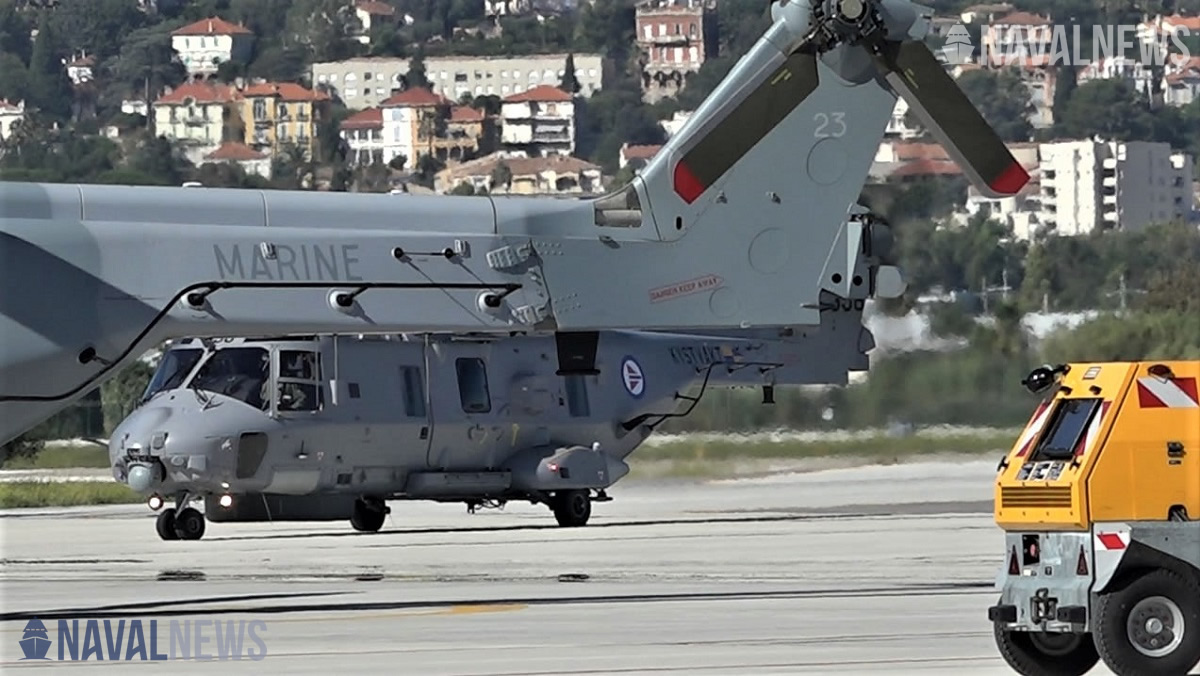
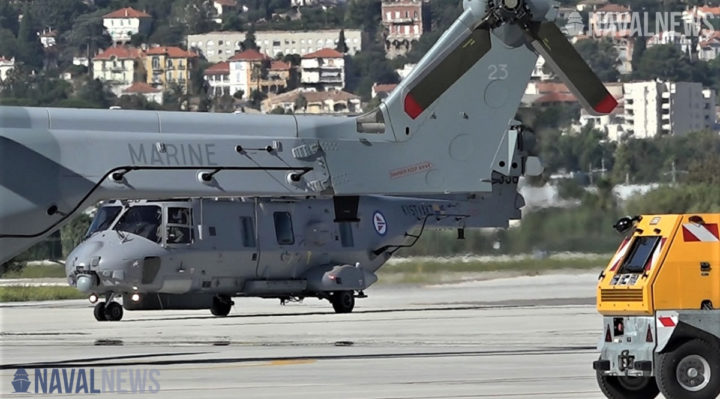
The second agreement was signed between Kongsberg Aviation Maintenance Services and NDLO and is related to maintenance and support of the Norwegian NH-90 helicopter fleet. The agreement will initially apply for the years 2020-2026, and there will be annual calls from the agreement. The estimated value is about NOK 400 million distributed over the first four years, subject to it being renegotiated after two years.

Maintenance will mainly be carried out at the Bardufoss main base. This means that existing expertise on helicopter maintenance will be utilized, both from KONGSBERG and Finnish Patria. The latter already supports the Norwegian Armed Forces in the maintenance of NH-90 helicopters in Bardufoss today. In addition, KONGSBERG recognise the need to further strengthen the business with new hires.

It is a clear ambition to gradually increase the operational availability of the NH-90 helicopters in the years to come.

“The contracts with KONGSBERG provide us with increased maintenance and engineering capacity and this contributes to enhanced readiness. The ambition is to increase technical availability on sea and air systems and we are confident that these long-term contacts will contribute in this regard. At the same time, the Norwegian defence industry becomes stronger, which is also important for the Norwegian Armed Forces, says Petter Jansen, Chief Executive at the Norwegian Defence Logistics Organisation.

“Both agreements are the result of a long-term commitment to maintenance and preparedness by both the Norwegian Armed Forces and KONGSBERG, and they lay grounds for further development of expertise in the area,” says Eirik Lie, CEO of Kongsberg Defense & Aerospace.

“For us, the support agreement for sea systems is an important building block for a long-term commitment for us to develop, in collaboration with the Norwegian Armed Forces. Going forward, this will also contribute to strengthening our activity at Haakonsvern, where we see a significant potential for growth in maintenance, repair and overhaul of such systems.

Lie is also very positive to the possibility of increased activity in Bardufoss related to the maintenance agreement for the NH-90 helicopter.

“KONGSBERG will, through this agreement, and together with Patria, strengthen our presence in Indre Troms. The agreement continues the intention of strategic cooperation and will, over time, contribute to increased operational availability for the Armed Forces,” says Lie.

Source: Kongsberg Gruppen

January 7, 2020 0 comments
0 FacebookTwitterPinterestEmail
Science

Norwegian shipowner fits BWMS on domestic vessel

by Nadarajah Sethurupan January 5, 2020
written by Nadarajah Sethurupan

While the international ballast water management convention has been implemented to prevent the spread of potentially harmful aquatic organisms via ballast water from vessels in international traffic, there are no such regulations for ships only commuting between Norwegian waters and the open sea.

Austevoll-based shipowner Hordafor’s commercial vessel Hordafor IV sails exclusively in domestic Norwegian waters, but shipowner Hordafor has nevertheless chosen to order a ballast water treatment system from Norwegian company PG Flow Solutions, a specialist in liquid handling and pump systems for marine applications.

“We want to be a leader within biosafety and do what we can to optimise both marine and fish health on behalf of our clients. If treatment of ballast water can contribute towards improved biosecurity along the Norwegian coastline, it will be a good investment in both the environment and our business,” says Hordafor’s fleet manager Karsten Østervold.

Hordafor is a leading player within handling and processing of by-products from the Norwegian aquaculture and fisheries industries. The shipowner has its own vessels for shipping by-product and finished products such as marine oils and proteins.

The Hordafor IV vessel is utilised to collect silage from by-products from the aquaculture industry. With a ballast water treatment system, the vessel can now also sail in international waters.

“We have six such vessels, and they all sail along the Norwegian coast. We installed a ballast water treatment system on board one of the ships to evaluate the positive effects it can create. Biosecurity is important to us, which is why we invested a seven-figure sum in this,” said Karsten Østervold.

PG Flow Solutions has been contracted to supply its IMO-approved PG-Hyde ballast water treatment system to Hordafor IV. The system is based on UV-technology in combination with automatic, self-cleaning filters. The PG-Hyde treatment system sterilises the ballast water during both ballasting and de-ballasting.

“Ballast water systems regulate the intake, discharge and treatment of ballast water and sediments, and is therefore an important environmental measure to prevent the spread of foreign species through ballast water from vessels that sail in international waters. The fact that Hordafor, for biosecurity reasons, wants to explore and apply the same mindset to a vessel that sails along the Norwegian coastline is a great initiative. We are a proud supplier to Hordafor,” said PG Flow Solutions’ sales manager Are Hjertvik.

PG Flow Solutions is a provider of proprietary solutions, systems and products for companies within the energy, maritime, aquaculture and land-based process industries. The heritage of the business is pumps and pumping systems. The company’s headquarters and manufacturing facility is located in Sande, Vestfold, Norway. Its subsidiary Calder Ltd operates out of a similar facility in Worcester outside Birmingham, UK, while subsidiary Cflow Fish Handling AS operates out of Aalesund, Norway.

January 5, 2020 0 comments
0 FacebookTwitterPinterestEmail
Crimes

Norway to block iGaming transactions

by Nadarajah Sethurupan January 3, 2020
written by Nadarajah Sethurupan

The government will block iGaming transactions in Norway involving unauthorised websites to prevent unregulated cash flow.

Norway.- The online gambling market is the future (and present) of the industry and forces governments to properly regulate it. That’s why the Norwegian government has taken a step towards strengthening the segment.

The government will demand financial institutions in Norway to block iGaming payments to unlicensed operators. Norway’s Lotteri-og stiftelsestilsynet regulatory body confirmed January 1, 2020, which involves its order on said institutions.

“The change also means that banks and others who have payment services in Norway must investigate all payment transactions to and from payment intermediaries or companies that are not allowed to offer gambling in Norway if the regulator comes up with a decision on this,” the regulator had said.

“We can also instruct banks and others with payment services in Norway to provide information about companies that provide payment related to gambling.”

The regulator has sent a letter of information to Norwegian banks, financial institutions and payment agencies about the changes.

Norsk Tipping, the state-owned gambling company, could soon assume responsibility for the horse racing monopoly in Norway. The rights of the activity are currently under Norsk Rikstoto, but they expire at the end of 2021.

The Norwegian government will consider which company is more fit for the exclusive rights model. The Ministry of Culture in collaboration with the Ministry of Agriculture and Food will assess which company should be in charge of the horse racing monopoly.

Minister of Agriculture and Food Olaug Bollestad sad: “The government’s gambling policy must first and foremost take into account the social responsibility and consideration of gambling addicts. At the same time, it is important for the government to ensure that the future solution is for the best for Norwegian equestrian sport.”

January 3, 2020 0 comments
0 FacebookTwitterPinterestEmail
Media Freedom

World welcomes 2020

by Nadarajah Sethurupan January 1, 2020
written by Nadarajah Sethurupan

As clocks struck midnight, people all around the world welcomed not only the new year of 2020 but also a new decade.

Spectacular displays of fireworks were held in major cities around the globe.

We at ‘NORWAY NEWS’, wish all our reader a wonderful and prosperous new year.

January 1, 2020 0 comments
0 FacebookTwitterPinterestEmail
Middle East and Norway

US strikes to ‘deter Iran’

by Nadarajah Sethurupan December 30, 2019
written by Nadarajah Sethurupan

The United States is not seeking to escalate its simmering conflict with Iran, a senior official said on Monday after the Pentagon launched air strikes on Tehran-allied Iraqi militia forces.

US Assistant Secretary of State David Schenker said the Sunday strikes on Hezbollah Brigades bases were a message to Iran after months of “restraint” by the administration of President Donald Trump.

The airstrikes – the largest yet by the US targeting an Iraqi state-sanctioned militia – were in response to a rocket attack on a US base last week that killed an American contractor.

“This was a defensive action that was designed to protect American forces and American citizens in Iraq but we are also working on the mission set of restoring deterrents against Iranian aggression,” US special representative for Iran Brian Hook said. “After so many attacks it was important for the president to direct our armed forces to respond in a way that the Iranian regime will understand.”

Schenker said the locations hit on Sunday were “significant targets and the ones on the Syrian side of the border were even more significant in many ways.”

Both Hook and Schenker said the US does not want an escalation in the region, but rather a “deescalation.”

Hook said that the US has enhanced their “troop posture by 14,000 to the region since May, specifically with Saudi (Arabia), where they have enhanced their air defenses.”

He said the US works very closely with regional allies, especially the countries that are “on the front line of Iranian aggression, to protect them against Iranian attacks, whether it kinetic or cyber.”

Below is a full rush transcript of the press conference by Special Briefing via Telephone with Special Representative for Iran and Senior Policy Advisor to the Secretary of State Brian Hook and Assistant Secretary for Near Eastern Affairs David Schenker and State Department Spokesperson Morgan Ortagus.

Ms. Ortagus:  The Secretary was on U.S. news media this morning, for all of you who haven’t seen it, talking about the actions that the U.S. took over the weekend.  And both he and Brian Hook and myself will also be on media later today. 

So we’re here to answer any of your questions, but I think that this is an incredibly significant moment for the U.S.  And I think I’ll just go ahead and quickly turn it over to Brian and let him give some opening remarks, and then we’ll jump right into Q&A. 

Mr. Hook:  Thanks very much, Morgan.  One of the things that we want to emphasize is that this was a defensive action that was designed to protect American forces and American citizens in Iraq.  But we’re also working on the mission set of restoring deterrence against Iranian aggression.  This is an Iranian-backed rogue militia, Kata’ib Hezbollah, and they are not acting in the interests of the Iraqi people.  They are violating Iraq’s sovereignty.  And we know that the Iranian regime runs an expansionist foreign policy by the supreme leader and Qasem Soleimani.  And they have been running an expansionist foreign policy for some time. 

Our campaign of maximum economic pressure is making it much harder for them to accomplish that.  We have repeatedly – the President and the Secretary of State have made clear repeatedly that if our – that if we are attacked by the regime or by one of its proxies, that we will take decisive action in response.

And President Trump took that yesterday with the strikes that were in five different locations.  And these locations included weapons storage facilities and also some of the command and control locations that Kata’ib Hezbollah uses to plan and execute attacks against American forces and also against Iraqis.

It’s important to remember that the United States is in Iraq and the coalition – they are there at the invitation of the Iraqi Government.  And when our forces and the Iraqi forces are attacked, as they have been, there have been – we’ve already seen, just in the past two months alone, 11 attacks on bases inside Iraq that are hosting coalition forces. 

So the President has been very patient.  He has shown a great deal of restraint because the last thing the United States is looking for is kinetic action in the Middle East, any conflict in the Middle East.  We have kept our foreign policy squarely in the left-right limits of diplomacy.  But we’ve also made clear that we will not tolerate attacks against U.S. citizens, our military, or our partners and allies in the region. 

And so there are a number of statements that have been made since September 11th of 2018 on this – on this threat.  We made – and we very much hoped that Iran would not miscalculate and confuse our restraint for weakness.  But after so many attacks, it was important for the President to direct our armed forces to respond in a way that the Iranian regime will understand. 

Ms. Ortagus:  Great.  Thanks.  And just a reminder that we also have Dave Schenker on the line, who can – our Assistant Secretary for NEA, who can also answer questions as well.  And I’ll just turn it over to the  Media Hub for the Q&A. 

Question:  I have a question on the logic of the operation from a foreign policy standpoint.  The five sites that were picked in Western Iraq and in Syria are not located anywhere near the location of the Kirkuk base where the American contractor was killed.  It looks as if your goal was to carry out strikes in relatively isolated areas that would be on the low end of escalation to avoid escalation and limit collateral damage.  Was that the thinking behind this?  And also, what is the legal rationale for the strikes since self-defense is often thought of as an action that’s taken to thwart an imminent attack, not a retaliatory attack two days later against a location in a different part of the country? 

Assistant Secretary Schenker:  Well, I don’t want to get into why we chose what targets.  Let’s say these were significant targets, and the ones on the Syrian side of the border were, I think, even more significant in many ways, although I’m not going to get into why.

But so if you look at this, this was a response that was serious but was, I think, in many ways proportionate.  We don’t want an escalation here; we want a de-escalation.  But what we have seen, as Brian said before, is that the Iranians have, let’s say over the past several years, taken our non-response as – understanding that as weakness and have continuously pushed the envelope.  And so we’ve seen in terms of the trajectory of their strikes that they have come increasingly closer to killing American personnel. 

They surround U.S. bases, they come closer to U.S. bases, they hit on different parts of U.S. bases, and finally, inevitably, they kill an American.  This was not a mistake and we thought it important to hit a significant target set to send a very clear message to them about – about how serious we take American lives.

Likewise, importantly, this was – the violation of sovereignty here, if there was a violation of sovereignty, occurred on Friday when Iranian-backed forces basically shot missiles, rockets at an Iraqi military base.  And so I think we should be – we can talk about the U.S. response and the defensive strikes that re-establish deterrence, but we should also talk about how Iran continuously violates Iraqi sovereignty.

Question:  I wanted to ask are there any other targeted locations of Hizballah and – of Hizballah in Iraq and Syria?  And can you please assess the level of threat imposed by Iran in the region?

Mr. Hook:  We don’t ever preview military action or military targets.

Question:  Okay.  And can you assess the level of threat imposed by Iran in the region?

Mr. Hook:  Well, Iran has been threatening the region – the Islamic Republic – for the last 40 years.  But what we do know is that the regime is facing its worst financial crisis and its worst political crisis in its 40-year history.  And the Trump administration has weakened the regime and its proxies financially in ways that have no historic precedent.  And this is having, from our perspective, very positive consequences in terms of drying up the revenue the proxies need to undermine the sovereignty of countries like Iraq.

And now what we’re seeing, we are seeing the people of Lebanon, the peoples of Iraq, and the peoples of Iran all rising up against the Iranian model of dominance and exporting terror and weaponizing sectarian grievances and enriching themselves at the expense of the people that they govern.  And that’s true – one thing I’ll point out that’s very important for people to recognize:   You had protests in a hundred cities in Iran, you had protests all over Iraq and Lebanon.  None of them were directed at the United States, the United States Government, or American sanctions. 

These are people that are rejecting the Iranian model that they have been exporting for some time, and people are tired of the corruption, of the lack of transparency, of having their national wealth stolen to finance proxy wars. And so that’s our assessment of the current Iranian threat.  It’s weakening and it will get weaker, especially as our sanctions increase in 2020.  And we will compound Iran’s economic – it’s already now at negative 10, 11, 12 percent roughly – in that category.  And Secretary Pompeo made clear a year and a half ago that the Iranian regime faces a choice, and the supreme Leader keeps choosing to manage economic collapse.

Question:  You’ve already had an Iranian retaliatory attack on an airbase in Iraq, Taji.  Why do you think that you have deterred Iran with what is really a modest strike?

Mr. Hook:  I didn’t say that we had deterred Iran.  I said that our policy is to restore deterrence that was lost under the – Obama’s nuclear deal.  And Iran was able to run an expansionist foreign policy for many years while countries looked the other way in order to preserve and protect the deal.  Now that we’re out of the deal, we’re in a much better picture to squeeze the regime economically and to impose costs on them for behaving like an outlaw regime.  And so it is unquestionable that Iran is facing its worst financial and political crisis, and so I think your question to some extent is sort of not fully appropriating the current headwinds that the regime is facing.  

Now, what we’ve done yesterday is also made very clear that we will act in defense of our interests when we are attacked.  So we are combining our diplomacy with hard power, and we’re very pleased with the progress that we’ve made.

Question:  We understand the potential deterrence options, the administration in early May issued a warning about potential Iranian strikes on U.S. interests, oil infrastructure, in the region.  And eight months later, some of those warnings have actually happened, or there have been attacks on tankers, oil infrastructure, now on a U.S. military base.  So are the actions the United States has taken not been sufficient, or those – or did the specific attacks come as a surprise?  I’m just trying to understand.  And when you talk about restoring deterrence, what possible options can there be that hasn’t helped in the last eight months?

Mr. Hook:  We don’t preview any options that we’re considering or that we will be taking, and so I don’t have anything to offer about the future.  But since May, we have enhanced our troop posture by 14,000 – 14,000 additional troops to the region since May. Specifically with Saudi, we have enhanced their air defenses, the United States along with other countries.  We work very closely with our partners in the region to – especially the countries that are on the front lines of Iranian aggression – to protect them against Iranian attacks, whether it’s kinetic or cyber.  And so we’re working very closely with all of our partners in the region.

The International Maritime Security Initiative has a number of countries that are participating in it.  We have enhanced our intelligence, our surveillance, our reconnaissance activities, and we know that the combination of all of these things has disrupted and deterred many attacks that the regime would have liked to have execute.  We’ve also made clear for some time that we’re not going to tolerate these kinds of attacks.  The President has shown a lot of restraint and that has been – I think if you talk to the leaders in the region, they’ve been very pleased with the restraint that the President has shown. 

I think Iran would like to bait the President into all sorts of things, but the President has shown, I think, very skillful leadership navigating through this, using our diplomacy backed up by hard power.

Assistant Secretary Schenker:  I’d say that there has been sort of a lashing out that we can see as the economic pressure has really taken hold since May.  You saw in June the Fujairah.  You saw escalation from the Houthis.  You saw increased targeting, operational tempo of targeting of U.S. assets in Iraq by Iranian proxies.  Then you saw the shooting down of a UAV.  And after every one of these incidents – there’s the scuttling of boats, the hijacking of boats – after every time this occurred, what you saw from the United States, from the President, was strategic patience that, as Brian said, was widely appreciated throughout the region from our allies.  And finally, the downing of a U.S. UAV in international waters over the Gulf, and we responded just with more sanctions.

And so this type of patience has resulted in incredible lashing out that culminated with Abqaiq most recently, the attack on ARAMCO.  And still we are exercising this strategic patience.  And so now they had to go and try and escalate this further by killing an American citizen, and I think we have responded I think with strength and with careful – carefully, I think, calibrating what is appropriate, to try and reestablish that deterrence.  

Mr. Hook:  I think it’s also the case that Iran is currently in a state of panicked aggression.  The regime understands very clearly the kind of economic pressure they’re under, and they also know that it’s not sustainable.  And so they are lashing out.  They’re not used to being told no.  They’re not used to seeing this kind of resolve.  And the President is, I think, very carefully deploying our – sort of our diplomats, working on the right mission set, and also our military.

December 30, 2019 0 comments
0 FacebookTwitterPinterestEmail
Russia and Norway

NATO records Russia’s largest submarine activity since end of Cold War

by Nadarajah Sethurupan December 30, 2019
written by Nadarajah Sethurupan

NATO has fixated Russia’s largest submarine activity since the end of the Cold War: ten Russian submarines were immediately located around Norway in October, RND reports.

“In mid-October this year, a swarm of modern Russian submarines initially openly demonstrated force in the North Atlantic, moving west across the territory between Greenland, Iceland and the United Kingdom, and then went to deep waters,” the newspaper wrote.

This year, NATO has recorded the largest activity of Russian submarines since the end of the Cold War. For this reason, the modernization of maritime capabilities has now been the subject of intense debate at the Alliance’s headquarters in Brussels.

“Russia is steadily increasing its operations underwater. Most of all – it concerns the North Atlantic and the Norwegian Sea. NATO will respond, inter alia, with an increase in patrolling. In addition, they will invest money in modern anti-submarine aircraft missiles,” NATO’s Press Secretary, Oana Lungescu, stated.

She also stressed that the North Atlantic remains “vital to Europe’s security” in terms of military supply routes, civilian trade routes and communication channels.

Western planners are particularly concerned about the connection between submarines and rockets that they can launch. In recent years, Putin has introduced technological improvements in both areas: submarines have become much quieter and Russian missiles have been faster than before.

It is expected that Russian submarines will receive supersonic rockets in 2020 – and it is not yet known if modern Western interception systems can stop them at all.

As we reported earlier, Germany and four other NATO members signed a document in Hamburg, which is set to strengthen co-operation aimed at protecting maritime routes in the English Channel and the North Sea, Deutsche Welle informed.

NATO intends to strengthen its position in the North Sea and the English Channel in order to be ready to repel Russia’s threat: The relevant provisions are contained in an agreement signed on Thursday, November 7 by heads of naval forces of Germany, the United Kingdom, France, Belgium and the Netherlands in Hamburg.

December 30, 2019 0 comments
0 FacebookTwitterPinterestEmail
Media Freedom

Turkish occupation of Rojava protested in Oslo

by Nadarajah Sethurupan December 28, 2019
written by Nadarajah Sethurupan

Kurds and Norwegian friends gathered in front of Oslo Central Station, to protest the Turkish occupation of Northern and Eastern Syria as part of the “action day” for Rojava.

The CDK said in its statement: “Our actions against fascism and occupation will continue.”

December 28, 2019 0 comments
0 FacebookTwitterPinterestEmail
Srilanka and Norway

Iranian origin arrested in sea off the Gulf of Mannar turns out to be Norwegian

by Nadarajah Sethurupan December 27, 2019
written by Nadarajah Sethurupan

Questions are being asked as to why a Norwegian taken into custody recently in the seas off India and Sri Lanka , Silavathurai, Mannar misled the Sri Lankan navy regarding his nationality.

Well informed sources told that though the foreigner identified himself as an Iranian when the Sri Lankan Navy intercepted a dinghy carrying him and a Sri Lankan off Indian and Sri Lankan sea water, later produced a Norwegian passport bearing No XXXXXX issued to RaXX NaXX.

Having briefly questioned them, they had been handed over to Sri Lankan police for further investigations.

However, the Norwegian of Iranian origin had been released by the police following preliminary inquiry, The Media learns.

December 27, 2019 0 comments
0 FacebookTwitterPinterestEmail
Asia and Norway

Kazakh Olympic gold medallist visits Norway Ski Museum

by Nadarajah Sethurupan December 26, 2019
written by Nadarajah Sethurupan

Three sports legends – Vladimir Smirnov, Sten Stensen and Vegard Ulvang – delivered emotional remarks at the Kazakhstan – Norway: Sports Diplomacy exhibit launch Dec 14. in Oslo’s Holmenkollen Ski Museum.

“For me, all the time, Medeo, Almaty, was the best in my career,” said Stensen, a Norwegian long-distance speed skater who broke several world records at the city’s high mountain ice rink in the 1970s.

Ambassador of Kazakhstan, H.E. Mr Yerkin Akhinzhanov

Friends and Olympic cross-country skiing rivals Smirnov (Kazakhstan) and Ulvang (Norway) also shared their views on sports, friendship and intercultural exchange.

“Even though we have had many hard fights and competitions as athletes, our friendship got stronger and it is still there,” said Ulvang.

“I am proud to be at this exhibition on sports because most of the youth probably don’t know very much about Kazakhstan. This is one of the ways to get knowledge about the other country and other cultures,” said Smirnov.

Better known in the Scandinavian countries as “Smirre,” Smirnov brought his gold medal to the event.

Kazakhstan – Norway: Sports Diplomacy, organised by the Kazakh Embassy in Norway, Kazakh Association of Sports Press and the museum, will continue for two weeks, until Dec. 28. It is supported by the Foundation of the First President of Kazakhstan, the country’s Foreign Ministry and QazSport national TV channel.

“Sporting connections between Kazakhstan and Norway extend far beyond conventional diplomacy. These ties began long before the establishment of diplomatic relations between the two countries,” said Kazakh Ambassador to Norway Yerkin Akhinzhanov.

The photo exhibit tells the story of the great achievements of Kazakh and Norwegian athletes, including their joint participation in high-level competitions such as the Olympic Games and world championships. It includes pictures of matches between their national teams in hockey, bandy, football and wrestling and appearances of Kazakh athletes in Norway and Norwegian athletes in Kazakhstan.

Several examples of sports diplomacy phenomena are also represented – Jersey diplomacy (sports apparel presented to politicians as gifts) and Chapan diplomacy (national gowns presented to prominent sportspeople). The display also includes a collection of paraphernalia from professional Kazakh sports clubs.

The Kazakh Association of Sports Press is planning to continue organising similar events in other countries with the support of the foreign ministry.

(astanatimes)

December 26, 2019 0 comments
0 FacebookTwitterPinterestEmail
Crimes

Norway confirms payment ban amendments

by Nadarajah Sethurupan December 26, 2019
written by Nadarajah Sethurupan

The gambling regulator from Norway has confirmed that the amendments to the payment ban will come into force on January 1, 2020.

Norway.- Lottstift, the gambling regulator from Norway, confirmed on Thursday that the amendments to the payment pan will come into force on January 1, 2020. While the ban has been around since 2010, the regulator estimates that Norwegians still spend approximately €600k on unlicensed companies every year.

The regulator said that around 250k Norwegians bet through foreign unlicensed gaming companies. The payment ban amendment is one of the measures that the regulator from Norway introduced to stop these gaming companies from offering their services. The goal is for Norwegian banks to stop money transfers to and from gaming companies.

Rannveig Gram Skår, adviser and lawyer at the regulator, said that the foundation of the Norwegian gambling model is to protect vulnerable groups from becoming addicts.

The regulator estimates that it will stop around €593k from being bet through unlicensed sites. “We see the effect of the work we are doing today, but the purpose of the changes is to make the payment service ban more effective,” said the regulator.
“The change also means that banks and others who have payment services in Norway must investigate all payment transactions to and from payment intermediaries or companies that are not allowed to offer gambling in Norway, if the regulator comes up with a decision on this.”

“We can also instruct banks and others with payment services in Norway to provide information about companies that provide payment related to gambling.”

The regulator has sent a letter of information to Norwegian banks, financial institutions and payment agencies about the changes.
December 26, 2019 0 comments
0 FacebookTwitterPinterestEmail
Royal House

Norwegian princess’ ex-husband takes own life

by Nadarajah Sethurupan December 26, 2019
written by Nadarajah Sethurupan

The former husband of Norway’s Princess Martha Louise has taken his own life, it has been announced tonight.

The 47-year-old talented author and artist leaves behind three young children, who he shares with the princess, 48.

“We ask for respect for our privacy in the coming time.”

In a statement this evening, King Harald, the princess’s father, said: “It is with great sadness that the Queen and I have received the message of Ari Behn’s passing.

“Ari has been an important part of our family for many years, and we carry warm, fond memories of him.”

A statement from the Crown Prince family added: “For us, Ari was a good friend, a dear family member and a wonderful uncle, with whom we shared many of life’s small and big moments.

“It is with great sadness that we have received the message of his passing away.”

No other details about his death have been confirmed.

Ari was born in Denmark to teacher parents and grew up in Norway.

He attended the Waldorf School in Moss and is baptized in The Christian Community. He achieved a bachelor’s degree in history and religion from University of Oslo.

He wrote three novels, two collections of short stories and a book about his wedding.

His 1999 short stories collection Trist som faen (“Sad as hell”) sold about 100,000 copies and received several favourable reviews.

December 26, 2019 0 comments
0 FacebookTwitterPinterestEmail
Srilanka and Norway

Media secretary fled Sri Lanka due to Police crackdown

by Nadarajah Sethurupan December 25, 2019
written by Nadarajah Sethurupan

Sri Lankan Police Criminal Investigations Department has revealed the former media secretary of Sri Lankan Minister Rajitha Senaratne has fled the country soon after an anticipatory bail application was filed to prevent the arrest for the serious exposure made with media on white van abductions.

The drivers of the white vans in a statement given to CID has claimed the media conference and the makeup along with necessary prepping was done by media secretary M.I. J. Wijenaike alias Malith. It was found that he has fled the country to avoid possible arrest.

Police believes Wijenaike could be the centre of focus in order to revel important facts about the white van abductions and the investigations are underway. During the last few days Wijenayake’s house was checked and his parents were interrogated. 

Wijenayake was arrested some years ago at the Katunayake International Airport on his return from abroad after releasing some controversial photographs of President Maithripala Sirisena and his family who was on an official visit engaged in wasting public money for private requirements.

Colombo magistrate’s court issued an overseas travel ban on former Minister Dr. Rajitha Senarathne with effect from last week.

Minister who revealed serious information on white van abductions at a media conference filed anticipatory bail applications twice to prevent the government arresting him. 

Due to the growing tension his media secretary fled Sri Lanka to avoid Criminal Investigations Department arresting him too. Meanwhile the CID has revealed the former media secretary of Minister Rajitha Senaratne has fled the country soon after an anticipatory bail application was filed to prevent the arrest for the serious exposure made with media on white van abductions.

The drivers of the white vans in a statement given to CID has claimed the media conference and the makeup along with necessary prepping was done by media secretary M.I. J. Wijenaike alias Malith. It was found that he has fled the country to avoid possible arrest.

Police believes Wijenaike could be the centre of focus in order to revel important facts about the white van abductions and the investigations are underway. During the last few days Wijenayake’s house was checked and his parents were interrogated. 

Wijenayake was arrested some years ago at the Katunayake International Airport on his return from abroad after releasing some controversial photographs of President Maithripala Sirisena and his family who was on an official visit engaged in wasting public money for private requirements.

May 19, 2008 , Rajitha rejected fresh Norwegian role – In a brief interview with Medias on his return from Norway Senaratne said the vast majority of the people had felt the Norwegian government had given oxygen to the LTTE during the CFA, thereby strengthening its capacity to achieve its objectives through military means. President Mahinda Rajapaksa’s government would continue military operations against the group until it laid down its arms unconditionally and returned to the negotiating table.

Minister Senaratne dismissed assertion that the government would undermine the ongoing military campaign.

During his meeting with Solheim, Senaratne said the people believed that the Norwegian government had been partial to the LTTE.

The Minister said that he asked Solheim whether the Norwegian government, the United States and the European Union would guarantee that the LTTE was genuinely interested in a negotiated settlement.

December 25, 2019 0 comments
0 FacebookTwitterPinterestEmail
Diplomatic relations

Kosovo opens its embassy in Oslo, Norway

by Nadarajah Sethurupan December 24, 2019
written by Nadarajah Sethurupan

Kosovo’s first Ambassador to Norway Uliks Emra presented his letters of credence to his Highness King of Norway Harald V, being accredited as the Plenipotentiary Ambassador of Kosovo to the Kingdom of Norway.

Conveying the greetings of the President of Kosovo Hashim Thaci and the population of Kosovo, Emra expressed appreciation to his Highness King of Norway Harald V for the unsaved and comprehensive contribution that the Kingdom of Norway offered to Kosovo during the years.

“On his side, His Majesty King Harald, after expressing his heartfelt greetings to President Thaci, stressed that they are very happy about Kosovo’s decision to open the Embassy in Oslo and that this is a special moment in the relations between two countries.

“The Kingdom of Norway will continue to support Kosovo in all areas, and you can be very sure of that,” he was quoted as saying.

December 24, 2019 0 comments
0 FacebookTwitterPinterestEmail
Politics

Norway invited to launch air service to Belarus

by Nadarajah Sethurupan December 22, 2019
written by Nadarajah Sethurupan

Belarus Transport and Communications Minister Aleksei Avramenko met with Minister of Transport and Communications Jon Georg Dale of Norway in Oslo on 12 December, Media learned from press service of the Belarusian ministry.

“There is currently no regular air service with Norway. In this regard, we propose Norwegian air carriers to consider launching flights to both Minsk National Airport and regional airports,” Belarus Minister Aleksei Avramenko said.

The Belarusian delegation noted that favorable conditions have been created for road transport between the countries. Moreover, Belarus has taken the initiative to consider a permits-free system. The topic of electric transport was touched upon during the meeting as well. For example, the Belarusian delegation offered to organize a meeting with Norwegian partners who work in this sector.

The parties also reviewed the state of cooperation in transport and logistics within the framework of Nordic Dimension, given that Belarus takes over the chairmanship of the NDPTL steering committee in 2020. During the visit to Norway The Belarusian delegation also met with top executives of the Norwegian Public Roads Administration, Nye Veier AS (New Roads) and the Norwegian Contractors Association.

December 22, 2019 0 comments
0 FacebookTwitterPinterestEmail
Terrorist

Kazakhs returned from Syria convicted of terrorism, sentenced to years in prison

by Nadarajah Sethurupan December 21, 2019
written by Nadarajah Sethurupan

Nur-Sultan Specialised Inter-District Criminal Court convicted 14 Kazakh men returned from Syria of working for terrorist organisation, the Islamic State or DAESH, and sentenced them to eight to 14 years in prison, reports The Astana Times.

These 14 men were returned to Kazakhstan as part of the national Jusan (Butter Wormwood) Operation, conducted from January to June. The operation retrieved 595 Kazakh citizens from Syria, including more than 400 children and 150 women. According to government data cited by Tengrinews.kz, the Kazakhs recruited to ISIS left mostly for Afghanistan, Iraq and Syria between 2012 and 2015, but there is no data on the actual number of people who left.

The trial, which started Oct. 22, evaluated charges against the 14 men of spreading terrorist propaganda, stirring social, national or religious hatred, participating in a terrorist organisation banned in Kazakhstan, and other crimes. Most of the men had lived in Syria for five to 10 years. Prosecutors asked for sentences from 10 to 17 years.

The defendants asked to be spared lengthy sentences. In their final statements, they expressed remorse for their crimes and gratitude for being returned. They urged the Kazakhs still in Syria to return home.

“Everything that happened to me will be a lesson for my whole life. A few years ago, I saw on the internet calls for help, so I went to Waziristan [a region of Pakistan that borders Afghanistan] and later to Syria. Going to help some people, I did not think about my relatives, parents. I put my wife and children in danger. This is my mistake,” said Amanzhol Zhansegirov, one of the convicted men.

He said he had decided to return home after an explosion near him killed 10 men, leaving him the only survivor.

“We were looking for a way back, but it was not easy. There was no opportunity, no money. We could get blown up at any moment, which happened to many people who were with us then,” said Zhansegirov.

The court asked him about a photo where he stood with a rifle next to severed human heads. The photo was taken after ISIS members executed men they had defeated in battle.

“After armed clashes, after some time, bodies of seven or eight people were brought in. ISIS has its own policy of cutting off heads and throwing them on the streets. I remember there was a crowd and I walked over. The crowd started taking pictures. I was ordered to be filmed in a video. I asked ‘Why?’ to which I received the answer ‘I am your amir, Abdulhafiz [Zhansegirov’s nickname], you must obey me.’ Then the amir ordered me to put my foot on a head. I did. He said to raise a hand. I did,” answered Zhansegirov.

He was sentenced to 12 years in a medium security colony. His lawyer said he would file an appeal.

“Zhansegirov himself is unhappy with the verdict of the court; with this regard I intend to appeal. He could not get a higher education for a long time. He could not get in the civil service for a long time. He could not prove himself as a citizen. In this regard, he, as a person, broke down and decided to prove himself in this way,” said the lawyer.

Another of the convicted men, Yermukhan Aiypkaliyev, was not able to be personally present in the court, but communicated by video from jail. While in Syria he was paralysed during a gunfight and cannot walk, sit up, or take care of himself. Aiypkaliyev said he had long since repented and had already received a severe punishment.

“One person under investigation agreed to take care of me, but he was transferred and he cannot come to jail. The jail head says there are no people who can take care of me and he cannot force the other persons under investigation to clean me. So I am laying… I am like a living corpse, only my head and heart work. Dear court, I do not have the health to serve 12 years in prison. You’d better sentence me to death,” he said.

He was sentenced to eight years in a medium security colony. All 14 men will start serving their sentences in two weeks, while appeals on certain cases are expected.

As a contribution to the resolution of the conflict in Syria, Kazakhstan’s capital hosts regular meetings of the “Astana Process” which was instrumental in consolidating ceasefire arrangement between the Syrian Government and the armed opposition though the establishment of de-escalation zones across the country.

December 21, 2019 0 comments
0 FacebookTwitterPinterestEmail
Asia and Norway

Kazakhstan to liberalize rules on political parties

by Nadarajah Sethurupan December 21, 2019
written by Nadarajah Sethurupan

Kazakhstan plans to ease the arrangements for public rallies, decriminalize libel, strengthen parliamentary opposition and introduce party quotas for women and youth.

President Kassym-Jomart Tokayev has introduced the package of political reforms following several months-long discussions at the National Council of Public Trust. The Council was convened by Mr. Tokayev after his election in June this year and includes prominent representatives of various circles of the society.

Kassym-Jomart Tokayev. File photo

“We must strengthen the constructive foundation of the political process so that pluralism becomes an important element in enhancing the economic well-being and human capital,” he said, introducing the package.

In particular, the government will change the very principle of arrangement of public rallies from permissive into a notification one. Mr. Tokayev emphasized the importance of instilling a “culture of rallies” in the public consciousness.

“It is time for both the society and the state to take the public expression adequately. We also must understand that the rallies are not only a right but also a responsibility,” he said. The government will submit to the Parliament a new draft law on rallies, which will regulate the organization and conduct of all forms of peaceful assembly.

The President proposed to reduce by half the threshold for the number of members of political parties for their registration from 40 000 to 20 000 people. He also initiated the introduction of a mandatory 30 percent quota for women and youth in party lists. Besides, the new legislative norms will affirm the rights of a political minority in the legislature, which, for example, will allow representatives of various parties to chair parliamentary committees.

“We need the institution of parliamentary opposition. Some active citizens express their opinions. We must take into account such views and legislatively fix the issues of political minorities in the Parliament,” Mr. Tokayev said.

The President proposed several measures to humanize the criminal law, and also presented his decision on the decriminalization of libel. “Based on an analysis of all the positions and nuances of this issue, I decided to decriminalize article 130 of the Criminal Code (Libel) and transfer it to the Administrative Code. At the same time, we must maintain a high measure of responsibility to guarantee the rights of other citizens and protect them from slanderous fabrications and attacks,” he emphasized.

At the meeting of the National Council, the President introduced several other reforms in the field of economy, social sphere, and strengthening the accountability of the government.

December 21, 2019 0 comments
0 FacebookTwitterPinterestEmail
Media Freedom

Norway keeps a top slot in human development

by Nadarajah Sethurupan December 20, 2019
written by Nadarajah Sethurupan

Switzerland has come second behind Norway in the UN’s 2019 Human Development Index (HDI), keeping the position it enjoyed last year.

Ireland is third, Germany and Hong Kong share fourth place, while the US is placed 15th in the index external link released on Tuesday by the UN Development Programme. The bottom ten in the rankings are all sub-Saharan African countries, with Niger 189th, just behind the Central African Republic.

The index measures progress in three aspects of human development: a long and healthy life, access to knowledge, and a decent standard of living. The three indicators are measured by looking at life expectancy, mean years of schooling among the adult population, and Gross National Income (GNI) per capita, respectively.

Switzerland’s HDI is above average for countries in the “very high human development group” and is also above average for OECD countries. Between 1990 and 2018, life expectancy at birth increased by 6.1 years in Switzerland, mean years of schooling went up by 3.7 years, and GNI per capita rose by about 20.8 percent, according to the Human Development Report.

At the global level, the UNDP warns of new factors affecting inequality.

“A new generation of inequalities is opening up around education, and around technology and climate change,” it writesexternal link. “In countries with very high human development, for example, subscriptions to fixed broadband are growing 15 times faster and the proportion of adults with tertiary education is growing more than six times faster than in countries with low human development.”

December 20, 2019 0 comments
0 FacebookTwitterPinterestEmail
China and Norway

The 30th Anniversary of Noble peace Prize to H.H. the Dalai Lama in Norway

by Nadarajah Sethurupan December 20, 2019
written by Nadarajah Sethurupan

The 30th Anniversary of Noble peace Prize to H H the Dalai Lama was celebrated by Norwegian Tibet Committee on 12th December 2019 at the Litteraturhuset, Oslo.

The event was commenced with the welcome speech by Namgyal Tsomo Svenningsen, Chairperson of the Norwegian Tibet Committee followed by the dance performance by children from Tibetan community of Norway.

Screening of a film from the Nobel Peace Prize ceremony that took place on 10th December 1989 produced by the Meridian Trust was the highlight of the evening as many from the 1989 ceremony were present among the audience. For many, it was nostalgic moment to see many familiar faces from 30 years ago.

The guest of honour, Bishop Emeritus Gunnar Stålsett, member of the Nobel Committee in 1989, who had delivered a very touching speech at the Nobel Lecture in 1989, gave a very inspirational account of his encounters with H H the Dalai Lama and read the personal message sent to the Norwegian Tibet Committee for the occasion by H H the Dalai Lama.

Later, Ms. Chungdak Koren, former representative of H H the Dalai Lama gave a wonderful & humorous speech of her experiences from the 1989 ceremony. She was one of the key persons in both founding the Norwegian Tibet Committee and as well during the Nobel Peace Prize ceremony in 1989. During the break, a huge cake for the occasion was served.

The second part of the celebration started with a powerful talk by the leader of the Youth Group of the Norwegian Tibet Committee, Ms. Anna Deskyi Erichsen. She talked about future of Tibet seen through the eyes of the youth, comparing similarities of climate crisis and the solution of Tibet. 

The panel that consisted of Prof. Per Kvaerne, Prof. Robert Barnett and Prof. Ole Henrik Magga was moderated by the Deputy Chair of the Norwegian Tibet Committee, Ms. Merethe Lind Jodalen. It was an interesting panel discussion where we saw different views and perspectives of the speakers. The speakers not only shared their experiences during Nobel Peace Prize ceremony, but also shared their opinions and concerns about the future of Tibet and Tibetans.

Moments from the The Meridian Trust – Buddhist Film Archive from the Nobel Peace Prize ceremony in 1989.

The present political, religious and environmental issues were also discussed. Questions regarding the views on the issues of Tibetans, Uighurs, now the people of Hong Kong and particularly the silence of Norway were raised during the panel session.

Bishop emeritus Gunnar Stålsett with a special message from HH the. 14th Dalai Lama

Prof. Ole Henrik Magga who, in 1989 was the President of the Sami Parliament and had invited H. H. the Dalai Lama to Tromsø shared with us precious memories from his many meetings with HH the Dalai Lama along with a very personal “joke” for Tibet on the occasion.

After the Questions – Answer session the concluding vote of thanks was given by Ms. Merethe Lind Jodalen, Deputy Chairperson of the Norwegian Tibet Committee followed by singing of same Tibetan song sung by the same group of people who actually had sung it during the prize ceremony in 1989. Dinner was served at the end of the event.  

A powerful voice from the young tibetans – Anna Deskyi Erichsen
Generous @bjorgthorhallsdottir created this artwork for the @dennorsketibet committee on the occasion of the 30th anniversary of HH Dalai Lama’s 1989 Nobel Peace Prize. Bjørg attended the celebration at the Literature House and surprised us with the news that she will print a limited edition of the picture, which will be sold for revenue for our work on Tibet’s cause. 
Moments from the The Meridian Trust – Buddhist Film Archive from the Nobel Peace Prize ceremony in 1989.
Thupten Tenzin and professor ole Henrik Magga together with Jan Arntzen and his daughter Julie Arntzen.
Jan Arntzen as in 1964, together with tibetanerhjelpen and “Uncle Lauritz” from nrk children’s TV, made sure that 40 young tibetan refugees got a roof over their head, teaching and a good everyday life at gjøvik. Thupten Tenzin (on the left) was one of the boys who came to gjøvik in 1965. Read the fine article about Jan Arntzens’s priceless effort here: https://www.aftenposten.no/a-magasinet/i/Rx8ka/da-verden-kom-til-gjoev
December 20, 2019 0 comments
0 FacebookTwitterPinterestEmail
Norwegian Aid

Norway significant contributor to world’s biggest sustainable development

by Nadarajah Sethurupan December 19, 2019
written by Nadarajah Sethurupan

The replenishment negotiations for the World Bank’s International Development Association (IDA) and the African Development Bank’s African Development Fund (ADF) have now been completed. Norway will provide over NOK 3 billion to IDA for the period 2020-2022, and will provide around NOK 2 billion to the ADF for the same period. The total IDA replenishment is expected to be around USD 82 billion, and the ADF replenishment will amount to USD 7.6 billion.

‘I am very pleased that the donor countries are now contributing so substantially to the world’s biggest team effort to fight poverty and promote sustainable development. Some 33 of the world’s 47 least-developed countries are in sub-Saharan Africa. Nevertheless, the share of global aid that is going to these countries has decreased in recent years. We want to reverse this trend and to increase assistance to these countries, so that they can reach the SDGs and eradicate poverty in all its forms by 2030,’ said Minister of International Development Dag-Inge Ulstein. 

Around two-thirds of the funding provided by IDA goes to African countries. For the next three-year period, IDA will give priority to efforts in the following areas: climate change, women’s rights and gender equality, private sector development and job creation, support for countries and regions affected by conflict and fragility and for sound financial governance, including efforts to improve domestic resource mobilisation. In the replenishment negotiations, Norway has had responsibility for raising IDA’s level of ambition as regards domestic resource mobilisation.

‘In response to pressure from Norway and other countries, IDA will also increase its support for vulnerable groups, including those who it is hardest to reach and people with disabilities. IDA will also step up its efforts to strengthen the ability of poor countries to manage their external debt,’ Mr Ulstein said.

Norway’s priorities are also clearly reflected in the focus areas identified in the negotiations on the ADF replenishment. Projects relating to women’s rights and gender equality, climate change, clean energy and digitalisation will be given priority.

‘I am pleased that the African Development Fund is to focus on sustainable food systems and climate-resilient agriculture. The Fund will also intensify its efforts to promote entrepreneurship and job creation for young people. It is particularly significant that the Fund’s efforts in countries and regions affected by conflict and fragility, such as the Sahel region, the Lake Chad region, and the Horn of Africa are to be stepped up,’ said Mr Ulstein.

About the International Development Association (IDA): 

The World Bank’s fund for the world’s 74 poorest countries was established in 1962. IDA is the largest single channel for multilateral aid to these countries. IDA provides heavily subsidised loans to low-income countries, and grants to the most indebted of these countries. For every dollar the donors give to IDA, IDA provides three dollars to the poorest countries. This is made possible by a financing model under which donor contributions are combined with internal resources from the World Bank itself and resources borrowed in the financial markets on favourable terms, where the Bank benefits from its AAA credit rating. 

About the African Development Fund (ADF): 

The ADF offers technical assistance and funding in the form of heavily subsidised loans and grants to low-income countries in Africa. Funding from the ADF enables the implementation of high-priority infrastructure projects, particularly in the areas of energy, agriculture, water and sanitation, climate change and gender equality. In addition, the ADF supports capacity-building in the areas of governance and financial management, and helps to create jobs, promote entrepreneurship and enhance access to vocational education.

(Ministry of Foreign Affairs)

December 19, 2019 0 comments
0 FacebookTwitterPinterestEmail
Economics

Norway’s aluminium wire exports to Sweden

by Nadarajah Sethurupan December 19, 2019
written by Nadarajah Sethurupan

According to the international trade data, Norway’s aluminium wire exports to Sweden are likely to stand lower at the end of this year, while its exports to the Netherlands are likely to amount higher. Norway in 2019 is estimated to export 27,521 tonnes of aluminium wire to Sweden, down 15.44 per cent from 2018. The country’s export volume to Sweden in 2018 was also slightly lower from its previous year at 31,771 tonnes. In 2017, Norway’s aluminium wire exports to Sweden were approximately 32,008 tonnes.

To the Netherlands, Norway’s aluminium wire exports in 2019 are likely to come in at 18,183 tonnes, up 20 per cent from 15,212 tonnes in 2018. In 2017, the export amount was 16,701 tonnes, which means the country’s aluminium wire exports to the Netherlands in 2018 were down by about 9 per cent.

In tandem with the decline in Norway’s aluminium wire export volume to Sweden, the country’s export value is also expected to decline in 2019 from US$59 million in 2018 to US$51 million, down 14 per cent. In 2017, the export value had come in at US$60, a slightly higher than in 2018, as a consequence of the increased volume of export.

From exports to the Netherlands, Norway is likely to yield the revenue of US$33 million in 2019, up 22 per cent from US$27 million in 2018. In 2017, the export value was US$30 million, which indicates that the value in 2018 fell by 10 per cent.

December 19, 2019 0 comments
0 FacebookTwitterPinterestEmail
Newer Posts
Older Posts

Norwegian Nobel Prize 2024

101207 The Norwegian Nobel Committee has decided to award the Nobel Peace Prize for 2024 to Japan’s Hiroshima bomb survivor group Nihon Hidankyo.

Special Interest

  • Africa and Norway
  • Asia and Norway
  • Asylum
  • China and Norway
  • Corruption in Norway
  • Crimes
  • Defence
  • Diplomatic relations
  • Economics
  • Environment
  • Farming
  • Killing
  • Media Freedom
  • Middle East and Norway
  • NATO and Norway
  • Nobel Peace Prize
  • Norwegian Aid
  • Norwegian American
  • Oil & Gas
  • Peace Talks
  • Politics
  • Racism in Norway
  • Religion
  • Russia and Norway
  • Royal House
  • Science
  • Sex scandal
  • Sports
  • Spy War
  • Srilanka and Norway
  • Svalbard
  • Terrorist
  • Taiwan and Norway
  • Video clips

Follow Us

Recent Posts

  • Malaysia condemns Norway over revoked missile export license

    May 14, 2026
  • Romania secures nearly EUR 600 Mil in new EEA and Norway Grants funding period

    May 14, 2026
  • Indian PM Modi’s upcoming visit to Norway

    May 14, 2026
  • Suspected Chinese citizen tried to collect satellite data in Norway

    May 8, 2026
  • Norwegian hydrogen plant in southwestern Estonia

    May 8, 2026
  • Syria, Norway discuss investment cooperation

    May 2, 2026

Social Feed

Social Feed

Editors’ Picks

Norway opens market for Sri Lankan fish exports...

May 13, 2016

Sri Lanka – Nordic Business Council holds discussions...

May 15, 2016

Good governance to Sri Lanka

May 15, 2016

Shock and Joy in Sri Lanka – Erik...

May 15, 2016

Sri Lanka-Norway plenty of new opportunities for business–...

May 15, 2016

NORWAY NEWS is an online news site, written in English, dedicated to Norwegian affairs at home and abroad. Norway News.com is published online. It is a daily online newspaper in existence since May, 2003. The site is run by an Independent Journalist.

Facebook Twitter Youtube

Useful Links

    • Work With Us
    • Contact Us
    • Collaboration
    • Data Collection
    • Workplace
    • Adverstising
    • Privacy Policy
    • International Collab
    • Feedback
    • Terms of Use
    • About Our Ads
    • Help & Support
    • Entertainment
    • News Covering
    • Technology
    • Trending Now

Politics

Syrian, Norway to boost cooperation on mine clearance
Erna to step down as Conservative Party leader in 2026
Norwegian Labour Party on re-election win

Latest Articles

Malaysia condemns Norway over revoked missile export license
Romania secures nearly EUR 600 Mil in new EEA and Norway Grants funding period
Indian PM Modi’s upcoming visit to Norway
Suspected Chinese citizen tried to collect satellite data in Norway

Norway News 2025 . All Right Reserved. Designed and Developed by Norway News

  • Home
  • About us
  • Disclaimer
  • Contact us
NORWAY NEWS – latest news, breaking stories and comment – NORWAY NEWS
  • Home
  • About us
  • News
  • Other News
    • Africa and Norway
    • Asia and Norway
    • Asylum
    • Breaking News
    • China and Norway
    • Corruption in Norway
    • Crimes
    • Defence
    • Diplomatic relations
    • Economics
    • Environment
    • Farming
    • Featured
    • Health
    • Killing
    • Media Freedom
    • Middle East and Norway
    • NATO and Norway
    • Nobel Peace Prize
    • Norwegian Aid
    • Norwegian American
    • Oil & Gas
    • Peace Talks
    • Politics
    • Racism in Norway
    • Religion
    • Royal House
    • Russia and Norway
    • Science
    • Sex scandal
    • Sports
    • Spy War
    • Srilanka and Norway
    • Svalbard
    • Taiwan and Norway
    • Terrorist
    • Travel
    • Video clips
  • Disclaimer
  • Contact us
NORWAY NEWS – latest news, breaking stories and comment – NORWAY NEWS
  • Home
  • About us
  • News
  • Other News
    • Africa and Norway
    • Asia and Norway
    • Asylum
    • Breaking News
    • China and Norway
    • Corruption in Norway
    • Crimes
    • Defence
    • Diplomatic relations
    • Economics
    • Environment
    • Farming
    • Featured
    • Health
    • Killing
    • Media Freedom
    • Middle East and Norway
    • NATO and Norway
    • Nobel Peace Prize
    • Norwegian Aid
    • Norwegian American
    • Oil & Gas
    • Peace Talks
    • Politics
    • Racism in Norway
    • Religion
    • Royal House
    • Russia and Norway
    • Science
    • Sex scandal
    • Sports
    • Spy War
    • Srilanka and Norway
    • Svalbard
    • Taiwan and Norway
    • Terrorist
    • Travel
    • Video clips
  • Disclaimer
  • Contact us

Editor’s Picks

  • UN concern over Sri Lanka’s cases of enforced disappearances

    October 8, 2025
  • UN Human Rights Council Resolution on Sri Lanka’s Path to Reconciliation

    October 7, 2025
  • International should support Sri Lanka: Solheim

    October 4, 2024
  • Norwegian Meets Sri Lankan’s Challenges

    May 3, 2024
  • Norwegian Ambassador meets JVP in Sri Lanka

    May 2, 2024
  • “The man who didn’t run away” – Eric Solheim

    April 30, 2024

Newsletter

@2025 - All Right Reserved. Designed and Developed by Norway News