NORWAY NEWS – latest news, breaking stories and comment – NORWAY NEWS
  • Home
  • About us
  • News
  • Other News
    • Africa and Norway
    • Asia and Norway
    • Asylum
    • Breaking News
    • China and Norway
    • Corruption in Norway
    • Crimes
    • Defence
    • Diplomatic relations
    • Economics
    • Environment
    • Farming
    • Featured
    • Health
    • Killing
    • Media Freedom
    • Middle East and Norway
    • NATO and Norway
    • Nobel Peace Prize
    • Norwegian Aid
    • Norwegian American
    • Oil & Gas
    • Peace Talks
    • Politics
    • Racism in Norway
    • Religion
    • Royal House
    • Russia and Norway
    • Science
    • Sex scandal
    • Sports
    • Spy War
    • Srilanka and Norway
    • Svalbard
    • Taiwan and Norway
    • Terrorist
    • Travel
    • Video clips
  • Disclaimer
  • Contact us
NORWAY NEWS – latest news, breaking stories and comment – NORWAY NEWS
  • Home
  • About us
  • News
  • Other News
    • Africa and Norway
    • Asia and Norway
    • Asylum
    • Breaking News
    • China and Norway
    • Corruption in Norway
    • Crimes
    • Defence
    • Diplomatic relations
    • Economics
    • Environment
    • Farming
    • Featured
    • Health
    • Killing
    • Media Freedom
    • Middle East and Norway
    • NATO and Norway
    • Nobel Peace Prize
    • Norwegian Aid
    • Norwegian American
    • Oil & Gas
    • Peace Talks
    • Politics
    • Racism in Norway
    • Religion
    • Royal House
    • Russia and Norway
    • Science
    • Sex scandal
    • Sports
    • Spy War
    • Srilanka and Norway
    • Svalbard
    • Taiwan and Norway
    • Terrorist
    • Travel
    • Video clips
  • Disclaimer
  • Contact us
Thursday, May 14, 2026
NORWAY NEWS – latest news, breaking stories and comment – NORWAY NEWS
  • Home
  • About us
  • News
  • Other News
    • Africa and Norway
    • Asia and Norway
    • Asylum
    • Breaking News
    • China and Norway
    • Corruption in Norway
    • Crimes
    • Defence
    • Diplomatic relations
    • Economics
    • Environment
    • Farming
    • Featured
    • Health
    • Killing
    • Media Freedom
    • Middle East and Norway
    • NATO and Norway
    • Nobel Peace Prize
    • Norwegian Aid
    • Norwegian American
    • Oil & Gas
    • Peace Talks
    • Politics
    • Racism in Norway
    • Religion
    • Royal House
    • Russia and Norway
    • Science
    • Sex scandal
    • Sports
    • Spy War
    • Srilanka and Norway
    • Svalbard
    • Taiwan and Norway
    • Terrorist
    • Travel
    • Video clips
  • Disclaimer
  • Contact us
Copyright 2025- All Right Reserved Norway News
Environment

Norway Says No To International Travelers As Emergency Coronavirus Measures Start

by Nadarajah Sethurupan March 14, 2020
written by Nadarajah Sethurupan

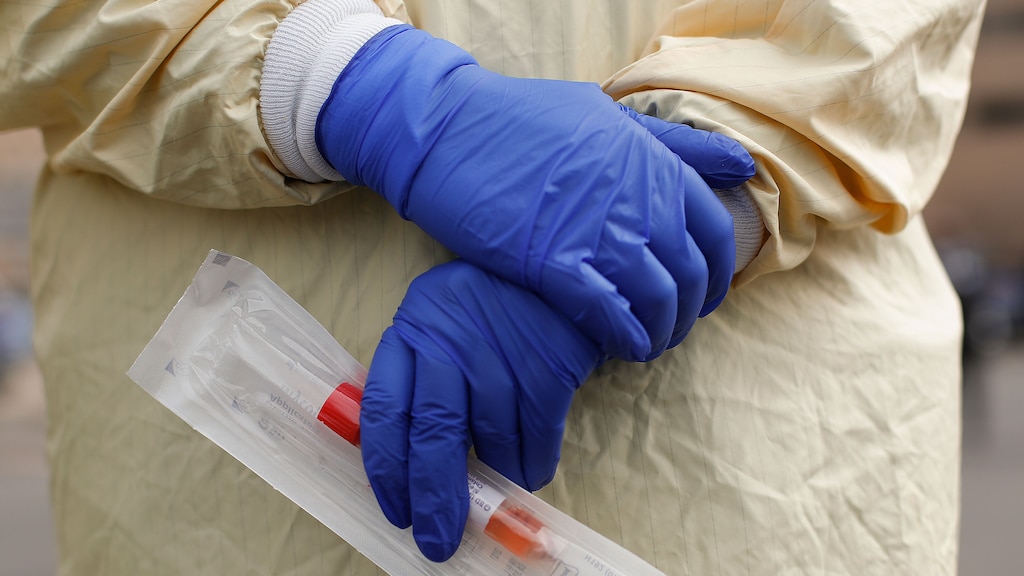
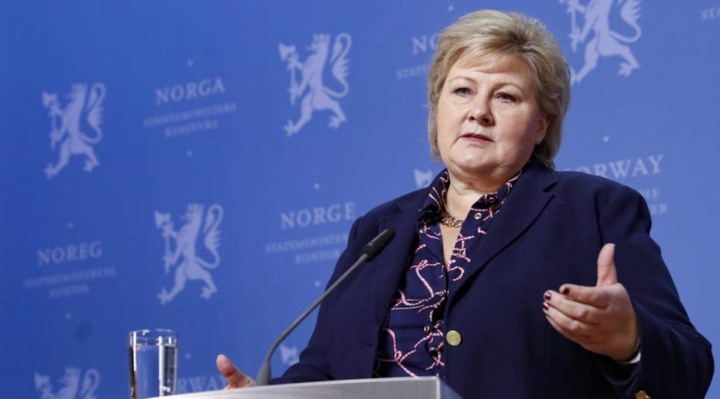
International travelers planning a trip to Norway within the next 14 days should think again following drastic action announced by the Norwegian Prime Minister Erna Solberg today. The government has acted quickly following a rapid increase in the positive cases of COVID-19, the disease caused by the novel coronavirus.
The series of measures that came into effect at 6pm CET on March 12 means that Norway is essentially on lockdown. Visit Norway confirms that international travelers who come to Norway risk facing a mandatory 14-day quarantine, regardless of their health.

The country is effectively closed

For the next two weeks, kindergartens, schools, colleges and universities are all closed. All restaurants are closed with the exception of those that can keep patrons at least one metre apart. Buffets are not allowed. Cultural events, sporting fixtures, most bars and pubs, swimming pools and gyms are closed. The vast majority of tourist attractions including ski resorts and museums are closed. Supermarkets and pharmacies are permitted to remain open, however.

While March is not high season for cruising, passengers on the few cruise ships currently plying the Norwegian fjords and coastline are facing mounting problems. As reported yesterday,

Arrivals face quarantine

In what was the most surprising announcement of the day, the Prime Minister also revealed that anyone arriving in the country from outside the Nordic countries (Denmark, Finland, Iceland, Norway, Sweden) will face a mandatory 14-day home quarantine. This applies to anyone arriving in Norway since February 27, a rule that has instantly placed thousands of Norwegians in home quarantine.

March 14, 2020 0 comments
0 FacebookTwitterPinterestEmail
NATO and Norway

US-Europe military exercise canceled due to coronavirus

by Nadarajah Sethurupan March 13, 2020
written by Nadarajah Sethurupan

In a measure to keep troops from potentially contracting the COVID-19 virus, a joint American and European exercise has been canceled when authorities determined that it was necessary to stop the exercise to mitigate the spread of the novel coronavirus that is spreading through the European Continent right now.

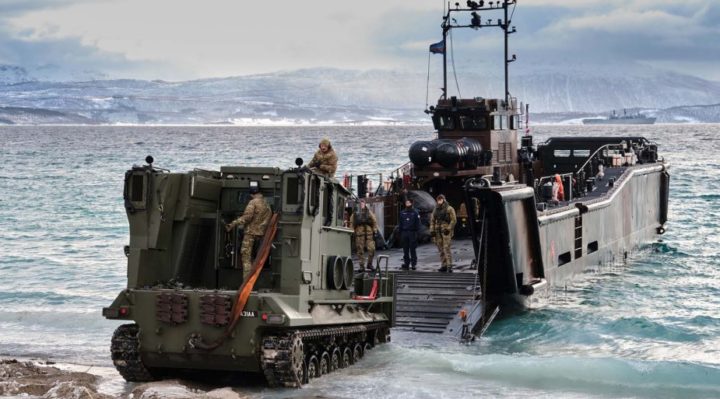
Cold Response 20 was two days into operations when the Norwegians decided to cancel the remainder of the exercise. Authorities from Norway made the determination after several troops were put into quarantine over fears they might have been exposed to the coronavirus. The United States had 1,500 troops in Norway with the total Allied manpower for the exercise being at 15,000.

What is Cold Response 20?

Cold Response 20’s aim is to enhance high-intensity fighting skills while collaborating with other countries’ forces under severe cold climate conditions while conducting exercises that include maritime, land and air events. The exercise’s aim is to maintain and build upon capabilities and cohesiveness in high-intensity warfighting in an arctic environment. 

The exercise was supposed to be held during the month of March, with the 15,000 service members coming from over 10 countries. The nations that were part of the canceled exercise were Belgium, Norway, Denmark, Finland, France, Germany, the Netherlands, Sweden, the United Kingdom and the United States.

In a statement, EUCOM said, “The decision is a precautionary measure in response to the ongoing outbreak of COVID-19 and to protect the health and safety of all participants and local population. The health of our force continues to be a top priority and we are committed to maintaining mission readiness”.

After a Norwegian soldier tested positive for the coronavirus, it was determined he was in contact with over two dozen United States Marines. The Marines were put under quarantine, but the risk was too much for authorities to chance.

According to the most recent data, Norway currently has 277 cases of the coronavirus but have not had any deaths reported so far. However, the number of cases has almost doubled in recent days prompting the concern from officials of a massive spread of the disease. 

The European countries with the most U.S. troops stationed there are Germany and Italy. Italy has shut down most of their country as they have had the third-worst national outbreak after China and Iran. South Korea and Japan have the most U.S. troops in Asia. South Korea’s rate of infections seems to have leveled off after getting up to over 7,000 as quarantine procedures have been implemented. Japan has had less than 600 cases as of yet.

The move is the latest in a series of steps the United States military has implemented to prevent service members and their families from being exposed to the virus. There is also talk that the military will put a 60-day pause on troop and family relocations. While no word yet has come, it seems this will most likely affect troops with PCS orders, primarily in South Korea and Italy. 

A training exercise in Africa has also been scaled down in breadth, and the Pentagon is considering scaling down or canceling additional exercises. Called African Lion, the exercise would pair Americans with troops from Morocco, Senegal and Tunisia.

March 13, 2020 0 comments
0 FacebookTwitterPinterestEmail
Norwegian Aid

Contributions to the migration situation in Greece

by Nadarajah Sethurupan March 13, 2020
written by Nadarajah Sethurupan

In order to provide help for vulnerable migrants and improve the situation on the border with Turkey, Norway has offered to send beds, mattresses and tents to Greek authorities. This is in addition to considerable Norwegian support in other areas linked to this situation.

“Today, I have met my European colleagues to make sure we maintain control over our external borders. Norway is part of the European cooperation. This also means that our countries will help each other during major crises. In order to help Greek authorities, Norway has used the Foreign Ministry’s funds for humanitarian aid to provide beds, mattresses and tents from the Norwegian Civil Defence’s stock. Frontex has also asked for expertise to help with document control, identification and interviews. We will contribute with this too,” said Minister of Justice and Public Security Monica Mæland.

According to Greek authorities, there is a pressing need for tents, first aid equipment and sanitary facilities. Several countries have offered possible contributions, including Sweden, Denmark, Finland and France.

“It is important to make these kinds of stand-alone contributions in order to address the urgent humanitarian needs among vulnerable migrants,” said Minister of Foreign Affairs Ine Eriksen Søreide.

“The support is in addition to the considerable support Norway provides in other areas, not least through the EEA Grants. We recently contributed NOK 350 million to help Greek authorities expand their systems for treating asylum applications, and this was especially targeted at helping vulnerable groups and unaccompanied minors,” Ms Eriksen Søreide said.

The new Norwegian contribution comprises 500 bunkbeds, 1 500 mattresses and 10 tents. These are provisions that the Norwegian Civil Defence stocks in case of crises similar to the one that arose around the arrival of migrants across the Russian border with Norway in 2015.

The situation on the border between Turkey and Greece could lead to a major need for beds and sanitation equipment on the Greek islands of Lesbos, Samos and Chios, as well as along the border with Turkey.

Norwegian authorities are following developments closely, and will of course contribute as much as is possible.

“In 2015, borders inside Europe were to a large extent open. This is not the case today, and that is why there is no reason why people and families should pay large sums of money to human smugglers and set out on the dangerous journey towards Europe,” said Ms Mæland

March 13, 2020 0 comments
0 FacebookTwitterPinterestEmail
Africa and Norway

Zimbabwe Should Protect Citizens’ Rights – USA

by Nadarajah Sethurupan March 13, 2020
written by Nadarajah Sethurupan

United States Assistant Secretary of State for Democracy, Human Rights and Labor, Robert Destro, says targeted sanctions alone imposed on Zanu PF leaders and come companies linked to some ruling party officials cannot address issues affecting Zimbabwe.

Speaking in a teleconference with journalists based in different nations on Thursday, Destro said there is need for Zimbabwean authorities to do more to ensure the protect the rights of citizens.

He said, “Is sanctioning enough? No, sanctioning is not enough. At the end of the day, the responsibility to police the boundaries of human rights rests with the Zimbabwean people themselves, and we respect their sovereignty. Our job is to call the situation as we see it and to offer whatever assistance we can that is, that’s consistent with a healthy, vibrant bilateral relationship.”

“… I do think that one of the things that comes out in the Zimbabwe sanctions is that it’s possible to get them lifted. And I would be extremely surprised if people were not engaging people in the process of trying to get the sanctions lifted.”

“We can’t really comment on sanctions in terms of any kind of a pending sanctions case. All I can tell you is that it’s a lengthy process. It’s very fact sensitive. We try and be very fair to everybody involved. It’s not exactly a judicial process, but it’s pretty close to one. And so it’s …. So, all I can tell you is that if we have credible evidence that people would be eligible, we will consider it and run through the process,” he said.

“These designations demonstrate continued U.S. commitment to promoting accountability for human rights abuses. The State Department urges the Government of Zimbabwe to immediately end state-sponsored violence including against peaceful protesters, civil society, labor leaders and members of the opposition in Zimbabwe, and to investigate and hold accountable those responsible for human rights violations and abuse.

Below is a full rush transcript of the press conference by Assistant Secretary of State Robert Destro And Acting Principal Deputy Assistant Secretary Scott Busby And Acting Deputy Assistant Secretary Alan Purcell Bureau of Democracy, Human Rights, and Labor.

Assistant Secretary Destro:  Well, As you know, every year the State Department produces the most comprehensive and fact-based report on the state of respect for human rights around the world.  Yesterday morning, Secretary Mike Pompeo unveiled the 44th such report, covering calendar year 2019.  All in all, it included 199 countries and territories around the world.  And the short answer is commitment to respect for human rights reflects core American values and also universal principles enshrined in international documents such as the Universal Declaration of Human Rights.  We highlight with our reports the central importance of respect for human rights to a government’s ability to foster peace, prosperity, and security.  We know that when governments respect human rights and fundamental freedoms, democratic institutions and the rule of law are more stable and secure.

And so promoting human rights is a key component of our strategy to counter resurgent authoritarian power and malign influence, to deprive extremists of examples for their recruitment narratives, and to defeat terrorism.  As Secretary Pompeo has said, quote, “This administration has been very vocal when we see human rights violations wherever we find them – among friends, foes, adversaries, and allies. It’s a deep, important tradition of the United States of America, and the Trump administration will continue to do that as well,” unquote.  

These reports are the world’s most comprehensive, objective, and factual account of the global state of respect for human rights, and reflect the concerted efforts of our embassies and consulates around the world to gather the most accurate information possible.  We, in the United States – the United States Government is committed to using its voice and its position on the world stage to draw attention to violations and abuses of human rights no matter where or when they occur.  

Question:  I wondered if you could address the issue of mixed messages from different agencies of the U.S. Government.  For example, in a country like Burkina Faso your report details unlawful or arbitrary killings by the government, extrajudicial killings, forced disappearances by the government, on and on during 2019, but when U.S. Africa Command’s commander went there in 2019 he didn’t call this out.  Burkina continues to receive major security assistance from the United States.  Doesn’t this type of thing undermine the impact of your work?

Assistant Secretary Destro:  Well, thanks for the question.  No, the Human Rights Reports reflect the official position of the United States Government, and we call things as we see them.  Now, what I think you’re asking about is – a little bit more specifically is about security forces, and we take very seriously our obligations under the Leahy Law to vet individual units in security forces.  So we can – while we can report generally speaking on what the security forces are doing, when we have credible evidence that they’re committing gross violations of human rights, we actually look into it very carefully. 

Question:  Human Rights Report about South Sudan, especially What is your comment on this latest report and the way forward or the recommendation, and how would the U.S. Government want to see the upcoming establishment of the new government, unity government, given the fact that there are so many former government officials who were actually sanctioned by the U.S. Government?  

Assistant Secretary Destro:  Well, I can tell you that the American Government is very actively involved with all of the relevant parties in South Sudan.  In fact, aside from the coronavirus, I was supposed to be there myself next week, at the end of next week.  And so I can tell you that we’re very much involved here trying to work with all the relevant parties.  We try and work with everyone on the ground to see if we can get and keep things moving in the right direction, and we certainly welcome any advice that any of you have for things that we can do to keep that engagement going.

Mr. Busby:  The sanctions that we’ve imposed on certain individuals in South Sudan have had the purpose of trying to ensure the unity of this government.  So that’s been the purpose and we think that will continue to help achieve that goal.

Question:  How Zimbabwe fared in terms of respect of human rights, and also to know where the Mnangagwa government or dispensation is faring in terms of respect of human rights.  Is it better compared to the previous government of Robert Mugabe?  And did you do any rankings, and if so, on what number is Zimbabwe compared to other countries?

Assistant Secretary Destro:  I thank you for your questions and the short answer to the first – the last question is no, we don’t do any rankings.  The whole point of these reports is to try and report as accurately as possible facts on the ground in all 199 countries, and it would be inconsistent with that factual orientation of the report to start injecting opinion into the report, and that’s what a ranking would do.  

Now, in terms of Zimbabwe itself, once again, in – just as in the answer to the previous question, when I said we remain engaged from the embassy level all the way up to here in Washington with all the significant actors in Zimbabwe – and it’s a country, in fact, in which I have a particular interest.  So no, we are – we’re very interested and we really want to encourage Zimbabweans to work together, to respect human rights.  And as Acting Principal Assistant – Deputy Assistant Secretary Scott Busby said just a minute ago, the whole point of sanctions is to get everybody’s attention and to get people moving in the right direction.

Question:  What mechanisms are U.S. Government doing now to make sure that accountability for all violations is achieved or is done?

Assistant Secretary Destro:  what we do – the United States has a special representative in South Sudan and he and the chief of mission in South Sudan are going to be very actively involved with all of the relevant players on the ground.  And as we say, it’s a – we respect every country’s sovereignty, but we want to work together with – in dealing with facts on the ground, we want to work together with all the players to make sure that the human rights equities of people are respected.

Question:  China hospitals performed several lung transplant – transplants on the COVID-19 to patients, but the source of the organs are not clear enough, and in your report the China part mentioned about the forced organ harvesting from the prisoner of conscience like the Falun Gong practitioner and the Uighurs.  So would you be worried about that the forced organ harvesting will happen more and more in China?  

Assistant Secretary Destro:  We do have credible reports that organ harvesting is going on.  We don’t have direct evidence at this point for it.  But we’ve had many a report from various sources within China, and when we do have direct evidence you can rest assured that we will be reporting on it.

Question:  We saw statements from the U.S. especially designating two Zimbabweans for human rights abuses, human rights violations.  Zim officials have engaged a lobbying firm called Ballard Partners to assist in working towards removing punitive actions of the U.S. Government, has the State Department had any contact with Ballard Partners vis-à-vis Zimbabwe on the subject of removing targeted sanctions on government officials?

Assistant Secretary Destro:  I cannot speak to the question about whether or not Ballard Partners has been involved.  In fact, it’s actually the Treasury Department, not the State Department that imposes the sanctions.

But I do think that one of the things that comes out in the Zimbabwe sanctions is that it’s possible to get them lifted.  And I would be extremely surprised if people were not engaging people in the process of trying to get the sanctions lifted.

So, but I can’t speak directly to your question about Ballard Partners.  I’ve certainly had no contact with them.

Question:  A lot of analysts say that governments have become adept at gaming the system, breaking up units, transferring people around to get around Leahy violations.  But sticking with a country like Burkina Faso, when you have a very strong record that you put together dealing with abuses by the security forces there, Leahy vetting aside, is this the type of government that the United States should be supporting?

Mr. Busby:  First off, we’re not aware of any efforts by the Government of Burkina Faso to break up the units in order to facilitate the flow of security assistance.

As Assistant Secretary Destro said, where we have credible evidence that a unit of the security forces is responsible for gross violations of human rights, assistance is withheld.  And if a government like Burkina Faso’s does try to circumvent the system by breaking up units and the like, that is something that we analyze.  Our people on the ground are looking very closely at how the security forces in any country actually operate.

And in terms of our engagement with the government there, we are raising our concerns privately with them, and in this report and in other places we have indicated publicly our concern about these abuses.  And we will continue to assess the abuses that are taking place, raise them as appropriate with the government, and if it comes to a certain situation where we think we’re having zero impact, we might make further changes to the security assistance.  

But right now we’re using the Leahy law to try to ensure that our security assistance does not contribute to abuses of human rights.

Question:  That in the South Sudan here, the peace agreement provides a mechanism for the formation of hybrid courts.  How is the U.S. Government supporting this formation, having the reports that the past years there was – the government was trying to drop this kind of formation? 

Mr. Busby:  The U.S. continues to support the hybrid court, both technically and financially.  We do think it is an important part of the peace agreement, and we will continue to encourage the government to agree to the formation of the hybrid court.

Question:  The image of the White House is very negative among people in Hungary – the people of Hungary.  Do you think that there will be changes in the relationship between the two countries after your country report is released?

Assistant Secretary Destro:  I do not think that there will be changes in the relationship between the two countries.  We’re very actively involved with the Hungarian Government on any number of issues, not just human rights.

Well, I shouldn’t say – human rights generally, not only in Hungary, but also a very cordial and cooperative relationship with Hungary on human rights issues in other parts of the world.  So it’s a balanced relationship.  Countries disagree with one another on any number of issues all the time, and that doesn’t mean that you still can’t have friendly relationships. We – as you all know, we often disagree even with our closest loved ones, and we still get – and we still get along.  So, I expect that the relationship will continue on a good level.

Question:  Has the U.S. Government withheld assistance to certain units in Burkina Faso due to gross violations of human rights?  If so, how many and when did these take place?

Mr. Busby:  I don’t know, but that is not information that we can share publicly at this time.  That said, we do issue reports periodically under our laws as to units that we have withheld assistance to.  So I would urge you to look at those reports when they are filed.

Question:  The issue of human rights violations in Zimbabwe is reportedly worsening.  Does this mean the U.S. Government intends to add more senior government officials on the sanctions list because of this?

Assistant Secretary Destro:  Let me take the second question first.  Is sanctioning enough?  No, sanctioning is not enough.  At the end of the day, the responsibility to police the boundaries of human rights rests with the Zimbabwean people themselves, and we respect their sovereignty.  Our job is to be – to call the situation as we see it and to offer whatever assistance we can that is – that’s consistent with a healthy, vibrant bilateral relationship.

And with respect to the second question, we can’t really comment on sanctions in terms of any kind of a pending sanctions case.  All I can tell you is that it’s a lengthy process.  It’s very fact-sensitive.  We try and be very fair to everybody involved.  It’s not exactly a judicial process, but it’s pretty close to one.  And so it’s – so all I can tell you is that if we have credible evidence that people would be eligible, we will consider it and run through the process.

Assistant Secretary Destro:  We always appreciate getting your questions.  As you know, the United States Government is completely committed in both word and deed to freedom of the press, and so we are thrilled to have your questions.  And as I said to our colleague from Zimbabwe who asked the more technical question about pending legislation, just because we can’t answer your question today doesn’t mean we won’t answer it.  We’ll just be more than happy to answer them in writing if you want to pass them along.

March 13, 2020 0 comments
0 FacebookTwitterPinterestEmail
Science

Norway announces first coronavirus death

by Nadarajah Sethurupan March 13, 2020
written by Nadarajah Sethurupan

An elderly patient died in Norway after becoming infected with the coronavirus, local authorities said on Thursday.

The death in an Oslo hospital brings to two the number of deaths caused by the COVID-19 in the Nordic region.

March 13, 2020 0 comments
0 FacebookTwitterPinterestEmail
Norwegian Aid

Norway to provide NOK 125 million to UN Relief and Works Agency for Palestine Refugees (UNRWA)

by Nadarajah Sethurupan March 12, 2020
written by Nadarajah Sethurupan

‘UNRWA plays a key role in meeting the basic needs of Palestine refugees and in safeguarding their rights. The work of the organisation is also helping to prevent further instability in the Middle East. That is why Norway is now disbursing NOK 125 million to UNRWA – the whole of its core contribution for 2020,’ said Minister of Foreign Affairs Ine Eriksen Søreide.

The UN Relief and Works Agency for Palestine Refugees in the Near East (UNRWA) provides assistance to over 5.5 million Palestine refugees on the West Bank, in Gaza, and in Jordan, Lebanon and Syria. Health services and education are among the organisation’s core focus areas, and over half a million Palestinian schoolchildren attend UNRWA-operated schools.

Foreign Minister Eriksen Søreide met Acting Commissioner-General of UNRWA Christian Saunders at refugee camp Amman New Camp in Jordan today. Some 2.2 million registered Palestine refugees live in Jordan. Most of them have Jordanian citizenship; only 10 % live in refugee camps.

‘Jordan has provided vital assistance to the Palestine refugees and is an important partner for UNRWA. Here in Amman New Camp, I have had good conversations with Palestine refugees who are benefiting from health services and schooling provided by UNRWA,’ Ms Eriksen Søreide said.  

Norway is a significant and reliable donor to UNRWA. As in previous years, Norway will also consider contributing to UNRWA’s emergency appeals in 2020. In 2019, Norway provided NOK 117 million to UNRWA’s emergency appeals, in addition to its core contribution of NOK 125 million. 

UNRWA was given its mandate by the UN General Assembly in 1949. Its mandate was renewed last autumn for a further three years. The resolution extending UNRWA’s mandate was supported by an overwhelming majority in the UN General Assembly. Since the US withdrew its support to UNRWA in 2018, the Gulf states and other donors have increased their contributions. Despite this, UNRWA’s financial situation remains difficult, and the organisation operates with ongoing budget shortfalls.   

‘The renewal of UNRWA’s mandate must be backed up by sufficient resources so that UNRWA can continue to provide basic services to refugees. We urge other donors too, not least the Gulf states, to maintain or increase their contributions and to disburse this funding early in the year,’ Ms Eriksen Søreide said. 

March 12, 2020 0 comments
0 FacebookTwitterPinterestEmail
NATO and Norway

U.S. With NATO Allies to Provide Turkey Military Aid

by Nadarajah Sethurupan March 10, 2020
written by Nadarajah Sethurupan

The U.S. is discussing with its NATO allies what they can offer Turkey in terms of military assistance in Idlib and discussing measures that may be taken if Russia and the Syrian government breaks a ceasefire, officials said on Tuesday.

“We are looking at what NATO can do,” James Jeffrey, the U.S.’ special envoy for Syria, told reporters in a conference call from Brussels where he was holding talks with allies. “Everything is on table.”

Jeffrey, who was speaking alongside the U.S. ambassador to Turkey David Satterfield, ruled out the use of ground troops should the ceasefire be broken and repeated that Ankara needed to clarify its stance on purchase of the Russian S400 Air Defence System.

Below is a full rush transcript of the press conference by Ambassador James Jeffrey, U.S. Special Representative for Syria Engagement and Special Envoy to the Global Coalition to Defeat ISIS and Ambassador David Satterfield, U.S. Ambassador to Turkey.

Ambassador Jeffrey:  We are here today in Brussels to talk with officials of the North Atlantic Treaty Organization, NATO, and the European Union about the continuing crisis in Idlib despite the ceasefire last week.  Idlib is the focal point of the entire Syrian conflict since 2011, as the Assad regime, backed by Iran and Russia, seek a military victory in defiance of the international community’s approach, which is a negotiated settlement under UN Resolution 2254 – passed by everyone on the Security Council, including Russia, in December 2015.

Right now we are focused, first of all, on the humanitarian disaster, where some three and a half million refugees, or internally displaced people, jammed together in about half of the province of Idlib, many of them very close to the Turkish border, who risk coming across, destabilizing Turkey, and perhaps moving on to Europe if the ceasefire does not hold.  Therefore, we’re doing our utmost to work with the European Union and to work with NATO to see security, humanitarian, economic, and diplomatic steps that can be taken to, first of all, ensure that this ceasefire remains an enduring ceasefire, and secondly, that we can start moving all sides to a negotiated settlement.  

Ambassador Satterfield:  I just want to underscore the reality and the magnitude of the challenge that the global community, but particularly Europe, the region of the Middle East, and Turkey in specific, face here.  A deliberate Russian decision to initiate a campaign in Idlib – the last extant de-escalation zone – has used as its primary lever the presence of 3 million-plus innocent civilians, the majority of whom are women and children.  By forcing their movement, their displacement from their home under very difficult conditions, towards the Turkish border, Russia’s calculation is this will compel Turkey to take decisions favourable to Russian ambitions to both retake the Idlib zone for the regime and effect, through the retaking of Idlib, an end to the ability of the international community to see either the full implementation of Resolution 2254 or a situation in which there is any stand made against Russian aggression.

I underscore Russian aggression, because the Syrian regime on its own could not be conducting this campaign.  This is enabled by, at all times, Russian air and ground activity, but particularly air.  Turkey faces in the immediate case, but Europe as a whole, the challenge posed by up to 3 million displaced moving in an increasingly compressed fashion, as Jim noted, up against the Turkish border.  It is imperative that everything possible be done at this moment to stabilize, in an enduring fashion, the ceasefire agreed to in Moscow on March 5th, to put an end to territorial incursions.  There will be no safe zone, no secure zone, if there is not an enduring ceasefire.  

The sad record of Syria over the course of the past two years has been ceasefires with Russian guarantees have not been ceasefires; they are temporary, transactional halts until Russia is prepared to renew the campaign.  That must not be the case in Idlib.

Question:  We know that Turkey asked the United States to send Patriot missile defence batteries to improve its air defence capability in the Idlib escalation.  Recently there were reports that you were pressing the Pentagon to send Patriot missiles defence batteries to Turkey to help it repel the Syrian Government’s assault in Idlib, but Pentagon was resisting it.  And the Turkish foreign minister lately said that Turkey still wants Patriots to be deployed near its Syrian border as part of NATO Operation Active Fence.  And today you are in Brussels to increase NATO’s assistance to Turkey’s security concerns from Idlib.  So is there any possibility that the United States or any other NATO ally would send more Patriot missiles to Turkey as part of Operation Active Fence?  And is there any disagreement on this issue within the U.S. administration? 

Ambassador Jeffrey:  First of all, that Politico article was quite false in the details and some of the basic points it made, but I’ll set that to one side because, of course, we are looking at ways we can assist Turkey.  That’s why we’re here.  That’s why Turkey, under Article 4 of the NATO Charter, called on NATO countries to support it, and we’re here working with the other NATO countries to see what options are available.  

There are NATO Patriot batteries from Spain, one battery right now in Turkey.  There has been various deployments of NATO forces since 2012 into Turkey in response to the Syrian crisis.  We’re looking at what NATO can do.  Everything is on the table.  We’ll see what happens next, what our allies are willing to put on the table, and then we’ll see what the United States can do to support them.

Question: What can you say about the presence and involvement of Iranian forces and proxies in Idlib?

Ambassador Jeffrey:  One of the major risks to the region of this terrible crisis is the involvement of Iranian forces – not only to prop up the war criminal Assad regime, but also to deploy long-range missile and other weapon systems to threaten our partners and allies such as Turkey, such as Israel, such as Jordan, and to threaten our own U.S. military positions in the Middle East as we saw recently in Iraq.  So we have noticed that these forces have become very directly involved in the fighting in Idlib, in part because the Syrian army forces have half-collapsed under the attack of the Turkish military in the past few weeks.  This is another indication that Iran is driving on its own axis in Syria, not only supporting the Assad regime, which is bad enough, but trying to expand its own hegemonic agenda throughout the northern Levant, and this is something the United States is absolutely opposed to.

Question:  Turkey expects a response from NATO regarding the request conveyed on the 28th of February.  Which are the requests you are willing to support and what are the specific challenges you are facing in meeting Turkey’s request?  And you have elaborated on the humanitarian aid topic.  EU has announced preconditions for humanitarian aid to Idlib.  The Europeans want security guarantees.  Erdogan stated that Turkey already started construction work for facilities and defined it as a safe zone.  And what is the U.S. administration’s view regarding the conditions for establishing a safe zone and humanitarian aid? 

Ambassador Jeffrey:  That’s three separate questions: safe zone, military assistance, and humanitarian assistance.  Let me start with the humanitarian assistance.

The EU has been very, very generous, as has the United States as the largest single country donor to the Syrian crisis with over $10.6 billion committed since the beginning of the crisis, including 108 million more that our UN Ambassador Kelly Craft, Ambassador Satterfield, and I witnessed being presented last week on the border to Idlib.  There are always some technical and administrative issues involving the delivery of humanitarian assistance across borders.  These are routine.  I don’t think there’s a problem.  I am sure the European Union will be delivering the promised humanitarian assistance.  They have so in the past.  They have provided hundreds – hundreds of millions of euros to people in Idlib; they will continue doing so.  I’m not worried about that.

In terms of what the alliance can provide to Turkey to provide, let’s say, a safe zone broadly defined – that is, a permanent ceasefire and a secure area for the people who are now in Idlib to remain there, which is what everybody wants – that will require, first of all, an analysis of the military threats that are presented by the Syrian Government and Russia, and as we just discussed, Iran; secondly, Turkey’s capabilities; thirdly, what NATO states can do individually and perhaps as an alliance, because there are – again, as we just said – some alliance military decisions on deployments to help protect Turkey.  We’re going to look into those.  There are also things that the United States can do on its own.  We have considerable weapons agreements with Turkey and we’re looking into how we can be helpful there.  

Question:  Why did the U.S. decline to support the latest vote in the Security Council in favour of the recent Turkish-Russian agreement?  Second question:  How will the U.S. support Turkey in the event of confrontations in Syria between Turkey and the Syrian Government.  And third:  Why is the United States concerned about Russia providing Turkey with the S-400s?

Ambassador Satterfield:  The United States Government has made clear through every channel available to us, including briefing teams in Turkey since the fall of 2017, cautioning that acquisition of the most advanced Russian air defense system, the S-400, is fundamentally incompatible with Turkey’s obligations as a member of the F-35 consortium, it is incompatible with Turkey’s role as a NATO partner, and it would produce serious consequences with respect to the U.S. CAATSA, Countering America’s Adversaries Through Sanctions Act, legislation.  There must be a resolution to the S-400 issue in order for all of the questions which that act has now raised to be fully resolved.  We hope that that can take place.

Ambassador Jeffrey:  On the Security Council deliberations on the ceasefire, first and foremost, let me make clear the United States welcomes this ceasefire as a potentially important step towards an enduring ceasefire and towards a political resolution under 2254, which calls for such ceasefires throughout the country.  What happened in the Security Council – and I have to be general because these consultations are not for the public – was that we and other countries were presented by a text given by the Russians that the Security Council was to adopt.  We and other countries had questions about that text.  We also pointed out that we had not heard from the Turks; the Turks had not cleared that text and we were not comfortable with that particular text going out at that time.  That’s all there is to that.

The final question – how will the U.S. support Turkey in the event of confrontations between Turkey and the Syrian Government – again, I just covered that in the last two questions that we answered.

Question:  Do you believe, or why would you believe, that Russia and the Assad regime has any interest in a permanent ceasefire in Idlib?

Ambassador Jeffrey:  Steve, you’ll get a very clear answer to that.  We don’t believe they have any interest in a permanent ceasefire in Idlib.  They are out to get a military victory in all of Syria.  Our goal is to make it very difficult for them to do that by a variety of diplomatic, military, and other actions.  One, for example, is we have basically prohibited the use of chemical weapons, which was a favourite tactic of the Syrian regime in making advances, because they know that we, probably with several of our allies, will respond in a very savage military way to that.

Secondly, we have for other reasons – fighting Daesh – U.S. and coalition forces in parts of Syria.  That is a complication for the Syrian Government.  They have to take that into consideration.  

Finally, there are U.S. sanctions; there are European Union sanctions; there is a ban on any reconstruction assistance to put this country back together again – all of which we are not going to relent on nor will the European Union from all of our conversations here until the Russians and the Syrian Government will actually sit down and talk about a compromise political settlement that will involve a ceasefire, not just in Idlib but throughout the country.  So we’re waiting for them to respond to us.

Ambassador Satterfield:  Let me go one step beyond what Jim just said.  Why should we believe that the regime has any intention of wishing to see its citizens remain in Idlib?  The answer here is we don’t.  We know the intent of the regime is to force these populations, like other Syrian populations, out of the country and to have them leave permanently.  There is no prospect of refugees returning to Syria.  The regime has done everything in its power with respect to the limited returns that took place from Rukban, the returns that have taken place in limited fashion from Lebanon and elsewhere, to send the very clear message:  “You’re not welcome, don’t come home.”  

And so everyone is quite right to be not just skeptical but absolutely disbelieving about regime intent and Russian intent.

Question:  I would like to understand how do you evaluate the recent messages coming from Ankara, especially on S-400s?  On the one hand, Erdogan underlines that they will not – they will not step back and it will become operational by April.  On the other hand, even today, just a few minutes ago before your briefing, Erdogan once more said that it’s a condition for NATO and U.S. not to activate the S-400s.  So do you think there is a conflicting issue between these statements on that?  And are you much more optimistic about Turkey’s attitudes on S-400s?

Ambassador Satterfield:  You would have to refer to the Turkish Government for clarification on its own statements and positions.  With respect to the United States, we have been very clear and very consistent.  We wish to move ahead in a robust economic-security relationship with Turkey.  The President, President Trump, is committed to this.  But for the security relationship to move forward as we would wish, as the Government of Turkey would wish, and I believe as NATO wishes, there will need to be a resolution to the S-400 issue.

Question:  My question is about the S-400 implications of Turkey’s purchase, which is what Mr. Satterfield talked about.  Do you see the CAATSA issue coming up in the Senate or elsewhere in the Congress later this month if Turkey does not back down from this decision?   And my second question is about Idlib and the ceasefire that Turkey and Russia agreed on March 5th.  Is there a backup plan for the U.S. if that ceasefire collapses and Turkey finds itself again face to face with Russian-backed forces, such as establishing a no-fly zone in the area? 

Ambassador Satterfield:  I’ll respond to the question about the S-400s and CAATSA.  I can only base my comments, which are well-known to the Turkish Government, on what we are told by congressional leaders, both Republican and Democrat.  They had indicated to us they’ve communicated directly to the Turkish Government as recently as the conference in Munich that yes, if there is no resolution to the S-400 issue, and even though there is strong support for Turkey’s role in Idlib as well as in Libya in standing up to Russian moves, that without a resolution on the S-400 the likelihood of legislation moving that incorporates a mandatory application of CAATSA will at some point in the not-distant future occur.

Ambassador Jeffrey:  Thanks for returning to the ceasefire.  As we said in answering Steve Erlanger’s question, we don’t think that the Russians or Syrians are serious about a long-term ceasefire.  That doesn’t mean we won’t have a long-term ceasefire.  That is still our hope, and that’s what we’re working for.  First of all, we note that if it wasn’t for the strong military performance by the Turkish army and the opposition forces, and if it wasn’t for the strong international reaction – diplomatic, media, and other – to the Russian-Syrian offensive, we don’t think we would have gotten this ceasefire in the first place.  

So our goal is to inventory here in Brussels with our European and NATO colleagues what are the military, the diplomatic, the economic, the sanctions, and the media and outreach steps we can take to encourage Russia and Syria not to do what we think they want to do, which is to break the ceasefire, push these 3 million refugees across the border, but rather to think twice.  If they ignore our warnings, if they ignore our preparations and move forward, we will then react as rapidly as possible in consultation with our European and NATO allies on what the package of sanctions and other reactions will be.

Question:  I was wondering if you have seen any evidence to suggest that the coronavirus is present and spreading among the civilian population among Idlib, and even if not, does the pandemic complicate your efforts to get a solution here? 

Ambassador Jeffrey:  We have not seen any outbreak of that virus among the people in Idlib.  Of course, we have only limited eyes on through humanitarian aid delivery NGOs, but so far, we haven’t seen any.  We’re going to do our jobs as government officials regardless of the coronavirus situation.  That’s our instructions from the top and we’re carrying them out.

Question:   The Bosnia war ended with the Dayton Agreements.  What are the odds that a similar peace and stabilisation deal could be struck for the north of Syria?  Could NATO and/or blue helmets with a UN Security Council mandate play a role to provide a shield for humanitarian buffer and no-fly zones?

Ambassador Jeffrey:  First of all, UN Resolution 2254, which I mentioned a bit ago, was drawn up with the experience of, among other things, Bosnia and various other conflicts in mind.  It does see ceasefires as we got with Dayton, which I happen to have worked on, and then deployment of peacekeepers, deployment of international civilian organizations to help with reconstruction, and a political process to reconcile the sides.  That is basically the thrust of 2254, which we support very strongly.

How you will carry that out – once there is the will for a compromise solution – is a question of diplomatic expertise, technical advice, and the situation on the ground.  But certainly, everything that you recommended would be in play.

The key question is not how we would carry out a compromise solution.  The key question is how do we get the other side – Assad in Damascus, Putin in Moscow, the ayatollahs in Tehran – to agree to a compromise ceasefire.  That’s the task before us.

Question:  I want to ask about the reason for using the American veto against the Idlib agreement ? Is Turkey facing a difficult situation and divisions that prevent real aid from being provided to it outside statements and statements ? Do you think that let’s call it the Turkish-Russian honeymoon is over and the U.S.-Turkish relationship will return to how it used to be? If the U.S. agrees to provide aid to Turkey, what kind of support?  Are we talking about – is the military one among them?

Ambassador Jeffrey:  I’ll take the first and the fourth.  As I just explained, there was no American veto.  There was no vote.  We do welcome the 5 March Moscow ceasefire.  The problem in the Security Council was that Russia presented a text that contained language that we couldn’t see verified.  We had not heard the Turkish side of what was negotiated there.  We couldn’t verify the text with the Turks, so we and other countries had some questions and as a result, the Security Council did not issue a statement.  That happens all the time in these confidential discussions of security issues.

In terms of the U.S. aid, we’re looking at the various ways we can help Turkey based upon the situation, but also I want to stress based upon – this is a classic theme of the Trump administration, for good reason – what our other NATO allies can provide.  There are 28 of them, or 27 of them not counting us.  They have a GDP larger than ours and they’re much closer to the situation here in Europe.  So, therefore, it’s not unreasonable for us to also find out what they’re going to provide as we decide how we can be helpful.

Ambassador Satterfield:  The term “honeymoon with Russia” is yours.  It is not a term that has ever been used by the U.S. Government or by the Turkish Government with us.  Turkey is a part of the NATO Alliance; it is a part of Europe; it is a part, in our view, of the West.  Russia has interests in Turkey and through Turkey.  We all understand that.  The Turkish Government understands that.  But a honeymoon has never existed, and the cold reality of Russian intentions, of the contrast between Russian promises and Russian delivery, could not have been made clearer to all governments involved, including the Turks.

Since the fall of last year, I would cite northeast Syria, where Russia failed to perform on any of its assurances in Sochi towards Turkey, as well as the ongoing Russian mendacity with respect to ceasefires and arrangements having to do with Idlib.

Question:  I was wondering if there’s been any discussion of the deployment of ground troops into Syria if Russia violates the ceasefire again?  And then what exactly is being considered to hold them accountable for any ceasefire violations? I mean What’s being considered to hold them accountable for any ceasefire violations ?

Ambassador Jeffrey:  First of all, I think you can forget ground troops.  Ground troops is only an extremis measure, generally, in these things, and Turkey has demonstrated ably that it and its opposition forces are more than capable of holding ground on their own.  The issue is the situation in the air, and that’s what we’re looking at.

In terms of accountability, we, first of all, rely upon the United Nations.  And here the secretary-general, Secretary-General Guterres, has been very, very helpful.  He’s summoned forth a board of inquiry to look into the situation in Idlib.  We’re expecting its results to be made public very, very soon.  We have had a number of UN institutions, organizations, and study groups repeatedly point to violations of humanitarian law, violations of the laws of war by the Assad regime and, in some cases, the Russians.  We are bringing this up in the Security Council.  We’re bringing this up elsewhere in the United Nations.  We will continue to do so, and any violations of the ceasefire we will do our very best to include in the now extraordinarily broad and deep documentation of Russian and Syrian actions that, in some cases, reach the level of war crimes.

March 10, 2020 0 comments
0 FacebookTwitterPinterestEmail
Asylum

Ethnic Norwegians to become minority in their own country this century: report

by Nadarajah Sethurupan March 10, 2020
written by Nadarajah Sethurupan

A report from the Norway’s official statistics bureau that shows immigrants now account for nearly half of Norway’s population grow, a trend that follows the agency’s report that ethnic Norwegians will be a minority in the country by the end of the century.

Last year, 52,000 people immigrated to Norway, which nearly equals the amount of 54,500 children born in the country in 2019, according to Statistics Norway.

The Norwegian statistics bureau identified stable migration as one of the main trends in population growth in Norway, while on the other hand,  the declining births and an aging of the population are negative trends for Norway.

Statistics Norway also points to certain municipalities with rapidly falling populations, which serves as a major economic and population drag on those regions. Many young people leave for cities and other economically strong areas, leading to fewer children born and a sense of decline for those regions most affected.

Last year, net migration to Norway amounted to 25,300 people, but the country of 5.3 million has consistently seen its share of newborns decreasing each year, with native born reaching a peak in 2009 with 61,800 births.

Due to these trends, the average age of Norwegians jumped by 0.23 percent to 40.5 years.

Given the increasing number of migrants in the country, there are worries about the decline in the ethnic Norwegians population. According to journalist Helge Lurås of the news outlet Resett, ethnic Norwegians are on their way to “become a minority in their own country”.

Resett analyzed the data on newborn children with an immigrant background and compared them with the net migration data. There were 42,300 people with an immigrant background and 37,000 newborns with an ethnic Norwegian background. In conclusion, Resett found out that in 2019, at least 53 percent of children born in Norway had a foreign background.

The fertility rate of ethnic Norwegian women (1.50) compared to women with an immigrant background (1.87) is another unfavorable factor. Women with an African background have an even higher fertility rate, which stands at 2.6 children per mother.

The 2017 report of Statistics Norway, predicting that 52 percent of the population will have an immigrant background by 2100, seems increasingly likely.

This watershed moment could even occur before then.

Currently, about 18 percent of the population in Norway has an immigrant background. In the younger age group, the percentage is even higher, exceeding 30 percent.

In the past, the Norwegian population was highly homogenous. In the late 1970s, ethnic Norwegians made up 98 percent of the population. Nowadays, except for Norwegians, the most numerous foreign groups are Poles, Swedes, Somalis, Lithuanians, Pakistanis, and Iraqis.

March 10, 2020 0 comments
0 FacebookTwitterPinterestEmail
Asia and Norway

India appealed to citizens not to believe in rumours

by Nadarajah Sethurupan March 9, 2020
written by Nadarajah Sethurupan

Union Home Minister of India, Mr. Amit Shah held a review meeting to take stock of prevailing law and order situation in Delhi, in view of recent riots affecting the District North-East. The meeting was, inter alia, attended by the Union Home Secretary, Commissioner of Police, Delhi and Special Commissioner of Police, Law &Order, Delhi Police.

Mr. Shah has appealed to citizens not to believe in rumours and fall prey to evil designs of

miscreants and groups interested in precipitating communal tension. Only 12 Police Stations (PSs) out of the 203 PSs in Delhi (about 4.2% of the geographical area) have been affected by these riots, while normalcy and communal harmony has prevailed elsewhere in the National Capital. Delhi Police is mandated and obligated to provide security to all sections of society irrespective of caste and religion.

Major Highlights from the Review Meeting:

  • No major incident has been reported in the last 36 hours in any affected Police Station of District North-East.
  • Prohibitory orders under Section 144 will be relaxed for a total of 10 hours tomorrow in view of improvement in ground situation.
  • So far, 48 FIRs, pertaining to clashes, loss of lives/property, etc., have already been registered and further FIRs would be registered in due course.
  • Police has detained/arrested 514 suspects for questioning so far. Further arrests would be effected in the course of investigation.
  • Delhi Police has separately set up two SITs for investigating serious offences.
  • Nearly 7,000 Central Para-Military Forces have been deployed in the affected areas of North-East District since February 24. Besides, Delhi Police has also deployed three Special CPs, six Joint CPs, one Additional CP, 22 DCPs, 20 ACPs, 60 Inspectors, 1,200 other ranks and 200 Lady Police under the overall supervision of Commissioner of Police to effectively guide and supervise Police response so as to contain and normalise the situation.
  • 35 persons have lost their lives in these tragic incidents since February 24. Situation is slowly returning to normal.
  • Citizens are requested not to lay credence to any rumour. Delhi Police has set up helplines – 22829334 and 22829335 – for round-the-clock assistance. These numbers are being given adequate publicity so that information about miscreants and any emerging situation may be conveyed to the Police.
  • Two Security personnel sacrificed their lives in the line of duty to restore law and order.

Besides, nearly 70 Police personnel and senior officers have been injured in these unfortunate incidents. Adequate steps have been taken to ensure medical support to the injured.

  • As a confidence-building measure among different sections of the society, Delhi Police has started holding Peace Committee Meetings across Delhi to normalise situation and improve inter-community harmony. Such Peace Committee Meetings would continue till situation normalises. So far, nearly 330 Peace Committee Meetings have been organised in various districts of Delhi in the last two days. Apart from this, meeting with Residents Welfare

Associations (RWA) and Market Welfare Associations (MWA) have also been convened in

several areas. Such Peace Committee/RWA/MWA have been attended by different sections of the society including Civil Society Groups, representatives of different political parties including Congress, AAP, BJP, etc.

  • East Delhi Municipal Corporation has already initiated steps to clean the streets and repair damaged public properties in riot-affected areas. Other civic agencies are also ensuring the civic amenities to the citizens is restored as soon as possible. Movement of traffic on the

highway and connecting roads is returning to normal.

March 9, 2020 0 comments
0 FacebookTwitterPinterestEmail
Terrorist

Five nations to facilitate the Intra-Afghan dialogue

by Nadarajah Sethurupan March 9, 2020
written by Nadarajah Sethurupan

A group consists of five countries has been formed to facilitate the intra-Afghan dialogue.

The group is comprised of Germany, Norway, Uzbekistan, Qatar, and Indonesia.

According to the US-Taliban agreement signed Saturday in Qatar, the intra-Afghan dialogue starts on 10th March.

The Taliban demanded the release of up to 5000 of its prisoners, in exchange for 1000 Afghan forces who are in the Taliban’s captivity.

However, President Ghani said Sunday that Afghanistan has no commitment to release the prisoners and that the Taliban demands cannot be considered as a pre-condition for the talks.

Markus Potzel, German Special Envoy for Afghanistan told Ariana News that his country was ready to host the process.

Meanwhile, the two sides are expected to discuss the ceasefire and the formation of the future government.

It comes as the Taliban has frequently denied holding direct talks with the Afghan government, but it seems that the Taliban has shown flexibility to sit around the negotiation table with all laterals in the next ten days.

March 9, 2020 0 comments
0 FacebookTwitterPinterestEmail
Asia and Norway

India-Norway Sign MoUs In Field Of Research And Higher Education

by Nadarajah Sethurupan March 8, 2020
written by Nadarajah Sethurupan

India and Norway on Tuesday signed a total of four memorandum of understanding (MoUs) in the field of research and higher education.

A delegation of prominent education and research institutions from Norway led by Director-General, Anne Line Wold, Norwegian Ministry of Education and Research is in the capital today. The signing of MoUs was witnessed by Norwegian Ambassador to India, Hans Jacob Frydenlund and the head of the delegation.

The MoUs signed between two countries include one between Indian Institute of Technology Delhi and UiT, The Arctic University of Norway for cooperation in fields such as bio-photonics, health and diagnostic tools, nanotechnology, water management and renewable energy.

The other MoU that has been signed is between Indraprastha Institute of Information Technology and UiT, The Arctic University of Norway to facilitate the exchange of students and staff and consolidate joint efforts towards project initiatives in national and EU arena.

MoUs have also been signed between IIT, Jammu and Norwegian University of Science and Technology and IIT Mandi and Norwegian University of Science and Technology with special focus of activities in Landslides, Tunnels, Water Management, Hydropower, Project-based learning, Student and researchers mobility and Cold region technologies.

“The visiting delegation from Norway has had fruitful meetings with their Indian counterparts to discuss increased student mobility between Norway and India. As a part of the Norwegian government’s India Strategy 2030, research cooperation and higher education are of high importance in our bilateral relationship,” the Norwegian Ambassador said on the occasion.

“This visit is a key step towards achieving the goals of a stronger and deeper bilateral relationship with India in the field of higher education and I look forward to developing this further in the years to come,” Frydenlund added.

Director-General Anne Line Wold also stated that India is an important strategic partner for Norway.

“For Norway, exploring potential partners and connecting researchers and institutions with their counterparts in India is extremely crucial. During this visit, we have had an excellent dialogue with the Indian authorities and found several areas of common interest that will benefit both countries. We also hope to see an increased student mobility between India and Norway,” said Wold.

Last month, India and Norway agreed that the dynamic nature of trade and investment between the two countries will result in an increasing number of companies interested in establishing and gaining access to the markets in both sides.

During the first session of India-Norway Dialogue on Trade and Investment (DTI), convened in the national capital on January 15-16, both sides exchanged views on investment opportunities available in the respective countries. 

(ANI)

March 8, 2020 0 comments
0 FacebookTwitterPinterestEmail
Africa and Norway

Ghana, Norway pledge to reinforce co-operation ties

by Nadarajah Sethurupan March 7, 2020
written by Nadarajah Sethurupan

The Republic of Ghana and the Kingdom of Norway have pledged to deepen the ties of co-operation that exist between the two countries, following the holding of bilateral talks between President Akufo-Addo and Prime Minister Erna Solberg.

At a joint press conference addressed by the two leaders, as part of President Akufo-Addo’s official visit to Norway, President Akufo-Addo stated that the purpose of the visit is aimed at reinforcing the strong ties of friendship and co-operation that already exist between the two countries.

The President expressed the appreciation of the Ghanaian people to the Norwegian Prime Minister and her government and people for the considerable support they have offered Ghana through various interventions, such as the “Oil for Development Programme”, which has been running successfully for more than a decade, and has enhanced Ghana’s capacity to manage her petroleum resources.

He also indicated that the “Fish for Development” initiative signed by the two countries in May 2019 is having a positive impact on the management of Ghana’s marine resources for the creation of wealth and jobs, particularly in fishing communities, in line with the realisation of SDG No. 14.

Encouraged by the fact that more Norwegian companies are looking to invest in Ghana, symbolized by the presence of oil and gas giant, Aker Energy, President Akufo-Addo stressed that “I wish to assure the more than fifty (50) Norwegian companies operating in our country that my government will continue to try and maintain a conducive investment atmosphere that would not only guarantee the safety of their investments, but also good returns on investments as well.”

Particularly delighted with Norway’s new partner country initiative, which is aimed at ensuring that partner countries become independent of aid in the long term, President Akufo-Addo indicated that “it fits in perfectly with my Government’s vision of a ‘Ghana Beyond Aid’.”

Having created a conducive economic environment in the country, the President urged more Norwegian companies to invest in Ghana, and was hopeful that more Ghanaian companies will also take up the offer to invest in Norway.

On her part, the Norwegian Prime Minister, Erna Solberg, commended President Akufo-Addo on the work he has undertaken, so far, as co-Chair of Eminent Advocates of the 2030 Sustainable Development Goals.

Describing Ghana as “one of our closest partners in Africa”, Prime Minister Solberg indicated that Norway is determined to deepen her bilateral relations with Ghana, and, thereby, help improve the living standards of their respective populations.

March 7, 2020 0 comments
0 FacebookTwitterPinterestEmail
Environment

Zero Emissions Aviation: European industry and regulators meet in Norway

by Nadarajah Sethurupan March 6, 2020
written by Nadarajah Sethurupan

Key players from the European aviation industry met in Oslo to set the framework for a unique program that will transform Norwegian air transportation and serve as a learning ground for sustainable aviation on a regional scale.

Representatives from Airbus, Avinor, Leonardo, Safran, SAS Scandinavian Airlines and Widerøe attended a meeting led by the Norwegian Civil Aviation Authority and the European Union Aviation Safety Agency (EASA) to initiate the work of the Task Force on Zero Emissions Aviation.
 

Air transport essential to Norway.

Minister of Transport of Norway Knut Arild Hareide, joined for the opening session.

Building on experience in other transport sectors and addressing the expectations of its citizens, Norway is taking steps toward the early implementation of emissions-free air transport in its regional market. The geography of Norway means that its many fjords and mountains hinder ground transport – making air transport an essential component of its overall infrastructure.

For Norway, the establishment of the Task Force brings a valuable international dimension to their regional ambition. The engagement of new and established aviation players to consider the environmental, economic, technological, and institutional challenges ensures a comprehensive approach.

A European collaboration.

For EASA as European regulator, the program is aligned with its twin mandate to reduce the environmental impact of aviation while ensuring air travel is safe. 

“EASA plays a leading role in actively developing and implementing measures to address environmental challenges. This collaborative effort with CAA Norway and leading representatives from industry provides a strong basis for concrete and effective action to enable innovation and reduce aviation emissions”, said Patrick Ky, Executive Director of EASA.
 

In its kick-off meeting, the Task Force agreed to draw up a report and roadmap of actionable recommendations to support the Norwegian ambition, which will be presented to the Norwegian government in summer 2020. This will include short-term actions that could be implemented by 2025 or so as well as longer-term actions stretching to 2030 or beyond.

In parallel, the Task Force will work towards solutions that can contribute to the wider European efforts for sustainable aviation. Particular consideration will be given to potential measures and incentives to promote the transition towards emissions-free aircraft.

March 6, 2020 0 comments
0 FacebookTwitterPinterestEmail
NATO and Norway

US Will not Invite Russia to NATO-Led Defender-Europe Drills

by Nadarajah Sethurupan March 5, 2020
written by Nadarajah Sethurupan

The United States will not invite Russian observers to visit NATO-initiated Defender-Europe 20 military drills in Europe as it is not hosting the exercises, Maj. Gen. Andrew Rohling, the deputy commanding general of the US Army Europe, said on Wednesday.

The drills are set to take place across 10 countries and envision the biggest deployment of US military forces to Europe in 25 years. The exercises expect to involve 37,000 allied troops from 18 nations, including 20,000 US servicemen.

“And so to maintain maximum transparency, host nations can invite representatives from OSCE [Organization for Security and Co-operation in Europe] to participate and observe the exercise and to confirm their defensive nature. The United States Army will not invite Russian observers onto any other host nations’ soil. That is the the role of each individual country that is participating to invite any Russian observers,” Rohling told reporters via a conference call.

Major General Andrew “Andy” Rohling Deputy Commanding General, U.S. Army Europe

Below is a full rush transcript of the press conference by  Major General Andrew “Andy” , Rohling Deputy Commanding General, U.S. Army Europe.

Major General Rohling:  I am Major General Andrew Rohling.  I am the Deputy Commander of the United States Army Europe.  I want to thank you for taking the time this morning to talk about DEFENDER-Europe 20.

The last time that we, the United States Army Europe, spoke to you, you heard from Brigadier General Sean Bernabe, our G3 operations officer, on what DEFENDER 20 – DEFENDER-Europe 20 is, and so today I’d like to kind of talk a little bit more about what we’ve done so far. 

As you know, DEFENDER-Europe 20 is the largest deployment of U.S.-based forces to Europe in an exercise for more than 25 years.  The purpose of DEFENDER-Europe is to exercise the U.S. military’s ability to deploy a large force of personnel and equipment from the Continental United States here to Europe – and, alongside our NATO partners and allies, quickly respond to a crisis. 

As the name suggests, DEFENDER and its linked exercises are defensive in nature.  They are not directed towards any one country or specific threat.  This is about building our collective capabilities as a nation, and as part of the NATO Alliance, to respond to a crisis.  

DEFENDER-Europe 20 will send a clear and unmistakable signal that the United States is committed to NATO and the defense of the European homeland.

It is not just a U.S. exercise.  DEFENDER-Europe 20 relies on the support of the entire Alliance and we will build a whole-of-Europe readiness and interoperability.

As U.S. soldiers began arriving at the airports and ports across Europe in the middle of February, their equipment had entered via multiple seaports in Belgium and Germany.  These sites, along with other seaports, serve as the logistical hubs for DEFENDER-Europe 20.

These personnel and their equipment have begun to move through multiple countries to arrive at training areas across Germany, Poland, and the Baltics, where they will join other NATO allies and partner militaries to conduct various linked training exercises. 

For some details, currently 15 of 27 air missions have brought approximately 3,500 of about 17,000 U.S. soldiers to Europe.  Four of 10 vessels have arrived into theater with three more currently in transit between the Continental United States and here.  These vessels have brought approximately 2,700 of about 18,000 pieces of equipment here to theater.  We’ve currently – we are currently executing 51 convoy movements through Germany and Poland, and completed one of four Army Prepositioned Stock draws of about 1,400 pieces of equipment.

Though our focus has been on DEFENDER, we are closely monitoring, of course, the current situation with the COVID-19 virus and its potential effect on all of us.  At this time, there are no U.S. soldiers, families or members or civilian employees affected by the virus, and it has not impacted the execution DEFENDER 20 at this point, although we are closely monitoring the situation and working with our host nation partners to make sure our policies with those of our host nations and work to prevent any spread of the virus.

Question:  You mentioned so far no sign of it affecting DEFENDER.  Could you talk about – I mean, it’s a fluid situation and there are signs that it’s expanding all over the place.  Are you guys involved in contingency planning, looking at options to alter the exercise should it expand more deeply into places like Germany and Poland? 

Major General Rohling:  Sure.  So just to make sure, the DEFENDER 20 plan in itself already had a robust medical support for all its exercise participants.  But in light of, as you say, the – where it’s going today, the United States Army, USAREUR, staff, we are in fact war-gaming public health and medical support plans to identify any potential changes or anything else we need to address, and most importantly, we’re tied very tightly with each of the host nations and what they’re conducting and their requirements across Europe.

Question: What U.S. armor units will participate in the exercise with Trophy active protection systems and what other new kit will be used for the first time?

Major General Rohling:  Sure.  So the Trophy equipment is coming out of the – the equipment is coming out of the Army Prepositioned Stocks in Germany, and it has already moved to Bergen-Hohne.  The unit that will exercise that is the 116th, the Army National Guard from Idaho, and they will be conducting the installation and initial training exercises on that.

As far as other equipment that’s being trained, we’ve got a number of small pieces of equipment.  The biggest is really going to be our – is conceptual training with new equipment that’ll happen during the Joint Warfighting Assessment in late April at Grafenwoehr, where we will train the concepts for new equipment and new doctrine that the Army is trying to do as part of its modernization efforts.

Question:  Have you invited Russian observers to the drills, and if so, did they accept the invitation?

Major General Rohling:  DEFENDER 20, Europe 20, was planned and executed in full compliance with all of our applicable conventional arms control agreements, so the Conventional Armed Forces in Europe Treaty, the Vienna Document – the Vienna Document on confidence and security-building measures, and the Open Skies Treaty.  We have provided the appropriate Vienna Document notifications in November of 2018 and again in November of 2019 to all 57 participating states within the Organization for Security and Cooperation in Europe, to include the Russian Federation.  And so to maintain maximum transparency, host nations can invite representatives from OSCE to participate and observe the exercise and to confirm their defensive nature.  The United States Army will not invite Russian observers onto any other host nation’s soil.  That is the role of each individual country that’s participating to invite any Russian observers, but we have been quite open and transparent in that.

Question:  I’m just looking at illustrations of the troop movements, and it doesn’t appear that any of the paths include Luxembourg.  Is there any involvement in Luxembourg territory or personnel in this?

Major General Rohling:  I’m just reviewing my map one more time to make sure that I can – I agree with that.  I think you are correct.  I do not see us driving through Luxembourg at this time, but Luxembourg has been a good partner in all the things that we’ve been doing in planning and other assorted maneuvers as we’ve transited in the past as part of Atlantic Resolve and other assorted activities.  But to my knowledge, we are not, in fact, using Luxembourg as a transit route.

Question:  Can you talk in more detail about the ‘joint forcible entry phase?’  Should we understand this as a power projection or reinforcement operation in an A2/AD-shaped environment or as a sort of REFORGER in an A2/AD environment?

Major General Rohling:  Sure.  Thanks for that question.  So the joint forcible entry portion of this is what is going to be known as Swift Response in the past; it’ll be a consolidation of airborne forces in Ramstein, Germany, and then we will conduct an airborne operation in Latvia, Lithuania, and into Georgia.  So it’s multinational in terms of the paratroopers, multinational in terms of the aircraft being used, command-and-controlled by a United States airborne division, and it’ll exercise the command and control over distance of multiple drop zones and soldiers.  And then, of course, the current A2/AD environment and capabilities has definitely been taken into consideration as we planned this exercise.

Question:  I would like to ask concerning the preparation and conduction of the exercise?

Major General Rohling:  we, in fact, have seen disinformation.  We were expecting some, exactly.  To make sure that we’re in tune to that, we have established a joint information center here at our headquarters that monitors open-source press and other – and open-source webs and other assorted media, and we’ve been attempting every time we catch wind of it to quickly assimilate it and put out the truth as opposed to misinformation that – and where it’s coming from.

Question: Will there be any Lithuanian seaports used in DEFENDER 2020?

Major General Rohling:  Thank you for the question, Andrius.  No, there will not be a Lithuanian seaport during this exercise.

Question:  This exercise itself is impressive, but it reminds us, unfortunately, of the times of the Cold War and how the nature of warfare has crucially changed since then.  As we see in Ukraine, an enemy that does not use open combat and prefers to use hybrid techniques, which are impossible to deal with via traditional military means, can be a challenge.  What are you going to do, General, if there are ‘little green men’ who engage in some kind of operation within the European theater?

Major General Rohling:  So this exercise is not exactly designed for that threat in mind.  This exercise is designed around the strategic readiness of the United States and its allies to move from the United States, here to Europe, to counter more of a conventional crisis.  So, admittedly, that’s not the scenario that we’re attempting to train in the larger picture of DEFENDER-Europe 20.  

However, inside of DEFENDER-Europe 20 is our Joint Warfighting Assessment that we’ll be conducting in our command post exercise at Grafenwoehr, Germany, where we are hoping to train the larger units at the corps and division level in warfare as we see it in the year 2028.  So those things that you’re talking about and have experienced in the Ukraine will be part of that scenario at the command post exercise, but not as we train in the large picture of ground maneuver here in DEFENDER-Europe 20.

Question:  I have two questions.  The first is on coronavirus.  What if any soldier would be affected by this disease ? What kind of measures is Army Europe going to take?  can you give me an approximate number of the soldiers which will be in Poland during DEFENDER-Europe 20?  Thank you very much.

Major General Rohling:  To your first question is, what are the measures that we will take with the coronavirus?  So we are – so currently, as I stated in my opening statement, no significant operational impacts right now in DEFENDER-Europe 20 due to the corona 19 situation.  The reception, staging, onward movement, and integration – RSOI – for this exercise is already underway and all of the planned seaports and airports remain operational and the borders remaining open.  Within the USAREUR area, only Georgia and Israel have enacted travel restrictions that ban arrivals from Italy, and these restrictions right now have no impact on DEFENDER-Europe 20.  

While you’re right, positive cases are increasing across Europe, we’re monitoring this closely and in coordination with our allies and partners, the DEFENDER-Europe 20 plan already provides a robust medical support for exercise participations.  But in light of this situation, we are working and war-gaming public health and medical support plans to identify any shortfall we might have and we’re addressing those shortfalls and/or requirements with each individual host nation and in coordination with their larger defense plans and their issues so that we’re tied in tight.  So in your case, we’re tied in with what Poland is going to do and making sure that we’re part of that plan, not a separate entity, so for the safety of our soldiers and for the safety of Polish citizens.
As to the total number of soldiers in Poland itself, the total number of soldiers from the United States is going to be somewhere in the realm of 19- to 20,000.  To be honest with you, Rafal, how many of those specifically are in Poland, if I was going to give you a guesstimation, or an estimation, I think we’re sitting in the realm of right around about 7- to 10,000 of those will be in Poland itself.

Question:  how do you address the challenge of the particular capabilities of potential adversaries like the recently developed or tested cruise and ballistic missiles?  Do you believe in the hyper hype – the hype of the hypersonic weapons, especially those missiles can be fired from small ships and mobile surface platforms?  So how do you address those challenges in the exercise?

Major General Rohling:  Those are exactly the sort of capabilities and things we’re going to exercise in the Joint War fighting Assessment that happens in the command post exercise in – at Grafenwoehr, Germany, in the end of April.  So in terms of the larger manoeuvring that we’re going to do in DEFENDER as far as the tanks manoeuvring across Europe or into the training areas in Germany and in Lithuania, that is not part of that exercise but it is absolutely a part of the command post exercise called Joint Warfighting Assessment.

Major General Rohling:  First, thank you, everyone, for your interest in DEFENDER-Europe 20.  We continue to believe that this is a very important exercise not only for the United States but for all of our European partners and allies.  We’re very appreciative of each nation and what they’ve contributed, and we are looking forward to a great event, a great learning event that will help strengthen the security of all our nations.

March 5, 2020 0 comments
0 FacebookTwitterPinterestEmail
Economics

Scandic launches new hotel brand

by Nadarajah Sethurupan March 5, 2020
written by Nadarajah Sethurupan

Scandic is launching Scandic GO, a new hotel brand that offers a playful, slimmer concept within the growing economy hotel segment. With Scandic GO, the company aims to establish a strong presence in city locations in all of the Nordic markets. Scandic will initially launch five hotels under the new Scandic GO brand – four in Stockholm and Oslo during the fourth quarter of 2020 and one in Copenhagen during the second quarter of 2021.

Scandic GO will offer a great night’s sleep at a great location for a great price. Full-service restaurants, meeting facilities and gyms have been removed, for city travellers who prefer to experience the wide range of restaurants and entertainment outside of the hotel. Guests that still want to eat in will be able to enjoy a limited but carefully selected food and beverage offering.

“In bigger cities, we’ve seen changes in the way new and returning guests spend their time both in and outside of the hotels. Now is the perfect time to expand our offering and establish Scandic in a segment where we see strong potential to grow,” said Jens Mathiesen, President & CEO of Scandic Hotels. “Scandic GO is the ideal complement to our leading Scandic hotel offering. We’ve learned a lot from earlier projects – knowledge that we’re benefiting from as we launch Scandic GO – and I’m convinced this initiative will strengthen our growth potential.” 

The main focus of Scandic GO is a playful, young and urban design, rooms made for compact living and a stay guided by personal devices. Guests will manage check-in, checkout and access to rooms in the Scandic app and casting from guests’ personal devices to TV screens will be prioritized rather than offering a wide range of TV channels. The first 5 hotels that will be refurbished and launched under the Scandic GO brand are:

  1. Scandic No.53, Stockholm
  2. Scandic Upplandsgatan, Stockholm
  3. Scandic Karl Johan, Oslo
  4. Scandic Grensen, Oslo
  5. Scandic Webers, Copenhagen
March 5, 2020 0 comments
0 FacebookTwitterPinterestEmail
Economics

Norway to reconsider judicial cooperation with Poland under the EEA and Norway Grants

by Nadarajah Sethurupan March 4, 2020
written by Nadarajah Sethurupan

Norway is concerned about developments regarding the rule of law in Poland. An independent judiciary is a vital component of any well-functioning democracy and is essential for safeguarding fundamental human rights. The Ministry of Foreign Affairs has also been made aware that the Norwegian Courts Administration has decided to withdraw from its planned cooperation with Poland under the justice programme.

‘In the light of recent developments in Poland and the decision of the Norwegian Courts Administration, the Norwegian authorities are not prepared to sign the agreement with Poland on cooperation in the justice sector under the EEA and Norway Grants scheme in its current form. The fact that we are now reconsidering this cooperation is a clear signal to the Polish authorities that the Norwegian Government is concerned about developments regarding the rule of law and the independence of the judiciary in Poland,’ said State Secretary Audun Halvorsen.

Warsaw, Royal castle and old town at sunset, Poland

Poland is the largest beneficiary of funding under the EEA and Norway Grants scheme, with an allocation of approximately NOK 8 billion for the current funding period (2014-2021), divided between a number of different programmes. The justice programme (approx. NOK 700 million) is still under development. The planned programme has three main elements: cooperation on the work of the correctional services (approximately NOK 480 million), cooperation aimed at combating domestic  violence (approx. NOK 60 million) and judicial cooperation (approx. NOK 110 million). In addition to the Norwegian Courts Administration, the Norwegian Ministry of Justice and Public Security and the Norwegian Correctional Service are also involved as partners in the programme.

The parties will now review the plans for the justice programme in Poland. Today’s decision will not affect other cooperation with Poland under the EEA and Norway Grants.  

‘We still consider it appropriate to continue our other cooperation with Poland under the EEA and Norway Grants scheme. But due to our concerns about rule of law developments in Poland, we will assess the situation continuously and any consequences for the rest of our cooperation with Poland under the Grants scheme, also in the implementation phase,’ State Secretary Halvorsen said.  

Facts about the EEA and Norway Grants

  • Under the EEA Agreement, Norway is part of the European internal market.
  • The EEA Agreement sets out the common goal of working together to reduce social and economic disparities in Europe and strengthen cooperation between European countries.
  • Norway contributes to this through the EEA and Norway Grants.
  • EUR 2.8 billion is available under the grant scheme for the period 2014-2021, distributed among 15 beneficiary countries.
  • Norway provides over 95 % of this funding; the remainder is provided by Iceland and Liechtenstein.
  • Poland is the largest beneficiary of funding under the EEA and Norway Grants scheme.

See the fact sheet for an overview of the programmes that are to be implemented in Poland.

March 4, 2020 0 comments
0 FacebookTwitterPinterestEmail
Diplomatic relations

Turkey grants visa exemptions to 4 more EU nations, plus Norway

by Nadarajah Sethurupan March 3, 2020
written by Nadarajah Sethurupan

Turkey announced Thursday it would provide citizens of four EU countries and Norway with 90-day visa exemption for tourist travel, a move that came after the country recently lifted visa restrictions for other EU countries, as well as U.K. citizens. 

“In order to sustain unity in our visa regime toward the members of the European Union and Schengen area, Turkey has decided to exempt visa requirements for the citizens of Croatia, Ireland, Malta, Portugal and Norway,” Turkey Foreign Ministry spokesman Hami Aksoy said in a statement.

The exemption will be provided to the aforementioned countries to allow for tourist travel lasting up to a maximum of 90 days across any 180-day period.

“This step aims at increasing our tourism potential with these countries as well as further developing our bilateral relations in other areas,” the statement added.

The Turkey Foreign Ministry previously announced on Feb. 20 that visa restrictions would be lifted for citizens of Austria, Belgium, the Netherlands, Poland, Spain and the U.K. starting March 2. The visa-free regime was, similar to Friday’s move, set to allow entry for up to 90 days per 180-day period.

The exemption is expected to provide additional momentum in the number of tourists arriving in Turkey, which is already a popular tourist destination. 

Some 45 million tourists visited the country in 2019 while over 20 million of those came from EU countries, as well as former EU member, the U.K. Citizens of those countries had been paying a visa charge of around $35.

March 3, 2020 0 comments
0 FacebookTwitterPinterestEmail
Economics

Norwegian Air fails to reassure investors on profit outlook after coronavirus concerns

by Nadarajah Sethurupan March 2, 2020
written by Nadarajah Sethurupan

Budget carrier Norwegian Air said it still expects to return to profit this year, but it failed to reassure investors who sent its share price tumbling again on concerns the coronavirus would hurt passenger numbers. 

Shares in the airline, which has had to raise cash from its owners to survive, slumped 15.9% to an 11-year low earlier today. 

They have now lost 46% since the start of this week as the coronavirus has spread around the world. 

Norwegian Air said on February 13, when it presented quarterly results, that it expected to report a profit in 2020 after three consecutive years of losses. 

“As of today, the company maintains the guidance and outlook presented in relation to the Q4 reporting on 13 February. The company is monitoring the market situation on a regular basis,” Norwegian said. 

It said it put out the statement in response to “market speculation” and subsequent inquiries from shareholders. 

A pioneer in low-fare transatlantic air travel, Norwegian Air’s rapid expansion has left the company in the red and heavily in debt, forcing it to cut unprofitable routes. 

Late last year the airline raised cash from its owners for the third time in less than two years and also issued convertible bonds to help shore up its finances. 

The bonds have so-called covenants linked to the finances of a key subsidiary, Arctic Aviation Assets (AAA), which must keep its book equity and debt levels within certain minimum levels. 

If covenants are broken, this could in turn lead to another round of debt and equity restructuring, but the company sought to dispell any such worries. 

“Following 31 December 2019, there has been no change in AAA that would result in a material change that would impact the covenants,” Norwegian said.

March 2, 2020 0 comments
0 FacebookTwitterPinterestEmail
Science

Scania deploys battery electric trucks in Norway

by Nadarajah Sethurupan March 1, 2020
written by Nadarajah Sethurupan

Norwegian wholesaler ASKO is using two battery electric Scania distribution trucks for its operations in Oslo, Norway. This pilot marks another milestone in the cooperation between Scania and ASKO with regard to electrified solutions for heavy transport. 

With the battery technology that is currently available, battery electric trucks need to drive shorter distances and be able to recharge batteries. In city deliveries, this can be done while loading or unloading goods. 

The trucks that will be used for ASKO’s operations have a gross vehicle weight of 27 t, a battery capacity of 165 kWh, giving them a range of 120 km, and are charged by 150 kW cable charging. (ben)

March 1, 2020 0 comments
0 FacebookTwitterPinterestEmail
Africa and Norway

Ghana, Norway to deepen ties

by Nadarajah Sethurupan February 29, 2020
written by Nadarajah Sethurupan
Ghana and the Kingdom of Norway have pledged to deepen the ties of co-operation between them.
President Akufo-Addo (arrowed) and his entourage holding discussions with the Norwegian Prime Minister, Erna Solberg (2nd left)

The leaders of the two countries, President Nana Addo Dankwa Akufo-Addo and the Prime Minister of Norway, Minister Erna Solberg, made the commitment at a joint press conference after holding bilateral talks.

President Akufo-Addo, who is on an official visit to Norway, explained that the purpose of the visit was to reinforce the strong ties of friendship and co-operation that existed between the two countries.

He commended the Norwegian government for the considerable support it had offered Ghana through interventions such as the Oil for Development programme.

He said the programme, which had been running successfully for more than a decade, had enhanced Ghana’s capacity to manage its petroleum resources.

He said another initiative, Fish for Development, signed by the two countries in May 2019, had also had a positive impact on the management of Ghana’s marine resources in the creation of wealth and jobs, particularly in fishing communities, in line with the realisation of Sustainable Development Goal 14 (SDG 14).

Conducive atmosphere

President Akufo-Addo said he was encouraged by the fact that more Norwegian companies were investing in Ghana, as symbolised by the presence of the oil and gas giant, Aker Energy.

“I wish to assure the more than 50 Norwegian companies operating in our country that my government will continue to maintain a conducive investment atmosphere that will not only guarantee the safety of their investments but ensure good returns on investments as well,” he said.

The President was particularly delighted with Norway’s new partner country initiative aimed at ensuring that partner countries became independent of aid in the long term, adding that “it fits in perfectly with my government’s vision of a Ghana Beyond Aid”.

He further described the economic environment in Ghana as conducive for businesses to thrive and, therefore, urged more Norwegian companies to invest in Ghana, while urging Ghanaian companies to also invest in Norway.

Commendation

Minister Solberg commended President Akufo-Addo for the work he had undertaken so far as co-Chair of the Eminent Advocates of the 2030 SDGs.

She described Ghana as “one of our closest partners in Africa” and indicated that Norway was determined to deepen its bilateral relations with Ghana to help improve the living standards of their respective populations. 

Earlier in the day, President Akufo-Addo had paid a courtesy call on Tone Wilhelmsen Trøen, the President of the Storting, the Supreme Legislature of Norway.

The Crown Prince of Norway, Haakon, who has assumed the role of Regent, also hosted the President to an official lunch at the Royal Palace.

February 29, 2020 0 comments
0 FacebookTwitterPinterestEmail
Science

Norway detects its first case of coronavirus

by Nadarajah Sethurupan February 28, 2020
written by Nadarajah Sethurupan

Norway’s Public Health Agency (FHI) said on Wednesday that one person had tested positive for coronavirus and was being kept isolated at home, in what was the country’s first confirmed case.

The person had returned from China late last week, but did not appear ill and was unlikely to infect others, the agency said.

“This person is not showing symptoms but … was tested after returning from the region of China where the outbreak began,” FHI director Line Vold told a news conference.

The number of new infections inside China – the source of the outbreak – was for the first time overtaken by those elsewhere on Wednesday as the virus spread to a growing number of countries.

The disease has infected about 80,000 people and killed more than 2,700, the vast majority in China.

February 28, 2020 0 comments
0 FacebookTwitterPinterestEmail
Economics

A former Norwegian embassy transformed into luxurious hotels

by Nadarajah Sethurupan February 28, 2020
written by Nadarajah Sethurupan

The Italian hotel group J.K. Place – known for its super-stylish hotels in Florence, Rome and Capri – has opened a much-anticipated iteration in Paris and I was lucky to be one of the first through the door. After several years of searching for the right building and location they have taken up residence in what was the former Norwegian embassy in a quiet residential street, rue de Lille, between Boulevard St Germain and the Seine, minutes from the Museé D’Orsay. The thought was that there is nothing quite like this on the left bank.

The hotel’s street presence is discreet, you enter through a courtyard into the main reception where one reception room leads into the other connecting the bar, several sitting areas and the restaurant. Each room is distinguished by its panelling; oak decapé in the library-like reception, more traditional painted panelling in the main seating areas, plaster relief panels in another more intimate seating area, fluted and painted wood in the bar and tongue and groove in the orangerie-style restaurant. The look and feel, designed by architect Michele Bonan who has worked with the owner Ori Kafri on all of his hotels, is chic and deeply comfortable – just as you would expect of this brand. Much of the furniture was sourced on many buying trips to the flea markets: a set of lamps by Jacques Adnet for Hermes, a David Hicks inspired sideboard, many pieces that formed the inspiration for reproductions like the restaurant’s cafe-style chairs. Orchids and plenty of coffee table books provide the layering.

There are 29 bedrooms in all, each different in size and decoration, most have marble fireplaces, marble bathrooms and dressing areas. Mine had an elegant four-poster. The room was compact but well-laid out and a very welcome respite from a busy work schedule. The staff couldn’t have been more welcoming or helpful, breakfast seemed to be able to be anything I wanted to ask for, there was no menu, and I could walk to virtually everywhere I needed to go to. By now there will also be a pool, gym and Sisley Spa in the basement, which was looking likely to be just as smart and pampering as the rest of the hotel.

February 28, 2020 0 comments
0 FacebookTwitterPinterestEmail
Africa and Norway

Troika Welcomes Compromises For Peace In South Sudan

by Nadarajah Sethurupan February 27, 2020
written by Nadarajah Sethurupan

“…this is an opportunity for the political leadership to take their country forward towards prosperity and peace by making meaningful progress on security sector arrangements, the reform agenda, transitional justice and accountability, and preparations for credible and safe elections.”

The following statement was issued jointly by the Governments of the United States of America, the United Kingdom, and the Kingdom of Norway.

A soldier walks past women carrying their belongings near Benitu, northern South Sudan, February 11, 2017. 
 REUTERS/Siegfried Modola

The Troika congratulates the people of South Sudan and the parties to the Revitalized Agreement on the Resolution of the Conflict in the Republic of South Sudan (R-ARCSS) on the announcement of the formation of an inclusive transitional government on February 22. 

We welcome the fact that the government and opposition parties have made the necessary compromises to allow this important step. 

For the transitional period to be a success, a spirit of continuous collaboration, supported by the active, engaged, and free voices of citizens and civil society, must continue. 

Nearly nine years since South Sudan’s independence, this is an opportunity for the political leadership to take their country forward towards prosperity and peace by making meaningful progress on security sector arrangements, the reform agenda, transitional justice and accountability, and preparations for credible and safe elections.

The Troika commends the work of the Intergovernmental Authority on Development (IGAD) as a guarantor of the R-ARCSS. We are committed to working with the new transitional government, IGAD, and other regional and international partners to support the people of South Sudan in their pursuit of peace and stability.

Posted in: Home, Press Releases

February 27, 2020 0 comments
0 FacebookTwitterPinterestEmail
Terrorist

Norway Condemn Russian Cyberattack Against Georgia

by Nadarajah Sethurupan February 26, 2020
written by Nadarajah Sethurupan

On February 20, foreign states condemned Russia’s cyber-attack against Georgia which was carried out in October of last year. The embassies of the US and the UK published statements on their official websites, while Norway and the Czech Republic took to Twitter.

The UK, Georgia and international partners have exposed the GRU’s – Russia’s military intelligence service – responsibility for a number of significant cyber-attacks against Georgia last year.

The National Cyber Security Centre (NCSC) assesses with the highest level of probability that on 28 October 2019 the GRU carried out large-scale, disruptive cyber-attacks. These were against a range of Georgian web hosting providers and resulted in websites being defaced, including sites belonging to the Georgian Government, courts, NGOs, media and businesses, and also interrupted the service of several national broadcasters.

These cyber-attacks are part of Russia’s long-running campaign of hostile and destabilising activity against Georgia. The UK is clear that the GRU conducted these cyber-attacks in an attempt to undermine Georgia’s sovereignty, to sow discord and disrupt the lives of ordinary Georgian people. The UK remains unwavering in its support for Georgia’s sovereignty and territorial integrity.

The UK Foreign Secretary Dominic Raab said: “The GRU’s reckless and brazen campaign of cyber-attacks against Georgia, a sovereign and independent nation, is totally unacceptable. The Russian Government has a clear choice: continue this aggressive pattern of behaviour against other countries, or become a responsible partner which respects international law. The UK will continue to expose those who conduct reckless cyber-attacks and work with our allies to counter the GRU’s menacing behaviour,” reads the British Embassy’s statement.

“We share concerns about cyber operations in #Georgia. Respect for norms, rules and principles for responsible state behaviour is essential to maintain international peace and stability in cyberspace – FM #EriksenSoreide,” reads the tweet of the Ministry of Foreign Affairs of Norway.

“Czech Ministry of Foreign Affairs condemns cyber-attacks on #Georgia from October 28, 2019. While we do not have the primary forensic evidence, in this case, we have no reason to doubt the attribution assessment made by our allies the United States (http://bit.ly/2V8t3G0) and the United Kingdom (http://bit.ly/32dDOs8). Attacks like the one on #Georgia are a clear violation of state sovereignty, undermine trust, and threaten the rules-based multilateral order. We stand ready to help our Georgian partners to build cyber-resilience to defend effectively from any future attacks,” reads the tweet of the Ministry of Foreign Affairs of the Czech Republic.

February 26, 2020 0 comments
0 FacebookTwitterPinterestEmail
Diplomatic relations

Cyprus and Norway preparing to sign energy MoU

by Nadarajah Sethurupan February 25, 2020
written by Nadarajah Sethurupan

Cyprus and Norway are preparing to sign a Memorandum of Understanding (MoU) on energy issues, that will contain provisions for the exchange of expertise in relation to the national hydrocarbons fund among other issues, it emerged on Friday.

The news emerged as Norway’s Foreign Minister Ine Marie Eriksen Soreide was in Cyprus for a meeting with her Cypriot counterpart Nicos Christodoulides. 

According to CNA, the MoU under discussion contains five points, concerning LNG bunkering, LNG legislation, and cross border interconnection for natural gas and electricity. Other provisions include renewable energy sources and sovereign fund management.

Norwegian Foreign Minister Ine Marie Eriksen Soreide with her Cypriot counterpart Nicos Christodoulides (PIO)

The MoU will be signed at Ministerial level once the relevant preparation work is completed.
Also, according to diplomatic sources, Oslo recently discouraged a Norwegian energy company form entering into cooperation with TPAO, the Turkish Petroleum Corporation, CNA reported.
After it was approached by TPAO to cooperate over drilling issues, the company contacted Norway’s foreign ministry, which in turn appeared negative to the prospect of the two companies cooperating.

According to Soreide on Friday, Oslo views Cyprus as “an extremely important partner in the region”, due to its bridging role between Europe and the Near East.

Soreide and Christodoulides discussed Turkey’s actions in the region, particularly Ankara`s activities in Cyprus’ exclusive economic zone (EEZ). The two foreign ministers also discussed developments in Syria and Libya, the Middle East Peace Process, as well as human rights issues, energy and tourism.
Christodoulides visited Oslo last November. Friday’s meeting was the third time the two ministers met in the past six months.

“We touched upon a broad array of issues, ranging from bilateral cooperation in fields including human rights, energy and tourism, to issues that are of European, regional and international interest, as well as on our cooperation within the framework of multilateral organisations,” said Christodoulides.
They also exchanged views on EU-Norway relations, as well as on a number of regional issues of mutual concern, Christodoulides went on.

He said he had briefed his Norwegian counterpart on the latest developments with regard to Turkey’s escalating activities in the greater Middle East region, and Cyprus’ EEZ, which, he said, were contrary to international law and the UN Convention on the Law of the Sea.

“These illegal actions by Turkey are regrettably also detrimental to the efforts of the UN Secretary-General to create an environment that is conducive to the resumption of negotiations” Christodoulides said.

He thanked Soreide for accepting an invitation to be one of the keynote speakers at the event “Women in Diplomacy” which his ministry had organised for later in the day.

From her part, Soreide said she had just visited Saudi Arabia, Israel and Palestine and had the opportunity to “exchange notes” with Christodoulides on regional developments, especially the American proposal on the Middle East and the dynamics it creates in the region. “Keeping a very close contact would be important in the coming weeks and months,” she added.

Soreide added that Cyprus was an extremely important partner in the region for Norway, both because of its bridging role between Europe and the Near East, as well as due to its long-standing history and the good dialogue it maintains with everyone.

“I also want to commend you for presenting your first draft national action plan on women peace and security” Soreide said, noting that this was “a milestone” and an area where they wanted to engage closely with Nicosia.

According to the minister, Norway and Cyprus have a close bilateral relationship also through the EEA and Norway grants, worth €11.5m for the current programme period.

February 25, 2020 0 comments
0 FacebookTwitterPinterestEmail
Newer Posts
Older Posts

Norwegian Nobel Prize 2024

101207 The Norwegian Nobel Committee has decided to award the Nobel Peace Prize for 2024 to Japan’s Hiroshima bomb survivor group Nihon Hidankyo.

Special Interest

  • Africa and Norway
  • Asia and Norway
  • Asylum
  • China and Norway
  • Corruption in Norway
  • Crimes
  • Defence
  • Diplomatic relations
  • Economics
  • Environment
  • Farming
  • Killing
  • Media Freedom
  • Middle East and Norway
  • NATO and Norway
  • Nobel Peace Prize
  • Norwegian Aid
  • Norwegian American
  • Oil & Gas
  • Peace Talks
  • Politics
  • Racism in Norway
  • Religion
  • Russia and Norway
  • Royal House
  • Science
  • Sex scandal
  • Sports
  • Spy War
  • Srilanka and Norway
  • Svalbard
  • Terrorist
  • Taiwan and Norway
  • Video clips

Follow Us

Recent Posts

  • Malaysia condemns Norway over revoked missile export license

    May 14, 2026
  • Romania secures nearly EUR 600 Mil in new EEA and Norway Grants funding period

    May 14, 2026
  • Indian PM Modi’s upcoming visit to Norway

    May 14, 2026
  • Suspected Chinese citizen tried to collect satellite data in Norway

    May 8, 2026
  • Norwegian hydrogen plant in southwestern Estonia

    May 8, 2026
  • Syria, Norway discuss investment cooperation

    May 2, 2026

Social Feed

Social Feed

Editors’ Picks

Norway opens market for Sri Lankan fish exports...

May 13, 2016

Sri Lanka – Nordic Business Council holds discussions...

May 15, 2016

Good governance to Sri Lanka

May 15, 2016

Shock and Joy in Sri Lanka – Erik...

May 15, 2016

Sri Lanka-Norway plenty of new opportunities for business–...

May 15, 2016

NORWAY NEWS is an online news site, written in English, dedicated to Norwegian affairs at home and abroad. Norway News.com is published online. It is a daily online newspaper in existence since May, 2003. The site is run by an Independent Journalist.

Facebook Twitter Youtube

Useful Links

    • Work With Us
    • Contact Us
    • Collaboration
    • Data Collection
    • Workplace
    • Adverstising
    • Privacy Policy
    • International Collab
    • Feedback
    • Terms of Use
    • About Our Ads
    • Help & Support
    • Entertainment
    • News Covering
    • Technology
    • Trending Now

Politics

Syrian, Norway to boost cooperation on mine clearance
Erna to step down as Conservative Party leader in 2026
Norwegian Labour Party on re-election win

Latest Articles

Malaysia condemns Norway over revoked missile export license
Romania secures nearly EUR 600 Mil in new EEA and Norway Grants funding period
Indian PM Modi’s upcoming visit to Norway
Suspected Chinese citizen tried to collect satellite data in Norway

Norway News 2025 . All Right Reserved. Designed and Developed by Norway News

  • Home
  • About us
  • Disclaimer
  • Contact us
NORWAY NEWS – latest news, breaking stories and comment – NORWAY NEWS
  • Home
  • About us
  • News
  • Other News
    • Africa and Norway
    • Asia and Norway
    • Asylum
    • Breaking News
    • China and Norway
    • Corruption in Norway
    • Crimes
    • Defence
    • Diplomatic relations
    • Economics
    • Environment
    • Farming
    • Featured
    • Health
    • Killing
    • Media Freedom
    • Middle East and Norway
    • NATO and Norway
    • Nobel Peace Prize
    • Norwegian Aid
    • Norwegian American
    • Oil & Gas
    • Peace Talks
    • Politics
    • Racism in Norway
    • Religion
    • Royal House
    • Russia and Norway
    • Science
    • Sex scandal
    • Sports
    • Spy War
    • Srilanka and Norway
    • Svalbard
    • Taiwan and Norway
    • Terrorist
    • Travel
    • Video clips
  • Disclaimer
  • Contact us
NORWAY NEWS – latest news, breaking stories and comment – NORWAY NEWS
  • Home
  • About us
  • News
  • Other News
    • Africa and Norway
    • Asia and Norway
    • Asylum
    • Breaking News
    • China and Norway
    • Corruption in Norway
    • Crimes
    • Defence
    • Diplomatic relations
    • Economics
    • Environment
    • Farming
    • Featured
    • Health
    • Killing
    • Media Freedom
    • Middle East and Norway
    • NATO and Norway
    • Nobel Peace Prize
    • Norwegian Aid
    • Norwegian American
    • Oil & Gas
    • Peace Talks
    • Politics
    • Racism in Norway
    • Religion
    • Royal House
    • Russia and Norway
    • Science
    • Sex scandal
    • Sports
    • Spy War
    • Srilanka and Norway
    • Svalbard
    • Taiwan and Norway
    • Terrorist
    • Travel
    • Video clips
  • Disclaimer
  • Contact us

Editor’s Picks

  • UN concern over Sri Lanka’s cases of enforced disappearances

    October 8, 2025
  • UN Human Rights Council Resolution on Sri Lanka’s Path to Reconciliation

    October 7, 2025
  • International should support Sri Lanka: Solheim

    October 4, 2024
  • Norwegian Meets Sri Lankan’s Challenges

    May 3, 2024
  • Norwegian Ambassador meets JVP in Sri Lanka

    May 2, 2024
  • “The man who didn’t run away” – Eric Solheim

    April 30, 2024

Newsletter

@2025 - All Right Reserved. Designed and Developed by Norway News