NORWAY NEWS – latest news, breaking stories and comment – NORWAY NEWS
  • Home
  • About us
  • News
  • Other News
    • Africa and Norway
    • Asia and Norway
    • Asylum
    • Breaking News
    • China and Norway
    • Corruption in Norway
    • Crimes
    • Defence
    • Diplomatic relations
    • Economics
    • Environment
    • Farming
    • Featured
    • Health
    • Killing
    • Media Freedom
    • Middle East and Norway
    • NATO and Norway
    • Nobel Peace Prize
    • Norwegian Aid
    • Norwegian American
    • Oil & Gas
    • Peace Talks
    • Politics
    • Racism in Norway
    • Religion
    • Royal House
    • Russia and Norway
    • Science
    • Sex scandal
    • Sports
    • Spy War
    • Srilanka and Norway
    • Svalbard
    • Taiwan and Norway
    • Terrorist
    • Travel
    • Video clips
  • Disclaimer
  • Contact us
NORWAY NEWS – latest news, breaking stories and comment – NORWAY NEWS
  • Home
  • About us
  • News
  • Other News
    • Africa and Norway
    • Asia and Norway
    • Asylum
    • Breaking News
    • China and Norway
    • Corruption in Norway
    • Crimes
    • Defence
    • Diplomatic relations
    • Economics
    • Environment
    • Farming
    • Featured
    • Health
    • Killing
    • Media Freedom
    • Middle East and Norway
    • NATO and Norway
    • Nobel Peace Prize
    • Norwegian Aid
    • Norwegian American
    • Oil & Gas
    • Peace Talks
    • Politics
    • Racism in Norway
    • Religion
    • Royal House
    • Russia and Norway
    • Science
    • Sex scandal
    • Sports
    • Spy War
    • Srilanka and Norway
    • Svalbard
    • Taiwan and Norway
    • Terrorist
    • Travel
    • Video clips
  • Disclaimer
  • Contact us
Friday, May 15, 2026
NORWAY NEWS – latest news, breaking stories and comment – NORWAY NEWS
  • Home
  • About us
  • News
  • Other News
    • Africa and Norway
    • Asia and Norway
    • Asylum
    • Breaking News
    • China and Norway
    • Corruption in Norway
    • Crimes
    • Defence
    • Diplomatic relations
    • Economics
    • Environment
    • Farming
    • Featured
    • Health
    • Killing
    • Media Freedom
    • Middle East and Norway
    • NATO and Norway
    • Nobel Peace Prize
    • Norwegian Aid
    • Norwegian American
    • Oil & Gas
    • Peace Talks
    • Politics
    • Racism in Norway
    • Religion
    • Royal House
    • Russia and Norway
    • Science
    • Sex scandal
    • Sports
    • Spy War
    • Srilanka and Norway
    • Svalbard
    • Taiwan and Norway
    • Terrorist
    • Travel
    • Video clips
  • Disclaimer
  • Contact us
Copyright 2025- All Right Reserved Norway News
Asia and Norway

India crosses a crucial milestone in the fight against COVID-19

by Nadarajah Sethurupan August 27, 2020
written by Nadarajah Sethurupan

Keeping to its promise of exponentially increasing the daily COVID-19 tests to 10 lakhs, India has crossed the significant milestone in its fight against COVID today.

In a testament to the determined, focussed, consistent and coordinated efforts of the Centre and the State/UT governments, India has conducted 1 million tests in the past 24 hours. With 10,23,836 tests done yesterday, India has achieved its resolve to test 10 lakh samples daily.

With this achievement, the cumulative tests are more than 3.4 crore (3,44,91,073).

The number of daily tests has been increasing in a steep climb. Average daily tests during the past three weeks also strongly depict the progress made in enhancement of COVID-19 tests across the country.

As has been reported from States/UTs that have pushed ahead with aggressive testing, there is a commensurate decline in the positivity rate. Although higher number of tests will initially lead to a rise in the positivity rate, it will eventually lower when combined with other measures such as prompt isolation, efficient tracking, and timely effective and clinical management.

Combined with enhanced testing, policy decisions of the Centre and the States/UTs have facilitated easy testing across the country. This has boosted the daily testing capacity.

Enhanced diagnostic lab network has also sided in this achievement. Today, the country has a strong network of 1511 labs comprising 983 labs in the government sector and 528 private labs. These include:

• Real-Time RT PCR based testing labs: 778 (Govt: 458 + Private: 320)

• TrueNat based testing labs: 615 (Govt: 491 + Private: 124)

• CBNAAT based testing labs: 118 (Govt: 34 + Private: 84)

For all authentic & updated information on COVID-19 related technical issues, guidelines & advisories please regularly visit: https://www.mohfw.gov.in/ and @MoHFW_INDIA.

Technical queries related to COVID-19 may be sent to technicalquery.covid19@gov.in and other queries on ncov2019@gov.in and @CovidIndiaSeva .

In case of any queries on COVID-19, please call at the Ministry of Health & Family Welfare helpline no.: +91-11-23978046 or 1075 (Toll-free). List of helpline numbers of States/UTs on COVID-19 is also available at https://www.mohfw.gov.in/pdf/coronvavirushelplinenumber.pdf .

August 27, 2020 0 comments
0 FacebookTwitterPinterestEmail
NATO and Norway

Avon Protection awarded contract to supply respiratory protection for NATO

by Nadarajah Sethurupan August 26, 2020
written by Nadarajah Sethurupan

The NATO Support and Procurement Agency (NSPA) has awarded Avon Protection a 10-year contract to supply a complete CBRN personal respirator system. This procurement was led by Finland and Norway to establish technical requirements and demanding end user testing.

The framework contract will enable NATO countries and partners to purchase Avon Protection’s market leading respirator system, based around FM50, full suite of filters, MP-PAPR, (Powered Air Purifying Respirator), ST53 (Self-Contained Breathing Apparatus) and accessories.

Understanding the operational flexibility required by NATO forces, Avon Protection have designed a unique modular respirator system to protect NATO troops in the most demanding environments. The FM50 respirator and a suite of filters are at the core of the respirator protection system selected by NSPA. Developed in conjunction with the United States Department of Defense to counter the multiple CBRN threats met in modern war fighting, anti-terrorist and peace-keeping operations, the FM50 is the most operationally proven and widely deployed battlefield respirator in the World.

Commenting, James Wilcox, President, Military at Avon Protection, said: “We are proud to be awarded this strategically important contract from NSPA and we look forward to working with NATO and their partners to continue to support world leading military capability. This contract demonstrates NATO‘s continued confidence and reliance on Avon Protection to supply product of the highest quality and performance to protect its troops for the forseeable future.”

August 26, 2020 0 comments
0 FacebookTwitterPinterestEmail
Economics

Norwegian software powerhouse Visma brings new investors on board at $12.2 billion valuation

by Nadarajah Sethurupan August 25, 2020
written by Nadarajah Sethurupan

Norway-born SaaS company Visma, which offers a suite of accounting, payroll, HR and other business software products to more than one million SME customers across the Nordic, Benelux and Baltic regions, has received investments from existing and new investors valuing the business at $12.2 billion.

London-based software investor Hg, which led the original delisting of Visma from the Oslo Stock Exchange in 2006 and has been the lead or co-lead investor in the company for the last 14 years, has increased its stake and remains the majority shareholder at about 54 percent. 

Its ‘Hg Saturn 2 Fund’ will purchase the stake from Montagu, a European PE firm which has been an investor in the business since 2010. Private equity and growth investors TPG and Warburg Pincus have come on board as new backers, while existing investors CPPIB and General Atlantic also bought additional stakes. 

Privately-held Visma has matured from focusing mostly on the Nordics to becoming one of Europe’s most business-critical software providers for the private and public sectors, buoyed in part because of the rapid shift to cloud providers and digital services, and the impact of the global coronavirus pandemic.

Visma CEO Merete Hverven said: “For almost 15 years now, Visma has benefited from a supportive and highly knowledgeable private equity investor base. Their guidance and know-how in the software sector has enabled us to consistently expand both our product offering and geographic footprint. This includes a significant investment in cloud computing which has strengthened both our customer and shareholder value. As we continue to invest in world-class technology, including new areas of innovation such as AI and machine learning, we warmly welcome this new investment. We also highly value the support we continually receive from our existing investors. We look forward to continuing Visma’s strategy to create a fully online ecosystem for businesses across Europe.”

The company is rather acquisitive; this year alone, it has bought Circle Software, Onguard, FirstAgenda, 1st Web, Draftit, Specter, Nmbrs, Zetech and Yuki.

Partly thanks to those acquisitions, Visma currently employs about 11,000 employees.

August 25, 2020 0 comments
0 FacebookTwitterPinterestEmail
NATO and Norway

NATO clears WW-II sea mines in Norwegian fjord

by Nadarajah Sethurupan August 24, 2020
written by Nadarajah Sethurupan

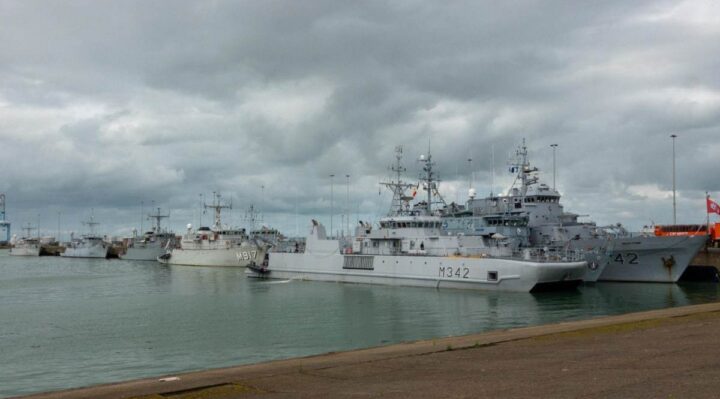
Standing NATO Mine Countermeasures Group 1 (SNMCMG 1) has concluded a historical ordnance disposal operation, enhancing knowledge about the seabed by working in Norwegian waters and contributing to the Norwegian compiled historic ordnance database, NATO Maritime Command announced.

Conducted between 4-12 August, 2020 in Lofoten and Tromso areas, eight historical mines were identified, among 147 mine-like objects. In total two mine-hunters and the flagship from three different nations were involved in the operation, searching an area of 16 square nautical miles and disposing of three historical mines from previous operations taking all the precautions in to account to preserve the sea life.

HNoMS Maaloey, a vessel part of NATO Standing Mine Countermeasures Group 1, conducting historical ordnance disposal operations in Norway on 10 August 2020. Photo: Lithuanian Navy

During WWII, Allied forces laid mines off the Norwegian coast from surface vessels, submarines and aircrafts with the purpose of disturbing and stopping the German convoys, troop transport and warships along the coast.

By disposing of the sea mines the Group made the sea a safer place for fishermen, merchant shipping, underwater operations and civilian installations. Although the mines are no longer active, they still pose a threat if they are accidentally triggered by an anchor, divers or other operations on the seabed.

SNMCMG1 is one of four standing NATO forces that comprise the maritime component of the Very High Readiness Joint Task Force (VJTF), which is part of the NATO Response Force (NRF).

SNMCMG1 is currently comprised of four assets: HNoMS Maaloey (Norway), ENS Admiral Cowan (Estonia), FGS Groemitz (Germany) and flagship LNS Jotvingis (Lithuania).

August 24, 2020 0 comments
0 FacebookTwitterPinterestEmail
Environment

UK port to host innovative tyre recycling plant

by Nadarajah Sethurupan August 24, 2020
written by Nadarajah Sethurupan

A Norwegian company developing the chemical recycling of waste tyres has chosen the UK port of Sunderland to construct its first facility.

Wastefront announced in the summer that it wanted to establish itself in the UK and has now identified the Port of Sunderland with construction set to begin next year and the plant being operational in the second half of 2022.

Using pyrolysis, the plant will convert locally-sourced end-of-life (ELT) tyres into liquid hydrocarbons and carbon black, which can then be reutilised in processes such as alternative fuel or ground rubber manufacturing. Construction is expected to generate around 100 jobs in the region and eventually employ up to 30 people full time.

Wastefront recently received funding from the Norwegian state-owned company and national development bank, Innovation Norway and it is supported by a government agency, the Research Council of Norway. The company will be raising investment from UK, Nordic and International investors in order to facilitate the construction of the plant. 

The plant will at full scale include 12 reactors to utilise pyrolysis to break down tyre materials at elevated temperatures. By sending tyres through pyrolytic reactors with a catalyst, Wastefront converts disused tyres into liquid hydrocarbons, carbon black and heat.

The full-scale plant will have a daily capacity to process 180 tonnes of ELT waste and to produce 60 tonnes of carbon black per day. In addition, the plant will be able to produce 90 tonnes of liquid hydrocarbons per day, which can be refined to produce ethane, propane, butane, diesel and gasoline. 

The heat generated from Wastefront’s processes will be repurposed locally within industry or can also be used to heat residential homes. Wastefront says it plant will be the first to combine conventional methods with the company’s own proprietary technology and claims it will minimise the environmental impact typically associated with traditional tyre pyrolysis.

Wastefront’s chief strategy officer and co-founder, Christian Hvamstad,  is a former student in Sunderland and says the new plant comments marks ‘a huge step’ in the company’s efforts to combat the global issue of ELT waste.

‘Our ambition is to create a new circular economy for dealing with waste issues, and a crucial element of sustainable waste handling is to be able to do so locally. Wastefront’s first plant in Sunderland will represent a valuable contribution to a cleaner future by dealing with a specific waste problem, where end-of-life tyres no longer end up in landfills in overseas countries but instead are converted into useful commodities that can be used within the region.’

Hvamstad adds: ‘The UK is a global centre of industry which we want to be a part of, while Sunderland is the ideal location for our first plant due to geographical location, access to feedstock, strong local support and Sunderland’s history as an industrial port.’

August 24, 2020 0 comments
0 FacebookTwitterPinterestEmail
China and Norway

Plans for Norwegian graphite battery factory

by Nadarajah Sethurupan August 23, 2020
written by Nadarajah Sethurupan

Norwegian polysilicon manufacturer and silicon product provider Elkem has announced plans for a graphite battery factory at the Herøya Industrial Park in Porsgrunn, 150km south of Oslo.

The Northern Recharge manufacturing facility is intended to help create a strong European battery industry, said Elkem, which is part of the China National Bluestar Group chemicals business held by the state-owned China National Chemical Corporation.

“This enables us to build a highly cost-effective plant with good access to renewable energy, potentially lowering CO2 emissions by 90% compared to alternatives based on fossil energy,” said Elkem Battery Materials VP Stian Madshus of the graphite battery fab. “We also secure close proximity to our pilot plant and internationally-leading research environments within material technology.”

The company has a NOK65 million ($7.36 million) pilot graphite battery production site in Kristiansand which is set to start operation early next year. That facility, and the planned fab in Porsgrunn, will produce lithium-ion batteries based on a graphite anode material that will have potential applications for consumer electronics, electric vehicles and grid scale battery storage.

Elkem stressed the importance of Norwegian public support for its new project. The company stated: “For Norway to realize our potential, we need to see public-private partnerships, public support mechanisms and supportive policies developing with sufficient speed and scale, enabling us to win in this global competition.”

China National Bluestar Group agreed to acquire Elkem for around $2 billion in 2011. In March 2014, Hong Kong-based financial investor, Guangyu International agreed to invest $200 million in new equity in Elkem Solar, which owns a 6,000 MT polysilicon factory in Kristiansand, southern Norway. Bluestar also acquired Norwegian PV manufacturer REC Solar ASA for NOK4.34 billion ($491 million) in 2015.

August 23, 2020 0 comments
0 FacebookTwitterPinterestEmail
Asia and Norway

Kazakh for Peace Anti-Nuclear Action in Norway

by Nadarajah Sethurupan August 22, 2020
written by Nadarajah Sethurupan

Employees of the Kazakh Embassy in Norway took part in a bike ride in support of a world without nuclear weapons which was organized by the Bike for Peace movement, reported the press service of the Kazakh Ministry of Foreign Affairs.  The race was attended by representatives of the Norwegian parliament, municipalities, business people and academia. The event was timed to coincide with the 75th anniversary of the atomic bombing of Hiroshima and Nagasaki.

Over the course of several days, the participants visited cities in the provinces of Oslo and Akershus. Meetings were held with the mayors of the cities of Oslo, Lilleström, Yezheim and Eidsvol, as well as the leaders of the International Campaign for the Prohibition of Nuclear Weapons (ICAN) and Nei til atomvåpen (No to Nuclear Weapons). At the Ministry of Foreign Affairs of Norway, the participants of the race met with the Norwegian Special Representative for Disarmament Jorn Osmundsen.

Kazakh diplomats spoke about the consequences of nuclear tests at the Semipalatinsk nuclear test site, the history of dismantling the nuclear missile potential inherited from the USSR, as well as the importance of continuing efforts for global nuclear disarmament. The staff of the Embassy presented the book of the First President of Kazakhstan – Elbasy Nursultan Nazarbayev “Epicenter of the World” – which was published in the Norwegian language.

“Kazakhstan, at the time of gaining independence, had the fourth largest nuclear arsenal in the world. The country has since dismantled all of its nuclear weapons. This is a good example for other nuclear states, ” Tore Närland, president of the Bike for Peace movement, emphasized in his speech on the square in front of the Oslo City Hall. T.Nerland, who organized bike rides and rallies against nuclear weapons in more than a hundred countries, and remembered with special warmth his trip through the territory of Kazakhstan, including a visit to Semei.

Oslo Mayor Marianne Borgen, who is a member of the Mayors for Peace movement, also emphasized Kazakhstan’s role in the anti-nuclear movement: “This is a good example that shows that a worldwide ban on nuclear weapons is possible.”

Storting Deputy Himanshu Gulati shared memories of his trips to Nur-Sultan and Almaty. “We have great potential for expanding friendship and trade cooperation between Norway and Kazakhstan. As members of parliament, we would like to play an important role in this, ” said H. Gulati, who also took part in the arrival.

August 22, 2020 0 comments
0 FacebookTwitterPinterestEmail
NATO and Norway

NATO unit receives second A330 tanker

by Nadarajah Sethurupan August 22, 2020
written by Nadarajah Sethurupan

NATO has received its second A330 multi-role tanker transport (MRTT) from Airbus Defence & Space, with the asset to be jointly employed by partners Belgium, the Czech Republic, Germany, Luxembourg, the Netherlands and Norway.

On 10 August, the NATO Multinational MRTT Fleet (MMF) was expanded by the arrival of aircraft T-054 at Eindhoven air base in the Netherlands. This followed a lead example (T-055) transferred in late June.

NATO says the Alliance-owned assets “Will provide strategic transport of people and cargo, substantially enhance European air-to-air refuelling capabilities, and be available for medical evacuation, if needed.”

Each aircraft is equipped with a boom and underwing hose and drogue refuelling pods, and configured with 31 business- and 236 economy-class seats. If adapted for medical evacuation tasks, the A330 can accommodate up to six intensive care unit beds and 16 stretchers, along with 21 medical staff and 96 passengers.

Eindhoven is the main operating base for the MMF aircraft, and will be home to five of the eight examples ordered so far. The other three will be flown from Cologne in Germany.

Airbus will deliver the remaining aircraft by 2022, with options in place to add a further three. These would be transferred by 2024.

August 22, 2020 0 comments
0 FacebookTwitterPinterestEmail
Asia and Norway

Indian Cabinet approves setting up of National Recruitment Agency to conduct Common Eligibility Test

by Nadarajah Sethurupan August 20, 2020
written by Nadarajah Sethurupan

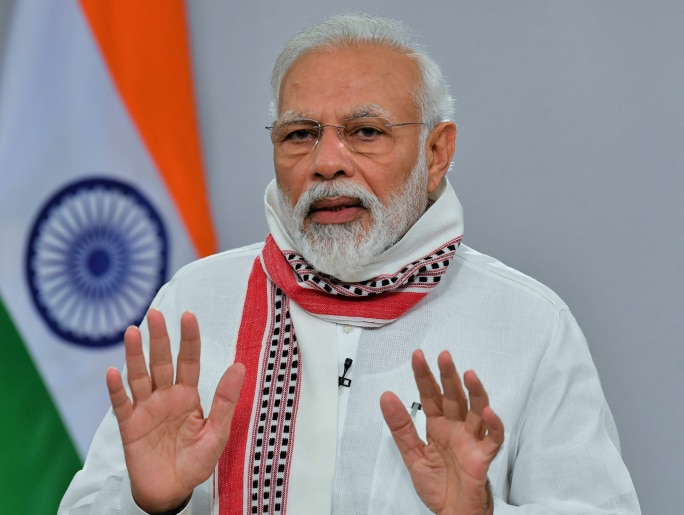
The Indian Union Cabinet chaired by the Indian Prime Minister, Shri Narendra Modi has given its approval for creation of National Recruitment Agency (NRA), paving the way for a transformational reform in the recruitment process for central government jobs.

Recruitment Reform – a major boon for the youth

At present, candidates seeking government jobs have to appear for separate examinations conducted by multiple recruiting agencies for various posts, for which similar eligibility conditions have been prescribed. Candidates have to pay fee to multiple recruiting agencies and also have to travel long distances for appearing in various exams. These multiple recruitment examinations are a burden on the candidates, as also on the respective recruitment agencies, involving avoidable/repetitive expenditure, law and order/security related issues and venue related problems. On an average, 2.5 crore to 3 crore candidates appear in each of these examinations. A common eligibility Test would enable these candidates to appear once and apply to any or all of these recruitment agencies for the higher level of examination. This would indeed be a boon to all the candidates.

National Recruitment Agency (NRA)

A multi-agency body called the National Recruitment Agency (NRA) will conduct a Common Eligibility Test (CET) to screen/shortlist candidates for the Group B and C (non-technical) posts. NRA will have representatives of Ministry of Railways, Ministry of Finance/Department of Financial Services, the SSC, RRB & IBPS. It is envisioned that the NRA would be a specialist body bringing the state-of-the-art technology and best practices to the field of Central Government recruitment.

Access to Examination Centres

Examination Centres in every District of the country would greatly enhance access to the candidates located in far-flung areas. Special focus on creating examination infrastructure in the 117 Aspirational Districts would go a long way in affording access to candidates at a place nearer to where they reside. The benefits in terms of cost, effort, safety and much more would be immense. The proposal will not only ease access to rural candidates, it will also motivate the rural candidates residing in the far-flung areas to take the examination and thereby, enhance their representation in Central Government jobs. Taking job opportunities closer to the people is a radical step that would greatly enhance ease of living for the youth.

Major Relief to poor Candidates

Presently, the candidates have to appear in multiple examinations conducted by multiple agencies. Apart from the examination fees, candidates have to incur additional expenses for travel, boarding, lodging and other such. A single examination would reduce the financial burden on candidates to a large extent.

Women candidates to benefit greatly

Women candidates especially from rural areas face constraints in appearing in multiple examinations as they have to arrange for transportation and places to stay in places that are far away. They sometimes have to find suitable persons to accompany them to these Centres that are located far away. The location of test centres in every District would greatly benefit candidates from rural areas in general and women candidates in particular.

Bonanza for Candidates from Rural Areas

Given the financial and other constraints, the candidates from rural background have to make a choice as to which examination they want to appear in. Under the NRA, the candidates by appearing in one examination will get an opportunity to compete for many posts. NRA will conduct the first-level /Tier I Examination which is the stepping stone for many other selections.

CET Score to be valid for three years, no bar on attempts

The CET score of the candidate shall be valid for a period of three years from the date of declaration of the result. The best of the valid scores shall be deemed to be the current score of the candidate. There shall be no restriction on the number of attempts to be taken by a candidate to appear in the CET subject to the upper age limit. Relaxation in the upper age limit shall be given to candidates of SC/ST/OBC and other categories as per the extant policy of the Government. This would go a long way in mitigating the hardship of candidates who spend a considerable amount of time, money and effort preparing and giving these examinations every year.

Standardised Testing

NRA shall conduct a separate CET each for the three levels of graduate, higher secondary (12th pass) and the matriculate (10th pass) candidates for those non-technical posts to which recruitment is presently carried out by the Staff Selection Commission (SSC), the Railway Recruitment Boards (RRBs) and by the Institute of Banking Personnel Selection (IBPS). Based on the screening done at the CET score level, final selection for recruitment shall be made through separate specialised Tiers (II, III etc) of examination which shall be conducted by the respective recruitment agencies. The curriculum for this test would be common as would be the standard. This would greatly ease the burden of candidates who are at present required to prepare for each of the examinations separately as per different curriculum.

Scheduling Tests and choosing Centres

Candidates would have the facility of registering on a common portal and give a choice of Centres. Based on availability, they would be allotted Centres. The ultimate aim is to reach a stage wherein candidates can schedule their own tests at Centres of their choice.

OUTREACH ACTIVITIES BY NRA

Multiple languages

The CET would be available in a number of languages. This would greatly facilitate people from different parts of the country to take the exam and have an equal opportunity of being selected.

Scores – access to multiple recruitment agencies

Initially the scores would be used by the three major recruitment agencies. However, over a period of time it is expected that other recruitment agencies in the Central Government would adopt the same. Further, it would be open for other agencies in the public as well as private domain to adopt it if they so choose. Thus, in the long run, the CET score could be shared with other recruiting agencies in the Central Government, State Governments/Union Territories, Public Sector Undertaking and Private Sector. This would help such organizations in saving costs and time spent on recruitment.

Shortening the recruitment cycle

A single eligibility test would significantly reduce the recruitment cycle. Some Departments have indicated their intention to do away with any second level test and go ahead with recruitment on the basis of CET scores, Physical Tests and Medical examination. This would greatly reduce the cycle and benefit a large section of youth.

Financial Outlay

The Government has sanctioned a sum of Rs. 1517.57 crore for the National Recruitment Agency (NRA). The expenditure will be undertaken over a period of three years. Apart from setting up the NRA, costs will be incurred for setting up examination infrastructure in the 117 Aspirational Districts.

August 20, 2020 0 comments
0 FacebookTwitterPinterestEmail
Spy War

Kongsberg to provide sonars for Norwegian Coast Guard vessels

by Nadarajah Sethurupan August 20, 2020
written by Nadarajah Sethurupan

KONGSBERG will equip the new 136-meters, ice-strengthened vessels with its SS1221 sonars, which boast acoustic properties which make them ideally suited for multiple operations safeguarding Norwegian territorial waters, especially those requiring deployment in shallow-water environments.

The SS1221, principally devised for ASW operations and capable of detecting torpedoes or other small objects in the water column, is an active hull-mounted sonar which utilises sophisticated tracking algorithms. Its electronically-stabilised transmitting and receiving beams can be tilted to adjust to challenging sound speed profiles, with its integrated Sound Propagation Model determining the optimal tilt settings and enhancing the Probability of Detection (PoD) ratio. The SS1221 sonars will be delivered to the Coastguard complete with retractable hull units and gate valves for ice protection, ensuring safe and efficient operation.

The sonars will be used on board three new craft planned for launch between 2022 and 2024, replacing the existing Nordkapp-class vessels.

“We are very pleased to have been selected by the Norwegian Coastguard, and to further strengthen our position as a principal supplier of coastal and shallow-water sonar equipment,” says Thomas H. Dahle, Director of Sales at KONGSBERG. “The Coastguard have to rely upon the most advanced technology available in order to fulfil their responsibilities effectively, and this contract is another resounding testimony to the deep level of trust the KONGSBERG brand has accumulated over our many successful years of trading.”

August 20, 2020 0 comments
0 FacebookTwitterPinterestEmail
NATO and Norway

NATO ships clear historic ordnance in the waters of northern Norway

by Nadarajah Sethurupan August 20, 2020
written by Nadarajah Sethurupan

Standing NATO Mine Countermeasures Group 1 (SNMCMG 1) has concluded a historical ordnance disposal operation along the north coast of Norway, in the in Lofoten and Tromso areas, making them safer for fishermen, merchant shipping, underwater operations and civilian installations.

The operation, conducted between 4 and 12 August 2020, identified and disposed of several mines from World War II. The disposal activities were conducted so as to best preserve the marine ecosystem. The operation helped enhance knowledge about the seabed and contributed to the Norwegian compiled historic ordnance database.

SNMCMG1 currently consists of four vessels: HNoMS Maaloey (Norway), ENS Admiral Cowan (Estonia), FGS Groemitz (Germany) and flagship LNS Jotvingis (Lithuania).

Read the full story here: https://mc.nato.int/media-centre/news/2020/nato-clears-historic-ordnances-inside-norwegian-fjord

August 20, 2020 0 comments
0 FacebookTwitterPinterestEmail
Norwegian Aid

IMF assessment of the Norwegian financial system

by Nadarajah Sethurupan August 20, 2020
written by Nadarajah Sethurupan

In a recent assessment, the International Monetary Fund (IMF) points out that the Norwegian financial system is resilient to shocks and subject to well-developed oversight. However, the IMF also emphasizes that there are vulnerabilities that requires vigilance, and highlights some areas where regulation and oversight may be strengthened. Stress tests conducted by the IMF indicate that Norwegian banks are resilient and can withstand significant losses resulting from the Covid-19 pandemic.

– The Norwegian financial system is well-functioning, but there are challenges to address. The IMF’s analysis of vulnerabilities related to property markets and the economic impact of the virus outbreak largely aligns with our own assessments. I am glad that the IMF recognizes Norwegian authorities’ efforts in recent years, and the new set of recommendations from the IMF is a valuable contribution to our forthcoming work, says Minister of Finance Jan Tore Sanner.

In its latest Financial System Stability Assessment (FSSA) of Norway, the IMF highlights that Norwegian authorities in recent years have raised regulatory capital requirements for banks, introduced a residential a mortgage regulation, introduced a new bank resolution framework and implemented a number of measures to mitigate the economic impact of the Covid-19 pandemic. Furthermore, the IMF supports the announced increase in the systemic risk buffer requirement intended to maintain banks’ capital requirements in real terms, and the Financial Supervisory Authority’s enhanced oversight of banks’ internal capital adequacy models.

The IMF recommends certain measures to further improve the policy framework, including further strengthening of macroprudential policy communication and coordination, consideration of new measures to address risks in the commercial real estate sector, make the borrower-based household measures permanent, and strengthen oversight of smaller banks and cybersecurity risk in payment systems.

Much of the work of the IMF experts was conducted prior to the Covid-19 pandemic, but the final FSSA report has been updated to reflect key developments and to include an extended stress test of Norwegian banks. The stress tests show that the banks collectively are resilient both in the face of increased losses that could result from the Covid-19 pandemic, as well as in an alternative market risk scenario. Additionally, an IMF analysis of climate-related transition risk suggests that sharp increases in carbon prices would have a significant but manageable impact on banks’ loan losses. Besides the effects of the pandemic, the IMF highlights a high level of uncertainty and that the most important risk factors in the Norwegian financial system remain the indebtedness of the household sector, high real estate prices and banks’ reliance on wholesale funding.

The IMF regularly reviews member states’ financial systems in order to assess weaknesses and strengths and to recommend measures that could contribute to more robust financial systems. The Financial Sector Assessment Program (FSAP) is an important part of the IMF’s financial surveillance. Since 2010, it is mandatory for jurisdictions determined to have systemically important financial sectors to undergo assessments under the FSAP every five years. This includes Norway, and the previous assessment of the Norwegian financial system was conducted in 2014-2015. During the latest 2019-2020 assessment, experts from the IMF have had a series of meetings with Norwegian authorities, financial institutions and academic communities.

More:

  • Press release and reports on the IMF website
August 20, 2020 0 comments
0 FacebookTwitterPinterestEmail
Russia and Norway

US Envoy Says Ball ‘in Russia’s Court’ in Arms Talks

by Nadarajah Sethurupan August 20, 2020
written by Nadarajah Sethurupan

A U.S. arms envoy said Tuesday it is Russia’s turn to respond to U.S. terms to extend the landmark New Strategic Arms Reduction Treaty.

“Russia understands our position and what remains to be seen is if there is the political will in Moscow to get this deal done,” said Special Presidential Envoy for Arms Control Marshall Billingslea. “The ball is now in Russia’s court.”  

Below is a full rush transcript of the press conference by  Ambassador Marshall Billingslea U.S. Special Presidential Envoy for Arms Control And Lt. Gen. Thomas Bussiere Deputy Commander of the U.S. Strategic Command.
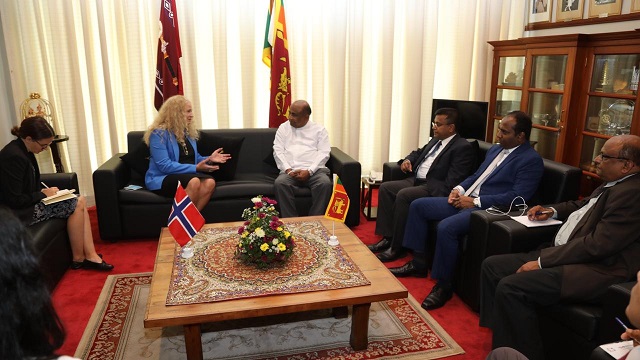
Ambassador Billingslea:  We’ve just completed our second day of negotiations with the Russian Federation.  We came to Vienna based on the discussions held this past month between President Trump and President Putin.  And we are building on the substantive conversations our two leaders have held, and we are also capitalizing off of the work of our technical experts, who met here in Vienna two weeks ago.

The United States brought to Austria one of the most senior delegations in nuclear arms control history.  The Department of Defense team was led by General Bussiere, the Deputy Strategic Command Commander, who will offer some thoughts here in a moment.  And we’re relatively satisfied with the level of delegation that also came from Moscow and the seriousness that underscored the talks.  

Overall, I would summarize this week’s negotiations as having been valuable for both sides, for both the United States and the Russian Federation.  We certainly covered a broad range of national security issues.  They were, at times, intense.  They went deeply into certain matters, and we in fact covered some groundbreaking topics.  

We, the United States, have been clear that New START is a deeply flawed deal negotiated under the Obama-Biden administration, and it has significant verification deficiencies.  It also does nothing to address the most imminent problem of this decade, which is China’s secretive crash nuclear buildup.

There are some areas of convergence between Russia and the United States, but we do remain far apart on a number of key issues.  In other words, there is some agreement in principle, but an enormous amount of work will be required if we are to make progress.

We brought to Austria a very detailed set of proposals relating to our steadfast view that the next agreement must cover all warheads, all nuclear warheads.  And we’ve consistently said that we also need to have a better set of verification and transparency measures.

Finally, the framework that we could establish with Russia cannot be created as another exclusively bilateral, Cold War-style arrangement.  It must be built so that it can include China in due course.  

So we came to Vienna with a mandate from President Trump.  Russia understands our position, and what remains to be seen is if there is the political will in Moscow to get this deal done.  The ball is now in Russia’s court.  

Lt. Gen. Bussiere:  I’d like to give a few brief comments on the talks over the last few days, and the absolute importance of the U.S. military and the Russian general staff having the opportunity to have very candid discussions.

I made it very clear to the Russian delegation about the importance of these dialogues going forward to alleviate misperceptions and miscommunication.  We did raise several questions regarding Russian plans and intentions – the fact that the Russian nuclear threat is increasing.  In addition to modernizing its existing inventory, it’s also developing never-before-seen nuclear weapons capabilities.  We had some very candid discussions and some very direct questions on the intentions of that buildup.  

We also had some frank discussions on the fact that if we don’t arrive at an agreement to address our concerns that the U.S. force posture will have to be adjusted accordingly to this ever-increasing and threatening complex strategic environment.  

Additionally, we had some useful discussions on China and China’s exponential growth of their nuclear triad, where they are expected to at least double the size of their nuclear force stockpile in the next 10 years.  

Question:  Do you believe that there needs to be some kind of direct meeting between President Trump and Vladimir Putin to make that progress? 

Ambassador Billingslea:  I think that Ambassador O’Brien, the National Security Advisor, said it best the other day, which is that in – we would – the two presidents, I presume, would like to get together and that if we do have a good deal here, that that could be the focus of a meeting.  But again, we had a mandate and we’ve laid down what we need to see from the Russian Federation, and it’s now a question of whether they’re ready to walk down that path with us.

In terms of New START itself, we are not suggesting, too, that we would amend the New START Treaty to include China; rather, we are willing to contemplate an extension of New START but such an extension will only occur if we can arrive at a series of agreements that address significant concerns we have with the Russian buildup of its unconstrained capabilities, its various short- and medium-range nuclear weapons, and so on.  My point here on China is that we’re not going to negotiate another bilateral arms control treaty.  The next treaty will have to be multilateral, it will have to include China, and the framework that we are articulating together as two great powers, us and the Russians, will be the framework going forward that China will be expected to join.

Question:  Do I understand correctly that at this very moment, the U.S. is considering prolonging START but – but depending on whether China is ready on whether Russia is ready to sign up to the demands from the U.S. on other areas, on the ones that you mentioned?  So the question is: Is China put up for later for the moment?

Ambassador Billingslea:  So we’ve always made clear and actually, this is something that we, that the Deputy Foreign Minister Ryabkov and I, agree on and he’s said publicly, as have many senior Russian officials, that the next nuclear arms treaty must be multilateral.  And we have been clear that the next nuclear arms control treaty must include China.  So that’s clear.  

What we’ve said is that we view the New START Treaty as deeply flawed and that it is not particularly in the U.S. interest to simply extend that treaty.  We’ve got to address these unconstrained warheads that exist outside of the treaty, and to which the Russian Federation is systematically adding more and more and more.  One wonders how much is enough.  And that’s why our focus has been on an agreement that would be a politically binding agreement between our two presidents that addresses all warheads.

But, Elena, yes, in essence, if we are able to fix the verification problems, if we are able to arrive at such a politically binding agreement, we would be willing to propose to the President that New START be extended for some period of time. 

Question:  You said that the new mid-range, non-nuclear, ground-launched cruise missile under development in the U.S., you said exactly the kind of defensive capability that countries such as Japan will want and will need for the future.  How does the U.S. intend to convince Tokyo of this need?

Question:  You said – you’ve been quoted as saying that the new mid-range, non-nuclear, ground-launched cruise missile that’s under development in the U.S. is, quote, “exactly the kind of defensive capability that countries such as Japan will want and will need for the future.”  How does the U.S. intend to convince Tokyo of this need?

Ambassador Billingslea:  Japan has to look after itself for its own defensive requirements, so it’s a decision that only they can make.  What’s important is that we have moved swiftly to develop this capability.  It’s been roughly a year almost to the day that we conducted the first flight test of the – of a prototype system, and it’s very crucial for everyone to understand that for 33 years the United States faithfully abided by the INF Treaty.  China was never bound by that treaty, and so, unsurprisingly, China has built and deployed a wide range of systems that fall into that category.  Russia, which was bound by the treaty, cheated repeatedly and for more than a decade, in secret, developed multiple different kinds of violating missile systems and then proceeded to deploy.  And that’s ultimately why the United States elected to exercise the only remedy that we had, which was to withdraw legally from the treaty and to immediately begin building this defensive capability.  

So what’s important for us to do is to get this capability from prototype to a deployed – a deployed and deployable system, and then we will certainly want to have detailed discussions with all of our allies on the importance of being able to defend ourselves from threats and coercion and intimidation and the implied or actual use of force to try to drive unallowable outcomes.

Question:  Can you please tell from the military point of view, just answer this simple question: From the military point of view, is it – what is better, to extend or not to extend New START? 

Lt. Gen. Bussiere:  So specific to whether or not from a U.S. military perspective we need or want an extension of the New START Treaty is agnostic.  So we can perform our military missions with or without the New START Treaty.  We do believe, however, that it does provide increased international security.  But there’s a difference between the arms control protocols and the military necessity and operational utility.

Question:  In July, Fu Cong, head of the Chinese arms control department of Chinese foreign ministry, said that Chinese will agree to talks if U.S. come down to the Chinese level, current level of China.  The Chinese say that U.S. is stronger than Chinese 20 times in terms of nuclear power.  What do you comment on this in his statement of Fu Cong?

Ambassador Billingslea:  So that’s an excellent question, and I’m very glad to have a Vietnamese journalist on this call, because what we are addressing in here is a urgent and growing threat to the Asia Pacific region, which is the secretive and unconstrained Chinese nuclear buildup.  And that is a threat that faces not just the United States but all of the countries of Asia.  

As Vietnam knows perhaps better than most, China attempts to use force to redraw borders and boundaries.  One would remember that China invaded Vietnam and occupied several of the northern counties.  And we cannot agree to a situation where China builds up and achieves some form of rough nuclear parity with the United States and Russia, and then proceeds to use those nuclear weapons for blackmail and coercion.

And so our view is that China should stop what they’re doing.  They want the world to believe that they only have a few hundred nuclear weapons, and the question you have to ask them is: Why have they never admitted how many nuclear weapons they actually have today?  Right?  Fu Cong has said what you said.  My question is: Why don’t we start with you telling us how many weapons you have and how many you plan to build?
I will tell you, and we shared detailed intelligence with the Russian Federation on what China is doing both in our previous meeting and again today, but I will give you just one example of how alarming Chinese behavior is.  Last year, in 2019, China shot off more than 200 ballistic missiles.  Let me repeat that: In 2019, China shot off more than 200 ballistic missiles.  That is far more than the rest of the world combined.  That is why we are focused on ensuring that we maintain stability, that we maintain the strategic equilibrium that has existed to date, and that is why we believe that the next nuclear arms control treaty must include and must constrain China.

Question:  I just want to clarify an important point.  You have said that there could be a framework accord with Russia and that China might later be brought on into that process.  And I think in our conversation today you referred this to as a political commitment between the two Russian and American leaders.  Could you please explain what such a framework, what such a politically binding commitment between the U.S. and Russia might look like from the Trump administration’s point of view, and how that would be different from a full-fledged treaty that could take years to negotiate? And I take it from your remarks that if there was such a politically binding commitment this year that reaffirmed your points that all warheads be included and that there be tough verification, that would be a sufficient basis to agree to a temporary extension this year of New START?  

Ambassador Billingslea:  As you would imagine, I will not delve into the details of what an actual framework would contain other than to emphasize the high-level elements that have to be addressed, and those elements are, as you have noted, an agreement that covers all nuclear warheads.  

And so by this we mean the wide range of the short- and tactical-range weapons that Russia has been building completely unencumbered under the New START Treaty, by that, and it must fix – well, it also must contain verification measures that would be pertinent to a complete warhead arrangement, and we must fix the most glaring deficiencies in the verification regime of the New START Treaty, which has to do, for instance, with things such as telemetry, the exchange of telemetry missiles, has to do with the length of time that it takes for inspectors to arrive at an inspection site and the frequency of inspections.  

I think it’s important to note that under the Obama-Biden treaty, they basically gave away all meaningful telemetry data.  We’re not getting anything of value there.  The inspection timelines are nearly three times as long as they used to be under the original START Treaty.  And in effect, because of the cap on the number of inspections, a greatly reduced number of inspections, the United States is only able to visit in any given year half of the Russian sites, meaning that it’s just really not of great value to us. 

But if we can fix these things, and if we can address all warheads, and if we do so in a way that is extensible to China ultimately, then we would be prepared – again, it’s President Trump’s decision.  He’s – and we’re not going to take a bad deal back to him – but we would recommend that we consider – that he consider an extension of the New START Treaty this year.  

Question:  I’m a bit confused as to what exactly the conditions here are for extending the START Treaty, because at different points you’ve made it sound like there’s a – like the Chinese aspect would be separate to the conditions for extending START, and at other times you made it sound like they’re a necessary component of the extension, the ability to broaden this agreement to China.  Just to be clear, is that a condition for you of extending START, or is it a separate thing that you would then work on sort of in parallel, then, to extending START?

Ambassador Billingslea:  Well, I mean, ultimately one cannot compel China to sign anything.  The Chinese might like to compel others, but that is not what the United States is all about.  We, however, believe that ultimately it will be in China’s interest to join the future treaty arrangement.  They will derive a large number of benefits from doing so.

First of all, they, at that point, would be seen as a great power and as behaving responsibly as a greater power, which is certainly what Chairman Xi wants.  And what better way to be – to realize that status than to be included together with the United States and Russia in the architecture of strategic nuclear arms control and of nuclear arms control writ large?  And that would be a benefit.

Another benefit to China will be that the world can take some confidence that China had ceased its secretive behavior.  The Chinese understand that the world is incredibly upset with how it covered up and behaved on the virus, how it is covering up and behaving on all number of things, including its crash nuclear program, and some level of global reassurance would be restored regarding Chinese behavior.

But there are also very practical material benefits that China would receive.  Because of the many decades of work that we’ve done together with Russia and the Soviet Union before that, we have hotlines, we have nuclear risk reduction centers, we have transparency and confidence-building measures between our militaries, as General Bussiere has mentioned.  And these are things that we will also complete and conclude with the Chinese if they join.

Those are just a few examples of the benefits they will derive, but we are not going to compel them into this architecture.  We are going to frame it out with the Russians and then we’re going to see that the world continues to pressure China to stop its secretive behavior and join.  A number of countries have already called out the Chinese for their failure to negotiate with us in good faith, and that chorus of calls on the Chinese will only continue to grow and, in fact, I imagine would accelerate dramatically once we have created an architecture to control all nuclear weapons.  

Question:  You’ve referred several times to your interest in pursuing a multilateral arms control architecture that involves warheads with better verification.  And as you well know, the – so the history of U.S.-Russian arms control negotiations, the two sides have chosen to pursue limits on specific classes of nuclear weapons to date.  And can you clarify a little bit more what the conceptual framework is for a common framework that covers strategic nuclear weapons, sub-strategic nuclear weapons, intermediate range?  How would these be counted?  On a one-for-one basis, et cetera?  

Ambassador Billingslea:  So I won’t be able to get into the details the way you would wish at this stage.  It’s a bit premature.  But you’re absolutely right in the way you’re framing out the question.  We have in the past chosen to focus on the strategic delivery vehicles because from a national technical-means standpoint, very much, you have a better chance of verification.  Obviously, warheads are relatively small things and that has been a verification challenge that has bedeviled the arms control community for quite a long time.  And therefore, in the future, what we likely will see is a hybrid approach that would maintain limitations on the strategic systems but which would provide for a method of ensuring that the overall inventory of warheads writ large is static.  

I don’t want to go too much further into how we would do that, but what I would say is that it is appropriate for us to look at how the Threshold Test Ban Treaty ultimately achieved ratification, and that was through the establishment of a joint verification experiment between our respective nuclear enterprises, between the laboratories, that were able to identify and to develop the necessary technologies to handle that particular verification challenge at the time.  And so we think that a similar approach when it comes to warhead verification could have big dividends.  Moreover, we think that that would be a potentially very attractive activity in which China may wish to participate, and indeed, could have applicability in other, nonproliferation scenarios such as denuclearization of a non-nuclear-weapons state.  

Question:  I would like to put the question to Ambassador Billingslea.  China has been building up its presence in Western Balkans region in terms also of arms procurement, and Serbia stands out particularly in that way.  Can you please comment on latest Serbia’s procurement of Chinese drones, CH-92A, as well as Serbia’s intention to purchase FK-3 air defense missile system?  And if it’s not too much, can you also reflect on Serbia’s arms procurement from Russia in that in what way could all the above-mentioned be an issue from the U.S. perspective? 

Ambassador Billingslea:  I am going to keep the focus of today’s conversation on the recently concluded arms control negotiations with the Russian Federation and I’m not prepared to comment on those topics.

Ambassador Billingslea:  So I think the White House has made clear that at the moment there are no preparations for such an event, but, obviously, time will tell.  As I mentioned, the ball is now in the Russian court.  The previous discussion this past month between President Trump and President Putin showed us a path to a deal and the United States just walked down that path.  We’re hoping the Russians will join us.  It remains to be seen if they will, but I feel cautiously optimistic.  And again, time will only tell.

I will – because the question came from a Ukrainian reporter, I will also add that we took note and we, in fact, appreciate and support the foreign minister’s call on China to negotiate with the United States in good faith.  Ukraine speaks with a special moral authority when it comes to nuclear matters, having forsworn nuclear – the retention of Soviet nuclear weapons at the end of the Cold War.  And so we appreciate Ukraine making that statement and putting the pressure on the Chinese.  

I also note that a number of other non-aligned or neutral nations, such as Austria, have made that call.  In fact, I just met with the Austrian foreign minister here in Vienna and he has called out the Chinese on several occasions.  And so this in addition to a number of our friends and our allies around the world, and I expect that that pressure on China will continue to grow as the world realizes what China has been doing behind everybody’s back.

Question:  Just a short technical question.  I wanted to ask whether any future dates for future rounds of talks have been explored at all either between yourselves and Deputy Foreign Minister Ryabkov or at a technical level ?

Ambassador Billingslea:  So what I told the deputy foreign minister is that we stand ready.  But because the ball is in Russia’s court, we’ve signaled what we need to see and it’s incumbent upon them to come along with us.  We have a mandate from President Trump and it’s going to be important that the next meeting, the Russian delegation also have the same mandate.  I think our two leaders really have had all the necessary discussions to get there.  

So on the optimistic side it could be a couple of weeks; it might be longer.  Really, it’s up to Russia, right.  here are a little more than five months left in the New START Treaty, and if Russia would like to see that treaty extended, then it’s really on them to come back to us, and we stand ready to meet.

Question:  I’d like to know what happens if China, in the end, chooses not to join the negotiations.  Would it be useful to continue working with Russia, or we have to wait for China?

Ambassador Billingslea:  It’s an excellent question.  The United States and Russia are the great powers here, and we’re going to – we’re going to continue to talk to one another.  We’re not going to allow China to exercise a veto over our relationship with Russia.  That said, we also intend to negotiate with the Chinese when they’re ready in a bilateral mechanism, and we’re happy to do so as long as ultimately those two paths converge together in the form – again, as I said, in due course – in the form of a trilateral arms control treaty.

Just a concluding thought here with regard to China.  I’m actually very glad that at the National Zoo in Washington, the great panda, she appears to be pregnant and hopefully will give birth to a baby panda here in the coming days.  And if so, that might be the one bright spot in Sino-U.S. relations.  It would be wonderful if we could make a second bright spot be nuclear arms control negotiations with the Chinese Communist Party.  The world wants to see China cease being so secretive.  The world wants to see a reversal in the way China hides from plain sight what it’s doing.  And we expect that the world is going to call on the Chinese to join us in these talks.

Ambassador Billingslea:  We appreciate the chance to talk with journalists from around the world.  These are significant matters.  They are weighty matters.  And as I said, the discussion with the Russian delegation was intense.  We did, as I said, go deeply into a number of areas, and we did discuss some groundbreaking topics.  But we await to see the final decision in Moscow.  The ball is in Russia’s court.  Thanks again, and that will be it from our side.

August 20, 2020 0 comments
0 FacebookTwitterPinterestEmail
Diplomatic relations

U.S. and Norway Strengthen Cooperation on Offshore Energy and Seabed Minerals

by Nadarajah Sethurupan August 20, 2020
written by Nadarajah Sethurupan

 Washington DC, the US Department of Interior (DOI) signed a Memorandum of Understanding with the Norwegian Ministry of Petroleum and Energy (MPE).

The Memorandum of Understanding (MoU) is a framework for continued cooperation between DOI and MPE in the areas of  offshore oil and gas, offshore wind energy and seabed minerals.

Deputy Secretary of the Interior Katharine MacGregor and Norwegian Ambassador to the U.S., Mr. Kåre R. Aas signed the agreement during a ceremony in Washington, DC. Photos: Faith Vander Voort

– The MOU signed today will further strengthen the longstanding energy partnership between our two countries. I’m convinced that sharing of best practices and experience will be mutually beneficial, and contribute to sustainable resource management, said Mr. Tony C. Tiller, State Secretary at the Norwegian Ministry of Petroleum and Energy. 

Activities outlined in the MOU framework include the exchange of scientific and technical information, and cooperation regarding research and technological development. DOI and MPE will remain in regular contact and foster discussion of experiences, best practices, policy, and regulatory initiatives relevant to the development of offshore resources.

The U.S. and Norway are two of the world’s largest offshore energy producers and have decades of experience to draw upon in expanding discussions on oil and gas best practices. Deputy Secretary of the Interior Katharine MacGregor and Norwegian Ambassador to the U.S., Mr. Kåre R. Aas signed the agreement during a ceremony in Washington, DC.

Link to the U.S Department of Interior press release.

August 20, 2020 0 comments
0 FacebookTwitterPinterestEmail
Environment

Norwegian extends cooperation with Lufthansa Technik

by Nadarajah Sethurupan August 20, 2020
written by Nadarajah Sethurupan

Norwegian Air Shuttle ASA and Lufthansa Technik have extended their cooperation for the overhaul of the carrier’s 90-aircraft Boeing 737NG fleet by another five years. The services are performed at Lufthansa Technik’s location in Budapest, Hungary, within the framework of a Total Base Maintenance Support (TBS®) contract, with the first contract events planned for September 2020.

“Lufthansa Technik was winning this contract in a large extensive global tendering process, that was demanding both for Lufthansa Technik and Norwegian. The quality and reliability of past services provided by Lufthansa Technik have convinced us to continue to place our trust in our German partner for the overhaul of our Boeing 737NG fleet,” said Paul Salwik, Head of Technical Procurement at Norwegian.

“We are pleased that this new contract will continue a successful cooperation with Norwegian that reaches back to 2007. With our services, we want to play our part in ensuring the continued success of this innovative airline,” said Tanja Pustolla, responsible sales representative at Lufthansa Technik.

The main characteristics of Total Base Maintenance Support TBS® are the guaranteed availability of layovers and a commercial service package geared to individual customer needs. As one of a total of five Lufthansa Technik overhaul sites in Europe, Lufthansa Technik Budapest will provide services within the framework of the new contract. As a TBS® customer, Norwegian also has access to the entire overhaul network of Lufthansa Technik for additional or unplanned maintenance events.

Norwegian has been a Lufthansa Technik customer since 2007. The cooperation began with component supply within the framework of a contract for Total Component Support TCS®. Later, Lufthansa Technik also took on wheels and brakes maintenance and engine overhaul for engines of the CFM56-7B type. Since 2012, Lufthansa Technik has provided overhaul services for Boeing 737NG aircraft.

August 20, 2020 0 comments
0 FacebookTwitterPinterestEmail
Spy War

Suspected spy didn’t work on defense projects

by Nadarajah Sethurupan August 19, 2020
written by Nadarajah Sethurupan

A man who is in custody in Norway suspected of spying for Russia was heading an industry project on 3D printing and had no security clearance and didn’t work on projects for the defense industry, the Norwegian Armed Forces or other governmental agencies, his employer said.

Norway-based DNV GL, a major global classification society for ships, said in a statement the man had not had any line management responsibilities for a number of years.

“During his time with DNV GL he worked on a limited number of projects – primarily within materials technology,” said the company, which is also the largest technical consultancy to the global renewable energy and oil and gas industry.

“At the time of his arrest, he led a joint industry project on 3D printing,” it said Tuesday. It gave no further details.

DNV GL said it was “working closely” with the Norwegian Police Security Service. “Due to the sensitive nature of the investigation we cannot disclose any further information at this point,” the company said.

On Monday, the suspect was remanded in custody for four weeks.

The man was arrested Saturday as he met with an alleged Russian intelligence officer in an Oslo restaurant. He has not been identified beyond being a a Norwegian national in his 50s born abroad. Norwegian news agency NTB said he was born in India.

The man has admitted receiving money, with the judge who remanded him in custody saying it was a “not insignificant amount.”

He is suspected of violating a Norwegian law that carries a maximum prison term of 15 years.

(AP)

August 19, 2020 0 comments
0 FacebookTwitterPinterestEmail
NATO and Norway

Reducing US Military Presence in Norway

by Nadarajah Sethurupan August 19, 2020
written by Nadarajah Sethurupan

The news that the US Marine Corps is ending continuous troop rotations to Norway and effectively withdrawing 700 troops should be seen in conjunction with the more significant reduction in Germany (11 900) announced only a week earlier. Both weaken European security and the credibility of the United States. 

NATO Secretary General Jens Stoltenberg looks at a Tac 50 Mac Millan sniper riffle as he visits troops taking part in the Trident Juncture 2018, a NATO-led military exercise, on October 30, 2018 in Trondheim, Norway. – The Trident Juncture, the largest of its kind in Norway since the 1980s, runs until November 7, 2018. Around 50,000 participants from NATO and partner countries, some 250 aircraft, 65 ships and up to 10,000 vehicles take part in the exercise. The main goal of Trident Juncture is allegedly to train the NATO Response Force and to test the alliance’s defence capability. (Photo by Jonathan NACKSTRAND / AFP)

It weakens European security because US force levels are an indication of Washington’s commitment to Article 5 of the North Atlantic Treaty. After decades of taking peace dividends, the European Allies are only just starting to spend more on defence and on modernising their capabilities. Of the two European nuclear Allies, the United Kingdom is struggling to maintain existing capabilities while France is focusing on the threats emanating from the south. Germany, meanwhile, has only started to rebuild a credible military force, but according to current plans it will still take more than 10 years to deliver this force even if the plans are fully funded. Norway, however, has a reputation of being one of the strongest proponents of the transatlantic link and has been a loyal US ally, deploying its forces to Afghanistan (Operation Enduring Freedom and ISAF) and to Iraq. The Government of Norway recently presented a draft Long Term Defence Plan 2020 that is relatively ambitious in modernising the armed forces.

The US forces currently in Europe are among the few on the continent that are fully capable and at high readiness. The European Allies are not able to address today’s security challenges on their own, especially the threat from Russia. Europe’s non-NATO nations, with the exception of Finland, also lack the demonstrated will to address existing and foreseeable military threats. The reduction of forces in Norway and Germany thus has a negative impact on the security of many European Allies, especially the Baltic states.

Troop reductions in Norway and Germany also weaken the United States. These decisions and the confusing messages they convey add to the perception that the White House lacks stability and predictability, both vital for credible deterrence. The reductions appear to go against the 2018 National Defense Strategy (NDS), according to which DoD’s objectives include “maintaining favorable regional balances of power in the Indo-Pacific, Europe, the Middle East, and the Western Hemisphere” as well as “deterring adversaries from aggression against US vital interests”. Punishing Germany for complacency might make sense if the purpose was to push Berlin to increase defence spending, but as a recent survey indicates, nearly half (47%) of the German respondents actually support the US decision to decrease troop numbers in the country. And why relocate some forces to Belgium and Italy, neither of which are committed to raising defence spending to 2% of GDP? Reducing the number of US forces in Norway and Germany harms and discourages mainly those US allies that border an aggressive Russia and that already spend at least 2% of GDP on defence or have concrete plans in place to do so.

According to the 2018 NDS, the US will be strategically predictable, but operationally unpredictable. Recent events indicate that the US may be taking another step towards being both strategically andoperationally unpredictable. Against this background, Europeans now have one more reason to follow the upcoming presidential election in order to see what the future may bring.

August 19, 2020 0 comments
0 FacebookTwitterPinterestEmail
Spy War

Norwagian Man Suspected of Spying for Russia

by Nadarajah Sethurupan August 18, 2020
written by Nadarajah Sethurupan

Norway’s intelligence service said Monday its agents had arrested a Norwegian man suspected of passing sensitive information to Russia.

“The man is formally suspected of providing information to a foreign country that could damage fundamental national interests,” the PST intelligence agency wrote on Twitter.

A PST official later confirmed the country in question was Russia.

“The person arrested held meetings with an officer from the Russian intelligence agency,” Line Nyvoll Nygaard told TV2 Nyhetskanalen television.

Meanwhile, DNV GL, a company that provides certification for insurance purposes for the maritime, oil and gas and renewables industries, confirmed the suspect was one of its employees.

“Through his position (he) had access to information which, in our opinion, could be of great interest and significance to other countries and other actors,” Nyvoll Nygaard said.

The man, aged 50, was arrested on Saturday in an Oslo restaurant after having met the Russian officer, the PST said.

A judge on Monday ordered the man detained in custody for four weeks, the first two in isolation. 

According to his lawyer, he denies any wrongdoing. He risks up to 15 years in prison if found guilty of espionage.

Russia’s embassy in Oslo has not commented on the arrest.

In its annual report published in February, PST warned of the risk of espionage in several sectors of society — political, financial, defense and research circles, among others — singling out Russia, China and Iran as particular threats.

In recent decades several spy cases have marred ties between NATO member Norway and Russia, which share a border in the Arctic Circle.

(AFP)

August 18, 2020 0 comments
0 FacebookTwitterPinterestEmail
Diplomatic relations

Nordic-Baltic Foreign Ministers on recent developments in Belarus

by Nadarajah Sethurupan August 18, 2020
written by Nadarajah Sethurupan

In a joint statement the Nordic-Baltic Foreign Ministers express their grave concern about the violence against post-election demonstrations in Belarus.

The Foreign Ministers of Denmark, Estonia, Finland, Iceland, Latvia, Lithuania, Norway and Sweden, in the context of the developments that are taking place in Belarus, express their grave concern about the violence against post-election demonstrations that have occurred in response to reports of widespread electoral fraud. We are very troubled by the reports of physical injuries inflicted on the demonstrators.

The presidential elections, which took place in Belarus on 9th August 2020, did not comply with the international commitments of Belarus and globally recognized standards of democracy and rule of law, and they were not free and fair.

We urge the Belarusian authorities to stop persecution of political opponents, to release all those unfairly detained immediately and to respect human rights and freedoms. We call upon the Belarusian government to immediately engage in a genuine political dialogue with the opposition in order to avoid further use of violence.

We remain committed to the people of Belarus and will continue to closely follow developments.

August 18, 2020 0 comments
0 FacebookTwitterPinterestEmail
Srilanka and Norway

Sri Lanka wins Norway deal for bulk carriers

by Nadarajah Sethurupan August 18, 2020
written by Nadarajah Sethurupan

Sri Lanka’s Colombo Dockyard Plc said it is getting ready to build six 5,000 dead weight tonne bulk hybrid carriers for Norway based Misje Eco Bulk AS, who had also given an option for four other vessels.

The contracts were signed on March 14, 2020, but is “scheduled to come in to effect only in the month of September 2020 with Owners final board approval,” Dockyard said.

The first vessel should b delivered by Colombo Dockyard in 18 months and subsequent vessels at 4 month intervals. 

ECO CARRIER: Concept of Eco-bulk carriers to be built by Colombo Dockyard.

The vessels would be 89.95 meters long and has a hold with a capacity of 5,000DWT. 

“The type of cargo they could carry includes bulk cargo, grain, timber, unit loads and containers,” Dockyard said.

“Each vessel is powered by 4 stroke diesel engine with an Electric Hybrid system supplying additional power through a Battery system.”

As eco-friendly vessels, they have lower emissions compared to a conventional bulk carrier of the same size. The basic design was by Wartsila Ship Design Norway AS.

Dockyard said the deal was the result of marketing efforts of the firm despite a Coronavirus pandemic.

Dockyard says it has been targeting the European market to build eco-friendly bulk carriers, cable laying and service operation vessels. 

August 18, 2020 0 comments
0 FacebookTwitterPinterestEmail
Science

Norwegian demand self-quarantine from Polish

by Nadarajah Sethurupan August 18, 2020
written by Nadarajah Sethurupan

The Norwegian government has included Poland in a group of countries coloured red on its map illustrating the epidemiological situation abroad, deciding the country’s policy on how to handle international travellers arriving in Norway. Poles will now have to self-quarantine after arrival, together with citizens of states such as the Netherlands, Iceland, and Cyprus.

The countries have been included on the map due to the rising number of coronavirus infections in those states. The criteria to be classified among the states coloured red is the detection of more than 20 new infections on average per 100,000 inhabitants over the course of the last two weeks. The formula has been developed by the Norwegian Institute of Public Health.

The new restrictions forcing citizens from states coloured red to self-quarantine will be introduced from Saturday. 

The Norwegian Prime Minister Erna Solberg explained the decision as needed to avoid a new lockdown, saying “we are not against free travel, but we must react so that the situation which we had earlier this spring, with a complete lockdown, is not repeated again. We want students to be able to go back to school as normal.

In addition, the 10-day quarantine will also be applied to people travelling from certain Swedish regions: Oestergoetland, Oerebro, Blekinge, Uppsala and Dalarna. The Danish island of Zeeland (not including Copenhagen) and the central part of the Jutland Peninsula with the city of Aarhus have also been classified as red. 

States such as France, Monaco, Switzerland, the Czech Republic, Belgium, Bulgaria, Croatia, Luxembourg, Portugal, Romania and Spain have previously been included on the list of red countries. 

Norway has seen an increase in new cases of coronavirus for two weeks, leading the government to introduce new restrictions such as banning the sale of alcohol in restaurants and bars after midnight. The new outbreak has been traced back to a Norwegian cruise ship from which the virus spread to several dozen municipalities. 

The situation is deemed to be the worst in Oslo, where there are more than 20 cases per 100,000 inhabitants. The city’s mayor, Raymont Johansen, told NTB’s Norwegian press agency that he does not rule out a complete lockdown of the capital city.

Last week saw 389 new infections, bringing the total up to 9,751 cases.

August 18, 2020 0 comments
0 FacebookTwitterPinterestEmail
Diplomatic relations

Norway condemns use of force in Belarus

by Nadarajah Sethurupan August 17, 2020
written by Nadarajah Sethurupan

‘We condemn the security forces’ use of force against protesters following yesterday’s presidential election in Belarus. This use of violence is unacceptable. We call on the Belarusian authorities to release the arrested protesters and journalists immediately,’ said Minister of Foreign Affairs Ine Eriksen Søreide.

The presidential election in Belarus yesterday was marred by violence against protesters in the hours after the polls closed. Belarusian security forces dealt harshly with protesters and journalists after the election, and several hundred people are believed to have been arrested.

‘It is also unacceptable that so many political activists, journalists and observers were arrested during the run-up to the election, and that there were far-reaching restrictions on basic human rights such as freedom of the media and freedom of assembly. This is incompatible with peaceful, free and fair elections,’ said Ms Eriksen Søreide.

The Organization for Security and Co-operation in Europe (OSCE) announced in mid-July that it would not be deploying observers to the presidential election, as it had not received an invitation from the Belarusian authorities. Consequently, the OSCE has been unable to monitor important aspects of the electoral process or follow up previous recommendations to the Belarusian authorities.

‘It is regrettable that the OSCE has been unable to observe the presidential election in Belarus. The OSCE plays a key role in the democratisation process, not least through its contributions to improving national electoral processes. The worrying developments in Belarus, both before and after yesterday’s presidential election, highlight the importance of this work,’ the Foreign Minister said.

(MFA)

August 17, 2020 0 comments
0 FacebookTwitterPinterestEmail
Asia and Norway

Turning the tables – By Vinayak Surya Swami

by Nadarajah Sethurupan August 16, 2020
written by Nadarajah Sethurupan

As the country tackles the spread of COVID-19, Prime Minister Narendra Modi has advocated a push towards making India self-reliant through a series of measures and economic relief packages.

With the advent of the Novel Coronavirus pandemic, a new world economic order is emerging and nations are just coming to terms with it. Prime Minister of India Narendra Modi has been quick in this realisation and has accordingly altered existing policies and introduced several muti-sectoral initiatives to further the vision of a thriving economy for India. Reaffirming his belief, in a recent address, he said, “Howsoever big the crisis might be, India is determined to turn it into an opportunity.” He then called upon the nation for its support in this regard by making India “Aatma Nirbhar” or Self Reliant.  PM Modi also announced a relief package of INR 20 Trillion (equivalent to 10 per cent of India’s GDP) that will steer the country onto the path of rapid development and growth, and create a robust local supply chain. 

India’s plan for self-reliance is intended to be a two pronged approach. The first step will be the undertaking of interim measures such as liquidity infusion and direct cash transfers to migrant workers and daily-wage earners. The second facet would be long-term reforms in growth-critical sectors that will make them globally competitive and attractive.

According to the Prime Minister’s vision, a self-reliant India will stand on five pillars: ‘economy’, that introduces quantum jump; ‘infrastructure’ intune with the new India, a ‘system’ based on 21st century technology; India’s ‘vibrant demography’; and ‘demand’, which will utilise our requirement and supply chain to full capacity. 

Starting right 

PM Modi’s vision of a capable, efficient and self-reliant nation, has quickly been realised and introduced as the Aatmanirbhar Bharat (Self-reliant India) initiative. Some immediate reforms are now being factored into policy making decisions to bolster domestic capabilities and upscale production. 

The Aatmanirbhar Bharat Abhiyan (ANBA) is focussed towards building entire value chains for domestic products that will enable local manufacturers to thrive and reduce the need for imports. The Department of Promotion of Industry and Internal Trade has already identified key sectors followed by measures to boost competitiveness, simplify procedures and encourage direct investments.

Holistic approach

The ANBA has identified the MSME (Micro, Small and Medium Enterprises) sector, with its significant contributions to the GDP, exports and employment ratio as the core area for economic revival and competence.

As a start, a more inclusive definition has been announced to bring a larger group of small-scale industries under the purview of the beneficial reforms and extend the cover for existing businesses allowing them to grow under the same canopy.

Over 500 million entities will be empowered to restart operations and get back on their feet with momentous reforms for the MSME sector. These include the introduction of collateral free loans (total of INR 3,000 billion), INR 200 Billion in subordinate loans for reviving businesses and a significant infusion of almost INR 500 billion in the sector through several new funds being set up. 

Equal opportunities

With an aim to boost domestic production and expand quality exports, the MEIS (Merchandise Exports from India) scheme is poised to be replaced by the Remission of Duties and Taxes on Exports scheme (RDTEP), to offset infrastructural inefficiencies and costs associated with exporting goods produced in India. The government aims to extend these benefits to entities with a capability of generating employment in the country as well. 

The export sector and domestic production will also benefit from the proposed reenvisioning of the existing costs associated with manufacturing. The lowered taxes on exporting goods across borders in addition to the imposition of anti-dumping duties on imports will provide a level playing field to domestic manufacturers. A reform aimed towards increasing production potential locally and to ease the process of exports while simultaneously reducing the dependence on foreign products.  

The new vision

The start-up segment of the Indian space sector has been added as a direct beneficiary for the use of facilities and premier infrastructure of the ISRO (Indian Space Research Organisation), India’s state-run space agency. The move has come as an addition to ISRO’s ‘technology transfer’ initiative that provides new-age tech to private and state-run entities towards the betterment of Indian industry.   

The defense industry will also benefit from the freeing-up of the space sector. When it comes to innovative advances towards new-age technology, the pandemic, and the new reforms, will act as a catalyst for development. Moreover, this move will also allow for an opportunity for DSRO (Defence Space Research Organisation), India’s new defence oriented space agency, to become a nodal authority for positive outreach with space start-ups.

The government has also drawn up a new policy for privatisation of Public Sector Enterprise (PSEs) to boost public-private partnerships, which will soon be notified to the concerned sectors.

A stoic defence

In a major highlight, the ANBA has also been extended to India’s defence sector. The FDI (foreign direct investment) cap has been raised to 74% from the existing 49%. This will enable domestic manufacturers to source and utilise critical technologies that will help in the much needed modernisation and revamp of the production process. 

The OFB (Ordinance Factory Board), a 200-year-old organisation will undergo corporatisation to make manufacturing autonomous, boost efficiency and increase accountability. In this reconstruction, one or multiple corporations will be added into the 41 factories currently falling under the OFB. 

Back to basics 

Special attention has been paid to the agriculture sector with its position as India’s largest livelihood provider and a significant contributor to the country’s GDP.  In a first, the sector has been considered at par with the industries in India, and the government, under the ANBA has announced a stream of pioneering reforms aimed towards empowering farmers across India.

Going forward, there will be minimal hindrance arising from trade and licensing agreements, thereby allowing farmers to easily accomplish business transcending state lines. 

Millions of farmers will directly benefit from the INR 300 billion additional emergency working capital to stabilise production in these testing times. With a INR 100 billion capital infusion, Mirco Food Enterprises will now be provided technological benefits in clusters (mango in UP, saffron in J&K, bamboo shoots in the Northeast, chilli in Andhra Pradesh etc.) to standardised quality and production as per FASSAI norms. The products will then be marketed to promote an increase in demand.  

The list of reforms are also aimed towards utilising the surplus of agricultural commodities with amendments to the Essential Commodities Act, made to ensure adequate supply in times of scarcity. These amendments, by utilising the surplus and by providing a subsidy for the transport to deficient markets will create a secure supply/demand chain and protect the interest of Indian farmers.

PM Modi had very recently quoted Swami Vivekananda and urged Indians to use indigenous products and to promote Indian products in global markets, furthering his idea of ‘Vocal for Local’. 

India needs to simultaneously boost authentic exports in order to carve a niche out for itself in the emerging world order. An effort which will not only fast track our journey to become a USD 5 trillion economy, but will also ensure that Indian interests are safeguarded in the years to come. 


Immediate effect


To boost domestic production, the government has imposed an import ban on radial and pneumatic tyres used in two and four wheelers. 

Global tenders of upto INR 2 billion will be restricted to boost production through MSMEs.

INR 20 billion for fishermen through Pradhan Mantri Matsya Sampada Yojana (PMMSY). 

The Garib Kalyan Rojgar Yojana (PMGKRY), an INR 50 billion scheme to create jobs for the thousands of migrant workers affected due to the COVID-19 crisis. 

Restrictions on import of incense sticks, bamboo products and odoriferous preparations.

An import ban on specific lists of weapons/platforms to be notified on year-wise timelines to boost indigenisation and domestic production. 

The imposition of an anti-dumping duty on specific steel products to ensure cheap imports does not disrupt domestic production.

About the author: 

Vinayak Surya Swami is a Delhi-based journalist. He holds a degree in mechanical engineering and has worked as an apprentice Shipbuilder with the Indian Navy. A part-time writer since his teenage years, he switched to journalism to pursue his prurience for writing and travel.

August 16, 2020 0 comments
0 FacebookTwitterPinterestEmail
Asia and Norway

Conservation Without Borders – By Juhi Mirza

by Nadarajah Sethurupan August 16, 2020
written by Nadarajah Sethurupan

India has been restoring several ancient temples and monuments across South-East Asian countries as a part of its development partnership initiatives. The recent conservation projects of the Ministry of External Affairs in collaboration with the Archaeological Survey of India and partner countries has brought forth a rich cultural heritage.

The Southern Asiatic region has been historically heralded as Suvrnabhumi, or the golden land, in ancient Indian literature a title that is true for the immense wealth and more importantly for a vibrant and friendly mix of cultures that is evident in ancient monuments across the countries in this region. India has had an important role to play in preserving this shared cultural heritage. 

The recent discovery of a 9th-century monolithic sandstone Shiv Lingam (representation of Lord Shiva) was made by Archeological Survey of India (ASI) during the ongoing conservation project at Cham Temple Complex, a part of the UNESCO world heritage site, in the Quang Nam province of Vietnam. The project, part of the India’s development partnership with Vietnam though conservation of shared heritage, is being supported by the Ministry of External Affairs (MEA), Government of India. India has been actively involved in large-scale restoration and conservation projects which have reaffirmed the existence of strong cultural connection that thrived throughout the region in ancient times.   

The conservation work of ASI is being carried out at several heritage sites beyond the national boundaries. India has been at the forefront of restoring heritage sites across South-East Asia, be it the Angkor Wat temples in Cambodia or the My Son monuments in Vietnam. These initiatives can be attributed to the country’s policy of promoting a healthy and mutually beneficial diplomatic outreach and bringing numerous facets of Indian cultural and civilizational heritage to the public at large.  

The projects, funded by the MEA with ASI acting as the execution agency, have reaffirmed the ancient albeit strong connections across Southern Asia. Here are a some of large-scale undertakings:

Angkor Wat, Cambodia 

Also known as funan in the ancient texts of India, this city reached its zenith under the leadership of Jayavarmana II. With the beliefs of Vaishnavism, Saivism and Mahayana Buddhism, the prominent archaeological site of Angkor Wat was built by king Suryavaramana II in the 12th century. It consists of magnificent temples dedicated to Lord Shiva, Vishnu and Brahma. The MEA with the ASI undertook its conservation on a grand scale in collaboration with the Government of Cambodia and have made tremendous efforts to preserve the beauty of these temples. In fact, in 1980, India was the first country to respond to an appeal made by Cambodia to the world community to come forward to help save the Angkor Wat, the centre of the Khmer kingdom for several centuries. The ASI team worked for seven years at the complex, restoring the northern embankment of a moat, a gateway, the grand Samudra Manthana Gallery, the northern library and the central tower of the Angkor Wat temple among other sections. The temples’ extraordinary bas reliefs, decorated panels of folklore and notable iconography have been restored to their former prime. 

Ta Prohm Temple, Cambodia

After Angkor Wat, ASI started restoration of the Ta Prohm temple located in the Angkor World Heritage Site. The temple of Ta Prohm was built by King Suryavaramana VII and is an epicentre of the teachings of Mahayana Buddhism. This particular temple is an ancient monastery and a university, this rajvihara (royal residence) was built by the king in memory of his beloved mother. With the passage of time, Ta Prohm encountered extensive growth of trees and bushes, which grew haphazardly threatening the original structure. The temple was also littered with excessive boulders and mounds that needed removal to form a clear passageway. The conservation project was taken partly under the expertise of ASI permitted by International Coordination Committee and Authority For The Protection And Management Of Angkor And The Region Of Siem Reap (APSARA). The ancient walls adorning the magnificent motifs of Buddhist beliefs and Bodhisattvas are in process of being restored to their original quality.

Ananda temple, Myanmar

The Ananda temple of Myanmar is considered to be one of the most beautiful temples preaching the teachings of Theravada Buddhism. Built by King Kyansittha of Pagan dynasty, this elegant pagoda style temple is an exquisite example of Mon architecture and houses four colossal figures of Lord Buddha. The wall plaques portray his early life forms, the jatakas and their enigmatic stories. The region was devastated by intense seismic activity and the temple frequently requires structural and chemical restoration. The ASI and the MEA with the local authorities of Bagan have taken the restoration responsibilities. 

Vat Phou Temple, Laos 

India shares a strong relationship with the Lao People’s Democratic Republic. The ASI has undertaken the project to restore Laos’ temple of Vat Phou. An ancient structure dating back to the 11th and 13th century, part of an important city of the Khmer empire, this temple is dedicated to Lord Shiva, which later was transformed into a Buddhist centre. The ASI has been working on structural and drainage analysis, restoration as well as documentation that needs to be done for the restoration work of the temple. 

The Prime Minister of India Narendra Modi also highlighted India’s historic and cultural links with Laos and expressed satisfaction at being involved in the restoration of the World Heritage Site at Vat Phou over a telephonic conversation with Dr Thongloun Sisoulith, Prime Minister of Laos in June this year. 

My Son Temple, Vietnam

One of the most prominent temples dedicated to the Bhadreswar form of Lord Shiva, this one-of-a-kind monument and its subsidiary shrines were constructed by the kings of Champa dynasty between the 4th and 14th century.

Archaeological Survey of India has been successfully carrying forward with the conservation work to restore this temple premises. An MoU has been signed between the two countries and with the MEA’s support. Currently, the restoration covers three prominent temple groups falling within the complex. 

Nepal, Indonesia and Sri Lanka

The ASI has been actively involved in the conservation of the Pashupatinath temple in Nepal; the Borobudur temple in Indonesia and the Thirukuteeshwara temple in Sri Lanka. Under ASI’s skillful expertise these temples are being conserved with immense care to their former glory.

As ASI’s experts keep restoring these ancient structures, not only is history being preserved but it is also aiding bilateral relations. It is showing how this cross-pollination of various culturally impacted beliefs, customs and rituals has become an integral part of India’s vision to promote global peace and prosperity. The ideology of Vasudhaiva Kutumbakam (the world is one family) seems fairly appropriate as these conservation projects have helped us take a united stand on a global platform, which is only growing stronger with time.

Conservation projects over the years

Bahrain

A team of ASI archaeologists excavated burial mounds in Bahrain in 1983. It excavated 70 graves, six Indus seals and a circular steatite seal with Indus script.

Angola

An ASI team restored and reorganised the Museum of the Armed Forces located inside the 17th century fortress of Sao Miguel in Luanda in 1988-89.

Nepal

In the early 1960s, ASI teams excavated Buddhist archaeological sites in Sidharthanagar, Kapilvastu, Tilaurakot and Lumbini. In the same decade, another team carried out an iconographical survey to discover rare images like Shiva as Ekpada-Trimurti, Chandra riding on a chariot of geese, Mahesha-samhara, etc.

AfgHanistan 

The ASI conserved and restored the 6th century Buddhas of Bamiyan and the 15th century mosque at Balkh of Sufi leader Khwaja Abu Nasr Parsa in the 1960s and explored Harappan, Buddhist and Asokan sites.

Maldives

ASI teams have excavated sites in Kuramathi, Todd and Nilandhe atolls that revealed Buddhist traits. 

Bhutan

The ASI teams carried out preservation of murals of Do de Drak, Nekhang-Lhakhange and Mithragpe-Lhakhang of Tongsa Dzong in the late 1980s. 

Egypt

In the early 1960s, an ASI team visited Nubia to explore, excavate and salvage any ancient artefacts around Afyeh and Tumus and discovered middle and late stone age tools in the process.
About the Author 

Juhi Mirza holds a master’s degree in Archaeology and is a keen enthusiast for all things ancient. The Lucknow-based writer has a deep interest in cultures and traditions of India and the world. She has travelled extensively to document ancient ruins and cultures across the world

August 16, 2020 0 comments
0 FacebookTwitterPinterestEmail
Asia and Norway

India’s Response to Pandemic: Using Crisis as an Opportunity – By Manish Chand

by Nadarajah Sethurupan August 16, 2020
written by Nadarajah Sethurupan

A crisis can trigger ruin and catastrophe, but it also sometimes brings out the best in people and nations. More than any other country in the world, India has shown vividly how to creatively and resolutely harness challenges thrown by the ongoing coronavirus crisis to script its own resurgence as well as contribute to global recovery. Amid apocalyptic death, destruction and dislocation unleashed by a rampaging pandemic, India, the world’s fifth largest economy and an emerging global power, has managed to keep its recovery rate high as well as keep the fatality rate less than 2% – one of the lowest in the world. This has been achieved through multi-pronged efforts and initiatives by the Indian government, including a far-sighted initiative to order a nation-wide lockdown in the early stage of the pandemic when there were barely 600 cases in the country. 

World is one Family 

For a country of over 1.3 billion people, managing an epidemic that requires social distancing is an incredibly onerous task, but on balance, India has not only taken care of its own people infected by the virus, but has also complemented domestic efforts with timely international assistance to many countries. This trait of empathy and solidarity with friends and partners in the world is deeply embedded in India’s civilisational ethos of ‘Vasudhaiva Kutumbakam” and reflects the country’s rising reputation as a global care-giver and first responder in crises, in the exalted spirit of “the world is one family”. India has been prompt to provide essential drugs and medical items to over 150 countries. This medical assistance was provided quietly, without any fanfare, earning India heartfelt gratitude and admiration of countries, big and small. From US President Donald Trump to Ugandan President Yoweri Museveni, leaders around the world have appreciated India’s timely assistance against a merciless pandemic. 

First Responder 

The pandemic-related assistance also reaffirmed India’s credentials as the first responder to humanitarian crises and a net security provider in the region. In a journey spanning over 7,500 nautical miles over 55 days, Indian Naval Ship Kesari travelled to the Maldives, Mauritius, Madagascar, Comoros and Seychelles and delivered assistance to India’s maritime neighbours. A part of Mission SAGAR, which crystalizes Prime Minister Modi’s vision of Security and Growth for All in the Region (SAGAR),India’s humanitarian assistance included supplies of essential food items, medicines, Ayurvedic medicines and deployment of Medical Assistance Teams (MAT) to Mauritius and Comoros. India also sent medical teams to Maldives, Mauritius, Comoros and Kuwait to support them deal with the pandemic. 

Self-reliant India 

The Covid-19 crisis has sown the seeds of an economic renaissance pivoted around “Atmanirbhar Bharat” that promises to revolutionise domestic manufacturing, and make India the hub of global supply chains. The quest for self-reliance has produced tangible results, with India moving from being a net importer of Covid-19-related medical items to a net exporter. Currently, India is manufacturing over 500,000 personal protective equipment (PPE) kits and over 300,000 N-95 masks every day. India is playing the role as the pharmacy of the world during the Covid-19 pandemic with its vast experience and deep knowledge in medicine, setting the tone for many regional and global initiatives, observed the Shanghai Cooperation Organisation Secretary-General Vladimir Norov. 

Diplomatic Outreach 

Given the transnational spread of the coronavirus pandemic, India launched an unprecedented diplomatic outreach to forge a coherent global response to the crisis. Prime Minister Modi displayed global leadership as he participated in various virtual multilateral summits and spoke to his counterparts from 61 countries. External Affairs Minister S. Jaishankar spoke to foreign ministers from 77 countries. Showcasing India’s Neighbourhood First policy, PM Modi hosted a virtual conference of the leaders of the South Asian Association for Regional Cooperation (SAARC) and pledged $10 million SAARC Emergency Fund to combat the novel coronavirus (COVID-19) in the region. At the first virtual G20 summit, PM Modi underlined the imperative for a new kind of humane globalization, which goes beyond economic and financial calculations. India’s advocacy for people-centric globalisation was reflected the G-20’s decision on debt service suspension for developing countries. 

India’s Positive Global Role 

The rising global stature of India has been recognised and reaffirmed by the international community in many ways, especially during the last few months of the pandemic. 

India has been elected as the chair of the executive board of the World Health Organisation (WHO) at a time when the world is rooting for reforming the global health body. Underlining India’s rising global stock, US President Donald Trump has proposed the expansion of the G7 grouping of the world’s wealthiest countries to include India, Australia, South Korea and Russia. To cap it all, India was overwhelmingly elected as a non-permanent member of the powerful UN Security Council for a two-year term on June 17. In a record of sorts, India won 184 of the 192 ballots cast in the elections for the five non-permanent UNSC seats. It was a vote of confidence in India’s capability to shape the global agenda. India’s two-year term as a non-permanent member of the UNSC will begin from January 1, 2021.

Setting the tone for the eighth stint of India in the UNSC, External Affairs Minister S. Jaishankar underscored that India “can play a positive global role,” in the extraordinary situation spawned by the pandemic and stressed that India seeks to move toward NORMS, a ‘New Orientation for a Reformed Multilateral System. Outlining India’s priorities in the UNSC, he said: “We have always been a voice of reason and a votary of international law. We advocate dialogue, consultation and fairness in our approach to global issues. And we emphasize global development, addressing climate change and eradicating of poverty as central to planet’s future.”

India’s work in the UNSC will be guided by 5Ss, in Prime Minister Modi’s words. This included Sammaan – Respect; Samwad – Dialogue; Sahyog – Cooperation; Shanti – Peace, to create conditions for universal;and Samriddhi (Prosperity). This 5S vision of India’s foreign policy, which can be called “The India Way” is finding an increasing global resonance as a Covid-afflicted world searches for lasting solutions to a range of cross-cutting problems and challenges. India is poised to shape a proactive and constructive agenda for global renewal and remapping the world order, in sync with shifting contemporary realities. 

(Manish Chand is CEO & Editor-in-Chief of India Writes Network and India and the World, a pioneering magazine focused on global affairs)

August 16, 2020 0 comments
0 FacebookTwitterPinterestEmail
Newer Posts
Older Posts

Norwegian Nobel Prize 2024

101207 The Norwegian Nobel Committee has decided to award the Nobel Peace Prize for 2024 to Japan’s Hiroshima bomb survivor group Nihon Hidankyo.

Special Interest

  • Africa and Norway
  • Asia and Norway
  • Asylum
  • China and Norway
  • Corruption in Norway
  • Crimes
  • Defence
  • Diplomatic relations
  • Economics
  • Environment
  • Farming
  • Killing
  • Media Freedom
  • Middle East and Norway
  • NATO and Norway
  • Nobel Peace Prize
  • Norwegian Aid
  • Norwegian American
  • Oil & Gas
  • Peace Talks
  • Politics
  • Racism in Norway
  • Religion
  • Russia and Norway
  • Royal House
  • Science
  • Sex scandal
  • Sports
  • Spy War
  • Srilanka and Norway
  • Svalbard
  • Terrorist
  • Taiwan and Norway
  • Video clips

Follow Us

Recent Posts

  • Malaysia condemns Norway over revoked missile export license

    May 14, 2026
  • Romania secures nearly EUR 600 Mil in new EEA and Norway Grants funding period

    May 14, 2026
  • Indian PM Modi’s upcoming visit to Norway

    May 14, 2026
  • Suspected Chinese citizen tried to collect satellite data in Norway

    May 8, 2026
  • Norwegian hydrogen plant in southwestern Estonia

    May 8, 2026
  • Syria, Norway discuss investment cooperation

    May 2, 2026

Social Feed

Social Feed

Editors’ Picks

Norway opens market for Sri Lankan fish exports...

May 13, 2016

Sri Lanka – Nordic Business Council holds discussions...

May 15, 2016

Good governance to Sri Lanka

May 15, 2016

Shock and Joy in Sri Lanka – Erik...

May 15, 2016

Sri Lanka-Norway plenty of new opportunities for business–...

May 15, 2016

NORWAY NEWS is an online news site, written in English, dedicated to Norwegian affairs at home and abroad. Norway News.com is published online. It is a daily online newspaper in existence since May, 2003. The site is run by an Independent Journalist.

Facebook Twitter Youtube

Useful Links

    • Work With Us
    • Contact Us
    • Collaboration
    • Data Collection
    • Workplace
    • Adverstising
    • Privacy Policy
    • International Collab
    • Feedback
    • Terms of Use
    • About Our Ads
    • Help & Support
    • Entertainment
    • News Covering
    • Technology
    • Trending Now

Politics

Syrian, Norway to boost cooperation on mine clearance
Erna to step down as Conservative Party leader in 2026
Norwegian Labour Party on re-election win

Latest Articles

Malaysia condemns Norway over revoked missile export license
Romania secures nearly EUR 600 Mil in new EEA and Norway Grants funding period
Indian PM Modi’s upcoming visit to Norway
Suspected Chinese citizen tried to collect satellite data in Norway

Norway News 2025 . All Right Reserved. Designed and Developed by Norway News

  • Home
  • About us
  • Disclaimer
  • Contact us
NORWAY NEWS – latest news, breaking stories and comment – NORWAY NEWS
  • Home
  • About us
  • News
  • Other News
    • Africa and Norway
    • Asia and Norway
    • Asylum
    • Breaking News
    • China and Norway
    • Corruption in Norway
    • Crimes
    • Defence
    • Diplomatic relations
    • Economics
    • Environment
    • Farming
    • Featured
    • Health
    • Killing
    • Media Freedom
    • Middle East and Norway
    • NATO and Norway
    • Nobel Peace Prize
    • Norwegian Aid
    • Norwegian American
    • Oil & Gas
    • Peace Talks
    • Politics
    • Racism in Norway
    • Religion
    • Royal House
    • Russia and Norway
    • Science
    • Sex scandal
    • Sports
    • Spy War
    • Srilanka and Norway
    • Svalbard
    • Taiwan and Norway
    • Terrorist
    • Travel
    • Video clips
  • Disclaimer
  • Contact us
NORWAY NEWS – latest news, breaking stories and comment – NORWAY NEWS
  • Home
  • About us
  • News
  • Other News
    • Africa and Norway
    • Asia and Norway
    • Asylum
    • Breaking News
    • China and Norway
    • Corruption in Norway
    • Crimes
    • Defence
    • Diplomatic relations
    • Economics
    • Environment
    • Farming
    • Featured
    • Health
    • Killing
    • Media Freedom
    • Middle East and Norway
    • NATO and Norway
    • Nobel Peace Prize
    • Norwegian Aid
    • Norwegian American
    • Oil & Gas
    • Peace Talks
    • Politics
    • Racism in Norway
    • Religion
    • Royal House
    • Russia and Norway
    • Science
    • Sex scandal
    • Sports
    • Spy War
    • Srilanka and Norway
    • Svalbard
    • Taiwan and Norway
    • Terrorist
    • Travel
    • Video clips
  • Disclaimer
  • Contact us

Editor’s Picks

  • UN concern over Sri Lanka’s cases of enforced disappearances

    October 8, 2025
  • UN Human Rights Council Resolution on Sri Lanka’s Path to Reconciliation

    October 7, 2025
  • International should support Sri Lanka: Solheim

    October 4, 2024
  • Norwegian Meets Sri Lankan’s Challenges

    May 3, 2024
  • Norwegian Ambassador meets JVP in Sri Lanka

    May 2, 2024
  • “The man who didn’t run away” – Eric Solheim

    April 30, 2024

Newsletter

@2025 - All Right Reserved. Designed and Developed by Norway News