NORWAY NEWS – latest news, breaking stories and comment – NORWAY NEWS
  • Home
  • About us
  • News
  • Other News
    • Africa and Norway
    • Asia and Norway
    • Asylum
    • Breaking News
    • China and Norway
    • Corruption in Norway
    • Crimes
    • Defence
    • Diplomatic relations
    • Economics
    • Environment
    • Farming
    • Featured
    • Health
    • Killing
    • Media Freedom
    • Middle East and Norway
    • NATO and Norway
    • Nobel Peace Prize
    • Norwegian Aid
    • Norwegian American
    • Oil & Gas
    • Peace Talks
    • Politics
    • Racism in Norway
    • Religion
    • Royal House
    • Russia and Norway
    • Science
    • Sex scandal
    • Sports
    • Spy War
    • Srilanka and Norway
    • Svalbard
    • Taiwan and Norway
    • Terrorist
    • Travel
    • Video clips
  • Disclaimer
  • Contact us
NORWAY NEWS – latest news, breaking stories and comment – NORWAY NEWS
  • Home
  • About us
  • News
  • Other News
    • Africa and Norway
    • Asia and Norway
    • Asylum
    • Breaking News
    • China and Norway
    • Corruption in Norway
    • Crimes
    • Defence
    • Diplomatic relations
    • Economics
    • Environment
    • Farming
    • Featured
    • Health
    • Killing
    • Media Freedom
    • Middle East and Norway
    • NATO and Norway
    • Nobel Peace Prize
    • Norwegian Aid
    • Norwegian American
    • Oil & Gas
    • Peace Talks
    • Politics
    • Racism in Norway
    • Religion
    • Royal House
    • Russia and Norway
    • Science
    • Sex scandal
    • Sports
    • Spy War
    • Srilanka and Norway
    • Svalbard
    • Taiwan and Norway
    • Terrorist
    • Travel
    • Video clips
  • Disclaimer
  • Contact us
Friday, May 15, 2026
NORWAY NEWS – latest news, breaking stories and comment – NORWAY NEWS
  • Home
  • About us
  • News
  • Other News
    • Africa and Norway
    • Asia and Norway
    • Asylum
    • Breaking News
    • China and Norway
    • Corruption in Norway
    • Crimes
    • Defence
    • Diplomatic relations
    • Economics
    • Environment
    • Farming
    • Featured
    • Health
    • Killing
    • Media Freedom
    • Middle East and Norway
    • NATO and Norway
    • Nobel Peace Prize
    • Norwegian Aid
    • Norwegian American
    • Oil & Gas
    • Peace Talks
    • Politics
    • Racism in Norway
    • Religion
    • Royal House
    • Russia and Norway
    • Science
    • Sex scandal
    • Sports
    • Spy War
    • Srilanka and Norway
    • Svalbard
    • Taiwan and Norway
    • Terrorist
    • Travel
    • Video clips
  • Disclaimer
  • Contact us
Copyright 2025- All Right Reserved Norway News
Asia and Norway

Unveiling of Portrait of Shri Atal Bihari Vajpayee ji at ICCR Headquarters

by Nadarajah Sethurupan August 16, 2020
written by Nadarajah Sethurupan

The Embassy of India would like to inform that Indian Council for Cultural Relations (ICCR) is organizing an event in the memory of late Shri Atal Bihari Vajpayee ji, former Prime Minister of India on 16 August, 2020 by unveiling Shri Vajpayee’s portrait at ICCR premises. The event is being organized on Shri Atal Bihari Vajpayee ji’s 2nd death anniversary remembering him and his contributions towards the building of Nation.

The event on 16 August will commence with the unveiling of Shri Atal Bihari Vajpayee ji’s painting by Shri Ram Nath Kovind, Hon’ble President of India in a virtual mode in the presence of Shri V. Muraleedharan, Minister of State for External Affairs and Dr. Vinay Sahasrabuddhe, President of ICCR and Member of Parliament. The painting has been created in oil-on- canvas by Shri Vasudeo Kamath, an eminent and well-known painter in Mumbai, a gold medalist who has received several awards both nationally and internationally. 

Shri Atal Bihari Vajpayee served as the ex-officio President of ICCR from March 1977 to August 1979 when he was Foreign Minister in the post-Emergency Janata government. During his tenure as Foreign Minister, Vajpayee ji became the first person in 1977 to deliver a speech to the United Nations General Assembly in Hindi. It was his vision and guidance which saw ICCR further expand and propagate Indian culture worldwide. As Member of Parliament, as Minister of External Affairs and finally as Prime Minister, Shri Atal Bihari Vajpayee left a distinguishing and lasting impression on ICCR’s activities. 

ICCR was established on 9 April 1950 to actively participate in the formulation and implementation of policies and programmes pertaining to India’s external cultural relations; to foster and strengthen cultural relations and mutual understanding between India and other countries and to promote cultural exchanges with other foreign countries and people. ICCR has 19 Regional Offices in various states in India and 38 Cultural Centres abroad to implement its programme globally. Over the years, ICCR has grown in size and its activities, and is today the Cultural Diplomacy arm of the Ministry of External Affairs with a mandate to project India’s soft power abroad.  

August 16, 2020 0 comments
0 FacebookTwitterPinterestEmail
Science

Norway puts reopening on hold as COVID-19 cases rise

by Nadarajah Sethurupan August 15, 2020
written by Nadarajah Sethurupan

Norway’s prime minister Erna Solberg said on Thursday the government will put its planned easing of coronavirus restrictions on hold, due to a rise in the number of COVID-19 infections.

“We need to slow down now to avoid a full stop down the road”, Solberg said, adding that the country will announce further measures on Friday.

Norway had some of the strictest travel restrictions in Europe in the early phase of the pandemic before gradually lifting them from June.

The government said it will reimpose a 10-day quarantine from Saturday for all travellers from France, Switzerland and the Czech Republic, as well as for people travelling from Monaco and from certain regions in neighbouring Sweden.

Norway’s spike in infections includes a recent outbreak on a cruise ship. Another cruise ship docked in a Norwegian harbor has also ordered to keep everyone on board, after a passenger from a previous trip tested positive for the virus.

August 15, 2020 0 comments
0 FacebookTwitterPinterestEmail
Science

Norway urges citizens to avoid all foreign travel

by Nadarajah Sethurupan August 14, 2020
written by Nadarajah Sethurupan

Norwegian Health Minister today urged the citizens of Norway to refrain from traveling abroad.

Minister Bent Høie said said that even the countries with few COVID-19 cases should be avoided.

“There is still little contamination in Norway but we see increased contamination in countries that used to have control over their situations,” Bent Hoie told reporters in Oslo.

While not a member of the European Union, Norway belongs to the passport-free Schengen travel area. It had some of the strictest travel restrictions in Europe in the early phase of the pandemic before gradually lifting them from June.

In another move, bars and restaurants may no longer serve alcohol after midnight, Høie said. Authorities would also issue fresh recommendations on wearing face masks on August 14.
Norway and other Nordic countries, unlike many other European nations, are not currently mandating masks in public spaces.

August 14, 2020 0 comments
0 FacebookTwitterPinterestEmail
Asia and Norway

Brian Hook Says Arms Embargo Against Iran To Be Extended ‘One Way Or Other’

by Nadarajah Sethurupan August 14, 2020
written by Nadarajah Sethurupan

Brian Hook, the U.S. State Department Special Representative for Iran, said in a press conference on Thursday that the United States is going to ensure that the arms embargo on Iran is extended “one way or the other”.

The U.S. sent a revised version of the Iran arms embargo to the members of the U.N. Security Council on Thursday, with the embargo previously set to expire on October 18.

The proposed resolution is “a clean rollover of the existing arms embargo the Security Council put in place thirteen years ago [in 2007], and has voted to keep it in place several times since,” Hook told reporters, adding, “Our proposal’s main theme is an arms embargo for an indefinite period.”

“Letting the arms embargo expire was a big deficiency of the Iran nuclear deal,” Hook said, calling the new proposal “a compromise text” with the U.S. that includes provisions supported by all permanent members of the council. “Its expiration should never have been based on an artificial timeline of five years. It was an irresponsible concession.”

Should the proposed resolution fail to pass, the United States has threatened to invoke the “trigger mechanism” included in the Iran nuclear deal known as the Joint Comprehensive Plan of Action (JCPOA), which would reinstate all sanctions on Iran if the embargo is lifted.

Hook also urged Security Council members to vote for the extension out of respect for the Middle East nations that “live in Iran’s dark shadow,” saying, “Abstaining may carry a certain appeal for those who want to have it both ways, to express concern without addressing the concern. But abstentions will not be forgotten by nations in the region who are counting on council members to vote yes.”

Below is a full rush transcript of the Briefing with Brian Hook Special Representative for Iran and Senior Advisor to the Secretary of State.

Mr. Hook:  Thanks very much, The United States has now circulated to Security Council members our resolution extending the Iran arms embargo, and we expect a vote very soon.  I want to make two points: the first on substance and the second on process. 

First, on substance.  The United States has tabled a clean rollover of the existing arms embargo.  The Security Council put this in place 13 years ago and has voted to keep it in place several times since.  Our proposal maintains the arms embargo for an indefinite period.  This was the case prior to the adoption of Resolution 2231.  The arms embargo should stay in place until Iran’s behavior changes.  Its expiration should never have been based on an artificial timeline of five years.

Taking a step back, letting the arms embargo expire was a big deficiency of the Iran nuclear deal.  It was an irresponsible concession.  We are doing our best to fix the mistake.

The resolution we have tabled is significantly different from the one we initially circulated in June.  We listened to the Security Council members and created a new text that is both reasonable and necessary.  So this is a compromise text.

What we are proposing enjoys ample precedent.  In fact, the Permanent Members of the Council have all supported the same provisions we are now proposing, and they have done it several times in the past.

It is not just the Trump administration and the U.S. Congress that supports extending the arms embargo.  Countries in the Middle East that live in Iran’s dark shadow strongly support our resolution.

In the last month, I traveled to Saudi Arabia, the United Arab Emirates, Qatar, Kuwait, and Bahrain to hear their views.  This weekend, this last weekend, the six members of the Gulf Cooperation Council, in the middle of a rift entering its fourth year, came together to firmly ask the Security Council to extend the arms embargo.  They want it extended until Iran is at peace with its neighbors.  These Middle East nations, more than anyone else on the Council, know firsthand the dangers of lifting the arms embargo.  Not only do they want it extended indefinitely, they asked the Council to impose new measures to stop Iran from proliferating weapons.  I want to quote a few sentences from the GCC letter dated August 8th:

“Iran has not demonstrated its commitment – Iran has not demonstrated its respect for international law…that would justify the lifting of current UN restrictions.  It has continued to proliferate weapons across the region as an integral part of its expansionist regional policy and longstanding interference in the internal affairs of Arab States, including GCC member states, in clear violation of the UN Charter.  We have stressed that Iran has been a state sponsor of terrorism in our region and has actively incubated, trained, equipped, and directed violent armed terrorists throughout the region…”

The letter also states that “UN restrictions are foundational to international efforts to block the supply of weapons to Iran and its proxies…We call on the members of the UN Security Council to uphold your mandate…and to act to maintain UN restrictions on Iran’s ability to purchase or provide arms.”

I also traveled to Israel in the last month.  Arab Nations and Israel have the same message to the international community: the Middle East needs fewer Iranian weapons, not more.  

So many nations around the world have had their own citizens killed by Iranian weapons.  This includes the United States.  In Iraq alone, 603 Americans were murdered with Iranian weapons and thousands were injured, many permanently.  Iran midwifed Hezbollah, a group that had killed more Americans than any other terrorist group before 9/11.  Who in 2015 thought it was a good idea to give Iran more weapons?

So the question today is this:  Will the Security Council listen to nations in the region?  Will it respect the wishes of those closest to the conflict – or will it ignore them?  This is a simple yes or no question when it comes time to vote.  Abstaining may carry a certain appeal for those who want to have it both ways, to express concern without addressing the concern.  But abstentions will not be forgotten by nations in the region who are counting on Council members to vote yes.

The second point I want to make relates to process.  The United States has been committed to a fair and open diplomatic process to fix the problem.

We have been transparent about our objectives while prioritizing dialogue and engagement at every step.  Secretary Pompeo first raised extending the arms embargo when he spoke at the Security Council in December of 2018.  It is now August of 2020.  We have heard the feedback of Security Council members and adjusted our approach accordingly – the text we have tabled underscores this. 

I make this second point about process because some have said we are rushing things.  State Department diplomats have spent 19 months engaging leaders around the world in discussions on the embargo.  It expires in 66 days.  We have given the time, and we are now short on time.    

When it comes to national security, this administration does not base its decisions on a whip count.  We also do not promote multilateralism for the sake of multilateralism.  We make decisions based on advancing the security of the American people and our allies and partners.  For those who see it the same way, there is no better friend than the United States.  For those who object to our proposal, we answer, “Please show us yours.”  It has been almost two years and only the United States has tabled a proposal to deal with the arms embargo expiring.

If the Security Council fails to uphold its mission and extend the embargo, then the United States will keep this process moving forward under the terms of 2231.  If geopolitical confusion and fear of Iranian retaliation paralyzes multilateralism, the Trump administration will do as we have always done and keep moving forward to advance peace and security. 

Question:  What is the mechanism that the U.S. will be using for dispersing this aid and how will it be spent?  Also, how does the Trump administration view resolving the crisis in Lebanon?  Do they see it as requiring government change or accountability?

Mr. Hook:  Well, this is a call to discuss the arms embargo on Iran.  What I can say is Secretary Pompeo has had a number of discussions about Lebanon.  He is committed to supporting the Lebanese people, who have not been well served by Hizballah.  I think the people of Lebanon are tired of the corruption, the lack of transparency, the lack of accountability.  And on specific questions of aid, I refer you to prior question – prior statements by the Secretary and people in NEA.

Question:  Bloomberg’s reporting that there are Iran is transferring new generations of advanced centrifuges into Natanz following the explosion there.  Can you confirm that? And on the Security Council, as you said, “Please show us yours.”  The Europeans, as you know, are working with the Chinese and Russians to get an extension of six months – obviously, that’s not what you want.  Would you support that if the rest of the Council supports that?  

Mr. Hook:  I can’t confirm that.  I haven’t taken a look at that story.  If it is true, it again demonstrates the problem of the Iran nuclear deal is that Iran retained most of its nuclear infrastructure.  And the fact that they are able to increase their purity and increase the stockpile is another example of how this problem fell well short of its – of how this plan fell well short of its goals.

On the second one, we have not received any proposal on addressing the expiration of the arms embargo.  And so I don’t have any comment on something that doesn’t exist.  

Question:  You said that the resolution you’re introducing is a compromise.  Could you talk a little bit about how it is a compromise?  Who did you reach out to to find a compromise?  Did you reach out to countries like – to members like Germany, and in what way did you take into account what those countries are proposing?  

Mr. Hook:  I remember making trips to the UN Security Council for private consultations back in November and December and had consultations with the E3 in – it was January or February.  I was in Paris for hours of discussions with the E3 political directors.  I’m in regular touch with my European counterparts.  There were concerns that the resolution that we had circulated, which had a very strong – very strong sort of structure for monitoring and enforcing sanctions compliance, and there were some concerns expressed that this text would make it harder and not easier to pass through the Council.  And so the – this text that we have put into blue yesterday is exactly four paragraphs long and it has ample precedent in the Security Council.  

This is a clean rollover of the existing arms embargo, which has served the international community well.  It was the right thing to do back in 2007 and we have not seen any change of heart by the Iranian regime to be at peace with its neighbors that would justify letting it expire.  And so we have presented a concrete and realistic proposal, and we hope others see it that – the same way.

Question:  You mentioned in the call that there’s a unanimous support from the GCC for the arms embargo extension, but a Qatari foreign ministry official told Al Jazeerathat Qatar does not think that Qatar did not necessarily support the GCC letter.  So I just wanted to see what your response to that would be ?

Mr. Hook:  I don’t know who the official is.  What I do know is that on a letter dated August 8th, in the first paragraph, it says that this letter is on behalf of the UAE, the Kingdom of Bahrain, the Kingdom of Saudi Arabia, the Sultanate of Oman, the State of Qatar, and the State of Kuwait.  They have formally approved this letter and that was the product of a lot of discussions in the region.  And this rift is entering its fourth year.  And I think when – I think this is the only significant political statement that the GCC has issued since – certainly since June of 2017 when the rift started.  And so I think it’s important for people to recognize the significance of this statement.  And I encourage people to read it, because it is a two-page, very detailed analysis and it is a correct analysis.  It describes exactly Iran’s threats to its neighbors in the region.

Question: How will the decision to extend the arms embargo affect Iran in light of Iran’s China agreement?  And relatedly, What efforts are you making to mobilize support for the decision to extend the arms embargo?

Mr. Hook:  Well, on the first question, I published an editorial in The Wall Street Journal about two weeks ago, maybe three, that analyzes the purported U.S. – the reported China-Iran partnership.  And so I’d refer you to my comments and my analysis in that op-ed. 

I think I explained in my opening remarks that it was in December of 2018 when Secretary Pompeo went to the Security Council.  I was there for that trip.  I remember him ringing the bell and sounding the alarm at the Security Council that the arms embargo on the world’s leading state sponsor of terrorism was going to expire and we should start working on it now.  So I think we have taken all the necessary diplomatic steps.  Secretary Pompeo and I and others have been through the region and through Europe many times, and we are now 66 days away from this embargo expiring, so the time to take action is upon us. 

Question:  What do you think your successor, Elliott Abrams, is bound to bring to the table?

Mr. Hook:  Well, that’s probably a question for Elliott.  I don’t want to speak on his behalf.  Elliott’s an old friend, and he’s an able colleague.  So I’ll be turning over the file to him in the next week or two.  I think people are getting an upgrade.  He’s been working on Middle East issues for decades, very well known to the State Department, and also his service across many administrations.  So he will do a great job on this file. 

Question:  My question is about snapback and 2231.  What do you say to critics who say that the U.S. pulled out of the JCPOA and so are legally unable to trigger this mechanism? 

Mr. Hook:  Later today we’ll be circulating to Council members a six-page legal memo that would answer the question that you asked.  It will explain our rights under 2231.  It was prepared by the State Department’s Office of the Legal Advisor.  The State Department has some of the best legal minds in the world.  The arguments that we have seen on this question of standing are long on emotion and short on substance.

The memo that we are going to circulate is going to look at a number of issues.  Just to preview some of it, Resolution 2231 establishes a fixed term, “JCPOA participants.”  That expressly includes the United States in its definition.  Resolution 2231 places no other conditions on the eligibility of states that are among the named JCPOA participants.  Developments beyond the four corners of Resolution 2231 did not and could not change the United States’ right to initiate snapback.  I think this is probably more specific to the question you’ve answered.  

The JCPOA is a nonbinding political arrangement.  It is not a – it has no binding commitments.  There are nonbinding political commitments, but it is not an international agreement that imposes binding obligations.  And Resolution 2231 did not transform the JCPOA from a nonbinding political arrangement despite some of the claims that I think you’ve heard people make.  So we will be explaining this and how 2231 works.  Our reimposition of sanctions on Iran didn’t change our legal rights and obligation under 2231.  

One of the points I think it’s important for people to understand is, JCPOA participants are free to stop performing nonbinding political commitments at any time without violating international law.  Now, they still have to comply with international obligations that are independent of the Iran nuclear deal, and that includes their legal obligations under 2231.  The United States is in full compliance with its legal obligations under 2231, and specifically, that means the measures in Annex B to the resolution that the Council rendered legally binding through operative paragraph 7(b).  That places restrictions on nuclear- and missile-related transfers to Iran, and it established a target – a targeted asset freeze and travel ban. 

So those who argue that a state cannot avail itself of legal rights if it is in violation of corresponding legal obligations don’t know how to read 2231, or they are applying a reading of the text that has no basis in precedent.  If this issue about – I can just – I mention this because you mentioned about the legal piece.  You should take a look at operative paragraph 1 of 2231.  It makes it very clear that the 2231 endorses the Iran nuclear deal, but it does not make it legally binding.  

So it’s important for people to define their terms.  The Iran deal is a political arrangement consisting of nonbinding political commitments.  That was stated by the Obama administration itself.  So we’ll circulate our memo today, and that will be our statement on – on the – on the matter. 

Question:  If, this arms embargo resolution fails, as most people expect it to, how quickly then do you think we will move to snapback?  And if then there is opposition to the U.S. snapback move from Russia, China, and maybe Europeans, what will the U.S. do?  Will you simply declare that snapback has been activated and that it’s – declare it’s done?  How will it work from this point of view for you? 

Mr. Hook:  Well, we have always tried to take this one step at a time.  And right now we’re focused on the arms embargo and ensuring that it passes.  As I said earlier, national security is not a – it’s not a popularity contest.  We don’t make our decisions based on a whip count.  It is clear that letting the arms embargo expire would be very bad for promoting peace and security in the region and beyond the region.  Letting the arms embargo has consequences beyond the region because the Iranian regime has conducted terrorism across five continents.  And so I – and much of that has been in Europe. 

And so allowing the arms embargo to expire on a terrorist regime would be negligence.  It would be an act of gross irresponsibility.  So that’s how we see it.  We certainly made the case on the merits for why it needs to be extended, and we’ll see how the Council lines up.  But I remember I said this in a Wall Street Journal editorial a few months ago:  There are – one way or the other, we are going to ensure that the arms embargo is extended. 

Question:  Some reports in Washington say that the shakeup in the Iranian office at the State Department happened after the U.S. sanctions and strategy on Iran have failed.  Do you agree on that?  And why did you resign at this time?

Mr. Hook:  Well, we’ve run a very successful foreign policy.  We have been very effective.  There’s a great deal of pride in the results that we’ve been able to accomplish.  We’ve achieved historic results countering the Iranian regime.  And so anybody who is claiming what you quoted is, I think, motivated because they simply don’t like our strategy.  

In terms of my departure, as we say in Iowa, it’s time to rotate the crops.  I very much believe in public service, but I also enjoy life in the private sector.  I’ve served for three and a half years at State.  It’s been a great honor to be an American diplomat.  This is my second tour at the State Department.  I enjoy working with my colleagues.  I’ve enjoyed all of the work.  We’ve been, I think, very successful in the Iran Action Group because President Trump enforces his red lines, and he understands the importance of restoring and maintaining deterrence.  Secretary Pompeo has been a great boss.  And I’m turning the Iran file over to a very capable diplomat, Elliott Abrams.  And so that’s largely the background on my departure.

August 14, 2020 0 comments
0 FacebookTwitterPinterestEmail
Asia and Norway

India is a constructive, dependable actor globally

by Nadarajah Sethurupan August 14, 2020
written by Nadarajah Sethurupan

Covid-19 continues to exact a heavy toll worldwide. In India too, positive cases are rising. However, our effective domestic response has led to a significant improvement in our recovery rate, which is now 68.78%. The case fatality rate at 2.01% remains one of the lowest in the world.

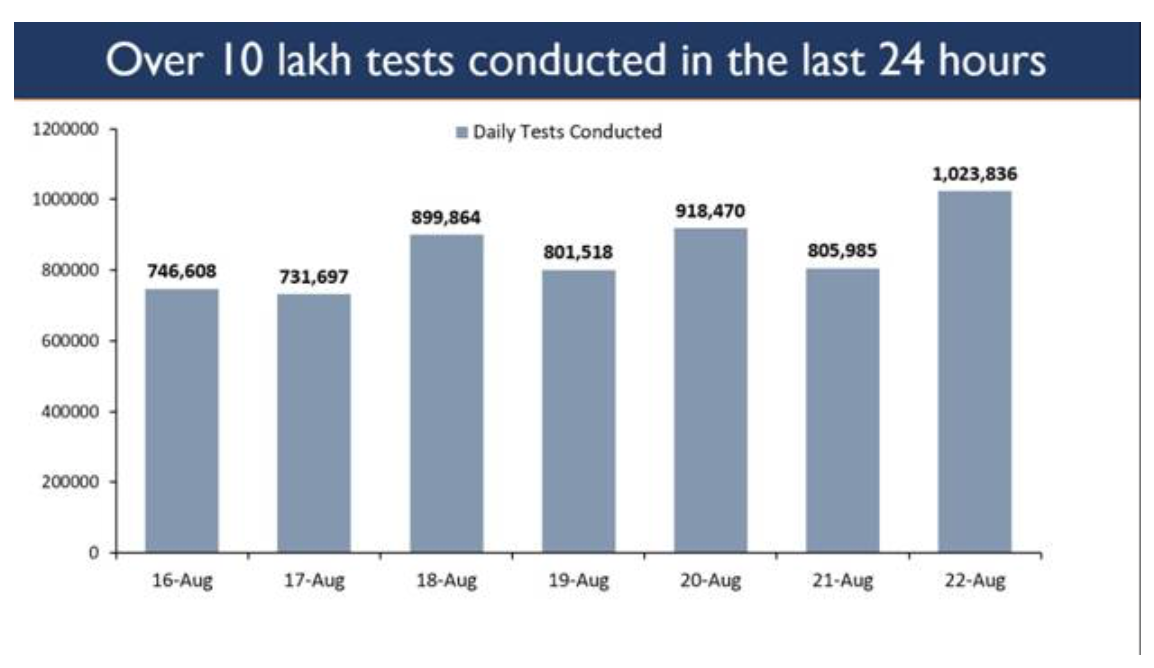
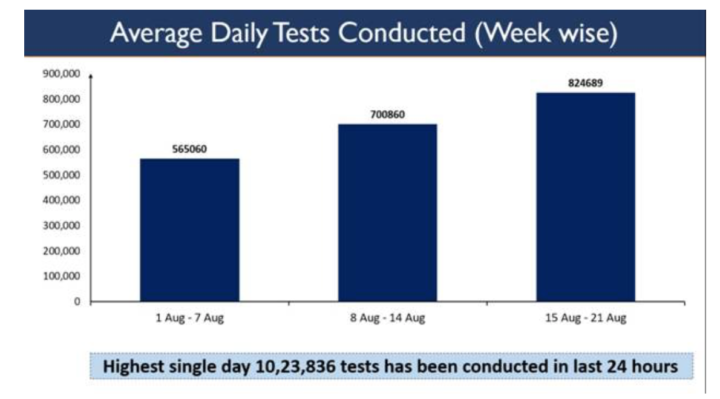
High recovery and low-fatality outcomes can be attributed to proactive measures taken to deal with the outbreak from its early stages. We started screening Covid-19 cases a full 13 days before the first case was detected in India. We implemented full lockdown on the 55th day of the outbreak when we had only around 600 cases. Our public health response has been appreciated by the World Health Organization (WHO). The government took rapid steps to augment health infrastructure. As Prime Minister (PM) Narendra Modi noted, India now has over 11,000 Covid-19 facilities and 1.1 million isolation beds. We have ramped up testing to over half-a-million tests a day, to be scaled up to a million.

India’s response has not been confined to meeting our domestic requirements. We have been significantly engaged with the international community in providing the leadership that the global situation demanded. As a responsible stakeholder in global health supply chains, we ensured timely access to essential drugs and medical items for over 150 countries, while meeting our own domestic requirements. We reaffirmed our position as the first responder to humanitarian crises in the region by deploying medical teams to help Maldives, Mauritius, Comoros and Kuwait deal with the pandemic. India also dispatched naval assets to the Maldives, Mauritius, Madagascar, Comoros and Seychelles to deliver assistance. This demonstrated our strong commitment to the PM’s vision of Security and Growth for All in the Region (SAGAR).

From being a net importer of Covid-19-related medical items, we have emerged as a net exporter. Today, we are manufacturing over 500,000 personal protective equipment (PPE) kits and over 300,000 N-95 masks every day. Our system has shown the necessary adaptability and agility to significantly ramp up production to go beyond our domestic requirements.

The repatriation of Indian nationals stranded abroad and the evacuation of foreigners from India to their home countries have been among the most successful aspects of our response. In the initial days, the ministry of external affairs had promptly set up a Covid cell and a 24×7 control room to assist Indian citizens abroad. The PM had also personally directed our heads of missions to extend all possible assistance to our nationals stranded abroad. Subsequently, the Vande Bharat mission, launched to repatriate our nationals stranded overseas, has been the largest exercise of its kind ever undertaken by the government and has demonstrated our capacity to effectively carry out complex humanitarian missions. Over one million Indians have returned under the Vande Bharat mission so far through flights, across land borders and on naval ships. We have been able to bring home Indian nationals from distant locations, and also facilitated the return of Bhutanese and Nepalese nationals stranded in third countries to their homes on Vande Bharat flights.

Rigorous screening of returnees by our diplomatic missions has ensured that the proportion of positive cases remains extremely small (less than 0.2%). Testing on arrival by the health ministry and state governments has helped detect these cases. The mission just doesn’t end with the arrival of our nationals. We are also mapping their skills on arrival to link them with companies for job opportunities.

There has also been no let-up in our diplomatic outreach during the pandemic. We have initiated and been part of several important conversations globally. Our Neighborhood First policy was on full display when the PM hosted a video conference of the South Asian Association for Regional Cooperation (Saarc) leaders early in the crisis — our first such engagement on Covid-19. He announced a series of measures to deal with the pandemic, including the creation of a Covid-19 emergency fund with a commitment of $10 million from India. We have also called for a better multilateral response to global crises in the future. The PM has, on several occasions, including in the G-20 and Non-aligned Movement virtual summits, proposed the reform of multilateral cooperation by bringing people to the centre of our efforts. Our own initiatives such as the International Solar Alliance and the Coalition for Disaster Resilient Infrastructure are prime examples of this approach. The decision of the G-20 on debt service suspension for developing countries, which India fully supported, reflects this people-centric approach. At the virtual Global Vaccine Summit, the PM highlighted how India’s contribution to the global response in terms of sharing medicines was guided by our philosophy of Vasudhaiva Kutumbkum. The PM also hosted the first virtual bilateral summit with Australia, which was followed by the India-European Union summit. In addition, the PM has spoken to his counterparts from 61 countries during this period. The external affairs minister has spoken to foreign ministers from 77 countries. We have kept open channels of virtual communication to strengthen partnerships and deal with situations that require diplomatic engagement.

We have been constantly adjusting, adapting and innovating to deal with the changed reality, particularly in our engagement with the world. And in the process, we have been successful in elevating India’s profile as a constructive and dependable actor on the global stage.

[Harsh Vardhan Shringla is Foreign Secretary, Government of India]

[The views expressed are personal]

August 14, 2020 0 comments
0 FacebookTwitterPinterestEmail
Asia and Norway

India’s Soft Power as a pillar of Foreign Policy – By Ambassador Yogendra Kumar

by Nadarajah Sethurupan August 14, 2020
written by Nadarajah Sethurupan

The expression “soft power” may be understood in terms of a usable national capacity to advance foreign policy objectives and priorities of a country by non-coercive means. Being an ability to shape a broader narrative in bilateral and multilateral diplomacy, it remains a vital instrument in foreign policy by itself or as a complement to the application of “hard power”, that is, military power or other types of compelling diplomacy. Constituting a wide spectrum, its key components range from economic to socio-cultural and, even, civilisational; messaging, its veritable core, is done through strategic communication in official dialogues and by means of a wider targeted public outreach using diverse media platforms available in our age of information saturation. 

A general “branding” about the “idea” of the country is fleshed out in different ways to lend weight to that country’s diplomacy; according to one study, countries package their soft power by emphasising the qualities of governance, culture, diplomacy, education, and business innovation. This packaging requires innovative use of public and private resources to subserve the larger national purpose. An effective leveraging of soft power diplomatic tools remains critical in the current geopolitical uncertainty. It is not an easy task given that social media today is being aggressively manipulated by malevolent actors and social groups through deployment of advanced technological tools. 

As a culturally diverse, democratic country with a large aspirational, extroversive population pursuing socio-economic mobility, India’s image is that of a benign country confident of its growing role in the international community in support of democracy, international cooperation, stability, and commitment to multilateralism as an effective way to meet our common global challenges. It is not that of an aggressive, revisionist power and its growing military strength is not seen as threatening by an overwhelming number of countries both near and afar. Its millennial civilisation and growth story within a democratic framework evokes considerable interest in practically all regions of the world as a wide range of countries experience raucous internal debates about the best policy tools for their own cohesive, inclusive progress. The civilisational depth and breadth make it possible for nearly all countries to find something in India to relate to and to find an easy comfort level. In the prevailing milieu of deepening strategic distrust among countries, this circumstance is a significant facilitator of a successful pursuit of our national strategic interests.

Articulating the Indian foreign policy for “unsettled times”, Prime Minister Modi prioritised its objectives in a public speech (January 2017) as connectivities with immediate and extended geographies, relationship networks based on economic priorities, human resource power connecting with global opportunities, global development partnerships, and reconfiguring global institutions along with India’s civilisational legacies. As manifest in this expansive vision of a stable and equitable global order, the pursuit of multi-alignment to advance the country’s strategic objectives in a period of geopolitical flux entails an indispensable role for soft power in enhancing this benign global image. 

The Ministry of External Affairs operates and coordinates with other government organisations extensive bilateral and multilateral programmes for economic cooperation, development projects, upgradation of skills, student exchanges and scholarships, people-to-people relations, training programmes, think tank activity, and cultural exchanges encompassing creative and performing arts, archaeology, study chairs, academic conclaves et cetera. It is also engaged in the promotion of media exchanges and in projecting India’s image abroad.

The other departments and agencies have their own collaborative programmes in their respective areas of activity such as science, information and broadcasting, tourism, sports, health, meteorology, shipping and transport, finance and banking, diverse connectivity infrastructure projects, et cetera. Two of India’s flagship multilateral initiatives are the International Solar Alliance and the Coalition for Disaster Resilient Infrastructure. Even “hard core” agencies like the armed forces mount humanitarian and disaster response operations and evacuation of nationals of other countries marooned in disaster areas far from Indian shores. These activities cover the sectors prioritised by Prime Minister in his above-mentioned speech and more.

In sum, the projection of soft power would need to convey to the international community at large a narrative as to what makes India pulsate. It is about a poor, socially unequal country, at the time of its independence in 1947, charting a successful journey to become a major geopolitical and geo-economic actor today within the steady institutional framework of a constitutional democracy. It is about a people who are self-assured enough in their civilisational moorings not needing to be sequestered from “foreign” ideas. It is a holistic narrative underpinning India’s image which is to be leveraged to realise the foreign policy objectives set by the Prime Minister. 

August 14, 2020 0 comments
0 FacebookTwitterPinterestEmail
Asia and Norway

Transparent Taxation Honouring the Honest – Prime Minister Narendra Modi

by Nadarajah Sethurupan August 14, 2020
written by Nadarajah Sethurupan

Prime Minister Shri Narendra Modi launched a platform for “Transparent Taxation – Honouring the Honest” today through video conferencing.

Speaking on the occasion he said that the process of Structural Reforms in the country has reached new heights today. The Prime Minister said the platform of  “Transparent Taxation – Honouring the Honest, has been launched to meet the requirements of the 21st century taxation system. He elaborated that the platform has major reforms like Faceless Assessment, Faceless Appeal and Taxpayers Charter.

He said that Faceless Assessment and Taxpayers Charter have come into force from today while the facility of faceless appeal will be available for citizens across the country from 25th September i.e. Deen Dayal Upadhyay’s birth anniversary. The new platform apart from being faceless is also aimed at boosting the confidence of the taxpayer and making him/her fearless.

The PM said that the focus of the Government in the last six years has been “Banking the Unbanked, Securing the Unsecured and Funding the Unfunded” and that the platform of “Honouring the Honest” is in the similar direction.

The Prime Minister praised the role of honest taxpayers in nation building and said that making the lives of such taxpayers easy is the responsibility of the government. “When the life of an honest taxpayer of the country becomes easy, he moves forward and develops, then the country also develops and leaps forward,” PM added.

The Prime Minister said the new facilities launched today are a part of the Government’s resolve to provide maximum governance with minimum government. He said that every rule, law and policy are made with an emphasis of them being people centric, public friendly rather than power centric. He said that the use of the new governance model is yielding good results.

The Prime Minister said that an atmosphere is being created where primacy is being given to duty to execute all works. This is the result not because of force and fear of punishment but because of an understanding of the holistic approach that is being adopted. He said the reforms being launched by the Government are not in piecemeal but those aimed at delivering results with holistic perspective.

The Prime Minister said the country’s tax structure needed fundamental reforms as the earlier tax structure was developed from the one created during pre-independent times. Even the several changes made during the post-independent times did not alter its fundamental character, he said.
The Prime Minister said that the complexity of the earlier system made it difficult to conform. He said that simplified laws and procedures make it easy to comply. One such example is the GST, he said, which replaced dozens of taxes.

The Prime Minister said that the latest laws reduced the legal burden in the tax system where now the limit of filing cases in the High Court has been fixed at up to 1 crore rupees and up to 2 crores for filing in the Supreme Court. Initiatives like the ‘Vivaad Se Vishwas’ Scheme pave the way for most of the cases to be settled out of court.

Prime Minister said that the tax slabs have also been rationalised as a part of the ongoing reforms where there is zero tax upto an income of 5 lakh rupees, while the tax rate has reduced in the remaining slabs too. He said India is one of the countries with lowest Corporate Tax in the World.

The PM said the ongoing reforms aim at making the  tax system Seamless, Painless, Faceless. He said the Seamless system works to resolve the problems of a taxpayer instead of entangling him further. By being Painless he said, everything from technology to rules should be simple. Referring to the Faceless system he said there is no need for a direct contact between the Taxpayer and the Income Tax Officer in all matters of scrutiny, notice, survey or assessment.

Referring to the launch of Taxpayers Charter, the Prime Minister said that it is a significant step where the taxpayer is now assured of fair, courteous and rational behavior. He said the charter takes care of maintaining the dignity and sensitivity of the taxpayer and that is based on a trust factor and that the assessee cannot be merely doubted without a basis.

Referring to the reduction of the scrutiny of the cases by at least four times in the last six years from 0.94% in 2012-13 to 0.26% in 2018-19, Prime Minister said this itself is a reflection of the trust that the Government is laying on the returnees. He said in the last 6 years, India has seen a new model of governance evolving in tax administration. Amidst all these efforts, he said the number of people filing income tax returns has increased by about 2.5 crores in the last 6-7 years.

The Prime Minister however said that it can also not be denied that only 1.5 Crore people pay the taxes in a country of 130 crores. Shri Modi urged people to introspect themselves and come forward to pay the taxes due.

The Prime Minister said this would help in the making of a Self – Reliant India, AtmaNirbharBharat.

August 14, 2020 0 comments
0 FacebookTwitterPinterestEmail
Asia and Norway

Visionary Approach – By Ambassador Anil Wadhwa

by Nadarajah Sethurupan August 14, 2020
written by Nadarajah Sethurupan

India’s 74th Independence Day on August 15, 2020, is being celebrated as the world is in the grip of an unprecedented pandemic, which has disrupted every aspect of life. Former Ambassador Anil Wadhwa takes stock of the developments that make this a momentous occasion.

Ambassador Anil Wadhwa

India has not been spared when it comes to the spread of the COVID-19, but has demonstrated great resilience in fighting the impact of the pandemic with determination. It has pushed ahead with accelerated development and the creative energy for innovative and new policies as demanded by the times. This strength to face challenges derives from the Indian struggle for independence and is rooted in the concepts of political and socio – economic inclusion inherited from the nation’s founding fathers like Mahatma Gandhi, Babasaheb Ambedkar and Sardar Vallabh Bhai Patel. 

The re-elected government of Prime Minister Modi has continued on the transformative course of India’s development through breakthroughs in governance, enacting historic legislations, expansion and strengthening of programmes, upgrading basic amenities to all citizens, providing economic assistance to the marginalised, and enhancing protection for women, children, and those with disabilities. During the pandemic, the government acted promptly to save lives, provide effective medical treatment and control the spread of the virus, by upgrading hospital infrastructure, and ramping up the manufacture of medical supplies and equipment to adequately deal with the medical exigency. Early preventive measures such as screening of international passengers started as early as January 2020 followed by restrictions on travel and a total nationwide lockdown imposed on March 24. These, along with a very effective mass health awareness campaign, helped India to stem the severity and spread of the virus, beating all predictions.

Though cases have crossed two million in the first week of August, both the high recovery rate and low fatality rate point to the success of the strategy to combat the pandemic, which has been accompanied by a slew of economic measures for the most vulnerable and to mitigate the deleterious effect on the national economy. 

Creating opportunity 

A total stimulus package of INR 20 trillion equaling 10 per cent of India’s GDP has been announced by the government so far. Besides containing a plethora of fiscal and monetary measures, the package covers almost every sector of economic activity including mining, defence production, power, industry, space, education etc. Prime Minister Modi, in summing up the package, in an address to the nation on May 12, said that it would focus on land, labour, liquidity and laws and seek to make India the lead player in the 21st century by focusing on self-reliance.

Cementing friendships 

Internationally, the past year has seen India’s global stature enhanced further as it exhibited a renewed confidence in leadership and the conduct of its foreign policy. PM Modi’s outreach in South Asia included visits to the Maldives, Sri Lanka, and hosting of PM Sheikh Hasina of Bangladesh, highlighting the centrality of India’s neighborhood first policy. Despite the long-standing border dispute and the threat of terrorism, Prime Minister Modi took the initiative to launch a SAARC virtual Summit for regional cooperation in the fight against the pandemic. In keeping with the deepening multidimensional ties with the US, PM Modi paid a visit in September 2019, which was followed by a historic return visit by President Trump in February 2020. India’s election to the UN Security Council as a non – permanent member, the assumption of the Chair of the Executive Council of the WHO, and forthcoming Presidency of the G20 in 2022 gives it an opportunity to lead institutional reforms in multilateral organisations. In fact, the pandemic has not restrained India’s diplomatic engagements. In addition to the virtual summits with Australia and EU, PM Modi has spoken to his counterparts from 61 countries while the External Affairs minister Dr S Jaishankar has spoken with his counterparts from 77 countries thus elevating India’s profile as a constructive and reliable actor and partner on the global stage. They have also addressed important multilateral platforms such as the NAM (Non-Aligned Movement) and G20 Summits, and ECOSOC (Economic and Social Council at the UN). 

During the crisis, India has come forward to be a net provider of health security by supplying essential medicines, and equipment to almost 150 countries and sending medical assistance teams to friendly countries such as Kuwait, Mauritius, Maldives and Seychelles. 

India has continued to deepen economic relations with foreign partners, attracting USD 74 billion last year and commitments of USD 20 billion in Foreign Direct Investment even during the months of the pandemic. The Atmanirbhar Bharat Abhiyan (self-reliant Indian mission) provides an opportunity for India to engage more closely with foreign partners to make Indian manufacturing globally competitive and integrate domestic consumption and production with global supply chains; promoting resilience, embracing both investment and technology.

India will celebrate its Independence Day with the usual enthusiasm, although special measures will need to be put in place given the pandemic. Celebrations in Delhi, including those at the Red Fort where the Prime Minister will address the nation, the states, as well as those organised by Indian missions abroad will avoid large congregations of people, ensure social distancing, practice sanitisation, protect the vulnerable and use virtual technology.

A renewed push will be given to the theme of “Atmanirbhar Bharat’.Hence, as India celebrates its 74th Independence Day, its citizens will reaffirm their enduring belief in democracy, which ensured a clear mandate for the current government  in 2019, and aspirations for a human – centric path of growth catalysed by open and responsive governance.

Celebrations this year 


–  Military bands from Indian armed forces have kick-started the Independence Day celebrations this year from August 1. The bands from the Indian Army, Navy, Air Force and police have performed at Porbandar, Hyderabad, Bengaluru, Raipur, Amritsar, Guwahati, Allahabad, Kolkata,  Vishakhapatnam, Nagpur, Gwalior and Srinagar. These performances will continue till August 15 at several prominent locations across the country. 

  • These performances are intended as gestures of appreciation towards the efforts of Corona warriors amidst the battle with the global pandemic.
  • An essay competition is also being organised with the help of the National Council of Educational Research and Training for school students studying in Classes IX to XII on the topic: ‘Atmanirbhar Bharat-Swatantra Bharat (Self-reliant India-Independent India)’

About the author 

Ambassador Anil Wadhwa has served as Secretary (East) in the Ministry of External Affairs, and as the Indian ambassador to Poland, Oman, Thailand and Italy. He has also been posted to Indian missions in Hong Kong, China and Switzerland and worked for the Organisation for the Prohibition of Chemical Weapons (OPCW) in The Hague.

August 14, 2020 0 comments
0 FacebookTwitterPinterestEmail
Russia and Norway

Norway calls on Russia to pull its forces out of Georgia

by Nadarajah Sethurupan August 13, 2020
written by Nadarajah Sethurupan

Norwegian Minister of Foreign Affairs Ine Eriksen Soreide has responded to the 12th anniversary of the Russia-Georgia  war, calling on Russia to comply with the 2008 ceasefire agreement and pull its forces out of Georgia.

The ceasefire agreement reached on 12 August 2008 included the requirement that Russian troops withdraw from the occupied regions of South Ossetia and Abkhazia. Instead, Russia has gradually expanded and consolidated its military presence in both regions, has recognised  them as independent states, and has signed treaties that integrate them more closely into Russia’s governance structures”, says Eriksen Soreide.

Eriksen Soreide also mentions that even during the ongoing COVID-19 pandemic, the administrative boundary line around the occupied regions is steadily expanding further into Georgian-controlled territory and becoming more consolidated.

Eriksen Soreide underlines that Georgia is an important and valued partner of Norway and that Norway fully supports Georgia’s sovereignty and territorial integrity.

It is up to the Georgian people and their elected leaders to chart their own foreign policy course. So-called ‘spheres of influence’ have no place in the 21st century”, says Eriksen Soreide.

It was also mentioned in the official statement that Norway will continue to support Georgia’s reform efforts and integration into European and Euro-Atlantic cooperation.

During the Russia-Georgia war 412 were killed on the Georgian side, including three journalists. 1,747 people were wounded, 35,000 houses burnt and destroyed.

As a result of the war, 130,000 people became IDPs in Georgia. 

125 villages have been occupied by the Russian occupation forces since 2008.

August 13, 2020 0 comments
0 FacebookTwitterPinterestEmail
Defence

Twelve years since the outbreak of the Russo-Georgian War

by Nadarajah Sethurupan August 12, 2020
written by Nadarajah Sethurupan

Twelve years after the war in Georgia, Russian troops are still on Georgian soil and the conflict remains unresolved. ‘Once again we call on Russia to comply with the 2008 ceasefire agreement and pull its forces out of Georgia,’ said Minister of Foreign Affairs Ine Eriksen Søreide.

On the night of 7-8 August 2008, hostilities broke out in the Georgian region of South Ossetia. Russian forces intervened on the side of the separatists and took control of the region, including areas beyond South Ossetia. The ceasefire agreement reached on 12 August 2008 included the requirement that Russian troops withdraw from the occupied regions of South Ossetia and Abkhazia.

Instead, Russia has gradually expanded and consolidated its military presence in both these regions, has recognised both of them as independent states, and has signed treaties that integrate them more closely into Russia’s governance structures.

The administrative boundary lines around the occupied regions are steadily expanding further into Georgian-controlled territory and becoming more consolidated, with wide-ranging ramifications for the area’s civilian population. This process has continued during the ongoing COVID-19 pandemic, often accompanied by attempts to circulate conspiracy theories that are undermining efforts to combat the spread of coronavirus.

‘International humanitarian actors and human rights institutions must be given unimpeded access to the two regions,’ said Ms Eriksen Søreide.   

Since 2003, Georgia has implemented a number of important reforms. In 2014, the country concluded an Association Agreement with the EU committing it to further reforms. Georgia is also working actively to further develop its partnership with NATO, with membership as its ultimate goal.

‘Norway fully supports Georgia’s sovereignty and territorial integrity. It is up to the Georgian people and their elected leaders to chart their own foreign policy course. So-called ‘spheres of influence’ have no place in the 21st century,’ said Ms Eriksen Søreide.

Norway established an embassy in Georgia last year following long-standing efforts to strengthen bilateral relations between the two countries. 

‘Georgia is an important and valued partner for Norway, and we will work to expand and enhance our relations. Norway will also continue to support Georgia’s reform efforts and integration into European and Euro-Atlantic cooperation. It is in the interests of Norway and Europe as a whole to promote a stable, democratic and prosperous Georgia,’ said Ms Eriksen Søreide.

August 12, 2020 0 comments
0 FacebookTwitterPinterestEmail
Economics

Changes in the travel advice for the Czech Republic, France, Monaco and Switzerland

by Nadarajah Sethurupan August 11, 2020
written by Nadarajah Sethurupan

The Ministry of Foreign Affairs is now advising against non-essential travel to the Czech Republic, France, Monaco and Switzerland. Changes are also being made to the travel advice for several regions in Sweden.

On the basis of the Norwegian Institute of Public Health’s assessment of the COVID-19 situation, the Government has decided to advise against non-essential travel to these countries. These countries are being changed from ‘green’ to ‘red’ on the map showing the status for quarantine on entry to Norway from Europe. From 8 August, anyone arriving in Norway from these four countries will be required to go into quarantine for 10 days.

Four new regions in Sweden are being excepted from the travel advice, but the regions of Skåne and Kronoberg are being changed from ‘green’ to ‘red’. As a result, anyone arriving from these two regions will once again be required to go into quarantine.

These changes will apply from midnight on Friday 7 August. See the website of the Norwegian Institute of Public Health for more information.

‘Unfortunately, the current trend in a number of European countries is moving in the wrong direction. This week, the Czech Republic, France, Monaco and Switzerland have all exceeded the threshold for level of infection, which has been set at 20 confirmed new COVID-19 cases per 100 000 inhabitants during the past two weeks. The requirement to go into quarantine is being reintroduced for these countries, and the Ministry of Foreign Affairs is updating its travel advice accordingly,’ said Minister of Foreign Affairs Ine Eriksen Søreide.

‘These developments confirm what the Government has maintained all along: that the infection situation and local restrictions can both change very quickly. Anyone planning to travel abroad should consider all the potential ramifications beforehand and make sure they know what the situation is in the country they are planning to visit,’ said Ms Eriksen Søreide.

‘People who have returned to Norway from a country that becomes ‘red’ after their return must monitor their health for symptoms of COVID-19. It is very important that they get themselves tested if they experience any symptoms, and that they practise good hand hygiene and maintain a distance of at least one metre from other people,’ said Minister of Health and Care Services Bent Høie. 

From 8 August, the global travel advice against all non-essential travel will apply to the following countries and regions in the Schengen area/EEA: Andorra, Belgium, Bulgaria, Croatia, Czech Republic, France, Luxembourg, Monaco Portugal, Romania, Spain, Switzerland and certain regions in Sweden.

The Government is now excepting four new regions in Sweden from the advice against non-essential travel and the requirement to go into quarantine: Dalarna, Södermanland, Uppsala and Västerbotten. However, the trend for Skåne and Kronoberg has been reversed, and these two regions are being changed from ‘green’ back to ‘red’.

The following regions in Sweden are now ‘green’: Blekinge, Dalarna, Kalmar, Södermanland, Uppsala, Örebro, Östergötland, Värmland and Västerbotten.

The Institute of Public Health will update the list of countries and regions that satisfy the criteria set for infection levels at least once every two weeks. Updates may be made more frequently if the infection situation in a country or a region in a Nordic country deteriorates.

The Ministry of Foreign Affairs is maintaining its global advice against non-essential travel to all countries apart from those for which an exception has been made. This travel advice currently applies until 20 August.

For information about the countries in the Schengen area/EEA and the regions in the Nordic countries that are excepted from the travel advice, see the map on the Norwegian Institute of Public Health website and the Ministry’s travel information.  

More information is available on the government website.

August 11, 2020 0 comments
0 FacebookTwitterPinterestEmail
Asia and Norway

National Handloom Day on 07th August 2020

by Nadarajah Sethurupan August 9, 2020
written by Nadarajah Sethurupan

Function being organized by Ministry of Textiles on Virtual Platform

The events include launching of Mobile App & Backend Website for Handloom Mark Scheme, launching of My Handloom Portal, a Virtual Fair and showcasing of Craft Handloom Village, Kullu.

Handloom sector is a symbol of the country’s glorious cultural heritage and an important source of livelihood in the country. The sector is key to women empowerment as over 70% of handloom weavers and allied workers are women.

On the occasion of the 6thNational Handloom Day on 07th August 2020, Ministry of Textiles is organizing a function through Virtual Platform to avoid public gathering considering Covid-19 pandemic. Union Minister of Textiles and Women & Child Development, Smt Smriti Irani will grace the occasion as Chief Guest and Secretary Textiles. Shri Ravi Capoor will be the Guest of Honour for the function. Chief Minister of Himachal Pradesh, Shri Jai Ram Thakur will also be joining the function from Shimla, HP through virtual mode.

In addition, during the function, handloom clusters across India, NIFT campuses, all the 28 Weaver Service Centres(WSCs), National Handloom Development Corporation (NHDC), Handloom Export Promotion Council (HEPC), along with Craft Handloom village at Kullu (Himachal Pradesh), Textiles Committee at Mumbai, and Virtual Fairbeing organized by HEPC at Chennai will be connected online.  Also, functions befitting the occasion will be organized in all the subordinate offices of Development Commissioner of Handlooms viz. WSCs and NHDC as also in various campuses of National Institutes of Fashion Technology (NIFT).

7th August was chosen as the National Handloom Day to commemorate the Swadeshi Movement which was launched on the same date in the year 1905. The objective is to generate awareness about Handloom Industry amongst public at large and its contribution to the socio-economic development.

To mark this occasion and to instil pride of workmanship of handloom weaving amongst citizens, social media campaign is planned for the handloom weaving community. Hon’ble Prime Minister has urged that it should be an endeavour on part of all of us to use Indian Handlooms and Handicrafts and also communicate to other people about them. The more the world knows about the richness and diversity of these products, the greater our artisans and weavers will benefit.

Minister of Textiles Smt Smriti Irani has appealed to all Hon’ble Central Government Ministers, Lieutenant Governors, Chief Ministers of States, Members of Parliament and eminent Industrialists with friends and family to express solidarity with the weaving community through their social media accounts so as to motivate others to do the same.

Ministry of Textiles has extended a similar request to Secretaries to the Govt. of India and equivalent level officers. Besides, all the Secretaries of the States, Exports Promotion Councils, Sister Textile Bodies like Central Silk Board, National Jute Board have been requested to amplify the Social Media Campaign under the common hashtag and inspiring associates and employees to embrace handloom fabric. The e-commerce entities, Retail Companies and Designer Bodies have also been requested to promote and amplify the efforts of Ministry of Textiles to promote Handloom products.

In the face of the unprecedented Covid-19 pandemic, and inability to hold conventional marketing events such as exhibitions, melas, etc., the Government is providing online marketing opportunities to weavers and handloom producers. By taking a step towards realizing “Atmanirbhar Bharat”, Handloom Export Promotion Council is organizing a Virtual Fair. The fair will connect more than 150 participants from different regions of the country showcasing their products with unique designs and skills.

The Indian Textile Sourcing Fair will be open on 7, 10 and 11th August. The show has already attracted considerable attention of the International Buyers. Exquisite Patolas, Paithanis, Ikats, Kandangis, Maheshwaris, Venkatagiris and numerous other GI tagged products will be on display for the International buying community to source their products directly from the masters themselves.

The schedule of activities for the National Handloom Day function being organized by the Ministry of Textiles on 07th August 2020 includesa presentation showcasing the Craft Handloom Village, Kullu, being established in association with District Administration, Kullu. Other events include launching of Mobile App & Backend Website for Handloom Mark Scheme (HLM), launching of My Handloom Portal, inauguration of Virtual Fair on linking Handloom exporters with prospective buyers being organized by HEPC at Chennai.

The first National Handloom Day was held on 7th August 2015 by Prime Minister Shri Narendra Modi in Chennai.  On this day, the handloom weaving community is honoured and the contribution of this sector in the socio-economic development of this country is highlighted. The resolve to protect our handloom heritage and to empower the handloom weavers and workers with greater opportunities is reaffirmed. The Government endeavours to ensure sustainable development of the handloom sector thereby empowering our handloom weavers and workers financially and instilling pride in their exquisite craftsmanship.

Posted on 06 August 2020 3:01PM
By Press Information Bureau, Government of India, New Delhi

August 9, 2020 0 comments
0 FacebookTwitterPinterestEmail
Africa and Norway

Norway to send emergency medical supplies to Lebanon

by Nadarajah Sethurupan August 9, 2020
written by Nadarajah Sethurupan

The Norwegian Government has decided to increase its humanitarian aid to Lebanon by up to NOK 25 million. This additional funding will be used to send 40 tons of medical equipment to Lebanon to help alleviate the emergency situation caused by the devastating explosion in Beirut earlier this week.

‘Norway has stood by Lebanon for many decades, and we will continue to do so at this very difficult time. I have therefore decided today to allocate up to NOK 25 million to support Lebanon in tackling this acute phase of the crisis,’ said Minister of Foreign Affairs Ine Eriksen Søreide at a press conference on Wednesday.

The equipment Norway is providing consists of pre-packaged medical supplies for treating the injured. Each pack contains enough equipment to treat 100 people for ten days. Altogether, Norway will send 160 pallets of life-saving equipment. This shipment will be coordinated with further contributions from the EU, with a view to ensuring a prompt, coordinated response.

‘When disaster strikes, it is vital that we help each other. Several hospitals in Beirut have suffered considerable damage. Providing medical help to everyone who needs it poses a huge challenge. This is placing extra strain on a health service that is already stretched to its limits. There is no question that Norway would provide medical supplies in this situation, and I am pleased that we have been able to respond so quickly,’ said Minister of Health and Care Services Bent Høie.

In recent years, Norway has provided substantial financial assistance to Lebanon. Norway has already allocated approximately NOK 470 million in aid to Lebanon in 2020. This extra allocation for medical supplies comes in addition to this.

‘We are currently in discussions with our humanitarian partners on how best to provide help, but the situation is unclear and chaotic for all of us. We must ensure that our response is as effective as possible and meets the needs of the people of Beirut,’ Ms Eriksen Søreide said.

August 9, 2020 0 comments
0 FacebookTwitterPinterestEmail
Asia and Norway

Norway to provide $1.5m to support improved ship recycling in Bangladesh

by Nadarajah Sethurupan August 9, 2020
written by Nadarajah Sethurupan

Norway has committed approximately US$1.5 million (14 million Norwegian Kroner) to support improved ship recycling in Bangladesh.

The third phase of an International Maritime Organisation (IMO)-implemented project to enhance safe and environmentally sound ship recycling in Bangladesh has been given the go-ahead, said the IMO.

SENSREC Phase III will focus on improving ship recycling standards in compliance with the Hong Kong Convention and enhancing capacity building for the Government of Bangladesh on legislation and knowledge management.

Specific technical assistance will be provided to the Government of Bangladesh to establish a facility for treatment, storage and disposal of hazardous wastes.

There will also be a focus on evaluating the impact of Covid-19 on the ship recycling industry in Bangladesh.

The agreement between IMO and the Government of Norway to support Phase III of the project on Safe and Environmentally Sound Ship Recycling in Bangladesh (SENSREC) was signed on July 24.

This will pave the way for Bangladesh to move forward on its path towards becoming a party to the IMO Hong Kong Convention, the treaty that will set global standards for safe and environmentally-sound ship recycling, IMO said.

The Agreement follows the successful implementation of Phase I (2015-17) and Phase II (2018 – 2020) of the SENSREC Project, both mainly funded by Norway.

With the additional funding, Phase III of the project will be implemented over 18 months, starting from November 2020.

SENSREC Phase III will focus on improving ship recycling standards in compliance with the Hong Kong Convention and enhancing capacity building for the Government of Bangladesh on legislation and knowledge management.

Specific technical assistance will be provided to the Government of Bangladesh to establish a facility for treatment, storage and disposal of hazardous wastes.

There will also be a focus on evaluating the impact of Covid-19 on the ship recycling industry in Bangladesh.

Former Ambassador of Norway to Bangladesh Sidsel Bleken said that the SENSREC Project had already achieved significant progress, thanks to the commitment of the Government authorities as well as the ship-recycling industry of Bangladesh.

She said Norway is pleased to extend its support to Bangladesh and their thanks go to IMO for their important role in this Project.

“Through IMO, we will continue to support the authorities, the industry, and other stakeholders in strengthening their efforts to develop Bangladesh’s ship-recycling industry and the country’s economy. We hope to see more yards complying with the requirements of the Hong Kong Convention, so that Bangladesh can be ready to accede to the Convention in the soonest possible time,” Bleken said.

The Agreement was signed by Bleken and IMO Secretary-General Kitack Lim.

Thanking the Government of Norway for their generous contribution, Lim said the continuation of this project will greatly enhance national capacities for Bangladesh for safe and environmentally sound recycling of ships.

“The success of this Phase III of the project will be seen in the crucial technical assistance role that will support the goals of Bangladesh to establish a facility for treatment, storage and disposal of hazardous wastes and ultimately support its aim to accede to the Hong Kong Convention.”

The Hong Kong Convention

The Hong Kong Convention1 covers the design, construction, operation and maintenance of ships to ensure they can be recycled safely and in an environment-friendly way at the end of their lives.

It also deals with how ships should be prepared for their final voyage to a recycling facility, without compromising their safety or operational efficiency.

Under the Hong Kong Convention, ships sent for recycling are required to carry an inventory of all hazardous materials on board.

Ship recycling facilities are required to provide a “Ship Recycling Plan”, specifying how each ship will be recycled, based on its particular characteristics and its inventory of hazardous materials.

The treaty will enter into force 24 months after three separate criteria have been met.

It must be ratified by 15 States – but these States must represent 40% of world merchant shipping by gross tonnage, and a combined maximum annual ship recycling volume (during the preceding 10 years) of not less than 3% of their combined gross tonnage.

The number of States2 required has now been reached, but further tonnage and recycling volumes are needed before the convention can enter into force.

The top five ship recycling countries in the world, between them accounting for more than 98% of all ship recycling by gross tonnage3, are Bangladesh, China, India, Pakistan and Turkey (of these, two are already Parties to the Hong Kong Convention – India and Turkey).

August 9, 2020 0 comments
0 FacebookTwitterPinterestEmail
Environment

Norwegian updates Peace of Mind cancellation policy

by Nadarajah Sethurupan August 8, 2020
written by Nadarajah Sethurupan

Norwegian Cruise Line is expanding its Peace of Mind cancellation policy into 2021 as it looks to shore up consumer confidence.

Guests booked on cruises by August 31, 2020 with embarkation dates between January 1, and October, 31, 2021 will now be able to cancel their cruise up to 15 days before departure.

Guests will be given a future cruise credit which can be applied to any sailing up to December 31, 2022.

The policy also allows guests to to cancel up to 48 hours before embarkation for 2020 departures.

Norwegian has also updated its final payment schedule for 2020 cruises – requiring guests to clear their balance within 60 days of embarkation, as opposed to the standard 120 days.

“Now more than ever, travellers are looking for freedom and flexibility and that is what Norwegian Cruise Line is all about,” said Harry Sommer, president and chief executive officer of Norwegian Cruise Line. “Our Guests First philosophy compels us to put guests at the heart of every decision, which is exactly what we are doing by enabling them to cancel very close-in to their anticipated embarkation date and by delaying final payment to just 60 days prior to departure. We recognise the uncertainty we are all feeling right now so it is important guests know that we have their best interests in mind.”

“We are optimistic about the future and remain committed to the safety, health and well-being of our guests, crew and the communities we visit,” said Sommer. “We recently announced our participation in the Healthy Sail Panel comprised of leading experts working to help ensure cruising remains one of the safest and most beautiful ways to see the world. With all voyages currently suspended through Oct. 31, 2020, we are taking the time to focus on health and safety standards by continuing to lead and innovate, as we have done for the last 53 years.”

For more information about Norwegian Cruise Line’s Peace of Mind policy and its new health and safety protocols, visit www.ncl.com/peaceofmind.

August 8, 2020 0 comments
0 FacebookTwitterPinterestEmail
Svalbard

Arctic an area of low tensions – USA

by Nadarajah Sethurupan August 6, 2020
written by Nadarajah Sethurupan

The United States wants to keep the Arctic an area of low tensions, Washington’s newly appointed Arctic coordinator said Wednesday even as he warned of growing big power rivalry in the region due to climate change and conflicting geopolitical interests.

Speaking to reporters via teleconference call barely a week after his appointment, James DeHart, struck an unusually cooperative tone even as he portended that years from now the summer of 2020 will be seen as a pivotal moment in the U.S. Arctic policy.

“Our objectives for the region are that it be peaceful and an area of low tension, and that there be close cooperation among the nations of the Arctic,” DeHart said in his opening remarks.

“We want to see economic growth and development in a way that is supportive of local communities, including the Indigenous communities of the region, and in a way that is environmentally sustainable, that respects principles of good governance and transparency.”

DeHart’s tone was in sharp contrast to the more assertive and at times almost belligerent tone of his boss, Secretary of State Mike Pompeo, who stunned observers during an Arctic policy speech in Finland last year by tongue-lashing China and Russia and their policies in the Arctic.

Below is a full rush transcript of the Briefing with  James P. DeHart,  U.S. Coordinator for the Arctic Region,  Office of the U.S. Coordinator for the Arctic Region

Mr. DeHart:  Let me start – I’ll just offer a few comments at the top here, and then happy to go to your questions.  

But let me just start by making a prediction, which is that in a few years people will look back at this summer and see it as an important pivot point, a turning point, with a more sustained and enduring attention by the United States to the Arctic region.  And I think if you look at what’s happening in our system over the last couple of months, you’ll see that we are launching a comprehensive and an integrated diplomatic approach and engagement in the Arctic region.

So I would point not to my own position really but to some different events taking place in our system.  And so if you look at the memorandum that was issued by our White House back on June 9 that has set in motion the development of a fleet of Arctic icebreakers and has put in motion development of this fleet by 2029 – really important developments.  We have the opening now of our consulate in Nuuk, Greenland, which is really significant, I think, when you look at finite resources that we have for our diplomatic platforms around the world, and so we’re very happy to have that open.

Secretary Pompeo just under two weeks ago visited Denmark, a very close ally of the United States.  And although the agenda there was broader than the Arctic, the Arctic was an important part of those discussions.  And also, I think very significantly, they had a quadrilateral meeting there which included the ministers of Greenland and the Faroe Islands, reflective of our increased engagement with Greenland and the Faroe Islands.  

And then looking around our system, there’s a lot of things happening outside the State Department as well.  The U.S. Air Force has a new Arctic strategy, for example.  So a lot of attention now to the Arctic region that I think is here to stay, and you’re going to see a sustained and enduring approach.  And let me tell you why I think that’s the case.  

First, we’ve seen and we are seeing really pretty dramatic environmental changes throughout the region and changes that create a lot of difficulties for local communities in the region, and—but—that also make the Arctic more accessible and open up new possibilities for resource extraction, sea bed mining, tourism, transit routes, and so forth.  So it’s a pretty rapidly changing situation from a physical and environmental standpoint.

And then the second factor I would point to is the geopolitical changes that are taking place.  And Russia, an Arctic nation which is increasing its activities and its security presence in the Arctic, and China, which is not an Arctic nation but has a clear interest and has shown its interest in investment and other commercial activities, and when you look at the way China has approached investment and commercial activities in other parts of the world, I think we have to be very cautious and guarded in terms of what this could mean for the very high standards of governance that we all want to see in the Arctic region.

So our objectives for the region are that it be peaceful and an area of low tension that there – and that there be close cooperation among the nations of the Arctic.  We want to see economic growth and development and in a way that is supportive of local communities, including the indigenous communities of the region, and in a way that is environmentally sustainable, that respects principles of good governance and transparency.

And we want to see the Arctic as a rules-based order and so that people are operating according to high standards and norms.  And this is something that has been a feature of the most important Arctic forum, which is the Arctic Council, which we are proud to be members of.

So let me stop there, but with just a final word about our approach here is we’re determined to work with our partners throughout the region, and that includes not only the governments in the Arctic but also the local communities, indigenous communities, the state of Alaska, which after all is our part of the Arctic, Alaska’s representatives in the Congress, and state officials, other communities there, and then that giant web of networks that exists among the scientists and educators and policy specialists who are working in the Arctic.  

So it’s a region where I think it’s really possible and important to work both at the national level and then at the subnational level with a variety of players, and that’s what we will do.

Question: Does the U.S. see a danger in increasing cooperation between Russia and China in the Arctic?  And then second, what are the strengths and weaknesses of Russia’s military presence in the Arctic, and how does the U.S. assess the threat of the Russian military presence there?

Mr. DeHart:  I think on Russia-China cooperation we’ve seen some recent indications of cooperation.  It’s early days for me yet in this position, so I need to learn more.  My early impressions are that – is that the cooperation takes place at more of a tactical level than strategic, because these are two countries that do have some different interests there, Russia being an Arctic nation and I think protective of its status as an Arctic nation, and China seeking to play a bigger role.  But being the closest part of China to the Arctic is about 900 miles away, they’re not part of the Arctic, and I’m not sure that Russia necessarily wants to embrace a comprehensive Chinese role in the Arctic.  So I see some differences, I guess, in their

respective interests that could pose some constraints on their cooperation in the long term.

As for Russia’s military presence, look, they are present in the Arctic.  They’ve got some important assets on the Kola Peninsula and elsewhere.  They’ve increased their activities with refurbished bases and some new forces in the region and more complex exercises.  We have to be aware of that, and we want this to be a region of peaceful cooperation in the realm of science and search-and-rescue and education, but we recognize also that the Arctic is NATO’s northern flank, and so we look at the region through that lens as well.

Question:  Denmark promised to strengthen and to build up – the surveillance and the military presence in Greenland from 2023 and would spend around $250 million USD.  What do you think about that?  Is it enough?  Or what do you think that the Danish government should prioritize?  What do we need to do, first of all?

And then secondly, I have a more specific question about the Denmark Strait, the strait between Greenland and Iceland.  Literally, there is almost no surveillance there, so you could have U-boats sailing by without noticing.  Denmark has promised to build up some sonar in 2027.  Is that good enough for you?  And what do you think about the whole situation that a U-boat could sail by without being seen?  Can you, as Americans, do something to build that surveillance here as well if the Danish government would like to do that? 

Mr. DeHart:  Right, okay.  So I think I’ll have to be very general in my response, and as most of that I think would have to be addressed by DOD colleagues.  I mean, I would make the observation, obviously, that from a security perspective the domain awareness, including in Greenland, is really – is very important to us and one of the factors we have to look at in – throughout the Arctic.  

Whether current efforts including the cooperation that we have with Denmark are sufficient or need to be strengthened, I couldn’t really – I couldn’t really respond at that level of specificity but would defer to my DOD colleagues.  Denmark is a very close ally in NATO, and so I am confident that we have that close cooperation to meet the needs, whatever they are.

On the Greenland-UK-Iceland gap, I mean, when we look at the region from a security perspective, the Arctic is inextricably linked to the North Atlantic and to the requirements of defense of Europe, and so it comes into play when we look at the lines of communication and the requirements for reinforcement in the event of a contingency.  And so that – so that’s part of our thinking there and why the Arctic is also important from a security perspective.  But I think we will meet the requirements together with our allies.

Question:  I have a question about U.S. relations with Canada as it relates to the Arctic.  U.S. and Canada have a very interesting relationship in the Arctic.  We also have a dispute in the Beaufort Sea over the maritime boundary there.  How do you see the U.S. relationship with Canada?  And are there any specific asks that you would have of Canada, and on – just adding on the question of my Danish colleague, in terms of the domain awareness that you mentioned, NORAD and upgrading or modernizing NORAD capabilities in the Canadian Arctic?

Mr. DeHart:  Well, so look, we have such a broad and good relationship with Canada over so many different areas, and the Arctic is one of those.  Part of my background and learning experience was three years in Norway, and so I need to – one of my priorities here is to make sure that I’m fully understanding the Canadian perspective on the Arctic early in my tenure here, although I did have some very close collaboration with my Canadian colleague in Oslo, I’m happy to say, including on Arctic issues, when I was there.

But look, Canada has immense interest in the Arctic given its geography.  I don’t have any specific asks of Canada at this time in relation to the Arctic, but I do have a real interest in meeting early with my Canadian counterparts and also – and getting to Canada and also to meeting the local communities, who I think are key to this question.  I hope that gets at your question. 

Question:  I just wondered – you spoke of climate change as though it was an advantage in the sense that it was opening things up in the Arctic.  Is it also a disadvantage in some ways, and if so, how, for the U.S. and its interests in particular?  And if that is the case, is your diplomacy, U.S. diplomacy on this, not slightly undermined or crippled, even, by your government’s scorning of the science of climate change, and indeed the way it’s been treating some of its allies in Europe, some of them Arctic states?  How do you – how do you sort of frame the whole question of climate change in your Arctic policy?  

Mr. DeHart:  That’s certainly not an impression that I am intending to give.  So the environmental changes that are taking place across the Arctic, including in Alaska, are – have profound negative impacts on many communities.  So – and we’ve seen this come to light recently – the wildfires across Siberia, the detrimental impact on infrastructure with the thawing of the permafrost, the – that’s given rise to some major pollution incidents, and comes at enormous human and economic cost. 

At the same time, we have to recognize the reality, too, is that in certain areas, it also provides accessibility that business can take advantage of and so forth.  And it changes – it changes the landscape in a variety of ways, and it invites different countries into the region and invites their interests.  So it’s a complex – it’s a complex picture.  

So climate change is not caused by anything in the Arctic, but it is evidenced in the Arctic, and the changes that have taken place in the Arctic are more dramatic than most other parts of the world.  So it is a set of impacts that is imported into the Arctic, and we see the effects there.  

My focus in this job is really to look at strengthening the cooperation that takes place among Arctic nations to try to mitigate and address these impacts; first off, really, to understand through science what is taking place in the Arctic so that we can have a shared understanding of the impact and that we can look together in a cooperative way at measures that can be taken to support local communities as they adjust. 

So I think – and that’s something that we’re doing actively through the Arctic Council together with the other members, and that is an effort that we can be 100 percent committed to. 

Question:  I was wondering if you could expand a little bit more on – obviously, there’s a push to create and build more icebreakers by the U.S.  If you could – I was wondering if you could expand a little bit more about kind of how you see them being envisioned in the future as well.  I mean, obviously Russia uses them for a whole array of uses here and in their far north, both military and economic.  I’d be curious if you could just expand a little bit more on the strategy behind that directive ?

Mr. DeHart:  Yeah, thanks.  So essentially, there is recognition in our system that our current icebreakers, the Polar Star and the Healy, are not sufficient for the missions that we’d like to carry out in the long term.  And so fundamentally – well, first of all, it’s a fleet that will be developed both for the Arctic and Antarctica.  I am focused on the Arctic, but the fleet is slightly broader.  

We want to make sure that we have the capability to operate as we need to in the American Arctic.  The current capacity that we have is aging, and so we need more for the long term.  And I think we want to make – we want to have a fleet that’s available for security missions; to support search-and-rescue; to support, as appropriate, economic activities; and science and research as well.  

So I think those priorities will be – will evolve in due course, as it will take some time to develop the fleet.  But I think this is – I think this is a multitasking sort of role that we envision, and a lot of the activities that this fleet will help us undertake are within the current goals of the Arctic Council as well and will support that cooperation that takes place in the context of the Arctic Council. 

Question:  I was just wondering how your work actually fits into the NATO Reflection Group, so how the Arctic fits into what NATO is preparing, I guess, its report about, and including NATO’s new focus on China ?

Mr. DeHart:  Right.  Well, I’m closely linked up with colleagues in the building, of course, who see the Arctic through the NATO lens and are managing the relationship there.  As I mentioned, we do see the Arctic region as inextricably linked to the North Atlantic and all of the requirements there, and so those discussions will take place at NATO to, I think, further elaborate where the alliance needs to be on all those things. 

Question: Do you have any closing words you’d like to offer? 

Mr. DeHart:  I appreciate it.  But I think I’d just go back, I guess, to where I began, which is what we’re going to see here is a sustained effort.  I mean, this is a region that’s important to our interests.  It’s important to all of the nations of the Arctic.  So this is not a moment in time, I think, but you will look back on this summer as really the start of something enduring, because the challenges of the region really demand it. 

And so, a peaceful Arctic where local communities are supported, strong cooperation among Arctic states, and strong adherence to the rules and to high standards in the region, good governance and transparency – these are the tracks that our policy will follow.  So I’m very much looking forward to pursuing this, and I thank you very much for joining today. 

August 6, 2020 0 comments
0 FacebookTwitterPinterestEmail
Environment

Qatar Airways resumes flights to Helsinki

by Nadarajah Sethurupan August 6, 2020
written by Nadarajah Sethurupan

Qatar Airways is delighted to resume three weekly flights to Helsinki on Wednesday, 29 July, becoming the only Gulf carrier to serve four Nordic capitals. The resumption of Helsinki flights will see the national carrier of the State of Qatar operate 22 weekly flights to the Nordics, with daily flights to Oslo and Stockholm and five weekly flights to Copenhagen.

The airline’s mix of modern fuel-efficient aircraft has meant its network has never fallen below 30 destinations throughout this crisis and has enabled the airline to adapt its plans and quickly resume routes to rebuild its global network. By optimising its mix of aircraft and grounding its A380 fleet, the airline continues to fly only the right-sized aircraft on all routes to the Nordics, reducing its environmental impact by offering the sensible and responsible capacity to meet both passenger and cargo demand.

Qatar Airways Group Chief Executive, Mr Akbar Al Baker said: “We are glad to see Helsinki return to our network, a significant indicator of the recovery of the Nordic travel market. With a total of 22 weekly flights to the region, we are delighted to be the first Gulf carrier to offer flights to the four Nordic capitals of Copenhagen, Helsinki, Oslo and Stockholm. While the drop in air travel demand due to Covid-19 forced us to temporarily suspend services to Helsinki, we are proud to have never stopped flying to Copenhagen, Oslo and Stockholm. As we pass the worst of the crisis, we look forward to increasing our services to the Nordic region to support the recovery of tourism and trade in the region.”

During the pandemic, in addition to scheduled passenger services, Qatar Airways Cargo has also operated a large number of scheduled freighters, charters and freight-only passenger aircraft to Oslo, Stockholm, Copenhagen, Gothenburg and Helsinki to support Nordic exporters and transport essential medical supplies and PPE to the region. With the resumption of passenger flights to Helsinki, the airline will operate 39 weekly flights to the Nordic region, providing more than 1400 tonnes of weekly cargo capacity each way.

Qatar Airways continues to lead the recovery of international air travel. By the start of August, the airline’s network will expand to close to 500 weekly flights to over 75 destinations. Passengers from the Nordics can connect via Hamad International Airport to the largest and broadest network in the region with over 30 destinations across Africa, Asia and the Middle East

Qatar Airways operations are not dependent on any specific aircraft type. The airline’s variety of modern fuel-efficient aircraft has meant it can continue flying by offering the right capacity in each market. Due to COVID-19’s impact on travel demand, the airline has taken the decision to ground its fleet of Airbus A380s as it is not commercially or environmentally justifiable to operate such a large aircraft in the current market. The airline’s fleet of 49 Airbus A350 and 30 Boeing 787 are the ideal choice for the most strategically important long-haul routes to the Americas, Europe and Asia-Pacific regions.

Qatar Airways’ onboard safety measures for passengers and cabin crew include the provision of Personal Protective Equipment (PPE) for cabin crew and a complimentary protective kit and disposable face shields for passengers. Business Class passengers on aircraft equipped with Qsuite can enjoy the enhanced privacy this business seat provides, including sliding privacy partitions and the option to use a ‘Do Not Disturb (DND)’ indicator. Qsuite is available on flights to more than 30 destinations including London, Paris, and Frankfurt. For full details of all the measures that have been implemented on board and in HIA, please visit qatarairways.com/safety.

To ensure travellers can plan their travel with peace of mind, the airline has also extended its booking policies to offer even more choice to its passengers. The airline will allow unlimited date changes, and passengers can change their destination as often as they need if it is within 5,000 miles of the original destination. The airline will not charge any fare differences for travel completed before 31 December 2020, after which fare rules will apply. All tickets booked for travel up to 31 December 2020 will be valid for two years from the date of issuance. For full terms and conditions visit qatarairways.com/RelyOnUs.

Qatar Airways’ home and hub, Hamad International Airport (HIA), has implemented stringent cleaning procedures and applied social distancing measures throughout its terminals. Passenger touchpoints are sanitised every 10-15 minutes and boarding gates and bus gate counters are cleaned after each flight. In addition, hand sanitisers are provided at immigration and security screening points.

‎ DOHA, Qatar — 28 July 2020

August 6, 2020 0 comments
0 FacebookTwitterPinterestEmail
Oil & Gas

OMV delineates Hades discovery in Norwegian Sea

by Nadarajah Sethurupan August 4, 2020
written by Nadarajah Sethurupan

OMV is the process of concluding the drilling of an appraisal well on the Hades gas/condensate discovery in the Norwegian Sea as part of its efforts to delineate the discovery and reduce uncertainty associated with the resource estimate. 

The well 6506/11-12 S is located in production licence 644 where OMV is the operator. 

OMV received consent from the offshore safety body, the Petroleum Safety Authority (PSA), to drill this well using the Island Innovator drilling rig back in May 2020. 

The drilling permit for the well was also secured from the Norwegian Petroleum Directorate (NPD) during the same month. 

The well was drilled about five kilometres west of the Morvin field in the Norwegian Sea and 240 kilometres northwest of Kristiansund.

The discovery was proven in 2018 in Lower Cretaceous reservoir rocks (the Lange Formation). 

Before well 6506/11-12 S was drilled, the resource estimate for the discovery in the Lange Formation was between 3 and 23 million standard cubic metres (Sm3) of recoverable oil equivalents.

The NPD said on Tuesday that the objective of the appraisal well was to delimit the gas/condensate discovery in the Lange Formation toward the southwest, reduce uncertainty associated with the resource estimate, and to conduct a formation test. 

The well encountered an interpreted gas column of about eight metres in the Lange Formation, with sandstone layers totalling about 83 meters with variable reservoir properties from poor to moderate. The gas/water contact was not directly encountered. 

The operator’s preliminary estimate of the size of discovery 6506/11-10 (Hades) is between 2 and 7 million standard cubic metres (Sm3) of recoverable oil equivalents. 

The licensees in production licence 644/644 B will assess the updated resources in 6506/11-10 (Hades) along with resources in the Middle Jurassic (Garn Formation) in the same discovery well, 6506/11-10 (Iris), for further follow-up.

The well was not formation-tested, but extensive data acquisition was carried out.

This is the second exploration well in production licence 644, which was awarded in APA 2011. 

The discovery well 6506/11-10 was drilled in production licence 644 B, which was awarded in APA 2015.

The well 6506/11-12 S was drilled to a measured depth of 4150 metres and a vertical depth of 4062 metres below sea level, and was terminated in the Lange Formation in the Lower Cretaceous.

The water depth at the site is 433 metres. The well will now be permanently plugged and abandoned.

The well was drilled by the Island Innovator drilling rig, which will now proceed to Hanøytangen shipyard.

August 4, 2020 0 comments
0 FacebookTwitterPinterestEmail
Asia and Norway

Norway-Nepal lockdown concert on the Internet

by Nadarajah Sethurupan August 3, 2020
written by Nadarajah Sethurupan

When singer Rachana Dahal met musician Eivind Rossback Heier at a concert at the Norwegian Embassy in Kathmandu in October last year, they immediately hit it off and talked about collaborating. 

Then the pandemic struck, and Heier’s plans to return to Nepal for the sixth time to continue his orchestra project had to be put on hold. But Heier did not let a lockdown come between them, and contacted Rachana Dahal.

Dahal, 22, is an up-and-coming singer who has moved on from performing covers at venues in Kathmandu to composing originals with her own lyrics, and music during the long months of the lockdown in Nepal. 

In Norway, Heier is now playing in a string trio called Trio: No Treble and has been recording ‘quarantine videos’ since the beginning of the global lockdown in March. With support from the Norwegian Art Council, the trio has conducted digital concerts in separated rooms, and have got Norwegian guest artists, including opera singers and violin players to participate remotely.

But for something different, Heier contacted Rachana Dahal and asked her if she would be interested in an intercontinental internet concert linking Nepali and Norwegian musicians. 

“Rachana has a fantastic voice,” Heier said in an interview from Oslo. “It’s great that we can make music together over the Internet, despite the corona. I hope we can do more of that kind of collaboration with Nepali musicians, since we cannot come to Nepal this year.”  

“I was so surprised by the invitation, and was glad to take on the challenge,” says Dahal, who decided to sing her new song, Sapanako Raja. The result is an almost opera-like classical fusion that is uplifting in its message for the troubled times the world is in.

The original full version of the song, far from being a yearning for a knight in shining armour coming to lift and carry away a young woman, has the message of empowerment for Nepali women – one that will resonate at a time when the Supreme Court reduced the life sentence of a police officer who killed his wife eight years ago, and there was another acid attack on a woman in Kathmandu on Friday.

Rachana Dahal’s lyrics are an eruption of suppressed emotions from the trauma of being sexually molested by her teacher from Grade 3 onwards for two years in a school in Lalitpur. For years, she kept the crime hidden from her family and friends, but finally decided to go public after hearing of others who had gone through the same abuse. 

“After keeping it locked up in me for so long, I finally found that I could turn my pain into power through music,” Dahal said, “I finally had the freedom to fly, and writing songs became an outlet for me.”

After giving up cover gigs, Dahal has come out with many other songs like Bhumari (Whirlpool) mixing powerful lyrics with a free-wheeling almost jazz-like sound. 

Back in Norway, Heier says Trio: No Treble had a lot of spring concert cancellations because of the coronavirus, including tours of Sweden and Russia. The ‘quarantine videos’ were a way for the trio to perform separately from home and edit the final version of the classical, film or pop music together.   

“Rachana and I met randomly in Nepal last year, and I was struck by her charisma, hospitality, and she was such a welcoming person,” Heier recalls. “I then listened to her on YouTube, and I fell in love with her beautiful voice. Since the borders are closed, we are lucky to be able to interact and play together across the borders.”  

During his trips to Nepal, Heier found Nepali folk music fascinating and enjoys playing Narayan Gopal and Amber Gurung hits. The trio asked Dahal to choose any song she wanted, and she selected her latest release Sapanako Raja. 

“It is a perfect song to do with strings, we made the arrangement of her song ourselves, and it is quite difficult to do a concert separately over the internet mostly because we can’t hear each other live. So it takes some time to get used to it, but it’s also a good exercise,” says Heier, who is the only one in the trio who has been to Nepal. 

But he says recording a concert separately over the Internet cannot be compared to performing to a live audience. He adds: “You get a lot of energy by playing in front of audience, and that inspiring energy you will never get from playing in front of a camera. That is why I hope one day soon we can come to Nepal to play concerts with Rachana.”

August 3, 2020 0 comments
0 FacebookTwitterPinterestEmail
Diplomatic relations

US Conclude Exercise In Black Sea

by Nadarajah Sethurupan August 1, 2020
written by Nadarajah Sethurupan

The US-Ukraine co-hosted multinational Sea Breeze-2020 military exercises, which started on July 20, were completed on Monday in the Black Sea after all the planned maneuver tasks were fulfilled. 

About 2,000 servicemen from nine countries, more than 20 warships, as well as aircraft and helicopters, participated in the naval drills.

US Captain Joseph Gagliano said during a press conference that was held via phone that over 50 countries were invited to take part in future drills in a move to broaden foreign participation in the exercises.

Below is a full rush transcript of the Briefing with Captain Joseph A. Gagliano Commodore, CTF 65 and CDS 60 and Captain William C. Pennington Commodore, CTF 67 Sigonella and Captain Oleksii Doskato Exercise-Conducting Officer for the Ukrainian Navy.

Captain Doskato: I am Captain Oleksii Doskato, deputy Ukrainian naval commander and officer executive exercise from Ukrainian side. I would like to congratulate everyone and everybody on successful finishing up of Sea Breeze exercise 2020. Summing up the results of our one-week exercise, I would like to pay your attention on the following positions. Exercise – Ukrainian-American exercise Sea Breeze, which we have been conducting starting from 1997, is the main and extremely important sector of our – of strengthening of our cooperation and regional security. All exercise – all trainings and tasks that we have conducted showed to the world that we are ready for ensure the security, the maritime security; our unity in our opinions for stability, for security, and for the peace in the Black Sea.

It is extremely important, especially today while the situation in the region is very strained, and Russian Federation is showing an aggression according to Ukraine, and occupied Ukrainian Crimea, and is trying to ignore all maritime rules at the sea. Our response to its aggression was very strong. Our crew, our COs, showed our readiness to stop this aggression. And this is the main aim of our success.

Unfortunately, world pandemia has changed our plans, but we are all together, alongside, we overcome this challenge. We changed the format of our exercises but we – but we leave the main aim: the maritime security, the ensuring of maritime security in the Black Sea region. We also conducted our experience – we also received an experience of this distance planning, which showed a high level of our interoperability and readiness for conducting mutual training. All participants successfully conducted exercises on tactical maneuvering, IW, air defense, replenishment at sea, and so on. This year also, during exercise, it was first time when we conducted our distance air assault, also by helicopters. We also successfully conducted escorting by helicopters.

Fully and totally, we conducted more than 1,471 by our ships, 50 hours of flying, and we conducted all our tasks according to the plan. More than 2,000 personnel participated in the exercise, about 23 ships and boats, and about 19 aircraft.

I would like to thank each and every one for high level of work and mutual training and for  conducting this exercise. Thank you for your attention.

Captain Gagliano:  I’m calling in from Rota, Spain, from our headquarters at Task Force 65. I am the Commander for Task Force 65, which is the Commander of U.S. Surface Forces in Europe. During Sea Breeze 2020, I oversaw the exercise from the U.S. side and I provided advice and guidance to our Ukrainian partners during the exercise, who were leading the exercise from Odessa.

I’m happy to join you on the call today to discuss Sea Breeze 2020. We had a great opportunity on this past Friday to review the success of this exercise with the leaders from all eight participating nations, and it’s a pleasure to share the good news here with you as well. Thank you.

Captain Pennington: Good morning, this is Commodore Bill Pennington. I am the Commander of Task Force 67, headquartered in Sigonella, Sicily, in Italy. We are responsible for the command and control in operations of all expeditionary naval aviation assets for the U.S. Navy in the European and African theaters. That mainly is in support of maritime patrol and reconnaissance aircraft.

We provided support to CTF-65 and our Ukrainian partners for exercise Sea Breeze this year, and we look forward to discussing a lot of the great accomplishments that occurred in this very robust exercise. Thank you.

Question: In the last 23 years, what remained the same and what parts of the exercise changed or evolved? And the second question: Did Russia’s annexation of Crimea change the planning of the Sea Breeze and the real execution of the exercise? And the third question: This year, the number of non-Black Sea participants is lower than usual because of COVID-19. What effects – or what effects the number of non-Black Sea countries participating from year to year?

So maybe we could start with Commodore Gagliano.

Captain Gagliano: Thank you. We’ve certainly seen a lot of change over the last 23 years of the execution of Sea Breeze. Most notably is the number of participants. Before COVID set in, on this exercise, we had the most number of participants we were ever going to have, including Japan that was going to participate for the very first time. So I think the complexity of the exercise increases every time you add new nations, new navies, and in some cases new coast guards to the mix.

Regarding the Russian annexation, when we operate or we plan for Sea Breeze, we don’t design our plans around a specific threat, and our approach is that we’re trying to establish stability and security in a very dynamic security environment. And what we mean by “dynamic security environment” is that we don’t know how threats may change over time. We don’t know what might be a threat to security and stability, in this case in the Black Sea. So what we try to do is we set out a series of exercises that will improve our interoperability and our ability to fight together so that whatever the threat to security and stability is, we can respond to it together and we can maintain our commitment to defending Europe as a whole.

Lastly, on the question on COVID, it certainly changed how we’ve done it in the past. For our staff here, we are accustomed to conducting Sea Breeze from inside Ukraine, from Odessa and on board the ships, and in this case, like everyone else, we were running this exercise from a distance, which, on one hand, had us further away from the exercise, which is something we were not looking forward to; but on the other hand, it put us in a position where we had to get better at managing forces from afar, and in our effort throughout Sea Breeze to increase interoperability between forces, that was in fact the silver lining to all this – is that we demonstrated that we don’t have to be co-located with our Ukrainian partners to have an effective exercise. We were able to do it from a distance. So we appreciated that aspect of it.

Question : Do you have any remarks to make about how this exercise has evolved over the last 20 years and the effects of COVID-19 on this year’s exercise?

Captain Doskato: I would like to mention that during these 23 years, we have a great progress in the planning of this exercise and conducting it. From, so to say, serial Sea Breeze – we started from, so to say, serial Sea Breeze and we come to larger exercise , training of our operational HQ as well as technical HQ and our personnel. Unfortunately, as I have mentioned before, world pandemia has changed our plans. We have changed the format of our exercise Sea Breeze this year, but our mutual cooperation gives gives us the opportunity to operate with this exercise distantly. And I think that it is the main achievement of this year’s Sea Breeze exercise.

As for the less participants of this exercise, it had been planned for more countries to participate, but as I have already mentioned, due to pandemia , it was a kind to stop seeking. 

Question : As Sea Breeze progresses into the next decade, what are the goals for future iterations of Sea Breeze?

Captain Gagliano: I think our biggest hope for the next decade is that we can expand the number of participating countries. Last year we had 22 countries participate; this year, before COVID set in, we had planned for 27; and next year we’ve invited more than 50 countries to participate. I think what that demonstrates is that – is that we have a shared global interest in the international community to security and stability in the Black Sea, and the more countries that we can have participate, the more we can align behind that idea and build interoperability between all of us and increase the capacity of our partner nations.

So the more complex the exercise can become, the more efficient we can become as an international community responding to any type of threat to security and stability in the Black Sea.

Question : Commodore Pennington, do you have anything to add?

Captain Pennington: The increased participants and getting behind the concept of maritime security in the Black Sea is incredibly important. Increasing the complexity and the interoperability between our forces – I think we will see that continue on a trajectory where it increases the complexity. And you can say, this year, the challenge that COVID presented, we’ve been able to capitalize on the Sea Breeze exercises in the past to be able to conduct this from distance, and it really just goes to show how important exercises like these are for the units to work together and to have that shared understanding as we get after that cooperative maritime security in the Black Sea.

So I think going into the future, that increased complexity and increased participation is what we’re looking for.

Question : Thank you very much. Captain Doskato, do you have any comments about the future of exercise Sea Breeze?

Captain Doskato: I would like to support the previous speakers and also, I would like to mention that we have to prepare [inaudible] plan of Sea Breeze exercise in order for our forces to to prepare our forces to be ready for any challenges in the future.

Question : Have there been any Russian disinformation activities surrounding the exercise that you can share? The Russian MoD tweeted videos last week of a purported intercept of an American P-8 over the Black Sea that was apparently old footage, So why don’t we ask Commodore Gagliano, do you have any comments on Russian disinformation?

Captain Gagliano: No, our role in executing the exercise wasn’t disrupted by that at all. It’s not something I track very closely just because I was working with the forces that were in the exercise, so any external noise that’s coming from Russia really didn’t have any impact on us.

Question : And, Captain Doskato, do you have any comments on possible Russian disinformation connected to Sea Breeze?

Captain Doskato: I totally agree with the previous speaker that the Russian Federation had no impact on our training and conducting of our exercise.

Captain Doskato: I would like to share my thanks with the 6th Fleet U.S. commander and to the government – U.S. Government, as well as all governments of all exercise participants which participated in this exercise Sea Breeze 2020. Alongside, we successfully prepared our forces and achieved all goals, so that the success of this year’s exercise is the achievement of everyone and each one.

Thank you very much for your support of Ukraine. I wish all participants safe in coming back home. Thank you for your attention and I am looking forward to seeing you next year for Sea Breeze 2021. Thank you.

Captain Gagliano: Just one final thought on Sea Breeze. The power of this network of allies and partners that we’ve built in Europe over the last many decades is really borne out every time we can arrive together and operate together. This network of allies and partners are able to bring forces together when required, and then spread them out when not required, and this is just one more example of how we can bring forces together in a combination of both NATO allies and Partnership for Peace countries into one area where we’re committed to stability and security in the Black Sea.

I look forward to continuing this exercise, I look forward to Sea Breeze 2021, and I look forward to bringing even more nations together next year as we work together towards this goal. Thank you.

Captain Pennington: I, too, echo the comments of the previous speakers. I think we’re looking forward to Sea Breeze 2021 to build off of what we accomplished in 2020, and I think it’s something not to lose sight of to be able to conduct this type of exercise with allies and partners that have that shared vision of peace and stability in the Black Sea during a global pandemic. It just speaks to the relationships and the importance of that. And it was a fantastic exercise from our perspective, and we look forward to next year.

August 1, 2020 0 comments
0 FacebookTwitterPinterestEmail
Farming

Stricter regulation for tourist fisheries in Norway

by Nadarajah Sethurupan July 31, 2020
written by Nadarajah Sethurupan

The Minister of Fisheries and Seafood has decided to make changes to the regulation for tourist fisheries in Norway. The changes will be implemented January 1st 2021.

– The most important change is that you can only export fish out of the country if you have been fishing at and residing in a registered site for fishing tourism. I hope this will contribute to support the professional segments of the fishing tourist industry, says Minister of Fisheries and Seafood Odd Emil Ingebrigtsen.

The export quota is lowered from 20 kilos to 18 kilos of filet, and fish can only be exported maximum twice a year per person. This is a significant restriction in comparison to the current regulation where one can export 20 kilos once a week. Furthermore, the regulation regarding catch reporting: The duty to provide information to guests for the businesses, is strengthened, and a requirement of digital catch reporting will be introduced within the end of 2021. Additionally, violations of the regulation will be enforced more strictly, for instance either by penalties or deletion from the official registry of fishing tourists.

– I want to continue the dialogue with the industry regarding what terms and conditions should apply to a registered fishing tourist business, as well as raise questions regarding how businesses can deal with leftover fish material in a useful way. We also want to consider the possibility of establishing a daily quota or other forms of regulating the activity levels, in dialogue with the industry, says Ingebrigtsen.

(MFA)

July 31, 2020 0 comments
0 FacebookTwitterPinterestEmail
Diplomatic relations

US imposes sanctions on Bashar al-Assad

by Nadarajah Sethurupan July 29, 2020
written by Nadarajah Sethurupan

Hafez Bashar al-Assad, the eldest son of President Bashar al-Assad of Syria, is named in the latest list of 14 senior Syrian regime officials and entities sanctioned by the US State Department under the so-called Caesar Act.

The designations, focusing on the “barbarous First Division of the Syrian Army”, are the second wave of sanctions to be applied under the act following the first move by the US State Department on 17 June.

The first wave attacked the businessmen that have bankrolled Assad, with secondary sanctions designed to discourage any other external actor having any dealings with the Assad business circle.

No sanctions were imposed on Russia or Assad supporters in the Middle East outside Syria, but the US urged everyone to wind down all connections with the Syrian regime.

The US deputy assistant secretary of state, Joel Rayburn, said the sanctions were timed to be introduced in the week of some of the worst atrocities committed by the Assad regime in 2011 and 2019.

Asked why Assad’s teenage son had been added to the list – he was born in 2001 – Rayburn said: “There has been a trend of senior Syrian regime actors and business people who have been active in the regime to do business through their adult family members to evade sanctions.

“It seems very clear that the immediate family of Bashar al-Assad and their in-laws are attempting to consolidate economic power inside Syria so that they could use this to further consolidate political power.”

He said: “Assad would only use such power to strengthen the killing machine against the Syrian people”. He denied that the sanctions would have any impact on humanitarian trade or on the economy of Lebanon.

The steady drumbeat of sanctions, mimicking a US policy long adopted elsewhere in the Middle East notably Iran, reveals a determination in Washington to use non-military leverage to force the Assad regime to negotiate the terms of a political settlement with the largely routed opposition.

Syria is stuck in a stalemate with Assad’s Iranian and Russian backers unable to destroy the last opposition stronghold in Idlib, but Assad himself is adamant that he will not cooperate with the UN-led peace process, including on a new constitution for the country.

The UN security council has most recently deadlocked about the number of humanitarian cross border crossings into Syria with Russia and China insisting that only one could be allowed. The deadlock came as coronavirus started to creep into refugee camps in and around Syria.

The Caesar sanctions, passed into law in December 2019, are named in memory of the Syrian code named Caesar that smuggled photos out of Syria showing the scale of atrocities in Assad’s prisons.

Rayburn vowed “this is a campaign that will continue. This is going to be the summer of Caesar.”

He insisted the sanctions were having a chilling effect on expected external investment into Syria.

GENEVA, SWITZERLAND – OCTOBER 29: U.S. Deputy Assistant Secretary of State for Levant Affairs and Special Envoy for Syria Joel D. Rayburn speaks to the media a day prior to the Syrian Constitutional Committee meeting in Geneva, at the European headquarters of the United Nations in Geneva, Switzerland on October 29, 2019. ( Dursun Aydemir – Anadolu Agency )

Below is a full rush transcript of the Briefing with Joel D. Rayburn, Deputy Assistant Secretary and Special Envoy for Syria, Bureau of Near Eastern Affairs, U.S. Department of State.

DAS Rayburn: I appreciate everyone being with us today. Just a few minutes ago, Secretary Michael Pompeo released a statement announcing that today the State Department and the Treasury Department are continuing the United States sanctions campaign against the Assad regime by releasing 14 new designations under the Caesar Syria Civilian Protection Act and other authorities. This is a campaign that began last month with the first round of Caesar Act designations on June 17th. I want to highlight that today, within the United States Government, we have named today’s tranche of designations the Hama and Maarat Al-Numan sanctions, and these names are meant to memorialize the victims of two of the Assad regime’s most notorious atrocities, both of which occurred in this week in 2011 and 2019, respectively.

Nine years ago, Bashar al-Assad’s troops carried out a brutal siege of the city of Hama, killing scores of peaceful protesters in a shocking sign of what was to come. And this week one year ago, the Assad regime and its allies bombed a busy marketplace in Maarat Al-Numan, killing 42 innocent Syrians.

The Department of State and the Department of Treasury together are committed to increasing the economic and financial pressure on the Assad regime, and one of the ways we are doing this is through our various sanctions regimes, to include the Syria – the Caesar Act, which was signed into law by the President in December 2019. As you have seen by our announcement on June 17th and this morning, we have now designated since June 17th more than 50 of Bashar al-Assad’s key supporters and their businesses, as well as some key military units that act either in or on behalf of the Syrian regime.

Regardless of whether these actors are designated pursuant to the Caesar Act itself or under other executive orders, we view them all as in-line – all these designations, I should say as in-line with the goals of the Caesar Act given that the legislation imposes sanctions on anyone who engages in significant business with people who are sanctioned with respect to Syria in other words, secondary sanctions. This steady drumbeat of designations on persons or entities that support the Assad regime will continue until Bashar al-Assad and his regime cease obstructing a peaceful political resolution of the conflict, as called for by UN Security Council Resolution 2254.

The Caesar Act seeks to deny the Assad regime the financial resources that his regime uses to fuel its campaign of violence and destruction that has killed hundreds of thousands of civilians, and it’s meant to send a clear signal that no external actor should enter into business with or otherwise enrich such a regime.

None of our Syria sanctions targets the humanitarian sector nor the legitimate trade of food or medicine that the Syrian people need or that regional neighbors export to the benefit of the Syrian people. We have clear waivers and general licenses in place that support the efforts of the humanitarian sector. And as we have also said in the past, the Caesar Act sanctions are not directed at harming Lebanon’s economy or the Lebanese people, and we believe they will not have a significant impact on legitimate economic activity in Lebanon.

Today’s State Department designations highlight the corrupt duplicity of the Assad regime. We have designated Bashar al-Assad’s barbarous First Division of the Syrian Arab Army. And instead of protecting the Syrian people, the First Division and other units of the Syrian military have attacked civilians with ruthless disregard for human life, and at the same time some of these military entities have developed extensive networks to divert assistance away from the Syrian people, to impose taxes on all goods, and, put simply, to enrich themselves off the misery of the Syrian people, and the First Division is certainly a prime example of that kind of behavior.

Today the State Department also designated Bashar al-Assad’s adult son Hafez Bashar al-Assad. The Assad and Akhras families should not enjoy the right to do business with anyone involved in the U.S. or EU financial sectors, or consider visiting the U.S. or Europe, while they arbitrarily detain, torture, and murder thousands of civilians.

Question: How do you view the sanctions’ effect on the Syrian regime and its supporters so far? And to what extent can these sanctions push the regime to engage in the peace process in the future?

DAS Rayburn: We think of course it’s early days to see the overall effect of the sanctions, but we do believe that the sanctions under the Caesar Act are already having an effect on the thinking of those inside the regime and those who are supporters of the Assad regime. We do believe that they are getting the message loud and clear that these economic sanctions will continue until they accede to a political solution, as called for by UNSCR 2254.

Question: The UAE reopened its embassy in Damascus over a year ago. What level of business are you seeing between the UAE, which is an important U.S. ally, and Syria, and does that concern you? And then to talk about secondary sanctions, what about the assets of sanctioned individuals who have bank accounts and et cetera and businesses in the UAE, and will you start targeting banks who do business with these sanctioned individuals outside of Syria?

DAS Rayburn: There’s no exemption based on where people reside. There’s no exemption to the Caesar Act based on where people reside. And we have been – we have been sending very strong messages through diplomatic channels, and now obviously in our public statements, to tell our friends that everyone should respect the Caesar Act, the provisions in the Caesar Act. 

We can make no exceptions. And we’ve also urged our friends in many places around the world to wind down their business if they are involved with sanctioned individuals and entities or those that are likely to be sanctioned, and to not put us in the position of having to sanction them instead of spending our time sanctioning the Syrian regime and its associates. We’ve made very clear that we will not hold back from doing that, but we’ve really urged everyone not to put us in that position.

So far, we think that the sanctions are having a chilling effect on what was expected to be outside investment coming into Damascus, and we are – we are watchful for any such violations, and we will enforce the provisions in the Caesar Act no matter upon whom.

Question: You mentioned that you’ve already been discussing this with other jurisdictions and allies. Has there been any tangible impact? Have bank accounts been closed? Have banks or businesses or governments in other jurisdictions – I’m particularly thinking the UAE – taken any action that you can make us aware of?

DAS Rayburn: I think the thing that we would look for most is, has the investment happened? I mean the investment that I think people were expecting to come, I mean, not just from the Gulf region but from elsewhere. And it’s not materializing in the way that the Assad regime and its friends had hoped it would, and we think the Caesar Act and the other authorities that we’ve been able to – that we’ve demonstrated we will enforce have a big part in that.

Question: The comprehensive military agreement between Iran and Syria violated the UN arms embargo on Iran as well as the Caesar Act. Will the U.S. allow such agreement between Syria and Iran? What are you going to do to stop it?

DAS Rayburn: Iran’s only contributions to Syria – the Iranian regime’s only contributions to Syria so far have been violence and instability. And it’s not just that such activity, such military aid to the Assad regime, violates the Caesar Act; it’s pledged to – the Iranian regime’s pledge to export military equipment to Syria is in blatant defiance of the UN arms embargo under UN Security Council Resolution 2231, and it’s a further demonstration of why we in the United States think it’s an imperative that the Security Council must act to extend the arms embargo on Iran.

Iranian regime support to the Assad regime has enabled Assad to commit mass atrocities against the Syrian people, it’s prolonged what is a brutal, needless war, and it’s contributed to the deaths of more than half a million people and the displacement of 11 million more Syrians. If Iran were truly concerned about the wellbeing and safety of the Syrian people, the Iranian regime would support the UN-led Syria political process under UNSCR 2254. 

The Iranian regime would withdraw the Islamic Revolutionary Guards Corps, Hizballah, and other Iranian-backed terrorist forces that are under Iranian regime command from the entirety of Syria, and would embrace a political solution rather than a brutal military victory.

So it’s certainly not constructive for the Iranian regime to be seeking to deepen its military involvement in Syria through a military agreement with the Assad regime.

Question: If you can elaborate on the Lebanon part. Does Wassim al-Qattan have any investment or links in Lebanon? And on that same topic, the Lebanese Government seems to be seeking exemptions for the Caesar Act when it comes to electricity imports from Syria. Is that something that the U.S. is willing to consider?

DAS Rayburn: Okay, for Wassim Qattan, any specific Lebanese involvement, I don’t have that, Joyce. I can speak with the Treasury Department and get you a detailed answer on that. I know that the – I know the companies that we designated today that Wassim Qattan is involved with, whether he has any other overlapping interests maybe in companies that are not his own, I would have to check on.

In terms  of the Lebanese Government and any requests for exemptions, of course we have an established process to review requests for exemptions or licenses. we are looking at a number of those from different directions, and we haven’t made a decision on those. I would say that the bar would be very high for us to consider allowing a waiver or a license for activity that significantly benefited the Assad regime. We also in terms of Lebanon’s electricity situation, as I’ve pointed out in the past, the Assad regime is not the answer to Lebanon’s electricity difficulties. We know those electricity difficulties in Lebanon are extensive, but also, I mean, the Lebanese electricity sector, I think everyone recognizes that it’s going to have to undergo some significant head-to-toe reform if it’s to be put in a position to deliver basic electricity needs to the Lebanese people.

Question: How will the U.S. administration deal with Russia in light of its refusal of the sanctions imposed on Syria, and are you having talks with Moscow about this? And in light of the multiple sanctions imposed on Syria, how will Caesar sanctions affect the Syrian regime without harming the Syrian people?

DAS Rayburn: What’s harming the Syrian people, overwhelmingly, is the – is Bashar al-Assad and his regime’s atrocities against the Syrian people, not sanctions. And the sanctions that are being imposed on the Assad regime are actually meant to protect the Syrian people by trying to defer Bashar al-Assad – deter Bashar al-Assad and his friends from carrying out the atrocities against the Syrian people. But let’s be plain: the author of the Syrian people’s misery is Bashar al-Assad, that overwhelmingly he and his regime are to blame for the more than nine years of attacks that they have carried out against the Syrian people.

Now, we on the U.S. side, and I know our European allies are the same, we are conscientious about the suffering of the Syrian people, and that is why the Caesar Act has already written into it, in the law, the exemptions for humanitarian activity, for agricultural products and medical products and so on, so that those can continue to flow to the Syrian people in spite of the Assad regime’s behavior toward the Syrian people.

it’s a lie that the regime and its friends are promulgating that sanctions are the cause of the misery inside Syria right now. Very clearly, it’s Bashar al-Assad’s choices and the behavior of his regime. Since – Bashar al-Assad, since April 2019, made the decision to spend hundreds of millions of dollars on a campaign to attack the people of Idlib instead of using that money to provide basic necessities for the Syrian people. That’s where the resources have gone, in addition to that vast corruption that takes place inside the Syrian regime, which diverts aid away from the Syrian people, which attempts to move money illicitly and to have illicit business empires, many of which we’re trying to shut down, both in the past and now. That’s why there are shortages inside Syria. It’s the regime, it’s Bashar al-Assad who is the author of all this.

And the first aspect of the question, of how will we deal with Russia in light of the sanctions. We are in very close consultation with our Russian counterparts all the time, and we continue to urge them to use the influence that they have on the Assad regime and we believe that that influence is quite extensive to use that influence to press the Assad regime to accede to UN Security Council Resolution 2254 and to a political solution to the Syrian conflict.

Question: Are Iraqis going to be affected by these sanctions? Are they dealing with Syria in a way that is illegal, in your judgment?

DAS Rayburn: I think the answer is that we have seen for a long time the Iraqi militias, the Iraqi militant groups that are sponsored by the Iranian regime, have been dealing with the Syrian regime in a way that would clearly violate both the letter and the spirit of the Caesar Act as well as UN Security Council resolutions. So the answer is yes, there is some of that activity that goes on back and forth, and the Caesar Act is a tool that we will look at to try to deter that activity.

Question: I wanted to ask if the U.S. administration plans to intensify its diplomatic engagement with – with all partners, essentially, to look for that political solution that you mentioned before; or, alternatively, you are going to only intensify the sanctions – you’re going to only strengthen the sanctions regime as – and use it as the only tool in your toolbox?

DAS Rayburn: The sanctions, the U.S. sanctions, the intention of them is to enable diplomacy; it’s meant to enable a peaceful political solution to be achieved by diplomacy to the Syrian conflict. So sanctions are not a standalone tool. Sanctions can raise economic pressure on the Assad regime and its allies, but we also will continue to seek to raise political pressure. We will seek through intense diplomacy, which we do have, to try to press the Assad regime and its allies to come to the table in a meaningful way and to implement UN Security Council Resolution 2254. It’s very straightforward. There are no hidden plans. it’s United States policy is to implement 2254.

Question: Can you please elaborate on the logic behind sanctioning Hafez al-Assad?

DAS Rayburn: There has been a trend among senior Syrian regime actors, both officials and businesspeople who are acting on behalf of the Assad regime, to do business through their adult family members to try to evade sanctions in that way. It’s also clear that there has been a rise to prominence among the war profiteers of Syria of the Akhras family. So we intend for today’s designation of Hafez Bashar al-Assad – it’s as a part of that. You would see in the past, for example, that we have designated the adult family members of Mohammed Hamsho and a few others. That is the trend because it has been such a prominent trend among Syrian regime actors to use their adult family members, whether those are siblings or children, to try to continue business in their place after being sanctioned.

Question: Related to Hafez Bashar al-Assad. I mean, the 17th of June you sanctioned Asma al-Assad, and now you’re sanctioning Hafez al-Assad. Is there any political message behind this or is it just related to economic and to the – just to the economic dimension? Is there any political dimension to that?

DAS Rayburn: we view them as one and the same, Ibrahim, the political and the economic, because it seems very clear that the immediate family of Bashar al-Assad and the in-laws together are attempting to consolidate economic power inside the Syrian regime, which they then would no doubt use to try to further consolidate political power. So for us, the point of the sanctions is to try to prevent the Assad regime from consolidating that kind of economic control, which it would then use to perpetuate the war and to perpetuate the killing machine against the Syrian people. So we view very much that, just as I think you would probably find with the Syrian regime’s inner circle view, that economic power and the political aspects are very closely, closely related.

DAS Rayburn: I would just like to say that as we’ve said before, this is a campaign that will continue. This will continue to be the summer of Caesar. We will continue these kinds of sanctions designations in the coming weeks and months and there will be no end to them until the Syrian regime and its allies accede to the implementation of Security Council Resolution 2254 and put a stop to their attacks against the Syrian people so that the Syrian people can begin to heal from this conflict.

July 29, 2020 0 comments
0 FacebookTwitterPinterestEmail
Diplomatic relations

Norway eases border restrictions for more Swedish regions

by Nadarajah Sethurupan July 26, 2020
written by Nadarajah Sethurupan

In a press conference this afternoon, the Norwegian government announced it will once again allow the free movement of visitors to and from the Swedish regions of Värmland, Östergötland, Kalmar and Örebro as of midnight tonight.

Since 15 July, Norway has allowed visitors from Skåne, Blekinge and Kronoberg into the country without the compulsory ten-day quarantine period.

That the country remained closed to other counties dismayed Swedish towns along the border, where businesses saw their income plummet due to the lack of visitors. The region of Värmland, in particular, is a favourite of Norwegian visitors. The Norwegian authorities will take a new look at coronavirus infection levels across Europe in two weeks time.

July 26, 2020 0 comments
0 FacebookTwitterPinterestEmail
Defence

Norled’s 4th electric ferry hits the water at Remontowa

by Nadarajah Sethurupan July 25, 2020
written by Nadarajah Sethurupan

Polish shipbuilder Remontowa Shipbuilding has launched the fourth and last hybrid electric passenger-car ferry in the series being built for Norwegian shipowner Norled.

The ships, ordered back in 2018, feature LMG 120-DEH design.

According to LMG Marin, the design LMG 120-DEH features many energy-efficient solutions including general use of heat recovery, full LED lighting, electric power transmission, demand-dependent HVAC system, low resistance hull design, and weight-optimized construction.

At the same time, the vessels will be certified to carry more passengers with the maximum being 395 persons.

“Yesterday’s operation to launch the last ferry for the Norled shipowner, using a floating dock from Gdańsk Remontowa Shipyard SA, went as planned. Currently, the vessel is already docked and the same dock is being prepared for the docking of vessel number two in order to conduct its final inspection before heading off to sea trials and handing it over to the shipowner,” said Piotr Alboszta, project manager.

Two ships from the series would be deployed to service the Festøya-Solavågen connection, while the remaining two will operate on the Mannheller-Fodnes connection. Since the Mannheller-Fodnes route is shorter, the capacity of the battery pack on the two ships will be reduced by approximately 20%. 

The first ship from the series Festøya, carried out sea trials earlier this month. Shots of the vessel sailing from the shipyard can be viewed in the video below.

July 25, 2020 0 comments
0 FacebookTwitterPinterestEmail
Diplomatic relations

No obstacles for resuming flights from Russia – USA

by Nadarajah Sethurupan July 25, 2020
written by Nadarajah Sethurupan

“In terms of flights, I really should redirect you to the airlines. They are the ones who make these decisions. In terms of admitting citizens – we are constantly re-evaluating and studying how this relates to the latest developments with the COVID-19 pandemic. In terms of travel restrictions, visa restrictions that we have introduced,” Free News reports the words of acting assistant Secretary of state for European and Eurasian Affairs Philip Reeker.

On Thursday, US Acting Assistant Secretary of State Philip Reeker said during a telephone press briefing in response to a Media question that air carriers themselves will make decisions on the resumption of air service between Russia and the US. Meanwhile, the US government will estimate the prospects of canceling the border restrictions introduced earlier.

Below is a full rush transcript of the Briefing with Philip T. Reeker, Acting Assistant Secretary of European and Eurasian Affairs.

Ambassador Reeker: It’s really great to be back in Brussels. I guess I always say that, but this time I really mean it. This is my first trip since March the 12th, when I went back to Washington thinking we might go into a lockdown, like so many countries, as we faced the COVID-19 pandemic, and of course this ended up now being four-plus months, and we’re able now, traveling with Secretary Pompeo to London.

We flew in Monday, and it was the Secretary’s first overnight trip since COVID, taking all the appropriate precautions, but a chance to engage with our UK colleagues, counterparts. Of course, the Secretary met with Prime Minister Johnson and Foreign Secretary Raab. I think you would have seen the press conference that the foreign secretary and Secretary Pompeo held. We also had a chance to meet, of course, with our embassy team.  And the FCO, the Foreign and Commonwealth Office, hosted a roundtable with British and American businesses which was a very useful chance to hear about their concerns, their priorities in terms of COVID recovery, economic recovery, and reopening being a priority for all of us, trying to do that safely and securely, working on travel restrictions and easing of those in terms of some of the waivers and exceptions, on both sides of the Atlantic, we’ve been able to do to start up again travel possibilities as part of our economic recovery. So I think it was a very successful and useful visit in London.

The Secretary then went on yesterday morning, Wednesday morning, to Copenhagen. This, of course, was a chance to visit after our earlier visit last year had been postponed, but a great opportunity to engage with our Danish allies, partners. We have a tremendous partnership with Denmark in so many areas: security, the prosperity agenda, also, of course, talking about COVID-19 and how we – steps we can take to recover our economies, and talking about the Danes’ preparation to take over leadership and command in Iraq of NATO operations there. There’s just a whole list of things that we work on together with Denmark.  And, of course, we talked about the Arctic, which, as you know, has been a strategic priority for us in terms of Arctic security.  And we had a really interesting and useful quadrilateral meeting with the foreign ministers of Denmark, of Greenland, and the Faroe Islands, so those three parts of the Kingdom of Denmark coming together with Secretary Pompeo to talk about engagement there. You may all be aware that we recently reopened, after many years, our consulate in Nuuk, in Greenland. We have now a presence there. It’s something that the Secretary helped spearhead for us. We had a good chat with the Faroese as well, a dialogue there, and, of course, doing this all in conjunction with our Danish colleagues. So, really, a great visit there.

The Secretary headed back yesterday to Washington and today he’s headed to California. You will have seen that he’ll be giving a speech at the Nixon Library there, talking about China.

I took the opportunity to come on down here this morning to Brussels and had some bilateral meetings with Belgian counterparts today, and then tomorrow I’ll meet with a long list of EU counterparts. It’s great to be able to do this in person again, although we’ve kept up good diplomatic contacts and connections over these months through the various platforms, just as we’ve tried through things like these calls to continue our engagement with you, our colleagues in the press. I hope to have a chance to discuss a whole range of issues with EU counterparts, but that will include the U.S.-EU dialogue about China, which High Representative Borrell proposed and the Secretary of State accepted. We’re excited about being able to do that. It’s a good opportunity to exchange views and thoughts as we all look at the concerns we have regarding some of the Chinese activity. You know we’ve talked about 5G, we’ve talked about human rights, Hong Kong, so we’re going to be working on the agenda and the plans for that dialogue, and it’s really a chance to review a whole set of transatlantic engagements that we carry out with the EU.

Let me stop there. I will be flying back then Saturday morning to Washington, but I do hope this is the beginning of more opportunities to travel. Of course, we’re watching very closely how things evolve with COVID. It’s one of the things that we spend a lot of time with our EU counterparts on, is making sure that we can restart more travel but do it safely, according to epidemiological information and working closely not only on the transport side of things, but the broader economic recovery plans as well.

Question: What Turkey is doing against Greece and Cyprus. President Trump and Secretary Pompeo asked, as I understand, Can you tell us what is going on there?

Ambassador Reeker: Well, I would note, as you’ve heard, that the United States has been deeply concerned by Turkey’s stated plans to survey for natural resources in areas over which Greece and Cyprus assert jurisdiction in the Eastern Mediterranean. We’re concerned about actions that are provocative and raise tensions in the region. Resource development in the Eastern Med, I think, is something that should promote cooperation. This is something that can provide a foundation for durable energy security and economic prosperity throughout the region. You know as well as I do that this is a complex strategic space. We want our friends and allies – and let’s remember, we’re all, Turkey, Greece, and the United States, all NATO allies – we want friends and allies in the region to approach these issues in a spirit of cooperation. And I would just echo the message that we’ve given before from Washington as well as elsewhere in Europe, urging Turkish authorities to halt operations that raise tensions, and we’ll continue to urge that message.

I think you may have seen comments today from Ambassador Pyatt in Alexandroupoli as well. So we keep in touch with both of our embassies in Athens and in Ankara, monitoring this situation very closely.

Question: Albanians respect you a lot. Prime Minister Rama broke the election reform agreement, which was signed in the U.S. Embassy. Is State Department going to tolerate ?

Ambassador Reeker: We think it was an important step in the right direction. We’re pleased that Ambassador Kim has been able to help, and help Albania move in that direction. Albania is a NATO ally, a candidate for EU membership, and has come a long way in many years. As you know, I’ve been involved in that part of the world for a long time, and we want to see positive developments in Albania, and it’s important that we see the election reform. It’s important that all sides of the political spectrum participate in the institutions. That’s what democracy is all about and that’s what we’ll continue to engage in and to monitor and to encourage from all parts of the Albanian political spectrum.

Question: According to the Foreign Operations, and Related Programs Appropriations Bill 2021, 15 percent of the funds that was made available under assistance for Europe, Eurasia, and Central Asia for direct assistance to the central Government of Georgia may not be obligated until the Secretary of State determines and reports to the committees on appropriations that Georgian Government is taking effective steps to strengthen democratic institutions, combat corruption, and ensure that the rule of law in the private sector is consistent with internationally recognized standards. Ambassador, this is a very unprecedented event when it comes to the Georgian Government, and your answer will be very much important on this. How serious is this cutting 15 percent of the foreign aid to Georgia? And what Georgian people should expect from the State Department to report to the relevant committees?

Ambassador Reeker: Well, thanks for the question because, certainly, we pay a lot of attention to the Caucasus. We have strong relationships there, and that includes, of course, with the Republic of Georgia, which is an important partner in so many ways and has been for many years. I don’t want to delve into congressional views and legislation and get ahead of any steps that may be taken or determinations that may be made, but what I can tell you is that we continue to work very closely with Georgia. Our embassy there, under Ambassador Degnan, remains extremely active and we’re in close touch with them. I’d hoped to travel to Georgia and the Caucasus just when the COVID pandemic brought all of that travel to a standstill, and I’d like to resurrect those travel plans. So we’re watching conditions closely and hope to get back out there and continue that.

But regardless of travel by senior officials, it’s what happens on the ground that is important, and certainly our embassy remains in very close contact on that and we will continue to monitor the situation and also, of course, keep in close touch with Congress, which has a great interest in the region as well.

Question: My question about relations between Kosovo and Serbia. What is the state of play in terms of American engagement now that the European Union has taken again, as they claim, the driver’s seat? Is there any cooperation or coordination between Washington and Brussels, or you’re going to continue with two separate processes, as it was the case until June 24th? And on that note, has U.S. administration had any kind of contact with Kosovo President Hashim Thaci since the confirmation that he is being charged about war crimes and crimes against humanity? 

Ambassador Reeker: As you know, I have a long history on that region and, indeed, on that process, having supported, when I was deputy assistant secretary some years back, the European Union’s very robust and important activities through the dialogue toward normalization between Kosovo and Serbia. That still remains an important priority for us. We think they need to work to find solutions, so we certainly welcome that opportunity. As you know, the Special Presidential Envoy Richard Grenell worked on an economic track to help the two countries find ways where they could improve their economies – in other words, improve the lives of their people. As neighbors, that’s going to be inevitable and an important part of helping them find direction in terms of normalization and moving ahead on their longer-term goals and priorities, and continuing to encourage greater stability and security in the region.

There were some big steps taken in terms of agreements toward air and rail links, and we would still encourage them to work on those. I think it’s great that the new EU Special Representative Miroslav Lajcak is working. He’s gotten down to – Miroslav is a good friend and colleague who knows the region and the issues extremely well. I will have an opportunity to meet with him tomorrow here in Brussels. I look forward to that. And we will continue to be engaged and supportive of the process and to see through progress in that direction. We think both countries can make big steps in that regard. Our embassies both in Belgrade and in Pristina remain active and in close contact with the respective governments to encourage them to find ways forward, and we’ll continue to talk to the EU and other interested parties about that process, and I’m just glad to see that there is a return to the dialogue and we’ll continue to support that as well.

Question: Your trip includes planning for the U.S.-EU dialogue on China, and I’m just wondering what the goals are from the U.S. side on that. Is there a consensus between the parties on the structure of that dialogue? Will there be a formal decision-making body, for instance?

Ambassador Reeker: This is a great opportunity to sort of do it in person. We’ve been in touch over the – through the different contacts, all of these new-fangled platforms that we all use in terms of communication. You’ll recall that the Secretary announced last month – I think it was June 25th – that he was pleased to accept High Rep Borrell’s proposal and establish this dialogue on the People’s Republic of China. It just gives us a new mechanism for discussing and analyzing the concerns that the transatlantic community has about the threats that the PRC poses to some of our shared democratic values, the threats to the international rules-based order, some of the things we’ve begun to realize and speak out about. Certainly, you’ve seen the Secretary’s remarks; it was on our agenda both in London and in Copenhagen this week in talking about that.

We are going to work to develop a sort of framework for how we do this. I know the Secretary himself and High Rep Borrell look forward to launching this. We don’t have an exact date yet. Some of it, of course, still ties in with limitations of COVID, but we’d like to do that in person. So more news to come on that, but I think that it’s a chance to talk about COVID and recovery and the role of China in that, and then look at our resilience, perhaps talk about things like supply chains, certainly talk about human rights, what’s been going on in the west, the Uyghurs, Chinese treatment of its Muslim populations; Hong Kong is an issue that’s right at the fore right now. And so we’ll have a full agenda, and this week I do hope to be able to sort of work out a little more in terms of the details of how we’ll do that, pull together a plan.

So we will hope to offer more on that as it comes out. I would expect that we’d get underway after the August break, and this will be, as I said, a mechanism that can meet over time, perhaps have a level below the minister – ministerial level that can work on various issues just to share ideas, viewpoints. I think we are very successful when the transatlantic community does this, looks at challenges we have and shares information on how we can move ahead and deal with some of these challenges, and help China to see that they need to be a part of the international rules-based order, and we can analyze our concerns about that together. We hope this will be sort of action-oriented and lead to some more coordinated policy outcomes that can advance our shared interests on both sides of the Atlantic.

Question: I was hoping you could update us on where things stand in relations to, with regards to U.S.-Russian relations. And I also wanted to ask you if Secretary Pompeo has plans to reciprocate and travel to Russia anytime soon considering the fact that Minister Lavrov was in Washington, D.C., in December? And lastly, do the two sides currently engage – are currently engaged in any talks about a resumption of regular commercial flights in light of what’s going on with the pandemic?

Ambassador Reeker: I certainly don’t have any travel to announce for Secretary Pompeo. As I said, he’s been in Europe, in London and Copenhagen. He’s in California today. I know he’s able to speak to Foreign Minister Lavrov among the many, many calls he has with foreign leaders and counterparts.

In terms of flights, I’d really have to refer you to airlines, who are the ones that really make those decisions. In terms of admission of individuals, we are constantly reassessing and looking at how that fits in with the latest developments in the COVID pandemic in terms of travel restrictions, visa restrictions that we’ve had. It’s not something that the Secretary himself would be directly involved in.

And of course, we’ve made very clear the areas of concern we have with the Russian Federation on a number of issues, from interference in our elections, their invasion of Ukraine, and occupation of Georgia. These are areas that certainly restrain our relations, and a series of other challenges we have bilaterally. But we will continue through our embassies to maintain those contacts and continue to call upon the Russian Federation to act in a responsible manner.

Question: I would like to know, in terms of China, if you have received any indication from the Italian Government about the decision they have to make about Huawei and 5G. And the second question, if possible, if there is any progress in the talks to let the Schengen Area citizens to travel back to the United States? 

Ambassador Reeker: We have undertaken ,  you may have seen some of the announcements in the last week or so – to implement some additional waivers and exemptions to the travel restrictions that were put in place because of COVID-19. We certainly have appreciated the transparency and efforts of our European partners to do the same. The Secretary spoke about this on these stops in London and Copenhagen. We’re really trying hard, working closely with friends in Europe and the EU proper, to determine how we can best safely reopen international travel and make sure that all the elements are in place to do that appropriately. And I think – I’m confident that in coming weeks we are going to figure out even more ability, ultimately to be able to lift the various limitations and restrictions that we have. But for now we have been able to restart a significant amount of travel for economic and business purposes, for students and others, and we’re continuing – the State Department, but along with other partners, the Department of Transportation and Department of Homeland Security – to develop full plans and methods by which we can get travel back into place.

Your first question was regarding Italy and its decisions in terms of the 5G networks and Huawei. I’ll let the Government of Italy speak to any things they want to announce and decisions they want to take. We’ve made very clear our concerns. The security of our networks is paramount. This is the challenge with China; one of the challenges is how over a period of years – and the Secretary spoke to this – that we were not attentive as China stole and scooped up our intellectual property, developed new technological systems, used their state-linked enterprises then to market these back to us. And our data is what’s at stake. Our data, your data, the data of Americans, Europeans, our friends and allies is what we’re concerned about here, and having the Chinese Communist Party be able to store and access that data. That’s really what this discussion is about, and finding trusted vendors for our high-tech and IT infrastructure. That’s the crucial thing here. We’re confident that the Italian Government will make the right decisions for the Italian people to make sure that their data, their security, is fully protected.

Question: The United States have recently blacklisted, put sanctions on various companies that are connected to the crimes in Xinjiang, and this is interesting because we still have a lot of European companies who right now are doing business with these blacklisted Chinese companies, they are collaborating with these blacklisted Chinese companies. What’s your recommendation to European companies that are doing business with these blacklisted companies in China?

Ambassador Reeker: Well, certainly as those announcements made clear, we are trying to bring to the fore what is going on there. This is an important human rights question. What’s been carried out by the Chinese Communist Party, the People’s Republic of China against their own citizens is something we should all be concerned about, and what our announcements have made clear is that those who are doing business there should be aware of exactly what they’re doing and what it means, and I think they speak for themselves. Those announcements are quite clear, and we’re watching this very, very closely.

You mentioned that you are based in Hong Kong, and we, of course, are very concerned about what’s happened in Hong Kong as well. This was a topic of the Secretary’s conversations in London as well as in Denmark, and it certainly will be something I discuss here with counterparts at the EU. So we’re going to continue to make clear that these are important issues, and as the Chinese Communist Party, the regime, People’s Republic of China, has been committing actions against its own people that we find particularly intolerable, and we’re going to continue to speak out about it.

Ambassador Reeker: It’s always difficult on these things to cover the whole range of issues, but I hope we can do this again and I hope I can get back to Brussels again soon, and just to wish all of you a safe and healthy summer. I hope you’re doing all right as we continue to all together deal with the challenges of the COVID-19 pandemic. So, wishing you all the best. Thanks. Thanks, Justin.

July 25, 2020 0 comments
0 FacebookTwitterPinterestEmail
Newer Posts
Older Posts

Norwegian Nobel Prize 2024

101207 The Norwegian Nobel Committee has decided to award the Nobel Peace Prize for 2024 to Japan’s Hiroshima bomb survivor group Nihon Hidankyo.

Special Interest

  • Africa and Norway
  • Asia and Norway
  • Asylum
  • China and Norway
  • Corruption in Norway
  • Crimes
  • Defence
  • Diplomatic relations
  • Economics
  • Environment
  • Farming
  • Killing
  • Media Freedom
  • Middle East and Norway
  • NATO and Norway
  • Nobel Peace Prize
  • Norwegian Aid
  • Norwegian American
  • Oil & Gas
  • Peace Talks
  • Politics
  • Racism in Norway
  • Religion
  • Russia and Norway
  • Royal House
  • Science
  • Sex scandal
  • Sports
  • Spy War
  • Srilanka and Norway
  • Svalbard
  • Terrorist
  • Taiwan and Norway
  • Video clips

Follow Us

Recent Posts

  • Malaysia condemns Norway over revoked missile export license

    May 14, 2026
  • Romania secures nearly EUR 600 Mil in new EEA and Norway Grants funding period

    May 14, 2026
  • Indian PM Modi’s upcoming visit to Norway

    May 14, 2026
  • Suspected Chinese citizen tried to collect satellite data in Norway

    May 8, 2026
  • Norwegian hydrogen plant in southwestern Estonia

    May 8, 2026
  • Syria, Norway discuss investment cooperation

    May 2, 2026

Social Feed

Social Feed

Editors’ Picks

Norway opens market for Sri Lankan fish exports...

May 13, 2016

Sri Lanka – Nordic Business Council holds discussions...

May 15, 2016

Good governance to Sri Lanka

May 15, 2016

Shock and Joy in Sri Lanka – Erik...

May 15, 2016

Sri Lanka-Norway plenty of new opportunities for business–...

May 15, 2016

NORWAY NEWS is an online news site, written in English, dedicated to Norwegian affairs at home and abroad. Norway News.com is published online. It is a daily online newspaper in existence since May, 2003. The site is run by an Independent Journalist.

Facebook Twitter Youtube

Useful Links

    • Work With Us
    • Contact Us
    • Collaboration
    • Data Collection
    • Workplace
    • Adverstising
    • Privacy Policy
    • International Collab
    • Feedback
    • Terms of Use
    • About Our Ads
    • Help & Support
    • Entertainment
    • News Covering
    • Technology
    • Trending Now

Politics

Syrian, Norway to boost cooperation on mine clearance
Erna to step down as Conservative Party leader in 2026
Norwegian Labour Party on re-election win

Latest Articles

Malaysia condemns Norway over revoked missile export license
Romania secures nearly EUR 600 Mil in new EEA and Norway Grants funding period
Indian PM Modi’s upcoming visit to Norway
Suspected Chinese citizen tried to collect satellite data in Norway

Norway News 2025 . All Right Reserved. Designed and Developed by Norway News

  • Home
  • About us
  • Disclaimer
  • Contact us
NORWAY NEWS – latest news, breaking stories and comment – NORWAY NEWS
  • Home
  • About us
  • News
  • Other News
    • Africa and Norway
    • Asia and Norway
    • Asylum
    • Breaking News
    • China and Norway
    • Corruption in Norway
    • Crimes
    • Defence
    • Diplomatic relations
    • Economics
    • Environment
    • Farming
    • Featured
    • Health
    • Killing
    • Media Freedom
    • Middle East and Norway
    • NATO and Norway
    • Nobel Peace Prize
    • Norwegian Aid
    • Norwegian American
    • Oil & Gas
    • Peace Talks
    • Politics
    • Racism in Norway
    • Religion
    • Royal House
    • Russia and Norway
    • Science
    • Sex scandal
    • Sports
    • Spy War
    • Srilanka and Norway
    • Svalbard
    • Taiwan and Norway
    • Terrorist
    • Travel
    • Video clips
  • Disclaimer
  • Contact us
NORWAY NEWS – latest news, breaking stories and comment – NORWAY NEWS
  • Home
  • About us
  • News
  • Other News
    • Africa and Norway
    • Asia and Norway
    • Asylum
    • Breaking News
    • China and Norway
    • Corruption in Norway
    • Crimes
    • Defence
    • Diplomatic relations
    • Economics
    • Environment
    • Farming
    • Featured
    • Health
    • Killing
    • Media Freedom
    • Middle East and Norway
    • NATO and Norway
    • Nobel Peace Prize
    • Norwegian Aid
    • Norwegian American
    • Oil & Gas
    • Peace Talks
    • Politics
    • Racism in Norway
    • Religion
    • Royal House
    • Russia and Norway
    • Science
    • Sex scandal
    • Sports
    • Spy War
    • Srilanka and Norway
    • Svalbard
    • Taiwan and Norway
    • Terrorist
    • Travel
    • Video clips
  • Disclaimer
  • Contact us

Editor’s Picks

  • UN concern over Sri Lanka’s cases of enforced disappearances

    October 8, 2025
  • UN Human Rights Council Resolution on Sri Lanka’s Path to Reconciliation

    October 7, 2025
  • International should support Sri Lanka: Solheim

    October 4, 2024
  • Norwegian Meets Sri Lankan’s Challenges

    May 3, 2024
  • Norwegian Ambassador meets JVP in Sri Lanka

    May 2, 2024
  • “The man who didn’t run away” – Eric Solheim

    April 30, 2024

Newsletter

@2025 - All Right Reserved. Designed and Developed by Norway News