NORWAY NEWS – latest news, breaking stories and comment – NORWAY NEWS
  • Home
  • About us
  • News
  • Other News
    • Africa and Norway
    • Asia and Norway
    • Asylum
    • Breaking News
    • China and Norway
    • Corruption in Norway
    • Crimes
    • Defence
    • Diplomatic relations
    • Economics
    • Environment
    • Farming
    • Featured
    • Health
    • Killing
    • Media Freedom
    • Middle East and Norway
    • NATO and Norway
    • Nobel Peace Prize
    • Norwegian Aid
    • Norwegian American
    • Oil & Gas
    • Peace Talks
    • Politics
    • Racism in Norway
    • Religion
    • Royal House
    • Russia and Norway
    • Science
    • Sex scandal
    • Sports
    • Spy War
    • Srilanka and Norway
    • Svalbard
    • Taiwan and Norway
    • Terrorist
    • Travel
    • Video clips
  • Disclaimer
  • Contact us
NORWAY NEWS – latest news, breaking stories and comment – NORWAY NEWS
  • Home
  • About us
  • News
  • Other News
    • Africa and Norway
    • Asia and Norway
    • Asylum
    • Breaking News
    • China and Norway
    • Corruption in Norway
    • Crimes
    • Defence
    • Diplomatic relations
    • Economics
    • Environment
    • Farming
    • Featured
    • Health
    • Killing
    • Media Freedom
    • Middle East and Norway
    • NATO and Norway
    • Nobel Peace Prize
    • Norwegian Aid
    • Norwegian American
    • Oil & Gas
    • Peace Talks
    • Politics
    • Racism in Norway
    • Religion
    • Royal House
    • Russia and Norway
    • Science
    • Sex scandal
    • Sports
    • Spy War
    • Srilanka and Norway
    • Svalbard
    • Taiwan and Norway
    • Terrorist
    • Travel
    • Video clips
  • Disclaimer
  • Contact us
Wednesday, March 11, 2026
NORWAY NEWS – latest news, breaking stories and comment – NORWAY NEWS
  • Home
  • About us
  • News
  • Other News
    • Africa and Norway
    • Asia and Norway
    • Asylum
    • Breaking News
    • China and Norway
    • Corruption in Norway
    • Crimes
    • Defence
    • Diplomatic relations
    • Economics
    • Environment
    • Farming
    • Featured
    • Health
    • Killing
    • Media Freedom
    • Middle East and Norway
    • NATO and Norway
    • Nobel Peace Prize
    • Norwegian Aid
    • Norwegian American
    • Oil & Gas
    • Peace Talks
    • Politics
    • Racism in Norway
    • Religion
    • Royal House
    • Russia and Norway
    • Science
    • Sex scandal
    • Sports
    • Spy War
    • Srilanka and Norway
    • Svalbard
    • Taiwan and Norway
    • Terrorist
    • Travel
    • Video clips
  • Disclaimer
  • Contact us
Copyright 2025- All Right Reserved Norway News
Politics

Norwegian FM urges Kosovo to refrain from forming armed force

by Nadarajah Sethurupan March 10, 2017
written by Nadarajah Sethurupan

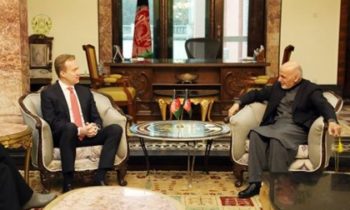
Left to right: James Mattis (US Secretary of Defense) and NATO Secretary General Jens Stoltenberg

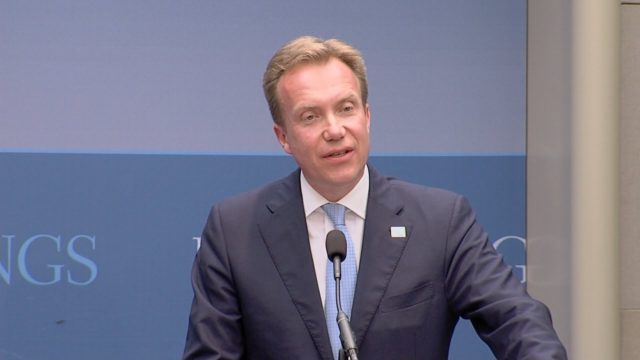
Norway’s Foreign Minister Borge Brende on Thursday reacted to Pristina’s plans to turn the Kosovo Security Force into an army.

“I urge Kosovo authorities to refrain from transformation of the Kosovo Security Force (KSF) into an armed force without a constitutional change and an inclusive political process,” Brende said in a statement.

“Norway will remain a partner in Kosovo´s efforts for reforms and Euro-Atlantic integration. Regional stability and cooperation is a prerequisite for deeper integration. Normalization of the relations with Serbia will have our full support,” he added.

Previously, NATO and the US stated their opposition to the plans, something acknowledged by Kosovo President Hashim Thaci, who launched the initiative earlier in the week.

Belgrade strongly opposes the possibility of Pristina creating an army, and has interpreted the lack of support for the idea from the West as its diplomatic victory.

(b92)

March 10, 2017 0 comments
0 FacebookTwitterPinterestEmail
Norwegian American

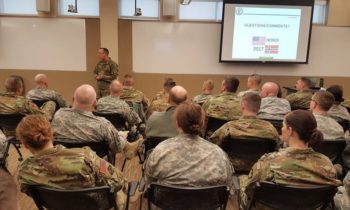
Norwegian politico on Trump, Putin, NATO at UND

by Nadarajah Sethurupan March 10, 2017
written by Nadarajah Sethurupan

Odd Einar Dorum, a Norwegian politician with a resume stretching to the late 1970s, spoke at UND’s Center for Innovation for the better part of an hour Thursday, remarking on Norwegian defense, NATO and President Donald Trump.

He even cracked wise for a short moment, joking about the bond between the U.S. and Norway. Part of the Norwegian-American experience is to think about the past, and he’s got nothing against going to Minot and eating lutefisk, he said, drawing laughs from a group of several dozen attendees.

“But I would also like people to know contemporary Norway,” he said.
Dorum is a former member of Norway’s Parliament, as well as a former justice minister and transportation and communications minister. The lion’s share of his remarks Thursday were about Norway’s relationship with NATO and Russia. He characterized Russia as a quiet, consistent threat with a military that’s been revitalized by President Vladimir Putin. He traced Norway’s relationship with Russia back through the Cold War and all the way to Norway’s membership in NATO in the late 1940s—an alliance he described as critical and deeply dependent on the U.S. for credibility.

“During the Cold War, (Norway) was a peaceful place,” he said. “But if there had not been peace, it would have been close to destruction.”

NATO has been in the spotlight since Trump’s election to the White House. The president previously called NATO “obsolete,” though he since declared his support for the alliance. The president has continued to demand that member nations contribute more to the organization.

“We strongly support NATO,” Trump said last month. “We only ask that all of the NATO members make their full and proper financial contributions to the NATO alliance, which many of them have not been doing. Many of them have not been even close. And they have to do that.”

Concerns about Trump’s attitude toward NATO have been amplified by recent unsubstantiated reports of connections between his campaign and Russia and suggestions that Russia interfered in the presidential election.

Dorum offered a range of comments on the Trump administration on Thursday, both during his remarks and to the Herald in an interview after his presentation. He praised the credibility of key Trump appointments such as Secretary of Defense James Mattis and National Security Adviser H.R. McMaster.

He also said he thinks it’s reasonable that NATO countries pay their fair share, and he made apparent reference to Trump’s suggestion the U.S. “get along” with Russia.

“If it is possible, by some means, to lessen some tensions, that is good,” Dorum said.

He said he’s standing firm though that the NATO treaty agreement—that nations stand ready to support and defend one another—is binding. Norway has to be able to count on the U.S. for support, he said.

“If you want some dialogue in addition to deterrence, that’s fine with me,” Dorum said. “But if you want to put dialogue instead of deterrence, that’s dangerous. I’m a strong supporter of D and D—deterrence and dialogue.”

(grand forks herald)

March 10, 2017 0 comments
0 FacebookTwitterPinterestEmail
NATO and Norway

Norway: A Model for NATO

by Nadarajah Sethurupan March 10, 2017
written by Nadarajah Sethurupan

Norway faces the challenge of crafting a national defense strategy for the 21st strategy in the face of Vlad Putin’s more aggressive Russia.

Because Putin thinks through his use of military power and designs limited objectives to achieve what he considers in the best interest of Russia, Norway faces a double challenge: how to defend itself against the Russian threat and how to work with allies who are not very good at designing limited objectives for the use of military power.

Complicating all this is the fact that Norway’s allies are all in transition: Brexit Britain, Trump America, and an increasingly uncertain European Union. France and with Germany both face crucial elections and significant uncertainty about their economic, political and security futures.

As Norwegian Minister of Defense, Ine Eriksen Søreide put it recently: “It seems we may have arrived at a time in history where the liberal democracy, as we know it, is facing one of its most serious challenges to date. The very framework of a stable Europe and transatlantic relationship is under pressure.”

Within this context, Norway is focused on ways to enhance national security and ways to work with allies. They are doing so with military forces is significant transition as well – the purchase of the F-35 is seen as a key lever for change, much more than any other single asset, but it is part of a process not an additive platform.

“We are clearly modernizing our platforms but we need to transform our force, our culture and our processes as well,” Maj. Gen. Skinnarland, the new Chief of Staff of the Royal Norwegian Air Force told me in a recent interview. “The strategic decisions made in the long-term investment will make us, even though small, one of the most modern air forces in the world in some years to come. It is not just about adding new platforms; it is about shaping joint capabilities for the defense of Norway in a high intensity operational setting.”

The Norwegians I spoke with on my recent trip underscored the importance of the NATO Treaty’s Article III as a key for the next phase of the alliance’s development, shaping effective ways to defend the nation in a way that allows for greater capability to work with allies. In all the debate about Article V, the importance of Article III as a key to being able to uphold the overall Treaty is often forgotten.

Article III reads: “In order more effectively to achieve the objectives of this Treaty, the Parties, separately and jointly, by means of continuous and effective self-help and mutual aid, will maintain and develop their individual and collective capacity to resist armed attack.”

In my interview with the Norwegian Deputy Minister of Defense in his Oslo office, Mr. Øystein BØ, emphasized the article’s importance: “Article III is the obligation to have a strong national defense and to be able to be a net contributor to security. There is no free ride in NATO, we’ve all got to do our part to be able to defend each other.”

In my interview with Lt. Gen. Jakobsen and the Commander of the Norwegian Joint Headquarter, he characterized the overall approach as follows: “We are creating the new national defense capabilities in order to create a threshold so that a violation of Norwegian territory will not be cost effective. And clearly we cannot do this alone, and hence our NATO membership and engagement with allies is crucial. And with the nuclear dimension, clearly the American relationship along with Britain and France is crucial as well.”

Several speakers highlighted the central significance of distributed strike or shaping a kill web to get maximum effect from the force. The American’s recent Red Flag 17-1 exercise highlighted this capability in terms of working relationships between Typhoons and F-35s, but this was seen by the Chiefs of the Norwegian Navy and Army as requiring a major cultural and technological shift.

There was a clear sense that the Norwegian and the allies are at the beginning of new phase, not simply shaping an upgraded legacy force. New templates, new ways of thinking are crucial.

A key element is creating, deploying and maximizing new kinetic effects. The Kongsberg role in building missiles for Norway and for key allies is at the heart of the national defense industrial consideration for Norway. Weapons being provided for the F-35 or to the new German submarines are part of this overall effort.

Distributed strike was highlighted throughout in many presentations and the need was seen driven by how the Russians are shaping a bastion force from which they are projecting power. Clearly, this is a task greater than Norway can handle on its own, which means that a new type of defense grid needs to be shaped in the North Atlantic. This is about operational synergy, which won’t come from simply buying an F-35 or a P-8. They are key capabilities but the synergy comes from working with the other F-35 partners in the region (UK, Denmark, the US and the Netherlands), as well as the standing up of a P-8 force to operate in the region with the UK, operating from RAF Lossiemouth in Scotland, the US from Iceland and the Norwegians operating from their own territory.

Rear Adm. Lars Saunes, Chief of the Norwegian Navy, pointed to the F-35s, with their ability to have significant reach through the MADL linkages among the fleet and the ability to process data in real time, as well as the P-8 maritime domain awareness strike platform, which can be cross-linked among Norwegian, American and British platforms.

The role of the UK is seen as of growing significance in the Northern Tier defense efforts, with the coming of the P-8, the F-35 and the Queen Elizabeth carriers. As Keith Eikenes, director of Norway’s Department for Security Policy and Operations, put it in an interview in Oslo prior to the airpower conference:

“The UK bilateral relationship is very significant for Norway. We have a small number of allies, the US and the UK being especially important ones, shaping new capabilities for North Atlantic defense. We are looking at ways to enhance that working relationship. Even when the North Atlantic defense part took a dip after the end of the Cold War, the working relationship with close allies remained.”

National, allied and partner exercises are crucial means to shape these new ways ahead, and there was a clear sense that finding ways to more effectively train for high intensity operations is important. Also, working with Sweden and Finland is crucial, as is finding ways for Norway to shape a defense concept, one which can reach back to the UK and forward to Finland.

Clearly, NATO is in times of fundamental change and the Norwegians are among the core allies who take the challenge seriously.

“Now, we do not consider Russia a military threat against Norway today. I want to be clear on that. However, Norway is NATO in the North, and we share a border with an increasingly assertive neighbor with superpower aspirations, a neighbor who has modernized its Armed Forces, significantly increased its military presence in the High North, reintroduced the old East versus West schismatic thinking, engaged in subversive actions against Western democracies, violated international law and undermined European stability,” the minister said.

That approach has significance beyond Norway and is relevant to the NATO alliance’s future.

(breaking defense)

March 10, 2017 0 comments
0 FacebookTwitterPinterestEmail
Russia and Norway

Russian in Norway to «Dagbladet»

by Nadarajah Sethurupan March 9, 2017
written by Nadarajah Sethurupan

Commentary from the Embassy of the Russian Federation in Norway to «Dagbladet» in connection with the joint Norwegian-US development of parameters for the Norwegian contribution to the missile defense system of NАТО.

Deployment of strategic missile defense capabilities within the global missile defense system might potentially jeopardize the efficiency of Russian strategic nuclear forces as a means of deterrence.

A further improvement of the missile defense system, an increase in their numbers and their further approach towards the borders of Russia (and, as a result, to the places where the Russian strategic missiles are located) will only make the situation worse.

This will mean a serious undermining of the strategic stability and hence also that the character of the whole system of international relations will be less stable and more unpredictable.

USA and the NATO-countries understand this very well.

In the preamble to the Russian-American «Strategic Arms Reduction Treaty» of 2010 it says that there should be «an interrelationship between strategic offensive arms and strategic defensive arms», and also that this «interrelationship will become more important as strategic nuclear arms are being reduced». When the Treaty was signed, the Russian side declared that the new treaty «could only function and be viable if there would not be any qualitative and quantitative expansion of capabilities in the American missile defense system», meaning that a change in the situation with the missile defense system could be one of the possible reasons for Russia to withdraw from the Treaty.

The fallaciousness of the path followed by the US and NATO is that it goes against one of the basic principles of international relations in the OSCE-area, a principle stating that the countries should not try to strengthen their own security at the expense of the security of others.

The US has suggested removing the Russians concerns through «setting up the cooperation in the field of missile defense systems» and an «explanation» of the American plans for a missile defense system.

But what actually did happen? Firstly, in 2002 the US unilaterally withdrew from the agreement on missile defense of 1972. Secondly, the original task of preventing limited missile attacks by «rogue states» or terrorists was consigned to oblivion. Instead the task is to secure «an effective, reliable and layered» missile defense system to meet the growing missile threats, or in other words, we are already talking about a global missile defense system. And after the situation with the Iranian nuclear programme has been solved, the main argument used by Washington for deployment of elements of the strategic missile defense system in Europe, has vanished. We suspect that even if it would be possible to reach an agreement on the nuclear problem on the Korean peninsula, one would find new pseudo-arguments for a continuation of the deployment of a global missile defense system.

Russia has several times come up with initiatives in this area, initiatives having as their goal to change this question from an «irritable» one to one of cooperation. All of these initiatives were turned down by the US and its NATO allies.
Russia has aimed at not allowing a unilateral deployment of an unlimited global missile defense system, including the creation of a positioning area in Europe, has suggested organizing information exchange, joint supervision of missile tests, joint missile exercises and studies in the field of missile defense systems. We have suggested to the US not to deploy elements of this system in space, to do a collective assessment of the missile threat and to work out collective response measures. We have suggested to the NATO-partners to jointly work out a concept and an architecture for the European missile defense system, a system that should be managed jointly and not undermine the strategic stability but be oriented towards stopping threats coming from outside of the Euro-Atlantic zone. Russia was also ready to give the US information from the radar stations in Gabala (Azerbaijan) and Armavir about the launching of missiles from the Middle East.

The US also came up with some initiatives (like the loading of interceptor missiles in the shafts only if a missile threat «materialized», the permanent presence of Russian observers on the sites, the use of technical means of control, the limitation of the sectors of emissions from and strength of the radar stations etc.), but later they themselves abandoned these initiatives. The US and its allies were not ready to make a real move in this direction and to consider the Russian approach. Emphasizing «the responsibility of NATO to defend its own territory» they chose the NATO approach in order to decide upon the parameters of the future European missile system without the participation of Russia. And the US/NATO refused to give us legally binding assurance that the missile defense system of the US/NATO would not be directed against Russia.

A group of specialists from the scientific institute of the MOD of Norway, together with the American agency for the global missile defense system, are working on the parameters for a possible Norwegian contribution to the missile defense system of NATO. Оslo takes part in the US-lead Maritime Theater Missile Defense Forum and exercises held within the framework of this forum. Five Norwegian frigates could be used by the missile defense system. They are fitted with the missile weapon system «Aegis». It has been announced that a new radar within the framework of the modernization of the «Globus-2» radar station in Vardø will be built before 2020. This radar might, according to experts, perform tasks for the missile defense system.

We talk much about not allowing the militarization of our common Arctic region. In a situation when elements of the missile defense system of NATO are deployed, Norway will deliberately take the problem of the missile defense system to this peaceful and non-confrontational region and play the role of NATO’s combat outpost directed against Russia (it is highly unlikely that the Norwegian military will try to intercept missiles from the Middle East or North Korea over its own territory and we are only talking about Russia). The Norwegian position has developed noticeably. To quote from the political platform of the Norwegian government from 2005, at the time headed by prime minister Jens Stoltenberg who is today Secretary General of NATO: «…Norway will work to abandon the existing plans for an missile defense system» (Plattform for regjeringssamarbeid, «…Norge skal arbeide for å skrinlegge dagens planer for rakettforsvar»).

The Norwegian government should be aware holding such positions, that have not been provoked, are unilateral and might lead to unpredictable actions, could be damaging and assess the possible consequences of them to their fullest extent. NATO consists of many countries but not all of them are going to deploy elements of the missile defense system.

What should Russia do in such a situation? Believe in the empty words of representatives of NATO when they say that this system is not aimed at Russia? Since US/NATO/Norway does not want to solve this question through diplomatic channels or through talks, then the only answer left is the military-technical one. Russia has to upgrade its strategic nuclear forces so that they will be capable of surmounting any missile defense system. Russia will do its utmost so that that will not lead to an arms race and keep the strategic stability, but the possibility of undermining of the stability will still be higher.

Russia is not a threat to Norway but will work out its military plans on the basis of the real risks. It is upsetting that no consultations are being held about this serious question. Even if we do not find a solution at once, dialogue and negotiations are always good and useful.

The actions of the USA and NATO, Norway included, might lead to problems not only in the North, but to undermining of the strategic stability with catastrophic results for the security both of Europe and of the whole world.

(Embassy FB)

March 9, 2017 0 comments
0 FacebookTwitterPinterestEmail
Environment

Norway’s pace-setting on EVs

by Nadarajah Sethurupan March 9, 2017
written by Nadarajah Sethurupan

For the first time more electric and hybrid vehicles are being sold in Norway than petrol and diesel vehicles. The new milestone in the rapid growth of EVs is largely the result of incentives offered by the Norwegian government in a bid to phase out sales of new oil-powered cars by 2025.

The latest figures show that new battery-powered EVs made up 17.6% of total sales in January. With hybrid cars making up 33.8%, that makes a combined total of 51.4%. Although the totals dropped in February, overall sales for the first two months of the year were split almost exactly 50:50.

The measures to encourage people in Norway to buy EV and hybrid cars include tax incentives, privileged parking in municipal car parks, exemptions from charges on toll-roads and ferries, and access to bus lanes. The country has also invested heavily in charging infrastructure, which is likely to continue as the government has set a target of one charging station for every 10 vehicles by 2020.

As a result, more than 100,000 EVs had been sold by December in a country of just 5.2 million inhabitants. Taking EVs and hybrids together, Norway has around 500,000, second only to China and making it by far the global leader in terms of low or zero-emission vehicles per citizen. Some 98% of Norway’s electricity comes from hydropower.

The country has set itself a target for new cars of 85 grammes of CO2 per kilometer by 2020; it is currently at 88g, down from 133g when the decision was taken in 2012.

Commenting on the January sales figures, Norway’s climate and environment minister, Vidar Helgesen, said: ‘This is a milestone on Norway’s road to an electric car fleet, and it serves to showcase that green transport policies work.’

As well as tax breaks, the growth in EVs and hybrids is also the result of advances in EV technology. An official from the European Environment Agency told the Guardian: ‘People aren’t just using EVs as hobby cars for city shopping any more, they’re switching to full e-mobility because it’s possible now.’

The growth in EV sales prompted Norway to consider banning all new petrol and diesel cars by 2025. The government has confirmed that the elimination of new fossil-fuel cars by 2025 is a target though it won’t ban the vehicles outright. It wants to reach the goal through ‘a strengthened green tax system based on the polluter pays principle’, it said in a statement, suggesting that, while some of the incentives will not be able to last forever, a move away from tax breaks and special treatment is not imminent.

If the target is to be reached, it will see a massive surge in EVs. At the end of 2015, Norway had just 1,400 EVs on its roads, whereas by 2020 it expects to have 250,000 – and this in the country that is Europe’s biggest oil producer.

Meanwhile, last week Beijing announced it was joining two other Chinese cities, Shenzhen and Taiyuan, in converting its entire taxi fleet to EVs. China’s motivation for encouraging electric propulsion is based on improving air quality and reducing dependence on imported oil, and it sends a signal to the world’s carmakers that they have to go electric if they want any presence in the Chinese market. China remains the world’s largest electric vehicle market, with twice as many EVs than Europe and nearly four times the number in America.

(transport environment)

March 9, 2017 0 comments
0 FacebookTwitterPinterestEmail
Farming

‘Recreational and cultural’ killings will be allowed if the law passes – Norway

by Nadarajah Sethurupan March 9, 2017
written by Nadarajah Sethurupan

Norway is moving to allow recreational hunting of its “critically endangered” population of wolves, prompting furious condemnation from animal rights campaigners.

Around 65 of the animals live in the Scandanavian country and another 25 cross the border from Sweden.

Last year the government announced up to 47 could be killed by hunters, but that quota was lowered to just 15 two days before hunting season opened.

Now the right-wing minority government is set to approve a new amendment in the favour of hunters, allowing “recreational and cultural” killings of the creatures, according to Media.

Until now, only predators considered a “potential nuisance” to farmers could be exterminated.

There are nine packs which spend all or part of their time in Norway, but the government’s targets call for just four to six, prompting criticism from animal rights groups like the Worldwide Wildlife Fund (WWF), the Conservation Fund and the Norwegian Zoological Fund.

“Changing the law to shoot more endangered animals is outrageous, especially in the so-called eco nation Norway,” said Nina Jensen, the head of the WWF in Norway.

Wolves are listed as “critically endangered” on the 2015 Norwegian list of endangered animals.

Farmers, hunters and forest owners have always held the right to kill animals they consider a nuisance, putting them on a collision course with green activists and large swathes of the population.

The new measure is currently up for consideration in the Norwegian parliament, but is unlikely to meet with much opposition, according to The Local.

The wolf currently accounts for eight per cent of the 20,000 sheep Norway’s farmers lose to predators each year.

Until the mid-19th century, large populations of brown bears, wolverines, wolves and lynxes prowled the Norweigian tundra. By the 1960s, though, wolves had been hunted to effective extinction, and bears almost followed.

But they were protected by law in 1971 and 1973 respectively, and numbers have been crawling back up thanks to Finnish-Russian wolves roaming into Norwegian territory.

There are 430 wolves across the whole of Scandinavia, up from fewer than 10 in the 1990s. They remain under threat from loss of habitat and poachers.Illegal hunting is the largest cause of wolf mortality in the region.

(independent)

March 9, 2017 0 comments
0 FacebookTwitterPinterestEmail
Peace Talks

EU, Norway, UK and the UN to co-chair the Brussels Conference on Syria

by Nadarajah Sethurupan March 9, 2017
written by Nadarajah Sethurupan

Bringing together ministerial representatives from 70 delegations, including from the EU and the region but also the wider international community, the United Nations, major donors and civil society, humanitarian and development organisations, the conference will address the situation in Syria and the impact of the crisis in the region. The conference will assess where the international community stands collectively in fulfilling commitments made at the London Conference in February 2016 and agree on additional efforts needed to meet the needs of those affected by the crisis. It will reconfirm existing pledges and identify additional support to Syrians in need inside Syria and in neighbouring countries, as well as to the respective host communities, in response to the UN coordinated appeals.

Discussions will also focus on how the international community can support a lasting political resolution to the Syrian conflict through an inclusive and Syrian-led political transition process based on the relevant Security Council resolutions, and particularly the framework of the UNSC Resolution 2254, and the Geneva communiqué. The conference will reconfirm the international community’s commitment to continuing to deliver assistance to Syrians in need, as well as their host communities, and assess the conditions under which post-agreement assistance could be provided once a credible political transition is underway.

On 4 April, thematic sessions will be organised by the EU with UN agencies and other international organisations, NGOs and civil society, focusing on various aspects of international support provided in response to the crisis in Syria and the region.

___________

The Brussels Conference on Supporting the future of Syria and the region builds on the London Conference on Supporting Syria and the region of 4 February 2016. One year ago, the international community convened in London under the leadership of the United Kingdom, Germany, Kuwait, Norway and the United Nations, reaffirming its solidarity with millions of vulnerable people living in Syria and Syrian refugees and affected host communities in the region, and building on the commitments made at the three previous pledging conferences in Kuwait from 2013-15.

At the London Conference, the donor community pledged significant financial support for humanitarian assistance and protection in Syria, as well as civilian stabilisation measures to strengthen resilience in host communities. It also reiterated that there can only be a political solution to the crisis, within the existing agreed UN framework and based on the Geneva Communiqué and UN Security Council Resolution 2254.

The London Conference concluded with commitments from both the international community and Syria’s neighbours to meet the immediate and longer-term needs of those affected by the crisis, including further support for education and livelihood opportunities for Syrian refugees and host communities in Turkey, Lebanon, Jordan, Iraq and Egypt.

March 9, 2017 0 comments
0 FacebookTwitterPinterestEmail
Crimes

Missing Norway chopper part found

by Nadarajah Sethurupan March 9, 2017
written by Nadarajah Sethurupan

Divers have uncovered a vital missing component of the helicopter involved in a fatal crash off Norway last year that will provide a further clue for investigators looking into the cause of the accident.

The so-called second-stage planet gear carrier was found by divers from the Norwegian Naval Diving School in the sea between the crash site and the location at which the helicopter’s main rotor head became separated from the fuselage of the aircraft, according to the Accident Investigation Branch Norway (AIBN).

The component will be now be subjected to scrutiny by AIBN investigators as part of the ongoing probe into the 29 April accident in which all 13 people onboard the CHC-operated Super Puma EC225LP were killed after the helicopter crashed near a small island east of Turoy en route from Statoil’s Gullfaks B platform for Bergen’s Flesland airport on Norway’s west coast.

The investigation has shown that the accident was a result of a fatigue fracture in one of the eight second stage planet gears on the chopper, with similarities to an accident involving a similar aircraft off the coast of Scotland in 2009.

The AIBN said in a statement the formerly missing part was “vital” to the ongoing investigation.

(upstreamonline)

March 9, 2017 0 comments
0 FacebookTwitterPinterestEmail
Science

Norway’s new powerhouse for Artificial Intelligence

by Nadarajah Sethurupan March 9, 2017
written by Nadarajah Sethurupan

Norway’s new powerhouse for artificial intelligence (AI) opens in Trondheim today. The new centre, Telenor-NTNU AI-Lab, will strengthen national competitiveness and add valuable, future-proof competencies to the Norwegian society.

“Artificial intelligence is perhaps the single most important technology of our century. In the future, AI will drive your car, revolutionize cancer treatment and make public services more efficient. With this opening we want to accelerate the education, research and competency building which will be crucial for Norway’s ability to compete in the digital future,” says Sigve Brekke, President & CEO of Telenor Group.

The new centre is financed by Telenor with NOK 50 million and the company’s researchers will participate in joint projects at the lab. NTNU (Norwegian University of Science and Technology) contributes with academic resources, infrastructure and technical assistance while the research organization SINTEF will contribute with bringing the knowledge into practical use. Telenor-NTNU AI-Lab will be an inclusive and sharing centre where members of academia, businesses, startup communities, organisations and authorities can contribute to and benefit from the development of new knowledge. The lab will be based on established principles for research ethics, to which contributors must adhere.

“Artificial intelligence is an area where Norway can take a position internationally while simultaneously developing services to the benefit of Norwegian society. The most important aspect of the Telenor-NTNU AI-Lab is that we’re now creating the foundation of knowledge for something we don’t yet know what is. I believe that we will help create a society where technology makes our personal and professional lives simpler, smarter and better,” says Gunnar Bovim, Rector at NTNU.

The objective is that companies and organizations will contribute with both real-life problems to be addressed as well as datasets for the scientists to work on together with the involved parties. Telenor will make available large and anonymized datasets from its mobile- and IoT networks.

“Artificial intelligence represents a fundamental technological shift that opens up for new opportunities, increased competitiveness for Norwegian industry, and greater efficiency in the public sector. SINTEF is betting heavily on AI and believe it is vital that leading expertise in this area is developed in Norway. In close collaboration with NTNU and Telenor, SINTEF will contribute to the development of technology based on AI that will increase value creation in Norway,” says  Alexandra Bech Gjørv, CEO of SINTEF.

(N.sethu)

March 9, 2017 0 comments
0 FacebookTwitterPinterestEmail
Environment

LOVE in front of Northern Lights

by Nadarajah Sethurupan March 9, 2017
written by Nadarajah Sethurupan

An Australian man managed to secure a “great timing” to propose to his significant other: under the majestic and eye-catching Northern Lights.

In a second attempt to place the sparkler on his girlfriend Karlie Russell’s ring finger, 34-year-old Dale Sharp finally succeeded in front of the Aurora Borealis in Lofoten, Norway.

His first attempt was during their vacation to Iceland last year. Sharp, 34, had tucked the engagement inside a bottle of hand cream. However, when they found out that their luggage was overweight before their connecting flight from the Faroe Islands, Russell, 29, disposed of the bottle containing the ring. Sharp found out that the ring was thrown away weeks after their trip.

“I didn’t know until a week, weeks after when we were in Iceland and I was looking everywhere for the ring,” Sharp explained to Daily Mail Australia. “I asked her where the moisturizer was and she told me she threw it out in the airport.”

That memorable day marked the 30th time Sharp and Russell, both landscape photographers, witnessed the Northern Lights together. “We both love chasing the Northern Lights and photographing them together. So, it seemed pretty fitting,” he added. “I hadn’t heard or seen anyone do it (propose at the Northern Lights) before, and I wanted to do something different from everybody else.”

He initially wanted to pop the question during the seventh anniversary of their first date, but Sharp wanted to seize the picturesque view of the Northern Lights during their two-month working trip to the Arctic. “It was the most amazing display of color in the Aurora that we’ve ever seen,” he said. “I wanted to take [the] full opportunity and make it happen at its absolute best. The moment was right, it felt good, so why not.” After seconds of astonishment and bliss, Russell agreed to marry him.

Sharp’s engagement shot, which he pulled off by setting the camera on timer, is now adored by thousands of people on Facebook and Instagram.

“The most ironic thing is that we’re both landscape photographers, but have zero photos hanging up on our walls of our images,” Dale revealed to the news site. “But this is one image that we want to keep for ourselves, and hang up on the wall.”
(lifestyle)

March 9, 2017 0 comments
0 FacebookTwitterPinterestEmail
Environment

Norway’s Coal Divestment Far From Complete

by Nadarajah Sethurupan March 8, 2017
written by Nadarajah Sethurupan

In response to the Norwegian Government Pension Fund’s new “Responsible Investment” Report, NGOs warn that the divestment of many coal companies is still overdue. In 2015, the Norwegian Parliament directed the Pension Fund’s manager, Norges Bank, to divest companies that “base 30% or more of their activities on coal” by the end of 2016.

In August 2015, Norges Bank had estimated that the coal divestment action would cover around 120 companies with an investment value of approximately NOK 55 billion. “But the job is only half done,” comments Christoffer Klyve from Framtiden i våre hender (The Future in our Hands), Norway’s largest environmental organization.

According to analysis undertaken by the German NGO urgewald, Framtiden i våre hender and Greenpeace Norway, the Norwegian Government Pension Fund Global (GPFG) still has investments of over NOK 26 billion in 32 companies that own coal mines or coal-fired power plants. And that is not all: The GPFG also has investments of over NOK 2 billion in 15 companies that transport coal or build coal power stations. Among these is, for example, Harbin Electric, the world’s number one manufacturer of new coal plants.

“We were especially shocked to see that the GPFG is still invested in RWE, a company that produces almost 60% of its power in coal-fired power stations and is Europe’s biggest CO2 emitter. RWE is also part of a joint venture that operates mountaintop removal mines in the United States, a practice that people in Norway abhor,” says Heffa Schuecking, director of urgewald. “Clearly, this company should have been among the first to go.”

“This is not good enough. NBIM needs to explain why they have not come further in their divestment from coal, more than 1,5 years after the Norwegian Parliament made the decision to divest from coal” says Truls Gulowsen from Greenpeace Norway. “It is distressing to see that we are invested in companies like India’s Power Finance Corporation or China’s Shanghai Electric Group which are among the top developers of new coal plants worldwide. Applying the new climate criteria put forward by the Norwegian Parliament should mean dropping such companies.”

According to the NGOs’ analysis, the GPFG is invested in companies that are planning to build over 51,000 MW of new coal-fired capacity. “This is equal to Germany’s entire fleet of coal-fired power stations. The return on such investments is not wealth for future generations, it is a 4°C world,” says Schuecking.

(N.Sethu)

March 8, 2017 0 comments
0 FacebookTwitterPinterestEmail
Science

Satellite Solutions Worldwide to buy Australian and Norwegian assets for £1.8m

by Nadarajah Sethurupan March 7, 2017
written by Nadarajah Sethurupan

Broadband provider Satellite Solutions Worldwide Group is to buy BorderNET Internet in Australia and the customer bases of NextNet and AS Distriktsnett in Norway all for a combined £1.8m in cash and shares, bringing an additional 5,500 customers in total.

The acquisitions are part of the company’s roll-up strategy as it will integrate BorderNET’s operations into the existing Australian business Skymesh and NextNet and AS Distriktsnett will be integrated into its existing Norwegian hub, Breiband.

BorderNET is a specialist broadband provider to farming and remote communities and the Australian government, through NBN Co, will continue to invest in its SkyMuster satellites which will provide increased access to satellite broadband services.

The BorderNet acquisition is subject to consent from NBN Co, the Australian government’s broadband provider, and the company will pay AU$1,85m (£115m) in total comprising of an initial payment of AU$1.43m (£894,577), including a retention amount of AU$200,000 (£124,300) and the balance of AU$413,125 (£256,759) will be paid in shares.
BorderNET recorded a loss of AU$26,804 (£16,554) in 2015 although it has an annualised revenue run rate of over £1m and the company expects BorderNET to be profitable under ownership.

Meanhile, for NextNet the company will pay 5,04m Norwegian kroner (£489,486) and a further 200,000 kroner (£19,424) for stock and certain infrastructure assets.

NextNet also reported a loss of 1,53m kroner (£148,215) in 2015 and has an annualised revenue run rate of about £800,000.

For AS Distriktsnett the company will pay 832,500 kroner in cash (£80,852) for the customer base, and the overall consideration is subject to adjustment in cash in respect of final customer numbers at completion of the acquisition.
Chief executive Andrew Walwyn said: “These are the first three acquisitions of 2017, which significantly strengthen our position in these key regions. Having established strong hubs in Norway and Australia last year, we can now readily acquire sub-scale, local businesses and rapidly turn them into profitable assets by integrating them onto our global platform.

“We continue to grow user numbers and revenues in these territories and to actively pursue acquisition opportunities, in line with our global strategy, as we continue our consolidation of last mile broadband across Europe and Australasia.”

Shares in Satellite Solutions were down 0.11% to 8.86p at 0857 GMT.

(digitallook)

March 7, 2017 0 comments
0 FacebookTwitterPinterestEmail
Asia and Norway

Norwegian fund’s investment in Dhaka

by Nadarajah Sethurupan March 6, 2017
written by Nadarajah Sethurupan

From left to right: The Danish Ambassador to Bangladesh, H. E. Ms. Hanne Fugl Eskjær and the Norwegian Ambassador to Bangladesh, H. E. Ms. Merete Lundemo with the local women and children. Photo: Royal Norwegian Embassy

Norway’s sovereign wealth fund invested $112 million in Bangladesh’s stockmarket in 2016 — a six-fold rise compared to the previous year.

The Norwegian Government Pension Fund Global, the world’s biggest wealth fund, made the investment in 15 companies that are listed on the Dhaka Stock Exchange, the premier bourse.

The wealth fund first made investment in Bangladesh in 2015 with a modest amount of $19 million, according to the Norwegian embassy in Dhaka. The huge growth in investment in Bangladesh by the Fund is very positive, it said.

“I see this as a confirmation that the Bangladeshi economy is maturing and companies are regarded as promising investments,” said Norwegian Ambassador Sidsel Bleken.

She said the investment by the fund is made on a strictly commercial basis and is not an expression of political preferences or decisions.

The fund has clear expectations of companies in areas such as corporate governance, shareholder rights, social issues and the environment. The guidelines for investments are made by the Norwegian parliament but the day-to-day management is not influenced by politicians.

The ambassador pointed out that global investors such as the pension funds are looking for a stable and predictable business environment.

The Bangladesh government needs to continue to create a level-playing field where companies are treated on an equal basis, Bleken said.

The total market value of investments done by the fund is close to $900 billion.

The fund was established in 1990 and is built up by revenues from oil and gas activities on the Norwegian continental shelf. The fund is managed by an entity under the National Bank of Norway.

The fund said it is saving for the future generations of Norway. One day the oil will run out, but the return on the fund will continue to benefit the Norwegian population.

The fund owns stocks in 9,000 companies in 77 countries. In total, it holds 1.3 percent of all public listed shares worldwide. To avoid pressure on the domestic economy all investments by the fund are made outside the country. The fund gained $53 billion last year.

Apart from the Norwegian fund, several global investment banks such as Morgan Stanley, JPMorgan and Goldman Sachs as well as asset management firms such as BlackRock have presence in the capital market of Bangladesh.

However, foreign investment, also known as portfolio investment, accounts for only 1 percent of the premier bourse’s total market capitalisation, which stood at Tk 372,662 crore at the close of trade yesterday.

Net foreign investment was Tk 1,340 crore in 2016, up from Tk 185 crore in the previous year.

March 6, 2017 0 comments
0 FacebookTwitterPinterestEmail
Science

Norway lagging ‘far behind’ on internationalisation

by Nadarajah Sethurupan March 6, 2017
written by Nadarajah Sethurupan

The head of Norway’s biggest business university has decried the lack of government focus on attracting international students, warning that the nation is already “far behind” other European countries.

In an interview with Times Higher Education, Inge Jan Henjesand, president of BI Norwegian Business School, said discussion of attracting international students was “not existing” among policymakers, despite the fact there is a strong demand among Norway’s higher education institutions. He said the sector believes attracting international students will improve Norwegian universities.

“Countries such as Germany, Denmark and the Netherlands have drawn up specific and targeted strategies for recruiting students from other countries,” he said. “For these countries it is quite obvious that such strategies are essential in a knowledge-based economy. Norway is already far behind.

“The best students from abroad will strengthen the learning environment at Norwegian institutions, both for [themselves] and also for our Norwegian students. Most Norwegian institutions are focused on international students, but I don’t see any strategy from the authorities [as] in other countries [where they believe] it’s important to attract top international students.”

According to the Database for Statistics on Higher Education in Norway, there were 25,424 overseas students on undergraduate and taught postgraduate courses at the country’s higher education institutions in 2016. This includes students from Europe, including countries that are not in the European Union, and 10,157 coming from outside the continent.

Statistics Norway put the country’s total number of students in October 2015 at 266,400, suggesting that international learners, including those from Europe, represent around 9.5 per cent of this cohort.

In contrast, non-EU students alone represented 14 per cent of all students at UK universities in 2015-16.

Around 10 per cent of BI’s 14,453 full-time students are from outside Norway, but Dr Henjesand said he wanted this figure to increase.

“I wouldn’t say it’s difficult, but when we recruit international students, we not only compete with other institutions, we also compete with national strategies,” he said.

He suggested government did not view international student recruitment as a priority, because they thought making higher education free for all students, including international ones, was more important. He also queried whether government viewed higher education as a valuable “export”, despite the 2016 budget recommendations from the Norwegian parliament’s standing committee on education, research and church affairs, to devise a strategy for attracting skilled overseas master’s students. Two years on, Dr Henjesand said, this “hasn’t been followed up”.

“They spent a lot of money in the country [on higher education, so believe that’s enough]. If they [thought international students were a priority], they would have followed up on the note in the budget,” he added.

As recently as last month, Iselin Nybø, a Liberal Party politician and first vice-chair of the standing committee, sent a statement to the minister of education saying that the committee was “concerned” about government underestimating the “importance of getting skilled foreign students into degree programmes in Norway”.

With a national election coming up in September, and as “most parties have this [matter] on their [policy] agenda”, Dr Henjesand added, he hoped government might have a change of heart.

(times higher education)

March 6, 2017 0 comments
0 FacebookTwitterPinterestEmail
Media Freedom

“Hayastan – My love Story” Nogwegian book presented in Oslo

by Nadarajah Sethurupan March 6, 2017
written by Nadarajah Sethurupan

A Norwegian friend of Armenia, presented his Norwegian language book, a love confession to Armenia and Armenians, to an excited audience in Oslo today, the Armenian Cultural Association of Norway reports.

Sven-Erik is an Armenia expert who has written articles and op-eds about Armenia and the Armenian genocide in national and local newspapers. He has led many public lectures about Armenia for different audiences. He has also led a tour for an enthusiastic group of Norwegian tourists. Sven-Erik Rise proudly calls himself an “Armenian-by-choice” and dreams of having an Armenian passport.

The book is a breathtaking story of his love to a country and its people, presented in a most intimate, humoristic and personal manner. In the book, the author takes the reader to a tour in Armenia, where he and his Turkish friend explore the country, meet many exciting people who have many good stories to share. The author discusses the Armenian Genocide, compares with the Jewish Holocaust, analyses the denialist industry and discusses the Artsakh conflict (Nagorno Karabakh conflict). This book is a good mix of a novel and a well researched and argumented work, which makes it easy to read and gives the reader a fascinating and exciting reading experience.

The introduction of the book is written by auther and veteran journalist of the state broadcaster NRK, Jahn Otto Johansen.

The book has got many good reviews, among others from author and TV personality Stein Morten Lier.

The master of ceremonies was Magnus Jensen. Among speakers were author and TV personality Stein Morten Lier, the leader of the Armenian Cultural Association of Norway Liana Arutyunyan, representative of the Armenian Apostolic Church Society Narine Harutyunyan and representative of the Norwegian Helsinki Committee Lene Wetteland.

Half of the print copies were sold by the end of the book presentation.

(armradio)

March 6, 2017 0 comments
0 FacebookTwitterPinterestEmail
Economics

Oslo’s Radisson Blu Plaza Hotel undergoes refurbishment

by Nadarajah Sethurupan March 5, 2017
written by Nadarajah Sethurupan

Oslo’s Radisson Blu Plaza Hotel, is now embarking on a total refurbishment of its 676 rooms, which will be completed after the summer. Norway’s largest and tallest hotel is lifted to new heights, with the aim of giving the guests first-class international hotel experiences.

“The Radisson Blu Plaza Hotel is an iconic landmark in Norway, with which the majority of Norwegians are familiar. We are very proud of the hotel and wish to give our guests the very best experience when they visit us. That is why we are investing so heavily in this upgrade,” says Tarje Hellebust, General Manager at the Radisson Blu Plaza Hotel.

All the rooms on the hotel’s 37 floors are now being brought up to date in keeping with Radisson Blu’s new international ‘BluPrint’ design concept, which combines functionality and sophistication, and is tailored to meet guests’ needs and desires. The architect behind the modern new look, including light-wood floors in every room, is Link Arkitektur.

BluPrint offers modern solutions, combined with exclusive design. Radisson Blu Plaza Hotel’s new look has been locally adapted to provide precisely the hotel experience that our guests want and expect. Among other things, we have Jensen beds in all our rooms, and ultra-comfortable Ekornes London Stressless® recliners, where guests can sit back and enjoy the spectacular views over our beautiful city”, Tarje Hellebust explains.

The BluPrint concept combines famous design classics with unique, custom-made furniture, fabrics and textiles. The concept is currently being implemented at Radisson Blu hotels worldwide, and the Radisson Blu Plaza Hotel will be the first hotel in Norway to offer these delights. Already today, the first guests can enjoy these new rooms as the first floors are already finalized.

A well-known landmark

With its 37 floors and fantastic views over Oslo and the Oslo fjord, the Radisson Blu Plaza Hotel is Norway’s largest and tallest hotel. At the time of its completion, it was the Nordic region’s first real skyscraper. From the moment when Norway’s King Olav V graciously performed the official opening ceremony in 1990, the hotel has been one of the Norwegian capital’s signature buildings.

The Radisson Blu Plaza Hotel enjoys a fantastic location right next to Oslo’s central railway station, and has an excellent reputation internationally. We are constantly striving to provide outstanding service, and focus intently on maintaining a high level of professionalism. No request is too large, and none too small,” says Tarje Hellebust.

The Radisson Blu Plaza Hotel will remain open throughout the refurbishment process, with work proceeding floor by floor during limited periods, so guests are not unduly disturbed. Now the top floors are already finalized and the first guests can enjoy the newly renovated rooms.

The Radisson Blu Plaza Hotel in Oslo is part of the Rezidor Hotel Group, the leading international hotel group in the Nordic region. In addition to the Radisson Blu Plaza Hotel, refurbishment work is underway at a number of other Nordic Radisson Blu hotels. Radisson Blu Plaza’s sister hotel, the Radisson Blu Scandinavia Hotel in Oslo, now has a new skybar designed by Snøhetta, as well as many newly renovated guest rooms and fitness & health centre, including swimming pool.

The Rezidor Hotel Group has embarked on its largest ever refurbishment programme in the Nordic region, and will within few years have invested EUR 110 million on upgrading several Radisson Blu and Park Inn by Radisson hotels all over the Nordic region. The hotels’ property owners are also investing substantial amounts. The aim is to provide guests not only with the best service in the hospitality sector, but also a superb international hotel experience.

(breaking travel news)

March 5, 2017 0 comments
0 FacebookTwitterPinterestEmail
Diplomatic relations

UK MP left out in cold at Royal Marines training in Norway

by Nadarajah Sethurupan March 5, 2017
written by Nadarajah Sethurupan

A SPECIAL guest joined the Royal Marines’ cold weather training sessions in Norway last week as Rugby MP Mark Pawsey braved the arctic conditions.

Training included using military skis, learning how to break ice safely and surviving in sub-zero temperatures.

Mr Pawsey’s visit was part of the Armed Forces Parliamentary Scheme – designed to foster links between MPs and the Armed Forces, and give MPs an understanding of military life and the challenges faced by soldiers.

Founded in the 1980s, the scheme has seen more than 250 MPs graduate from the programme which includes all three branches of the Armed Forces.

Last week marked the second time Mr Pawsey has participated in the scheme, having previously spent time in Afghanistan at Camp Bastian.

He said the armed forces did a tremendous job.

He added: “Conditions were very challenging at times, with temperatures often falling well below 0°C.

“However, the Royal Marines demonstrated to my Parliamentary colleges and I many of the survival skills that make them on of the most effective military units in the world.

“These skills included camping overnight in the freezing temperatures of the Arctic Circle.”

In order to survive, Mr Pawsey had to construct his own survival shelter while learning how to prepare food and build a fire in an unforgiving environment.

Mark said: “If you can survive in the Arctic, you can survive anywhere.

“This is why the Royal Marines do their cold weather training in Norway.

“Rugby has a unique connection to the next generation of Royal Navy vessels through local company GE Energy, where key elements of the propulsion units for the new Queen Elizabeth Class Aircraft Carriers were manufactured.

“It was fascinating to find out more about the Royal Navy and the training they undertake in order to keep Britain safe.”

Rugby is a market town in Warwickshire, England.

(rugbyobserver)

March 5, 2017 0 comments
0 FacebookTwitterPinterestEmail
Environment

Norway to blast through solid rock peninsula to build the world’s first ship tunnel

by Nadarajah Sethurupan March 5, 2017
written by Nadarajah Sethurupan

Norway has given the green light for the world’s first ship tunnel so that cruise liners and other boats can make a shortcut through the fjords.

The project will cost 2.7 billion krone (£260million) but Norway – with its huge North Sea oil and gas wealth – can easily afford it.

The tunnel, through the Stad Peninsula, in western Norway, will be big enough to allow through the giant Hurtigruten cruiseliners, which ply between Bergen and Kirkenes.

The peninsula, which is 1,600 feet high and is dominated by the Tarvaldsegga mountain, is extremely windswept and hazardous and the tunnel will allow ships to shelter from the wind.

A recent review found there had been 46 shipwrecks and 33 deaths in the waters surrounding the Stad Peninsula since 1945.

Media reported that local Conservative MP Bjørn Lødemel called it a ‘historic’ decision.

The tunnel itself is set to become a tourist attraction in its own right when it opens in 2029.

Work is set to begin next year on the tunnel, which will be 148 feet high, 118 feet wide and a mile long.

The tunnel project was chosen, instead of a traditional ship canal, because of the environmental damage a canal would do to the peninsula.

It would allow through ships of up to 16,000 metric tons, including freighters and cruise ships.

Currently the Norwegian Coastal Express cruise ships and ferries sail into the town of Aheim on the Vanylvsfjord and then have to go all the way around the Stad Peninsula to reach Måløy.

But once the tunnel is complete they will be able to sail through the isthmus and come out near the island of Barmøya, saving not just time but also money.

The Norwegian government have now finally thrown their weight behind the project but it still has to be voted on by the country’s parliament, the Storting.

The tunnel has been designed by architects Snøhetta, which designed the home of the Norwegian National Opera in Oslo and the new headquarters in Paris for the French newspaper Le Monde.

The tunnel will be built with a conventional blasting and drilling rig.
The rock which is blasted out to make the tunnel is set to be used to establish new commercial space in the surrounding area.

The Stad Peninsula is considered the boundary between the North Sea and the Norwegian Sea.

Norway has a proud record of building tunnels to overcome its difficult geography, which includes snow-capped mountains and long fjords.

The 15-mile long Lærdal tunnel, which opened in 2000, is the world’s longest road tunnel. It is so long that motorists are encouraged to have a break at refreshment stops and caves are specially lighted along the way to prevent drivers falling asleep.

(dailymail)

March 5, 2017 0 comments
0 FacebookTwitterPinterestEmail
Asia and Norway

Air India flight makes emergency landing in Norway

by Nadarajah Sethurupan March 4, 2017
written by Nadarajah Sethurupan

An Air India Boeing 777-300ER flying from Bombay to New York made an emergency landing at Bodo, Norway airport here after a sick passenger requested medical emergencies mid-air.

“The Bombay – New York flight of Air India made a landing at Bodo airport at around 05:30 AM due to a medical emergency.

The passenger travelling was rushed to a private hospital, Bodø airport director said.

Bodø Airport is a civil airport in Bodø, Norway. Located just south of the city centre, on the westernmost tip of the Bodø-peninsula, it shares facilities with the military air force base Bodø Main Air Station.

The airport has a single concrete, 2,794 by 45 metres (9,167 by 148 ft) runway which runs in a roughly east-west direction.

In addition to jet operations to major domestic destinations, the airport serves as a hub for regional airline flights to Helgeland, Lofoten and Vesterålen.

(N.sethu)

March 4, 2017 0 comments
0 FacebookTwitterPinterestEmail
Asylum

Norway to check asylum seekers’ mobile phones

by Nadarajah Sethurupan March 3, 2017
written by Nadarajah Sethurupan

Norwegian police should be allowed to check mobile phones and other devices owned by asylum seekers’ so officers can vet possible security threats and clarify applicants’ identities, under a new proposal put forward by the government Friday.

A spokesman for the Justice Ministry told dpa it was not clear when the proposal would be put forward. Until now, checks of information on mobile phones or computers owned by asylum seekers have been more random.

Sylvi Listhaug, minister of immigration and integration, earlier announced the plans, saying the checks would be become standard procedure.

“We want the police to be able to uncover circumstances that might pose a security threat,” she was quoted as telling the online news site ABC Nyheter.

Information of interest included travel routes and possible details on human trafficking or migrant smuggling, she added.

Most asylum seekers allow checks of content on request, the report said.

Listhaug is a member of the populist Progress Party, a junior partner in the coalition led by Prime Minister Erna Solberg’s Conservative Party.

(N.Sethu)

March 3, 2017 0 comments
0 FacebookTwitterPinterestEmail
Media Freedom

Website fights trolls by making readers pass a quiz before commenting

by Nadarajah Sethurupan March 2, 2017
written by Nadarajah Sethurupan

A Norwegian news website is forcing readers to take a quiz about the contents of an article before they are able to comment on it, in an attempt to stop abuse and vicious arguments breaking out below stories.

NRKbeta, the technology section of NRK, the country’s public broadcaster, asks its readers to answer a series of multiple choice questions before they can post a comment. It is hoped that ensuring that readers have read the article will lead to a better online dialogue, but also that the few seconds it takes to fill out the quiz will act as a cooling-off period.

Many websites have struggled to ensure that comment sections are friendly and welcoming, with debates often quickly turning to mud-slinging, especially on controversial or partisan topics.

“If you spend 15 seconds on it, those are maybe 15 seconds that take the edge off the rant mode when people are commenting,” Marius Arnesen, NRKbeta’s editor, told Nieman Lab.

The feature is experimental at first, appearing on a handful of stories and with the questions randomised for different users.

For example, on a piece about a tool used to stalk Facebook pages, users must answer questions about who developed the tool, and when the technology was developed.

Last week, Google said it had developed artificial intelligence software that can help moderate online comments by spotting abusive words and phrases. It assigns “toxicity scores” to comments that it believes are offensive.

However, researchers have found that the software is easy to game by slightly altering the spelling of words.

NRKbeta found that while it was easy to circumvent the quiz by installing a piece of code in their web browser that removes it, it imagines that most commentators are unlikely to be tech-savvy enough to take such steps.

On Wednesday Twitter said it was taking action against anonymous trolls by allowing users to block notifications from accounts without profile pictures.

(telegraph)

March 2, 2017 0 comments
0 FacebookTwitterPinterestEmail
Norwegian American

Norway Creates Jobs in the U.S

by Nadarajah Sethurupan March 2, 2017
written by Nadarajah Sethurupan

A new report by the Royal Norwegian Embassy in Washington, D.C. shows that Norwegian companies, U.S. exports to Norway and Norwegian investments create nearly half a million jobs in the United States. The jobs are found in all 50 states and span a range of economic sectors.

The report, Norway Creates Jobs in the United States: Norway’s Impact on the American Economy, prepared by the Embassy, finds that Norwegian companies and investments support 470,000 jobs in the United States, broken down as follows:

32,597 supported by Norwegian-affiliated companies
22,476 supported by exports of goods
26,563 supported by exports of services
388,300 supported by NBIM (Norway’s Government Pension Fund Investments)
The benefits flow both ways. The report shows more than $4 billion in export of goods and services from the United States to Norway.

The states in which Norwegian companies, exports to Norway and investments create the most jobs are California (60,759), Texas (47,364) and New York (37,284). Norway creates at least 1,000 jobs in each of the 50 states.

The report was presented by H.E. Børge Brende, Norway’s Minister of Foreign Affairs, at a breakfast event co-hosted with U.S. Rep. Martha McSally (R-AZ) at the Russel Senate Office Building, Thurs., March 2, 2017.

Also participating in the event were H.E. Kåre R. Aas, Ambassador of Norway to the United States, and representatives of Kongsberg, a Norwegian technology corporation that operates in 12 states.

(norway.org)

March 2, 2017 0 comments
0 FacebookTwitterPinterestEmail
Srilanka and Norway

The Norwegian pension fund doubles its investment in Sri Lanka

by Nadarajah Sethurupan March 2, 2017
written by Nadarajah Sethurupan

Norwegian Government Pension Fund Global, started investing in Sri Lanka in 2015. The fund has more than doubled its investment in Sri Lanka by end of 2016, the Royal Norwegian Embassy in Colombo said in a release.

The Norwegian Government Pension Fund Global is a sovereign wealth fund, with a mandate to safeguard and administer the Norwegian government’s revenue from the oil and gas sector. Valued at 890 billion USD, the Fund is one of the largest sovereign wealth funds in the world, currently holding about 1.3 % of the world’s stocks.

On appointment by the Norwegian Ministry of Finance, the fund is managed by the Norwegian Central Bank through the Norges Bank Investment Management (NBIM). In 2015, the Norwegian government pension fund made its first investments in Sri Lanka. NBIM has strict criteria for stability and high standards of business conduct when opening investments in a country. The fact that NBIM started to invest in Sri Lanka suggests that, the Sri Lankan investments opportunities and market standards have improved in the last years. In 2015, the fund invested 31 million USD in Sri Lanka. NBIM has more than doubled its investment in Sri Lanka to 65 million USD by end of 2016. The increase in investments is mostly a result of larger ownership in the companies they had already invested in.

In line with the goal to reduce risks, the Sri Lankan investments are diversified across several sectors. The biggest investments have been made in the industrial and financial services sectors with 63% of the total investment.

At present 16 % of the fund’s investments are placed in Asia. Japan is the biggest market with 9% of the fund’s total equity placements, while emerging economies such as China and India have respectively 2.7% and 1 % of the equity placements. In comparison 0.6 % of the equity is placed in Africa. The fund historically has invested most money in highly developed countries, therefore, 78% is placed in Europe and in North America. However, this is likely to change as the Norwegian Central Bank has indicated that they will shift more of their investments toward emerging economies in the future.

As one of the largest sovereign funds, the Norwegian Government Pension Fund Global has received global attention, and Norway has been put on the map as an international investor. The Fund is not only distinguished by its sheer size, but also by how it is administrated. NBIM conducts what they call responsible investments, meaning that all investments must be ethically justifiable. Firms that are deemed unethical by the fund’s Council of Ethics are excluded from the fund.

One of the fundamental principles of the Norwegian fiscal policy is the so-called budgetary rule. It states, the government may only spend the expected real return of the fund, estimated at 4 percent per year. This ensures that future generations will also benefit from the petroleum revenue.

It must also be noted that the Norwegian Central Bank is completely independent from the Norwegian Government, therefore, this fund is not used as an instrument of the Norwegian government’s foreign policy, or as a tool in foreign aid. The only mandate for the Norwegian Central Bank is to safeguard and ensure further growth of the fund. Therefore, the investments in Sri Lanka from the Norwegian sovereign wealth fund is an indication of the investor confidence and the potential investment opportunities that are available in the market.

(N.Sethu)

March 2, 2017 0 comments
0 FacebookTwitterPinterestEmail
Africa and Norway

Congo forest: Norwegian government concern about new logging concessions

by Nadarajah Sethurupan February 27, 2017
written by Nadarajah Sethurupan

A river flows through the Salonga National Park, located in the Democratic Republic of the Congo in the Congo River basin. It is Africa’s largest tropical rainforest reserve. With its 33.350 km2, the park is larger then Belgium. The park’s wildlife is under threat from large scale illegal poaching operations. Logging is expanding in the rainforest southwest of the park’s boundaries.

The Norwegian government says it is taking “very seriously” evidence that the Democratic Republic of Congo is issuing new logging licenses after agreeing a $200million initiative to prevent deforestation.

The news comes despite a moratorium on new logging licences being in place in the country since 2002.

The Central African Forest Initiative (CAFI) aims to limit deforestation in the world’s second largest rainforest, the Congo Basin. The deal is also backed by the UK, France, Germany, the Netherlands and the European Union – with Norway providing the vast majority of the funding.

Yet materials seen by Energydesk suggest that the country’s former environment minister Robert Bopolo Mbongeza signed documents pledging logging concessions in northern Congo to two companies.

News of the deal has sparked controversy. Speaking to Voice of America, DRC’s new environment minister, Atis Kabongo Kalonji pledged to cancel the concessions.

A senior official in the DRC environment ministry told Energydesk that the Kabongo has said he will be a “defender of forests”. He said the minister had already moved to cancel the licenses and vowed to not grant new any new logging concessions.

Multi-million dollar fund

The Norwegian government provided $190m of the funding for the CAFI deal, with the UK backing the agreement but providing no direct funding.

Responding to the story, Lars Andreas Lunde, the state secretary of Norway’s climate and environment ministry said his government was taking the revelations “very seriously”.

“We are working with and through the secretariat of the Central African Forest Initiative to resolve this situation with DRC authorities,” he said.

“We take these revelations very seriously, and we note that the concessions were awarded by a now departed minister of environment. We have been reassured by the DRC authorities that they will deal with this issue as quickly and decisively as possible according to their own rules and procedures.”

The UK’s department for international development (Dfid) declined to comment on this story, offering only background information saying that “the UK does not provide funding to the Central African Forest Initiative (CAFI). We are a signatory of the organisation and support its objectives of preserving forests to help reduce poverty and contribute towards sustainable development.”

Leaked documents

Two documents dated 15th September 2016 and signed by the former environment minister, award vast logging concessions in northern Congo, totalling 629 and 924 square miles, respectively.

Around 45% of the DRC is covered by tropical rainforest, but efforts to protect the environment have been hampered by poor governance, high poverty rates and conflict emanating over its vast mineral resources.

Back in March last year, Bopolo mooted the idea of lifting the logging moratorium in DRC, but backed away after pressure from NGOs.

The Congo Basin covers five countries from west to central Africa and has been relatively untouched for years, but the region has recently become a target for palm oil companies and industrial logging.

(energydesk.greenpeace)

February 27, 2017 0 comments
0 FacebookTwitterPinterestEmail
Terrorist

Norwegian Diplomat: Saudi Arabia Involved in Financing ISIL

by Nadarajah Sethurupan February 27, 2017
written by Nadarajah Sethurupan

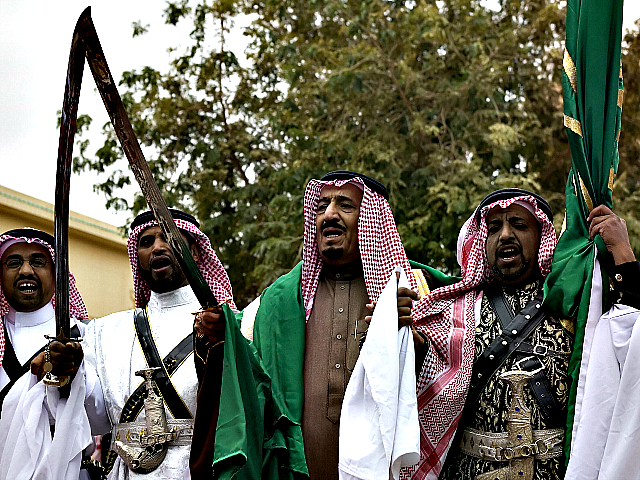
Former Norwegian Ambassador to Riyadh said Saudi Arabia is involved in Financing the ISIL terror group and described the Middle Eastern country as the kingdom of terrorism.

The ambassador, Carl Schiotz Wibye, said in remarks cited by a Norwegian newspaper, that Saudi Arabia has a strong influence on the spread of extremist ideology, but he is feared that the West turns a blind eye on this matter, Badr News reported.

Wibye described Saudi Arabia as the Kingdom of terrorism, noting that it has used its oil wealth to finance the spread of Wahhabism in the world, stressing on the importance for Norway to be more mindful about this issue, suggesting a way to curb extremism, which may be through the revival of the Progressive Party’s proposal to ban non-participated regimes in the United Nations’ Universal Declaration of Human Rights from financing any political or religious institution.

The Norwegian official has no doubt that Saudi Arabia has participated in funding ISIL terror group, citing that the former US Secretary of State Hillary Clinton has claimed in a leaked email on 2014 about “hidden money transfer” made by the Saudi regime.

(FNA)

February 27, 2017 0 comments
0 FacebookTwitterPinterestEmail
Newer Posts
Older Posts

Norwegian Nobel Prize 2024

101207 The Norwegian Nobel Committee has decided to award the Nobel Peace Prize for 2024 to Japan’s Hiroshima bomb survivor group Nihon Hidankyo.

Special Interest

  • Africa and Norway
  • Asia and Norway
  • Asylum
  • China and Norway
  • Corruption in Norway
  • Crimes
  • Defence
  • Diplomatic relations
  • Economics
  • Environment
  • Farming
  • Killing
  • Media Freedom
  • Middle East and Norway
  • NATO and Norway
  • Nobel Peace Prize
  • Norwegian Aid
  • Norwegian American
  • Oil & Gas
  • Peace Talks
  • Politics
  • Racism in Norway
  • Religion
  • Russia and Norway
  • Royal House
  • Science
  • Sex scandal
  • Sports
  • Spy War
  • Srilanka and Norway
  • Svalbard
  • Terrorist
  • Taiwan and Norway
  • Video clips

Follow Us

Recent Posts

  • Armenia, Norway hold political consultations in Oslo

    March 10, 2026
  • Police release images of suspect in U.S. embassy attack in Oslo

    March 10, 2026
  • Explosion reported outside US embassy in Oslo, police say

    March 8, 2026
  • Armenian envoy discusses cooperation with Norway

    March 6, 2026
  • Mongolia and Norway discuss issues of cooperation

    March 6, 2026
  • Norwegian FM: Israeli strike on Iran does not comply with international law

    February 28, 2026

Social Feed

Social Feed

Editors’ Picks

Norway opens market for Sri Lankan fish exports...

May 13, 2016

Sri Lanka – Nordic Business Council holds discussions...

May 15, 2016

Good governance to Sri Lanka

May 15, 2016

Shock and Joy in Sri Lanka – Erik...

May 15, 2016

Sri Lanka-Norway plenty of new opportunities for business–...

May 15, 2016

NORWAY NEWS is an online news site, written in English, dedicated to Norwegian affairs at home and abroad. Norway News.com is published online. It is a daily online newspaper in existence since May, 2003. The site is run by an Independent Journalist.

Facebook Twitter Youtube

Useful Links

    • Work With Us
    • Contact Us
    • Collaboration
    • Data Collection
    • Workplace
    • Adverstising
    • Privacy Policy
    • International Collab
    • Feedback
    • Terms of Use
    • About Our Ads
    • Help & Support
    • Entertainment
    • News Covering
    • Technology
    • Trending Now

Politics

Syrian, Norway to boost cooperation on mine clearance
Erna to step down as Conservative Party leader in 2026
Norwegian Labour Party on re-election win

Latest Articles

Armenia, Norway hold political consultations in Oslo
Police release images of suspect in U.S. embassy attack in Oslo
Explosion reported outside US embassy in Oslo, police say
Armenian envoy discusses cooperation with Norway

Norway News 2025 . All Right Reserved. Designed and Developed by Norway News

  • Home
  • About us
  • Disclaimer
  • Contact us
NORWAY NEWS – latest news, breaking stories and comment – NORWAY NEWS
  • Home
  • About us
  • News
  • Other News
    • Africa and Norway
    • Asia and Norway
    • Asylum
    • Breaking News
    • China and Norway
    • Corruption in Norway
    • Crimes
    • Defence
    • Diplomatic relations
    • Economics
    • Environment
    • Farming
    • Featured
    • Health
    • Killing
    • Media Freedom
    • Middle East and Norway
    • NATO and Norway
    • Nobel Peace Prize
    • Norwegian Aid
    • Norwegian American
    • Oil & Gas
    • Peace Talks
    • Politics
    • Racism in Norway
    • Religion
    • Royal House
    • Russia and Norway
    • Science
    • Sex scandal
    • Sports
    • Spy War
    • Srilanka and Norway
    • Svalbard
    • Taiwan and Norway
    • Terrorist
    • Travel
    • Video clips
  • Disclaimer
  • Contact us
NORWAY NEWS – latest news, breaking stories and comment – NORWAY NEWS
  • Home
  • About us
  • News
  • Other News
    • Africa and Norway
    • Asia and Norway
    • Asylum
    • Breaking News
    • China and Norway
    • Corruption in Norway
    • Crimes
    • Defence
    • Diplomatic relations
    • Economics
    • Environment
    • Farming
    • Featured
    • Health
    • Killing
    • Media Freedom
    • Middle East and Norway
    • NATO and Norway
    • Nobel Peace Prize
    • Norwegian Aid
    • Norwegian American
    • Oil & Gas
    • Peace Talks
    • Politics
    • Racism in Norway
    • Religion
    • Royal House
    • Russia and Norway
    • Science
    • Sex scandal
    • Sports
    • Spy War
    • Srilanka and Norway
    • Svalbard
    • Taiwan and Norway
    • Terrorist
    • Travel
    • Video clips
  • Disclaimer
  • Contact us

Editor’s Picks

  • UN concern over Sri Lanka’s cases of enforced disappearances

    October 8, 2025
  • UN Human Rights Council Resolution on Sri Lanka’s Path to Reconciliation

    October 7, 2025
  • International should support Sri Lanka: Solheim

    October 4, 2024
  • Norwegian Meets Sri Lankan’s Challenges

    May 3, 2024
  • Norwegian Ambassador meets JVP in Sri Lanka

    May 2, 2024
  • “The man who didn’t run away” – Eric Solheim

    April 30, 2024

Newsletter

@2025 - All Right Reserved. Designed and Developed by Norway News