NORWAY NEWS – latest news, breaking stories and comment – NORWAY NEWS
  • Home
  • About us
  • News
  • Other News
    • Africa and Norway
    • Asia and Norway
    • Asylum
    • Breaking News
    • China and Norway
    • Corruption in Norway
    • Crimes
    • Defence
    • Diplomatic relations
    • Economics
    • Environment
    • Farming
    • Featured
    • Health
    • Killing
    • Media Freedom
    • Middle East and Norway
    • NATO and Norway
    • Nobel Peace Prize
    • Norwegian Aid
    • Norwegian American
    • Oil & Gas
    • Peace Talks
    • Politics
    • Racism in Norway
    • Religion
    • Royal House
    • Russia and Norway
    • Science
    • Sex scandal
    • Sports
    • Spy War
    • Srilanka and Norway
    • Svalbard
    • Taiwan and Norway
    • Terrorist
    • Travel
    • Video clips
  • Disclaimer
  • Contact us
NORWAY NEWS – latest news, breaking stories and comment – NORWAY NEWS
  • Home
  • About us
  • News
  • Other News
    • Africa and Norway
    • Asia and Norway
    • Asylum
    • Breaking News
    • China and Norway
    • Corruption in Norway
    • Crimes
    • Defence
    • Diplomatic relations
    • Economics
    • Environment
    • Farming
    • Featured
    • Health
    • Killing
    • Media Freedom
    • Middle East and Norway
    • NATO and Norway
    • Nobel Peace Prize
    • Norwegian Aid
    • Norwegian American
    • Oil & Gas
    • Peace Talks
    • Politics
    • Racism in Norway
    • Religion
    • Royal House
    • Russia and Norway
    • Science
    • Sex scandal
    • Sports
    • Spy War
    • Srilanka and Norway
    • Svalbard
    • Taiwan and Norway
    • Terrorist
    • Travel
    • Video clips
  • Disclaimer
  • Contact us
Thursday, February 19, 2026
NORWAY NEWS – latest news, breaking stories and comment – NORWAY NEWS
  • Home
  • About us
  • News
  • Other News
    • Africa and Norway
    • Asia and Norway
    • Asylum
    • Breaking News
    • China and Norway
    • Corruption in Norway
    • Crimes
    • Defence
    • Diplomatic relations
    • Economics
    • Environment
    • Farming
    • Featured
    • Health
    • Killing
    • Media Freedom
    • Middle East and Norway
    • NATO and Norway
    • Nobel Peace Prize
    • Norwegian Aid
    • Norwegian American
    • Oil & Gas
    • Peace Talks
    • Politics
    • Racism in Norway
    • Religion
    • Royal House
    • Russia and Norway
    • Science
    • Sex scandal
    • Sports
    • Spy War
    • Srilanka and Norway
    • Svalbard
    • Taiwan and Norway
    • Terrorist
    • Travel
    • Video clips
  • Disclaimer
  • Contact us
Copyright 2025- All Right Reserved Norway News
Environment

Internet giant Google to start getting Norwegian wind power

by Nadarajah Sethurupan July 6, 2017
written by Nadarajah Sethurupan

After extensive planning and preparation, Google expects to receive its first wind power from Norway by September, the company told Reuters on Wednesday.

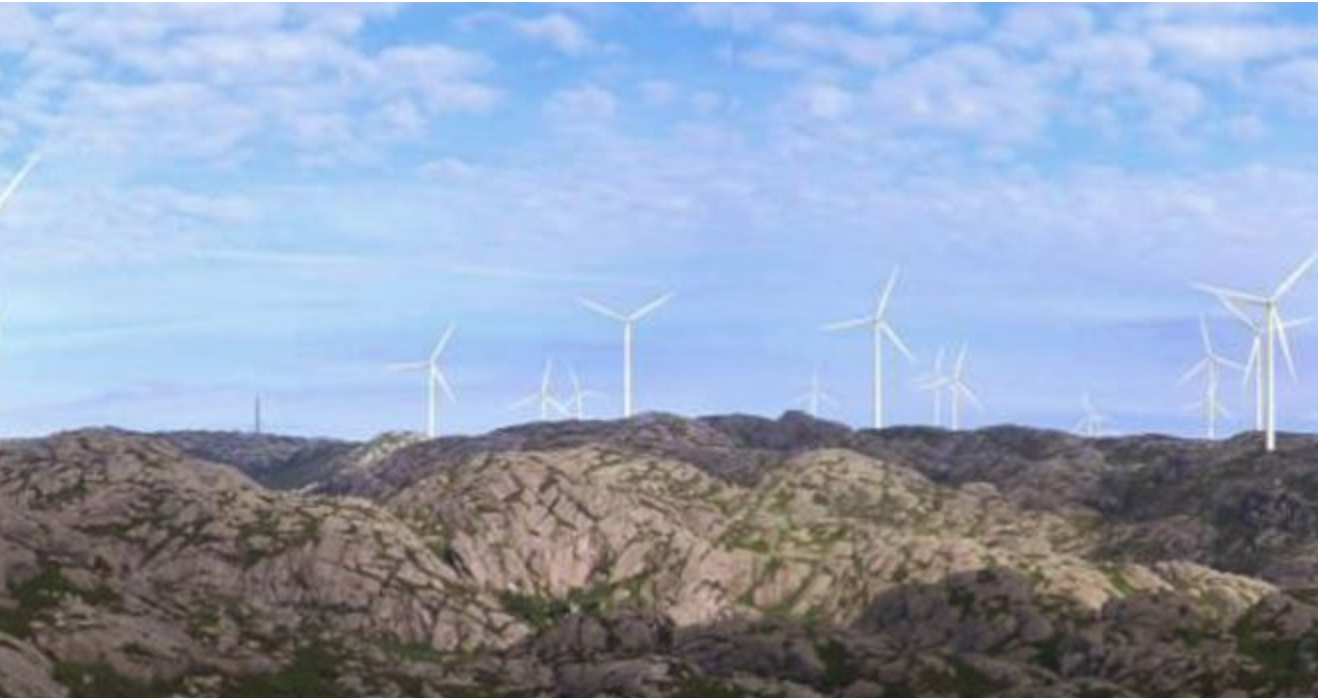
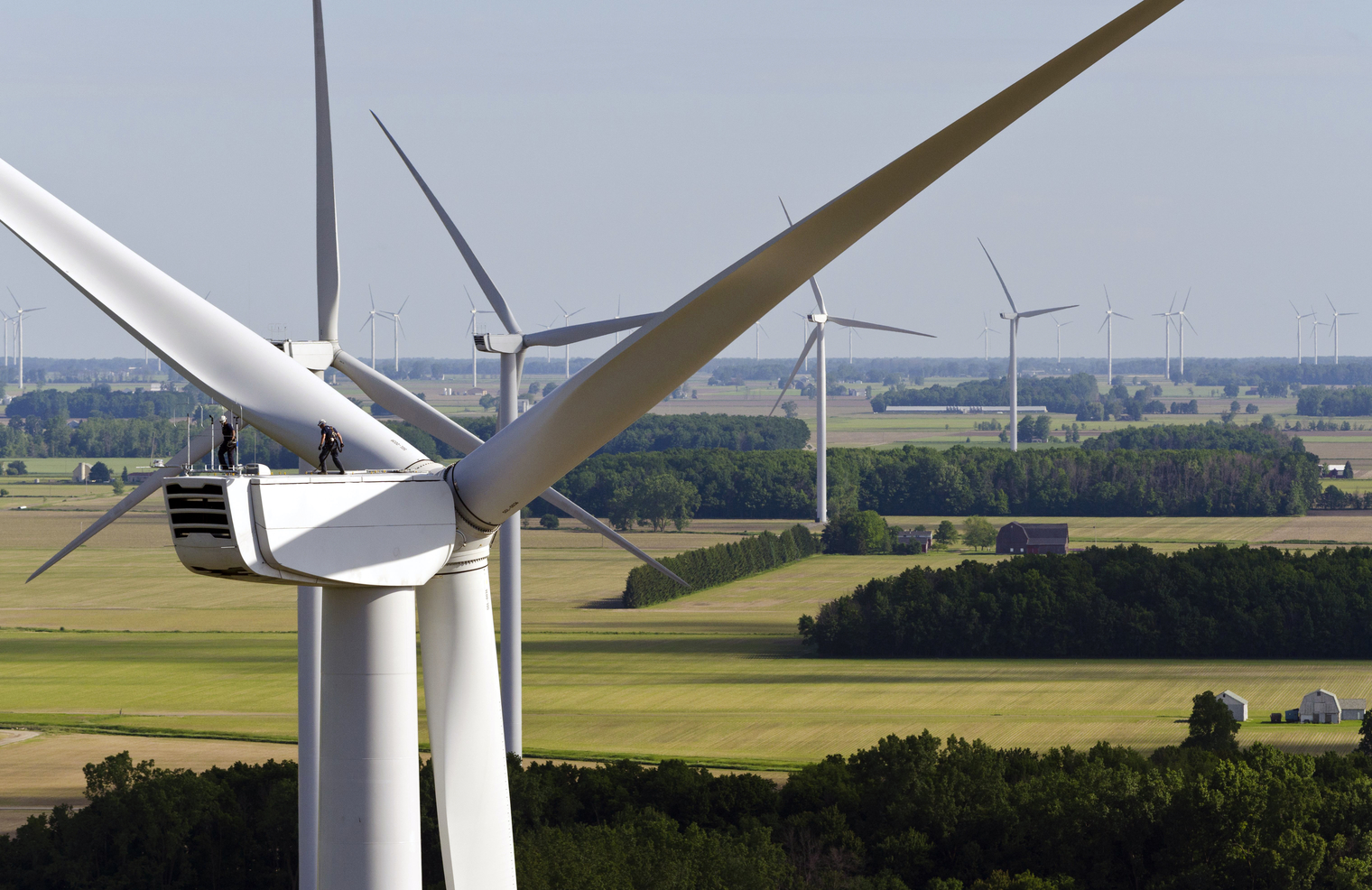
The Tellenes Wind Farm, located in the region surrounding the ilmenite mines at Tellenes in the municipalities of Sokndal and Lund, Norway, was started in 2016 and is expected to be completed in the fall of this year.

The wind farm will have 50 Siemens turbines, generating a total installed effect of around 160MW. It is estimated that the wind farm will annually produce about 520GWh, equal to the electricity consumption of around 25,000 Norwegian households. Not only will the wind farm be the largest in Norway, but Google’s biggest wind farm in Europe.

Last year, Google signed a 12-year contract to buy 100 percent of the wind farm’s output. Google has four European data centers, in Finland, Belgium, the Netherlands and Ireland, and the power will be used to supply one or several of them, according to The Street.

“We’ll purchase power as soon as the wind farm becomes fully operational, which we expect will take place in early September 2017,” a Google spokesman told Reuters. The Tellenes Wind Farm’s first turbine is expected to start generating power by next week, said Olav Rommetveit, a spokesman for farm maker Zephyr.

“Google will not immediately get the supply. It has an exclusive contract for 12 years and they will begin getting the electricity at some point after commercial operations begin,” said Rommetveit. The electricity produced until the wind farm reaches full capacity later this year will be sold on the Nord Pool power exchange.

Swedish wind power company, Arise, will be the farm’s operator.

(digitaljournal)

July 6, 2017 0 comments
0 FacebookTwitterPinterestEmail
Diplomatic relations

Norway’s Foreign Affairs Minister visits Singapore, reaffirms relations between two countries

by Nadarajah Sethurupan July 5, 2017
written by Nadarajah Sethurupan

Minister for Foreign Affairs for Norway Borge Brende is in Singapore on a working visit from Tuesday (July 4) to Wednesday (July 5), according to a press release by Singapore’s Ministry of Foreign Affairs.
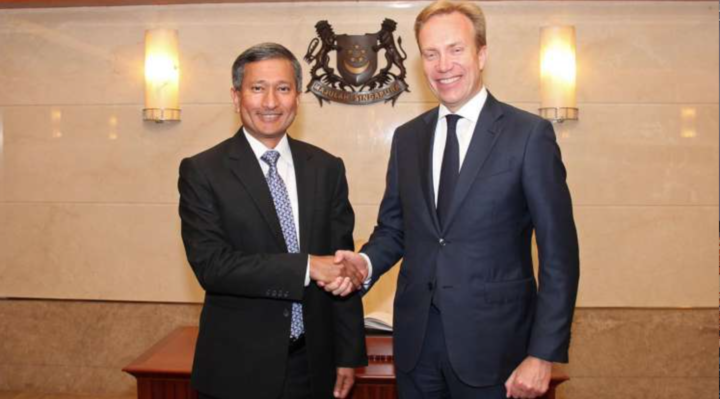

Mr Brende was hosted to lunch by Minister for Foreign Affairs Vivian Balakrishnan on Tuesday.

During the lunch, they reaffirmed the excellent bilateral relations between both countries, which share common interests as like-minded small states, said the release. They also exchanged views on recent regional and international developments.

Mr Brende will meet Minister for Home Affairs and Law K. Shanmugam on Wednesday (July 5), before departing Singapore for Myanmar the same day.

(N.Sethu from Singapore )

July 5, 2017 0 comments
0 FacebookTwitterPinterestEmail
Defence

Pentagon seeks increased P-8 ties with Norway

by Nadarajah Sethurupan July 3, 2017
written by Nadarajah Sethurupan

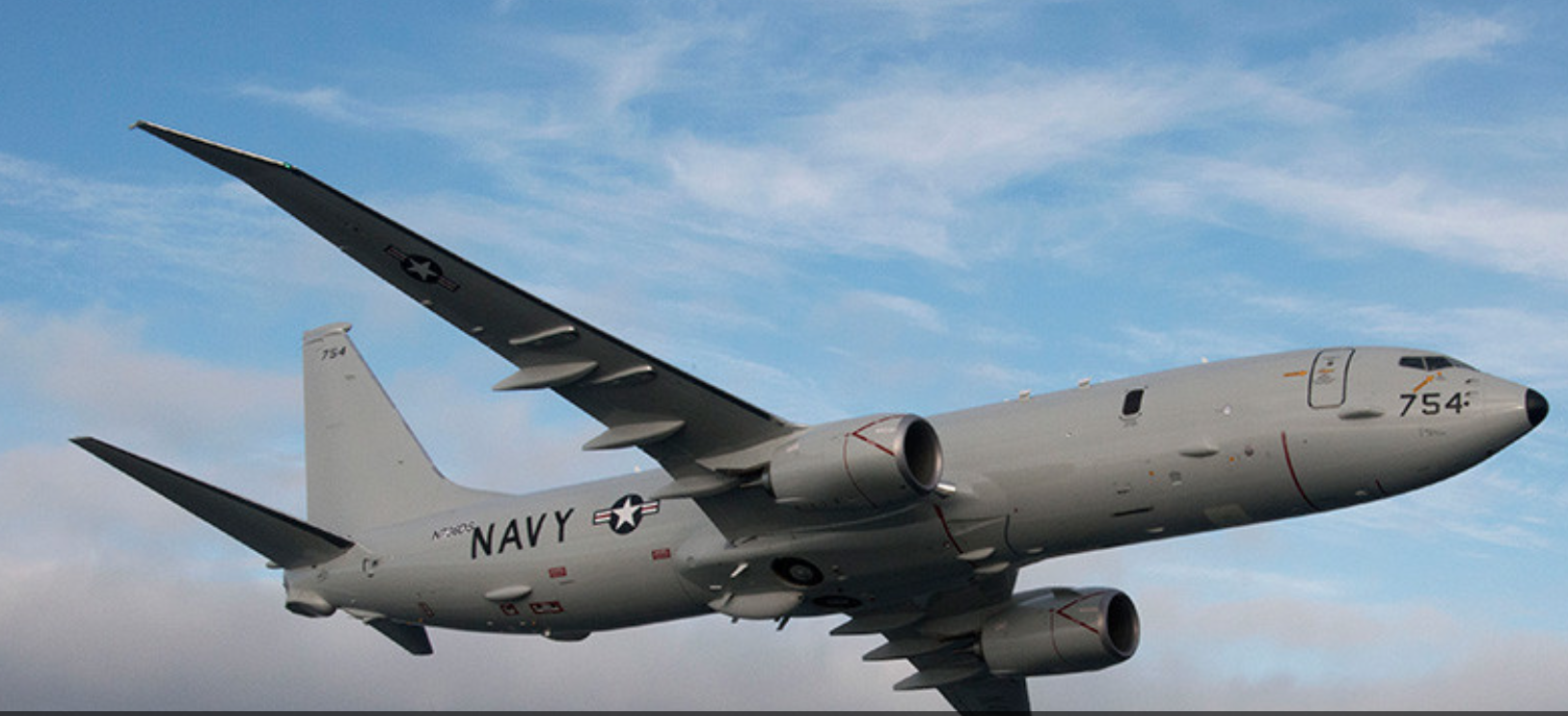
The United States, United Kingdom and Norway have agreed in principal to create a trilateral coalition built around the P-8 maritime aircraft — though exactly what that means remains unclear.

The Pentagon announced June 29 that the three countries had established a “statement of intent to lay out guiding principles for a trilateral partnership with P-8A aircraft.” In addition, the announcement said the nations are working on a “framework for further cooperation in areas such as readiness, enhancing defense capability, and interoperability.”

A defense official, speaking on background, told media that nothing is “set in stone,” and this is just a first step toward coordinating around the aircraft. Potential areas of cooperation include joint operations in the North Atlantic, information sharing and the possibility of co-locating maintenance and training assets.

The last point would seem to build on a November pledge between the U.K. and Norway to find ways to jointly drive down costs for the maritime surveillance plane. The U.K. plans on buying nine P-8s, while Norway has agreed to purchase five of the Boeing-made planes.

Given the shared area of responsibility and the small fleet sizes for both nations, analysts believe cooperation around the P-8 is a no-brainer. And while the U.S. has a larger fleet, being able to share assets such as maintenance will help bring costs down and keep readiness rates high for American assets surveilling the waters near Europe.

Asked in December about forming some sort of P-8 coalition between the three nations, Deputy Secretary of Defense Bob Work said, “We haven’t had something like this since the Cold War, … and that just opens up a whole new level of possibilities for us to in the future do collaborative and coordinated operations.”

“When you have that interoperability and you can land and get servicing wherever you land — wash racks, maintenance hangars you can use — it just makes it a lot easier,” Work told Defense News on Dec. 4.

Vice Adm. Joseph Rixey, the outgoing head of the Defense Security Cooperation Agency, said in September that he wanted to expand a recent program that allows NATO allies to pool their resources and buy as a group from the U.S., holding up the P-8 as an example where nations could find joint savings.

“Imagine what you could do with lead nation procurement if you could get something like the P-8 — maybe not the P-8 itself, but certainly all the support, the sonobuoys, the spares, everything associated with it that you could buy — in batch quantities and not have to worry about third-party transfer restrictions,” Rixey said then.

(defensenews)

July 3, 2017 0 comments
0 FacebookTwitterPinterestEmail
Environment

Norway to ban the use of oil for heating buildings by 2020

by Nadarajah Sethurupan July 3, 2017
written by Nadarajah Sethurupan

‘Those using fossil oil for heating must find other options by 2020,’ says country’s Environment Minister.
Norway is set to become the first country in the entire world to ban the use of gas to heat buildings.

The Scandinavian country, which is the world’s largest producer of oil and natural gas outside the Middle East, will wholly stop the use of both oil and paraffin to warm buildings from 2020 onwards.

The country, which hopes to ban the sale of all fossil fuel-based cars by 2025, has made a concerted effort to introduce policies which shrink domestic emission of greenhouse gases.

Vidar Helgesenlaid, the nation’s Environment Minister, laid out the plans in a statement, saying: “Those using fossil oil for heating must find other options by 2020.”

The country advises its citizens to research alternatives to oil such as heat pumps, hydroelectricity, and even special stoves that burn wood chips. By some stage, the legislation could be widened to include restrictions on using natural gas to heat buildings.

The Ministry of Climate and Environment said the ban would apply to both new and old buildings and cover both private homes and the public space of businesses and state-owned facilities.

The ministry says the plans are expected to lessen Norway’s emissions of heat-trapping greenhouse gases by an estimated 340,000 tonnes per year, compared to overall national emissions of 53.9 million tonnes in 2015.

Marius Holm, head of ZERO, a foundation that campaigns hard for cuts in emissions, celebrated the unprecedented policy change, saying: “This is a very important climate measure that significantly cuts emissions, sending a powerful signal that we are moving from fossil to renewable energy.”

Green organisations argue the fossil ban is something of a contradiction in terms given the country, which paradoxically is both an oil giant and a climate leader, gets half its export revenues from crude oil and natural gas.

Nevertheless, the new measure could pave way for other countries to follow suit as the building sector is a massive CO2 emitter. In the US, it accounts for 39 per cent of CO2 emissions.

Norway, which is widely seen to be becoming one of the most ecologically progressive countries worldwide, became the first country in the world to commit to zero deforestation last year.

The Norwegian parliament promised the government’s public procurement policy will become deforestation-free after a committee of MPs recommended imposing regulations to ensure the state did “not contribute to deforestation of the rainforest”.

Norway funds forest conservation projects worldwide and also supports human rights programmes for forest communities.

(independent)

July 3, 2017 0 comments
0 FacebookTwitterPinterestEmail
Science

Nordex receives order for eleven N117/3600 turbines from Norway

by Nadarajah Sethurupan July 3, 2017
written by Nadarajah Sethurupan

The Nordex Group has secured a follow-up order from Norway. For Midtfjellet Vindkraft AS, a long-standing customer, the manufacturer will be supplying eleven N117/3600 turbines for the Midtfjellet III wind farm on the island of Stord in the south-west of Norway. Delivery and installation of the turbines is scheduled for spring 2018. The owner of the project is the joint venture comprising Aquila Capital, based in Hamburg, and the local energy suppliers and power plant operators Fitjar Kraftlag SA, Østfold Energi Vind AS and Vardar Boreas AS. The customer also signed a Premium Service Agreement for a period of five years with the option to prolong it twice for five years.
Midtfjellet III is an extension of the Midtfjellet I and II, with a total of 44 turbines and 110 MW, installed by Nordex in 2012 and 2013. As of 2018 the number of Nordex turbines there will be increased to 55, then with 149.6 MW. With average wind speeds of 8.4 m/s, in future the eleven new N117/3600 turbines alone will generate more than 138,800 MWh of additional clean electricity a year for the municipality of Fitjar. Nordex is fitting serrations to the trailing edge of the turbines in order to reduce overall noise emission in the wind field.

“Together Midtfjellet I and II are the largest wind farms in Norway, with very high production figures. The site is extremely demanding due to the perfect wind conditions. The fact that Midtfjellet Vindkraft AS has now engaged us for the second extension at this site is a clear indication of the confidence placed in our team and our turbines,” says Patxi Landa, Chief Sales Officer of Nordex SE.

(N.Sethu)

July 3, 2017 0 comments
0 FacebookTwitterPinterestEmail
Srilanka and Norway

Norway delegation to inspect Uma Oya project in Sri Lanka

by Nadarajah Sethurupan July 2, 2017
written by Nadarajah Sethurupan

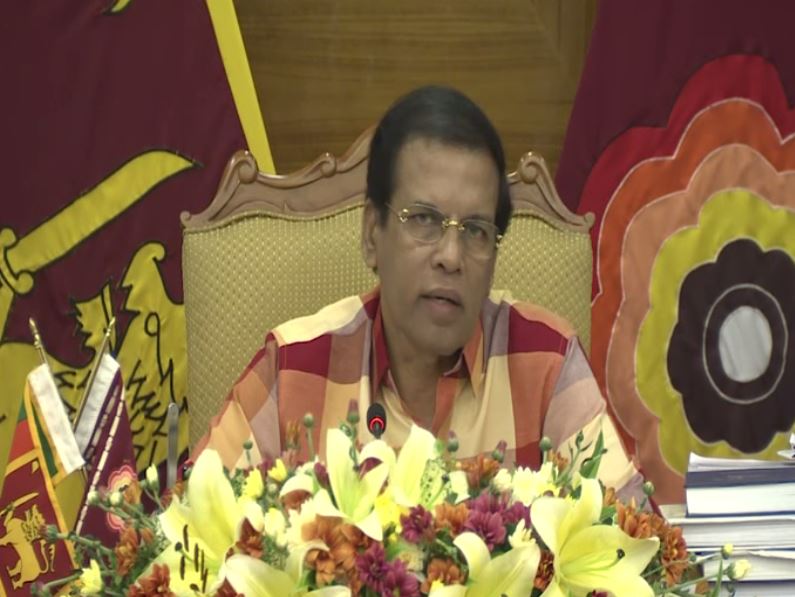
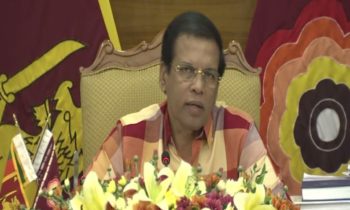
The Sri Lankan President’s Media Unit says Norwegian experts will arrive in the country to inspect the Uma Oya Multi Purpose Project next month.
The communique was issued following a meeting presided over by President Maithripala Sirisena on Friday night.

The discussion took place with the participation of persons who have been severely affected by the Uma Oya Project, and their public representatives.

The president had instructed that the needs of the people be prioritised, and that the future course of action that needs to be taken with regard to the project, be looked into.

The communique also noted that issues surrounding houses, water, and farmlands, should be swiftly resolved with the assistance of the relevant ministry officials.

“We got a message from Norway that a group of experts will arrive in the country in the first week of next month”, the president said, “We will be able to reach a decision based on the advise that we obtain from these experts”.

The President said that a Norwegian Specialist team is scheduled to arrive in Sri Lanka at the first week of August and a specialist from Germany has already started to investigate the environmental impact of the project.

He said that adding according to their ideas and suggestions, the Government will consider the possibility of taking forward this project while resolving the existing issues, minimizing the damages and utilizing the modern technology to a maximum level.

The residents claim that over 7,000 homes have been damaged by the construction of the massive underground tunnels being dug for the project and the fresh water springs and reservoirs have dried up in many areas in the Uva Province.

The multi-purpose project involves the construction of two reservoirs on tributaries of the Uma Oya, which flows down from central hills and join the Mahaweli River, and one tunnel on the Uma Oya to divert water to a power generator further downstream.

The water will be diverted to Kirindi Oya basin which will take water to Hambantota through the 25 km long underground tunnel across mountains in Bandarawela by creating a dam at Puhulpola in Welimada and a reservoir in Diaraba.

The project at an estimated cost of US$ 529 million was launched by the previous government in 2012 with a US$ 450 million loan from Iran.

Ministers Mahinda Amaraweera, Harin Fernando, Vijith Vijithamuni Soysa, Uva Province Chief Minister Chamara Sampath Dasanayaka, Uva Provincial Councilor Samantha Vidyarathna, Secretary for the Mahaweli Development & Environment Anura Dissanayake, Deputy Project Director of the Uma Oya Multipurpose Development project P.B. Amarasekara also participated in the meeting.

(N.Sethu)

July 2, 2017 0 comments
0 FacebookTwitterPinterestEmail
Defence

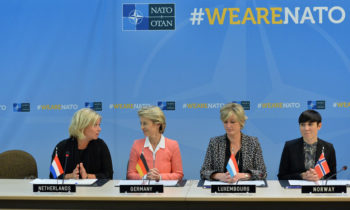
Germany, Norway join Netherlands and Luxembourg to operate pooled fleet of NATO tankers

by Nadarajah Sethurupan July 1, 2017
written by Nadarajah Sethurupan

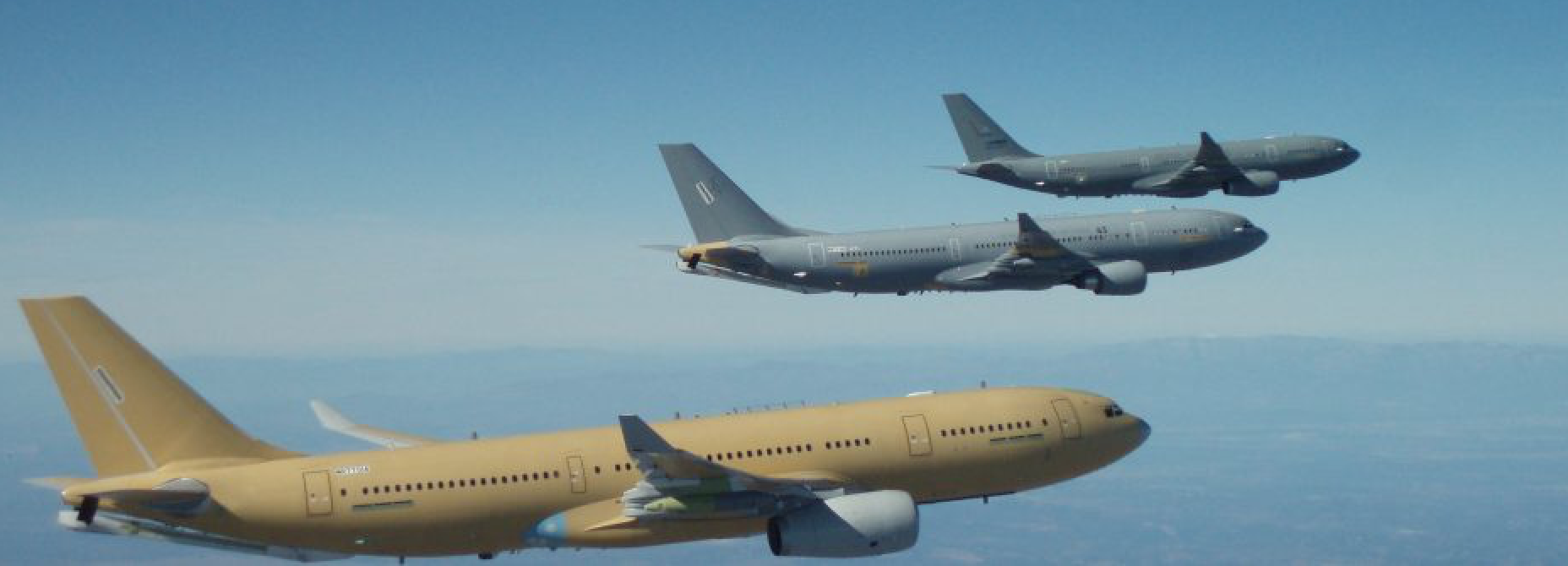
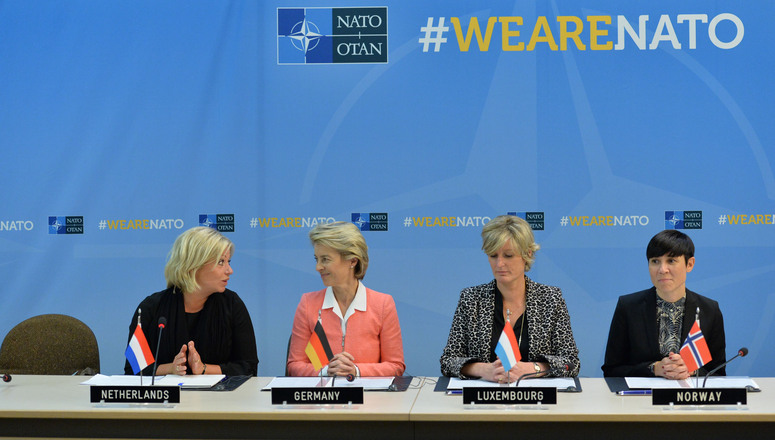
Germany and Norway have officially joined the European/NATO programme to acquire Airbus A330 Multi-Role Tanker Transport aircraft along with Netherlands and Luxembourg.
The two nations committed to participating in the project through the signing of a Memorandum of Understanding at NATO HQ in Brussels today.

Known as the Multinational Multi-Role Tanker Transport Fleet (MMF) the programme was initiated by the European Defence Agency in 2012. Europe’s organisation for the management of cooperative armament programmes – OCCAR – manages the MMF acquisition phase as Contract Executing Agent on behalf of the NATO Support and Procurement Agency (NSPA).

The Programme is funded by the four nations who will have the exclusive right to use these NATO–owned aircraft which will operate in a pooling arrangement. The aircraft will be configured for in-flight refuelling, the transport of passengers and cargo, and medical evacuation flights.

According to Airbus, the first two aircraft have already been ordered to be delivered from Airbus Defence and Space’s tanker conversion line at Getafe near Madrid in 2020. Five additional aircraft will now be ordered, and that order will include options for up to four further aircraft.

OCCAR Director, Arturo Alfonso-Meiriño said:

“The MMF programme has broken new ground in bringing together the combined capabilities of the EDA, NSPA and OCCAR as one team, with each organisation working within its particular sphere of expertise. I very much welcome that this important initiative has now attracted additional partners to join, and it still includes options for the participation of even more countries.”

EDA Chief Executive Jorge Domecq said:

“The MMF is a prime example of European defence cooperation which shows that once a capability shortfall has been jointly identified, European nations can pull together, work on a common project aimed at filling the gap, and eventually deliver. It’s Pooling & Sharing at its best.”

Airbus Defence and Space Head of Military Aircraft Fernando Alonso said:

“The A330 MRTT has established itself firmly as the world’s premier tanker/transport aircraft. It is extremely satisfying to now see it adopted as the core asset of one of Europe’s most important cooperative defence programmes. We hope that this collaborative approach will serve as a model for future joint procurements.”

(ukdefencejournal)

July 1, 2017 0 comments
0 FacebookTwitterPinterestEmail
NATO and Norway

NATO and EU discuss future cooperation at sea

by Nadarajah Sethurupan July 1, 2017
written by Nadarajah Sethurupan

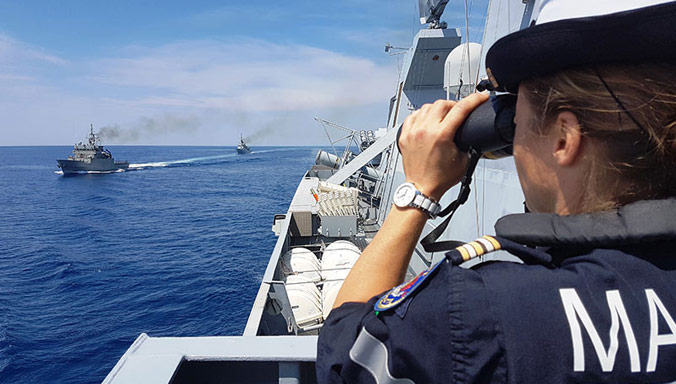
Policy experts, diplomats and military representatives met on Friday (30 June 2017) to discuss maritime cooperation between NATO and the European Union. The meeting, hosted at Norway House in Brussels, was designed to draw lessons for future cooperation at sea, building on NATO-EU experience in countering piracy in the Indian Ocean and working side-by-side in the Mediterranean. Participants discussed all aspects of maritime cooperation: from planning through execution and post-crisis management, as well as legal considerations and the contributions of industry.
NATO and the European Union have built a solid track record of effective cooperation in the maritime domain. NATO’s Operation Ocean Shield and the EU’s Operation Atalanta worked side-by-side for several years, fighting piracy off the coast of Somalia. NATO and the EU have also worked together in the Mediterranean. Since February 2016, NATO ships have been supporting the EU in tackling illegal migration in the Aegean Sea. In July 2016, NATO launched a new maritime operation, Sea Guardian, which supports some of EU Operation Sophia’s activities in the Mediterranean Sea.

The seminar is part of 42 cooperation measures which NATO and the EU agreed in December 2016. The event is organised with the support of the Mission to Norway to the EU and the Permanent Representation of the Netherlands to the EU.

NATO and the European Union reinforce each other in a wide range of areas, from cooperation at sea, through resilience to hybrid threats, to helping build the defence capacities of partner countries. In a joint report, presented yesterday to NATO Ministers of Defence, NATO Secretary Jens Stoltenberg and EU High Representative / Vice-President of the European Commission Federica Mogherini confirmed that this cooperation is developing  well and will continue, potentially expanding to new areas.

(NATO, N.Sethu)

July 1, 2017 0 comments
0 FacebookTwitterPinterestEmail
Media Freedom

Norway press groups protest Al Jazeera closure call

by Nadarajah Sethurupan June 30, 2017
written by Nadarajah Sethurupan

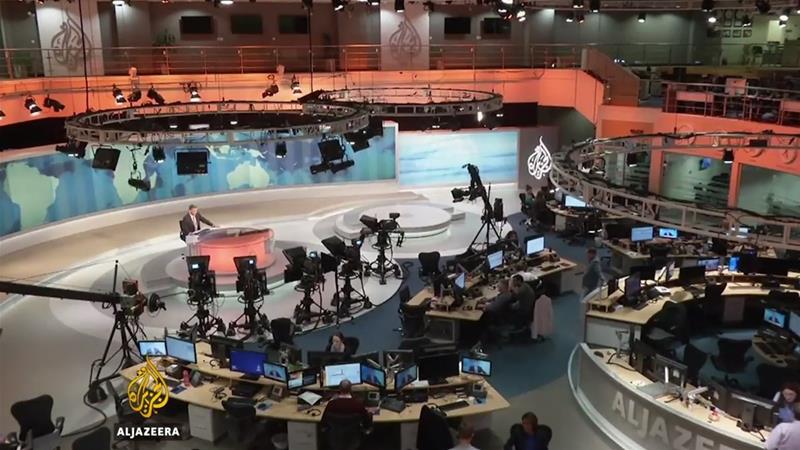
Three journalist associations say ‘ban on any media outlet is an outrageous attempt to censure’ public debate.
Journalist associations in Norway representing thousands of media workers have strongly criticised a Saudi-led campaign to have the Al Jazeera network and other regional media outlets shut down amid a Gulf diplomatic crisis.

In a statement released on Thursday, the Norwegian Press Association, the Norwegian Union of Journalists and Association of Norwegian Editors added their voice to a large number of news organisations and trade groups that have declared their support for the Qatar-based broadcaster against calls for its closure.

“The signatory organisations strongly encourage the authorities of Saudi Arabia to respect that media, editors and journalists every day make an important contribution of keeping the people in the Arab countries and in the rest of the world informed of what is happening,” the three associations said.

The groups voiced their “strong disappointment” over what they described as an “attack on one of the key human rights” and requested “that freedom of expression and freedom of press” is respected.

“We emphasise that the Middle East, as the rest of the world, needs media companies to report news and current events, and give the public information and background analysis on what, when, how and why they occur,” they said.

“A ban on any media outlet is an outrageous attempt to censure the public debate. In a conflicted world, freedom of press is more important than ever.”

Saudi Arabia, the United Arab Emirates, Bahrain and Egypt cut diplomatic ties with Qatar and imposed sanctions on the country on June 5, accusing it of supporting “terrorism”. The allegation is rejected by Doha.

After more than two weeks, the four Arab countries issued a 13-point demand list on Friday in exchange for the end of the anti-Qatar measures and gave a 10-day deadline.

The demands included the closure of all news outlets that Qatar allegedly funds, directly and indirectly, including Arabi21, Rassd, Al Araby Al Jadeed, Mekameleen and Middle East Eye.

The Committee to Protect Journalists, Human Rights Watch, Reporters Without Borders, the New York Times editorial board and The Guardian have all condemned the efforts to pressure Qatar into shutting down Al Jazeera.

David Kaye, the United Nations special rapporteur on freedom of opinion and expression, has also rejected the demand to close Al Jazeera, saying that such a move would be “a major blow to media pluralism”.

Al Jazeera has described the Saudi-led campaign as “nothing but an attempt to silence the freedom of expression in the region and to suppress people’s right to information and the right to be heard”.

“We are stunned by the demand to close Al Jazeera,” Giles Trendle, the acting managing director of Al Jazeera’s English-language service said. “Of course, there has been talk about it in the past, but it is still a great shock and surprise to actually see it in writing. It’s as absurd as it would be for Germany to demand Britain to close the BBC.”

Trendle said Al Jazeera is going to continue its “editorial mission of covering the world news in a fair and balanced way”.

Sheikh Mohammed bin Abdulrahman Al Thani, Qatar’s foreign minister, has said that Al Jazeera Media Network is an “internal affair” and there will be no discussion about its fate during the diplomatic crisis.

Source: Al Jazeera News

June 30, 2017 0 comments
0 FacebookTwitterPinterestEmail
NATO and Norway

Germany and Norway join multinational fleet of tanker-transport aircraft

by Nadarajah Sethurupan June 29, 2017
written by Nadarajah Sethurupan

NATO has taken an important step in improving its ability to refuel aircraft in mid-air, with two Allies joining a European programme to acquire and operate new tanker transport aircraft.
Defence Ministers from Germany and Norway joined a Memorandum of Understanding for a European multinational fleet of Airbus tanker transport aircraft, originally created by the lead-nation Netherlands and Luxembourg. The two countries launched the initiative in July 2016 by ordering two Airbus A330 Multi Role Tanker Transport aircraft, which are due to be delivered in 2020. With Germany and Norway joining the initiative, the fleet is expected to expand to up to seven aircraft.

This multinational fleet arrangement is a concrete step towards reducing the overall European shortage in air-to-air refueling and the over-reliance on U.S. capabilities. At today’s signing ceremony, Assistant Secretary General for Defence Investment Camille Grand stressed that “this initiative highlights the value of a multinational approach to capability development – working together provides cost-effective and flexible solutions.”

Belgium intends to join this programme in early 2018, and the initiative remains open to other new members. The procurement programme is another example of the increasingly close cooperation between NATO and the European Union.

June 29, 2017 0 comments
0 FacebookTwitterPinterestEmail
Economics

Norway SWF should be spun off from central bank, commission says

by Nadarajah Sethurupan June 29, 2017
written by Nadarajah Sethurupan

Norway’s NOK8.1trn (€855bn) oil fund should be managed separately from the country’s central bank now that it has grown so big, a government commission has proposed.


The Ministry of Finance announced last week that a commission set up to review Norges Bank and the Norwegian monetary system had recommended that the oil fund be managed by a separate statutory entity.

Currently the Government Pension Fund Global (GPFG) – Europe’s largest sovereign wealth fund – is managed by Norges Bank Investment Management (NBIM), which is part of Norges Bank.

Svein Gjedrem, chair of the commission, said: “Both central banking and investment management place greater demands on the board, senior management, and the organisation than earlier.”

The GPFG has doubled in size in the past five years as a result of the country’s revenue from its petroleum activities and investment returns. At the end of 2012 it had NOK3.8trn under management.

Gjedrem said the two activities – central banking and investment management – differed in nature, and the scope of the tasks involved was substantial.

“With two separate entities, the professional competence and the governing bodies can more easily be tailored to the task at hand,” he said.

In the report it has presented to the ministry, the commission proposed that NBIM be set up as a separate statutory entity along the lines of the Folketrygdfondet, the manager of the GPFG’s smaller counterpart, the Government Pension Fund Norway (GPFN), which invests only in the Nordic region.

The new entity should have a government-appointed board, the commission said. The Ministry of Finance would continue to define the fund’s investment mandate, and parliament would still approve important changes to that mandate.

Gjedrem emphasised that the proposed separation had to be carried out “in a sound manner and must not in any other respect affect the framework for the fund”.

Fund split ruled out

The commission cautioned against dividing GPFG into several entities, arguing this would entail extra costs and management challenges.

The ministry said: “It is not meaningful in this case to create competition between government-controlled investment entities.”

In neighbouring Sweden, the separation of the country’s national pensions buffer capital into several funds – the AP funds – has often been a matter of public debate.

“The commission would also caution against using the fund as an instrument of foreign policy, business policy, regional policy, or environmental policy,” the ministry added.

The commission also warned against the fund becoming “a government budget number two” for purposes not prioritised in the annual budget process.

In order to safeguard the fund’s role in overall economic policy, however, the commission proposed that the fund’s goal was defined in the Government Pension Fund Act in a way that emphasised its function as a source of financing of the welfare state across generations.

“The requirement of the highest possible return at an acceptable and carefully weighed risk level is thus of particular importance,” the commission said.

The GPFG had to be a responsible investor, and its current practice of investing abroad should be established by law, it added. Gjedrem said: “This would reflect the fund’s role as a pillar for financing the welfare state and its role as a savings fund for the nation.”

The GPFG is the third-largest institutional investor in the world, according to IPE’s Top 1000 Pension Funds report for 2016.

(ipe)

June 29, 2017 0 comments
0 FacebookTwitterPinterestEmail
Nobel Peace Prize

Chinese Nobel Laureate Liu Xiaobo Released on Parole With Liver Cancer

by Nadarajah Sethurupan June 28, 2017
written by Nadarajah Sethurupan

The Norwegian Nobel Committee condemned the Chinese authorities in a rare statement.
Liu Xiaobo, the first and so far the only Chinese citizen who has won the Nobel Peace Prize, has been released from Chinese prison on medical parole with liver cancer diagnosis.  The news has been widely transmitted around the world, yet in mainland China, only a few Chinese people were able to get access to the information through the Great Firewall.

On June 26, Liaoning Provincial Prison Administration released a brief statement about Liu’s release:

Liu Xiaobo, the prisoner of Jinzhou prison in Liaoning Province, was diagnosed with liver cancer. Recently, the Liaoning Provincial Prison Administration lawfully approved Liu’s medical parole. The First Hospital of China Medical University has formed a medical treatment group composed by eight well-known domestic cancer experts to treat Liu. Liu Xiaobo is receiving medical treatment accordingly.

Soon, Liu’s lawyer Shang Baojun verified the news to multiple media and acknowledged that Liu’s liver cancer is already in the late stage. A Hong Kong online magazine, Duan, posted a short video of Liu’s wife, Liu Xia, who cried and talked about her husband’s condition in a staccato sentence:  “[They] cannot perform surgery, or radiotherapy, or chemotherapy.”

Liu Xiaobo, 61, a famous writer and commentator on Chinese politics, was sentenced to 11 years in Chinese prison in late 2009 for “subversion of state power.” He won the Nobel Peace Prize in 2010. Liu’s good friend Mo Zhixu told the Hong Kong magazine that in the prison, “Liu lived an isolated life. He had a piece of land to grow vegetables or to run around. But he was completely isolated from the outside world or other people.” In the eight years Liu was in prison, Mo added, “no book could be sent to him … for an intellectual, a life that is completely isolated from information is a harsh torture.”

Facing Liu’s current situation, the Norwegian Nobel Committee released a rare statement on June 26, condemning the Chinese authorities with unusually strong words. It said:

…the Committee strongly regrets that it took serious illness before Chinese authorities were willing to release him from jail. Liu Xiaobo has fought a relentless struggle in favor of democracy and human rights in China and has already paid a heavy price for his involvement. He was, essentially, convicted for exercising his freedom of speech and should never have been sentenced to jail in the first place. Chinese authorities carry a heavy responsibility if Liu Xiaobo, because of his imprisonment, has been denied necessary medical treatment. The Committee hopes that he will now be released without conditions and offered the best possible treatment for his illness, whether it be in China or abroad.

However, no single piece of information about Liu’s release or his health has been officially published in mainland China. Any information posted to Chinese social media, such as Weibo and WeChat, has been thoroughly and instantly deleted by Chinese censors.

Chinese censors not only deleted information related to Liu in social media, but also struck out relevant information in official transcripts. According to BBC Chinese, at a regular press briefing on June 26, a journalist asked Geng Shuang, a Chinese Foreign Ministry spokesperson, about Liu, but Geng said he knew nothing about it. Yet the brief dialogue was not recorded in the official transcript.

In an interview conducted by AFP, US embassy spokeswoman Mary Beth Polley said: “We call on the Chinese authorities to not only release Mr. Liu but also to allow his wife Ms. Liu Xia out of house arrest.”

On June 27, a journalist again asked the Chinese Foreign Ministry about Liu and China’s reply to the U.S. criticism at the regular press briefing.

According to the BBC, spokesperson Lu Kang replied: “China is a country with rule of law. Everyone is equal before the law. All other countries should respect China’s judicial independence and sovereignty and should not use any so-called individual case to interfere in China’s internal affairs.”

Not surprisingly, Lu’s reply was not recorded in the official transcript either.

Regardless of the harsh censorship, some Chinese netizens still tried their best to transmit the information on social media with their own cipher codes. Other talked vaguely about the importance of “conscience.”

Ironically, the word conscience in Chinese is “liangzhi,” which literally means “good knowledge.”Perhaps the Chinese ancestors who coined the word already knew that “good knowledge” is the precondition for an accurate conscience, and the best way to tar people’s conscience is to block information.

(the diplomat)

June 28, 2017 0 comments
0 FacebookTwitterPinterestEmail
Defence

US Marines extend rotational training and exercises in Norway through to 2018

by Nadarajah Sethurupan June 28, 2017
written by Nadarajah Sethurupan

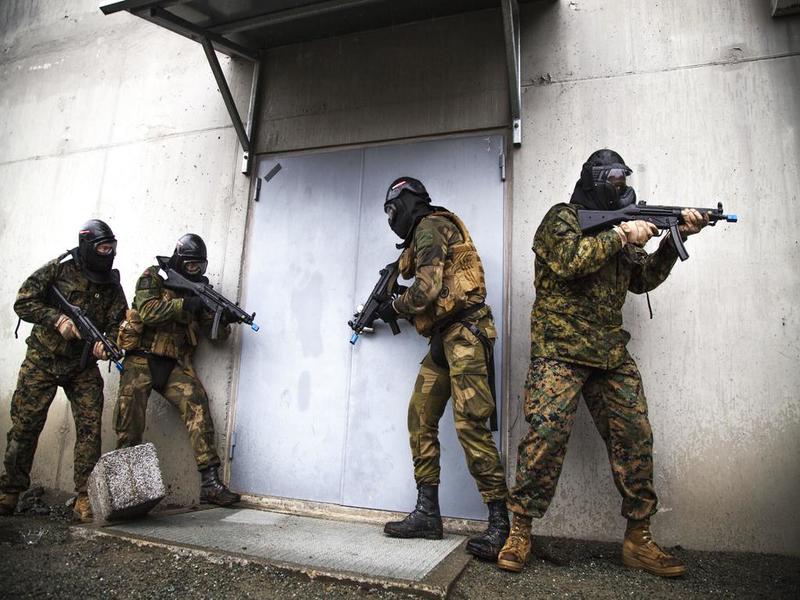
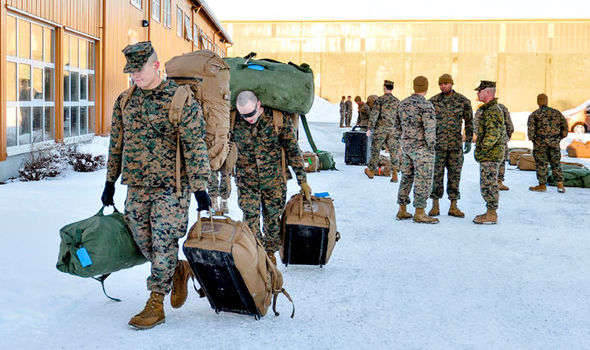
The US Marines’ rotational training and exercises currently taking place in Norway have been extended by one year to 2018, the Norwegian Defence Minister Ine Eriksen Soreide has confirmed.
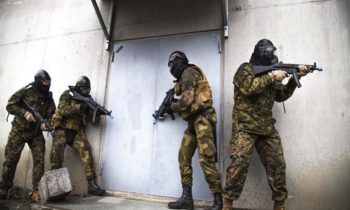
Approximately 330 marines have been stationed in the Norwegian village of Vaernes on a rotational basis since January. The new arrangement will see personnel continue to rotate beyond this year, with two rotations slated for both 2017 and 2018.

US Marine Corps (USMC) Forces Europe and Africa commander major general Niel E. Nelson said that the decision to extend the presence of the marine rotational force in Norway supports the US’ commitment to Nato.

It is also expected to strengthen the partnership between the two countries on defence and security.

Nelson said: “Our Marines in Norway are demonstrating a high level of cooperation with our allies.

“The more we train together alongside one another, the stronger our alliance becomes.”

Norway is considered a close ally of the US, and is reportedly set to increase its defence budget and commit to the procurement of critical capabilities.

Both countries are focused on strengthening the development of joint leaders and teams who understand the synergy of air, sea, and land power as a potent asymmetric advantage in the battlefield.

“Approximately 330 marines have been stationed in the Norwegian village of Vaernes on a rotational basis since January.”

The Norwegian Parliament approved the renewal of an agreement in the Memorandum of Understanding (MoU) Governing Prestockage and Reinforcement of Norway in 2006, which paved the way for a considerable increase of US training and exercise presence in Norway.

The US Department of Defense also confirmed the establishment of the limited rotational force presence of American marines in Norway in October.

USMC’s presence in Norway has offered improved opportunities for mutual exercises and enhanced interoperability.

Various other rotational training and exercise activities have taken place at other locations in Norway, in addition to the Vaernes-based operations.


Image: US Marines, Marine Rotational Force 17.1 sailors and soldiers with Norwegian Home Guard 12 during an exercise in Norway. Photo: courtesy of Marine Corps photo by Cpl. Emily Dorumsgaard.

(naval-technology)

June 28, 2017 0 comments
0 FacebookTwitterPinterestEmail
Science

Norway implements key wireless network at sea

by Nadarajah Sethurupan June 27, 2017
written by Nadarajah Sethurupan
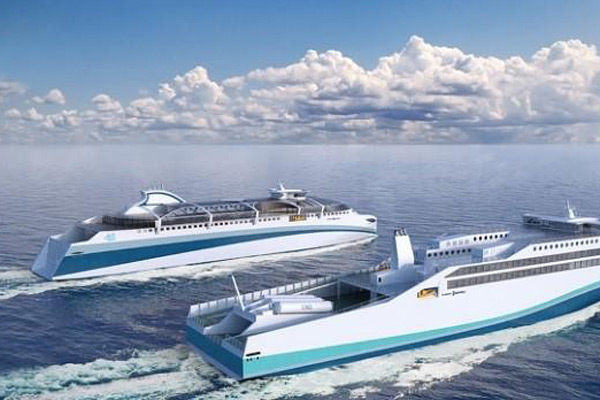
Leading Norwegian companies Kongsberg Seatex and Radionor have joined forces to develop Maritime Broadband Radio (MBR) system that will enable exchange of information crucial in limiting damage when accidents occur.
MBR, in contrast to previous systems, is highly stable and with extensive reach. Among other capabilities, it enables streaming of HD-video, said a statement from Kongsberg Seatex.
The system does not require an Internet connection to connect units in the network, though it is possible to transfer data from the network using Internet, it stated.
Kongsberg Seatex said Norway was the first nation in the world to implement maritime broadband communication on ships and planes in public service.
On board ships and aircraft
The Coastal Administration and NOFO (Norwegian Clean Seas Association for Operating Companies) are the first in the world to  deploy the Norwegian-developed and produced innovation, stated the company.
The Coastal Administration will install MBR on all its oil recovery vessels, and on 10 additional vessels with oil recovery equipment on board. NOFO will do the same with all its oil recovery vessels, it added.
Kongsberg Seatex pointed out that MBR has already been installed on the surveillance aircraft LN-KYV, a joint initiative between the Coastal Administration, NOFO and the Norwegian Coast Guard.
In the event of a critical oil spill, MBR will enable significantly faster and higher quality exchange of information between the various units engaged in a response effort. Images, maps and video can be transferred instantaneously, and response can be initiated based on a shared, real-time awareness of the situation, said Kjetil Aasebø, senior advisor in the coastal administration.
“This is a significant improvement that allows us to communicate with all units participating in an oil recovery mission, and share the data without an Internet connection. MBR allows us to respond faster with the right actions,” he added.-
(TANS)
June 27, 2017 0 comments
0 FacebookTwitterPinterestEmail
Politics

Norway honours World War Two veteran, aged 92

by Nadarajah Sethurupan June 27, 2017
written by Nadarajah Sethurupan

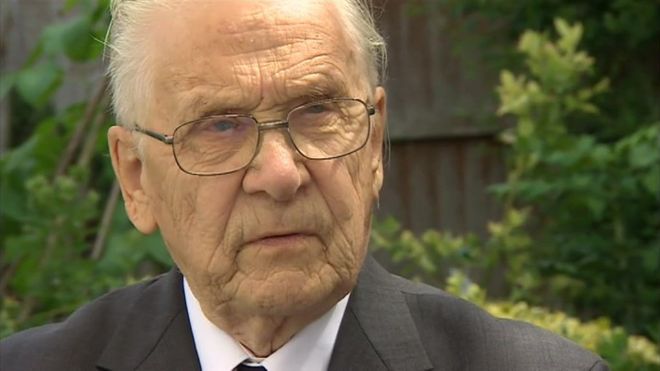
A 92-year-old man has been awarded a Norwegian Medal of Honour for the role he played in liberating the country 72 years ago.
Kenneth Foster, from Trowbridge, Wiltshire, served as a telegrapher on HMS Viceroy during World War Two.

It was responsible for sinking two U-boats and played a key role in freeing Norwegian towns from the Germans.

Mr Foster said the honour was “out of the blue” and “after all these years, you don’t expect it”.

The Honorary Consul Nigel Fletcher presented the medal on behalf of the Norwegian embassy at a ceremony at Trowbridge Town Hall.

Mr Foster, who is a member of the White Ensign Association, said: “It’s a big day for me. The whole thing was out of the blue and, after all these years, you don’t expect it.

“To start with I was fearful of the sea because I wasn’t a very good sailor.

“You had to get used to it — a ship which, we used to say, would roll on wet grass it was so unstable.

“But there was no point in being frightened of anything else because this was what you’d volunteered for.”

His role was to transport Norwegians, who had been exiled in the UK for over four years, back to Stavanger as the war was ending.

“I think I was the youngest on board and here we are, I’m approaching 92 so there’s not much chance of the others being with us.

“I know that all the others I kept in contact with have gone, sadly, but when I receive that medal I’ll be thinking that this is on behalf of them as well.”

(BBC)

June 27, 2017 0 comments
0 FacebookTwitterPinterestEmail
Defence

Russia warns Norway not to ‘escalate tensions’ amid plans to host 330 US Marines

by Nadarajah Sethurupan June 25, 2017
written by Nadarajah Sethurupan

RUSSIA has told Norway that their diplomatic ties will suffer as a result of the country’s decision to host 330 US Marines for longer than first anticipated.
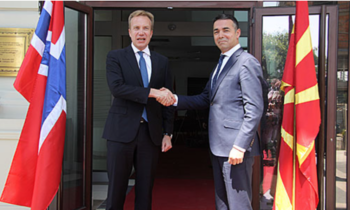
Norway announced this week that the US Marines will remain in the country until the end of 2018, a year longer than planned.

On Saturday, the Russian Embassy in Norway said: “We have repeatedly explained our point of view on the issue of setting up a US military base in the territory of Norway.

“We consider that this step contradicts Norwegian policy of not deploying foreign military bases in the country in times of peace, steps out of line of the traditions of good neighbourhood, makes Norway not fully predictable partner, can also escalate tension and lead to destabilisation of the situation in the Northern region,’ the embassy’s administrator wrote on Facebook.

“We see it as an element of the US-led military preparations that have intensified against the background of the anti-Russian propagandist hysteria.”

The US force arrived in Norway in January and is based near the city of Trondheim, 900 miles from the Russian border.

Russia’s claims come amid rising tensions between Washington and Moscow after the US shot down a Syrian jet which it claims targeted American-allied rebels.

Russia warned it will treat US-led coalition planes in Syria west of the Euphrates as targets as the nation’s Deputy Foreign Minister Sergei Ryabkov described the shooting as a “dangerous escalation”.

But the US Central Command said they had shot the plane out of the sky last Sunday in “self-defence” as it flew over the war-torn country.

Reacting to the incident, Mr Ryabkov said it was an “act of aggression and support of terrorists”.

He said: “What is it then, if not an act of aggression, an act directly in breach of international law.

“If you want, it’s actually help for the terrorists the US is fighting, declaring that they are conducting a counterterrorism policy.”

The US-led coalition issued a statement, which said: “The Coalition’s mission is to defeat ISIS in Iraq and Syria.The Coalition does not seek to fight Syrian regime, Russian, or pro-regime forces partnered with them, but will not hesitate to defend Coalition or partner forces from any threat.

“The Coalition presence in Syria addresses the imminent threat ISIS in Syria poses globally. The demonstrated hostile intent and actions of pro-regime forces toward Coalition and partner forces in Syria conducting legitimate counter-ISIS operations will not be tolerated.

“The Coalition calls on all parties to focus their efforts on the defeat of ISIS, which is our common enemy and the greatest threat to regional and worldwide peace and security.”

(express)

June 25, 2017 0 comments
0 FacebookTwitterPinterestEmail
NATO and Norway

Norway supports Macedonia’s NATO and EU integration

by Nadarajah Sethurupan June 23, 2017
written by Nadarajah Sethurupan

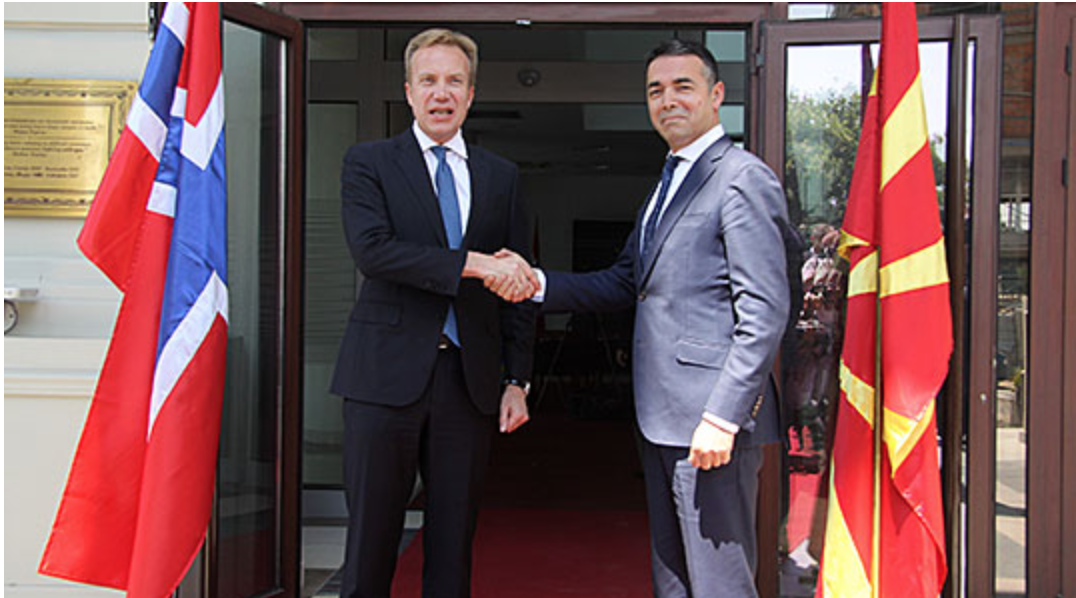
Norway supports Macedonia’s accession to NATO and EU and is ready to assist in the process, Norwegian Foreign Minister Borge Brende said after Friday’s meeting in Skopje with the Macedonian Foreign Minister Nikola Dimitrov.
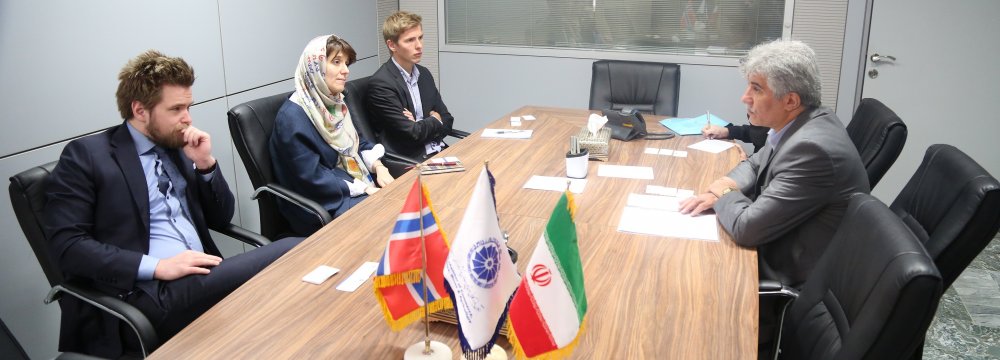
Brende said that Norway has a strong partnership with Macedonia and has long historical ties.

We support government’s aspirations for membership in Euro-Atlantic organisations and we are focused on developing inclusion in Macedonia. I hope that there will be efficient cooperation in the parliament. What can one learn from Norway’s history is that 100 years ago we were one of the poorest countries and now we are one of the developed which was enabled by inclusion and democracy, Brende said at joint press conference with Dimitrov.

Dimitrov said that although this was their first meeting, it was cordial and open.

This is first visit of Norwegian Foreign Minister in over six years. We talked about the relations between the two countries, which are close and friendly. Next year, we the countries will celebrate 25 years of diplomatic relations and has the potential to develop in many areas, said Dimitrov.

He told that he presented to Brende priorities of the new government, NATO and EU integration, the area of good neighbourly relations, in regard to sphere of strong institutions, rule of law and free media.

Norway continues its support to our road to NATO as previously. Especially at this moment for the region, support for invitation to join NATO will have a very calming and beneficial effect for Macedonia, the Balkans and the Alliance, Dimitrov said.

Asked whether he plans to visit other neighbouring countries following Bulgaria’s visit, Dimitrov said he wants Macedonia to have very close and friendly relations with all.

– Today Brende, who was kind and invited us on the Norwegian plane we are to head together in Belgrade at the inauguration of President Vucic. We had election cycles in Albania and Kosovo and we already have communication very soon we are to visit these countries. Any success of a country in the Balkans is a success for the entire region; we will either succeed together or go down. With such a message we will visit all countries, Dimitrov said.

In regard to journalist question what is included in the agreement on good neighbourly relations with Bulgaria, Dimitrov said when negotiating through publicity and public statements the outcome is worse, while the result is better when negotiations are conducted behind closed doors, it will be assessed when the public should be fully involved.

I can say that the basis of this agreement is the declaration signed by the prime ministers of both countries in 1999. The Macedonian language is included in the declaration and the agreement will not be changed from that declaration, Dimitrov.

He underlined that if Macedonia has a European democracy and courts, which are prerequisites for economic prosperity and good neighbourly relations with its neighbors, it will probably become more attractive for EU members and that in some way we will be more interesting then, when our membership will become less important.

Brende asked whether the Kingdom of Norway is considering re-opening an embassy in Macedonia, he answered that they are reviewing all possibilities for intensifying the partnership with Macedonia.

Brende is to meet Friday with President Gjorge Ivanov and PM Zoran Zaev.

(Macedonian Information Agency)

June 23, 2017 0 comments
0 FacebookTwitterPinterestEmail
Asia and Norway

Iran’s Tejarat Bank Opening Branch in Norway

by Nadarajah Sethurupan June 22, 2017
written by Nadarajah Sethurupan

Tejarat Bank, a major Iranian lender, is to open a branch in Norway as banking ties with the Scandinavian country gathers pace, announced the Second Secretary for Economic Affairs with the Royal Norwegian Embassy in Tehran in a meeting with the international affairs deputy of Iran Chamber of Commerce, Industries, Mines and Agriculture.
“I can announce the good news that banking ties will be established between a number of Norwegian and Iranian banks soon, including Tejarat Bank which is to open a Norway branch in the foreseeable future,” Martin Eide was quoted as saying by the official news website of the ICCIMA.

Regarding banking ties, he added in his meeting with Mohammad Reza Karbasi, “we have reached several agreements which will be implemented soon”.

Karbasi pointed to the economic structure of both countries which are similar since oil, gas and petrochemical products from the majority of their exports and major parts of their sectors are state-run. This, he said, would help the countries to expand their collaborations.

The official also referred to the trade deals of Iran and Norway, saying even though the volume has increased during the past year, it is still very low and a focus must be put on taking it higher.

“We are very optimistic about the future of Iran’s economy and Iranian businessmen are highly enthusiastic about working with Norwegian companies,” Karbasi said, adding that the main focus is on increasing ties in energy, fisheries, renewable energies, mining and shipbuilding industries.

The ICCIMA member expressed hope that with removing banking hurdles and developing suitable financial instruments, Iranian and Norwegian companies will be able to take their cooperation to the next level and their private sectors would also be able to expand their ties.

According to him, the Iran Chamber is after forming a joint Iran-Norway chamber of commerce. In tandem with overcoming banking problems, he added, forming a joint chamber will clear the way for expanding economic ties.

Karbasi officially invited Norwegian companies to engage in joint investments in Iran, adding that in line with this, “we will collect various projects from across the country and introduce them to the Norwegian embassy and other foreign embassies”.

He added that the ICCMIA is ready to welcome trade, economic and official delegations from Norway and hold economic forums for them. It is also ready to send trade delegations of its own to the Scandinavian nation.

Optimism in Relations

Eide responded positively by saying the Norwegian side is very willing to engage in joint investment ventures, saying they are ready to receive the list from the Iranian side and explore the possibilities.

Facilitation of issuing visas for Iranian traders was also one of the subjects emphasized on by the ICCMA international affairs deputy who said it will create the grounds for the progress of trade ties between the two countries.

Furthermore, he brought up the notion of forming a joint Iran-Norway economic commission.

The official with the Norwegian embassy in Tehran reassured that “we are currently trying to ease the process of issuing visas for traders and the waiting period as much as possible” and headway has been made.

For example, he said, if there are no problems with the documents, the Schengen visa for traders will be issued more easily and at a shorter period compared with the past.

(financialtribune)

June 22, 2017 0 comments
0 FacebookTwitterPinterestEmail
Science

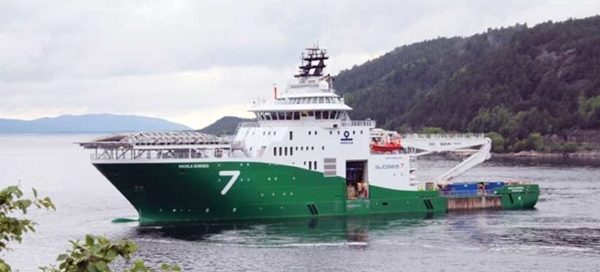
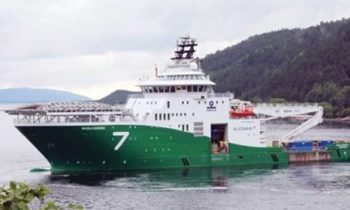
Norwegian research vessel Havila Subsea to participate in Black Sea Maritime Archaeological Project

by Nadarajah Sethurupan June 22, 2017
written by Nadarajah Sethurupan

Bulgaria’s Cabinet has given permission to Norwegian research vessel Havila Subsea to enter the country’s territorial waters to take part in the Black Sea Maritime Archaeological Project from August to October.
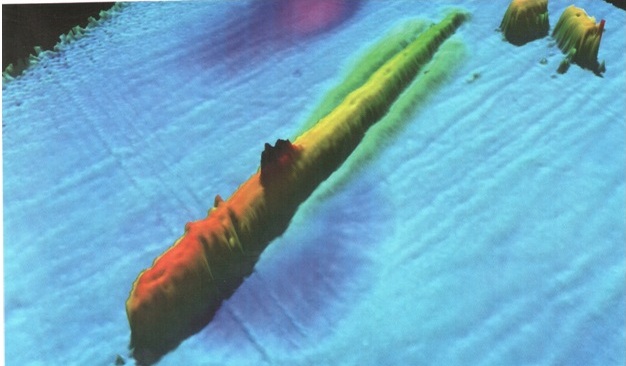
In the Black Sea Maritime Archaeological Project, maritime archaeology and marine geophysics are working together to record, date and understand the submerged cultural heritage of Bulgaria, contributing to knowledge of the prehistoric and historical environmental record of human activity in this region.

The seabed is being investigated remotely through the use of sonar and deep sea diving ROVs, potentially revealing intact shipwrecks and ancient settlements to show how human civilisation has evolved.

The Bulgarian government permission means that the ship will be able to enter Bulgarian waters and its exclusive economic zone from August 17 to October 5. The ship will be able to visit the Bourgas port from August 21 to 25 and from September 19 to 22.

The Black Sea Maritime Archaeological Project is being carried out in accordance with the contract concluded between the underwater archeology centres in Sozopol and the University of Southampton.

The main objective of the project is to collect information to track climate change and sea level and how these changes have affected the cultural development of Black Sea coastal communities.

Research that is exclusively for peaceful purposes and for expanding knowledge of the marine environment will be carried out in a safe way and without creating difficulties for Bulgaria in the exercise of its sovereign rights and jurisdiction, the Cabinet said in a note announcing its decision on June 21.

(Photo: skipsrevyen.no)

June 22, 2017 0 comments
0 FacebookTwitterPinterestEmail
Science

Russia hints at new plans to raise sunken nuclear subs by 2022

by Nadarajah Sethurupan June 21, 2017
written by Nadarajah Sethurupan

Russian scientists have again floated the possibility of raising a nuclear submarine that the Soviet Navy sank on purpose almost 40 years ago in an effort to salvage a long legacy of radioactive trash that the Soviet military for decades scuttled at sea.


Russian scientists have again floated the possibility of raising a nuclear submarine that the Soviet Navy sank on purpose almost 40 years ago in an effort to salvage a long legacy of radioactive trash that the Soviet military for decades scuttled at sea.

St. Petersburg’s Krylov State Research Institute on Friday announced it was working on plans for a floating dock catamaran-type vessel capable of lifting military nuclear waste from the bottom of the sea as part of a government plan for Arctic development. According to the institute’s director, Sergei Malyshev, the K-27 nuclear submarine could be lifted by 2022.

The K-27, a November Class prototype submarine, was sunk by the navy in the shallows off the Novaya Zemlya Archipelago in 1981. Years before, in 1968, its reactor suffered a fatal leak, which damaged its fuel assemblies and killed nine.

The Soviet Navy attempted to repair the sub but failed, and instead technicians sealed its reactors and scuttled it near the archipelago dividing the Barents and Kara seas, which itself for decades served as a testing site for Soviet nuclear weapons.

The K-27 is one piece of a colossal drive to dump naval radioactive waste in the Artcic oceans that continued for decades.

A catalogue of the irradiated debris released to Norwegian radiation authorities by the Russian Navy in 2012 includes 17,000 containers of radioactive waste, 19 ships containing radioactive waste, 14 nuclear reactors, including five that still contain spent nuclear fuel, and 735 other pieces of radioactively contaminated heavy machinery.

In the early 1990s the navy finally agreed to stop dumping its old reactors and nuclear waste at sea. But in 2003, another decommissioned submarine, the K-159, sank in Arctic waters while it was under tow from the Gremikha naval installation near Arkhangelsk to the Nerpa shipyard on the Kola Peninsula for dismantlement.

That submarine’s loss, and the drowning of nine crewmembers who were aboard, in 238 meters of water renewed fears over Russia’s burgeoning undersea nuclear waste deposits and ignited discussions about bringing it and the K-27 to the surface.

“According to our information, the K-27 is the most dangerous of the dumped reactors,” Nils Bøhmer, Bellona’s general director and nuclear physicist said. “We welcome the lifting of this submarine provided it can be done in a safe way – the longer it’s underwater, the worse will be its condition and the harder it will be to lift.”

The K-27 is arguably more hazardous than its other radioactive cousins in the region. A scientific expedition to the vessel in 2012 concluded that its liquid metal cooled reactor was vulnerable to an uncontrolled chain reaction and a significant radioactive release.

But plans to raise the K-27 have been stutter-step and tend to recede as quickly as they are mentioned. These plans were again in the spotlight in 2015 when officials with Russian state nuclear corporation told a Bellona-hosted seminar that pulling the K-27 and the K-159 to the surface were a national priority. The plans have failed to gain momentum since.

Even casting the issue of retrieving radioactive waste as essential to Russia’s Arctic oil development – thus something that can be underwritten by foreign drillers – has failed to galvanize the financing or scientific expertise.

Still, Russia’s Emergency Services Ministry has repeatedly urged the government to devise a plan to lift the sub, and Norway has taken part in joint studies to determine whether it poses any dangers of contamination and if, indeed, it has maintained the structural integrity to be lifted from its shallow grave.

Scientists on the most recent such expedition, in 2013, determined that the submarine’s hull was still intact and hadn’t experienced any abnormal corrosion, but that several parts of its outer hull were missing.

A study a year earlier found slightly elevated levels of cesium 137 near the K-27’s sealed reactor. Encouragingly, levels of radionuclides around the submarine were lower in 2012 than they were when Norwegian authorities first visited the submarine twenty years earlier.

The vessel Malyshev at the Krylov Institute described as being in the planning phases sounded similar to other vessels numerous scientific institutes have proposed in the past, but which thus far have not been built.

Over the years, engineers have suggested a barge-like boat with the capability to raise several thousand tons from the seabed would be able to lift the K-27, and the K-159 as well. But the only ship that has come close to those specifications is the Italian-built Itarus.

In 2016, Rosatom suggested this vessel, which the Italians have built but still not delivered, would be able to lift scuttled submarines and sunken containers of radioactive waste.

(bellona)

June 21, 2017 0 comments
0 FacebookTwitterPinterestEmail
Environment

Religious, indigenous leaders demand rainforests be saved

by Nadarajah Sethurupan June 19, 2017
written by Nadarajah Sethurupan

Religious and indigenous leaders worldwide are calling for an end to deforestation in an international multi-faith, multi-cultural plea to reduce the emissions that fuel climate change, which is killing tropical rainforests.
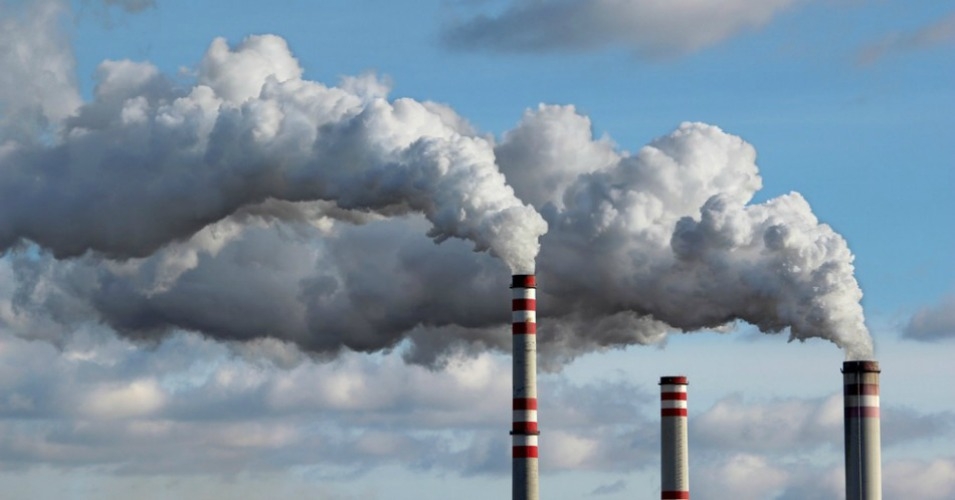

Participants from 21 countries at a conference in the Norwegian capital of Oslo are hoping that billions of people of faith worldwide will unite to protect the Earth’s rainforests. The rainforests are fundamental to human life but are suffering from agricultural and industrial exploitation in South America, sub-Saharan Africa and Asia.

Vidar Helgesen, Norway’s environment minister, launched the Interfaith Rainforest Initiative and is hosting the one-day meeting. He says Monday that halting deforestation requires “a global, tectonic shift.”

Among those at the meeting are representatives of Catholic, Protestant, Jewish, Muslim and Hindu faiths, and indigenous leaders, including ones from Indonesia and Brazil.

(therepublic)

June 19, 2017 0 comments
0 FacebookTwitterPinterestEmail
Environment

Failure to Prioritize Rights of Forest Guardians Risks 22,322 Million Metric Tons of Carbon Emissions

by Nadarajah Sethurupan June 19, 2017
written by Nadarajah Sethurupan

At least one quarter of the carbon stored aboveground in the world’s tropical forests is found in the collectively-managed territories of Indigenous Peoples and local communities, according to new research released one week before negotiators meet in Marrakech for the UN’s annual global climate conference. Community lands contain at least 54,546 million metric tons of carbon (MtC), equivalent to four times the total global carbon emissions in 2014.1 The analysis— authored by the Rights and Resources Initiative (RRI), Woods Hole Research Center (WHRC), and World Resources Institute (WRI)—looks at lands legally owned and customarily claimed by communities in 37 tropical countries. One tenth of the total carbon contained aboveground in tropical forests—22,322 MtC—is in collectively managed forests that lack formal, legal recognition. Without secure rights, these communities and their forests are at risk of illegal, forced, or otherwise unjust expropriation and capture by more powerful interests, thus displacing the residents, destroying the forests and releasing the carbon they contain into the atmosphere. “Tropical forests represent some of the most carbon-rich landscapes on the planet,” said Wayne Walker, PhD, scientist at Woods Hole Research Center. “Both satellite and on-the-ground evidence suggest that Indigenous Peoples and local communities are the best stewards of these lands, the carbon they contain, and the wealth of other environmental services they provide.”

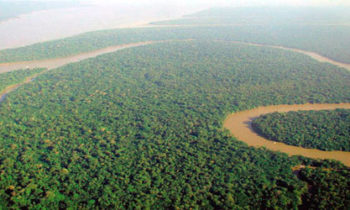
The findings serve in part as a response to the criticism that many tropical forest nations have not embraced this cost-effective solution to preventing further emissions from forest loss. Despite peer- reviewed evidence that strong land rights allow Indigenous Peoples and communities to outperform all other land management strategies, only 21 of 188 countries included forest peoples in their national plans for reducing carbon emissions under the Paris Agreement, according to an RRI analysis released earlier this year. While the report reaffirms the critical amount of carbon held in legally owned or designated community forest in Brazil (14,692 MtC), Indonesia (7,068 MtC) and the Democratic Republic of the Congo (DRC – 6.941 MtC), neither Indonesia nor the DRC have legally recognized the rights of forest communities.

Brazil’s neighbors, the Amazonian countries of Colombia (4,572 MtC), Venezuela (3,526 MtC), Peru (2,995 MtC), and Bolivia (1,915 MtC), rank fourth, fifth, seventh, and ninth, respectively, in terms of total collectively-managed carbon. Papua New Guinea (3,513 MtC), Mexico (2,196 MtC), and India (1,068 MtC) round out the top ten countries. These figures rely on conservative estimates that only include the documented extent of community- managed forests in the tropics; the full extent is known to be much larger.

Recent studies show that Indigenous Peoples and local communities customarily claim at least 50 percent of the world’s lands— including forests—but legally own just 10 percent of global lands, and have some degree of recognized management rights over an additional 8 percent. “Tropical forests contain an untapped wealth of opportunities in the effort to limit climate change, said UN Special Rapporteur on the Rights of Indigenous Peoples Victoria Tauli-Corpuz. “Securing the rights of Indigenous Peoples to own and manage their forests is an inexpensive way to limit emissions while improving communities’ economic stability.

But too many governments and private sector leaders keep their heads in the sand while the forests are destroyed.” Deforestation contributes 24 percent of greenhouse gas emissions globally and 58 percent in Latin America alone. Research released in early October by WRI found that in tropical forests where indigenous and community land rights were recognized and protected, the deforestation rates were two to three times lower than elsewhere in Bolivia, Brazil, and Colombia. “The global community needs to recognize the scientific evidence: keeping tropical forests intact prevents carbon emissions, and forest peoples do the job better than anyone else,” said Katie Reytar, research associate at World Resources Institute. “The Marrakech conference presents an opportunity to act on this evidence. We need to take concrete steps toward recognizing rights, before global warming reaches the breaking point.” The new report follows up on an earlier report released in 2014 by RRI and WRI and related studies conducted by a consortium of scientific, policy and indigenous organizations in 2014 and 2015. By expanding the sample size to include nearly twice as many countries as previous assessments, along with more recent, spatially-explicit carbon estimates, the study released today presents a more comprehensive picture.

Economic benefits of indigenous land rights quantified Securing the ownership rights of these forests for the Indigenous Peoples and local communities that live there is both a sensible and cost-effective method for lowering carbon emissions, according to the earlier report from WRI. When accounting for the ecosystem services that the tropical forests provide— soil retention, pollination, biodiversity, flood control, and a source of clean water—along with tourism and other economic sectors that benefit from community forests, the benefits over the next 20 years amount to $523 billion to $1.165 trillion in Brazil, $54-119 billion in Bolivia, and $123–277 billion in Colombia. In contrast, the cost of securing these land rights—only a few dollars per hectare of forest each year—is less than 1 percent of the total benefits in each country. This contrast becomes even more apparent when considering that the world’s forests—when intact—remove 20-30 percent of carbon dioxide emissions.

“The economics of climate change match the science,” concluded Alain Frechette, senior policy advisor at the Rights and Resources Initiative. “To limit climate change, we need economically feasible and long term solutions that protect human rights, reduce poverty, and support sustainable development. Securing the rights of Indigenous Peoples and local communities helps secure everyone’s right to a more stable and sustainable future.”

(N.Sethu)


June 19, 2017 0 comments
0 FacebookTwitterPinterestEmail
Environment

New Hope for World’s Tropical Forests

by Nadarajah Sethurupan June 19, 2017
written by Nadarajah Sethurupan

New Hope for World’s Tropical Forests as Christian, Muslim, Jewish, Hindu, Buddhist, Daoist Leaders Join Indigenous Forest Guardians to Launch Global Effort to End Deforestation.

Norway’s King Harald V attends unveiling of interfaith rainforest initiative, created by global coalition to fight escalating threats to endangered forests in Africa, Southeast Asia and Latin America—vital to slowing climate change.

Religious and indigenous leaders from all corners of the globe launched today an unprecedented initiative they say will bring needed moral attention and spiritual commitment to bear on global efforts to end deforestation and protect the tropical rainforests—forests that are fundamental to human life, the planet’s health and reducing the emissions fueling climate change. It marks the first time religious leaders from a broad spectrum of faiths will work hand-in-hand with Indigenous Peoples, the world’s leading rainforest guardians, to call upon and activate billions of people of faith worldwide to stand up for rainforests. The gathering was held in the presence of His Majesty King Harald V of Norway.

Tropical rainforests in South America, sub-Saharan Africa and Asia are falling rapidly due to a range of forces, including palm oil plantations, cattle, soy and crop production, and rapacious and often illegal mining and logging operations. The losses amount to an area the size of Austria each year.

Citing the spiritual, environmental, social and economic benefits the world’s tropical rainforests provide, the partners of the multi-faith initiative emphasize humanity’s shared ethical and moral responsibility to protect them. They are committed to taking concrete, collective action to protect, restore and sustainably manage those forests. The world’s religious and spiritual communities have long sheltered and protected forests—from the rainforest-dwelling Ashaninka in Peru and Brazil to Buddhist monks ordaining trees in Thailand. Yet, the broad-scale, global mobilization of faith communities to protect the tropical forests—so essential to planetary survival—is groundbreaking.

With their capacity to store billions of tons of carbon, the preservation of tropical rainforests is widely viewed as fundamental to halting climate change. Many climate experts note that forests are the only proven approach for capturing and storing large amounts of carbon. Thus, staving off their destruction could keep carbon emissions at bay, buying time for the world to transition to a low carbon energy future, and also playing an indispensable role in reaching global carbon neutrality in the second half of this century.

Tropical rainforests also provide food, water and income to 1.6 billion people. They contain most of the planet’s land-borne biodiversity and help regulate rainfall and temperature globally, regionally and locally. Religious and indigenous leaders from 21 countries will have discussions with forest advocates, climate scientists and human rights experts in Oslo on June 19-21 to develop goals and actions, along with milestones to mark their progress. They expect to follow up with an action plan and a global interfaith rainforest summit in 2018. The group was convened by Norway’s International Climate and Forest Initiative (NICFI), Rainforest Foundation Norway (RFN) and the United Nations Development Programme (UNDP), in cooperation with the Forum on Religion and Ecology at Yale University, GreenFaith, the Parliament of the World’s Religions, Religions for Peace, REIL Network and the World Council of Churches. “A decade ago, Norway decided to make reducing tropical deforestation one of its top international priorities,” said Vidar Helgesen, Minister of Climate and Environment (Norway). “In that decade—the scientific case, the economic case, and the geopolitical case for ending deforestation has only grown. However, more is needed. There is a dimension to this fight that will require a global, tectonic shift in values. It is not the realm of policy, commerce or science, but of spirit, faith and moral conviction.”

Norway has invested nearly US$3 billion so far over the past decade to support developing countries to reduce deforestation and forest degradation, and has committed to stay the course with similarly high levels of ambition through 2030. “Tropical forests are indispensable to the future sustainability of the planet,” said Achim Steiner, Administrator, UN Development Programme. “The world’s religious and faith communities have a unique capacity to raise awareness and understanding of our responsibility to protect these vital ecosystems – and thus an important voice in a growing coalition of governments, companies, indigenous peoples’ groups and NGOs that have committed to ending deforestation by 2030.” “Our goal—working in concert with the spiritual and indigenous leaders gathered here—is to define a shared action plan to create a popular movement for expanded political will and on-the- ground action to protect rainforests,” said Bishop Emeritus Gunnar Stålsett, Honorary President of Religions for Peace.

“The scope of this initiative is global. But we are also putting special focus on religious and indigenous leaders, networks and institutions in countries with the most significant tropical rainforests.” The initiative is linked to a surge of grassroots action over the last few years in which environmental, climate and indigenous rights issues are being embraced as spiritual imperatives that strike a chord with multiple faiths and traditions. Other leaders of Evangelical Christian and Muslim organizations, and the Archbishop of Canterbury, have stressed the shared human responsibility to protect the planet. Lending crucial leadership and indispensable momentum to these efforts was the official letter or “encyclical” issued in 2015 by Pope Francis that called on all people of the world to take swift action, to bring, “the whole human family together to protect our common home.” He also noted the unbreakable link between Indigenous Peoples and the environment: “For them land is not a commodity, but rather a gift from God and from their ancestors who rest there, a sacred space with which they need to interact if they are to maintain their identity and values.”

“Tropical rainforests occupy a sacred place in many faiths, religions and spiritual traditions,” said Dr. Mary Evelyn Tucker, Director, Forum on Religion and Ecology, Yale University. “Indeed, spiritual reverence for nature and all life can be found across the world’s religions, including among Indigenous Peoples and other residents of the world’s tropical rainforests. Given what we are hearing from religious and indigenous leaders worldwide, we believe we can create a global movement around this shared vision.”

Indigenous Peoples will play a leadership role in the initiative, as their traditional wisdom has evolved in intimate interaction with rainforests. A growing body of scientific evidence has found Indigenous Peoples to be the best guardians of the forests, and confirms that granting strong land rights to Indigenous Peoples and forest communities serves as an effective, inexpensive solution to the deforestation crisis, while delivering social, economic and climate benefits.

“Forest communities around the world have put their lives on the line to care for the planet’s tropical forests,” said Vicky Tauli-Corpuz, UN Special Rapporteur on the Rights of Indigenous Peoples. “We are nothing without our forests. Our culture, our spirituality, our livelihoods, our incomes and our health are tied to them. In the name of our ancestors and the spirits of the forest, we will continue to protect these forests with our lives until they are safe.”
Although the traditional knowledge of Indigenous Peoples is recognized in the Paris Agreement as a potent tool against climate change, these traditional forest peoples have come increasingly under siege from governments, multinational companies and other encroachers eager to chop down forests to make room for infrastructure, palm oil plantations, soy or cattle.

“We would like to direct this emerging interfaith movement to focus on the besieged indigenous communities that have protected these forests for thousands of years,” said Lars Løvold, Director, Rainforest Foundation Norway. “The systematic destruction of tropical forests is often accompanied by land grabs and even outright murder. We need to secure the rights of forest peoples, and listen to their voices in national and international policy debates.”
Among those attending the Oslo meeting are Argentine Catholic Bishop H.E. Monsignor Marcelo Sánchez Sorondo, Chancellor, Pontifical Academy of Sciences and Pontifical Academy of Social Sciences; Sir Rabbi David Rosen, International Director of Interreligious Affairs at the American Jewish Committee and Director of the Heilbrunn Institute for International Interreligious Understanding; Dr. Din Syamsuddin, Chairman, Center for Dialogue and Cooperation Among Civilizations and; Lutheran Bishop Emeritus Gunnar Stålsett, Honorary President, Religions for Peace in Norway; and the Right Reverend Bishop Pierre W. Whalon, Bishop-In-Charge, Convocation of Episcopal Churches in Europe. Indigenous leaders include Abdon Nababan, Vice Chairperson of the National Council at Indonesia’s Aliansi Masyarakat Adat Nusantara/Indigenous Peoples Alliance of the Archipelago (AMAN); Sônia Guajajara, the National Coordinator for the Articulation of Indigenous Peoples of Brazil (AIPB); Julio César López Jamioy, the General Coordinator of La Organización Nacional Professor of Islamic Political Thought at National Islamic University, Jakarta; Buddhist Abbot Phra Paisal Vongvoravisit, Co-Founder, Sekiya Dhamma; Hindu, Dr. Nanditha Krishna, Founder of The C. P. Ramaswami Aiyar Foundation.

(N.Sethu)

June 19, 2017 0 comments
0 FacebookTwitterPinterestEmail
Environment

Norway to host leaders from world’s spiritual and religious traditions

by Nadarajah Sethurupan June 19, 2017
written by Nadarajah Sethurupan

Christian, Muslim, Hindu, Buddhist, Daoist, Jewish leaders to join with indigenous forest guardians to express moral commitment, explore faith-based mobilization to end deforestation.
For the first time, leaders from many of the world’s religions will meet to discuss the spiritual and ethical responsibility they share to protect rainforests, one of the planet’s most vital life-support systems. Besieged by growing global demand for commodities, tropical rainforests are being cleared at a perilous rate, with an area the size of Austria chopped down each year.

The meeting, which will take place in the presence of His Majesty King Harald V of Norway, will discuss how to activate the collective moral influence of religious communities across the planet. Based on sheer numbers, they could prove decisive in protecting the world’s last standing rainforests.

There is growing consensus among the world’s religions that environmental concerns are closely linked to social justice, a position reinforced by Pope Francis’ Laudato si and high-level declarations from many other faiths about the spiritual imperative of protecting the planet and its most vulnerable people.

The multi-faith summit marks the first significant engagement by the world’s religions with an issue that climate scientists and development experts argue is a lynchpin for global efforts to address climate change, poverty, food insecurity and violations of human rights. It also heralds the first time that religious leaders from a broad spectrum of faiths will work hand-in-hand with indigenous peoples, the historical guardians of rainforests, on an action agenda to end deforestation.

(N.Sethu)

June 19, 2017 0 comments
0 FacebookTwitterPinterestEmail
Diplomatic relations

UAE Embassy in Norway

by Nadarajah Sethurupan June 19, 2017
written by Nadarajah Sethurupan

Minister of Foreign Affairs of the United Arab Emirates H.H. Sheikh Abdullah bin Zayed Al Nahyan, inaugurated the new headquarters of the UAE Embassy in Oslo, in the presence of Norwegian Foreign Minister Borgi Brende.

Sheikh Abdullah bin Zayed and his Norwegian counterpart unveiled the commemorative plaque on the inauguration of the new embassy building.

The UAE Foreign Minister said that the opening of the new embassy in Oslo reflects the keenness of the UAE government to strengthen bilateral relations with Norway, and further develop them to serve the interests of the peoples of both countries.

Sheikh Abdullah and Borgi Brende signed a memorandum of understanding on political consultations between the two countries, aimed at enhancing political dialogue and deepening multi-faceted cooperation between the two countries.

The event was also attended by Mohamed Ibrahim Aljuwaied, Ambassador of the UAE to the Kingdom of Norway, and a number of ambassadors of Arab and foreign countries accredited to Norway.

June 19, 2017 0 comments
0 FacebookTwitterPinterestEmail
Newer Posts
Older Posts

Norwegian Nobel Prize 2024

101207 The Norwegian Nobel Committee has decided to award the Nobel Peace Prize for 2024 to Japan’s Hiroshima bomb survivor group Nihon Hidankyo.

Special Interest

  • Africa and Norway
  • Asia and Norway
  • Asylum
  • China and Norway
  • Corruption in Norway
  • Crimes
  • Defence
  • Diplomatic relations
  • Economics
  • Environment
  • Farming
  • Killing
  • Media Freedom
  • Middle East and Norway
  • NATO and Norway
  • Nobel Peace Prize
  • Norwegian Aid
  • Norwegian American
  • Oil & Gas
  • Peace Talks
  • Politics
  • Racism in Norway
  • Religion
  • Russia and Norway
  • Royal House
  • Science
  • Sex scandal
  • Sports
  • Spy War
  • Srilanka and Norway
  • Svalbard
  • Terrorist
  • Taiwan and Norway
  • Video clips

Follow Us

Recent Posts

  • Norway and Germany sign defence arrangement

    February 15, 2026
  • China hopes Norway will play a role in the Europe ties

    February 15, 2026
  • Norwegian cross-country skier breaks Olympic medal record

    February 15, 2026
  • Norway police search former PM’s properties in Epstein links probe

    February 12, 2026
  • Afghan National Killed in Norway

    February 11, 2026
  • Việt Nam strengthening cooperation with Norway: Việt Nam FM

    February 11, 2026

Social Feed

Social Feed

Editors’ Picks

Norway opens market for Sri Lankan fish exports...

May 13, 2016

Sri Lanka – Nordic Business Council holds discussions...

May 15, 2016

Good governance to Sri Lanka

May 15, 2016

Shock and Joy in Sri Lanka – Erik...

May 15, 2016

Sri Lanka-Norway plenty of new opportunities for business–...

May 15, 2016

NORWAY NEWS is an online news site, written in English, dedicated to Norwegian affairs at home and abroad. Norway News.com is published online. It is a daily online newspaper in existence since May, 2003. The site is run by an Independent Journalist.

Facebook Twitter Youtube

Useful Links

    • Work With Us
    • Contact Us
    • Collaboration
    • Data Collection
    • Workplace
    • Adverstising
    • Privacy Policy
    • International Collab
    • Feedback
    • Terms of Use
    • About Our Ads
    • Help & Support
    • Entertainment
    • News Covering
    • Technology
    • Trending Now

Politics

Syrian, Norway to boost cooperation on mine clearance
Erna to step down as Conservative Party leader in 2026
Norwegian Labour Party on re-election win

Latest Articles

Norway and Germany sign defence arrangement
China hopes Norway will play a role in the Europe ties
Norwegian cross-country skier breaks Olympic medal record
Norway police search former PM’s properties in Epstein links probe

Norway News 2025 . All Right Reserved. Designed and Developed by Norway News

  • Home
  • About us
  • Disclaimer
  • Contact us
NORWAY NEWS – latest news, breaking stories and comment – NORWAY NEWS
  • Home
  • About us
  • News
  • Other News
    • Africa and Norway
    • Asia and Norway
    • Asylum
    • Breaking News
    • China and Norway
    • Corruption in Norway
    • Crimes
    • Defence
    • Diplomatic relations
    • Economics
    • Environment
    • Farming
    • Featured
    • Health
    • Killing
    • Media Freedom
    • Middle East and Norway
    • NATO and Norway
    • Nobel Peace Prize
    • Norwegian Aid
    • Norwegian American
    • Oil & Gas
    • Peace Talks
    • Politics
    • Racism in Norway
    • Religion
    • Royal House
    • Russia and Norway
    • Science
    • Sex scandal
    • Sports
    • Spy War
    • Srilanka and Norway
    • Svalbard
    • Taiwan and Norway
    • Terrorist
    • Travel
    • Video clips
  • Disclaimer
  • Contact us
NORWAY NEWS – latest news, breaking stories and comment – NORWAY NEWS
  • Home
  • About us
  • News
  • Other News
    • Africa and Norway
    • Asia and Norway
    • Asylum
    • Breaking News
    • China and Norway
    • Corruption in Norway
    • Crimes
    • Defence
    • Diplomatic relations
    • Economics
    • Environment
    • Farming
    • Featured
    • Health
    • Killing
    • Media Freedom
    • Middle East and Norway
    • NATO and Norway
    • Nobel Peace Prize
    • Norwegian Aid
    • Norwegian American
    • Oil & Gas
    • Peace Talks
    • Politics
    • Racism in Norway
    • Religion
    • Royal House
    • Russia and Norway
    • Science
    • Sex scandal
    • Sports
    • Spy War
    • Srilanka and Norway
    • Svalbard
    • Taiwan and Norway
    • Terrorist
    • Travel
    • Video clips
  • Disclaimer
  • Contact us

Editor’s Picks

  • UN concern over Sri Lanka’s cases of enforced disappearances

    October 8, 2025
  • UN Human Rights Council Resolution on Sri Lanka’s Path to Reconciliation

    October 7, 2025
  • International should support Sri Lanka: Solheim

    October 4, 2024
  • Norwegian Meets Sri Lankan’s Challenges

    May 3, 2024
  • Norwegian Ambassador meets JVP in Sri Lanka

    May 2, 2024
  • “The man who didn’t run away” – Eric Solheim

    April 30, 2024

Newsletter

@2025 - All Right Reserved. Designed and Developed by Norway News