

-Portrait of Erik Solheim, Chair of the OECD Development Assistance Committee (DAC)
Erik Solheim, a former Minister of Environment and International Development in Norway, began his tenure today as Executive Director of the UN Environment Programme, with the concurrent position of UN Under-Secretary-General. Mr. Solheim assumes his new role as chief of the global authority on the environment after three years as head of the Development Assistance Committee (DAC) of the Organization for Economic Cooperation and Development (OECD).
In taking up office, Solheim pledged to work with countries around the world to tackle some of the most pressing environmental challenges of our time, including ocean and air pollution, the destruction of ecosystems, climate change and the relationship between the environment and conflict and migration.
He also promised to focus on environment issues close to people, such as damage to human health from air pollution.
Solheim said, “There is an urgent need to fight climate change, halt ecosystem destruction, and reduce pollution for the benefit of all peoples everywhere. By protecting our planet, we protect ourselves and in the process can help bring every last person out of poverty. We all have a stake in a healthy planet.”
He noted other urgent areas to address include the private sector investment needed for sustainable development, greening the finance sector and creating jobs and markets with clean and green technologies.
“Financing the preservation and rejuvenation of our planet cannot be the purview of governments alone. Private sector finance is both vital for sustainable development, and an opportunity for business. As never before, markets are rewarding investments in clean and green jobs and technologies.”
Solheim also underlined that issues like climate change and sustainable development are issues that no one country or organization can solve themselves, and that the world must come together to tackle environmental challenges.
“With successes like the Paris Agreement and the Sustainable Development Goals, the world has achieved a lot in recent years when it comes to the environment. We can achieve a lot more. But the only way to do this is by working cooperatively. I look forward to working with member states and welcoming voices and efforts from all parts of society to tackle our common challenges.
“Our planet is vulnerable, but I’m optimistic we can resolve the environmental problems we face. There’s little we can’t achieve when we pull together with cooperation, collaboration and a can-do attitude.”
Solheim arrives after having served as Chair of the DAC of the OECD since 2013. Since that time, he has also served as UN Environment Programme’s Special Envoy for Environment, Conflict and Disaster. Known as the ‘green’ politician, he held the combined portfolio of Norway’s Minister of the Environment and International Development from 2007 to 2012, and served as Minister of International Development from 2005 to 2007.
Having spent most of his career fighting for the environment in national and global politics, including through non-governmental organizations and during his combined ministerial portfolio, Mr. Solheim has focused on the challenge of integrating environmental and developmental issues. During his ministerial tenure, Norway reached 1 per cent of its GDP for overseas development assistance and passed the unique Nature Diversity Act. He initiated the process leading to the global coalition to conserve and promote sustainable use of the world’s rainforests – the UN REDD – gaining invaluable diplomatic and organizational experience.
Holding an undergraduate degree in history and social studies from the University of Oslo, Mr. Solheim has received several awards for his work on climate and environment, including UN Environment Programme’s “Champion of the Earth” award, and contributed to a number of peace and reconciliation efforts, most notably as the chief negotiator of the peace process in Sri Lanka.
Born in 1955, he is married, with four children.
An extended biography of Erik Solheim can be found here.
For media interviews and press matters concerning the Executive Director, please contact:
UN Environment Programme Newsdesk
Nairobi, Kenya
Email: unepnewsdesk@unep.org
For other matters concerning the Executive Director, please contact:
Executive Office
United Nations Environment Programme
P.O. Box 47074 – Nairobi 00100 – Kenya
Phone: +254 (0)20 762 4148
Fax: +254-20-7624006/7624275
Email: executiveoffice@unep.org
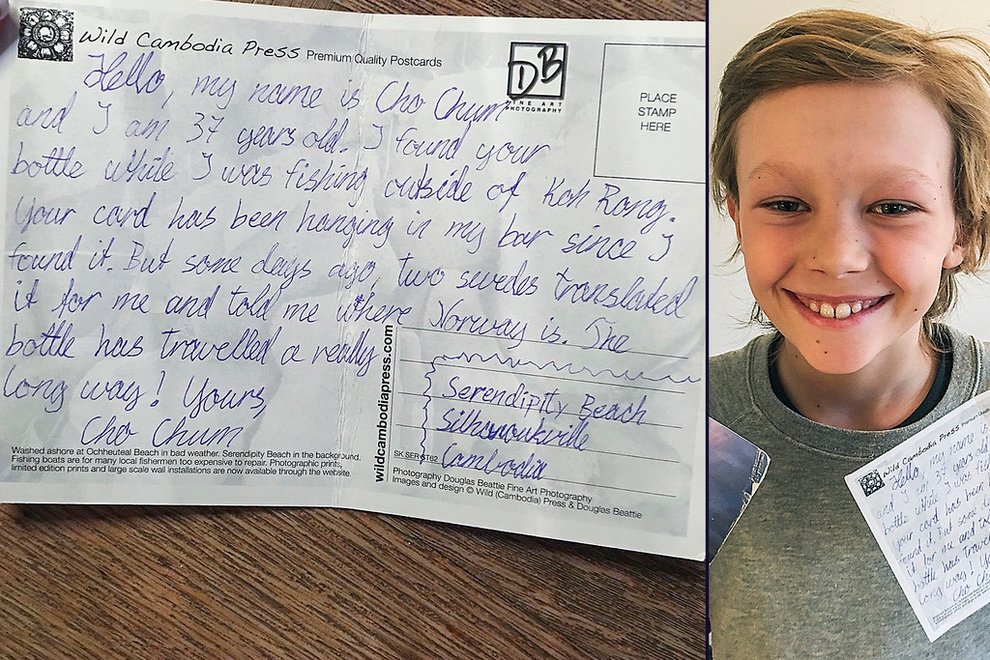
 In the summer of 2013, the seven year old Mingus Lund threw at Coca Cola bottle with a postcard inside into the ocean by Geitskjæret on Nøtterøy near the town of Tønnsberg in Norway. The photo showed the famous cliff Prekestolen in Norway. On the other side of the card, Mingus wrote – with the help of his cousin:
 Egyptian foreign minister Sameh Shoukry discussed with Norway’s Middle East peace envoy Tor Vinslad the recent Paris-based Israeli-Palestinian peace initiative, the ministry’s spokesperson Ahmed Abu Zeid said Sunday.


 Greenhouse gas emissions have decreased by about 13 percent from 1990, and in 2013 amounted to just over 8 percent of the Norwegian greenhouse gas emissions. A Project Group reviewing agriculture challenges in the face of climate change has concluded that, including emissions from transport, construction and land, the further potential for emission reduction from today and until 2030 is estimated to be near 20 percent.
 Another great potential for national climate action is to exploit forest resources. In line with the recommendations of the IPCC, the Project Group believes that the role of forests as a carbon sink can be substantially improved by targeted reforestation and other measures that promote forest productivity. Renewable energy and raw materials from the forest can displace fossil fuel emissions in other sectors. The use of biofuels in the transport sector, the use of bioenergy and building materials in the building sector and the use of biochar as a reducing agent in the industry, are examples of this. Many of the scenarios that underlie IPCC low emission vectors assume negative emissions from approximately 2050, and photosynthesis remains the basis of all hitherto known carbon negative technologies.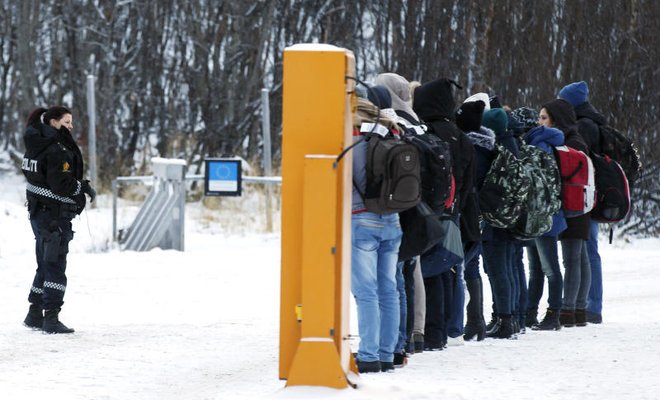
 The Norwegian parliament has adopted a number of legislative amendments to ensure a more sustainable asylum policy and strengthen border control. These were approved by the King in Council today. The Ministry is now considering the need for transitional rules and regulations for the period until the amendments come into force.
 The police suspect one of Trondheim’s most prominent real estate companies of fraud for tens of million, according to the newspaper Adresseavisen.
 ‘I am very pleased that the parties to the conflict have now reached agreement on the key issue in the negotiations: laying down of arms and a definitive bilateral ceasefire and end of hostilities. After nearly four years of tough negotiations, we are now finally approaching an end to this conflict,’ Minister of Foreign Affairs Børge Brende said.

 President Muhammadu Buhari yesterday in Abuja said Nigeria and Norway, a major fish exporting country, would work together to deepen their agricultural cooperation, particularly on fish farming and fisheries development.
 On Wednesday, June 22, coinciding with a visit by the Iranian regime’s Foreign Minister Mohammad Javad Zarif to France and the Netherlands, and simultaneous with the global conference against the death penalty with the participation of more than 90 countries in Oslo, officials of the mullahs’ regime in Iran have sent two prisoners by the names of Farzad Bizhani and Farhad Souri in Sanandaj Prison (western Iran) to solitary confinement in preparation for their executions.


 Lebanon Minister of Justice, Ashraf Rifi, currently taking part in the 6th World Congress Against the Death Penalty at the Opera House of Oslo, Norway, delivered a speech in which he stressed that this penalty was not a deterrent to crime.
 Norway’s parliament has authorized a government request for sending troops to Syria, a new sign that the pacifist Scandinavian country may become involved deeper in the conflict in the Arab country.
 Foreign Minister Brende’s opening speech at Sixth World Congress against the death penalty in Oslo.
 At all times, we must remember that – contrary to what many people think – the death penalty is not exclusive to any particular region, political system, religion, culture or tradition.
 As we have learned time and again, no justice system is perfect. There are numerous cases of innocent people serving time. Death row is no exception.
 Some 700 priests called for clemency.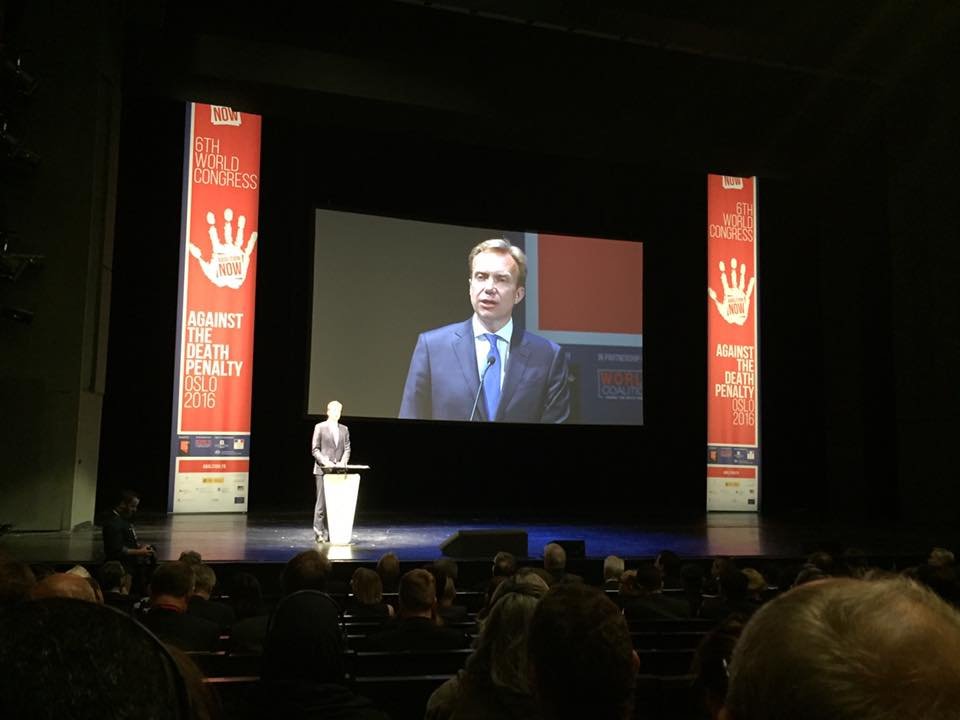
 In addition to the constitutional mandate, Power of Mercy Act 2011 assigns the committee support functions including undertaking research and collecting data on matters related to power of mercy.


 Mangala Samaraweera, Minister of Foreign Affairs of Sri Lanka in Norway to attend the 6th World Congress against the Death Penalty.
 Thank you, thank you, Ladies and gentlemen and friends. It is indeed a great honor to be here today at the Norwegian Institute for International affairs.
 In fact, this victory in January was repeated again in August where extremist political parties on all sides of the divide were again decisively defeated and for the first time in Sri Lanka’s history, the two principle political parties which have governed Sri Lanka since independence chose to be on the same side leaving aside the bitterness of the past. And also for the first time, the leader of the TNA, the party which represents the Tamil community in Sri Lanka was chosen as the leader of the opposition and thus I feel a new window of opportunity was opened for Sri Lanka after many years to rectify the mistakes of the past and go forward towards a new future.
 From here I go to Geneva next week where I will be making a statement on what we are doing now and also the fact that the Government is united in its determination to come to terms with what happened earlier. Again certain newspapers and social media like to say that the President has one view, the Prime Minister has another, the Foreign Minister yet another but it is not so. We are working unitedly. In fact, those of you who heard President Sirisena addressing the nation on the 4th of February during the independence day of Sri Lanka this year, he said “ It is now time for us to seize the current opportunity that is before us to implement the provisions of the Geneva resolution, not because of International pressure, but because as a nation, we must implement these provisions for the sake of restoring the dignity of our nation, our people and our military, in order for Sri Lanka to regain her due position as a strong democracy among the community of nations.” So we are moving ahead as I said with confidence and meeting the challenges head on.
 We have been getting a lot of support from the West since the new government came into power. There’s a tsunami of goodwill I’d like say but that good will must now transform itself into practical day to day realities and the best way you can help as I said is by choosing Sri Lanka as your destination of choice for investment for trade.
 If you want to know what kind of diplomacy Sri Lanka is following, I would like to go back to something Jawaharlal Nehru said in 1947. He said “Whatever policy you may lay down, the art of conducting foreign affairs of a country lies finding out what is most advantageous to the country.” So I think today it may sound very selfish but we aren’t ideologically driven but self interest is I would say is the driving force in our foreign policy. Because we want to ensure that the people of Sri Lanka, even at this late stage, get the future that they truly deserve.


 In 1956, a few years after Independence, my father, then the Parliamentary Secretary for Justice, proposed a bill ending capital punishment which was supported by S.W.R.D. Bandaranaike, the Prime Minister and founder of the Sri Lanka Freedom Party – our island’s other main political party. The bill passed but tragically the death penalty was resumed a few years later as result of Mr. Bandaranaike’s assassination until a de facto moratorium was instituted in 1976.


 In a message to a world conference against the death penalty in Oslo, Norway, Pope Francis says capital punishment “contradicts God’s plan for individuals and society, and his merciful justice” and says that growing opposition to the practice is a “sign of hope.”
 “Indeed, nowadays the death penalty is unacceptable, however grave the crime of the convicted person,” Francis said on the message released on Tuesday.
 “It does not render justice to victims, but instead fosters vengeance,” Francis said in Spanish.
 As he has done several times before, the Argentine pontiff also called for an improvement of prison conditions so that they respect the dignity of does incarcerated. Rendering justice, he said, “does not mean seeking punishment for its own sake, but ensuring that the basic purpose of all punishment is the rehabilitation of the offender.”
 A Kenyan delegation is in Oslo, Norway to attend the 6th World Congress against the Death Penalty.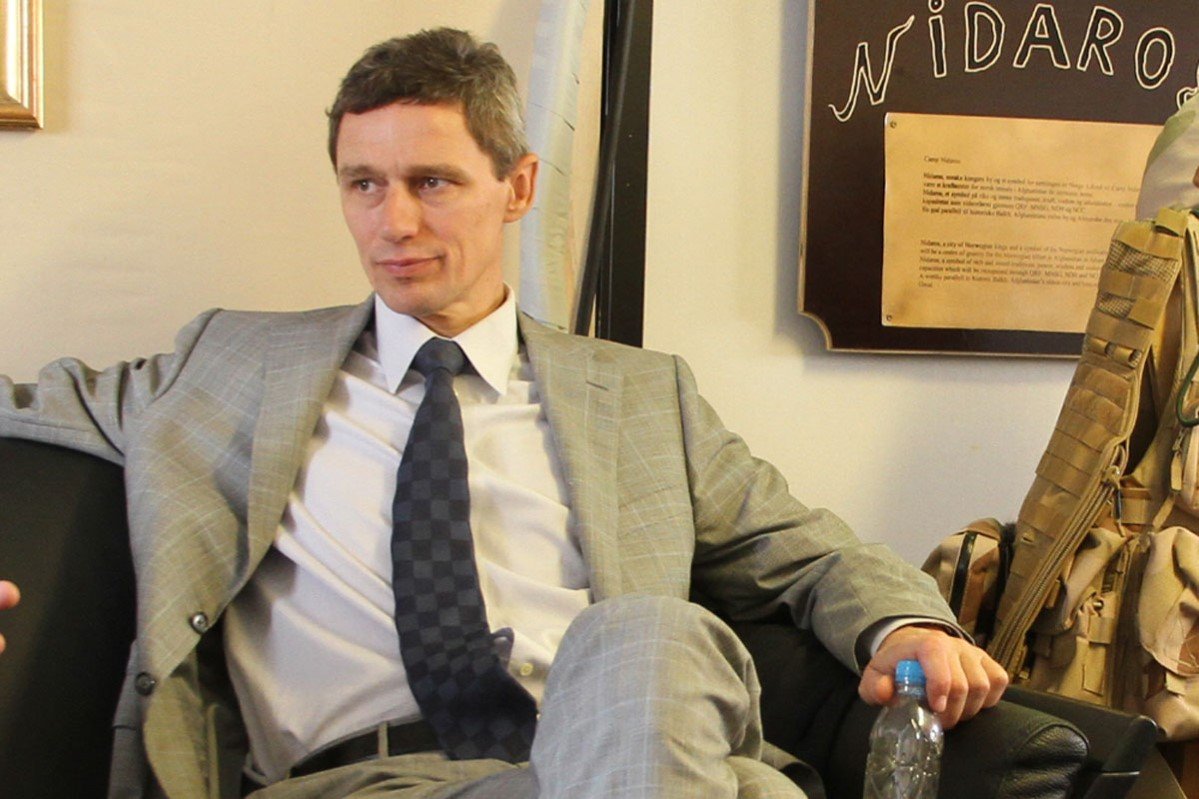
 State Secretary Tore Hattrem’s speech at the 200th anniversary of the Office of the Auditor General of Norway.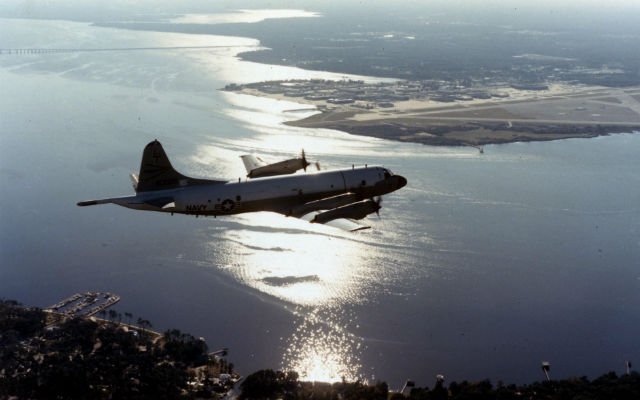
 Norway has revealed a proposed defence spending plan that allows for the acquisition of a new maritime patrol aircraft (MPA) to replace its six-strong fleet of Lockheed P-3 Orions.
 The United States and Norway this week announced (1) they would offset the greenhouse gas emissions from their aviation industry by buying voluntary emission reduction credits from reduced emissions from deforestation and forest degradation in tropical forests. The plan would violate the Rio Declaration in two ways.