NORWAY NEWS – latest news, breaking stories and comment – NORWAY NEWS
  • Home
  • About us
  • News
  • Other News
    • Africa and Norway
    • Asia and Norway
    • Asylum
    • Breaking News
    • China and Norway
    • Corruption in Norway
    • Crimes
    • Defence
    • Diplomatic relations
    • Economics
    • Environment
    • Farming
    • Featured
    • Health
    • Killing
    • Media Freedom
    • Middle East and Norway
    • NATO and Norway
    • Nobel Peace Prize
    • Norwegian Aid
    • Norwegian American
    • Oil & Gas
    • Peace Talks
    • Politics
    • Racism in Norway
    • Religion
    • Royal House
    • Russia and Norway
    • Science
    • Sex scandal
    • Sports
    • Spy War
    • Srilanka and Norway
    • Svalbard
    • Taiwan and Norway
    • Terrorist
    • Travel
    • Video clips
  • Disclaimer
  • Contact us
NORWAY NEWS – latest news, breaking stories and comment – NORWAY NEWS
  • Home
  • About us
  • News
  • Other News
    • Africa and Norway
    • Asia and Norway
    • Asylum
    • Breaking News
    • China and Norway
    • Corruption in Norway
    • Crimes
    • Defence
    • Diplomatic relations
    • Economics
    • Environment
    • Farming
    • Featured
    • Health
    • Killing
    • Media Freedom
    • Middle East and Norway
    • NATO and Norway
    • Nobel Peace Prize
    • Norwegian Aid
    • Norwegian American
    • Oil & Gas
    • Peace Talks
    • Politics
    • Racism in Norway
    • Religion
    • Royal House
    • Russia and Norway
    • Science
    • Sex scandal
    • Sports
    • Spy War
    • Srilanka and Norway
    • Svalbard
    • Taiwan and Norway
    • Terrorist
    • Travel
    • Video clips
  • Disclaimer
  • Contact us
Tuesday, March 10, 2026
NORWAY NEWS – latest news, breaking stories and comment – NORWAY NEWS
  • Home
  • About us
  • News
  • Other News
    • Africa and Norway
    • Asia and Norway
    • Asylum
    • Breaking News
    • China and Norway
    • Corruption in Norway
    • Crimes
    • Defence
    • Diplomatic relations
    • Economics
    • Environment
    • Farming
    • Featured
    • Health
    • Killing
    • Media Freedom
    • Middle East and Norway
    • NATO and Norway
    • Nobel Peace Prize
    • Norwegian Aid
    • Norwegian American
    • Oil & Gas
    • Peace Talks
    • Politics
    • Racism in Norway
    • Religion
    • Royal House
    • Russia and Norway
    • Science
    • Sex scandal
    • Sports
    • Spy War
    • Srilanka and Norway
    • Svalbard
    • Taiwan and Norway
    • Terrorist
    • Travel
    • Video clips
  • Disclaimer
  • Contact us
Copyright 2025- All Right Reserved Norway News
Diplomatic relations

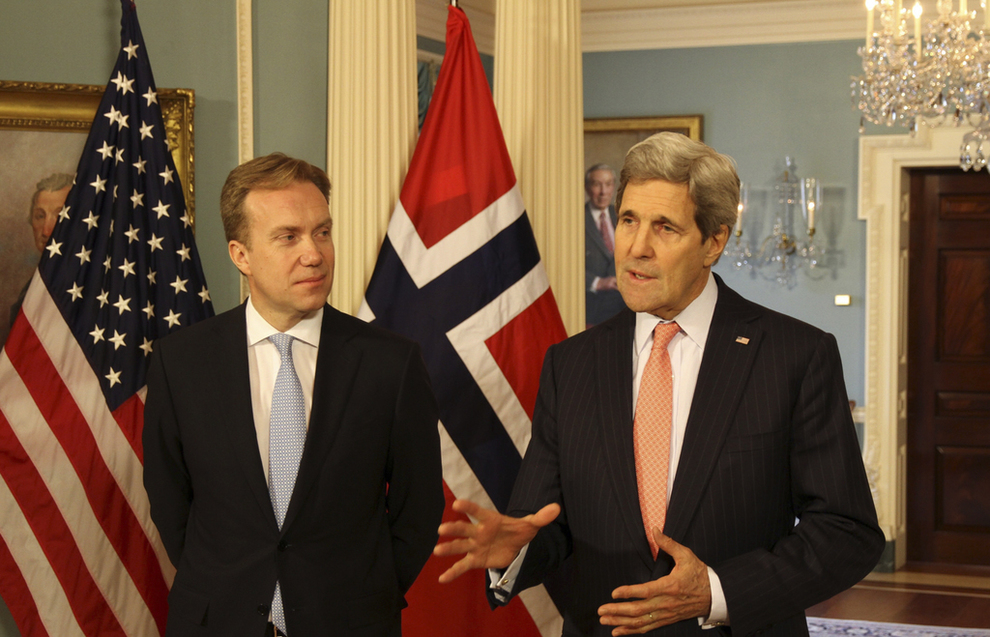
Secretary John Kerry’s remarks with Norwegian Prime Minister Erna Solberg in Oslo

by Nadarajah Sethurupan June 16, 2016
written by Nadarajah Sethurupan

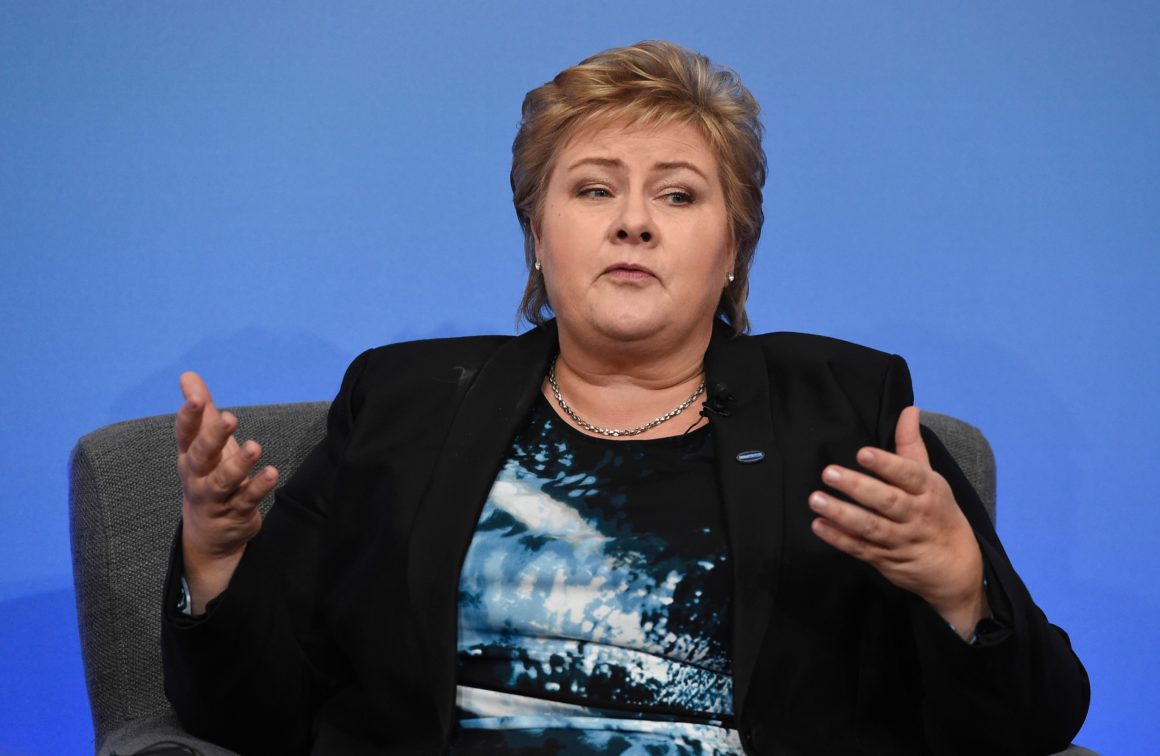
13442302_10153638214271074_3714693963575186596_nPRIME MINISTER SOLBERG: Good afternoon. I am very pleased to welcome Secretary of State John Kerry to Oslo. We last met in Washington, D.C. in May during the U.S.-Nordic Leaders’ Summit. Secretary Kerry’s visit here today serves to further underscore the close bilateral cooperation between the U.S. and Norway. We are close allies in NATO, we have a close bilateral defense cooperation, and we cooperate on a wide range of global issues where we share the same goals.

Norway and the U.S. are allies and partners in the fight against violent extremism and terrorism. And let me use this opportunity to express my deep condolences after the horrific attack in Florida last Sunday. Our thoughts are with the families of the victims and on the American people.

I am pleased that Secretary Kerry will visit Svalbard during his stay in Norway. (Inaudible) It will be an excellent opportunity to discuss the Arctic and to get the firsthand impression of the effects of global warming. We have just concluded a productive discussion on a broad range of foreign security policy issues. The security challenges we face and the way ahead were at the top of the agenda. So we discussed the developments in Russia, Ukraine, the Middle East, North Africa, and of course, at length also the situation in Syria.

We also had a useful exchange of views on the upcoming NATO Summit in Warsaw. We, from Norway’s side, believe that maritime security should be an important priority for NATO. Transatlantic unity will remain a key to successfully address these challenges. Europe must take a larger share of the burden. Norway takes its responsibilities seriously. Our defense budgets have and will continue to increase substantially.

We will continue our substantial contribution to the national efforts to fight ISIL, and we believe that there is a wide range of tools that are necessary in this fight – both economically and humanitarian, and political and military. The training of the Iraqi Security Forces and local Syrian groups by anti-ISIL coalition is an important part of this effort. We take part in the coalition’s efforts to stabilize areas liberated from ISIL and will contribute to stabilization and determining efforts in both Syria and Iraq in 2016.

So I would like to express my sincere appreciation to Secretary Kerry for his tireless work and dedication on international security, on climate change issues, and on ocean stewardship. I am impressed by your tempo and your traveling and your activities in working to, in fact, make the world – this world – a little bit better place to live in for all the people. And I look forward to our continued close cooperation as we move forward. Thank you.

SECRETARY KERRY: Well, Madam Prime Minister, thank you very much. Thank you, first of all, for a wonderful welcome. Thank you for a great lunch. Thank you for your expression of condolences with respect to Orlando. We are very much appreciative and we know that Norway knows only too well the price of this kind of event, so we’re very grateful to you for your expression of solidarity for the citizens of the United States. And I know my fellow Americans and President Obama appreciate that expression.

We were delighted to welcome you recently to Washington with the other Nordic leaders. It was an excellent meeting and, frankly, gave us a great opportunity to talk about many of the issues that we were able to revisit here today. I’m also, on a personal level, happy to be back in Oslo where I spent some time as a young kid when my dad was in the Foreign Service, so it’s nice for me to have a chance to revisit.

My staff recently reminded me that today, Wednesday, is actually named for the Norse god Odin, just as Thursday is named for Thor. So I want you to know that Odin traveled with a flying eight-legged horse, a couple of wolves and ravens, and a spear that simply couldn’t miss. I, on the other hand, am here with Ambassador Sam Heins alone, but I’ll tell you I wouldn’t trade with Odin for anything. So – and by the way, Sam Heins, no relation, I want you to know. (Laughter.)

I thank Ambassador Heins for his efforts. I really thank the prime minister and my dear friend Borge, who is sitting over here. Borge Brende, the foreign minister of Norway, is a great counterpart, a great colleague, and a good friend after the years we’ve been working together. And I thank Norway for all that Norway and Norwegians have done to help cement an extraordinary partnership with the United States and to help contribute to the peace and the security of the world. We are all indebted.

The truth is we are very, very grateful of Norway as a NATO ally, and I thanked the prime minister at lunch for the important work that NATO has done with respect to the Northern Flank, shoring up our efforts, reassuring partners that NATO is strong, and that we will confront challenges in the Euro-Atlantic region and across the globe together.

I want to thank Norway also for more than that. Norway provides training to the Afghan police forces every single day. Norway has put more than $1 billion pledged in aid to Syria and to its neighbors over the next four years, and our Norwegian friends are always the first in line when urgent action is required to help people in need. In addition, through the Norwegian Defense International Center, Norway provides its international partners with training for complex, multilateral police operations, including those conducted by the United Nations. And so the United States really welcomes Norway’s invitation to extend that training to U.S. military officers. And we look forward to working with the center to develop exactly such a program.

President Obama and I have also valued Norway’s partnership in helping to rid a war-torn country of Colombia of land mines. And Borge and I have the privilege of chairing the committee that will work to do exactly that. Last month in Washington we agreed to broaden our nations’ efforts by joining with other Nordic leaders in order to address this enormous humanitarian challenge on a global basis. There are young kids who wander into fields or play somewhere in various countries in the world, who die, who are blown up because of unexploded ordnance or mines that are left in place because of conflict. This work is critical, and our partnership with respect to it could not come at a more important time.

As evidence of our shared commitment, the United States and Norway are today announcing an initiative that will take us closer to the broad regional partnership that was envisioned at the Leaders’ Summit. And I am pleased to announce today the United States intends to provide an additional 10.8 million this year to clear mines from territory in Iraq that has been liberated by terrorist occupation[1]. And as the prime minister mentioned, Norway in turn is providing an additional 9.8 million for de-mining projects with a particular focus on Iraq and Sfor yria.

I would just mention to people, to underscore the importance of this, just yesterday I was reading some reports coming from Ramadi, which was liberated, where, while thousands of people have been able to return, a hundred people lost their lives when they opened their closet door or opened drawers or opened a refrigerator. And our effort is an effort to try to eliminate that potential and eliminate that fear.

Cooperation between the United States and Norway, obviously, we feel, serves our best interests. But we are also convinced that it helps provide a service to people in many other parts of the world who are in great need. For example, we are both steadfast in our commitment to do something about climate change.

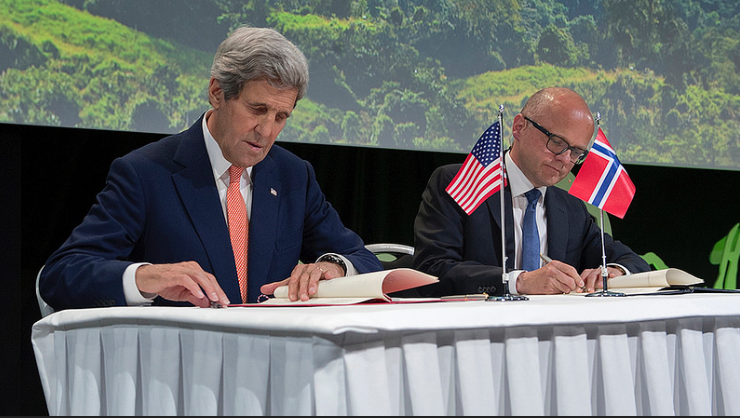
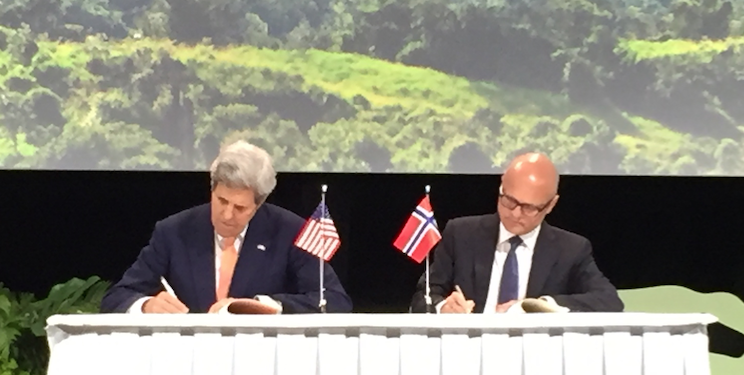
Just yesterday, Norway’s parliament agreed to the ratification of the Paris Agreement. And we are deeply grateful for Norway’s leadership on this. As President Obama has said, the United States will join soon, this year, and together we’re going to work to bring this agreement into force as quickly as possible. And neither of our countries are going to wait around for that to happen. We’re pursuing ambitious climate action right now. And later today, I will join Minister Helgesen to sign a joint statement that outlines the deeper collaboration between the United States and Norway on climate change, and specifically on deforestation.

Tomorrow I will have the privilege of joining Foreign Minister Brende when we will go to Svalbard, where we will highlight our partnership through the Arctic Council, which we work very closely on. We’re going to see firsthand the impacts of climate change on our Arctic, and we’re going to learn more about the remarkable work that our scientists are doing to help the world understand how these changes in polar regions are going to affect every single one of us.

So this September I also look forward to welcoming Foreign Minister Brende, who was one of the first to step up to be willing to lead a Norwegian delegation and to become what we call an ocean champion, as he will come to the third ocean conference we will have in Washington on September 15th and 16th. The foreign minister and I have long shared a deep interest in protecting the oceans. Why? Among other things, the oceans provide 50 percent of the oxygen that we breathe, they are critical to the supply of our food – literally a third of our fisheries are overfished, and fully two-thirds of them are at maximum. So the challenge as the population grows will be to maintain the oceans as sustainable. And with climate, with increased acidification, with increased amounts of pollution going into the oceans, again, life itself on the planet is threatened.

So Foreign Minister Brende will come and he is determined to ensure that the conference results in specific action. And we will also deal with illegal, unreported, unregulated fishing, in which some people go out and fish using practices that have been banned – literally strip-mine the ocean, discard a third to two-thirds of the catch, and leave no accountability for what is left behind. So I’m proud to say that at the first conference and with a large pledge by Norway, $4 billion was put forward towards ocean conservation and committed to safeguard almost 6 million square kilometers of our oceans as marine sanctuaries. We hope to increase that this September, and we’re hoping the conference will lead to even more people joining in in dealing with this problem of multi-billion-dollar illegal fishing.

So on behalf of President Obama, let me again thank the prime minister and all of our Norwegian hosts, not just for welcoming me here for a visit, but more importantly, for what they do for everybody else in the world. We’re very, very grateful. Thank you.

MODERATOR: Thank you. Thank you very much. And now we have time for two short questions. First, (inaudible), Norwegian TV.

QUESTION: Hi. Since you didn’t have time to answer one of my questions earlier today, I’m going to ask you two quick questions right now, if that’s okay.

SECRETARY KERRY: Okay, all right. I told you I’d be here.

QUESTION: First of all – (laughter) – are you happy with Norway’s current defense budget, considering NATO’s 2 percent goal?

And the second, are you concerned about the safety situation in the world if Donald Trump becomes president?

SECRETARY KERRY: Well, let me give – first – the first question: We’re extremely happy with what Norway is doing. Norway is a huge contributor to the NATO effort in many different ways, and NATO – and Norway is increasing, and we know that they’re doing so at a time when there are difficult budget constraints – lots of you have faced that. What’s important is they’re committed, they’re moving in the direction, and so the bottom line is yes, President Obama and I and the Administration are extremely, extremely pleased with Norway’s contribution to this alliance.

With respect to Mr. Trump and the election, I am not allowed by our laws to get in the middle of the race, and so I can’t answer that question directly.

QUESTION: But you’re in Norway now, so —

SECRETARY KERRY: Yeah, well, I’m in Norway now, but I think there’s a little thing called TV over here. (Laughter.) But I give you great, great high grades for trying.

Let me – I will say this, though: What candidates say in an election is critical – any candidates, on either side, or from wherever they come politically and ideologically. And nothing is more important to the world right now than American leadership. So I believe that the people of America need to weigh and will weigh very carefully who is going to keep our country safe, who is going to keep us on a direction of building relationships – not breaking them – and who is going to be able to connect to the values and the hopes and the aspirations of people around the world. Americans, I’ve learned personally, are pretty darn good at making those judgments, and I’m confident in the American people. So they will decide in November, and you will have a lot of opportunity to hear and see the candidates debating, and making up their minds.

So I’ll let it rest at that.

MODERATOR: Yes. Matt Lee, AP.

QUESTION: Hi. Mr. Secretary, I’d like to ask you about your meeting with Foreign Minister Zarif this morning. Just this week, both he and the supreme leader again complained about the pace and scope of sanctions relief that they’re getting and accused the United States of not following through on its commitments under the JCPOA. So I’d like to ask you, one, are you as a result of the meeting this morning prepared to further clarify or ease some sanctions to respond to those complaints?

And then secondly, in your comments at the Oslo Forum just now, you mentioned that you’re – and based on your conversation with the foreign minister, you thought that there was a possible way forward in Syria that would give the cessation of hostilities and a political transition a prayer. And I’m just wondering if you can elaborate a bit on it.

SECRETARY KERRY: Well, let me – with respect to the JCPOA, the United States of America has done absolutely everything that we were and are required to do according to the letter of the agreement. We have lifted the sanctions we said we would lift, and we have completely kept faith with both the black-and-white print as well as the spirit of this effort. In fact, I have personally gone beyond the absolute requirements of lifting the sanctions to personally engage with banks and businesses and others who have a natural reluctance after several years of sanctions to move without fully understanding what they are allowed to do and what they aren’t allowed.

And so a lot of clarification has been necessary, more so than I think any of us imagined when we made the agreement. I think it is a matter of good faith in order to make sure that Iran gets the benefits that Iran is entitled for having joined in this agreement and taken major steps to denuclearize – steps of undoing their centrifuges, destroying their calandria core of the plutonium reactor, reducing their research and development, and other major steps Iran has taken. And if banks are reluctant of their own caution or misunderstanding, then I think it is important for us to appropriately clarify things in a way that can allow what is entitled to, in fact, happen and to flow. And if you don’t do that then you wind up actually putting your very agreement at risk. You – there are two sides to an agreement always, and I think it’s unfair for us to simply sit there and say, “Okay, we got our side, now the other side can’t get theirs.”

So we are working hard to make sure banks know they are entitled to do business. Banks can open accounts – European banks can open accounts. They are allowed to do business. They are allowed to fund projects. All of these things are allowed under the agreement. And I think that the supreme leader and Prime Minister Zarif are pressing to make sure that that happens as clear as possible and as rapidly as possible, and we’re going to follow through.

Now, where there are things that we can’t do we’ve been very clear that it’s not under our control and we’re not able to do this, and we’ve been crystal clear with them about that. I think there are some things where the United States could actually help to clear up misunderstandings. I think there are places where the United States could give confidence where there is doubt. And I feel that it is important for us, if we’re going to have future dealings, or we want a reputation for good faith in the negotiations we conduct anywhere, it’s important for us to show good faith in executing this agreement. And I intend to see to it that we do that.

Now with respect to the ceasefire, we simply had a very brief conversation because this is not Foreign Minister’s Zarif’s portfolio, and we don’t go into it in great depth. But I had a sense in talking to him, as I asked him about the procedure, that there may be some possibilities. But I don’t believe in advertising possibilities before they’re real or certainly before people have had a chance to explore them.

I will say this about this cessation of hostilities that’s important, I think, for people to understand. The United States of America joined with other countries, particularly the other members of the Permanent Five of the United Nations, as well as other parties that are interested in working on the coalition to deal with Syria, and we signed up to a cessation of hostilities, which is now enshrined in UN Security Council Resolution 2254, and it doesn’t call for a selective ceasefire, it calls for a nationwide ceasefire. And it applies to the Assad regime just as it applies to the opposition. As I have said previously, from day one there have been challenges in Aleppo particularly, and Latakia, to having even one day of the regime actually live out that cessation. So we’ve made it very clear that unless we get a better definition of how this cessation is going to work, how it will be enforced, who it applies to, how it is applied, we are not going to sit there while Assad continues to offensively assault Aleppo and while Russia continues to support in that effort.

We believe there is a way to provide this clarification. We believe we can achieve enforcement on both sides. We believe that is the only way to get to the table in Geneva to begin to negotiate a legitimate transition. So there is a way forward, and that’s what I was referring to. But it will require a good effort in the next week, in the next days in order to achieve it. And the United States is not going to sit there and be used as an instrument that permits a so-called ceasefire to be in place while one principal party is trying to take advantage of it to the detriment of the entire process. We’re not going to allow that to continue. So Russia and others have to make the decision whether or not they care about the course of events in Syria and whether or not they’re serious about implementing the UN Security Council resolution.

MODERATOR: Yes, thank you very much.

QUESTION: And would you say that Norway has become a more important country strategically because of the conflict between the West and Russia?

SECRETARY KERRY: No. I would say that Norway has always been important strategically, and I think its importance has always been extremely high because it’s been one of the most reliable and important members of NATO, and consistently been supportive with respect to the northern area and Russia.

PRIME MINISTER SOLBERG: And I thought that was such a good comment, but I’m going to get you out of that door before they ask more because you have (inaudible). (Laughter.)
June 16, 2016 0 comments
0 FacebookTwitterPinterestEmail
Africa and Norway

Norway and Guyana reconfirms collaboration on climate and forests

by Nadarajah Sethurupan June 16, 2016
written by Nadarajah Sethurupan
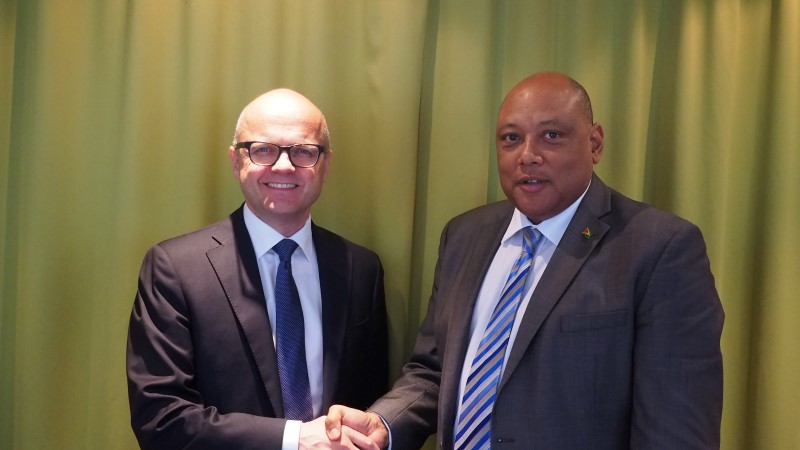
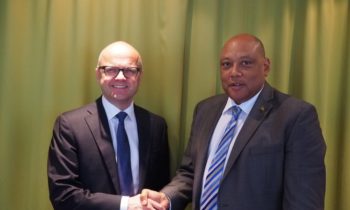
Norway's Minister of Climate and Environment, Vidar Helgesen, and Guyana's Minister of Natural Resources, Raphael Trotman, reiterated their commitment to reach their shared goals as set out in the bilateral partnership on climate and forest. Credit: Ministry of Climate and Environment

Norway’s Minister of Climate and Environment, Vidar Helgesen, and Guyana’s Minister of Natural Resources, Raphael Trotman, reiterated their commitment to reach their shared goals as set out in the bilateral partnership on climate and forest. Credit: Ministry of Climate and Environment

Norway’s Minister of Climate and Environment, Vidar Helgesen, and Guyana’s Minister of Natural Resources, Raphael Trotman, reiterated their commitment to reach their shared goals as set out in the bilateral partnership on climate and forest.

This was concluded at a bilateral meeting in the margins of the Oslo REDD Exchange conference. The two ministers announced that they will continue the current collaboration until Guyana has implemented all agreed key reforms in the forestry sector.

-Guyana is set at keeping its deforestation rate amongst the lowest in the world, and to continue work to improve governance in the forestry sector. Guyana is also determined to keep its commitment to fully transforming its energy sector to clean and renewable energy. This is key to reducing the country’s emissions of greenhouse gases, says Minister Trotman.

Guyana and Norway’s partnership on climate and forest was initiated in 2009. Guyana had at that time already defined a national low carbon development strategy that outlined how the country could meet its ambitious targets for economic and social development, at the same time as keeping deforestation at a minimal and transforming its entire energy sector to clean and renewable energy. Guyana is a High Forest Low Deforestation (HFLD) rate country. The deforestation rate for 2014, recently verified by a third party (lenke til tidl pressemld), was as low as 0,065%, which is among the lowest deforestation rates of tropical forest countries.

– The Norway-Guyana partnership demonstrates how HFLD countries like Guyana can be incentivized to keep their deforestation low, and using the proceeds to establish a completely clean and renewable energy sector as well as a broader green economy. Through our financial support, Norway intends to support Guyana in implementing its national strategy for economic and social development without compromising the forest and the vital ecosystem services they provide, says Minister Helgesen.

Norway has committed to contribute up to 250 million US dollars to Guyana if the country keeps its deforestation rate low and reach key forest governance targets. So far, Norway has disbursed about 150 mill. USD, rewarding Guyana’s achieved results. Of this, 70 mill. USD has been transferred to Guyana REDD+ investment fund – GRIF (administered by the World Bank), and 80 mill. USD has been set aside at an account with the Inter-American Bank to cover Guyana’s equity share in the Amaila Falls Hydropower project. Guyana and Norway are currently conducting a review of the latter project to reach a fact-based decision on its feasibility and the way forward.

Efforts to improve governance in Guyana include the development of an ambitious roadmap for initialing an agreement with the EU on combatting illegal logging by the end of 2016, as well as plans to become an EITI candidate this year. EITI is a global standard to promote open and accountable management of natural resources. In addition, the Guyana Forestry Commission has recently published data on all forest concessions held in the country on its website as a step to increase public transparency.

Indigenous peoples make up 10% of Guyana’s population. Making sure that these groups’ rights are being respected, for example by involving them in all relevant decisions and processes, is important to both Guyana and Norway. A project that enables Guyana’s indigenous communities to take part in the work to keep deforestation low and to be remunerated for the results, is currently receiving support under the partnership, from the Guyana REDD+ Investment Fund.

June 16, 2016 0 comments
0 FacebookTwitterPinterestEmail
Norwegian Aid

Norway’s Climate and Forest Initiative will support Global Forest Watch with 115 million Norwegian kroner

by Nadarajah Sethurupan June 16, 2016
written by Nadarajah Sethurupan

Screen Shot 2016-06-15 at 15.36.33Norway will support the forest information and monitoring system Global Forest Watch with 115 million kroner for the period of 2016-2018. The Norwegian minister for Climate and Environment, Vidar Helgesen, announced this today at the opening of the Oslo REDD Exchange – the world’s largest conference on climate and forests.
-“Global Forest Watch is a groundbreaking tool for increased transparency around the state of the world’s forests. Information regarding where deforestation is happening is crucial if we are to halt tropical forest loss. With the support we are announcing today, we will also contribute to the development of tools to monitor the effectiveness of private companies’ commitments to stop deforestation from happening in their business operations. Several large companies, including Unilever, Mondelēz, Cargill and Mars, have used GFW technology to monitor their supply chains,” says Norwegian minister of climate and environment, Vidar Helgesen.

The Norwegian Ministry of Climate and Environment has already supported Global Forest Watch with 68 million Norwegian kroner for the period of 2013-2015. The support has been provided through the Norwegian Climate and Forest Initiative. Global Forest Watch is today the largest independent information hub on the state of the world’s forests.

-“Today Norway is demonstrating once again its global leadership in protecting the world’s forests. Norway has consistently made bold long term commitments, linked rigorously to results, with great effect. It was the first major donor to see the potential of Global Forest Watch in bringing radical transparency to land use change in real time. Today, GFW is being used by most national governments, and by tens of thousands of businesses, NGOs, community groups, journalists and researchers. It is changing the debate. Now the bad guys have nowhere to hide, and the good guys can be recognized and rewarded for their stewardship”, said Andrew Steer, President and CEO of World Resources Institute.

The world’s three largest rainforest nations – Brazil, the Democratic Republic of Congo and Indonesia – have all published information about their land use on Global Forest Watch. Private companies have used Global Forest Watch for sharing information about their operations, e.g. where the agricultural products used in their products are being produced. Information from Global Forest Watch has also been used by civil society organizations and the press to debate official deforestation numbers in countries like Indonesia and Peru.

Norway’s International Climate and Forest Initiative has been the principle donor during the development of Global Forest Watch, but the USA, the UK and other donors are also providing resources. Actors like Google, Esri, Imazon, the United Nations Environment Programme and several academic and civil society institutions are contributing technology, analysis and information.

Global Forest Watch (GFW) is administered by the organization World Resources Institute (WRI). GFW gathers information about tree cover loss, land use and greenhouse gas emissions, and presents this information through a user friendly website, aided by cloud computing technology from Google, mapping technology from Esri, and other tools. The information on the Global Forest Watch website is open and free for the public to access and use.
Many rainforest countries are still building the capacity and tools to monitor their forests, detect illegal activities and stop deforestation before it spreads further. Global Forest Watch can assist these countries, making it increasingly difficult to clear forests without being detected. Through Global Forest Watch, anyone with internet access can assist in detecting illegal deforestation in near real time and alert responsible authorities.

Take a look at World Resources Institute’s video about Global Forest Watch:

https://youtu.be/lTG-0brb98I
Read more and visit Global Forest Watch at www.globalforestwatch.org

June 16, 2016 0 comments
0 FacebookTwitterPinterestEmail
Royal House

Letter of Condolences from King Harald V

by Nadarajah Sethurupan June 16, 2016
written by Nadarajah Sethurupan

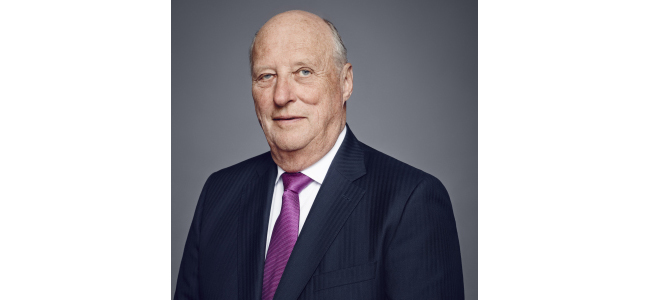
width_650.height_300.mode_FillAreaWithCrop.pos_Default.color_WhiteThe Honorable Barack Obama
President of the United States of America
The White House
Washington D.C.

Dear Mr. President,

I was shocked and saddened on hearing the news about the tragic shooting attack at the Pulse nightclub in Orlando, Florida, in the early hours of Sunday morning, resulting in the loss of so many innocent lives.

On behalf of myself and the Norwegian people I extend my condolences and my sympathy to you, Mr. President, and ask you to convey my condolences and sympathy to the families of the victims, to those injured, and to the people of the United States of America at this difficult time.

Harald R

June 16, 2016 0 comments
0 FacebookTwitterPinterestEmail
Politics

Remarks at the Oslo Forum

by Nadarajah Sethurupan June 16, 2016
written by Nadarajah Sethurupan

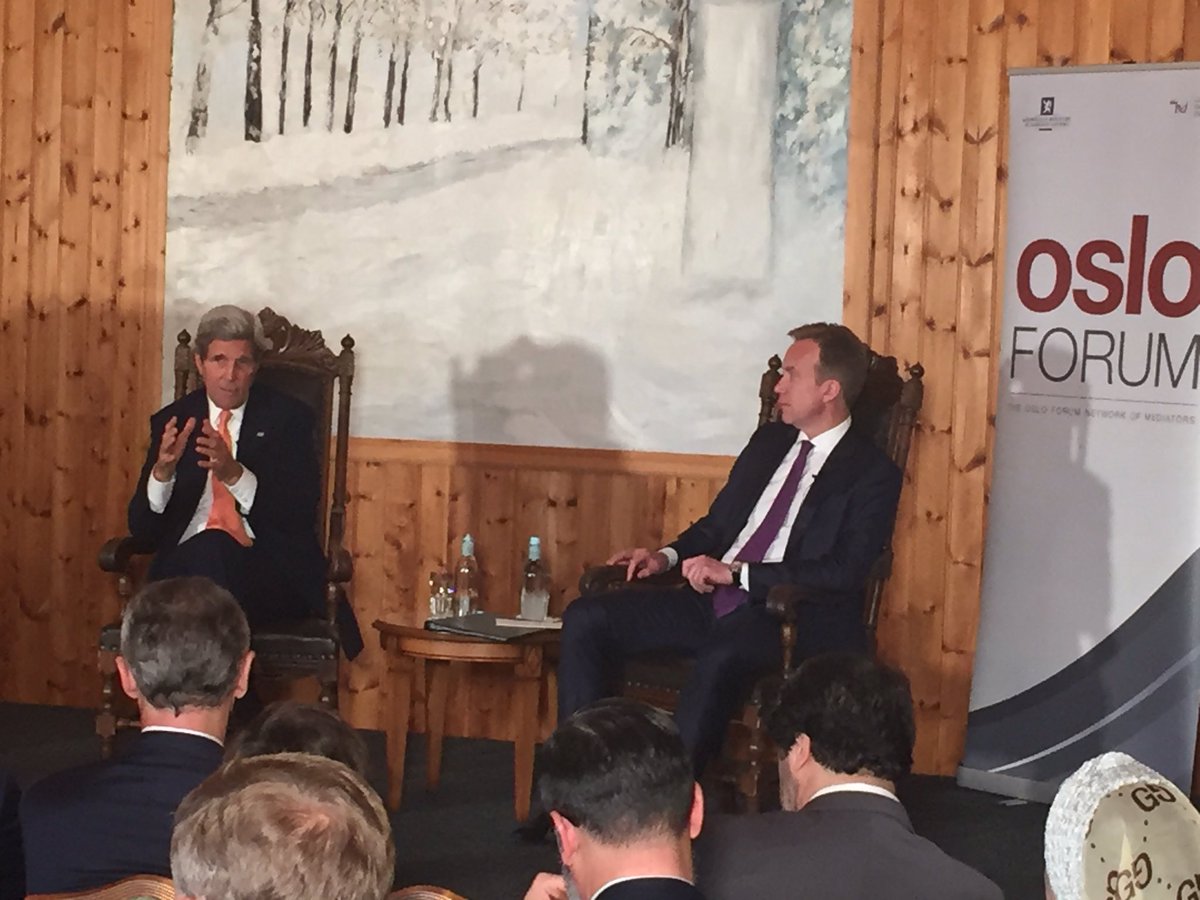
web_full_16168159798054SECRETARY KERRY: Well, good morning, everybody. Borge, thank you so much for a very generous introduction. More importantly, thank you for a wonderful welcome back to Norway and to this pretty idyllic and appropriate setting for the discussions that you all are engaged in, and that I’m privileged to take part in this morning.
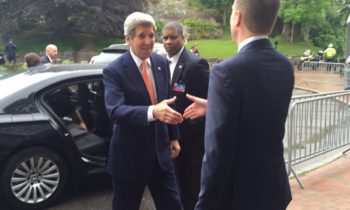
I really want to begin by thanking Borge. And I am looking around and seeing so many faces – Espen, others – who – Jan, people that I’ve been privileged to be engaged with over the course of, particularly, these last years, but even the time I served as chairman of the Foreign Relations Committee.

I am grateful to the Royal Norwegian Ministry of Foreign Affairs, who helped to bring everybody here for this important gathering; to the Centre for Humanitarian Dialogue; and I particularly thank Norway for its unbelievable, consistent commitment to resolving conflicts, to giving so much of its national value system to all of our efforts. President Obama and I like to say that Norway bats way above its weight, punches way above its weight, and there isn’t one of you here who doesn’t come here with a large measure of gratitude for what Norway itself does to help the rest of the world. So thank you, Borge. I think everybody here is deeply, deeply appreciative for what you do.

I want to thank everybody for the statements over the last two days of solidarity and condolence with respect to the events of Orlando. Needless to say, this is happening with a recurrence rate that disturbs everybody. And there is no way that any of us can allow this to become a new normal. This has to be stopped, and everybody here understands that.

I think I am privileged to speak this morning to a group that could be described as either “peace warriors” or “masochists” – (laughter) – which might be more appropriate. But it really is my privilege to share a few thoughts with you. And I particularly look forward to the Q&A session. I think those are always perhaps even the most productive.

Ck-3Eg6XIAIZo_hIt’s also – let me just share with all of you – a pleasure for me to be back in Oslo. When I was 14 my Dad was posted to the U.S. embassy here and I came here and spent some extraordinary time learning how to cross-country ski up in back of the Holmenkollen, and playing in Frogner Park, climbing the hills, sailing the fjord. And I developed then a very deep affection and respect for Norway itself that has only grown over time as professionally I have been able to be engaged and see the full measure of what Norway does in the ways that I just mentioned a moment ago.
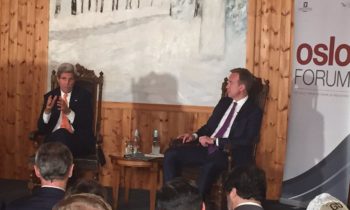
Borge is a great partner in this. And usually I am known for having put on a few miles in traveling. I usually find that either he’s coming after me or he’s been there before me. So he does an amazing job.

But right before I came to Oslo my family lived in Berlin. And I lived there for a period of time and went to school over here, in Europe. And I got a child’s-eye view of East-West relations, especially when I rode my bicycle without permission into the Communist sector of Berlin and I was promptly – when I proudly came back and told my dad what I did – I was immediately summarily grounded and informed that I could have caused an international incident, which was a pretty good lesson for a young kid about what was going on.

Later, I was an 18-year-old freshman in college during the Cuban Missile Crisis. I was 22 when I joined the Navy and 23 when I deployed for my first tour in Vietnam. And by the time the Berlin Wall fell in 1989, I was in my forties and serving in the United States Senate. And the Cold War had obviously, clearly significantly shaped my world view throughout those formative years.

Ck_JBo8WEAAaqB_The stakes of that period felt incredibly high, and that’s because they were. It was also a time when the challenges for those of us in either NGOs or public policy positions and public life were pretty clear. The “what to do about it” was limited in its options. And when the primary forces shaping our world were in fact leaders of recognized states, and mostly it was state action that was defining conflict. For the most part, it was a bipolar world: a Soviet Union-versus-the-West, locked in a strategic conflict. That is not to say that’s all there was, but it was, for the most part, the defining concept.
And the world that confronts us today is just absolutely so different in so many ways. It is a much more complicated world. Now non-state actors compete with national governments for influence and for power. And the cliche of technology bringing the world closer is actually a stark reality in a world that is filled with extremism and with conflict. Disturbing images and outright lies can circle the globe in seconds. And that makes the task of governance that much harder, the task of building consensus around facts, not fiction, not emotion.

And conflicts are now fought using an eclectic mix of weapons, and often by combatants who are very difficult to distinguish from ordinary civilians. And while the world as a whole is much more prosperous than it has ever been, inequality has also grown in almost every country, fueling instability. And weak or corrupt governance, a corruption level that I have to tell you has stunned me as Secretary of State – I knew there was corruption, we’ve all known it.

Like many – I used to be a prosecutor, and like many things in criminal enterprise, including the world’s oldest profession, there is a distinction between it being a status crime or a crime and something that tears at the fabric of life itself. But today we see a corruption level that is stealing the future from people all over the world. Hard-earned revenue that should be going to the state – and I’m talking about whether it’s in Yemen, which saw billions of dollars stolen, or in Nigeria – and you can run the list. And money deposited in banks that are supposedly in good standing with the world. How you have billions deposited in some banks is beyond my comprehension, without more questions being asked. And it is incumbent on all of us to begin to do more.

But the bottom line is that the number of failed or failing states as a consequence of bad governments is growing, not diminishing. And it is robbing too many citizens of economic opportunity and hope. And all the while, this thing called climate change is looming out there, a decidedly different challenge but, let me tell you, one that is existential and already impacting our lives, giving us a preview of the planet-wide catastrophe that we would face if we don’t change course. And with it, the kinds of catastrophic movements of people. If we think we see refuges today, imagine what would happen when whole rivers dry up and food shifts and production is limited and people are fighting over those limitations.

No less an authority than Henry Kissinger told me recently that the world we are dealing with today is far more chaotic and complex than what he maneuvered through in the late 1960s and early 1970s. And through much of the modern era, our focus as a global community has been on trying to build peace among nations. But in recent decades, the failure to preserve peace within nations has been the cause of enormous and unprecedented suffering. So while peace remains our goal, the dynamics have actually changed quite a bit, and in many ways, working towards that goal has actually become even more challenging.

And that is why we have to be clear about what we mean when we talk about “peace,” because in today’s world, obviously, it offers different possibilities. For instance, we cannot be content that peace is merely about the absence of war, the kind of peace that Tacitus referred, quoting a Scottish chieftain on the Romans: Where they make a desert, they called it peace.

Nor am I talking about an uneasy peace, a peace where violence may be contained, but voices of dissent are silenced and fear rules the day, and oppression takes lives. What I’m talking about is affirmative peace, a peace which is a presence, not an absence, the presence of economic opportunity, the presence of education and health, the presence of human rights and the rule of law, and the peace that only comes when a country is no longer at war with itself.

And if indeed that is our goal – and I believe it is; it should be — then it follows that building peace is not just trying to stop conflicts; it’s a lot more. It’s building capacity. It’s investing in the foundations of a cohesive society. And it’s investing time, money, and effort to enable well-governed societies to actually flourish.

Now, one thing that I have learned over the course of a career as soldier, Senator, and Secretary of State: we simply cannot meet the challenges that we face on the cheap. And too many people are settling for that. I know every country, my own included, has budgetary constraints with which we have to deal. But we only have to deal with them in the context within which the question is put to us. And if the question is not properly put to us as to how we make ourselves secure and build a future, then we will make limited choices.

The fact remains that the global economy has grown in 54 of the last 55 years. Since the end of the Cold War, global per capita GDP is up 150 percent. And we are better positioned now than ever before in history to build and invest in the cornerstones of progress and peace, such as schools, clean energy, health care facilities, and legal systems that actually deliver justice. It’s labor intensive, it’s expensive. So why have we turned away from it when we know it matters?

And yet, the world spends, on average, less than one half of one percent of its total GDP on foreign development aid, which is absolutely the quintessential foundation of security. Now, we are hardly investing what we can and should in achieving the goal that brings every one of you here for this conversation. And we learned a long time ago that the price of making these investments is a small fraction of the cost of failing to do so. By any rational economic measure, the most expensive peace is a bargain compared to the cheapest war.

But investment is not just a matter of money. We also need to unite behind policies that encourage freedom of thought and reward innovation, that capitalize on ideas and create whole new industries, and that extend the benefits of online technology to the 60 percent of the world that does not yet have it.

And we also need to commit ourselves fully as a global community of confronting the scourge of violent extremism, and I don’t just mean on the battlefield. Think about the full measure of the challenges for a minute. I know all of you have; you’ve spent a lot of time at this, you’re wrestling with it, so many of you as I look around this room and places that I’ve been and we’ve talked about it. Some people define what is happening today as a “clash of civilizations.” But I have to tell you that is a gross mischaracterization.

I mean what form of civilization is contained in Daesh, Boko Haram, al-Shabaab? We’re talking about people who spend their days telling everybody else exactly how they have to live in the most limited form possible, people who spend their days murdering, raping, enslaving, torturing, and then try to pass off rape as an expression of the will of God or even a form of prayer. Clearly, there is nothing remotely civilized about the terrorists that we confront in the world today. So no, this is not a clash of civilizations, this is a struggle between civilization itself and barbarism, between fundamental raw political exploitation and a mix of medieval and modern fascism, together at the same time.

And yet, when thousands of people in countries all over the world actually can come to a determination that a group like Daesh or Boko Haram is their destiny, that absolute power is okay and it’s their goal, and that undoing what we know to be human progress over centuries is in fact their strategy, then I will tell you what: the rest of the world better stop and feel compelled to ask why.

And what we’ve learned is that some individuals – people are driven by different things. Some individuals are driven by tribal or sectarian allegiances. And one of the great eye-openers for me, frankly – never got it at a great university, but I’ve gotten it in the school of life – is the degree to which tribalism is so alive and fundamentally a component of global affairs. And others derive this vision out of oppression, clear and simple.

Of course, there are also people who are radicalized for reasons having to do with religion or politics. Some become terrorists because they have trouble finding meaning or economic opportunity in their daily lives, because they are deeply frustrated, because they hope that groups like Daesh could actually give them a sense of identity, a sense of purpose, a sense of power.

The bottom line is this: If we don’t have a comprehensive strategy globally to attack the root causes of violent extremism, we will find ourselves constantly on the defensive, always pushing back against terrorists in one part of the world or another, only to see comparable networks establishing themselves elsewhere. We will literally doom ourselves to counter-terrorism whack-a-mole, as we call it.

Now, understanding this challenge should not, in fact, be that complicated. When people – and particularly young people – have no hope for the future and no faith in legitimate authority, when there are no outlets for people to be able to express their concerns, frustration festers. Just look at that fruit vendor in Tunisia who came to a place – that wasn’t religious motivation. By the way, nor was even what happened in Tahrir Square religious motivation, nor in Syria, when those young people went out and demonstrated. They were looking for that future I just talked about. That fruit vendor was reacting to a police officer who slapped him around and wouldn’t let him sell his wares where he wanted to and where he thought he had a right to.

So when frustration festers, no one knows that better than you do, that violent extremist groups, which regularly use indignity and marginalization and inequality and corruption as recruitment tools go to work. And added to that is a dangerous clash which we haven’t yet fully defined sufficiently between culture, religion, exploitation, and modernity. And that is creating its own set of tensions.

So I believe we need a whole new set of understandings and, frankly, a much fresher commitment on a global basis in order to conduct an all-out campaign to improve governance and root out corruption so we can build, literally, a strong and sustainable global economy that unlocks opportunity rather than stifles it.

And I ask you to think about it this way: Worldwide, there are nearly two billion people who are younger than 15 years old. I’ve gone to country after country. I was just in Vietnam where 60 percent of the population is under the age of 30, 35. In the Middle East, 3 out of every 10 people are under the age of 15 years old. In parts of Africa such as Niger, Somalia, the DRC, roughly half the population is under the age of 15. Now, this is not some distant problem that just belongs to Africa that we don’t have to all worry about. This is part of us.

The old song from World War I, “Over there, over there,” there is no over there anymore; it’s all everywhere at the same time. And Orlando reminds us of that, Paris reminds us of that. Ankara, Brussels. This is not a distant problem that belongs to other people. It matters enormously to all of us whether or not these young people are able to access the education and the jobs and the opportunities that will enable them to contribute to their communities in beneficial ways. And these kids, 150 million, huge numbers, need to go to school tomorrow, not in 10 years.

This matters because in today’s globalized economy there is an intimate connection between how we each do and how we all do. Partly because, from a moral standpoint, giving young people a chance to succeed is simply the right thing to do. But it also matters because these young people are essentially the swing voters in the fight against violent extremism. We need them to make wise choices, we need them to have a choice. And yet that is a lot less likely if they grow up without faith in government, without an education, and without the chance for a better life. So it is in our direct, individual, national security interest, all of us, to prevent this scenario from playing out in the worst way possible.

In addition to expanding our global development efforts, we are going to have to invest in and sharpen the diplomatic tools that we use to end conflict, and to foster the support for peace both within and among nations. Now, my friends, we can begin by ensuring that our diplomacy is as closely coordinated as possible. It’s common sense: the more we speak with a single voice, the more powerful our collective advocacy is going to be.

The next step is integrating women into every single phase of international peace and security activities, because we know that women often pay the highest price when wars break out, so it is only right that their ideas be heard and be at the table when strategies for preventing and ending wars are actually being discussed.

We also have to enhance our international peacekeeping capabilities, both at the UN and through partnerships with NATO, the African Union, and other regional groups. And that means, I have to tell you plain and bluntly, increasing capacity, persuading more countries to contribute better troops, emphasizing the protection of civilians, and showing zero tolerance towards illegal practices, including sexual abuse. It is unacceptable in a world as rich as ours – and we are a rich world – that these efforts are usually literally hanging by a thread, waiting for some last-minute donation, some last-minute plea, rather than being part of a full contribution of dues paid and of people accepting responsibility.

It is absolutely critical that we re-establish and make fully credible international standards of human rights. In the past few years, we have seen governments violate national boundaries, wage war on their own citizens, and disregard long-established norms of medical neutrality during conflict, including last week’s bombing of three hospitals in Aleppo. And we have seen terrorists shred virtually every single standard on the books, commit mass atrocities, including genocide against civilians, and even re-impose the despicable institution of slavery. So let me be clear: strengthening the rule of law matters. And unless we come together to enforce it on a global basis and use the United Nations even to greater effect, we face the prospect of a world with diminishing rules and even some places in pure anarchy.

Now, obviously, the reason for this conference is that all of this is easier said than done. All of you know better than anyone else that ending conflict is not a simple task. And there are critics and cynics every step of the way. If I’ve heard it once, I’m sure you have. I’ve heard it dozens of times, “Well, if people are so determined to fight, kill each other, why don’t you just let them do it?” And the answer is simple. The alternative tells us again and again what happens when we do too little, or nothing at all.

And yes, I understand, some wars have to be fought to defend against aggression and evil. Even when I came back from Vietnam and I protested the war and helped the Vietnam Veterans Against the War, I said to people I’m not a pacifist, I understand sometimes you have to fight and defend yourself, but there is a distinction between a war of aggression and evil, the war of choice. All are costly in treasure and in lives. And the costs are long-term because war is not only the result of enmity, it is also its cause. Every loved one damaged or lost in the course of conflict, every bombed out home, every house of worship destroyed, every dream destroyed becomes a seed of bitterness from which additional strife grows. And that is true even among those who are victorious. Cemeteries are not filled by one side alone.

So when we put a stop to fighting now, or even lower its intensity, I believe we make future wars less likely. Moreover, we know, because we’ve seen it, that in our era of deadly weapons and rapid mobility, a spark in one place can be a costly flame in others, causing violence to spread across borders and claim new victims. And hate, we know, knows no boundaries, and terrorism has no home address.

So the good news – and there is good news – is that from one end of the earth to the other there are actually more people in and outside of government who are working to prevent conflict now than at any previous time in history. They can be found in the offices of prime ministers, of foreign ministers, development agencies, but also in civil society, academia, religious organizations, online networks, and institutions devoted to mediation and the settlement of disputes. And, in the minds and hearts of average, everyday people everywhere it really is a pre-eminent instinct.

We are, in short, steadily mobilizing an army of peacemakers to push back hard against the current sources and agents of violence. And we should draw strength from the fact that, despite the many obstacles that we continue to face, creative and persistent and focused efforts yield very important gains.

Consider a child today is more likely to be born healthy, despite all the bad news, all the headlines, despite Orlando and everything else we hear. You got to know that we are making progress. And a child today is more likely to be adequately fed, more likely to get the necessary vaccinations, more likely to attend school, despite what I said about the numbers that are out of school, more likely to live a long life than any earlier generation. And if you look at the last century, the 20th, which Europe knows only too well, having seen two world wars, the numbers of people dying in conflict are actually far fewer than they were in the last century.

We are the beneficiaries of incredible breakthroughs in medicine, education, communications, transportation, food production, you name it. We have the ability to do these things. We have the ability to build this infrastructure in countries that need it. The number of nuclear weapons has fallen by two-thirds in the last 30 years, while the number of democracies has doubled. I call that progress.

And on the diplomatic front you have the Joint Comprehensive Plan of Action, which reduced the security threat posed by a country’s movements towards a nuclear weapon. It makes the world safer while opening up the opportunities of possibly more engagement with the Iranian people and Iran with the rest of the world.

In Colombia the government and rebel forces are nearer now than they have been ever to ending that country’s decades-long civil war, and I am proud to work with Borge who was co-chairing with us the de-mining effort in that initiative.

We are in Libya seeing a new Government of National Accord come together, beginning to assert itself. I just met a few days ago with Mohammed bin Zayed in the Emirates. And, together with the Egyptians, I think we are moving to a place where, hopefully, we can bring General Haftar and the house, the HoR, together and try to shore up Prime Minister Sarraj and actually turn the tide and do more than we are already actually successfully doing to minimize the implantation of Daesh there.

In the Central African Republic the inter-religious tensions have scaled back, successful presidential elections have been held, a new constitution approved.

And in many places that all of you are working on each day steps are taken, and we can see the prospect and the possibility of real outcomes that are actually achievable.

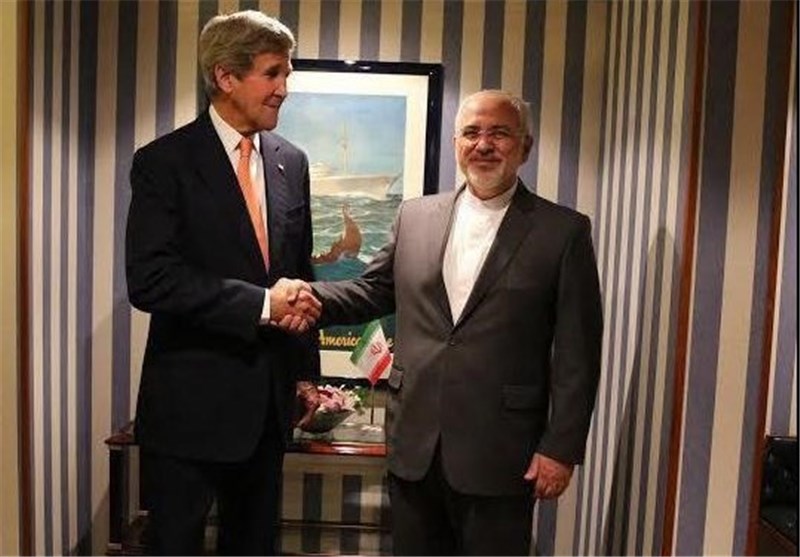
Just a quick word about Syria, because I just met briefly – I met for about an hour with Foreign Minister Zarif. It is very clear that the cessation of hostilities is frayed and at risk, and that it is critical for a genuine cessation to be put in place. We know that, we have no illusions. And Russia needs to understand that our patience is not infinite. In fact, it is very limited now with respect to whether or not Assad is going to be held accountable. And meanwhile, we also are prepared to hold accountable members of the opposition who have both been playing off each other to continue the violence and break the cessation.

So, this is a critical moment, and we are working very, very hard to see if we can in the next, literally, week or two come to an agreement that has the capacity to more fully implement a cease-fire across the country and deliver humanitarian access in a way that then provides for a genuine opportunity to bring people to the table and start talking about a transition. Not going to make any promises that can’t be delivered on, but I do believe the conversation I had with Zarif indicates to me possibilities for how this could be achieved. And my hope is that we will open up some political space to try to resolve what really, I think, is genuinely one of the most complex international challenges the community has faced in at least a generation.

There are so many different pieces of this: Kurd, Turkey, Iran, Saudi Arabia, Shia, Sunni, Assad, and opposition, proxy components, that it is challenging. But again, if we can get a cease-fire which the UN Security Council Resolution 2254 calls for, and actually hold it, we have a prayer to try to actually get to a place where we can talk about compromise. So, my friends, time and again all of you have seen what’s possible when we focus.

And I just close by sharing with you that – and I referred to it a little bit earlier, but on a personal level – half a century ago I fought in a war that diplomats, had they understood what was happening, or even tried, could have prevented but did not. And I learned what it was like to be on the front lines, carrying a rifle in another country, licensed to shoot and kill. And as a skipper of a swift boat on the Mekong, I saw this extraordinary stare that I came to understand very well, the look in the eyes of people who were supposed to be your allies, but clearly wondered what you were doing there.

Last month in Ho Chi Minh City, after decades of steady effort working towards transformation, I was privileged to be with President Obama and see Vietnamese lined up 20, 30 deep, the single biggest reception the President of the United States has received in his entire time as president. Vietnamese men and women cheering the President of the United States, excited about their future – raging capitalism – with the possibility of friendship with an enemy that half the population has no memory of in a war that they only read about in the history books. I saw friendship in the eyes of people who had once been our bitter foes.

So as daunting as things may sometimes seem, let no one tell you that we can’t change things for the better, and that even as we face setbacks, we aren’t also moving things inexorably forward. Wars are not inevitable, and peace, even when it takes years and many interim steps to bring it about, is never more trouble than it’s worth. And those who suggest that resolving one conflict or another is impossible should remember the words of Muhammad Ali: Impossible is just a big word thrown around by small men who find it easier to live in the world that they’ve been given than to explore the power they have to change it. Impossible is not a fact. It’s an opinion. Impossible is not a declaration. It’s a dare.

So, my fellow travelers on our common road, thank you for daring. I’m confident that you will never cease. And obviously, that is the most rewarding mission someone could ever have. Thank you. (Applause.)

June 16, 2016 0 comments
0 FacebookTwitterPinterestEmail
Science

Inter-vessel communication system tested on autonomous vehicles

by Nadarajah Sethurupan June 16, 2016
written by Nadarajah Sethurupan

22393_bannerKongsberg Maritime recently participated, using its Maritime Broadband Radio (MBR) technology, in a highly unusual and intriguing exercise in the fjord just outside Trondheim, Norway.

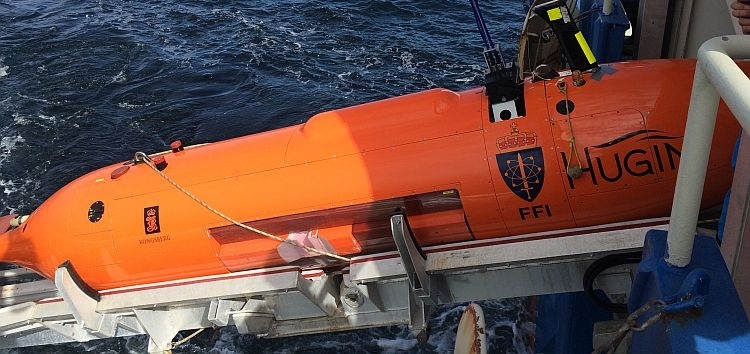
Four autonomous units – an unmanned aerial vehicle (UAV), an unmanned surface vessel (USV), an autonomous underwater vehicle (AUV), and a tethered relay balloon – were guided from a mother ship in various tasks. These required precise co-ordination from the command centre, and with each other. Kongsberg provided the one central element without which the operation would not have been possible – the communications system.

The Autonomous Network of Heterogeneous Vehicles (ANOHV) exercise had multiple goals, including demonstrating AUV operations using a multi-vehicle, multi-platform network. It also demonstrated integrated operations using high bandwidth communication between all nodes in the network.

The bandwidth was provided by MBR, which is an easy-to-use, flexible and robust means of transferring large amounts of data over long distances, even in the most challenging of conditions. Various MBR units were installed on all participating vehicles, and at the central station for the exercise located at the Norwegian University of Science and Technology (NTNU) in Trondheim.

The MBR is a new take on inter-vessel communication. By installing MBR communication units on every vessel involved in an operation, a broadband link is established and a maritime information highway is created. This enables high-speed, high capacity, and low latency transfer of data, without the need for additional infrastructure and no prospect of data disappearing on route.

The MBR system is a maritime radio network distribution system operating in the 5GHz band. It has been demonstrated as a stable, high capacity communication in a maritime environment. It can handle close-by vessel operations, platform obstructions and distances in excess of 50km. With MBR, there are no airtime charges as data transfers between vessels and assets is free once an MBR network has been established.

“MBR has remarkable capabilities for transferring data beyond line-of-sight, even with obstructions and low antenna positions. Our performance in the exercise proved that,” said Kongsberg product manager Erlend Vågsholm. “In large, complex operations at sea, for example in search and rescue operations and oil spill recovery, there are multiple vessels and aircraft at work simultaneously, and they all need to communicate and exchange data between each other. MBR enables the exchange of high resolution images and video, and keeps all participants connected at high bandwidth of consistently good quality.”

For the ANOHV operation, an aerial drone supplied streaming images, the OceanEye tethered relay balloon was elevated from the Telematron autonomous surface vehicle, which also shadowed a Hugin AUV. The command centre for the exercise was located on board Gunnerus, the research vessel of the Norwegian University of Science and Technology.

Hugin collected bathymetric data and identified pre-set targets, even performing a mid-dive redirection on command from Gunnerus via a relay station, using MBR and an acoustic communication link, demonstrating flexibility that opens new opportunities for use of AUVs.

The ultimate goal of the team on Gunnerus was to make themselves redundant, at least on board. Operating a manned command ship is one of the larger cost drivers in complex operations at sea, and using an autonomous vessel commanded from shore would shrink costs, eliminate risk to crew, and improve performance, as access to resources on land could give the team an even broader knowledge and experience base.

Overall conclusions from the operation were largely positive, with MBR consistently performing according to expectations, and in many cases beyond these, said Kongsberg.

With the ANOHV manoeuvres in the Trondheim fjord, fully autonomous, integrated remote operations came one step closer to becoming reality. The MBR solution proved to be the glue bonding all the pieces together. NTNU and Kongsberg were partnered by Maritime Robotics and the Norwegian Defence Research Establishment in this project.

June 16, 2016 0 comments
0 FacebookTwitterPinterestEmail
Africa and Norway

Sudan: Norway to Digitize Sudanese Radio and TV Archive

by Nadarajah Sethurupan June 16, 2016
written by Nadarajah Sethurupan

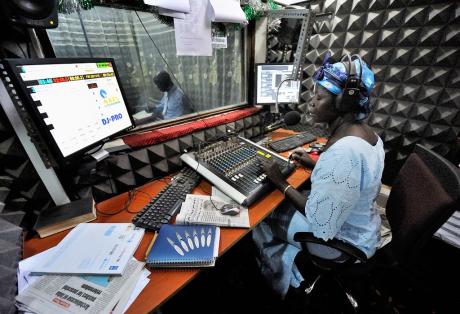
rad1Hundreds of analog tapes of the Sudanese Radio and TV audio-visual archive which date back to the 1940s will be digitalized by the Norwegian University of Bergen, according to an agreement the two sides signed here Tuesday.
The agreement was signed by Under Secretary of the Sudanese Information Ministry Abdul Majid Haroon and Vice Chancellor of Bergen University.

Haroun said the agreement is an executive program that would make vast and unique historical, political, social and cultural heritage of the Sudan easily available for the individuals and researchers in Sudan and Bergen.

He said the agreement was “yet another step within the fruitful cooperation with Norway” the first country to help in establishing the Sudanese broadcasting library over seventy years ago.

June 16, 2016 0 comments
0 FacebookTwitterPinterestEmail
Defence

Finland to plan joint Nordic military uniform

by Nadarajah Sethurupan June 15, 2016
written by Nadarajah Sethurupan

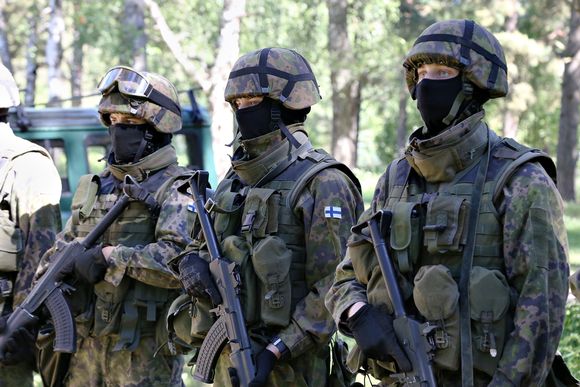
14_6 maastopuku M05_IMG_8487The Finnish Defence Forces are set to use a so-called Nordic Combat Uniform (NCU) from 2020, in a move to give Danish, Swedish, Norwegian and Finnish troops the same outfits. The collaboration is expected to produce cost savings compared to a procurement process led by just one country’s military.
It’s been nearly a decade since Finland introduced new military uniforms in 2007, and new ones are now being planned. They will be a collaborative effort of the Swedish, Danish, Norwegian and Finnish armed forces aimed at producing a so-called Nordic Combat Uniform (NCU).

The new uniforms are to be as simple and light as possible, designed purely for battlefield criteria—a change from the current models which were created to be used on base, on holiday, on parade as well as during operations.

“It doesn’t matter how stylish, presentable or good-looking it is,” said Lieutenant Commander Jarkko Miettinen of the armed forces’ procurement unit. “The old uniform will still be used in Finland for holiday and parade use.”

The joint uniforms are set to be much cheaper to plan and purchase with four countries sharing the costs, with interested firms meeting officials from all four countries next week in Denmark.

“We’re not telling commercial operators how the uniform should be,” said Miettinen. “We tell them how it should work in which conditions. There are 20 pages of those criteria.”

Those criteria are quite demanding. The new outfits should be suitable for all seasons and geographical settings, from Finnish Lapland to peacekeeping operations in warmer climates, with the possibility of two versions to ensure soldiers have the right clothes in all weathers.

The new uniform should be in use by 2020, with final decisions on the providers taken by the end of this year.

June 15, 2016 0 comments
0 FacebookTwitterPinterestEmail
Peace Talks

Philippines: Initial peace talks with leftists conclude

by Nadarajah Sethurupan June 15, 2016
written by Nadarajah Sethurupan

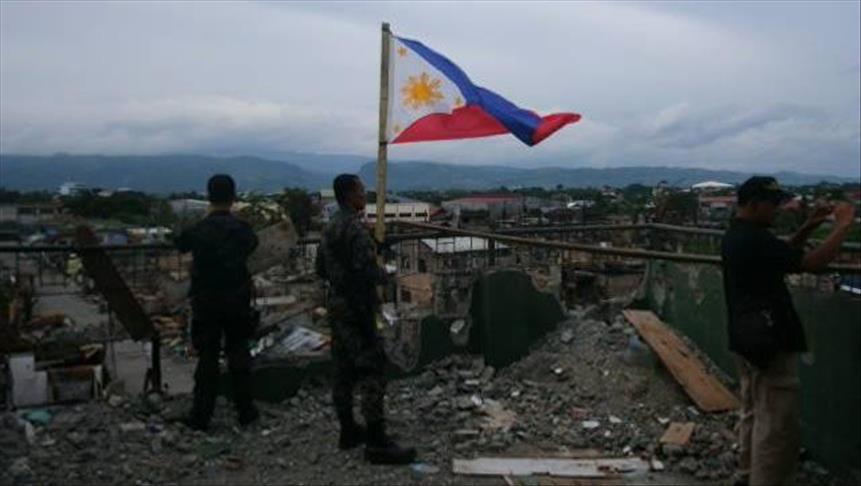
thumbs_b_c_111d35dbd227368909a907dbd01bbff8Representatives of the Philippines’ incoming president and the country’s communist party have concluded informal preliminary talks in Norway that may lead to possible peace negotiations, a former congressman working in the new administration’s negotiation team said in a tweet Wednesday.
Interaksyon, the online news portal of TV5, reported that Hernani Braganza uploaded a picture of the government’s peace panel and Communist Party of the Philippines (CPP) representatives in Oslo with the following caption: “Till we meet again!”

Included in the image were incoming peace adviser Jesus Dureza and Silvestre Bello, and members of the CPP, the New People’s Army (NPA, the CPP’s armed wing), and the National Democratic Front (NDF, its political wing), including exiled party founder Jose Maria Sison and NDF official Luis Jalandoni.

The portal quoted an observer to the meeting as saying both panels were “optimistic” about the prospects of resuming formal negotiations as early as next month, after Rodrigo Duterte is sworn in.

Duterte, who is set to be inaugurated June 30, has made overtures toward the CPP, with both sides expressing a willingness to meet in Norway for the preparatory meetings aimed at paving the way for the formal talks.

Negotiations with the CPP-NDF had collapsed in 2004 after the communists withdrew from the negotiating table on account of the renewed inclusion of Sison and the NPA on the United States terrorist list.

Sison — Duterte’s former professor at a Manila university — has been in exile in the Netherlands since the failure of 1987 peace talks.

In 2014, negotiations again failed because outgoing President Benigno Aquino III turned down the rebels’ demand to release detained comrades — accusing the rebels of insincerity in efforts to achieve a political settlement.

In his peace overtures, Duterte has said that he will release all political prisoners if party leaders return from exile and sit down for negotiations.

Earlier this month he also offered the CPP posts in his new government to smooth the way.

Since March 1969, the NPA has been waging one of Asia’s longest running insurgencies in the country, which — according to the military — has claimed more than 3,000 lives over the past eight years.

The military estimates that the number of NPA members has dropped from a peak of 26,000 in the 1980s to less than 4,000.

June 15, 2016 0 comments
0 FacebookTwitterPinterestEmail
Norwegian Aid

U.S.-Norwegian Demining Initiative

by Nadarajah Sethurupan June 15, 2016
written by Nadarajah Sethurupan

f956a9b0235f3b6033037f62d6400accToday in Oslo, the United States and Norway announced the U.S.-Norwegian Demining Initiative.
This effort reflects a new chapter in our longstanding partnership to address the humanitarian impact of landmines and unexploded ordnance that is saving lives and helping post-conflict communities around the world rebuild.

Under this new initiative, the United States intends to provide an additional $10.8 million this year to clear portions of Iraq liberated from ISIL occupation and spend up to $8 million next year to do the same in liberated portions of Syria. Norway is announcing its intent to provide an additional $9.8 million for mine action this year, with a particular focus on Iraq and Syria, and plans to increase its financial support for global mine action by $15 million next year.

The initiative, built upon the Global Demining Initiative for Colombia announced earlier this year and led by the United States and Norway, also marks the first step toward establishing a broader regional partnership to safely clear landmines and unexploded ordnance in post-conflict countries, as envisioned at the May 13 U.S.-Nordic Leaders’ Summit.

Protecting civilians and supporting post-conflict recovery is a shared foreign policy priority for the United States and Norway, as reflected in our work together clearing explosive remnants of war in Colombia, Iraq, Laos and elsewhere. The United States and Norway will convene a ministerial-level demining conference this fall on the margins of the UN General Assembly in order to secure commitments on humanitarian mine action from other governments and private sector partners, and thereby help further the cause of international peace and security.

The United States is the world’s largest single financial supporter of efforts to clear unexploded ordnance and landmines. The United States has contributed more than $2.5 billion since 1993 to over 90 countries around the world through more than 60 partner organizations to reduce the harmful effects of at-risk, illicitly proliferated, and indiscriminately used conventional weapons of war.

For more information on U.S. humanitarian demining and Conventional Weapons Destruction programs, check out the latest edition of our annual report, To Walk the Earth in Safety.

June 15, 2016 0 comments
0 FacebookTwitterPinterestEmail
Middle East and Norway

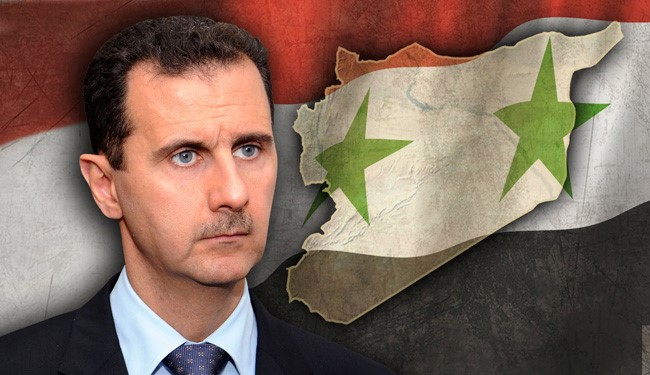
Kerry Tells Moscow US Fed up with Syrian President Assad’s Fate

by Nadarajah Sethurupan June 15, 2016
written by Nadarajah Sethurupan
Kerry Tells Moscow US Fed up with Syrian President Assad’s Fate

Kerry Tells Moscow US Fed up with Syrian President Assad’s Fate

US Secretary of State John Kerry has warned Russia that American patience on the issue of Syrian President Bashar al-Assad’s future is running out.

“Russia needs to understand that our patience is not infinite, in fact it is very limited with whether or not Assad is going to be held accountable,” Kerry said on Wednesday in Oslo, Norway.

“We also are prepared to hold accountable members of the opposition” who have been involved in carrying out violent attacks against Syrian government forces, violating a ceasefire agreement.

Syria is currently observing a ceasefire brokered by Russia and the United States, which entered into force on February 27.

The truce was reached between the Syrian government and dozens of militant groups operating in the country. The ceasefire does not apply to Daesh (ISIS / ISIL) and al-Nusra Front terrorist groups.
But recently militants have stepped up attacks against government forces, drawing a strong response from Damascus in the city of Aleppo.

“It is very clear that the cessation of hostilities is frayed and at risk and that it is critical for a genuine cessation to be put in place. We know that, we have no illusion,” Kerry said.

“This is a critical moment and we are working very, very hard to see if we can in the next week or two come to an agreement that has a capacity to more fully implement a ceasefire across the country and deliver humanitarian access in a way that then provides for a genuine opportunity to bring people to the table and start talking about a transition,” Kerry said.

“I’m not going to make any promises to be delivered on but I do believe the conversation I had with Zarif indicates to me possibilities for how this could be achieved,” he said, after meeting with his Iranian counterpart Mohammad Javad Zarif.

The 70-minute closed-door talks between the two diplomats in a downtown Oslo hotel on Wednesday also touched upon Iran’s complaints that it’s not getting the sanctions relief it deserves under the nuclear agreement it reached earlier this year with the 5+1 group of countries.

US officials have frequently warned of consequences if Assad, Syria’s democratically elected president, refused to step down as part of a broader peace agreement to end the five-year conflict.

Last month, Kerry warned the Syrian president of the consequences of a new US approach if he does not accept a political transition in the next few months.

“The target date for the transition is 1st of August,” Kerry told reporters at the State Department on May 3.
“So we’re now coming up to May. So either something happens in these next few months, or they are asking for a very different track,” he added.

Since March 2011, the United States and its regional allies, in particular Saudi Arabia, Qatar and Turkey, have been conducting a proxy war against the Syrian people and government.

The years-long conflict has left more than 470,000 Syrians dead and half of the country’s population of about 23 million displaced within or beyond the Arab country’s borders, Press TV reported.

June 15, 2016 0 comments
0 FacebookTwitterPinterestEmail
Video clips

Oslo REDD Exchange 2016: Erik Solheim, Chair of OECD Development Assistance Commitee

by Nadarajah Sethurupan June 15, 2016
written by Nadarajah Sethurupan

June 15, 2016 0 comments
0 FacebookTwitterPinterestEmail
Video clips

Oslo REDD Exchange 2016: Opening by Prime Minister of Norway, Erna Solberg

by Nadarajah Sethurupan June 15, 2016
written by Nadarajah Sethurupan

June 15, 2016 0 comments
0 FacebookTwitterPinterestEmail
Video clips

Oslo REDD Exchange 2016: U.S. Secretary of State, John Kerry

by Nadarajah Sethurupan June 15, 2016
written by Nadarajah Sethurupan

June 15, 2016 0 comments
0 FacebookTwitterPinterestEmail
Environment

Norway Looking to Lead into Becoming the World’s Greenest Country

by Nadarajah Sethurupan June 15, 2016
written by Nadarajah Sethurupan

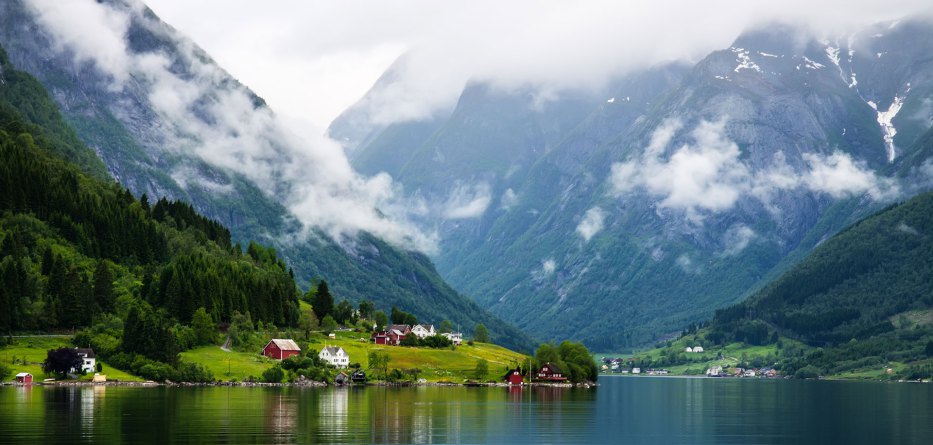
sognefjord-norwayFor a long time now Norway has been embracing the needs of the environment as they work towards becoming one of the most eco-friendly countries on the planet. The country’s latest efforts at looking to reduce their carbon footprint and become greener are focusing on the removal of all fossil-fuel based cars by 2025, with a new plan that suggests a lot more taxes on fossil cars.
Although the move to abolish fossil fuel cars is yet to be confirmed as definitely going ahead, rumors are certainly circulating, with a Norwegian newspaper even commenting on the ban. Norway is also taking other steps to ensure it continues as an eco-friendly country, including becoming the first country to ban deforestation and is aiming to triple its use of wind power in the next four years.
If the law were to pass in Norway, would everyone jump on board? Well, not everyone is so convinced as petroleum generates a large portion of the countries capital, so if they were to abolish the use of fossil fuels how would they recover from this deficit? However, one man who is most definitely on board is Mr. Elon Musk, CEO of Tesla, who has recently shared his happiness with Norway’s potential plan.

It is a significant proposal for Norway to get the go ahead on, but if they do manage it and get the backing of the people, then it can only mean good things for Norway as they seek to achieve a higher eco-friendly status. Nearly a quarter of the country’s cars are already run by electric, so that is a head start for Norway, but now comes the task of increasing that to 100 percent. Can they do it? We shall just have to wait and see!


June 15, 2016 0 comments
0 FacebookTwitterPinterestEmail
Asia and Norway

Iran’s Zarif, US’s Kerry Meet in Norway

by Nadarajah Sethurupan June 15, 2016
written by Nadarajah Sethurupan

139503261233577487927814Iranian Foreign Minister Mohammad Javad Zarif and US Secretary of State John Kerry held a meeting in Oslo on Wednesday morning for talks on the Joint Comprehensive Plan of Action (JCPOA), an agreement on Tehran’s nuclear program.
The meeting took place on the sidelines of the 2016 edition of the Oslo Forum, an annual international conference of armed conflict mediators and peace process actors.

In the get-together at an Oslo hotel, the two senior diplomats discussed issues about the implementation process of the JCPOA, the nuclear agreement between Iran and the Group 5+1 (Russia, China, the US, Britain, France and Germany).

Earlier on Tuesday, diplomatic delegations from Iran and the EU, led by Zarif and the EU Foreign Policy Chief Federica Mogherini, also met in Oslo and discussed ways to remove obstacles to JCPOA implementation.

While the nuclear accord came into force in January, Iran has complained about the failure of some of the parties, especially the US, to fully implement the deal.

139503261232579517927784In Tehran, Leader of the Islamic Revolution Ayatollah Seyed Ali Khamenei in a Tuesday meeting with senior Iranian officials took a swipe at Washington for its failure to honor commitments under the JCPOA, saying, “The duty of the other side was removing the sanctions, but it has not fulfilled that duty, meaning that it has lifted part of the sanctions in some way, but the sanctions have not been lifted practically.”
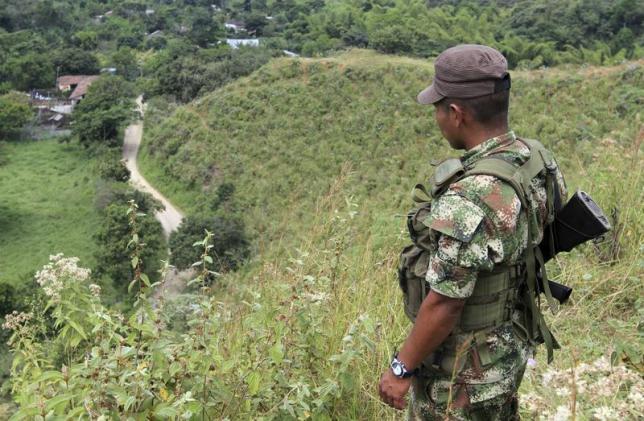
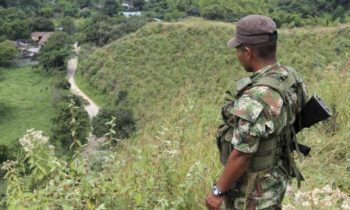
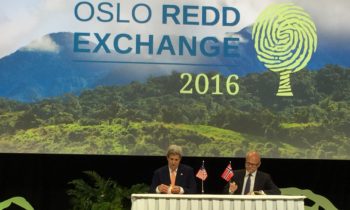
While the US officials claims verbally that there is no obstacle to banking relations with Iran, they actually take measures that the international banks “would not dare to trade with Iran,” the Leader stressed.

Imam Khamenei also noted that nobody should justify Washington’s serious breach of the deal in stifling the foreign banks’ interaction with Iran.

The Leader also touched on the US obstructive actions when it comes to insurance for the Iranian oil tankers, saying the US which is part of the “major structures” of insurance companies will not let that structure offer services to Iran.

Moreover, the Leader noted, Iran has still problems in having access to its oil incomes that have been blocked in the banks of other countries, since those assets are in US dollars and have been kept frozen due to US hostility.

June 15, 2016 0 comments
0 FacebookTwitterPinterestEmail
Peace Talks

Colombia government, FARC close to peace deal – mediator Norway

by Nadarajah Sethurupan June 15, 2016
written by Nadarajah Sethurupan
A FARC (Revolutionary Armed Forces of Colombia) rebel monitors the delivery of released hostages from a cocoa plantation in Monte Alegre province, in the department of Valle del Cauca February 15, 2013. REUTERS/Jaime Saldarriaga

A FARC (Revolutionary Armed Forces of Colombia) rebel monitors the delivery of released hostages from a cocoa plantation in Monte Alegre province, in the department of Valle del Cauca February 15, 2013. REUTERS/Jaime Saldarriaga

The Colombian government and the rebel Revolutionary Armed Forces of Colombia (FARC) are making progress in peace talks, and a deal to end Latin America’s longest-running conflict is in sight, Norway’s foreign minister said on Tuesday.

“We’re making progress in Colombia and I think we hopefully are close to a deal,” Borge Brende told a conflict-resolution seminar.

Norway and Cuba mediate the talks. The five-decade conflict in Colombia has cost at least 220,000 lives.

June 15, 2016 0 comments
0 FacebookTwitterPinterestEmail
Diplomatic relations

Norway-United States Joint Statement on Deeper Collaboration on Forests and Climate Change

by Nadarajah Sethurupan June 15, 2016
written by Nadarajah Sethurupan

Screen Shot 2016-06-15 at 15.36.33Recognizing the critical importance of forests and land use in mitigating the impacts of climate change, and adapting to those impacts that may be unavoidable, the Kingdom of Norway and the United States of America hereby resolve to deepen their collaboration on global issues related to forests and climate change.

On the occasion of the US-Nordic summit in Washington, D.C., on May 13 2016, the United States and Norway announced their intention to enhance existing collaboration on forests and climate change. We reaffirm our commitments made in the Leaders’ Statement on Forests and Climate Change, the New York Declaration on Forests and the Sustainable Development Goals. Through the December 2015 Paris Agreement we, alongside more than 190 other States, set collective goals, including to; i) hold the increase in the global average temperature to well below 2 °C above pre-industrial levels and ii) pursue efforts to IMG_5945limit the temperature increase to 1.5 °C above pre-industrial levels, as well as iii) achieve a global balance between anthropogenic emissions by sources and removals by sinks of greenhouse gases in the second half of this century. These goals cannot be achieved without forests. The science is clear: Conserving, restoring and sustainably managing the world’s natural forests is critical to achieving a safe, secure and sustainable world.
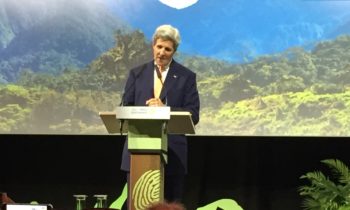
Limiting global warming is critical to safeguarding development achievements, and securing a sustainable future. The Paris Agreement represents an important recognition of the need to conserve and enhance forests and other ecosystems. Forests and land use currently represent nearly one-quarter of global emissions, but forests alone may contribute up to one-third of the pre-2030 mitigation. Conserving and restoring tropical forests IMG_5945will also be important to achieve climate neutrality in the second half of this century. Conserving, restoring, and sustainably managing forests is also fundamental to a wide range of other sustainability objectives including food security, climate resilience, biodiversity and maintaining freshwater resources.

Norway and the United States envision a world where economic growth and food security benefit from, and support, efforts to conserve and restore natural forests and reduce land-based emissions. Strategies for conserving and restoring forests on a global scale must simultaneously ensure increased agricultural productivity to produce food, feed, fuel, and fiber for a growing and increasingly affluent global population.

IMG_5939Our two countries are committed to achieving robust and lasting results in conserving and restoring forests. We share similar approaches to this global challenge:
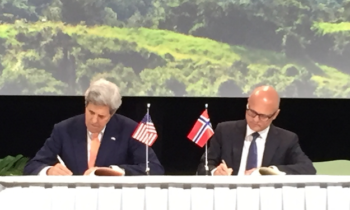
• We are committed to partnering with tropical forest countries demonstrating leadership on this issue, with ambitious mitigation contributions and pursuit of low emission, climate resilient development pathways, in line with their Nationally Determined Contributions under the Paris Agreement.

• We favor large landscape-level approaches that aim to achieve forest conservation and restoration as well as economic growth, food security, climate change mitigation and adaptation, and biodiversity conservation in a holistic, integrated manner.

• We believe a variety of tools is needed to support these efforts, including payments for verified emissions reductions.

Screen Shot 2016-06-15 at 14.57.21• We hold that success depends on mobilizing private investments, improving governance, increasing transparency, and enforcing the rule of law and the rights of indigenous peoples and forest dependent communities.
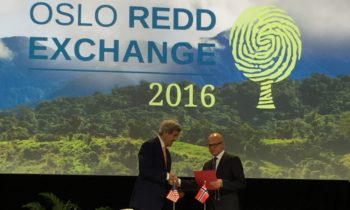
• We support private sector efforts to eliminate tropical deforestation from supply chains for commodities such as beef, palm oil, pulp and paper, and soy.

• We recognize the importance of managing land well, and that markets for legally harvested wood products can build incentives for improved forest management and reduce threats of land conversion.

• We recognize the contribution of farmers, foresters, civil society, indigenous peoples and local communities in good forest governance and sustainable development; we also recognize the need to take gender considerations into account.

IMG_5976Both Norway and the United States note their intention to continuing their efforts to reduce emissions and enhance sinks on their lands, promoting overall climate benefits, consistent with their Nationally Determined Contributions under the Paris Agreement.
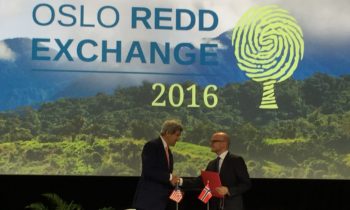
Norway and the United States strive to mobilize support through various channels for ambitious action by developing countries. We endeavor to help partners attract additional support for their efforts, including from the private sector. Together, our efforts aim to help securing the multiple benefits forests provide for local communities, and for humanity as a whole.

More specifically, Norway and the United States resolve to continue and enhance our existing cooperation on REDD+ and sustainable landscapes to:

IMG_5974• Support partner countries and other stakeholders in developing GHG inventory, forest monitoring and MRV systems. This may include enhancing our existing collaboration on the global SilvaCarbon and Global Forest Observation Initiative (GFOI) programs, sharing greenhouse gas inventory compilation and management tools, as well as working on public-private partnerships like Global Forest Watch, and collaborating on activities in partner countries. We also plan to explore the role the technology industry may play in reducing data gaps and reducing uncertainties for forest monitoring. This can increase transparency, increase integrity of emission reductions, and aid efforts to combat illegality.
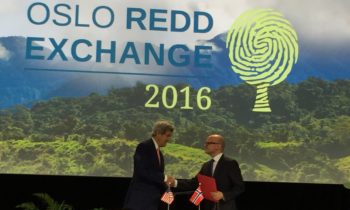
IMG_5969• Facilitate linkages of jurisdictional forest and climate programs with private sector commitments to reduce tropical deforestation in supply chains. Work with partners to promote deforestation-free commodity supply chains, building on the efforts of partner countries that are successfully implementing programs for reduced deforestation at a jurisdictional level.
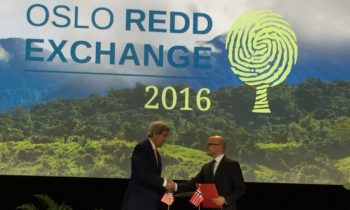
• Clarify and strengthen the business case for sustainable investment. This may include working with Tropical Forest Alliance 2020 as well as other partners to develop investment-ready projects and connect them to potential funders.

IMG_5967• Enhance the use of our development finance and assistance to mobilize private sector investment for forests and sustainable land use. This may include the use of public finance to derisk or catalyze private sector finance. It could also include technical assistance and capacity building for partner countries seeking to attract private sector investment.
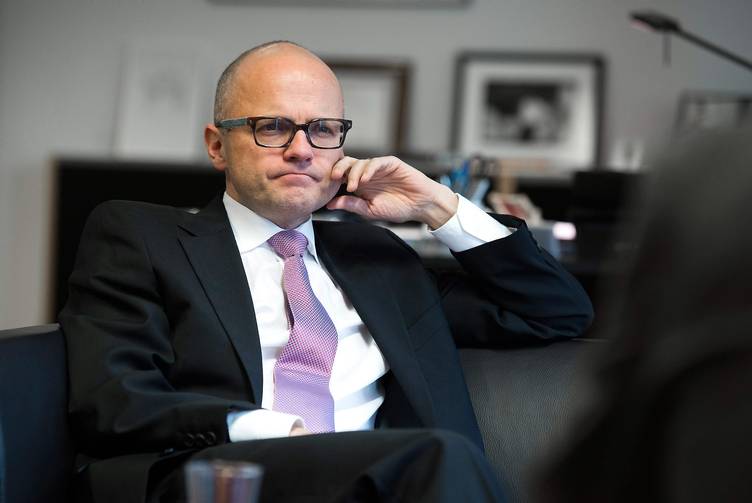
• Support states at the International Civil Aviation Organization (ICAO)’s 2016 Assembly to adopt a Global Market Based Measure to help to enable carbon neutral growth in international aviation from 2020. Such a measure for aviation could catalyze incentives for reduced deforestation through demand for large-scale forest emissions reductions, provided activities meet ICAO’s emissions unit program criteria and reflect relevant developments in the United Nations Framework Convention on Climate Change.

• Affirm our support for the new Capacity Building Initiative for Transparency. CBIT is designed to enhance institutional and technical capacity to build trust and confidence through transparency, and to meet international requirements for sound, consistent and comprehensive reporting, including on mitigation in the land sector.

• Strengthen our respective efforts to fight illegal logging and associated trade. This is intended to include our work and international cooperation on transparency, support for enforcement capacity, and the implementation of efforts like the Lacey Act prohibition on trade in illegally harvested timber and wood products.

• Provide technical tools and information to pension funds, finance agencies, and other investors seeking to reduce their impact on deforestation and forest emissions, and support responsible forest management. This can help partners identify best practices and address one key gap hindering the shift of broader financial flows in a direction that supports better land use.

• Hold a bilateral expert-level meeting on forests once per year to promote close coordination on these activities.

(N.Sethurupan)

June 15, 2016 0 comments
0 FacebookTwitterPinterestEmail
Environment

Africa: Indigenous Rights and Private Funding Key to Slowing Deforestation, Says Norway Minister

by Nadarajah Sethurupan June 15, 2016
written by Nadarajah Sethurupan

3639581__PS23454ny copyBogota — Campaigners say indigenous groups are often sidelined from decisions affecting forests
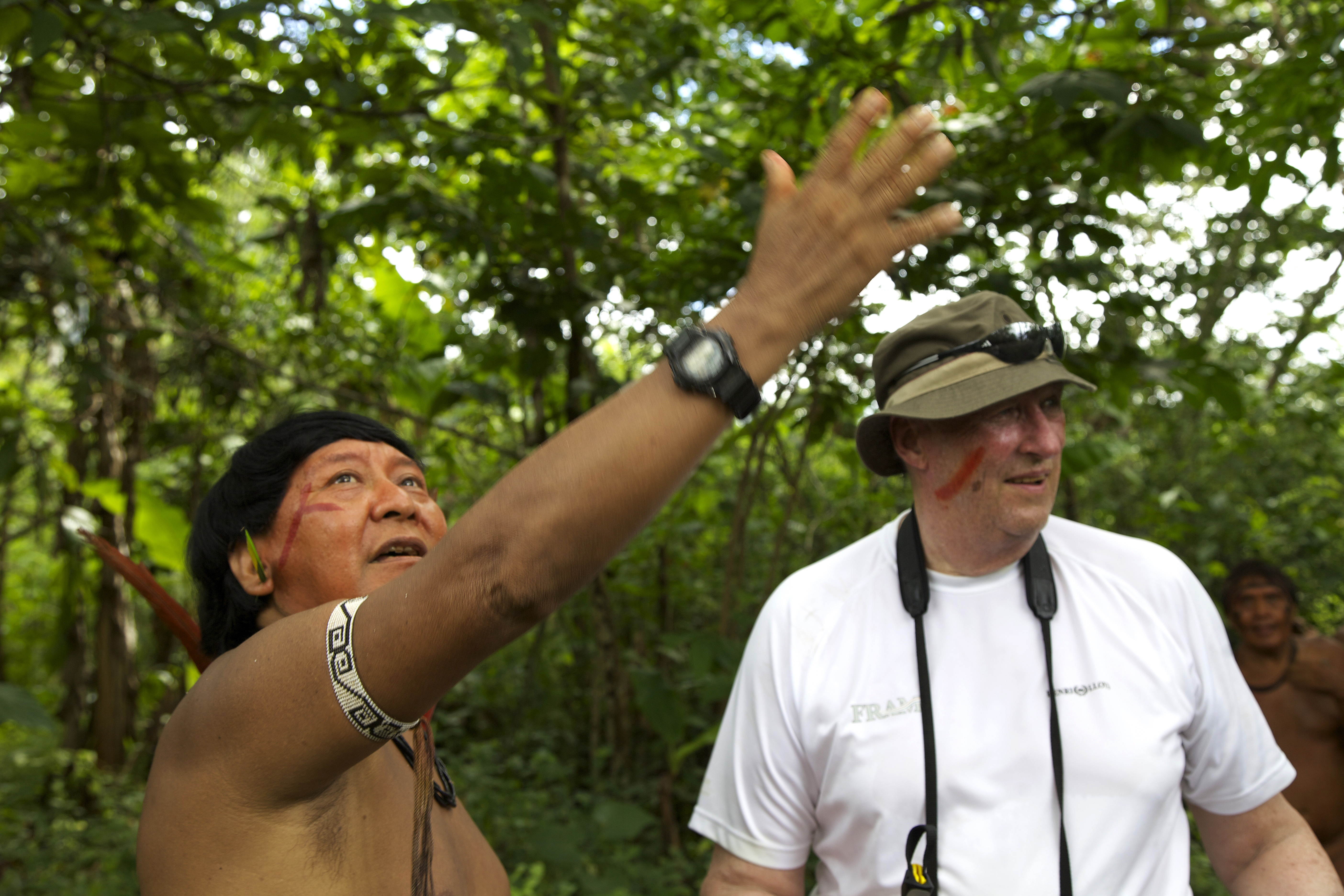
Efforts to save the world’s forests hinge on securing private sector funds and ensuring indigenous communities in tropical forests are more involved in protecting their environment, Norway’s environment minister said.

Speaking ahead of a high-level conference on forest conservation hosted by Norway, Vidar Helgesen said stronger political leadership is needed to amplify the voices and role of indigenous people in forest conservation.

Norway is the biggest donor to the United Nations programme aimed at Reducing Emissions from Deforestation and Forest Degradation (REDD+) in developing nations.

When forests are degraded or destroyed, the carbon stored in the trees is released into the atmosphere, with deforestation accounting for 10 to 15 percent of carbon emissions worldwide.

“A key priority of REDD+ is self-governance and strengthening the involvement of indigenous communities in the forests,” Helgesen told the Thomson Reuters Foundation in a telephone interview.

But campaigners say all too often indigenous groups are sidelined from decisions affecting the forests on which they rely for their livelihoods, and are not properly consulted about dam, mining and agriculture projects on or near their lands.

“In some countries it is still at the level of lip service,” Helgesen said.

Ensuring indigenous communities have formal land tenure or ownership is an effective way of slowing down deforestation, environmental campaigners say.

RESULTS BASED

Norway, rich from offshore oil, is financing projects to help protect forests from Ethiopia to Peru, as well as two projects worth $1 billion each for Indonesia and Brazil and one worth $750 million for Guyana.

U.S. Secretary of State John Kerry is due to speak at the two-day conference starting on Tuesday, and Helgesen said Norway and the United States would announce a bilateral agreement on forest conservation.

Developing countries participating in REDD+ get payouts for meeting verified emission reduction targets for slowing deforestation over several years.

The payments are usually distributed to farmers and local community and indigenous groups working on forest protection.

“This is results based. If we don’t see results, we don’t pay,” Helgesen said.

A key challenge to be discussed at the Oslo conference – attended by nearly 500 experts and policymakers – is the need to attract more private finance to fund forest conservation.

Funding from the private sector has contributed just one-tenth of the money provided to keep forests standing, according to 2015 figures from U.S.-based non-profit group Forest Trends.

“You can’t depend on aid budgets as they are not as abundant as they were in the past,” Helgesen said. “Private sector funding and strengthening public-private partnerships will have to be brought forward further.”

BRAZIL

Helgesen singled out Brazil, home to the world’s largest rainforest, as a success story in efforts to cut deforestation.

Brazil’s deforestation rate dropped by 70 percent during the past decade “while significantly increasing agricultural production,” he said.

“One of the most important lessons learnt is that it is not just a matter of protecting but producing too,” Helgesen said.

However the rate of forest loss has recently increased. Brazil’s rate of deforestation edged up 16 percent in the year to July 2015, according to government data.

Slowing forest clearance involves encouraging sustainable agriculture, particularly among small farmers, who need to be able to produce food and crops for sale while protecting the forest, Helgesen said.

This includes small farmers using new irrigation and fertilizer systems to produce higher yields on the same land.

“At the local level practices have been unchanged for decades and centuries and new techniques and knowledge have not been applied,” Helgesen said.

COLOMBIA

He said progress on slowing deforestation in Colombia’s vast Amazon rainforest depended on combating illegal gold and silver mining, which cuts down trees and contaminates water.

“There are strong interests including illegal actors involved in illegal mining posing a threat to local leaders and activists,” he said.

Colombia is home to more than 45 million hectares of rainforest – roughly the size of Germany and England combined.

It has declared the goal of zero net deforestation by 2020 and halting the loss of all natural forest by 2030.

Under the REDD+ programme, Colombia received its first payment of $6 million this month from Norway, Britain and Germany for reducing emissions from deforestation in its Amazon rainforest in 2013 and 2014.

If Colombia meets its deforestation targets it is set to receive $300 million from the three donor nations by 2020.

June 15, 2016 0 comments
0 FacebookTwitterPinterestEmail
Environment

To save the forests and stop climate change, save the peoples who protect them

by Nadarajah Sethurupan June 15, 2016
written by Nadarajah Sethurupan

9256e0bcca8aa727de8418fb5a92446e518401268ff4cAs indigenous leaders of territories that cover major forests in Africa, Asia and Latin America, we welcome the presence here in Oslo of US Secretary of State John Kerry. But will Mr. Kerry follow Norway’s lead in committing a percentage of its climate finance to support titling and recognition of the rights of our peoples to their forests, lands, resources and territories?
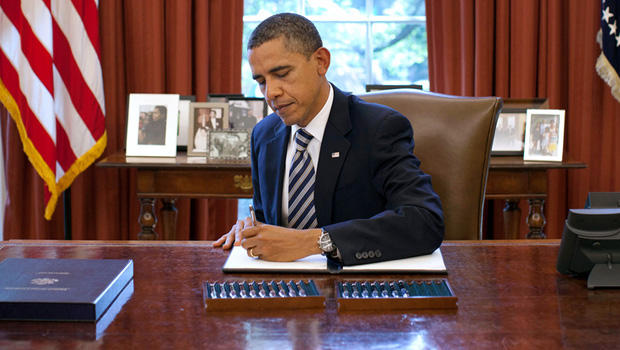
There is more than symbolism at stake. Research reveals that strengthening our rights must be a central strategy for conserving tropical forests. Without us, the mission is doomed to failure.

Indigenous communities have a long-standing relationship with their forests that allows them to protect these precious resources—in sharp contrast to other forestry management systems. But our ability to prevent illegal development and protect our territories from high-impact uses is often limited by our lack of legal and financial support, including a lack of title to our lands.

Research released at the UN climate change conference in Paris showed that indigenous-managed forests in Africa, Asia and Latin America contain, conservatively, at least 20 percent of the carbon stored in the world’s tropical forests, thus preventing more than three times all the world’s carbon pollution last year from entering the atmosphere.

In recognition of these findings, we call on the United States to join Norway in strengthening our ability to manage and protect our forests, lands and resources.

The Woods Hole Laboratory findings released in Paris revealed that the carbon contained in tropical forests in indigenous territories of the Amazon Basin, Mesoamerica, the Democratic Republic of the Congo (DRC) and Indonesia is equivalent to 168.3 gigatonnes of carbon dioxide (GtCO2)—more than three times the climate-changing gases emitted globally (52.7 GtCO2) in 2014.

If we are to continue conserving tropical forests—essential for reaching the goals of the global climate agreement, as well as for maintaining ecosystem integrity and our cultural identity—our communities need:

• Titling of our territories, as well as recognition of our rights to the resources of those territories and to the environmental services they provide.

• An end to all criminalization, violence and murder of our leaders who speak out in defense of indigenous rights and territories.

• Recognition of the contributions of Indigenous Peoples to climate change mitigation and adaptation and inclusion of those contributions in governments’ Intended Nationally Determined Contributions.

• Implementation of Free, Prior, and Informed Consent (FPIC) for development activities in indigenous territories.

• Direct access to climate financing for Indigenous Peoples.

We who live on the front lines of the changing climate have contributed least to the global crisis, yet we stand to lose the most.

The fires that have consumed Indonesia, and continue to threaten that country—and the 16 percent jump in deforestation in Brazil—are examples of what happens when governments fail to include indigenous peoples in their efforts to protect the forests that are so critical to addressing the rapidly changing climate.

Here in Oslo, we are a mere handful of indigenous leaders from Asia, Africa and Latin America, compared to the 500 individuals who are present here this week. But we represent millions of forest peoples, and the help we come to offer is invaluable. It is a cure, in essence, and the most affordable pathway for climate leaders struggling to come up with solutions.

Nature has blessed humanity, but it must be respected, and we know how to do this. It is the nature of the peat ecosystems of Indonesia to be wet, for example. To dry them out for the planting of oil palm is to invite disaster. We indigenous people have always known this, but our voices have not been heeded.

With strong rights, Indigenous Peoples can play a powerful role in reducing the emissions that threaten the health of the planet. The rest of the world looks at our forests and sees carbon, but for us those forests mean food, water, and life itself.

SIGNED,

Abdon Nabadon and Mina Setra, the Indigenous Peoples’ Alliance of the Archipelago (AMAN).
Gustavo Sanchez and Candido Mezua, the Mesoamerican Alliance for Peoples and Forests (AMPB).
Edwin Vasquez and Jorge Furagaro, Coordinating Body for the Indigenous Peoples Organizations of the Amazon Basin (COICA)
Hindou Ibrahim, Repaleac, Chad/Congo Basin

June 15, 2016 0 comments
0 FacebookTwitterPinterestEmail
Science

Norway Agreement for Peaceful Nuclear Cooperation

by Nadarajah Sethurupan June 15, 2016
written by Nadarajah Sethurupan

obama_debt_bill_signing_080211_1On June 14, President Obama submitted to Congress for its review an Agreement for Cooperation between the Government of the United States of America and the Kingdom of Norway Concerning Peaceful Uses of Nuclear Energy.
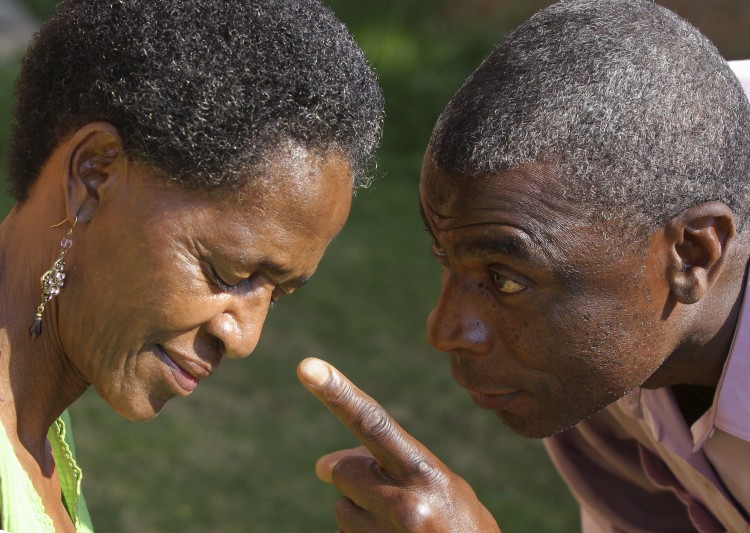
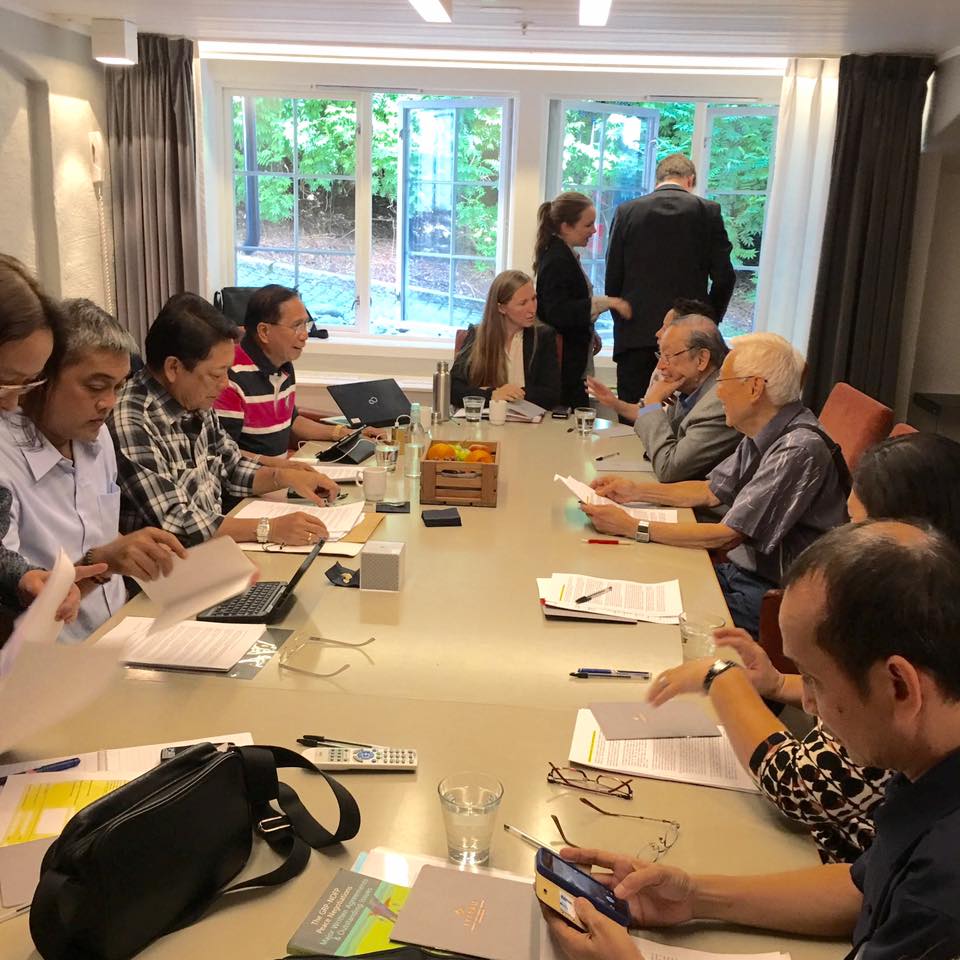
Upon entry into force, following the statutorily required Congressional review, the Agreement (also called a 123 Agreement after the relevant section of the U.S. Atomic Energy Act) will establish the legal framework for the United States to engage in civil nuclear cooperation with Norway under agreed nonproliferation conditions.

This Agreement reflects the strength and breadth of the long-standing and strategic U.S.-Norway relationship. The Agreement will establish a firm foundation for mutually beneficial cooperation in civil nuclear energy in conformity with the highest standards of safety, security, and nonproliferation.

June 15, 2016 0 comments
0 FacebookTwitterPinterestEmail
Science

Violence puts women in their place

by Nadarajah Sethurupan June 15, 2016
written by Nadarajah Sethurupan
This study shows that the use of violence to put women in their place is largely accepted in Tanzania. In Norway, there are also certain types of violence that are socially accepted to some degree. According to the researcher, this deserves more scholarly attention. (Illustrasjonsfoto: iStockphoto)

This study shows that the use of violence to put women in their place is largely accepted in Tanzania. In Norway, there are also certain types of violence that are socially accepted to some degree. According to the researcher, this deserves more scholarly attention. (Illustrasjonsfoto: iStockphoto)

In order to say anything about gender and violence – apart from counting the number of men and women who abuse or are being abused – we need to look at the meaning behind the violence, according to the Norwegian researcher Hilde Jakobsen.

“Violence is not gendered simply because men abuse women,” says Hilde Jakobsen.

Gendered violence is a significant topic in her PhD thesis on domestic violence in Tanzania, submitted to the Department of Health Promotion and Development (the HEMIL Centre) at the University of Bergen.

Something is ‘gendered’ if it has to do with gender, as the word implies. Gender is often perceived as biological in accordance with the classical categorisation of men and women. And on a global basis the figures speak for themselves: it is primarily men who abuse women and not the other way around.

According to Jakobsen, who has studied and worked with domestic violence, this perspective characterises a lot of Norwegian research on violence and gender.

“Gender is reduced to something biological, that is, men and women, and then the counting begins. The first find is that men are the primary abusers. Then the researchers find that some women also abuse men. And all of a sudden the violence is no longer gendered, since both men and women abuse.”

The social meaning behind the violence

Jakobsen, however, has found that the gender aspect is expressed in the motivation behind the violence and the effects it is meant to have.

Through her study of domestic violence in Tanzania, it appears that the use of violence against women to keep them in their place is largely accepted in society. Women are expected to look after their husband, their home and their children. And every now and then she needs to be beaten a little in order for her to obey and do what is expected of her.

“In order to say anything about violence and gender, apart from counting men and women who abuse or are being abused, we need to understand gender as theorized in the social sciences, not as biological sex. We need to look at the meaning behind the violence, to what effects it is used and what it sustains.”

According to Jakobsen, violence is gendered if it is supports and sustains gender norms, if it contributes to regulating how people should behave as men and women.

“If you analyse gender from that perspective you may also find that violence against men could be gendered. Or you may conclude that the violence is not gendered. It is not simply determined by whether the abuser is a man or a woman.”

Gender blind work against gender-based violence

The topic of her PhD thesis came to her when Jakobsen was evaluating a UN programme against gender-based violence in a refugee camp in East Africa. The descriptions she got of the UN programme and its purpose varied depending on whether she spoke to European employees or local employees from Tanzania.

The Europeans took for granted that everybody agreed that the programme’s vision was to combat violence against women. Their Tanzanian colleagues, however, did not agree that the use of physical violence against women was necessarily a bad thing in itself. According to them, some forms of violence were in fact justified. Both parties knew about the other’s perspective, yet the discrepancy was not discussed.

According to Jakobsen, the European employees regarded the local perception of violence as part of the so-called culture. And with their ideal being to conduct culturally sensitive development aid, they didn’t want to tamper with the local culture.

“They avoided the key issue of gender roles, since they attached the ‘culture’ label to this. But you can’t say that you work with gender-based violence while at the same time refuse to engage with the gender basis of the violence: the idea that women should submit to men,” says Jakobsen.

“You can’t say that you work with gender-based violence while at the same time refuse to engage with the gender basis of the violence: the idea that women should submit to men.”

Suppression of women is not culture

According to Jakobsen, the distinction between us, the Westerners, and they, the Africans, is a construction meant to serve political purposes. Or we, the Africans, versus you, the Westerners.

African politicians may reject feminist ideas as ‘Western intervention’ even if they come from their own people. And Western politicians may claim that what they’re doing is culturally sensitive and apolitical when they avoid engaging with fundamental gender inequalities that need changing if we want to do away with gender-based violence.

“Why is it that it’s the relation between men and women that’s not supposed to be addressed?” Jakobsen asks. “Everything else is subject to change. But I wouldn’t call the suppression of women ‘culture’. Why should it be considered culture when it happens in Africa, while when it happens here we call it gender norms that may be changed?”

“I wouldn’t call the suppression of women ‘culture’. Why should it be considered culture when it happens in Africa, while when it happens here we call it gender norms?”

Between coercion and consent

The statistics in Tanzania suggest that approximately half of the women in the country think a husband is right to beat his wife. This view also emerged in Jakobsen’s research interviews.

“And if the women say this themselves, what right do feminists have to claim otherwise? This simple argument is used all the time,” says Jakobsen.

“Those who address the structural and normative dimensions of violence against women are often accused of being Western feminists or imperialists.”

But it’s not that simple, because there’s no clear line between coercion and consent, according to Jakobsen.

“You don’t necessarily consent simply because you’re not visibly forced. Social phenomena are complex and norms are an important dimension of violence against women.”

Good and bad violence in Tanzania

Jakobsen’s research is based on 27 group interviews with women and men in the Arumeru and Kigoma-Vijijini districts in Tanzania. And some domestic violence against women is accepted in Tanzania.

She calls the accepted violence ‘The good beating’. Sometimes it is regarded as right and necessary to beat a woman.

The accepted violence is carried out in order to ensure that the woman follows society’s norms of good conduct. She should acknowledge her husband as head of the household and obey him, and she should perform her duties. One instance in which the husband was entirely justified in beating his wife was when she didn’t ensure that the children were always cleaned and fed.

One instance in which the husband was entirely justified in beating his wife was when she didn’t ensure that the children were always cleaned and fed..

A ‘bad beating’ or unacceptable violence, on the other hand, is violence against women who haven’t done anything wrong. Perhaps the food isn’t ready in time because she has to help someone with something, or a duty isn’t performed due to a misunderstanding, unintentionally.

Neither is it ok for men to beat their wives simply because they’re angry or drunk. The violence shouldn’t be random or excessive. It has to be deserved in order to serve as effective punishment. The wife has to have done something wrong for the beating to be acceptable.

Violence that preserves gender norms

“The fact that some violence is considered unacceptable legitimises the ‘good violence’”, says Jakobsen.

“One type of violence may be good if another is considered bad.”

And what regulates the accepted violence is society’s gender norms.

“It is not like this is supported by all hundred per cent of the Tanzanian women I have spoken to. But when they discussed within the focus groups it became clear that there are some self-written rules that they all have to relate to. Everybody agreed that this dominant norm exists.”

According to Jakobsen, the norm often became explicit when someone spoke against it.

“They spoke against a rule that everyone recognised the existence of, and that everyone was expected to conform to.”

Based on this background, Jakobsen claims that the violence is gendered. Not because men beat women, but because the justified violence is intended to keep women in their place and enforce a norm saying that the wife is obliged to carry out certain household chores – a gender norm.

The elephant in the room

It wasn’t easy to get access to these discussions among Tanzanians. Although she has grown up in various African countries, Hilde Jakobsen is nevertheless a white, Western woman.

“It wouldn’t have mattered if I’d been a more fluent Swahili speaker or if I had dressed differently. I am white, and that is beyond my power to change. I could not make them perceive me as non-white. The power difference will always be there.”

In order to prevent the discussions from becoming about what the participants thought the researcher wanted to hear, Jakobsen withdrew from the process and let a tape recorder do the work. According to her, other researches ought to do the same, as she thinks white researchers in Africa often fail to take the effect of their own whiteness seriously.

Good beating in the North?

“What may your research on gender and violence in Tanzania tell us about the same issue here in Norway?”

“I’ve studied the accepted violence. There will always be some types of violence that everyone can agree is bad. Other types of violence have a degree of social acceptance. There’s a continuum between the most accepted and the most condemned violence. I think this also applies to Norway. There’s some violence that Norwegian society more or less agrees is bad. Those who are arrested, who are sent to therapy – when studying these offenders you’re looking at that end of the scale. I think it would be worthwhile to study the violence that is not considered entirely unacceptable in a Norwegian context as well.”

“I’ve studied the accepted violence. There will always be some types of violence that everyone can agree is bad. Other types of violence have a degree of social acceptance. There’s a continuum between the most accepted and the most condemned violence. I think this also applies to Norway.”

According to Jakobsen, unwritten gender norms also define relationships between men and women in Norway. Despite structural progress and legal rights, unwritten norms still assert themselves in ways that make Norwegian couples follow gendered social norms, for instance when it comes to the distribution of housework and care.

“One difference might perhaps be that in Norway certain things remain unsaid, and perhaps there is a lack of awareness as well. Maybe the norms are even more implicit here,” Jakobsen speculates.

“But there is no difference between the West and the rest of the world here. The theories and the scholarly literature I use to explain and understand violence against women, these are just as applicable in Norway as they are in Tanzania.”

“Underdeveloped theories”

According to Jakobsen, arguments saying that men are also victims of domestic violence and that both men and women can be offenders have not been subject to sufficient critical scrutiny in the Norwegian public sphere and within academic circles.

“They are used as evidence to prove that feminists are mistaken when it comes to domestic violence. That it is not about gender and power after all.”

The currently dominant research internationally presents domestic violence as having little to do with gender, according to Jakobsen. The field is also dominated by applied research, for example on ‘what should we do’, ‘how can we help’, and ‘which clinical measures work’.

“Theory on the topic is underdeveloped, especially in Norway. There are no satisfactory theories concerning how these issues actually relate to gender, or concerning the violence’ function in society,” claims the researcher.

“Within the social sciences, Norway lacks feminist research on violence.”

Reference:

Jakobsen, Hilde, The Good Beating – Social norms supporting men’s partner violence in Tanzania (2015), University of Bergen.

Translated by Cathinka Dahl Hambro

June 15, 2016 0 comments
0 FacebookTwitterPinterestEmail
Peace Talks

CPP-NDF representatives arrive in Norway for talks

by Nadarajah Sethurupan June 15, 2016
written by Nadarajah Sethurupan

13466067_1317670271594098_4068083463553193254_nPeace negotiators of the incoming Duterte administration and representatives of the Communist Party of the Philippines-National Democratic Front (CPP-NDF), among them NDF founding chairman Jose Maria Sison, are about to begin informal and exploratory talks in Oslo, Norway, GMA 7 late night news program “Saksi” reported Tuesday night.
President-elect Rodrigo Duterte’s Presidential Peace Adviser Jesus Dureza and incoming Labor Secretary Silvestre Bello III had met with Sison for tea even before the talks began, with the meeting described as good-humored and warm.

Among the matters to be discussed during the formal dialogue are the resumption of formal talks, amnesty for the Communist insurgents, and a ceasefire. Formal talks between the government and the NDF were last held in 2004, though backchannel discussions had been going up till 2014.

While both parties were optimistic that talks would go well, outgoing Presidential Adviser on the Peace Process Secretary Teresita Quintos “Ging” Deles, who was also in Oslo, admitted that negotiations between the CPP-NDF and the government had been difficult.

Nevertheless, Deles was hopeful that the informal talks would be fruitful given the time and effort both parties had invested in negotiations.

When the informal talks began, the Norwegian facilitator said, “I hope that this will be a room full of constructive talks, bumps that will be overcome, and as third party facilitator, we will let you be in the driver’s seat of these talks.”
Sison, for his part, said that the CPP-NPA was thankful for the opportunities given them by the new Philippine administration, among which was the chance for them to recommend people for Cabinet positions.

“When we said that we can, maybe, well known communists and officials of the NDF cannot take positions yet. We can recommend highly qualified, patriotic, and progressive elements. And so we have gone beyond four cabinet posts,” said the CPP-NPA founding chairman.

(DVM/KG, GMA News)

June 15, 2016 0 comments
0 FacebookTwitterPinterestEmail
Politics

Donald Trump’s talk makes world ‘more unstable:’ Norway’s PM

by Nadarajah Sethurupan June 15, 2016
written by Nadarajah Sethurupan
Republican presidential candidate Donald J. Trump speaks at the Saint Andelm College New Hampshire Institute of Politics in Manchester, New Hampshire June 13, 2016. / AFP / TIMOTHY A. CLARY        (Photo credit should read TIMOTHY A. CLARY/AFP/Getty Images)

Republican presidential candidate Donald J. Trump speaks at the Saint Andelm College New Hampshire Institute of Politics in Manchester, New Hampshire June 13, 2016. / AFP / TIMOTHY A. CLARY (Photo credit should read TIMOTHY A. CLARY/AFP/Getty Images)

Norwegian Prime Minister Erna Solberg hopes Donald Trump would show the world a different face if he succeeds in winning the U.S. presidency.

“A lot of what Donald Trump says makes for a more unstable world,” Solberg said in an interview with media POLITICO. “I hope this is part of local election campaigning and not what he will do if he is in office. He has said on a lot of topics different things, so we will see which Donald Trump he becomes.”

The next American president should be someone who understands the U.S. is “extremely important” for the security of Europe and that “we are their best friends in the world,” the Norwegian leader said.

“Ironically said, we are always a little bit afraid when there are American elections … because they always talk about not participating in Europe anymore,” Solberg said. But in the end, they always do, she added.

June 15, 2016 0 comments
0 FacebookTwitterPinterestEmail
Politics

Norway to Britain: Don’t leave, you’ll hate it

by Nadarajah Sethurupan June 15, 2016
written by Nadarajah Sethurupan
Erna Solberg Erna Solberg speaks during a panel discussion during the Anti-Corruption Summit London 2016, at Lancaster House in central London on May 12, 2016. British Prime Minister David Cameron announced plans Thursday to stop the flow of dirty money through the London property market, as he prepared to welcome world leaders and NGOs to an anti-corruption summit. / AFP / POOL / FACUNDO ARRIZABALAGA/POOL        (Photo credit should read FACUNDO ARRIZABALAGA/POOL/AFP/Getty Images)

Erna Solberg Erna Solberg speaks during a panel discussion during the Anti-Corruption Summit London 2016, at Lancaster House in central London on May 12, 2016.
British Prime Minister David Cameron announced plans Thursday to stop the flow of dirty money through the London property market, as he prepared to welcome world leaders and NGOs to an anti-corruption summit. / AFP / POOL / FACUNDO ARRIZABALAGA/POOL (Photo credit should read FACUNDO ARRIZABALAGA/POOL/AFP/Getty Images)

Norway’s prime minister has bad news for U.K. Euroskeptics who hope to copy Oslo’s relationship with the European Union if they get their way in next week’s referendum.

“They won’t like it,” Erna Solberg told to POLITICO.

The Conservative leader has her own bruising experience of votes on EU membership. Her center-right party was in favor of joining in a 1994 referendum that ended with 52 percent of Norwegians rejecting the bloc, after a similar result in 1972.

Norway receives access to most of the bloc’s internal market through membership of the European Economic Area. That means goods, services and labor flow freely between Norway and the EU. In return, however, Norway has to adopt a large number of EU laws without having a formal say in how they are shaped. Norway also has to pay about the same amount of money into the EU budget on a per capita basis as the U.K., according to OpenEurope, a think tank that has declared itself neutral in the debate.

Although the EU influences everything from the health warnings on Norwegian cigarette packs to the fact that Poles have become the biggest minority in the country, there isn’t much appetite for a third ballot on EU membership.

“That’s because the EU has a lot of problems on [its] own, so it is not very attractive,” the prime minister said in an interview here. Although her party is still in favor of EU membership, polling shows only about 18 percent of the population supports the idea.

While some in the U.K. see Norway’s looser relationship with the EU as a potential model for a post-Brexit Britain, Oslo sees a long list of drawbacks: losing influence in Brussels, being sidelined at meetings on defense policy, and having to accept EU rules in return for retaining access to the internal market.

“That type of connection is going to be difficult for Britain, because then Brussels will decide without the Brits being able to participate in the decision-making,” said Solberg.

Norway also has its own reasons for wanting Britain to vote “Remain” in its June 23 referendum on EU membership. Oslo has long relied on London’s free-market zeal to keep the EU’s interventionist instincts in check.

“It matters to us that we have member states at the table that are market-oriented, focused on less regulation … and the Brits are definitely in that camp,” Vidar Helgesen, Norway’s former EU affairs minister and current climate minister, said in an interview.

Burnt bottoms

Norwegian officials often attend expert-level group meetings where European Commission proposals are fleshed out, and its ministers are invited to some EU gatherings when it is relevant for both sides, on energy for instance. But they have no vote.

Solberg, who is 55 and has been prime minister since 2013, said this arrangement forces Norway to act like “a lobby organization” in Brussels.

“Sometimes we are good at it, sometimes we are not,” she said.

Norway’s membership in the European Economic Area does not cover agriculture, fishing, trade, customs, justice and home affairs, but it is part of Europe’s Schengen passport-free travel zone. Its participation in the single market means Norway implements about three-quarters of all EU laws.

June 15, 2016 0 comments
0 FacebookTwitterPinterestEmail
Newer Posts
Older Posts

Norwegian Nobel Prize 2024

101207 The Norwegian Nobel Committee has decided to award the Nobel Peace Prize for 2024 to Japan’s Hiroshima bomb survivor group Nihon Hidankyo.

Special Interest

  • Africa and Norway
  • Asia and Norway
  • Asylum
  • China and Norway
  • Corruption in Norway
  • Crimes
  • Defence
  • Diplomatic relations
  • Economics
  • Environment
  • Farming
  • Killing
  • Media Freedom
  • Middle East and Norway
  • NATO and Norway
  • Nobel Peace Prize
  • Norwegian Aid
  • Norwegian American
  • Oil & Gas
  • Peace Talks
  • Politics
  • Racism in Norway
  • Religion
  • Russia and Norway
  • Royal House
  • Science
  • Sex scandal
  • Sports
  • Spy War
  • Srilanka and Norway
  • Svalbard
  • Terrorist
  • Taiwan and Norway
  • Video clips

Follow Us

Recent Posts

  • Armenia, Norway hold political consultations in Oslo

    March 10, 2026
  • Police release images of suspect in U.S. embassy attack in Oslo

    March 10, 2026
  • Explosion reported outside US embassy in Oslo, police say

    March 8, 2026
  • Armenian envoy discusses cooperation with Norway

    March 6, 2026
  • Mongolia and Norway discuss issues of cooperation

    March 6, 2026
  • Norwegian FM: Israeli strike on Iran does not comply with international law

    February 28, 2026

Social Feed

Social Feed

Editors’ Picks

Norway opens market for Sri Lankan fish exports...

May 13, 2016

Sri Lanka – Nordic Business Council holds discussions...

May 15, 2016

Good governance to Sri Lanka

May 15, 2016

Shock and Joy in Sri Lanka – Erik...

May 15, 2016

Sri Lanka-Norway plenty of new opportunities for business–...

May 15, 2016

NORWAY NEWS is an online news site, written in English, dedicated to Norwegian affairs at home and abroad. Norway News.com is published online. It is a daily online newspaper in existence since May, 2003. The site is run by an Independent Journalist.

Facebook Twitter Youtube

Useful Links

    • Work With Us
    • Contact Us
    • Collaboration
    • Data Collection
    • Workplace
    • Adverstising
    • Privacy Policy
    • International Collab
    • Feedback
    • Terms of Use
    • About Our Ads
    • Help & Support
    • Entertainment
    • News Covering
    • Technology
    • Trending Now

Politics

Syrian, Norway to boost cooperation on mine clearance
Erna to step down as Conservative Party leader in 2026
Norwegian Labour Party on re-election win

Latest Articles

Armenia, Norway hold political consultations in Oslo
Police release images of suspect in U.S. embassy attack in Oslo
Explosion reported outside US embassy in Oslo, police say
Armenian envoy discusses cooperation with Norway

Norway News 2025 . All Right Reserved. Designed and Developed by Norway News

  • Home
  • About us
  • Disclaimer
  • Contact us
NORWAY NEWS – latest news, breaking stories and comment – NORWAY NEWS
  • Home
  • About us
  • News
  • Other News
    • Africa and Norway
    • Asia and Norway
    • Asylum
    • Breaking News
    • China and Norway
    • Corruption in Norway
    • Crimes
    • Defence
    • Diplomatic relations
    • Economics
    • Environment
    • Farming
    • Featured
    • Health
    • Killing
    • Media Freedom
    • Middle East and Norway
    • NATO and Norway
    • Nobel Peace Prize
    • Norwegian Aid
    • Norwegian American
    • Oil & Gas
    • Peace Talks
    • Politics
    • Racism in Norway
    • Religion
    • Royal House
    • Russia and Norway
    • Science
    • Sex scandal
    • Sports
    • Spy War
    • Srilanka and Norway
    • Svalbard
    • Taiwan and Norway
    • Terrorist
    • Travel
    • Video clips
  • Disclaimer
  • Contact us
NORWAY NEWS – latest news, breaking stories and comment – NORWAY NEWS
  • Home
  • About us
  • News
  • Other News
    • Africa and Norway
    • Asia and Norway
    • Asylum
    • Breaking News
    • China and Norway
    • Corruption in Norway
    • Crimes
    • Defence
    • Diplomatic relations
    • Economics
    • Environment
    • Farming
    • Featured
    • Health
    • Killing
    • Media Freedom
    • Middle East and Norway
    • NATO and Norway
    • Nobel Peace Prize
    • Norwegian Aid
    • Norwegian American
    • Oil & Gas
    • Peace Talks
    • Politics
    • Racism in Norway
    • Religion
    • Royal House
    • Russia and Norway
    • Science
    • Sex scandal
    • Sports
    • Spy War
    • Srilanka and Norway
    • Svalbard
    • Taiwan and Norway
    • Terrorist
    • Travel
    • Video clips
  • Disclaimer
  • Contact us

Editor’s Picks

  • UN concern over Sri Lanka’s cases of enforced disappearances

    October 8, 2025
  • UN Human Rights Council Resolution on Sri Lanka’s Path to Reconciliation

    October 7, 2025
  • International should support Sri Lanka: Solheim

    October 4, 2024
  • Norwegian Meets Sri Lankan’s Challenges

    May 3, 2024
  • Norwegian Ambassador meets JVP in Sri Lanka

    May 2, 2024
  • “The man who didn’t run away” – Eric Solheim

    April 30, 2024

Newsletter

@2025 - All Right Reserved. Designed and Developed by Norway News