
NORWAY NEWS – latest news, breaking stories and comment – NORWAY NEWS
  • Home
  • About us
  • News
  • Other News
    • Africa and Norway
    • Asia and Norway
    • Asylum
    • Breaking News
    • China and Norway
    • Corruption in Norway
    • Crimes
    • Defence
    • Diplomatic relations
    • Economics
    • Environment
    • Farming
    • Featured
    • Health
    • Killing
    • Media Freedom
    • Middle East and Norway
    • NATO and Norway
    • Nobel Peace Prize
    • Norwegian Aid
    • Norwegian American
    • Oil & Gas
    • Peace Talks
    • Politics
    • Racism in Norway
    • Religion
    • Royal House
    • Russia and Norway
    • Science
    • Sex scandal
    • Sports
    • Spy War
    • Srilanka and Norway
    • Svalbard
    • Taiwan and Norway
    • Terrorist
    • Travel
    • Video clips
  • Disclaimer
  • Contact us
NORWAY NEWS – latest news, breaking stories and comment – NORWAY NEWS
  • Home
  • About us
  • News
  • Other News
    • Africa and Norway
    • Asia and Norway
    • Asylum
    • Breaking News
    • China and Norway
    • Corruption in Norway
    • Crimes
    • Defence
    • Diplomatic relations
    • Economics
    • Environment
    • Farming
    • Featured
    • Health
    • Killing
    • Media Freedom
    • Middle East and Norway
    • NATO and Norway
    • Nobel Peace Prize
    • Norwegian Aid
    • Norwegian American
    • Oil & Gas
    • Peace Talks
    • Politics
    • Racism in Norway
    • Religion
    • Royal House
    • Russia and Norway
    • Science
    • Sex scandal
    • Sports
    • Spy War
    • Srilanka and Norway
    • Svalbard
    • Taiwan and Norway
    • Terrorist
    • Travel
    • Video clips
  • Disclaimer
  • Contact us
Thursday, February 19, 2026
NORWAY NEWS – latest news, breaking stories and comment – NORWAY NEWS
  • Home
  • About us
  • News
  • Other News
    • Africa and Norway
    • Asia and Norway
    • Asylum
    • Breaking News
    • China and Norway
    • Corruption in Norway
    • Crimes
    • Defence
    • Diplomatic relations
    • Economics
    • Environment
    • Farming
    • Featured
    • Health
    • Killing
    • Media Freedom
    • Middle East and Norway
    • NATO and Norway
    • Nobel Peace Prize
    • Norwegian Aid
    • Norwegian American
    • Oil & Gas
    • Peace Talks
    • Politics
    • Racism in Norway
    • Religion
    • Royal House
    • Russia and Norway
    • Science
    • Sex scandal
    • Sports
    • Spy War
    • Srilanka and Norway
    • Svalbard
    • Taiwan and Norway
    • Terrorist
    • Travel
    • Video clips
  • Disclaimer
  • Contact us
Copyright 2025- All Right Reserved Norway News
Politics

Wealthy Viking woman buried in Denmark was in fact Norwegian-born

by Nadarajah Sethurupan March 14, 2017
written by Nadarajah Sethurupan

Viking ship in full sail, Labrador Sea

A Viking woman buried in Denmark more than a millennia ago was born in Norway, an archaeologist has discovered. Her case highlights once more that the Vikings were mobile people, accustomed to migrating to other lands.

The woman’s remains were placed in a Viking grave in Randers, in Denmark’s Jutland peninsula. It was first excavated fourteen years ago by Ernst Stidsing, the curator at East Jutland Museum.

A number of wealthy and elaborate grave goods such as a broach, a knife and a necklace with bronze and glass pearl were recovered.

All these objects suggest that it was a wealthy woman of high status which was laid to rest there. However, no human remains – except for a few fragments of teeth – were preserved.

At the time of the excavation, Stidsing had found one object that he had never seen before – a brooch made from a decorative plaque which had been taken from a holy shrine.

“I had not seen anything like this before from the time of the Danish Viking Age, but I later found that this type of jewellery was not so uncommon in Norway and that it could also have been plundered from sites in Northumbria, Ireland or Southern Scotland. But at the time, we were not able to verify this by analysing the origins of this woman,” Stidsing told IBTimes UK.

Now, the archaeologist has been able to dig deeper in the woman’s past, examining what remains of her teeth with a strontium isotope analysis. Strontium isotope composition of tooth enamel can provide valuable information about where an individual is born and where spent their childhood.

The method works because strontium isotopes provide a fingerprint for different rock types and thus, indicate geographical locations where people might have spent time.

Here, the archaeologists have found clear indications that the woman was born in Norway and grew up there. It is not clear what led her to Denmark, although such movements wouldn’t have been uncommon for her and her contemporaries.

“We don’t know how she ended up in Denmark. Maybe her presence there is connected to an arranged marriage with a Viking from the region but we can’t know for sure. We don’t even know her age, since only parts of her teeth remain for us to analyse. So mysteries remain, but she is a proof that migration was taking place between countries in the Viking Age,” Stidsing concluded.

(ibtimes)
March 14, 2017 0 comments
0 FacebookTwitterPinterestEmail
Farming

Norway’s cod exports to Portugal rise 9% in 2016

by Nadarajah Sethurupan March 14, 2017
written by Nadarajah Sethurupan

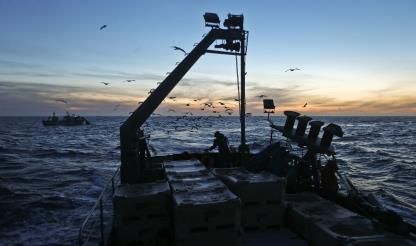
Norwegian exports of cod to Portugal rose by 9% year on year in 2016 to €271.4 million, totalling 48,603 tonnes, the Norwegian Fishing Council (Norge) said.

Portugal’s national dish is salted cod and there are said to be enough recipes to eat a different Portuguese cod dish on every day of the year. It is traditionally eaten boiled on Christmas Eve. Portugal’s biggest source of this delicacy is Norway.

According to Norge, exports of dried salted cod saw the greatest rise (10%), from €153.4 million in 2015 to €168.9 million in 2016, totalling 25,167 tonnes.

Exports of so-called green salted cod (sent to factories in Portugal to be dried) rose 9%, from €81 million to €88.6 million, to 18,919 tonnes. The remaining categories of cod (fresh, frozen and fillets) recorded a drop of 1%, from €14.1 million to €13.9 million, or the equivalent of 4,517 tonnes.

These figures make Norway Portugal’s largest supplier of cod. Average per capita consumption of cod in Portugal in 2016 was 6.5 kilos, and a total of 65,000 tonnes.

Norwegian cod comes from sustainable stocks in the Norwegian and Barents sea (Northeast Atlantic) which are jointly managed along with Russia.

Cod quotas since around 2015 have remained at around 890,000 tonnes per year, around half of which for Norway.

(N.Sethu)

March 14, 2017 0 comments
0 FacebookTwitterPinterestEmail
Media Freedom

Norway promises to respond to Russia’s ban on entry for its journalist

by Nadarajah Sethurupan March 14, 2017
written by Nadarajah Sethurupan

Foto: VG

The Director of Communications for the Foreign Ministry of Norway, Frode Overland Andersen, said that the country condemns Moscow’s for ban the entry of Norwegian journalist Thomas Nielsen into Russia.

As reported by NRK news agency, this act is considered in Norway to be unlawful and unreasonable, and will not be left unanswered.

“We believe that it is unreasonable and unlawful to use EU restrictive measures as a pretext for refusing entry to Russia for Norwegian citizens,” Andersen said.

In addition, he noted that Norway in the future “will take into account” Russia’s actions against Nielsen when building bilateral relations.

A few days ago it became known that the editor-in-chief of the Norwegian edition of the Barents Observer, Thomas Nielsen, was unable to enter Russia. As part of a delegation of the Danish Parliamentary Committee on Foreign Affairs, the journalist had intended to attend the events in Murmansk. The incident occurred at the border checkpoint in Borisoglebsk, where Nielsen was informed that his visit to Russia was impossible “for reasons of state security”.

Later on, the Russian Embassy in Norway said that this step is a reciprocal measure against Norway’s accession to the personal sanctions list of the EU. In particular, they are talking about the “Act From September 1, 2016 Given the Permanent Character of the Discriminatory Order Regarding Entry of Russian citizens to Svalbard”.

(N.Sethu, uawire)

March 14, 2017 0 comments
0 FacebookTwitterPinterestEmail
Nobel Peace Prize

The Holberg Prize Names British Philosopher and Kant Scholar

by Nadarajah Sethurupan March 14, 2017
written by Nadarajah Sethurupan

Today, The Holberg Prize—one of the largest international prizes awarded annually to an outstanding researcher in the arts and humanities, the social sciences, law or theology—named British author, scholar and Philosophy Professor Onora Sylvia O’Neill as its 2017 Laureate. O’Neill is an Honorary Professor of Philosophy, Emeritus, at the University of Cambridge, and a crossbench member of the House of Lords. She will receive the financial award of NOK 4,500,000 (approx. USD 525,000) during a formal ceremony at the University of Bergen, Norway, on 8 June.

O’Neill will receive the Prize for her distinguished and influential role in the field of philosophy and for shedding light on pressing intellectual and ethical questions of our time. Her contribution to our understanding of Immanuel Kant is regarded as transformative and has led to a renewed interest in his work. In particular, O’Neill has explored the requirements of public reason and how they relate to international justice and to the roles of trust and accountability in public life.

For almost half a century, O’Neill has combined writing on political philosophy and ethics with a range of public activities, and her work has influenced generations of scholars, policy makers and practitioners alike. She has written extensively on political philosophy and ethics, bioethics and international justice, and is highly regarded as a specialist on human rights. She has applied a rigorous philosophical thinking when discussing major contemporary issues and her scholarship has had an immeasurable impact on the wider public sphere.

O’Neill describes the central question in her early works on Kant as “how reasoning could bear on action.” “This seemed,” she says, “and still seems to me the elephant in the room that is all too often ignored or pushed into the margins in philosophical work in ethics and political philosophy.”

To date, O’Neill has published more than a dozen books and more than a hundred articles. Many of these confront some of the deepest moral and political challenges of our age. Her works on Kant include Acting on Principle (1975), which explores the relationship between morality and rationality, and Constructions of Reason (1989), which argued that Kant saw reasoning as requiring that we make it possible for others to understand what we say and to grasp what we do. In books such as Faces of Hunger (1986) and The Bounds of Justice (2000), she deals with the structural conditions of oppression and how global inequality may be understood through a concept of justice that is cosmopolitan rather than civic. In Justice across Boundaries: Whose Obligations? (2016), she deals with human rights and responsibilities and poses the question: Who ought to do what, and for whom? O’Neill argues that sovereign states often lack competence and will to secure justice and universal rights, and a progression towards global justice requires that obligations be held by both states and non-state actors. Complex questions of morality and public policy are also discussed in O’Neill’s work in bio-ethics: Rethinking Informed Consent in Bioethics (2007), co-authored with Neil Manson. In this book, they defy current practice and opinion by rejecting the widespread policy premise that informed consent sufficiently protects patients and research subjects.

“O’Neill has an extraordinary ability to blend questions of morality, with an account of psychological plausibility and institutional legitimacy that makes her a powerful guide to the most profound ethical questions of our time,” says Chair of the Holberg Academic Committee, Dr. Pratap Bhanu Mehta. “Not only has she transformed our understanding of Kant, she has also demonstrated how to do philosophy in a way that measures up to the complex moral demands of the world. Her philosophical work is rigorous, yet gracious in its articulation and profoundly moved by a deep and abiding concern for humanity.”

O’Neill studied philosophy, psychology and physiology at the University of Oxford before she received her PhD from Harvard University in 1969. In 1970 she became Assistant Professor at Barnard College, the women’s college at Columbia University. In 1977 she returned to Britain and took up a post at the University of Essex, where she became full Professor of Philosophy in 1987. From 1992 until 2006 she was Principal of Newnham College, University of Cambridge, where she is now Honorary Fellow. O’Neill was created a life peer as Baroness O’Neill of Bengarve in 1999 and has served as a crossbench member of the House of Lords since 2000. She has won a number of awards, and was appointed a Commander of the British Empire in 1995 and a Member of the Order of the Companions of Honour in 2014. In 2015 she was awarded the prestigious International Kant Prize.

O’Neill was President of the Aristotelian Society from 1988 to 1989 and President of the British Academy between 2005 and 2009, where she became a Fellow in 1993. She is also a Fellow of the Academy of Medical Sciences, and a foreign member or honorary member of several non-British academies. O’Neill was the founding President of the British Philosophical Association in 2003, and she became an honorary Fellow of the Royal Society in 2007. In 2013 she held the Spinoza Chair of Philosophy at the University of Amsterdam. O’Neill was Chair of the Equality and Human Rights Commission from 2012 until 2016, and she has been a member of many other policy committees and public advisory boards, including the Nuffield Council on Bioethics from 1996 to 1998 and the Human Genetics Advisory Commission from 1996 until 1999. As a crossbench member of the House of Lords, she has served on various Select Committees, particularly on Science and Technology. Furthermore, she has been Chair of the Nuffield Foundation since 1997, and she is since 2016 a member of the Banking Standards Board, tasked with improving banking culture and accountability in the UK. O’Neill holds a great number of honorary doctoral degrees. She was elected to the German order Pour le Mérite in 2014, and was awarded the Knight Commander’s Cross of the Order of Merit of the Federal Republic of Germany in 2016.

(N.Sethurupan)

March 14, 2017 0 comments
0 FacebookTwitterPinterestEmail
Defence

Norway, Sweden increase defence preparedness

by Nadarajah Sethurupan March 14, 2017
written by Nadarajah Sethurupan

NORWAY and Sweden are getting nervous. They’ve just upped their defence postures amid fears President Trump will not come to their aid if Russia attacks.
Russia’s increasing military presence on the Arctic nations’ borders have not gone unnoticed.

Nor has President Vladimir Putin’s return to Cold War style sabre-rattling, with aggressive and unannounced military exercises appearing to target their territories.

So now the small European states of Norway and Sweden are reinforcing their defences.

And the European Union is itself beginning to strengthen its ability to act as an independent fighting unit, separate from the command and control of the United States.

It’s all part of the political fallout of President Donald Trump’s apparent determination to forge a new friendship with Russia, even at the risk of cold-shouldering its old allies.

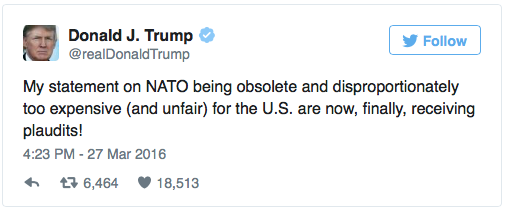
He’s repeatedly suggested the US may ignore its treaty obligations. He’s called NATO ‘obsolete’ on several occasions.

He’s done little to project a change of heart since taking office in January.

SWEDEN’S CALL TO ARMS

Sweden yesterday approved a defence budget boost its Minister for Defence, Peter Hultqvist, called a “good signal to the Swedish people, a good signal to the armed forces and a good signal to the surrounding world”.
It was an admission the strategic environment of the Baltic nation had changed.

Sweden is not a member of the North Atlantic Treaty Organisation (NATO), but its relations with the US-European defence group has strengthened in recent years.

It’s a move that has drawn President Putin’s unrestrained ire.

He’s sent several ‘messages’ of his displeasure, including simulated air and sea attacks on key Swedish facilities.

Now Sweden is preparing to fight back.

It recently announced it was reintroducing conscription, compelling its young men and women to undergo military training.

Yesterday it passed a new emergency budget measure.

An injection of some SEK 75 million ($A11 million) will go immediately into local governments to improve cyber security. More money will go boosting defence capabilities, particularly on the strategic island of Gotland.

Sweden’s government alliance is now warning voters a bigger bill is yet to come:

“The parties behind this deal agree that a further strengthening of the resources will be needed 2018,” Hultqvist told local media yesterday.

“The budget request from the Armed Forces needs to be analysed further, and this will be the subject of further talks during the spring, ahead of next year’s budget.”

Military estimates put this figure at SEK 6.5 billion ($A1 billion).

But it’s also not enough to meet President Trump’s requirement that its European allies at least 2 per cent of their incomes on the military. Sweden would have to double current levels to achieve that.

NORWAY FEELS THE CHILL

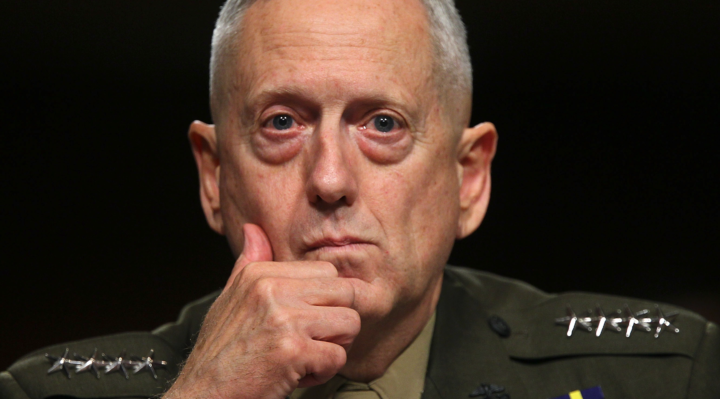
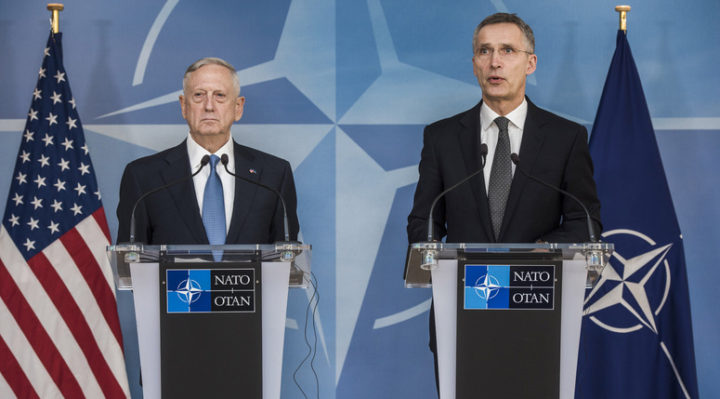
Left to right: James Mattis (US Secretary of Defense) and NATO Secretary General Jens Stoltenberg

It’s a nation that has experienced military occupation within living history: Norway was seized by the Nazi’s in World War II. It was used in an attempt to strangle Russia’s northern ports and launch attacks against Europe’s vital Atlantic supply routes.

It knows it remains strategically significant even today.

Russia’s been making that obvious.

It has increased the size and readiness of its northern fleet. Military facilities have been upgraded. Troop numbers have increased. New bases are being built in the Arctic Circle.

When Moscow moved on Ukraine in 2014, Norway — like many other small European nations — took notice.

Its northern air base at Bodo is now on constant alert. Incursions by Russian military aircraft in Norwegian airspace has soared in recent years.

And recent cyber attacks on the Norwegian government have been blamed on Russian espionage agencies.

In response, Norway is getting some 300 extra US Marines as part of a permanent boost of its NATO strength. It’s also hosting a new round of large-scale military exercises.

It has also just extended compulsory military conscription to women.

That is on top of a considerable boost in defence spending, with an extensive shopping list including new submarines as well as new combat and surveillance aircraft.

“What is most important to us right now is to have both a predictable and a very clear policy on Russia,” Norwegian Prime Minister Erna Solberg recently said. “The earlier and the clearer that the new (Trump) administration comes out with this, the better it is, also for European security.”

Norway’s boosted defence budget of ($A7.8 billion) remains below the 2 per cent GDP commitment demanded by President Trump

EUROPE GOES IT ALONE?

The European Union has overnight approved the creation of a headquarters for its own military operations, outside of NATO control.

German Defense Minister Ursula von der Leyen said that the EU foreign ministers “founded, or put in motion, today a European command centre for foreign missions.”

EU foreign affairs chief Federica Mogherini said it would provide a “more efficient approach to the existing military training missions we have.”

Von der Leyen said the idea is that those EU members who don’t want to join in directly could have an observer mission.

“For those who are not members of the European Union, like for example Norway or the British, there will be the possibility to join in selectively with certain projects or missions,” she said. “The Norwegians have great interest in this, the British have great interest in this.”

Britain is among those who say the EU must not waste money by doing similar things to the NATO alliance with the US.

Arriving for the meeting, British Defense Secretary Michael Fallon said just that, urging his European partners “to co-operate more closely with NATO to avoid unnecessary duplication and structures.”

Von der Leyen, however, said establishment of such a command centre “was long overdue.”

“We took a very important step toward a European security and defence union, because we have become very concrete,” von der Leyen said.

(townsvillebulletin)

March 14, 2017 0 comments
0 FacebookTwitterPinterestEmail
Corruption in Norway

Barnevernet is a true corruption face of Norway

by Nadarajah Sethurupan March 13, 2017
written by Nadarajah Sethurupan

Barnevernet became Human Rights Violations and systematic and institutionalised abuse towards families in Norway.

The Barnevernet is cruel, inhuman, system! It’s walls has to come down, enough it’s enough!!

Norwegian authorities are now implementing intimidation tactics on its own population. For instance, if you are someone who supports the reunification of the Bodnariu family and the 1000’s of other innocent children unfairly taken from their parents in Norway, and you publicise this on blogs or facebook, for example, you are then categorised as an activist and put on a ‘watch list.’

Once you are classified as an activist, and you have children under 18 years of age, investigations into the family and interviews with your children (in some cases, your children will be taken away without notice for a few hours of interrogation) are sadly not uncommon at the moment. It’s pretty terrifying.

To make matters worse, if someone does criticise Norway’s CPS, the blinded and brainwashed majority of the population will think there’s probably something wrong with that person – their conditioning has led them to believe that – they think that those that criticise barnevernet, must have something to hide. It’s an illusion, but many people in the attempt to support their beliefs will find something wrong with a particular person and then go no further, that’s enough, so they switch off the brain, and there’s no more thinking to do.

And, as we already know, the majority of children are taken from parents who are considered to have a lack of ‘parenting skills’ which of course is subjective and means, that barnevernet can justify taking any particular child it wants from any particular parent it chooses at anytime. Norway is truly not safe for families, far from it.

It’s also interesting to note, that many parents who have lost their children in Norway also once thought that it only happened to parents who in some way or another systematically abused their children, not to parents who love and care and do whatever they can for them.

So, why has Norway become such a dangerous place for so many families to live? This is not so easy to answer, but Norway has become ‘totalistic’ in the sense, it demands ‘targeted’ parents to be its idea of ‘perfect’, so as to reach its ideological aims.

Norway, not only wants obedience from its population, but also conversion to its ideology as well. They think they see the future more clearly than you or me, or whoever may not be quite so convinced of the reality of its ideology. They want their rule, and their belief system, to be accepted and self-sustaining by everyone.

Every parent who secretly objects, or even so much doubts this type of ideology, is a danger to the future of the whole project. Therefore, the Norwegian regime enforces its subjects not only to obey but to believe as well.

And, the Norwegian authorities can never be wrong. Kai-Morten Terning, undersecretary to Solveig Horne (Ministry of Children) reminds me of the former Iraqi Information Minister, Mohammed Saeed al-Sahhaf, who once said “There is no presence of the American columns in the city of Baghdad at all. We besieged them and we killed most of them.”

The Allies, led by the Americans were on his doorstep, but he just couldn’t accept it and he continued to lie, lie and lie, hoping his people would believe him and stay motivated I guess.

The main problem with Kai-Morten Terning’s defence of the indefensible is this. There is no credibility in what he says, leading me to accept he is not a man of integrity.

Firstly, over 170 professionals, including barristers, lawyers, psychologists, doctors, professors, nurses and other professionals say that Terning is wrong.

Thousands of children who are crying out to go back to mummy and daddy, because they miss them so much say that Terning is wrong.

Thousands of tormented parents are starting to speak out of their silence, a silence the authorities bullied into them, say that Terning is wrong.

And hundreds of thousands of people around the world and growing, I might add, say that Terning is wrong.

Terning says, “It’s a cultural misunderstanding.” Maybe, he’s right on this one, the civilised world does not understand how culturally Norway can take 1000’s of innocent children from perfectly healthy families and stand there, nose in the air, and say, it’s a cultural misunderstanding. I mean, every totalitarian government will tell you that.

Not only will Norway take innocent children from healthy families, they will also force the parents to admit the error of their ways. You must accept that you’ve committed a crime, although you haven’t. You must dispose of your own values and accept the ideas that the Norwegian authorities are better. You must rebuke yourself for undermining the construction of a better world, ‘The Magical Kingdom of Norwayland.’

Those that follow this ideology will attack those in the public arena who don’t support it, like the minority of lawyers, barristers, doctors, judges, writers and other professionals who stand up. Norway’s ideology hates the fact that you may have a different opinion, or a better way and it will hold you to account for your personal thoughts. Have you committed any thought crimes recently?

You don’t have the right to hold a different opinion in Norway. Holding onto a belief in a minority view or even as a private thought is dangerous. Everyone knows someone in Norway, who has been bullied out of their job. If you choose to persist and still disagree with Norway’s ideology, you will be attacked and others will be set on you as well like raging wolves, to deprive you of your status in your profession, of your standing in your community, and even of your livelihood.

And Norway calls this a cultural misunderstanding. It certainly is – 100% correct!

A number of people in the Norwegian Government are a little concerned that Norway’s CPS, barnevernet is losing trust with its population. They are worried because they recognise that dealing with parents and children requires trust in the first place.
Hopefully, this post can help the Norwegian government understand why so many people, including many professionals do not trust barnevernet. In fact, many families live in fear with just the mention of the name barnevernet, especially those with young children or those who are still fighting to get their children back.

This is not an exclusive list, but it might be a good start with helping in the many up and coming debates regarding barnevernet that are planned in Norway. If Norway’s CPS wants trust, it needs to deal with these issues and change its ways radically first.

Barnevernet Says = (BS)

The Reality = (TR)

1. (BS) If you divorce your husband, you will get your children back.

1. (TR) Once the divorce is through, the unity between the husband and wife is destroyed and the family has been weakened.

Barnevernet has you exactly where it wants you – powerless. The children, in the majority of cases are never given back to the single parent. Remember, a single parent is one of those who are in the target group that Barnevernet hunts down in the first place.
Anne-Kathrine Eckbo-Fangan, a former social worker said: “Norway’s ‘Child Protective Services’ are only concerned with removing children as quickly as possible but not bringing them back again quickly. They stay with foster parents until they are 18 years old – no discussion. We had lists of mothers who we specifically targeted, single mothers, ones with children from several fathers, poor, sick unemployed parents, or families without relatives, that is uncles, aunts and grandparents.”

2. (BS) If you support the take over of your children to us voluntarily, you will get your children back.

2. (TR) Norway’s CPS often make this happen through intimidation, harassment and bullying of the parents and statistically, this looks much better for the government records and to the outside world if the parents agree. In the vast majority of cases, the parents do not get their children back. Øivind Østberg, a Barrister in Oslo said:
“No other country has a child protection agency which so frequently removes the children from parents by means of coercion. Not even close. Of the 10.1 per 1000 children placed in foster care by the CPA , in 71% of the cases this occurs without the consent of the biological parents. In Germany the corresponding figures are 9 and 10%, in Sweden 8.2 and 26 %.”

3. (BS) If you accept seeing your children only, let’s say four times a year, and accept supervision, you will have your children back soon.

3. (TR) In the majority of cases, the parents do not get their children back. The Council of Europe Commissioner for Human Rights Nils Muižnieks replying to a question of Valeriu Ghilețchi (Republic of Moldova) on the issue of the Bodnariu family said:
“Taking children away from their parents is a broader issue and here the utmost caution is required because we have to think: what is the best interest of the child?

The best interest of the child is almost always to be with the parents. Only in extreme and exceptional cases, where the child can come to serious harm because of the parents’ behaviour, should a child be taken away temporarily from the parents. We need to intervene to support families so that they can remain together and children can be with their families. Removing children from their parents should be done only as a last resort and for a very short period.”



4. (BS) If you never protest, get help from others or go public with your story, you might get your children back, or maybe see them more often, or not even need supervision when you visit them.

4. (TR) The parents are expected to behave nice to the carers, the foster parents, and all their oppressors, no matter what, and you guessed it, in most cases, they still don’t get their children back.

5. (BS) If you accept guidance you may get your children back.

5. (TR) This is a crazy arrangement, and only implemented with the goal of finding/inventing proof of how bad the parents are. One family had 400 hours of guidance. A woman coming every second week, from Bergen, staying in a hotel and of course she wasn’t able to teach them anything new. She wasn’t educated, just an assistant of a psychological ‘expert team’. She started off as a translator, and then in time, she became the parent supervisor, and shortly after, the children were confiscated.

6. (BS) If you want financial support to improve your education, we can help by sending someone in to help identify the family’s need.

6. (TR) When Norway’s CPS enters the home, it isn’t long before they find a basis for not supporting the parent; but instead, they find reasons why the parent is bad for neglecting their children by putting so much effort into education in the first place, or whatever it is.

7. (BS) Children do not miss their parents and have now got use to their foster parents.

7. (TR) During visitations, children often share letters with their parents which say the complete opposite. It’s also important to note, that many children are fed lies by the CPS with regards to their parents, with the aim of cutting off the attachment their have.

8. (BS) Parents refused help from us.

8. (TR) There is no help offered in many cases. Like in the Bodnariu case, for example. And what happens, when the parents do accept help? Øistein Schjønsby, a Norwegian lawyer with 30 years experience will explain:

“Barnevernet set up the monitoring of families under consideration for intervention.
A family’s neighbour may be the one who reported the family (denounced them?).

The CPS gives the impression of planning to help the family – in the way they are obliged to by law – but in actual fact nothing much comes of it. Instead, the CPS takes action in the form of removing the child as an acute measure – and the outcome of the case is thereby assured.”

9. (BS) The parents don’t have a good attachment to their children.

9. (TR) In many cases, barnevernet employees have never seen the parents and children together.

10. (BS) Snatching children is the last resort and only when drug abuse and serious violence is included.

10. (TR) 100% untrue, it’s often the first resort sadly in Norway, and in many cases the children taken have never experienced any form of abuse from their parents.

Venil Katharina Thiis is a lawyer from Trondheim. She said this about Norway’s CPS, barnevernet.

“I have been working with cases involving child care for over 20 years and have seen how the legal rights of both children and parents have increasingly diminished over the years.

Barnevernet has more power than they are able to manage, so often end up abusing the authority they hold. As to this, they have developed a culture where the last solution, force, often becomes the first alternative, as opposed to forming dialogue which can lead to voluntary methods.

They also have many “locked doors” where disqualified psychologists control, both the County Board and the courts. What happens in the county boards is therefore undemocratic – it’s David’s encounter with Goliath.”

11. (BS) There is freedom of speech in Norway and parents can publish their stories in the media.

11. (TR) It’s often the case that children are fast tracked to adoption, when parents publish anything online, or the parents are threatened with never seeing their children again. It’s a bit like a revenge policy. Erik Bryn Tvedt, a lawyer from Sandefjord in Norway said this about Child Welfare in Norway:

“So, in Norway, we exclude from public debate specific issues about when it is appropriate to take children into care, separating them from their parents!

Norwegian practice is contrary to Article 10 of International Covenant on Civil and Political Rights, Article 19, 1 and 2:

1. Everyone shall have the right to hold opinions without interference.

2. Everyone shall have the right to freedom of expression; this right includes freedom to seek, receive and impart information and ideas of all kinds, regardless of frontiers, either orally, in writing or printed form, or artistic or other media of his choice. ”

12. (BS) You stigmatise the child when you publish anything about your case online.

12. (TR) The innocent child was stigmatised the day it was taken from a normal home with healthy parents. In fact, it’s OK for the CPS to run advertising campaigns, showing foster care children jumping up for joy with their new foster parents, but you can’t publish stories with your own children. This is called double standards, and Norway seems to be full of them.

13. (BS) The biological principle is always respected.

13. (TR) Only in 25% of cases are children returned to relatives. Øistein Schjønsby, a Norwegian lawyer with 30 years experience says:

“Oh no, the CPS takes the child and places it with temporary foster parents, after which they go looking for foster parents who are complete strangers to the child. Time passes, and by now there are too few who are willing to be foster parents and permanent placement therefore is long in coming.

In the meantime, the child could have been given a permanent home with its family, typically with grandparents, aunts or uncles, but the CPS is not interested in that.

We are left to figure out for ourselves what it is that stops them.

Just for the record: The consideration under §4 is something one is entitled to demand. But the CPS gets around it in several ways. The CPS is not interested in the family having anything more to do with the child.

So I say, is it really any wonder that people are afraid of barnevernet, the child protection service in Norway?”

14. (BS) Children are very happy in foster homes.

14. (TR) Around 95 children in care commit suicide every year, two per week, sadly.

That’s a big number for a small country of five million people.

15. (BS) The parent cares more about himself than his child, because he is still fighting to win his child back and does not let it attach to the new foster carers.

They don’t respect our decision.

15. (TR) No, you took an innocent baby or child from a normal/healthy family (ca.80% of children confiscated in Norway have not been physically abused, no drugs were involved and no sexual abuse either). So, if the mother/father doesn’t fight for their children, I would really question their love for them.

16. (BS) Spend some time at the social care home for mothers with children. We can teach you how to treat your baby.

16. (TR) Unfortunately, during the stay, they just look for ‘new errors’ and a big percentage of mothers do not leave the care centre with their baby – they leave alone. In fact, the targeted mothers are given an ultimatum just after birth – you come with us now, or we take your baby.

If a mother and her child goes into a ‘home for mothers’, and she divorces her husband at the same time, it is not uncommon for that same mother to leave the home with her baby, only to be faced with a second and final snatch in the coming days. It is incredibly tormented.

Dag Sverre Aamodt, a Norwegian lawyer and former policeman said:

“The Child Welfare Act* invades the individual’s private sphere to a large degree and must in reality be considered as the greatest threat to the Norwegian population today[…]The case handling is generally characterised partly by unsubstantiated opinions and partly by blatant lies. I have often observed reports from the Child Care Services that contain allegations without any link to reality.”

17. (BS) Religion is not a reason for taking children into care.

17. (TR) Biblical Christians are a big threat to Norway’s ideological goals, so it’s no wonder they target Biblical Christians. The ‘liberal and cultural christians’ are left alone in the main, as there do not cause any threat to the system and even indirectly support HR violations in many cases.

Norway is also among the European countries with the highest number of overdose deaths according to the EU’s report on drug use in 2014. Estonia is the only country with more overdose deaths than Norway. Oslo is also known as the one-night stand capital of the world. So, it’s no wonder that Biblical Christians are targeted as they highlight this obvious chasm between teaching their children some morals and restrained behaviour compared to the new ‘moral progressive culture’ with behaviour that is unrestrained.

Muslims are also targeted. One family had their children taken because the father was classed as a radical Muslim, although there was absolutely no evidence to prove it.

In fact, Barnevernet told him he was not European enough, although he had spent 20 years in Europe. He and his wife also took a course in European studies and they both received a Diploma, but that still wasn’t enough for Norway’s CPS. There took their baby boy of nine months old and a little girl of two years old in 2013. They get to see them for two hours every three months.

18. (BS) The mother has a pathological attachment disorder.

18. (TR) The diagnosis of pathological attachment disorder has been given by individuals who are not psychiatrists. In the vast majority of the cases the diagnosis is completely false. If, in the best case scenario, those assessing the situation are actually psychologists, it has been revealed that they did not apply standardised testing nor repeated evaluation in giving a diagnosis according to all the criteria found in DSM (The Diagnosis and Statistics Manual of Mental Disorder).

This has been the case in all the cases presented so far. They would not have had the time to follow this protocol because everything was done so quickly. It has been justified that ‘this is how things are’, without any proof, and then the children are removed as an ‘emergency measure’. The way evidence is fabricated in Norway is an insult to civilised psychology, medicine, and most notably psychiatry.

19. (BS) The ‘superior interest of the child’ takes precedent over everything else.

19. (TR) The obvious intention here is to break all stable attachments formed within the biological family and recreate an attachment to a foster family. This is Barnevernet’s ‘superior interest of the child’.

Let’s take the Bodnariu children as an example. Why were the five children separated?

Because, you can ‘populate’ three new families with them. Why were the older children grouped by two’s with the sibling of the closest age? Why were the parents given different visitation schedules for each set of children? Because, their attachment to the biological family is in different stages of development, based on their ages.
Eliana and Naomi already have a stable attachment, having developed from ages five and six, so they had to be completely separated from their parents, without visitation rights, presents or phone calls to begin with.

Lene Skogstrøm, a journalist in Norway said:

“A growing number of experts who come into contact with the Norwegian child welfare services, barnevernet are beginning to understand that, in many situations, the system is far from safeguarding a child’s best interests.

We see frequent examples of where the agency emerges as a dysfunctional organisation that carries out extensive miscalculations which have serious consequences.”

20. (BS) If your child needs extra help because of health challenges, such as ADHD, for example, we are here to help.

20. (TR) Sadly, not true. Gro Hillestad Thune is an attorney and expert on human rights. She said:

”We see several examples which demonstrate how Norway’s CPS, barnevernet has developed an authoritarian and closed system that exposes vulnerable children and families to abuse by the authorities.

We also hear of parents whose children have additional health challenges, such as Asperger, Tourette’s and ADHD, are too often are not met with support or respect for their difficult parental tasks, but instead have their children taken away and are deprived of their parental rights.”

21. (BS) If your child is being sexually abused in a foster home, we will move them straight away.

21. (TR) Sadly, as long as the investigation is ongoing, the children will stay exactly where they are.

22. (BS) We follow Human Right’s obligations.

22. (TR) Far from the truth. Tomáš Zdechovský is an elected member of the European Parliament and through his studies, has earned three Master’s degrees. He said:
“As a member of the European Parliament, I am deeply worried about how Norway, in many areas under the Rule of Law and particularly in CPS cases, violates its Human Rights obligations.

I am not surprised to see hundreds of thousands of people throughout Europe and in the rest of the world, marching the streets and protesting against Norway’s Human Right’s abuses.

With other colleagues in the European Parliament, from many different countries, I have decided that these abuses must come to a final end.”

23. (BS) We listen to parent’s concern.

23. (TR) Thea Totland is a lawyer in Norway and she sees this a little differently. She remarked:

“I have worked a lot with cases involving the care of children in Norway and I have found that the staff at barnevernet lack humility and willingness to have a dialogue. It is important that people take into account the fact that children, who moved from their biological parents into care, are not always placed in a foster home or an institution which can nurture their individual needs. With this mind, many would have been better off if they would have stayed with their own parents whilst receiving support and regular follow ups.”

24. (BS) Just because psychologists rely on their income coming from us, doesn’t mean that they write reports that we tell them to write.

24. (TR) In most cases, not true. Einar C. Salvesen is a psychologist in Norway. He said:

“Many Psychologists have too close ties with barnevernet, and their principal concern is to deliver their assessment to favour the interest of barnevernet. This risks the legal protection of the vulnerable families affected. Child Welfare appointed experts act disproportionately when cases come to court. As a result we often see that the biological parents have no chances to win against such a powerful ‘machine’.”

25. (BS) Parents can still see their children throughout the year.

25. (TR) True. In some cases, six times a year for two hours at a time. Other cases, four times a year, two hours at a time.

Eivind Meland, a general practitioner and professor of medicine at the University of Bergen said:

“…the right of access which, biological parents are completely denied by barnevernet, becomes primarily an attack against the children who need contact with their biological parents. Each case should be treated by its own merits and discretion. The current legal way is threatening the rule of law. The lawyers and judges have abandoned their posts and made the experts in the fields the new legal judges. It is an embarrassment and a shame.”

26. (BS) The parents are responsible for their children.

26. (TR) In the past they were. But now, things have changed. Jørgen Stueland, a Norwegian lawyer who has worked with child protection cases over several years said:
“The welfare state now owns our children. We only borrow them. And once an overzealous nurse, a doctor, a hateful neighbour, sends in a message of concern, barnevernet dissects a family’s life, and follows this up with taking the children.”

27. (BS) Social status does not come into the equation when we remove children from their parents.

27. (TR) Arne Seland, a lawyer who has worked in the judicial system for the last 20 years, including his special field of criminal law, child protection and child custody cases said:

“There is one guarantee not to have your children taken away in Norway: social status. I have seen incredibly many children be deprived of their parents. But I have never seen a doctor, never a lawyer, never a police officer, never a journalist have their child taken away. That’s the way it is.

This is about quite fundamental human rights. Human rights are there for the weakest. In Norway we have, with the best of intentions, taken from our children their fundamental human rights.”

28. (BS) Barnevernet has never been in such a good shape as it is today. We have positively moved forward.

29. (TR) No, unfortunately not. Marianne Haslev Skånland, Professor Emeritus, Bergen, Norway, suggests that Barnevernet has never left the ‘dark ages.’ She wrote:

“Barnevernet continue in exactly the same dictatorial style as they have done for several decades. All that is different, is that with ever more money in their hands, Barnevernet extends its actions to even more families; they take more children than before from their parents. They all the time say, that they and their ‘system’ are altogether different now from what they were in ‘the dark ages.’ The dark ages, however, usually turn out to be around 1990, or 2000, or the years before 2010 or thereabouts.

Around the year 2000, people who saw what was going on, often said, “Compensation will be paid out for this in 50 or 30 years’ time.” More recently, we may forecast that what Barnevernet is doing now, will be eligible for compensation in 20 years, even in 10, perhaps.”

March 13, 2017 0 comments
0 FacebookTwitterPinterestEmail
Media Freedom

Norwegian Journalists Under Attack In Istanbul

by Nadarajah Sethurupan March 13, 2017
written by Nadarajah Sethurupan

An pro-Turkey’s ruling Justice and Development Party (AKP) group has attacked a Norwegian journalist in Istanbul, thinking that he was from the Netherlands.

Turkey’s ruling Justice and Development Party (AKP) supporters have today attacked the norwegian journalists who were covering the protest of academic Nazife Onay, member of Eğitim-Sen union, who demands to be returned to her job after dismissal with a statutory decree issued during the state of emergency.

Onay was first targeted by an AKP supporter from among those who set up a tent nearby in Istanbul’s Cevahir area to run a ‘Yes’ campaign for the upcoming referendum.

The Turkey’s ruling Justice and Development Party (AKP) supporter tried to seize the banner Onay unfurled for her protest, which read “We will not allow the AKP fascism to usurp our rights”.

Police intervened the scene afterwards, removing the assailant from the site and detaining the academician.

The Turkey’s ruling Justice and Development Party (AKP) group also obstructed the women journalists covering the incident, and attempted to lynch a journalist from Norway, who was at the scene to interview the dismissed academician, thinking that he was ‘Dutch’.

The mob later attacked the women journalists that tried to hinder the lynching attempt, and threatened them, saying:

“You are working for the Netherlands.

I have recorded all of you.

You will pay for it’.

It grabbed attention that police did not intervene the group and just watched them as they harassed the journalists.

https://www.youtube.com/watch?v=TctJcQy-Xgs

March 13, 2017 0 comments
0 FacebookTwitterPinterestEmail
Crimes

Norway Asks Online Drug Dealers to Pay up, in Bitcoin

by Nadarajah Sethurupan March 13, 2017
written by Nadarajah Sethurupan

Bitcoin has been portrayed as the most favored currency among the criminal kind. Thanks to increased usage of the likes of Bitcoin among the darknet marketplaces. However, the pseudonymous nature of Bitcoin leads to criminals getting caught on a regular basis. But usually, those who face the trial usually end up having their cryptocurrencies, devices confiscated, sentenced to jail time with or without a monetary penalty slapped on them.
The penalties paid by the dark net drug or weapons dealer caught in the act is usually in the form of fiat currency, but not in Norway. Recently, reports have emerged that the Norwegian prosecutors are demanding three convicts, charged with dealing drugs on dark web marketplaces, including the Silk Road to repay the profits in Bitcoin. If the court does allow the prosecutors to have it their way, then the dealers will be forced to pay about 120 bitcoins, which is worth around $140,000. But it doesn’t end here. They are also demanding 3.1 million in the country’s native fiat currency, Norwegian Kroner as well.

The case dates back to the Silk Road days, and the three men were arrested way back in June 2015 for running an online drug distribution ring. The arrests were the result of a 2-year long investigation by Norway’s law enforcement authorities along with other international investigators. The arrests which took place in Oslo, Norway, also resulted in the seizure of a considerable amount of narcotics, computers and even an indoor marijuana farm.

News articles on media outlets state the prosecution saying that they have enough evidence for the sale in Bitcoins to convict the drug-dealing trio. However, the demand for profit repayment in Bitcoin is heard for the first time in the Norwegian judicial system. The demand made by prosecutors could soon set a precedent for other courts within and beyond the region to adopt a similar practice.

The government’s interest in seeking Bitcoin payment, which is not even a recognized currency in Norway also sets a milestone in Bitcoin’s timeline, pushing it one step closer to recognition as a mainstream currency.

(newsbtc)

March 13, 2017 0 comments
0 FacebookTwitterPinterestEmail
Science

Norway testing autonomous ship technology

by Nadarajah Sethurupan March 13, 2017
written by Nadarajah Sethurupan

Autonomous cars are all the rage these days, but autonomous boats? While automobiles are certainly among the most popular forms of transportation, they’re not the only form. As we’ve begun to normalize the notion of a driverless future, other methods of transportation are looking to adopt the same concept. In Norway’s Trondheim Fjord, you can now find a testing site for water-based drones. Because land and air-faring machinery shouldn’t be the only ones having autonomous fun, right?
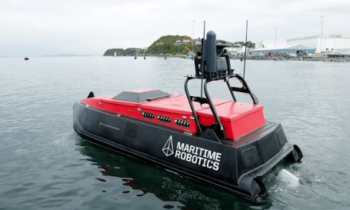
Despite officially opening late in 2016, it’s taken a while for business, which is to say testing, to pick up. But now, companies like Kongsberg Seatex, Marintek, Maritime Robotics, and Rolls-Royce Marine are all on-site to start putting their robotic and self-driving technologies to the open water.

Thus far, the fjord has seen tests for a variety of purposes, including navigation, collision avoidance systems, operational safety, and risk management projects. And as these tests continue, we may be drawing nearer and nearer to a human-less shipping industry, as large boats find their way across the ocean without the need for a crew. Perhaps this could even mean the automation of the fishing industry, or a whole host of other sea-based activities.

“As far as we know, there are no such test sites of this kind in the world so the Norwegian Coastal Authorities are taking the lead in a changing maritime world,” Kongsberg Seatex President Gard Ueland said last year upon the site’s opening, reports Engadget. “We will also see technology that has the potential to enable fully autonomous cargo vessels. Much of this will come from Trondheim, thanks to the unmatched maritime expertise here and our autonomous vehicles test bed.”

So get ready friends. Remote-controlled ships may soon no longer be toys that you sail in the park. Rather, they could be the transport that gets us from one country’s coast to another.

(digitaltrends)

March 13, 2017 0 comments
0 FacebookTwitterPinterestEmail
Spy War

Russian military checking military activity in Norway

by Nadarajah Sethurupan March 13, 2017
written by Nadarajah Sethurupan

Russian military inspectors will begin a visit to a designated district in Norway to check military activity in the area, a military official has said.
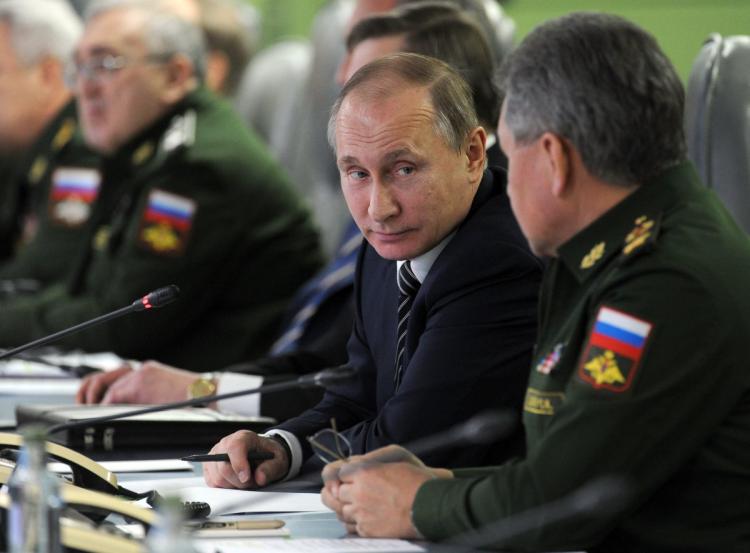
“Within the framework of the Vienna Document 2011 on Confidence and Security-Building Measures, , which allows signatories to conduct up to three inspections in Norway per year.

Russian group of inspectors will assess a designated district in Norway from March 13 to 17,” Sergei Ryzhkov, head of Russia’s National Nuclear Risk Reduction Center, was quoted by Media as saying on Monday.

According to Ryzhkov, apart from verifying military activity in the Norwegian district, the inspectors will also visit training grounds and attend briefings at the military bases of the Norwegian armed forces.

The Russians were on site also during the previous Cold Response drill in 2014. In April 2015 a group of Russian inspectors visited Brigade Nord in Troms county for an evaluation of local military units.

The inspections take place on the backdrop of the serious chill in east-west relations. In line with NATO policy, military bilateral cooperation between Norway and Russia has been suspended since March 2014, following Russia’s annexation of the Crimea and use of armed forces in Ukraine. In December 2014 the suspension was extended until the end of 2017.

(N.Sethu)

March 13, 2017 0 comments
0 FacebookTwitterPinterestEmail
Africa and Norway

Oslo Conference on Nigeria and the Lake Chad Region

by Nadarajah Sethurupan March 11, 2017
written by Nadarajah Sethurupan

USG/ERC Stephen O’Brien Statement to the Security Council on Missions to Yemen, South Sudan, Somalia and Kenya and an Update on the Oslo Conference on Nigeria and the Lake Chad Region.

Mr. President, Council members,

Thank you for inviting me to brief on my visits to countries facing famine or at risk of famine: Yemen, South Sudan and Somalia. I will also briefly mention the outcomes of the Oslo Conference on the Lake Chad Basin.

I need to mention that I also visited Northern Kenya where pastoralists are worst affected by the terrible drought. Over 2.7 million Kenyans are now food insecure, a number likely to reach 4 million by April. In collaboration with the Government, the UN will soon launch an appeal of $200 million to provide timely life-saving assistance and protection. For what follows however, I will focus on my other visits over the past 16 days.

Mr. President,

I turn first to Yemen. It’s already the largest humanitarian crisis in the world and the Yemeni people now face the spectre of famine. Today, two-thirds of the population – 18.8 million people – need assistance and more than 7 million are hungry and do not know where there next meal will come from. That is 3 million people more than in January. As fighting continues and escalates, displacement increases. With health facilities destroyed and damaged, diseases are sweeping through the country.

I spoke with people in Aden, Ibb, Sana’a and from Taizz. They told me horrific stories of displacement, escaping unspeakable violence and destruction from Mokha and Taizz city in Taizz governorate. I saw first-hand the effects of losing home and livelihood: malnourishment, hunger and squalid living conditions in destroyed schools, unfinished apartments and wet, concrete basements. In the past two months alone, more than 48,000 people fled fighting, mines and IEDs from Mokha town and the surrounding fields alone. I met countless children, malnourished and sick. My small team met a girl displaced to Ibb, still having shrapnel wounds in her legs while her brother was deeply traumatized. I was introduced to a 13-year-old girl who fled from Taizz city, left in charge of her seven siblings. I spoke with families who have become displaced to Aden as their homes were destroyed by airstrikes living in a destroyed school. All of them told me three things: they are hungry and sick – and they need peace so that they can return home.

I travelled to Aden on the first humanitarian UN flight, where I met the President, Prime Minister and Foreign Minister of the Republic of Yemen. I also met with the senior leadership of the Houthi and General People’s Congress authorities in Sana’a. I discussed the humanitarian situation, the need to prevent a famine and to better respect international humanitarian law and protect civilians. I demanded full, safe and unimpeded humanitarian access. All counterparts promised to facilitate sustained access and respect international humanitarian law. Yet all parties to the conflict are arbitrarily denying sustained humanitarian access and politicize aid. Already, the humanitarian suffering that we see in Yemen today is caused by the parties and proxies and if they don’t change their behaviour now, they must be held accountable for the inevitable famine, unnecessary deaths and associated amplification in suffering that will follow.

Despite the almost impossible and terrifying conditions, the UN and humanitarian partners are not deterred and are stepping up to meet the humanitarian needs across the country. In February alone, 4.9 million people received food assistance. We continue to negotiate access and make modest gains. For instance, despite assurances from all parties of safe passage to Taizz city, I was denied access and retreated to a short safe distance when I and my team came under gunfire. Yet, we managed to use this experience to clear the path for reaching people inside Taizz city with a first humanitarian truck delivery of eight tons of essential medicine on the Ibb to Taizz city road since August 2016. We will not leave a stone unturned to find alternative routes. We must prevail as so many lives depend on us, the full range of the humanitarian family.

For 2017, the humanitarian community requires US$ 2.1 billion to reach 12 million people with life-saving assistance and protection in Yemen. Only 6 per cent of that funding has been received thus far. An international ministerial-level pledging event is scheduled for 25 April, but the situation is so dire that I ask donors to give urgently now. All contributions and pledges since 1 January will be counted at the event.

I continue to reiterate the same message to all: it is only a political solution that will ultimately end human suffering and bring stability to the region. And at this stage, only a combined response with the private sector can stem a famine: commercial imports must be allowed to resume through all entry points in Yemen, including and especially Hudaydah port, which must be kept open and expanded. With access and funding, humanitarians will do more, but we are not the long-term solution to this growing crisis.

I am pleased as I said to confirm that a ministerial-level pledging event for the humanitarian response in Yemen for 2017 will take place in Geneva on 25 April. The Secretary-General will chair the event, co-hosted by the Foreign Ministers of Sweden and Switzerland, to advocate for more resources and access. For 2017, as mentioned, the Yemen humanitarian response plan asks for US $2.1 billion to assist 12 million people in need across all 22 governorates.

Mr. President,

Turning to South Sudan which I visited on 4 and 5 March. The situation is worse than it has ever been. The famine in South Sudan is man-made. Parties to the conflict are parties to the famine – as are those not intervening to make the violence stop.

More than 7.5 million people need assistance, up by 1.4 million from last year. About 3.4 million people are displaced, of which almost 200,000 have fled South Sudan since January alone. A localized famine was declared for Leer and Mayendit [counties] on 20 February, an area where violence and insecurity have compromised humanitarian access for years. More than one million children are estimated to be acutely malnourished across the country; including 270,000 children who face the imminent risk of death should they not be reached in time with assistance. Meanwhile, the cholera outbreak that began in June 2016 has spread to more locations.

I travelled to Ganyiel in Unity state where people have fled from the horrors of famine and conflict. I saw the impact humanitarians can have to alleviate suffering. I met an elderly woman with her malnourished grandson receiving treatment. I listened to women who fled fighting with their children through waist-high swamps to receive food and medicine. Some of these women have experienced the most appalling acts of sexual violence – which continues to be used as a weapon of war. Their harrowing stories are only a few among thousands who have suffered a similar fate across the country.

Humanitarians are delivering. Last year, partners reached more than 5.1 million people with assistance. However, active hostilities, access denials and bureaucratic impediments continue to curtail their efforts to reach people who desperately need help. Aid workers have been killed; humanitarian compounds and supplies have been attacked, looted, and occupied by armed actors. Recently, humanitarians had to leave one of the famine-affected counties because of fighting. Assurances by senior Government officials of unconditional access and no bureaucratic impediments now need to be turned into action on the ground.

Mr. President,

In Somalia, more than half the population – 6.2 million people – need humanitarian and protection assistance, including 2.9 million who are at risk of famine and require immediate assistance to save or sustain their lives, close to 1 million children under the age of 5 will be acutely malnourished this year. In the last two months alone, nearly 160,000 people have been displaced due to severe drought conditions, adding to the already 1.1 million people who live in appalling conditions around the country.

What I saw and heard during my visit to Somalia was distressing – women and children walk for weeks in search of food and water. They have lost their livestock, water sources have dried up and they have nothing left to survive on. With everything lost, women, boys, girls and men now move to urban centres.

With the Secretary-General – his first field mission since he took office – we visited Baidoa. We met with displaced people going through ordeals none of us can imagine. We visited the regional hospital where children and adults are desperately fighting to survive diarrhoea, cholera and malnutrition. Again, as if proof was needed, it was clear that between malnutrition and death there is disease.

Large parts of southern and central Somalia remain under the control or influence of Al-Shabaab and the security situation is volatile. Last year, some 165 violent incidents – an 18 per cent increase compared to 2015 – directly impacted humanitarian work and resulted in 14 deaths of aid workers. Al-Shabaab, Government Forces and other militia also continue to block major supply routes to towns in 29 of the 42 districts in southern and central Somalia. This has restricted access to markets, basic commodities and services, and is severely disrupting livelihoods. Blockades and double taxation bar farmers from transporting their grains. It is critical that AMISOM and Somali forces secure vital road access to enable both lifesaving aid and longer term recovery. A lot of hope is placed in the new Government.

The current indicators mirror the tragic picture of 2011, when Somalia last suffered a famine. It is important to add that when the famine was called at that time 260,000 had already died, this will be important in what I am about to tell you. However, humanitarian partners now have a larger footprint, mature cash programming, better data through assessments, better controls on resources and vetting of partners, as well as stronger partnership with government authorities. The Government recently declared the drought a national disaster and is taking steps to work with humanitarian partners to ensure a coordinated response. To be clear, we can avert a famine, we have a committed clear new President, a humanitarian and resilience track record, a detailed plan, we’re ready despite incredible risk and danger, we have local and international leadership, we have a lot of access, now we need the international community, at the scale of you the donor agencies and nations, to invest in Somalia, its life-saving – but we need those huge funds now.

For all three crises and North-Eastern Nigeria, an immediate injection of funds plus safe and unimpeded access are required to enable partners to avert a catastrophe; otherwise, many people will predictably die from hunger, livelihoods will be lost, and political gains that have been hard-won over the last few years will be reversed. To be precise we need $4.4 billion by July, and that’s a detailed cost, not a negotiating number.

Mr. President,

Before I visited all these countries, I was in Oslo, where the governments of Norway, Germany and Nigeria, in partnership with the United Nations, organized a humanitarian conference on Nigeria and the Lake Chad region. 10.7 million people need humanitarian assistance and protection, including 7.1 million people who are severely food insecure. Humanitarian partners scaled up their response to reach the most vulnerable groups threatened by violence, food insecurity and famine, particularly in North-Eastern Nigeria.

Fourteen donors pledged a total of US$672 million, of which $458 million is for humanitarian action in 2017. This is very good news, and I commend those who made such generous pledges. More is needed however to receive the $1.5 billion required to provide the assistance needed across the Lake Chad region.

Mr. President,

We stand at a critical point in history. Already at the beginning of the year we are facing the largest humanitarian crisis since the creation of the United Nations. Now, more than 20 million people across four countries face starvation and famine. Without collective and coordinated global efforts, people will simply starve to death. Many more will suffer and die from disease. Children stunted and out of school. Livelihoods, futures and hope will be lost. Communities’ resilience rapidly wilting away. Development gains reversed. Many will be displaced and will continue to move in search for survival, creating ever more instability across entire regions. The warning call and appeal for action by the Secretary-General can thus not be understated. It was right to take the risk and sound the alarm early, not wait for the pictures of emaciated dying children or the world’s TV screens to mobilise a reaction and the funds.

The UN and humanitarian partners are responding. We have strategic, coordinated and prioritised plans in every country. We have the right leadership and heroic, dedicated teams on the ground. We are working hand-in-hand with development partners to marry the immediate life-saving with longer term sustainable development. We are ready to scale up. This is frankly not the time to ask for more detail or use that postponing phrase, what would you prioritize? Every life on the edge of famine and death is equally worth saving.

Now we need the international community and this Council to act:

First and foremost, act quickly to tackle the precipitating factors of famine. Preserving and restoring normal access to food and ensuring all parties’ compliance with international humanitarian law are key.

Second, with sufficient and timely financial support, humanitarians can still help to prevent the worst-case scenario. To do this, humanitarians require safe, full and unimpeded access to people in need. Parties to the conflict must respect this fundamental tenet of IHL and those with influence over the parties must exert that influence now.

Third, stop the fighting. To continue on the path of war and military conquest is – I think we all know – to guarantee failure, humiliation and moral turpitude, and will bear the responsibility for the millions who face hunger and deprivation on an incalculable scale because of it.

Mr. President,

Allow me to very briefly sum up. The situation for people in each country is dire and without a major international response, the situation will get worse. All four countries have one thing in common: conflict. This means we – you – have the possibility to prevent – and end – further misery and suffering. The UN and its partners are ready to scale up. But we need the access and the funds to do more. It is all preventable. It is possible to avert this crisis, to avert these famines, to avert these looming human catastrophes.

Thank you. Thank you, Mr. President.

(N.Sethu, UN Office for the Coordination of Humanitarian Affairs)

March 11, 2017 0 comments
0 FacebookTwitterPinterestEmail
Taiwan and Norway

Oslo Philharmonic back to Hong Kong and Taipei in March 2017

by Geir Yeh Fotland March 11, 2017
written by Geir Yeh Fotland


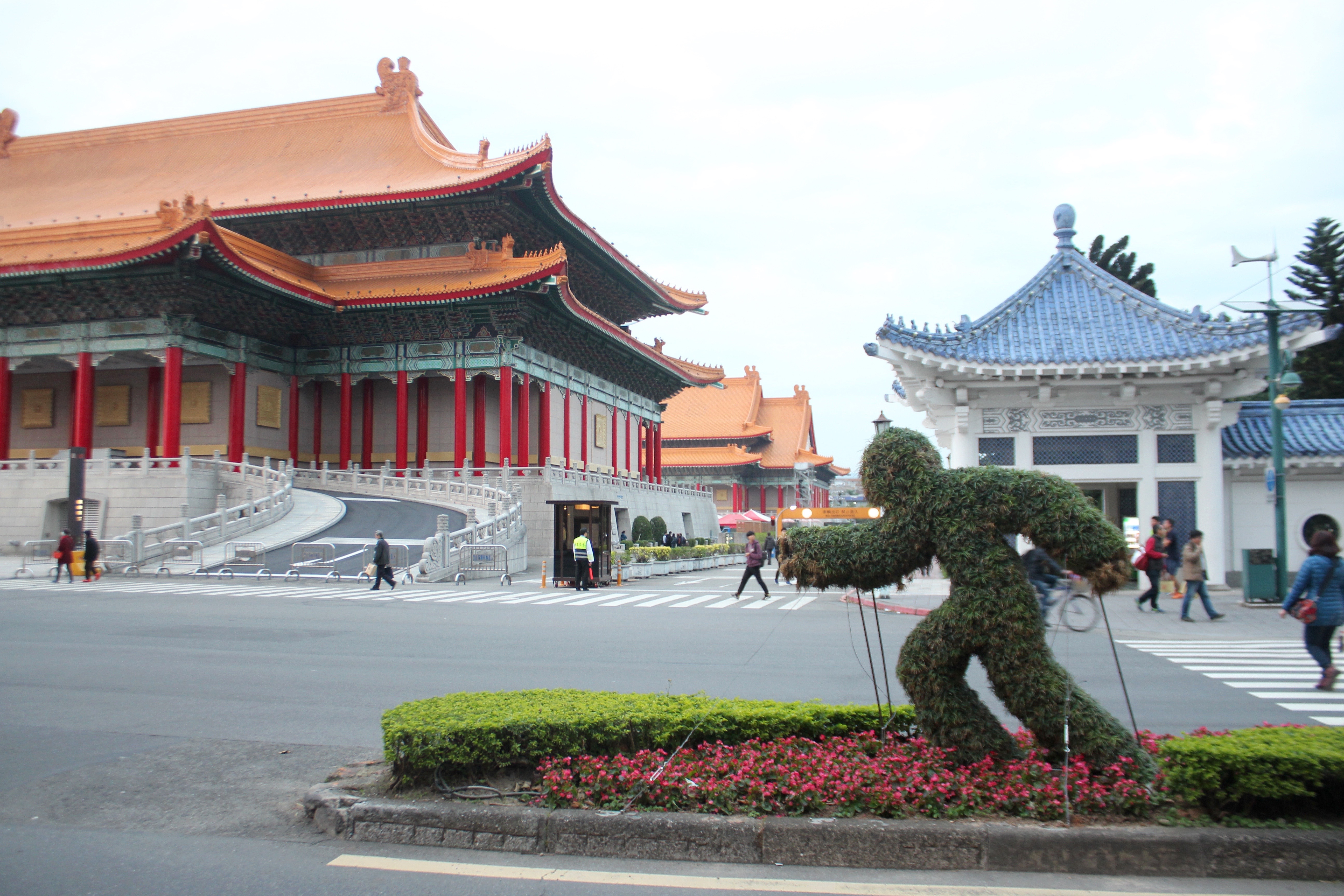
The National Theater and Concert Hall (NTCH) in Taipei opened in 1987 and celebrates 30 years anniversary this year.

This month, Oslo Philharmonic Orchestra, a top nordic orchestra with about 100 members, is having concerts in Cultural Centre Concert Hall in Kong Kong on 14 and 15. and in the National Concert Hall in Taipei on 17 and 18. The Oslo Philharmonic’s concerts are part of the program of two big music festivals: Hong Kong Arts Festival and Taiwan International Festival of Arts.

The composer Edvard Grieg laid the foundation for the Oslo Philharmonic Orchestra in 1879. In 2013 Russian Vasily Petrenko was appointed its music director. For this trip to Taiwan, the orchestra will present a selection full of Scandinavian and Russian flavours. Truls Mørk, one of the world’s most popular cellists, will also present Russian Shostakovich and British Elgar’s Cello Concertos.


Vasily Petrenko conducts all the 4 concerts that consists of two alternating programs:

1. (14.3. and 17.3.) 120 minutes
Grieg: Peer Gynt Suite No.. 1, op. 46.
Dmitri Shostakovich: Cello Concerto No.. 1 in E-flat major, op.107 with Truls Mørk on cello.
Sergei Rachmaninoff: Symphony No.. 2 in E Minor op. 27d

2. (3.15. And 3.18.) 110 minutes
Tveitt: Excerpts of 100 Folk Tunes from Hardanger,
suite No. 4 Friarfotter (Courting), Haring-beer and
suite No. 1: Langeleiklåt, Hastverksbrudlaup (Rush Wedding).
Edward Elgar: Cello Concerto, E minor with Truls Mørk on cello.
Jean Sibelius: Symphony No.. 2 in D major, op. 43

Duration of the concerts is approx 120 minutes for the first concert and 110 minutes for the second one, with a 20-minute intermission.

This is their 3rd Asia tour. Combined with Japan the orchestra had three concerts in Hong Kong in February 1993. And in December 1996, they visited Taipei, Seoul, Beijing, Tokyo and Osaka. Oslo Philharmonic had prepared for going to Singapore and Kuala Lumpur in June 2006, but had to cancel due to strike in Norwegian Theatres and Orchestras Association.

https://www.youtube.com/watch?v=_G0A2v2xtf4

Mr. Geir Yeh Fotland – Taiwan National Correspondent NORWAY NEWS.com
Email: – geiryeh@gmail.com, or news@norwaynews.com

March 11, 2017 0 comments
0 FacebookTwitterPinterestEmail
Science

DNB says its future is to become a “technology company with a banking license”

by Nadarajah Sethurupan March 10, 2017
written by Nadarajah Sethurupan

Having cut half of its branch network in 2016 to focus on digital development, Norway’s DNB is rolling out a range of incubation and startup initiatives to accelerate its vision of becoming “a technology company with a banking license”. In the first half of the year, DNB reduced the number of branch offices in Norway from 116 to 57 to reflect changing customer behaviour.

“While the use of digital services has exploded in recent years, there has been a prolonged decline in the number of visitors to our branch offices,” says Rune Bjerke, group CEO. “Ninety per cent of Norwegian banking customers no longer use branch offices for their daily banking needs. Nine out of ten Norwegians cover their banking needs online, and an increasing number now use their mobile phone or tablet.”

He says the number of visits to its mobile bank has increased from 700,000 to 17 million per month during the last three years, adding “even though we have closed half of our branch offices, we have never talked more with our customers than in 2016”.

Nor are the changes confined to the consumer banking market, with similar traits emerging in small business banking. The bank yesterday announced a programme to downsize and restructure its corporate banking centres with the loss of 100 jobs to better serve the needs of the nine out of ten companies who now establish their customer relationships digitally.

Reflecting the switch to digital, the bank in 2016 undertook a number of initiatives to further spur innovation across the group. Am Nkr100,000 Digital Challenge to students at the Norwegian University of Science and Technology, generated three ideas to redefine the future of banking – including the creation of a ‘Fintech Platform’ to establish an ecosystem for cooperation between DNB and startups, improvements to mobile banking services, and a startup accelerator for growth companies called NXT.

“The Fintech Platform is now a DNB project which we are in the process of developing,” says Halvor Lande, head of digitalisation and business development in DNB. “We already regard DNB as a technology company with a banking licence. In order to conquer the competition, our ambition is to become one of Europe’s leading technology companies.”

The bank has also launched the NXT accelerator in cooperation with StartupLab, selecting five companies to begin the three month programme this spring. Participants will receive access to up to Nkr1.3 million and be followed up daily by Norwegian entrepreneurs and DNB’s business and IT experts.

Says Lande: “This is the first in a long series of cooperation projects we will have with large and medium-sized technology companies, both nationally and internationally. Even though we are more than 10 000 employees in DNB, we are still too small to be able to stay one step ahead in all the areas necessary to ensure that we maintain the required pace of innovation.”

March 10, 2017 0 comments
0 FacebookTwitterPinterestEmail
Media Freedom

Russia Bans – Norwegian Journalist

by Nadarajah Sethurupan March 10, 2017
written by Nadarajah Sethurupan

Russian officials have banned a Norwegian journalist from entering the country for the next five years. The Barents Observer, a website based in Norway, says the Federal Security Service told editor Thomas Nielsen that he’s been declared “undesirable” in Russia, despite a valid multi-entry journalist visa.

“I was told it was necessary to deny me access to Russia for the purpose of state security. The officers could not elaborate further and it was obvious the decision was made somewhere else,” said Nilsen.

The journalist was traveling with a delegation from the Danish Parliament’s Committee of Foreign Affairs, a trip that is reportedly meant to mark “a new and more conciliatory Danish approach towards Russia,” according to Nielsen’s website.

The Barents Observer, which is published in Russian and English, says this isn’t the first time Russian officials have tried to “close it down.” Two years ago, Russia’s Federal Security Service allegedly “exerted pressure” against the Norwegian government to crack down on the website, its editors say.

March 10, 2017 0 comments
0 FacebookTwitterPinterestEmail
Science

Norway has world’s 2nd fastest broadband internet

by Nadarajah Sethurupan March 10, 2017
written by Nadarajah Sethurupan

Sweden has the world’s third fasted broadband internet speed, while South Korea still leads the race with an average connection speed at 26.1 Mbps, a new study by Akamai Technologies shows. Norway was ranked second.
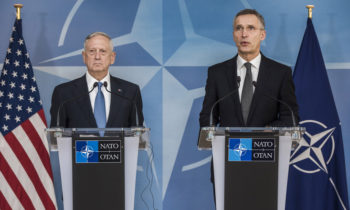
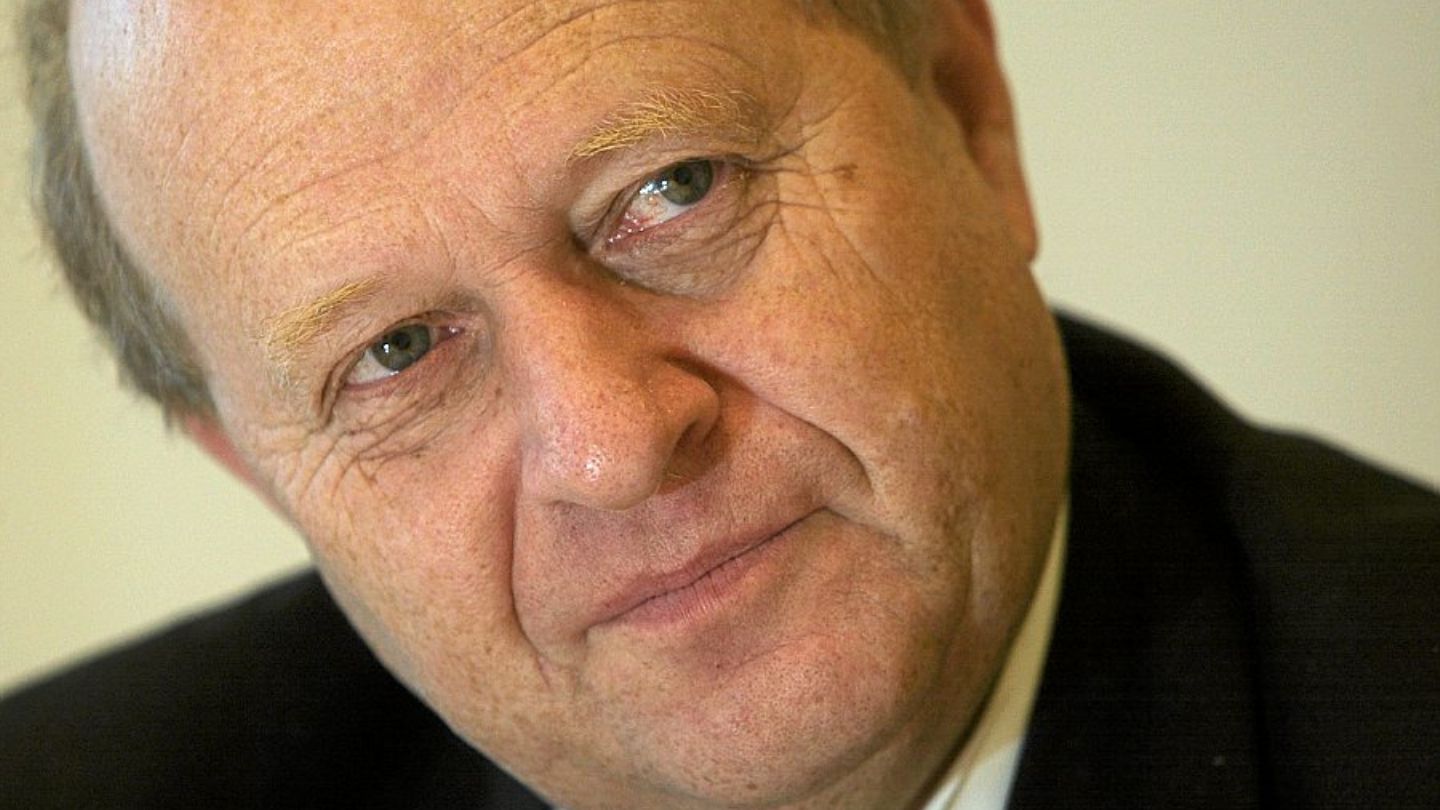
“Internet connection speeds continued to show positive long-term trends around the world, with particularly strong year-over-year increases across all broadband adoption metrics,” said David Belson, editor of the State of the Internet Report.

“When Akamai first published the report in 2008, we defined ‘high broadband’ as 5 Mbps and above, which nine years ago had an adoption rate of 16% globally. We’re now seeing a 15 Mbps adoption rate of 25% worldwide.

Norway held on to the top spot for 15 Mbps broadband adoption among surveyed European countries in the fourth quarter, tying second-place Switzerland with an adoption rate of 54%.

Seven other countries – Sweden, Denmark, the Netherlands, Finland, Romania, Latvia and Belgium – had 40% or more of unique IPv4 addresses connecting to Akamai at average speeds above 15 Mbps, the report said.

Sweden will be a completely online country in 2025, according to the government’s new three-part broadband strategy. Prime Minister Stefan Löfven has also promised that over half a million more Swedes will gain access to fast broadband Internet over the next four years.

March 10, 2017 0 comments
0 FacebookTwitterPinterestEmail
Politics

Norwegian FM urges Kosovo to refrain from forming armed force

by Nadarajah Sethurupan March 10, 2017
written by Nadarajah Sethurupan

Left to right: James Mattis (US Secretary of Defense) and NATO Secretary General Jens Stoltenberg

Norway’s Foreign Minister Borge Brende on Thursday reacted to Pristina’s plans to turn the Kosovo Security Force into an army.

“I urge Kosovo authorities to refrain from transformation of the Kosovo Security Force (KSF) into an armed force without a constitutional change and an inclusive political process,” Brende said in a statement.

“Norway will remain a partner in Kosovo´s efforts for reforms and Euro-Atlantic integration. Regional stability and cooperation is a prerequisite for deeper integration. Normalization of the relations with Serbia will have our full support,” he added.

Previously, NATO and the US stated their opposition to the plans, something acknowledged by Kosovo President Hashim Thaci, who launched the initiative earlier in the week.

Belgrade strongly opposes the possibility of Pristina creating an army, and has interpreted the lack of support for the idea from the West as its diplomatic victory.

(b92)

March 10, 2017 0 comments
0 FacebookTwitterPinterestEmail
Norwegian American

Norwegian politico on Trump, Putin, NATO at UND

by Nadarajah Sethurupan March 10, 2017
written by Nadarajah Sethurupan

Odd Einar Dorum, a Norwegian politician with a resume stretching to the late 1970s, spoke at UND’s Center for Innovation for the better part of an hour Thursday, remarking on Norwegian defense, NATO and President Donald Trump.
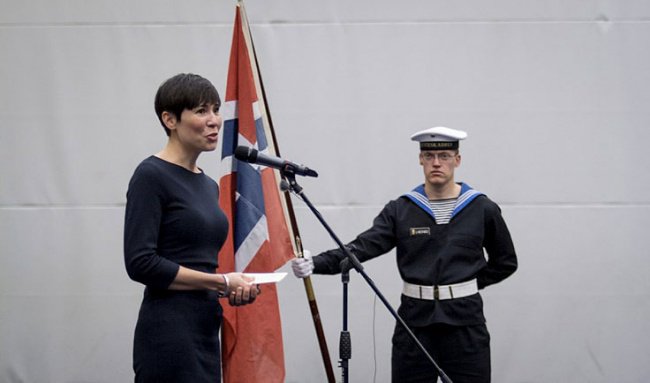
He even cracked wise for a short moment, joking about the bond between the U.S. and Norway. Part of the Norwegian-American experience is to think about the past, and he’s got nothing against going to Minot and eating lutefisk, he said, drawing laughs from a group of several dozen attendees.

“But I would also like people to know contemporary Norway,” he said.
Dorum is a former member of Norway’s Parliament, as well as a former justice minister and transportation and communications minister. The lion’s share of his remarks Thursday were about Norway’s relationship with NATO and Russia. He characterized Russia as a quiet, consistent threat with a military that’s been revitalized by President Vladimir Putin. He traced Norway’s relationship with Russia back through the Cold War and all the way to Norway’s membership in NATO in the late 1940s—an alliance he described as critical and deeply dependent on the U.S. for credibility.

“During the Cold War, (Norway) was a peaceful place,” he said. “But if there had not been peace, it would have been close to destruction.”

NATO has been in the spotlight since Trump’s election to the White House. The president previously called NATO “obsolete,” though he since declared his support for the alliance. The president has continued to demand that member nations contribute more to the organization.

“We strongly support NATO,” Trump said last month. “We only ask that all of the NATO members make their full and proper financial contributions to the NATO alliance, which many of them have not been doing. Many of them have not been even close. And they have to do that.”

Concerns about Trump’s attitude toward NATO have been amplified by recent unsubstantiated reports of connections between his campaign and Russia and suggestions that Russia interfered in the presidential election.

Dorum offered a range of comments on the Trump administration on Thursday, both during his remarks and to the Herald in an interview after his presentation. He praised the credibility of key Trump appointments such as Secretary of Defense James Mattis and National Security Adviser H.R. McMaster.

He also said he thinks it’s reasonable that NATO countries pay their fair share, and he made apparent reference to Trump’s suggestion the U.S. “get along” with Russia.

“If it is possible, by some means, to lessen some tensions, that is good,” Dorum said.

He said he’s standing firm though that the NATO treaty agreement—that nations stand ready to support and defend one another—is binding. Norway has to be able to count on the U.S. for support, he said.

“If you want some dialogue in addition to deterrence, that’s fine with me,” Dorum said. “But if you want to put dialogue instead of deterrence, that’s dangerous. I’m a strong supporter of D and D—deterrence and dialogue.”

(grand forks herald)

March 10, 2017 0 comments
0 FacebookTwitterPinterestEmail
NATO and Norway

Norway: A Model for NATO

by Nadarajah Sethurupan March 10, 2017
written by Nadarajah Sethurupan

Norway faces the challenge of crafting a national defense strategy for the 21st strategy in the face of Vlad Putin’s more aggressive Russia.
Because Putin thinks through his use of military power and designs limited objectives to achieve what he considers in the best interest of Russia, Norway faces a double challenge: how to defend itself against the Russian threat and how to work with allies who are not very good at designing limited objectives for the use of military power.

Complicating all this is the fact that Norway’s allies are all in transition: Brexit Britain, Trump America, and an increasingly uncertain European Union. France and with Germany both face crucial elections and significant uncertainty about their economic, political and security futures.

As Norwegian Minister of Defense, Ine Eriksen Søreide put it recently: “It seems we may have arrived at a time in history where the liberal democracy, as we know it, is facing one of its most serious challenges to date. The very framework of a stable Europe and transatlantic relationship is under pressure.”

Within this context, Norway is focused on ways to enhance national security and ways to work with allies. They are doing so with military forces is significant transition as well – the purchase of the F-35 is seen as a key lever for change, much more than any other single asset, but it is part of a process not an additive platform.

“We are clearly modernizing our platforms but we need to transform our force, our culture and our processes as well,” Maj. Gen. Skinnarland, the new Chief of Staff of the Royal Norwegian Air Force told me in a recent interview. “The strategic decisions made in the long-term investment will make us, even though small, one of the most modern air forces in the world in some years to come. It is not just about adding new platforms; it is about shaping joint capabilities for the defense of Norway in a high intensity operational setting.”

The Norwegians I spoke with on my recent trip underscored the importance of the NATO Treaty’s Article III as a key for the next phase of the alliance’s development, shaping effective ways to defend the nation in a way that allows for greater capability to work with allies. In all the debate about Article V, the importance of Article III as a key to being able to uphold the overall Treaty is often forgotten.
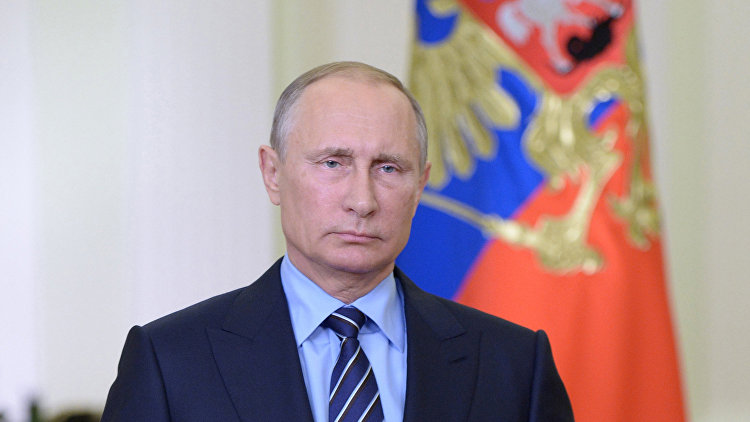
Article III reads: “In order more effectively to achieve the objectives of this Treaty, the Parties, separately and jointly, by means of continuous and effective self-help and mutual aid, will maintain and develop their individual and collective capacity to resist armed attack.”

In my interview with the Norwegian Deputy Minister of Defense in his Oslo office, Mr. Øystein BØ, emphasized the article’s importance: “Article III is the obligation to have a strong national defense and to be able to be a net contributor to security. There is no free ride in NATO, we’ve all got to do our part to be able to defend each other.”

In my interview with Lt. Gen. Jakobsen and the Commander of the Norwegian Joint Headquarter, he characterized the overall approach as follows: “We are creating the new national defense capabilities in order to create a threshold so that a violation of Norwegian territory will not be cost effective. And clearly we cannot do this alone, and hence our NATO membership and engagement with allies is crucial. And with the nuclear dimension, clearly the American relationship along with Britain and France is crucial as well.”

Several speakers highlighted the central significance of distributed strike or shaping a kill web to get maximum effect from the force. The American’s recent Red Flag 17-1 exercise highlighted this capability in terms of working relationships between Typhoons and F-35s, but this was seen by the Chiefs of the Norwegian Navy and Army as requiring a major cultural and technological shift.

There was a clear sense that the Norwegian and the allies are at the beginning of new phase, not simply shaping an upgraded legacy force. New templates, new ways of thinking are crucial.

A key element is creating, deploying and maximizing new kinetic effects. The Kongsberg role in building missiles for Norway and for key allies is at the heart of the national defense industrial consideration for Norway. Weapons being provided for the F-35 or to the new German submarines are part of this overall effort.

Distributed strike was highlighted throughout in many presentations and the need was seen driven by how the Russians are shaping a bastion force from which they are projecting power. Clearly, this is a task greater than Norway can handle on its own, which means that a new type of defense grid needs to be shaped in the North Atlantic. This is about operational synergy, which won’t come from simply buying an F-35 or a P-8. They are key capabilities but the synergy comes from working with the other F-35 partners in the region (UK, Denmark, the US and the Netherlands), as well as the standing up of a P-8 force to operate in the region with the UK, operating from RAF Lossiemouth in Scotland, the US from Iceland and the Norwegians operating from their own territory.

Rear Adm. Lars Saunes, Chief of the Norwegian Navy, pointed to the F-35s, with their ability to have significant reach through the MADL linkages among the fleet and the ability to process data in real time, as well as the P-8 maritime domain awareness strike platform, which can be cross-linked among Norwegian, American and British platforms.

The role of the UK is seen as of growing significance in the Northern Tier defense efforts, with the coming of the P-8, the F-35 and the Queen Elizabeth carriers. As Keith Eikenes, director of Norway’s Department for Security Policy and Operations, put it in an interview in Oslo prior to the airpower conference:

“The UK bilateral relationship is very significant for Norway. We have a small number of allies, the US and the UK being especially important ones, shaping new capabilities for North Atlantic defense. We are looking at ways to enhance that working relationship. Even when the North Atlantic defense part took a dip after the end of the Cold War, the working relationship with close allies remained.”

National, allied and partner exercises are crucial means to shape these new ways ahead, and there was a clear sense that finding ways to more effectively train for high intensity operations is important. Also, working with Sweden and Finland is crucial, as is finding ways for Norway to shape a defense concept, one which can reach back to the UK and forward to Finland.

Clearly, NATO is in times of fundamental change and the Norwegians are among the core allies who take the challenge seriously.

“Now, we do not consider Russia a military threat against Norway today. I want to be clear on that. However, Norway is NATO in the North, and we share a border with an increasingly assertive neighbor with superpower aspirations, a neighbor who has modernized its Armed Forces, significantly increased its military presence in the High North, reintroduced the old East versus West schismatic thinking, engaged in subversive actions against Western democracies, violated international law and undermined European stability,” the minister said.

That approach has significance beyond Norway and is relevant to the NATO alliance’s future.

(breaking defense)

March 10, 2017 0 comments
0 FacebookTwitterPinterestEmail
Russia and Norway

Russian in Norway to «Dagbladet»

by Nadarajah Sethurupan March 9, 2017
written by Nadarajah Sethurupan

Commentary from the Embassy of the Russian Federation in Norway to «Dagbladet» in connection with the joint Norwegian-US development of parameters for the Norwegian contribution to the missile defense system of NАТО.


Deployment of strategic missile defense capabilities within the global missile defense system might potentially jeopardize the efficiency of Russian strategic nuclear forces as a means of deterrence.

A further improvement of the missile defense system, an increase in their numbers and their further approach towards the borders of Russia (and, as a result, to the places where the Russian strategic missiles are located) will only make the situation worse.

This will mean a serious undermining of the strategic stability and hence also that the character of the whole system of international relations will be less stable and more unpredictable.

USA and the NATO-countries understand this very well.

In the preamble to the Russian-American «Strategic Arms Reduction Treaty» of 2010 it says that there should be «an interrelationship between strategic offensive arms and strategic defensive arms», and also that this «interrelationship will become more important as strategic nuclear arms are being reduced». When the Treaty was signed, the Russian side declared that the new treaty «could only function and be viable if there would not be any qualitative and quantitative expansion of capabilities in the American missile defense system», meaning that a change in the situation with the missile defense system could be one of the possible reasons for Russia to withdraw from the Treaty.

The fallaciousness of the path followed by the US and NATO is that it goes against one of the basic principles of international relations in the OSCE-area, a principle stating that the countries should not try to strengthen their own security at the expense of the security of others.

The US has suggested removing the Russians concerns through «setting up the cooperation in the field of missile defense systems» and an «explanation» of the American plans for a missile defense system.

But what actually did happen? Firstly, in 2002 the US unilaterally withdrew from the agreement on missile defense of 1972. Secondly, the original task of preventing limited missile attacks by «rogue states» or terrorists was consigned to oblivion. Instead the task is to secure «an effective, reliable and layered» missile defense system to meet the growing missile threats, or in other words, we are already talking about a global missile defense system. And after the situation with the Iranian nuclear programme has been solved, the main argument used by Washington for deployment of elements of the strategic missile defense system in Europe, has vanished. We suspect that even if it would be possible to reach an agreement on the nuclear problem on the Korean peninsula, one would find new pseudo-arguments for a continuation of the deployment of a global missile defense system.

Russia has several times come up with initiatives in this area, initiatives having as their goal to change this question from an «irritable» one to one of cooperation. All of these initiatives were turned down by the US and its NATO allies.
Russia has aimed at not allowing a unilateral deployment of an unlimited global missile defense system, including the creation of a positioning area in Europe, has suggested organizing information exchange, joint supervision of missile tests, joint missile exercises and studies in the field of missile defense systems. We have suggested to the US not to deploy elements of this system in space, to do a collective assessment of the missile threat and to work out collective response measures. We have suggested to the NATO-partners to jointly work out a concept and an architecture for the European missile defense system, a system that should be managed jointly and not undermine the strategic stability but be oriented towards stopping threats coming from outside of the Euro-Atlantic zone. Russia was also ready to give the US information from the radar stations in Gabala (Azerbaijan) and Armavir about the launching of missiles from the Middle East.

The US also came up with some initiatives (like the loading of interceptor missiles in the shafts only if a missile threat «materialized», the permanent presence of Russian observers on the sites, the use of technical means of control, the limitation of the sectors of emissions from and strength of the radar stations etc.), but later they themselves abandoned these initiatives. The US and its allies were not ready to make a real move in this direction and to consider the Russian approach. Emphasizing «the responsibility of NATO to defend its own territory» they chose the NATO approach in order to decide upon the parameters of the future European missile system without the participation of Russia. And the US/NATO refused to give us legally binding assurance that the missile defense system of the US/NATO would not be directed against Russia.

A group of specialists from the scientific institute of the MOD of Norway, together with the American agency for the global missile defense system, are working on the parameters for a possible Norwegian contribution to the missile defense system of NATO. Оslo takes part in the US-lead Maritime Theater Missile Defense Forum and exercises held within the framework of this forum. Five Norwegian frigates could be used by the missile defense system. They are fitted with the missile weapon system «Aegis». It has been announced that a new radar within the framework of the modernization of the «Globus-2» radar station in Vardø will be built before 2020. This radar might, according to experts, perform tasks for the missile defense system.

We talk much about not allowing the militarization of our common Arctic region. In a situation when elements of the missile defense system of NATO are deployed, Norway will deliberately take the problem of the missile defense system to this peaceful and non-confrontational region and play the role of NATO’s combat outpost directed against Russia (it is highly unlikely that the Norwegian military will try to intercept missiles from the Middle East or North Korea over its own territory and we are only talking about Russia). The Norwegian position has developed noticeably. To quote from the political platform of the Norwegian government from 2005, at the time headed by prime minister Jens Stoltenberg who is today Secretary General of NATO: «…Norway will work to abandon the existing plans for an missile defense system» (Plattform for regjeringssamarbeid, «…Norge skal arbeide for å skrinlegge dagens planer for rakettforsvar»).

The Norwegian government should be aware holding such positions, that have not been provoked, are unilateral and might lead to unpredictable actions, could be damaging and assess the possible consequences of them to their fullest extent. NATO consists of many countries but not all of them are going to deploy elements of the missile defense system.

What should Russia do in such a situation? Believe in the empty words of representatives of NATO when they say that this system is not aimed at Russia? Since US/NATO/Norway does not want to solve this question through diplomatic channels or through talks, then the only answer left is the military-technical one. Russia has to upgrade its strategic nuclear forces so that they will be capable of surmounting any missile defense system. Russia will do its utmost so that that will not lead to an arms race and keep the strategic stability, but the possibility of undermining of the stability will still be higher.

Russia is not a threat to Norway but will work out its military plans on the basis of the real risks. It is upsetting that no consultations are being held about this serious question. Even if we do not find a solution at once, dialogue and negotiations are always good and useful.

The actions of the USA and NATO, Norway included, might lead to problems not only in the North, but to undermining of the strategic stability with catastrophic results for the security both of Europe and of the whole world.

(Embassy FB)

March 9, 2017 0 comments
0 FacebookTwitterPinterestEmail
Environment

Norway’s pace-setting on EVs

by Nadarajah Sethurupan March 9, 2017
written by Nadarajah Sethurupan

For the first time more electric and hybrid vehicles are being sold in Norway than petrol and diesel vehicles. The new milestone in the rapid growth of EVs is largely the result of incentives offered by the Norwegian government in a bid to phase out sales of new oil-powered cars by 2025.
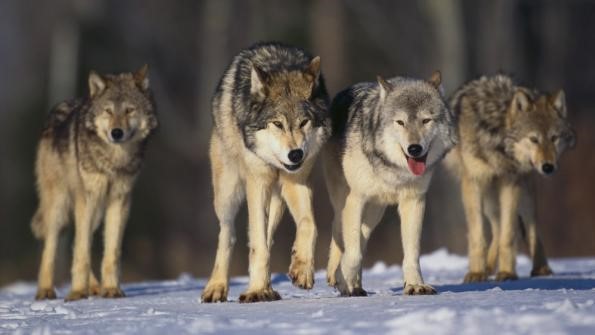
The latest figures show that new battery-powered EVs made up 17.6% of total sales in January. With hybrid cars making up 33.8%, that makes a combined total of 51.4%. Although the totals dropped in February, overall sales for the first two months of the year were split almost exactly 50:50.

The measures to encourage people in Norway to buy EV and hybrid cars include tax incentives, privileged parking in municipal car parks, exemptions from charges on toll-roads and ferries, and access to bus lanes. The country has also invested heavily in charging infrastructure, which is likely to continue as the government has set a target of one charging station for every 10 vehicles by 2020.

As a result, more than 100,000 EVs had been sold by December in a country of just 5.2 million inhabitants. Taking EVs and hybrids together, Norway has around 500,000, second only to China and making it by far the global leader in terms of low or zero-emission vehicles per citizen. Some 98% of Norway’s electricity comes from hydropower.

The country has set itself a target for new cars of 85 grammes of CO2 per kilometer by 2020; it is currently at 88g, down from 133g when the decision was taken in 2012.

Commenting on the January sales figures, Norway’s climate and environment minister, Vidar Helgesen, said: ‘This is a milestone on Norway’s road to an electric car fleet, and it serves to showcase that green transport policies work.’

As well as tax breaks, the growth in EVs and hybrids is also the result of advances in EV technology. An official from the European Environment Agency told the Guardian: ‘People aren’t just using EVs as hobby cars for city shopping any more, they’re switching to full e-mobility because it’s possible now.’

The growth in EV sales prompted Norway to consider banning all new petrol and diesel cars by 2025. The government has confirmed that the elimination of new fossil-fuel cars by 2025 is a target though it won’t ban the vehicles outright. It wants to reach the goal through ‘a strengthened green tax system based on the polluter pays principle’, it said in a statement, suggesting that, while some of the incentives will not be able to last forever, a move away from tax breaks and special treatment is not imminent.

If the target is to be reached, it will see a massive surge in EVs. At the end of 2015, Norway had just 1,400 EVs on its roads, whereas by 2020 it expects to have 250,000 – and this in the country that is Europe’s biggest oil producer.

Meanwhile, last week Beijing announced it was joining two other Chinese cities, Shenzhen and Taiyuan, in converting its entire taxi fleet to EVs. China’s motivation for encouraging electric propulsion is based on improving air quality and reducing dependence on imported oil, and it sends a signal to the world’s carmakers that they have to go electric if they want any presence in the Chinese market. China remains the world’s largest electric vehicle market, with twice as many EVs than Europe and nearly four times the number in America.

(transport environment)

March 9, 2017 0 comments
0 FacebookTwitterPinterestEmail
Farming

‘Recreational and cultural’ killings will be allowed if the law passes – Norway

by Nadarajah Sethurupan March 9, 2017
written by Nadarajah Sethurupan

Norway is moving to allow recreational hunting of its “critically endangered” population of wolves, prompting furious condemnation from animal rights campaigners.
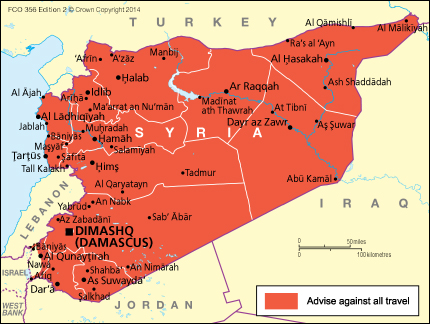
Around 65 of the animals live in the Scandanavian country and another 25 cross the border from Sweden.

Last year the government announced up to 47 could be killed by hunters, but that quota was lowered to just 15 two days before hunting season opened.

Now the right-wing minority government is set to approve a new amendment in the favour of hunters, allowing “recreational and cultural” killings of the creatures, according to Media.

Until now, only predators considered a “potential nuisance” to farmers could be exterminated.

There are nine packs which spend all or part of their time in Norway, but the government’s targets call for just four to six, prompting criticism from animal rights groups like the Worldwide Wildlife Fund (WWF), the Conservation Fund and the Norwegian Zoological Fund.

“Changing the law to shoot more endangered animals is outrageous, especially in the so-called eco nation Norway,” said Nina Jensen, the head of the WWF in Norway.

Wolves are listed as “critically endangered” on the 2015 Norwegian list of endangered animals.

Farmers, hunters and forest owners have always held the right to kill animals they consider a nuisance, putting them on a collision course with green activists and large swathes of the population.

The new measure is currently up for consideration in the Norwegian parliament, but is unlikely to meet with much opposition, according to The Local.

The wolf currently accounts for eight per cent of the 20,000 sheep Norway’s farmers lose to predators each year.

Until the mid-19th century, large populations of brown bears, wolverines, wolves and lynxes prowled the Norweigian tundra. By the 1960s, though, wolves had been hunted to effective extinction, and bears almost followed.

But they were protected by law in 1971 and 1973 respectively, and numbers have been crawling back up thanks to Finnish-Russian wolves roaming into Norwegian territory.

There are 430 wolves across the whole of Scandinavia, up from fewer than 10 in the 1990s. They remain under threat from loss of habitat and poachers.Illegal hunting is the largest cause of wolf mortality in the region.

(independent)

March 9, 2017 0 comments
0 FacebookTwitterPinterestEmail
Peace Talks

EU, Norway, UK and the UN to co-chair the Brussels Conference on Syria

by Nadarajah Sethurupan March 9, 2017
written by Nadarajah Sethurupan

Bringing together ministerial representatives from 70 delegations, including from the EU and the region but also the wider international community, the United Nations, major donors and civil society, humanitarian and development organisations, the conference will address the situation in Syria and the impact of the crisis in the region. The conference will assess where the international community stands collectively in fulfilling commitments made at the London Conference in February 2016 and agree on additional efforts needed to meet the needs of those affected by the crisis. It will reconfirm existing pledges and identify additional support to Syrians in need inside Syria and in neighbouring countries, as well as to the respective host communities, in response to the UN coordinated appeals.


Discussions will also focus on how the international community can support a lasting political resolution to the Syrian conflict through an inclusive and Syrian-led political transition process based on the relevant Security Council resolutions, and particularly the framework of the UNSC Resolution 2254, and the Geneva communiqué. The conference will reconfirm the international community’s commitment to continuing to deliver assistance to Syrians in need, as well as their host communities, and assess the conditions under which post-agreement assistance could be provided once a credible political transition is underway.

On 4 April, thematic sessions will be organised by the EU with UN agencies and other international organisations, NGOs and civil society, focusing on various aspects of international support provided in response to the crisis in Syria and the region.

___________

The Brussels Conference on Supporting the future of Syria and the region builds on the London Conference on Supporting Syria and the region of 4 February 2016. One year ago, the international community convened in London under the leadership of the United Kingdom, Germany, Kuwait, Norway and the United Nations, reaffirming its solidarity with millions of vulnerable people living in Syria and Syrian refugees and affected host communities in the region, and building on the commitments made at the three previous pledging conferences in Kuwait from 2013-15.

At the London Conference, the donor community pledged significant financial support for humanitarian assistance and protection in Syria, as well as civilian stabilisation measures to strengthen resilience in host communities. It also reiterated that there can only be a political solution to the crisis, within the existing agreed UN framework and based on the Geneva Communiqué and UN Security Council Resolution 2254.

The London Conference concluded with commitments from both the international community and Syria’s neighbours to meet the immediate and longer-term needs of those affected by the crisis, including further support for education and livelihood opportunities for Syrian refugees and host communities in Turkey, Lebanon, Jordan, Iraq and Egypt.

March 9, 2017 0 comments
0 FacebookTwitterPinterestEmail
Crimes

Missing Norway chopper part found

by Nadarajah Sethurupan March 9, 2017
written by Nadarajah Sethurupan

Divers have uncovered a vital missing component of the helicopter involved in a fatal crash off Norway last year that will provide a further clue for investigators looking into the cause of the accident.


The so-called second-stage planet gear carrier was found by divers from the Norwegian Naval Diving School in the sea between the crash site and the location at which the helicopter’s main rotor head became separated from the fuselage of the aircraft, according to the Accident Investigation Branch Norway (AIBN).

The component will be now be subjected to scrutiny by AIBN investigators as part of the ongoing probe into the 29 April accident in which all 13 people onboard the CHC-operated Super Puma EC225LP were killed after the helicopter crashed near a small island east of Turoy en route from Statoil’s Gullfaks B platform for Bergen’s Flesland airport on Norway’s west coast.

The investigation has shown that the accident was a result of a fatigue fracture in one of the eight second stage planet gears on the chopper, with similarities to an accident involving a similar aircraft off the coast of Scotland in 2009.

The AIBN said in a statement the formerly missing part was “vital” to the ongoing investigation.

(upstreamonline)

March 9, 2017 0 comments
0 FacebookTwitterPinterestEmail
Science

Norway’s new powerhouse for Artificial Intelligence

by Nadarajah Sethurupan March 9, 2017
written by Nadarajah Sethurupan

Norway’s new powerhouse for artificial intelligence (AI) opens in Trondheim today. The new centre, Telenor-NTNU AI-Lab, will strengthen national competitiveness and add valuable, future-proof competencies to the Norwegian society.
“Artificial intelligence is perhaps the single most important technology of our century. In the future, AI will drive your car, revolutionize cancer treatment and make public services more efficient. With this opening we want to accelerate the education, research and competency building which will be crucial for Norway’s ability to compete in the digital future,” says Sigve Brekke, President & CEO of Telenor Group.

The new centre is financed by Telenor with NOK 50 million and the company’s researchers will participate in joint projects at the lab. NTNU (Norwegian University of Science and Technology) contributes with academic resources, infrastructure and technical assistance while the research organization SINTEF will contribute with bringing the knowledge into practical use. Telenor-NTNU AI-Lab will be an inclusive and sharing centre where members of academia, businesses, startup communities, organisations and authorities can contribute to and benefit from the development of new knowledge. The lab will be based on established principles for research ethics, to which contributors must adhere.

“Artificial intelligence is an area where Norway can take a position internationally while simultaneously developing services to the benefit of Norwegian society. The most important aspect of the Telenor-NTNU AI-Lab is that we’re now creating the foundation of knowledge for something we don’t yet know what is. I believe that we will help create a society where technology makes our personal and professional lives simpler, smarter and better,” says Gunnar Bovim, Rector at NTNU.

The objective is that companies and organizations will contribute with both real-life problems to be addressed as well as datasets for the scientists to work on together with the involved parties. Telenor will make available large and anonymized datasets from its mobile- and IoT networks.

“Artificial intelligence represents a fundamental technological shift that opens up for new opportunities, increased competitiveness for Norwegian industry, and greater efficiency in the public sector. SINTEF is betting heavily on AI and believe it is vital that leading expertise in this area is developed in Norway. In close collaboration with NTNU and Telenor, SINTEF will contribute to the development of technology based on AI that will increase value creation in Norway,” says  Alexandra Bech Gjørv, CEO of SINTEF.

(N.sethu)

March 9, 2017 0 comments
0 FacebookTwitterPinterestEmail
Environment

LOVE in front of Northern Lights

by Nadarajah Sethurupan March 9, 2017
written by Nadarajah Sethurupan

An Australian man managed to secure a “great timing” to propose to his significant other: under the majestic and eye-catching Northern Lights.

In a second attempt to place the sparkler on his girlfriend Karlie Russell’s ring finger, 34-year-old Dale Sharp finally succeeded in front of the Aurora Borealis in Lofoten, Norway.

His first attempt was during their vacation to Iceland last year. Sharp, 34, had tucked the engagement inside a bottle of hand cream. However, when they found out that their luggage was overweight before their connecting flight from the Faroe Islands, Russell, 29, disposed of the bottle containing the ring. Sharp found out that the ring was thrown away weeks after their trip.

“I didn’t know until a week, weeks after when we were in Iceland and I was looking everywhere for the ring,” Sharp explained to Daily Mail Australia. “I asked her where the moisturizer was and she told me she threw it out in the airport.”

That memorable day marked the 30th time Sharp and Russell, both landscape photographers, witnessed the Northern Lights together. “We both love chasing the Northern Lights and photographing them together. So, it seemed pretty fitting,” he added. “I hadn’t heard or seen anyone do it (propose at the Northern Lights) before, and I wanted to do something different from everybody else.”

He initially wanted to pop the question during the seventh anniversary of their first date, but Sharp wanted to seize the picturesque view of the Northern Lights during their two-month working trip to the Arctic. “It was the most amazing display of color in the Aurora that we’ve ever seen,” he said. “I wanted to take [the] full opportunity and make it happen at its absolute best. The moment was right, it felt good, so why not.” After seconds of astonishment and bliss, Russell agreed to marry him.

Sharp’s engagement shot, which he pulled off by setting the camera on timer, is now adored by thousands of people on Facebook and Instagram.

“The most ironic thing is that we’re both landscape photographers, but have zero photos hanging up on our walls of our images,” Dale revealed to the news site. “But this is one image that we want to keep for ourselves, and hang up on the wall.”
(lifestyle)

March 9, 2017 0 comments
0 FacebookTwitterPinterestEmail
Newer Posts
Older Posts

Norwegian Nobel Prize 2024

101207 The Norwegian Nobel Committee has decided to award the Nobel Peace Prize for 2024 to Japan’s Hiroshima bomb survivor group Nihon Hidankyo.

Special Interest

  • Africa and Norway
  • Asia and Norway
  • Asylum
  • China and Norway
  • Corruption in Norway
  • Crimes
  • Defence
  • Diplomatic relations
  • Economics
  • Environment
  • Farming
  • Killing
  • Media Freedom
  • Middle East and Norway
  • NATO and Norway
  • Nobel Peace Prize
  • Norwegian Aid
  • Norwegian American
  • Oil & Gas
  • Peace Talks
  • Politics
  • Racism in Norway
  • Religion
  • Russia and Norway
  • Royal House
  • Science
  • Sex scandal
  • Sports
  • Spy War
  • Srilanka and Norway
  • Svalbard
  • Terrorist
  • Taiwan and Norway
  • Video clips

Follow Us

Recent Posts

  • India PM Modi’s Upcoming Visit Fuels Optimism in Oslo Boardrooms

    February 19, 2026
  • Norway and Germany sign defence arrangement

    February 15, 2026
  • China hopes Norway will play a role in the Europe ties

    February 15, 2026
  • Norwegian cross-country skier breaks Olympic medal record

    February 15, 2026
  • Norway police search former PM’s properties in Epstein links probe

    February 12, 2026
  • Afghan National Killed in Norway

    February 11, 2026

Social Feed

Social Feed

Editors’ Picks

Norway opens market for Sri Lankan fish exports...

May 13, 2016

Sri Lanka – Nordic Business Council holds discussions...

May 15, 2016

Good governance to Sri Lanka

May 15, 2016

Shock and Joy in Sri Lanka – Erik...

May 15, 2016

Sri Lanka-Norway plenty of new opportunities for business–...

May 15, 2016

NORWAY NEWS is an online news site, written in English, dedicated to Norwegian affairs at home and abroad. Norway News.com is published online. It is a daily online newspaper in existence since May, 2003. The site is run by an Independent Journalist.

Facebook Twitter Youtube

Useful Links

    • Work With Us
    • Contact Us
    • Collaboration
    • Data Collection
    • Workplace
    • Adverstising
    • Privacy Policy
    • International Collab
    • Feedback
    • Terms of Use
    • About Our Ads
    • Help & Support
    • Entertainment
    • News Covering
    • Technology
    • Trending Now

Politics

Syrian, Norway to boost cooperation on mine clearance
Erna to step down as Conservative Party leader in 2026
Norwegian Labour Party on re-election win

Latest Articles

India PM Modi’s Upcoming Visit Fuels Optimism in Oslo Boardrooms
Norway and Germany sign defence arrangement
China hopes Norway will play a role in the Europe ties
Norwegian cross-country skier breaks Olympic medal record

Norway News 2025 . All Right Reserved. Designed and Developed by Norway News

  • Home
  • About us
  • Disclaimer
  • Contact us
NORWAY NEWS – latest news, breaking stories and comment – NORWAY NEWS
  • Home
  • About us
  • News
  • Other News
    • Africa and Norway
    • Asia and Norway
    • Asylum
    • Breaking News
    • China and Norway
    • Corruption in Norway
    • Crimes
    • Defence
    • Diplomatic relations
    • Economics
    • Environment
    • Farming
    • Featured
    • Health
    • Killing
    • Media Freedom
    • Middle East and Norway
    • NATO and Norway
    • Nobel Peace Prize
    • Norwegian Aid
    • Norwegian American
    • Oil & Gas
    • Peace Talks
    • Politics
    • Racism in Norway
    • Religion
    • Royal House
    • Russia and Norway
    • Science
    • Sex scandal
    • Sports
    • Spy War
    • Srilanka and Norway
    • Svalbard
    • Taiwan and Norway
    • Terrorist
    • Travel
    • Video clips
  • Disclaimer
  • Contact us
NORWAY NEWS – latest news, breaking stories and comment – NORWAY NEWS
  • Home
  • About us
  • News
  • Other News
    • Africa and Norway
    • Asia and Norway
    • Asylum
    • Breaking News
    • China and Norway
    • Corruption in Norway
    • Crimes
    • Defence
    • Diplomatic relations
    • Economics
    • Environment
    • Farming
    • Featured
    • Health
    • Killing
    • Media Freedom
    • Middle East and Norway
    • NATO and Norway
    • Nobel Peace Prize
    • Norwegian Aid
    • Norwegian American
    • Oil & Gas
    • Peace Talks
    • Politics
    • Racism in Norway
    • Religion
    • Royal House
    • Russia and Norway
    • Science
    • Sex scandal
    • Sports
    • Spy War
    • Srilanka and Norway
    • Svalbard
    • Taiwan and Norway
    • Terrorist
    • Travel
    • Video clips
  • Disclaimer
  • Contact us

Editor’s Picks

  • UN concern over Sri Lanka’s cases of enforced disappearances

    October 8, 2025
  • UN Human Rights Council Resolution on Sri Lanka’s Path to Reconciliation

    October 7, 2025
  • International should support Sri Lanka: Solheim

    October 4, 2024
  • Norwegian Meets Sri Lankan’s Challenges

    May 3, 2024
  • Norwegian Ambassador meets JVP in Sri Lanka

    May 2, 2024
  • “The man who didn’t run away” – Eric Solheim

    April 30, 2024

Newsletter

@2025 - All Right Reserved. Designed and Developed by Norway News