
 Sudan on Wednesday expelled a Norwegian diplomat, the foreign ministry said, after Oslo told a Sudanese diplomat to leave the previous day over suspicions he was spying on refugees from the African country. The diplomatic spat risks damaging the two countries’ ties – Norway is one of the few Western countries to enjoy normal relations with Sudan, advising Khartoum on how to improve the performance of its oil industry. Sudan’s foreign ministry said it had summoned the Norwegian ambassador in Khartoum to inform him of the expulsion. It did not name the diplomat.
“The foreign ministry told the Norwegian ambassador it hoped the incident would not harm bilateral ties,” the ministry said in a statement.
On Tuesday, Norway expelled a Sudanese diplomat it said had received information from a 38-year old Sudanese man it had arrested earlier for spying on refugees.
The Sudanese ambassador in Norway, Onoor Ahmed, denied his country was involved in such spying, national broadcaster NRK reported.
Most Western countries shun President Omar Hassan al-Bashir and other senior Sudanese officials who were indicted by the International Criminal Court for alleged war crimes in the western Darfur region.
Sudan’s relations with Germany were strained last month after the German embassy in Khartoum was stormed and torched in protests against a film insulting the Prophet Mohammad.
Germany has since called off a conference meant to drum up investment for Sudan and South Sudan, which had been scheduled to take place this month in Berlin.

 Israeli intelligence services advised Prime Minister Benjamin Netanyahu to release dozens of Palestinians detained before the Oslo Accords, Israeli media reported Wednesday. The Hebrew-language daily Maariv reported that security services advised Netanyahu that the prisoners detained before 1993 did not pose a security risk to Israel. Some 123 Palestinians have been detained in Israel for over 20 years. According to the report, US Secretary of State John Kerry unsuccessfully pressured Netanyahu to release some of the detainees during talks earlier this week.On Sunday, President Mahmoud Abbas told Kerry that releasing prisoners was a “top priority” for resuming talks with Israel.
 The head of Norway’s security policy has warned that many asylum-seekers who are granted refuge in the country are under threat by their country’s secret service. “We do not know the scope of this due to the high volume of unreported numbers. However, we experience that the scope of refugee espionage has increased along with the number of refugees that come to Norway,” Trond Hugubakken was quoted as saying in an interview with Oslo’s daily Vårt Land.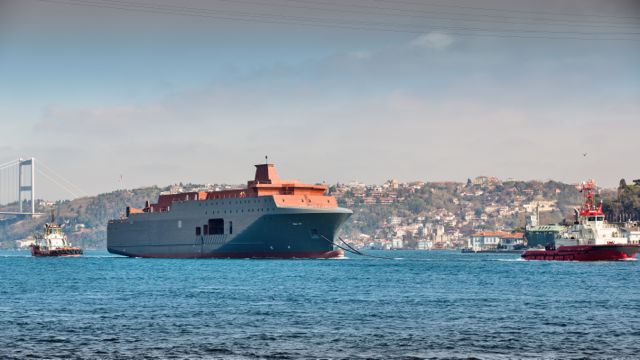
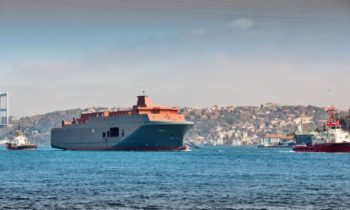 A new vessel, specially designed for intelligence services and surveillance, has arrived in Norway. The hull of the vessel arrived in Ålesund in Møre and Romsdal County this last weekend. High-tech equipment will be installed before the ship is ready for use. “This vessel is built for the northern areas, and its tasks will be to monitor all activity up there, both civil and military, so that the Norwegian government can get as complete a picture as possible of what is going on,” says chief of the Intelligence Services, Kjell Grandhagen.The ship, which has not been named yet, will be staffed with personnel from the Norwegian Intelligence Services. However, no exact names and what they will be doing will be revealed to the public.
 Norwegian Police Security Service ( PST ) has decided to send a number of Iranian student back to Iran as they feared that the students may use their education for nuclear program by the Iranian regime. The decision was taken based on the UN resolution that obliges Norway to prevent the Iranians to learn about technology that can be used in nuclear applications. The concern appeared in the threat assessment for 2013 which was published recently, Norwegian media reported.PST believes that in 2012 was a sharp increase in visa applications from Iranians to Norway for work, research and studies in areas that have what they call “multipurpose use”.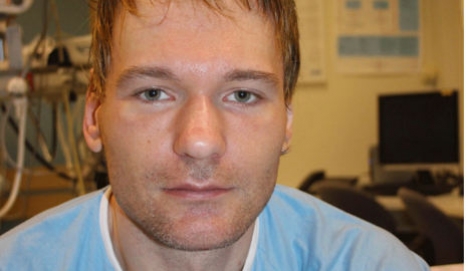
 A Czech suspected of being Counter intelligence service Official suffering from “amnesia”, found in a snowdrift in Oslo last December, has began regaining fragments of memory after speaking with his family over the phone. It has come to light that the man, who has gone under the name of John Smith since his rescue, worked for the Czech Interior Ministry. With every turn, the mystery surrounding a 36-year-old calling himself john Smith has deepened, ago it was not ever clear he was Czech, although he understood the language, along with Slovak, Russian and Polish.Since, he has been identified by his family after his photo was officially posted and at the weekend he reportedly spoke with them for three hours, helping him regain some fragments of lost memories.
 Norwegian Intelligence Service (PST) wants to obtain permission to monitor all Norwegians’ online activities. Ministry of Justice keeps the door open for the proposal. PST-chief Alana Bjørnland wants to give security permission to monitor all Norwegians’ activity on the internet by using so-called big data technologies. Minister of Justice and Public Security, Anders Anundsen is positive about the PST chief’s desire to strengthen national security.- It is important that PST has the necessary tools to fulfill its security mission, says Anundsen to Klassekampen.
 Fake mobile base stations, which can be used for eavesdropping or spying, have been discovered near Norway’s parliament and within the executive government quarter in central Oslo, Aftenposten news outlet revealed in its two-month independent investigation. Whoever is behind this suspicious activity, they are able to intercept calls, monitor everything taking place in downtown Oslo and track movements in the vicinity of government offices, Aftenposten stressed.
 Much of the alleged illegal surveillance equipment in the Oslo area, discovered by the newspaper Aftenposten just before Christmas, has now been turned off, the newspaper reports. Aftenposten reported in mid-December that it had located a number of fake base stations for mobile phones, which were allegedly used to monitor mobile phone traffic in the Oslo area. The newspaper wrote that it had registered a number of so-called IMSI – catchers operating near key official buildings in Oslo, such as the Parliament (Stortinget), the Prime Minister’s residence and other key political buildings and financial central.
 Norwegian journalists and experts in the field of telecommunications security believe that telephones of embassies of Russia and France in the Norwegian capital of Oslo could be tapped. According to Norwegian newspaper Aftenposten, diplomatic missions of the United Kingdom, Venezuela and Finland are also located in the area, where wiretapping equipment was used. With the help of special equipment, Norwegian reporters detected numerous signs of so-called IMSI-interceptors near the buildings of the parliament, office and personal residence of the prime minister of Norway, embassies of the USA and Israel, the building of the Central Bank of Norway, as well as near the offices of several large law firms and financial institutions.After the publication of the controversial material, the equipment that Aftenposten employees used stopped catching signals proving the presence of wiretapping devices.
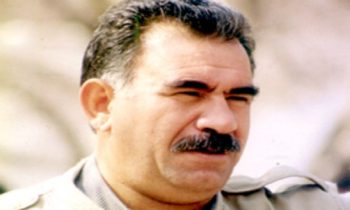 Omer Altiparmak, the former head of the Turkish intelligence department of the National Police Department, has claimed that Adem Uzun, a senior member of the outlawed Kurdistan Workers’ Party (PKK) responsible for the organization’s foreign affairs, leaked audio recordings that revealed secret talks took place between Turkish intelligence officials and members of the PKK in Oslo in 2010.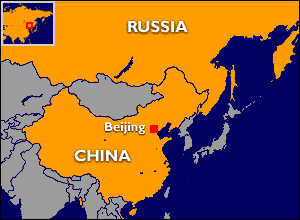
 Police Security Service director Benedicte Bjørnland believes that Russia and China espionage services pose the greatest danger to Norway. “The two states which Norway has no security policy cooperation with, and that also have the largest intelligence capacity by far, are Russia and China. Of these, we consider Russian intelligence to possess the greatest potential for damaging Norwegian interests.
 Oslo is home to two infamous gangs whose members are mainly Pakistani Norwegians. They are known as the A gang and B gang or A-Gjengen and B-Gjengen. According to an article in Pakistan’s Daily Times, both gangs are run by criminals within Oslo’s immigrant Pakistani community.In 2006, tension between the Pakistani-dominated gang Young Guns and B-Gjengen led to an open gun battle in broad daylight at Oslo’s popular Aker Brygge Complex on the waterfront. Many key gang members were arrested and others fled the country.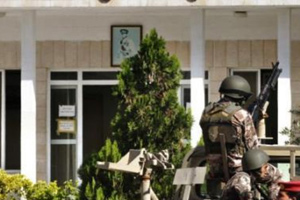

 Two Iranian PhD students have sued the Norwegian government after being expelled from the country on suspicion of gathering information that could aid Iran’s nuclear program. Hamideh Kaffash and Shanin Akbarnejad both enrolled at the Norwegian University of Science and Technology, in the autumn of 2014.Both were pursuing PhDs in metallurgy, planning to spend 3 years in the city of Trondheim.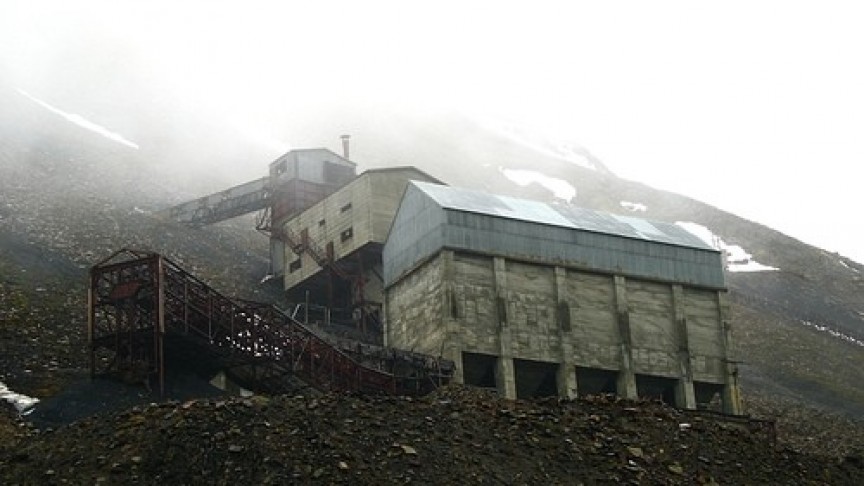
 The UN is urging Norway to shut down its coal mining operations on the Arctic archipelago of Svalbard due to concerns due to a clash of interest with the islands’ major functionality of climate change research. Executive secretary on climate change for the UN, Christiana Figueres, said that Svalbard is a bastion of climate change research and that this and coal mining fits very poorly together.She also cited that Norway has been one of the global leaders when it comes to sustainable energy programmes and green living.
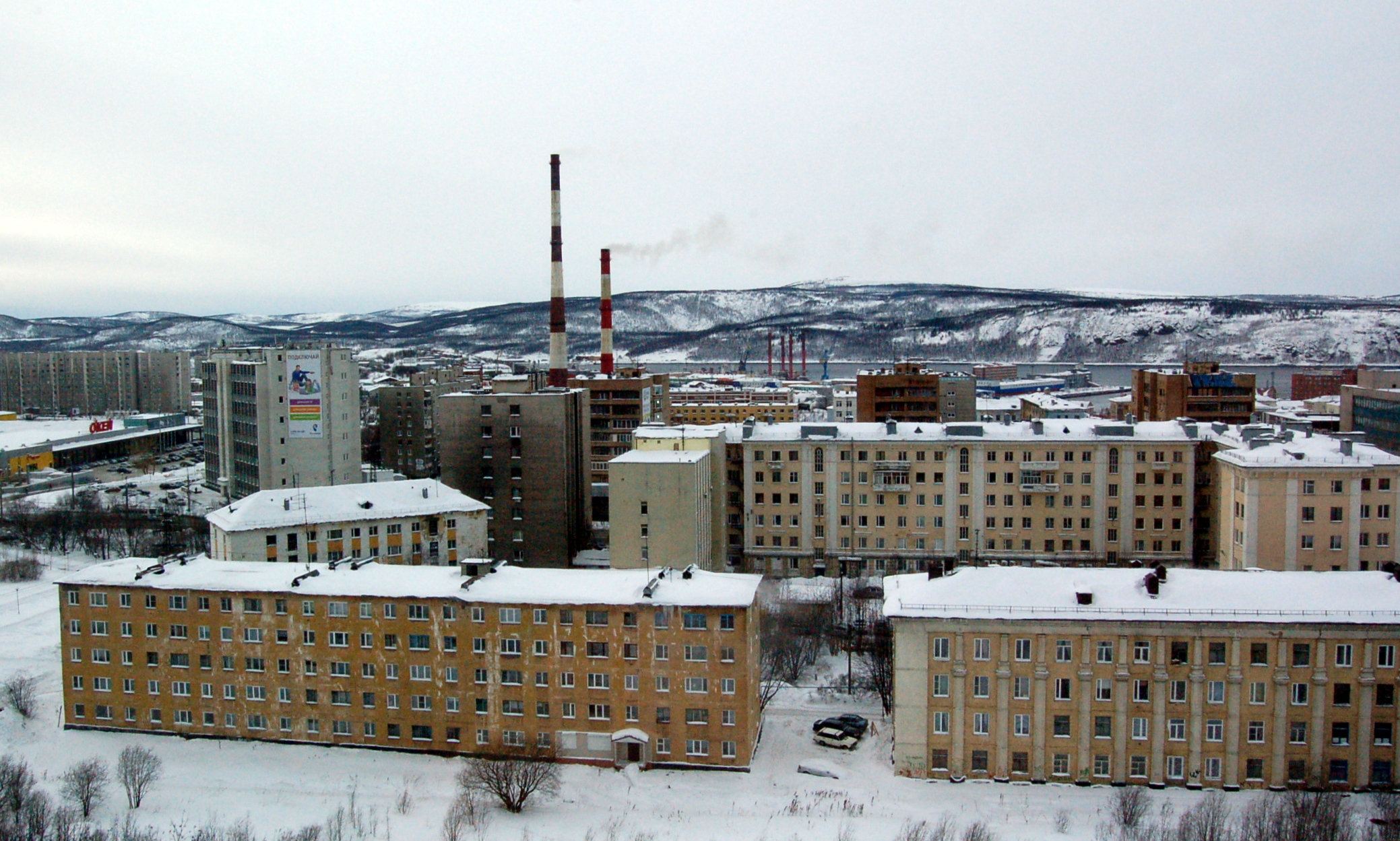
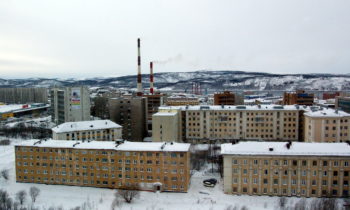 Despite a cold political climate, the United States and Russia cooperated on a secret September voyage with highly enriched uranium from Poland to Murmansk, Russia. Norwegian radiation authorities were not informed before the vessel sailed into Norway’s economic zone. The head of Vardø Vessel Traffic Service, Ståle Sveinungsen, confirmed to the Barents Observer that the vessel Mikhail Dudin was carrying a load of highly radioactive material when it sailed along the coast of Norway two weeks ago.“That is correct. The vessel entered Vardø Traffic Service’s systems on the evening on Sept. 2 and sailed out again in the afternoon on Sept. 8,” Sveinungsen said.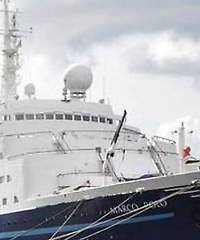
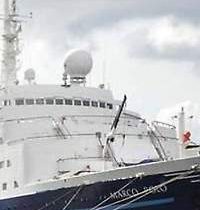 A Norwegian local resident told Norwegian broadcaster NRK he thought the cruise ship took a chance by sailing close to the rocky coast on its way into the quay. This Bahamas-registered cruise ship with almost one thousand British tourists on board that ran aground in northern Norway on Saturday managed to get free using its own engines and high tides, rescue services said.The 176-meter (580-foot) “Marco Polo” ship later docked at a quay in Buksnesfjord and seemed to “function normally,” the services said.
 Arctic Biodiversity Congress gathers Arctic leaders to discuss sustainability- Trondheim, Norway, December 2-4, 2014. Over 400 Arctic leaders, scientists, government representatives, indigenous peoples, and members of industry and non-governmental organizations are meeting in Trondheim, Norway to discuss the future of Arctic nature and sustainability at the Arctic Biodiversity Congress, December 2-4, 2014.“Climate change is by far the most serious threat to Arctic biodiversity, but it does not act in isolation”, says Tine Sundtoft, Minister for Climate and Environment. “We need to understand all of the changes happening in the Arctic so we can better prepare our policy in the region. This Congress will help inform the appropriate responses.”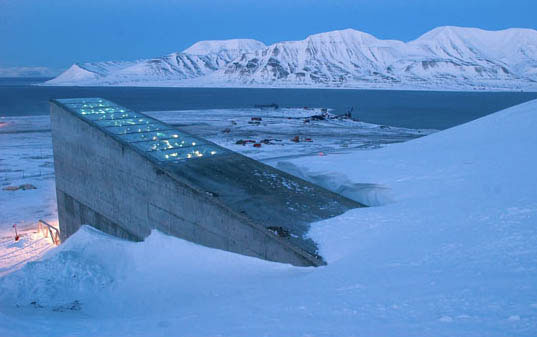
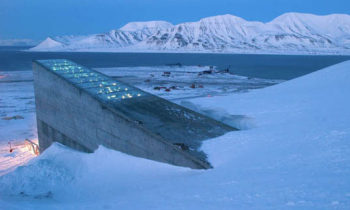 The United Nations called on Norway last summer to close its coal mining operation on the Svalbard Arctic archipelago. It did. The government of Norway, which has the world’s largest sovereign wealth fund ($860bn), has also announced plans to divest from coal. This means the wealth fund will divest from 14 coal mining companies, one coal-fired generator, five tar-sands oil producers and two cement makers (since cement is produced by burning coal).This is being described as a giant step forward in the fossil fuel shutoff movement.