NORWAY NEWS – latest news, breaking stories and comment – NORWAY NEWS
  • Home
  • About us
  • News
  • Other News
    • Africa and Norway
    • Asia and Norway
    • Asylum
    • Breaking News
    • China and Norway
    • Corruption in Norway
    • Crimes
    • Defence
    • Diplomatic relations
    • Economics
    • Environment
    • Farming
    • Featured
    • Health
    • Killing
    • Media Freedom
    • Middle East and Norway
    • NATO and Norway
    • Nobel Peace Prize
    • Norwegian Aid
    • Norwegian American
    • Oil & Gas
    • Peace Talks
    • Politics
    • Racism in Norway
    • Religion
    • Royal House
    • Russia and Norway
    • Science
    • Sex scandal
    • Sports
    • Spy War
    • Srilanka and Norway
    • Svalbard
    • Taiwan and Norway
    • Terrorist
    • Travel
    • Video clips
  • Disclaimer
  • Contact us
NORWAY NEWS – latest news, breaking stories and comment – NORWAY NEWS
  • Home
  • About us
  • News
  • Other News
    • Africa and Norway
    • Asia and Norway
    • Asylum
    • Breaking News
    • China and Norway
    • Corruption in Norway
    • Crimes
    • Defence
    • Diplomatic relations
    • Economics
    • Environment
    • Farming
    • Featured
    • Health
    • Killing
    • Media Freedom
    • Middle East and Norway
    • NATO and Norway
    • Nobel Peace Prize
    • Norwegian Aid
    • Norwegian American
    • Oil & Gas
    • Peace Talks
    • Politics
    • Racism in Norway
    • Religion
    • Royal House
    • Russia and Norway
    • Science
    • Sex scandal
    • Sports
    • Spy War
    • Srilanka and Norway
    • Svalbard
    • Taiwan and Norway
    • Terrorist
    • Travel
    • Video clips
  • Disclaimer
  • Contact us
Saturday, June 27, 2026
NORWAY NEWS – latest news, breaking stories and comment – NORWAY NEWS
  • Home
  • About us
  • News
  • Other News
    • Africa and Norway
    • Asia and Norway
    • Asylum
    • Breaking News
    • China and Norway
    • Corruption in Norway
    • Crimes
    • Defence
    • Diplomatic relations
    • Economics
    • Environment
    • Farming
    • Featured
    • Health
    • Killing
    • Media Freedom
    • Middle East and Norway
    • NATO and Norway
    • Nobel Peace Prize
    • Norwegian Aid
    • Norwegian American
    • Oil & Gas
    • Peace Talks
    • Politics
    • Racism in Norway
    • Religion
    • Royal House
    • Russia and Norway
    • Science
    • Sex scandal
    • Sports
    • Spy War
    • Srilanka and Norway
    • Svalbard
    • Taiwan and Norway
    • Terrorist
    • Travel
    • Video clips
  • Disclaimer
  • Contact us
Copyright 2025- All Right Reserved Norway News
Environment

World’s largest Climate and Rainforest Conference to be held in Oslo

by Nadarajah Sethurupan June 6, 2016
written by Nadarajah Sethurupan

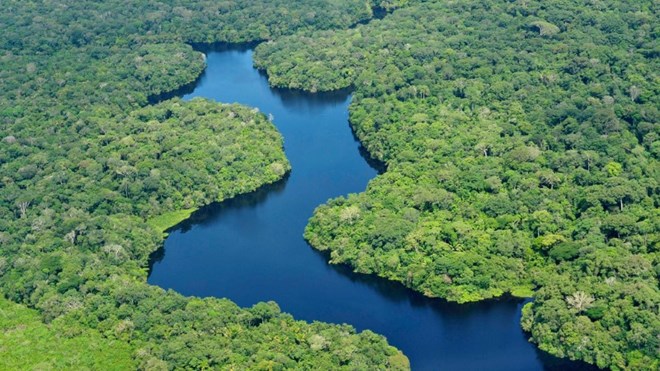
arial-view-of-amazon-rainforest_foto_neil-palmerciat_breddeOn June 14th and 15th, 500 politicians, private sector companies, indigenous peoples representatives, researchers and civil society organizations from all over the world gather in Oslo to discuss how to stop the destruction of the world’s tropical forests.

Norwegian Prime Minister Erna Solberg will officially open the conference. Ministers from a number of Norway’s most important partner countries are participating. So will the newly appointed head of the United Nations Environmental Program, Erik Solheim and Norway’s Climate and Environment Minister, Vidar Helgesen.

– The Paris Agreement confirms that reducing emissions from the destruction of tropical forests is an integral part of the solution to the world’s climate issues. This destruction must be halted within the next few years if we are to reach the global climate targets and the UN Sustainability Goals. This is one of the large-scale climate measures in which we see progress. We have invited the key stakeholders to Oslo to share experiences and challenge each other for even better results going forwards, says Climate and Environment Minister, Vidar Helgesen.

The Oslo REDD Exchange conference gathers politicians at national and regional levels from partner countries, environmental and indigenous peoples organizations, researchers, and representatives from paper and palm oil companies that have made commitments to reduce deforestation.

The Norwegian International Climate and Forest Initiative has since 2008 invested in measures to reduce deforestation and forest degradation in developing countries (REDD+). The work is implemented by governments, the UN and the World Bank, indigenous peoples and civil society in forest countries. A number of the countries and organizations represented at the conference have received support from Norway to pursue their agendas.

Several of the measures to reduce deforestation will be implemented at regional and local levels. Regional governments will therefore be key actors of change. The conference includes regional governors from the key partner countries Peru and Indonesia. Norway recently announced its first disbursement under the Peru Partnership. The funds will be allocated to measures against illegal logging and to secure land rights by means of titling the land of at least 68 indigenous groups in Ucayali and San Martin. The Governors from Ucayali, San Martin and Loreto in Peru will be part of the conference.

The Oslo REDD Exchange 2016 is the most important global arena for climate and rainforest since the historic Paris Agreement. The conference is hosted by Norad at the request of the Ministry of Climate and Environment.

June 6, 2016 0 comments
0 FacebookTwitterPinterestEmail
Sports

Nainggolan plays 90 minutes as Belgium beat Norway

by Nadarajah Sethurupan June 6, 2016
written by Nadarajah Sethurupan

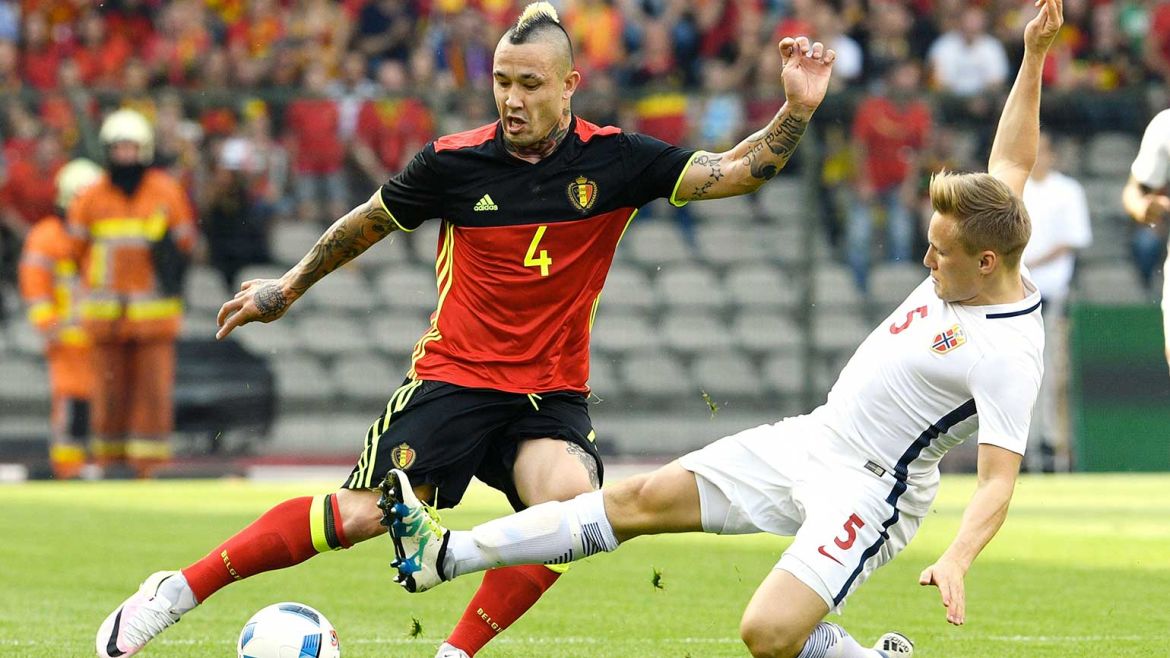
f4x4avduqte935lj3jaqRadja Nainggolan recovered from a minor calf complaint to start Belgium’s final Euro 2016 warm-up friendly against Norway on Sunday.

The Giallorossi midfielder, who picked up the injury during Belgium’s training camp in May, played the whole match in Brussels, which the Red Devils won 3-2.

Belgium head coach Marc Wilmots had announced that Radja would play during a press conference ahead of the game.

“It’s the last week before the Euros and the adrenaline is starting to rise,” he told reporters on Saturday. “Nainggolan will play the full game against Norway if he’s able to. What I’m interested in is the players getting minutes under their belts – I want them all to go into the Euros without having played too much but with enough in their legs for the tournament.”

Belgium are in Group E along with Italy, Republic of Ireland and Sweden at the European Championship, which runs from 10 June to 10 July. Nainggolan’s national side face the Azzurri in their opening game.

Radja featured 42 times and scored six goals for the Giallorossi last season and played a key role for Belgium during the qualifying process, with nine appearances and two goals.

June 6, 2016 0 comments
0 FacebookTwitterPinterestEmail
Diplomatic relations

Driver smuggled antiquities in Norwegian Ambassador’s car

by Nadarajah Sethurupan June 6, 2016
written by Nadarajah Sethurupan

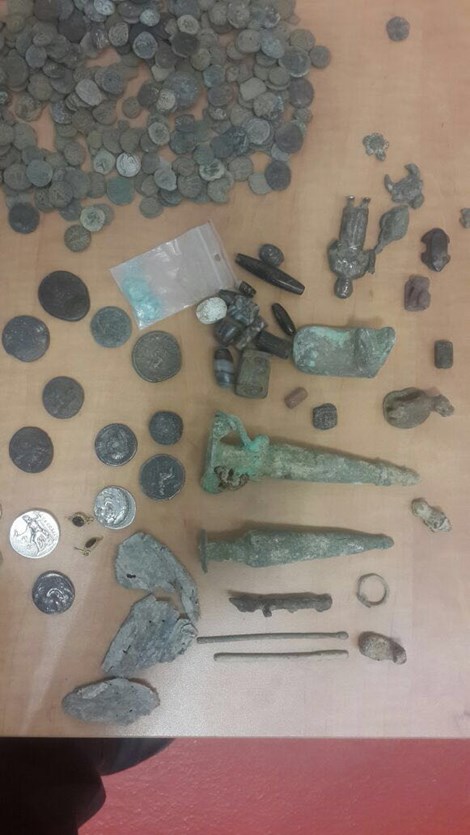
resizedimg91859Norwegian Ambassador’s chauffeur arrested in attempt to smuggle 10 kg of artifacts across the border in official car.

The Norwegian Ambassador to Israel’s chauffeur was arrested on the Allenby Crossing between Israel and Jordan, as he attempted to smuggle ancient artifacts out of the country.

Customs Authority agents discovered some 10 kilograms of antique sculptures, coins and other items concealed in cardboard boxes and hidden in the walls of the Norwegian Ambassador’s Mercedes late last month.

The precise value of the antiquities has yet to be determined.

The driver, Issa Nagam of Beit Hanina in Jerusalem, was arrested under suspicion of antiquities smuggling, and later released to house arrest with strict conditions on his movement by a Jerusalem court.

Nagam was arrested on May 31, as he traveled along Allenby Bridge in the Ambassador’s car, together with an unidentified senior Norwegian diplomat.

(israelnationalnews)

June 6, 2016 0 comments
0 FacebookTwitterPinterestEmail
Politics

Aquaculture NZ pays for council delegation to visit Norway

by Nadarajah Sethurupan June 6, 2016
written by Nadarajah Sethurupan

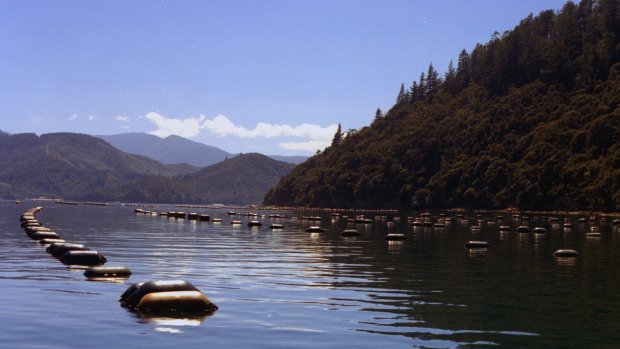
1465190119532A councillor going on a trip to Norway financed by an aquaculture lobby group says it is not a conflict of interest.

Marlborough councillor David Oddie chairs the hearings panel that deals with marine farm resource consents in the Marlborough Sounds and will sit on the panel of councillors hearing submissions on the Marlborough Environment Plan.

Aquaculture New Zealand are paying for Oddie, compliance manager Gina Ferguson and Kaikoura MP Stuart Smith to go on the five-day trip this month.

The delegation also includes Invercargill MP Sarah Dowie, Environment Southland representatives, and the Southland District Council mayor Gary Tong and staff.

Oddie said they would talk to local politicians and industry experts at the AquaVision conference in Stavanger before looking at aquaculture in the Fjords.

“I don’t see my role there as being in conflict of my position on council in any way,” Oddie said.

“There will always be the perception that we will be lobbied by the industry. That happens all the time, I don’t have to be at a conference for that to happen.”

Environment committee chairman Peter Jerram was the natural choice for the trip but could not attend due to personal reasons, Oddie said.

Mayor Alistair Sowman and chief executive Mark Wheeler were unavailable due to work schedules.

New Zealand’s coastal policy statement required the council to enable aquaculture in the Sounds.

It was the council’s job to decide how much marine farming was environmentally sustainable.

“Council is concerned that we could have that process removed from us,” Oddie said.

Central Government wanted to grow aquaculture and New Zealand King Salmon had requested under-performing farms in the Queen Charlotte Sound would be better off moved to the Tory Channel.

“It’s important for me that council remains around the table and is involved in the discussions.

“This trip is about gaining prospective as a councillor and building relationships with the industry and central Government.”

The trip had no connection to the Marlborough Environment Plan’s aquaculture chapter shelved by council until next year, Oddie said.

After 10 years of consultation, the plan was due to outline how aquaculture fits into the sustainable management of the Sounds for the next decade but council said there was more work to be done.

Oddie sat on the hearings panel that would hear submissions on the plan.

The Norway conference held every two years attracts business leaders and aquaculture entrepreneurs from more than 40 countries.

Smith said the delegation was invited by Aquaculture New Zealand and the Norwegian provincial County Council of Rogaland.

Aquaculture New Zealand were unavailable for comment.

“I’m looking forward to learning how other aquaculture producing nations manage their social licence and environmental challenges, as well as exploring further the new technologies and the economic potential that aquaculture offers to New Zealand and to the Marlborough region in particular,” Smith said.

Aquaculture generated $160 million in regional GDP, nearly 6 per cent of Marlborough’s regional activity.

“Marlborough is the primary region in New Zealand for aquaculture, with about 62 per cent of total national aquaculture production coming from our region. The industry supports over 850 local jobs, paid at a much higher rate than average local wages.”

-(The Marlborough Express)

June 6, 2016 0 comments
0 FacebookTwitterPinterestEmail
Environment

Norway’s role in achieving the Sustainable Development Goals

by Nadarajah Sethurupan June 5, 2016
written by Nadarajah Sethurupan

UN_SDG_LogoOn Monday 6 June, 300 leaders from the UN, business industry, civil society and politics will meet at Hotel Bristol to discuss how Norway and Norwegian business can take an active role in achieving the Sustainable Development Goals.

Several international and national leaders will participate at the conference arranged by the Ministry of Foreign Affairs, the Confederation of Norwegian Enterprise (NHO), Yara International and The Norwegian ForUM for Development and Environment.

Norwegian Minister of Foreign Affairs Børge Brende, President of the African Development Bank Akinwumi Adesina and UN Secretary-General Ban Ki-moon’s Special Adviser on the 2030 Agenda for Sustainable Development David Nabarro, will initiate the Conference.

Other speakers include:
Svein Tore Holsether, CEO of Yara International
Kristin Halvorsen, Director of Center for International Climate and Environmental Research
Elisabeth Grieg, Chairman of the Grieg Group
Jon Hindar, CEO of Cermaq
Borghild Tønnessen-Krokan, Acting Director at Forum for Development and Environment
Svein Oppegaard, Executive Director, Labour market and Social Affairs at NHO
Jon Lomøy, Director of Norad

(Nadarajah Sethurupan)

June 5, 2016 0 comments
0 FacebookTwitterPinterestEmail
Sports

Nordic Tournament, defeating Norway 2-1

by Nadarajah Sethurupan June 5, 2016
written by Nadarajah Sethurupan

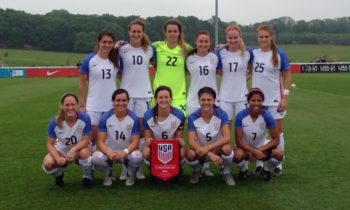
160604 U23WNT v NOR Starting XIThe U.S. Under-23 Women’s National Team won for the second time in two games at the four-team U-23 Women’s Nordic Tournament, defeating Norway 2-1 on goals from Tyler Lussi and Savannah Jordan.
The tournament is taking place at the St. George’s Park Football Centre, the National Training Center of the England FA in Burton-upon-Trent, located about 130 miles north of London.

In its final match of the competition on June 7, the USA will face the U-23 Women’s National Teams of England and can win the tournament with a victory or a tie. In this tournament, teams are awarded one point for a tie at the end of regulation and then the matches go to penalty kicks, with the winner of the shootout getting an additional point.

With the current point standings after two games for each team as follows – USA (6), England (5), Norway (1) and Sweden (0) – should the USA and England tie, and England win the shootout, both teams would have seven points, but the USA would still take the title on goal difference as it’s currently at +3 while England is at +1.

The USA opened the scoring in the 42nd minute after McKenzie Meehan won a ball deep in the Norway half on the left wing and played a short square pass centrally to Lussi who crushed a shot from 20 yards off the underside of the cross bar. The ball bounced down just over the goal line to give the USA a 1-0 lead.

The USA scored three minutes into the second half as Rachel Hill played a pass to Jordan who was making a run up the middle. Confronted by two defenders at the top of the penalty box, Jordan danced with the ball a bit before playing a pass for Lussi out on the left side of the penalty area. Lussi beat a defender to the inside and played it back to Jordan, who evaded three defenders before smacking a low left-footer under the ‘keeper and into the net to make it 2-0.

It was Jordan’s third goal of the tournament after she scored twice in a 3-1 win against Sweden on June 2.

Norway scored in the 71st minute, but would not beat U.S. goalkeeper Madalyn Schiffel again.

U.S. U-23 Women’s National Team Match Report

Match: United States U-23 WNT v. Norway U-23 WNT
Date: June 4, 2016
Competition: U-23 Women’s Nordic Tournament
Venue: St. George’s Park Football Centre; Burton-upon-Trent, United Kingdom
Weather: 60 degrees, sunny

Scoring Summary: 1 2 F
USA 1 1 2
NOR 0 1 1

USA – Tyler Lussi (McKenzie Meehan) 42nd minute
USA – Savannah Jordan (Tyler Lussi) 48
NOR – Johanne Fridlund (Amalie Velve Eikeland) 71

Lineups:
USA: 22-Madalyn Schiffel; 14-Christina Gibbons, 16-Kirsten Crowley, 5-Maddie Bauer, 20-Caroline Flynn (15-Brittany Basinger, 81), 13-McKenzie Meehan (4-Rachel Hill, 46), 6-Andi Sullivan (capt.) (2-Claire Falknor, 71), 10-Morgan Proffitt, 7-Margaret Purce (11-Toni Payne, 46), 25-Ashley Herndon (3-Savannah Jordan, 46), 17-Tyler Lussi
Subs Not Used: 1-Jane Campbell, 18-Stephanie Rebeiro
Head Coach: Janet Rayfield

NOR: 2-Cecilie Redisch Kvamme (13-Mali Lilleas Naess, 59); 3-Ingrid Katrine Buer Sondena (16-Lena Soleng Hansen, 64), 5-Nora Byom-Nilssen, 6-Vilde Boe Risa (18-Ingrid Marie Spord, 59), 7-Karina Saevik, 9-Andrea Segnant Thun (14-Pernille Velta, 80), 10-Guro Reiten (17-Andrine Hegerberg, 46), 11-Synne Sofie Kinden Jensen (8-Johanne Fridlund, 64), 15-Stine Pettersen Reinas, 20-Amalie Vevle Eikeland
Subs Not Used: 1-Mari Johnsen Johnasen
Head Coach: Nils Lexerod

Stats Summary: USA / NOR
Shots: 11 / 9
Shots on Goal: 8 / 8
Saves: 7 / 6
Corner Kicks: 1 / 3
Fouls: 9 / 13
Offside: 0 / 1

Misconduct Summary:
NOR – Stine Pettersen Reinas (caution) 32nd minute

Officials:
Referee: Andrew Hendley
Assistant Referee 1: Jessica Lawson
Assistant Referee 2: Daniel Evans
4th Official: Kevin Caroll

2016 U-23 Women’s Nordic Tournament Results

June 2
USA 3, Sweden 1
England 1, Norway 1*

June 4
USA 2, Norway 1
England 1, Sweden 0

June 7
USA vs. England
Sweden vs. Norway

*England won in penalty kicks. Tournament rules award teams one point for a tie and one point for a penalty kick win.

June 5, 2016 0 comments
0 FacebookTwitterPinterestEmail
Environment

Norway Might Impose Ban on Sales of New Gasoline Cars

by Nadarajah Sethurupan June 4, 2016
written by Nadarajah Sethurupan

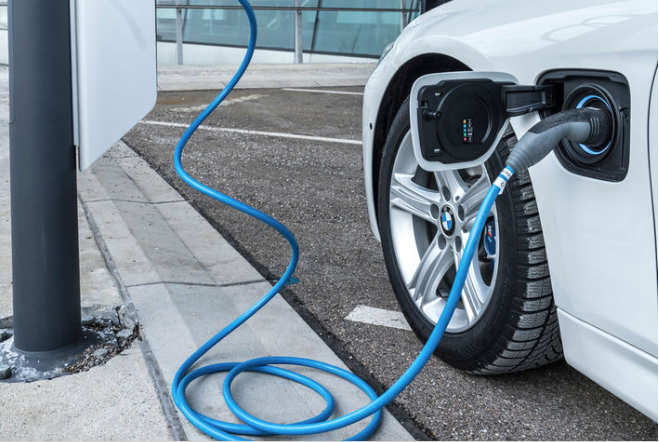
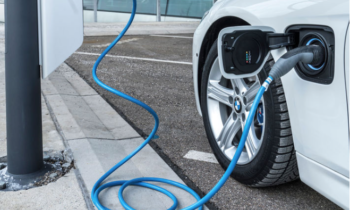
Screen Shot 2016-06-04 at 23.23.18According to prominent Norwegian newspaper Dagens Næringsliv (subscription required), the Scandinavian country agreed to enact a sales ban on gasoline-powered cars by the year 2025. Apparently, the four primary political parties of Norway were locked in a debate regarding the proposed ban, and might have reached an agreement this week.
Despite Norway’s status as one of the world’s primary oil exporters , members from both the left and the right side of the political spectrum worked together to create this ban. If the law officially passes, the only new vehicles sold in Norway would be electric and hydrogen fuel cell cars.

While this ban might initially seem unrealistic, Norwegians purchase more electric vehicles than any other country, with electric cars occupying a 24 percent share of the market already. Manufacturers are ramping up development and production of zero-emissions cars, so Norwegian buyers will have access to a larger lineup of electric and hydrogen fuel-cell vehicles to choose from when it bids ha det to gasoline.

What doesn’t fit into this electrified utopia are perhaps those who might rely on vans and trucks for hauling and working in inhospitable terrain. While certain amends would likely arrive for companies who value compact trucks like the Volkswagen Amarok and Toyota Hilux, Norway would likely see a shrinking of fuel station infrastructure as a result, making the regular operation of combustion engines increasingly difficult. Unfortunately, there are no zero emissions trucks currently in production that would meet Norway’s stringent proposal.

According to a report from Electrek, this isn’t the first time a ban on combustion engines was considered. India is currently creating a ban by 2025, with the Dutch looking to impose the same restrictions by 2030, with parliament currently split on the controversial issue.

Of course, Tesla kingpin Elon Musk celebrated the news on Twitter, where he commended the Norwegians for moving forward with the proposed ban.

According to Electrek, the two of the four political parties have yet to completely agree to this ban.

June 4, 2016 0 comments
0 FacebookTwitterPinterestEmail
Racism in Norway

Romanian family living in Norway get their children back after seven months

by Nadarajah Sethurupan June 4, 2016
written by Nadarajah Sethurupan

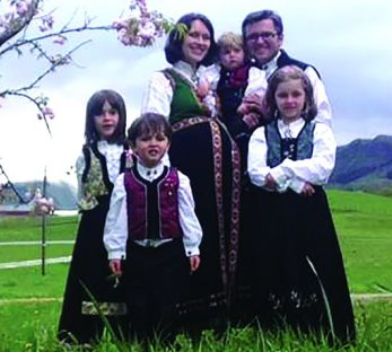
Screen Shot 2016-06-04 at 15.48.16Romanian Marius Bodnariu and his Norwegian wife Ruth Bodnariu will reunite with their children after nearly seven months, as the Naustdal Municipality in Norway has agreed to return all of their five children.

Marius and Ruth Bodnariu have been living in Norway for more than 10 years. Their life changed in mid-November last year, when the Norwegian child protection services (Barnevernet) took their five children and placed them in foster homes for alleged mistreatment. The youngest of the children was only three months old when the authorities took him.

The case triggered many reactions and protests in Romania and abroad as thousands rallied in front of Norway’s embassies asking that the children be returned to their family. The protests, which were coordinated through social media, took place all around the world, from Melbourne in Australia to Portland in the US.

In Romania, thousands rallied in the big cities in support of the Bodnarius. The protests prompted a group of Romanian MPs to visit Norway and talk to the authorities about this case.

“We thank you all for your love, support, prayers, and active participation in the reunification of this family. May God richly bless you and repay you for all you have done to bring this family back together. It is very important for all of us to respect the privacy and uninterrupted intimacy of this family in the following period as the children resettle and reintegrate themselves in their natural family home and environment,” reads a statement of the family.

The Bodnariu case was also reflected in the international media and fueled concern within the country and abroad over Norway’s child protection practices. The Norwegian law is very strict and states that parents are forbidden to physically discipline their children. The social workers, however, have been quick to separate children from their families, with too little justification, particularly when one or both of the parents were immigrants, BBC wrote in April.

Norwegian officials said the protests and the media coverage in this particular case were part of a well-coordinated campaign against the country’s child protection services.

On Thursday, June 2, Romanian MP Ben Oni Ardelean announced in a Facebook post that a report on the Bodnariu case was approved in the Parliamentary Assembly of Council of Europe (PACE).

“Today, the members of the Committee for Social Affairs, Health and Sustainable Development of the Parliamentary Assembly of the Council of Europe (PACE) have decided to elaborate a Draft Report on: “Striking a balance between the best interest of the child and need to keep the families together”. […] The report will consider to which extent the abusive measures taken by the Childcare Social Services (Barnevernet) from Norway are compatible with the Council of Europe’s standards in this specific field, and the resolution, which will draw the main conclusions from the report, will make concrete legislative recommendations to the Norwegian competent authorities,” reads the Facebook post.

June 4, 2016 0 comments
0 FacebookTwitterPinterestEmail
Peace Talks

Philippine Govt to Meet Communist Rebels in Norway this Month

by Nadarajah Sethurupan June 4, 2016
written by Nadarajah Sethurupan
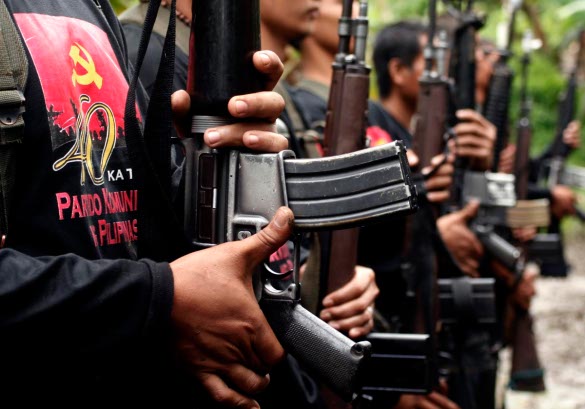
Members of the New Peoples Army (NPA) belonging to the Pulang Bagani Command celebrate the 40th Founding Anniversary of the Communist Party of the Philippines (CPP) somewhere in Davao City on Friday, December 26, 2008. The NPA, which is the armed wing of the CPP, has been fighting for the establishment of the Marxist state in the Philippines since 1968. AKP Images/ Keith Bacongco

Members of the New Peoples Army (NPA) belonging to the Pulang Bagani Command celebrate the 40th Founding Anniversary of the Communist Party of the Philippines (CPP) somewhere in Davao City on Friday, December 26, 2008. The NPA, which is the armed wing of the CPP, has been fighting for the establishment of the Marxist state in the Philippines since 1968. AKP Images/ Keith Bacongco

Representatives of the Philippine government and the National Democratic Front of the Philippines, or NDFP, which represents the communist rebels of the country, will meet this month in Norway to prepare for possible ceasefire talks, media reported Friday.

Communist Party of the Philippines founder Jose Maria Sison, who lives in Holland, said in a video conference with Philippine journalists Thursday the preliminary dialogue will begin mid-June, the Interaksyon website reported, although representatives of the incoming government are yet to confirm the place and date of these talks.

Sison hoped the NDFP and the team of Philippine president-elect Rodrigo Duterte will arrive at an agreement in Oslo this month on the issues to be addressed in the peace negotiations.

Sison said the preliminary talks will also cover the issue of his possible return to the Philippines in July or August, after three decades, once Duterte takes office.

“It would be reckless of me to return home while (Benigno) Aquino is still the President,” he added.

Duterte has publicly invited Sison to return to the Philippines on several occasions, but NDFP said several conditions will have to be fulfilled before he does so, including a guarantee that he could return to Holland as a political exile if necessary.

NDFP’s another condition is the release of 543 political prisoners and the setting up of a mechanism to begin a mutual cessation of hostilities.

Sison has been living in Holland since 1987 after he fled the Philippines following the end of the regime of Ferdinand Marcos and the failure of the first attempt to hold peace negotiations.

The last round of talks with the communists ended in April 2013, after the government refused to release some political prisoners who had been appointed to participate in the peace talks.

Nonetheless, Duterte has announced he is willing to order the release of some insurgents even before a peace agreement is signed.

The Communist Party of the Philippines was founded in 1968 as a clandestine political organization with the aim of overthrowing the government.

The New People’s Army is the military arm of the party and has 6,000 members.

It has been engaged in a 45-year-long conflict, which has caused close to 30,000 deaths.

June 4, 2016 0 comments
0 FacebookTwitterPinterestEmail
Environment

Norway leads the world with 23 percent of EV market share

by Nadarajah Sethurupan June 4, 2016
written by Nadarajah Sethurupan

IEA-finds-electric-vehicle-use-high-in-Asia-and-EuropeThe global use of electric vehicles is on the rise, though more can be gained by referencing European and Asian policies, an IEA report found.

The International Energy Agency said it expects a record-setting 1.26 million electric vehicles to be on the road by the end of the year. Compared with last year, the IEA found substantial gains in the sale and construction of the infrastructure needed to support a broader network of electric vehicles worldwide.

An initiative backed by the Paris-based agency called for 20 million electric vehicles globally by the start of the next decade. Despite the milestone expected this year, the IEA said electric vehicles only make up about 0.1 percent of the total market share for vehicles.

Cheaper fuels as a result of lower crude oil prices may be swaying consumer behavior. In the United States, a federal report found gasoline demand for the week ending May 29 was up 3.5 percent from the same week last year. The average national retail price for a gallon of regular unleaded gasoline for Friday of $2.34, meanwhile, is about 15 percent less than this date in 2015.

A report this week from the Federal Reserve Bank of Dallas said larger trucks and sports utility vehicles were selling faster than sedans and other cars.

A measure included the Paris climate declaration calls for 100 million electric vehicles on the market by 2030 in an effort to curb pollution levels. In the United States, the transportation sector accounted for about a quarter of total greenhouse gas emissions.

The IEA report found policy support mechanisms, like a Dutch move to cut registration taxes for electric vehicles, could drive more commuters to electric cars. Other policy initiatives the IEA found were beneficial were moves to eliminate tolls for electric vehicles and fee waivers related to tailpipe emission standards.

The IEA found the United States is at the bottom when it comes to electric vehicles, which make up about 0.7 percent of the total U.S. market. Norway had the highest share globally, with 23 percent. Chinese registrations tripled last year.

June 4, 2016 0 comments
0 FacebookTwitterPinterestEmail
Politics

Family fights denial of care to Canadian who served in Norway’s navy

by Nadarajah Sethurupan June 4, 2016
written by Nadarajah Sethurupan
NATO members participate in the alliance's Dynamic Mongoose anti-submarine exercise in the North Sea last year. Norway's deputy defense minister says it's time Europe devotes more money to maritime assets. (Photo: Marit Hommedal/AFP/Getty Images)

NATO members participate in the alliance’s Dynamic Mongoose anti-submarine exercise in the North Sea last year. Norway’s deputy defense minister says it’s time Europe devotes more money to maritime assets.
(Photo: Marit Hommedal/AFP/Getty Images)

A frail 94-year-old Canadian who was decorated while serving with Allied naval convoys in the Second World War has been struggling to gain entry to a Halifax hospital that cares for veterans.
Petter Blindheim’s son Peter says he has been informed by Ottawa that it won’t fund care at the Camp Hill Veterans’ Memorial hospital under regulations that provides care for Canadians who fought with allied nations against Nazi Germany.
Veterans Affairs has sent the family a letter saying that because Blindheim signed up with the Royal Norwegian Navy based in Britain after the date on which the German army occupied his homeland, he doesn’t qualify for benefits as an “Allied Veteran.”
The refusal letter says Petter would need to have enlisted between April 8 and June 9, 1940, to qualify. Sailors who signed up with the Norwegian Armed Forces — which had shifted to London, England — after that date, were considered to be in the “resistance service” and aren’t eligible for the Canadian support programs.

Peter Blendheim, whose last name was changed slightly by his mother, says the department is being overly bureaucratic in denying the care to his father, who he says was decorated for service on merchant marine vessels and corvettes.

“It’s rigid, bureaucratic, and inflexible and also incorrect on a number of levels,” Peter said during an interview Friday.

He says at one point his father was commended by the Royal Norwegian Navy for his courage when a torpedo sank a vessel he was serving on in November 1942.

“After the torpedoes hit the ship, he selflessly ran to the deck and removed the primer from his depth charges so they wouldn’t go off as the ship sank,” said the son.

“He imagined in his head the men surviving in the water … but shockwaves from the depth charge killing, injuring or maiming more people. … So he went and removed the primer and was recognized by the supreme commander of the Norwegian forces based in London, England.”

Blendheim says his father, who lives in an apartment with his wife Marilyn, is struggling to look after himself and the family has tried for over a year to bring him into a care facility where he can be supported.

“My mother has reached a breaking point in her own health and her ability to deal with this. My father has fallen down three times over the past year, once bumping his head, once spraining his back and once breaking his arm,” he said.

He said he’d believed the Camp Hill programs would be an option when the time came for his father to receive care, and as a result Petter isn’t on a lengthy waiting list for a provincially funded nursing home.
The son is appealing to the federal minister of Veteran Affairs, Kent Hehr, to make an exception and allow his father to enter the hospital.

Hehr declined a telephone interview, but an aide sent emailed quotes saying he understands “the frustration of veterans and families facing such circumstances.”

“I have directed the Department of Veterans Affairs to reach out to this individual and his family and work with the Nova Scotia Health Authority to ensure that all options for care are explored,” the email said.

A regulation in the Veterans Health Care Regulations says that the benefits are extended to members of Allied forces that fought in the Second World War, “other than resistance groups.”

June 4, 2016 0 comments
0 FacebookTwitterPinterestEmail
Science

Towards a tobacco-free generation

by Nadarajah Sethurupan June 4, 2016
written by Nadarajah Sethurupan

imagesPlain packaging was the theme for World No Tobacco Day. Minister of Health and Care Services Bent Høie marked the occasion together with WHO, the Norwegian Cancer Society and representatives from United Kingdom and Australia.
– In Norway, young people are smoking less, but the last decade we have seen a dramatic growth in the use of smokeless tobacco snus. Earlier the use of snus was a way to quit smoking, but now snus has become a pathway to tobacco addiction. We have to prevent that a new generation becomes addicted to tobacco, and plain packaging is an important step towards this, says Minister of Health and Care Services Bent Høie.
WHO is calling on its Member States to prepare for plain packaging with the slogan; “Get ready for plan packaging”. Australia, United Kingdom, France and Ireland have passed laws to implement plain packaging, and other countries are considering the same. The Norwegian government will present a bill to the Parliament on plain packaging in the first part of June.
– The objective of plain packaging is to prevent tobacco use among children and adolescents. I think most people support this goal. We know that young people are affected by the appearance and design of tobacco packaging, and it is time to stop this type of marketing to young people, says Høie.
Representatives from Australia and United Kingdom were present at the event, and gave a brief about their experiences with plain packaging. The tobacco industry has filed suits against several countries to stop plain packaging, but without success, most recently in United Kingdom.
– We cannot let the tobacco industry dictate our public health policy. Tobacco is legal, but it is not an ordinary product. Unlike other legal products, tobacco is harmful regardless of how people use it. Plain packaging will not affect people’s freedom of choice or their access to buy tobacco products. The objective of the bill is to protect new generations against tobacco addiction, says Høie.
New research from Australia shows that plain packaging works. Fewer young people are starting to smoke cigarettes, and unlike claims from the tobacco industry, there has not been a growth in illegal import of cigarettes.

June 4, 2016 0 comments
0 FacebookTwitterPinterestEmail
Science

Drug use is a health issue

by Nadarajah Sethurupan June 4, 2016
written by Nadarajah Sethurupan

18134_220x166This week the world has gathered in New York during the UN’s Special Session on drugs (UNGASS2016), to discuss the way forward on drug policy.
– Norway’s priority during the negotiations is to strengthen the health perspective, so that persons addicted to drugs are given health care. We will work to ensure that human rights are respected and show clear opposition to the use of the death penalty, says the Minister of Health and Care Services, Bent Høie.
During UNGASS2016, an outcome document will be adopted on the status of the world drug problem and the remaining challenges leading up to 2019, when a new plan of action will be negotiated.
– This is an important meeting for the development of world drug policy. Norway will work to improve the balance between control and care by strengthening the health perspective in world drug policy, where the main objective will be to safeguard health and welfare, says Minister of Health and Care Services, Bent Høie.
There are currently many countries that disproportionately emphasize control and strict punishment for drug-related crimes, including the death penalty.
– Norway will emphasize that human rights must be respected in drug policy and show clear opposition to the use of the death penalty, says Høie.
Some countries have considerable challenges related to illicit drug production and smuggling, involving violent cartels, corruption and money-laundering. Norway will support measures to streamline the cooperation against organized drug crime.
– At the same time, we will work to promote the UN’s Sustainable Development Goals with an emphasis on good governance. We know that this is an important prerequisite for development, health, rights, alternatives to illicit drug production and efforts against organized crime, says Høie.
Another important issue for Norway is to ensure that patients have access to medications that contain controlled substances. In many countries, patients do not have access to such medications. This may be important for treatment, for example as pain relief for cancer patients. Norway is organizing a side-event on this topic during UNGASS and the Minister will make a statement and chair the debate.

June 4, 2016 0 comments
0 FacebookTwitterPinterestEmail
Asylum

Readmission agreement with Turkey

by Nadarajah Sethurupan June 4, 2016
written by Nadarajah Sethurupan

szd7f9c0On 26 April, Norway signed a readmission agreement with Turkey. Under the agreement, Turkish citizens, third-country nationals and stateless persons who have a valid visa or a residence permit in Turkey may be returned to Turkey.
The agreement covers the return of Turkish citizens who do not fulfil the conditions for residence in Norway, and of third-country nationals who come to Norway via Turkey.
– It is important to have clear, practical arrangements for cooperating with the Turkish authorities in order to be able to return people to Turkey, not least third-country nationals, said Minister of Immigration and Integration Sylvi Listhaug.
The agreement is based on the 2013 agreement between the EU and Turkey on the readmission of persons residing without authorisation. The obligations concerning third-country nationals set out in the agreement between Norway and Turkey are to enter into force on the same day as the corresponding obligations in the readmission agreement between the EU and Turkey.
– Agreements on return and readmission are a key tool in securing the return of people who are living in Norway without authorisation. It is important that the Schengen countries have common rules on return and readmission within the Schengen area, particularly given the fact that there are plans to grant a visa exemption to Turkish citizens, said Sylvi Listhaug.

June 4, 2016 0 comments
0 FacebookTwitterPinterestEmail
Science

Digital Agenda for Norway: Digitisation vital for welfare and jobs

by Nadarajah Sethurupan June 4, 2016
written by Nadarajah Sethurupan

shutterstock_210979918_news_featured“Technology represents opportunities. We must exploit these opportunities to provide Norway with good public services and to create new jobs,” says Jan Tore Sanner, Minister of Local Government and Modernisation.
In the white paper Digital Agenda for Norway the Government announces its intention to enable Norway to exploit the opportunities ICT usage offers for value creation and innovation. Norway has been experiencing low productivity growth since 2005. Half of the productivity growth that has been achieved can be attributed to digitisation.
“There is little doubt about what technology and digitisation mean for welfare, value creation and the competitiveness of our economy. We therefore regard ICT and digitisation as a strategic competitive advantage for Norway,” says Sanner.
The white paper describes how better access to ICT competence in the public and private sectors, regulation better adapted to a digital society, and a public sector as a demanding customer will serve as policy instruments to achieve these goals. The Government will also facilitate Norwegian enterprises’ participation in the digital single market in Europe.
Better education
In Norway the proportion of ICT specialists and graduates in the field of mathematics, the natural sciences and technology is low compared with many other countries.
“The supply of ICT expertise is vital to our ability to restructure and strengthen competitive ability in business and industry and to establishing startups and creating new jobs. The Government will therefore strengthen its investment in ICT educational programmes in Norway,” says Sanner.
The Government is considering: establishing more study places in advanced ICT expertise; facilitating fewer, larger and stronger scientific ICT communities; strengthening ICT research through the Long-term Plan for Research and Higher Education; and including a clearly defined technology perspective in basic education. Already from next autumn, the Government will be launching programming as an optional subject in several lower secondary schools.
Data-driven innovation
Public registers and databases contain vast amounts of valuable data. The Government will develop strategies to make data from important sectors, such as publicly funded research, cultural activities, transport and communication, government expenditure, and maps and properties, more accessible.
“Access to open public data leads to new services, entrepreneurship, business development and a more open and democratic society. Giving others access to these data can create added value for the whole society,” says Sanner.
Big data is an area in the data-driven economy that can stimulate development of new services, solutions and jobs. The Government will encourage Norwegian industry and research institutions to use the EU’s research programmes and funding opportunities for big data projects and to consider whether big data can be applied in the public sector.
“We must make use of the market and cooperate with industry to increase our innovative strength. Innovation partnership will make it possible for the public sector to contribute to innovation and new thinking,” says Sanner.
The Government will strengthen innovation and business development in the area of care technology by adopting open standards and through increased use of innovative procurement procedures. The Government will also present a white paper on the framework conditions for industry that will include automation and digitisation.
Norway part of a European digital single market
The Government will pursue an active policy that will enable Norway to benefit from the digital single market in Europe.
“The Government will continue to pursue an active policy towards the EU in the digital area so that Norwegian enterprises can participate in the European single market. At the same time we will protect vital Norwegian interests related to consumer rights, copyright law, electronic communications, data protection and use of cloud services,” says Sanner.
Last year the European Commission launched its strategy for developing the digital single market (DSM). The goal is to enable public enterprises, business and industry and private individuals to interact easily and effectively across borders by digital means. This could provide access to a digital market with more than 500 million people and offer significant gains for industry and the public sector.

June 4, 2016 0 comments
0 FacebookTwitterPinterestEmail
Science

Memorial at Sørbråten to be completed in 2017

by Nadarajah Sethurupan June 4, 2016
written by Nadarajah Sethurupan

Norway_1-889x590The Government has decided that the national memorial site to commemorate the victims of the terrorist acts of 22 July 2011 will be completed at Sørbråten in the municipality of Hole in 2017.
“We will never forget the attacks on the government building complex and at Utøya on 22 July 2011. The attacks were a tragedy for everybody who was affected, and touched us as a community and nation. National memorial sites are important places where we as a nation can grieve, mourn those we lost, and unite in support of the values that came under attack and were put to the test on that day,” says Minister of Local Government and Modernisation Jan Tore Sanner.
In June 2012, the Stoltenberg Government decided to create two permanent national memorial sites, one at the government building complex in Oslo and a second in the municipality of Hole. In March 2013, the Stoltenberg Government specified that the national memorial in Hole would be located at Sørbråten.
The Storting approved costs for building a national memorial at Sørbråten in December 2013, and in February 2014 Jonas Dahlberg, from Sweden, won an international competition for the design of the memorial sites. Initially, completion of the Hole memorial was scheduled for 22 July 2015.
In response to the strong and divergent views expressed by those affected by the terrorist acts, the Government decided to delay creation of the memorial site. The National Support Group for Victims of the 22 July Attacks favours construction of the memorial site as planned; the neighbours at Sørbråten, however, do not want the memorial in their local environment.
“The local residents should have been involved more actively from the start. That is why we have met many times with the groups involved, both together and separately, as well as with the municipality of Hole and with individuals. Throughout, our overriding objective has been to find a solution that everybody is willing to support,” Sanner says.
Over the winter a new process was undertaken to try to find a solution agreeable to all parties. Important participants included the National Support Group for Victims of the 22 July Attacks and the local residents’ association Utstranda Velforening. Meetings have been held with the various parties, both separately and together. In addition, alternative locations for the monument have been considered at the request of local residents and their association.
“The uncertainty surrounding the creation of the memorial site is an extra weight for everyone involved. The Government has had a strong desire to arrive at a solution that unites everybody, but has now come to realise that this will be impossible. At the same time, everyone wants a decision to be made now,” Sanner says.
“We will therefore adopt the central governmental zoning plan for the area and plan for an opening of the memorial site in the summer of 2017.”
“We are intent on putting mitigation measures in place to minimise the burden on the local community. For road safety purposes the central government will fund street lighting along the county road that runs past Sørbråten. We will also discuss other road safety measures with the municipality and the county,” Sanner adds.
The Ministry of Culture is in dialogue with the artist to consider minor adjustments in the design of the artwork.
“The artist fully understands that there may be a need to adjust the design of the memorial site, and we are in touch with him via KORO (Public Art Norway). Together with KORO we will also look into the possibility of designing an expression of gratitude and recognition to the local community in connection with the national memorial site,” says Minister of Culture Linda Hofstad Helleland.
A memorial site will also be created at the government building complex in Oslo. The two art projects, in Hole and Oslo, are linked artistically, so that further planning of the Oslo memorial monument will depend on progress and clarifications regarding the memorial site in Hole as well as on the continuing work of planning the new government building complex.

June 4, 2016 0 comments
0 FacebookTwitterPinterestEmail
Oil & Gas

A secure source of energy for Europe

by Nadarajah Sethurupan June 4, 2016
written by Nadarajah Sethurupan

nyhamna_oedNorwegian gas accounts for about a quarter of the gas consumption in the EU. New projections show that Norway will be able to supply flexible and reliable gas for many decades, gas that offers an opportunity for affordable and efficient emission cuts in Europe. However, clear market signals from the EU are important when future gas export solutions from our High North shall be decided.
Norway has a track record of being a reliable supplier of gas to Europe. Our gas system is robust and efficient. Norwegian gas is timely delivered to the buyers, thereby safeguarding security of supply. In a European security of supply perspective, Norwegian gas is as trustworthy as gas from EU-member states. We have resources to stabilize our export to Europe at a high level in the coming decades.

Today, almost all of the Norwegian gas is exported to the European market. During the past 25 years, Norwegian gas exports have quadrupled. And much more is to come. Our gas exports are expected to stabilise at a high level over the coming decades. After more than 40 years of production, only one-third of our the estimated, recoverable Norwegian gas reserves have been produced and sold. Norway is therefore well-positioned to remain a major exporter of gas well into the future. Our projection shows that another third of our resources, 2 000 billion Sm3 gas, will be produced and sold during the next 20 years.
The remaining third will be available for production after 2035. There could yet be far more – particularly in the north. Future exploration will give us the answer.
A significant part of Norway’s future gas export will be from our High North. This year, our pipeline system to Europe will be extended beyond the Arctic Circle. Further north, the Barents Sea has been explored in a safe and environmentally sound manner for 35 years.
In a few years time, we expect to expand our gas export capacity out of the Barents Sea. Currently, we have our only ongoing LNG-export (Liquefied Natural Gas) from this area. The industry needs clear signals from the European market to choose a pipeline connection to Europe over additional market flexible capacity for LNG, which can be sold on a global market.
In meetings with my European colleagues, I always emphasise that the important role of gas in Europe’s energy supply over the next few decades must be put on the agenda. Without clear signals from buyers, it may become difficult for them to access the gas they want. Security of supply and security of demand are two sides of the same coin. It is my understanding that the role of gas in future European energy mix has gained traction among policy makers. One example is the initiative from the European Commission to present a gas package next spring that comprises security of gas supply and an LNG strategy. This has also been underlined by the UK government recently.
As the UK government also argues, gas can also play an important role in reducing the emission of greenhouse gases. Gas is much cleaner than coal. It is also reliable, flexible and well-suited for use alongside intermittent renewables such as solar and wind. I am convinced that gas is part of the solution in order for Europe to reach its climate goals in an expedient and affordable manner.
Norway has the resources needed to remain a major, reliable and long-term supplier of gas to Europe for many decades to come. For Europe, this will mean yet more decades of reliable gas supplies. However, this requires clear market signals. With the right resources, determination and competence on our side, the groundwork is in place to further develop these activities and for Norwegian gas to be a partner for the future.

June 4, 2016 0 comments
0 FacebookTwitterPinterestEmail
Oil & Gas

Norway’s oil history in 5 minutes

by Nadarajah Sethurupan June 4, 2016
written by Nadarajah Sethurupan

20091022ekofiskflyfoto16In the late 1950s, very few people believed that the Norwegian continental shelf (NCS) might conceal rich oil and gas deposits. However, the discovery of gas at Groningen in the Netherlands in 1959 caused people to revise their thinking on the petroleum potential of the North Sea.
In the late 1950s, very few people believed that the Norwegian continental shelf (NCS) might conceal rich oil and gas deposits. However, the discovery of gas at Groningen in the Netherlands in 1959 caused people to revise their thinking on the petroleum potential of the North Sea. This discovery led to enthusiasm in a part of the world where energy consumption to a large extent was based on coal and imported oil. In the eagerness to find more, attention was drawn to the North Sea. Norway’s geological expertise was negative to oil and gas deposits, but this could not stop the enthusiasm after the gas discovery in the Netherlands.

In October 1962, Phillips Petroleum sent an application to the Norwegian authorities, for exploration in the North Sea. The company wanted a licence for the parts of the North Sea that were on Norwegian territory, and that would possibly be included in the Norwegian shelf. The offer was 160,000 dollars per month. The offer was seen as an attempt to get exclusive rights, and for the authorities it was out of the question to hand over the whole shelf to one company. If the areas were to be opened for exploration, more companies had to participate.

In May 1963, Einar Gerhardsen’s government proclaimed sovereignty over the NCS. New regulation determined that the State owns any natural resources on the NCS, and that only the King (government) is authorized to award licences for exploration and production. The same year, companies got the possibility to carry out preparatory exploration. The licenses included rights to perform seismic surveys, but not drilling.

Even though Norway had proclaimed sovereignty of large offshore areas, some important clarifications remained on how to divide the continental shelf, primarily with Denmark and Great Britain. Agreements on dividing the continental shelf in accordance with the median line principle were reached in March 1965. First licensing round was announced on 13 April 1965. 22 production licences for a total of 78 blocks were awarded to oil companies or groups of companies. The production licences gave exclusive rights for exploring, drilling, and production in the licence area. The first well was drilled in the summer of 1966, but it was dry.

With the Ekofisk discovery in 1969, the Norwegian oil adventure really began. Production from the field started on 15 June 1971, and in the following years a number of major discoveries were made. Exploration in the 1970s was confined to the area south of the 62nd parallel. The shelf was gradually opened, and only a restricted number of blocks were awarded in each licensing round. Foreign companies dominated exploration off Norway in the initial phase, and were responsible for developing the country’s first oil and gas fields. Statoil was created in 1972, and the principle of 50 percent state participation in each production licence was established. This rule was later changed so that the Storting (the Norwegian parliament) can evaluate whether the level of state participation should be lower or higher, depending on circumstances.

From 1 January 1985, the State’s participation in petroleum operations was reorganised. The State’s participation was split in two, one linked to the company and the other becoming part of the State’s Direct Financial Interest (SDFI) in petroleum operations. SDFI is an arrangement in which the State owns interests in a number of oil and gas fields, pipelines and onshore facilities. Each government take is decided when production licences are awarded and the size varies from field to field. As one of several owners, the State pays its share of investments and costs, and receives a corresponding share of the income from the production licence. The Storting resolved in the spring of 2001 that 21.5 percent of the SDFI’s assets could be sold. 15 percent was sold to Statoil and 6.5 percent was sold to other licensees. The sale of SDFI shares to Statoil was seen as an important element on the way to a successful listing and privatisation of Statoil. Statoil was listed in June the same year, and now operates on the same terms as every other player on the NCS. Petoro was established in May 2001 as a state-owned limited company to manage the SDFI on behalf of the State.
Petroleum activities have contributed significantly to economic growth in Norway, and to the financing of the Norwegian welfare state. Through over 40 years of operations, the industry has created values in excess of NOK 12 000 billion in current terms. In 2012, the petroleum sector accounted for 23 percent of value creation in the country. This is more than twice the value creation of the manufacturing industry and around 15 times the total value creation of the primary industries.
The kristin oil platform
Since the petroleum industry started its activities on the NCS, enormous sums have been invested in exploration, field development, transport infrastructure and land facilities. At the end of 2012, this amounted to some NOK 3000 billion in current terms. Investments in 2012 amounted to over NOK 175 billion, or 29 percent of the country’s total real investments.

In spite of more than 40 years of production, only around 42 percent of the total expected resources on the NCS have been produced. Production (including NGL) reached a peak in 2001 of 3.4 million barrels per day. In 2012, the liquids production was 1,8 million barrels per day. Gas sales the same year was 114,8 billion cubic metres. There are 8000 km of offshore gas pipelines with landing points in four countries in Europe. 53 companies are currently licensees on the Norwegian continental shelf and 42 exploration wells were drilled in 2012.

June 4, 2016 0 comments
0 FacebookTwitterPinterestEmail
Economics

Adjustments in order to increase distribution of power and private ownership

by Nadarajah Sethurupan June 4, 2016
written by Nadarajah Sethurupan

eierskapsmld2In the new white paper on direct ownership in state-owned enterprises the Government asks for consent to reduce state ownership in several companies.
In the new white paper on direct ownership in state-owned enterprises the Government asks for consent to reduce state ownership in several companies.
– The Government intends to make adjustments in order to increase diversification of power and private ownership. Private ownership should be the principle and state ownership must be justified specifically, says Ms. Monica Mæland, the Minister of Trade and Industry.
Today the Government presented the new white paper on direct ownership in state-owned enterprises to the Storting (the Norwegian Parliament).
The state has a comprehensive ownership comprising amongst other of one third of the values listed on the Oslo Stock Exchange. On top of this the state owns a number of non-listed enterprises, in part or as a whole. In the white paper the Government asks for authorization from the parliament to reduce state ownership in several state-owned enterprises.
– This will increase the state’s flexibility to reduce the state ownership and its ability to support mergers or acquisitions or other strategic changes which will have a positive effect on the companies’ development, says Ms. Mæland.
The Government will in its proposition for the fiscal budget for 2015 ask for consent from the Storting to sell the state’s shares in companies where there is no specific justification for state ownership. Cermaq and Flytoget are amongst these companies (please see below for a complete list). Further, the Government will ask for consent to potentially reduce the state’s ownership of Kongsberg Gruppen ASA and Telenor ASA down to 34 percent.
– The state inhabits many roles and represents a great deal of power. Over time we intend to reduce the state’s direct ownership. I want, however, to emphasise that that we are in no rush to make these changes, and the flexibility we ask for represents no obligation to sell. In some companies state ownership is well justified. This could be to maintain main headquarter functions in Norway, the management of common natural resources, or in consideration of sectoral policy objectives. For the foreseeable future Norway will have considerable state ownership, says the Minister.
The white paper deals with the Government’s ownership policies and how the state ownership is to be conducted. State ownership shall be conducted in a professional and responsible manner. The main concern for the companies run on commercial basis is return on invested capital. There are various factors which contribute to this objective, among others well functioning, competent boards, clear expectations with regards to return on equity, dividends and corporate social responsibility. The white paper concerns the direct state ownership managed by the Ministries and comprises 55 companies where the state holds shares.
Another topic in the white paper is the remuneration of company executives. The Government announces that it will propose revised guidelines for executive remuneration this fall.
– Remuneration of company executives is a complicated topic and we need time to consider. We will have to do some additional work here, says Ms. Mæland.
The Government will in its proposition for the fiscal budget for 2015 ask the Storting for consent to possibly sell the states shares in part or in full for the following companies:
Ambita AS (formerly Norsk Eiendomsinformasjon AS)
Baneservice AS
Cermaq ASA
Entra Holding AS
Flytoget AS
Mesta AS
SAS AB
Veterinærmedisinsk Oppdragssenter AS
The Government will in its proposition for the fiscal budget for 2015 ask the Storting for consent to possibly reduce state ownership down to 34 percent in the following companies:
Kongsberg Gruppen ASA
Telenor ASA

June 4, 2016 0 comments
0 FacebookTwitterPinterestEmail
Environment

The government’s railway reform: A better transport future for rail commuters and goods transporters

by Nadarajah Sethurupan June 4, 2016
written by Nadarajah Sethurupan

togperrong“The role of the railways in the transport system is to be strengthened. An increase in grants and improvements in organisation will transform the railways into a key transport sector in the future. The railway reform will better distribute the various fields of responsibility and thus ensure a more professionally organised system. I am satisfied with the substantial and positive engagement shown by the participants in the railway sector in connection with the work on the reform”.

These were the words of Minister of Transport and Communications Ketil Solvik-Olsen when he, together with representatives from the co-operating partners Høyre, Fremskrittspartiet, Venstre and Kristelig Folkeparti, presented the main elements of the plans for a reform of the railway sector.

“The current parliamentary majority has demonstrated the will and intention to invest in the railways. After the change of government in 2013 grants in the railways have increased by about 50 percent, and maintenance in particular has benefited from this. The backlog in maintenance will be reduced in 2015 after many years of neglect. This is already laying the foundations for a more robust infrastructure. At the same time we need to make changes in the way the railways are organised in order to clarify responsibility for tasks and thus ensure improved exploitation of all resources. The current organization is not fully suited to purpose, and the major participants in the railway sector have been asking for a reform, a fact that serves to emphasize the need for systemic change”, says Solvik-Olsen.

The necessity of a railway reform
“Many of the participants in the railway sector have pointed to a number of challenges in the railway sector, amongst these the division of responsibilities in a number of areas. One example of this is that responsibility for railway property is shared between Jernbaneverket and NSBs Rom Eiendom. This creates unclear areas of responsibility in connection with the development of the rail hubs. The reform will provide a better solution for this”, says the Minister
“Many have also pointed to the weak economic incentives in the sector. The current form of organisation does not produce enough customer focus. The railway sector fails to fully exploit the benefits inherent in the competitive factor. Competition contributes to increased efficiency and innovation. There is also potential to improve co-ordination between the railways and other forms of public transport.

Measures for a better railway
The government bases the reform on state ownership of the railway infrastructure, and that the railway sector will be a target for investment and improvement. The necessary resources must be allocated and reorganisation accomplished in order to achieve this goal.

One of the proposed changes to ensure that the railway sector is better equipped to meet the future is to gather more governmental responsibilities in the sector into one state controlled and strong governmental body. The unit will amongst other tasks deal with long-term planning and have the role of co-ordinator in relation to the sector’s participants and other forms of public transport.

The plan is to set up a state controlled unit with the main task of operating, maintaining and building railway infrastructure. In order to ensure predictability for the unit, the unit will enter into long-term licensing agreements with the state. The unit will also be responsible for the management of all railway property in Norway. This will contribute to an improved, more efficient and more effective development of stations and transportation hubs.
Some railway operational and maintenance work is already open to competition, and the experience gleaned from this is positive. The government envisages that more operational and maintenance tasks will be opened for competition over time, and with longer-term agreements in place for the parties. This notwithstanding, a state-owned participant will have overall responsibility safety and for the quality of all maintenance work carried out.

Competition for improved rail services
The driving force behind the reform is the strong political aim to give the railway’s customers with better, improved rail services. Norway already has experience with competition in the public transport sector. The competition to operate Gjøvikbanen has resulted in a satisfying increase in the number of passengers carried, and the customer satisfaction is very high. There is also full competition in goods transport by rail. The government will bring the positive elements of competition into the railway sector to a higher degree with the aim of improving vitality, efficiency and innovation.

Competition in the railway sector will be regulated through licenses, where the state ensures attractive rail travel service on stretches that are not necessarily economically viable. The plan is therefore to permit train companies to compete for traffic on the various stretches by agreement with the government.

Regard for railway sector employees
The current employees in the sector are the single most important resource in ensuring a successful transition in the railway sector. The government will place emphasis on an including and predictable process for the employees. The employees’ organisations have been informed of the main features of the planned changes. Employees’ organisations will be heard when measures are to be given concrete content.

The reform contains no plans to introduce alterations to pension schemes that are established in existing state-owned companies.

The Railways Act includes provisions that make certain provisions regarding transfer of ownership of undertakings of the Working Environment Act apply to competitions for agreements on passenger transport by rail, if after the competition the activity is operated with the same type of transport vehicle as was previously the case.
A White Paper on the reform will be presented to Stortinget in the near future.

For more information please contact Political Advisor Reynir Johannesson (Frp): 465 48 595

June 4, 2016 0 comments
0 FacebookTwitterPinterestEmail
Science

Danish-Norwegian aviation company Air Service

by Nadarajah Sethurupan June 4, 2016
written by Nadarajah Sethurupan

08_76Danish-Norwegian aviation company Air Service Vamdrup with workshop facilities in Vamdrup, Denmark, and at Eggemoen, Norway, has been appointed as an Authorized Piper Service Center in Norway. The appointment means better service to Northern European and especially Norwegian Piper aircraft owners.

Air Service Vamdrup ApS, headquartered in Vamdrup, Denmark, and since May 2014 with a Norwegian ‘branch’ of the company at Eggemoen, aka ‘Air Service Eggemoen’, has just been appointed as an authorized Piper Service Center in Norway. The appointment means that the company is now closer to the US aircraft manufacturer Piper – and may now perform warranty work on Piper aircraft, has a hotline directly to Piper if help is needed, for e.g. troubleshooting, and that spare parts can be purchased directly from Piper etc.

– Basically, our new status as an authorized service center means that Piper owners can expect an even better service, Torben Biehl Jensen, Business Development Director of Air Service Vamdrup, explains. – There are many Piper aircraft in Norway, old as well as new, so we are pleased to be able to offer owners of these aircraft an additional service. Also, Piper is of course a good, solid product, one of the large, well-established manufacturers that have been active in the GA-market since people began building airplanes – so it’s nice to get even closer to them, Torben Biehl Jensen says.

Air Service Vamdrup and Eggemoen work closely with the Danish aircraft sales company European Aircraft Sales, the official Piper dealer throughout Scandinavia, owned and operated by Katja Nielsen and Bjarne Jorsal. – European Aircraft Sales has identified us as the preferred workshop in Norway, and this in combination with our expertise and experience has made it clear for Piper to appoint us, Torben Biehl Jensen explains.

Piper aircraft, however, are by no means new in an Air Service Vamdrup context. – We have performed maintenance on Piper aircraft since our company was established in 1988 – for roughly 30 years, so we know these planes in and out and always follow up on the newest developments. The fact that warranty work and even better access to and closer co-operation with Piper is added to our services only strengthen our skills and dedication, he concludes.

Piper’s small Archer DX diesel version, launched in 2014 and equipped with a Continental 2.0 S engine, is also one of Air Service Vamdrup’s specific areas of competence. The company is in fact – in addition to now being an authorized Piper Service Center – also an authorized Continental Diesel Engine Distributor & Installation Center in Scandinavia.

June 4, 2016 0 comments
0 FacebookTwitterPinterestEmail
Peace Talks

Honouring the Kavli Prizes winners

by Nadarajah Sethurupan June 3, 2016
written by Nadarajah Sethurupan

ohqpwcbd0bkwccxtrsz4Nine pioneer­ing scientists from Germany, Switzerland, United Kingdom and USA have been named this year’s recipients of the Kavli Prizes – prizes that recognize scientists for their seminal advances in astro­physics, nanoscience and neuroscience.

This year’s laureates were selected for the direct detection of gravita­tional waves, the invention and realization of atomic force micros­copy, and for the discovery of mechanisms that allow experience and neural activity to remodel brain function.

– I want to congratulate the winners with well-deserved prizes. The society can thank pioneering scientist for knowledge and contributions that we later take for granted. The Kavli prizes recognizes the pioneering work done by these excellent scientist, says Torbjørn Røe Isaksen, minister of Education and Research.

The Kavli Prize in Astrophysics goes to Ronald W.P. Drever, Kip S. Thorne and Rainer Weiss. Gerd Binnig, Christoph Gerber and Calvin Quate share the Kavli Prize in Nanoscience. The Kavli Prize in Neuroscience goes to Eve Marder, Michael Merzenich and Carla Shatz.

The Kavli Prize is awarded by The Norwegian Academy of Science and Letters and consists of a cash award of 1 million US dollars in each field. The laureates receive in addition a gold medal and a scroll.

The Kavli Prize in Astrophysics
The prize is shared between Ronald W.P. Drever and Kip S. Thorne, both from California Institute of Technology, USA, and Rainer Weiss, Massachusetts Institute of Technology, USA. They receive the prize “for the direct detection of gravitational waves”.

The signal picked up by the Laser Interferometer Gravitational-wave Observatory (LIGO) in the US on September 14, 2015, lasted just a fifth of a second but brought to an end a decades-long hunt to directly detect the ripples in space-time known as gravitational waves. It also opened up a completely new way of doing astronomy, which uses gravitational rather than elec­tromagnetic radiation to study some of the most extreme and vio­lent phenomena in the universe.

This detection has, in a single stroke and for the first time, vali­dated Einstein’s theory of general relativity for very strong fields, established the nature of gravita­tional waves, demonstrated the existence of black holes with masses 30 times that of our sun, and opened a new window on the universe. The detection of gravitational waves is an achievement for which hundreds of scientists, engineers and technicians around the world share credit. Drever, Thorne and Weiss stand out: their ingenuity, inspiration, intellectual leadership and tenacity were the driving force behind this epic discovery.

The Kavli Prize in Nanoscience
The prize is shared between Gerd Binnig, Former Member of IBM Zurich Research Laboratory, Switzerland, Christoph Gerber, University of Basel, Switzerland, and Calvin Quate, Stanford University, USA. They receive the prize “for the invention and realization of atomic force microscopy, a breakthrough in measurement technology and nanosculpting that continues to have a transformative impact on nanoscience and technology”.

The realization of the atomic force microscope was reported by Binnig, Gerber and Quate in 1986, with a demonstration that the instrument could be used to obtain profiles of a solid-state surface with close to atomic resolution.

In the last 30 years the instrument has evolved dramatically and has provided fundamental insight into the chemistry and physics of a large variety of surfaces. It is still widely used today as a versatile tool for imaging and manipulation in a broad range of scientific disciplines.

The Kavli Prize in Neuroscience
The prize is shared between Eve Marder, Brandeis University, USA, Michael Merzenich, University of California San Francisco, USA, and Carla Shatz, Stanford University, USA. They receive the prize “for the dis­covery of mechanisms that allow experience and neural activity to remodel brain function”.

Until the 1970s, neuroscientists largely believed that by the time we reach adulthood the architecture of the brain is hard-wired and rela­tively inflexible. The ability of nerves to grow and form abundant new connections was thought mainly to occur during infancy and childhood. This view supported the notion that it is easier for children to learn new skills such as a lan­guage or musical instrument than it is for adults.

Over the past 40 years, however, the three Kavli neuroscience prize-winners have challenged these assumptions and provided a con­vincing view of a far more flexible adult brain than previously thought possible – one that is ‘plastic’, or capable of remodelling. Working in different model systems, each researcher has focused on how experience can alter both the archi­tecture and functioning of nerve circuits throughout life, given the right stimulus and context. They have provided a physical and bio­chemical understanding of the idea of ‘use it, or lose it’.

This new picture of a more adapt­able brain offers hope for develop­ing new ways to treat neurological conditions that were once consid­ered untreatable.

About the Kavli Prizes
The Kavli Prize is a partnership between The Norwegian Academy of Science and Letters, The Kavli Foundation (USA) and The Norwegian Ministry of Education and Research. The Kavli Prizes were initiated by and named after Fred Kavli (1927 – 2013), founder of The Kavli Foundation which is dedicated to advancing science for the benefit of humanity, promoting public understanding of scientific research, and supporting scientists and their work.
Kavli Prize recipients are chosen biennially by three prize commit­tees comprised of distinguished international scientists recom­mended by the Chinese Academy of Sciences, the French Academy of Sciences, the Max Planck Society, the U.S. National Academy of Sciences and The Royal Society.

After making their selection for award recipients, the recommenda­tions of these prize committees are confirmed by The Norwegian Academy of Science and Letters.

The 2016 Kavli Prizes will be awarded in Oslo, Norway, on the 6th of September. His Royal Highness Crown Prince Haakon will present the prizes to the laure­ates. This year’s ceremony will be hosted by Alan Alda and Lena Kristin Ellingsen. Torbjørn Røe Isaksen, Minister of Education and Research, will host a banquet at Oslo City Hall in honour of the laureates.

The ceremony is part of Kavli Prize Week – a week of special programs that celebrate extraordinary achievements in science.

For more detailed information on each of the prizes, the 2016 laure­ates and their work, the Kavli Prize and all the events see www.kavliprize.org.

June 3, 2016 0 comments
0 FacebookTwitterPinterestEmail
Politics

44 hospitalized after package with powder opened at Norwegian post office

by Nadarajah Sethurupan June 3, 2016
written by Nadarajah Sethurupan

575102b6c361886c228b457fA postal sorting office in southern Norway was evacuated after dozens felt sick after a suspicious package containing “powder” was opened. More than 40 people sought medical aid as a bomb squad investigated the site in protective hazmat suits.

Norwegian police, two fire trucks, and a bomb and chemical squad were dispatched Thursday to the municipality of Stokke in southern Norway alerted by the local postal service workers. Four of the workers initially reported eye pain after opening a package with unidentified powder, Tønsbergs Blad reported.

Those who were in a direct contact with the substance, along with 10 people present in the room at the time of the package being opened and a further 28 people in other units of the building, were sent for treatment and check-ups at the Vestfold Hospital, VG newspaper said.

The building was cordoned off by police and chemical experts wearing protecting suits and gas masks. No one was allowed to approach the area within 100 meters.

The affected workers and those who might have been exposed to the supposed chemical were kept in isolation at the hospital after being hosed down in the hospital’s garage. Some of the patients had difficulty breathing, but the symptoms were not severe, Afternposten newspaper reported, citing Merete Lindahl, the hospital`s spokeswomen.

The origin of the package, the substance it contains, and how it was delivered to the postal sorting office are still not known.

“We have cordoned off an area around the mail terminal, and are currently making the investigative steps that we believe are necessary in relation to mail delivery – where it came from, where it was going and what it contained,” police spokeswoman Katrine Christensen Brygard said, VG reported.

The postal service staff reportedly wrapped the package in plastic immediately upon feeling symptoms and locked it up in a safe.

As there is no information as to the nature of the substance, its effect and how quickly it may spread, there is a possibility that some mail already dispatched from the terminal could have been infected.

Asked by Tønsbergs Blad if all this mail may be intercepted until it is headed further, the terminal`s spokesman, John Eckhoff, said that he was “not familiar with” the situation.

“This is a police matter and they take care of the matter. Terminal Stokke is not the largest terminal we have, so it will not bring major national implications for mail delivery,” he told to NRK.

Per Andreassen, a police official at the site, told the outlet the police would not rush to examine the substance on site as it “must take precautions in terms of what it can be, and handle the package accordingly.”

June 3, 2016 0 comments
0 FacebookTwitterPinterestEmail
Environment

Norway becomes the first country in world to commit to a zero deforestation supply chain

by Nadarajah Sethurupan June 3, 2016
written by Nadarajah Sethurupan

Norway_1-889x590Norway has become the first country in the world to commit to zero deforestation. The Norwegian parliament’s Standing Committee on Energy and the Environment made the pledge in a recommendation on the government’s Action Plan on Nature Diversity. The committee requested that the government “impose requirements to ensure that public procurements do not contribute to deforestation of the rainforest.”

The committee also requested that the government protect biodiversity through a new policy and the investments made by the Norges Bank Investment Management, which manages Norway’s Government Pension Fund Global.

“This is an important victory in the fight to protect the rainforest. Over the last few years, a number of companies have committed to cease the procurement of goods that can be linked to destruction of the rainforest”, said Nils Hermann Ranum of Rainforest Foundation Norway. “Until now, this has not been matched by similar commitments from governments. Thus, it is highly positive that the Norwegian state is now following suit and making the same demands when it comes to public procurements.”

The Rainforest Foundation of Norway called on other countries follow Norway’s lead and commit to zero deforestation, particularly Germany and the UK, the two nations that in 2014 at the UN Climate Summit in New York made a joint declaration along with Norway stating their intention to “promote national commitments that encourage deforestation-free supply chains, including through public procurement policies to sustainably source commodities such as palm oil, soy, beef and timber.”

June 3, 2016 0 comments
0 FacebookTwitterPinterestEmail
Srilanka and Norway

Norway Business Association of Sri Lanka launched in Colombo

by Nadarajah Sethurupan June 3, 2016
written by Nadarajah Sethurupan

DSC_3700The launch of the Norway Business Association of Sri Lanka took place last evening (June 1st).

A memorandum of Understanding was also signed prior to the launch by Visiting State Secretary of the Ministry of Foreign Affairs of Norway Mr. Tore Hattrem and Deputy Minister of Foreign Affairs Harsha De Silva.

Speaking at the launch Deputy Minister of Foreign Affairs Dr. Harsha de Silva noted that there is immense potential for the business communities of both countries to leverage on and discussions are underway at Government level on the regulatory aspects of the Oil and Gas Industry.

DSC_3711The Minister also said that they are looking at the possibility of cooperation in the fields of aquaculture and offshore fish farming .

Meanwhile the visiting the State Secretary of the Ministry of Foreign Affairs of Norway Mr. Tore Hattrem said that his government is convinced that enhanced commercial cooperation between the two countries is in mutual interest of both nations.

”The future for your country as I see it lies in the modernization of the economic sector and opening up for foreign investments,it is my conviction that Sri Lanka can and will play an important role in the global value chain. A nation could hardly be placed more strategically placed geographically than you are.” stressed Tore Hattrem.

(N.Sethu)

tore-mangala-020616-seithy

June 3, 2016 0 comments
0 FacebookTwitterPinterestEmail
Newer Posts
Older Posts

Norwegian Nobel Prize 2024

101207 The Norwegian Nobel Committee has decided to award the Nobel Peace Prize for 2024 to Japan’s Hiroshima bomb survivor group Nihon Hidankyo.

Special Interest

  • Africa and Norway
  • Asia and Norway
  • Asylum
  • China and Norway
  • Corruption in Norway
  • Crimes
  • Defence
  • Diplomatic relations
  • Economics
  • Environment
  • Farming
  • Killing
  • Media Freedom
  • Middle East and Norway
  • NATO and Norway
  • Nobel Peace Prize
  • Norwegian Aid
  • Norwegian American
  • Oil & Gas
  • Peace Talks
  • Politics
  • Racism in Norway
  • Religion
  • Russia and Norway
  • Royal House
  • Science
  • Sex scandal
  • Sports
  • Spy War
  • Srilanka and Norway
  • Svalbard
  • Terrorist
  • Taiwan and Norway
  • Video clips

Follow Us

Recent Posts

  • PUK Official Meets Norwegian Parliamentarians in Oslo

    June 26, 2026
  • Brazil–Norway research book on the Amazon rainforest

    June 21, 2026
  • Mobile consular services for Azerbaijani citizens in Oslo

    June 20, 2026
  • OECD recommends Norway reduce wealth tax

    June 18, 2026
  • Norway’s crown princess undergoes successful lung transplant, palace says

    June 18, 2026
  • Norway and Morocco cooperate on cutting emissions

    June 14, 2026

Social Feed

Social Feed

Editors’ Picks

Norway opens market for Sri Lankan fish exports...

May 13, 2016

Sri Lanka – Nordic Business Council holds discussions...

May 15, 2016

Good governance to Sri Lanka

May 15, 2016

Shock and Joy in Sri Lanka – Erik...

May 15, 2016

Sri Lanka-Norway plenty of new opportunities for business–...

May 15, 2016

NORWAY NEWS is an online news site, written in English, dedicated to Norwegian affairs at home and abroad. Norway News.com is published online. It is a daily online newspaper in existence since May, 2003. The site is run by an Independent Journalist.

Facebook Twitter Youtube

Useful Links

    • Work With Us
    • Contact Us
    • Collaboration
    • Data Collection
    • Workplace
    • Adverstising
    • Privacy Policy
    • International Collab
    • Feedback
    • Terms of Use
    • About Our Ads
    • Help & Support
    • Entertainment
    • News Covering
    • Technology
    • Trending Now

Politics

Syrian, Norway to boost cooperation on mine clearance
Erna to step down as Conservative Party leader in 2026
Norwegian Labour Party on re-election win

Latest Articles

PUK Official Meets Norwegian Parliamentarians in Oslo
Brazil–Norway research book on the Amazon rainforest
Mobile consular services for Azerbaijani citizens in Oslo
OECD recommends Norway reduce wealth tax

Norway News 2025 . All Right Reserved. Designed and Developed by Norway News

  • Home
  • About us
  • Disclaimer
  • Contact us
NORWAY NEWS – latest news, breaking stories and comment – NORWAY NEWS
  • Home
  • About us
  • News
  • Other News
    • Africa and Norway
    • Asia and Norway
    • Asylum
    • Breaking News
    • China and Norway
    • Corruption in Norway
    • Crimes
    • Defence
    • Diplomatic relations
    • Economics
    • Environment
    • Farming
    • Featured
    • Health
    • Killing
    • Media Freedom
    • Middle East and Norway
    • NATO and Norway
    • Nobel Peace Prize
    • Norwegian Aid
    • Norwegian American
    • Oil & Gas
    • Peace Talks
    • Politics
    • Racism in Norway
    • Religion
    • Royal House
    • Russia and Norway
    • Science
    • Sex scandal
    • Sports
    • Spy War
    • Srilanka and Norway
    • Svalbard
    • Taiwan and Norway
    • Terrorist
    • Travel
    • Video clips
  • Disclaimer
  • Contact us
NORWAY NEWS – latest news, breaking stories and comment – NORWAY NEWS
  • Home
  • About us
  • News
  • Other News
    • Africa and Norway
    • Asia and Norway
    • Asylum
    • Breaking News
    • China and Norway
    • Corruption in Norway
    • Crimes
    • Defence
    • Diplomatic relations
    • Economics
    • Environment
    • Farming
    • Featured
    • Health
    • Killing
    • Media Freedom
    • Middle East and Norway
    • NATO and Norway
    • Nobel Peace Prize
    • Norwegian Aid
    • Norwegian American
    • Oil & Gas
    • Peace Talks
    • Politics
    • Racism in Norway
    • Religion
    • Royal House
    • Russia and Norway
    • Science
    • Sex scandal
    • Sports
    • Spy War
    • Srilanka and Norway
    • Svalbard
    • Taiwan and Norway
    • Terrorist
    • Travel
    • Video clips
  • Disclaimer
  • Contact us

Editor’s Picks

  • UN concern over Sri Lanka’s cases of enforced disappearances

    October 8, 2025
  • UN Human Rights Council Resolution on Sri Lanka’s Path to Reconciliation

    October 7, 2025
  • International should support Sri Lanka: Solheim

    October 4, 2024
  • Norwegian Meets Sri Lankan’s Challenges

    May 3, 2024
  • Norwegian Ambassador meets JVP in Sri Lanka

    May 2, 2024
  • “The man who didn’t run away” – Eric Solheim

    April 30, 2024

Newsletter

@2025 - All Right Reserved. Designed and Developed by Norway News