

NORWAY NEWS – latest news, breaking stories and comment – NORWAY NEWS
  • Home
  • About us
  • News
  • Other News
    • Africa and Norway
    • Asia and Norway
    • Asylum
    • Breaking News
    • China and Norway
    • Corruption in Norway
    • Crimes
    • Defence
    • Diplomatic relations
    • Economics
    • Environment
    • Farming
    • Featured
    • Health
    • Killing
    • Media Freedom
    • Middle East and Norway
    • NATO and Norway
    • Nobel Peace Prize
    • Norwegian Aid
    • Norwegian American
    • Oil & Gas
    • Peace Talks
    • Politics
    • Racism in Norway
    • Religion
    • Royal House
    • Russia and Norway
    • Science
    • Sex scandal
    • Sports
    • Spy War
    • Srilanka and Norway
    • Svalbard
    • Taiwan and Norway
    • Terrorist
    • Travel
    • Video clips
  • Disclaimer
  • Contact us
NORWAY NEWS – latest news, breaking stories and comment – NORWAY NEWS
  • Home
  • About us
  • News
  • Other News
    • Africa and Norway
    • Asia and Norway
    • Asylum
    • Breaking News
    • China and Norway
    • Corruption in Norway
    • Crimes
    • Defence
    • Diplomatic relations
    • Economics
    • Environment
    • Farming
    • Featured
    • Health
    • Killing
    • Media Freedom
    • Middle East and Norway
    • NATO and Norway
    • Nobel Peace Prize
    • Norwegian Aid
    • Norwegian American
    • Oil & Gas
    • Peace Talks
    • Politics
    • Racism in Norway
    • Religion
    • Royal House
    • Russia and Norway
    • Science
    • Sex scandal
    • Sports
    • Spy War
    • Srilanka and Norway
    • Svalbard
    • Taiwan and Norway
    • Terrorist
    • Travel
    • Video clips
  • Disclaimer
  • Contact us
Thursday, February 19, 2026
NORWAY NEWS – latest news, breaking stories and comment – NORWAY NEWS
  • Home
  • About us
  • News
  • Other News
    • Africa and Norway
    • Asia and Norway
    • Asylum
    • Breaking News
    • China and Norway
    • Corruption in Norway
    • Crimes
    • Defence
    • Diplomatic relations
    • Economics
    • Environment
    • Farming
    • Featured
    • Health
    • Killing
    • Media Freedom
    • Middle East and Norway
    • NATO and Norway
    • Nobel Peace Prize
    • Norwegian Aid
    • Norwegian American
    • Oil & Gas
    • Peace Talks
    • Politics
    • Racism in Norway
    • Religion
    • Royal House
    • Russia and Norway
    • Science
    • Sex scandal
    • Sports
    • Spy War
    • Srilanka and Norway
    • Svalbard
    • Taiwan and Norway
    • Terrorist
    • Travel
    • Video clips
  • Disclaimer
  • Contact us
Copyright 2025- All Right Reserved Norway News
Crimes

Norway says Nintendo is breaking the law over eShop refund policy

by Nadarajah Sethurupan February 28, 2018
written by Nadarajah Sethurupan

Nintendo has issued the following statement in response: “The operation of Nintendo eShop in Europe is fully compliant with European laws relating to the statutory rights of consumers.”

Norway has accused Nintendo of breaking the law by not letting customers get a refund on a pre-order.

In an open letter to Nintendo, the Norwegian Consumer Council called upon the Japanese company to comply with European law on the eShop.

When pre-ordering a video game, you have the right to cancel your order at any time before the release date,” said Finn Myrstad, director of digital policy at the NCC.

“This should be a quick and easy process, for example by the click of a button.” We’ve asked Nintendo for comment.

Nintendo isn’t the only video game company to come under fire from the Norwegian Consumer Council. It found of the seven leading digital video game platforms, only EA’s Origin and Valve’s Steam have adequate systems in place for refunding purchased video games. But the Consumer Council said Nintendo stands out from the rest when it comes to pre-ordering.

“The company plainly states that all purchases are final,” the NCC said. “According to the right of withdrawal laid down in the Consumer Rights Directive, such terms are illegal. Until the game can be downloaded and launched, the seller cannot prohibit the consumer from cancelling their pre-order.”

We had a gander at the eShop on a Nintendo Switch this morning in a bid to verify the Norwegian Consumer Council’s accusation. When we tried to pre-order Toki Tori 2+, we were presented with a box to check. It reads: “I consent that Nintendo begins with the performance of its obligations before the cancellation period ends. I acknowledge that I thereby lose my right to cancel.”

This checkbox reveals Nintendo considers the “performance of its obligations” to begin as soon as you put your money down for a pre-order, and because you’ve agreed to this and to waive your right to cancel, it isn’t required to offer a refund. Norway, however, disagrees, insisting Nintendo’s “performance of its obligations” only begins when you download and start a game.

This isn’t the first time a video game company’s digital refund policy has hit the headlines. In 2015, the BBC’s Watchdog programme investigated Sony’s digital refund policy after it received a number of complaints from PlayStation owners who had struggled to get their money back following fraudulent purchases.

At the time, Sony was heavily criticised for not refunding some customers who were charged for games they never bought. When these customers had their banks refund the money, Sony blocked their PlayStation Network accounts, preventing them from accessing online features and playing games they’d previously bought.

(eurogamer)
February 28, 2018 0 comments
0 FacebookTwitterPinterestEmail
Science

NASA Joins International Science Team in Exploring Auroral Cusp from Norway

by Nadarajah Sethurupan February 28, 2018
written by Nadarajah Sethurupan

North of Norway over the Norwegian and Greenland Seas, the magnetic bubble surrounding the Earth dips inward, allowing space particles to funnel in toward the planet.
NASA and United States scientists will join those from Norway, Japan, Canada and other countries during the next two years to investigate the physics of heating and charged particle precipitation in this region called the geomagnetic cusp — one of the few places on Earth with easy access to the electrically charged solar wind that pervades the solar system.

The Grand Challenge Initiative (GCI) – Cusp is a series of international sounding rocket missions planned for launch in 2018-2019. Together, the rockets provide unprecedented coordinated studies of near-Earth space at the polar regions. In addition to helping us understand the fundamental processes of our neighborhood in space, such knowledge is needed for safe navigation and communication near the poles, where solar activity can disrupt radio signals.

“The magnetic cusp is a unique place in near Earth space — where energy from the solar wind can come directly down into Earth’s atmosphere. This energy heats the atmosphere by hundreds of degrees, inflating it and driving fierce winds of both neutral atmospheric and ionized gases. The cusp thus provides a unique laboratory for understanding how planetary atmospheres are modified by the intense energy inputs from their stars,” said Doug Rowland, a space scientist at NASA Goddard Space Flight Center in Greenbelt, Maryland, and principal investigator of the Visualizing Ion Outflow via Neutral Atom Sensing-2 experiment or VISIONS-2 scheduled for launch in December 2018.

Eight missions with 11 rockets will launch from two sites in Norway — Andøya Space Center and Svalbard Rocket Range. The first mission — a NASA mission called the Auroral Zone Upwelling Rocket Experiment, or AZURE — launches in March 2018.

In some cases, launches will be conducted nearly at the same time from Andøya and Svalbard, providing simultaneous observations at different altitudes and latitudes for the first time. Sounding rockets launched from these sites are able to fly into the cusp and measure the solar particles streaming from the sun.

“During the polar night mid-winter, in December and January months when seven of the missions will be conducted, it is dark all day in Svalbard. The cusp is then visible to the naked eye. Svalbard is well equipped with ground-based radars and all-sky cameras to determine the launch conditions for cusp rockets,” said Jøran Moen with the University of Oslo and principal investigator of the Norwegian Investigation of Cusp Irregularities-5 or ICI-5 mission in December 2019.

The Grand Challenge will provide significant advances in understanding of near-Earth space beyond what each partners’ independent projects could achieve individually.

“For the first time ever, we aim to coordinate launches of sounding rockets through the cusp region from both Andøya and Svalbard,” said Moen. The main advantage is that we will obtain multidimensional information when combining observations for several rocket trajectories. We also will make data accessible through the Svalbard Integrated Arctic Earth Observing system, or SIOS. Our aim is to significantly increase the number of scientists who can dive into the exploration of the unique data sets to come, thus increasing the academic capacity to discover new physics.”

“Making sure that the appropriate ground based systems and modeling communities were included as early as possible has been a very important issue during the GCI – Cusp build-up,” said Kolbjørn Blix, GCI – Cusp program manager and director of space systems at Andøya Space Center. Planning began in 2012, he said.

In addition to AZURE, VISIONS-2 and ICI-5, other NASA Grand Challenge missions are the Twin Rockets to Investigate Cusp Electrodynamics or TRICE-2 (led by the University of Iowa, launching December 2018), The Cusp Alfven and Plasma Electrodynamics Rocket or CAPER-2 (led by Dartmouth University, launching January 2019), and the Cusp-Region Experiment or C-REX 2 (led by the University of Alaska, launching November 2019), which also includes three Canadian instruments from the University of Calgary (also flying on VISIONS-2).

The Japan Aerospace Exploration Agency (JAXA) will fly the SS-520-3 in January 2019, which investigates the ion outflow mechanism in the cusp.

“It is quite exciting for us to participate in the GCI – Cusp with advanced science payloads on SS-520-3,” said Yoshifumi Saito, JAXA project principal investigator. “Participation in GCI – Cusp is a unique opportunity to dramatically increase our knowledge about the cusp by conducting comprehensive observations including ground-based radar and optical observations as well as GCI – Cusp sounding rockets.”

An international undergraduate student mission called G-Chaser, coordinated through the Colorado Space Grant Consortium, will also be conducted in January 2019. University students from the United States, Norway and Japan will fly several experiments to conduct measurements and technology development in the upper atmosphere in the region near the cusp.

Participating universities include the University of Tokyo; University of Oslo; Arctic University of Norway, Tromso; Capitol Technology University, Laurel, Maryland; Penn State, State College, Pennsylvania; University of New Hampshire, Durham; University of Puerto Rico; Virginia Tech, Blacksburg; and West Virginia University, Morgantown.

(NASA, N.Sc2)

February 28, 2018 0 comments
0 FacebookTwitterPinterestEmail
Norwegian Aid

Norway supports civilian capacity building for the G5 Sahel joint force

by Nadarajah Sethurupan February 27, 2018
written by Nadarajah Sethurupan

The increased funding will go to a civilian component of the G5 Sahel cooperation, including capacity building within international humanitarian law and human rights.
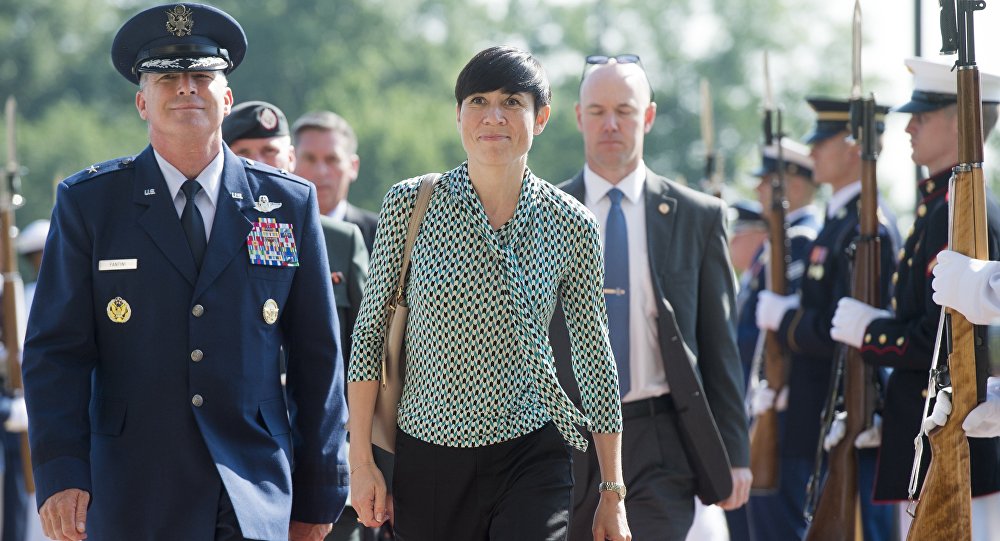
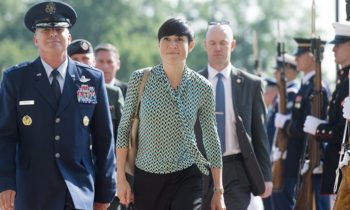
‘The situation in the vulnerable Sahel region has deteriorated since the crisis in Mali broke out in 2012. Instability and terrorism are impeding long-term development and depriving the population of an entire region of opportunities to create a better future. The Government has intensified its efforts in countries and regions affected by conflict and fragility, and we are now increasing our support for the Sahel region by a further NOK 15 million to around NOK 455 million,’ said Minister of Foreign Affairs Ine Eriksen Søreide.

Ms Eriksen Søreide is participating at a high-level conference on the Sahel in Brussels today, the aim of which is to mobilise financial and material resources to support cooperation between the Sahel countries in the areas of security and development. The five countries of the Sahel – Mali, Mauritania, Burkina Faso, Niger and Chad (the G5 Sahel) – are co-chairing the conference, together with the European Union, the United Nations and the African Union.

‘I am pleased to see the broad international support for the G5 Sahel cooperation. A well-coordinated regional effort is essential for combating transnational challenges such as terrorism, violent extremism and organised crime. At the same time, it is vital that the parties implement and comply with the Mali peace agreement signed in 2015,’ Ms Eriksen Søreide said.

Norway has a broad engagement in the Sahel region and is promoting stability and development through financial and military contributions to the UN mission in Mali (Minusma), bilateral and multilateral development cooperation, and humanitarian assistance.

The five Sahel countries have established a joint security initiative in the Sahel, the G5 Sahel Joint Force. The Norwegian contribution announced at today’s conference will be used to support the civilian components of the initiative, such as training in international humanitarian law and human rights for G5 Sahel troops and efforts to build trust between the troops and the local population.

The Norwegian Embassy in Bamako was opened earlier this year. The Embassy’s responsibilities include following up cooperation with Mali, Mauritania, Burkina Faso, Niger and Chad.

Norway’s engagement in Mali dates back to the time of the drought in the country in the 1980s. Broad cooperation involving Norwegian civil society groups and international partners was established to prevent famine, poverty and conflict in the region. Since then, Norway’s engagement has been expanded, and today includes efforts to promote education, peace and reconciliation, and support for stabilisation and democratisation processes. Norway’s participation in Minusma has strengthened the Government’s peace efforts in the region.

The additional contribution of NOK 15 million will bring Norway’s support for the Sahel region to approximately NOK 455 million in 2018. This is an overall increase of NOK 130 million compared with 2017. Norway’s contribution to the UN mission in Mali (Minusma) comes in addition to this, as does Norwegian support for the Lake Chad region. Norwegian support for the Lake Chad region totalled around NOK 700 million in 2017 and is expected to remain at a high level in 2018.

(Ministry of Foreign Affairs – Norway)
February 27, 2018 0 comments
0 FacebookTwitterPinterestEmail
Norwegian Aid

Norway increases funding for UN human rights efforts

by Nadarajah Sethurupan February 27, 2018
written by Nadarajah Sethurupan

Today, Norway entered into a four-year agreement on support for UN human rights efforts. ‘Human rights and democracy are under considerable pressure in many parts of the world. It is therefore important that Norway is increasing its support to the Office of the High Commissioner for Human Rights, politically as well as financially. We urge other countries to do so as well,’ said Minister of Foreign Affairs Ine Eriksen Søreide.

Foreign Minister Eriksen Søreide attended the opening of the 34th regular session of the Human Rights Council in Geneva today. Ms Eriksen Søreide signed a Memorandum of Understanding with the Office of the UN High Commissioner for Human Rights (OHCHR) on long-term, strengthened cooperation between Norway and OHCHR during the period 2018-2021. Norway has set aside up to NOK 150 million for 2018, an increase of NOK 20 million compared with 2017.

‘Seventy years after the adoption of the Universal Declaration of Human Rights, it is more important than ever to fight against the forces that are trying to undermine fundamental rights. OHCHR is a clear, principled voice in support of international norms and the principles of the rule of law. I am concerned that lack of financing is restricting the UN’s efforts to promote member states’ compliance with their human rights obligations,’ said Ms Eriksen Søreide.

Only about 3 % of the regular UN budget goes to OHCHR. Human rights are one of the three pillars of the UN, alongside peace and security and sustainable development.

‘Insufficient funding means that measures and resolutions to support human rights are not implemented in practice. This in turn weakens the impact of measures in other areas. If we are to succeed in creating lasting peace and in realising the sustainable development goals, human rights cannot be disregarded. Norway will continue to be at the forefront of international efforts to promote human rights,’ Foreign Minister Eriksen Søreide said.

For more information, see the Government’s white paper on human rights.

(Ministry of Foreign Affairs – Norway)
February 27, 2018 0 comments
0 FacebookTwitterPinterestEmail
Norwegian Aid

Norwegian Government calls on aid sector to intensify efforts to prevent sexual exploitation

by Nadarajah Sethurupan February 25, 2018
written by Nadarajah Sethurupan

Minister of Foreign Affairs Ine Eriksen Søreide and Minister of International Development Nikolai Astrup are urging all partner organisations that receive funding from Norway to intensify their efforts to prevent sexual harassment, violence and abuse committed by employees in the aid sector.
‘In crises all over the world, aid workers are doing invaluable work in challenging conditions. Also, this is a large sector with tens of thousands of employees. Cases that have come to light recently in the Norwegian and international press show that the aid community needs to do far more to combat misconduct and a negative culture in its own ranks. All forms of sexual harassment, exploitation and abuse are unacceptable, and in many cases they are also criminal acts. Norway will put this issue even higher on the agenda, both at political level and at senior official level,’ said Minister of Foreign Affairs Ine Eriksen Søreide.

Norway is one of the world’s largest donor countries and allocates approx. 1 per cent of its GNI to fight poverty and alleviate suffering in humanitarian crises around the world.

‘Norway is a significant actor in the field of international aid and development assistance. We expect all our partners to take their responsibility as employers seriously, whether they are UN organisations, parts of the International Red Cross and Red Crescent Movement, multilateral actors or non-governmental organisations. Employers must have adequate measures in place to prevent employees from sexually harassing or exploiting colleagues or members of the local communities they are serving,’ said Minister of International Development Nikolai Astrup.

In a letter to all partner organisations, the Ministry of Foreign Affairs (MFA) and the Norwegian Agency for Development Cooperation (Norad) set out the following expectations:

  • Norway expects all its partners to actively endorse the message that all forms of sexual harassment, exploitation and abuse are completely unacceptable.
  • Norway expects all organisations that receive funding from the MFA and Norad to have ethical guidelines and good systems in place for preventing, reporting, and dealing with sexual harassment, sexual abuse and gender-based violence carried out by, or against, their own employees.
  • Addressing this issue is an important part of the organisations’ responsibility as employers, and they also have a responsibility in relation to their partners and the local communities in which they are working.
  • The MFA and Norad will raise this issue routinely in their meetings with partners.
  • The MFA has separate procedures for following up Norwegian Junior Professional Officers in the UN.

Read the letter from the ministers.

https://www.regjeringen.no/en/aktuelt/letter_aidsector/id2590298/

February 25, 2018 0 comments
0 FacebookTwitterPinterestEmail
Defence

Chief of Norwegian navy visits NAS Jax

by Nadarajah Sethurupan February 23, 2018
written by Nadarajah Sethurupan

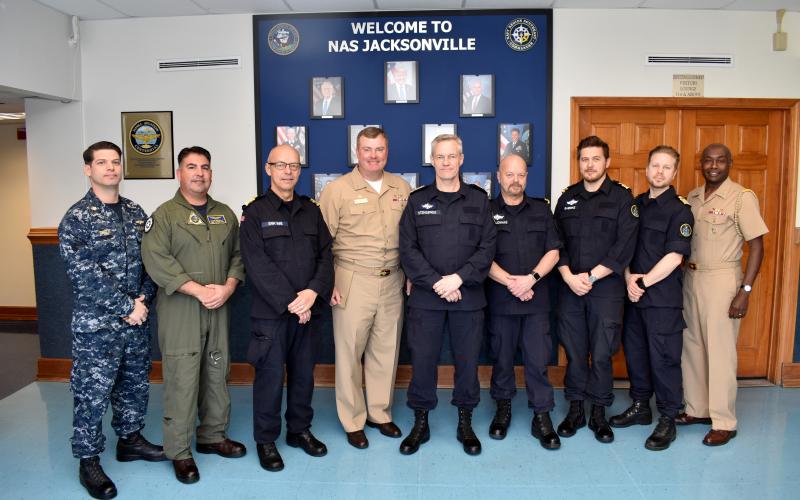
Commanding Officer of Naval Air Station (NAS) Jacksonville Capt. Sean Haley (fourth from left) meets with Rear Adm. Nils Anreas Stensønes (to his left) , Chief of the Royal Navy of Norway and other members of the Norwegian navy before their Distinguished Visitor Flight to USS Harry S. Truman (CVN 75) Feb. 15. / Photos by Reggie Jarrett

Chief of the Royal Navy of Norway Rear Adm. Nils Anreas Stensønes made a brief stop at Naval Air Station (NAS) Jacksonville on his way to fly out to USS Harry S. Truman (CVN 75) Feb. 15.

Stensønes, along with four other members of the Norwegian navy, flew out of NAS Jacksonville aboard a C-2 Greyhound to the Truman to observe the Composite Training Unit Exercise (COMPTUEX). He would spend a few hours on the Truman before flying on to the Royal Norwegian Navy frigate HNoMS Roald Amundsen (F 311), which was participating in COMPTUEX.

Stensønes began his United States trip Feb. 7 in Washington, D.C., where he met with Secretary of the Navy Richard V. Spencer and Chief of Naval Operations Adm. John Richardson.

“The high point of the trip is visiting the carrier battle group,” Stensønes said.

“My purpose was to observe our frigate integrate with the Harry S. Truman Battle Group and see how that was going.”
Stensønes was also looking forward to seeing his own Sailors. “It’s always a privilege to visit with your own Sailors when they at sea,” he said. “As an old Sailor, I love to go to sea. There is nothing that gives you as much energy as being around young Sailors.”

NAS Jacksonville Commanding Officer Capt. Sean Haley, who met with Stensønes, spoke of the importance of working with foreign navies. “It’s critical for us to continue to build upon those relationships that we have with nations that we routinely operate with,” he said. “It increases coordination and communication in our ability to operate together, which ultimately improves efficiency when we operate across the globe.”

Stensønes also recognizes the value in multi-national cooperation. “Norway is a small nation,” he said. “We are absolutely dependent on NATO and our allies. It is great training for our ships and it is also increasing interoperability, which is absolutely necessary for our alliance to be efficient.

(jaxairnews jacksonville)

February 23, 2018 0 comments
0 FacebookTwitterPinterestEmail
Defence

Successful F-35 drag chute test in Norway

by Nadarajah Sethurupan February 21, 2018
written by Nadarajah Sethurupan

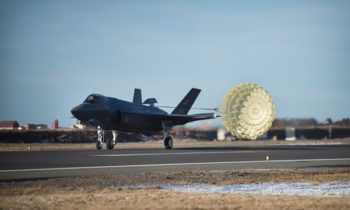
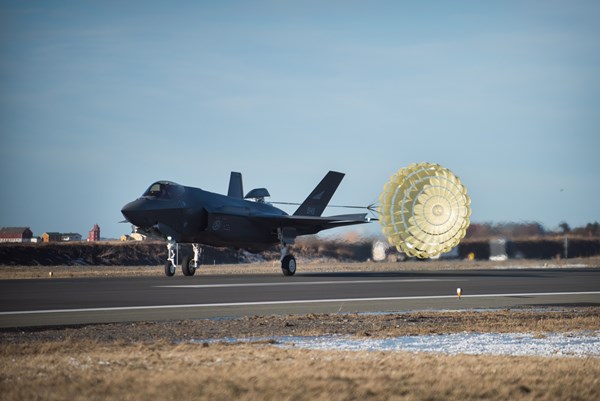
While The US Air Force is completing another round of cold-weather testing of the F-35A at Eielson Air Force Base in Alaska, Norway completed a successful verification of the drag chute system at Ørland Air Force Base in Norway February 16th.
− Receiving the first three aircraft in November 2017 was a major milestone for Norway. The program delivers on all key criteria: Time, cost and performance. Through the verification of the production version of the drag chute on our production model of the F-35, the weapons system is expected to fully qualify for arctic conditions this spring, says Major General Morten Klever, Program Director for the F-35 program in Norway’s Ministry of Defence.

Video can be watched on youtube: https://www.youtube.com/watch?v=q5aPvJakASc

The chute — unique to the Norwegian aircraft — is housed under a small fairing on the upper rear fuselage between the vertical tails. It is being added in order to rapidly decelerate Royal Norwegian Air Force F-35s after landing on the country’s icy runways when there are challenging wind conditions. Other country’s may adopt the system.

The Royal Norwegian Air Force had three aircraft delivered to Norway, Ørland in November 2017. From 2018, Norway will receive six aircraft annually up until, and including, 2024.

(Press release, MFA)

February 21, 2018 0 comments
0 FacebookTwitterPinterestEmail
Africa and Norway

Ethiopian Indigenous Leader Okello Akway Ochalla is Free!

by Nadarajah Sethurupan February 19, 2018
written by Nadarajah Sethurupan

Oakland, CA—On February 14, 2018, Mr. Okello Akway Ochalla, an indigenous Anuak leader, Norwegian citizen, and the former Governor of the Gambella region of Ethiopia, was released after being held as a prisoner on trumped up charges in an Ethiopian jail for nearly four years.

In March 2014, while visiting relatives in South Sudan, Mr. Okello was abducted in complete disregard of extradition treaties and international law, forcibly taken to Ethiopia, and charged under the country’s draconian Anti-Terrorism Proclamation. His crimes included speaking to the international media, such as the BBC and Voice of America, about the 2003 massacre of the Anuak people, and the ongoing plight of the people of Gambella.

In December 2003, over a period of several days, Ethiopian soldiers massacred over 400 Anuaks in Gambella. Mr. Okello, who was the governor of the region at the time and an Anuak himself, fled Ethiopia with his young children, making the perilous journey to South Sudan by foot, and eventually sought asylum in Norway. In the ensuing years, human rights abuses in the region – including the planned eviction of up to 225,000 people from their land to make way for large-scale agriculture investments – continued. Mr. Okello became an outspoken advocate for justice and the rights of his people to their life and land. It was this work that led to his unlawful detention.

Mr. Okello’s case is emblematic of the vicious disregard for rule of law in Ethiopia and the oppressive nature of the Ethiopian regime.

“From day one, Mr. Okello’s case has exposed the brutality of the Ethiopian regime,” said Anuradha Mittal, Executive Director of the Oakland Institute. “They kidnapped a man, forced him to sign a confession, made him endure solitary confinement, and put him through a seemingly endless and fraudulent legal process. In the end, he was sentenced to nine years in prison, all for speaking up for the rights of his people.”

“Over the past four years, the Oakland Institute has fought tirelessly, hand-in-hand with Mr. Okello’s family and lawyers, including defense lawyer Ameha Mekonnen and Lewis Gordon the Environmental Defender Law Center, to secure his release,” continued Mittal. “Today, we cannot undo the immense injustice that Mr. Okello and his family have borne, but we can celebrate his freedom. We remain committed to supporting Mr. Okello’s transition back home, and the plight of the numerous other political prisoners currently held in Ethiopia.”

“I would like to thank the Oakland Institute for its devotion to my father’s case, and commitment to see him free,” said Obok Akway, Mr. Okello’s son. “When the world turned their back on my father, everyone at the Oakland Institute was there to support him and my family.”

Mr. Okello’s release comes in the wake of the Ethiopian government’s recent pledge to free some of the countless political prisoners currently held in the country and close its notorious detention facility, the Maekelawi police station. For years, thousands have been prosecuted and tortured for speaking out about land grabbing and the human rights and governance crises in the country. This includes opposition politicians, indigenous and religious leaders, students, journalists, and more.

“While we celebrate that Mr. Okello is free, the release of some political prisoners is far from enough,” said Mittal. “Thousands continue to languish behind bars; repressive legislation, like the Anti-Terrorism Proclamation, remains in effect; and the government’s development policy continues to marginalize and dispossess indigenous groups from their lands and livelihoods. As long as the economic development of the country takes place at the expense of basic human rights, we will continue our work.”

(oaklandinstitute)

February 19, 2018 0 comments
0 FacebookTwitterPinterestEmail
Russia and Norway

Mishandling of spent nuclear fuel in Russia may have caused radioactivity to spread across Europe

by Nadarajah Sethurupan February 17, 2018
written by Nadarajah Sethurupan

For 2 weeks in September and October last year, traces of the humanmade isotope ruthenium-106 wafted across Europe, triggering detectors from Norway to Greece and Ukraine to Switzerland. The radioactive cloud was too thin to be dangerous, containing no more than a few grams of material, but its origin posed an outsize mystery.
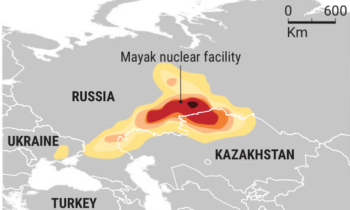
Now, scientists at the French Institute of Radioprotection and Nuclear Security (IRSN) in Paris say the isotope may have been released from the Mayak nuclear facility near Ozyorsk in southern Russia. IRSN argues that the leak could have taken place when Mayak technicians botched the fabrication of a highly radioactive component for a physics experiment at the Gran Sasso National Laboratory in L’Aquila, Italy.

The Russian government and state nuclear operator Rosatom have vehemently denied that an accident took place, however. Meanwhile, an international committee set up by the Russian Academy of Sciences’s Nuclear Safety Institute (IBRAE) in Moscow that met on 31 January is divided over the origins of the pollution.

Based on a computer model that used the air-sampling data and weather patterns, IRSN concluded in early October 2017 that the ruthenium most likely originated in the southern Urals; its German counterpart agreed. The French team went on to rule out a number of potential sources, including a mishap at a nuclear reactor. Such an incident would have spewed many other radioactive pollutants besides ruthenium.

The southern Urals are home to the secretive Mayak facility, the scene of one of the world’s worst nuclear accidents 60 years ago, and speculation soon turned to a possible accident at its reprocessing plant, which extracts isotopes from spent nuclear fuel. The IRSN report, made public on 6 February, says Mayak’s attempt to manufacture a capsule of cerium-144 destined for Gran Sasso “should be investigated” as a possible cause. Scientists at Gran Sasso needed the cerium for a search—now called off—for hypothetical particles called sterile neutrinos.

The estimated amount of radioactive ruthenium released could only have come from processing several tons of spent nuclear fuel, IRSN says. What’s more, the ratio of ruthenium-106 to the faster-decaying isotope ruthenium-103, detected in smaller amounts last autumn, reveals that the fuel must have been removed from its reactor only a year or two earlier. Spent fuel is normally cooled for up to a decade before it is reprocessed, so it seems the plant was preparing material for an application requiring high levels of radioactivity, IRSN says.

That fits the description of the sterile neutrino experiment at Gran Sasso, known as SOX and supported by Italy’s National Institute for Nuclear Physics (INFN) and the French Alternative Energies and Atomic Energy Commission. It required a source that was both extremely radioactive and very small, says SOX spokesperson Marco Pallavicini, a particle physicist at the University of Genoa in Italy. He says Mayak Production Association, the only company able to supply it, signed a contract in fall 2016 to produce a cerium capsule, expected to arrive in early 2018.

But in December 2017 the company stated it could not reach the desired radioactivity level. (“The Russians said absolutely nothing” about a radiation leak, Pallavicini says.) That meant SOX would lack the required sensitivity, and on 1 February, INFN announced it had axed the experiment, in what Pallavicini described as “a big blow” for scientists.

Jean-Christophe Gariel, IRSN’s director of health, says an uncontrolled temperature rise during the separation of cerium from the spent fuel at Mayak might have converted some of the ruthenium in the waste to gaseous ruthenium oxide. That gas would have escaped through the facility’s filters and solidified in the cool outside air, he says, turning into small solid oxide particles that could have wafted across Europe.

IBRAE Director Leonid Bolshov calls IRSN’s scenario “a good hypothesis,” but says it’s incorrect. For one thing, he says, the separation process never reached “the hot phase.” And in any case, he adds, “major operations” on the spent fuel at Mayak were done in late October 2017, after the ruthenium release. Bolshov says that a “rather rare meteorological event” might have transported the ruthenium from an as-yet-unidentified place to the southern Urals, from which it then appeared to spread.

Non-Russian members of IBRAE’s international panel, which is due to meet again in April, support IRSN’s conclusion that the southern Urals is the likely source of the leak, says IRSN physicist Jean-Luc Lachaume, a panel member, although some argue that the region is too large to pinpoint an exact location. Russian members claim the leak could have arisen “in the eastern part of the Russian federation,” Lachaume says. He says a representative of the Russian nuclear regulator Rostechnadzor who inspected Mayak in November 2017 told the panel that he saw no anomalies from a month earlier, but didn’t supply data to support that statement.

Princeton University physicist Frank von Hippel, a nonproliferation expert, says he doesn’t see “anything wrong with the IRSN analysis.” He notes that the amount of ruthenium-106 that the French team estimates was emitted—between 1 gram and 4 grams—matches the 30 grams of cerium-144 required for SOX, given that spent fuel contains the two isotopes in a ratio of about one to 14. And although the cloud over Europe was harmless, an accident at Mayak could mean that people living close by took in “potentially significant lung doses,” Von Hippel says.

(sciencemag)

February 17, 2018 0 comments
0 FacebookTwitterPinterestEmail
Royal House

Crown Prince Haakon concludes his visit to South Korea

by Nadarajah Sethurupan February 17, 2018
written by Nadarajah Sethurupan

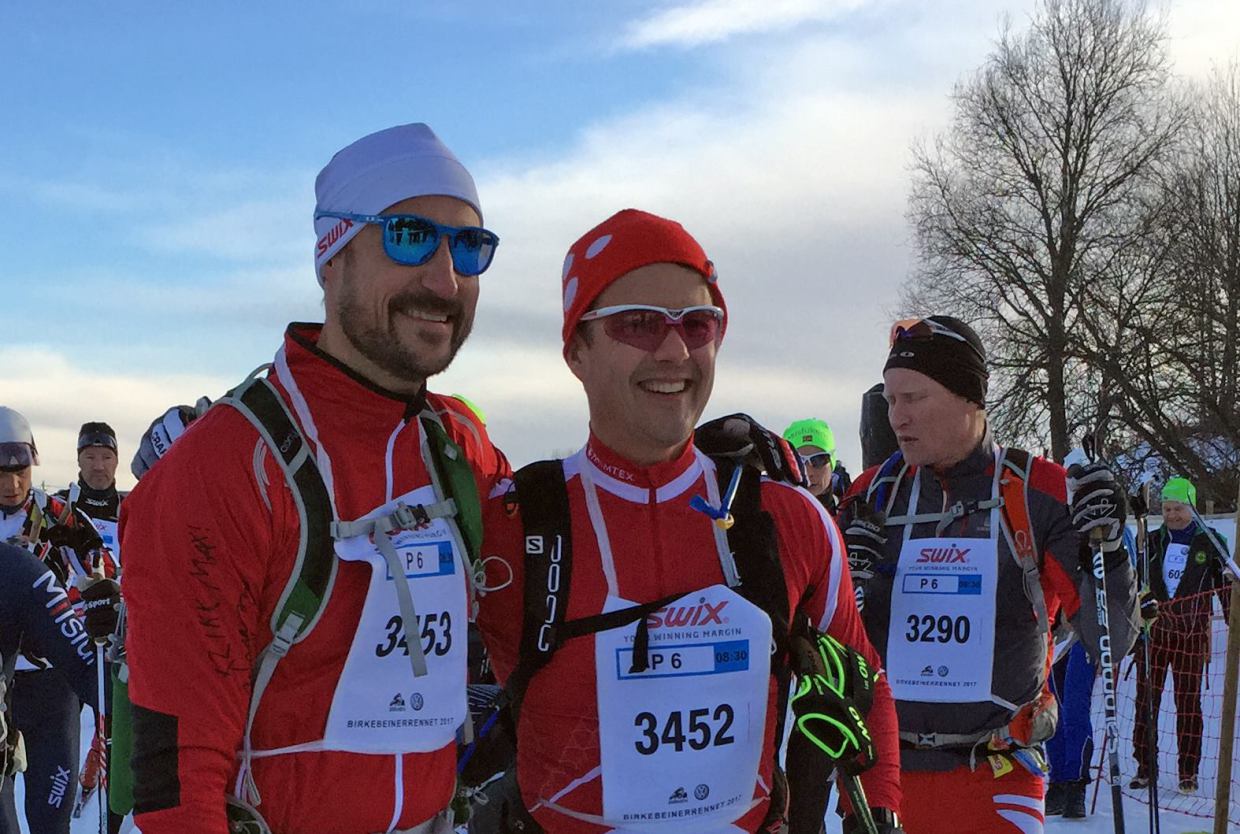
Crown Prince Haakon of Norway and Crown Prince Frederik of Denmark participated in the Birkebeinerrennet in 2017. Photo: Gunn-Eva Høgseth, Det kongelige hoff / The Royal Court.

His Royal Highness Crown Prince Haakon ended his three-day visit to the Olympic city of Pyeongchang yesterday. On his last day, the Crown Prince was a witness to a historic day for Norway. Norway has never had such a good day when it comes to victory in the Olympic Games as yesterday. Norway won six medals: three gold, two silver and one bronze.

The Crown Prince started his last day in South Korea by watching Aksel Svindal and Kjetil Jansrud win gold and silver in alpine skiing. Before the race, the Crown Prince was given a guided tour together with the Norwegian national team in alpine skiing and talked with the athletes and coaches.

After this event, His Royal Highness witnessed Ragnhild Mowinckel win silver in women’s alpine skiing. This was Norway’s first female alpine medal in the Olympic Games since 1936. The Crown Prince then continued his hectic programme when he saw Ragnhild Haga win gold and Marit Bjørgen win bronze in cross country skiing. The day concluded when Johannes Thingnes Bø won Norway’s third gold, in the biathlon.

Crown Prince Haakon has had a jam-packed programme in the last three days. He has talked to most Norwegian athletes in all the sports Norway participated in and received a lot of information about the Norwegian athletes and their techniques.

After talking to gold medal winner Johannes Klæbo on the second day, they met the press together. Norwegian television NRK asked His Royal Highness if he had received any tips that he could use when he participates in the “Birkebeinerrennet”.

Birkebeinerrennet is a ski race with royal history and was established in 1932 in memory of the trip that Torstein Skevla and Vald Skrukka had with King Haakon Håkonsson in 1206. The race takes place between the Norwegian mountain villages of Lillehammer and Rena and is 54 kilometres long.

The Crown Prince has participated in the competition in many consecutive years, and last year, Crown Prince Frederik of Denmark also participated. However, Crown Prince Haakon revealed that he would not take part this year. His Royal Highness would not go into detail why he will not attend but said he, unfortunately, did not have time this year.

(royalcentral)

February 17, 2018 0 comments
0 FacebookTwitterPinterestEmail
NATO and Norway

Belgium joins Allied effort to deliver air-to-air refueling capacity

by Nadarajah Sethurupan February 15, 2018
written by Nadarajah Sethurupan

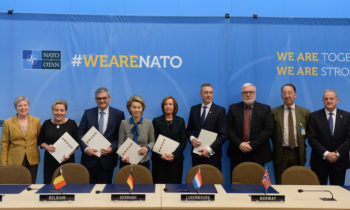
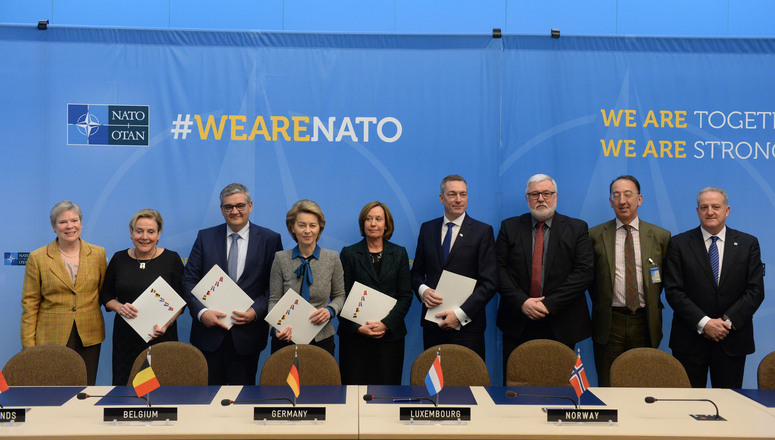
On Wednesday (14 February 2018), Belgium joined a multinational effort to acquire a European multinational fleet of Airbus multirole tanker–transport (MRTT) aircraft. At a signing ceremony at NATO Headquarters in Brussels, Defence Ministers from Belgium, Germany, Luxembourg, the Netherlands and Norway celebrated Belgium’s official accession to this effort.

The initiative has been supported by NATO and the European Union. It is an example of effective cooperation between the two organizations when delivering critical capabilities for its members.

Deputy Secretary General Rose Gottemoeller said: “Increasing our ability to keep our planes flying – for longer periods and farther distances – has a direct bearing on our ability to defend our citizens and our territories.”

The project was launched in July 2016 through an order of two Airbus A330 MRTT aircraft by the Netherlands and Luxembourg, and has expanded steadily. With Belgium joining, the multinational fleet will now grow to eight aircraft, which are scheduled for delivery between 2020 and 2024. The aircraft can be configured for air-to-air refuelling, the transport of passengers and cargo, as well as medical evacuation missions. The multinational fleet will be operated from a Main Operating Base in Eindhoven (Netherlands) and a Forward Operating Base in Cologne (Germany).

This multinational fleet arrangement will substantially increase European capacity in air-to-air refueling and reduce the over-reliance on the United States in this area. It remains open to other participants.

(N.Sethurupan, NATO)

February 15, 2018 0 comments
0 FacebookTwitterPinterestEmail
Norwegian Aid

Norway to increase support to Iraq to USD 44 million

by Nadarajah Sethurupan February 14, 2018
written by Nadarajah Sethurupan

‘Iraqi cities have been freed from the terrorist group ISIL’s control. We are now increasing our aid to the liberated areas, so that even more internally displaced people can return home safely,’ said Minister of Foreign Affairs Ine Eriksen Søreide, who is participating today in the Kuwait International Conference for the Reconstruction of Iraq.

 The conference is being organised by Iraq and Kuwait in cooperation with the World Bank. Minister of Foreign Affairs Eriksen Søreide will announce that Norway will increase its aid to Iraq for 2018 to NOK 350 million (approx. USD 44 million). Of this amount, NOK 240 million will go to measures to promote stabilisation and reduce fragility. This is an increase of 20 % from last year. NOK 110 million will be used, amongst other efforts, to provide education, improve access to water and sanitation, and put in place protection measures for internally displaced people, vulnerable local communities and Syrian refugees in Iraq.

‘We are now entering a challenging transition phase. Some 4.5 million Iraqis are currently living in areas liberated from ISIL’s rule of terror. Norway’s aim is to support Iraq’s efforts to ensure that the vulnerable civilian population has a better future, and to prevent the terrorist group ISIL from gaining a new foothold in the country. Some of the funds from Norway will be used to rebuild homes that have been destroyed, to clear mines and explosives, and to help civilians affected by sexual and gender-based violence,’ said Ms Eriksen Søreide.

Ms Eriksen Søreide also emphasised that it is crucial that Iraq carries out political and economic reforms that can help to prevent inequality and instability, and that can promote genuine political reconciliation in Iraq.

Over 2.6 million people are still internally displaced because of ISIL’s reign of terror and also because of the fight against the terrorist group. Homes and infrastructure have been destroyed, and there are still a large number of landmines and explosives in the affected areas. This is further exacerbating the situation for those who have already returned and those who are still internally displaced.

According to the UN, around 8.7 million Iraqis are in need of humanitarian assistance. Norway will continue to provide substantial amounts of humanitarian aid.

‘Important progress has been made in the fight against the terrorist group ISIL. However, Iraq will continue to need significant support in the time ahead. Many internally displaced people do not yet feel it is safe to return home. Our aim is to enable the safe and voluntary return of these people by supporting stabilisation efforts,’ said Ms Eriksen Søreide.

The Government has drawn up a framework for Norway’s engagement in conflict prevention, stabilisation and resilience building. Norway has a broad political, humanitarian and military engagement relating to the conflicts in Syria and Iraq. As a member of the global coalition against ISIL, Norway is providing both military and civilian support for stabilisation efforts in Iraq.

(Ministry of Foreign Affairs – Norway )
February 14, 2018 0 comments
0 FacebookTwitterPinterestEmail
Environment

WHO’s Alessandro Demaio Appointed CEO of EAT

by Nadarajah Sethurupan February 13, 2018
written by Nadarajah Sethurupan

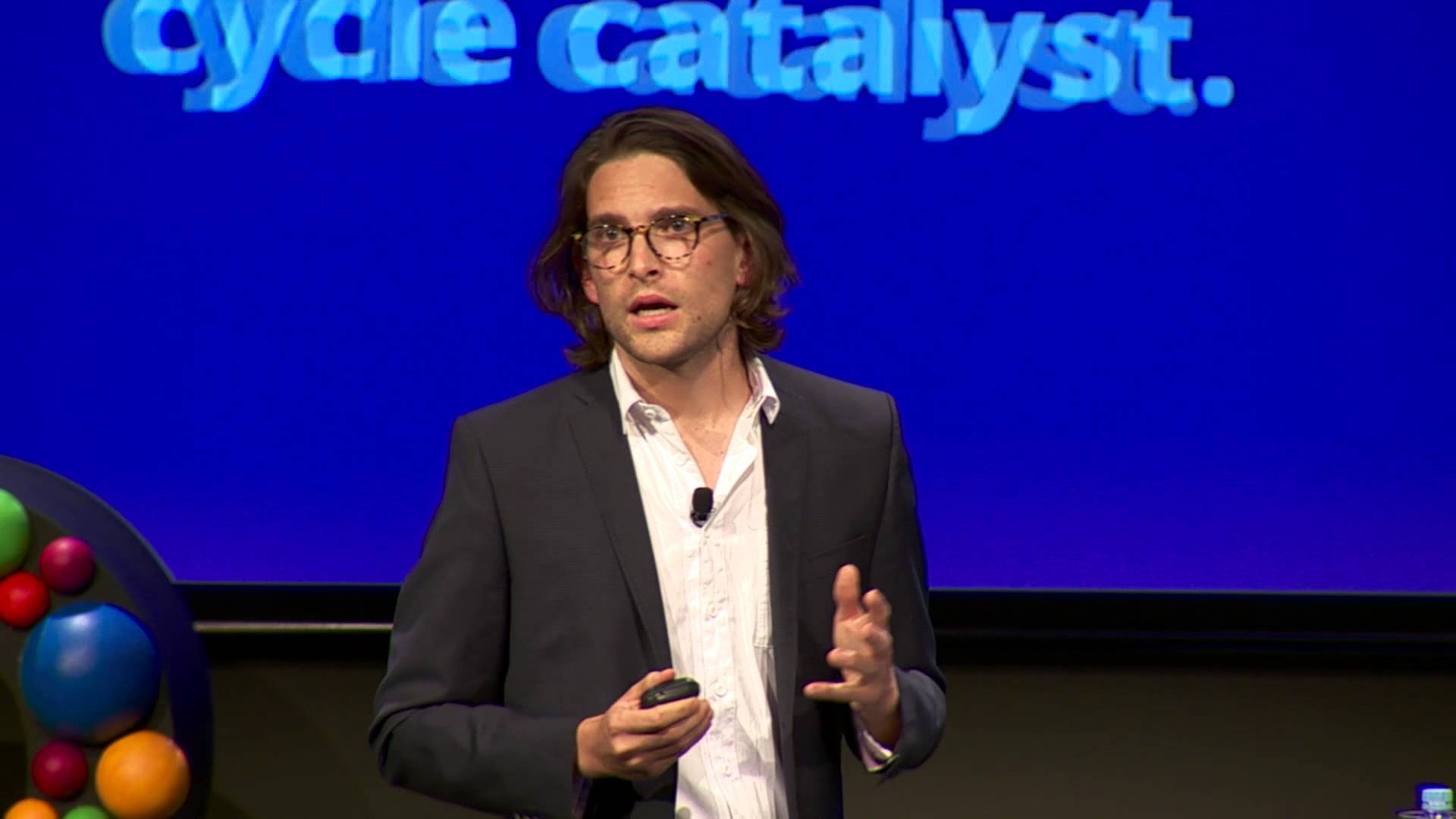
OSLO, February 7th 2018 – EAT is pleased to announce the appointment of Alessandro Demaio, MD, MPH, PhD, as its new chief executive officer. Currently a Medical Officer at the World Health Organization, Demaio will assume his role in April 2018.
 “Sandro encapsulates the essence of EAT: a visionary thinker who is led by science, a relationship-builder who dares to be disruptive,” said Gunhild A. Stordalen, President and Founder of EAT. “He brings a wealth of experience to the role, from his years at the WHO, to teaching public health and co-founding NCDFREE, a global social movement against noncommunicable diseases. Sandro has been an advisor to EAT since its inception. I am confident that with his scientific knowledge, his deep understanding of our organization and his passion for our mission, he is well equipped to lead EAT on its journey to becoming the leading platform for global food systems transformation. We are delighted to have him onboard.”

 A medical doctor by training, Demaio is an expert on issues of noncommunicable diseases, public health, nutrition and health policy. He joined the Department of Nutrition for Health and Development at the World Health Organization’s global headquarters in 2015, as Medical Officer for Noncommunicable Conditions and Nutrition. Since 2017, he is also co-host of the ABC television show Ask the Doctor – an innovative and exploratory factual medical series broadcasting weekly across Australia.

 “Food is our missing silver bullet for both planetary and human health,” said Demaio. “It is at the heart of almost every culture; our common language in an increasingly fragmented world. I am thrilled to join this dynamic and fast-growing organization, with such a critical mission—providing healthy and sustainable food for all. The mission of EAT has never been more important, nor urgent.“

 Demaio trained and worked as a medical doctor at The Alfred Hospital in Australia. While practicing as a doctor he completed a Masters in Public Health, including fieldwork to prevent diabetes in Cambodia. He completed his PhD with the University of Copenhagen, focusing on noncommunicable diseases. Demaio held a Postdoctoral Fellowship at Harvard Medical School from 2013 to 2015, and was Assistant Professor and Course Director in global health at the Copenhagen School of Global Health, in Denmark. To date, he has authored over 23 scientific publications and more than 85 articles.

 His appointment follows an extensive five-month global search.

Demaio will take over from EAT’s Interim CEO Clare Matterson, who will return to EAT’s Board of Trustees. Matterson served as Vice Chair of EAT’s Board of Directors from 2014 to 2017, representing the Wellcome Trust, one of EAT’s three co-founders. Matterson starts her new position as Director of Engagement for the Natural Museum of History in London in March 2018, initially dividing her time with her commitment to EAT.

(N.Sethu)

February 13, 2018 0 comments
0 FacebookTwitterPinterestEmail
Science

High performance crew transfer vessel is based on proven military design

by Nadarajah Sethurupan February 12, 2018
written by Nadarajah Sethurupan

In the last 18 months, a number of new designs have been launched in the market for high-speed crew transfer – the latest is based on an evolved version of a hullform used on the Royal Norwegian Navy’s fast missile craft


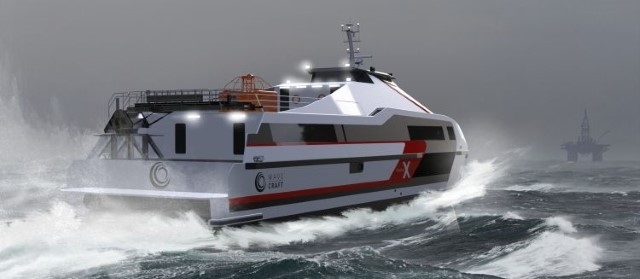
Umoe Mandal in Norway has developed a further version of its Wavecraft Voyager family, the Voyager 38 X, a high-performance crew transfer vessels for the offshore oil and gas sector.

Based on technology originally developed and used by Umoe Mandal for military applications, the Wavecraft Voyager 38 X was designed to reduce transit time, enhance passenger comfort, safety and efficiency and reduce costs compared with existing designs.

The Royal Norwegian Navy’s Skjold-class missile craft make use of the same air-cushion catamaran/surface-effect ship technology. The same hullform was also used on the Royal Norwegian Navy’s Oksøy-class minehunters and minesweepers. As with the commercial versions of the design, the reduced wetted surface of the hullform significantly reduces wave resistance compared to a conventional hull configuration.

The Voyager 38X makes use of enhanced air-cushion catamaran/surface-effect ship technology combined with a sophisticated motion control system that compensates for vertical wave motion, offering comfortable transit and safe access to other vessels and installations offshore. The vessel can be fitted with a gangway and a SeaSpyder personnel transfer system.

The vessel is designed to transport 150 passengers and a crew of six at speeds of up to 55 knots, with excellent seakeeping, even in high sea states, good fuel efficiency and reduced emissions.

The Voyager 38 X can be delivered in accordance with the requirements of all major classification societies and complies with US Coast Guard and ABS A1 HSC Crew boat, Circle E + AMS + DPS-2 classification. Applying the latest in high-speed diesel engine and SCR technology, the Voyager 38 X meets stringent environmental standards and complies with EPA Tier 4 requirements.

In December 2017, the company announced that, as part of the MAROFF-2 programme for research, innovation and sustainability in the marine and offshore industries, Umoe Mandal had been granted funding for further development of the Wavecraft design concept for the offshore oil and gas sector.

Umoe Mandal said it would focus on optimising the concept, focusing on the most important hull parameters in order to reduce the weight of the hull and hence reduce fuel consumption and emissions. Other focus areas will include enhanced propulsion solutions and fire safety. The company said it planned to use a number of different techniques, including simulation, model testing, computational fluid dynamics and finite element modelling.

The overall objective of the project is to further develop the surface-effect ship and air-cushion catamaran technology used in the Wavecraft in order to develop a more competitive vessel with regard to construction and operating costs.

Umoe Mandal partnered with the Research Council of Norway on an earlier MAROFF project developing the Wavecraft concept for use as a high-speed crew transfer vessel for the renewable energy industry. The MAROFF programme aims to support and provide funding for Norwegian companies and research institutions.

Earlier in 2017, Umoe Mandal developed other versions of the Wavecraft, including the Voyager 32 and Voyager 38W2W (in which W2W stands for walk-to-work) for the offshore oil and gas sector.

The company has also incorporated class 2 dynamic positioning into its designs. This optional feature is intended to meet customer and regulatory requirements whilst improving the safety of crew transfer to/from rigs and other offshore installations. As the company also noted, DP2 will also provide Wavecraft vessels with greater operational freedom in congested environments, such as in offshore windfarms or where other vessels and installations may be present.

(N.Sethu, osjonline)

February 12, 2018 0 comments
0 FacebookTwitterPinterestEmail
Asia and Norway

Norwegian national still in prison

by Nadarajah Sethurupan February 12, 2018
written by Nadarajah Sethurupan

Seven of the 10 foreigners arrested on pornography charges after a pool party in the Cambodian tourist town of Siem Reap have been deported, a court official said on Monday.

Police accused the group of “singing and dancing pornographically” after their arrest two weeks ago at a party in a private villa in Siem Reap, the launchpad for visitors heading to Cambodia’s famed Angkor Wat temples.

A Siem Reap court charged them with producing pornographic pictures and materials and a prosecutor said party organisers circulated obscene images online to promote the bash.

The group of Five Britons, two Canadians, a Norwegian, a New Zealander and a Dutch national faced up to a year in prison but their lawyer sought and received bail for seven of them on grounds that they had not organised the party.

Court spokesman Yin Srang said on Monday that the court “deported them from the country” as part of the bail decision, although the charges against them have not been formally dropped.

“They have left Cambodia. We gave them back their passports,” he said.

Their lawyer Ouch Sopheaktra confirmed that the seven had left the country and said he had no plan to ask for bail for the remaining three, a British, Dutch and Norwegian national.

All 10 defendants denied the allegations, saying only that they were wearing “sexy” clothing but were not nude and had not produced pornography.

Authorities have yet to announce a date for the trial.

Cambodia is a largely Buddhist country and the temples of Angkor Wat are considered sacred, leading to arrests of foreigners for taking racy photos at the ruins and a ban on wearing skimpy clothing there in 2016.

But the gateway town of Siem Reap where the party took place has a lively nightlife and many bars and restaurants.

(theguardian)

February 12, 2018 0 comments
0 FacebookTwitterPinterestEmail
Politics

Steep rise in visa charge for international students

by Nadarajah Sethurupan February 11, 2018
written by Nadarajah Sethurupan

A sharp increase in the visa application charge for international students, plus a significant increase in the minimum amount that international students must deposit in the country before beginning their studies in Norway, have drawn criticism from student groups and political opponents.

The changes were introduced in January. Since the start of 2018, handling charges for visa applications for international students to Norway have been raised from NOK3,200 (US$414) to NOK5,300 (US$685), a jump of 65%, the web-based newsletter, Khrono of Oslo Metropolitan University, reported.

This is far higher than similar charges in neighbouring countries Sweden (US$126), Denmark (US$350) and Finland (US$371).

The Norwegian government – which is now a three-party coalition comprising the Progress Party (an anti-immigration party), the Conservative Party and the Liberal Party – in January also increased the minimum sum that international students will have to prove they have deposited for studying in Norway from NOK103,900 (US$13,400) to NOK111,657 (US$14,400) per year.

But the leader of the International Students’ Union of Norway (ISU), Eric Kimathi, said the rise in visa charges is “unjust”, was made without warning, and is “hitting international students hard”. “Most international students are funding their studies themselves and can work only 20 hours per week,” he said.

In a statement, ISU said these increases would “continue to marginalise international students, adding further concerns about their future in the country, while at the same time impeding prospective students from applying in future years”.

Daylight robbery

An opposition member of the parliamentary higher education committee, Nina Sandberg, a Labour MP, said the visa increase was “daylight robbery”. She accused the government of talking up internationalisation while in practice “weakening student mobility and hence the quality of higher education”.

Sandberg alleged that the increased fee for visa applications was a way of “introducing tuition fees through the back door”. She said fewer students from abroad were getting the chance to study in Norway and now the chances had been weakened further for those with fewer resources.

Jone Trovåg, international officer for the National Union of Students in Norway (NSO), suggested to University World Newsthat the government was trying to find another way to “claw back money from international students” after previously pushing for but failing to secure the introduction of tuition fees.

Sandberg told University World News that the number of students from outside the European Economic Area, and particularly the number from developing countries, has decreased significantly since the quota scheme for students from developing countries was closed in 2015.

“[The inflow of] African students and students from poor countries has almost dried up,” she said.

That programme had accepted 1,100 students a year, 800 of them from Africa, Asia and Latin America, but it was closed to switch resources, with 60% going into institutions with partnerships with institutions in the South and 40% into two-way institutional collaborations and research collaborations with BRICS countries – Brazil, Russia, India, China and South Africa – and Japan.

Mari Sundli Tveit, professor and rector of the Norwegian University of Life Sciences and chair of the Norwegian Association of Higher Education Institutions, said that given that an international student community is of great value to Norwegian higher education, and internationalisation and student mobility are important components of quality of education, “it is important to avoid obstacles to international student mobility, and the increase in the handling charge for visa applications can constitute a severe hindrance to attracting international students”.

(universityworldnews)

February 11, 2018 0 comments
0 FacebookTwitterPinterestEmail
Racism in Norway

Protests mount against Norwegian Child Welfare Service

by Nadarajah Sethurupan February 10, 2018
written by Nadarajah Sethurupan

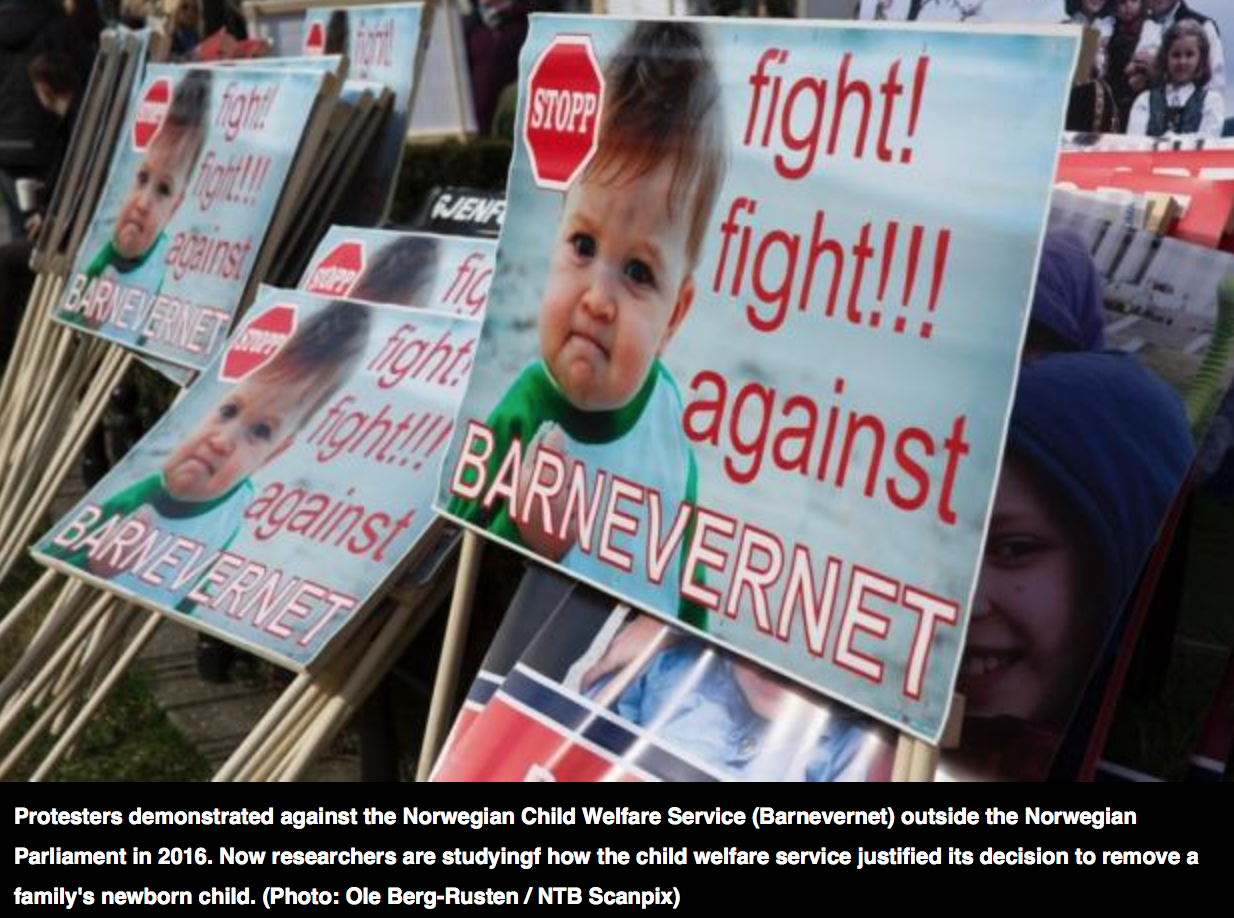
Researchers are working to understand why Norway’s child protective services sometimes resort to the dramatic step of taking a child from its mother right after birth.
 

Several thousand activists have been demonstrating against the Norwegian Child Welfare Service (Barnevernet), both in Norway and worldwide.

The European Court of Human Rights (ECHR) now has a number of Norwegian child welfare cases on the docket waiting to be heard.

And in 2016, Czech President Miloš Zeman went so far as to compare Barnevernet with Nazi Germany.

Norway’s child welfare system and its fundamental values are under fierce attack.

Important to know more

Marit Skivenes, a professor at the University of Bergen (UiB), says that may not be so surprising. The Barnevernet interventions have been huge. Going in and removing a child has big consequences.

She believes it’s important to know more about what lies behind these dramatic actions.

Ida Juhasz recently embarked upon a doctorate to review all Norwegian care order decisions from 2012 through 2016. She is one of the UiB researchers delving into actual care order protection cases to see how the child welfare authorities justified them.

The data focuses on interim care order decisions for newborns who were still in hospital and hadn’t yet moved home with their parents.

A quarter of parents agreed

Juhasz initially examined 58 cases from 2015 and 2016. She recently shared her preliminary results with a seminar audience in Oslo, under the auspices of the Research Council of Norway.

A care order decision was taken in 91 per cent of these cases. The County Social Welfare Board acts as a tribunal and makes the determination in such cases.

The average age of the children was 3.5 months old when care orders were granted.

In 27 per cent of the cases, parents agreed to placing the child in foster care.

Mental health given as main reason

Juhasz started by looking at the mothers’ backgrounds and found several reasons for children’s removal.

The cases are often complex, she says, but one issue surfaced more prominently than the others.

“In 71 per cent of the cases, concern about the mother’s mental health was the main reason for granting a care order where one or more diagnoses were established,” she says.

Drug abuse turned out to be less of a reason for children being in care than Juhasz imagined. In 73 percent of the cases, the mother’s drug issue was not the main problem.

In half of the cases, children were born healthy and had no visible signs of being exposed to substance abuse in utero.

Juhasz will also look into fathers’ backgrounds later in her research.

Cognitive limitations

In 40 per cent of the cases, the mother’s cognitive limitations posed the greatest concern for child welfare workers.

“Reports state that the mother’s skill level is well below normal functioning,” says Juhasz. The limitations may involve extensive learning difficulties or mild to moderate developmental disabilities.

Often history with child welfare service runs deep

The researcher has also considered parents’ previous history with Barnevernet.

In 55 per cent of the cases, parents had previously lost care of a child. The mother also had her own child welfare background in 47 per cent of the cases, having received either support services or placement in a child welfare institution.

Strasbourg emphasizing children’s rights

The European Court of Human Rights has taken up nine Norwegian child welfare cases. Just before Christmas the ECHR delivered its first judgment.

Skivenes recently received a European scholarship to investigate the quality of the assessment done when Barnevernet removes children from their parents.

She has studied the judgment and sees a new pattern emerging in the Strasbourg court cases.

“Human rights have generally only addressed adults. Now more emphasis is being placed on children’s rights and the UN Convention on the Rights of the Child,” she says.

The recent ECHR judgment is an example of this shift, she believes.

Vulnerable mother

A mother had her newborn taken from her in 2008. The boy is now nine years old and has lived with his adoptive family since he was three weeks old.

Skivenes says that the birthmother contacted Barnevernet when she was six months pregnant. When the boy was born, mother and child moved into a parent-child institution.

“The mother was vulnerable and needed care. She took little notice of her baby or of his need for food and care. After three weeks she wanted to move from the family centre with her child. Child welfare authorities believed this would put the baby at risk and placed him in a foster home.

Roots severed or safety secured?

The birthmother sent a complaint to the EHRC in 2013 after she had appealed the adoption to the District Court.

Norway prevailed in the EHRC suit.

But the verdict was not without dissent, says Skivenes.

“A minority of the judges argued that the adoption was a violation of human rights. They believed that the adoption would sever the child’s biological roots and that this was not in the child’s best interest,” she says.

According to Skivenes, this argument is based on the adults’ perspective. The rights and interests of the child aren’t mentioned.

This view is in stark contrast to how the majority of the judges argued in the case.

The foster parents are the child’s actual and psychological parents, these judges argue. They believe that the boy has an independent interest in not changing his family situation. He is vulnerable and needs security and predictability. An adoption would strengthen his ties to his foster parents and give him increased security.

“We’re seeing that the court is considering the child’s perspective more in these cases. It’s a good development,” believes Skivenes.

————————————-

Read the Norwegian version of this article at forskning.no.

February 10, 2018 0 comments
0 FacebookTwitterPinterestEmail
Norwegian Aid

Norway pledges NOK two billion to the Global Partnership for Education

by Nadarajah Sethurupan February 10, 2018
written by Nadarajah Sethurupan

‘Norway is one of the largest donors to the Global Partnership for Education and we urge other donors to increase their support. Together we will continue our efforts to ensure that all children and young people have access to education, especially girls who are still being excluded,’ said Minister of International Development Nikolai Astrup.
The Minister of International Development will announce Norway’s contribution for the period 2018–2020 at the Financing Conference of the Global Partnership for Education (GPE) that takes place in Dakar, Senegal, today. Over the next three years, Norway will provide a total of NOK 2.07 billion, an increase of NOK 600 million compared to our contribution for the period 2015-2017. The Norwegian pledge will contribute to provide training for 1.7 million more teachers and to enable an additional 19 million children to complete primary education.

‘Education is of crucial importance for combating poverty and fostering social development. Some 264 million children and young people are out of school. In addition, there are many places where the quality of education is so poor that children do not even learn basic skills such as numeracy and literacy. This has major consequences in social, economic and security terms, both for the countries that are lagging behind and for the rest of the international community,’ said Mr Astrup.

The GPE is a partnership of donors, developing country partners, international organisations, civil society organisations, the private sector and philanthropic foundations. Its main objective is to support countries’ own plans for education, especially primary education.

Support provided during the previous funding period, when Norway was the third-largest donor, has produced good results. In 2015, the number of children enrolled in primary schools in the GPE’s developing country partners was 75 million higher than in 2002. Niger has used GPE funding to improve the quality of education by introducing mother tongue instruction, developing a new curriculum, improving the learning environment and recruiting trained teachers. As a result of these reforms, 78 % of children are now completing primary education, compared with only 51 % a few years ago.

‘Norway’s support for the GPE in the years ahead will focus on girls’ education, the inclusion of children with disabilities, teacher effectiveness and learning outcomes, and how work in the school sector at country level can be made more effective,’ said Mr Astrup.

Norway is at the forefront of international efforts to promote global education. More information is available here.

(Ministry of Foreign Affairs)
February 10, 2018 0 comments
0 FacebookTwitterPinterestEmail
Environment

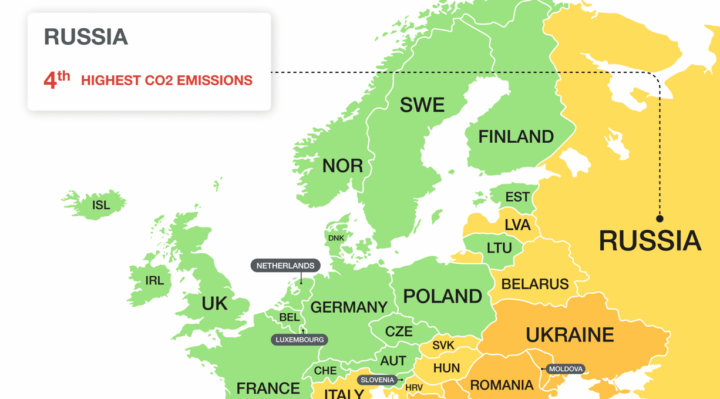
New Map Reveals Which Countries are Most Likely to Survive Climate Change

by Nadarajah Sethurupan February 9, 2018
written by Nadarajah Sethurupan

Climate change is real, and it’s happening. But will you survive it?

Melting ice caps, record high temperatures and rising sea levels are just some of the telltale signs.

Climate change is one of the most pressing crises facing humanity. Caused by an immense and continual buildup of carbon dioxide and other greenhouse gases in our atmosphere as a result of human activity, climate change is already causing a series of alarming environmental events.

Once snowy landscapes are slowly melting away to leave an uninhabitable and baron wilderness, rising sea temperatures are killing thousands of miles of coral reef and marine life, while freak weather events are becoming more common and costing affected nations billions of pounds. For example, early estimates suggest that 2017’s hurricane Harvey caused between £48 billion and £134 billion worth of damage.

These serve as a worrying indication of the catastrophic effect that climate change could have on our planet in the future if nothing is done to tackle the phenomenon.

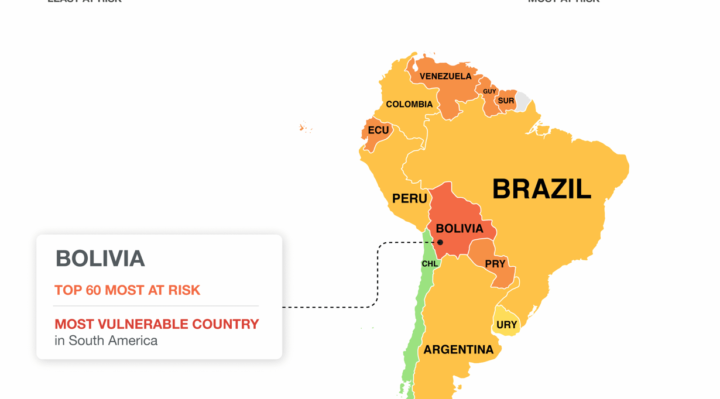
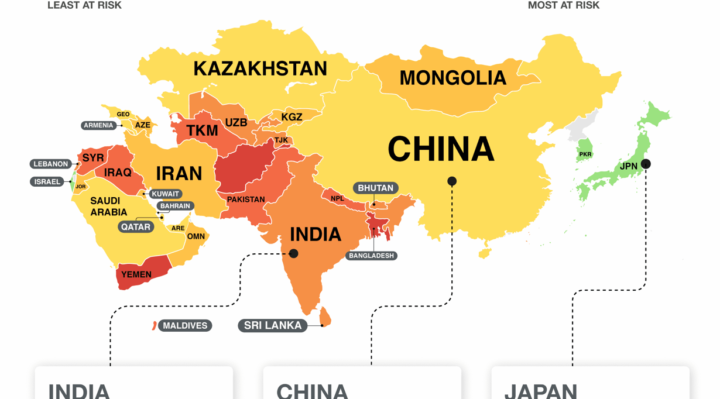
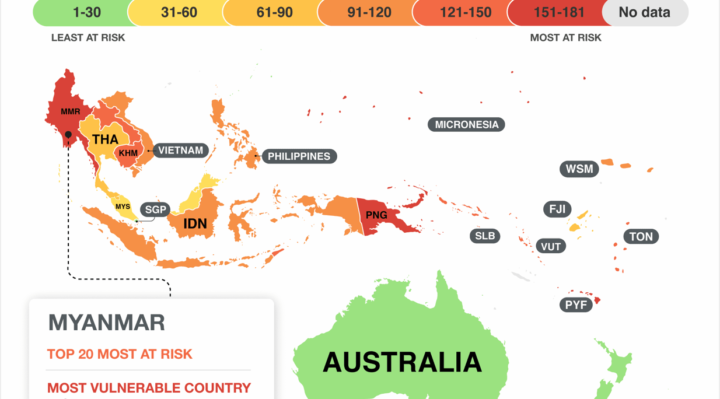
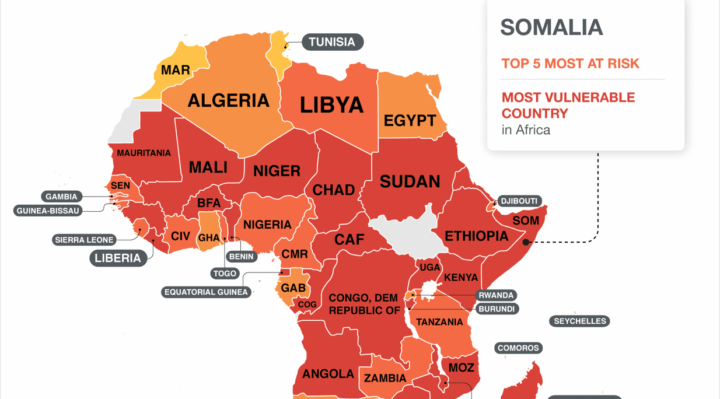
Whilst it’s clear that no single corner of the globe is safe from the changes that are happening to our climate, we wanted to find out which countries are the most (and least) at risk of the effects of climate change.

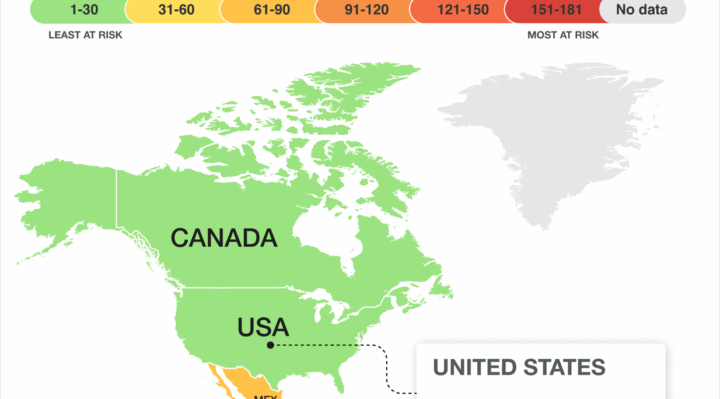
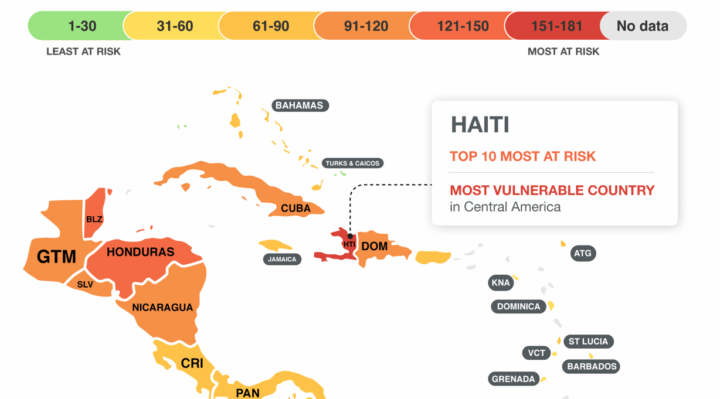
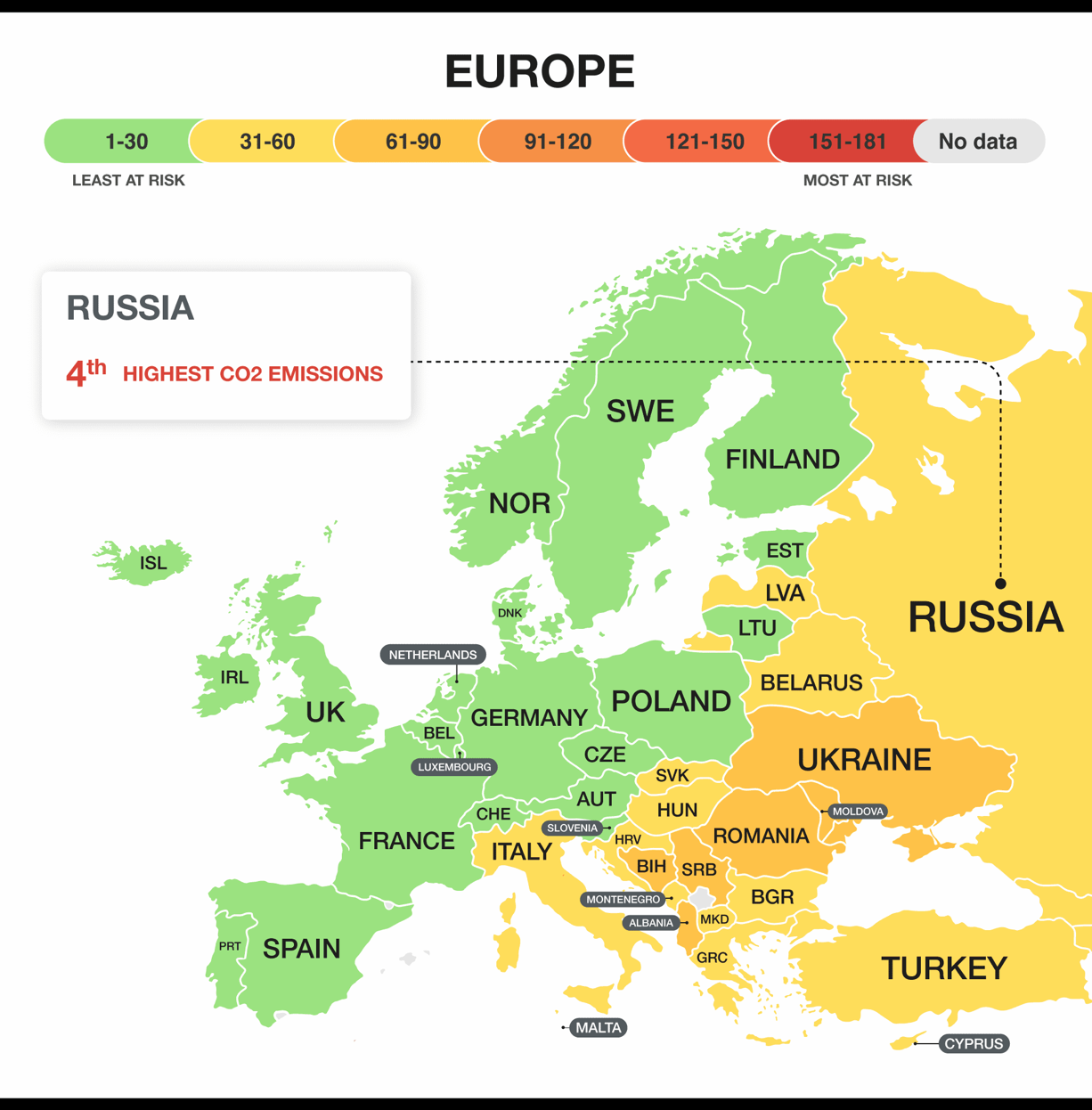
To answer this question, we looked at data from the University of Notre-Dame’s ND-Gain Index. This report analysed 181 countries on their vulnerability to climate change and how ready they are to adapt to a warming planet, based on factors such as healthcare, food supply and government stability.

We also scrutinized how much carbon dioxide all 181 countries emit every year to give an indication of each nation’s contribution towards climate change. This allowed us to compare a country’s likeliness to survive changes to the global climate against their responsibility for the phenomenon.

So which country is the most likely to survive climate change?

The answer is Norway, thanks to its low vulnerability score and high readiness score. The nation’s Nordic neighbours also fared well, with Finland (3rd), Sweden (4th), Denmark (6th) and Iceland (8th) landing 5 out of the 10 top spots for survivability. So we should all flee to the countries of northern Europe and the north Atlantic to live out our final days should our planet become uninhabitable.

Interestingly the UK and US did not make the top 10, ranking 12th and 15th respectively. Both these nations were named amongst the 10 countries most likely to survive climate change in our 2015 version of this map, but an overall worsening of their vulnerability and readiness scores led to this slip in rank.

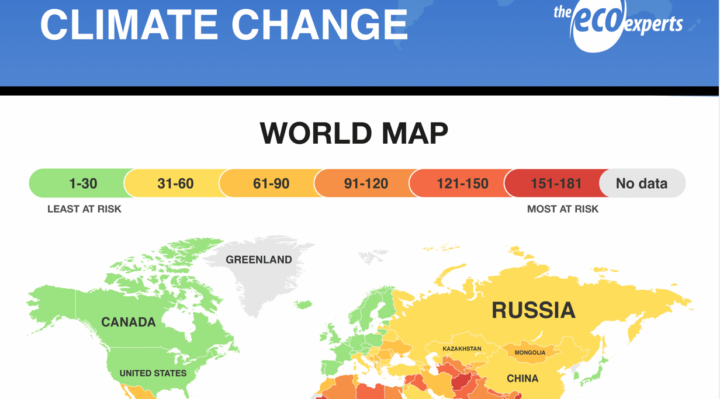
Even more surprising is China’s position in the ranking – 59th. Despite arguably being the world’s biggest contributor towards climate change – emitting a massive 9,040 metric tons of CO₂ into the atmosphere every year – the country is somewhat sensitive to the effects of a warming planet. This is largely due to the nation’s growing population which is putting a strain on China’s natural resources and public services. Rather ironically, China’s vulnerability to climate change therefore means that they may eventually reap what they sow.

And who are the biggest losers?

At the other end of the scale, it comes as no surprise that the world’s poorest and least developed nations have the lowest chance of surviving climate change. Countries in sub-Saharan Africa fill the bottom 10 spaces for survivability, with Somalia being named the country least likely to survive climate change.

Chad, Eritrea, the Central African Republic and the Democratic Republic of Congo also fared badly, owing to their unstable governance, poor infrastructure, lack of healthcare and a scarcity of food and water.

These findings serve as a stark reminder of the need for wealthier, more established countries to support the world’s most vulnerable nations. This is particularly true given that many of the world’s richest economies contribute the most to climate change but are in fact the least likely to be affected by it, whilst impoverished countries who hold little responsibility for the phenomenon are left suffering the most. To put this into perspective, Eritrea emits just 0.01% of the total carbon dioxide that the US does each year – a mere 0.6 metric tons of CO₂ compared to 4,997 tons of the greenhouse gas.

Whilst it’s true that climate change will impact the entire global community in some way, this map clearly shows which countries are likely to be the most (and least) affected. The pressure is now mounting for global leaders to come up with an effective solution to stop climate change before it is too late and nations begin to succumb to the disastrous consequences of a warming world.

(N.Sethu)

February 9, 2018 0 comments
0 FacebookTwitterPinterestEmail
Crimes

Norway’s government backs cyber defence mobilisation

by Nadarajah Sethurupan February 8, 2018
written by Nadarajah Sethurupan

Norway has accelerated plans to scale up its national security infrastructure against threats emanating from the cyber domain.
 

Norway has accelerated plans to scale up its national security infrastructure against threats emanating from the cyber domain.

Recent intelligence reports more than suggest that Norway’s critical IT infrastructure will likely face a higher level of targeting in the shape of malicious cyber attacks launched by hostile foreign governments and cyber crime actors.

To counter this ever-present risk, conservative prime minister Erna Solberg has mobilised the country’s national security infrastructure, including the Norwegian Defence Force’s (NDF) specialist cyber defence unit (CDU), under an umbrella-style partnership that includes strategic input from private sector ICT suppliers.

The government’s heightened interest in waging war against cyber threats became clear in January 2018, when it contracted state telecom Telenor to advise departments on best practice in the implementation of effective cyber defence strategies. The emphasis is on using advanced technologies and security measures to protect critical ICT systems.

The evolving public-private sector alliance is taking place against a backdrop of rising cyber attacks against state-run infrastructure, including the public transport company NSB, military sites and hospitals.

The partnership, which will link to a new government policy initiative to reinforce ICT security on a national level, is timely. It comes in the wake of a serious cyber attack launched in January against Helse Sør-Øst, Norway’s largest regional healthcare provider.

The preliminary results of an investigation by the national security agency PST (Politiets Sikkerhetstjeneste) indicated the attack was the work of an international cyber crime group operating on behalf of an unidentified “foreign state”. The “attackers” penetrated the outer wall of the HSO’s security shield but failed to gain access to the targeted patient data system. This system contained over two million separate patient and medical files.

An identical outer wall system “breach” was recorded at Oslo University Hospital (Oslo Universitetssykehus), Norway’s biggest medical facility, which operates as part of the HSO organisation.

“Unfortunately, this type of cyber threat is becoming more prevalent. Patient security wasn’t affected, but all malicious hacking events like this are serious. This is why the government wants to do much more to prevent such attacks and better defend Norway’s critical IT systems against all hostile actors,” said Justice Minister Sylvi Listhaug.

The PST was alerted to the cyber attack against the HSO by Sykehuspartner, the healthcare organisation’s IT security partner. The PST described the attack as “quite advanced and professional”, adding that it is cooperating with all critical service providers in Norway to ensure that their ICT systems are capable of withstanding sustained attacks from cyber space.

“The suspicion we have is that someone, on behalf of a foreign state, is gathering information. If the client state can be revealed, this is a source of fundamental damage to our national interests and a threat against state infrastructure,” said Line Nyvoll Nygaard, a prosecuting attorney at the PST.

The Norwegian government’s partnering with Telenor represents both a logical and strategic component in its cyber defence capacity building mobilisation project. Around 80% of all domestic data traffic is carried on Telenor-owned networks.

In a connected state-funded programme, Telenor will deepen its cyber defence competence exchange collaboration with the NDF, delivering a range of tools and solutions to the CDU.

Significantly, the cooperation agreement reached between the NDF and Telenor covers the development of enhanced digital-based security tools to protect significant military events, such as joint NDF-NATO exercises, against the prying digital eyes and ears of “foreign agencies”.

Disruptive interference

Not only is the NDF concerned about cyber space surveillance of its activities, the organisation is increasingly on high alert against the potential for cyber-warfare-type “strikes”, and “disruptive interference” against the battlefield management command ICT-systems used to coordinate and direct large-scale military manoeuvres.

Closer cooperation in the cyber defence domain with Telenor will ensure important resources are available at the times they are required, said Major General Inge Kampenes, head of the NDF-CDU.

Telenor’s national role in Norway’s Total Defence System, which combines military and civil emergency preparedness, was elevated in 2017 as part of the government’s increased capital investment into high-priority cyber security projects.

“We will examine vulnerabilities and potential risks, and work together to develop expertise and exchange information about incident threats. We will analyse methods of attack and different malware in the cyber domain,” said Kampenes.

The collaboration between the NDF and Telenor is heavily weighted towards strengthening the military organisation’s crisis management expertise. Cooperation also aims to enhance the NDF’s ability to both protect and safeguard the operation of critical infrastructure as it relates to national security and emergency preparedness.

“Alongside the growth of increased digital dependency and vulnerability, it is natural we focus more on national emergency preparedness and our ability to react,” said Kampenes.

Cyber security tools

Telenor, in collaboration with the NDF-CDU, plans to roll out advanced cyber security tools ahead of NATO’s upcoming Trident Juncture 2018 exercises.

Hosted by Norway, the multi-branch Trident Juncture exercise will run during October and November of 2018. It will involve the deployment of up to 50,000 troops, and become NATO’s biggest military training operation since the fall of the Berlin Wall and the end of the Cold War era.

“We must be prepared for added security challenges. An exercise of this scale will attract a lot of international attention. We expect a greater load on our network,” said Berit Svendsen, head of Telenor Norge.

Propelled by the lure of mutual advantage, Norway’s leading business and industry chiefs are displaying a keen desire to join state-led cyber security projects. The primary driving force behind this mood of positive cooperation is powered by the universally accepted consensus, within the private sector, that the selective sharing of resources and professional expertise offers the best means to combat future threats from cyber space.

A survey conducted by BDO Norway, released in January, found cyber threats against ICT systems surpassed the risk of an economic downturn or financial crisis as the single biggest fear among 1,500 of the country’s top business and industry leaders.

Some 25% of senior Norwegian executives, in the BDO survey, conceded their companies were not adequately prepared or equipped to defend their computer systems and networks against professional and sustained malicious attacks from cyber space.

“Companies in Norway still have a long way to go in building organisations that can manage IT and cyber risks in the same way as other business risks,” said Chris Culina, head of BDO Norway’s operational IT security services department. “It’s a strange observation to make. It’s comparable to worrying about burning but failing to install smoke detectors.”

(computerweekly)

February 8, 2018 0 comments
0 FacebookTwitterPinterestEmail
Defence

Norway runs into fresh problem with NH90 helicopters

by Nadarajah Sethurupan February 8, 2018
written by Nadarajah Sethurupan

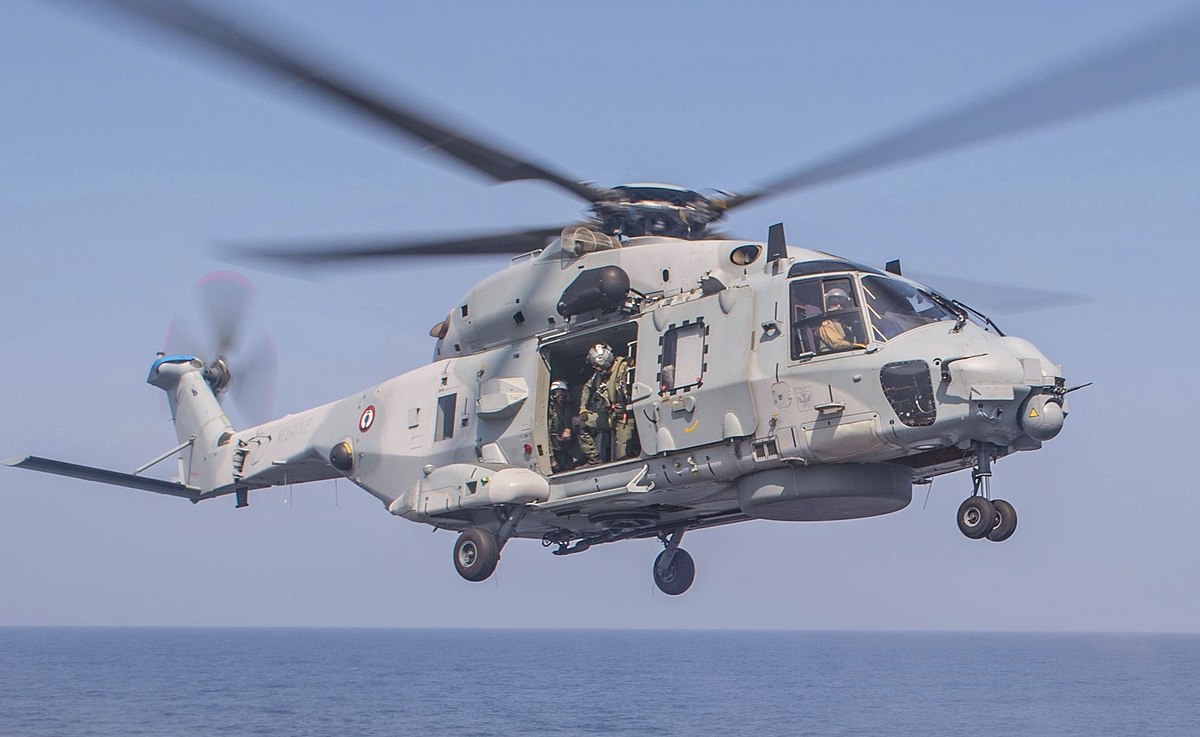
Norway has concluded that its on-order fleet of NH Industries NH90 naval helicopters will not deliver sufficient flight hours to perform the roles originally intended for the 11t-class rotorcraft and recommends that all are converted to the anti-submarine warfare mission.

To be operated by the Royal Norwegian Air Force, 14 NH90s were selected in 2001: six to undertake frigate-based ASW operations and eight for the search and rescue and fisheries and border protection role for the coastguard.

Oslo says that to meet the requirements for both the navy and coastguard, it needs 5,400 flight hours a year from the entire fleet. But an analysis performed by the armed forces suggests that availability is only 2,100h a year.

“The analysis shows that the NH90 will not be able to meet the need for both frigate and coastguard,” it says.

Instead, the report, compiled by Norway’s defence research institute, recommends that all 14 helicopters – seven have been delivered so far – are dedicated to the ASW effort.

“We are now in a situation where we have to reassess how we get the most out of this investment. My recommendation is to prioritise the NH90 for frigate,” says Adm Haakon Bruun-Hanssen, head of the Norwegian armed forces.

“This is because the helicopter is a weapon platform that is crucial to the frigates’ ability to detect and fight submarines.”

While the ASW mission cannot be performed by another platform, he notes, the coastguard’s requirements could be met by civilian operators or unmanned systems.

Norway’s defence ministry says it will consider the report’s recommendations before making a final decision.

The analysis did not consider the acquisition of alternative helicopters, or the termination of Oslo’s contract with the NHI consortium.

NHI recently delivered Norway’s first NH90 in the final operating configuration standard. It will hand over four more helicopters this year, with the remainder following in 2019.

(flightglobal, N.Sethu)

February 8, 2018 0 comments
0 FacebookTwitterPinterestEmail
Corruption in Norway

EU, Norway Sign VAT Fraud Prevention Deal

by Nadarajah Sethurupan February 7, 2018
written by Nadarajah Sethurupan

The EU and Norway have signed a new agreement on administrative cooperation on VAT compliance.
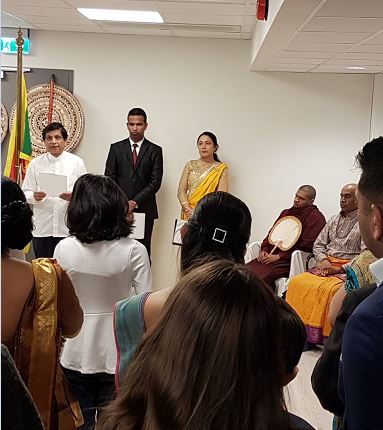

The agreement was signed on February 6. It will provide EU member states and Norway with a legal framework for administrative cooperation in the prevention of VAT fraud and for mutual assistance in the recovery of VAT claims.

Norway is the first country with which the EU has signed an agreement in this area. Norway is a member of the European Economic Area and has a similar VAT system to the EU.

(Tax-news)

February 7, 2018 0 comments
0 FacebookTwitterPinterestEmail
Srilanka and Norway

Sri Lanka National Day Celebration in Oslo 2018

by Nadarajah Sethurupan February 7, 2018
written by Nadarajah Sethurupan

The Embassy of Sri Lanka held a Flag Hoisting Ceremony to celebrate the Sri Lanka National Day on 4th February 2018 at the Chancery in Oslo. Ambassador Jayantha Palipane read the National Day Message of President Maithripala Sirisena. Religious observances were conducted by Ven. Unapane Pemananda Thero, Sri Nitheyananthasarma Naneetheiyer Kurukkal, Mr. M. Anees Rauf and Mr. Subaraj Anandaraja.
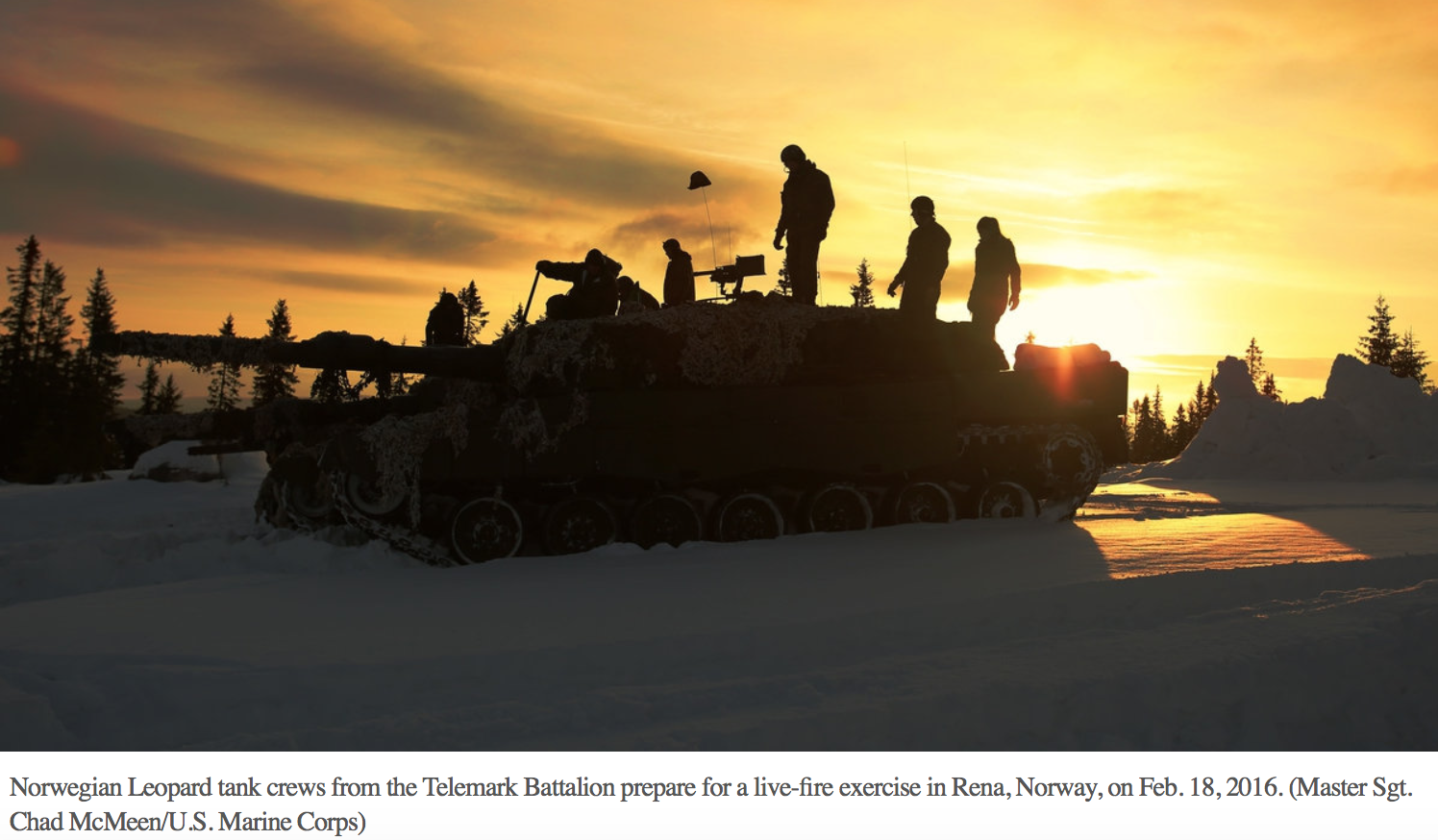
Sri Lanka Nationals and expatriates from all the ethnic communities participated at the Ceremony. The Ambassador hosted the participants to lunch after the conclusion of the Official Ceremony.

(N.Sethu, Srilanka.no)

February 7, 2018 0 comments
0 FacebookTwitterPinterestEmail
Defence

Norway lawmakers warn of ‘slippage’ from NATO

by Nadarajah Sethurupan February 7, 2018
written by Nadarajah Sethurupan

Norway’s newly formed Conservative-led government is under pressure from opposition leaders to raise defense spending to 2 percent of gross domestic product by 2024.
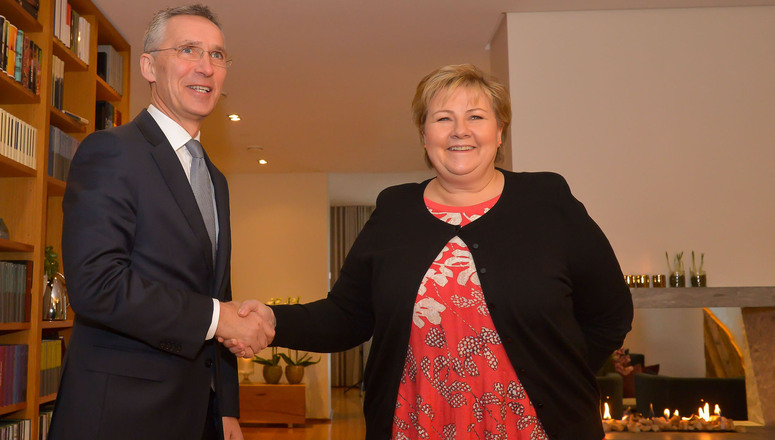
Opposition leaders fear the lack of an ambitious capital investment plan for Norway’s military organization will lead to spending on defense falling from 1.5 percent of GDP in 2018 to 1.5 percent by 2020.

Norway’s spend on defense is estimated to have corresponded to 1.59 percent of GDP in 2017. Latest indicators suggest that the 1.5 percent ratio might continue until 2024.

A fall in the defense spending-to-GDP ratio is certain to unnerve NATO and the United States, said Anniken Huitfeldt, a lawmaker and the Labor Party’s leader on the parliamentary Foreign Affairs and Defence Committee.

During talks with NATO and more recently the White House, Norway signaled its intent to increase spending and meet the 2 percent level sought by NATO, according to Huitfeldt. The Western alliance wants member nations to reach the 2 percent level by 2024.

“It would be very unfortunate if defense spending declined to 1.5 percent. It’s already surprising that we are looking at a slippage in our GDP spend on defense. We have been actively looking to draw closer to NATO’s 2 percent target. We now appear to be moving away from that,” Huitfeld said.

The Norwegian government must provide a “convincing explanation” for the decline in GDP spending, said Huitfeld.

Prime Minister Erna Solberg’s administration has manifested little desire to substantially increase spending on defense, amid fears that the present coalition government, formed in the wake of mid-January elections, lacks durability and may not serve its full four-year term.

The ruling Conservative administration includes the populist Progress Party and the center-right wing Liberals. Despite the three-party coalition, Solberg rules over a minority government dependent on the support of opposition parties in order to move legislation through parliament.

Defence minister Frank Bakke-Jensen has informed opposition leaders that the future level of spending on defense will be tied to economic developments, including the performance of the domestic economy and Norway’s export earnings.

Other contributing factors, according to Bakke-Jensen, include “decisions ratified by parliament and the fulfillment of current long-term plans, potential new resolutions in individual budgetary years, and other aspects in relation to the implementation of ratified plans.”

The predicted decline in the defense spending goal shadows a series of high-profile spending programs, including the purchase of F-35 fighters, which are intended to shore up Norway’s High North defenses against the backdrop of a military buildup by Russia in the region.

Opposition leaders are critical of “bad planning” and delays in providing the Norwegian Armed Forces with an advanced long-range air-defense system.

The military’s procurement of a long-range air-defense system is still at the planning stage. The eventual system is not expected to be delivered and operational until 2025.

By contrast, Russia has an existing long-range conventional precision weapons capability to hit potential military, state and industrial land and offshore targets across Norway. This threat could come from Russia’s own territory or be delivered from aircraft or naval ships.

The Norwegian Armed Forces must urgently acquire advanced long-range weapons to counter Russia’s capacity to launch precision strikes against Norway, said the military’s former defense chief, Gen. Sverre Diesen.

“We also need to have long-range weapons capable of responding with counter-strikes against Russian targets. We are just only now evaluating the degree of threat posed by Russia’s new weapons systems and the consequences this has for our Armed Forces and defense,” Diesen said.

(defensenews)

February 7, 2018 0 comments
0 FacebookTwitterPinterestEmail
NATO and Norway

NATO Secretary General visits Norway

by Nadarajah Sethurupan February 7, 2018
written by Nadarajah Sethurupan

NATO Secretary General Jens Stoltenberg meets with the Prime Minister of Norway, Erna Solberg

NATO Secretary General Jens Stoltenberg visited Oslo on Monday (5 February 2018) to have talks with Prime Minister Erna Solberg, Foreign Minister Ine Eriksen Søreide, and the Minister of Defence Frank Bakke-Jensen.

They discussed preparations for the Summit of Allied leaders in Brussels this July, the security situation in the High North, and Trident Juncture 2018, NATO’s biggest exercise this year which will take place in Norway.

The Secretary General also took part in the Norwegian Atlantic Committee Annual Leangkollen Security Conference, delivering a speech on “NATO in a Challenging Security Environment”.  This was followed by a question and answer session.

Mr. Stoltenberg also visited the parliament, and had an audience with His Majesty King Harald V of Norway.

(N.Sethurupan , NATO)

February 7, 2018 0 comments
0 FacebookTwitterPinterestEmail
Newer Posts
Older Posts

Norwegian Nobel Prize 2024

101207 The Norwegian Nobel Committee has decided to award the Nobel Peace Prize for 2024 to Japan’s Hiroshima bomb survivor group Nihon Hidankyo.

Special Interest

  • Africa and Norway
  • Asia and Norway
  • Asylum
  • China and Norway
  • Corruption in Norway
  • Crimes
  • Defence
  • Diplomatic relations
  • Economics
  • Environment
  • Farming
  • Killing
  • Media Freedom
  • Middle East and Norway
  • NATO and Norway
  • Nobel Peace Prize
  • Norwegian Aid
  • Norwegian American
  • Oil & Gas
  • Peace Talks
  • Politics
  • Racism in Norway
  • Religion
  • Russia and Norway
  • Royal House
  • Science
  • Sex scandal
  • Sports
  • Spy War
  • Srilanka and Norway
  • Svalbard
  • Terrorist
  • Taiwan and Norway
  • Video clips

Follow Us

Recent Posts

  • Norway and Germany sign defence arrangement

    February 15, 2026
  • China hopes Norway will play a role in the Europe ties

    February 15, 2026
  • Norwegian cross-country skier breaks Olympic medal record

    February 15, 2026
  • Norway police search former PM’s properties in Epstein links probe

    February 12, 2026
  • Afghan National Killed in Norway

    February 11, 2026
  • Việt Nam strengthening cooperation with Norway: Việt Nam FM

    February 11, 2026

Social Feed

Social Feed

Editors’ Picks

Norway opens market for Sri Lankan fish exports...

May 13, 2016

Sri Lanka – Nordic Business Council holds discussions...

May 15, 2016

Good governance to Sri Lanka

May 15, 2016

Shock and Joy in Sri Lanka – Erik...

May 15, 2016

Sri Lanka-Norway plenty of new opportunities for business–...

May 15, 2016

NORWAY NEWS is an online news site, written in English, dedicated to Norwegian affairs at home and abroad. Norway News.com is published online. It is a daily online newspaper in existence since May, 2003. The site is run by an Independent Journalist.

Facebook Twitter Youtube

Useful Links

    • Work With Us
    • Contact Us
    • Collaboration
    • Data Collection
    • Workplace
    • Adverstising
    • Privacy Policy
    • International Collab
    • Feedback
    • Terms of Use
    • About Our Ads
    • Help & Support
    • Entertainment
    • News Covering
    • Technology
    • Trending Now

Politics

Syrian, Norway to boost cooperation on mine clearance
Erna to step down as Conservative Party leader in 2026
Norwegian Labour Party on re-election win

Latest Articles

Norway and Germany sign defence arrangement
China hopes Norway will play a role in the Europe ties
Norwegian cross-country skier breaks Olympic medal record
Norway police search former PM’s properties in Epstein links probe

Norway News 2025 . All Right Reserved. Designed and Developed by Norway News

  • Home
  • About us
  • Disclaimer
  • Contact us
NORWAY NEWS – latest news, breaking stories and comment – NORWAY NEWS
  • Home
  • About us
  • News
  • Other News
    • Africa and Norway
    • Asia and Norway
    • Asylum
    • Breaking News
    • China and Norway
    • Corruption in Norway
    • Crimes
    • Defence
    • Diplomatic relations
    • Economics
    • Environment
    • Farming
    • Featured
    • Health
    • Killing
    • Media Freedom
    • Middle East and Norway
    • NATO and Norway
    • Nobel Peace Prize
    • Norwegian Aid
    • Norwegian American
    • Oil & Gas
    • Peace Talks
    • Politics
    • Racism in Norway
    • Religion
    • Royal House
    • Russia and Norway
    • Science
    • Sex scandal
    • Sports
    • Spy War
    • Srilanka and Norway
    • Svalbard
    • Taiwan and Norway
    • Terrorist
    • Travel
    • Video clips
  • Disclaimer
  • Contact us
NORWAY NEWS – latest news, breaking stories and comment – NORWAY NEWS
  • Home
  • About us
  • News
  • Other News
    • Africa and Norway
    • Asia and Norway
    • Asylum
    • Breaking News
    • China and Norway
    • Corruption in Norway
    • Crimes
    • Defence
    • Diplomatic relations
    • Economics
    • Environment
    • Farming
    • Featured
    • Health
    • Killing
    • Media Freedom
    • Middle East and Norway
    • NATO and Norway
    • Nobel Peace Prize
    • Norwegian Aid
    • Norwegian American
    • Oil & Gas
    • Peace Talks
    • Politics
    • Racism in Norway
    • Religion
    • Royal House
    • Russia and Norway
    • Science
    • Sex scandal
    • Sports
    • Spy War
    • Srilanka and Norway
    • Svalbard
    • Taiwan and Norway
    • Terrorist
    • Travel
    • Video clips
  • Disclaimer
  • Contact us

Editor’s Picks

  • UN concern over Sri Lanka’s cases of enforced disappearances

    October 8, 2025
  • UN Human Rights Council Resolution on Sri Lanka’s Path to Reconciliation

    October 7, 2025
  • International should support Sri Lanka: Solheim

    October 4, 2024
  • Norwegian Meets Sri Lankan’s Challenges

    May 3, 2024
  • Norwegian Ambassador meets JVP in Sri Lanka

    May 2, 2024
  • “The man who didn’t run away” – Eric Solheim

    April 30, 2024

Newsletter

@2025 - All Right Reserved. Designed and Developed by Norway News