NORWAY NEWS – latest news, breaking stories and comment – NORWAY NEWS
  • Home
  • About us
  • News
  • Other News
    • Africa and Norway
    • Asia and Norway
    • Asylum
    • Breaking News
    • China and Norway
    • Corruption in Norway
    • Crimes
    • Defence
    • Diplomatic relations
    • Economics
    • Environment
    • Farming
    • Featured
    • Health
    • Killing
    • Media Freedom
    • Middle East and Norway
    • NATO and Norway
    • Nobel Peace Prize
    • Norwegian Aid
    • Norwegian American
    • Oil & Gas
    • Peace Talks
    • Politics
    • Racism in Norway
    • Religion
    • Royal House
    • Russia and Norway
    • Science
    • Sex scandal
    • Sports
    • Spy War
    • Srilanka and Norway
    • Svalbard
    • Taiwan and Norway
    • Terrorist
    • Travel
    • Video clips
  • Disclaimer
  • Contact us
NORWAY NEWS – latest news, breaking stories and comment – NORWAY NEWS
  • Home
  • About us
  • News
  • Other News
    • Africa and Norway
    • Asia and Norway
    • Asylum
    • Breaking News
    • China and Norway
    • Corruption in Norway
    • Crimes
    • Defence
    • Diplomatic relations
    • Economics
    • Environment
    • Farming
    • Featured
    • Health
    • Killing
    • Media Freedom
    • Middle East and Norway
    • NATO and Norway
    • Nobel Peace Prize
    • Norwegian Aid
    • Norwegian American
    • Oil & Gas
    • Peace Talks
    • Politics
    • Racism in Norway
    • Religion
    • Royal House
    • Russia and Norway
    • Science
    • Sex scandal
    • Sports
    • Spy War
    • Srilanka and Norway
    • Svalbard
    • Taiwan and Norway
    • Terrorist
    • Travel
    • Video clips
  • Disclaimer
  • Contact us
Monday, February 16, 2026
NORWAY NEWS – latest news, breaking stories and comment – NORWAY NEWS
  • Home
  • About us
  • News
  • Other News
    • Africa and Norway
    • Asia and Norway
    • Asylum
    • Breaking News
    • China and Norway
    • Corruption in Norway
    • Crimes
    • Defence
    • Diplomatic relations
    • Economics
    • Environment
    • Farming
    • Featured
    • Health
    • Killing
    • Media Freedom
    • Middle East and Norway
    • NATO and Norway
    • Nobel Peace Prize
    • Norwegian Aid
    • Norwegian American
    • Oil & Gas
    • Peace Talks
    • Politics
    • Racism in Norway
    • Religion
    • Royal House
    • Russia and Norway
    • Science
    • Sex scandal
    • Sports
    • Spy War
    • Srilanka and Norway
    • Svalbard
    • Taiwan and Norway
    • Terrorist
    • Travel
    • Video clips
  • Disclaimer
  • Contact us
Copyright 2025- All Right Reserved Norway News
Asylum

Norway to accommodate 600 refugees evacuated from Libya to Rwanda

by Nadarajah Sethurupan February 18, 2020
written by Nadarajah Sethurupan

Norway is considering taking in 600 refugees and asylum seekers from Libya, who are currently at the emergency transit center in Bugesera District, Rwanda.

This is part of plans from the Scandinavian country to halt the smuggling of migrants from the Mediterranean Sea.

Confirming the news, Norway’s Justice and Immigration Minister Joaran Kallmyr in a statement to The Associated Press, said: “For me, it is important to send a signal that we will not back smuggling routes and cynical backers, but instead bring in people with protection needs in an organized form.” 

“Therefore, the government has decided to collect 600 quota refugees from Libya, out of 800 in total, from the transit reception in Rwanda in 2020,” he added. 
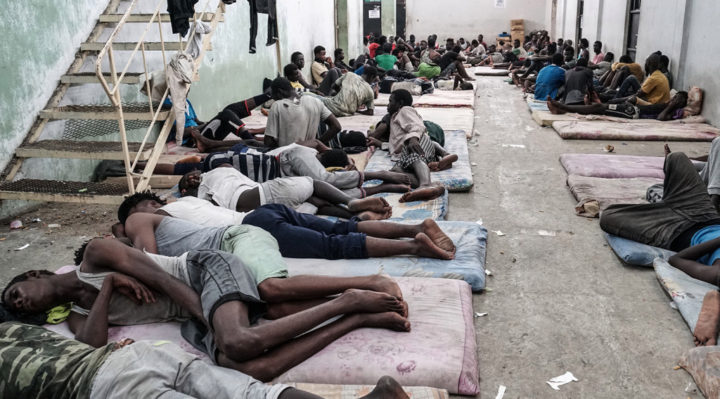
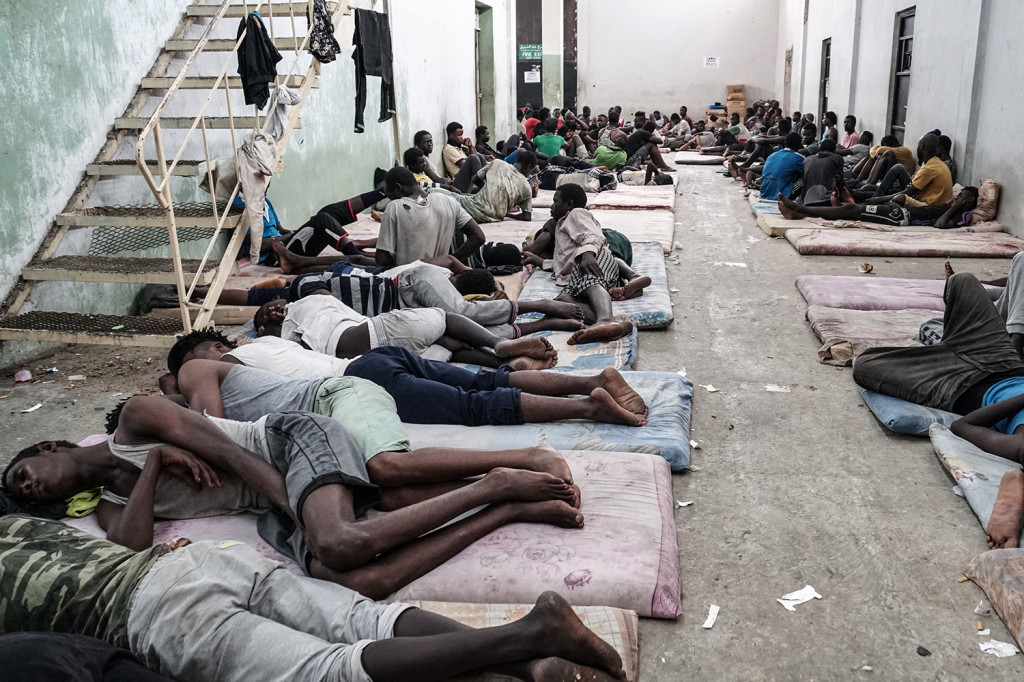
Migrants are left to die in Libya_Photo: Foreign Policy

Somalia, Eritrea, and Sudan contribute largely to the number of refugees on the continent. According to UNHCR, 2019, 150,000 – 200,000 migrants left the East and Horn of Africa (EHoA) region traveling eastwards towards the Arab Peninsula and northwards towards northern Africa and Europe.

Norway isn’t the only country in Europe which has taken steps to resettle refugees. In 2017, the French government absorbed a group of 19 Sudanese refugees, 11 of them children, most of whom were selected from a refugee camp in Chad.

Meanwhile, Rwanda’s Foreign Affairs Minister Dr Vincent Biruta at his first media briefing said that his country is hosting about 300 refugees and asylum seekers of different nationalities at the Gashora Transit Centre.

Since 2015, the number of migrants risking their lives to enter into European Union territories increased as the regional body continues to find ways to stop refugees and other migrants from crossing the Mediterranean.

As part of an agreement signed between Rwanda, the African Union and the United Nations refugee agency in September, the East African country hosts a camp for people who have been evacuated from often chaotic, overcrowded detention centers in Libya. 
February 18, 2020 0 comments
0 FacebookTwitterPinterestEmail
NATO and Norway

NATO to consider bulking up Iraq mission

by Nadarajah Sethurupan February 17, 2020
written by Nadarajah Sethurupan

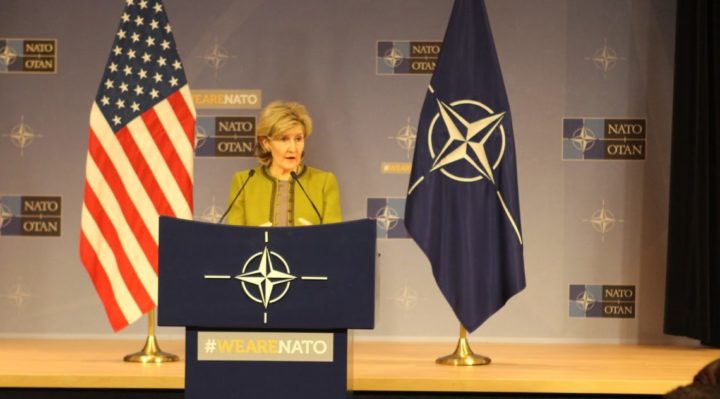
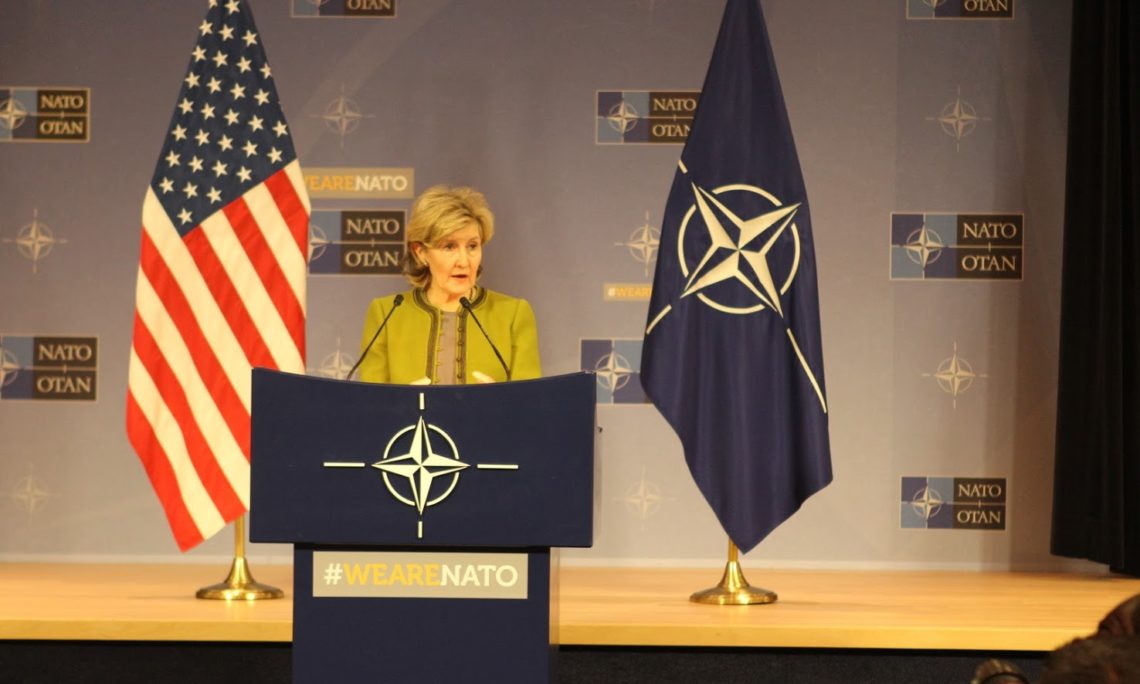
“There are several areas where the training is really overlapping,” U.S. NATO envoy Kay Bailey Hutchison told reporters.

NATO agreed in 2018 to launch a training mission in Iraq involving around 500 troops with the aim of building up the country’s armed forces so they could better combat extremist groups. Only the anti-IS coalition fights extremists.

But the NATO operation was put on hold last month after a U.S. missile strike at Baghdad airport killed Iran’s top general, and the Iraqi government and parliament demanded that foreign troops leave its territory. As tensions mounted, Trump insisted that the alliance should do more in the region.

However, there is little appetite among European allies and Canada to deploy troops, even though the U.S. is by far the biggest and most influential of the 29 NATO member countries.

While she didn’t mention numbers involved in the troop swap, Hutchison said that NATO’s plan is to expand its training operation to more Iraqi bases. But officials said that over “a couple of hundred” troops are likely to shift into the NATO training mission and operate out of bases in central Iraq. Overall, the number of troops from NATO countries working in Iraq would stay the same.

Officials are confident that Iraq will soon let the military alliance resume its training mission, particularly after NATO Secretary-General Jens Stoltenberg held a series of talks with Iraqi and regional leaders.

“We will only stay in Iraq based on an invitation from Iraq,” Stoltenberg said Tuesday, but he underlined that “one of the weapons we have in the fight against terrorism is to train local forces, enabling them to fight terrorism themselves. 

Hutchison also said that NATO is set to task military commanders with looking at other ways for the alliance to boost its role in the wider Middle East.

Below is a full rush transcript of the press conference by  Ambassador Kay Bailey Hutchison U.S. Permanent Representative to NATO

Ambassador Hutchison:  I’m very pleased to be welcoming Secretary of Defense Esper tomorrow, where we will meet with the other 28 allies, defense ministers, and talk about the priorities that we have, especially from the Leaders Meeting in December in London.  And number one, of course, on that list this time is the request from President Trump to do more in Iraq.  He’s asking NATO to step in so that we can do more training and more capability building of the Iraqi forces, and help the Iraqis to be able to hopefully, in the near future, be able to defend their own country and create that security environment.

We’re also going to be talking about Russia and the deterrence that we are committed to with Russia because, of course, we have a European defense initiative as well as an enhanced forward presence that assures that we have the capability to keep any encroachment from Russia onto the borders of our NATO allies.

We will be talking about NATO-EU cooperation because we’re going to hope to be able to work with the EU on military mobility, and we hope to be able to bring in more of the efforts that EU can do that will augment our NATO defense and security policies.  

And then we will be having meetings with our allies and partners on the mission in Afghanistan.  It is very important.  We have 40 partners as well as our 28 allies in Afghanistan, where we are trying to come together with the Government of Afghanistan to create a peaceful environment, and, of course, that is something that Ambassador Khalilzad has been working on for many months and we will be informing our partners and allies of that, the – where we are, the status of that.

So those are the things we will be talking about.  Burden sharing is always an issue, and I will say that President Trump has asked our allies to do more not only in the missions as we have talked about in Iraq, but also more in defense investment, and our allies are stepping up and that is a good message that we can give that NATO is working, we are adapting, and we are creating a security environment for all of our citizens.

Question :  The parliament is ratifying the protocol for the membership of North Macedonia to NATO.  When do you expect the North Macedonian flag to be flying over NATO Headquarters?”

Ambassador Hutchison:  I think by summer we will have that North Macedonian flag that will be right out front with all of the other 29 flags that now fly at our NATO Headquarters.  We have almost every one of our allies has acceded to the access of North Macedonia.  One has a formation of government, so it’s only a process issue.  So I think that very shortly we will be able to welcome our allies in North Macedonia, and they’ve done a great job of reform and seeking this membership and being patient, and then creating the leadership on the name that was essential to begin this accession process.  So we’ll be very happy in the spring to welcome them to our table.
Question :  Due to their disagreement over language rights of the Hungarian minority in Ukraine, Hungary has blocked Ukrainian participation at NATO ministerials since 2017.  What is the U.S. position on this, and do you support the idea of NATO as a platform for debating human rights?”

Ambassador Hutchison:  We do support having Ukraine as an enhanced partner that we believe that it is and having the capability to have ministerial-level meetings with the defense minister of Ukraine.  We hope very much that Hungary will work with us to allow that to happen.  We’ve always said that bilateral issues should not hold back the key efforts that NATO is making, and we want to make sure that human rights are respected by all of our NATO partners as well as members, but it is something that is a bilateral disagreement here, and we hope very much that Hungary will set aside this issue and we will work with Hungary to assure that Ukraine is respecting minority rights, but we also want NATO to be able to have high-level meetings with Ukraine who are very much in need of our help right now.

Question :  Any update on the President’s proposal to have NATO take a more robust role in the Middle East?  Have there been any more details sketched out?  And can you give us any details on ongoing discussions with NATO allies regarding this proposal?

Ambassador Hutchison:  Yes, we have been working with the secretary general and all of our allies are working to see what we can do more in Iraq to help stabilize that country and help train the Iraqi forces so that they have the capability to do their own defense.  This is going very well.  I think that the secretary general has really led in this effort, and I think our NATO allies are very willing to step forward, do more in counterterrorism, and now we’re looking at what the commanders on the ground say could take some of the burden off of the Coalition to Defeat ISIS, which is there trying to assure that ISIS does not come back in Iraq – take some of the load off of that operation, move it over into NATO forces, and I think NATO has a great reputation for being able to give capabilities to foreign soldiers and military so that they can help themselves.  We’ve done that in Afghanistan; we’d like to do it in Iraq.

Question :  An investigation has found that the inner circle of Viktor Orban and a Hungarian-Russian nuclear company paid €4 million to fund a media operation against North Macedonia’s entry to NATO.  How can attacks against democracies and NATO memberships be prevented?

Ambassador Hutchison:  Well, that would be a hybrid or a cyberattack, and we are doing so much in NATO to try to prevent those.  And also, I have to say, unfortunately, sometimes we can’t prevent but we can go quickly out into the media to repel something that is coming in that is malign, that is not factual, that is an attack on the human rights or the government of a country.  We know that some of our outside adversaries have done that in all of our countries.  I haven’t heard of this specific incident at all, but we do try to put as many defenses up as possible against malign activity, hybrid or cyber.  

Question :  The Pew Research institute has published the results of a survey this week that showed declining support for NATO in key countries such as France and Germany.  What steps is the U.S. taking to ensure continued popularity of NATO in Europe?

Ambassador Hutchison:  That’s a good question, and we have, of course, seen the results of that poll.  And I think that some of our leaders have criticized NATO in different ways, and now I would say that the alliance is going forward, addressing those concerns, especially I think the European allies have stepped up their strengthening of their defenses, which President Trump asked them to do.  And so I think we’re going in the right direction.  I think allies are serious about making sure that NATO is strong, united, and resilient.  

So while I see that the polls are somewhat down, certainly in America we have bipartisan support in Congress and we need to always work on our message so people know what we’re doing.  We also need to message to our people that the world is not a safe place, that we can’t take security for granted, and I think sometimes it is the lack of awareness of the threats that we face that would make perhaps the public not appreciate the importance of NATO.  But we are 29 allies, we speak with one voice for democracy, for rule of law, for human rights respect, and this is something that we must stand for together and face our adversaries who do not have democracies, do not have freedom, do not have respect for human rights.  And we’re going to stand allied against those, and maybe we need to message a little more, but we will do that.  And especially as we show success in deterring and defending against these adversaries, people, I hope, will appreciate that 29 democracies speaking for our way of life is our most important unifying message.

Question :  What kinds of activity does Washington have in mind for its NATO partners, and where exactly – in Syria, in Iraq?”

Ambassador Hutchison:  Well, I think what we’re trying to do is realize that there is terrorism in many parts of the Middle East now.  Somewhat Iran, with its militias and its terrorist support, has put terrorist groups into other parts of the Middle East, certainly Iraq and Afghanistan, but others as well.  So we want to be prepared with more NATO forces to train the people in these countries to be able to defend against terrorists who would tear their country apart.

Question :  What specific cybersecurity input has tiny Luxembourg contributed to NATO’s joint defense in the past two years?  And are – is digital security and cyber defense Luxembourg’s primary niche in the alliance going forward?”

Ambassador Hutchison:  It’s a very important niche for Luxembourg, and since Luxembourg has a relatively small armed forces, they do contribute in this technology area.  And this is so important because if you see throughout our alliance, every one of our countries has had cyber and hybrid attacks from Russia, some from China, and we need to continue to build our defenses and build our knowledge of how these malign influences are coming into our countries.  And sometimes we find that a Russian bot will end up talking on both sides of a controversial issue within a country, so they are fomenting more disintegration of trust in our countries’ governments, and now that we’re understanding better some of those methods and technologies, which Luxembourg is contributing to our knowledge base to do, then we will be able to repel better and hopefully, at some point in the future, we’ll be able to knock things out that would be misinformation before it gets widespread.

Question :  Over the last week Turkey has lost more than a dozen soldiers in Idlib to attacks by Syrian regime forces.  Does the U.S. support Turkey’s present force posture in Idlib, and would it support a more aggressive posture?  

Ambassador Hutchison:  Well, certainly the Russian support of the Syrian dictator Assad is very troublesome in that they would attack and kill Turkish people in the military is unthinkable.  And they’re doing it, and we have come out strongly against that Syrian-backed-by-Russian activity.  Turkey is our ally, our partner in trying to curb terrorism.  We don’t agree with everything that Turkey has done in Syria, but we do think that these attacks by Russia, or Syria backed by Russia, are out of line and we hope that, of course, we can get back to a more peaceful situation with a safe zone for the Syrian people who are in the middle of all this.  And so many civilians – thousands of civilians in Syria have been murdered and even chemical weapons being used by Assad against his own people.  We’re standing against that.  We very much are going to back Turkey in this situation and ask Russia to back off supporting Assad so that we can go to a peace agreement for Syria so that the people can have some kind of a governance that will take care of them rather than attack them, as Assad is doing.

Question :  Is there any update on the ‘forward-looking reflection process’ under the secretary general that allies agreed to at London in the December meeting in the wake of President Macron saying that NATO is experiencing brain death?

Ambassador Hutchison:  Yes, there is a lot of activity.  Our alliance is talking about how we would like to give a mandate to a small group of people who have – representing many of our countries, but people who have experience with NATO and understand our strength and our unity and our transatlantic bond.  And what we want is for them to look at NATO today and if there are suggestions on how we could improve or strengthen our political dialogue, the contributions that NATO can make, that we will do that.  And we are very much in a process now of putting forth that mandate.  We’re talking about it with all of our allies.  We will have input from all of our countries to see what we can do to assure that we are adapting for the future, that we do have a political structure that will allow us to make decisions in a relevant timeframe, and to be able to address any kind of attack on any one of our countries.

Ambassador Hutchison:  Well, let me just say thank you for all of you who have decided to come in and ask questions and have an interest in our defense ministerial that will happen this week.  We are continuing to make progress on how we can create that security umbrella, whether it’s hybrid and cyberattacks, whether it’s the space domain, which we are now expanding into – both NATO and the United States – and as well, the actual conventional warfare, the arms race that we see happening that we don’t want proliferation to occur.  We are seeing all of these things and NATO is clearly trying to anticipate anything that will devalue our safety for our citizens and move forward to deter against any adversary, whether it be a big one or a small one or a hybrid or a cyber one.  We want to make sure that we’re doing everything we can to stay ahead of the curve and protect our citizens.  

February 17, 2020 0 comments
0 FacebookTwitterPinterestEmail
Asia and Norway

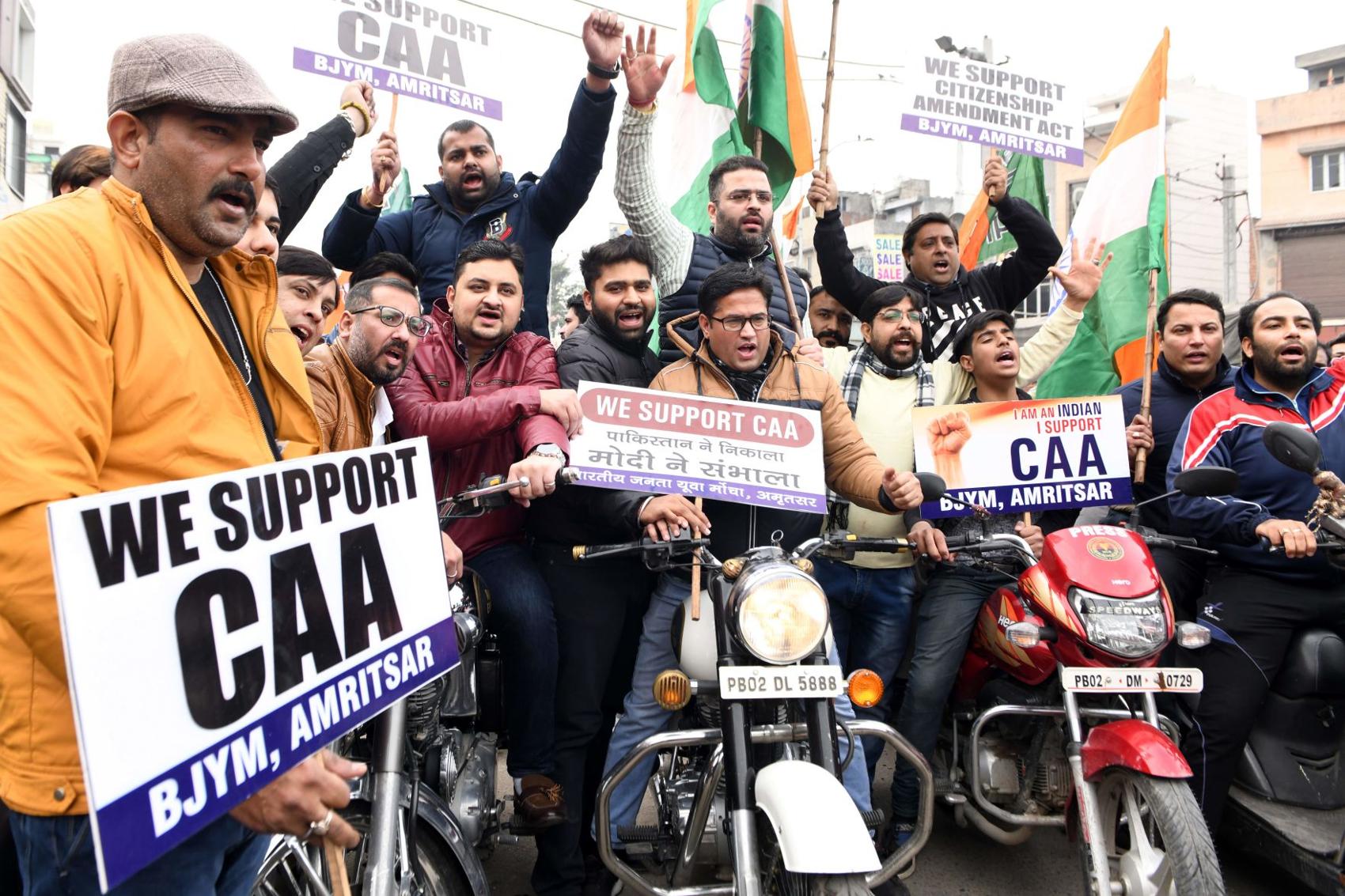
Explaining India’s Citizenship Amendment Act” – Shri Kanwal Sibal

by Nadarajah Sethurupan February 17, 2020
written by Nadarajah Sethurupan

India has amended its Citizenship Act of 1955 in December 2019 to allow persons belonging to Hindu, Sikh, Jain, Buddhist and Christian faiths who have illegally migrated into India over the years from three neighbouring Islamic countries, namely, Pakistan, Bangladesh and Afghanistan, to acquire Indian citizenship on a relatively fast track basis. The exclusion of Muslims from the amendment has been criticised by India’s political opposition, sections of the civil society, leftist student groups and others for being unconstitutional, diluting India’s secularism and eroding India’s democracy.

The BJP won a huge majority in India’s general election in May last year, consolidating further its impressive victory in the 2014 elections. Amending the Citizenship Act of 1955 has been on the party’s agenda all along. In its previous tenure the BJP government had moved the amendment but it could not be passed because the party did not have a majority in the Upper House of India’s parliament, and so the legislation had to be shelved. This time also the party lacked a majority in the Upper House but was able to get the legislation through with the support of a section of the opposition. In other words, the Citizenship Amendment Act (CAA) was passed after an intensive debate in both houses of parliament when all the issues raised by the opposition, including the perceived anti-secular nature of the amendment, were answered by the government. The legislation was passed through an open, transparent and fully democratic process. The constitutionality of the legislation has, nonetheless, been questioned by opponents and the matter will be adjudicated by the Supreme Court of India. This is in consonance with the robust functioning of India’s democracy.

The CAA was necessitated because Hindu, Sikh, Buddhist, Jain and Christian minorities who have entered India over decades and settled down in the country could not acquire Indian citizenship under the pre-amended citizenship law. They were, thus, deprived of many benefits of Indian citizenship and had to live precarious lives. These minorities entered India for many reasons- persecution, discrimination, physical insecurity, threat of forcible conversion, and so on. In 1947 minorities in Pakistan, mostly Hindus and Sikhs, constituted about 23% of the population; today they constitute about 5%, with Hindus at about 1.65%. In 1971, at the time of Bangladesh’s creation, Hindus constituted 19% of the population, whereas in 2016 they constituted only 8%. These are telling figures that testify to the large scale exodus of minorities from Muslim majority neighbouring countries. This should be contrasted with the number of Muslims in India in 1947 at 92 million and their estimated number today at about 200 million. Not only that, Muslims have occupied the highest positions in the country in all domains, the Indian constitution protects the rights of all minorities and Muslims, along with other minorities are given special rights in the management their religious and educational institutions.

Now, these non-Muslim minorities, primarily Hindus and Sikhs, could only migrate to India and nowhere else, given that the historical home of Hindus and Sikhs is India. No Muslim country would either accept them or give them citizenship. But then, amongst those who have entered India illegally over the decades have been Muslims from Bangladesh. They did so not because of religious persecution discrimination, physical insecurity or threat of conversion. They came for better economic opportunities, encouraged also by Bangladesh regimes of the past for political reasons. Their case is different, as they can return to their country of origin, after, of course, identification as illegal migrants. The Indian government estimates that there are about 20 million illegal Bangladeshi migrants in India, though the exact number can only be determined after a citizenship roll is established.

India is probably unique amongst major powers in not having a system that legally identifies its citizens. It does not have a citizenship register; the system of national identity cards does not exist. This is an anomaly for a country that has a long open border (1758 kilometres) with one of its neighbours (Nepal), a longer porous border (4096 kilometres) with another (Bangladesh), and several thousand kilometres of contested or un-demarcated borders with two others (China and Pakistan- 4056 kilometres and 3323 kilometres respectively).

The government has repeatedly clarified that the CAA is to grant citizenship on a one-time basis to a particular group of persons with no alternative options and not to take away the citizenship of any one, much less an Indian Muslim. The CAA has a cut-off date of December 31, 2014, after which no illegal immigrant, whether Hindu, Sikh, Buddhist, Jain, Christian or Muslim would be eligible for citizenship under the amendment. In this larger sense, the CAA is by no means anti-Muslim. 

The opposition elements in India believe that they have got an issue to put the Prime Minister Modi-led BJP government on the defensive, and hence the resolutions passed by opposition ruled Indian states not to implement the CAA. Unable to have their way in parliament and looking for an issue around which those opposed to the BJP government can coalesce, the opposition is over-dramatising issues and indulging in unrestrained fear-mongering.

Outside observers need to better understand the dynamics of internal politics in a raucous democracy like India. However, because the issues of refugees, migration, targeting of minorities anywhere, rise of nationalism have international resonance, western liberal circles, political and in the media, which have anti-Indian lobbies embedded in them traditionally, have picked up the CAA and NRC controversy in India and have begun a malicious campaign against the government, without trying to understand the issues dispassionately. In the process they are showing disrespect for Indian democracy. Worse, they are openly interfering in India’s domestic politics on the side of the opposition. These circles should learn to respect the sovereignty of other countries and curb their tendency to pronounce on internal developments in them. They condemn interference in their internal politics by others and even punish them for this, but openly interfere in the internal politics of other countries. They should not believe that they have a responsibility to shape them or that they have a better idea of how other countries should be governed, more than their elected leaders. They forget that Prime Minister Modi was elected as India’s leader through the largest ever democratic exercise in human history, with more than 550 million voting in an electorate of 830 million.

(Shri Kanwal Sibal, (former Foreign Secretary of India)

February 17, 2020 0 comments
0 FacebookTwitterPinterestEmail
Asia and Norway

Indian and Norwegian Ministers of Environment commit to explore a Global Agreement to stop Plastic Pollution

by Nadarajah Sethurupan February 17, 2020
written by Nadarajah Sethurupan

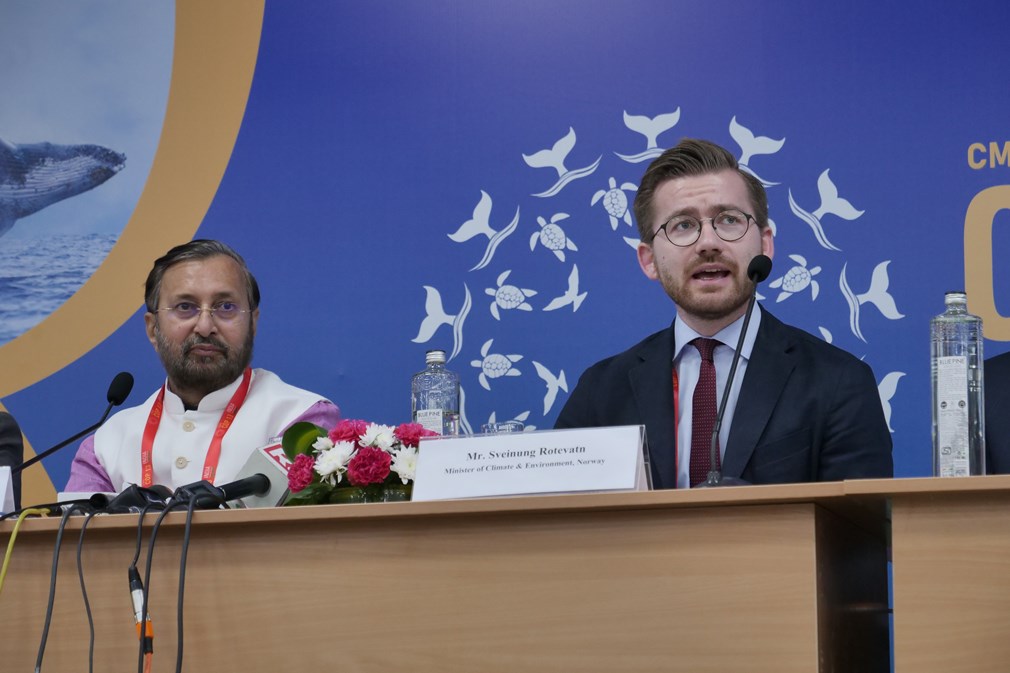
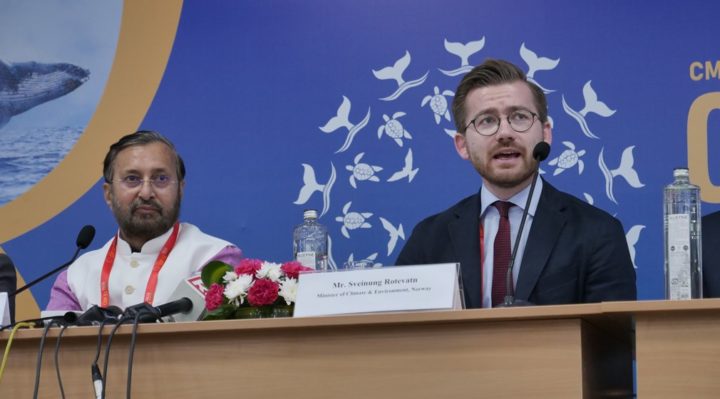
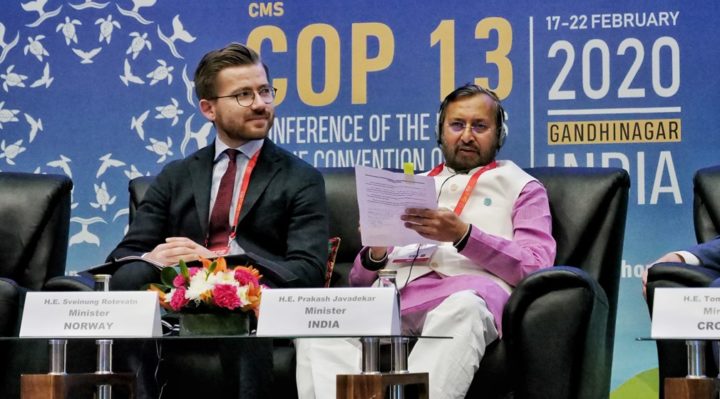
Norway and India agree to cooperate closely to investigate the possibility of establishing a global agreement to stop plastic pollution. The ministers of environment from the two countries met in Gandhinagar, India today, during the high level segment on UN Conference on Migrating species – CMS COP13.

Indian and Norway ministers of environment, Prakash Javadekar and Sveinung Rotevatn Credit: KLD

The ministers Prakash Javadekar of India and Sveinung Rotevatn of Norway agreed to continue and strengthen the cooperation on environment and climate between the two countries, including on ocean affairs.

-Plastic pollution is found in in every corner of the world. The amount of plastics litter in the oceans is disturbing. This is a global concern because plastic waste is distributed along the oceans currents, often far away from its point of release, says Sveinung Rotevatn.

No one country cannot solve this problem alone, the two ministers said in a joint statement.

Minister Rotevatn and minister Javdekar Credit: KLD

The ministers agreed that the oceans hold the key to meeting many of the Sustainable Development Goals. Integrated ocean management is central to achieving a sustainable blue economy.

In 2019 Prime Minister Modi and Prime Minister Solberg welcomed a Memorandum of Understanding on India-Norway Ocean Dialogue and the establishment of a Joint Task Force on Blue Economy for Sustainable Development.

As part of their collaboration on Blue Economy for sustainable development, the two countries will sign a Letter of Intent on integrated ocean management.

In the joint statement the two ministers agreed to support global action to address plastic pollution, and exploring the feasibility of establishing a new global agreement on plastic pollution.  

February 17, 2020 0 comments
0 FacebookTwitterPinterestEmail
Crimes

13,000 lorries off the roads of Northern Norway

by Nadarajah Sethurupan February 17, 2020
written by Nadarajah Sethurupan

Norwegian rail freight operator CargoNet has launched the new intermodal connection between Trondheim and Bodø. It carries up to 52 semi-trailers in each direction. With the help of the new freight service, CargoNet will be able to remove up to 13,000 lorries from the roads of Northern Norway annually and shift this cargo to railways.

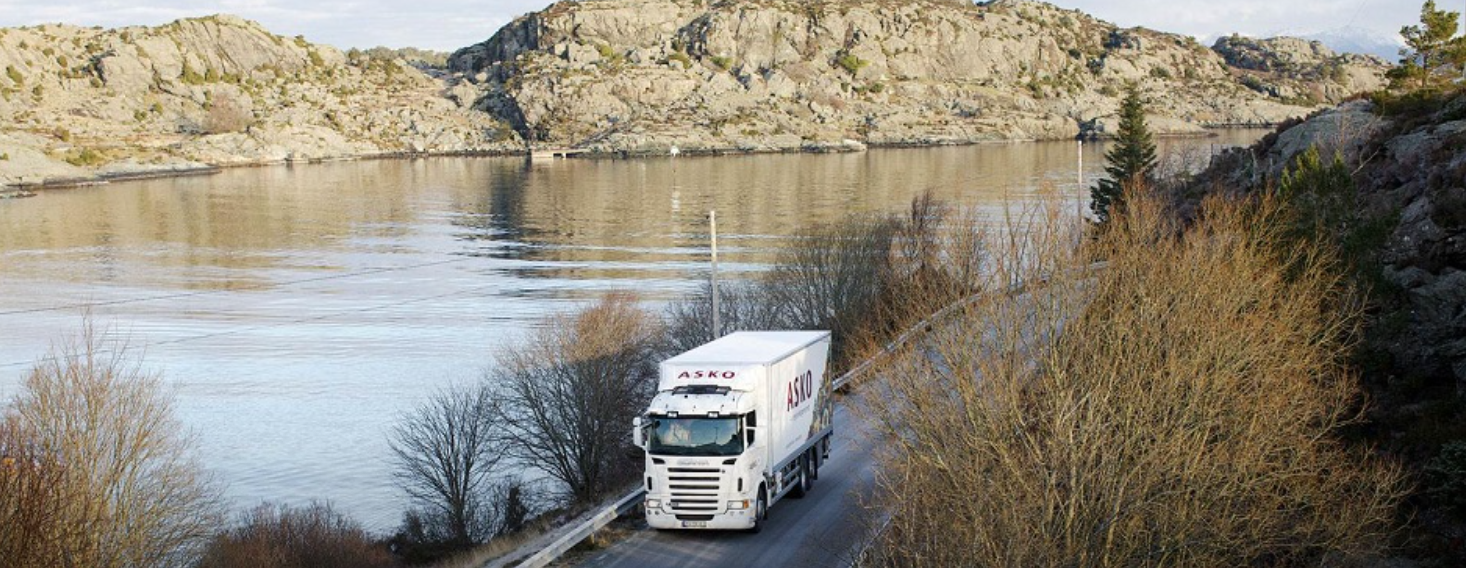
The new rail freight connection runs daily with several stops between the termini: Mosjøen, Mo i Rana and Fauske. It was arranged by CargoNet in a partnership with ASKO (Norway’s largest grocery wholesaler), Meyership (Norwegian logistics company based in Mo i Rana) and Nova Sea (Norwegian salmon farming company). The first departures started in mid-December of last year.

“This is a fantastic project. That is exactly what we were hoping for when we invested 170 million krones (around 17 million euros) in the Helgeland terminal in Mo i Rana, in addition to improvements at our terminal in Mosjøen”, said Leif Sagen, marketing manager at Meyership. CargoNet plans to increase the capacity and frequency on the Trondheim – Bodø route starting from April. This service could be easily connected with CargoNet’s intermodal link from Trondheim to Oslo.

Modal shift

All the parties regard the new rail freight connection as a convenient tool to reduce their costs. At the same time, such rail services contribute to the shift to rail. They are also environmentally-friendly and allow logistics companies to reduce CO2 emissions. The environmental benefit from the new CargoNet’s service is estimated at more than 6,000 tonnes of CO2.

Another option is less congested roads in Northern Norway. “ASKO wants environmentally-friendly and efficient transport solutions and has decided to increase cooperation with CargoNet. We are proud of the confidence we show, and we look forward to driving even more freight trains”, noted Erik Røhne, CEO of CargoNet.

February 17, 2020 0 comments
0 FacebookTwitterPinterestEmail
NATO and Norway

The U.S., NATO, and the Defense of Europe – Clarke Cooper

by Nadarajah Sethurupan February 16, 2020
written by Nadarajah Sethurupan

“Counterterrorism is a very good example of where Washington and Moscow are working together.  This is very much a shared interest and a shared concern for all states, not just NATO states, but all states within the framework of the United Nations as we want to make sure that our institutions are not threatened and our people are not threatened.  We have worked with Russia to be able to identify threat networks and disrupt those threat networks, and that is certainly an amenable space that Moscow values, that Washington values ” explained Assistant Secretary Clarke Cooper of the Bureau of Political-Military Affairs on a call with reporters.

What would be useful is for the permanent representative from Russia to not be always disruptive or vetoing the work of the UN Security Council, and not take a coercive posture.  I would say if one is looking at it from the United Nations or if one is looking at it from the perspective of the Security Council, the P5 dialogue is there.  Take advantage of the institution, and the mechanisms that already exist and don’t seek to divide or bifurcate what is already present for a – what could be a fruitful platform for dialogue, he said.

Below is a full rush transcript of the press conference by  Assistant Secretary Clarke Cooper Bureau of Political-Military Affairs

Assistant Secretary Cooper:  Many look at the Munich Security Conference as something that is tied or tethered to our history, and it is, but we’re looking forward.  And so – and the aspect of what is past is prologue, we are looking at the future of the alliance. 

One thing that hasn’t changed that is still relevant to the future alliance is that – states being able to protect their citizens to be able to deter threats, but also to be best ready and best available and have the full capacities to work with each other, be interoperable.  And when we look at a world where threats aren’t restricted to one particular geographic region, they are transregional, it is probably best for us to be not just pragmatic but forward-leaning on how to address transregional threats in a way that keeps them mitigated far afield from our homes, our families, and from our interests.

Question:  What was the content of the meeting today between Secretary Pompeo and Russian Minister Lavrov?  Did they discuss events around Idlib in Syria, and are there any plans of talks on the New Start Treaty, which expires in a year?”

Assistant Secretary Cooper:  I’m not going to be able to give a readout between Secretary Pompeo and Foreign Minister Lavrov.  But there are certainly shared interests.  I just had mentioned that threats can be transregional and do not respect geopolitical borders.  Counterterrorism is a very good example of where Washington and Moscow are working together.  This is very much a shared interest and a shared concern for all states, not just NATO states, but all states within the framework of the United Nations as we want to make sure that our institutions are not threatened and our people are not threatened.  We have worked with Russia to be able to identify threat networks and disrupt those threat networks, and that is certainly an amenable space that Moscow values, that Washington values.

Safe to say, though, that there remain challenges.  I mentioned institutions.  We look at Moscow to make sure that they understand they should not be disrupting institutions.  I would imagine that there is still room for honest, frank discussions to tell Russia to not impede upon free and open elections, not only in the United States, but not impede upon free and open elections globally, and that those kind of information operations or disruptive operations certainly benefit no one other than those who may be taking an adversarial standpoint.  So if we look at the scope of what could have been discussed today, there’s definitely room where we have been cooperative to counter terror threats to our populations, and there’s also room to have actually probably had an honest conversation about leaving alone free and open elections in the world.

Question:   Will there be any change in U.S. security policy and strategy in Eastern and Central Europe due to the upcoming elections?  Are there any U.S. suggestions on how to address the European migrant crisis?”

Assistant Secretary Cooper:  I’ll start with policy.  The national security strategy, as set by the Trump administration, focuses on making sure from a global power competition standpoint that we are addressing adversarial actions or adversarial actors not only to U.S. national security, but also to our partners’ national security interests.  With that requires the need to address readiness and interoperability with states, regardless if they’re a NATO state or an EU state.

What does that mean for Central and Eastern Europe?  It means that we do have to address things like physical capacities to ensure that sovereignty is maintained.  And we also need to be building a capacity on resilience to ensure that any kind of disruptive activities coming from a place like Moscow are not incurring upon or weakening democratic institutions.  So there is no change in that sense.

What I would offer is that not only in 2020 but in beyond is there is a very deeply rooted investment in the United States, not only in the executive branch, but also in our Congress, in the legislative branch, to build resilient institutions, and to ensure that there is not only readiness from a military standpoint, but readiness from a civil society standpoint to ensure that we don’t have what we value turned against us.  And there is certainly evidence of that in other election cycles, and we are certainly cognizant of that risk remains out there, and we would like to make sure that our friends and allies are eyes wide open.  So while we may not be able to prevent those adversarial activities or those disruptive activities, we can be aware of them and we can mitigate risk.

As to migration, I would offer that one thing that hasn’t changed and has crossed administrations is our commitment to the 1951 Convention on Refugees.  There is certainly recognition, and it’s incumbent upon states to know that if there is someone in true refugee status in extremis that is very much different from mixed migration and those legal requirements that are associated with mixed migration.

We also are very pragmatic as to how mixed migration may be used or abused by facilitators associated with terror networks or illicit trafficking.  But that is why sovereign states have migration protocols, and why sovereign states have legal migration mechanisms that allow for mixed migration.  But we should not confuse someone’s true extremis refugee status as something that is not to be addressed because there are people who are truly fleeing for their lives.  But legal migration and recognition of the sovereignty of neighboring states certainly factors across the board regardless of administration.

Question:  Which further steps is the U.S. Government planning to take in order to encourage Turkey to buy the Patriot SAM System and the F-35 instead of Russia’s S-400 and SU-35?  Which steps would we have to – have to expect should these steps prove unsuccessful and Turkey deploys the S-400?”

Assistant Secretary Cooper:  Right.  So to catch people up, many are clearly aware, as is the Der Spiegel correspondent is, is that Turkey is seeking to acquire the S-400 air defense system from Russia.  Why is that a problem?  There is an interoperability problem from a practical measure of having to integrate these significant systems.  It is not NATO-compatible.  That’s a problem.  It also encourages risk upon other NATO-compatible elements.  What did we have to do as an alliance when the United States took this first measure was we had to remove Turkey from the F-35 Joint Strike Fighter Program and essentially compartmentalize them for now.  It’s not permanent, and Turkey knows this. 

If they’re able to reconcile their air defense systems, be it with the acquisition of the Patriot, which is NATO-compatible, or with some other integrated air defense program, we could find ourselves in a situation where the Joint 30 – the Joint – F-35 Joint Strike Fighter could be reintroduced to Turkey.  But for now, we’ve actually had to cleave Turkey away from the Joint Strike Fighter Program and actually put them in a place where they are anathema to this very significant part of interoperability amongst NATO member states.

What else is at risk?  Well, if they continue to go down the path of acquiring significant Russian systems, be it an air defense system like the S-400 or be it an air jet fighter platform like Sukhoi F-35, they are at risk at further isolation and they are also at risk of sanctions.  So a sanctions regime is certainly still on the table.  The United States has a number of sanction considerations for them, and it’s important for our partners in Ankara to appreciate is that just because sanctions haven’t been issued to date does not mean they will not be issued.

So there is certainly room to course-correct.  There is room to reconcile.  But the longer this is protracted, the greater they’re at risk of cleaving or extracting further parts of the relationship.  That said, we are working very hard to maintain the bilateral relationship on a military-to-military basis, and we’re working very hard to maintain that relationship as an alliance as well.

Question:   Does President Putin’s idea of a summit between leaders of the P5 UN Security Council members seem useful?”

Assistant Secretary Cooper:  Well, there’s always a line of communication through the national – I mean, through the UN Security Council.  The dialogue is there.  What would be useful is for the permanent representative from Russia to not be always disruptive or vetoing the work of the UN Security Council, and not take a coercive posture.  I would say if one is looking at it from the United Nations or if one is looking at it from the perspective of the Security Council, the P5 dialogue is there.  Take advantage of the institution, and the mechanisms that already exist and don’t seek to divide or bifurcate what is already present for a – what could be a fruitful platform for dialogue.

Question:  How far is the U.S. willing to go in its help with – for Turkey and Syria?  Will we witness a new level of escalation in Idlib?”

Assistant Secretary Cooper:  Well, Idlib is not just an escalation with states.  I mean, part of the challenge in Idlib is also the significant number of non-state actors, the long, growing list of enumerated violent extremist organizations, some associated with regime change for Syria, some not even associated with any kind of a development of any particular state.  What we would push for, as we have, is for resolution and reconciliation in that space, but not at the risk or not at the reduction of populations. 

And what do I mean by that?  Is we certainly don’t want to see the Kurdish population to be in a position where they are falling victim to the overlapping layers of battles that are occurring in that space for certain amounts of sovereignty, as well as the battles are taking place to regain areas that had been lost to what was then under the control of ISIS or Daesh.  This is concerning the shared burden, essentially, that Turkey would appreciate that the regime in Damascus would appreciate, and other populations would appreciate, is that without reconciling that space, there is the opportunity for growth or resurgence of ISIS. 

There is certainly the more internecine or the more conflict amongst state actors and those entities there that are seeking to find peace in that space – the more there’s conflict in those parties, the more opportunities provided for ISIS to reemerge in a posture that had already been degraded because of our joint counterterrorism efforts.  So again, if we’re not careful, we will find ourselves back where we were before, several years ago, and that is a risk I don’t think anybody in any capital would like to see reemerge.  And the only ones who would benefit from that would be your terrorists.

Question:   5G is a dominating topic at the Munich Security Conference.  What is the State Department’s role as partners and allies like the U.K. consider granting some – if the State Department – if U.S. partners and allies consider granting some access to Huawei?”

Assistant Secretary Cooper:  Right.  The important – the important aspect on 5G technology is making sure that partners, regardless if they’re in the NATO alliance or if they’re in any other kind of membership status, is being fully cognizant of the risks they’re about to incur.  If one looks at telecommunication systems as ecosystems, the question that needs to be asked is:  What is being introduced in a state’s communications or telecommunications ecosystem?

And we would offer, if one looks at the posture of Huawei, and we look at the posture of China, and how they’ve applied, and through coercion, particular tools, that risk is very high.  If we’re looking at how we share information, who we share information with, and what their role may be in either a shared defense or shared readiness, that certainly factors.  Understandably, some states in the European Union may not have the full capacity to fully assess and fully take into account what those risks are to either their government institutions or their financial institutions or any of their industry institutions. 

What we’re highlighting is the risks of exploitation and the risks of theft of either unique intellectual property, intelligence, or significant government data.  How can we help?  If a state has certain capacity issues, this is where a number of states are looking to commit, if not equities, then resources to protect them.  But I would say if a state is – thinks that they can simply compartmentalize Huawei and keep it compartmentalized away from their official communications or their intelligence communications or their military or defense communications, they need to look very carefully and think twice.  Because the risk is real, and it’s not that this is theoretical. 

There is precedence for this.  All one has to look, is to see what China has done externally without telecommunications access.  If one looks at incursions upon commercial sites for data mining, the Marriott Hotel system, Experian credit, online services in the U.S. government, the incursions upon our Office of Personnel Management, on that data – all those exploitive activities occurred without invitational access to these platforms and systems. 

And so again, to our friends, to our partners and our allies, we said, please, buyer beware.  Caveat emptor as to what you’re looking at because it may be harder to address after the fact.  Better to take an open-eyed view and at least address mitigating measures on the front end than trying to correct them on the back end.

Assistant Secretary Cooper:  Again, thrilled to be in Munich, and just to offer that our time here is forward-looking.  Earlier we were talking about the posture of violent extremist organizations and terrorist entities, not just in Syria, but the external operations threat and the transregional threat.  And now the time is right for NATO states and EU states to look beyond their own sovereign borders and look beyond Europe as to where they can provide further capabilities and further resources for partners in places like North Africa and like the Middle East to make them stronger and more capable, and appreciate that mutual benefit, not only for those partners in those locations, but for a furthering of security for Europe.

February 16, 2020 0 comments
0 FacebookTwitterPinterestEmail
Economics

Norway sold 4,236 new electric cars in January

by Nadarajah Sethurupan February 16, 2020
written by Nadarajah Sethurupan

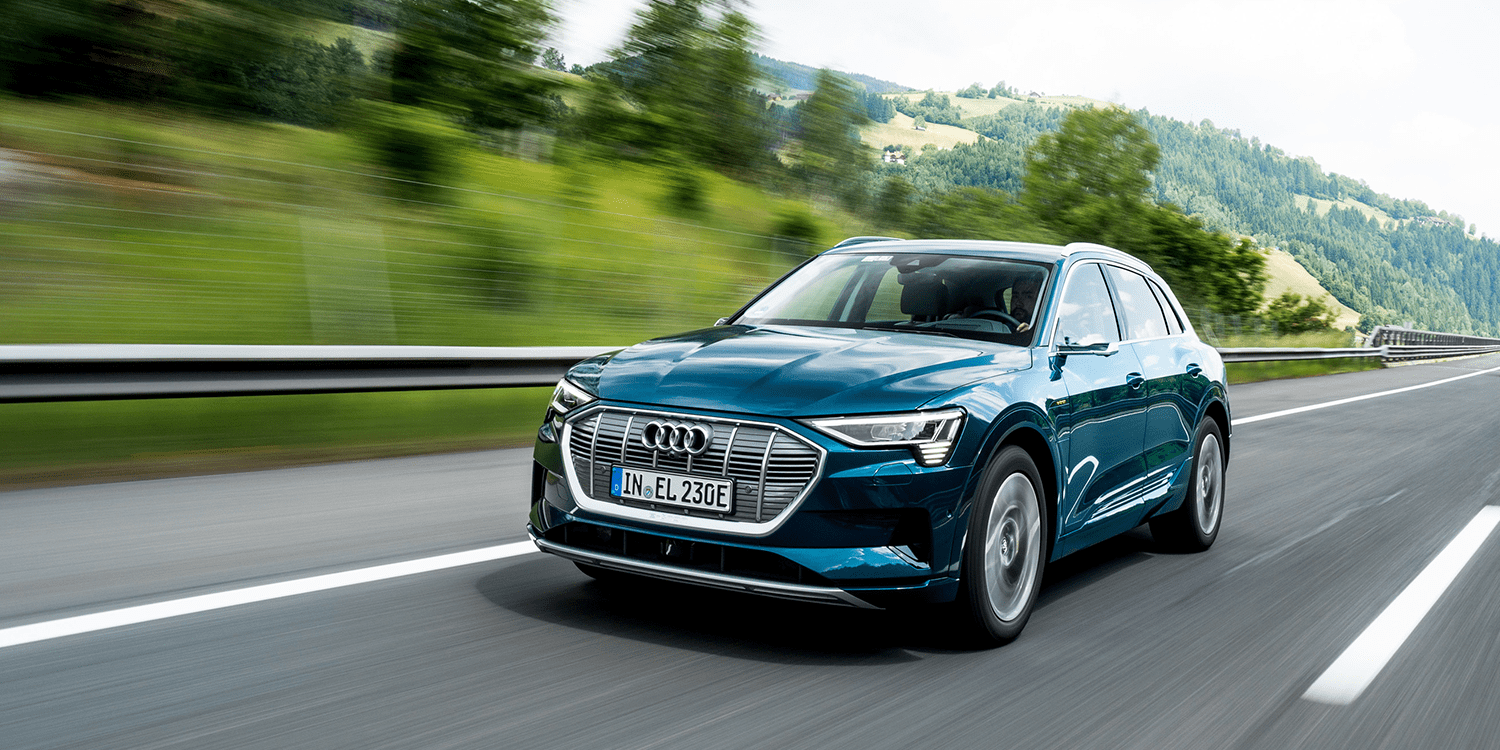
4,236 electric cars were newly registered in Norway in the first month of the new year. The market share of electric cars in passenger car registrations was thus 44.3 per cent. By far the most popular model across all drive systems was the Audi e-tron.

Compared with the same month last year, this represents an increase of 24.3 per cent. In the last three months of 2019 Norway still had to record declines. Compared to December last year, 813 more new electric cars came onto the road.

In addition, there were 3,270 new passenger cars with hybrid drive in Norway in January. The market share was 34.2 per cent. Compared with the same month last year, this segment recorded an increase of 41.4 per cent. The 3,270 hybrid passenger cars included 1,919 plug-in hybrids. The part-time power generators with plug also achieved a plus (47.8 per cent) compared to the same month last year. If both types of drive are added together, 78.5 per cent of all newly registered passenger cars in Norway in December were thus equipped with an electric or hybrid drive.

With regard to the individual models, the Audi e-tron quattro recorded the highest number of new registrations across all drive types with 902 units in January. There is a surprise from a French car manufacturer. Because Renault recorded 533 new registrations for the Zoe (2nd place). By comparison: over the whole of 2019, the Zoe had just 2,090 registrations.

February 16, 2020 0 comments
0 FacebookTwitterPinterestEmail
Crimes

Norwegian Police Raid Teekay Office Over Waste Export

by Nadarajah Sethurupan February 16, 2020
written by Nadarajah Sethurupan

Norway’s national economic crime unit raided the local office of international shipping company Teekay Offshore this week on suspicion of illegally exporting waste, the agency, known as Okokrim, said on Thursday.

In recent years, courts in Europe using tougher regulations have fined shipping companies for transporting hazardous waste for disposal in cases that have added to complexities for seaborne transporters often operating in several jurisdictions.

Maria Bache Dahl, acting senior public prosecutor with Okokrim, said authorities had carried out a search of Teekay Shipping Norway’s office in the southern city of Stavanger on Tuesday, questioned witnesses and “seized potential evidence”.

“Teekay Shipping Norway AS is suspected of illegal export of waste, in the form of the shuttle tanker Navion Britannia. The ship sailed from Norway in 2018, and reached Alang, India in July 2018,” Dahl told Reuters in an emailed statement.

“The investigation will focus on whether the export was in violation of Norwegian and EU regulations of waste export.”

Bermuda headquartered Teekay Offshore confirmed in a statement that the vessel was part of their fleet and their office had been raided.

The company said the vessel had been sent to an Indian yard in 2018 for recycling in full compliance with the requirements and standards of the Hong Kong convention.

“As a responsible operator, we are open and transparent about our practices and have nothing to hide,” Teekay Offshore said. “We have followed all rules and regulations in the related export and recycling processes.”

The Hong Kong convention lays down requirements for the safe and environmentally friendly recycling of ships and the disposal of hazardous materials.

Okokrim’s Dahl said Norwegian police had not yet reached a conclusion over whether the vessel must be considered as waste before sailing from Norway.

“In our experience, the scope of the investigation of Teekay Shipping Norway AS will necessitate months rather than weeks of investigation before we will be able to conclude on whether to charge or acquit the company,” Dahl said.

The majority of the world’s ageing ships are broken up on beaches in Bangladesh, Pakistan and India.

Campaigners have said that in many yards workers still cut up ships with little more than their hands and blowtorches, with parts and pollutants dropping directly onto the sand. They say they have continued concerns over safety at the sites.

February 16, 2020 0 comments
0 FacebookTwitterPinterestEmail
Economics

Skanska invests €46.2m in Oslo resi scheme (NO)

by Nadarajah Sethurupan February 15, 2020
written by Nadarajah Sethurupan

Skanska invests €46.2m (NOK 470m) in the sixth phase of the residential project Ensjo Torg in Oslo, Norway. The construction contract is worth €36.6m (NOK 372m) which will be included in the Nordic order bookings for the first quarter of 2020.

The sixth phase of the project, called Tigergarden, consists of 161 apartments. The scheme includes several green areas on the rooftops and on the ground and is developed to make it easier to live an environmentally friendly lifestyle with many parking spots for bicycles and possibilities for growing of own greens and vegetables.

Tigergarden aims to be environmentally certified as BREEAM-NOR level Very Good. Construction started in January 2020 and will be completed in October 2022.

Skanska started the building of Ensjo Torg project in 2017, and it will consist of approximately 620 units in total. Tigergarden is the sixth out of seven phases.

February 15, 2020 0 comments
0 FacebookTwitterPinterestEmail
China and Norway

Norway’s ‘northernmost Chinatown’ eyes Beijing’s Arctic investments

by Nadarajah Sethurupan February 14, 2020
written by Nadarajah Sethurupan

Each year, during the Lunar New Year celebrations, a small Arctic Chinatown takes shape near Norway’s border with Russia and Finland. It’s an indication of how China, though a non-Arctic state, is increasingly eyeing opportunities in the region.

Shops decorated with lightboxes, Chinese signs and a Paifang-inspired arch appear in the pedestrian zone of Norway’s Arctic town of Kirkenes, “welcoming the future as the most important city on the Polar Silk Road,” according to the town’s official website.

Kirkenes harbour, northern Norway. [EPA/Helge Sterk]

“China is a new player,” Rune Rafaelsen, the mayor of Sør-Varanger, a municipality in the far northeast corner of Norway, told Media.

“We are responding to the fact that the economic centre of the world, which has for hundreds of years been Europe and the US, in the near future will shift towards Southeast Asia,” he added.

Dreams of ‘Arctic Rotterdam’

In recent time, the Arctic’s Northern Sea Route has seen explosive growth in traffic as the sea corridor between China and Europe cuts the travel by 40% compared to sailing via the Suez Canal.

Arctic nations are building new more powerful icebreakers able to open year-round shipping lanes.

For China, the new Arctic sea route is part of its Belt and Road Initiative and in line with its 2018 Arctic policy white paper, where Bejing pledged to develop shipping routes, in cooperation with ‘all parties’.

China frequently encourages its companies to participate in building infrastructure on the stretch along the Russian Arctic coast all the way to Europe.

State-owned Cosco Shipping Group has already established footholds in Europe by investing in port terminals that were previously neglected by private European operators, from Spain, Portugal, Belgium or Greece.

So far, Chinese shipments were experimental in character, but this could quickly change as climate researchers predict that in 20 years, the Arctic could become ice-free in the summer.

For Arctic towns like Kirkenes, whose economy has so far relied on fishing, iron-ore mining and tourism, this means dreams of an ‘Arctic Rotterdam’ that could turn northern Scandinavia into a logistical hub and a new major trade corridor between Asia and Europe.

“Ten years ago, there were three million tonnes of cargo shipped along the Northern Sea Route, last year it was nearly 30 million and in 2030 it will be 90 million tonnes,” Rafaelsen said.

This also calls for new major regional infrastructure projects to adjust the region to increased economic activity.

According to Rafaelsen, Kirkenes could get a mega port – the first and last stop in the European Economic Area along the Northeast passage – with train connections to Rovaniemi in Finland and further south to Helsinki, even across the Baltic sea to Estonia.

Residents and officials have questioned the commercial and environmental impact of such development while the Sami, an indigenous people who herd reindeer across the region, see a threat to their livelihoods and culture.

Meanwhile, major telecommunications projects are underway to connect Japan and Vladivostok with Kirkenes via underwater telecom cables.

And China is more than willing to provide the required investments.

“We don’t have much Chinese investment so far, but rather lots of companies coming to explore what is possible in the future,” Kirkenes’ mayor said.

Rafaelsen frequently visits China to promote the municipality’s businesses. Last year he and his delegations paid visits to the port town of Yingkou, with which he hopes to establish future relations.

However, asked if he shares European and US concerns about Chinese foreign investment, the mayor replied that “it would be very wise of Norway to own its own infrastructure.”

“If there should be a railway, a new harbour, it should be owned by Norway, or at least not controlled by foreigners,” he emphasised.

However, Rafaelsen pointed out that China is a challenge for Russia as well.

“People were negative when we started to cooperate with Russia, they are also negative as we start cooperating with the Chinese, but I think the only solution for the Arctic and for international cooperation is to have a dialogue.”

To Rafaelsen it is clear: “The window of opportunity is open to ask the question how the West can reinvent its cooperation with Russia, while at the same positioning itself regarding China.”

Similar statements can be heard from Oslo, which according to Norway’s industry minister hopes for a China free-trade deal in 2020.

Trade talks began in 2008 but relations between Oslo and Beijing were frozen from 2010 to 2016, after the Norwegian Nobel Committee awarded the Nobel Peace Prize to a Chinese dissident.

But while the Norwegian approach is to welcome investments and competition in the region, Audun Halvorsen, state secretary of the Norwegian foreign ministry, said Oslo is not blind to the concerns.

“In all European countries there is growing attention to the need to have a legal framework which makes it possible to screen investments in order to protect critical infrastructure and enable us to make the necessary analysis if you look at foreign investment,” he told EURACTIV.

Audun, however, also emphasised that looking more broadly at China’s actions in the region, “you’ll see they are working within the established governance structures, within the framework of international law and as an observer to the Arctic Council.”

Playing by the rules of the game?

“In the Arctic, some of the Chinese activity has been welcomed, like the increasing emphasis on climate science and participation as an observer in the Arctic Council,” Arild Moe, a researcher at the Fridtjof Nansen Institute, told EURACTIV.

But while Chinese investments are seen positively by many Arctic communities, reservations have been growing in recent times.

“Those are based not on experience in the Arctic, since there have so far been few actual investments, but on the impression of Chinese behaviour elsewhere,” Moe said, adding that reports on activities linked to the Belt and Road projects have caused concern about debt traps and Chinese labour crowding out locals.

An official who asked not to be named said it was crucial to maintain rule of law in the region.

“We have to be clear that the Arctic is not the South China Sea. Here, legal order and the Law of the Seas applies, and we will make an effort to keep it that way”, the official told Media.

February 14, 2020 0 comments
0 FacebookTwitterPinterestEmail
Defence

NORWEGIANS JOIN ROYAL MARINES ON FJORD RAID

by Nadarajah Sethurupan February 13, 2020
written by Nadarajah Sethurupan

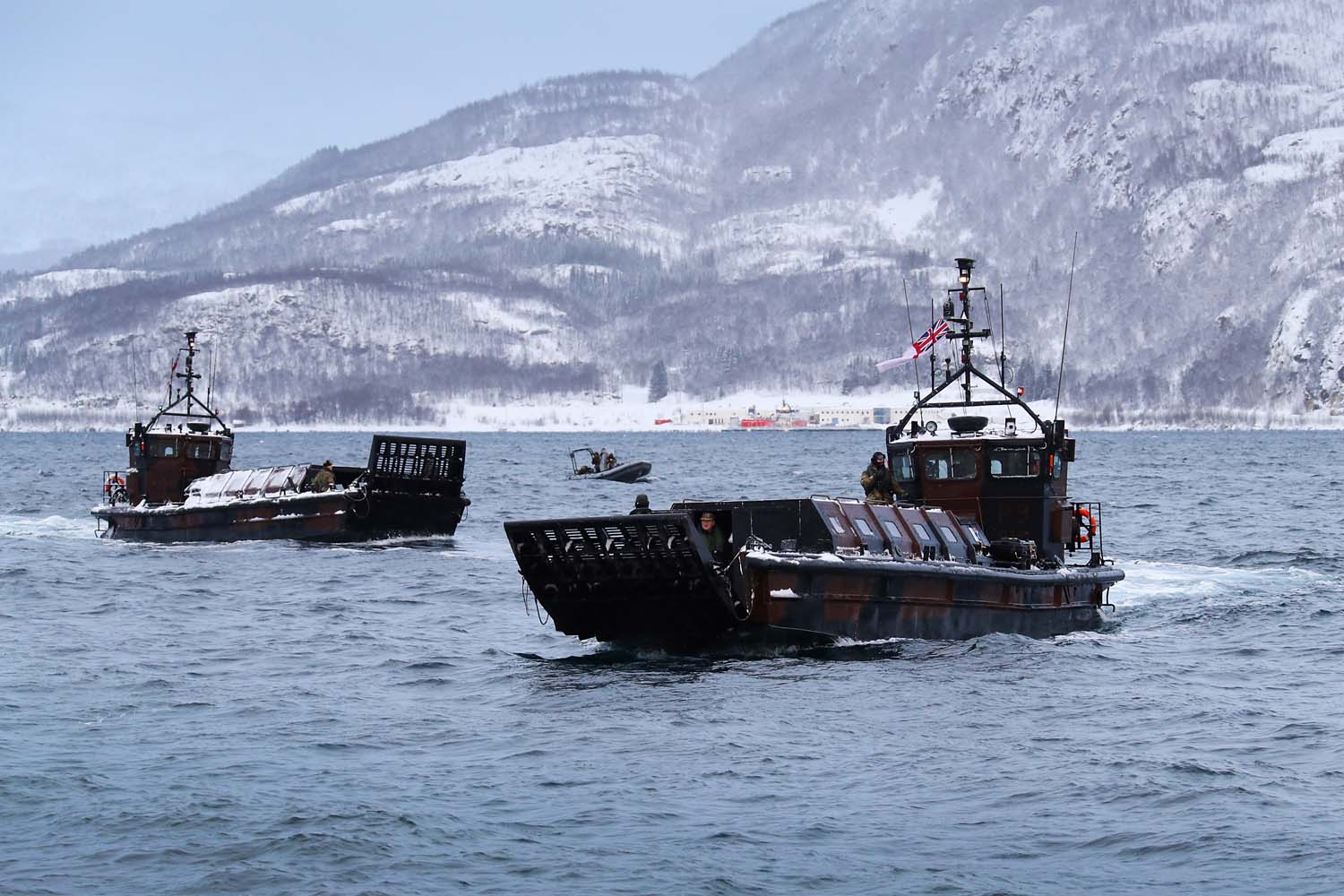
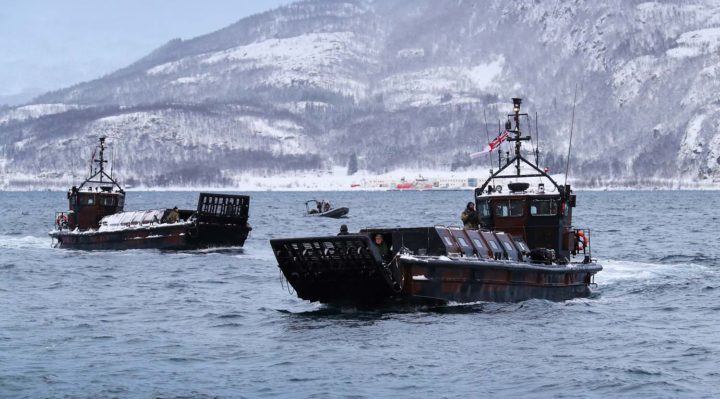
Royal Marines have been showing Norwegian troops how commandos storm shorelines on amphibious raids in the fjords of the Arctic Circle.

In blizzard conditions, the fast raiding boats of Plymouth-based 47 Commando tore through the icy waters with Norwegian troops from Brigade Nord.

47 COMMANDO TRAIN WITH NORWEGIAN COUNTERPARTS 47 Cdo RM have been exercising alongside their Norwegian counterparts in Norway on Ex CETUS. 47 Cdo RM utilised Offshore Raiding Craft (ORCs) and Landing Craft Vehicle Personnel (LCVP) to show there Norwegian counterparts how they deliver troops and equipment ashore in the harsh Artic conditions. The Norwegian troops were given instruction on how correctly conduct a beach landing using the Royal Marines landing craft. The Royal Marines have been working closely with the Norwegian Armed Forces throughout CETUS 20.

Royal Marines Offshore Raiding Craft, which can reach speeds of up to around 50mph, sped towards the beach backed by landing craft before the joint forces brought their fire and fury onto the land.  

“Bilateral activity with Norwegian forces is the focus of our training here in the high north,” explained Captain Jack Denniss of 47 Commando’s 539 Raiding Squadron.

“It’s not just about developing our own skills in these extreme environments, it’s about ensuring that we can operate seamlessly with our NATO allies in the most testing conditions.”

The hardy commandos and Norwegians were exposed to 25mph gusts, white-out conditions and temperatures as low as -20C on their fjord mission.
It is all vital training to ensure that Norway and the Royal Marines can operate effectively together and understand the tactics utilised by elite commandos during amphibious sorties.

February 13, 2020 0 comments
0 FacebookTwitterPinterestEmail
Economics

€19 million Estonia-Norway cooperation program

by Nadarajah Sethurupan February 12, 2020
written by Nadarajah Sethurupan

Enterprise Estonia launched a round of applications on Saturday for the main grant scheme of the Estonian-Norwegian cooperation program “Green ICT,” the total budget of which is €18.8 million.

In the framework of the cooperation program, companies will be able to receive support for such activities as digitization of industry, information and communication technology-based product development as well as the development of health technology solutions. Joint projects between Estonian and Norwegian businesses will be preferred, Enterprise Estonia said.

Minister of Foreign Trade and IT Kaimar Karu said that the program has an important role to play in strengthening innovation-related cooperation between Estonia and Norway.

“When it comes to this program, it is also important that support is given to Estonian companies’ innovative ICT projects and solutions for the digitization of industrial enterprises, which will increase the sustainable use of resources, increase their productivity as well as increase their added value and competitiveness,” Karu said in a press release.

Norwegian Embassy Charge d’Affaires Ole Overaas said that Norway has high expectations for business projects’ measurable environmental outcomes.

“It is important for both Norway and Estonia to achieve economic growth that does not come at the expense of a clean living environment,” Overaas said. “In that respect, environmentally friendly technologies are likely to provide the most sustainable future solution.”

According to Enterprise Estonia board member Sigrid Harjo, there is great interest from companies in the program.

“Over 100 companies participated in the information day held in January,” Harjo said. “There is particular interest in innovative industrial solutions and product development in areas such as health technologies and energy efficiency.”

Applications will be accepted at Enterprise Estonia’s e-service portal from February 1 through March 31. Support can be applied for by companies registered in Estonia, and welcome as partners are Norwegian companies as well as sectoral networks such as clusters, universities and associations.

Grants will range in size from €200,000-700,000 per project, with the maximum grant for health technology increased to €1.25 million.

The Green ICT program is funded from the 2014-2021 assets of Norway’s financial mechanisms.

February 12, 2020 0 comments
0 FacebookTwitterPinterestEmail
Science

PSV to find new life as aquaculture vessel

by Nadarajah Sethurupan February 10, 2020
written by Nadarajah Sethurupan

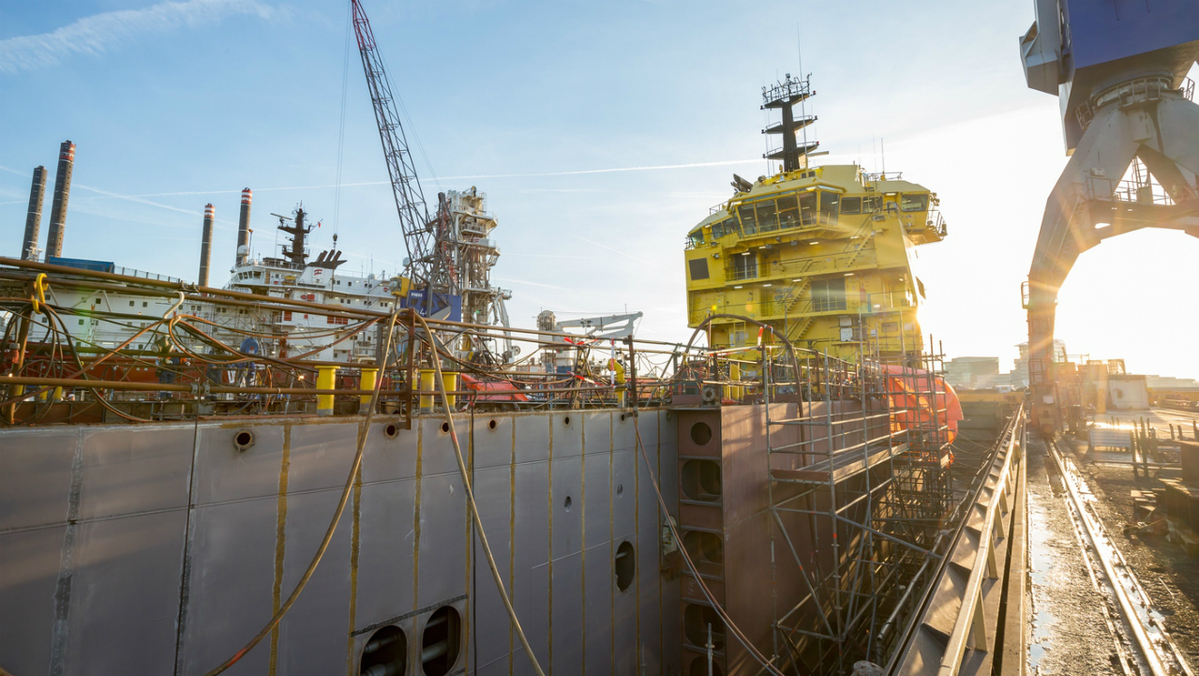
Damen is converting the platform supply vessel (PSV) Eidsvaag Opal for Eidsvaag, a small, family-owned Norwegian company that has been transporting fish feed to the aquaculture sector since the early 1980s. In 1995, as the aquaculture industry expanded, Eidsvaag switched from road transportation to shipping. It now operates a fleet of 16 owned and chartered vessels.

“One of the main things that made Damen stand out as a strong candidate in the tender process was their previous experience with the vessel,” said Eidsvaag general manager Vidar Eidsvaag. Eidsvaag Opal was part of a six-vessel order Damen built for the now-desolved offshore supply company World Wide Supply. Originally built as World Opal in 2013, the vessel is a Damen PSV 3300 CD design, with an overall length of 80 m, deck load of 1,500 tonnes and dynamic positioning class 2 capability.

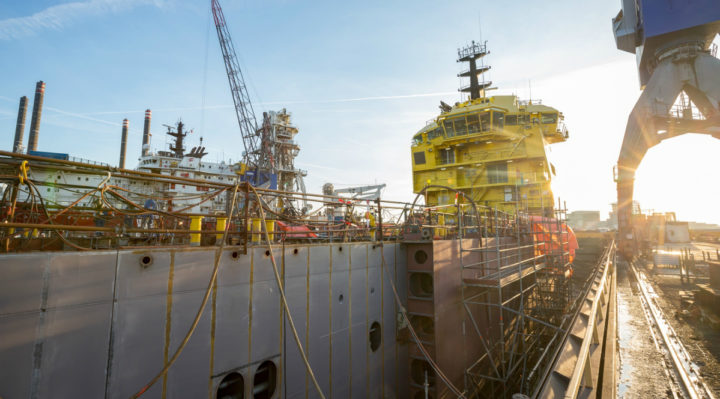
Extensive steel work will be required to convert the PSV to a fish feeder

Conversion of Eidsvaag Opal required extensive steel work, including removal of the main deck, after which the vessel was cut in half and the subcontractor Mammoet moved the aft section of the vessel 10 m back to allow space to fit the new 4.9-m midsection.

Thirty-one new steel sections will be inserted into the hull and divided into sponsons and the new big bag hold. In total, 650 tonnes of new steel will be fabricated by steel fabricator Niron Staal and installed in Eidsvaag Opalwhile it is in drydock at Damen. The shipyard will remove 300 tonnes of steel from the ship’s structure for the conversion.

The project will also increase the beam with side boxes to give additional stability and extra cargo capacity. Each side box will be 1.2 m. Damen will install 35 silos as well as cargo holds. When complete, the vessel will be able to transport 2,800 tonnes of feed at a time. There will be five new cranes and a discharger installed.

“It is really helping speed up the project with Damen already being familiar with the design of the ship,” said Mr Eidsvaag.

Several laid-up PSVs have found new lives in other segments of the marine market in the wake of the prolonged downturn in the offshore oil and gas market.

Damen’s previous track record includes converting a Damen Combi Coaster into a fish feed transportation vessel. This involved the shipbuilder shortening the vessel to provide the added manoeuvrability necessary for operating within fish farms. The vessel was then outfitted with 64 silos to transport different types of fish food.

February 10, 2020 0 comments
0 FacebookTwitterPinterestEmail
Defence

Royal Marines Commandos Raid alongside Norwegian stealth ship in Artic

by Nadarajah Sethurupan February 8, 2020
written by Nadarajah Sethurupan

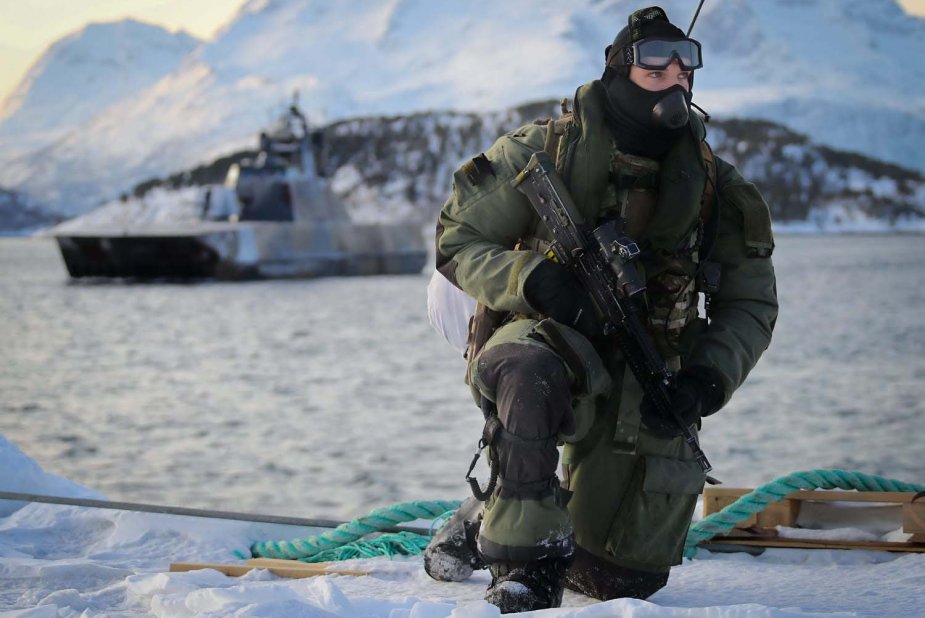
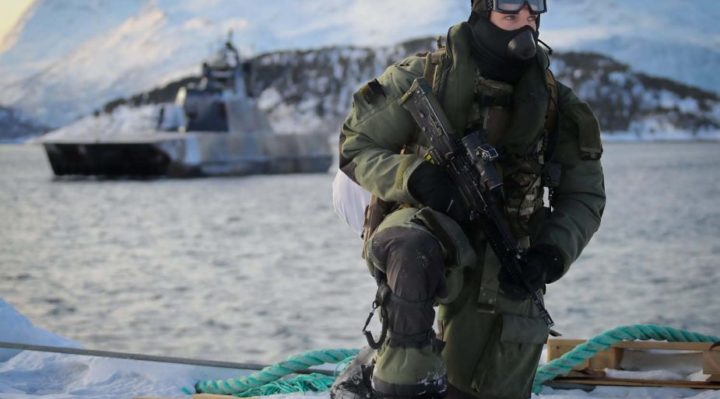
The exercise in the fjords of northern Norway saw marines of Plymouth-based 47 Commando, the small boat raiding specialists of 3 Commando Brigade, work closely with Norwegian counterparts and their stealth corvette.

Elite commandos were dropped ashore by the Skjold Class Corvette, which has a low radar signature, ship-busting missiles and is able to speed through the water at up to around 70mph.

Once ashore, a reconnaissance team from 47 Commando were tasked to secure a keying landing point, allowing for resupply to flow through a ‘contested’ area.

“The range, stealth and firepower of the Corvette aligns perfectly with the Future Commando Force Operating Model that the Royal Marines are moving towards,” said Captain Jack Denniss, Operations Officer of 539 Raiding Squadron.

“Equipped with capabilities that allow it to dominate Norway’s coastline, the corvette’s stealth and speed also make it highly suited for inserting small teams of commandos into contested areas unseen.”

The commandos moved discretely into position, securing the area and coordinating Offshore Raiding Craft and Vikings from Armoured Support Group to provide protection as the Norwegian corvette moved in.

“The Norwegian Corvette Class is a very impressive platform, able to integrate seamlessly with 47 Commando’s Inshore Raiding Craft teams,” said Major Mat Bayliss, Officer Commanding of 539 Raiding Squadron.

“On future iterations of the corps’ Arctic Deployment, we plan to work with the Corvette Squadron even more closely, further refining our interoperability.”

Once alongside and secure, the Commando Logistics Regiment (CLR) brought forward vital supplies to replenish the Corvette and prepare it for further tasking.

“This exercise has been a good example of the flexibility offered by 3 Commando Brigade,” added Captain Denniss.

“One of the unique strengths of CLR is their ability to sustain both Brigade assets and allied forces in extreme conditions, without the presence of any major infrastructure.”

February 8, 2020 0 comments
0 FacebookTwitterPinterestEmail
Media Freedom

With a new department, Norway’s VG aims to grow its Gen Z audience

by Nadarajah Sethurupan February 6, 2020
written by Nadarajah Sethurupan

At tabloid newspaper VG better understanding younger generations and learning how best to communicate with them is a top priority. So much so that it recently established a new department dedicated to bringing more young users to its website.

Launched in January this year, the new department, dubbed “Z”, currently consists of three editors, nine reporters with different skills, and one motion graphic designer.

Located close to the centre of the newsroom, the team takes part in the daily schedules of the breaking news desk and VG’s TV department, and works closely with developers and UX-designers in Schibsted on product-related projects.

In this interview, Gard Steiro, VG’s editor-in-chief and CEO, who will be speaking at this year’s World News Media Congress, shares more details about the new department, and VG’s youth strategy in general.

Gard Steiro: In 2020 reaching a young audience is one of VG’s four main ambitions. The priority is higher than ever. Our goal is not only to make more content for the younger audience, we aim to do it more systematically than before.

VG reaches half of the Norwegian population every day. Hence the average user of our main website is a 46-year-old male. If we do not recruit a new and younger audience, the average user will be 47 years next year. This is a deadly strategy.

“In the long term, we absolutely need to convert young people to become loyal users. As our main strategy is to be Norway’s primary news destination, we want the next generation to consume our content on VG.no, in addition to third-party platforms such as Snapchat,” – Gard Steiro

That means we have set goals for increased visits on VG.no from Norwegians between 15 and 25. 17.4 percent of the population is in this age group, but on our home page we normally reach significantly older audiences on average. One of the reasons is that we traditionally have made content for people who already know and understand the news, or content dedicated for the more adult base of users. This has to change.

Another goal is to give this age group interesting content from our home page every day, meaning we have to make content young people are engaged by.

We are measuring demography clicks from the front page with the aim to reach a bigger share than 17.4 percent of the unique users on this content – the actual share of this group in Norway.

Where do you currently stand with regard to the new department? What are its main tasks, projects and priorities?

Z launched the last week of January, and we’re currently in the first phase of getting everyone up to speed on our current platforms. That’s our first priority.

“Z will publish on social media, Snapchat Discover, and in our own app for easily consumed news (Peil), but our main priority will be to grow the younger demographic on VG.no,” – Gard Steiro

From focusing on each platform by itself, we will pivot to focus on creating engaging stories for 15 to 25-year-olds, and then tweak and publish those in the best way for each platform.

Z will also speak for young people in the newsroom, and try to make the rest of VG understand their needs better than today. Included in this is a greater focus on user research and feedback from our readers.

You were the first Nordic news brand on Snapchat Discover. What are your main learnings and takeaways from being on the platform?

We have learned a lot about mobile storytelling and young readers through Snapchat Discover. The platform let us focus solely on mobile, without having to think about how the content would look on other platforms. In the same way, we could cater exclusively to the younger demographic.

“Snapchat was the first platform to use the now widespread story-format. Being early on the platform we probably got a head start in building expertise in using this format for telling stories: It’s about using text, video, animation and images in the combination that works best for telling the story,” – Gard Steiro

Every story has to include several of these elements, so you can’t rely on a ‘wall of text’ doing the job – you have to really think about these things before you create something.

The platform also gave us a direct way into a lot of younger people’s pockets. The numbers told us early what worked in terms of topics and style.

For example: We early on got feedback that using emojis in our stories makes us sound like the reader’s parents – or their 8-year-old siblings. We obviously had a lot to learn.

What other platforms is VG active on to reach younger audiences?

Instagram and our own app, ‘Peil.’ We’ve also done some initial tests on TikTok. We also use Facebook, but the Z generation is not the most important group on that platform.

What advice do you have for a news organisation wanting to better engage younger audiences?

Talk to young people about their interests and needs. Take them seriously: They don’t want to be talked to as if they are kids, but they want to hear about things that affect them.

You have to be patient: Their use patterns won’t change overnight. For VG, it’s more important that a 15-year-old will choose VG regularly when they are 22, than that they start using VG immediately.

February 6, 2020 0 comments
0 FacebookTwitterPinterestEmail
Spy War

Norwegian firm sues authorities for attempts to make its employees spy in Russia

by Nadarajah Sethurupan February 4, 2020
written by Nadarajah Sethurupan

A court in Oslo on Monday opened hearings on a lawsuit filed by the Norwegian company Olen Betong Gruppen AS against the country’s government. The company claims that Norwegian secret services have for years tried to recruit its employees in Murmansk, the Norwegian news agency said.

The company argues that it has sustained multi-million losses as a result of charges of espionage. For instance, the Murmansk branch of Olen Betong now has to be managed from Norway’s Rugalan Province.

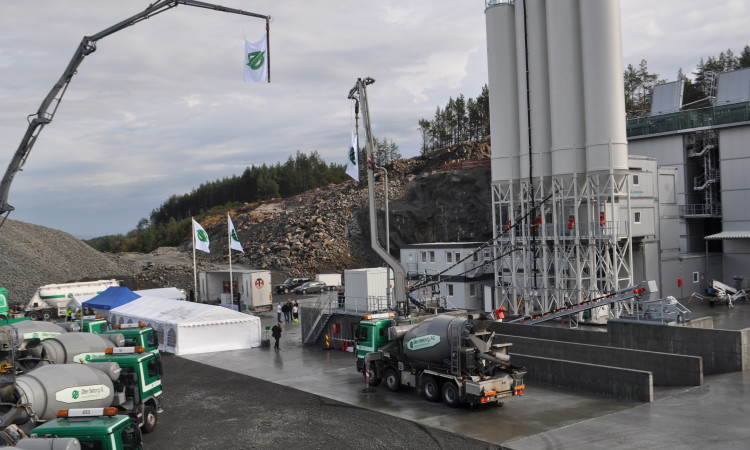
The company says there have been several attempts to recruit its employees in the capacity of informers. The Russian authorities exposed them and prohibited the persons in question from entering Russia. The executive director of the concrete manufacturer, Atle Berge, in 2016 was detained by FSB operatives in Murmansk and prohibited from entering Russia up to 2026. The Norwegian company’s employee in Murmansk Kurt Sto after contacts with the Norwegian security police was expelled from Russia and prohibited from entering the country again, too.

The company claims that secret services are responsible for heavy financial losses in Murmansk and argues that the Norwegian government is obliged to pay a compensation of about 14.5 million euros.

In 2007-2008, the company invested several hundred million Norwegian kroner into its business in Murmansk.

The court hearings will last for five days. On Wednesday, the court will hear testimonies by border guard inspector Frode Berg, who had been convicted in Russia of spying and returned to Norway from Russia as a result of a spy swap. Olen Betong’s lawyer argues that these two cases have much in common, because the secret services contacted Berg, too. In contrast to Olen Betong employees Berg agreed to cooperate.

/TASS/

February 4, 2020 0 comments
0 FacebookTwitterPinterestEmail
Defence

Norway Establishes New Maritime Helicopter Wing

by Nadarajah Sethurupan February 3, 2020
written by Nadarajah Sethurupan

From January 1st, 2020, the Royal Norwegian Air Force set up a new Maritime helicopter wing: The 139 Air Wing of Bardufoss Air Station. The new unit will mainly focus on maritime missions, in which the Norwegian NH90 helicopters play a major role.

In addition to the maritime missions, the helicopter wing will maintain its duties in relation to airport operation, flight school and increasing allied training at Bardufoss air station.

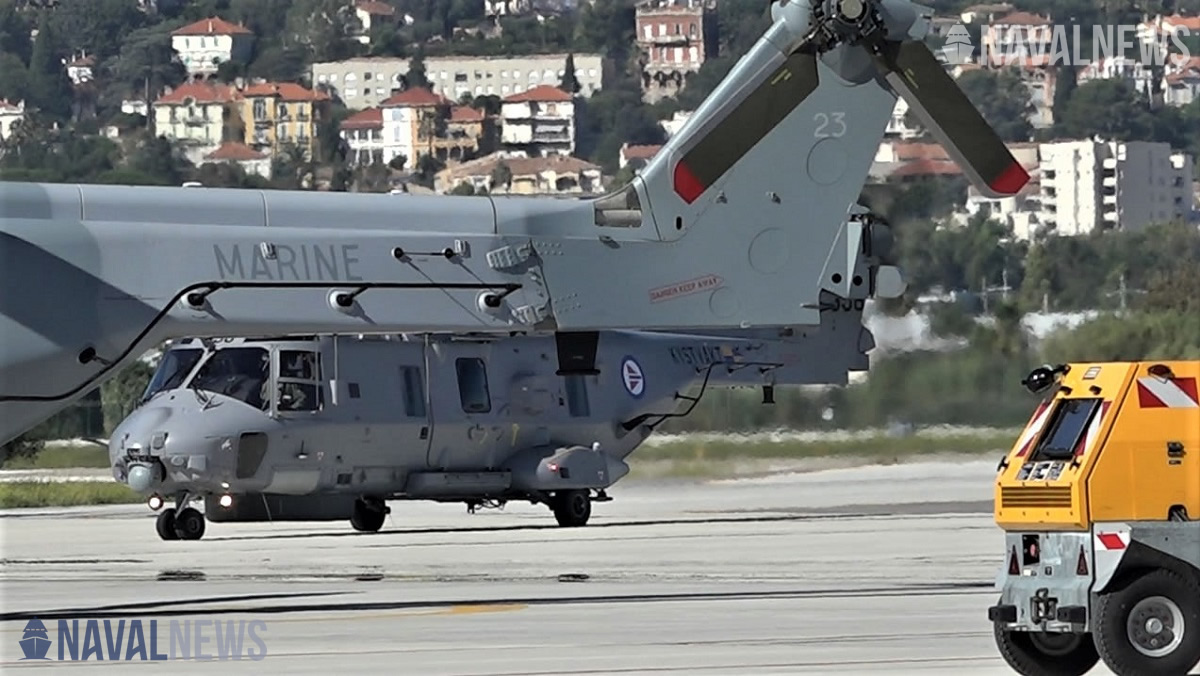
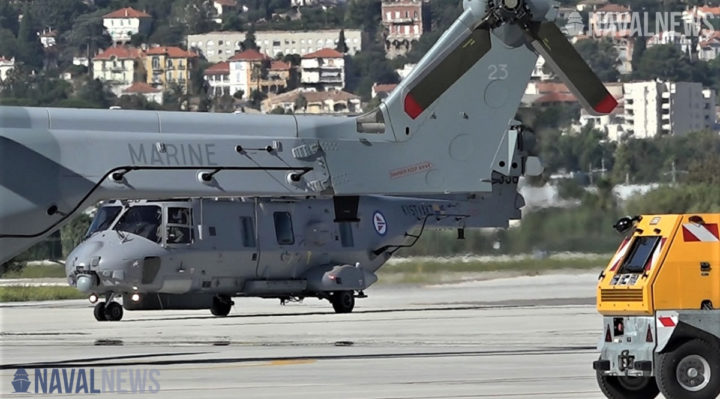
Norwegian NH90 NFH maritime helicopter in training with the French Navy at Hyeres naval base

« Bardufoss has existed as a military air station for 82 years. During that time we have been through many changes, different names and different assignments and focus. Now we are a maritime helicopter wing, a new chapter. The world is changing and we have to adapt to it. Focusing on the northern and marine areas will give us new focus. We will deliver the NH90 on the Coast Guard and frigate and create a closer cooperation with the Navy, » the new Maritime Helicopter Wing commander, Colonel Eirik Stueland, said.

The RNoN currently operates a fleet of eight NH90 NFH ASW helicopters, with six more on order. They will be jointly operated by the Norwegian Navy and Coast guards. According to the Norwegian MoD, IOC will be reached in 2020 for the Coast guard missions. « This means that it achieves an initial operational capability and can begin conducting certain tasks, » the MoD said. 

« In 2024-2025, we will be fully operational on both frigate and coastguard missions. It is an ambitious goal, but we are working hard to achieve it. We have been training for many years to become operational on the coastguard ships, and we now regularly operate from coastguard ships with the NH90. This experience means that it will take less time to become operational on the frigates, » Stueland added.

February 3, 2020 0 comments
0 FacebookTwitterPinterestEmail
Diplomatic relations

Norwegian Honorary Consulate for Illinois Opens in Chicago

by Nadarajah Sethurupan February 2, 2020
written by Nadarajah Sethurupan

CHICAGO – On Jan. 21, the Chicago office of Greensfelder, Hemker & Gale, P.C., celebrated the opening of the new Norwegian Honorary Consulate for Illinois – located at Greensfelder – and introduced Greensfelder Officer Susan Meyer as the newly appointed Norwegian Honorary Consul. 

In conjunction with Ms. Meyer’s appointment late last year, Greensfelder’s Chicago office was designated by Norway’s Foreign Ministry as the Norwegian Honorary Consulate. Norway’s Honorary Consul assists with consular affairs and helps to facilitate development of business, cultural and educational relations between Norway and the United States. 

The Jan. 21 event also featured an address from Harriet E. Berg, Norwegian Consul General in New York, and a medal ceremony honoring Eirik Seim for his overseas service.

In addition to her new consulate role, Ms. Meyer is a past president and current member of the Chicago Chapter of the Norwegian-American Chamber of Commerce. She frequently advises companies on matters related to commerce between the United States and Scandinavia. She is also actively involved with the Norwegian-American Defense and Homeland Security Industry Council and the Swedish American Chamber of Commerce. In addition, she is on the board of Women Entrepreneurs Grow Global, a non-profit organization dedicated to helping women-owned businesses expand internationally.

As leader of Greensfelder’s Trademark, Copyright, Media, and Advertising group and a member of the firm’s Intellectual Property and Franchising & Distribution groups, Ms. Meyer advises businesses in the areas of intellectual property, franchising, and distribution. She represents companies in the United States and internationally in every stage of development. In addition to her work involving intellectual property transactions, licensing, and dispute resolution, Ms. Meyer has extensive experience in trademark law, representing clients before the Trademark Trial and Appeal Board and federal courts. She also works with franchisors on compliance issues and serves as outside general counsel for businesses on general business matters.

February 2, 2020 0 comments
0 FacebookTwitterPinterestEmail
NATO and Norway

US stepping up sanctions against Syria, says US envoy

by Nadarajah Sethurupan February 1, 2020
written by Nadarajah Sethurupan

The US and Europe are stepping up their sanctions against the Syrian regime because of an assault on Idlib, according to Ambassador James F. Jeffrey, US Special Representative for Syria Engagement and Special Envoy for the Global Coalition to Defeat ISIL.

He said in a news briefing on Thursday that the US government was “appalled and horrified by the unrelenting Assad regime assault on Idlib” supported by Russia and Iran. “It indicates that the regime does not want a compromise solution but rather a military solution,” Jeffrey told the media.

He was asked if he had detected a change in the activities of Iranian-backed militias as a result of sanctions and replied: “US sanctions have hurt them, every dollar they do not have is a limitation to the mayhem that they can create mainly among Syrian people. In terms of these Iranian-backed militias and Iranian Quds Force they remain very dangerous in Iraq, Syria and Lebanon. They burrow into the fabric of society and politics.”

The militias infiltrated organizations and “blew up the monopoly of force” held by governments, he said.

“They try to become a state within a state that takes order from Supreme Leader Ali Khamenei. They are still dangerous but for the moment we took out their leader Qassem Soleimani. I cannot stress how vital he was for their evil campaign to expand Iranian influence throughout the region. They have been not quite headless but directionless to a degree that we have not seen for a long time. That will sooner or later change because they have a new leader of the Quds Force and will eventually reestablish their communication with their groups. But for the moment they have been knocked back on their heels and we are watching them closely and we are ready to act again if they threaten us.”

He said that EU and Arab League countries met in London to talk about next steps for Syria, and that the coalition’s political chiefs met in Copenhagen to discuss how to defeat Daesh and how to react to the call by the Iraqi parliament for a US troop withdrawal.

“We are seeing Daesh come back as an insurgency as a terrorist operation with some 14,000 to 18,000 terrorists between Syria and Iraq and Daesh considers both countries as a single front,” said Jeffrey.

“We are working with both the Iraqi government and the local authorities in Syria to combat this scourge. We had a setback temporarily in Syria last October with the Turkish incursion but we are back doing full operations with our local partner, the Syrian Democratic Forces.”

He added that in Iraq, with the assault on coalition facilities and calls for a US troop withdrawal, there was still a need for a coalition “including its lead country the US.”

The US was satisfied with the EU’s tough sanctions against President Bashar Assad’s regime, he said, and that there were discussions about improving the flow of humanitarian assistance. “We are being blocked by Russia in the UN from using certain crossings, but we are going to find ways around that. We are also talking with the EU about potential stabilization in the northeast where the region is basically at peace and where our allies are helping us fight against Daesh.”

GENT SHKULLAKU/AFP/Getty Images 

Below is a full rush transcript of the press conference by Ambassador James Jeffrey U.S. Special Representative for Syria Engagement and Special Envoy to the Global Coalition to Defeat ISIS.

Ambassador Jeffrey:  I’m here in Brussels at the end of a week-long trip to Europe on both the defeat-ISIS account and, in particular, the U.S.-Syria policy file.  

On Syria, we met with the Small Group – that is a set of leading European Union and Arab League countries – in London on Tuesday to talk about next steps.  And then yesterday, we met with the coalition political directors, sub-cabinet-level officials, in Copenhagen to talk about how we will further carry out our operations to defeat ISIS, and in particular, how we will react to the call by the Iraqi parliament for a U.S. troop withdrawal.

Let me start with Syria.  We are all appalled and horrified, as Secretary Pompeo and others in Washington have indicated, by the unrelenting Assad regime assault on Idlib supported by Russia and Iran.  This is a violation of the 2254 ceasefire accords and that resolution from 2015 as well as several more recent ceasefires that Russia has agreed to but is now ignoring.  It indicates that the regime does not want a compromise solution, but rather a military victory.  

Meanwhile, the fight against ISIS, of course, had a signal success back in March with the defeat of the caliphate along the Euphrates in Syria, but we are seeing ISIS come back as an insurgency, as a terrorist operation, with some 14- to 18,000 terrorists between Syria and Iraq and ISIS considers both countries as – as they have always done, as a single front.  We are working with both our – the Iraqi Government and the local authorities in Syria to combat this scourge.  We had a setback temporarily in Syria back in October with the Turkish incursion, but we’re back doing full operations with our local partner, the Syrian Democratic Forces. 

In Iraq, the situation is a little bit different with the turmoil, beginning with the assault on coalition installations by elements supported by Iran, the United States reaction to that, and then finally the decision by the Iraqi parliament calling for a withdrawal of U.S. forces.  And we’re working through this with Iraq and with our coalition partners now.  There is still a need for a coalition including its lead country, the U.S.  There is still a threat from ISIS.  Iraqis recognize that, and we’re looking forward to working for ways such as a possible troop reduction – President Trump indicated that may be a way to go just today – as well as a bigger role for NATO, which already has a NATO mission in Iraq and has been looking very assiduously at ways to expand its responsibilities there.

Question:  “According to what was reported last week, you were going to discuss with the EU sanctions and other economic procedures to continue the pressure on the Assad regime.  What is the outcome of those discussions?” “What are the outcomes of the meetings with the Syria Small Group especially regarding the stalled political solution?”

Ambassador Jeffrey:  Well, we haven’t finished our discussions with our EU colleagues, but we are very happy with the EU’s long record of tough sanctions against the Assad regime.  We’re happy that the EU has held the line against reconstruction assistance to that regime by either EU states or other countries who otherwise, if they do, would risk EU sanctions.  We’re also very, very pleased with the EU’s record of supporting humanitarian assistance.  That’s a big difference that we make.  Humanitarian assistance, even to regime areas, is important and necessary, but reconstruction assistance to basically rebuild the Syria that Assad has destroyed, that’s a redline for us and it remains a redline for the European Union.  So, we’re talking to them about ways to improve the flow of humanitarian assistance.  We’re being blocked by Russia in the UN from using certain crossings, but we’re going to find ways around that.  We’re also talking with the EU about potential stabilization assistance in the northeast where the region is basically at peace and where our allies are helping us, as I mentioned, fight against Daesh.

In terms of – in the Small Group, in the political process, Geir Pedersen was in the region – Beirut, Damascus – to talk.  He is the UN Special Negotiator for 2254, the relevant UN resolution, and he’s particularly focused on the constitutional committee that was inaugurated in Geneva at the end of October but has since been blocked by the Assad regime.  Pedersen is working round the clock to try to find a solution to that.  We’ll be working with him tomorrow to see where he is and what the next steps are.  We support him 100 percent.

Question: “What are you going to do specifically to stop Russia and the Assad regime attacks in Idlib against civilians?  Half a million people have already camped out near the Turkish border.  Will you take concrete steps to alleviate this humanitarian crisis?”

Ambassador Jeffrey:  We are taking steps and we’ll take further steps.  First of all, we ourselves do not contemplate military action unless the Assad regime once again there uses chemical weapons, then all options are on the table and, as everybody knows, we have taken military action twice in response to chemical weapons use by that regime.  So that’s one thing.  

We’re also very supportive of Turkey’s efforts to shore up its line of outposts.  The Turks have a considerable number of troops in Idlib.  These are our NATO allies.  We want to be sure that nothing happens to them.  We’re watching that very closely.

Meanwhile, we are stepping up our sanctions efforts and our international diplomatic coordination to ensure that Russia and Iran, as well as the Assad regime, know that this is absolutely unacceptable.  It’s a humanitarian crisis.  It’s a devastating attack on civilians so massive that the secretary general has – of the UN has already called for a board of inquiry to look into the deliberate attack on civilians, particularly the deliberate attack on UN-protected areas that were identified to the Russians and the regime but have been hit, we think deliberately, in any case.  

So, this is a very terrible situation we’re facing.  We’ll do everything we can short of major military operations to try to bring some sense to Moscow, to Tehran, and to Damascus. 

Question: “President Erdogan reacted to the Syrian Government’s Idlib offensive, accusing Russia of not honoring Syria deals.  There are reports that the Turkish military is sending new military reinforcement.  Could this tension lead to a military confrontation?” 

Ambassador Jeffrey:  There is already a military confrontation in Idlib.  The Turks, as I said, have a set of outposts.  Several have been cut off by regime forces.  There’s a risk of further surrounding of Turkish installations.  Obviously, President Erdogan is a leader who has been through several conflicts.  He’s an experienced leader in terms of dealing with the situation in Syria, but he is our partner and our NATO ally and we stand with him.  We have made it clear to him, however, that his efforts to try to work deals with the Russians in the northeast, in the northwest, all the way to President Erdogan – we, including I, have told him you cannot trust Putin, and he’s seeing the results of that right now.

Question: “Focus has shifted from military activities to protecting Iraqi bases that host coalition personnel.  How prevalent are the attacks on those bases?” “Do the foreign troops – do you think the foreign troops will ultimately be forced to leave Iraq?  What would be the impact?  And then, in relation to Iraq, what impact has the pausing of military activities had on Daesh?”

Ambassador Jeffrey:  Well, the good news in Iraq is that the Iraqi military is continuing its counter-Daesh operations and they had a very successful one recently with what we call combined arms, using F-16s, using different kind of forces effectively to take down a set of Daesh units.  So, we’re seeing some of that, and that’s encouraging.  But nonetheless, there’s a reason that in numbers in excess of 5,000 U.S. troops and thousands more coalition forces are in Iraq – it is to make the Iraqi military more effective in the fight against Daesh.  Right now, we’re limited in doing that because our focus is on force protection and we’re very – we’re quite optimistic that the Iraqi Government and we will be able to end this period of force protection and a halt on joint or partnered operations, we call it, and that we’ll be able to get back into the field at 100 percent efficiency. 

Meanwhile, attacks on U.S. bases – they’re not U.S. bases, they’re Iraqi bases and we need to remind ourselves of that because Iraqis have been – several of them have been killed, more than coalition soldiers who have been wounded.  And we haven’t seen too many attacks on them in the last week, and these have been relatively desultory attacks.  Unfortunately, we saw two attacks, one of them injuring an individual, on the American embassy.  That has us very concerned in a bilateral context with the Iraqi Government.  We are demanding that the Iraqi Government take more action, and we’ll see what happens.

Question: “President Trump declared ISIS 100 percent defeated in Syria.  Does this mean the terrorist organization is no longer a threat in this country?  And the Pentagon said that the reason U.S. soldiers are staying in Syria is to protect the oil fields from ISIS.  So when do you expect the withdrawal of U.S. troops from Syria?”

Ambassador Jeffrey:  We’re not planning any withdrawal of U.S. troops from Syria in the near future.  Their mission is ultimately the enduring defeat of ISIS, and that, as I’ll get to in a second, in response to the first part of the question, will still take some time.  A major part of our efforts to defeat ISIS in Syria is to first of all keep ISIS away from the oil fields that funded their terror for years, and ensure that the local communities who are working with us against ISIS have the wherewithal to continue the fight and to sustain themselves, because they’re not only under pressure from ISIS, they’re under pressure, of course, from the Assad regime. 

Now, President Trump was absolutely on target when he said last year that ISIS had been 100 percent defeated as a territorial entity, as a caliphate.  That was its claim, that was its mark.  It was a caliphate.  Unlike al-Qaida, it held territory and had an army of 35,000 troops.  It held sway over 7 million people.  We have taken that down.  However, ISIS as a insurgent or terrorist group is still very, very threatening.  In Iraq and Syria, between 14- and 18,000 people.  President Trump, when he spoke to the coalition ministers in February of last year, made very clear that he recognizes that particular threat emanating from ISIS is very much present, and he’s on the record saying so.

Question:   “How is your latest strategy going to change the migration crisis in Europe in the near future and in the long run?”

Ambassador Jeffrey:  A good question but, frankly, dealing with migration is a extremely important, some would say existential, question here in Europe, but also in the United States.  It was a major reason or a major issue in the 2016 elections, of course.  So, it’s not my job or America’s job to fix Europe’s immigration crisis.  That has many causes, it comes from many sources, and Europe is seized with the necessity of doing something about it.

Now, in terms of Syria, what we’re doing first of all is a massive humanitarian effort for those refugees who have left the country.  We have provided $10.5 billion since 2011 for Syrian refugees and internally displaced persons, or IDPs.  That’s the largest of any nation in the world.  But I have to say the European Union as an institution and all of its nation-states have actually provided more money.  So, there’s a massive international effort to support the refugees basically where they are.  I think many of your viewers know about the negotiations between the EU and Turkey.  Turkey has done more than any other country to house refugees – over 3 million.  It’s a huge burden.  They’ve spent tens of billions of dollars and they’re getting some support from the EU.  That’s good.  

But at the end of the day, to solve the problem of refugees coming from Syria, we need a solution to the Syrian conflict.  The Assad regime, backed by Russia and Tehran, have been weaponizing refugees, massive flows of them, to put Europe, to put Turkey, to put us under pressure.  That’s unacceptable.  We need a solution now to that conflict.

Question:  “It’s been reported that you are pushing for increased sanctions from European partners on the Syrian Government.  Do you believe that this can be achieved in terms of affecting the Syrian Government’s behavior, and are you encountering any reluctance from European partners?”

Ambassador Jeffrey:  Our European partners have been very, very good on overall policy towards Syria.  That is, both individually – countries such as Britain, France, and Germany, who are with us in the so-called Small Group – and the EU as an institution, and the EU member-states in general.  So, we’re very happy all across the board with the EU.  

Of course, we always want more sanctions.  We’ve just gotten in the United States two new pieces of sanctions powers: one, an executive order that we used during the Turkish incursion, but is far broader on people who are blocking the negotiation process in Syria, and what is called the Caesar Act, named for the code name of that heroic individual who took pictures of tens of thousands of people being tortured in Assad’s prisons.  That is a very, very hard set of sanctions.  We are briefing the European Union on it.  We hope to work with them to see even more European sanctions decisions being taken by the institution.

Do sanctions work?  First of all, they make it harder for Assad and his friends to pursue their military victory strategy.  In and of itself, that’s enough justification for them.  But as we see with the total freefall of the Syrian pound right now and other indicators – shortages of gas and other fuels – the Assad regime is under tremendous economic pressure because it and its allies are putting all of their money into this awful campaign in Idlib and other efforts to essentially wage war on their own population.  So, we believe that the sanctions are eventually going to take money away from the war machine.

Question:  “Have you detected any change in the activities of Iranian-backed Syrian, Iraqi, or Lebanese militias in Syria?  Are they becoming more or less aggressive or provocative?  What role are they playing in the regime’s Idlib offensive, and are there any empirical indications that U.S. sanctions have hurt them?”

Ambassador Jeffrey:  U.S. sanctions have hurt them.  Again, as in my answer to the last question, every dollar that – or every Syrian pound or Russian ruble that they do not have at their disposal is a limitation to the mayhem that they can create, mainly among the Syrian people.

In terms of these Iranian-backed militias and Iranian Quds Force people themselves, they remain long-term very, very dangerous in both Iraq and Syria, in both countries, as well as next door in Lebanon.  As we have seen, they burrow into the fabric of society and of politics.  They create their own alternative institutions that are answerable to Tehran, not to Damascus, Baghdad, or Beirut.  They infiltrate organizations, they blow up the monopoly of force held by governments, they try to become a state within a state that takes orders from Supreme Leader Khamenei.  

Are they still dangerous?  Yes.  But for the moment, because we took out their leader, Qasem Soleimani – and I cannot stress too much how vital he was for their evil campaign to expand Iranian influence throughout the region – they have been not quite headless, but they have been directionless to a degree that we have not seen for a long time.  That will, sooner or later I’m sure, change somewhat because they do have a new leader of the Quds Force and eventually they will reestablish their communications with their groups.  But for the moment, they have been knocked back on their heels and we are watching them closely, and we are ready to act again if they threaten us.

Question: “Moscow says that they were fighting against terrorists in Idlib – in Idlib, but as per Ankara, the fighters in Idlib are not terrorists; they are fighting for their freedom.  What is the U.S. stance on that?”

Ambassador Jeffrey:  Our stance is there are groups that are – been designated by us and by the United Nations as terrorist organizations in Idlib.  We have taken military operations against several of them, several al-Qaida elements, and, as everybody knows, ISIS’s leader, al-Baghdadi, several months ago.  So, we recognize that there are terrorists in Idlib.  

There’s also a very large group, the al-Nusra or Hayat Tahrir al-Sham group, HTS, that is an al-Qaida offshoot.  It is considered a terrorist organization, but it is primarily focused on fighting the Assad regime.  It itself claims – we haven’t accepted that claim yet, but they do claim to be patriotic opposition fighters, not terrorists.  We have not seen them generate, for example, international threats for some time.  

Nonetheless, none of them have been threatening the Russians or the Syrian military in any way out of Idlib.  We watch very closely the claims that the Russians say that these people are launching attacks and the Russians are only retaliating, or the Syrian regime is only retaliating.  That’s not true.  There are a few inconsequential attacks from time to time – drones and the like – coming out of Idlib, but extremely minor, rare, and doing little damage, creating little, few, or no casualties.  These are just used as an excuse for this massive thing.  

We saw 200 Russian and Syrian regime airstrikes in the last three days, mainly against civilians – as I said, the Secretary General is so alarmed that he’s created a board of inquiry into the attacks on civilians – and massive movements of troops pushing back hundreds of square kilometers and setting I think now 700,000 people who are already internally displaced on the move, once again, towards the Turkish border, which would then create an international crisis.

Question:  “Can you please explain in detail the role of the U.S. forces in Syria and discuss the last interactions with Russian forces near the Syrian city of Qamishli?”

Ambassador Jeffrey:  U.S. forces are in Syria on orders of the President of the United States, carrying out the military mission as part of the International Coalition to Defeat ISIS, or doing exactly that: ensuring the enduring defeat of ISIS in Syria, just as we’re trying to do the same thing in Iraq.  That’s their basic mission.  Now, the mission has certain elements.  We talked a little bit earlier about securing the oil fields.  We do think that they’re effective in this mission.  We cannot give a date for when they would be withdrawn.  Right now, they’re there; they’re carrying out their missions.

Question: “What is the U.S. Government’s current total count of Islamic State affiliates worldwide?  Can you provide a breakdown by geographic region?” 

Ambassador Jeffrey:  We’ve already handled the President Trump statement.  They have been 100 percent defeated as a caliphate, but they still exist as a terrorist insurgency.  No more – nowhere are we more concerned than in Western Africa and the area around Burkina Faso.  That was a major issue that we discussed at the coalition political directors meeting yesterday.  We issued a declaration at the end of it where we called attention specifically to that area of West Africa.  

What we’re doing is the U.S. is organizing a coalition meeting later on this year to look at how the coalition can help our French allies who are in the lead in the fight against Daesh, as well as al-Qaida, in that part of Africa.  The UN is also present there as are, of course, many other nations.  And we’re very, very committed to ensuring that we have our own troops there as well supporting the French and carrying out our own operations.  This is a big threat and we believe that it requires an international effort, and that that effort needs to be enhanced.

Question: “Could you please comment on the coordination with Russia on deconfliction in Syria?”

Ambassador Jeffrey:  Yeah, that actually was asked a second ago with our U.S. troops.  We deconflict every day with the Russians in Syria and have been doing so for a number of years since both U.S. and Russian aircraft began operating in Syria in closed areas.  

The deconfliction channels are very effective.  They work at each level.  People with language skills are in constant coordination.  We have had incidents where U.S. forces and Russian forces on the ground have come close.  The Qamishli incident was mentioned – that’s an area where we, Russians, regime troops, our partners, the Syrian Democratic Forces and, unfortunately, a few Daesh elements are all in close proximity.  It’s an active combat zone, so obviously there’s a need for deconfliction from time to time.  There are minor misunderstandings.  We are very pleased with the deconfliction mechanisms so far.

Question: “What would NATO’s expanded role be in the Middle East, and to take – would it be to take over command of the training missions of individual NATO member-states?”

Ambassador Jeffrey:  NATO is looking at the entire gamut of possibilities following President Trump’s suggestion that NATO play a bigger role not just in Iraq, but overall in the Middle East.  There are opportunities with several training or peacekeeping missions, monitoring missions, including in the Gulf, NATO and also, of course as we just discussed, West Africa – could NATO play a bigger role there?  

NATO is looking into all of this right now.  Right down the road from here we have Kay Bailey Hutchison, who is our ambassador to NATO.  She is seized with this issue, as is Secretary General Stoltenberg.  We’re working closely with them.  I have been in constant touch with the NATO authorities.

In Iraq, they already have a military training mission that focuses on high-level capacity building and training of staffs in the ministry of defense.  NATO is trying to expand its capabilities and the forces present to do its current mandate.  It’s also looking at taking over perhaps some of the mandates that the coalition is now doing, again, in response to the Iraqi call for American troops to withdraw.  But essentially, a more international face to the effort to defeat Daesh alongside our Iraqi partners.

February 1, 2020 0 comments
0 FacebookTwitterPinterestEmail
Economics

US keen to include agriculture in EU trade talks: Perdue

by Nadarajah Sethurupan January 31, 2020
written by Nadarajah Sethurupan

The US government is keen to include agriculture in the trade talks with the EU, according to the US Secretary of Agriculture Sonny Perdue.

The Trump administration believes agriculture must be part of any trade deal with Europe, Perdue said Wednesday during his ongoing EU tour. “If we (the US) are going to have any kind of trade deal with the EU, then agriculture needs to be a part of it.”

Europe is an important agricultural market for the US agro products, including soybeans.

In 2018-19 marketing year (July-June), the EU — world’s second largest soybean importer – purchased 15 million mt of beans, according to the European Commission report released Monday.

U.S. Agriculture Secretary Sonny Perdue this fall unveiled a Trump administration program that aims to “move more able-bodied” food stamp recipients “towards self-sufficiency” and into employment. Perdue is shown here at a 2018 event with the president. Chip Somodevilla/Getty Images

The EU and Trump administration first agreed on a partial trade deal in July 2018, with Europeans agreeing to buy more US-origin soybeans. As a result, the US soy comprised over 65% of total EU soybean purchases in 2018-19, a rise of over 35 percentage points year on year.

For President Donald Trump, soybean farmers are an important support group, and so the US could push for more exports to the EU, sources said. If the US-EU trade talk does include agriculture, then the American soybean farmers may ship more beans across the Atlantic.

EU-US trade talks might hit some roadblocks on key agricultural issues, including chlorinated chicken and hormone-treated beef imports, trade sources said.

The Europeans had banned import of poultry products treated with chlorine dioxide on food safety issues since 1997, while hormone-treated beef imports have been barred in the EU since 1989 over health concerns.

Below is a full rush transcript of the press conference by U.S. Secretary of Agriculture Sonny Perdue.

Secretary Perdue:  We’ve had a very productive trip here in the European Union.  We began in Brussels where I had the occasion to meet with three of the commissioners – Commissioner Hogan as well as the commissioner of health, food safety, and then our agricultural trade commissioner as well.  They were very productive, very good conversations.  I think the opportunity to reset our U.S.-EU relationship is there.  I think everyone had visited and seen the great conversation between the president of the EU and our President Trump at Davos, and we’re hopeful that we can really conclude these things in weeks and not months.

Then I went to also the Council of State Agricultural Ministers.  I was surprised at the – really, agreement of issues that we had.  There were very few disagreements.  I think it’s a matter of how we implement the things that we know how to do.  And also, this is the European Food Forum caucus members that the parliament had a great discussion there, dynamically.  

And then, obviously, very fruitful trip up to the Netherlands.  We’ve seen this technology come to the U.S. and the greenhouse technology, but we were able to visit at the famous university there in Rotterdam and then also went to a private sector cooperative class that was demonstrating how to use this technology.  It was very fascinating in many aspects.  And then we’ve been to Rome the last day, and this is with our Director General Qu at the Food and Agriculture Organization of the UN here as well as our U.S. representatives there.  Had a nice dinner, very casual dinner with the director general last night where we talked about the mission of feeding the world and what it will take as we work together to fulfill the FAO mission as well as our moral mission around the world to do that.  

Question:  “What sort of trade relationship do you envisage having with the UK if the government here refuses to accept agricultural goods produced at lower environmental or welfare standards than our own legal minimum?”

Secretary Perdue:  Well, I think again when you look at the trade disparity from a dollar perspective, $10 to $12 billion trade deficit in the United States with about twice as many consumers than the EU, with two-thirds of the arable land, we think that is unsustainable and unreasonable.  I would certainly disagree with the premise of the statement that these are made with lower environmental standards.  We are producing by international Codex standards, international IPPC, or the plant protection standards around the world, and we would not expect Europe to lower standards than those, but they have agreed with them internationally and I think it’s a matter of complying with international standards that we all have worked together to contribute to.

So we’re not asking Europe to lower standards.  We’re asking them to use sound science in their recognition of safe products that their consumers could benefit from as they are in great demand in the EU.

Question: “Following the meetings with EU officials, do you foresee the inclusion of a chapter on agriculture in the trade deal negotiations?  Are there specific agricultural products that could be included and others excluded?”

Secretary Perdue:  Well, we do expect agriculture to be part of the discussion.  I think that’s the only way that we believe that this trade discrepancy between the United States and the EU can be realized.  I think our President understands that agricultural products need to be part of that.  We are a very productive country, and again, as I said, with twice the number of consumers than the EU.  It doesn’t make sense to have an agricultural product trade deficit with the – between the United States and the EU.  I think, again, it doesn’t really depend on individual products or sectors; it depends on recognizing international standards which are safe and healthy on both sides.  We use them in the United States.  We’re not asking the European consumer to consume or to accept anything that our U.S. consumers are not already and have been consuming for a while, as well as all of the wonderful guests that we have from the European Union traveling to the United States also use them.

Question:  The EU is talking about picking individual products and seeing whether progress can be made on standards there, a mutual recognition of safety standards.  So how is a deal within weeks, which you evoked, going to – what might it look like?  What are the parts of this deal?

Secretary Perdue:  Well, I framed my comments based on the fact that it is not within our purview as the Secretary of Agriculture to negotiate trade deals.  That remains with the U.S. Trade Ambassador Lighthizer as well as Secretary of Commerce Ross and our President.  So we don’t want to forecast anything that may or may not be on the table in that way.  We do think it has to do with standards.  We believe there are many products that if the European Union accepted the sound science of international standards then we could reconcile this trade discrepancy fairly easy.  We’ve given – as the Secretary of Agriculture, U.S. Department of Agriculture, we’ve given a number of non-tariff trade barriers that the EU has against the United States and we believe all of those will probably be on the table for discussion.

Question:  “How important is the UK market for the U.S., especially in regard to beef?”

Secretary Perdue:  Well, the European market is very, very important in many – in many ways for many different products.  We are really of a similar heritage culturally and ancestrally, and we have much more in common than we have differences.  This was demonstrated in our conversation at the Council of Ag Ministers at Brussels.  I think, again, the willingness and the desire for everyone to be aligned is there.  It’s a matter of implementing that and standing up for scientific standards against people who would call for unreasonable standards based on fear – based out of fear that have no basis in science.  That will take courageous leadership against a populous there that has come to fear food, and that’s an unreasonable expectation.  

So I think, again, we will have a large – you have a large population here, you have a very good income, a very affluent society here, and you appreciate and value high-quality food here in the EU, and that’s exactly what we like in a market, that’s exactly what U.S. producers produce.

Question:  Looking at the trade negotiations between the U.S. and the UK, how critical do you think agriculture is going to be?  Do you expect it will be a deal-breaker?

Secretary Perdue:  No, I don’t – I don’t think we’re thinking anything will be a deal-breaker.  We’re looking to come together, really like-minded people, understanding that our – both of our economies benefit.  Both the EU, the UK, and the United States benefit when we have free and reciprocal trade and that’s really what our objective is, is to come to a conclusion where we can accept one another’s products freely based on sound scientific standards, rather than inordinate fears.

Question: “EU President Ursula von der Leyen has talked up the prospect of a mini trade deal in a few weeks.  We know it wouldn’t be a major FTA, and Mr. Perdue has said that apples, pears, and shellfish would not cut it for an agreement, but are there some things you’re looking at on a regulatory alignment perhaps that could offer the possibility of a small win?”

Secretary Perdue:  Well, again, I don’t know the definition of mini versus a trade deal.  We’re looking to reconcile the trade imbalance between the United States and the European Union and have been wanting it in the range of $10 to 12 billion.  We’ve offered our U.S. Trade Representative and a list of things on non-trade barriers, non-tariff trade barriers that we think could get us there.  They deal with issues like pathogen reduction treatments, accepting international standards of maximum residue levels in food that is entirely safe.  And so we think we can have a trade deal there that is not necessarily a quick just deal to say we have a deal; we’re looking for real substance there and, again, lowering the trade deficit or really resolving the trade deficit between the United States and the EU in agricultural products.

Question:  You were saying that there were very few disagreements between the American side and the European relationships, but I understand that there is a different approach to what is called GMOs, the new breeding method of a GMO.  Have you been talking about that?  And how do you see – is there any approaches between the two?  Or how do you see the future of the debate of this new technology?

Secretary Perdue:  Well, we have been talking about it.  I found that’s one area where we’ve found a lot of agreement and many of your nation-states are talking about new breeding techniques.  Even your own minister in Germany recognized that to remain competitive economically with economic sustainability, we’re going to have to look at these techniques.  I think it’s absolutely wrong what the European Court decided regarding new non-transgenic breeding techniques comprising GMOs, and I think that’s the wrong decision.  I believe that the European Parliament will be dealing with that to recognize the fact that that is not the case, so we hope that will be recognized.  

But when you start to talk about non-transgenic CRISPR-9 technology of new breeding techniques which only expedite the natural breeding that could take place over several generations, which require years to be able to be done in an expeditious manner, we think that’s the kind of sound science that in order to feed the world, a growing population, we’re going to have to take advantage of.  I find that most of your ag ministers in the European Union agree with that.

Question: “UK Ag Secretary Theresa Villiers has claimed that no hormone-implanted beef or chlorine-washed chicken will enter the UK as part of any future trade deal between the UK and the U.S.  Is she right to say this?”

Secretary Perdue:  No, I think it’s very unfortunate and very short-sighted that she would make those kind of declarations.  I think we need to trade based on sound science and safety in health and nutrition.

Secretary Perdue:  Well, thank you for facilitating this conversation and I very much appreciate the questions.  I think they were certainly pertinent and to the point.  And all I’m asking, all we’re asking from the United States, is that we make sound food decisions for the future based on sound science that we can all agree upon rather than the political science of fear.

January 31, 2020 0 comments
0 FacebookTwitterPinterestEmail
Asia and Norway

KAZAKHSTAN ENCOURAGED AROUND 25 BILLION USD OF INVESTMENTS IN 2019

by Nadarajah Sethurupan January 31, 2020
written by Nadarajah Sethurupan

The most attractive areas for investment are mining industry and manufacturing area. Investments allowed to implement nine investment projects in Kazakhstan, and in 2020, their number will amount to 33 projects.

Foreign direct investments are the integral part of the open and efficiently functioning economic system and the main catalyst of the country’s development. However, the current situation of the world economy characterized by global geopolitical and economic uncertainty negatively affects the investment activity of countries and significantly slows down their development. As a result, according to OECD, global investment inflow in 2018 decreased by 27% over the year, while the growth of the world economy decreased from 3.1% to 2.9%. The downward trend continued in 2019 – at the end of the first half of the year, global FDI inflows declined by 20%, while the economy grew by only 2.5% over the year according to forecasts of the World Bank.

Despite the decline in global FDI inflows and a slowdown in the growth of the world economy, Kazakhstan has maintained the trend of growing investment prospect of the country. According to the results of 2019, the gross FDI inflow into the country amounted to about 25 billion USD. This is 2.9% more than in 2018 (24.3 billion USD). In relation to the GDP level, the indicator was 15.9%, with the share of FDI to GDP expected to reach 19 % by 2022.

Investments in Kazakhstan’s economy come from over 120 countries. The largest amount of investment in the first nine months of 2019 came from the Netherlands (5.8 billion USD), the USA (4.1 billion USD), Switzerland (1.6 billion USD), China (1.2 billion USD) and Russia (1 billion USD).

Investment attraction activities mainly focus on priority sectors of Kazakhstan’s economy. In general, there are two groups of such sectors.

The first group includes industries with existing potential: food processing, mineral processing, metallurgy, chemistry and petro-chemistry, as well as mechanical engineering. These industries are the sources of the country’s competitive advantages. In the first nine months of 2019, gross FDI inflows to the mining industry amounted to 10.7 billion USD, which is 8.6% more than in the corresponding period of 2018 (9.9 billion USD). The manufacturing sector received an investment of 2.6 billion USD.

With additional financial flows, production in mining and manufacturing increased by 3% and 3.6%, respectively.

The second group – “promising industries” – includes information and communications technology, tourism and finance. These industries have a long-term perspective, which makes them attractive for investment. Thus, according to the results of nine months of 2019, the gross inflow of FDI in the financial and insurance industry increased by 79% over the year and amounted to 879.7 million USD. Moreover, this area has become one of the five most popular investment sectors.

Investment flows in the sphere of information and communication reached 74 million USD, and in education, health care, social services, art, entertainment and recreation – 2.6 million USD.

The development of a favorable investment climate in Kazakhstan is largely due to the reforms carried out in the country, which touched upon many aspects of investors’ activities, such as visa and migration policy, investment preferences, taxation, international trade, judicial system and investment security guarantees.

In order to increase the country’s investment attractiveness, stimulate business and develop the financial sector in Kazakhstan, the Astana International Financial Centre (AIFC) was established. As of the end of 2019, more than 350 companies from 35 countries have registered on the AIFC site. The total volume of investments by participating companies in various Kazakhstani projects exceeded 130 million USD.

By 2025, it is projected that the contribution of AIFC to Kazakhstan’s GDP will reach about 40 billion USD. Of these, 12.1 billion USD will be a direct contribution of AIFC to the GDP of the country, about 8 billion USD – providing services to clients in Central Asia, Transcaucasia, the EAEC, the Middle East and Europe.

Besides, it is planned to launch the Investment Tax Residence Program based on AIFC, which aims at attracting investments. The Program will provide for the possibility for investors and their family members to obtain entry visas to the territory of the country for up to 5 years, as well as the introduction of exemption from paying personal income tax on income from sources outside Kazakhstan.

According to the results of the eleven months of 2019, attracted investors are representatives of 26 countries. In terms of the volume of their investments, the leading positions were occupied by such countries as EU (10.1 billion USD, 37 projects), Russia (5.4 billion USD, 26 projects), Turkey (1.6 billion USD, 16 projects), USA (718 million USD, 9 projects) and Singapore (2.1 billion USD, 7 projects).

Traditionally, the main flow of funds has been directed to the industrial production of high-value-added products, as well as services and new technologies, i.e. in such areas as mechanical engineering, mining, metallurgy, agro-industrial complex, renewable energy sources, oil and gas chemistry, chemical industry, transport and logistics, and production of construction materials.

Among the investors in Kazakhstan, attracted in 2019, there are the world’s largest representatives:

  • SUEZ (France) – construction and reconstruction of sewage treatment facilities;
  • Fortescue (Australia) – geological exploration and development of non-ferrous metal deposits;
  • Demir Export (Turkey) – construction of mining and metallurgical complex for mining and processing of tin ores “Syrymbet” (the investor carries out a comprehensive examination of the deposit);
  • Suhail Bahwan Group (Oman) – construction of a plant to produce base oils;
  • RHI Magnesita (Austria) – construction of a plant for the production of refractory materials.

In 2019, 9 investment projects worth 464 million USD have already been implemented. It is also planned to commission 10 projects with attraction of foreign investments for 487 million USD, and construction and installation works on 21 projects for 3.4 billion USD have already started.

As a result, 33 projects with the participation of foreign investors for the total amount of 1.5 billion USD will appear in priority sectors of the economy in 2020, and by 2027, the amount will reach 5 billion USD with 124 projects.

As of the end of September 2019, accumulated foreign investment in Kazakhstan amounted to 221.4 billion USD (222.2 billion USD a year earlier). Mining and quarrying accounted for the largest share with 124.8 billion USD (or 56.4 %), which makes an increase of 3.5 % over the year.

The largest investors in this area are the Netherlands, the USA and France, which together invested 101.1 billion USD (or 56.4%). The largest investors in this area are the Netherlands, USA and France, which together have invested 101.1 billion USD or 81% of the total.

The top three industries also included manufacturing with an investment of 17.7 billion USD and professional, scientific and technical activities – 16.5 billion USD.

In recent years, the Government of Kazakhstan has taken several effective measures to improve the country’s investment climate, which has been characterized by an increase in investment and the growth rate of the national economy. At the current rate of growth of investment flows, it is expected that by 2022, gross FDI inflows may increase by 1.26 times compared to 2016. At the same time, according to the forecasts for the manufacturing industry, investment flows will increase by 1.5 times, the volume of external investments in the fixed assets of the non-resource sector of the economy will also increase by 1.5 times.

January 31, 2020 0 comments
0 FacebookTwitterPinterestEmail
Asia and Norway

Understanding the Citizenship Amendment Act

by Nadarajah Sethurupan January 26, 2020
written by Nadarajah Sethurupan

A widespread and unseemly controversy has broken out in India over the Citizenship Amendment Act passed by the Indian Parliament in December 2019 that fast tracks Indian citizenship for persecuted minorities in Pakistan, Afghanistan and Bangladesh belonging to the Hindu, Sikh, Christian, Buddhist, Jain and Parsi faiths. This brings closure to a sad and messy legacy of the Partition of India in 1947 when the new, expressly Muslim, state of Pakistan was carved out of India. There were widespread bloodshed and killings in both India and Pakistan as millions of Hindus and Sikhs migrated from Punjab, Sindh and Northwest Frontier Province of West Pakistan (now Pakistan) to India, and Muslims, mostly from Punjab, Delhi and Uttar Pradesh in India migrated to West Pakistan. Many Hindus and Sikhs living in Afghanistan also migrated to India since there was an open, undefined border and free movement of people between Afghanistan and undivided India. However, the exchange of populations was not comprehensive. Some chose not to migrate, others just couldn’t manage to do so. On the India-East Pakistan (now Bangladesh) border, although the Partition was less violent and bloody, there has been a steady inflow of Hindu refugees into India from East Pakistan/Bangladesh over the last seven decades. 

Members of the Bharatiya Janata Yuva Morcha hold placards as they shout slogans during a bike rally in favor of India’s new citizenship law, in Amritsar on Jan. 12, 2020. (Narinder Nanu/AFP via Getty Images)

Religious minorities have suffered enormously in Pakistan, and to a lesser extent in Bangladesh (till recently), as well as in Afghanistan. All three countries are today officially Islamic states where Muslims enjoy special rights and privileges, while minorities continue to be discriminated against, humiliated and persecuted. Many have been forcibly converted to Islam. Women belonging to the minority communities have been raped, kidnapped, and forced into marriage with Muslims. Hundreds of Hindu and Sikh temples have been destroyed or allowed to fall into ruin. As a result, the share of minorities in these three countries has come down drastically. Thousands of people belonging to these persecuted minorities have sought refuge in India, and have been given, on an ad hoc basis, Indian citizenship. The new law merely formalizes this process so that the refugees languishing here can be given Indian citizenship that would enable them to secure admissions in educational institutions, get jobs, buy property, enjoy state welfare benefits and thereby have a more secure and dignified life. This is also India’s moral obligation, one that has been publicly articulated by leaders of all political parties over the decades, including former Prime Minister Manmohan Singh, himself a Sikh refugee from Pakistan.

Why then such a brouhaha? Many Indian opposition parties, frustrated at being out of power, have deliberately distorted this issue and stoked a controversy, spreading imaginary fears among Muslims in India that they would be deprived of their citizenship, even though the new law has no impact on or relevance to those who are already Indian citizens, irrespective of their religion. These parties, with an eye on their traditional, but weakening, Muslim vote bank that relies on creating insecurity among Muslims, continue to mischievously and irresponsibly conflate the Citizenship Amendment Act with a proposed National Register of Citizens, even though Prime Minister Modi has clearly and emphatically declared publicly that the process of having a National Register of Citizens will not be initiated without widespread consultations. 

Fears that India would no longer remain a pluralistic society are unwarranted. There is strong and widespread public support for an India where people belonging to all religions and communities feel secure and are not discriminated against. India has special legal and constitutional provisions to protect all minorities including Muslims (whose share in India’s total population has steadily risen). It needs to be plainly and unequivocally stated: Indian Muslims are an integral part of India’s society and India is their home. India is proud that some of the biggest Bollywood stars and sports icons are Muslim, as are many successful and prosperous business and industry leaders. We also have proud and patriotic Muslim soldiers and generals, wise and fair Muslim judges, efficient and committed Muslim officials and policemen, brilliant and respected Muslim scientists and engineers. All sects of Islam can and do peaceably follow their religious practices in India. Minorities, including Muslims, manage their own places of worship and institutions, and can have their own educational institutions where their children are taught about their religions. Whatever development work is being done – roads, water supply, gas connections, housing, toilets, education, health etc. – is not targeted to favour any particular community.

India remains a robust democracy, where the Constitution is supreme. There is ample room for debate and opposition, and an established legal and judicial process for redressal of grievances. While peaceful protest is acceptable, violence is not. People should be held accountable if they destroy public property and attack police personnel and institutions. Everyone must respect the institution and authority of Parliament. Street mobs and political rhetoric cannot undo laws that have been duly legislated by Parliament after an open debate. Nor can state governments and legislatures defy laws that, under the Indian Constitution, are the remit of Parliament. One hopes that all political parties will act responsibly and channelize public opinion in a constructive direction.

(Rajiv Sikri is the former Indian Ambassador to Kazakhstan and former Secretary, Ministry of External Affairs. This article was provided by the Indian Consulate General’s Office in San Francisco, Calif.)

January 26, 2020 0 comments
0 FacebookTwitterPinterestEmail
Environment

Norway signs agreement on funding for Green Climate Fund

by Nadarajah Sethurupan January 26, 2020
written by Nadarajah Sethurupan

Norway has signed an agreement to provide NOK 3.2 billion in funding for the Green Climate Fund (GCF). The Government is doubling Norway’s annual contribution to the Fund, making this the largest funding agreement Norway has ever signed with a multilateral climate organisation.

‘Climate change is the most important issue of our time. We have to cut emissions, and quickly. In addition, we must ensure that countries adapt to the impacts of climate change that is already happening, and we must limit the devastating consequences of climate-related natural disasters. We must not close our eyes to the fact that climate change is already destroying crops and forcing millions of people from their homes,’ said Minister of International Development Dag-Inge Ulstein.

Norway intends to be a driving force in international climate change efforts. The Government has chosen to make the Green Climate Fund the primary channel for Norwegian funding for climate-related efforts in developing countries in the years ahead. 

‘The Green Climate Fund has delivered good results in developing countries. That is why we are now increasing our support to the Fund from NOK 400 million to NOK 800 million a year,’ Mr Ulstein said.

The Green Climate Fund was established by the parties to the United Nations Framework Convention on Climate Change (UNFCCC) in 2010. The aim of the Fund is to promote low-emission and climate-resilient development by providing funding to support mitigation and adaptation efforts in developing countries. 

‘The Green Climate Fund is playing a key role in implementing the Paris Agreement and in ensuring that we succeed in cutting greenhouse gas emissions and protecting the environment. That is why it is important for us to double our annual contribution to the Fund. This funding will be used to support projects to reduce greenhouse gas emissions and promote climate change adaptation in developing countries,’ said Minister of Climate and Environment Ola Elvestuen. 

The Executive Director of the Green Climate Fund, Yannick Glemarec, visited Oslo on 23 January to sign the agreement on Norway’s contribution of NOK 3.2 billion for the period 2020-2023.  

The new Director General of the Norwegian Agency for Development Cooperation (Norad), Bård Vegard Solhjell, signed the agreement on behalf of Norway.

‘Climate change is bringing more frequent and more intense extreme weather events, greater competition for natural resources, increased displacement, more health problems, weakened economic growth and greater inequality. And it is the most vulnerable groups and the least developed countries that are most severely affected. The Green Climate Fund’s efforts in developing countries are therefore extremely important,’ Mr Solhjell said.

The first replenishment of the Green Climate Fund took place in 2019. Some 27 countries, including developing countries, pledged contributions totalling approximately USD 10 billion (NOK 90 billion) in new funding. Even without a contribution from the US this time, this is an increase from the previous period. 

‘Norway is very pleased with the replenishment process, which has provided around USD 10 billion for climate action in developing countries. It is likely that Norway played an important role in achieving this result by announcing its pledge at an early stage of the process,’ Mr Solhjell said.

Facts and figures

  • The Green Climate Fund has so far supported 124 projects. It has provided funding totalling USD 5.6 billion, which in turn has triggered USD 20.6 billion in investments.
  • It is anticipated that the projects will avoid 1.6 billion tonnes CO2 equivalent of greenhouse gas emissions and give some 348 million people increased resilience. 
  • Norway provided a total of NOK 2 080 billion to the Green Climate Fund in the period 2015-2019 (NOK 400 million a year for five years, plus an additional allocation of NOK 80 million for forest-related measures in 2017).
  • The first replenishment of the Fund took place in 2019. Some 27 countries, including developing countries, pledged contributions totalling approximately USD 10 billion (NOK 90 billion) in new funding. 
  • Norway’s contribution to the Fund’s replenishment is NOK 3.6 billion for the period 2019-2023. NOK 400 million was disbursed in 2019, and in accordance with the new agreement, NOK 800 million a year will be disbursed in the period 2020-2023.  
  • This makes Norway the sixth largest donor to the Fund, and the third largest donor per capita. Norway now has a representative on the Board of the Fund, from the Ministry of Foreign Affairs, with an alternate member from the Ministry of Climate and Environment.

January 26, 2020 0 comments
0 FacebookTwitterPinterestEmail
Economics

Swiss investment in Norwegian wind power project opposed

by Nadarajah Sethurupan January 22, 2020
written by Nadarajah Sethurupan

An NGO has filed a complaint against a Swiss energy company for investing in a Norwegian wind power project opposed by the indigenous Sami people. 

On Thursday, the Society for Threatened Peoplesexternal link (STP) filed a complaint with the Swiss National Contact Pointexternal link of the Organisation for Economic Co-operation and Development (OECD) against the BKW energy company. BKW holds shares in Nordic Wind Power DA – a European consortium of investors founded by Credit Suisse Energy Infrastructure Partners – that holds a 40% stake in the joint venture Fosen Wind DA that is implementing the project in the Fosen peninsula in western Norway.  

The wind farm encroaches on winter pasture for the reindeer herds of the indigenous Southern Sami people.

A total of six wind farms will be connected to the grid between 2018 and 2020 as part of this project. Storheia, the site of one of the biggest of these wind farms, is an important winter pasture for the reindeer herds of the indigenous Southern Sami people. STP claims that the loss of these lands to the wind power project would force the last of the reindeer herders to give up their livelihood and culture.  

Despite opposition by the Sami and environmental groups as well as ongoing legal proceedings the Storheia wind power plant was completed in the autumn of 2019. 

“It is unacceptable that the transition to clean energy occurs at the expense of indigenous communities. This contradicts the principle of climate justice,” said STP campaign coordinator Angela Mattli.  

BKW is majority owned by the Swiss canton of Bern. Following discussions with BKW on the issue the canton’s government came to the conclusion that BKW complied with national legislation. Norway allows construction projects to be completed despite ongoing legal proceedings.  

When contacted by swissinfo.ch BKW said it was open to dialogue and that it would follow the negotiation procedure if the complaint is taken up by the Swiss National Contact Point of the OECD.

January 22, 2020 0 comments
0 FacebookTwitterPinterestEmail
Crimes

Missing EUR 60,000 Tesla Car, Listed As Wanted Vehicle In Norway, Found In Iasi

by Nadarajah Sethurupan January 21, 2020
written by Nadarajah Sethurupan

A Romanian from Iasi lost his expensive Tesla car after policemen had found out that the car was listed as most wanted good for seizure, an alert issued by the authorities in Norway since October last year.

The border police officers have identified the vehicle in Iasi while it was driven by a 40-year-old Romanian. The car had Norwegian license plates.

Following checks, border policemen have determined that the Tesla vehicle, worth around RON 286,800 (almost EUR 60,000), was listed as car searched in the view of seizure.

The man stated that the car belong to one of his friends and that he didn’t know that vehicle would have been searched by the police.

The car has been seized at the Police’s HQs.

January 21, 2020 0 comments
0 FacebookTwitterPinterestEmail
Newer Posts
Older Posts

Norwegian Nobel Prize 2024

101207 The Norwegian Nobel Committee has decided to award the Nobel Peace Prize for 2024 to Japan’s Hiroshima bomb survivor group Nihon Hidankyo.

Special Interest

  • Africa and Norway
  • Asia and Norway
  • Asylum
  • China and Norway
  • Corruption in Norway
  • Crimes
  • Defence
  • Diplomatic relations
  • Economics
  • Environment
  • Farming
  • Killing
  • Media Freedom
  • Middle East and Norway
  • NATO and Norway
  • Nobel Peace Prize
  • Norwegian Aid
  • Norwegian American
  • Oil & Gas
  • Peace Talks
  • Politics
  • Racism in Norway
  • Religion
  • Russia and Norway
  • Royal House
  • Science
  • Sex scandal
  • Sports
  • Spy War
  • Srilanka and Norway
  • Svalbard
  • Terrorist
  • Taiwan and Norway
  • Video clips

Follow Us

Recent Posts

  • Norway and Germany sign defence arrangement

    February 15, 2026
  • China hopes Norway will play a role in the Europe ties

    February 15, 2026
  • Norwegian cross-country skier breaks Olympic medal record

    February 15, 2026
  • Norway police search former PM’s properties in Epstein links probe

    February 12, 2026
  • Afghan National Killed in Norway

    February 11, 2026
  • Việt Nam strengthening cooperation with Norway: Việt Nam FM

    February 11, 2026

Social Feed

Social Feed

Editors’ Picks

Norway opens market for Sri Lankan fish exports...

May 13, 2016

Sri Lanka – Nordic Business Council holds discussions...

May 15, 2016

Good governance to Sri Lanka

May 15, 2016

Shock and Joy in Sri Lanka – Erik...

May 15, 2016

Sri Lanka-Norway plenty of new opportunities for business–...

May 15, 2016

NORWAY NEWS is an online news site, written in English, dedicated to Norwegian affairs at home and abroad. Norway News.com is published online. It is a daily online newspaper in existence since May, 2003. The site is run by an Independent Journalist.

Facebook Twitter Youtube

Useful Links

    • Work With Us
    • Contact Us
    • Collaboration
    • Data Collection
    • Workplace
    • Adverstising
    • Privacy Policy
    • International Collab
    • Feedback
    • Terms of Use
    • About Our Ads
    • Help & Support
    • Entertainment
    • News Covering
    • Technology
    • Trending Now

Politics

Syrian, Norway to boost cooperation on mine clearance
Erna to step down as Conservative Party leader in 2026
Norwegian Labour Party on re-election win

Latest Articles

Norway and Germany sign defence arrangement
China hopes Norway will play a role in the Europe ties
Norwegian cross-country skier breaks Olympic medal record
Norway police search former PM’s properties in Epstein links probe

Norway News 2025 . All Right Reserved. Designed and Developed by Norway News

  • Home
  • About us
  • Disclaimer
  • Contact us
NORWAY NEWS – latest news, breaking stories and comment – NORWAY NEWS
  • Home
  • About us
  • News
  • Other News
    • Africa and Norway
    • Asia and Norway
    • Asylum
    • Breaking News
    • China and Norway
    • Corruption in Norway
    • Crimes
    • Defence
    • Diplomatic relations
    • Economics
    • Environment
    • Farming
    • Featured
    • Health
    • Killing
    • Media Freedom
    • Middle East and Norway
    • NATO and Norway
    • Nobel Peace Prize
    • Norwegian Aid
    • Norwegian American
    • Oil & Gas
    • Peace Talks
    • Politics
    • Racism in Norway
    • Religion
    • Royal House
    • Russia and Norway
    • Science
    • Sex scandal
    • Sports
    • Spy War
    • Srilanka and Norway
    • Svalbard
    • Taiwan and Norway
    • Terrorist
    • Travel
    • Video clips
  • Disclaimer
  • Contact us
NORWAY NEWS – latest news, breaking stories and comment – NORWAY NEWS
  • Home
  • About us
  • News
  • Other News
    • Africa and Norway
    • Asia and Norway
    • Asylum
    • Breaking News
    • China and Norway
    • Corruption in Norway
    • Crimes
    • Defence
    • Diplomatic relations
    • Economics
    • Environment
    • Farming
    • Featured
    • Health
    • Killing
    • Media Freedom
    • Middle East and Norway
    • NATO and Norway
    • Nobel Peace Prize
    • Norwegian Aid
    • Norwegian American
    • Oil & Gas
    • Peace Talks
    • Politics
    • Racism in Norway
    • Religion
    • Royal House
    • Russia and Norway
    • Science
    • Sex scandal
    • Sports
    • Spy War
    • Srilanka and Norway
    • Svalbard
    • Taiwan and Norway
    • Terrorist
    • Travel
    • Video clips
  • Disclaimer
  • Contact us

Editor’s Picks

  • UN concern over Sri Lanka’s cases of enforced disappearances

    October 8, 2025
  • UN Human Rights Council Resolution on Sri Lanka’s Path to Reconciliation

    October 7, 2025
  • International should support Sri Lanka: Solheim

    October 4, 2024
  • Norwegian Meets Sri Lankan’s Challenges

    May 3, 2024
  • Norwegian Ambassador meets JVP in Sri Lanka

    May 2, 2024
  • “The man who didn’t run away” – Eric Solheim

    April 30, 2024

Newsletter

@2025 - All Right Reserved. Designed and Developed by Norway News