NORWAY NEWS – latest news, breaking stories and comment – NORWAY NEWS
  • Home
  • About us
  • News
  • Other News
    • Africa and Norway
    • Asia and Norway
    • Asylum
    • Breaking News
    • China and Norway
    • Corruption in Norway
    • Crimes
    • Defence
    • Diplomatic relations
    • Economics
    • Environment
    • Farming
    • Featured
    • Health
    • Killing
    • Media Freedom
    • Middle East and Norway
    • NATO and Norway
    • Nobel Peace Prize
    • Norwegian Aid
    • Norwegian American
    • Oil & Gas
    • Peace Talks
    • Politics
    • Racism in Norway
    • Religion
    • Royal House
    • Russia and Norway
    • Science
    • Sex scandal
    • Sports
    • Spy War
    • Srilanka and Norway
    • Svalbard
    • Taiwan and Norway
    • Terrorist
    • Travel
    • Video clips
  • Disclaimer
  • Contact us
NORWAY NEWS – latest news, breaking stories and comment – NORWAY NEWS
  • Home
  • About us
  • News
  • Other News
    • Africa and Norway
    • Asia and Norway
    • Asylum
    • Breaking News
    • China and Norway
    • Corruption in Norway
    • Crimes
    • Defence
    • Diplomatic relations
    • Economics
    • Environment
    • Farming
    • Featured
    • Health
    • Killing
    • Media Freedom
    • Middle East and Norway
    • NATO and Norway
    • Nobel Peace Prize
    • Norwegian Aid
    • Norwegian American
    • Oil & Gas
    • Peace Talks
    • Politics
    • Racism in Norway
    • Religion
    • Royal House
    • Russia and Norway
    • Science
    • Sex scandal
    • Sports
    • Spy War
    • Srilanka and Norway
    • Svalbard
    • Taiwan and Norway
    • Terrorist
    • Travel
    • Video clips
  • Disclaimer
  • Contact us
Thursday, February 19, 2026
NORWAY NEWS – latest news, breaking stories and comment – NORWAY NEWS
  • Home
  • About us
  • News
  • Other News
    • Africa and Norway
    • Asia and Norway
    • Asylum
    • Breaking News
    • China and Norway
    • Corruption in Norway
    • Crimes
    • Defence
    • Diplomatic relations
    • Economics
    • Environment
    • Farming
    • Featured
    • Health
    • Killing
    • Media Freedom
    • Middle East and Norway
    • NATO and Norway
    • Nobel Peace Prize
    • Norwegian Aid
    • Norwegian American
    • Oil & Gas
    • Peace Talks
    • Politics
    • Racism in Norway
    • Religion
    • Royal House
    • Russia and Norway
    • Science
    • Sex scandal
    • Sports
    • Spy War
    • Srilanka and Norway
    • Svalbard
    • Taiwan and Norway
    • Terrorist
    • Travel
    • Video clips
  • Disclaimer
  • Contact us
Copyright 2025- All Right Reserved Norway News
Asia and Norway

President of Mauritius Ameenah Gurib-Fakim Joins EAT Advisory Board

by Nadarajah Sethurupan September 15, 2017
written by Nadarajah Sethurupan

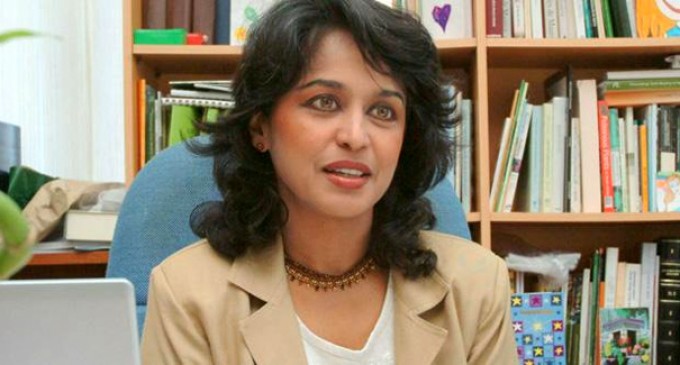
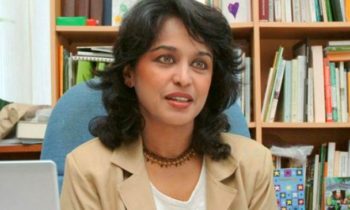
President Ameenah Gurib-Fakim will bring her insight into harnessing science, technology and innovation to combat climate change and promote biodiversity to the EAT Foundation’s (EAT) Advisory Board.

Gurib-Fakim is the first female president of Mauritius and was named one of Foreign Policy’s Global Thinkersin 2015. She has a background as a leading scientist studying the flora of Mauritius, one of the world’s crucial biodiversity hotspots.

“The transformation of the food system into a sustainable one will be the biggest challenge facing mankind in the coming decades,” said Gurib-Fakim. “I fully endorse the vision of EAT for a ‘global food system that can deliver healthy, affordable diets to a growing world population within the planetary boundaries’. Being a member of the Advisory Board will provide me with an opportunity to make a humble contribution to the realization of EAT’s vision.”

The EAT Advisory Board helps set the overall scientific agenda for the foundation’s work towards that vision.

“It is an absolute honor and true pleasure to welcome President Ameenah Gurib-Fakim to the EAT Advisory Board,” said EAT President and Founder Gunhild A. Stordalen. “With her scientific background and strong environmental engagement, and as the leader of an African island state that is vulnerable to climate change and loss of biodiversity, Gurib-Fakim brings important perspectives and expertise to the Advisory Board. We also look forward to collaborating with the President to extend EAT’s reach in the African region and beyond.”

Gurib-Fakim will participate at the next EAT Advisory Board session to be held in September in New York, where EAT will be co-hosting a briefing on its new Food and Land Use initiative on the sidelines of the United Nations 72nd General Assembly.

A diverse group of global experts

The Advisory Board is made up of representatives from EAT’s academic partner institutions as well as global experts within their field. Other members include Johan Rockström of the Stockholm Resilience Centre, Professor Walter Willett from Harvard School of Public Health, Chef Marcus Samuelsson and Erik Solheim, the head of the UN Environmental Program.

Prior to being elected President of Mauritius, Gurib-Fakim founded and worked as Managing Director of CIDP Research & Innovation, where she researched on the medical and nutritive qualities of indigenous plants of Mauritius. Previously, she was a Professor in Organic Chemistry at the University of Mauritius. She also worked at the Mauritius Research Council as Manager for Research and served as the Chairperson the International Council for Scientific Union – Regional Office for Africa from 2011 to 2014. She holds a BSc in Chemistry from the University of Surrey, UK and a PhD from the University of Exeter.

Gurib-Fakim has been the recipient of several international awards including the L’Oréal-UNESCO Award for Women in Science in 2007.

She also chairs the Food Forever Initiative, which was launched at the EAT Stockholm Food Forum in June 2017 by Crop Trust. Food Forever aims to raise awareness of the importance and urgency to conserve and use agricultural biodiversity to enhance food and nutrition security. The initiative is supported by numerous champions and partner organizations, including EAT.
September 15, 2017 0 comments
0 FacebookTwitterPinterestEmail
Farming

MEPs urge Norway to stop whaling

by Nadarajah Sethurupan September 13, 2017
written by Nadarajah Sethurupan

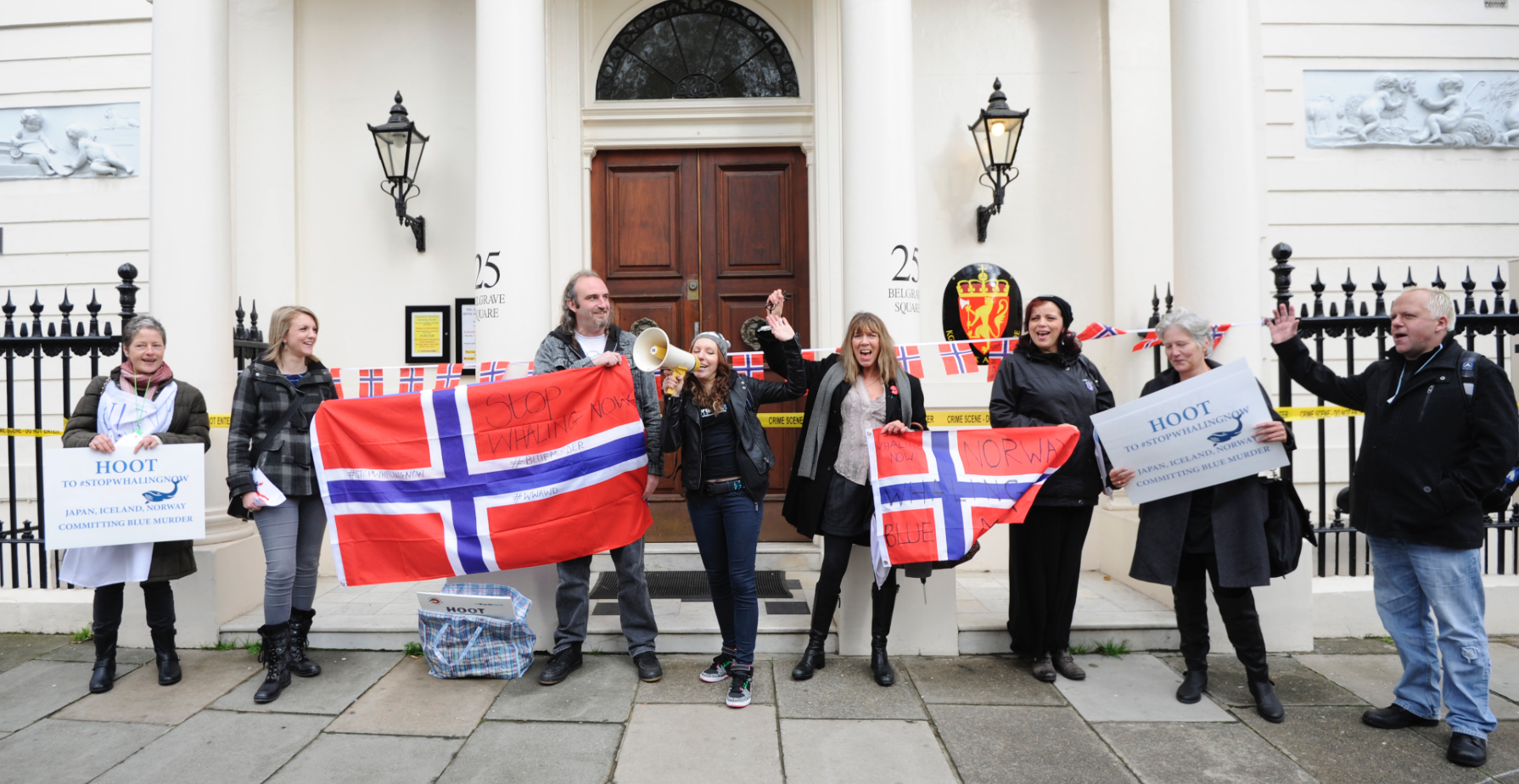
In a resolution approved on September 12, members of the European Parliament called on Norway to immediately end its whale hunting. The MEPs also called on Brussels to ensure that no whale meat transits through EU ports.
Specifically, the MEPs urged Norway to “cease all its commercial whaling operations” and to abide by the International Whaling Commission (IWC) moratorium. They asked the European Commission to provide data on shipments of whale meat transferred through EU ports.

The EU should consider all possible ways to ensure that whale meat no longer transits through EU ports, including a ban if need be, they added.

According to a European Parliament press release, the IWC moratorium on all commercial whaling was imposed in 1982, put into effect in 1986, and is still in force. Norway has nonetheless continued its whaling activities, and fully resumed commercial whaling in 1993, citing a formal objection to the moratorium.

Norway has killed over 13,000 whales since the moratorium came into effect, and unilaterally establishes its own catch limits. For the 2017 season, it increased its quota of whales to 999, up from 880 in 2016. Norway’s exports of whale meat have grown sharply in recent years.

(neweurope)

September 13, 2017 0 comments
0 FacebookTwitterPinterestEmail
Politics

Norway populists secure second term in government

by Nadarajah Sethurupan September 12, 2017
written by Nadarajah Sethurupan

(Photo: EUobserver)

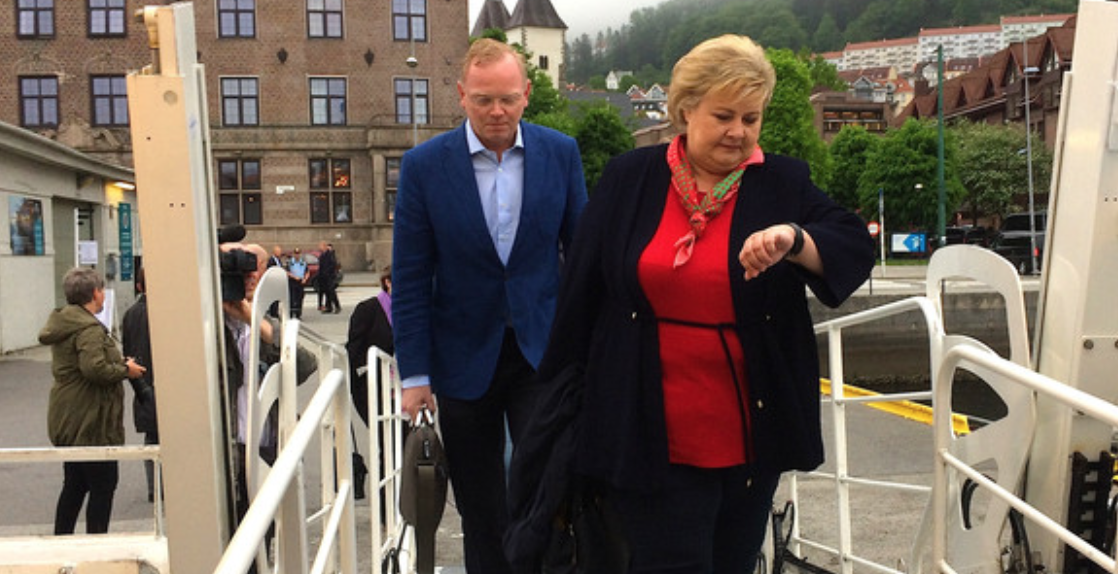
Norway’s conservative prime minister, Erna Solberg, will be able to govern for four more years following Monday’s (11 September) elections if she continues to work with the right-wing, anti-migrant Progress Party.

There are many examples of junior parties in governing coalitions being punished by voters, but not so in Norway.

“Because we have been honest there is still support for us after four years as the junior party in government,” said a happy Progress Party leader Siw Jensen, when it became clear her party had lost only 1.1 percent support, still getting 15.3 percent of votes and coming out of the elections as Norway’s third largest party.

Solberg herself also lost just 1.7% support compared to the last elections four years ago. Her conservative party remained the second largest party, backed by 25.1 percent.

Difficult talks on forming a new government will start already on Tuesday.

Solberg and Jensen’s coalition depends on support from two smaller parties – the Christian Democratic Party and the Liberal party – who both barely passed the 4 percent threshold to get into parliament, respectively winning 4.2 percent and 4.3 percent of the votes.

The most exciting moments during election night were watching how these two small parties moved above and below the threshold several times during the vote count.

Had they not made it into parliament, Solberg would have lost her majority.

Christian Democratic Party leader Knut Arild Hareide said his party will not join a new Solberg-led coalition, but also that he would not help to topple it by voting against its policies in parliament.

This means Solberg will be able to form the next government together with the Progress Party, but that she may have a difficult task to rule her country in the coming four years.

“We want a centre-right government, so we’ll see what’s coming. If it does not become that kind of government, we are in opposition”, said Hareide during a party leaders’ debate on Monday evening

Norway has fixed election periods of four years, meaning that the next election will not happen before September 2021.

The biggest party lost


The Social Democrats came out as the biggest loser in these elections despite remaining Norway’s largest party, supported by 27.4 percent of voters.

Exactly as it happened four years ago, when the Social Democrats were also the biggest party, it cannot form a government because it does not have enough supporting parties.

Both the Socialist Left Party and the rural Centre Party gained support on Monday, but, together with the Social Democrats, they are still not able to get the support of more than 79 MPs, which is short of the 85-majority needed in Norway’s parliament, the Stortinget.

The Center Party came out of Monday’s elections as the biggest winner and is now the fourth largest party in Norway with 10.3 percent of the votes.

This was an improvement of 4.8 percentage points from the parliamentary elections in 2013.

Center Party leader Trygve Slagsvold Vedum pointed out that not since the battle over whether to join the EU in the first half of the 1990s had there been such a good result for the party.

It campaigned for rural areas, decentralisation of power, and to end the current economic cooperation deal (EEA) with the European Union.

The Socialist Left Party also wants to end the EEA deal. It scored 6 percent of the votes, up 1.9 percent.

Overall only four parties gained in the elections – and all four of them had been campaigning to end the EU deal that gives Norway access to the internal market in return for accepting all related EU legislation.

While Solberg’s two cliff-hanger parties made it into the parliament on the margins, it went the opposite way for the Social Democratic leader, Jonas Gahr Stoere’s two allies.

The far-left Red party received 2.4 percent and the Green Party 3.2 percent, which was not enough for either of them to pass the threshold.

Their votes were not totally wasted. Based on a very strong result in capital Oslo, Red party leader, Bjoernar Moxnes, gained one seat for himself in parliament. It is the first time the Red party will have an MP.

The initial results show that a record 70 women were elected – three more than in the last elections in 2013.

(euobserver)

September 12, 2017 0 comments
0 FacebookTwitterPinterestEmail
Politics

Norway has reelected its center-right government

by Nadarajah Sethurupan September 11, 2017
written by Nadarajah Sethurupan

Photo – NRK

Exit polls suggest Norway’s center-right coalition government is ahead, although the election appears too close to call.

The poll for the public broadcaster NRK projects the center-right coalition could finish the night with 88 seats, leaving the center-left opposition with 81. The balance will be tilted by two center parties that expect to get 4% each and emerge as king makers.

If poll projections are confirmed, this will be the first time a right-wing administration gains re-election.

September 11, 2017 0 comments
0 FacebookTwitterPinterestEmail
Politics

Norway to hold parliamentary elections

by Nadarajah Sethurupan September 11, 2017
written by Nadarajah Sethurupan

Today, Norwegians will go to the polls for their country’s parliamentary elections. While the next prime minister will undoubtedly hail from either the centre-left Labour Party or the incumbent centre-right Conservative Party, the governing coalition will be decided by minor parties’ allegiances. 
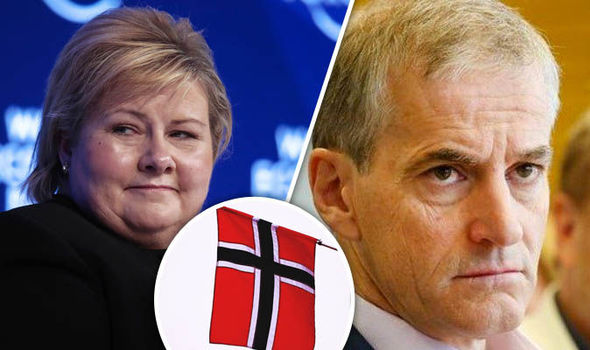
In particular, the populist Centre Party (SP), which is polling at highs of around  10%,  could play kingmaker for either coalition. The outsider party opposes left and right wing politics, campaigning on the rejection of governmental centralisation and free trade. Highly Eurosceptic and Islamophobic, it opposes the open practice of Islam and Norway’s participation in both the European Economic Area and the Schengen Area.

Labour’s concerns about capitalism and free trade’s effects on the working class make it the more likely partner for the agrarian SP. Expect the SP to join with Labour to pursue issues that appeal to their pastoral constituents, such as preventing rural hospital closures and the consolidation of small municipalities.

Still, the outcome is too close to call; most polls suggest a victory for either coalition by one or two seats out of the parliament’s 169, making this the closest race in recent history.

September 11, 2017 0 comments
0 FacebookTwitterPinterestEmail
Politics

Norway’s general election: all you need to know

by Nadarajah Sethurupan September 10, 2017
written by Nadarajah Sethurupan

What’s the story?


Norway goes to the polls on 11 September to decide whether the outgoing Conservative prime minister, Erna Solberg, or her Labour rival, Jonas Gahr Støre, will lead the country for the next four years.

The contest looks too close to call, with Solberg’s rightwing bloc of parties and Støre’s leftwing opposition grouping neck-and-neck. The scores of a half-dozen smaller parties that could end up as kingmakers will be critical.

How does the system work?


The country of 5.2 million people uses a modified proportional representation system in which 150 MPs in the 169-seat storting, or parliament, are directly elected by constituencies.

The remaining 19 so-called “levelling” seats – one for each of Norway’s counties – are distributed proportionately to parties that clear a 4% vote threshold so their final seat tally fairly reflects their share of the national vote.

What happened last time?


The economically liberal, centre-right Conservatives with their 48 MPs have governed since the 2013 election in a minority coalition with the populist, anti-immigrant Progress party (29), backed in parliament on a confidence and supply basis by the socially conservative Christian Democrats (10)and centrist Liberals (nine).

In opposition are the social democrats of Labour (55), which finished as largest party four years ago but was unable to form a ruling coalition, the agrarian Centre party (10), the Socialist Left (seven) and the Greens (one), who made their debut in the storting.

Where are we now?


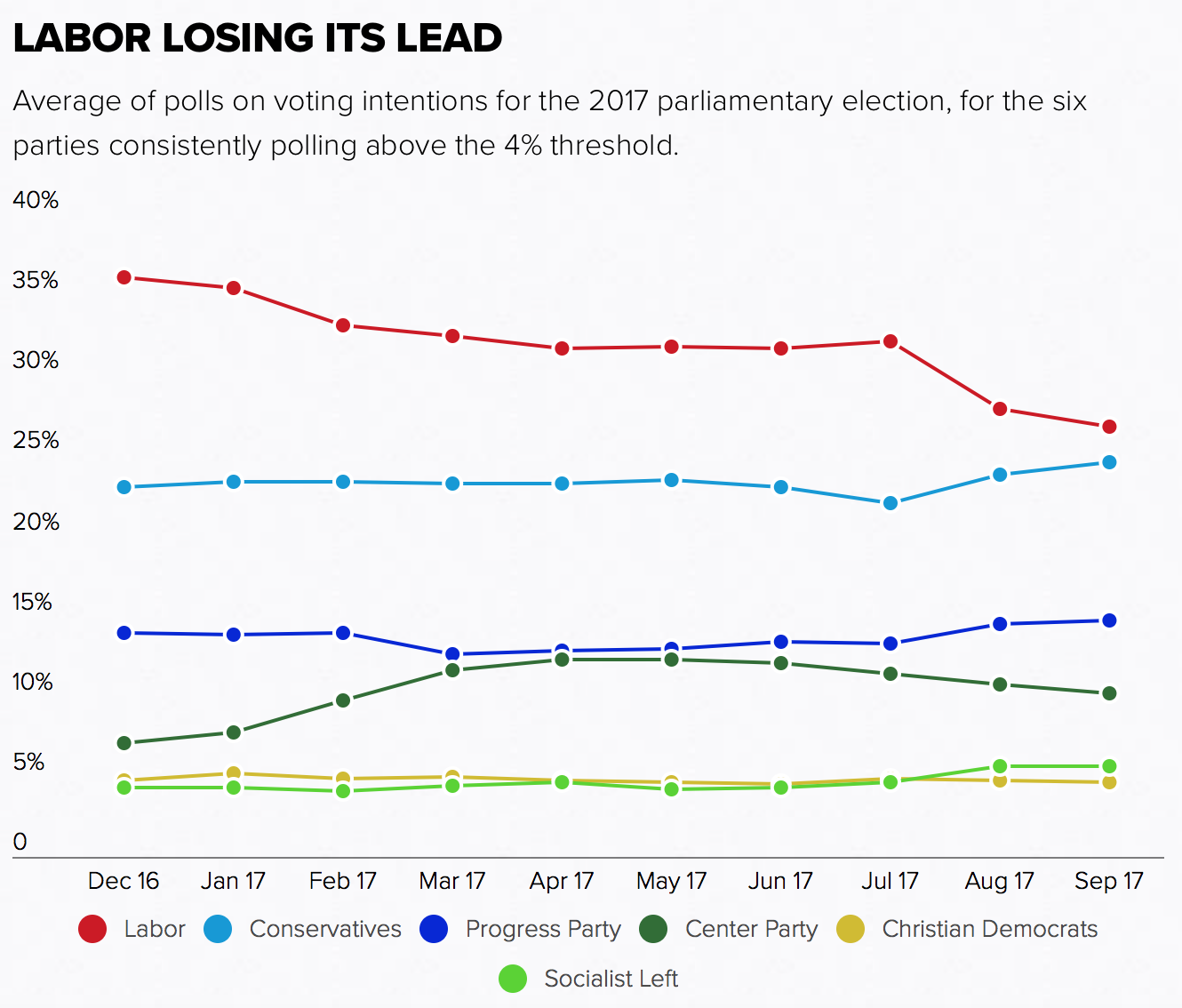
On the right, promising stability plus further tax cuts and helped by an economy recovering nicely from the 2014 oil price collapse that hit Norway hard, Solberg’s Conservatives are polling at between 24 and 25%.

Their Progress party partners are on 15 to 16%, their core support reinforced by the 2015 migrant crisis and the withdrawals the government made from Norway’s near trillion-dollar sovereign wealth fund during the economic downturn. The Christian Democrats are on five to 6% and the Liberals on four to 5%.

On the left, economic growth and falling unemployment have undermined Labour’s key call for greater equality and seen its support fall 37% in January to between 26 and 27% now. Its potential allies are faring better. The Centre party is on nine to 11%, the Socialist Left on 6% and the fast-growing Greens on four to 5%.

The stage is set for a nail-biter, and negotiations to form a government with reliable support in parliament could prove equally fraught.

September 10, 2017 0 comments
0 FacebookTwitterPinterestEmail
Racism in Norway

Islamic refuses to shake hands with Norwegian female minister on TV (VIDEO)

by Nadarajah Sethurupan September 9, 2017
written by Nadarajah Sethurupan

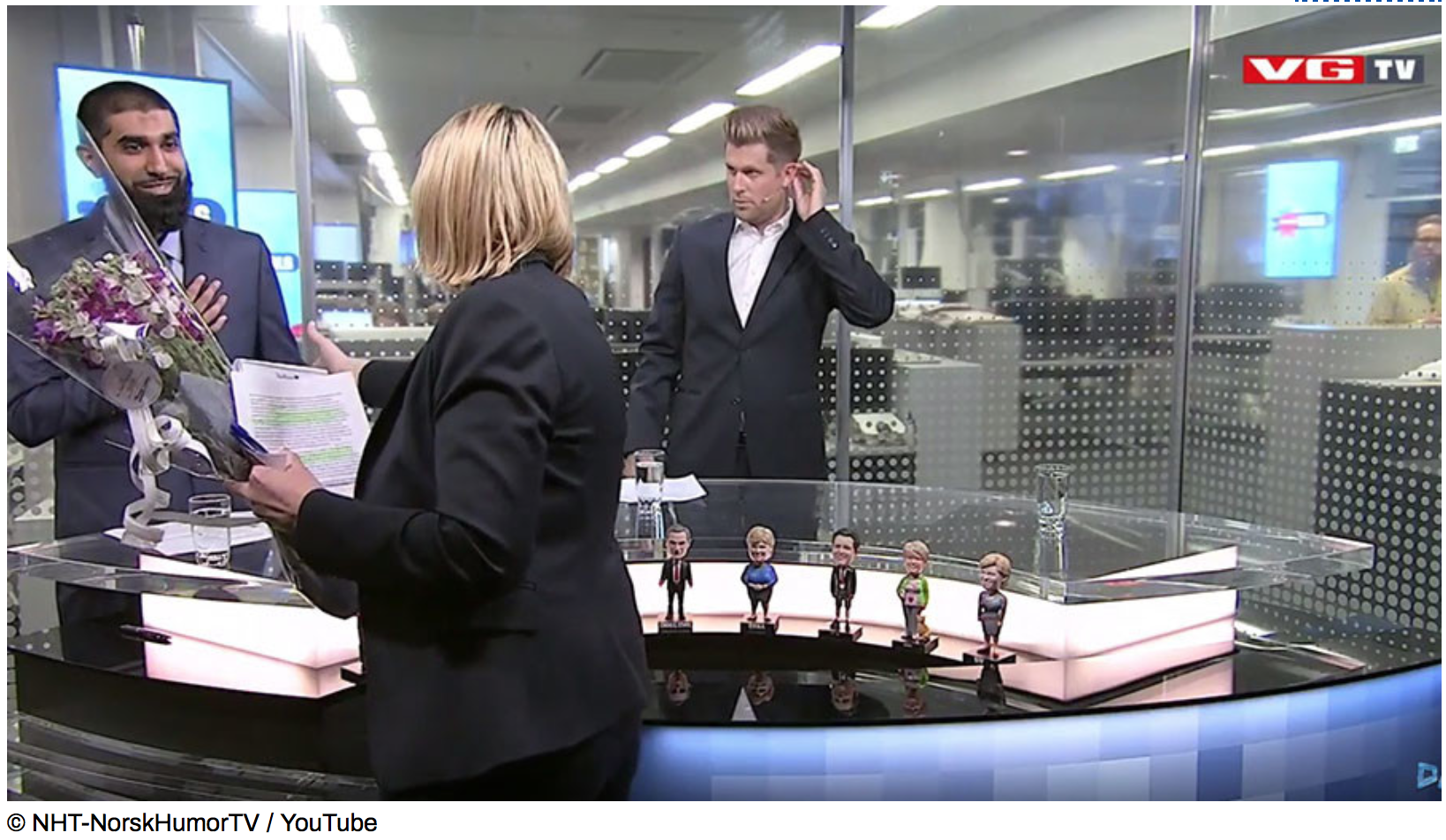
The leader of a local Sunni Muslim organization in Norway has refused to shake hands with the country’s female minister of migration at the start of their TV debate.
Fahad Qureshi, founder and leader of a controversial Islam Net organization, was already in the studio of the VGTV channel, when Norway’s Minister of Migration and Integration, Sylvi Listhaug, entered and shook hands with a male host first.

She then extended her hand to Qureshi, who instead of shaking it, handed her a bunch of flowers. The minister kept offering her hand, but the Muslim man instead put his own to his heart, while the woman’s remained suspended in the air.

Qureshi has been previously involved in similar controversies in the European country. His organization, which is represented in several Norwegian cities, is mainly aimed at students to promote Islam and “solve misunderstandings” about it.

The leader of the Norwegian Progress Party is not the first woman to receive special treatment by the Sunni Muslim man. Having hundreds of members, his organization has been known for its public meetings, at which the audience is separated by gender.

The Islam Net leader has also previously expressed his support for execution of homosexuals and those who commit adultery, claiming it’s a proper punishment for both and should be carried out everywhere.

He also infamously tore up a copy of France’s Charlie Hebdo magazine after a terrorist attack on its staff, saying that while he condemns the attack, he also believes the journalists have violated freedom of speech by mocking the Prophet Muhammad.

Recently, the issue of a man or a woman refusing to shake hands with someone of the opposite sex for religious reasons in European countries has led to several public scandals. Last year in Sweden, a school principal found it “discriminatory” that a female Muslim teacher would not want to shake hands with a male colleague. The young woman quit her job, but reported the incident to Sweden’s equality ombudsman.

In a different case in Sweden, a Muslim man working for a municipality refused to shake hands with his female colleagues, instead holding his hand to his heart when greeting them. He was fired for breaching the equality policy, but brought a lawsuit over his dismissal.

In Switzerland, authorities in the canton of Basel have introduced a fine for parents of those Muslim students who refuse to shake hands with their female teachers on religious grounds. “The public interest with respect to equality between men and women and the integration of foreigners significantly outweighs the freedom of conscience (freedom of religion) of the students,” the local department of education, culture and sport ruled after two male pupils announced shaking hands with their female teachers went against their religious beliefs.

(Rt)

September 9, 2017 0 comments
0 FacebookTwitterPinterestEmail
Nobel Peace Prize

Norwegian Nobel Institute says it cannot revoke Aung Sang’s Peace Prize

by Nadarajah Sethurupan September 9, 2017
written by Nadarajah Sethurupan

The organisation said the rules did not stipulate the possibility of taking the honour away from laureates.
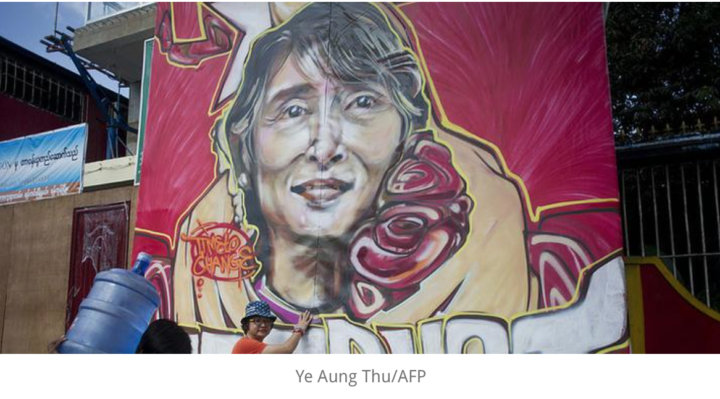
The Norwegian Nobel Institute, which selects the recipients of the Nobel Peace Prize, said on Friday that Myanmar’s Aung Sang Suu Kyi cannot be stripped of the award she was given in 1991. Suu Kyi has been criticised for failing to stand up for more than 10 lakh stateless Rohingyas in Rakhine.

Olav Njolstad, the head of the institute, told AP that neither the rules of the Nobel Foundation nor the will of prize founder Alfred Nobel stipulated the possibility of revoking the prize from laureates.

“It is not possible to strip a Nobel Peace Prize laureate of his or her award once bestowed,” Njolstad wrote in an email to AP. “None of the prize awarding committees in Stockholm and Oslo has ever considered revoking a prize after it has been awarded.”

A petition on Change.org, signed by more than 386,000 people, has called for Suu Kyi’s Nobel Peace Prize to be taken away for her inaction against the atrocities that Rohingya Muslims face in Myanmar’s Rakhine state.

Suu Kyi, now Myanmar’s de facto leader, had received the award for “her non-violent struggle for democracy and human rights” while standing up against the military regime in the country.

The more than 1.5 lakh Rohingyas who have fled to Bangladesh have described the scale of violence they face face in Myanmar, allegedly by Army troopers and the Buddhist majority. Suu Kyi has dismissed the Rohingya crisis as a “huge iceberg of misinformation” and fake news.

(scroll)

September 9, 2017 0 comments
0 FacebookTwitterPinterestEmail
Africa and Norway

Burundi’s refugee kids in Tanzania learn under the trees

by Nadarajah Sethurupan September 9, 2017
written by Nadarajah Sethurupan

Bujumbura – As Burundi and the world marks Literacy International Day on September 8, a refugee rights group Norwegian Refugee Council announced on Thursday that most of Burundi refugee kids have no schools and no school kits.


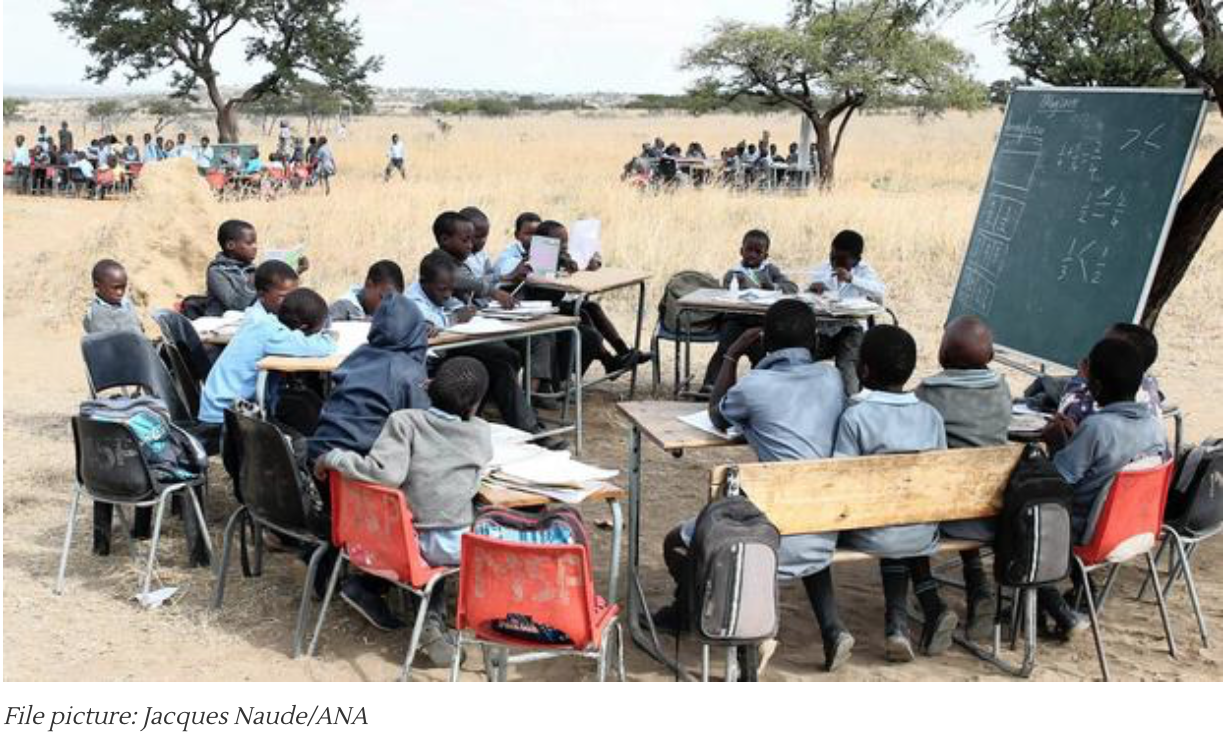
The Regional Director for the NRC Gabriella Waaijman says that in Kigoma (western Tanzania), Burundi and DR Congo refugees learn under the trees and without a single keyboard.

In the Kigoma district camps in Tanzania, some classes are held under trees, and the number of students in each class can be as high as 200. About half of 318 000 Burundian and Congolese refugees in Tanzania living in refugee camps are children. Only 65 percent of primary and three percent of secondary students are in school, reads a section of the NRC report.

“The lack of education for displaced children could create a lost generation,” says Waaijman.

“Education can save children’s lives during emergencies. Schools provide children a secure location, they build protective social structures, they teach essential knowledge for survival, and they safeguard the futures of children and communities” Waaijman said.

Burundi continues to suffer the consequences of the crisis that resulted from the re-election of Pierre Nkurunziza as the country’s president, despite calls from both his own party and opposition, to step aside as he has finished his two terms in office. The Arusha accords that set the limit at two presidential terms were signed in 2000 in Arusha, Tanzania and were facilitated by former South African president Nelson Mandela.

In Burundi, many students face almost the same problems as those in exile. In rural places, students lack money to buy school kits and uniforms.

(Independent Foreign Service)

September 9, 2017 0 comments
0 FacebookTwitterPinterestEmail
Oil & Gas

Norwegian company hopes to win further work in Azerbaijan’s oil

by Nadarajah Sethurupan September 9, 2017
written by Nadarajah Sethurupan

Norway’s IKM Cleandrill company is interested to work in Azerbaijan, as it sees the country is a strong market with ongoing offshore drilling activities, the company’s Managing Director Tom Hasler told Trend.
IKM Cleandrill has been awarded a contract for riserless mud circulating system services by Total E&P ABSHERON BV on behalf of JOCAP, Joined Operating Company forAzerbaijan’s Absheron project.

The contract will include the installation of IKM’s MRR500 mud recovery system onto a new semisubmersible drill rig named after Heydar Aliyev, and provision of subsea drilling fluid pumping services as part of Absheron project’s drilling campaign.

“The duration of this project is not yet finalized. We hope for a long relationship with Absheron project,” said Hasler. “It is also an area where our services (top-hole mud recovery) are in demand due to the typical methods of drilling.”

The company’s managing director noted that IKM Cleandrill targeted this project as the start of an expanding business in the area for its services.

“We are very excited to enter the region and expect to win further work in the area,” added Hasler.

Earlier, Azerbaijan’s state oil company SOCAR and TOTAL signed a framework agreement on the main contractual and commercial principles regulating the program of the first phase of Absheron field’s development.

The first phase of the field’s development envisages drilling of one well at a sea depth of 450 meters. The production will stand at up to 1.5 billion cubic meters of gas per year and these volumes will be used in Azerbaijan’s domestic market. It is planned to produce first gas from the field in 2019.

TOTAL is expected to adopt the final investment decision on Absheron by late 2017 and the first appraisal well will be drilling in late 2017. The approximate cost of the first phase is estimated at $1 billion.

Absheron’s reserves are estimated at 350 billion cubic meters of gas and 45 million tons of condensate, according to the estimations of SOCAR geologists.

Absheron project will be operated by JOCAP (50 percent SOCAR, 50 percent TOTAL).

(trend)

September 9, 2017 0 comments
0 FacebookTwitterPinterestEmail
Politics

Norwegian party’s pledge: Vote for us, we’ll raise your taxes

by Nadarajah Sethurupan September 9, 2017
written by Nadarajah Sethurupan

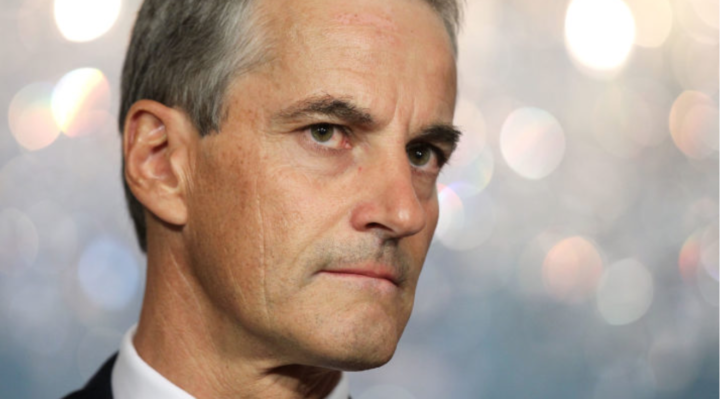
Norwegian Labor Party leader Jonas Gahr Støre reached out to voters with a brutally honest pledge — he’s going to raise their taxes if elected prime minister next week.
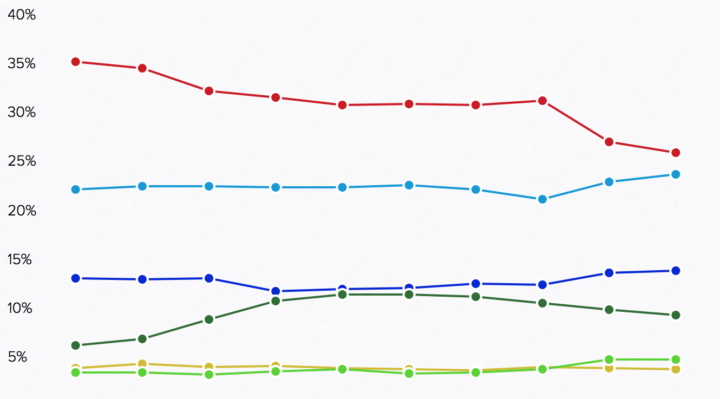
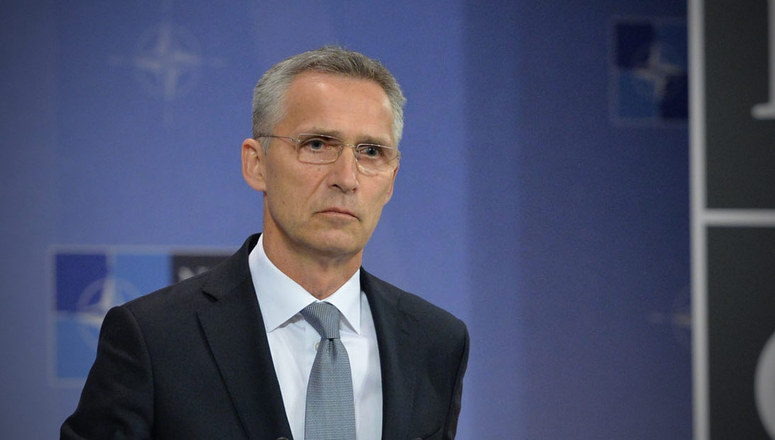
A year ago, Norway’s general election on September 11 looked like a certain victory for Støre’s Labor-led center-left bloc over Conservative Prime Minister Erna Solberg’s center-right coalition government. Now they are neck-and-neck in the polls.

Solberg’s Conservative Party has attacked Labor’s platform by suggesting the party will raise taxes by more than it says if it gets into power, or will be forced to do so by its leftist allies in a governing coalition. But the Norwegian left says there is no option but to raise taxes because of the way the Conservatives have been spending money and giving tax breaks to the rich.

“Do you know how much money they have spent? It’s a piñata,” said Bjørn Jacobsen, who is running for parliament for the Socialist Left Party (SV) in the county of Møre og Romsdal. His party is a likely junior coalition partner if Labor gets into power.

Jacobsen shares the widespread feeling in Norway that it will be a very close contest on Monday, though he expects the outcome to be a coalition of Labor, the rural Center Party and the Socialist Left.

Bernt Aardal, a political scientist at the University of Oslo, predicts it will be “very close, both in terms of the election result and what is going to happen with the government afterwards.” The uncertainty stems partly from weak support for many smaller parties, some of which could fail to reach the 4 percent election threshold, and from shifts in strength between parties in opposing blocs.

Though it’s a safe bet that either Støre or Solberg will be prime minster, the daily Aftenposten recently listed 10 different possible government coalition constellations. A weak result for Labor could force Støre to rely heavily on the small Green and/or Red parties for support, which could make governing difficult and hand the tiny parties considerable power.

Welfare costs money

Egalitarian Norway already has steeply progressive income-tax rates, with a top marginal rate of 46.7 percent, and a total tax burden of around 45 percent, which is above the OECD average.

“Tax is not so important as what we shall do with it — we want to have as low taxes as possible, but as high as necessary,” Støre said in an interview on national broadcaster NRK, reconfirming his pledge to raise the total tax take by up to 15 billion Norwegian kroner ($1.93 billion).

He said Norway needs that money to invest in teachers, to deal with an aging population and to boost job training.

“We kept our tax promise in 2005, 2009, 2013, and we will keep it in 2017,” Støre said.

Though voters are showing signs of fatigue with Solberg’s minority coalition of her Conservatives and the populist Progress Party, the disillusionment does not seem as rampant as when voters in 2013 ousted the previous Labor-led coalition, which had governed for eight years under Støre’s predecessor, Jens Stoltenberg.

Stoltenberg’s approach, when he won power in 2005 for a second time, had been to tell the people not to expect tax cuts; Støre has gone one better and chosen to campaign on a promise to raise taxes.

For the social democratic Labor Party, which is the biggest party with 55 seats in the 169-seat parliament, that means rolling back tax cuts granted by the Solberg government to high earners and the rich. But in a country where income differences are smaller than in many others, the planned tax increases would not affect only the super-rich, but also people earning a high, though not extravagant, annual income of more than 600,000 Norwegian kroner ($77,120).

So, it’s a “soak the rich” strategy that would affect Norwegians who likely think of themselves as unmistakably middle-class — and unwilling to hand over more to the taxman.

The tabloid VG in July launched on its website a “Jonas Tax calculator” (named after Støre), where readers can plug in their financial details to find out if or by how much Støre’s tax-hike pledge will affect them.

Truls Wickholm, a Labor lawmaker from Oslo who sits on the parliament’s finance and economic committee, said the party felt “the need to be upfront with voters about what welfare is actually going to cost.”

(politico)

September 9, 2017 0 comments
0 FacebookTwitterPinterestEmail
Asia and Norway

NATO Secretary General on North Korea

by Nadarajah Sethurupan September 3, 2017
written by Nadarajah Sethurupan

I strongly condemn that North Korea has conducted a sixth nuclear test today. This is yet another flagrant violation of multiple UN Security Council Resolutions, including UNSCR 2321 adopted in November 2016.
NATO is concerned by Pyongyang’s destabilising pattern of behaviour, which poses a threat to regional and international security.

The regime must immediately cease all existing nuclear and ballistic missile activities in a complete, verifiable, and irreversible manner, and re-engage in dialogue with the international community.

I urge North Korea to respect its international obligations, and to abandon all threats and actions which contribute to tension and insecurity.

(Nadarajah Sethurupan , NATO.int)

September 3, 2017 0 comments
0 FacebookTwitterPinterestEmail
Terrorist

Norwegian Police opts for AW169 as counter terrorism tool

by Nadarajah Sethurupan September 1, 2017
written by Nadarajah Sethurupan

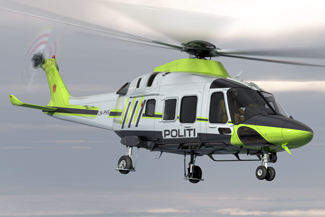
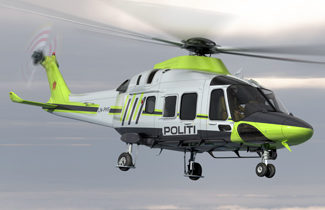
The Norwegian Police Directorate has selected the Leonardo AW169 as a law enforcement helicopter following a tender for its helicopter service modernisation programme.
The contract, expected to be signed imminently, will include three aircraft, with an option for a further three units, and a 10-year maintenance package.

The aircraft will enable the Norwegian Police to enhance its capabilities and readiness to counter threats including terrorism.

The type is expected to deliver greater range than the EC135s currently in service and a rapid response over short range.

The AW169s will perform a range of tasks including observation, surveillance, special operations team transport and airborne sniping, ensuring high versatility with quick and easy reconfiguration between roles. The interior layout will facilitate the transportation of six passengers plus crew.

(ebanmagazine)

September 1, 2017 0 comments
0 FacebookTwitterPinterestEmail
Science

New Data on the State of Humanities Research in Norway

by Nadarajah Sethurupan August 30, 2017
written by Nadarajah Sethurupan

If you’re in academia, you’ve likely heard the mandate, “Publish or perish.” However, a recent report from the Research Council of Norway reveals that more than a quarter of the country’s humanities researchers haven’t published. Here’s a closer look at the data, along with other key findings and suggestions aimed at facilitating growth in humanities research in Norway.
A Thriving Discipline

After evaluating the scope of humanities research over the past 30 years, the report, “Evaluation of the Humanities in Norway,” reveals that “Norwegian humanities research is well resourced and holds a high international standard in a number of areas.” Additionally, volume, quality, productivity, internationalization, and collaboration have all improved over the past decade.

The data also reveals that while a full 26 percent of researchers haven’t published, publication output is increasing — particularly in the areas of aesthetic studies, media studies, and Nordic and comparative literature. Furthermore, the average rate of publication for humanities researchers topped the average rates of publication for researchers across all of the country’s disciplines.

A Call for Expansion and Internationalization

Despite the positives, the report also identifies potential areas of improvement. For starters, while Norway humanities research does have many “pockets of excellence,” institutions should still be aspiring to reach “the highest levels of international performance.”

To that end, in addition to calling for more output, collaboration, and the development of “research culture,” the report also urged humanities researchers to broaden their perspectives through increased inbound and outbound exchange.

Said principal evaluation committee chair Shearer West, “In a number of instances, humanities research focuses on Norwegian issues and contexts. This is reasonable and understanding in some areas such as Norwegian language, literature and history. However, we believe there is much to be gained from considering how topics, questions and problems investigated in Norwegian case studies can be linked to larger, comparable international phenomena.”

(masterstudies)

August 30, 2017 0 comments
0 FacebookTwitterPinterestEmail
China and Norway

China, Norway Resume Free Trade Agreement Talks

by Nadarajah Sethurupan August 29, 2017
written by Nadarajah Sethurupan

After a six-year diplomatic freeze, China and Norway have resumed talks towards a free trade agreement, with a ninth round of talks held in Beijing August 21-23.


Negotiation for a China-Norway FTA were launched in September 2008. However, China froze diplomatic ties with Norway in 2010 after the Nobel Peace Prize was awarded to the late Chinese dissident Liu Xiaobo.

On June 21, 2011, the European Free Trade Association states (EFTA) – Iceland, Liechtenstein, Norway and Switzerland – signed a free trade agreement with Hong Kong.

However, the relationship between Norway and China remained frosty until April 2017, when Norwegian Prime Minister Erna Solberg was invited to pay an official visit to the People’s Republic, where it was agreed talks towards a number of agreements would restart.

“The recovering of the free trade agreement negotiation will certainly deepen mutually beneficial cooperation, benefit the enterprises and people from both countries, and push their trade and economic relationship to a new level,” said China’s Ministry of Commerce.

The talks covered issues including trade in goods, service trade, investment, intellectual property rights, the environment, competition policies, e-commerce, and government procurement.

(tax-news)

August 29, 2017 0 comments
0 FacebookTwitterPinterestEmail
Srilanka and Norway

Sri Lankan startups pitch for Oslo Innovation Week

by Nadarajah Sethurupan August 28, 2017
written by Nadarajah Sethurupan

Sri Lankan startups can take part in Oslo Innovation Week, with a pitching event this week, says the Sri Lanka Association of Software and Service Companies (SLASSCOM) and ICT Norway (IKT-Norge).


“SLASSCOM and ICT Norway have come together to offer Sri Lankan startups the unique opportunity to take part in the Oslo Innovation Week, which is scheduled for September this year. The event has gained recognition as the most interactive innovation conference in the world,” a statement said.

Startups across Sri Lanka will be given an opportunity at a pitching event organised by both the Sri Lankan and the Norwegian bodies on 30th August.

The startups with the most unique and innovative pitches will be shortlisted and the top three winning companies will be sponsored by ICT Norway to take part in the five-day Oslo Innovation Week in Norway from 25th to 29th September, 2017.

Eight local startups ShoutOUT Labs, Populo Pvt Ltd, Right Posture, Generation Epsilon (Pvt) Ltd, Veta (Pvt) Ltd, BotFactory, Nurone Labs and ConscientAI are set to take part in the pitching event which will be held in Colombo, with a judging panel comprising of members of the ICT industry at the event.

The Oslo Innovation Week has earned a reputation as an important global event which looks for business solutions to address the United Nation’s Sustainable Development Goals (SDGs) by combining three important areas – entrepreneurship, technology and innovation.

During the pitching event in Colombo, the judging panel will also expect the startups to follow the areas of requirement of the Oslo Innovation Week.

ICT Norway and SLASSCOM have also partnered to initiate a unique programme called ‘Kids Can Code’ which aims to help the younger generation in Sri Lanka to be more technologically creative and become experts in IT through coding clubs.

“The tie up between SLASSCOM and ICT Norway to strengthen Sri Lanka’s ICT sector, is also seen as an effort to further enhance the bilateral relationship between the two countries.”

“The programmes implemented in Sri Lanka, which are a result of a Memorandum of Understanding signed between ICT Norway and SLASSCOM in June 2016 are being financed by the Norwegian government.”

(LBO)

August 28, 2017 0 comments
0 FacebookTwitterPinterestEmail
Oil & Gas

Norway’s Statoil, Argentina’s YPF ink exploration deal

by Nadarajah Sethurupan August 27, 2017
written by Nadarajah Sethurupan

Statoil and Argentina’s leading energy company YPF have entered into an agreement to jointly explore hydrocarbons in the Bajo del Toro block in the Neuquén Basin onshore Argentina, the Norwegian energy major said on August 25.
The preliminary agreement between the companies was signed on August 24 in Geneva by Statoil’s executive vice president for Exploration, Tim Dodson, and YPF’s vice president for business development & development engineering, Sergio Giorgi, Statoil said.

Statoil will enter the Bajo del Toro exploration permit in the Neuquén Basin as a partner with a 50 % participating interest, with the operator YPF retaining a 50% interest. As a consideration, Statoil shall recognize to YPF past cost incurred in the block and fund 100% of the cost of certain future activities in the block (promote). The Bajo del Toro exploration block represents a country-entry for Statoil into Argentina.

“This is a light oil exploration project in a world-class unconventional resource play, the Vaca Muerta formation. The opportunity has an excellent fit with Statoil’s sharpened strategy, and is in line with our exploration strategy of delivering profitable, high-quality resources,” Dodson said.

“We are very pleased to expand our cooperation with YPF, the leading player in the Neuquén Basin, and look forward to work closely with them to unlock the potential in the Bajo del Toro block,” Dodson added.

YPF Chairman Miguel Angel Gutierrez hailed the deal, noting that bringing in a new international player like Statoil into Argentina “shows confidence in Vaca Muerta as a promising shale play and in YPF as a leading operator. We are pleased to expand the cooperation between both companies”.

The Bajo del Toro exploration permit covers an area of 157 square kilometres, located in the Neuquén Basin in the west-central part of Argentina. The Vaca Muerta formation is the main target in the basin. In the next few months, the parties will conclude the final agreements. Prior to closing of the deal, the agreements have to be approved by the Neuquén provincial authorities.

In 2016, Statoil signed a technical study agreement with YPF to map exploration opportunities in a large area of the continental slope offshore Argentina.

Argentina’s unconventional oil and gas resources are among the world’s largest

The Vaca Muerta is a geological formation of 30,000 square kilometres located mainly in the province of Neuquén and containing oil and gas found at a depth of more than 2,500 meters. Argentina’s Neuquén province is the country’s most prolific hydrocarbon basin. The Nequen province is located in the west of the country, at the northern end of Patagonia.

Vaca Muerta is expected to host major deposits of tight oil (shale oil) and shale gas. According to the US Energy Information Administration, the formation contains 16.2 Bbbl of tight oil (shale oil) and 308 Tcf of shale gas.

The Vaca Muerta Shale has long been known as a major petroleum source rock for conventional accumulations in the Neuquén Basin, which has had oil production since the 1920s. Vaca Muerta has attracted a number of international oil companies, which are exploring and producing in the country.

(neweurope)

August 27, 2017 0 comments
0 FacebookTwitterPinterestEmail
Asia and Norway

Rahul Gandhi leaves for Norway

by Nadarajah Sethurupan August 25, 2017
written by Nadarajah Sethurupan

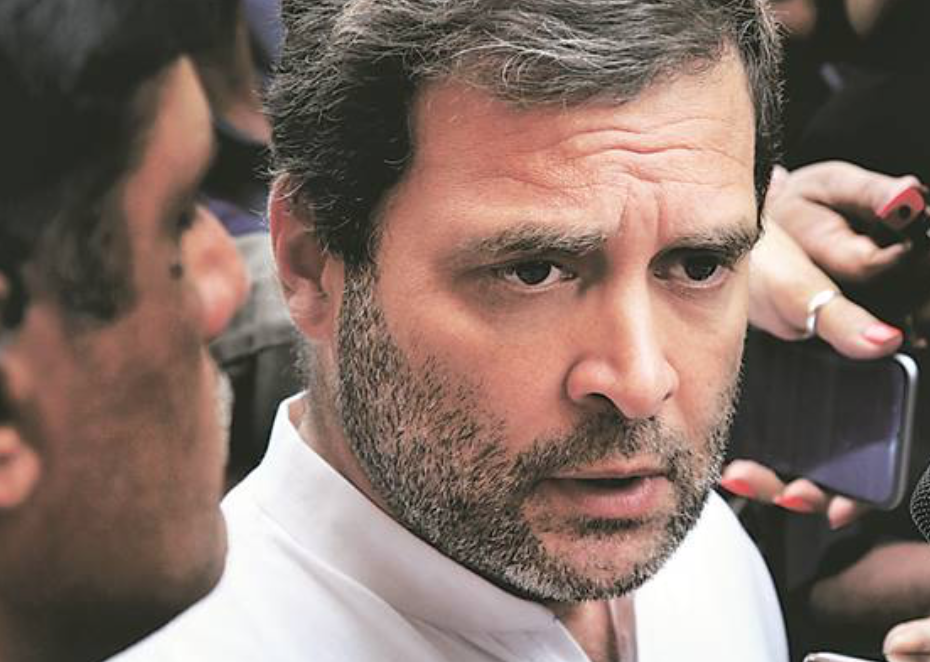
Congress Vice President Rahul Gandhi on Friday left for the Norwegian capital Oslo, where he will meet political and business leaders, and will skip ally RJD chief Lalu Prasad Yadav’s opposition rally in Patna on Sunday. “On the invitation of the Norwegian Ministry of Foreign Affairs, will be travelling to Oslo for a few days,” he said on Twitter.
“Looking forward to meeting and exchanging ideas with political and business leaders and research institutions.” Gandhi will miss RJD chief Lalu Prasad Yadav’s show of strength in Patna on Sunday, which Congress President Sonia Gandhi is also unlikely to attend.

The Congress will be represented at the event by Leader of Opposition in Rajya Sabha Ghulam Nabi Azad, party sources said.

Lalu’s Rashtriya Janata Dal is organising a “BJP Bhagao, Desh Bachao” (Banish BJP, Save country) rally in Patna’s Gandhi Maidan on August 27, which is being touted as a major opposition show of unity. However, the rally is already under a cloud with BSP supremo Mayawati announcing she won’t attend the event without any seat-sharing understanding among the opposition parties.

August 25, 2017 0 comments
0 FacebookTwitterPinterestEmail
Defence

Norwegian, German cooperation on submarines begins

by Nadarajah Sethurupan August 23, 2017
written by Nadarajah Sethurupan

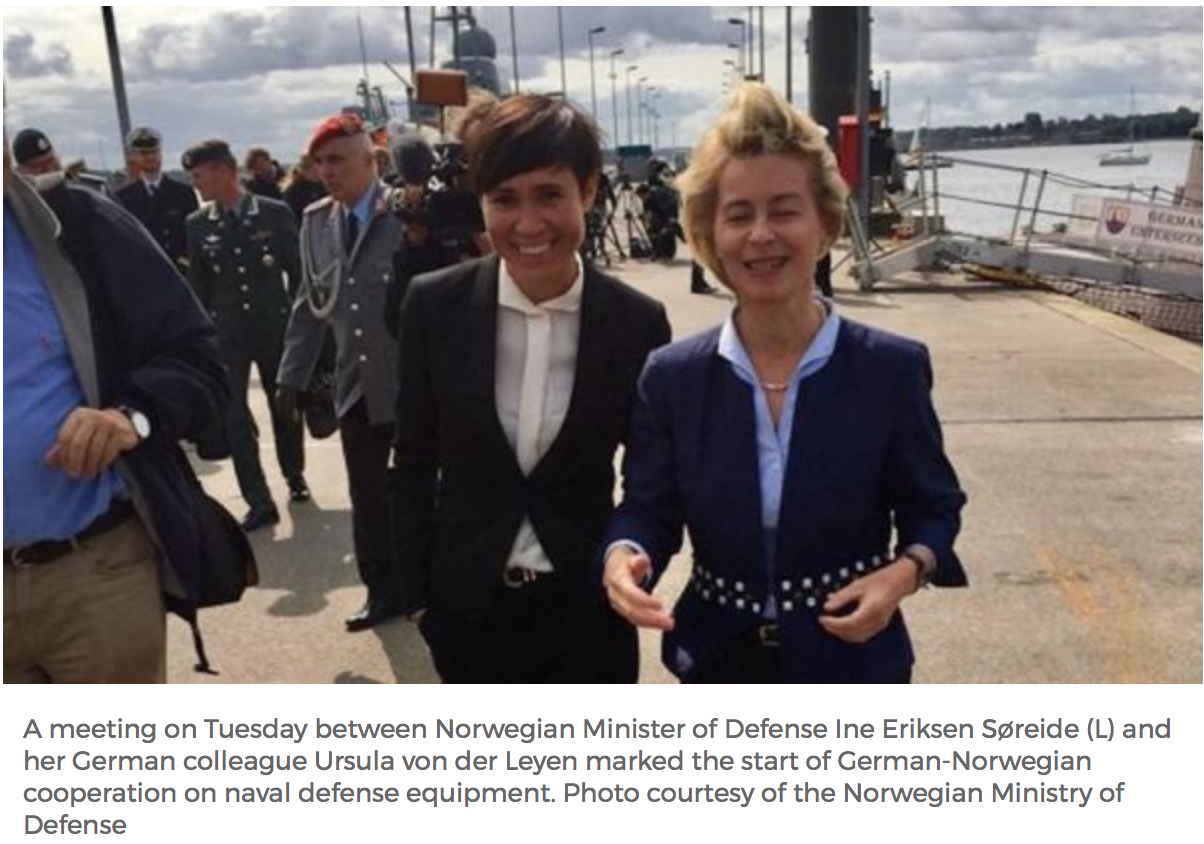
Norway and Germany have officially marked the start of a long-term agreement for cooperation on submarine and naval missiles programs, the countries announced on Tuesday.
The agreement was originally signed in early February, but a meeting on Tuesday in Germany between representatives of the two countries marks the formal start of their work together.

“In addition to cooperation on new submarines and naval missiles, we will strengthen our Navy-to-Navy cooperation,” Norwegian Defense Minister Ine Eriksen Søreide said at a bilateral meeting in Norway this week to mark the start of cooperation.

“We will also cooperate on naval research and technological development. This cooperation will strengthen our defense industries, and will be very important and beneficial for both our nations.”

Central to the accord is the joint procurement of identical submarines, along with cooperation on training, exercises, spare parts, and maintenance of the vessels. The submarines will feature combat management systems from a joint venture by Kongsberg, tkMS and Atlas Elektronik.

“The cooperation will create opportunities for a number of companies in Norway. It will also have a positive impact on the development of high-tech competence, and for the export potential of Norwegian defense products,” said Eriksen Søreide.

A request for quotation for the submarines was issued to Germany’s ThyssenKrupp Marine Systems, which Søreide said will bring closer a contract for new submarines in 2019.

(UPI)

August 23, 2017 0 comments
0 FacebookTwitterPinterestEmail
Defence

Kongsberg gains Norwegian, South Korean contracts

by Nadarajah Sethurupan August 23, 2017
written by Nadarajah Sethurupan

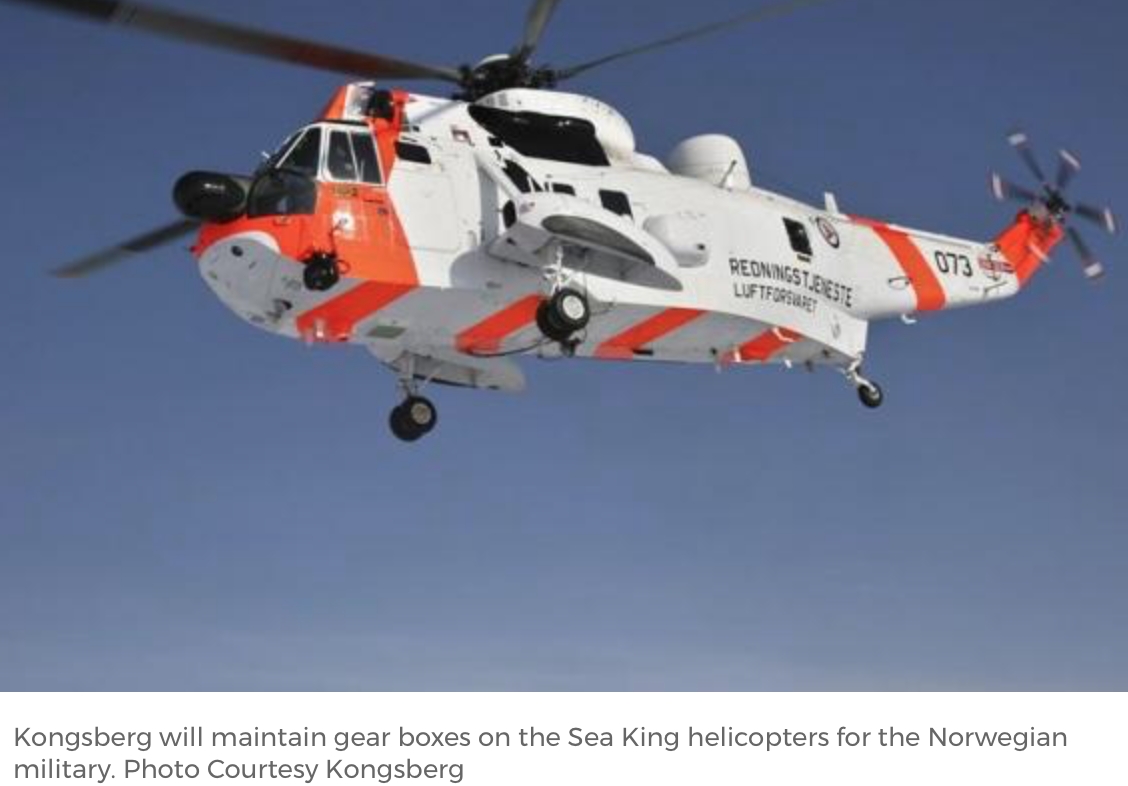
Kongsberg Defense Systems will maintain gear boxes on Norway’s Sea King helicopters, under a deal with the Norwegian Defense Logistics organization.
The framework agreement, which could cost as much as $37.9 million, is in effect until 2020 and has a three-year option.

“This framework agreement secures a continued operation of the Norwegian Sea King helicopters until the new AW101 search-and-rescue helicopters are fully operative, and entail an important continuity for Kongsberg in a period where the organization is being built up to maintain gearboxes on the NH-90 and AW101 helicopters,” Kongsberg’s Executive Vice President Aerostructure Terje Bråthen said in a company news release Tuesday.

The Norway-based company also announced it will deliver its Integrated Combat Solution for Finland’s new K9 Thunder 155mm self-propelled artillery.

The contract was signed with Hanwha Land Systems of South Korea, maker of the artillery.

(UPI)

August 23, 2017 0 comments
0 FacebookTwitterPinterestEmail
Politics

Norwegian PM opens terminal at Bergen Airport

by Nadarajah Sethurupan August 22, 2017
written by Nadarajah Sethurupan

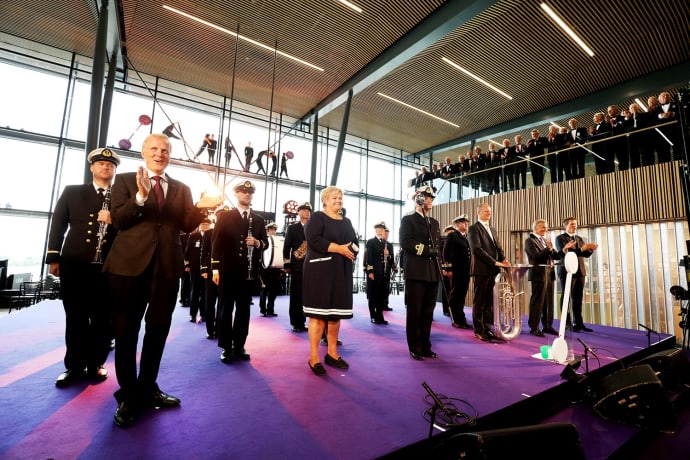
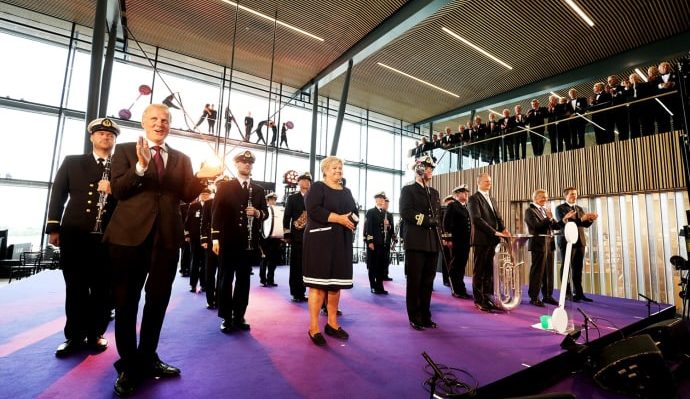
Norwegian airport operator Avinor has officially opened the new Nkr 3.7bn (US$468m) terminal at Bergen Airport, in Flesland, Norway. Opened on time and within budget, the terminal has the capacity to accommodate up to 10 million passengers annually.
Speaking at the opening ceremony, Erna Solberg, Norway’s Prime Minister, said, “Flesland plays a vital role in tourism and industry in the region. Now that the airport has doubled its capacity, we have a large international airport that Western Norway can be proud of. This is a state-run flagship project that has run on schedule and within budget and Avinor can be proud of the work that went into this expansion.”

Covering nearly 680,000ft², travelers can now enjoy a more spacious airport with an increased number of restaurants and shops. The design of the airport and technical solutions offers big energy savings in addition to environmental benefits.

“We’re now providing even better facilities for travelers and airlines,” said Aslak Sverdrup, airport director, Avinor. “Hopefully this will mean more direct flights to big, important domestic and foreign destinations.”

Dag Falk-Petersen, CEO of Avinor, said, “This is a very important day for Norwegian aviation and we are very proud of the new Flesland airport. Bergen now has a fantastic airport that will take us into the future. Thousands of people have been working day and night since the decision to expand was made in 2014.”

(N.Sethu)

August 22, 2017 0 comments
0 FacebookTwitterPinterestEmail
Srilanka and Norway

Norwegian research vessel Dr Fridtjof Nansen’s arrival in 2018

by Nadarajah Sethurupan August 18, 2017
written by Nadarajah Sethurupan

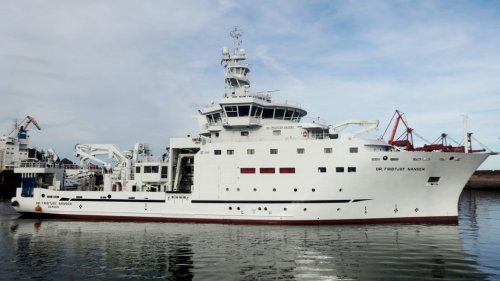
The planning seminar is taking place in Colombo for the new Norwegian Research vessel Dr Fridtjof Nansen to come to Sri Lankan waters in 2018 to carry out a survey on the marine resources, the Norwegian Embassy said in a press release.

This is part of the technical and institutional cooperation on Fisheries between Norway and Sri Lanka, which was endorsed by the top level political authorities of the two countries.

The aim of the planned survey is to know the current status of marine resources including fish stocks and to investigate stocks of unexploited/ underutilized fishery resources on the continental shelf and slope. The last stock assessment for Sri Lanka has been carried out by the previous Dr. Fridtjof Nansen in 1978 to 1980.

The new marine research vessel RV Dr Fridtjof Nansen is owned by the Norwegian Agency for Development Cooperation (NORAD) and is jointly operated by the Institute of Marine Research of Norway, and Food and Agriculture organization to help developing countries improve their fisheries management.

The Ambassador of Norway to Sri Lanka and Maldives, Thorbjørn Gaustadsæther addressing a distinguished gathering at an event to recognize the finalization of the plaining schedules for the Vessel’s arrival to the Bay of Bengal, stated that the new research vessel will make it possible to significantly step up Norway’s assistance for ecosystem-based marine management in developing countries.

He further stated that this is part of the new Ocean strategy of Norway and Norway considers this as ‘creating partnerships for the oceans’ as it enhances sharing knowledge both across industries and across international borders.

August 18, 2017 0 comments
0 FacebookTwitterPinterestEmail
Asia and Norway

Ambassador of Norway meets Sri Lankan MOD Secretary

by Nadarajah Sethurupan August 18, 2017
written by Nadarajah Sethurupan

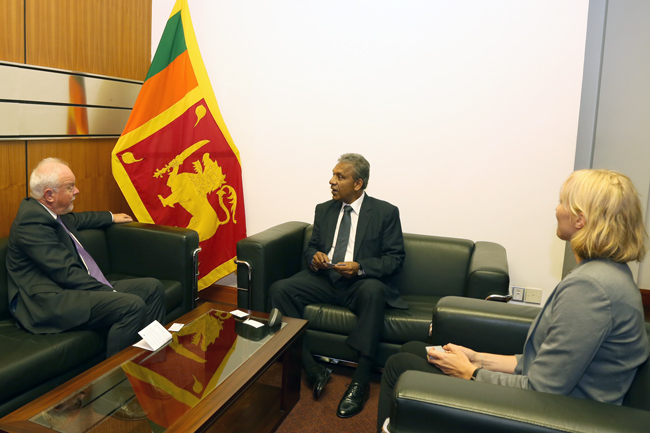
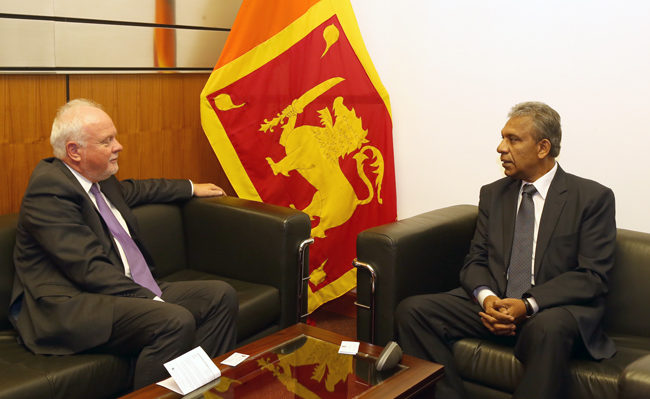
The Ambassador of Norway in Sri Lanka His Excellency Mr. Thorbjørn Gaustadsæther paid a courtesy call on the Secretary to the Ministry of Defence Mr. Kapila Waidyaratne PC at the ministry premises today (16th Wednesday, August 2017).

A Cordial discussion was held between both officials on matters of mutual interests and bilateral relevance.

Counsellor of Norwegian Embassy in Sri Lanka Ms. Vibeke Sørum was also present at the occasion.

Photos – MOD

August 18, 2017 0 comments
0 FacebookTwitterPinterestEmail
Media Freedom

Norwegian investor buys 5pc of Johnston Press

by Nadarajah Sethurupan August 11, 2017
written by Nadarajah Sethurupan

A Norwegian investor whose firm owns the Swedish version of the Metro has bought a 5pc stake in UK regional publisher Johnston Press.

Christen Ager-Hanssen, left, who is reckoned to be worth £2.5bn, has unveiled ambitious plans for the group and says he intends to increase his investment further over time.

The businessman, once regarded as Norway’s richest man but based mainly in London since the 1990s, purchased a 5.14pc stake in JP on Wednesday.

Johnston Press shares have surged by nearly 20pc in the wake of the deal to stand at 16.5p.

Over recent years JP has paid off tens of millions of pounds worth of debt accumulated during the 1990s when it bought up scores of UK newspaper titles, but it still has £220m worth of bonds due to be repaid by 2019.

But in an interview with a national newspaper published today, Mr Ager-Hanssen vowed to help it sort out the bond issue, indicating that he had lined-up other investors to help take on the debt.

“I believe in the company and I think that they will be able to sort out the bond issue and that we can help them do that,” he told the Daily Telegraph.

“I think we need to move quite quickly. This is something that will happen over the next six months.”

Mr Ager-Hanssen’s firm Custos bought the Swedish freesheet Metro and its associated websites earlier this year, but he said there would be no direct link between the two companies.

“I don’t think we see any strategic synergies. Where we are focused is actually building audience and we want to invest heavily into UK media. And we will do that. We will increase our stake in Johnston.

“You can take Johnston’s audience, which is 32m, or 34m, and kick-start new companies like we did in Sweden.”

A spokesman for Johnston Press said: “As a major new shareholder, and with his experience, we of course welcome a conversation with Christen and a meeting has been set up.

“As shown at the latest results, JP is showing some good signs of growth – digital revenues and the i’s success being two stand-out points. We continue to work on the strategic review and are making progress.”

(hold the frontpage)

August 11, 2017 0 comments
0 FacebookTwitterPinterestEmail
Science

NASA, Norway to Develop Arctic Laser-Ranging Station

by Nadarajah Sethurupan August 8, 2017
written by Nadarajah Sethurupan

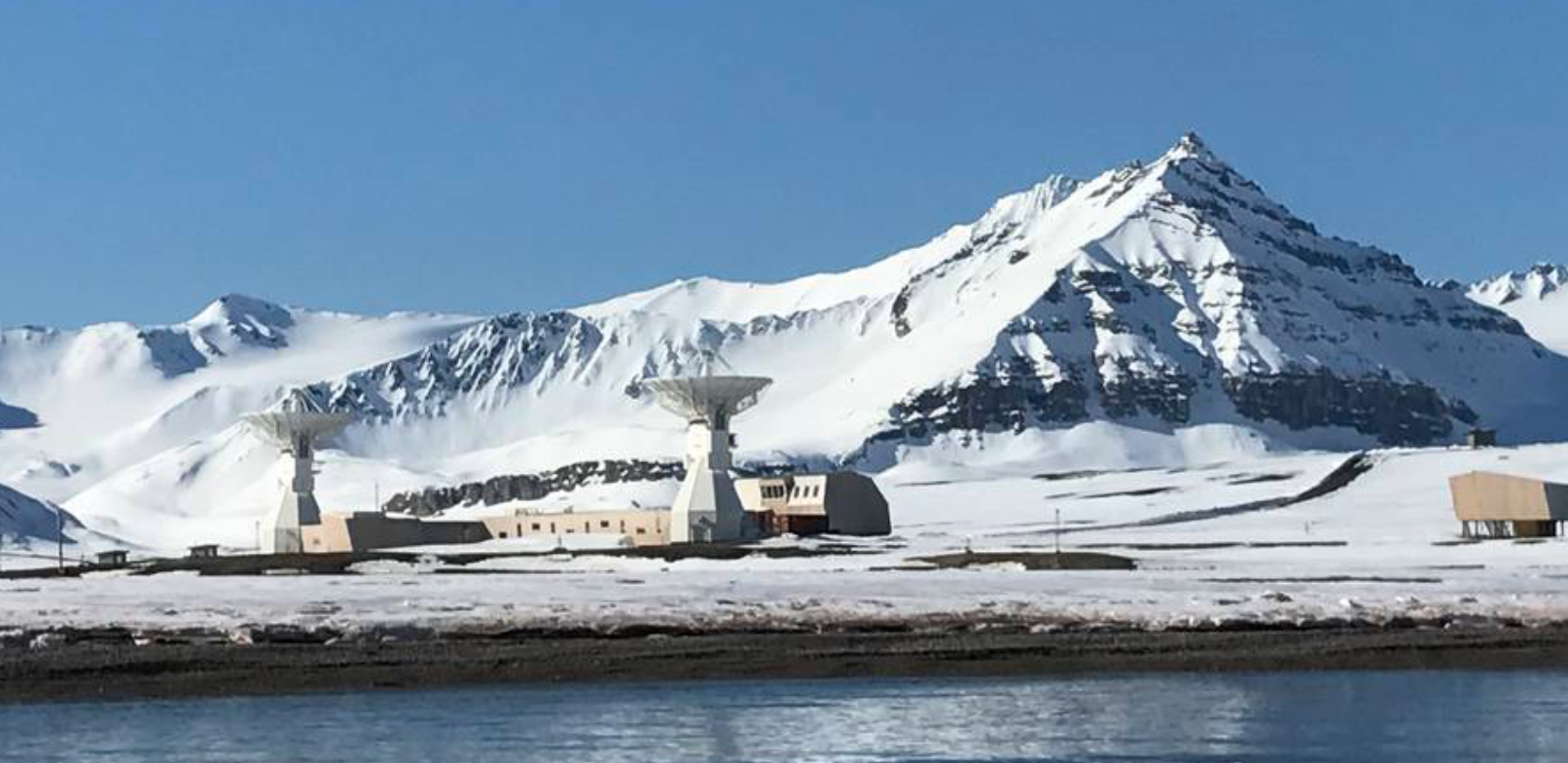
NASA and the Norwegian Mapping Authority are partnering to develop a state-of-the-art satellite laser ranging station 650 miles from the North Pole that will produce high-precision locations of orbiting satellites, help track changes in the ice sheets and improve the efficiency of marine transportation and agriculture.

The Arctic station will be the latest addition to a global network of space geodetic stations, which measure and monitor the size and shape of Earth, its orientation in space, the exact location of points on its surface and how these locations change over time. Space geodesy has a decades-long history at NASA due to its important role in the positioning and navigation of satellites.

“This partnership with Norway is an important step for NASA and the scientific community in building the next generation space geodetic network,” said Benjamin Phillips, program scientist for NASA’s Space Geodesy Program in Washington. “This network provides fundamental data for satellite and spacecraft navigation and underpins many of NASA’s Earth-observing missions and science.”

Under the new agreement signed on Aug. 7, Norway and NASA will build and install a satellite laser ranging facility in the scientific base of Ny-Ålesund, Svalbard. NASA will also provide expert consultation on how to operate the instruments. The ground-based laser transmits ultrashort laser pulses aimed at satellites specially equipped with a retroreflector, an array of special mirrors that bounce the pulses back. The system measures the time it takes for the light to travel back to its point of origin, which is used to determine the position of the satellite with respect to the ground station with an accuracy of around 0.04 inches (1 millimeter).

Combined with measurements from other geodetic instruments at the Ny-Ålesund Geodetic Observatory and all over the globe, the laser ranging observations will help refine the Global Geodetic Reference Frame, the basis for setting coordinates for all locations on Earth’s surface. The reference frame is used to measure the position of objects in space with respect to the Earth, as well as to precisely monitor motions of Earth’s crust, changes in sea level, and to support satellite positioning technology like GPS, which is used in many aspects of our daily lives.

“From the NASA perspective, laser ranging is important to understanding where our spacecraft are, as well as where on Earth their measurements are located,” said Stephen Merkowitz, space geodesy project manager at NASA’s Goddard Space Flight Center in Greenbelt, Maryland. “Laser ranging is needed for satellites that require very precise positioning measurements. Today we’re tracking over 90 satellites, not only from NASA, but also from other space agencies with this technique.”

The new Norwegian geodetic station will be the northernmost of its kind and will be invaluable for tracking satellites that follow polar orbits, as many of NASA’s Earth-observing missions do.

To make sure the laser ranging system is able to work in Arctic conditions, NASA will use a telescope dome strong enough to open and break the ice that might accumulate on top during Svalbard’s frigid winters. The telescope will be mounted on a pointing gimbal that can still move when exposed to very cold temperatures. To be able to work during the Arctic summertime, when the constant sunlight makes it difficult to observe the stars needed to calibrate the telescope, NASA specified that this telescope has to be stable for months at a time.

The Norwegian Mapping Authority started construction work on the new scientific base in 2014. The current goal is to have all systems in operation by 2022.

“This is a major investment for Norway,” Merkowitz said. “Norwegians are particularly interested in the global applications. They’ve taken a leading role in the advocacy and implementation of many initiatives relevant to space geodesy and its applications towards monitoring climate change.”

“In Svalbard, we’re already seeing the effects of climate change,” said Per Erik Opseth, director of the Geodetic Institute of the Norwegian Mapping Authority in Hønefoss, Norway, the agency working with NASA to develop the new laser ranging system. “Setting up this fundamental station in Ny-Ålesund will help Earth observations from satellites crossing the North Pole, so we can improve our knowledge of ice cap meltdown, sea level rise in this area and also the melt of sea ice in the basin between Russia and North America.”

Continued development of the next-generation space geodetic network that the new station in Svalbard will contribute to is expected to further improve the accuracy of satellite measurements of Earth processes, including changes in polar ice sheets. One such mission is NASA’s upcoming Ice, Cloud, and Land Elevation Satellite-2, or ICESat-2, designed to measure tiny changes in the elevation of Earth’s ice sheets that indicate ice loss or gain.

“With ICESat-2, we want to measure changes in the ice sheets that are on the order of centimeters per year,” said Goddard’s Scott Luthcke, lead for the ICESat-2 geolocation team. “If we made an error of a few centimeters when positioning the satellite in space with respect to the center of mass of the planet, which is established using geodetic data from the network, that would translate into a very large error in our calculations of the volume change of the ice sheets.”

For more information on NASA’s Geodesy program:

https://space-geodesy.nasa.gov

Banner Image The scientific base of Ny-Ålesund, Svalbard, as seen from the sea. The future Satellite Ranging Station will be located between the two antennas visible in the image.
Credit: Norwegian Mapping Authority/Per Erik Opseth

August 8, 2017 0 comments
0 FacebookTwitterPinterestEmail
Newer Posts
Older Posts

Norwegian Nobel Prize 2024

101207 The Norwegian Nobel Committee has decided to award the Nobel Peace Prize for 2024 to Japan’s Hiroshima bomb survivor group Nihon Hidankyo.

Special Interest

  • Africa and Norway
  • Asia and Norway
  • Asylum
  • China and Norway
  • Corruption in Norway
  • Crimes
  • Defence
  • Diplomatic relations
  • Economics
  • Environment
  • Farming
  • Killing
  • Media Freedom
  • Middle East and Norway
  • NATO and Norway
  • Nobel Peace Prize
  • Norwegian Aid
  • Norwegian American
  • Oil & Gas
  • Peace Talks
  • Politics
  • Racism in Norway
  • Religion
  • Russia and Norway
  • Royal House
  • Science
  • Sex scandal
  • Sports
  • Spy War
  • Srilanka and Norway
  • Svalbard
  • Terrorist
  • Taiwan and Norway
  • Video clips

Follow Us

Recent Posts

  • Norway and Germany sign defence arrangement

    February 15, 2026
  • China hopes Norway will play a role in the Europe ties

    February 15, 2026
  • Norwegian cross-country skier breaks Olympic medal record

    February 15, 2026
  • Norway police search former PM’s properties in Epstein links probe

    February 12, 2026
  • Afghan National Killed in Norway

    February 11, 2026
  • Việt Nam strengthening cooperation with Norway: Việt Nam FM

    February 11, 2026

Social Feed

Social Feed

Editors’ Picks

Norway opens market for Sri Lankan fish exports...

May 13, 2016

Sri Lanka – Nordic Business Council holds discussions...

May 15, 2016

Good governance to Sri Lanka

May 15, 2016

Shock and Joy in Sri Lanka – Erik...

May 15, 2016

Sri Lanka-Norway plenty of new opportunities for business–...

May 15, 2016

NORWAY NEWS is an online news site, written in English, dedicated to Norwegian affairs at home and abroad. Norway News.com is published online. It is a daily online newspaper in existence since May, 2003. The site is run by an Independent Journalist.

Facebook Twitter Youtube

Useful Links

    • Work With Us
    • Contact Us
    • Collaboration
    • Data Collection
    • Workplace
    • Adverstising
    • Privacy Policy
    • International Collab
    • Feedback
    • Terms of Use
    • About Our Ads
    • Help & Support
    • Entertainment
    • News Covering
    • Technology
    • Trending Now

Politics

Syrian, Norway to boost cooperation on mine clearance
Erna to step down as Conservative Party leader in 2026
Norwegian Labour Party on re-election win

Latest Articles

Norway and Germany sign defence arrangement
China hopes Norway will play a role in the Europe ties
Norwegian cross-country skier breaks Olympic medal record
Norway police search former PM’s properties in Epstein links probe

Norway News 2025 . All Right Reserved. Designed and Developed by Norway News

  • Home
  • About us
  • Disclaimer
  • Contact us
NORWAY NEWS – latest news, breaking stories and comment – NORWAY NEWS
  • Home
  • About us
  • News
  • Other News
    • Africa and Norway
    • Asia and Norway
    • Asylum
    • Breaking News
    • China and Norway
    • Corruption in Norway
    • Crimes
    • Defence
    • Diplomatic relations
    • Economics
    • Environment
    • Farming
    • Featured
    • Health
    • Killing
    • Media Freedom
    • Middle East and Norway
    • NATO and Norway
    • Nobel Peace Prize
    • Norwegian Aid
    • Norwegian American
    • Oil & Gas
    • Peace Talks
    • Politics
    • Racism in Norway
    • Religion
    • Royal House
    • Russia and Norway
    • Science
    • Sex scandal
    • Sports
    • Spy War
    • Srilanka and Norway
    • Svalbard
    • Taiwan and Norway
    • Terrorist
    • Travel
    • Video clips
  • Disclaimer
  • Contact us
NORWAY NEWS – latest news, breaking stories and comment – NORWAY NEWS
  • Home
  • About us
  • News
  • Other News
    • Africa and Norway
    • Asia and Norway
    • Asylum
    • Breaking News
    • China and Norway
    • Corruption in Norway
    • Crimes
    • Defence
    • Diplomatic relations
    • Economics
    • Environment
    • Farming
    • Featured
    • Health
    • Killing
    • Media Freedom
    • Middle East and Norway
    • NATO and Norway
    • Nobel Peace Prize
    • Norwegian Aid
    • Norwegian American
    • Oil & Gas
    • Peace Talks
    • Politics
    • Racism in Norway
    • Religion
    • Royal House
    • Russia and Norway
    • Science
    • Sex scandal
    • Sports
    • Spy War
    • Srilanka and Norway
    • Svalbard
    • Taiwan and Norway
    • Terrorist
    • Travel
    • Video clips
  • Disclaimer
  • Contact us

Editor’s Picks

  • UN concern over Sri Lanka’s cases of enforced disappearances

    October 8, 2025
  • UN Human Rights Council Resolution on Sri Lanka’s Path to Reconciliation

    October 7, 2025
  • International should support Sri Lanka: Solheim

    October 4, 2024
  • Norwegian Meets Sri Lankan’s Challenges

    May 3, 2024
  • Norwegian Ambassador meets JVP in Sri Lanka

    May 2, 2024
  • “The man who didn’t run away” – Eric Solheim

    April 30, 2024

Newsletter

@2025 - All Right Reserved. Designed and Developed by Norway News