
NORWAY NEWS – latest news, breaking stories and comment – NORWAY NEWS
  • Home
  • About us
  • News
  • Other News
    • Africa and Norway
    • Asia and Norway
    • Asylum
    • Breaking News
    • China and Norway
    • Corruption in Norway
    • Crimes
    • Defence
    • Diplomatic relations
    • Economics
    • Environment
    • Farming
    • Featured
    • Health
    • Killing
    • Media Freedom
    • Middle East and Norway
    • NATO and Norway
    • Nobel Peace Prize
    • Norwegian Aid
    • Norwegian American
    • Oil & Gas
    • Peace Talks
    • Politics
    • Racism in Norway
    • Religion
    • Royal House
    • Russia and Norway
    • Science
    • Sex scandal
    • Sports
    • Spy War
    • Srilanka and Norway
    • Svalbard
    • Taiwan and Norway
    • Terrorist
    • Travel
    • Video clips
  • Disclaimer
  • Contact us
NORWAY NEWS – latest news, breaking stories and comment – NORWAY NEWS
  • Home
  • About us
  • News
  • Other News
    • Africa and Norway
    • Asia and Norway
    • Asylum
    • Breaking News
    • China and Norway
    • Corruption in Norway
    • Crimes
    • Defence
    • Diplomatic relations
    • Economics
    • Environment
    • Farming
    • Featured
    • Health
    • Killing
    • Media Freedom
    • Middle East and Norway
    • NATO and Norway
    • Nobel Peace Prize
    • Norwegian Aid
    • Norwegian American
    • Oil & Gas
    • Peace Talks
    • Politics
    • Racism in Norway
    • Religion
    • Royal House
    • Russia and Norway
    • Science
    • Sex scandal
    • Sports
    • Spy War
    • Srilanka and Norway
    • Svalbard
    • Taiwan and Norway
    • Terrorist
    • Travel
    • Video clips
  • Disclaimer
  • Contact us
Saturday, June 20, 2026
NORWAY NEWS – latest news, breaking stories and comment – NORWAY NEWS
  • Home
  • About us
  • News
  • Other News
    • Africa and Norway
    • Asia and Norway
    • Asylum
    • Breaking News
    • China and Norway
    • Corruption in Norway
    • Crimes
    • Defence
    • Diplomatic relations
    • Economics
    • Environment
    • Farming
    • Featured
    • Health
    • Killing
    • Media Freedom
    • Middle East and Norway
    • NATO and Norway
    • Nobel Peace Prize
    • Norwegian Aid
    • Norwegian American
    • Oil & Gas
    • Peace Talks
    • Politics
    • Racism in Norway
    • Religion
    • Royal House
    • Russia and Norway
    • Science
    • Sex scandal
    • Sports
    • Spy War
    • Srilanka and Norway
    • Svalbard
    • Taiwan and Norway
    • Terrorist
    • Travel
    • Video clips
  • Disclaimer
  • Contact us
Copyright 2025- All Right Reserved Norway News
Defence

Kongsberg Signs NSM Contracts With the Norwegian Navy

by Nadarajah Sethurupan November 2, 2021
written by Nadarajah Sethurupan

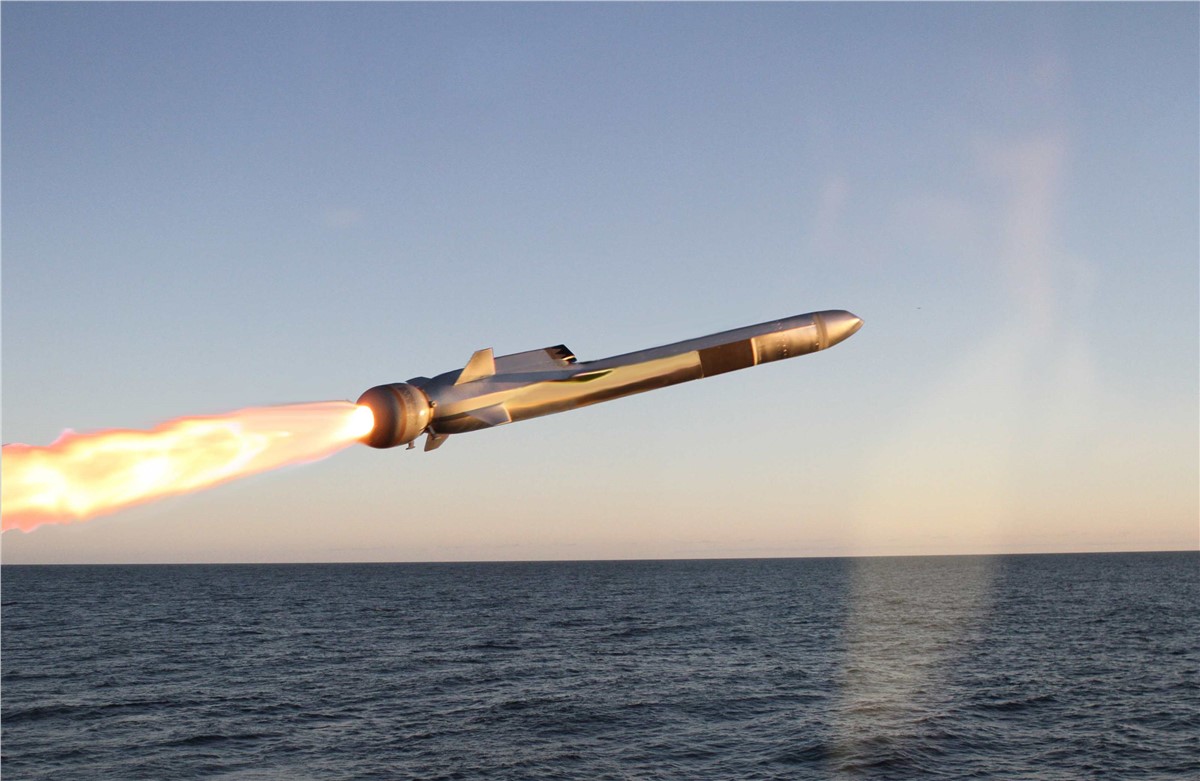
Kongsberg Defence & Aerospace AS (KONGSBERG) signed two contracts, valued at MNOK 1,426, with the Norwegian Defence Materiel Agency (FMA). KONGSBERG will deliver a new batch of Naval Strike Missile (NSM) to the Norwegian Navy’s frigates and corvettes. The existing inventory of missiles will go through a series of maintenance actions to extend their operational timeline and continue providing state of the art defence capabilities for the Navy.
«The triangular collaboration between KONGSBERG, the Norwegian Armed Forces and the Norwegian Defence Research Establishment (FFI) is the key to our ability to develop such advanced and complex systems. We are also very proud to sign a maintenance agreement that will extend the missile’s shelf life, ensuring that the Navy will remain operational with this important capability. Contracts such as this support KONGSBERG’s and FMA’s sustainability goals, and helps to secure further employment, not only for our employees, but also for our national subcontractors. We cannot produce nor deliver such advanced and state-of-the-art products alone,” says Øyvind Kolset, Executive Vice President of Kongsberg Defence & Aerospace.

The Naval Strike Missile is a fifth-generation missile with a low radar signature for use in sea-to-sea or sea-to-land defence. The missile, with its superior performance, can go up against well-defended targets with the ability to penetrate the most advanced air defence.

NSM is set up with integrated sensors to locate exact targets to engage, and will self-destruct if it is unable to locate its intended target – a build-in safety mechanism avoiding collateral damage.

November 2, 2021 0 comments
0 FacebookTwitterPinterestEmail
Asia and Norway

Telenor awaits Myanmar approval of business sale

by Nadarajah Sethurupan October 31, 2021
written by Nadarajah Sethurupan

Norway’s telecom company Telenor has just posted quarterly earnings that lagged estimates, citing the unexpected persistence of the COVID-19 pandemic in Asia, and said it was still awaiting the Myanmar authorities’ approval for the sale of its Myanmar business, Reuters reports.

According to the report, Telenor wrote off the value of its Myanmar operations earlier this year following the military coup in February, and in July agreed to sell its business in Myanmar to Lebanese investment firm M1 Group for $105 million.

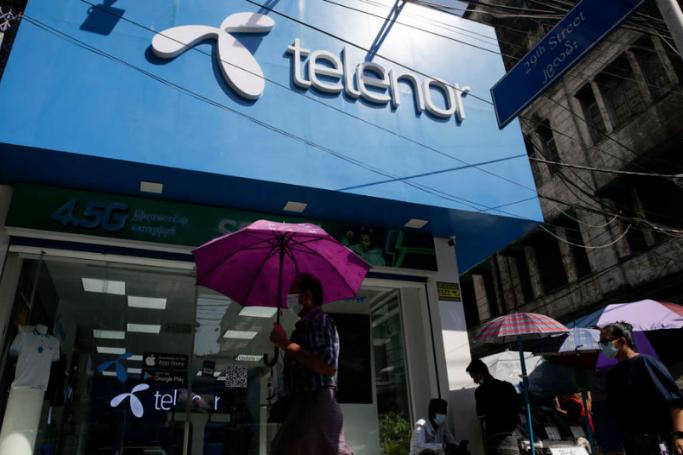
People walk past a Telenor showroom in downtown Yangon, Myanmar. Photo: EPA

It has since cited pressure from the junta to activate intercept surveillance technology as the primary reason for its exit. Myanmar accounted for 7% of Telenor’s earnings last year.

Chief Executive Sigve Brekke told Reuters that the current status of the process of getting the deal approved by Myanmar authorities in up in the air.

The Myanmar junta has asked Telenor executives not to leave the country pending regulatory changes.

For now, Telenor continues to run its Myanmar business on a daily basis, Brekke told Reuters.

October 31, 2021 0 comments
0 FacebookTwitterPinterestEmail
Media Freedom

World’s largest museum for an artist opens in Oslo

by Nadarajah Sethurupan October 23, 2021
written by Nadarajah Sethurupan

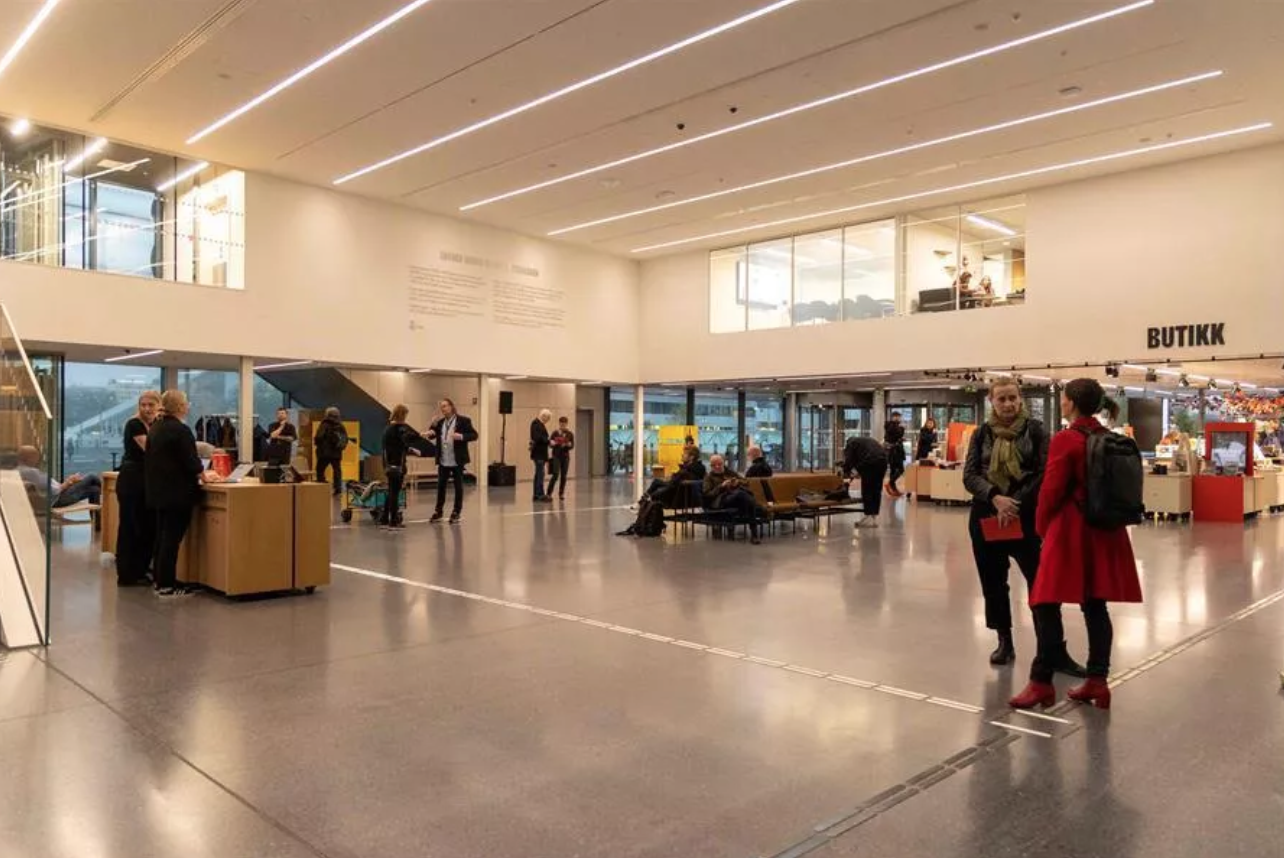
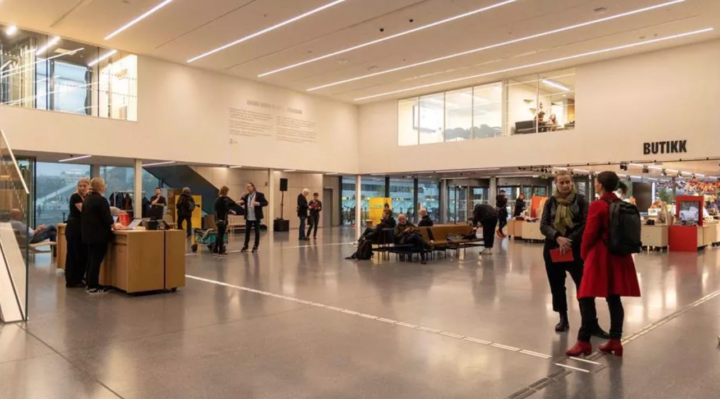
To Edvard Munch, they were his children. And like any doting father, he hated the idea of them straying too far from home.Now, more than 26,000 artworks from the master expressionist’s “family,” including his best known piece, “The Scream,” have moved under one roof in the enormous and custom-built MUNCH museum on the shore of Oslo Fjord.

Gone is the old, rundown and poorly secured Munch Museum in the Norwegian capital’s outskirts — from where a version of “The Scream” and another masterpiece, “Madonna,” were stolen by armed robbers in 2004. On Oct. 22, the new museum opened to the public smack dab in the heart of Oslo, in a luxuriously spacious modernist building that has sparked much controversy.

“This might be the biggest museum for a single artist,” museum director Stein Olav Henrichsen says as he gives a tour of the building.With 13 floors covering more than 26,000 square meters, the new building offers five times more exhibition space than the gloomy museum that until now housed Norway’s national treasure.A bachelor who had no children, Munch (1863-1944) bequeathed his work to the city of Oslo.

He had originally intended to leave it to the Norwegian state but changed his will at the last-minute to avoid the art falling into unwanted hands.At the time, Norway was occupied by the Nazis, who considered the pioneer of expressionism to be a maker of “degenerate art.” 

Rising from the shore of the fjord and next to the city’s iconic opera house, the new museum aims to make up for a historical injustice by finally giving the world-renowned artist the building his admirers feel his oeuvre deserves.Half a million visitors are expected each year — with the museum hoping for more than a million — to view the 200 works on permanent display across 4,500 square metres. 

Amid some of the recurring darker themes like angst, despair and death are less depressing ones exploring love, self-portraiture and landscapes. Pallid and sickly naked bodies mix with fiery red strokes depicting mops of hair or sunsets.And of course, there is “The Scream.” The museum owns several versions of the iconic artwork: one painting, one drawing, six lithographs and several sketches.

It also features other masterpieces such as “Madonna” — both it and the stolen “Scream” were recovered by police two years later — “Vampire”  and “The Sick Child”, as well as some lesser known Munch pieces.Among the latter are sculptures, photographs, a film, and two massive paintings, “The Sun” and “The Researchers,” which had to be lifted into the museum during construction through a hole in the facade.“Munch wanted to have a museum. He talked about his children (referring to) all his works and he wanted them to be together as a collection,” says curator Trine Otte Bak Nielsen.“I think he would be very happy to see what we have made now.” 

The building itself, dubbed “Lambda” because its slanted top resembles the letter of the Greek alphabet with the same name, has been the subject of controversy.That shape has riled some, while the luminous glass windows promised in the designs are largely hidden beneath what some say resemble monstrous metal shutters.Back in 2019, art historian Tommy Sorbo slammed the project as a “pollution” of Oslo, a “coming catastrophe.” He maintains that opinion today, “at least for the exterior and the entrance.” 

“The lobby looks like an airport, a warehouse, a hotel or a commercial building,” he told AFP.“There is absolutely nothing in the choice of colors and materials to indicate that the place houses one of the greatest artists in the world.” Management has shrugged off the criticism, saying the museum should provoke people in the same way Munch’s art did at the time it was made.“The building suits the collection very well because it’s a monumental building, it’s … a brutal building,” Henrichsen says.

“You need to actually have an opinion about it.” So will the much-decried “metal shutters” be enough to dissuade the thieves? Over the years, Munch’s works have been the object of several high-profile heists. Perhaps the most spectacular was that daring 2004 midday armed robbery.“This is the probably most secure building in Norway but you won’t feel it when you come here. The security is very delicate and we want to focus on the art experience,” Henrichsen said.“I can assure everybody that there’s not going to be a robbery here.”

October 23, 2021 0 comments
0 FacebookTwitterPinterestEmail
Science

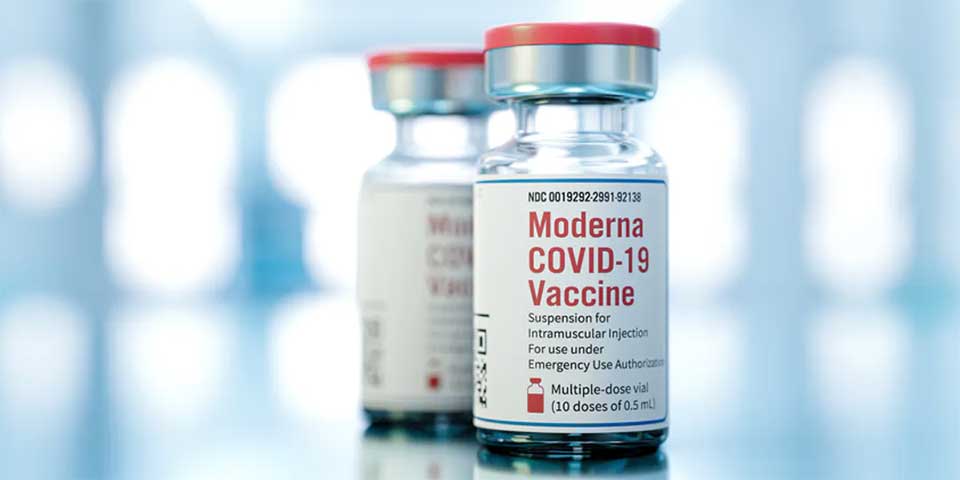
Norway to donate 620 400 dozes of Moderna’s Spikevax vaccine to Armenia

by Nadarajah Sethurupan October 23, 2021
written by Nadarajah Sethurupan

A trilateral agreement has been signed between the Republic of Armenia, the Kingdom of Norway and Moderna Company, Armenia’s Minister of Health Anahit Avanesyan informs.

Under the agreement, Norway will donate 620 400 dozes of Moderna’s Spikevax vaccine to Armenia.

The European Commission’s Directorate-General for Humanitarian Aid and Civil Protection will provide assistance in transporting the new batch.

Norway’s newly appointed Ambassador Helene Sand Andresen had said earlier that Norway would provide “a significant amount Moderna vaccine to Armenia via the Team Europe initiative.

October 23, 2021 0 comments
0 FacebookTwitterPinterestEmail
Politics

Ex-farmer is Norway’s new Fisheries Minister

by Nadarajah Sethurupan October 16, 2021
written by Nadarajah Sethurupan

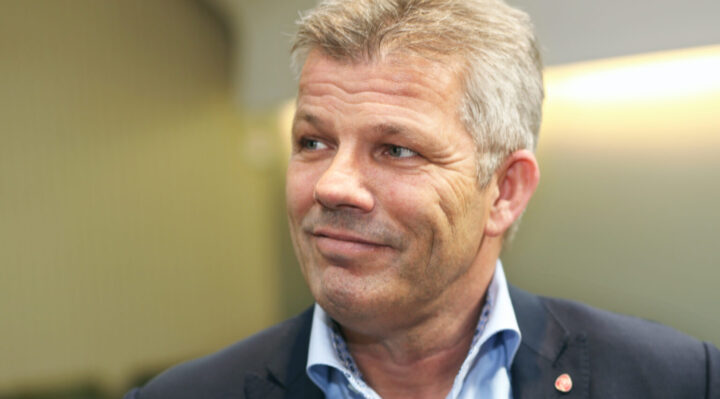
Bjørnar Skjæran, now a full-time Labour politician, replaces the Conservative Odd Emil Ingebrigtsen who has held the post for almost two years.

Ingebrigtsen has impressed during his relatively short tenure, although he was not afraid to take controversial decisions such as extending the “traffic light scheme” – which sets limits on new development of fish farms on an area basis – and getting tough on salmon escapes.

Skjæran had been widely tipped for the job. His appointment was announced as the country’s new Labour-Centre party coalition formally took over from Erna Solberg’s Conservative government at a ceremony in the Storting, Norway’s parliament.

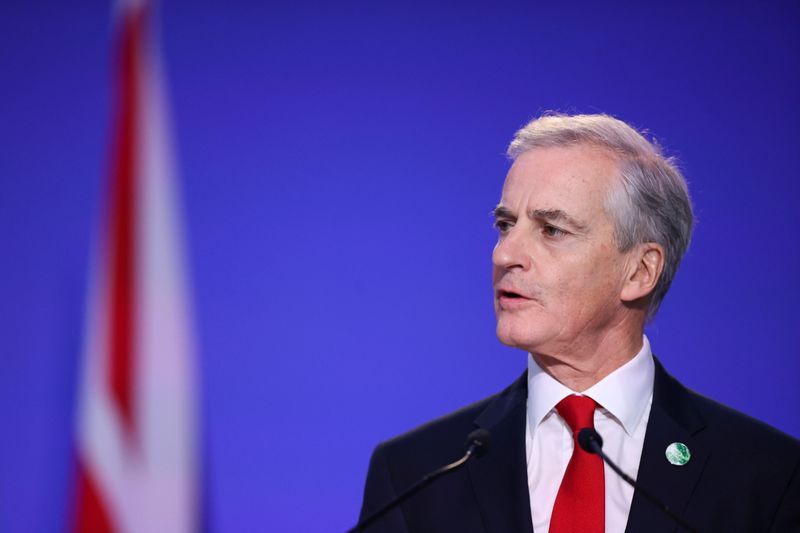
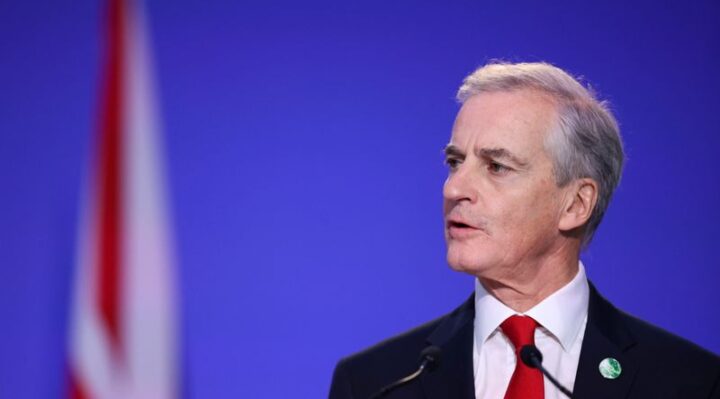
Labour leader Jonas Gahr Støre, who is now Prime Minister, has finally formed a left-leaning administration, five weeks on from Norway’s general election.

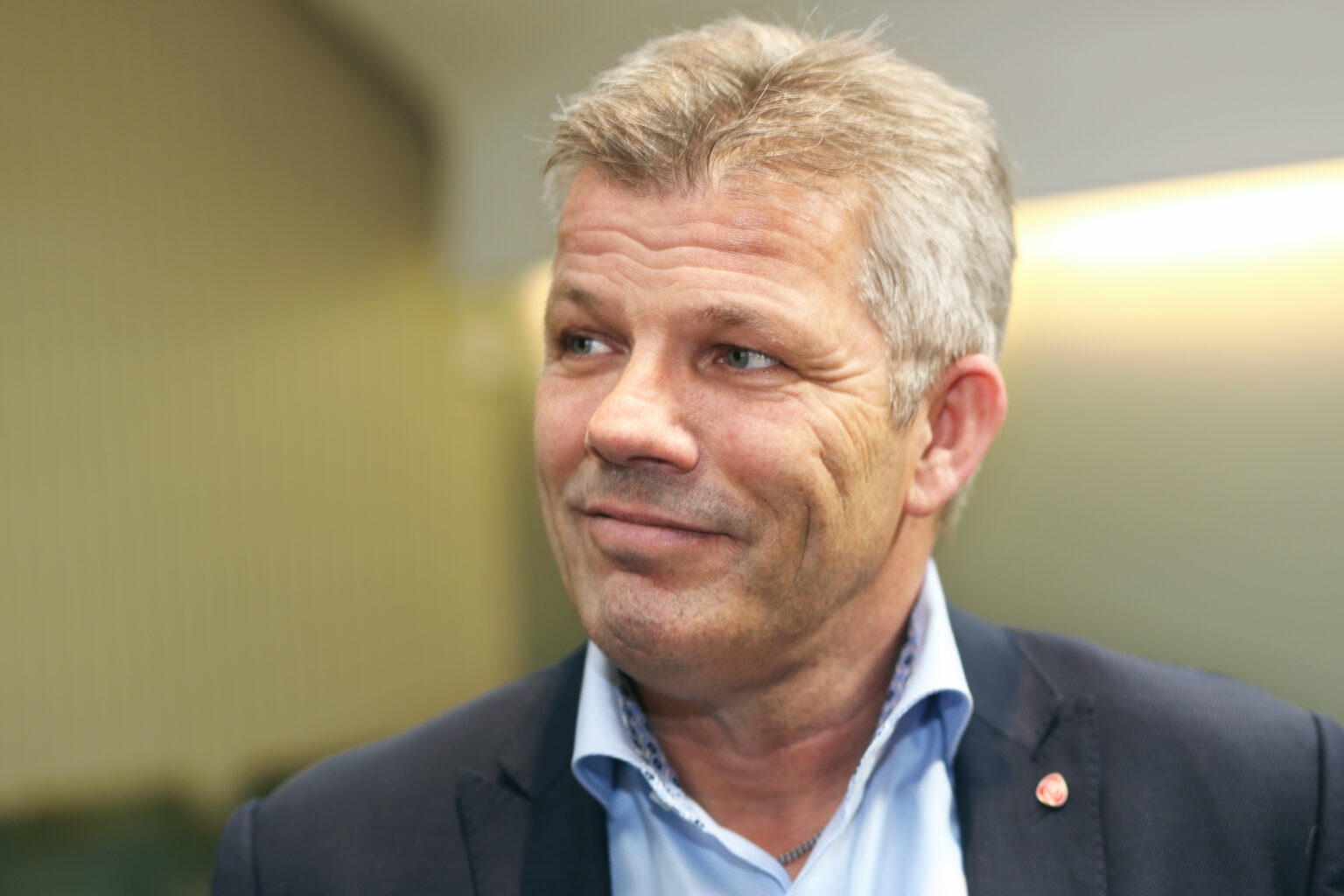
Norway’s Fisheries and Seafood Minister, Bjørnar Skjæran

The new government is expected to broadly follow the previous administration’s approach to aquaculture although the industry is likely to face higher taxes and tougher environmental regulations.

Bjørnar Skjæran has a business background and went into farming in 1986 when he bought a herd of dairy cattle. He later launched his own transport business, but has been a full time politician since 2011 and one of two deputy Labour leaders for the past two years.

He said he looked forward to taking on the challenges that lay ahead, adding that fishing and aquaculture provided great opportunities and prosperity as well as year-round job opportunities for Norway’s coastal communities.

“We will provide the resources to create greater value and more full time jobs as well as lead the effort to stop plastic pollution in the sea,” he pledged.

Another businessman, Jan Christian Vestre (also Labour) is the new Minister of Trade and Industry, a department which also makes important decisions on fishing and aquaculture.

October 16, 2021 0 comments
0 FacebookTwitterPinterestEmail
Terrorist

Norway police treat attack as possible terrorism

by Nadarajah Sethurupan October 15, 2021
written by Nadarajah Sethurupan

Police in Norway are treating a bow-and-arrow attack with five dead and two injured in the small town of Kongsberg as a possible terrorist act. 

“The incidents in Kongsberg currently appear to be an act of terrorism,” but the actual motive of the killer was not yet known, a statement by the security service of the Norwegian police said earlier on Thursday. 

“The threat situation in Norway is still assessed as moderate,” it said.

A public prosecutor later said that the man had provided a comprehensive statement and also given reasons for his actions, but she did not want to share the details with the public. 

So far, the man has not been formally accused of terrorism.

Kongsberg, a quiet town in southeastern Norway, was let shaken by the bow-and-arrows attack  Terje Bendiksby NTB/AFP

Norwegian police had said earlier there were signs that the suspect in the attack had become radicalized after recently converting to Islam.

The security service is now investigating whether what happened could inspire others to commit serious acts of violence. However, there are no concrete indications of this. 

The 37-year-old Danish man is suspected of attacking numerous people with several weapons, including a bow and arrow, in the southern town of Kongsberg on Wednesday night. 

Five people were killed and two injured, all between the ages of 50 and 70, police said. Four of the dead were women, one was a man. Of the two who were injured, one was a police officer shopping in a supermarket.

Police received the first report of the assailant moving through the city with a bow and arrow at 6:13 pm (1613 GMT) on Wednesday. 

A police patrol spotted him five minutes later but he fired arrows towards the officers and initially managed to flee. 

It is likely the victims were killed shortly afterwards, according to police spokesperson Ole Bredrup Saverud.

Officers detained the suspect half an hour after they had received the first emergency call, the police said.

The suspect is thought to have acted alone. 

He is a resident of the town of Kongsberg in southern Norway, police said. 

A prosecutor told broadcaster TV2 that the man had admitted to the acts and that he had previously been known to police. She said he had been in contact with the Norwegian health service on several occasions. It was unclear from her statements whether the suspect had been treated for mental health problems. 

An old childhood friend of the detained man said in an interview to the online newspaper Nettavisen that he had already informed the police in 2017 that he considered his friend dangerous. 

The attacks took place in several locations in central Kongsberg. On Thursday, the centre was largely cordoned off.

Bows and arrows are considered sports equipment rather than weapons in Norway and can be bought freely, although they may not be used for hunting. 

The incident occurred on the eve of the inauguration of the new Prime Minister Jonas Gahr Store, who said he was shocked. “What we have had to hear from Kongsberg this evening testifies to the fact that a cruel and brutal act has been committed,” he told NTB news agency late on Wednesday. 

The attack did not affect the change in government. Store, the head of the Labour Party, took office on Thursday morning. He will head a minority government with the Centre Party. 

German President Frank-Walter Steinmeier and Foreign Minister Heiko Maas sent their condolences to the families of the victims, and Steinmeier wrote to King Harald V to express German solidarity with Norway.

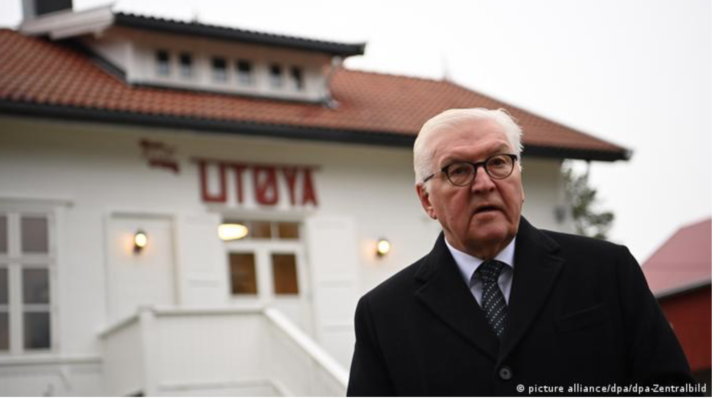
“I am sad to hear that Norway, 10 years after the terrible terror attack in Utoya and Oslo has again been the victim of violence,” he said, adding that Germany stood with Norway in the defence of democracy against violence and hatred.

The killings come 10 years after the country’s worst terrorist attack, when 77 people were murdered by a right-wing extremist.

On July 22, 2011, Anders Behring Breivik detonated a car bomb in Oslo, killing eight people, before driving to the island of Utoya, where he opened fire on attendees of the annual summer camp held by the Labour party’s youth organization, killing 69 people, mostly teenagers and young adults.

(dpa-international)

October 15, 2021 0 comments
0 FacebookTwitterPinterestEmail
Terrorist

Terrorist attack in Norway : 5 killed and 2 injured

by Nadarajah Sethurupan October 14, 2021
written by Nadarajah Sethurupan

A Danish citizen ( Danish converts to Islam) Terrorist linked in his 30s has been arrested and charged after five people were killed and two others injured in attack using a bow and arrows in the Norwegian town of Kongsberg.

The acting prime minister, Erna Solberg, described reports of the attack as “horrifying” and said it was too early to speculate on the man’s motive.

FOTO: KJETIL STORMARK / NRK

“I understand that many people are afraid, but it’s important to emphasise that the police are now in control,” she told a news conference.

The prime minister-designate, Jonas Gahr Støre, who is expected to take office on Thursday, called the assault “a cruel and brutal act” in comments to Norwegian news agency NTB.

Police at the scene after an attack in Kongsberg, Norway on Wednesday. Multiple people were killed and others injured by a man armed with a bow and arrow in a town west of the Norwegian capital, Oslo.

A “large number” of police, as well as helicopters, dogs and armed response teams secured the area soon afterwards, and the suspect was arrested about 30 minutes later after a brief confrontation with officers.

The shooting appears to have started in or near a Coop store in the city centre where there were several casualties, Norwegian media reported, citing regional government officials who said details were “still very confused”. Several other people were injured in different stores in the city centre, according to media reports.

A Coop spokesperson, Harald Kristiansen, told NRK there had been “a serious incident in our store” but no employees were among the injured. “We are providing assistance to our colleagues and helping police with their investigation,” he said.

FOTO: KJETIL STORMARK / NRK

“A lot of resources were sent from several places, including Oslo police district, the bomb squad, national police and emergency response teams,” Aas told journalists. “There is still a lot of police activity across the area. They are securing the various crime scenes … and have many witnesses to interview.”

The VG newspaper showed images of an arrow that appeared to be stuck in the wall of a wood-panelled building.

Kari Anne Sand, Kongsberg’s mayor, told the newspaper the attack was “a tragedy for all those involved. I have no words”. Sand said a crisis team had been installed in a hotel to support those affected. “We are doing all we can,” she added. “Right now it is a chaotic situation and there are a lot of rumours.”

Shortly after the attack Norway’s national police directorate said it had ordered officers nationwide to carry firearms. Norwegian police are normally unarmed but officers have access to guns and rifles when needed.

“This is an extra precaution. The police have no indication so far that there is a change in the national threat level,” the directorate said in a statement.

The total number of Muslims in Denmark is based on an estimate. An estimated 4.0% of Danes – some 221,800 are Muslims in 2009. The first Muslims were registered in a Danish census in 1880.
 

The origin of Denmark’s Muslims varies. Research suggests that 24.7 % are of Turkish origin, 12 % are of Iraqi origin, 10,8% Lebanese, 8,2% of Pakistani origin  and 7.6 % of Somali origin. There are an estimated 2-5,000 Danish converts. This estimate does not take account of internal religious differences within Islam. A survey from 2007 indicated that Muslims in Denmark were 49% Sunni, 13% Shi’i, 19% ‘Islam, other’ (which may include Ahmadis, Alevis and Sufis). The rest said they belonged to other religions or no religion

October 14, 2021 0 comments
0 FacebookTwitterPinterestEmail
NATO and Norway

Kosovo, Serbia agree deal to end border tensions

by Nadarajah Sethurupan October 8, 2021
written by Nadarajah Sethurupan

Kosovo agreed to withdraw police units from its northern border with Serbia to end a mounting dispute over vehicle licence plates that briefly escalated into violence and prompted NATO to step up patrols.

U.S. Deputy Assistant Secretary of State Gabriel Escobar was in Brussels to support EU-led talks, saying they showed the potential for more progress in the Balkans.

“I think we can make enormous strides in helping the Balkans get over a very difficult period during the ’90s and hopefully, eventually become more integrated with the European Union,” Escobar said on a briefing call with reporters.

Below is a full rush transcript of the press conference by Gabriel Escobar Deputy Assistant Secretary, Bureau of European and Eurasian Affairs.

DAS Escobar:  Thank you and Thank you to everybody who is calling in to participate on this phone call.  I think today was an important success and it highlighted two things.  One is that the EU-led dialogue is really a place for finding solutions, and they fulfilled that role today and we’re very proud of the parties for showing flexibility and a commitment to finding solutions.  I also want to thank the hard work of EU Special Rep. Miroslav Lajčák and his team, who worked very, very hard on some very, very good solutions.  And my – the purpose of my visit was essentially to show support for that dialogue.

But the other lesson that I think this highlights is that with the partnership that we have with the European Union, I think we can make enormous strides in helping the Balkans get over a very difficult period during the ‘90s and hopefully, eventually, become more integrated with the European Union.  

But that’s – those are my initial thoughts.  I think we have a long way to go on the dialogue, and as we go forward we will continue to show our full support for Mr. Lajčák and his team, and we’ll continue to look and encourage the two sides to look for constructive solutions.  And with that, I’m happy to take questions.

Question:  Have you been notified in advance by the Kosovo Government that they will apply reciprocity on license plates which are then – which then produces blockades in northern Kosovo?  How have you seen this decision of the Kosovo Government?

DAS Escobar:  Well, look, it is the right of the Kosovo Government to apply reciprocity.  That was agreed to in advance.  The actual implementation of it, I think, caught many of us a little bit by surprise.  But eventually this was going to happen, and I’m glad that we were able to reduce the tensions that came up with the implementation.  And in the long term, we’re looking for a more durable solution, a more European solution to the license plate issue.

Question:  When will you visit Belgrade?  Do you think further dialogue makes sense without issue of establishment of the Community of Serb Municipalities? Is the Washington Agreement still in force as far as Gazivoda is concerned?

DAS Escobar:  Well, with regard to my travel to Belgrade, I would like to travel to Belgrade as soon as practicable.  Obviously, there are some scheduling concerns and some COVID concerns as well.

With regard to the commitments made in Washington in September of last year, we – they are commitments that we hold important, particularly the moratorium on de-recognitions and recognitions.  We think that holding to that part of the agreement will give the dialogue some space to resolve broader issues.

In terms of Gazivoda, I look at it in terms of a broader regional energy strategy.  There are a lot of exciting things that are happening in the Balkans right now with regard to energy, and one of them is that there is a growing potential for renewable energy, and Gazivoda will be part of that solution.  But it will be – the solutions will be regional, and they will contribute not only to their EU requirements, but also in – with regard to helping mitigate the effects of climate change.  So Gazivoda is still very much on our minds.

Question:  How do you see the chances of progress or even a breakthrough by the EU-facilitated Belgrade–Pristina dialogue?

DAS Escobar:  Well, I see a lot of optimism and he has our full support.  So we will work with the two parties and we will coordinate very closely with not just the special rep, but also with our Quint partners.  And I don’t know what would be – what you would classify as a breakthrough, but I would anticipate that there will be great progress in the next year or so.

Question:  Will there be greater involvement of the U.S. in the Kosovo–Serbia dialogue, and what will your role be in this process?

DAS Escobar:  Well, the dialogue is EU-led, so it will continue to be EU-led because ultimately our hope is that it will result in integration into Europe of the whole region.

And with regard to our role, our role has always been very present in the region.  With Kosovo, in particular, we have an enormous assistance program, we hold leadership positions within KFOR, and we have very, very strong bilateral cooperation with Kosovo.  And the same is true with Serbia.  We have a very good partnership with Serbia on many issues – law enforcement issues, migration issues, and economic issues – and we hope that we can leverage those partnerships to bring some greater understanding between the two parties.

Question:  Is KFOR going to relieve Kosovo’s ROSU special police on the Kosovo side of the border as reported by some local media?  If so, would it be with forces in Kosovo like the MSU, or could the over-the-horizon reserve force be activated?

DAS Escobar:  The role of KFOR is to ensure security in the region, and they’ve done that effectively, but their role is not to take over functions that should be domestic functions.  Our hope is that as a result of this agreement that there won’t be the need for any special units.  We expect that, and we expect that the border crossings will be operated as they were before.

Question:  Is it true that Kosovo, with the action in the north, has endangered national security? 

DAS Escobar:  I won’t comment on diplomatic communications.  But we do have very close communication with the governments in Belgrade and Pristina.  And we’re urging caution and restraint on both sides, and I think they both did.  So the idea was to bring negotiators to Brussels and to hammer out a deal, an immediate deal in the hopes of later creating a mechanism to find a more sustainable solution.  All of that has been agreed to, so I think the outcome of these talks was very successful.

Question:  Kosovo or Serbia may refer to the expiration of other deals that have been signed under the EU-facilitated negotiations and that could again spark a bilateral crisis.  Do you think that the EU-facilitated negotiations are on the right path, and do you think they will be resolved quickly, or do you think this will take a long time?

DAS Escobar:  The resolution will depend on the goodwill of the parties.  I can tell you that the dialogue and Lajčák’s staff are working very diligently to put as much on the agenda as possible and to present some good options on nearly all of the agenda.  But the outcome will depend on the goodwill of the parties.

Question:  Were you concerned with the activity of the Serbian military at the border region towards Kosovo with the active involvement of Russian military and diplomatic personnel?  Is the introduction of a ground and air safety center on Kosovo a good idea?

DAS Escobar:  Well, look, I’m not as well briefed on the details of that, but we did see the escalation of forces on either side of the border as unhelpful.  We also thought that the intervention of, or at least the messaging by, people outside of the region who are not involved in the dialogue and who are not actively looking for solutions that would be more permanent, as unhelpful.  But ultimately, we were in close consultation with both sides and urging them to exercise restraint.

Question:  Will the U.S. continue to support Montenegro if the pro-Russian political alliance Democratic Front enters the government?  And are U.S. security agencies helping the Montenegrin authorities to solve a longstanding problem of cigarette and drug smuggling?

DAS Escobar:  Well, on the second part of the question, the answer is yes, we have very good law enforcement cooperation with Montenegro.  We are working very closely with them to build their capacity to combat corruption, smuggling, money laundering, trafficking.  All of those are part of our broader law enforcement agenda.

With regard to U.S. support for Montenegro, Montenegro is not just a friend, it’s an ally within our common defense structure of NATO.  So we do support Montenegro.  We would hope that Montenegro will continue on its European path, its Western path, and we’re going to do everything we can to support them in that effort.

Question:  Will the United States transmit or they have already transmitted a message to the Bulgarian authorities regarding the Bulgarian veto against beginning of the negotiations with Northern Macedonia?  So what will the United – will the United States do anything to unblock and to resolve this dispute?

DAS Escobar:  Well, look, I – the United States is convinced that Albania and North Macedonia have done – have made some very important reforms.  They’ve moved their candidacy forward immensely.  They have undertaken enormous political steps, some of them very painful, and they deserve to begin intergovernmental – the intergovernmental conferences as soon as possible, hopefully this year.

And we hope that all European member-states understand the strategic importance of letting them begin this process, and we hope that the European Union both as individual member-states and as an organization understand the strategic value of the Balkans and their integration into Europe.

Question:  Do you think Montenegro, after changes in the prosecutor’s office, can achieve better results in the fight against crime and corruption?

DAS Escobar:  The fight against crime and corruption is a problem all over the Balkans, and we stand alongside all the governments and all the officials and all the institutions that have pledged to do so.  So we are hopeful that Montenegro can continue to pursue that, and we’re hopeful that we can partner with the Ministry of Justice on all of this.

Question:  In Albania there is a bit of dissatisfaction with the fact that the State Department seems to be concentrated on the opposition at a time when perception of corruption in governance is high.  What can you tell us about this?

DAS Escobar:  Well, look, I – we are partnered with all of the parties and all of the individuals and all of the institutions that are trying to move Albania to more democratic, more transparent, and more Western orientation.  And – but broader than that, our partnership with Albania is with the Albanian people and their aspirations, not with any particular party or any particular individual.

Question:  These days, the domestic public more often hears that the European Union is turning its back on the Western Balkans, and often the citizens of Serbia have such a feeling.  Are we losing the European perspective?  Is that how you interpret it? And the second question:  “If that perspective does not exist, I assume it is clear to you on which other side assistance could be sought, or do you have any fears about that?

DAS Escobar:  Well, I’ll start with the first one.  I have encouraged my European partners to give a stronger message that the Western Balkans are both wanted and needed in the European Union, and I’ll continue to push that message.  I do believe that within the Quint there is solid agreement that the countries of the Western Balkans should be part of Europe.

With regard to the orientation of the country should that process not be as rapid as we want, I can tell you that the countries of the Western Balkans are European; they’re culturally, historically, and economically European.  The largest diaspora of people from the region are in Europe.  Their economies are tied to Europe.  So our hope is that the two sides can realize that they are already integrated and then make the progress to complete that integration.

Question:  Will the U.S. appoint a special envoy for the Kosovo-Serbia dialogue as Richard Grenell was in the previous administration?

DAS Escobar:  That remains to be seen.  But in the meantime, I am the State Department’s representative to the region, and it’s one I take very seriously, and I promise to be as active as I possibly can and as open to finding solutions both bilaterally and in coordination with our European partners. I once again want to commend Special Representative Lajčák for his hard work and for the success that we – that he accomplished today.  Thank you very much.

October 8, 2021 0 comments
0 FacebookTwitterPinterestEmail
Media Freedom

Nobel Prize awarded to journalists to fight for freedom of expression

by Nadarajah Sethurupan October 8, 2021
written by Nadarajah Sethurupan

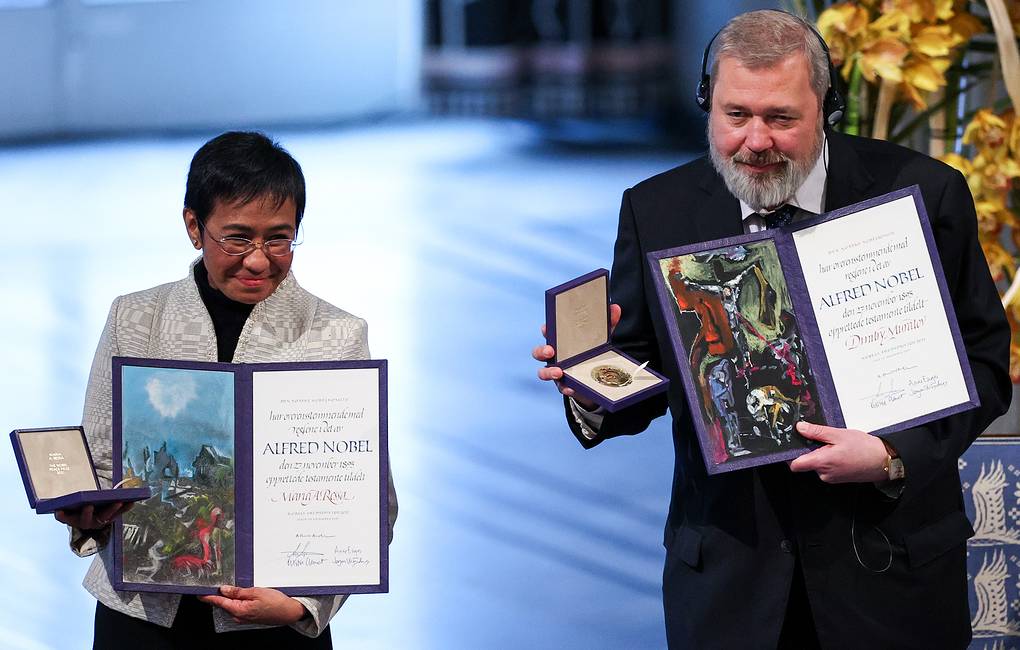
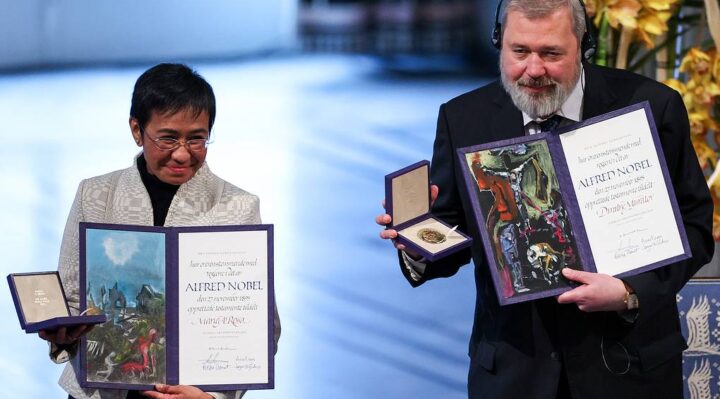
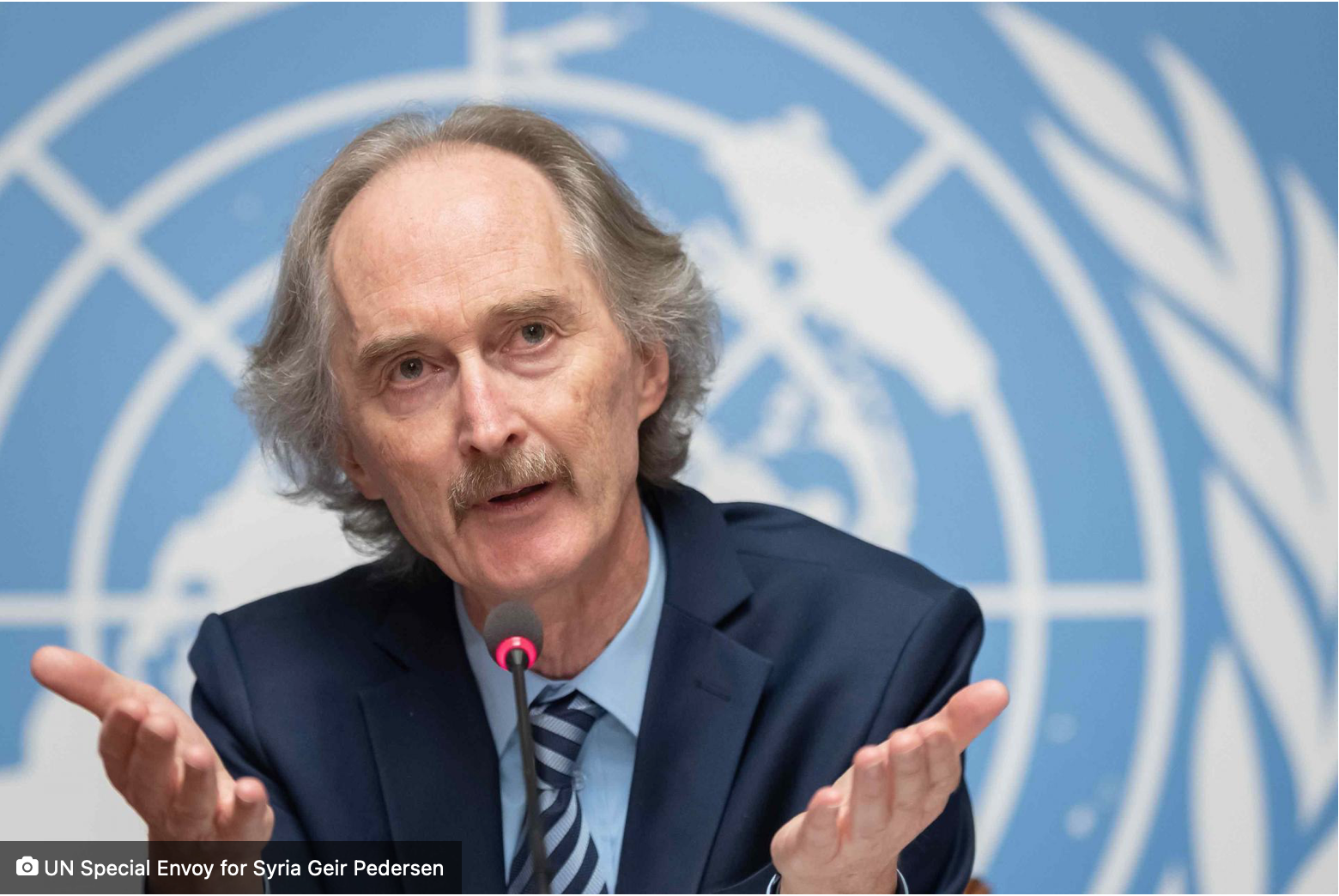
The Nobel Peace Prize has been awarded to two journalists who were cited for their fight for freedom of expression.

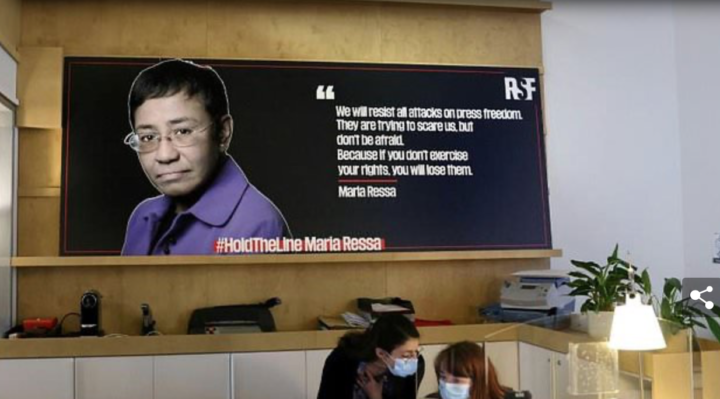
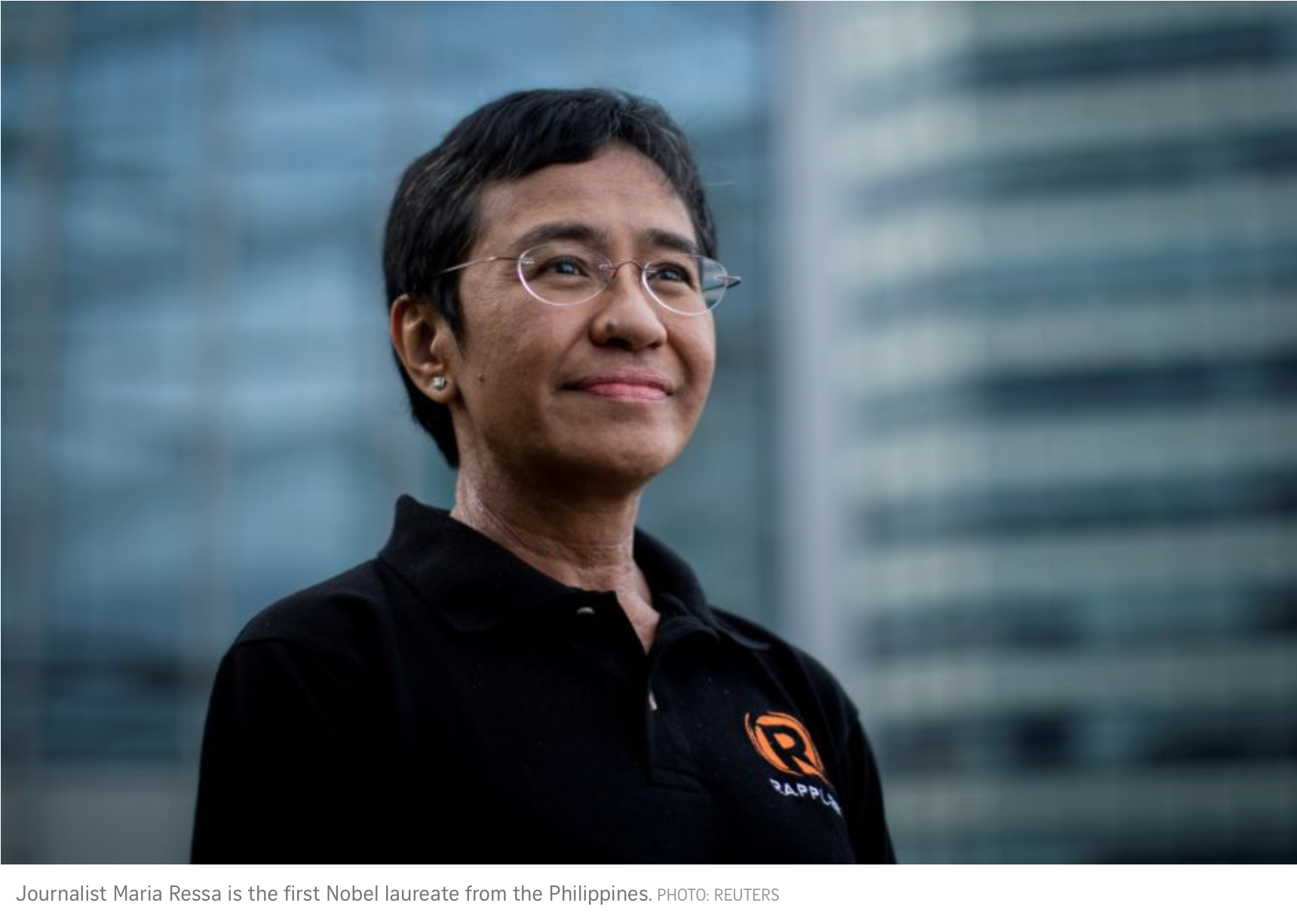
Maria Ressa of the Philippines and Dmitry Muratov of Russia were announced as winners today by the chair of the Norwegian Nobel Committee, Berit Reiss-Andersen.

The prestigious award comes with a gold medal and approximately £830,000.

The Norwegian Nobel Committee hailed the pair for their fight for freedom of expression, saying it is vital in promoting future peace.

Berit Reiss-Andersen said: “Free, independent and fact-based journalism serves to protect against abuse of power, lies and war propaganda.

“Without freedom of expression and freedom of the press, it will be difficult to successfully promote fraternity between nations, disarmament and a better world order to succeed in our time.”

Ms Ressa co-founded Rappler back in 2012, a news website aiming to shine a light on President Rodrigo Duterte regime’s “controversial, murderous anti-drug campaign”, according to the Nobel committee.

The site also documented “how social media is being used to spread fake news, harass opponents and manipulate public discourse”.

Speaking to a Norgrgian TV channel, Ms Ressa said that “the government of the Philippines will obviously not be happy”.

“I’m a little shocked. It’s really emotional.

“But I am happy on behalf of my team and would like to thank the Nobel committee for recognising what we are going through.”

In 1993, Mr Muratov was one of the founders of the independent newspaper Novaya Gazeta.

“Novaya Gazeta is the most independent newspaper in Russia today, with a fundamentally critical attitude towards power,” the committee said.

“The newspaper’s fact-based journalism and professional integrity have made it an important source of information on censurable aspects of Russian society rarely mentioned by other media.”

The Nobel committee said since the launch of Novaya Gazeta, six of its journalists have been killed, including Anna Politkovskaya, who has been covering Russia’s bloody conflict in Chechnya.

a Kremlin spokesman hailed Mr Muratov as a “talented and brave” person.

“We can congratulate Dmitry Muratov – he has consistently worked in accordance with his ideals.”

Ms Reiss-Andersen added: “Conveying fake news and information that is propaganda and untrue is also a violation of freedom of expression, and all freedom of expression has its limitations. That is also a very important factor in this debate.”

October 8, 2021 0 comments
0 FacebookTwitterPinterestEmail
Environment

Wood secures contract for Norwegian blue ammonia project

by Nadarajah Sethurupan October 7, 2021
written by Nadarajah Sethurupan

UK engineering and consultancy firm Wood has entered into a framework agreement with Horisont Energi to support the Norwegian carbontech start-up in maturing its projects within clean ammonia and hydrogen.

Horisont Energi recently announced a cooperation agreement with Equinor and Vår Energi on the joint development of the Barents Blue project, Europe’s first large-scale production facility for blue ammonia. Wood will play an important role in supporting the project with engineering and other services.

“As Horisont Energi and our partners aim to build Europe’s first world-scale clean ammonia project with offshore CO2 storage, it is essential to establish long-term relationships with the strongest partners in the industry. Wood has unrivaled experience from complex energy-related projects worldwide,” said Bjørgulf Haukelidsæter Eidesen, CEO of Horisont Energi.

Barents Blue is Horisont Energi’s first project. Located in Finnmark in Northern Norway and based on natural gas from the Barents Sea, the project includes a clean ammonia plant and storage of CO2 from the production process below the seabed.

October 7, 2021 0 comments
0 FacebookTwitterPinterestEmail
Terrorist

US Official Calls For Action By Pakistan On Islamic Extremist Groups Ahead Of Visit

by Nadarajah Sethurupan October 2, 2021
written by Nadarajah Sethurupan

Ahead of the visit to Islamabad, a top U.S. official asked Pakistan to take action against all extremist groups. Deputy Secretary of State Wendy Sherman will meet on October 7-8 with officials in Pakistan, which has long faced US accusations of playing a double game in Afghanistan where the Taliban swept back to power in August.

“We seek a strong partnership with Pakistan on counterterrorism and we expect sustained action against all terrorist groups without distinction,” Sherman told reporters over the phone.

“Both of our countries have suffered terribly from the scourge of terrorism and we look forward to cooperative efforts to eliminate all regional and global terrorist threats,” she said from Switzerland, her first stop on a trip that will also take her to India and Uzbekistan.

Below is a full rush transcript of the press conference by Special Briefing via Telephone with Wendy Sherman Deputy Secretary, U.S. Department of State.

Deputy Secretary Sherman:  Thanks very much. 

I just concluded three days of engagements here in Switzerland, first in Geneva, where I led a U.S. interagency delegation to the Strategic Stability Dialogue with Russia, and then in Bern, where I was pleased to inaugurate the U.S.-Switzerland Strategic Partnership Dialogue with State Secretary Livia Leu.  

With thanks to the Swiss Government, earlier this year President Biden and President Putin met in Geneva and agreed to embark on an integrated, deliberate, and robust Strategic Stability Dialogue between the United States and Russia.  This week was our second plenary meeting held in Geneva.  The two delegations had a substantive conversation and we were able to announce in a joint statement that we are forming two interagency expert working groups: a Working Group on Principles and Objectives for Future Arms Control, and a Working Group on Capabilities and Actions with Strategic Effects.  These expert working groups will be able to dig into the details on a wide range of issues of importance to the two delegations ahead of our next plenary meeting.

The Strategic Stability Dialogue also demonstrates how the United States is committed to engagement, even with those countries, like Russia, with whom we have very serious disagreements.  Despite our differences, the United States and Russia both recognize that it is the responsibility of great powers to come together and to try to solve problems where we can, and that is what we are doing with the Strategic Stability Dialogue.

As I said, following the SSD I traveled to Bern, where I was honored to inaugurate the U.S.-Switzerland Strategic Partnership Dialogue.  The relationship between the United States and Switzerland is based on a strong foundation of common democratic values, a shared respect for the rule of law, our commitment to upholding human rights, and robust trade, commercial, and people-to-people ties.  State Secretary Leu and I had a productive discussion on issues that are important to our relationship, including trade, cybersecurity, and the climate crisis, and we also spoke about global geopolitical issues where we have shared interests, including Afghanistan, Iran, Russia, and the People’s Republic of China.

We are grateful for Switzerland’s partnership as we work together to ensure continued safe access to Afghanistan and the Afghan people for humanitarian aid and humanitarian aid workers.  The United Nations has warned that 1 million Afghan children are at risk of starvation due to the political chaos and economic crisis in Afghanistan.  We are very glad that more than $1 billion in humanitarian assistance pledges were made at a UN conference in Geneva in September, including a Swiss pledge of 60 million Swiss francs over the next 16 months.  We’re also working closely with Switzerland to press the Taliban to live up to their commitments on counterterrorism, on ensuring safe and orderly travel for Afghans and foreign nationals, and on respecting human rights, including the rights of women and children.  It is critical that we speak with one voice on these issues, and we welcome Switzerland’s continued leadership [inaudible].   

On Iran, the United States deeply values Switzerland for acting as our protecting power in that country.  Switzerland has played a central role in working to obtain the release of wrongfully detained U.S. citizens in Iran for 40 years – work that continues to this day.  And Switzerland is also a critical partner to the United States as we remain committed to the path of meaningful diplomacy to achieve a mutual return to compliance of the Joint Comprehensive Plan of Action.  

Finally, of course, we discussed the People’s Republic of China and how, as democracies and as strong believers in the importance of a transparent, rules-based international order to enable peace and prosperity around the world, the United States and Switzerland must work together with our allies and partners to uphold our values and principles, including around human rights.

Following the Strategic Partnership Dialogue, I was pleased to be able to pay a courtesy call to Foreign Minister Cassis and to thank him for Switzerland’s leadership in promoting dialogue and diplomacy on all of these pressing global issues.  Today’s conversations reaffirm the strong bilateral cooperation between the United States and Switzerland, and I am glad to say that both countries are committed to seeing dialogue – such dialogues happen more regularly and to continue to work together on shared priorities.

I want to briefly highlight one of those priorities, and that is the urgent need to build back better from the COVID-19 pandemic, in our countries and around the world, making sure we have a well-educated, highly skilled workforce.  A workforce ready to perform the jobs of the 21st century is absolutely key to building back better.  I just came to this call from a terrific roundtable discussion with Swiss State Secretary for Education, Research, and Innovation Martina Hirayama and representatives from several Swiss companies that operate apprenticeship programs in the United States.  The United States has many successful, high-quality apprenticeship programs in the building and construction trades, but the Swiss model shows how young people can learn while they earn in a much broader range of industries, including healthcare, IT, and financial services.  The U.S. and Switzerland signed an MOU on apprenticeships in 2015, and I am pleased to say our governments are making good progress right now on updating that MOU.  Expanding high-quality and registered apprenticeships in more industries and for more Americans is a priority for President Biden because investing in our nation’s young people will make the United States stronger at home and abroad.

Finally, while we did not discuss our defense ties today, I do want to take the opportunity to note our appreciation for the Federal Council’s selection of the F-35 and Patriot systems to modernize Swiss air defense and Swiss security.  With these selections, Switzerland will join the large and experienced consortium of nations in Europe and around the world who recognize the superior quality and value of these systems, and we will build on more than a half century of cooperation in support of Switzerland’s sovereign security.

Question:  I have a question about the U.S.-Russia Strategic Dialogue.  What have you been able to achieve in Geneva yesterday, and what actually the Strategic Dialogue will include in the future in terms of will it include cybersecurity, space, and artificial intelligence as well as new weapons? 

Deputy Secretary Sherman:  The dialogue covers the full range of issues.  Both Russia and the United States are able to put on the table whatever they wish to discuss in a broad area that includes more traditional arms control, conventional weapons, new kinds of weaponry, artificial intelligence, cyberspace, though there are cyber discussions that happen in other channels as well.  Really, everything you can imagine in this broad arena of arms control capabilities, principles, and strategic effects of weapons.  

Arms control dialogues take a very long time.  It’s highly technical.  I come to these dialogues with a very robust interagency team.  I guess it’s close to 20 or 30 people.  They – as do the Russians.  We have people from the Pentagon, from the Department of Energy, from the Joint Staff, from the State Department, and from all parts of the State Department, from the White House.  And the Russian delegation likewise is quite diverse and representing the full range of interests in the Russian Government.

So we have very robust and detailed discussions, and we are very glad that we were able to issue this joint statement announcing two working groups that can begin to do – dig in and do some of the work that is needed.

The dialogue has a value in and of itself because it unveils norms that we both believe in and want to establish as the two largest powers that have nuclear weapons, and the largest number of nuclear weapons.  So it’s very good in and of itself, but we all hope that we head to achieving some objectives about moving forward.  Our presidents in their statement when they met talked about laying the groundwork for the future of New START as one example, and so that is on the table as well.  

Question:  What are sort of the reasons for the partnership with Switzerland?  Are you looking for more responsibility from European states on security issues, since the U.S. is focused on Asia?

Deputy Secretary Sherman:  Well, the U.S., first of all, is focused on the world because we have relationships all over the world, in every hemisphere, on every continent.  It’s quite critical, and our relationship and our U.S.-Swiss partnership is really longstanding and we want to continue to build on the success of that longstanding partnership towards global prosperity and stability.  We have common values.  We share rigorous economic links and we see the world in the same way while respecting each other’s governments and governing models, which are somewhat different.  

We also deeply value Switzerland’s role as our protecting power in Iran, appreciate Switzerland hosting the U.S.-Russia summit in Geneva and the subsequent discussions that are following on in Geneva.  We seek to deepen our strategic partnership to promote democracy and human rights, advance investment opportunities in infrastructure in clean technology – Switzerland was the first country to do a commitment towards climate – enhance, expand apprenticeships for American workers, further strengthen our cooperation in cyber defense, and as I said, partner together as we head to COP26 with Switzerland truly understanding how critical it is to address climate change.  

Question:  You said it’s a goal to strengthen the relationship with Switzerland.  At the same time, the U.S. still doesn’t have an ambassador to Bern.  Why has Scott Miller not yet been confirmed?

Deputy Secretary Sherman:  Oh, you are asking a $60 million question.  We have a very complex system in the United States where people are identified to go to a country through a very complex process.  If you’re a career Foreign Service officer, you go through a D Committee, which I chair, which takes some time.  Then your background is looked at very carefully.  Then you have a hearing in front of the United States Senate.  You have to get voted out of the committee, then you have to get voted on the floor of the United States Senate, where any senator can actually put a hold on you for a while and then it takes time to get floor time for a vote.  

I know I’m telling you details that don’t matter to anyone except the people going through it, and so it can be a very long process, and over the years it’s become a longer and longer process.  So Switzerland is not being singled out.  We have a structural issue to get people nominated, through the Senate Foreign Relations Committee, and confirmed, and we have a couple of senators right now that have put a hold on our nominees, so it takes more floor time to get them confirmed.  We just got a few more people confirmed and I hope that we soon can move through those who have been nominated to be ambassadors all over the world.  It’s quite critical.  We’re very lucky to have a very competent and capable chargé d’affaires here, so I don’t think that Switzerland is missing a beat in its relationship with the United States while Switzerland awaits the confirmed ambassador.  We’re going to make it happen as soon as we possibly can. 

Question:  I wanted to ask about the upcoming parts of the trip – Uzbekistan, India, and Pakistan if I’m correct.  I’m wondering in Pakistan what you would look for in terms of Pakistan’s relationship to the Taliban and Afghanistan; in Uzbekistan, whether there’s room for any cooperation in terms of military cooperation or using air bases; and then in India, what would be the goal or the main focus, I guess, for your time in New Delhi? 

Deputy Secretary Sherman:  Thanks.  I’m going to start backwards.  We have an incredibly strong relationship with India.  As you know, the President just hosted the Quad leaders meeting in Washington and had a bilateral with Prime Minister Modi.  We – India is a very profound democracy that really is a center for a lot of innovation, development, and change, and we partner very strongly with India as an essential democracy that shares our values, where we have a strong trade relationship, defense relationship, values relationship.  So that will be a trip that will be both in New Delhi and in Mumbai with official meetings as well as meetings with civil society, the business community, and really deepen what is an essential relationship not only in Asia but worldwide.  

I’m starting from Bern to go to Tashkent, Uzbekistan.  Uzbekistan is a highly valued strategic partner with whom we’re collaborating in a number of key areas, including regional security, climate change, economic connectivity, and human rights.  We welcome Uzbekistan’s leadership on Afghanistan.  We support the Government of Uzbekistan’s reform agenda, and they’ve made just tremendous progress.  In December 2020, Uzbekistan was removed from the Special Watch List for governments that engaged in or tolerated severe violations of religious freedom because Uzbekistan has made significant and concrete progress, and we want to affirm that progress as we move to salute countries that are democracies or trying to move towards more democratic reform.  You know that the President will be holding a Summit for Democracy to raise up the values and the processes we need to make sure that people can live lives of prosperity and freedom.  Our relationship with Uzbekistan is a 30-year-old bilateral relationship, and I look forward to my meetings there.   

In Pakistan, we’ve always viewed Pakistan as – a strong, prosperous, and democratic Pakistan as critical to U.S. interests.  We welcome Pakistan’s calls for the Taliban to form an inclusive government and for the Taliban to uphold their commitments.  We remain ready to work with Pakistan to meet its stated commitments to combat militant and terrorist groups without distinction.  We support strengthening the economic ties between our countries and to improve access to energy, grow our agricultural trade, and address some longstanding challenges that stand in the way of expanding commerce.

So we have – these are three countries that matter a great deal regionally and, certainly in the case of India, to the world.  We want to deepen our relationships and really urge on democratic reforms that will bring greater prosperity to the people in countries as well as greater prosperity to the world.  

Question:  Madam Secretary.  Both the Russians and the French are talking about useful it would be to convene a P5 summit meeting.  The French are specifically calling for discussing key arms control and collective security issues in this format.  Is this something that the United States would like to do?  Are you ready to take part in such a summit meeting?  

And unrelated to strategic stability, if I may, when can we expect to see at least some normalization of U.S. visa issuance to Russia’s nationals?  As a result of pandemic restrictions and this visa war playing out between the two nations, virtually all of Russia’s citizens have now practically lost the ability to travel to the U.S., I think.  It’s just impacting people-to-people ties.  Does the U.S. intend to do something about this?

Deputy Secretary Sherman:  So, first of all, starting in November people can travel to the United States if they are vaccinated.  So the way that people will be able to travel will change starting in November.  Yes, there are visa issues that are being discussed between our two countries, but I believe there is a commitment by both of our countries to resolve those issues as soon as we possibly can.  

As for the P5 meeting, there was actually a P5 meeting at the UN General Assembly High-Level Week at the ministerial level.  So Secretary Blinken was engaged in that P5 meeting, and I think we find such discussions at appropriate times very valuable. 

Question:  When will the remainder of evacuees from Afghanistan be transferred to the U.S. from overseas military sites such as Ramstein Air Force Base?  Is capacity at installations in the U.S. an issue or is this mainly an issue of CDC guidance on measles and COVID?

Deputy Secretary Sherman:  Well, as everyone knows, helping people leave Afghanistan in the wake of the Taliban takeover was a very difficult process.  Working together, including with Germany and Switzerland and many, many, many countries, including all of the ones that we’ve talked about today so far, in the space of about 17 days 124,000 people were able to travel safely out of Afghanistan.  That work goes on.  Countries are continuing to ensure that there’s safe and orderly travel outside of Afghanistan, certainly in the case of America, where American citizens are concerned, legally permanent – LPRs, legal permanent residents, SIVs, those with special visas, as well as Afghans at risk.  And Germany has done likewise to help its nationals.  

Among the many challenges that the international community has faced, one that we did not anticipate was measles, and there was a measles outbreak and so public health authorities decided that it was critical that everyone at these transit hubs, including at Ramstein, get vaccinated for measles to protect them and to make sure that we didn’t have an epidemic.  And public health officials also decided they needed to stay for a few days to make sure that that vaccination took hold and they would be safe and their families would be safe and the people they were traveling with would be safe.  So as soon as that time period is up, people will be moving out and some already are.  I am – the United States is incredibly grateful to Germany for hosting so many people who have left Afghanistan and really providing extraordinary support.  So we’re very grateful and very sorry that measles slowed down the process of putting Ramstein back into regular order.  It will happen soon.

Question: I wanted to ask a little bit more about the Pakistan stop that’s coming up.  As you know, Prime Minister Khan has made a series of statements in recent days saying essentially that Pakistan has been falsely blamed for the Taliban taking over and for its policies in Afghanistan.  I wanted to see if that’s a conversation you’re eager to have in Pakistan if you see that as being part of the discussions, and his calls, the Pakistani Government’s calls for negotiations or for engagement with the Taliban and with militants at home – is that something that the U.S. supports?  What else could be asked potentially of Pakistan? 

Deputy Secretary Sherman:  Sure.  Pakistan has a lot to gain from a peaceful and stable Afghanistan.  Therefore it’s vital that Pakistan continues taking constructive steps towards that goal.  What we seek is a solid partnership with Pakistan on counterterrorism, and we expect sustained action against all militant and terrorist groups without distinction.  Both of our countries have suffered terribly from the scourge of terrorism, and we look forward to cooperative efforts to eliminate all regional and global terrorist threats.  

As we all have said, we’ve been in regular touch with the Pakistani leadership and we’ve discussed Afghanistan in detail.  Pakistan took part in a ministerial in September and we’ll continue to engage in Islamabad, as I will do on this trip.  Secretary Blinken also met with Foreign Minister Qureshi on the – on September 23rd on the sidelines of the UN General Assembly High-Level Week, and they discussed the way forward in Afghanistan and the importance of coordinating our diplomatic engagement and facilitating the departure of those wishing to leave Afghanistan.  We are glad that Pakistan frequently and publicly calls for an inclusive government with broad support in Afghanistan, and we look to Pakistan to play a critical role in enabling that outcome.

Question:  The question I have is concerning the strategic dialogue.  Do you foresee any possibility to have a strategic dialogue as well with China in the future despite all the problems the U.S. has actually with China?  

Deputy Secretary Sherman:  The term of strategic dialogue with China.  I do see engagement with China.  As I think you know, I myself was asked by the Secretary to go to Tianjin to meet with State Councilor and Foreign Minister Wang Yi and with Vice Minister Xie Feng.  I met with China’s, PRC’s ambassador to Washington.  We know that President Biden recently had a call with President Xi, and in that call discussed how they might have further discussions.  

We have said repeatedly that our relationship with the PRC is a complex one.  We will compete vigorously for the prosperity of our people in the years ahead, and we want to do so on a level playing field, and we will point out along with our allies and partners when the PRC is not playing on a level playing field.  It was exactly that level playing field that helped enable them to become the country they are today and to become a more prosperous country.  We had discussions here in Switzerland about China and the Swiss have put out a Chinese – a strategy towards the PRC that certainly wants to have a positive relationship, but at the same time understands that economic coercion is not acceptable in the international community, that abandonment of human rights is not something that is acceptable in the international community. 

So we seek vigorous competition, but on a level playing field.  We will challenge the PRC when we must and we will look for areas of cooperation where we can find it.  In fact, when I was in Tianjin, I was then on my way to the first Strategic Stability Dialogue in Geneva with Russia, and I said to my Chinese interlocutors we disagree, Russia and we, on many, many, many things, and yet here we are cooperating to try to ensure that the two largest nuclear powers in the world make sure that the world stays safe.  So we ought to be able to find those areas where we can cooperate together.

So there is a long road here, but engagement is certainly part of it.

Question:  I have a question on Russia-Turkey.  Mr. Erdogan just returned to Ankara from Sochi.  He said that he is going to buy a new set of S-400s, warplanes, submarines, and build with Russia two more nuclear power plants.  I think he acts and reacts like an enemy of the United States.  I don’t think that he considers himself as an ally of the United States, but a friend to Russia and Iran.  Can you tell us, please, one reason why the State Department thinks that this guy is an ally of America? 

Deputy Secretary Sherman:  Let’s start with the basics here.  Turkey is a NATO ally.  They are a valuable member of NATO.  NATO is a security organization that has helped keep Europe and the world safe, and indeed, NATO’s very famous Article 5, which says an attack on one is an attack on all, has been invoked only once, and that was after 9/11 for NATO to go into Afghanistan with the United States and with everyone else.  

We know that President Erdogan said that they might consider and have the right to consider any weapons system, including the S-400.  This is an ongoing issue.  We urge – we’ve urged Turkey at every level and opportunity not to retain the S-400 system and refrain from purchasing any additional Russian military equipment.  We continue to make that clear to Turkey and what the consequences will be if they move in that direction.  We believe as a NATO [inaudible] that such systems are not compatible or operable with NATO systems.  

Turkey is a challenge sometimes.  I’m sure they find the United States a challenge at times.  But they are a valued NATO ally.  They are also a host to millions of Syrian refugees.  They have built a robust economy.  When it came to the Kabul airport, to ensure that people could leave, Turkey helped to stand up the airport.  And yes, they have complex relationships with lots of countries, as do we.  And we are – we don’t hesitate to call out countries when we think, whether it’s human rights [inaudible] what choices they make when we believe that they’re not in our interests or the interests of the world.  But we also call out countries for the value they bring to their relationship with us and with the world, and Turkey is a valued NATO partner and we look forward to continuing to build that relationship with all of its complexity and sometimes its challenges.  

Deputy Secretary Sherman:  Just thank you all for joining today.  Part of what’s important about the State Department and all of my interagency colleagues is that we work together as a team.  One of the things about the Biden-Harris administration that is really super – and this is the third president for whom I’ve worked, and the fourth or fifth secretary of state; I don’t remember – is that this is really a team.  Throughout the government, whatever challenge is in front of us, we work together to try to solve it, bring prosperity and security and freedom to the American people, and to work as we have over the last three days with our Swiss partners to work together to bring the best for the most people all over the world.

So thank you very much.  And I am headed off tomorrow to Tashkent for the challenging trip that you all have asked about today, and I look forward to talking to you again sometime.  Thank you.

October 2, 2021 0 comments
0 FacebookTwitterPinterestEmail
Africa and Norway

Global energy firm plans big solar plant in Jamaica

by Nadarajah Sethurupan September 30, 2021
written by Nadarajah Sethurupan

Europe-based global clean energy firm MPC Energy Solutions, which is listed on the Oslo Stock Exchange in Norway, is reporting that it has leased several acres of land in Jamaica as part of a major project to develop a 72.5-megawatt, MW, solar power plant here. MPC Energy focuses on sustainable energy infrastructure and runs green energy investments in Colombia, where it has six projects, Puerto Rico and El Salvador.

A successful buildout of the planned investment would result in it being the single largest solar plant in Jamaica.

Currently, the Eight Rivers solar project, in which the MPC Energy Solution-related MPC Capital of Germany holds a stake of more than 30 per cent, generates between 35MW to 51MW of energy at Paradise Park in Westmoreland. That solar project, the largest in the country, was founded and developed by Rekamnair Limited, held by Jamaican Angella Rainford and French energy company Neoen, which owns some 50 per cent.

Last month, power producer and sole electricity distributor Jamaica Public Service indicated that it would consider building three solar plants with a combined capacity of 100MW. 

File MPC Capital’s San Isidro Solar Park energy project in El Salvador, which was funded in the amount of US$7.8 million by Caribbean Clean Energy Fund and completed in Decenber 2020

“The company entered into a land lease agreement for the purpose of developing a 72.5MW solar power project in Jamaica,” MPC Energy Solutions said in its latest second-quarter 2021 update to global investors via disclosure on the Norwegian stock market.

The company said it acquired the lease in March this year and the proposed site is on 220 acres of land, which has been leased for 25 years. Company officials are yet to respond to Financial Gleaner requests for more details, but its website lists the planned project in Jamaica as ‘Acacia’.

“Given that the project is in the development phase, the lease agreement contains termination options so that the fixed commitments amount to approximately US$20,000,” the company said of the lease, which equates to roughly $3 million. 

MPC Energy Solutions, listed in Europe, and MPC Caribbean Clean Energy, listed on regional exchanges in Jamaica and Trinidad, are separate entities, but both were established and sponsored by MPC Capital, based in Germany. MPC Capital owns directly, and indirectly, approximately 15 per cent of MPC Caribbean and 20 per cent of MPC Energy Solutions, company officials disclosed to the Financial Gleaner earlier this year. 

MPC Energy Solutions develops, builds and operates renewable power plants, while MPC Clean Energy acts as a feeder vehicle for a fund that invests in already-constructed and operational solar PV and wind assets in the Caribbean.

Both companies may co-invest in the same projects if the investments meet their separate investment criteria, a communications agent for the companies told the Financial Gleaner in June this year about their general investment strategies.

MPC Energy Solutions management’s market disclosure contemplates that a solar project of the size under consideration, would place the company is a position to be the potential preferred bidder in any government request for proposals to supply renewable energy to the national grid. 

Martin Vogt, chief executive officer of MPC Energy Solutions, indicated in the late-August investor transcript, however, that there was no expectation of any such requests for proposal any time soon. The COVID-19 pandemic, he analysed, would be likely to delay the issuing of requests for proposals. He told global shareholders that governments in Latin America and the Caribbean have been focused instead on public health, education and food security, rather than energy permits, licences and authorisations at this time.

“So, it is not a real surprise that some of the public tenders and request for proposal processes, for instance in Jamaica, but also for the project in The Bahamas that we would have expected to be completed in 2021, we now really only see happening in 2022. That’s why we have reprioritized these projects,” Vogt stated.

MPC Energy Solutions, while incorporated in the Netherlands, was listed on the Oslo Stock Exchange in January 2021. At June, the company’s total assets equated to US$85 million, with total equity at roughly the same figure, or US$84.3 million, due to relatively low liabilities.

MPC Clean Energy holds total assets of US$29.7 million and equity of US$19.5 million at June 2021.

September 30, 2021 0 comments
0 FacebookTwitterPinterestEmail
NATO and Norway

Is NATO good for Asia or is Asia good for NATO?

by Nadarajah Sethurupan September 29, 2021
written by Nadarajah Sethurupan

Over the past six months or so, I’ve gotten a lot of pings about NATO and the “Big 3” (UK, France, and Germany) taking on a role in Asia – specifically, a bigger military presence in the region. The issue has come up a few times on my podcast. I got an early preview of a book about a closely related question by a European scholar. I’ve had EU parliamentary staffers reach out to me about this. And I gave an interview to a lefty newspaper in Norway that was trying to make sense of NATO’s approach to China/Asia/Indo-Pacific. It keeps coming up.

Then, of course, the big Australia-US-UK (AUKUS) trilateral defense cooperation announcement dropped on September 15 — which made the media lose their minds with embarrassing proclamations — in the process creating a rift between France/EU and AUKUS that complicates the larger NATO calculation.

I think I’ve commented slightly differently in every interaction I’ve had about this topic, so I thought I’d try to set down something logically consistent below.

Asian presence: pros

  • Multilateralizing US power: One upshot of European defense engagement in Asia is that it enmeshes America’s regional posture in webs of democratic multilateralism. The U.S. brand of liberal internationalism is prone to cowboy cosplay, often with tragic consequences. Multilateralism is no guarantee against reckless US judgment, but the more America’s friends can bridle its unilateralist impulse, the better off we’ll all be. Yes, America has the “Quad” as a multilateral thing organic to Asia, but let’s be honest — India’s claim to democracy at the moment is thin (not throwing stones!) and Australia and Japan … well, they haven’t exactly encouraged American military restraint. Much the opposite, in fact. And yes, the United States now has AUKUS too, but as of now it’s just an intelligence- and technology-sharing thing.
  • Post-unipolar burden-sharing: European presence is also welcomed for its peacetime burden-sharing. This is desperately needed. American officials have long complained about allies not spending enough or contributing enough toward burden-sharing (I’ve written those talking points) … but it was always in a context where the United States had no intention of disentangling from its security commitment. That world is gone. We’re way past the point of the United States being able or willing to carry the burden for regional stability alone. I’d go so far as to say that, contra the unipolar moment, relying too much on the United States will actually destabilize Asia in the next few years. US global commitments are internally contested as part of US politics in a way that they didn’t used to be. And even beyond legitimate contestation over policy differences, our politics are too demonstrably volatile now to entrust that the United States will deliver on being “the security provider of choice” around the world indefinitely. Worst of all, we need a reckoning with how allowing one state to accrue so much overwhelming power helped poison American society with a militarism that – in a perverse way – ultimately gave us not just Trump’s strong man politics, but also the Capitol insurrection itself. In light of all these reasons for pricing in expectations of high American volatility, NATO in Asia could be the offset. Sure, you can count on Biden to keep the ship steady. Probably. But military balancing games transcend individual presidencies. Such decisions must be driven by trends. And the trend that matters more than any other is the trend of growing US strategic insolvency.
  • Makes China more than just a US roblem. The other boon from military involvement of NATO/”Big 3″ in Asia is its potential to dilute the dyadic rivalry quality to the current pattern of Sino-US competition. To the extent China is a problem, it’s a problem that should not fall to the United States to manage on its own. And the more outside powers can be involved, the more room Asia’s smaller states will have to maneuver without locking into a Cold War-like binary of “us” and “them.” If we want to have any legitimate standing in Asia, we need to make sure smaller states have options.

Reasons for skepticism

  • Trivial to the balance of power. It’s no secret that the preponderance of NATO’s hardware capability is America’s capability. Given that China has been on a naval modernization binge, the NATO/”Big 3″ contribution to the regional correlation of forces will be … not decisive. I’m not throwing shade at NATO capabilities, but all that counter-insurgency prowess built up from the War on Terror doesn’t stretch very far in a high-end conflict. The US military shortfall in a real fight with China is primarily an issue of positioning and secondarily an issue of missile inventory (China’s got too many, and a lot of smaller-class ships to target). If you think about the hard problems for US forces, like Chinese air superiority over Taiwan, it’s usually an imposition of geography that no amount of ally capability will rectify. And when we think about where France in particular might park its military presence, it’s probably the Pacific side of the Indo-Pacific, where the United States already enjoys untrammeled primacy and China has … zero bases. Don’t get me wrong, in a fight, the more the merrier. But the difference NATO makes in the balance of power is marginal.
  • Looks very white man’s burden-y. Like AUKUS, the “Big 3” showing up to take on China has a civilizational hue to it. I’m not saying racism is motivating NATO interests in Asia per se, but it doesn’t look good. For some, the whiteness of the coalition is at the heart of the problem. For policy wonks, the subtle racial dimension is a blind spot; something to which they pay no heed. But for people who care about history, Europe doesn’t have a good track record in Asia.
  • Red gets a vote. By NATO’s own proclamation, its interest in the broader Indo-Pacific is all about supporting the “rules-based order.” I get it. But why is defending the principle of freedom of navigation the only way that the West ever seems to be able to manifest its interest in a rules-based order? More broadly, you have to ask how further militarizing the region actually advances any kind of measurable goal, especially because China will adapt to whatever Europe brings to the region and grow both its capabilities and regional presence based on what its perceived enemies do. That’s why the People’s Liberation Army (PLA) has had a semi-worrying growth spurt in the first place – they’re trying to catch up to the United States. This is obvious. It’s the security dilemma in action. But it’s also the truest thing that we ignore, and we do so at our peril.
  • Distracts from the EU-military question. As long as NATO is gainfully employed worrying about Asia, there will be plenty of incentives to dodge the real question about the future of an EU defense force. America is simply too volatile to be the centerpiece of European security indefinitely, and there’s no shortage of organic interest in an EU military. But that difficult conversation is too easily thwarted by the immediate focus on China. And conversely, if NATO didn’t have a play in Asia, it would heighten the urgency of actually moving toward a European defense force.

So does a European presence makes sense in Asia?  Lots of pros, lots of cons.  How you weigh these different factors will depend on what kind of baggage you bring to the issue. Given the row with France, the EU and AUKUS will not be a single strategic entity. That may well tip the scales toward the negative.

For me, there’s just no winning here if there’s no plausible strategy. What I see is an impulse toward Asia rather than a clear wager explaining how a military presence would help realize goals of whatever kind – and yet there are upsides. So while I wouldn’t die on a hill opposing Europe’s military re-entry into Asia, the fact that it’s a mixed-bag proposition means that it’s hard to cheerlead for.

Van Jackson is a professor of international relations at Victoria University of Wellington in New Zealand, and a think tanker at variousplaces around the world: a distinguished fellow at the Asia Pacific Foundation of Canada; an adjunct senior fellow at the Center for a New American Security; a senior associate fellow at the Asia-Pacific Leadership Network for Nuclear Nonproliferation & Disarmament (APLN); and the defense & strategy fellow at the Centre for Strategic Studies in New Zealand. He also hosts The Un-Diplomatic Podcast. This article was first published by the Duck of Minerva.

September 29, 2021 0 comments
0 FacebookTwitterPinterestEmail
Peace Talks

Venezuelan Government and Opposition Begin New Dialogue

by Nadarajah Sethurupan September 28, 2021
written by Nadarajah Sethurupan

The Venezuelan negotiating team also includes diplomat Alex Saab, who remains detained in Cape Verde pending his extradition to the United States.

From Sept. 24 to 27, the Venezuelan government and the opposition will carry out a third round of talks in Mexico City with the mediation of Norway.

The head of the Bolivarian government delegation, Jorge Rodriguez, announced that his country will again demand that the assets that Venezuela possesses abroad be returned immediately.

“We are in the presence of a flagrant theft of assets that only belong to Venezuelans,” he said, recalling that the return of those assets was one of the points agreed upon in the previous negotiation round.

Last week, Rodriguez announced that the Venezuelan negotiating team also includes diplomat Alex Saab, who remains detained in Cape Verde pending his extradition to the United States.

“They still keep him kidnapped in Cape Verde in an illegitimate, illegal, and inhumane way,” President Nicolas Maduro stressed on Thursday.

In the last two rounds of negotiations, the Venezuelan government and the opposition also agreed to defend Venezuela’s sovereignty over the Essequibo, to obtain financing for the acquisition of COVID-19 vaccines, and to implement social protection mechanisms for the Venezuelans.

The new dialogues take place amid a political campaign for the subnational elections on November 21, in which Venezuelans will elect governors and mayors. Unlike on previous occasions, the main opposition parties did not boycott the electoral process and decided to present their candidates as well.

September 28, 2021 0 comments
0 FacebookTwitterPinterestEmail
Asia and Norway

Iranian FM invites his Norwegian counterpart to visit Tehran

by Nadarajah Sethurupan September 27, 2021
written by Nadarajah Sethurupan

In the meeting with Norwegian FM Ine Marie Eriksen Søreide, Iranian FM Hossein Amir-Abdollahian noted that the priority of the new Iranian administration is to expand foreign economic and trade relations, stating that the Islamic Republic is interested in holding a political committee between the two countries at the level of political deputies of foreign ministers.

Amir-Abdollahian also underlined that Afghanistan would achieve peace and stability only through genuine inter-Afghan dialogue and the formation of an inclusive government. If no one helps to achieve this, there may be serious challenges in the future,” he added.

The Iranian Foreign Minister, on Friday, met his Norwegian counterpart on the sidelines of the UN General Assembly and invited her to visit Tehran.

The Iranian foreign minister pointed out that the Islamic Republic has used all its power to facilitate aid delivery to Afghanistan and announced its readiness to cooperate with Norway in this field.

Referring to the situation in Afghanistan, the Norwegian foreign minister announced her readiness for more regular consultations in this regard and said: “Developments in Afghanistan have far-reaching implications, both regionally and internationally.”

Ine Marie Eriksen Søreide also referred to the Joint Comprehensive Plan of Action (JCPOA) issue and stated that the agreement has a special place in international politics’ structure.

She expressed hope that the agreement would be revived.

September 27, 2021 0 comments
0 FacebookTwitterPinterestEmail
Africa and Norway

Norwegian Ambassador meets President Kiir and discussed bilateral relations

by Nadarajah Sethurupan September 26, 2021
written by Nadarajah Sethurupan

The Norwegian Ambassador to the Republic of South Sudan, Siv Kaspersen met with President Kiir to consolidate bilateral ties between South Sudan and Norway.

According to a statement released by the Presidential Press Unit, President Salva Kiir Mayardit met in his office yesterday, September 23, 2021, with the Norwegian Ambassador to discuss issues of bilateral relations between the two countries.

President Kiir acknowledged and applauded the unwavering and persistent support from the Norwegian Government .

Norwegian Ambassador Siv Kaspersen meets with South Sudan’s President Salva Kiir Mayardit at state house (J1) on 23rd of September 2021 (Photo Credit :Courtesy Image)

“Speaking to the media after the meeting, the Executive Director in the Office of the President Hon James Deng Wal said, H.E President Salva Kiir Mayardit told Ambassador Siv Kaspersen that he appreciates the support of Norwegian Government to South Sudan”,read the statement extended to Nyamilepedia.

President Salva Kiir extended his sincere condolences also to the people of Norway upon the untimely demise of ambassador Tom Eric who Kiir described as “a friend to the people of South Sudan who played a significant role in the Naivasha peace talks of 2005” which were hosted by Kenya.

Ambassador Kaspersen aired her concern over slow implementation of the Revitalized Peace accord and calling for a peaceful settlement over ongoing conflict in Tambura County.

“On her part, Ambassador Siv Kaspersen said, she expressed concern on the progress of the ongoing implementation of the Revitalized Peace Agreement and the recent clashes in Tambura County urging for an amicable solution to attain calm and normalcy in Tambura County”,the statement added.

The Norwegian Ambassador also stressed to President Salva Kiir the need for economic and security reforms in South Sudan as the only mean to avoid rampant insecurity across the country.

As member of TROIKA, a coalition of Norway, UK and US, and also on her own, Norway has stood by the South Sudanese and especially SPLM/A leadership since 1980s.

September 26, 2021 0 comments
0 FacebookTwitterPinterestEmail
Science

Healthcare students in Oslo gain digital access to real-life medical cases–first in Norway to use Sectra Education Portal

by Nadarajah Sethurupan September 22, 2021
written by Nadarajah Sethurupan

International medical imaging IT and cybersecurity company Sectra (STO: SECT B) has provided its medical teaching platform, Sectra Education Portal, to Oslo Metropolitan University (OsloMet). The digital and cloud-based solution will be the first of its kind in Norway, providing teachers and students with access to real-life medical cases to use in their training. This will help students become even better prepared for clinical working life.

“It feels great that we are up and running and can take advantage of all the benefits that come with this platform and the opportunity to collaborate with clinical practices and other educational institutions. Our radiography program is responsible for managing the planning and training related to the platform, even though it is being used across various disciplines,” says Kari Gerhardsen Vikestad, Program Director at the radiography program at OsloMet.

OsloMet is Norway’s third-largest university with some of the best-known programs of professional study in the country, including 6,100 students within different healthcare areas. With the implementation of Sectra Education Portal, these students now have access to a unique library of clinical cases and cutting-edge visualization tools to advance their clinical learning across a range of programs.

Sectra Education Portal is a cloud-based software-as-a-service solution that educational institutions can use to prepare lectures based on their own cases or on quality-assured clinical cases from the Sectra library. It also enables remote teaching and learning as preparations and lessons can be carried out online by the teachers, and students can study cases on their own computers, tablets or smartphones. When attending classes and studying on campus, teachers and students at OsloMet also have access to Sectra’s visualization table-a large touchscreen that enables interactive learning and facilitates group discussions.

“It is inspiring to see OsloMet lead the way as Norway’s first university to provide their students with our unique platform. By familiarizing students with medical images and the tools used in real-life clinical settings, they will have a shorter learning curve and be better prepared when they enter working life,” says Johan Carlegrim, President, Medical Education business unit at Sectra.

Since anatomy is a focus area at OsloMet, Sectra’s products will also be used to enable virtual dissections. This will allow students to gain an in-depth understanding of the body’s anatomy digitally, thereby reducing the need for real-life cadavers. In combination with an extensive anatomy atlas accessible through the visualization table and Sectra Education Portal, students at OsloMet will get a realistic learning experience and be able to learn about spatial relations by comparing 2D (multiplanar views) and 3D visualizations.

For more information about Sectra Education Portal, visit one of our upcoming events or read more about Sectra’s solutions for medical education.

About Sectra

Sectra assists hospitals throughout the world to enhance the efficiency of care, universities, and institutions to boost medical education, and authorities and defense forces in Europe to protect society’s most sensitive information. Thereby, Sectra contributes to a healthier and safer society. The company was founded in 1978, has its head office in Linköping, Sweden, with direct sales in 19 countries, and operates through partners worldwide. Sales in the 2020/2021 fiscal year totaled SEK 1,632 million. The Sectra share is quoted on the Nasdaq Stockholm exchange. For more information, visit Sectra’s website.

For further information, please contact:

Dr. Torbjörn Kronander, President and CEO, Sectra AB

September 22, 2021 0 comments
0 FacebookTwitterPinterestEmail
Media Freedom

Two Kurds elected to Norwegian parliament

by Nadarajah Sethurupan September 21, 2021
written by Nadarajah Sethurupan

Two Kurdish candidates have won seats in the Sept. 13 Norwegian parliamentary elections according to preliminary election results.

One of the winning candidates is Mani Huseyni (33), a member of the winning Labour party, who is originally from the city of Qamishlo in Syrian Kurdistan and moved to Norway 23 years ago.

Labour leader Jonas Gahr Store cheers after seeing the exit poll during the Labour’s election party following the 2021 Norwegian parliamentary elections, in Oslo, Norway, Sept. 13, 2021. (Photo: AP)

The other is Seher Aydin, a Kurd from Konya in central Turkey. Aydin is a member of the far-left Red Party which managed to pass the 4 percent threshold required to run in the elections. However, that party is not expected to form a part of the new left-wing led government.

Norway’s left-wing opposition, headed by Labour Party leader Jonas Gahr Store, won the general election on a campaign focusing on the future of Norway’s oil industry.

His election win unseated a center-right coalition headed by Conservative Prime Minister Erna Solberg since 2013. He is set to become the new prime minister after forming a government coalition with his Labour party, Socialist Left and the Centre party.

Aydar began her political life with the Norwegian Red Party. She was head of the party’s youth union in 2014-16.

Before becoming a member of the parliament, she had worked as an advisor to the country’s legislative house.

“The Kurdish cause is very important to me and my objective is to work for it,” she told Kurdistan 24.

September 21, 2021 0 comments
0 FacebookTwitterPinterestEmail
Africa and Norway

Troika countries condemn Sudan coup attempt as ‘threats to democratic transition’

by Nadarajah Sethurupan September 21, 2021
written by Nadarajah Sethurupan

The Troika countries, (United States, United Kingdom, and Norway) on Tuesday condemned alleged coup attempt in Sudan and expressed strong support for country’s transitional government and said they rejects any attempts to derail or disrupt the Sudanese people’s efforts to establish a democratic, peaceful, and prosperous future.

The Troika countries, (United States, United Kingdom, and Norway) on Tuesday condemned alleged coup attempt in Sudan and expressed strong support for country’s transitional government and said they rejects any attempts to derail or disrupt the Sudanese people’s efforts to establish a democratic, peaceful, and prosperous future.

“The civilian and military components – and indeed all political actors – should work together to prevent threats to the democratic transition, establish transitional institutions, and address tensions in the East and other regions,” said a statement released by Troika countries this afternoon.

Troika and EU diplomats speaking to state media following meeting with First Vice President Dr. Riek Machar Teny in Juba on Tuesday, May 11, 2021 [Photo via FVP’s office]

“Those who would seek to undermine the civilian-led transition should understand that Sudan’s international partners stand firmly behind the people of Sudan and their transitional government,” it added.

The Sudanese government said that people linked to the ousted President Omar al-Bashir were behind Tuesday’s failed coup attempt.

The current administration which involved the military, civilian representatives and protest groups was then established as part of a power-sharing agreement.

Reports suggest that up to 40 officers have been arrested in connection with an attempted coup in Sudan this morning.

A senior government official said the plotters attempted to take over the state broadcaster’s television buildings and the military general command.

Video on social media showing how armored vehicles on city streets and the AFP news agency reports that traffic now appears to be flowing smoothly in central Khartoum.

Sudan’s transitional government is under pressure to deliver economic and political reforms amid competing demands from conservative and liberal constituencies.

Two years ago, President Omar al-Bashir, the country’s long-term ruler, was toppled. A power-sharing agreement then established a government involving the military, civilian representatives, and protest groups.

September 21, 2021 0 comments
0 FacebookTwitterPinterestEmail
Environment

Magnora plans hydrogen-based marine fuel project in Norway

by Nadarajah Sethurupan September 18, 2021
written by Nadarajah Sethurupan

Norwegian renewable energy investor Magnora ASA (OSE:MGN) on Thursday announced plans for the development of a green maritime fuel project in the Tromso area in northern Norway.

The project will include large-scale production of green hydrogen and its conversion into green ammonia and/or liquid organic hydrogen carriers.

Magnora said it has signed a collaboration agreement with investment and asset manager Prime Capital and Troms Kraft, a publicly-owned power company in Tromso, to develop the project, which is currently in the feasibility phase. Final investment decision is targeted in late 2022 to mid-2023, and commercial operations by 2025.

The location is a main logistics hub and also has an excess of green electricity from hydropower and onshore wind, Magnora explained.

“With an existing electricity surplus from renewables, a large and innovative maritime and fisheries industry, and a competent industrial workforce, Tromso has all the right ingredients for success,” said Magnora executive chairman Torstein Sanness.

“On the short term we believe there is a significant potential for production of green fuels for local consumption, especially in the shipping and fishery industry, and in the longer-term Prime Capital clearly see the potential for national and international export from the region,” commented Prime Capital head of infrastructure Mathias Bimberg.

September 18, 2021 0 comments
0 FacebookTwitterPinterestEmail
Media Freedom

Norway turns left, elects Støre as new leader

by Nadarajah Sethurupan September 14, 2021
written by Nadarajah Sethurupan

After eight years, Erna Solberg’s tenure as prime minister ended last night: Norway made a left turn and a centre-left government will take over.

Shortly after 11PM on Monday (13 September), Solberg placed a congratulatory call to Jonas Gahr Støre, the leader of the Arbeiderpartiet (Labour party) and the all-but certain next prime minister of the country.  

Jonas Gahr Støre expected to take office in October (Photo: Arbeiderpartiet)

In his victory speech, Støre underlined that a large majority of Norwegians voted for a change in government. The five parties on the left on the political spectrum are poised for a sizeable majority in Stortinget, the Norwegian parliament – as many as 100 out of 169 seats, according to preliminary results.

Støre said he will now start negotiating with the two parties that make up what he calls his “dream coalition” – SV (the Socialist Left party) and Senterpartiet (the Centre party). This would mean a restoration of the last centre-left government from 2005 to 2013. 

The preliminary results show that the three parties will get more than the 85 seats required for a majority in Stortinget. Had he fallen short, Støre would also have needed support from the MDG (Green party) and the old Maoist party Rødt (the Red party).

While the election result is a big victory for Støre personally, whose leadership tenure has been haunted by the 2017 election defeat, his Arbeiderpartiet only received 26.4 percent of the vote.

This is the worst election result for Norway’s leading social democratic party in 20 years, and the second straight election where the party’s share of the vote decreased. 

September 14, 2021 0 comments
0 FacebookTwitterPinterestEmail
Environment

Norwegian Government announces areas ready for CO2 storage

by Nadarajah Sethurupan September 10, 2021
written by Nadarajah Sethurupan

As industry begins the transition towards renewable energy, carbon capture and storage (CCS) is a major talking point. Following significant interest by ‘major players’ in obtaining permits to store carbon dioxide (CO2), Norway’s Ministry of Petroleum and Energy has announced that it will be taking applications for CO2 storage in two areas, located in the North Sea and the Barents Sea.

Permits will be granted in accordance with the CO2 Storage Regulations and applications will be received when the applicant believes there is a ‘sufficiently good basis’ for an application.

fe,

Building on from the Norwegian Longship project, Tina Bru, Minister of Petroleum and Energy, Norwegian Government, said, “Capture and storage of CO2 is an area where Norway has a unique opportunity to really make a difference on the way to a global low-emission society.”

“With today’s announcement, we are facilitating more Norwegian projects for CO2 management.”

The application deadline is set for December 9th 2021 at 12:00.

September 10, 2021 0 comments
0 FacebookTwitterPinterestEmail
Africa and Norway

Zanzibar Domino Commercial Tower – impressive new project in the African region

by Nadarajah Sethurupan September 10, 2021
written by Nadarajah Sethurupan

An epic project will soon become a reality – on the west coast of Zanzibar, 15 km from Stone Town, UNESCO World Heritage Site, a multifunctional complex Zanzibar Domino Commercial Tower is to be constructed. The design will be carried out by a joint venture of AICL and Edinburgh Crowland Management Ltd. in cooperation with xCassia.

For Jean-Paul Cassia, design director of xCassia, the implementation of such a project is a long-standing dream. However, the lack of far-sighed investor and suitable platform prevented the dreams from coming true.

Today project participants and Zanzibar authorities look forward with high expectations to the construction of «Zanzibar Domino», believing that it can bring a huge economic effect both to the companies involved in the project implementation and to Zanzibar as a whole.

Linked by a high and low bridge structure, the development is planned over three key sites: the Arrivals Plaza, Zanzibar Domino и Island Resort.

The Arrivals Plaza will act as a stage-set triage point to segregate traffic on and off the island. Besides, it will welcome prospective global home buyers interested in the unique branded residential opportunities within the project.

Zanzibar Domino will provide the opportunity for visitors to contemplate a unique aquarium and enjoy an abundance of shops, restaurants, a cinema, a rooftop pool with panoramic views. There will also be a yacht club, a helicopter pad, a cultural and exhibition pavilion, an international conference hall, an entertainment center and venues for large-scale shows equipped with giant media screens.

Furthermore, the project assumes the existence of a residential part consisting of private apartments and several hotels. This part will be located in the Zanzibar Domino Tower. Residents and guests of the tower will be offered a wide range of high-class services (SPAs, restaurants, a panorama platform, etc.). 

The heart of the complex is the luxurious Zanzibar Domino Island Resort, which includes exclusive villas, shops, restaurants, marinas, helipads, a golf course, an event venue, exhibition pavilions and an amazing wedding chapel with views of the Indian Ocean.

September 10, 2021 0 comments
0 FacebookTwitterPinterestEmail
Defence

Norway orders 4000 FN Minimi Mk3 7.62mm light machine guns from FN Herstal

by Nadarajah Sethurupan September 4, 2021
written by Nadarajah Sethurupan

According to information released on September 3, 2021, Belgium company FN Herstal, a global leader in the design and the manufacturing of small caliber weapons and weapon systems, has received a contract from the Norwegian Ministry of Defense for the delivery of 4,000 FN MINIMI® Mk3 (3rd generation) light machine guns in 7.62x51mm NATO caliber and associated initial spare parts over a 7-year period, and secondly, maintenance and support equipment over a 20-year period.

This decision concludes a program that was initiated by the Norwegian Ministry of Defence more than two years ago and included a series of technical evaluations and commercial negotiations in which FN Herstal competed against three American suppliers. Norway thus becomes the 37th country to select and standardize the FN MINIMI® 7.62 for its armed forces.

The Norwegian decision is yet more proof of the trust placed in FN Herstal by the Norwegian Ministry of Defense which, already in 2010, awarded a first sizeable contract for the supply of first-generation FN MINIMI® light machine guns, at that time in 5.56x45mm NATO caliber. It also marks a new major success for FN Herstal on several levels. Not only due to its size, but also because it confirms FN Herstal’s leadership as the partner of choice for European and NATO armed forces.

The FN MINIMI is one of the most popular machine guns in service in the world and is used by security and military forces of 75 countries from all over the world. The FN Minimi is also manufactured under license in Canada, Australia, Italy, Indonesia, Japan, Sweden, Greece and Switzerland by Colt Canada, Lithgow Arms, Beretta, PT Pindad, Sumitomo Heavy Industries, Bofors Carl Gustaf, and Astra Arms S.A. respectively.

The FN Minimi is a Belgian-made light machine gun available in 5.56mm and 7.62mm caliber developed by the company FN Herstal based in Belgium that was introduced in the late 1970s.

The FN Minimi uses a gas-actuated long-stroke piston system. The barrel is locked with a rotary bolt, equipped with two massive locking lugs, forced into battery by a helical camming guide in the bolt carrier. The FN Minimi is fed from the left-hand side by disintegrating-link M27 ammunition belts (a miniaturized version of the 7.62mm M13 belt), from either an unsupported loose belt, enclosed in a polymer ammunition box with a 200-round capacity attached to the base of the receiver, or from detachable STANAG magazines, used in other NATO 5.56 mm assault rifles such as the M16 and FNC.

The FN Minimi Mk3 is an improved variant of the standard Minimi including many new features. The new version of the light machine gun was unveiled in November 2013 during the Homeland and security exhibition Milipol that was held in Paris, France.

The FN Minimi Mk3 includes new features as:

– An ergonomic buttstock adjustable in length (5 positions) to allow compensation for body armor and load bearing equipment. The buttstock is adjustable for cheek rest height as well. The user can have his eye correctly aligned with the iron sights, or optical sights, while keeping his cheek properly positioned on the buttstock. It also integrates a folding shoulder rest and a hydraulic buffer that stabilizes the rate of fire and reduces felt recoil,
– A new handguard/bipod assembly that provides a comfortable handguard and three forward MIL-STD 1913 Picatinny® accessory rails. The adjustable-height (3 positions) bipod, when folded back, integrates into the shape of the handguard even with an accessory on the lower rail,
– An ergonomically-shaped cocking handle that gives the user a better grip with the strong or weak hand,
– An improved feed tray with belt retaining pawls that hold the belt correctly in position during the loading procedure, which is most useful when the user is in the standing position,
– An optional heatshield that greatly reduces the risk of inadvertently touching the barrel,
– The convertibility of the FN MINIMI® 7.62 to fire 5.56x45mm ammunition.

September 4, 2021 0 comments
0 FacebookTwitterPinterestEmail
Economics

Tesla Model Y takes over Norway, pushes all-electric car sales to 72% market share

by Nadarajah Sethurupan September 3, 2021
written by Nadarajah Sethurupan

Tesla started deliveries of the Model Y in Europe last month, and within a week it became the best-selling vehicle in Norway.

It helped pushed all-electric car sales to 72% market share – a new record.

Norway has been achieving some incredible levels of EV penetration in the market.

We recently reported that electric cars had 64% of the market in the country last month.

At the time, we noted how a single new compelling electric vehicle launching in the market can make a big difference.

We have a good example of that since the Tesla Model Y launched in Europe last month.

In Norway, deliveries started just a week before the end of the month, and the electric SUV still managed to become the best-selling vehicle in the country.

According to registration data, Tesla delivered 1,115 Model Y vehicles in the country.

The second best-selling vehicle in the country last month was another electric SUV, the VW ID.4, followed by the Tesla Model Model 3:

The most impressive thing is how it affected the overall electric vehicle market share in the country.

Norway already has the best EV adoption rate in the world, but the Model Y pushed it to new records with almost 72% for all-electric vehicles:

When accounting for hybrids and plug-ins, it goes to over 92% with internal combustion engine vehicles accounting for 7.8% of the market.

Model Y vehicles in Norway came from Tesla Gigafactory Shanghai, and it may take a few more months for another shipment to come.

It could affect Norway’s EV adoption in the next few months, but even more new EV models are expected to arrive on the market later this year – likely pushing to new records again.

(FTC: Electrek is reader supported, we may earn income on affiliate links)

September 3, 2021 0 comments
0 FacebookTwitterPinterestEmail
Newer Posts
Older Posts

Norwegian Nobel Prize 2024

101207 The Norwegian Nobel Committee has decided to award the Nobel Peace Prize for 2024 to Japan’s Hiroshima bomb survivor group Nihon Hidankyo.

Special Interest

  • Africa and Norway
  • Asia and Norway
  • Asylum
  • China and Norway
  • Corruption in Norway
  • Crimes
  • Defence
  • Diplomatic relations
  • Economics
  • Environment
  • Farming
  • Killing
  • Media Freedom
  • Middle East and Norway
  • NATO and Norway
  • Nobel Peace Prize
  • Norwegian Aid
  • Norwegian American
  • Oil & Gas
  • Peace Talks
  • Politics
  • Racism in Norway
  • Religion
  • Russia and Norway
  • Royal House
  • Science
  • Sex scandal
  • Sports
  • Spy War
  • Srilanka and Norway
  • Svalbard
  • Terrorist
  • Taiwan and Norway
  • Video clips

Follow Us

Recent Posts

  • OECD recommends Norway reduce wealth tax

    June 18, 2026
  • Norway’s crown princess undergoes successful lung transplant, palace says

    June 18, 2026
  • Norway and Morocco cooperate on cutting emissions

    June 14, 2026
  • Oman and Norway hold political consultations

    June 12, 2026
  • Bulgaria-Norway Relations Celebrated in Stavanger

    June 7, 2026
  • Norway Calls for EU-Russia Dialogue as Zelensky’s Stunt Letter Seeks Political Photo Op

    June 5, 2026

Social Feed

Social Feed

Editors’ Picks

Norway opens market for Sri Lankan fish exports...

May 13, 2016

Sri Lanka – Nordic Business Council holds discussions...

May 15, 2016

Good governance to Sri Lanka

May 15, 2016

Shock and Joy in Sri Lanka – Erik...

May 15, 2016

Sri Lanka-Norway plenty of new opportunities for business–...

May 15, 2016

NORWAY NEWS is an online news site, written in English, dedicated to Norwegian affairs at home and abroad. Norway News.com is published online. It is a daily online newspaper in existence since May, 2003. The site is run by an Independent Journalist.

Facebook Twitter Youtube

Useful Links

    • Work With Us
    • Contact Us
    • Collaboration
    • Data Collection
    • Workplace
    • Adverstising
    • Privacy Policy
    • International Collab
    • Feedback
    • Terms of Use
    • About Our Ads
    • Help & Support
    • Entertainment
    • News Covering
    • Technology
    • Trending Now

Politics

Syrian, Norway to boost cooperation on mine clearance
Erna to step down as Conservative Party leader in 2026
Norwegian Labour Party on re-election win

Latest Articles

OECD recommends Norway reduce wealth tax
Norway’s crown princess undergoes successful lung transplant, palace says
Norway and Morocco cooperate on cutting emissions
Oman and Norway hold political consultations

Norway News 2025 . All Right Reserved. Designed and Developed by Norway News

  • Home
  • About us
  • Disclaimer
  • Contact us
NORWAY NEWS – latest news, breaking stories and comment – NORWAY NEWS
  • Home
  • About us
  • News
  • Other News
    • Africa and Norway
    • Asia and Norway
    • Asylum
    • Breaking News
    • China and Norway
    • Corruption in Norway
    • Crimes
    • Defence
    • Diplomatic relations
    • Economics
    • Environment
    • Farming
    • Featured
    • Health
    • Killing
    • Media Freedom
    • Middle East and Norway
    • NATO and Norway
    • Nobel Peace Prize
    • Norwegian Aid
    • Norwegian American
    • Oil & Gas
    • Peace Talks
    • Politics
    • Racism in Norway
    • Religion
    • Royal House
    • Russia and Norway
    • Science
    • Sex scandal
    • Sports
    • Spy War
    • Srilanka and Norway
    • Svalbard
    • Taiwan and Norway
    • Terrorist
    • Travel
    • Video clips
  • Disclaimer
  • Contact us
NORWAY NEWS – latest news, breaking stories and comment – NORWAY NEWS
  • Home
  • About us
  • News
  • Other News
    • Africa and Norway
    • Asia and Norway
    • Asylum
    • Breaking News
    • China and Norway
    • Corruption in Norway
    • Crimes
    • Defence
    • Diplomatic relations
    • Economics
    • Environment
    • Farming
    • Featured
    • Health
    • Killing
    • Media Freedom
    • Middle East and Norway
    • NATO and Norway
    • Nobel Peace Prize
    • Norwegian Aid
    • Norwegian American
    • Oil & Gas
    • Peace Talks
    • Politics
    • Racism in Norway
    • Religion
    • Royal House
    • Russia and Norway
    • Science
    • Sex scandal
    • Sports
    • Spy War
    • Srilanka and Norway
    • Svalbard
    • Taiwan and Norway
    • Terrorist
    • Travel
    • Video clips
  • Disclaimer
  • Contact us

Editor’s Picks

  • UN concern over Sri Lanka’s cases of enforced disappearances

    October 8, 2025
  • UN Human Rights Council Resolution on Sri Lanka’s Path to Reconciliation

    October 7, 2025
  • International should support Sri Lanka: Solheim

    October 4, 2024
  • Norwegian Meets Sri Lankan’s Challenges

    May 3, 2024
  • Norwegian Ambassador meets JVP in Sri Lanka

    May 2, 2024
  • “The man who didn’t run away” – Eric Solheim

    April 30, 2024

Newsletter

@2025 - All Right Reserved. Designed and Developed by Norway News