NORWAY NEWS – latest news, breaking stories and comment – NORWAY NEWS
  • Home
  • About us
  • News
  • Other News
    • Africa and Norway
    • Asia and Norway
    • Asylum
    • Breaking News
    • China and Norway
    • Corruption in Norway
    • Crimes
    • Defence
    • Diplomatic relations
    • Economics
    • Environment
    • Farming
    • Featured
    • Health
    • Killing
    • Media Freedom
    • Middle East and Norway
    • NATO and Norway
    • Nobel Peace Prize
    • Norwegian Aid
    • Norwegian American
    • Oil & Gas
    • Peace Talks
    • Politics
    • Racism in Norway
    • Religion
    • Royal House
    • Russia and Norway
    • Science
    • Sex scandal
    • Sports
    • Spy War
    • Srilanka and Norway
    • Svalbard
    • Taiwan and Norway
    • Terrorist
    • Travel
    • Video clips
  • Disclaimer
  • Contact us
NORWAY NEWS – latest news, breaking stories and comment – NORWAY NEWS
  • Home
  • About us
  • News
  • Other News
    • Africa and Norway
    • Asia and Norway
    • Asylum
    • Breaking News
    • China and Norway
    • Corruption in Norway
    • Crimes
    • Defence
    • Diplomatic relations
    • Economics
    • Environment
    • Farming
    • Featured
    • Health
    • Killing
    • Media Freedom
    • Middle East and Norway
    • NATO and Norway
    • Nobel Peace Prize
    • Norwegian Aid
    • Norwegian American
    • Oil & Gas
    • Peace Talks
    • Politics
    • Racism in Norway
    • Religion
    • Royal House
    • Russia and Norway
    • Science
    • Sex scandal
    • Sports
    • Spy War
    • Srilanka and Norway
    • Svalbard
    • Taiwan and Norway
    • Terrorist
    • Travel
    • Video clips
  • Disclaimer
  • Contact us
Thursday, February 19, 2026
NORWAY NEWS – latest news, breaking stories and comment – NORWAY NEWS
  • Home
  • About us
  • News
  • Other News
    • Africa and Norway
    • Asia and Norway
    • Asylum
    • Breaking News
    • China and Norway
    • Corruption in Norway
    • Crimes
    • Defence
    • Diplomatic relations
    • Economics
    • Environment
    • Farming
    • Featured
    • Health
    • Killing
    • Media Freedom
    • Middle East and Norway
    • NATO and Norway
    • Nobel Peace Prize
    • Norwegian Aid
    • Norwegian American
    • Oil & Gas
    • Peace Talks
    • Politics
    • Racism in Norway
    • Religion
    • Royal House
    • Russia and Norway
    • Science
    • Sex scandal
    • Sports
    • Spy War
    • Srilanka and Norway
    • Svalbard
    • Taiwan and Norway
    • Terrorist
    • Travel
    • Video clips
  • Disclaimer
  • Contact us
Copyright 2025- All Right Reserved Norway News
Norwegian American

USA Ambassador Braithwaite Meets With Prime Minister Solberg

by Nadarajah Sethurupan April 30, 2018
written by Nadarajah Sethurupan

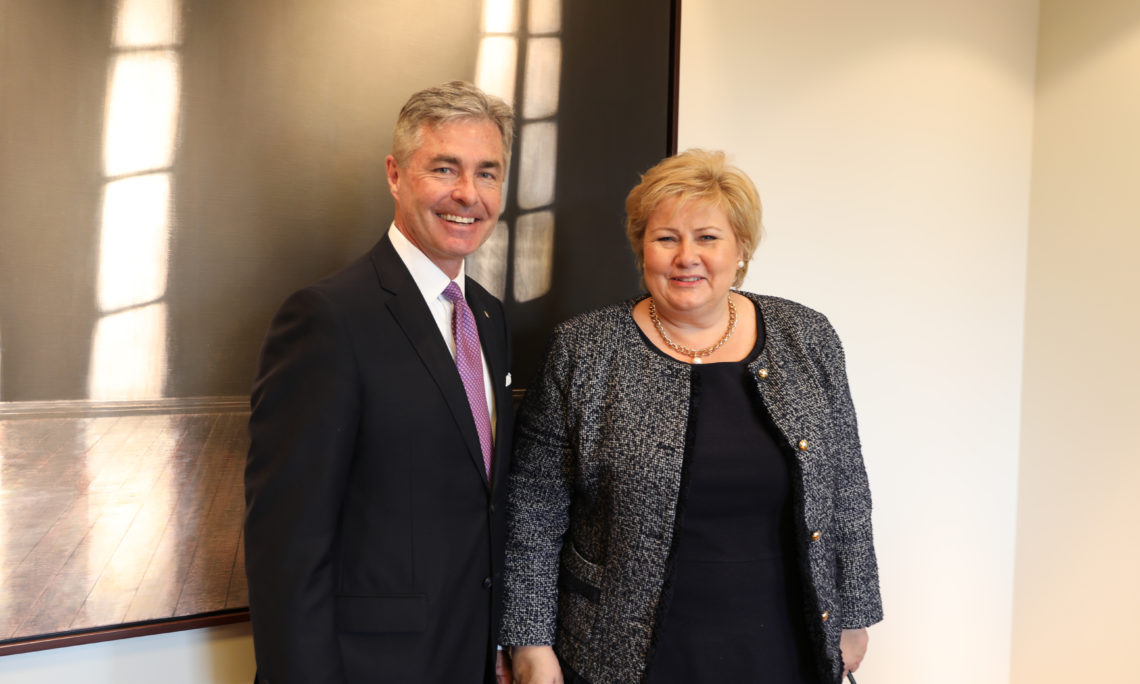
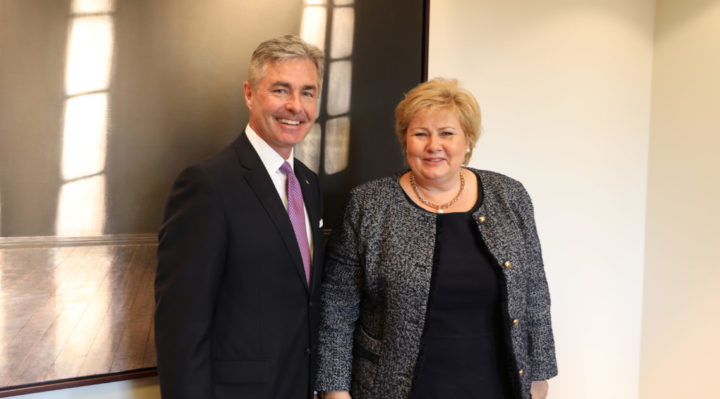
US Ambassador Braithwaite met with Prime Minister Erna Solberg at the Prime Minister’s Office in Oslo. They discussed ways to build upon the close and deep-rooted relationship between the United States and Norway.

The Ambassador talked enthusiastically about his travels to Bergen, Trondheim and Bodø and told the Prime Minister how impressed he was by the Norwegian people’s warmth and friendliness.
April 30, 2018 0 comments
0 FacebookTwitterPinterestEmail
Africa and Norway

Norwegian family hopeful daughter will be found

by Nadarajah Sethurupan April 29, 2018
written by Nadarajah Sethurupan

Cape Town – Atle Ostbo, father of missing Norwegian student Marie Ostbo, sits by his phone waiting for news of his daughter who went missing on a Sedgefield beach.

Ostbo refuses to give up hope that Marie will be found even though police took a decision this week to scale down search operations.

“We know there are people all over the world praying that Marie is alive and will be found alive. As long as there is hope there is life,” he said.

Ostbo shares these sentiments with his wife and the 21-year-old’s mother, Anna and her sister, Helene.

The family who live in Stavanger, Norway and described Marie as a warm-hearted person. “Marie is a beautiful young lady who has a burning heart for those who do not feel so good in society. She is a happy person who had plans for a long time to come,” said Ostbo.

Marie went missing last Wednesday at Myoli Beach in Sedgefield. CCTV footage shows her leaving the PiliPili restaurant by herself at around 6.15pm, where she was having dinner with her tour group.

Marie is studying political science at the University of Toulouse, France and travelled with a friend from the same university for a six-day Garden Route trip.

According to the NSRI at around 6pm some of the group went for a walk on the beach and then returned at around 7pm. Marie was last seen on the beach around this time wearing blue jeans and a white shirt standing about 100m from the backpackers where they were staying.

After others in the group noticed she had not returned with them they returned to the beach to search for her but were unsuccessful.

NSRI Wilderness and Community Police joined the search at 7.40pm.

“The last time I communicated with Marie was the day before she disappeared. We exchanged pictures. We chatted with each other about how things were,” said Ostbo.

He said one of the theories communicated to him was that Marie had gone into the water and might have been swept away by the current.

However, he said he believed that Marie had been abducted.

“I’m sure that Marie would never have gone bathing I have, from the first moment when I got a phone call from Sea Rescue on Wednesday night, thought that Marie would never have done it.”

Police spokesperson Captain Malcolm Pojie confirmed that her cellphone, sandals and a cap were found neatly placed on the sand at the beach with no other evidence.

He also confirmed that two men had been questioned and cleared of any wrongdoing by authorities after they were seen speaking to his daughter on CCTV footage.

After intense searches by local police, NSRI Wilderness, community policing forums, emergency services, a volunteer paraglider and more, the decision was made on Thursday to scale down the search efforts with a missing persons docket opened.

“We still appeal to the surrounding communities to be on the lookout for the missing lady,” said Pojie.

Anyone with information can call the investigation officer at the Knysna SAPS at 0442036600 or Crime Stop at 0860010111.

April 29, 2018 0 comments
0 FacebookTwitterPinterestEmail
Science

Norway government backs ambitious datacentre investment plan

by Nadarajah Sethurupan April 29, 2018
written by Nadarajah Sethurupan

Norway has a plan to be a leading location for datacentres with a policy that will put it in direct competition with some of its Nordic neighbours.
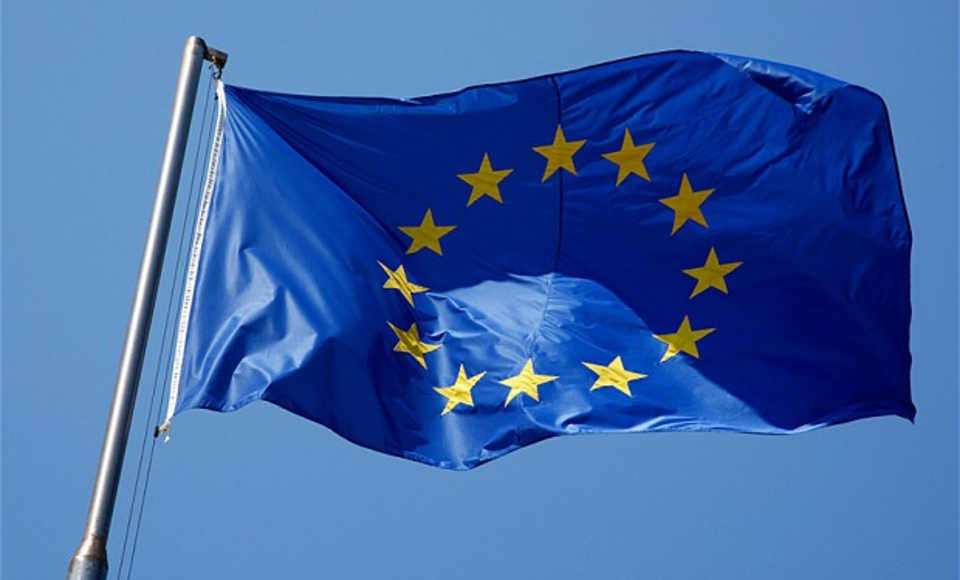
 

Norway, in no mood to lag behind the rapid forward leaps recorded by near neighbours Sweden and Denmark, has rolled out an ambitious new strategy to position the country as a leading location for IT-datacentre operations.

The project development strategy now being championed by prime minister Erna Solberg’s conservative-led government, under its Norway As A Data Centre Nation (NADCN) plan, represents a shot across the collective bow of Denmark and Sweden.

These near neighbours have been hugely successful in using their cold climates and easy access to renewable energy to attract significant datacentre investments. The list of high profile global industry players that have, since 2010, invested in datacentres in Sweden and Denmark include Apple, Facebook and Google.

The NADCN strategy adopts an approach that includes regulatory and tax-based support. At the front-end, the stimulus plan includes the removal of taxes on plant and machinery for datacentres and data-centric enterprises alike.

The strategy also comprises reform legislation to fast-track the construction of datacentres. It aims to clarify planning regulations relating to the building of datacentres. Moreover, a new process is being implemented, at national and local council level, to simplify procedure requirements linked to public highway excavation works.

“This is a massively important national strategy. This government will cooperate with industry to not only stimulate project development and investment, but also create a working environment where regulations are simplified and costs can be kept low,” said Ketil Solvik-Olsen, Norway’s transport and communications minister.

The NADCN incorporates a range of financial support incentives covering the building of additional overseas fibre cables. It includes a state-private partnership proposal to co-finance the construction of a standby backbone network. This co-venture is expected to initially run as a pilot-scheme with capital input from Innovation Norway, the state-run national development finance organisation.

Significantly, and particularly from the point of view of investors, the NADCN plan includes enhanced government spending on IT skills. The initiative will fund an additional 1,250 student placements at universities and technical colleges across Norway by year-end 2018 alone.

“Norway does have the reputation for being a high-cost location. We need to play to our strengths. The growing IT segment in our third level educational system is one positive. Another, and one that will interest datacentre investors and operators, is our well-functioning power sector. We have large renewable energy resources offering competitive electricity rates,” said Torbjørn Røe Isaksen, Norway’s industry minister.

Norway’s datacentre sector is largely populated by small to medium-sized players like Basefarm, Evry and Digiplex. The Green Mountain facility at Rennesøy, constructed on the site of a former Nato munitions depot, is one of the country’s most high profile datacentre facilities. ICT-group Digiplex operates datacentres near Oslo, Fetsund and Rosenholm.

The scale and flow of new datacentre projects is showing concrete signs of rapid growth. Canada’s Hive Blockchain Technologies acquired the Norwegian-American Kolos project company in March. This project covers the building of a four story facility holding 70-MW of IT equipment in northern Norway. The facility has the potential to scale-up processing capacity to 1,000-MW. Strategically, Kolos will support HIVE’s blockchain and crypto-currency infrastructure business.

Ringeriks-Kraft is being linked to a co-venture with a Japanese investment partner to build a datacentre at a site located north west of Oslo. Additionally, the German IT manufacturing group Rittal plans to expand its newly opened datacentre in Lefdal, outside Oslo. The Lefdal Mine Datacentre, at full utilisation at around 120,000 square metres of white space, has the potential to become Europe’s biggest datacentre.

The NADCN plan has been simmering under the surface of the Norwegian government’s broader National ICT Development Strategy for several years. Norway has prioritised specific policy objectives that combine strong digital innovation and data-driven value creation. The obvious goal here is to create a sustainable and integrated approach to the development of the country’s ICT sector.

Norway, in order to achieve the specific targets set out in the NADCN, will need to scale-up investments in critical infrastructure such as new overseas dark fibre routes. The implementation of proposed tax incentives will also be important in the NADCN’s overall vision. Understanding the need to elevate Norway’s tech-image globally, the Norwegian government plans to also channel funding into marketing projects designed to bolster the country’s reputation as a cost-competitive cold-climate location for datacentre investments.

Revisiting tax deductions

To drive investment forward, the Norwegian government may need to revisit the tax deductions being offered in the NADCN. To compete more effectively with Denmark and Sweden, Norway may decide to broaden the scope for financial stimulus in the NADCN to include tax breaks for start-up datacentre projects.

Norway took a practical step in this precise direction in January 2018, when it enacted new legislation that exempted datacentre facility operators from paying property taxes.

On the wider business landscape, the NADCN embodies huge potential value for Norway’s biggest renewable energy generators. Major players in this market space include the state power giant Statkraft. Backed by a network of 372 hydro stations and windparks, Statkraft is Europe’s biggest producer of electricity from renewable sources. Almost 98% of Statkraft’s 66 TWh in annual power production is sourced from hydro and wind.

“What the government strategy does is underline the level of political support that exists for ongoing efforts by many stakeholders to attract datacentre investments and operators to Norway,” said Atle Haga, Statkraft’s chief project director.

Statkraft had launched its own Data Centre Project (DCP) ahead of the Norwegian government’s NADCN launch. The company is angling to become Norway’s leading facilitator for investors looking to build datacentres, not just in Scandinavia, but across Europe. Statkraft’s core business model is constructed around finding international partners to engage in joint venture datacentre projects, primarily in Norway, but also in Europe.

The state-owned energy company is actively scouting for joint venture partners in Europe, Asia and North America. Although Group CEO Christian Rynning-Toennesen is optimistic about the long-term potential embedded in the DCP, Statkraft still has to sign its first standout partnership.

“We are working hard to secure contracts, but I can’t say when this will happen. What we can say is Norway is a good location to establish an advanced computer-based business,” said Rynning-Toennesen.

(computerweekly)

April 29, 2018 0 comments
0 FacebookTwitterPinterestEmail
Norwegian Aid

Norway moves toward the future of sustainable construction

by Nadarajah Sethurupan April 28, 2018
written by Nadarajah Sethurupan

The REZBUILD project organized a workshop in Oslo to inform about the refurbishment methodology that is going to be validated in a demo building located in Bertramjordet housing cooperative. The event is framed within the participative processes carried out in the project which involve local communities, researchers, private sector and citizens
On April 10th, Oslo became the epicentre of sustainable construction. Experts from the European Union gathered in the Norwegian city to explain the activities that are being developed within the framework of REZBUILD project, an initiative funded by the Horizon2020 Programme of the European Commission that grows with the main aim of defining an innovative and collaborative refurbishment ecosystem for Near Zero Energy Building in Europe.

REZBUILD will establish a multi-collaborative framework within a refurbishment methodology managed by an Agile Project Management tool based on cloud service, capable to interconnect in real time the key steps of a tailored retrofitting plan among all stakeholders involved within the building renovation value chain. Decision-making tools will be performed in order to validate the best optimised cost-effective refurbishment technology package in Bertramjordet housing cooperative, in Oslo.

In addition, the REZBUILD project has established 2 more demo sites in Venice (Italy) and Madrid (Spain), each one with a different representative climate and tipology of building.

Involvement of local communites and citizens

The participative programmes carried out within the framework of the project will be implemented through a methodology for decision-making processes which involve all the relevant expertise in the overall process. In this context, the owners of the buildings, who are the object of the pilot tests, will be pivotal to promote actions of social innovation, through the user’s awareness on efficient energy use.

In this sense, the workshop organized in Oslo on April 10th was focused on the owners of the houses living in the neighbourhood that will be refurbished within the framework of the project. Local communities’ acceptance and the understanding of Oslo population about this project is considered essential to succeed in the development of the refurbishment and renovation actions.

In addition, this workshop aimed to raise awareness on the impacts of the project among the final users and detect any potential social risk deriving from its implementation.

The workshop was a good chance to present REZBUILD and its general objectives and specific measures in Oslo, in order to improve the knowledge about the project. Furthermore, representatives of the consortium had the opportunity to discuss the project, as well as the related perceived risks through group dynamics and interactions. The workshop ended with a presentation of the project website and its participation tool.

1st Periodic REZBUILD Meeting in Norway – 6 months project development

In conjunction with the workshop, on 11-12th April, consortium partners met in Oslo to keep collaborating on the project, in order to share the status of the art of each Work Package with the EU Project Officer and the whole team, interacting to facilitate knowledge sharing between partners. The meeting included a visit to the Project Demo site in Oslo, one of the three demonstrative actions of the project.

The dwelling selected for the demonstration is a housing cooperative in Bertramjordet, representing typical dwellings in Norway.

The housing cooperative is a suitable site for demonstrating the expected higher efficiency of BIPV in cold climate and good utilisation of aerogel insulation. The goal of the renovation is the reduction of more than 60% in consumption and cost of energy, improving comfort for the tenants and making the building’s energy performance a key element.

April 28, 2018 0 comments
0 FacebookTwitterPinterestEmail
Terrorist

Militants Trained by Norway Planning to Fight against Syrian Gov’t

by Nadarajah Sethurupan April 27, 2018
written by Nadarajah Sethurupan
The Norwegian-trained Syrian militia called the Revolutionary Command Army (MaT) allegedly meant to help quell ISIL are waging a war against the Syrian leadership and pro-government forces, a Norwegian daily reported.
According to Klassekampen, the rebel group is now openly fighting for a regime change in Syria.

In May 2016, it was announced that Norwegian soldiers were to be dispatched to Syria’s neighbor country Jordan to provide “training, counseling and operational support” to Syrian paramilitary groups fighting ISIL as part of the US-led Operation Inherent Resolve.

In June 2016, the Norwegian parliament also green-lit similar missions in Syria itself.

While Norway’s Syria contribution was formally concluded in March this year, as the mandate formally expired, the exact extent and nature of Norway’s involvement was largely kept secret. MaT commander Muhannad al-Talla confirmed to Klassekampen that his group was trained by Norwegians in al-Tanf in Southeastern Syria, where the US also has a base.

While both Prime Minister Erna Solberg and then-Defense Minister Ine Eriksen Søreide emphasized the mandate was to fight ISIL, ensuring that they “won’t endanger the peace process,” al-Talla claimed that his Western allies never concealed that his soldiers were to fight both terrorists and the Syrian government.

“From the very beginning, I’ve been completely aware that I’m fighting “the ISIL” and the al-Assad forces. (ISIL) is not gone but is clearly weakened. Now the priority is the fight Assad,” al-Talla admitted to Klassekampen.

The al-Tanf Base is a strategic outpost along the main route between Damascus and Baghdad. There, the US has created a so-called 55-square-kilometer safety zone secured by US soldiers with the help of al-Talla’s units.

Within the zone, Syrian army troops have been bombed at least two times by US combat aircraft. At the same time, several rebel groups, including MaT took part in an offensive against government forces after ISIL’s withdrawal from Eastern Syria.

The Free Syrian Army (FSA) Spokesman and Counselor Ibrahim al-Idlibi confirmed to Klassekampen that Norway-trained “militia” took part in the struggle against the government forces, such as the operation “The Country is Ours” carried out in May and June 2017.

While the Syrian government has managed to reclaim most of the country’s territory from ISIL and various rebel groups, MaT leader Muhannad al-Talla is by his own admission not ready to lay down arms.

“It is true that the current balance of power favors Assad. But we will never let him have peace. Even if he wins the war, we will continue to make his life sad for him,” al-Talla pledged.

Both Muhannad al-Talla and the Norwegian Ministry of Defense denied that Norwegians ever participated in the fight against the Syrian government and its allies. Norway formally ceased its mission in Syria, with the Defense Ministry deciding to focus on Iraq.

April 27, 2018 0 comments
0 FacebookTwitterPinterestEmail
Africa and Norway

Joint Statement on the Darfur Peace Process

by Nadarajah Sethurupan April 27, 2018
written by Nadarajah Sethurupan

Representatives of the Government of Sudan, the Justice and Equality Movement (JEM) and the Sudan Liberation Movement/Army (SLM/A) met in Berlin on 16/17 April 2018 to discuss a pre-negotiations agreement that would serve as a basis for the resumption of peace talks for the Darfur as part of the broader Sudan peace process. The event was hosted by the German Berghof Foundation. The AU/UN Joint Mediator and Joint Special Representative for Darfur, Germany and the United States served as facilitators. Norway and the United Kingdom were present as observers.
The parties engaged and made a serious effort towards a compromise. However, while the parties made progress, they did not reach an agreement in their second Berlin meeting. The facilitators will consider options for further progress together with the parties, partners and interested international actors. We call on the parties to continue to adhere to their pledges to cease hostilities and to remain engaged with the Joint Chief Mediator in order to find a solution to the outstanding issues and enter into formal talks.

Distributed by APO Group on behalf of Germany – Federal Foreign Office.

April 27, 2018 0 comments
0 FacebookTwitterPinterestEmail
Norwegian Aid

New funding period for EEA and Norway Grants with Slovenia

by Nadarajah Sethurupan April 26, 2018
written by Nadarajah Sethurupan

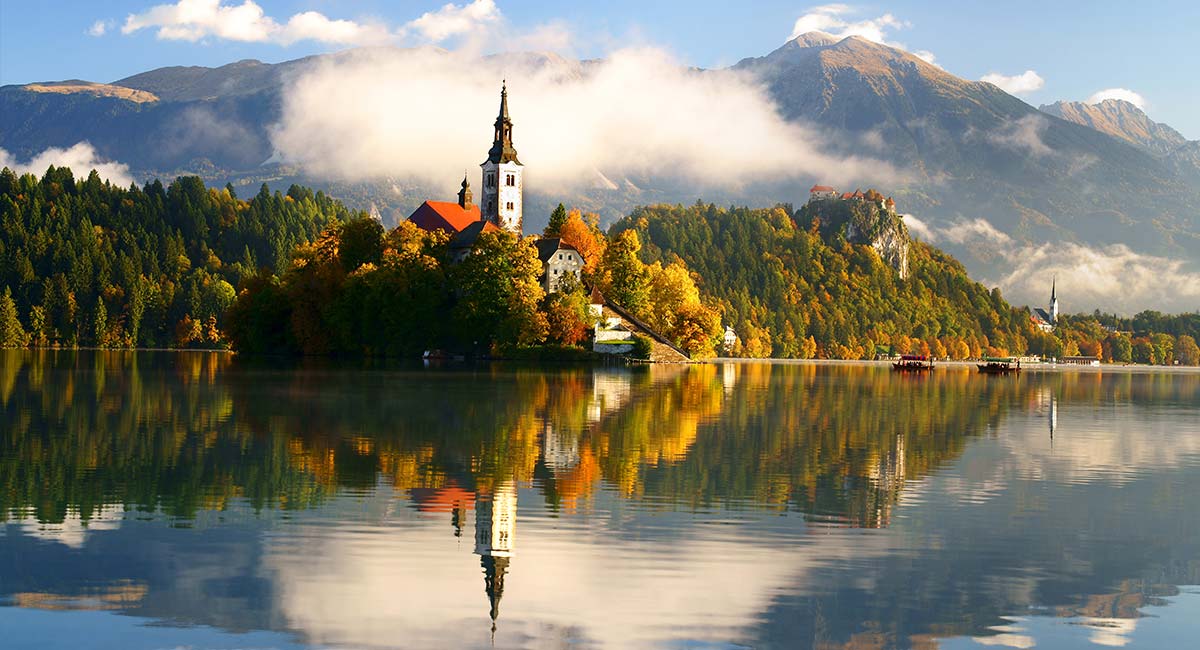
Norway and Slovenia are signing MoUs on funding totalling EUR 37.7 million for the new funding period for the EEA and Norway Grants. The main focus areas are climate and education.
‘Norway has a good deal to offer when it comes to education and adaptation to climate change. It is therefore natural for us to help Slovenia to address challenges in these areas, which are important for sustainability and competitiveness throughout Europe,’ said Minister of Foreign Affairs Ine Eriksen Søreide.

State Secretary Audun Halvorsen is in Slovenia today to sign the MoUs on behalf of Norway.

The Norwegian Environmental Agency will play a key role in the climate change programme, which will focus on adaptation to climate change, renewable energy and energy efficiency. Education is the other main priority. Efforts in this field will include grant schemes, exchanges, professional development of teachers, and cooperation between the education sector and the business sector. The Norwegian Centre for International Cooperation in Education will take part in the cooperation in this area. Innovation Norway will be involved in a fund for decent work. In addition a separate fund for supporting civil society in Slovenia will be continued.

‘These MoUs also represent good opportunities for Norwegian actors in the education and business sectors. I am pleased that the EEA and Norway Grants scheme will, in this way too, further strengthen the close ties between our countries,’ said State Secretary Audun Halvorsen.

Norway cooperates with Slovenia in NATO, the UN and other international forums. Slovenia and Norway share common values and similar views on many of the important issues of our time.

Norway has played a part in reducing social and economic disparities in Slovenia through the EEA and Norway Grants since the country became an EU member in 2004. Education, climate change and environment have been top priorities all along.

Facts about the EEA and Norway Grants

Under the EEA Agreement, Norway is part of the European internal market.

  • The EEA Agreement sets out the common goal of working together to reduce social and economic disparities in Europe and to strengthen cooperation between European countries.
  • Norway contributes to this through the EEA and Norway Grants.
  • EUR 2.8 billion is available under the grant scheme for the period 2014-2021, to be distributed among 15 beneficiary countries.
  • Norway provides some 98 % of this funding; the remainder is provided by Iceland and Liechtenstein.

See the fact sheet for an overview of the programmes that are to be implemented in Slovenia.

April 26, 2018 0 comments
0 FacebookTwitterPinterestEmail
Royal House

Crown prince, princess of Norway arrive at Kadriorg Palace

by Nadarajah Sethurupan April 25, 2018
written by Nadarajah Sethurupan

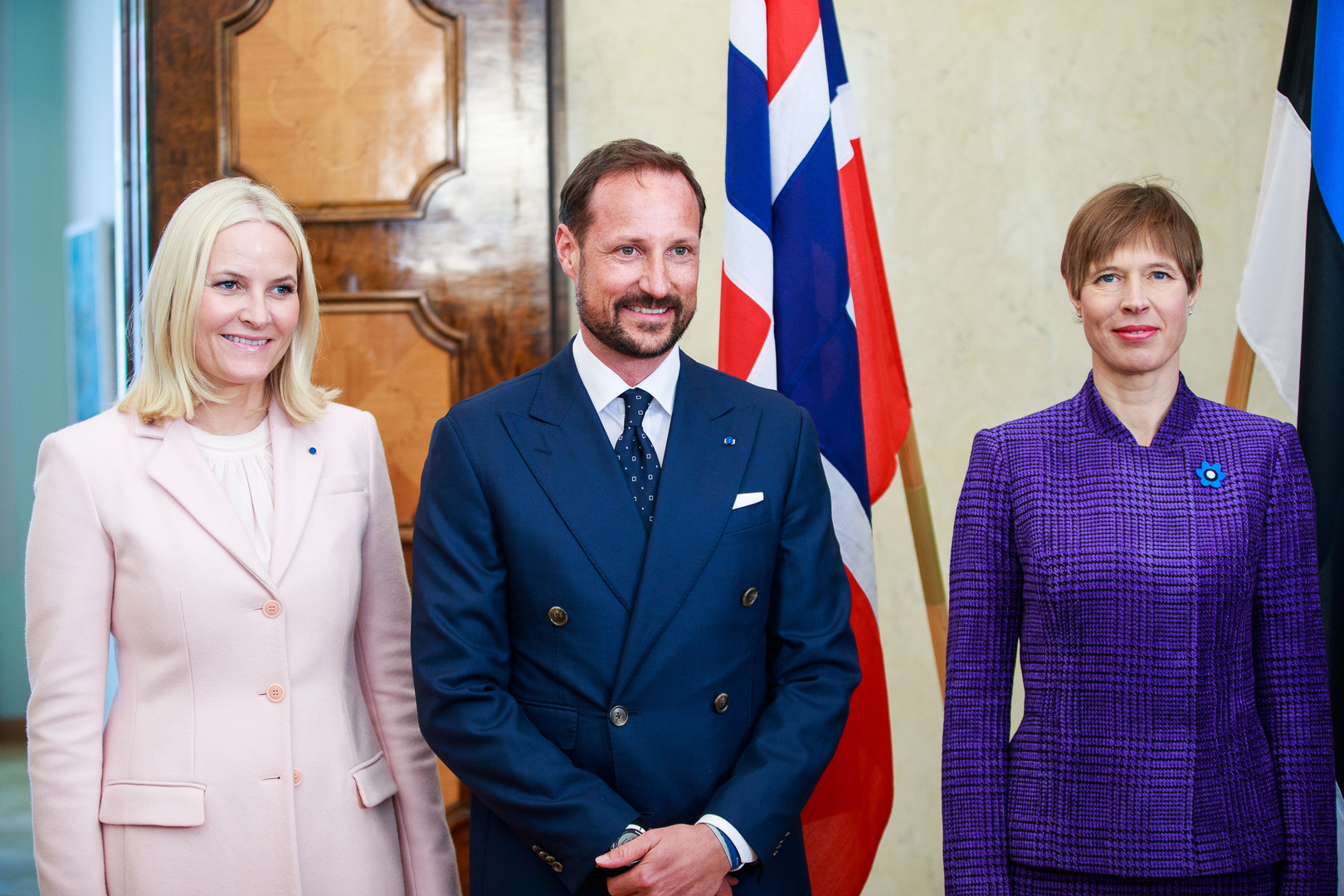
Crown Prince Haakon and Crown Princess Mette-Marit of Norway arrive at Kadriorg Palace (Photo: Siim Lõvi/ERR)

Crown Prince Haakon and Crown Princess Mette-Marit of Norway on Wednesday arrived in Estonia for an official two-day visit. President Kersti Kaljulaid received them at Kadriorg Palace in Tallinn.

Timed to coincide with the Estonian, Latvian and Lithuanian centennials, the Norwegian royal couple’s visit to the Baltics is aimed at celebrating the three neighboring countries’ independence as well as the positive relations between the Baltics and Norway.

Crown Prince Haakon and Crown Princess Mette-Marit’s first stop in Estonia was at Kadriorg Palace, where they were met by President Kersti Kaljulaid.

On Thursday, the Norwegian royal couple will open a Norwegian-Estonian business forum organized by Innovation Norway and Enterprise Estonia, after which they will visit Telliskivi Creative City as well as Tallinn’s medieval Old Town.

Estonia, Latvia and Lithuania all enjoy extensive bilateral cooperation with Norway via Norwegian support programs as well as NATO security policy. Hundreds of Norwegian businesses also operate in the Baltics.

April 25, 2018 0 comments
0 FacebookTwitterPinterestEmail
Science

Why Norway wants to be the world’s next big tech hub

by Nadarajah Sethurupan April 25, 2018
written by Nadarajah Sethurupan

TechRadar Pro heads to Oslo to find out why Norway can be the biggest Scandinavian success story yet.
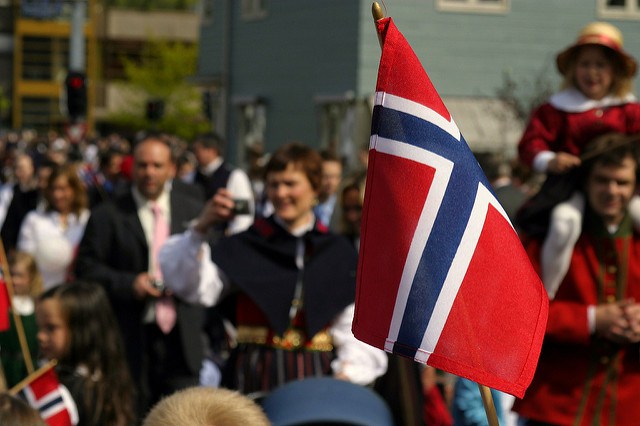
 

When it comes to the latest big tech breakthroughs, many people would think of California, Singapore or China as the world’s top locations for vibrant start-ups.

Norway’s economy has traditionally focused around the sea, with oil, gas and fishing among its most famous industries. However as the world gradually comes round to realising these resources are somewhat finite, many Norwegians are instead turning to technology to make their fortune.

TechRadar Pro headed to the land of ice and snow (aka Oslo) to speak to some of the country’s top start-ups and investment firms to find out just how close Norway is to being the next big technology success story.

To begin with, that last sentence may have been somewhat of a misnomer. Norway has had several major technology successes in recent years, including the likes of Kahoot, Vivaldi, and probably the most notable, Opera Software.

Former Opera vice president and chief commercial officer Rolf Assev quit the company after 12 years service in the corporate world, and now helps head up Oslo’s StartupLab, a dedicated space for fledgling Norwegian firms to grow and prosper.

“When we started six years ago, no one believed in us, because no one believed you could make money of early stage tech start-ups,” he tells TechRadar Pro at StartupLab headquarters, on the campus of Oslo’s main university.

“People believe we have never done start-ups in Norway…but we have!”

At first glance, StartupLab seems similar to the many start-up accelerators found in San Francisco or around London’s Silicon Roundabout. Teams of four or five sit around wheeled wooden desks (to ensure easy movement around the floor) or huddle round screens, talking excitedly in meeting rooms.

However Assev explains that behind the calm facade, the selection process is extremely tough as the Norwegian technology scene continues to develop. StartupLab accepts only one in every 10 applicants it receives, he reveals, meaning that competition is fierce to get in.

Assev explains that although Sweden has traditionally been Scandinavia’s leading technology hub, Norway is fast catching up. The traditional levels of investment pushed into the west coast of the country, home to the fishing and utility industries, is now instead being focused inland to the cities – offering a great opportunity for tech start-ups.

For StartupLab, it is often the founders themselves that make companies an attractive proposition, Assev says. He highlights Magnus Wanberg, the CEO of reMarkable, an e-screen company that had to take on the likes of Samsung and Google, and Karen Dolva, founder of No Isolation, which builds robot companions for the elderly and children with learning difficulties, as proof that investing in people who believe in their ideas (and plan for the long term) can be the key for success.

“We believe in the founders,” he notes, “we believe they are the best people to find out where a company is going.”

Businesses, especially start-ups, in other countries often fall victim to a model of rapid initial growth, before being sold or amalgamated into larger companies, Assev says. However in Norway, thanks to much of the investment into start-ups coming from within the country, rather than from abroad, domestic companies are able to keep their independence, and grow organically to achieve greater levels of success.

“There is no one doing the same model that we are doing,” he adds, “we did this not to make money, but to give back.”

“We don’t know what the next steps are just yet – we just know we want to have global successes…and be the place for the best start-ups in Norway.”

Over in Oslo’s picturesque old town, a snowball’s throw from the ornate 17th century cathedral, another organisation is looking to encourage the next generation of Norwegian tech start-ups to break into the big time.

Tharald Nustad and Anders Lier head up Nordic Impact, an angel investment firm that looks to back technology start-ups that are able to do good for the planet.

Scandinavia, and Norway in particular, is well-placed to push this agenda, having long been a key location for new technology fields – from green energy to electric vehicles

Lier, Nordic Impact’s executive chairman, notes that technology can “lift the country out of the oil dopmaine, into the new world,” with banks, cities, universities and corporate machines all working together to help support a vibrant Norwegian start-up scene.

Lier notes that the dawn of a new “unicorn economy” could be coming to Norway within the next few years – one with the potential to rival the oil boom of the 1970s, which has helped transform the country into the model for progress it is now.

“It’s the right time for Norway to leave the oil industry,” he says, “we need to find a new future.”

“We think more of the learning society – being smart doesn’t mean you do the right stuff.”

Lier notes that Norway is able to benefit not just from abundant natural resources, but thanks to its oil wealth, can enjoy national cash reserves of around £1 billion – which he believes could be invested into technology.

However Nordic Impact is not just focused on the next big thing or technology trend however, as the company looks to instead solve the big issues facing modern society within the next few decades.

“Looking from above, the question is what is the future of society?” Lier notes, “We don’t really know, but it will be a world of abundance.”

With less than five thousand working days left until 2030, the need for ituitive, intelligent technologies is becoming more pressing by the day, and this requires new, non-linear business models – such as that provided by Nordic Impact.

“We are optimistic about the future,” he adds, “but we can’t just leave it to the technology…we have to be on top of it.”

“We have the DNA to take risks.”

Along with innovation though, collaboration is the key to ensuring humanity benefits from the boost technology can bring.

Nustad, a serial tech entrepreneur and the founder of Nordic Impact, notes how new technology has helped bring people together over the past decades, but adds that physical interaction is important as ensuring we use the latest tools.

Lier again references No Isolation as an example of the good work their investment has helped fund, and states that success will come not just from good technology or good business processes, but how companies work with the communities that surround them.

“There shouldn’t be any competition to try and save the world,” he observes.

The firm now looks to encourage investment in Norway through its own efforts. This May, it is set to host the Katapult Future Fest in Oslo to show off both the good work done by its existing benficiaries, and highlight the potential of both the city and Norway as a whole to investors both at home and around the world.

“Those in the know, know Norway,” Lier notes.

Ultimately, it seems that the excitement around Norway’s technology scene is well-placed. A young city, open to new ideas, and ready to benefit from a wealth investment – all of this seems to contribute towards the recipe for a success story. The future of the world when it comes to technology may well be found in Scandinavia, with Norway right at the heart of the action.

(techradar)

April 25, 2018 0 comments
0 FacebookTwitterPinterestEmail
Norwegian Aid

New funding period of EEA and Norway Grants for Lithuania

by Nadarajah Sethurupan April 24, 2018
written by Nadarajah Sethurupan

Today, Norway and Lithuania signed MoUs on funding totalling EUR 117.6 million for the new funding period of the EEA and Norway Grants (2014-2021). Priority will be given to justice and home affairs, business development, research and health.
‘Norway and Lithuania have close historic ties. Today nearly 40 000 Lithuanians are living in Norway and around 250 Norwegian companies have operations in Lithuania. Through the EEA and Norway Grants, Norway is further strengthening these ties. We are helping to create jobs, reduce social and economic disparities, and bolster democratic institutions,’ said Minister of Foreign Affairs Ine Eriksen Søreide.

Strengthening ties with Lithuania and the other 14 beneficiary countries is one of the main objectives of the EEA and Norway Grants. It was therefore natural that the MoUs for the current funding period should be signed during the visit of The Crown Prince and The Crown Princess in connection with Lithuania’s centenary as an independent state.

A number of Norwegian agencies are involved as partners in developing and implementing the programmes in Lithuania, including Innovation Norway, the Research Council of Norway, the Norwegian Centre for International Cooperation in Education, the Norwegian Institute of Public Health, Arts Council Norway and the Directorate for Cultural Heritage.

Norway’s cooperation with Lithuania in the justice sector will continue in the new funding period. This will include continued cooperation in the correctional service system, which will involve the Norwegian Correctional Service, and cooperation between the two countries’ police forces on cross-border crime and organised crime. In addition, new cooperation will be developed on combating work-related crime under the programme area on decent work.

‘The Government has recently stepped up its efforts to fight work-related crime. Over the next few years, a new and promising project will be developed in this area in Lithuania with support from the EEA and Norway Grants. The labour inspectorates in our two countries will be working together in this important field,’ said State Secretary Audun Halvorsen.

Business development, innovation and research will also be given high priority. A pan-Baltic cooperation on research is to be established. Cooperation in the field of health will be continued with particular focus on public health, children and young people and families in vulnerable groups.

Facts about the EEA and Norway Grants

  • Under the EEA Agreement, Norway is part of the European internal market.
  • The EEA Agreement sets out the common goal of working together to reduce social and economic disparities in Europe and to strengthen cooperation between European countries.
  • Norway contributes to this through the EEA and Norway Grants.EUR 2.8 billion is available under the grant scheme for the period 2014-2021, to be distributed among 15 beneficiary countries.
  • Norway provides some 98 % of this funding; the remainder is provided by Iceland and Liechtenstein.

See the fact sheet for an overview of the programmes that are to be implemented in Lithuania.

April 24, 2018 0 comments
0 FacebookTwitterPinterestEmail
Defence

Colburn RAF reservist back from gruelling winter training in Norway

by Nadarajah Sethurupan April 24, 2018
written by Nadarajah Sethurupan

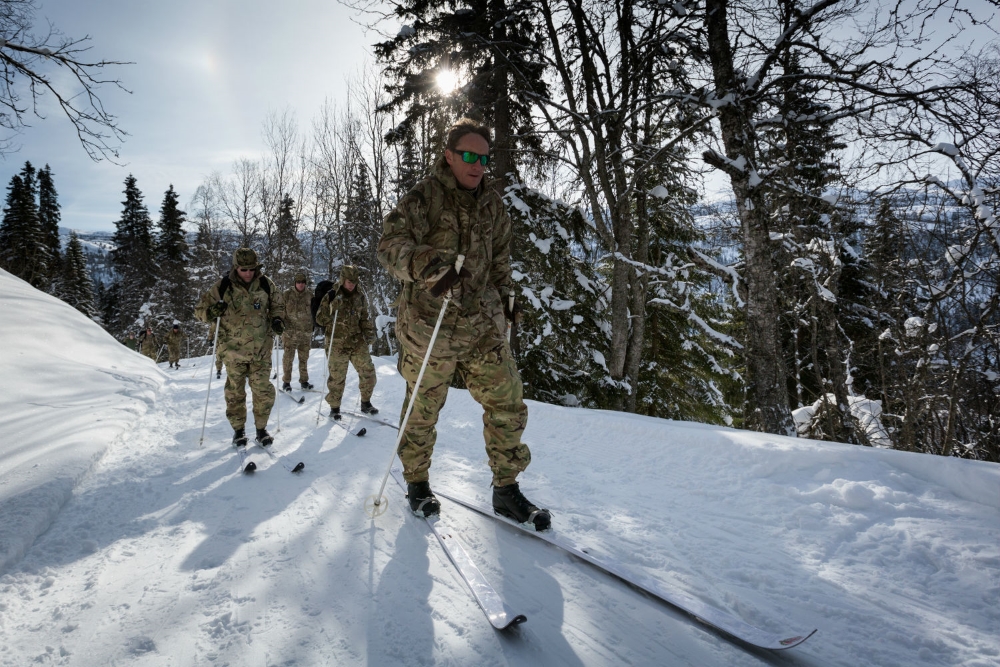
A group of reservists climb towards their training area in Rjukan, Norway. Pic: SAC Lloyd Horgan.

A Colburn man has got back from learning winter survival skills in the mountains of Norway and followed in the footsteps of famous wartime raiders who stopped the Nazi atomic bomb programme.

Garth Hulme, 49, is an IT project manager and also works as nurse in the RAF Reserves.

He joined 50 other RAF Reservists earlier this month on Exercise Wintermarch to learn Nordic skiing, how to survive an avalanche and how to deal with extreme cold from members of the Norwegian military.

Garth said: “It was a fantastic experience”, adding: “The instructors were really supportive and it was great to meet other reservists from across the country.”

The airmen and women of the Royal Auxiliary Air Force were based at Rjukan, 100 miles north of the capital Oslo. The town is also the site of the wartime Telemark Raid which saw saboteurs dropped by the RAF destroy a factory making vital parts for the Nazi effort to build an atomic bomb.

The students learned more about the operation with a talk from a close friend of one of the saboteurs and a visit to the museum built on the site of the raid.

The skills used by the saboteurs in cross-country skiing and winter survival are the same as those taught by the Norwegian instructors. Participants finished the gruelling week with a cross-country skiing race.

For Norwegians the Telemark Raid holds a similar place as the Battle of Britain does here and represents their own ‘finest hour’.

Senior Aircraftman (SAC) Hulme, who serves with Number 2624 Squadron, based at RAF Brize Norton, was deployed twice to Afghanistan. He added: “It was great to learn about the raid here in the war and brilliant to learn these new skills.”

“This is this sort of thing I joined the RAF Reserves to do.”

The officer leading the expedition, Flight Lieutenant Rosie Gilmore said: “The RAF Reserves have had a fantastic week here. The guys have got so much out of it. It’s hard work, but they all help each other and you can see that they’ve given their all but they’ve had a great time.”

The exercise comes at an important time for the RAF in its centenary year.

She added: “As the RAF celebrates its 100th year, it’s fitting that we’ve been here where the RAF has long and friendly relations and it’s been great to be here strengthening those bonds between the RAF and Norway.”

These bonds stretch back to the Second World War when, as well as supporting the Telemark raid, Norwegian airmen served in RAF squadrons as they fought alongside Britain to defeat Germany and free their homeland. Both the UK and Norway are founder members of NATO.

(richmondshiretoday)

April 24, 2018 0 comments
0 FacebookTwitterPinterestEmail
Peace Talks

Cuba, Norway Say Colombia-FARC Peace ‘Living Difficult Moments’

by Nadarajah Sethurupan April 23, 2018
written by Nadarajah Sethurupan
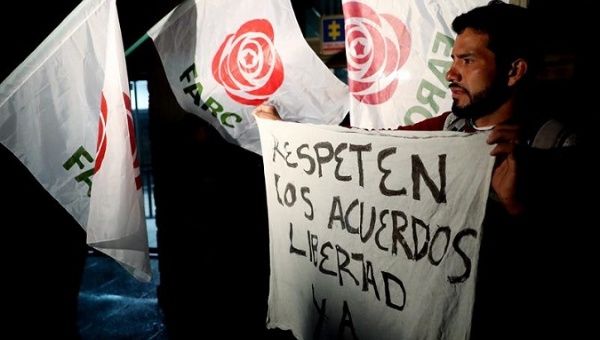
Recent developments, including the killings of former FARC fighters and arrest of its future representative Jesus Santrich, have put the process at stake.


 

The Cuban and Norwegian governments, which sponsored the talks and the subsequent peace agreement between the Colombian government and the former insurgent group FARC, expressed their concerns about the current state of the implementation of the peace process in the country amid the persecution and killing of former members of the former guerrilla group as well as the recent arrest of congressmen-elect Jesus Santrich.

“We express our concerns about the recent events related to the peace process,” said a statement signed by both governments, which also called on Colombian authorities to “guarantee the protection of the final agreement… and secure the strict observance of the deal, including the provisions related to the Special Jurisdiction for Peace, designed to guarantee truth, justice, repairment and non-repetition.”

The Alternative Revolutionary Forces of the Common, the new political face of the FARC, back tracked on their presidential campaign as their leader Rodrigo Londoño “Timochenko” suffered from health issues and the party decided the government wasn’t providing the party members with the ideal security conditions.

The situation escalated when Jesus Santrich, a former FARC commander, was arrested on drug trafficking charges by DEA’s order, who accused him of taking part in a business network intending to export 10 tons of cocaine into the United States, and may now face extradition.

“With the capture of our comrade Jesus Santrich, the peace process is at its most critical point and is threatened to be a true failure,” said Ivan Marquez, future representative and number two of the FARC, said at a press conference in Bogota last week. He also demanded Colombian President Juan Manuel Santos “keep his word” regarding the peace process.

Interpol’s red alert accuse Santrich of participating in the drug trafficking network between June 2017 and April 2018. His defense filed an Habeas Corpus appeal but it was rejected by Bogota’s Superior Tribunal.

Also, the activities of groups claiming to be FARC dissidents who oppose the peace agreement and have refused to demobilize, are being used to discredit the peace agreement despite FARC leadership distancing itself from them and rejecting their actions.

One of those groups, the Oliver Sinisterra Front led by Guacho, recently kidnapped and murdered three Ecuadorean journalists reporting on the violence situation on the border between both countries.

Added to that, some in the Colombian government claim that the former insurgent group wasn’t honest about their assets and accused it of running a money laundering chain of stores, which sparked riots and looting in several cities of Colombia. FARC leadership flatly reject such accusations and said they have made all their assets available and have welcomed any government audits.

According to the communique by Cuba and Norway, the peace process is “living difficult moments,” and reminded that “is important that the involved parties and the international community reaffirm their support to the process and the enforcing and observance of the agreement.”

They also recommended speeding up the actions aimed at guaranteeing the full reintegration and reincorporation of FARC’s former fighters into civil society and reiterated their compromise to reach a stable and lasting peace in Colombia.

Gloria Ospina, director of the Colombia in Peace Fund, was dismissed from office on April 9 after being accused of irregularities in managing the economic resources provided by the international community for the peace process.

The peace process has been heavily politicized and is one of the main discussion points for all candidates in the May 27 presidential elections. Most of them support the continuance of the process, including leftist Gustavo Petro, but the right-wing protegee of Alvaro Uribe, Ivan Duque, has said the agreement needs serious restructuring.

April 23, 2018 0 comments
0 FacebookTwitterPinterestEmail
Terrorist

Norwegian suspected of being Kenya mall attacker named

by Nadarajah Sethurupan April 23, 2018
written by Nadarajah Sethurupan

The BBC has reported that the man being investigated by Norwegian police over the attack on Kenya’s Westgate shopping centre is Hassan Abdi Dhuhulow, BBC Newsnight has learned.
The BBC has reported that the man being investigated by Norwegian police over the attack on Kenya’s Westgate shopping centre is Hassan Abdi Dhuhulow, BBC Newsnight has learned.

The 23-year-old Norwegian citizen of Somali origin is suspected of helping to plan and carry out the attack.

BBC Newsnight has spoken to a relative of his in Norway who said he left the town of Larvik for Somalia in 2009.

At least 67 people died in the attack in Nairobi, which the al-Qaeda linked group al-Shabab says it carried out.

Last week Norway’s intelligence agency, the PST, said it had sent officers to Kenya to verify reports that a Norwegian citizen had been involved in the assault on the shopping centre, which began on Saturday 21 September and lasted four days.

It is unclear how many militants were involved. Police had initially estimated that there were 10-15 attackers inside the complex, but the CCTV footage which has so far been released by the Kenyan authorities shows just four men.

Hassan Abdi Dhuhulow is believed to be one of those four, the BBC’s Newsnight programme has learned from sources in Kenya and Norway.

Forensic investigators are still combing through the rubble of Westgate – no bodies have yet been identified and it is not known whether the attackers are alive or dead.

April 23, 2018 0 comments
0 FacebookTwitterPinterestEmail
Killing

Norwegian tourist goes missing

by Nadarajah Sethurupan April 22, 2018
written by Nadarajah Sethurupan

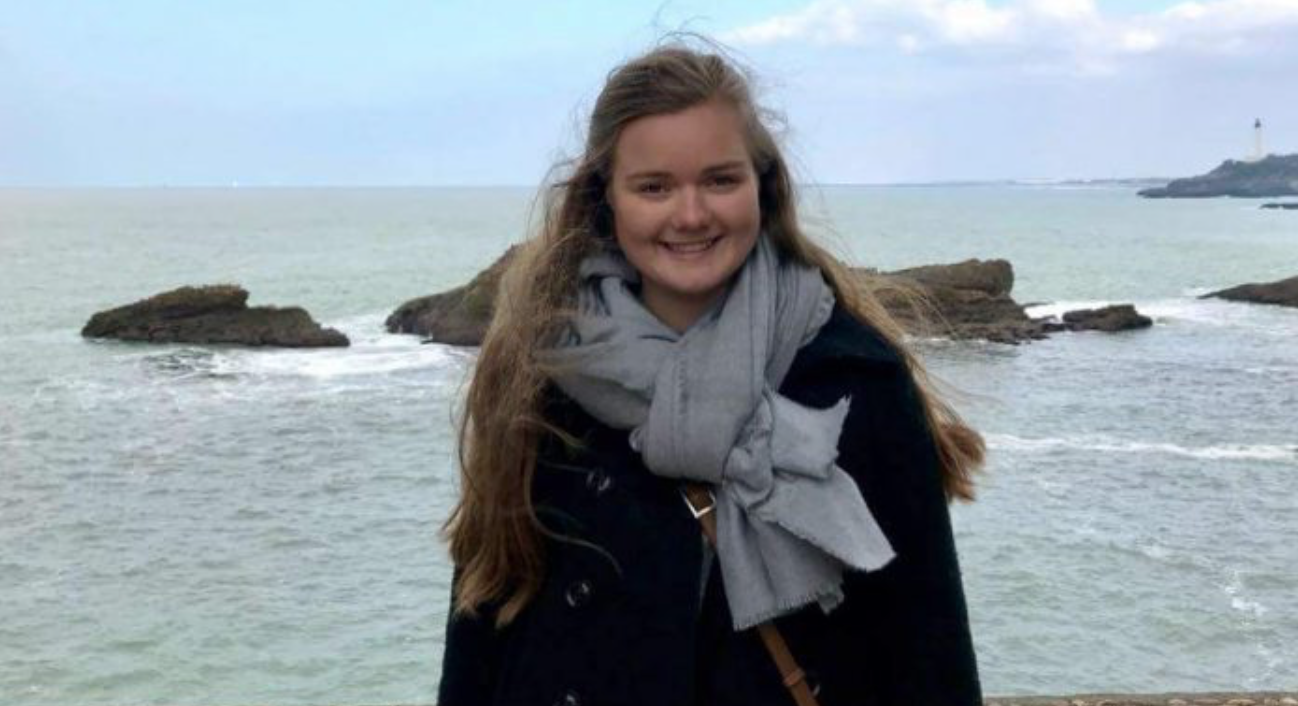
The South African Police Services (SAPS) have launched a search for Marie Ostbo, a 21-year old student from Norway, who went missing after going on a beach stroll in Sedgefield in the Western Cape.
The young woman had arrived in the coastal town, situated in the Garden Route, with a group of other tourists on Wednesday, 18 April, and they set off for a walk along the beach in the evening, around 18:00, and returned an hour later.

That’s about the same time where Ostbo was last seen, as her absence was soon noticed by her friends who did not recall her making her way back to the backpackers where the group was staying.

After unsuccessfully looking for her at the beach, they alerted NSRI Wilderness and Community Police at around 19:40.

“We appeal to anyone who may have seen Marie, or noticed anything that may assist Police in this incident, to contact the Sedgefield Police,” said the NSRI.

April 22, 2018 0 comments
0 FacebookTwitterPinterestEmail
Sports

Evaluation visit to Norway

by Nadarajah Sethurupan April 22, 2018
written by Nadarajah Sethurupan

Norway hosted its first EPAS Evaluation Visit on its compliance with the European Sport Charter on 20-21 March 2018. A team of EPAS sports policy experts met over the two days with the main stakeholders in Norwegian sport (governmental and municipal authorities, the Norwegian Olympic and Paralympic Committee and Confederation of Sports (NIF), including the elite sport body Olympiatoppen.
The visit focused on drop-out levels by boys and girls from sport, promoting youth sport and sport for senior citizens, and improving the education of coaches. The full programme of the visit included a meeting with State Secretary Frida Blomgren.

A report on Norway’s compliance, including recommendations, will be made available to the Norwegian authorities, following the visit.

(COE)

April 22, 2018 0 comments
0 FacebookTwitterPinterestEmail
Africa and Norway

Senior South Sudanese opposition official dies in Norway

by Nadarajah Sethurupan April 22, 2018
written by Nadarajah Sethurupan

A senior member of the opposition Sudan People’s Liberation Movement-In-Opposition (SPLM-IO) has died in Norway, the group’s leader said.
Daniel Wuor Joak, representative of the SPLM-IO rebel group to Norway, died of liver cancer on April 20.

South Sedan’s rebel leader Riek Machar said,”On my behalf and family, and on behalf of the SPLM/SPLA-IO, I am conveying our deep condolences to the family of Cde Daniel Wuor Joak who passed away on 20 April in Oslo, Norway.”

Machar said Wuor Joak had been a staunch supporter of self-determination and independence of South Sudan. “Cde Daniel Wuor Joak leaves a big void in our diplomatic work,” reads Machar’s statement in part.

The prominent opposition leader pointed out that Wuor Joak was a veteran of the liberation struggle and independence of South Sudan.

“The passing on of Cde Daniel Wuor Joak is untimely and a saddening news for the comrades in struggle and the family,” said another senior opposition official on his Facebook page.

Wuor, who hailed from Eastern Jikany Nuer, wrote a book entitled “The Rise and Fall of SPLM/SPLA Leadership” which provides lively and descriptive narratives of key leaders of the South Sudanese revolutions, with special attention to the debates and issues that make South Sudan’s history relevant to both contemporary South Sudanese and wider audiences.

Wuor Joak was a historian and influential politician.

April 22, 2018 0 comments
0 FacebookTwitterPinterestEmail
Farming

Marine Harvest’s ‘ship’ concept rejected in Norway

by Nadarajah Sethurupan April 21, 2018
written by Nadarajah Sethurupan

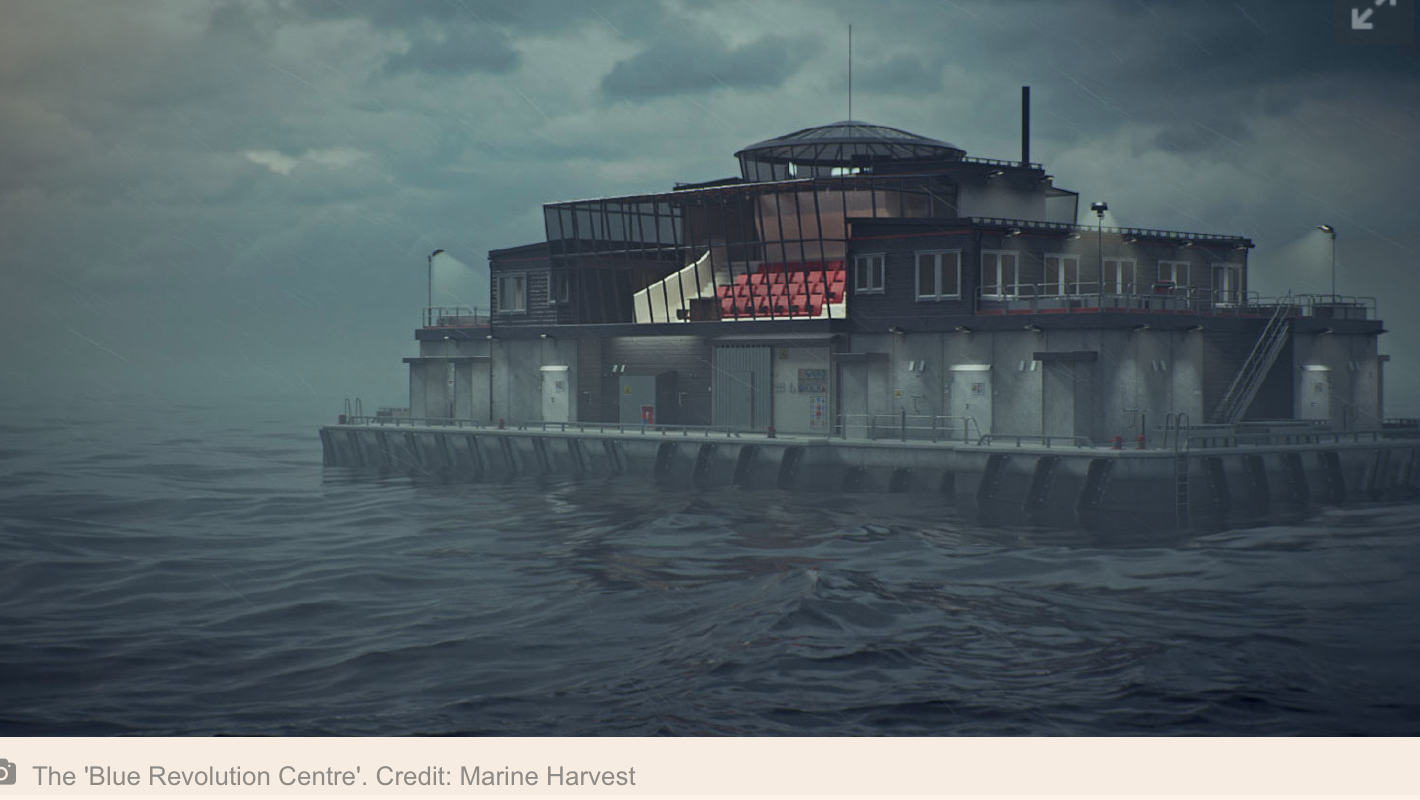
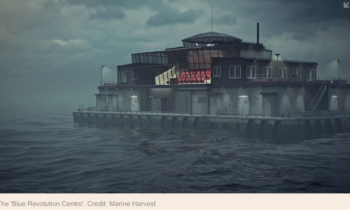
The Norwegian fisheries directorate has rejected Marine Harvest’s application for six development licenses to farm salmon on the “ship” (Skipet), an experimental fish farm design to produce salmon, the regulator said in a statement.
Marine Harvest’s initial plan was to convert a scrapped bulk carrier to a closed fish farm where the tank would be used for salmon production. The firm applied to farm in six tanks with about 158,000 salmons in each.

Marine Harvest said the concept would be beneficial “since it is based on the re-use of existing ships” and for its “escape safety”, due to the fact that the tank has solid walls.

The application was sent in June 2016, and the directorate apologized for a slow process.

To be awarded a license under the scheme, companies must show that their plans bring technological innovation while also adhering to strict environmental and animal welfare procedures.

(undercurrentnews)

April 21, 2018 0 comments
0 FacebookTwitterPinterestEmail
Russia and Norway

Norway detains a Russian for possessing explosive

by Nadarajah Sethurupan April 21, 2018
written by Nadarajah Sethurupan

It is known that the detainee came to Oslo on a visit, although before that he used to live in Norway for several years and was familiar to law enforcement officers.
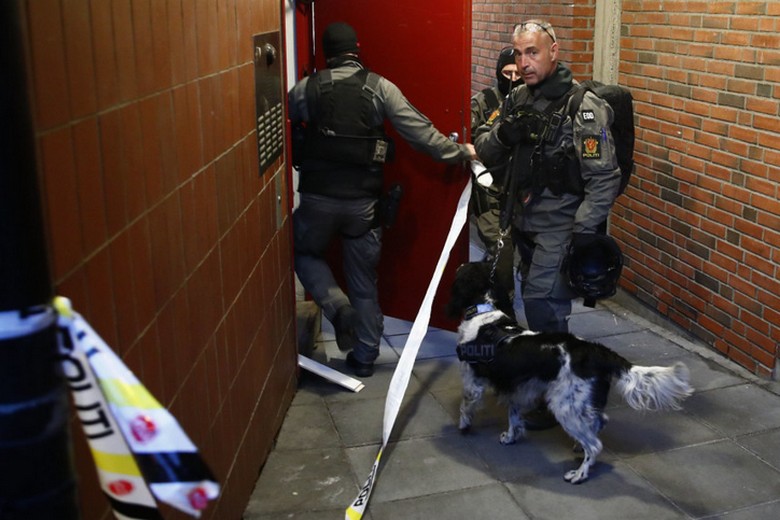
The Norwegian police have detained a Russian citizen in the capital of the country on suspicion of storing an explosive device, Norwegian TV channel TV2 reports.

The name of the 30-year-old Chechen detained late on the evening of April 20 in Rosenhoff area  is not specified.

According to police representative Grete Lien Metlid, a lengthy interrogation, that followed the detention, provoked the intention of the police to petition for taking the detainee into custody. Details of the interrogation have not been disclosed so far in the interests of the investigation.

According to news agency NTB, in the evening of April 19, the Oslo police received a report about a victim in one of the apartments in Rosenhoff area, who needed help.

The police officers that arrived at the scene found three men and a “suspicious object” in the apartment, after which the residents of the building were evacuated, and the premises were examined by sappers. The Russian, who was in the apartment but did not live there, was rounded up. Two other men have the status of witnesses.

Concerning the detainee, it is known that he came to Oslo on a visit, although he used to reside in Norway for several years and law enforcement officers have previously met him.

It is reported that Oslo will take the decision on a measure of restrain for the Russian, suspected of possession of explosives, today. According to TASS, Russian diplomats in Norway are verifying information on the detention of the Russian citizen.

April 21, 2018 0 comments
0 FacebookTwitterPinterestEmail
Asia and Norway

Indian PM invites Norway pension fund to invest in new sectors in India

by Nadarajah Sethurupan April 21, 2018
written by Nadarajah Sethurupan

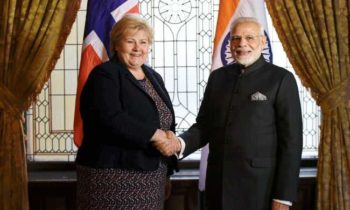
Indian PM Modi, during a bilateral meeting with Norwegian Premier Erna Solberg, underlined the Indian openness to foreign investment and also invited Norwegian companies to invest in India, a Norwegian government statement said.
 

Indian Prime Minister Narendra Modi has invited Norway’s pension fund to invest in new sectors in India citing the complementarity of the economies of the two countries.

Modi, during a bilateral meeting with Norwegian Premier Erna Solbergen here, underlined the Indian openness to foreign investment and also invited Norwegian companies to invest in India, a Norwegian government statement said.

Modi encouraged the Norwegian State Pension Fund Global to consider investing in new sectors in India, it said.

The Pension Fund had invested USD 11.7 billion in India at the end of 2017, an increase of 2.5 billion from 2016.

During their meeting in Sweden, the two leaders also agreed that the complementarity of the economies of the two countries offered huge scope for greater cooperation,

The areas of cooperation that were discussed included energy, green transport, environmental technologies, innovation, maritime and marine economies.

Modi and Solberg also discussed a joint action plan to achieve the United Nation’s Sustainable Development Goals.

Solberg underlined the importance of India succeeding if the world is to achieve the UN’s Sustainable Development Goals, the statement said.

Prime Minister Modi stressed that Norwegian and Nordic technologies and experiences could play a positive role in helping India achieve the goals, it said.

“Also the importance of the world taking decisive action to stop the environmental degradation of the oceans and to develop sustainable use of the vast resources of the ocean was a key topic of discussion,” the statement said.

The bilateral meeting was followed by an Indo-Nordic Summit where all the five Nordic prime ministers participated.

April 21, 2018 0 comments
0 FacebookTwitterPinterestEmail
Science

Europe Takes First Steps in Electrifying World’s Shipping Fleets

by Nadarajah Sethurupan April 20, 2018
written by Nadarajah Sethurupan

Container ships, tankers, freighters, and cruise liners are a significant source of CO2 emissions and other pollutants. Led by Norway, Europe is beginning to electrify its coastal vessels – but the task of greening the high seas fleet is far more daunting.
Since early 2015, a mid-sized car ferry, the MS Ampere, has been traversing the Sognefjord in western Norway from early morning to evening, seven days a week — without a whiff of smokestack exhaust or a decibel of engine roar. The 260-foot Ampere, which carries 120 cars and 360 passengers, is the one of world’s first modern, electric-powered commercial ships, with battery and motor technology almost identical to today’s plug-in electric cars, only on a much larger scale.

Norway’s long and jagged Atlantic coastline — with thousands of islands and deep inland fjords — made the Norwegians a seafaring people long ago, and even today ferry travel is the fastest way to reach many destinations. Given this geography and the country’s abundant hydroelectric resources, it’s hardly surprising that the Norwegians have plunged ahead in the development of electric shipping, beginning with light, short-range ferries.

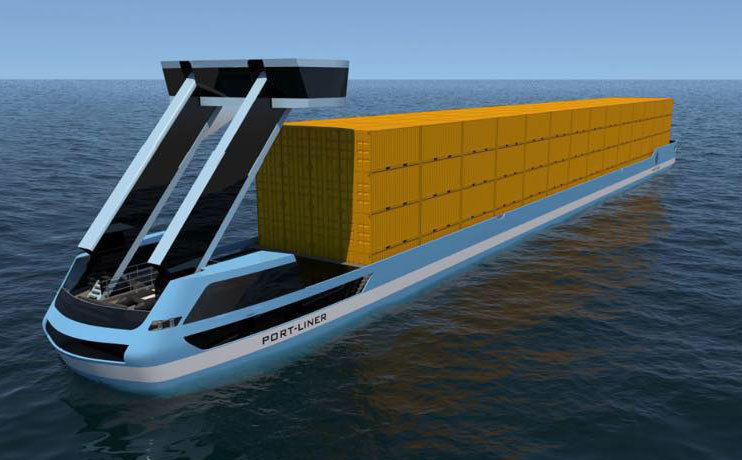
Currently, Norway has just two fully operational electric-powered ferries. But another 10 will be christened this year, 60 by 2021, and by 2023 the country’s entire ferry fleet will either be all-electric or, for the longer routes, equipped with hybrid technology, experts say. Moreover, Norway’s top cruise ship operator will soon launch two expedition cruise liners with hybrid propulsion that are designed to sail the Arctic. Several Norwegian companies have teamed up to construct a coastal, all-electric container ship that could eliminate 40,000 diesel truck trips annually. Eidesvik Offshore, a firm supplying offshore oil rigs, has converted a supply vessel to operate on batteries, diesel, and liquefied natural gas.

Norway is already a global leader in the adoption of electric vehicles, spurred in large measure by the hydropower that provides 98 percent of the country’ electricity. So moving into the forefront of tackling a major global environmental challenge — decarbonizing the world’s shipping fleet — was a natural step for the country. Other nations — including Finland, the Netherlands, China, Denmark, and Sweden — also are beginning to launch electric ships. Last year, China, for example, commissioned a 230-foot all-electric cargo ship, one that, ironically, transports coal along the Pearl River.

But if the electrification of the world’s automobile and truck fleet represents a daunting challenge, then converting the global shipping fleet from heavily polluting fuel oil and diesel to renewable sources of energy is no less complex. It’s one thing to use electricity and lithium ion batteries to power a car ferry across a Norwegian fjord, with charging stations at both ends of the run. It’s quite another to power the more than 50,000 tankers, freighters, and cargo carriers in the world’s merchant fleets across oceans. International shipping now accounts for about 3 percent of global carbon dioxide emissions, and this could shoot up dramatically to 17 percent by 2050 if other sectors decarbonize while shipping emissions climb higher, as they have unremittingly in recent years. The booming cruise ship industry has become a significant problemrecently, emitting large quantities of carbon dioxide and sulfur dioxide, among other pollutants, according to the German environmental group, NABU.

Converting the world’s shipping industry to run on renewable energy remains a longer-term goal that experts say will require development of more sophisticated battery technology and a new regulatory framework. “A lot of energy is needed to propel ships,” argues Olaf Merk of the International Transport Forum, a think tank for transport policy that is part of the Organization for Economic Cooperation and Development. “Electric ships are becoming attractive options for ships sailing short distances. But longer distances would require huge battery packs. This wouldn’t be attractive at the moment because of its high costs.”

“Countries with huge fleets are obstructing changes that would drive forward the electrification of marine transport,” says one expert.

Yet many analysts say that even though the technology to power large, ocean-going vessels on electricity is not yet ripe, the shipping industry’s conservative mindset is also a major impediment to the sector’s transformation. “The industry doesn’t really believe that a switch from bunker fuels is possible,” says Faig Abbasov, a shipping expert with Transport & Environment — a Brussels-based international environmental organization — referring to the fuel oils used to power ships. “And it’s countries with huge fleets that are obstructing changes that would drive forward the electrification of marine transport.”

Abbasov says the sector would change much more quickly if ship fuels were taxed — which they currently are not – and electricity for powering ships wasn’t taxed, as is currently the case across Europe. “This means that ship owners sticking with the dirtiest fuels are given a free ride,” he says.

Despite these challenges, Norway is steadily making progress toward converting its shipping fleet to run on renewable energy. “It’s really impressive — the transformation of shipping is beginning right now, it’s happening very fast, and not just in Norway,” says Borghild Tønnessen-Krokan, director of Forum for Development and Environment, an independent Norwegian NGO that has for years pushed for low-carbon transportation. “Shipping is part of a bigger green revolution in transportation in Norway,” he added, noting that more than half of all Norwegian cars sold last year were hybrid or electric.

The flurry of activity in electric shipping may begin to address the glaring omission of shipping in the Paris Climate Accord, which did not cover maritime transport. Shipping industry lobbyists and nations such as China and Brazil aggressively fought the inclusion of ship emissions in the accord, claiming that such a truly international sector couldn’t be held responsible for emissions in the same way that countries are. The EU and the International Maritime Organization (IMO) have set up monitoring criteria and energy efficiency standards that will become more stringent over time, but the IMO, at the behest of the industry and high-profile shipping countries, has resisted meaningful and binding emissions reduction goals for shipping companies. The EU has pushed back, threatening that it will include the sector’s CO2 pollution in its emissions-trading scheme if the IMO fails to take significant action.

Fighting climate change, however, was only one motive that inspired the niche shipyard Fjellstrand; Corvus Energy, a Canadian energy storage firm; and Norled AS, a ferry operator, to join forces with international heavyweight Siemens AS, Europe’s largest industrial manufacturer, to get Norway’s novel electric ferry pilot project off the ground.

The historic Fjellstrand shipyard, nestled on the shores of the Hardangerfjord in southern Norway, had been toying with the idea of battery-powered ferries for years. Fjellstrand surmised that since the country’s electricity supply is almost all renewably generated, thanks to its abundant rivers and mountain lakes, the economics of electric propulsion could eventually undercut the cost and large quantities of fuel that sea travel requires.

European engineers had tinkered with electric ships for over a century, but after a heyday in the early 1900s, electric motors lost out to the internal combustion engine in the 1920s. Norwegian submarines have long relied on hybrid diesel-electric locomotion, and Fjellstrand commissioned a series of viability studies for ferries.

But a decade ago, the technology, particularly the batteries, was simply too primitive and costly. “Our first studies found that we needed 450 tons of batteries to make it work,” explains Edmund Tolo of Fjellstrand. “In terms of size, ferries are of an entirely different dimension than cars.” It wasn’t until the company switched from designs using lead-acid batteries to more sophisticated lithium-ion batteries, and won a tender from Norway’s transportation authority in 2010, that the electric ferry project began to take off.

A new electric ferry reduced CO2 emissions by 95 percent and operating costs by 80 percent.

The biggest hurdle was no longer battery size. Storage technology had improved dramatically, and a medium-sized ferry’s engine room, which is large enough to accommodate roughly 12 tons of engine, can hold a lot of batteries. But the issue was how, in terms of time and magnitude, to deliver the massive kilowatt charge — about one hundred times that required for a plug-in automobile — required by even a moderately sized vessel to cross the Sogne Fjord, a distance of 3.5 miles.

Fjellstrand’s solution was to have battery packages and heavy-duty charging stations on both shores, at the port towns of Oppedal and Lavik, as well as in the MS Ampere itself. The shore-based batteries would be charged mid-journey, enabling the power to be transferred to the boat’s batteries while it docks, and in just 10 minutes. Many other Norwegian ports already have shore power stations, an accessory instrumental for its offshore oil industry.

“The other big issue was safety,” says Tolo. The thermal reaction that occurs in lithium-ion batteries generates intense heat that can lead to explosions and fires. The Ampere’s team had to design a unique cooling system for the twelve-ton packs of lithium batteries.

Industry studies have underscored the Ampere’s benefits and its technology’s maturity, showing that electric propulsion reduced CO2 emissions by 95 percent and operating costs by 80 percent.

“The technology is there, but to make it happen there have to be sticks as well as carrots,” says one expert.

“The energy costs are lower than diesel,” says Jan Kjetil Paulsen, a shipping expert with Bellona, an international environmental NGO based in Oslo, Norway. “Maintenance costs are less, too, as the electric motor is less complex than the diesel engine. And an electric motor lasts three times longer than a typical internal combustion system.”

Elsewhere in Europe, the electrification of maritime travel is gradually beginning to take off. Late last year, Finland launched its first electric car ferry, and dozens of hybrid ferries and electric-powered ferries are scheduled to go into service in the coming years. Finland’s cutting-edge maritime research vessel, the Aranda, has switched to hybrid propulsion. The ship, which belongs to the Finnish Environment Institute (SYKE), has benefited in more ways than one from adding an electric power system. The Aranda is equipped with a front-end ice-cutter that slashes through Arctic ice fields en route to monitoring stations and other winter research locations. Since the electric motor has higher rotational force than the diesel motor, it is significantly more effective at powering the cutter to break up thick ice cover, says Jukka Pajala, a senior adviser at SYKE. Moreover, the electric motor doesn’t expel pollutants that exacerbate the ice melt caused by global warming. And the electric motor is virtually silent, a critical advantage for researching marine life.

Denmark and Sweden are cooperating on two large eight-ton, electric passenger ferries that will travel the seven miles between Helsingborg, Sweden and Helsingör, Denmark. This summer, the Dutch company Port-Liner will unveil five all-electric, driverless, emissions-free barges, dubbed the “Tesla ships,” that will navigate the canals linking the ports of Amsterdam, Antwerp, and Rotterdam. The EU supported the 100 million-euro project with 8.5 million euros.

Despite these signs of progress, serious national and international regulations and incentives on converting the shipping industry to renewable sources of energy must be enacted, including a ban on heavy fuel oil in the Arctic to reduce the emissions of sooty, heat-absorbing pollution particles. “The technology is there,” says Tønnessen-Krokan of Norway’s Forum for Development and Environment. “Incentives have worked to make it happen, but there have to be sticks as well as carrots. Shipping should have been subject to emissions targets years ago.”

Paul Hockenos is a Berlin-based writer whose work has appeared in the The Nation, Foreign Policy, New York Times, Chronicle of Higher Education, The Atlantic and elsewhere. He has authored several books on European affairs, most recently Berlin Calling: A Story of Anarchy, Music, the Wall and the Birth of the New Berlin. He was a fellow at the American Academy in Berlin.

April 20, 2018 0 comments
0 FacebookTwitterPinterestEmail
Sex scandal

Norwegian government- stop having sex on roundabouts

by Nadarajah Sethurupan April 20, 2018
written by Nadarajah Sethurupan

Graduation is one of the most special times of any student’s life. It’s the realisation of all your dreams and the dawn of real life, taxes and not being able to afford the rent.


The best way to mark this is by having a big party and enjoying yourself to the utmost.

Of course, this sort of fun should be handled sensibly, but it’s rare to see statements given out warning graduates how to have fun without causing any accidents.

That’s exactly what has happened in Norway this week as the Scandinavian nation gets ready for the annual post-graduation tradition known as ‘Russ’.

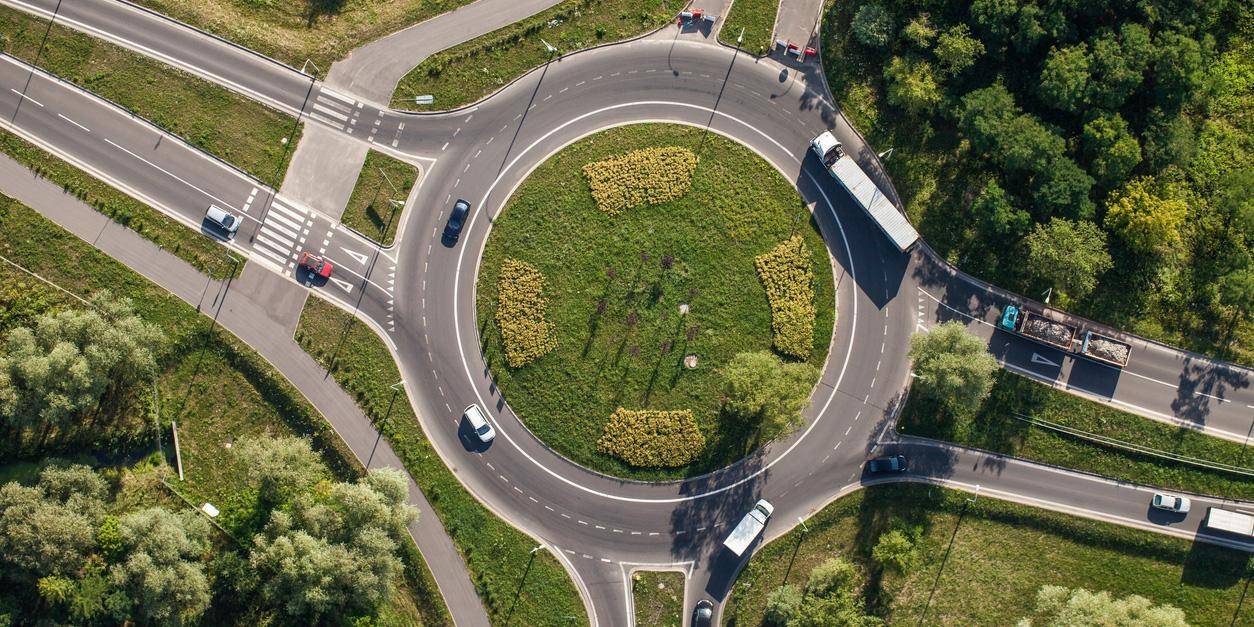
The party, which can last for close to a month, sees high school students literally run wild in the streets, drinking excessive amounts of alcohol, stripping nude and having sex on roundabouts.

Yes… roundabouts.

Quite where the compulsion to engage in intercourse on such a location came from isn’t quite clear, but it would appear to have something do with the rituals and challenges that the various schools have adopted over the years.

However, we don’t really need to explain to you why venturing out to an island in the middle of a busy road is incredibly dangerous, but the Public Road Administration in Norway decided to remind all those randy students.

In a statement titled ‘No to sex on roundabouts’, the former Norwegian minister of transport, Terje Moe Gustavsen, wrote:

Everyone understands that being in and around roundabouts is a traffic hazard.

It may not be so dangerous for someone to be without clothes on the bridge, but drivers can get too much of a surprise and completely forget that they are driving.

He’s got a point. The last thing you expect to see when navigating a roundabout is two teens doing something that is very NSFW. Or NSFD, as the case may be.

There is a more important reason for this statement and it isn’t just the Norwegian government trying to prevent kids from having fun.

Every year during the Russ, students drive around in vans painted different colours. But due to the nature of the revelry, accidents involving the vehicles would sometimes happen, resulting in the deaths of students who are aged just 18 and 19.

Remember kids. Have fun responsibly and don’t have sex on a roundabout.

April 20, 2018 0 comments
0 FacebookTwitterPinterestEmail
Middle East and Norway

Norwegian Embassy in Riyadh offers taste of culture

by Nadarajah Sethurupan April 20, 2018
written by Nadarajah Sethurupan

The way to cultural understanding and friendship is through our stomachs. This was aptly practiced and proven by Oyvind Strokke, Norwegian ambassador to the Kingdom, who organized a major gastronomic opportunity to taste a range of Norwegian cuisine in Riyadh. The menu was carefully designed to represent the flavors of Norwegian seafood.
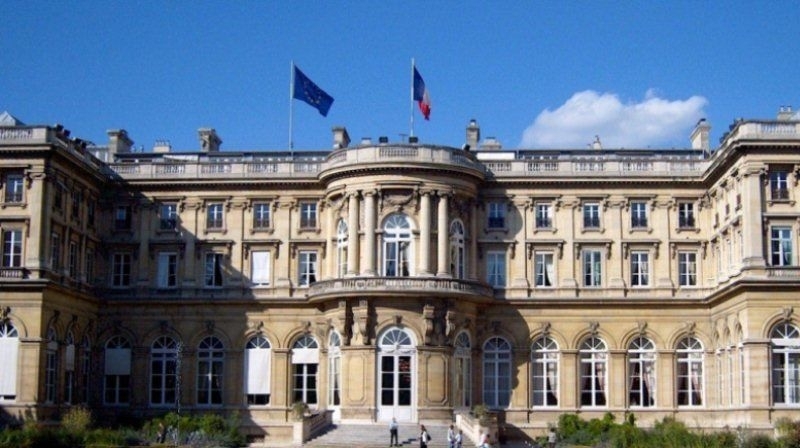
“This inclusive, engaging aspect of food works to create bridges of understanding,” said Strokke, who hosted the lavish dinner at his residence recently. “Norway is the second largest seafood producer in the world with its total volume amounting to 34 million meals of seafood prepared every day. The seafood export to Saudi Arabia increased as much as 42 percent last year.

“Promoted as healthy and tasty food, more and more seafood from Norway is now served at the dining tables of Saudi families,” said the diplomat, referring to the abundant supply of Norwegian salmon, mackerel, sea bass and other species in supermarkets across the Kingdom. To mark this positive development, the ambassador said he hosted the special seafood dinner to further educate people about Norwegian seafood.

The invited guests included several hoteliers, chefs, food importers and market players. “You are a test panel tonight,” Stokke told his guests. “My chef Roshan Pradeep has made some new dishes he will try out … they are quite easy to cook, look delicious and taste like a deep, clear Norwegian fjord.”

Another chef, Ashraf Mahdy, presented the dishes for the guests, explaining how they were made.

Also among the guests were the President of the Saudi Arabian Chefs’ Association, Yassir Jad, and TV presenter and chef Gary McKenna, who said: “I am so pleased that the Middle East marketplace is now recognizing that there is no substitute for the best quality Norwegian fish.”

Stokke also launched new brochures for the Norwegian Seafood Council in Arabic and English, with recipes for easy ways to prepare dishes of salmon and cod.

The dinner party was a success, with a friendly and down-to-earth atmosphere in which people had the chance to take photos, discuss food, get new ideas and make valuable contacts. Stokke plans to arrange more dinners with a similar concept, strengthening the brand of Norwegian seafood toward the Saudi HORECA exhibition in November, when a solid Norwegian delegation will visit Riyadh.

April 20, 2018 0 comments
0 FacebookTwitterPinterestEmail
Diplomatic relations

International Partnership against Impunity

by Nadarajah Sethurupan April 19, 2018
written by Nadarajah Sethurupan

In an international context marked by a resurgence in the use of chemical weapons and the Douma attack, France, as chair of the International Partnership against Impunity for the Use of Chemical Weapons, welcomes the adhesion of another four States on April 15: Norway, Estonia, Finland and Slovenia. Twenty-seven nations and one international organization (the European Union) are now Participating States.
The Partnership is open to all countries that adhere to the objectives and principles adopted at its creation. France invites all those who wish to support the relevant organizations and international mechanisms through operational action to join this partnership.

Since its launch in Paris on January 23, the Partnership is helping to provide useful information for current international investigations. It is also working to complete the lists of individuals and entities involved in the use of chemical weapons. It should meet soon under the chairmanship of the Minister for Europe and Foreign Affairs.

April 19, 2018 0 comments
0 FacebookTwitterPinterestEmail
Farming

Norway becomes the latest mining hub

by Nadarajah Sethurupan April 18, 2018
written by Nadarajah Sethurupan

As governments around the world shut the door on bitcoin operations, Norway says it is ‘delighted’ to welcome two new major crypto-mining data centres.


It used to be China that dominated bitcoin mining. Last year it was thought that perhaps 60% of the world’s bitcoin mines were there with many of them perched high in the mountains in Yunnan and Sichuan and powered on cheap ad-hoc deals with local hydro companies.

Beijing said it “disapproved” so the miners started to look for other places with cheap power and friendly governments. Many headed to Canada and to hydro-rich Quebec and the neighboring US state of Washington. That was until authorities in the States and Canada made it clear their energy-hungry ways weren’t exactly welcome.

“If you want to come settle here, plug in your servers and do bitcoin mining, we’re not really interested,” the Premier of Quebec Philippe Couillard said in March.

Today, a lot of the world’s crypto miners seem to be in northern Europe.

Iceland made the news last month after this normally low-crime island suffered a wave of bitcoin server thefts. The recent bitcoin mining boom, said Icelandic police, had also brought in organized crime gangs from overseas.

And now Norway is the headlines too as Canadian HIVE Blockchain Technologies has just announced it has purchased American-Norwegian data center owner Kolos.

Norway’s power supply is 100% renewable and Kolos is currently building what it claims will be the world’s biggest data center there, on a 64-hectare site in Ballangen, 225 kilometers north of the Arctic Circle. HIVE says it will now use the site for its blockchain and cryptocurrency infrastructure business.

The site’s northern location means it is naturally climate-cooled and has close proximity to an abundant hydroelectricity supply that HIVE says it can purchase for “highly competitive rates”. The local municipality is said to “strongly support” the project.

HIVE will join American bitcoin mining equipment supplier Bitfury, which last week opened a new $35-million mining data center in Norway.

Norway currently has no specific regulations restricting crypto-trading or mining and, by comparison to many countries, has established a liberal crypto-tax scheme. Investors have to pay a 25% capital gains tax but, unlike in the States, any losses can be written off.

At the Bitfury data center launch, Norway’s Minister of Trade and Industry Torbjørn Røe Isaksen said he was “delighted” that the American bitcoin miner was in Norway.

“It has been important for us to facilitate the opening of more data centers in Norway,” he told local media. “We have green power, so this can create jobs and investments in new technology.”

And who can argue with that?

(atimes)

April 18, 2018 0 comments
0 FacebookTwitterPinterestEmail
Asia and Norway

PM Modi Holds Bilateral Meetings With Norwegian Counterparts In Sweden

by Nadarajah Sethurupan April 17, 2018
written by Nadarajah Sethurupan

Indian Prime Minister Narendra Modi today held bilateral meetings with his counterparts from Finland, Denmark, Iceland and Norway and discussed ways to enhance ties with these Nordic countries in key areas such as trade and investment, and renewable energy.

PM Modi met the leaders of the four Nordic countries on the sidelines of the India-Nordic Summit in Stockholm.

Prime Minister Modi met Danish Premier Lars Lokke Rasmussen and held talks on renewing and enhancing cooperation. The two leaders expressed their mutual desire to take the relationship forward, External Affairs Ministry Spokesperson Raveesh Kumar said.

After the bilateral meeting between PM Modi and PM Rasmussen, documents were exchanged between the two sides in areas of animal husbandry, dairying and urban development.

“Glad to have met Prime Minister Lars Lokke Rasmussen of Denmark. Our talks were productive and extensive, aimed at strengthening relations between our countries,” PM Modi tweeted after the meeting.

Prime Minister Modi also had an “excellent meeting” with his Finnish counterpart Juha Sipila. The two leaders discussed enhancing cooperation in trade and investment, renewable energy, space, waste management, start-up and education, Mr Kumar said.

“Prime Minister of Finland, Mr. Juha Sipila and I met in Stockholm today. We had excellent discussions on deepening avenues of cooperation between India and Finland,” PM Modi said in a tweet.

 PM Sipila also tweeted about the meeting, saying, “Recalled our first meeting in Mumbai in 2016 and had concrete negotiations how to promote our cooperation further in energy, space, education.”


PM Modi also met Iceland Premier Katrin Jakobsdottir on the sidelines of the India-Nordic Summit.

  “We deliberated on ways to boost economic and people-to-people relations between our nations,” PM Modi said after the meeting.

“PM urged Icelandic companies to look at India as an investment destination in blue economy and geothermal energy and strengthen cooperation in education, tourism and culture,” Mr Kumar said of the meeting between the two leaders.

The two leaders reviewed the full range of India-Iceland relations during their meeting, the PMO said.

Later, PM Modi also met his Norwegian counterpart Erna Solberg.

“Had a wonderful meeting with Prime Minister Erna Solberg. There is immense potential to boost relations with Norway especially in areas such as innovation, trade and clean energy,” PM Modi said after the meeting.

“A wonderful meeting between PM Modi and Erna Solberg. India values the deep-rooted friendship with Norway,” a tweet on the PMO Twitter handle said.

 Prime Minister Modi had an engaging interaction with Premier Solberg on trade and investment, shipping and port-development, blue economy, renewable energy, health, IT and green transport solutions, Mr Kumar said.
Earlier in the day, PM Modi held delegation-level talks with his Swedish counterpart Stefan Lofven on a wide range of issues.


The Nordic countries comprise Denmark, Finland, Iceland, Norway and Sweden.

(NDTV)
April 17, 2018 0 comments
0 FacebookTwitterPinterestEmail
Newer Posts
Older Posts

Norwegian Nobel Prize 2024

101207 The Norwegian Nobel Committee has decided to award the Nobel Peace Prize for 2024 to Japan’s Hiroshima bomb survivor group Nihon Hidankyo.

Special Interest

  • Africa and Norway
  • Asia and Norway
  • Asylum
  • China and Norway
  • Corruption in Norway
  • Crimes
  • Defence
  • Diplomatic relations
  • Economics
  • Environment
  • Farming
  • Killing
  • Media Freedom
  • Middle East and Norway
  • NATO and Norway
  • Nobel Peace Prize
  • Norwegian Aid
  • Norwegian American
  • Oil & Gas
  • Peace Talks
  • Politics
  • Racism in Norway
  • Religion
  • Russia and Norway
  • Royal House
  • Science
  • Sex scandal
  • Sports
  • Spy War
  • Srilanka and Norway
  • Svalbard
  • Terrorist
  • Taiwan and Norway
  • Video clips

Follow Us

Recent Posts

  • Norway and Germany sign defence arrangement

    February 15, 2026
  • China hopes Norway will play a role in the Europe ties

    February 15, 2026
  • Norwegian cross-country skier breaks Olympic medal record

    February 15, 2026
  • Norway police search former PM’s properties in Epstein links probe

    February 12, 2026
  • Afghan National Killed in Norway

    February 11, 2026
  • Việt Nam strengthening cooperation with Norway: Việt Nam FM

    February 11, 2026

Social Feed

Social Feed

Editors’ Picks

Norway opens market for Sri Lankan fish exports...

May 13, 2016

Sri Lanka – Nordic Business Council holds discussions...

May 15, 2016

Good governance to Sri Lanka

May 15, 2016

Shock and Joy in Sri Lanka – Erik...

May 15, 2016

Sri Lanka-Norway plenty of new opportunities for business–...

May 15, 2016

NORWAY NEWS is an online news site, written in English, dedicated to Norwegian affairs at home and abroad. Norway News.com is published online. It is a daily online newspaper in existence since May, 2003. The site is run by an Independent Journalist.

Facebook Twitter Youtube

Useful Links

    • Work With Us
    • Contact Us
    • Collaboration
    • Data Collection
    • Workplace
    • Adverstising
    • Privacy Policy
    • International Collab
    • Feedback
    • Terms of Use
    • About Our Ads
    • Help & Support
    • Entertainment
    • News Covering
    • Technology
    • Trending Now

Politics

Syrian, Norway to boost cooperation on mine clearance
Erna to step down as Conservative Party leader in 2026
Norwegian Labour Party on re-election win

Latest Articles

Norway and Germany sign defence arrangement
China hopes Norway will play a role in the Europe ties
Norwegian cross-country skier breaks Olympic medal record
Norway police search former PM’s properties in Epstein links probe

Norway News 2025 . All Right Reserved. Designed and Developed by Norway News

  • Home
  • About us
  • Disclaimer
  • Contact us
NORWAY NEWS – latest news, breaking stories and comment – NORWAY NEWS
  • Home
  • About us
  • News
  • Other News
    • Africa and Norway
    • Asia and Norway
    • Asylum
    • Breaking News
    • China and Norway
    • Corruption in Norway
    • Crimes
    • Defence
    • Diplomatic relations
    • Economics
    • Environment
    • Farming
    • Featured
    • Health
    • Killing
    • Media Freedom
    • Middle East and Norway
    • NATO and Norway
    • Nobel Peace Prize
    • Norwegian Aid
    • Norwegian American
    • Oil & Gas
    • Peace Talks
    • Politics
    • Racism in Norway
    • Religion
    • Royal House
    • Russia and Norway
    • Science
    • Sex scandal
    • Sports
    • Spy War
    • Srilanka and Norway
    • Svalbard
    • Taiwan and Norway
    • Terrorist
    • Travel
    • Video clips
  • Disclaimer
  • Contact us
NORWAY NEWS – latest news, breaking stories and comment – NORWAY NEWS
  • Home
  • About us
  • News
  • Other News
    • Africa and Norway
    • Asia and Norway
    • Asylum
    • Breaking News
    • China and Norway
    • Corruption in Norway
    • Crimes
    • Defence
    • Diplomatic relations
    • Economics
    • Environment
    • Farming
    • Featured
    • Health
    • Killing
    • Media Freedom
    • Middle East and Norway
    • NATO and Norway
    • Nobel Peace Prize
    • Norwegian Aid
    • Norwegian American
    • Oil & Gas
    • Peace Talks
    • Politics
    • Racism in Norway
    • Religion
    • Royal House
    • Russia and Norway
    • Science
    • Sex scandal
    • Sports
    • Spy War
    • Srilanka and Norway
    • Svalbard
    • Taiwan and Norway
    • Terrorist
    • Travel
    • Video clips
  • Disclaimer
  • Contact us

Editor’s Picks

  • UN concern over Sri Lanka’s cases of enforced disappearances

    October 8, 2025
  • UN Human Rights Council Resolution on Sri Lanka’s Path to Reconciliation

    October 7, 2025
  • International should support Sri Lanka: Solheim

    October 4, 2024
  • Norwegian Meets Sri Lankan’s Challenges

    May 3, 2024
  • Norwegian Ambassador meets JVP in Sri Lanka

    May 2, 2024
  • “The man who didn’t run away” – Eric Solheim

    April 30, 2024

Newsletter

@2025 - All Right Reserved. Designed and Developed by Norway News