NORWAY NEWS – latest news, breaking stories and comment – NORWAY NEWS
  • Home
  • About us
  • News
  • Other News
    • Africa and Norway
    • Asia and Norway
    • Asylum
    • Breaking News
    • China and Norway
    • Corruption in Norway
    • Crimes
    • Defence
    • Diplomatic relations
    • Economics
    • Environment
    • Farming
    • Featured
    • Health
    • Killing
    • Media Freedom
    • Middle East and Norway
    • NATO and Norway
    • Nobel Peace Prize
    • Norwegian Aid
    • Norwegian American
    • Oil & Gas
    • Peace Talks
    • Politics
    • Racism in Norway
    • Religion
    • Royal House
    • Russia and Norway
    • Science
    • Sex scandal
    • Sports
    • Spy War
    • Srilanka and Norway
    • Svalbard
    • Taiwan and Norway
    • Terrorist
    • Travel
    • Video clips
  • Disclaimer
  • Contact us
NORWAY NEWS – latest news, breaking stories and comment – NORWAY NEWS
  • Home
  • About us
  • News
  • Other News
    • Africa and Norway
    • Asia and Norway
    • Asylum
    • Breaking News
    • China and Norway
    • Corruption in Norway
    • Crimes
    • Defence
    • Diplomatic relations
    • Economics
    • Environment
    • Farming
    • Featured
    • Health
    • Killing
    • Media Freedom
    • Middle East and Norway
    • NATO and Norway
    • Nobel Peace Prize
    • Norwegian Aid
    • Norwegian American
    • Oil & Gas
    • Peace Talks
    • Politics
    • Racism in Norway
    • Religion
    • Royal House
    • Russia and Norway
    • Science
    • Sex scandal
    • Sports
    • Spy War
    • Srilanka and Norway
    • Svalbard
    • Taiwan and Norway
    • Terrorist
    • Travel
    • Video clips
  • Disclaimer
  • Contact us
Monday, February 16, 2026
NORWAY NEWS – latest news, breaking stories and comment – NORWAY NEWS
  • Home
  • About us
  • News
  • Other News
    • Africa and Norway
    • Asia and Norway
    • Asylum
    • Breaking News
    • China and Norway
    • Corruption in Norway
    • Crimes
    • Defence
    • Diplomatic relations
    • Economics
    • Environment
    • Farming
    • Featured
    • Health
    • Killing
    • Media Freedom
    • Middle East and Norway
    • NATO and Norway
    • Nobel Peace Prize
    • Norwegian Aid
    • Norwegian American
    • Oil & Gas
    • Peace Talks
    • Politics
    • Racism in Norway
    • Religion
    • Royal House
    • Russia and Norway
    • Science
    • Sex scandal
    • Sports
    • Spy War
    • Srilanka and Norway
    • Svalbard
    • Taiwan and Norway
    • Terrorist
    • Travel
    • Video clips
  • Disclaimer
  • Contact us
Copyright 2025- All Right Reserved Norway News
Diplomatic relations

Norway seeking increased international cooperation to deal with the coronavirus crisis

by Nadarajah Sethurupan April 18, 2020
written by Nadarajah Sethurupan

Widespread international cooperation is of vital importance in the efforts to alleviate the impacts of the coronavirus crisis. The Government is now considering a Norwegian contribution to the IMF’s Catastrophe Containment and Relief Trust as well as increased funding to lending schemes for low-income countries.

Minister of Finance Jan Tore Sanner (Conservative Party) took part today in a video conference meeting of the IMF International Monetary and Financial Committee, which comprises ministers of finance and central bank governors. Multilateral cooperation was one of the key topics at the meeting.
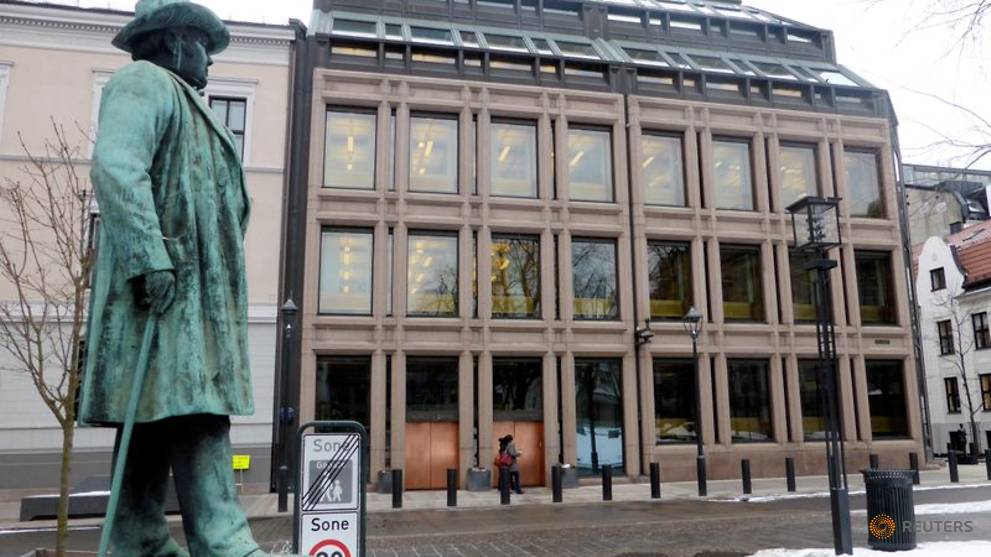
In order to meet the need for support to vulnerable low-income countries, the IMF is calling for increased funding for the subsidised schemes for these countries financed under the Poverty Reduction and Growth Trust (PRGT). Norway is now considering the possibility of contributing to lending funds for the poorest countries through the PRGT. The Government is also assessing whether to allocate development assistance funding to the IMF’s Catastrophe Containment and Relief Trust (CCRT). The CCRT provides debt relief for the poorest countries by covering debt service payments to the IMF during the period in which these countries are dealing with the pandemic.

‘I am pleased that the IMF is responding quickly to the crisis, and that the member countries are demonstrating their willingness to work together to re-activate economies. These efforts are designed to help vulnerable countries that lack an adequate health care system and economic structure for dealing with the ramifications of the COVID-19 outbreak. We are seeking common solutions to common challenges,’ said Minister of Finance Jan Tore Sanner.

No country can solve this crisis on its own. This is why Norway is seeking increased international cooperation to deal with the coronavirus crisis.

‘Norway supports a shared endeavour to give the poorest countries debt service relief for both interest and instalment payments. This will enable them to free up resources they can use to fight the coronavirus outbreak,’ said Minister of International Development Dag-Inge Ulstein (Christian Democratic Party).

‘The corona pandemic and the comprehensive infection control measures in many countries will lead to a major decline in the world economy. We must work to strengthen multilateral cooperation to help people and enterprises get through this global crisis,’ said Mr Sanner.

History has shown the importance of economic cooperation and free trade across national borders. Prosperity in Norway and many other countries is rooted in trade and commercial activity. Open markets and regulated multilateral cooperation have helped to promote economic growth and created millions of jobs. This world order is now under threat. Never before has it been more important to work to achieve broader international cooperation – in the Nordic countries, in Europe, and throughout the world.

‘The pandemic does not stop at national borders. To get through this, we are dependent on the success of other countries in limiting the spread of infection and controlling their economic fallout, and we all need to ensure that the international markets still exist when this is over,’ said Mr Sanner.

‘The UN, IMF, World Bank, WHO and WTO all have a key role to play in the fight against the pandemic. Norway, too, is doing what it can to ensure that developing countries will be able to manage the coronavirus outbreak and its long-term ramifications. Among other things, we were behind the initiative to establish – and have contributed to – the UN COVID-19 Response and Recovery Multi-Partner Trust Fund, and we are providing considerable support to vaccine development efforts. We must protect those who are most vulnerable, and prevent today’s health crisis from becoming tomorrow’s hunger disaster and social crisis,’ said Mr Ulstein.
April 18, 2020 0 comments
0 FacebookTwitterPinterestEmail
NATO and Norway

Russian Jet Over Mediterranean Unprofessional, Not Deliberate – USEUCOM

by Nadarajah Sethurupan April 16, 2020
written by Nadarajah Sethurupan

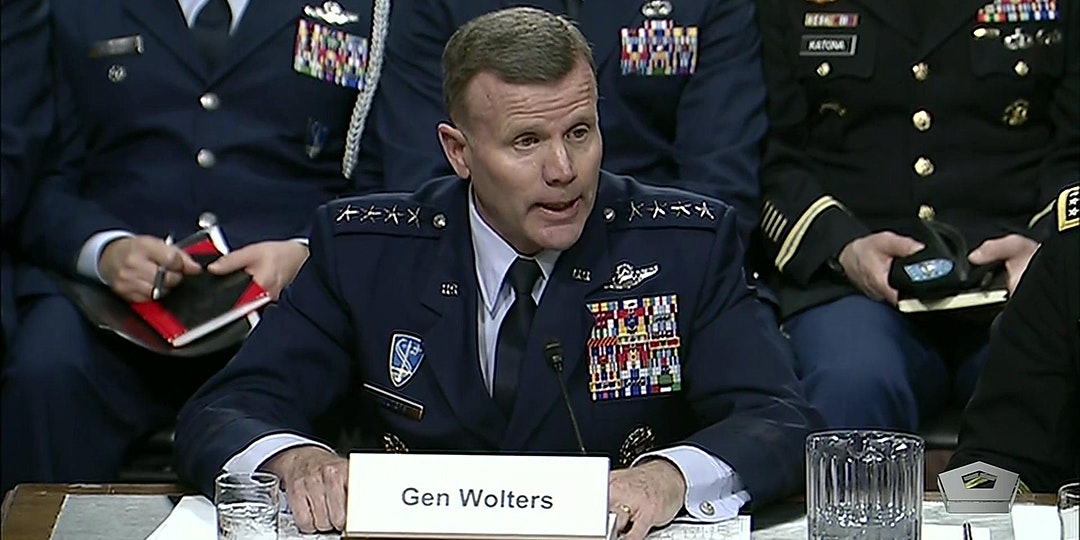
The Pentagon believes that this week’s incident involving a Russian Su-35 fighter jet and a US P-8A Poseidon surveillance aircraft over the Mediterranean Sea was unprofessional but not intentional, the commander of US European Command Air Force General Tod D. Wolters said on Thursday.

“It was obviously unfortunate as you can imagine. I’ve looked at the footage. I’ve studied the intent, and my conclusion at this point is that it was probably something that was more along the lines of unprofessional as opposed to deliberate,” Wolters said. “We have an investigation that’s ongoing … Our US mission in Moscow has obviously already initiated a conversation with the powers to be in Moscow to make sure that they are very, very aware of our dissatisfaction with the event.

The US Navy in a statement on April 15 said a Russian Su-35 fighter jet conducted a high-speed maneuver in front of a US P-8A Poseidon surveillance aircraft during an intercept over the Mediterranean Sea.

The statement said the intercept lasted approximately 42 minutes and that the Russian aircraft was operating in international airspace.

The Navy said the US aircraft was operating in accordance to international law and did not provoke the Russian aircraft.

Below is a full rush transcript of the press conference by General Tod Wolters  U.S. European Command (USEUCOM) Commander and NATO Supreme Allied Commander Europe.

General Wolters:  As you well know, I’ve got the distinct privilege of wearing two hats.  One is the Commander of U.S. European Command, and the other as the Supreme Allied Commander for Europe.  I’ll speak underneath both those hats, and make sure, if we have any discrepancies based off which hat I’m talking from, I’ll clarify that with you. 

With respect to the COVID pandemic, first and foremost, our sincere condolences to all who have suffered from the tragic loss of life as a result of COVID-19.  We grieve with you. 

Even as the NATO military forces continue to deliver effective deterrence and defense – and we are laser-focused on that delivery – we are still conducting operations, our forces remain ready, and all of this is crucial as work continues to progress. 

Allies continue to stand close together and support each other, especially during these trying times, and we do so through different NATO arrangements, and we’ve done so and will continue to do so via bilateral arrangements.   

Allied armed forces across the Alliance are also playing an essential role in supporting national civilian efforts.  For NATO we continue to use the Rapid Air Mobility initiative in cooperation with the European Organization for the Safety of Air Navigation, and that’s EUROCONTROL.  This allows for expeditious delivery of life-saving equipment and personnel to the critical point of need. 

Also, using multiple means such as the Euro-Atlantic Disaster Response Coordination Center, the NATO Support and Procurement Agency, Strategic Airlift International Solution, which is SALIS, and Strategic Airlift Capability, we’re able to lift and shift critical assets and get them to the vital point of need.  Again, that vital point of need varies in time and location. 

Our shared values across all of the NATO Alliance are what keeps us going through these difficult times.  I truly believe that this pandemic has brought us closer together.  

Let me take just a second to share with you what United States forces have done in our area versus COVID-19.  At this point I’m speaking to you with my U.S.-EUCOM hat.  Across the European theatre we provided for over $500,000 in essential equipment and medical supplies from the U.S. Department of Defense stocks within Italy alone.  We’ve leveraged long-standing bilateral relationships to coordinate access to supplies in Luxembourg.  Under NATO’s lead we’ve joined with allies to lift much-needed medical supplies from the Pacific to Romania. 

On the 10th of April the U.S. President authorized contributions of $4.7 million to fund locally procured personal protective equipment requirements.  U.S. European Command has 10 quick reaction projects in execution, delivering $150,000 in PPE to 8 different locations.  And as we speak, we’ve got eight more projects in the works. 

Just this week we transferred three Americans from Kabul, Afghanistan to Ramstein Air Base, Germany, and onward to Landstuhl Regional Medical Center in Germany for the treatment of COVID-19.  This was a first for our U.S. Department of Defense from Afghanistan to Europe. 

None of these events would have been possible without the trust and confidence and coordination between allies and partners.  This is proof that the Alliance remains ready and capable to support one another in these tough, tough times of need. 

Lastly, before I close, I want to underscore the importance of credible information.  As military forces, we have an obligation to be truthful, timely, and accurate in what we say and what we do, and that’s exactly what we continue to do here, from a U.S. perspective, and certainly from a European perspective.  It’s part of our democratic values system.  Transparency is vital right now.  Neutralizing misinformation and delivering accurate and truthful facts is paramount.  Our partnership and trust with one another is steadfast, and it will remain so long after COVID-19 is over with. 

Question :  Moscow calls for a commitment on the part of both Russia and NATO to significantly limit the scope of military exercises and trainings for the duration of the pandemic.  They seem to take the idea very seriously.  Is this something that NATO would be willing to consider?  If no, why not?  What needs to happen for this to become a reality?” 

General Wolters:  The first thing I’ll say is, as the Allied Command Operations Commander representing NATO, we and our commanders remain laser-focused on preserving our capability to adequately deter and defend in Europe.  And we remain laser-focused in that area, and we certainly possess the capability to effectively deter and defend today.  And that is mission one. 

Our second concern is, obviously, the health of all the citizens that we swore to protect, and we remain laser-focused in that area.  In so doing, we will ensure that, as a NATO, we preserve our incredible capability to effectively deter and defend, and we will not take our eye off the ball with respect to that capability. 

Question:  I spoke last week with Deputy Secretary General Geoana, and he said that you will be presenting to ministers of defense some innovative solutions for them to consider and maybe adopt.  Can you tell us a little bit more about it?

General Wolters:  One of the things that we will most likely be tasked to do by NATO towards our SHAPE headquarters is to provide inputs in the near and long term for a pandemic response plan, and a part of having an effective plan is to make sure that we go back and after-action review all that has taken place with respect to lessons learned from pandemic coronavirus 19.  So we will gather all of the facts, and ensure that we can marshal our planners together, and look for ways that we can be more credible in serving our citizens from a military perspective, while we always focus on deterring and defending, and also from a health perspective, to ensure that all of our citizens are in good shape when it’s all said and done. 

There will be thousands and thousands of inputs to that plan, and we want that plan to be comprehensive in its service to the health of our citizens.  And our pledge to NATO is we will do that.  Thank you. 

Question:  Can you describe Russian disinformation efforts that have taken advantage of the pandemic to try and divide the NATO Alliance?” 

General Wolters:  We’ve heard information in open press that addresses some of the medical goods that have been delivered by certain NATO nations to other NATO nations.  And Russia has attempted to insert themselves in that information transaction and downplay the importance of one nation in NATO providing PPE equipment to another.  And that in itself is a form of disinformation. 

We’ve also seen cases where Russia has delivered goods to European nations, and there have been many open press reports that those goods are flawed.   

What we owe our citizens is to ensure that we tell the truth.  And part of a misinformation campaign starts with the trust and confidence that citizens have in what you transmit.  And we want to make sure that we continue to stick with our democratic values and stay very, very laser-focused on the facts so that our forces understand exactly what we’re doing, and anybody that attempts to provide malign influence to our forces must understand that we’re in the business of passing on the facts, not falsehoods. 

Question:  You know that the medical supplies that Russians have sent to Italy have been accompanied by military Russian personnel, and also intelligence personnel.  Do you think that the presence of these kinds of operatives on NATO territory represents a security risk for NATO?  And should the Italian Government have been more cautious in accepting this kind of so-called help? 

General Wolters:  I can tell you that I remain very, very focused on those transactions.  And again, that’s a decision, with respect to the Italian Government, that you would have to take up with them.  I am very aware of those transactions.  It is of concern.  I pay very close attention to Russian malign influence.  I pay very close attention to Russian influence.  And we have to make sure that we have all the facts.  It is a concern.  We remain very, very vigilant in NATO with respect to those transactions, and we continue to monitor to the highest degree. 

Question:   Due to the coronavirus pandemic, some exercises have been modified or canceled.  Are there plans to change, postpone, or cancel other exercises scheduled this year – for example, BALTOPS?

General Wolters:  As for now, BALTOPS is still ongoing and it’s a classic case where we have an exercise on the horizon in the June and July timeframe, and with each passing second of the day we’re taking a look at each and every one of our activities to make sure that we can preserve, potentially, as many as possible, and when we think it’s feasible based off the size of the exercise, the complexity of the exercise, the location of the exercise, obviously the time of the exercise, we’re willing to make adjustments.  And a lot of that has to do with what are the learning objectives, what is our ability to adequately get everybody together of sound mind and comfort to where they can remain laser-focused on the mission.   

So we will be – we will be constantly adjusting the scope and scale of our exercises, as we have been for the last 70 to 80 days, to make sure if there is an ability to execute the exercise in its totality, we will attempt to keep it on track, and if there is no ability to do so, we’ll look at cancellation or postponement, and depending upon, again, the size, the cost, the location, we will continue to adjudicate. 

My goal is also, as the SHAPE commander from a NATO perspective, to ensure that those exercises that unfortunately we’ve had to cancel or postpone, we’ll go back and take a look at all the critical objectives that we wanted to garner out of each and one of those – each and every one of those exercises and make sure that our field commanders is aware of what we suspect would have been the lessons learned for those exercises, and we’ll go through a strong commanders conference to make sure that any potential lessons learned, we’ll try to pull out of them what we thought we would have pulled out of them to make sure that we can remind all of our forces of all the things that are involved to ensure that we can adequately deter and defend.  And again, that’s the purpose of having those exercises – to improve our deterrence and defense posture. 

Question:  I am wondering if you could tell me anything more about the incident in the last couple of days about a Russian Su-35 harassing a Navy P-8 over the Mediterranean.  I’m wondering if you believe that this is part of Moscow taking advantage of the pandemic to harass our planes.  What do you think is there aim in doing something like this?  

General Wolters:  I know that you’re very familiar with what happened between the Su and the P-8.  It was obviously unfortunate.  As you can imagine, I’ve looked at footage, I’ve studied the intent, and my conclusion at this point is that it was probably something that was more along the lines of unprofessional as opposed to deliberate.  We have an investigation that’s ongoing.  As you well know, we do that in every case and our U.S. Mission in Moscow has obviously already initiated a conversation with the powers that be in Moscow to make sure that they’re very, very aware of our dissatisfaction with the event. 

But we’ll continue to take a closer look at it, Lara, but at this point I can tell you that it’s been characterized as unsafe and unprofessional, and that’s exactly what it looks to be at this point. 

Question:  You mentioned that EUCOM is still conducting operations.  Can you talk in a little more detail about how the pandemic has influenced the conduct of U.S. military operations in Europe and offer a few concrete examples of any changes you’ve instituted or measures you’ve taken to facilitate missions being carried out? 

General Wolters:  we’re adjusting every day.  The classic U.S. example that I can pass on to you that displays what we probably have lost from a training perspective goes back to DEFENDER-Europe 20.  And as you recall, it involved 18 nations.  As a result of reducing the number of U.S. troops that we brought from CONUS to Europe, we had a reduction of – in sheer size of the nations that were involved.  So instead of having 18 nations involved with DEFENDER-Europe 20, it’s much, much less than that. 

But with each and every passing day, we’re looking for the opportunity to take those 5,700 to 6,200 U.S. soldiers that we have on European soil to make sure that they get as much of the pre-prescribed DEFENDER-Europe 20 training as they can possibly get.  Will they get it all?  No, and it’ll be with a smaller footprint.  But we’re trying as hard as we can to squeeze out every second of the day and ensure that each and every one of the troops that we have invested already in DEFENDER-Europe 20 can maximize their training.   

We’re doing that in all of the other exercises, and as you would well imagine, Nick, the critical missions that we have ongoing from the U.S. perspective and from the NATO perspective continue to remain intact.  And as – in NATO, as we look at NATO air policing, as we look at the standing naval maritime groups, as we look at the enhanced forward presence with the battalion-sized battle groups that are in Estonia, Latvia, Lithuania, and Poland, all those missions remain on track as does KFOR and Resolute Support.   

So we’re working very, very hard to squeeze as much as we can out of what we have available, but we have preserved all of the operational missions, and those exercises that we’ve had to postpone or cancel, we’re looking at the innovative ways that we can squeeze as much learning out of each and every one of those events as possible. 

Question:  I would like to return to the question of disinformation.  NATO defense ministers expressed concern and the secretary general yesterday did the same, but what practical measures NATO has against this disinformation to deter disinformation?  The secretary general yesterday told that Russia is keeping its pace in military activity and continuing to support separatists in Ukraine.  What NATO could do for Ukrainian partners in this time? 

General Wolters:  With respect to disinformation.  Part of all this is the trait called “telling the truth.”  So when we discover, because we’re very aware and we’re paying attention, that somebody – a malign influencer outside of Europe – is attempting to pass on disinformation, we have to have a sensing system that recognizes that falsehood and is prepared to counter that disinformation with the truth and with the facts.  So that’s part of it. 

The other part of this disinformation is your ability to effectively deter, and part of that has to do with your field commanders and your operators and your maintainers and your mission supporters and your medical specialists understanding what it is their forces are effectively doing to improve health and to improve our ability to deter and defend.  And we have asked all those uniformed military members and their supporting casts to be knowledgeable and equipped to tell the truth also about their great accomplishments, because that in itself is telling the truth and it’s part of more effective deterrence and defense, and it’s also part of improving the mental disposition and health of our forces. 

So it’s two-pronged: number one, recognize when you have malign influencers and they’re telling falsehoods, and point those out and correct that to 100 percent; and number two, taking the time to talk about your operations, your activities, your investments, what you’re doing from a health perspective to positively influence the good outcome of all your forces. 

With respect to the second part of your question, which has to do with operations in the vicinity of the Ukraine, we’re very, very focused on deterrence and defense along Eastern Europe, and our NATO nations that are part and parcel and abut those boundaries are very, very focused on deterrence and defense, and none of our ability has been impaired with respect to how well we command and control and how well we provide indications and warnings in those areas. 

General Wolters:  Again, Justin, to the team, thanks for taking the time to do this.  And I have to foot-stomp that last question, which was very, very sage.  Telling the truth is part of our democratic values system, and we’re doing a good job of that.  We’re laser-focused at the Supreme Headquarters for Allied Powers Europe to make sure that we can effectively deter and defend and protect the sovereignty in air, land, sea, space, and cyber for all of our nations, and we’ll continue to remain laser-focused on deterring and defending. 

April 16, 2020 0 comments
0 FacebookTwitterPinterestEmail
NATO and Norway

Coronavirus response: NATO assists Italy, Spain and Norway

by Nadarajah Sethurupan April 16, 2020
written by Nadarajah Sethurupan

The NATO Support and Procurement Agency (NSPA) continues to play an important role in response to the COVID-19 global pandemic, by assisting NATO Allies and partners with key relief acquisition and transport. NSPA has recently delivered to Italy the first two of sixteen acquired Intensive Care Units ventilators. It has also delivered the first batch of personal protective equipment to Spain and various medical supplies to Norway, including masks, gloves, goggles and other protective medical equipment.

The NATO Support and Procurement Agency (NSPA) brings together NATO’s logistics support and procurement activities, providing multinational support solutions and integrated capabilities for the Alliance, its nations and partners. NSPA is a customer-funded agency, operating on a “no profit – no loss” basis. NSPA is headquartered in Luxembourg, with main operational centres in France, Hungary and Italy and outstations in Kosovo and Afghanistan. The Agency employs around 1,550 staff and oversees over 2,500 contractors in NATO’s missions across the world. The NSPA is the executive body of the NATO Support and Procurement Organisation (NSPO).

April 16, 2020 0 comments
0 FacebookTwitterPinterestEmail
NATO and Norway

“Knock off the disinformation in this humanitarian crisis” – U.S. Permanent Representative to NATO

by Nadarajah Sethurupan April 15, 2020
written by Nadarajah Sethurupan

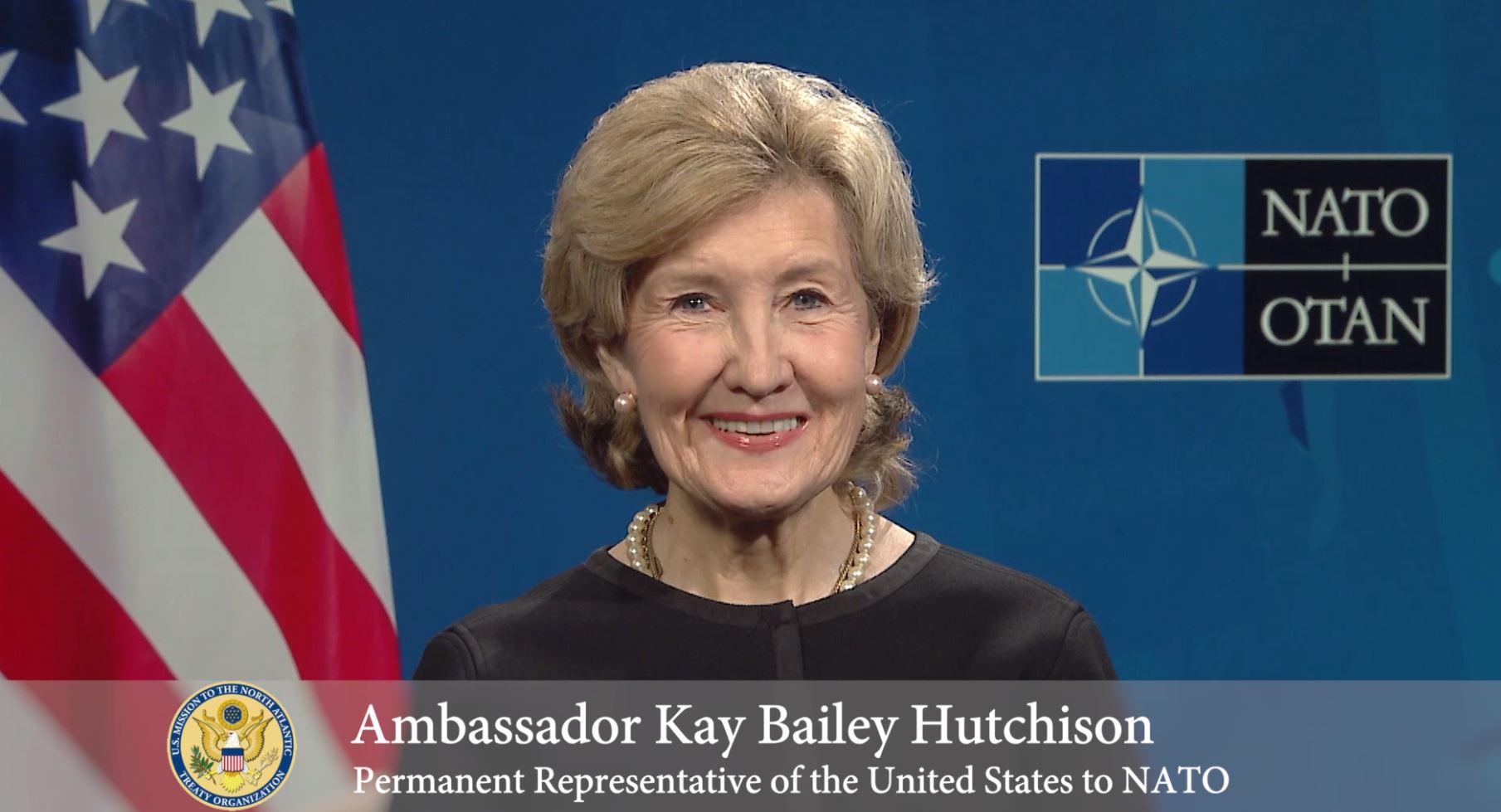
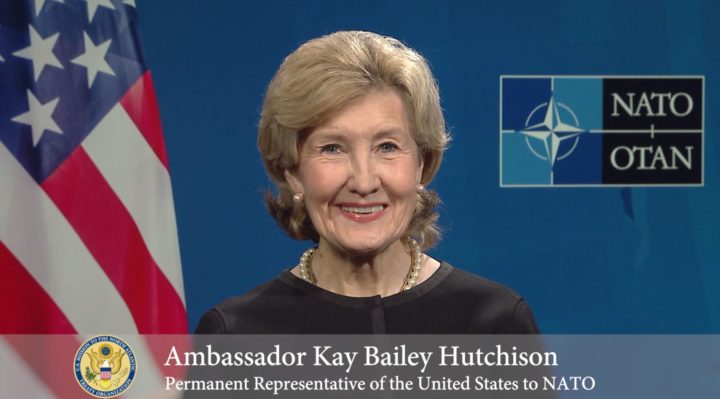
This is all part of the hybrid and cyber warfare that we see constantly within our alliance, trying to sow not only discontent but trying to devalue our leadership at a time when our publics need to look to our leadership for the protection and the help that they need.  So we are vigorously pushing back and we think that we can even do more through the alliance in a concerted way to say, “Knock off the disinformation in this humanitarian crisis” U.S. Permanent Representative to NATO Ambassador Kay Bailey Hutchison has told reporters on Tuesday in “FPC” Washington, D.C.

We are concerned about disinformation that is being put forward by Russia and China about how this all started, and I think there is a lot of criticism of our different government leaders trying to sow discontent in our alliance and with our partners.  And we at NATO, this is one of the areas where we are asking all of our allies to push back with the facts.  NATO will do the same.  And we also think we can do better for learning from this experience.  No one thought that our adversaries would try to sow discontent at a time like this, but they have and they’ve also falsely reported that they are trying to help.  They have falsely reported that this virus started either in Europe or in the United States, depending on which outlet is providing disinformation.  All of this is absolutely false and we are trying to answer the misinformation with facts, She said. 

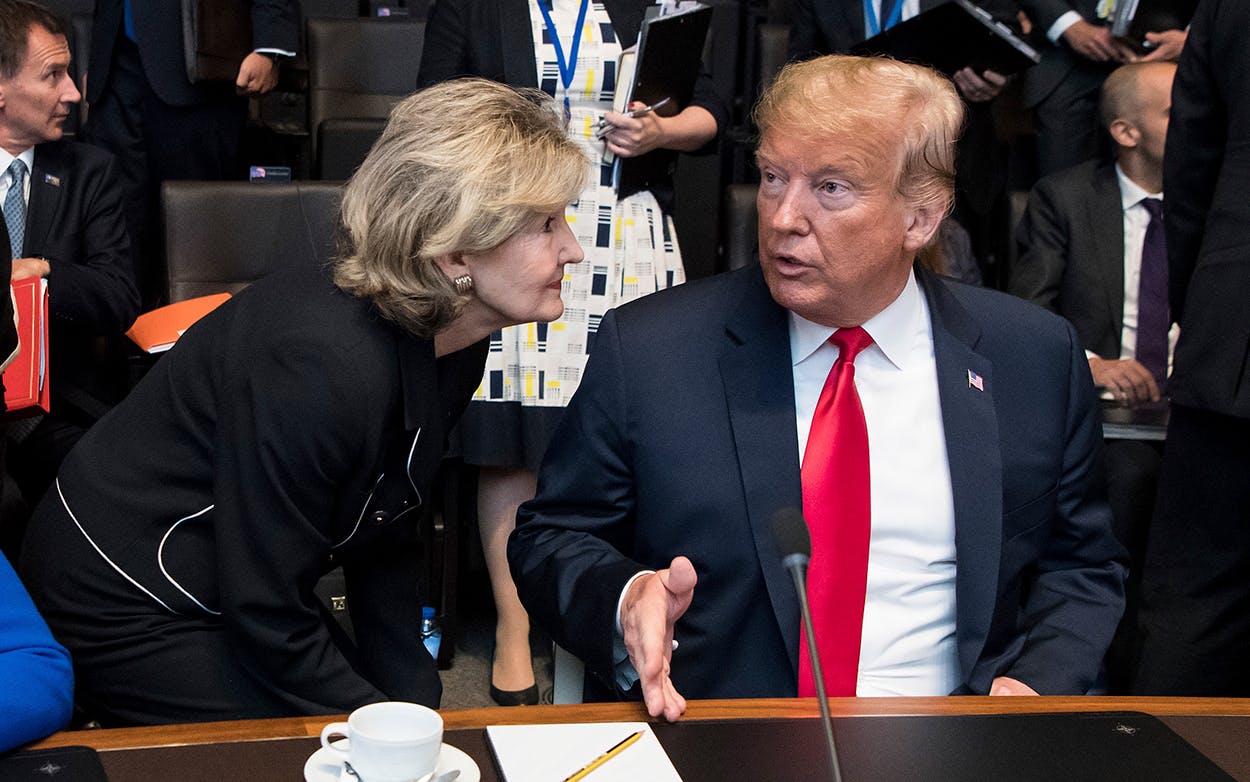
Kay Bailey Hutchison, United States Permanent Representative to NATO, speaks with President Donald Trump at the first work session of the North Atlantic council at the NATO Summit in Belgium on July 11, 2018. 
Bernd von Jutrczenka/picture-alliance/dpa/AP

Below is a full rush transcript of the press conference by Ambassador  Kay Bailey Hutchison, U.S. Permanent Representative to NATO. 

AMBASSADOR HUTCHISON:  Thank you, We are looking forward to having all of our defense ministers in a meeting tomorrow – virtual, of course, because no one is traveling.  But we do think this is a very important time to have an emergency-called meeting because of the way the COVID-19 is affecting all of our countries, and something that we are addressing right now, but we’re also looking to plan for the future so that if we have another situation in which we have a pandemic that affects all of our countries at the same time, we will have even more capabilities to help each other. 

We are helping each other.  Allies are adding so much equipment and aid to other allies, especially where the hot spots are in Europe and in the United States, and Canada of course.  And we are really pleased that NATO could have a strong role in transporting equipment, because we do have those capabilities in Europe, and particularly now, NATO is the central point where allies can call and say what they need, and NATO can find the transportation and coordinate getting equipment and help for our countries. 

Let me say that we have also our missions that are ongoing throughout the world.  Afghanistan is a mission, of course, where we are focusing on troop protection and making sure that our forces are safe when they’re in the field.  The mission that we have in Iraq has been put on hold because Iraq has been affected by the virus, and – the situation in Iran where the virus is very much a problem and it has gone over into Iraq.  And then, of course, we have Kosovo, an enhanced forward presence in Europe where we are taking all the measures that we possibly can to protect our troops wherever they are in Europe or in the Middle East.           

It is also, I think – the last point I will make – it’s very important that we also – and I think Secretary Esper will stress this tomorrow as well – that we look at the role defense has played in the response of all of our countries.  We have seen in America our military building pop-up hospitals, trying to make sure that we have not only equipment, but also transportation and military personnel who are so experienced in trying to serve people in time of need.  And our military personnel have stepped up to the plate in all of our alliance, doing the things that our people need to do, that our publics need to have.   

And we’re very proud that NATO could play a part, but also I want to emphasize that the defense spending that we have increased in the last few years is making us more ready and more capable to help our publics in this great time — that they have called on the military for the added help that our health care systems just couldn’t provide with this pandemic situation.  So I’m very pleased that we will have the defense ministerial tomorrow, and I look forward to answering any questions that you might have today.   

QUESTION:  The NATO secretary general this morning made clear that he thinks going forward there are important lessons to be learned about national resilience.  I wonder what your thought is about that and whether that is something for NATO to be involved in, and particularly whether you – where you see any weak spots or strong spots in resilience from this ? 

AMBASSADOR HUTCHISON:  I think there is a unique role that NATO can play in planning for the future.  All of us were surprised that we would have a pandemic affecting every one of our countries at the same time.  Normally we would have a regional issue and we would address that all together, but now we are going to learn from this experience that we have to be prepared for something that could affect us so totally at the same time.  So we are going to ask our NATO leaders and our military leaders to put forward plans from what we have learned in this.   

For instance, we are suggesting that we have a warehouse in which we would have nonperishable equipment, but the things that we all know we were short of in this epidemic.  And if we could have warehousing of that, which NATO certainly has the capability to do, and then if the NATO forces could inventory transport capabilities – that could be air, it could also be train, rail, it could be highway – but we have capabilities at NATO to coordinate something like this and get the equipment in much faster.  And I think what our military has shown is the ability to do these instant hospitals so that if we have large numbers of people affected, our military experience is going to show us how we can do this even more effectively and more quickly so that we are more prepared.   

So I think NATO is going to take a role.  I think we can look at this as a service for our publics.  This is a health care crisis, but it could be a security crisis as well.  It could be a security crisis if we let down on our defenses and deterrent activities.  Our adversaries will be watching to see if that is the case, which it is not at this time, but we can also prepare for that in the future.  But it could also be a security risk if this kind of eventuality is an eventuality that is used in warfare or to attack each other.  These are the things that we must learn from and prepare for, that it could be health care today but it could be defense tomorrow.  

QUESTION:  Albanian Government is so harsh on the people about lockdowns.  They’re asking 15 years in prison for the people getting out ? 

AMBASSADOR HUTCHISON:  Oh, I understand that this is harsh.  The national governments are able to make their own decisions, of course, on how they would punish people who are not wearing facemasks or who are not protecting not only themselves but people around them, and I think that has to be a sovereign decision.  I do think that the message is such an important one that we all have a responsibility to protect ourselves.  Even if we don’t have formal masks, I think the makeshift coverings of our faces are also very important.  I thought – I think many people are giving good examples.  Our First Lady is giving a good example of wearing a mask and how you would put one on, and I think that our leaders need to reinforce this very important safety measure that it not only protect each individual but it affect all of the people around us.  We know that this is an airborne, unsee-able virus, but it is having a deadly impact and it is incumbent on all of us to listen to our leaders, to take their example, and to go forward helping each other in this very important but very easily accomplished way. 

QUESTION:  Now, with the outbreak which is present basically everywhere, including military bases and recently it’s even present on board of Navy ships, not to mention the aircraft carrier, is U.S. military and NATO in general fully operational?  Does it still have full capabilities?  And aren’t you afraid that some bad actors might try to use this crisis to their benefit? 

AMBASSADOR HUTCHISON:  I think that, again, this is very important.  Our adversaries are watching.  Our military is ready and all of our missions — except for Iraq, which is temporarily on pause – but we are ready to go.  We are continuing to do our deterrence and defense capabilities and our adversaries should be put on notice that we could certainly respond to any kind of aggressive measure that might be taken. 

At the same time, we are also trying to help each other.  We are trying to make sure that in a humanitarian crisis we are doing everything we can to support our troops who are in the field doing these jobs, so we’re taking every measure.  For instance, in Afghanistan, if there are troops coming in, they have a 14-day quarantine before they enter.  We are working very hard to assure that our troops do have that backup and it’s very hard in some instances when our troops are used to working together, living together, and we’re working through that.  But make no mistake:  Our deterrence is absolutely intact and ready to respond to any military crisis that we might face. 

QUESTION:  There was an interesting piece by the Atlantic Council President and CEO Frederick Kempe a couple of weeks ago proposing that the U.S. invoke Article 5 of the NATO treaty on – for COVID-19, as was done after the 11th of September, the 9/11 terrorist attacks ?

AMBASSADOR HUTCHISON:  Well, the only time Article 5 has been invoked of course was after 9/11.  I think all of us are coming together right now to fight COVID, and they are – COVID, the virus, is our enemy, but there has been no discussion of an Article 5 being necessary because we are already coming together to help each other and try to provide the provisions that our separate countries need.  And I think we’re in different phases in our different countries on the enormity of the situation.  Most certainly the United States is now topping all of our allies in numbers of deaths, and so we are focused on trying to make sure that our Americans are taken care of, and we’re reaching out – our President, our governors are all reaching out to do the most that we can, and our military has stepped up to the plate.  Our National Guard and our active duty military are filling in where hospital workers are overworked and strained and sparse.  

And I think all of us are saluting our health care workers wherever we are.  Every one of our allies now has health care workers in the field and our military are in many instances helping them and augmenting the services they are providing. 

So there hasn’t been a formal Article 5 on this virus, but there certainly is an informal one that all of us are allied and fighting together. 

QUESTION:  I have a question as a follow-up to this morning press conference of Secretary Stoltenberg.  He said that one of the major topics for discussion will be disinformation.  And can you please give us first your perception of what disinformation campaign is going on now, what kind of it, from what countries, what examples?  And second, what practical measures could NATO take to deter this disinformation, to fight it? 

AMBASSADOR HUTCHISON:  I think that is a very valid observation.  We are concerned about disinformation that is being put forward by Russia and China about how this all started, and I think there is a lot of criticism of our different government leaders trying to sow discontent in our alliance and with our partners.  And we at NATO, this is one of the areas where we are asking all of our allies to push back with the facts.  NATO will do the same.  And we also think we can do better for learning from this experience.  No one thought that our adversaries would try to sow discontent at a time like this, but they have and they’ve also falsely reported that they are trying to help.  They have falsely reported that this virus started either in Europe or in the United States, depending on which outlet is providing disinformation.  All of this is absolutely false and we are trying to answer the misinformation with facts. 

This is all part of the hybrid and cyber warfare that we see constantly within our alliance, trying to sow not only discontent but trying to devalue our leadership at a time when our publics need to look to our leadership for the protection and the help that they need.  So we are vigorously pushing back and we think that we can even do more through the alliance in a concerted way to say, “Knock off the disinformation in this humanitarian crisis.” 

QUESTION:  The North Macedonia started to use next-generation incident command system, NICS instrument for response in emergency situations.  Can you explain for all of us what is this instrument and how it works, especially for those countries in the Western Balkans who are dealing with the coronavirus? 

AMBASSADOR HUTCHISON:  we have already been able to send help, equipment to North Macedonia, and I was glad that – because you’ve been a member for just a few weeks, that you did call NATO and we were able to deliver equipment into your country.  Also, of course, you’re right – there has been a lot of this disinformation in North Macedonia and others in the Western Balkans because – and I have to say, that has been ongoing for a long time because Russia in particular has tried to sow disinformation, really tried to keep North Macedonia from seeking to be a member of NATO and then when the accession was accepted has continued to put disinformation into North Macedonia, which we are trying to direct against with the facts that North Macedonia is being supported by NATO.  They are a full-fledged member of NATO, they are an ally, and we are helping them in this crisis, and we will continue to help them with the disinformation that is coming in from Russian sources.   

The first group went into Montenegro, one of the neighbors for North Macedonia.  And I think that those will be available to Northern Macedonia as well to prepare the North Macedonian media to repel these disinformation campaigns.   

So I should have answered that more fully about what you could expect, because we do have those working in Montenegro, and we will certainly look to answer requests from North Macedonia of these hybrid support teams to train the people there to repel these disinformation campaigns coming in.   

QUESTION:  I wanted to ask you, beyond cooperation there have also been some reports of tensions between NATO members.  So there have been these reports of the U.S. outbidding some European partners on some medical supplies and there has been some polemic on this issue.  Will this be tackled by the defense ministers tomorrow, or will it be tackled elsewhere by at some different levels? 

AMBASSADOR HUTCHISON:  Well, we have certainly tried to answer that ridiculous assertion, and it doesn’t even bear repeating that America would steal equipment from any other country, even one we didn’t like, but especially not our own allies and partners.  So that was repelled forcefully.  We hope it didn’t go very far.  But it is things like that that are just amazing that anyone would say something like that, but there are so many other things that are being said that seem ridiculous, but if people don’t have the facts, they can’t make the decision that this is something that would never happen.  

QUESTION:  How does assess – attacks by Taliban, which is continuous violence against ANDS, and what is the impact in the peace process?   foreign minister announced a one billion cut aid in Afghanistan.  Could you please give some information about this one billion cut?  Is cost for the military section, or it’s in the other part?  

AMBASSADOR HUTCHISON:  Let me say that all of our countries are looking forward and pushing forward for the Taliban to keep its word, both in spirit as well as in detail, that the violence would subside.  It has not, and we are calling on the Taliban, all of us, to lessen the violence, to cease fire, especially in this humanitarian crisis, when the people of Afghanistan are affected.  And most certainly the Afghan troops, who are fighting valiantly for the peace for their country, to have to have attacks against them by the Taliban is outrageous. 

On the other hand, the leadership of Afghanistan, the – President Ghani and Mr. Abdullah need to come together and show the strength of a unified government.  It will take that to start the peace process and for the Taliban to sit down with the government appointees, who are representative of the different factions and areas of Afghanistan.  The two leaders have both blessed that negotiating group as representative of the people of Afghanistan, and we call on the Taliban to stop the delays, to stop the violence, and to begin the peace process. 

Some progress was made this weekend with the exchange of prisoners.  That was part of the agreement that was made.  Those exchanges were made.  That is one step in the right direction.  We need all of the Afghan people to encourage their leaders and the Taliban to continue forward for the sit-down around the table of the Afghan people to make a peace that they can all live with so that they will have what they rightly deserve, which is freedom, human rights, equality, education for all in that country.   

That’s what we want for the people of Afghanistan, and none of us who are helping to bring that together want to be a factor that would be the deciding factor in that peace agreement.  We want the Afghan people to speak for their government, to be as it should be for them as they want it to be, and we’re very much hoping that all the sides can come together to begin that process in earnest. 

QUESTION:  Considering that all the GDPs of NATO countries are now probably going to decrease, and also many citizens will probably like their governments to spend rather on health or social issues, you think NATO would also have to adapt the message on defense expenditure? 

AMBASSADOR HUTCHISON:  I think it will be more important than ever for our defense expenditures to stay at the higher levels that we have committed to do.  All of us have committed to increase defense spending.  And we need to continue to keep those commitments, because we now see that, first of all, security is our most important asset.  That is what makes for the democracies and the peace that we all live in.   

And secondly, I think we have seen that the defense spending has been such an important part of the response in this humanitarian crisis, in this health care crisis.  And the defense techniques for dealing with the pandemic have been an asset to all of our countries.  So both our partners, as you are, and our allies – I think the defense spending is going to be essential that we keep in our priorities, and that all of us have also gotten such a benefit from the added military component of the response that I think that in itself would say that we need to keep that training and that equipment ready to go for any kind of pandemic or defense capability that we would need in the future.  That’s what we’re doing together.  

April 15, 2020 0 comments
0 FacebookTwitterPinterestEmail
Asia and Norway

Addressing gender-biased sex selection in Viet Nam

by Nadarajah Sethurupan April 15, 2020
written by Nadarajah Sethurupan

A new programme “Addressing Gender Biased Sex Selection and related harmful practices in Viet Nam” has been launched by the United Nations Population Fund (UNFPA) for three years from 2020 to 2022, in partnership with the Government of Norway. This programme will be co-implemented by the Ministry of Labour, Invalids and Social Affairs (MOLISA), the General Office for Population and Family Planning (GOPFP) under the Ministry of Health (MOH), the Viet Nam Farmers’ Union, and the Center for Studies and Applied Sciences in Gender, Family, Women and Adolescents (CSAGA).

Conduct trachoma impact survey in Lac Son district, Hoa Binh province, Vietnam.

It aims at supporting the ongoing Government’s efforts to fully implement approved legal and policy frameworks to end Gender Biased Sex Selection (GBSS) and includes campaigns through innovative approaches to change social norms and practices which reinforce son preference and the low value of girls, strengthening of the capacities of the media, implementation of the fatherhood programme, and streamlining of the country’s coordination mechanisms for GBSS. Data from the National Population and Housing Census, which Viet Nam successfully conducted last year, will also be analyzed further to produce a Census Monograph on GBSS.

Viet Nam’s experience and good practice will be shared, in the spirit of South-South collaboration, with other countries in the region, especially with Bangladesh and Nepal, that have also experienced an imbalanced sex ratio as a result of GBSS.

“Strengthening and defending global norms on practices and the rights of girls and women, including work against son preference, is a priority for Norway. In this area, integrated measures to boost the status, opportunities and power of girls and women appear to be most effective. Norway has been working with a wide variety of partners and stakeholders, including UNFPA, to address this issue globally, regionally and locally. I am very pleased that in Viet Nam, UNFPA with the financial support of Norway, is taking the lead on addressing gender-biased sex selection in close cooperation with the Government of Viet Nam. Close partnerships and a holistic approach are key measures for success in addressing harmful practices,” said Ms Grethe Løchen, Norwegian Ambassador in Viet Nam.

Gender equality in Viet Nam has improved over the past decades, but GBSS as a harmful practice remains persistent in society. GBSS has been identified as the major cause of an imbalance in the Sex Ratio at Birth (SRB) in Viet Nam. The skewed SRB in Viet Nam was first identified in 2004, and since 2005, the imbalance towards more boys has rapidly increased and reached 111.5 boys per 100 girls in 2019 as indicated in the 2019 Census.

“The skewed sex ratio at birth in Viet Nam is at an alarming level and tends to continue to spread, both in rural and urban areas and in many regions of the country. Therefore, one of the goals of the Viet Nam Population Strategy to 2030 is to bring the sex ratio at birth to the natural balance. Strengthening gender equality, empowering women and girls, promoting advocacy and communications, raising all people’s awareness, and promoting greater participation from men and boys are key solutions to address GBSS. Practical actions are also needed to protect children so that all children are born to have equal rights and opportunities, regardless of their gender,” said Mr. Nguyen Doan Tu, Director General of the General Office for Population and Family Planning.

Evidence shows that this demographic imbalance is a result of prenatal sex selection based on son preference, which is deeply rooted in the traditional culture in many countries in the world including Viet Nam. Son preference is a powerful manifestation of gender inequality.

“We must put an end to son preference and the undervaluing of girls in our efforts to promote gender equality in the country. Viet Nam is making progress, but the progress must be accelerated within the context of the Decade of Action for Sustainable Development Goals (SDGs),” said Ms. Naomi Kitahara, UNFPA Representative in Viet Nam. “With this new programme, we will support the Government of Viet Nam and civil society to speed up the process of change, towards a modern and progressive Viet Nam where women and girls have the same opportunities to succeed in society as men and boys do, and where we value our girls as much as we value our boys.”

GBSS should be addressed not only to ensure gender equality, but also because the unbalanced sex ratio has significant implications for the population’s marital status, and can also contribute to further fertility decline. As such, more intensified nationwide efforts are needed to fully implement existing legal and policy frameworks to prevent GBSS and promote gender equality at more broadly.

The Norwegian Embassy and UNFPA in Viet Nam jointly reaffirm our strong commitment to joining hands with the Government and providing support at the national and sub-national levels to help bring change to this harmful socio-cultural practice. Together, let us all join to stop GBSS, for the brighter future of the next generations and for a prosperous Viet Nam.

For further information, please contact:
Ms Nguyen Thi Hong Thanh | UNFPA Communications
Email: tnguyen@unfpa.org | Tel: 0913093363

April 15, 2020 0 comments
0 FacebookTwitterPinterestEmail
Media Freedom

Corona and the Absence of a Real Constitutional Debate in Sweden

by Nadarajah Sethurupan April 14, 2020
written by Nadarajah Sethurupan

Sweden stands out as one of few countries without a lockdown and where primary schools and kindergartens are still open. Only high schools and universities are closed and people are encouraged to work from home. But no hard restrictions are in place. Only recently, gatherings of more than 50 people were banned. The Public Health Agency has set the strategy, despite conflicting views across Sweden from various medical experts. The overall Corona suppression policy builds almost entirely on voluntary measures and trust. As the number of Corona cases and fatalities increase across Sweden, more people are now being tested and there is less and less talk of (herd) immunity the prevalent paradigm until recently. The country’s usually good healthcare system is overburdened, doctors, nurses and other caregivers lack protective gear, and there is chaos in the hospitals. Several nursing homes have reported Covid-19 deaths and shortage of staff. The ratio of Corona-related mortality in Sweden is much higher compared to, for example, Norway, Denmark or Finland, which have implemented much more restrictive and comprehensive measures early on. Still, of course, no one knows how this will end – or when. 

Ester Herlin-Kernell

The Government has just extended its powers using emergency laws to cover for Covid-19 related issues, which sparkled some debate in the Parliament but was ultimately approved. The new emergency laws would give the Government the power to shut down, for example, shopping centers without having to go through the ordinary legislative process. The new emergency powers are part of to the Pandemic law (smittskyddslagen), and gives the Government these extra ordinary powers to take decisions fast. This may be needed, but as always there are worries when exceptions are at stake.

Cell phone tracking of infected persons, along the lines of policies implemented in Israel, South Korea and other EU countries to various degree such as Germany, Italy, the UK and Austria is also on the table. It has been discussed for some time in Sweden and should raise a rule of law concern (N Elkin-Koren 2020). Currently in Sweden cell phone tracking is used only to gather and analyze information related to movement of people in general in order to determine how travel leads to further spread of the pandemic; an experiment, it seems. Yet the prospect of extending it to full blown tracking is also discussed in Sweden. Hence, the question of outsourcing is highly relevant with regard to the Corona crisis as many countries are tracking mobile phones and thereby to a large extent involving private actors in these surveillance related matters. All this is taking place however in a glaring absence of any real constitutional debate in Sweden. This seems particularly germane in this context of cell phone tracking. 

There is a possibility of constitutional review in Swedish law of course, Chapter 11: 14 § of the Basic law (Regeringsformen), which is the tantamount of a constitution. It sets out the possibility to annul legislation that is contrary to the rights set out in the Basic laws or in higher law (i.e. EU law or international law obligations). Annulment can also occur if there is a flaw in the adoption of the law. This is regulated in Chapter 7:2 § the basic law (Regeringsformen), where it is stated that before new laws are adopted, they must have been sent out to different authorities across the country for comments. Subsequently a Council of Legislation with different legal experts scrutinizes the suggested bill and makes an advisory statement before it can be presented to the Parliament. This means that the procedurefor adopting laws in Sweden is very slow (and sometimes unreasonably so). 

Needless to say, breach of EU law is also a reason, and an obligation to annul any conflicting Swedish legislation. In Sweden there is a very strong belief in the legislative process and judicial review is mostly procedural, the general courts seem to avoid getting into (what they consider to be) political questions. There are also administrative courts with a bit different function and with more discretion to alter authority decisions (see eg Wenander 2019.) As a result of Sweden joining the EU and having been a party to the European Convention of Human Rights for a very long time, courts have of course had an obligation for decades, not only to monitor national laws, but also to honor European constitutional duties and grant individuals their rights.  

Still there is very little rule of law debate and almost none relating to privacy and data protection in general. For example, no one seems to question the current system in Sweden of publishing huge amounts of private information about individuals online, which has been going on for over a decade.  The authorities pass on personal information gathered through government powers to various commercial third parties who pay for the information and get a license (so-called “utgivarbevis”) to use it, without much public scrutiny. These companies then publish this information online and claim it is their right under a principle of transparency and the right to publish (under the Basic laws) which seem to have ran wild, beyond any equilibrium with the rights to personal autonomy, privacy and eventually human dignity. This includes our home addresses, the names of the people registered on the same address, where they moved from, their civil status, what people vote for in the area (aggregately) and the average income etc., etc. In the name of “transparency,” almost everything about us is commodified in a vast and opaque market of information.  For a country that prides itself of respecting EU values and encourages EU solidarity, this is remarkable as not all EU values and EU legal duties such as data protection are upheld. This constitutes a constitutional challenge both with regard to EU data protection (Article 16 TFEU and Article 8 EU Charter of Fundamental Rights) and privacy and dignity as mentioned above. And now with cell phone tracking, will the authorities also ‘sell’ the information of who has been diagnosed with Corona? Why not? In the absence of proper checks and balances that are enforced, there is no guarantee that such information will not be made publicly available, as well. 

The absence of a critical review of information policy is a symptom; the problem might be that there seems to be no real constitutional debate in Sweden and the general courts usually tread very carefully when sensitive questions are at stake. This academic debate on how much powers court should be vested with, may sound like a luxury problem, considering much more troubling threats to the rule of law in countries where emergency laws are blatantly misused. It may also seem less important in the light of the economic debate on the Euro Corona-bond that is currently discussed and only partially concluded(in this Blog see e.g. Goldmann 2020), with no joint bonds so far and where regional, let alone global solidarity is on the verge of being put in Corona isolation. Still it is important for what it tells us about the idea of a common solidarity in Europe, where EU values are, or should be taken seriously. Corona and dealing with it do not occur in legal and political vacuum. 

Despite the horrors of the Corona disease, and indeed in order to combat it efficiently as a society, Sweden requires a robust and healthy constitutional and democratic debate. Corona is a human disaster and the suffering it spreads has yet to be accounted for. It is also an unprecedented challenge to our political and constitutional institutions and our almost nonexistent public discourse. The former should encourage rather than subvert the latter. We do not want our democracy, in the sense of a society of free, engaged citizens and a responsive government, to fall victim to Covid-19 as well. 

(Ester Herlin-Karnell is a Senior Lecturer in Public Law at the University of Gothenburg.)

April 14, 2020 0 comments
0 FacebookTwitterPinterestEmail
Economics

Swedish border empty as Norwegian customers stop coming

by Nadarajah Sethurupan April 13, 2020
written by Nadarajah Sethurupan

Municipalities with significant border trade are being badly affected by the corona crisis.

This is particularly noticeable in the run-up to Easter, when the stores along the Swedish Norwegian border are normally very busy.

The car park at the Nordby shopping centre is deserted. Credit: Victor Jensen/Sveriges Radio.

This time of the year, it is usually very busy at the shopping centre in the outskirts of Strömstad. But now the parking lot is virtually empty and sales have dropped massively. The sweet shop for example has seen 90 percent of its revenue disappear.

For years, Swedish towns on the border to Norway have benefited from the Norwegian “sugar tax”, and grown accustomed to seeing their Scandinavian neighbours stock up on the sweet stuff ahead of holidays.

But Norway has closed the border due to the coronavirus.

April 13, 2020 0 comments
0 FacebookTwitterPinterestEmail
Diplomatic relations

EU team to Italy to help fight coronavirus

by Nadarajah Sethurupan April 12, 2020
written by Nadarajah Sethurupan

A team of doctors and nurses from Romania and Norway, deployed through the EU Civil Protection Mechanism, has been sent to Milan and Bergamo, Italy’s worst-hit regions by the COVID-19, to help in the fight against the virus.

The EU mechanism, that has also been used by Austria to offer more than 3,000 litres of disinfectant to Italy, allows member states to request assistance in the case an emergency overwhelms their response capabilities. The assistance is coordinated and co-financed by the European Commission. 

The Commission’s President Ursula von der Leyen characterised the nurses and doctors who have been transferred to other EU countries to help their colleagues as ‘‘the true faces of European solidarity.’’

‘‘The whole of Europe is proud of you. The Commission is doing everything it can to help Italy and all our Member States at this time of great need,’’ she added.

Janez Lenarčič, Commissioner for Crisis Management, thanked Romania, Norway and Austria for offering their services to Italy, noting that ‘‘this is EU solidarity in action.’’

Furthermore, Italy has activated the EU’s Copernicus satellite system in a bid to map health facilities as well as public spaces during the COVID-19 emergency. On Monday the country also received a package of personal protective equipment coordinated through the EU Emergency Response Coordination Centre.

So far, Italy has recorded 132,547 coronavirus cases and 16,523 fatalities.

April 12, 2020 0 comments
0 FacebookTwitterPinterestEmail
Science

Norwegian March traffic figures heavily influenced by COVID-19 measures

by Nadarajah Sethurupan April 12, 2020
written by Nadarajah Sethurupan

The global outbreak of COVID-19 that took hold across the aviation industry throughout March has heavily influenced Norwegian´s traffic figures. The company experienced a dramatic drop in demand following government-imposed travel restrictions and a general travel decline.

Norwegian immediately responded to this global change in demand and adapted its flight schedule several times during the month. The first step was to cut approximately 15 percent of planned capacity on March 10, this was then reevaluated and adjusted to up to 85 percent of planned capacity from March 16 with most cancellations starting from March 25. Capacity was 40 percent lower than planned while the flights that were operated had a load factor of 72 percent, down 13.8 percentage points compared to the same month previous year.

Compared to the same period last year total capacity (ASK) decreased by 53 percent while total passenger traffic (RPK) decreased by 60 percent. The total number of customers carried in March was 1,153,283, a decrease of 61 percent.

In March, Norwegian operated 77 percent of scheduled flights, multiple rescue flights and continued to maintain a critical regional flying infrastructure.

Jacob Schram, CEO of Norwegian, said: “The speed of the COVID-19 global outbreak throughout March had a profound impact on the entire Norwegian network as cancellations, in line with global travel advice and falling demand, were implemented throughout the month. Norwegian operated multiple rescue flights on behalf of the government to ensure that thousands of Scandinavian passengers could safely return home. I would like to take this opportunity to thank all our dedicated colleagues, our customers and members of the public for their continued support. We will provide further financial and business updates to the Oslo Børs when it is appropriate to do so.”

April 12, 2020 0 comments
0 FacebookTwitterPinterestEmail
NATO and Norway

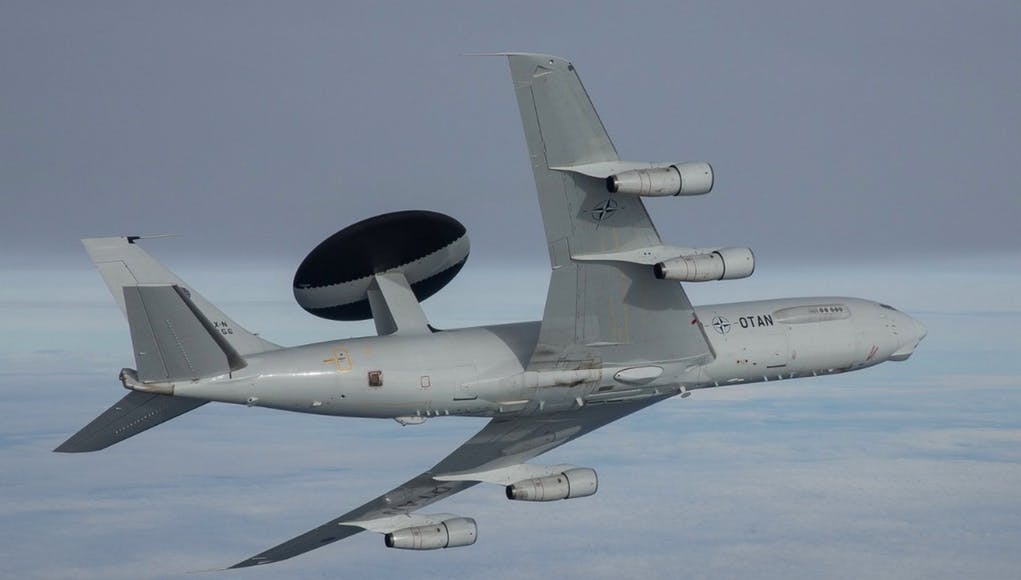
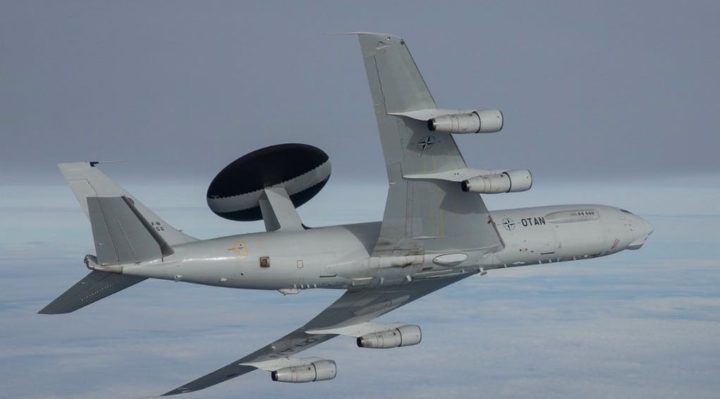
NATO AWACS ‘demonstrate capability and readiness’

by Nadarajah Sethurupan April 11, 2020
written by Nadarajah Sethurupan

After deploying to Norway for the multinational exercise Cold Response 2020, NATO AWACS aircraft were quickly reassigned to support Air Policing and Deterrence operations in the area when the exercise was cancelled over coronavirus fears.

“Flexibility, responsiveness, and excellence are the hallmarks of the NATO Airborne Warning and Control System (AWACS) Force, and are the reason we continue to be an outstanding example of NATO capability and unity, and of what the now 30 NATO Nations can achieve when working together,” said the Force Commander, Major General Jӧrg Lebert.

The NATO AWACS team from NATO Air Base Geilenkirchen, Germany, were operating from their Norwegian Forward Operating Location (FOL) Orland, providing Air Battle Management and Surveillance support to confirm NATO’s capability and operational readiness to operate under harsh arctic conditions during exercise Cold Response 20.

When Norway cancelled the exercise over coronavirus concerns, the deployed AWACS crews and maintainers from Geilenkirchen were preparing to return to their Main Operating Base in Geilenkirchen. However, as the COVID-19 crisis developed, plans were made to delay their return, making use of the facilities provided at one of its four Forward Bases, say NATO in a release.

“This decision proved to be a good one, as an increase in the need for Air Policing capability in the northern NATO area required the deployed crews to quickly switch from their training mode in order to fly real-world operations,” said the Deployment Commander, Lieutenant Colonel Bengt Bergan, Royal Norwegian Air Force.

“Demonstrating the significant role NATO AWACS plays in the deterrence and defence of SACEUR’s Area of Operations, the Geilenkirchen team, together with the host nation’s FOL personnel, were immediately available to support operational tasks as two combat-ready multi-national crews and two combat-ready NATO AWACS aircraft were launched to support Allied Air Command tasks,” he added.

April 11, 2020 0 comments
0 FacebookTwitterPinterestEmail
Terrorist

US designates Russian RIM as a terrorist organization

by Nadarajah Sethurupan April 10, 2020
written by Nadarajah Sethurupan

The USA branded a Russian RIM group and its top members as global terrorists this week, making use of a tool normally used to target radical Islamist groups overseas.

The designation named the Russian Imperial Movement, or RIM, a Russia-based organization with ties to European and U.S.-based white supremacists, as special designated global terrorists. the State Department said. 

Three senior RIM members were also designated.

The State Department said the designation aimed to curb a global rise in attacks linked to white supremacists who target religious and ethnic minority groups. It was the first time a white supremacist group has been designated as a SDGT, it said in a statement.

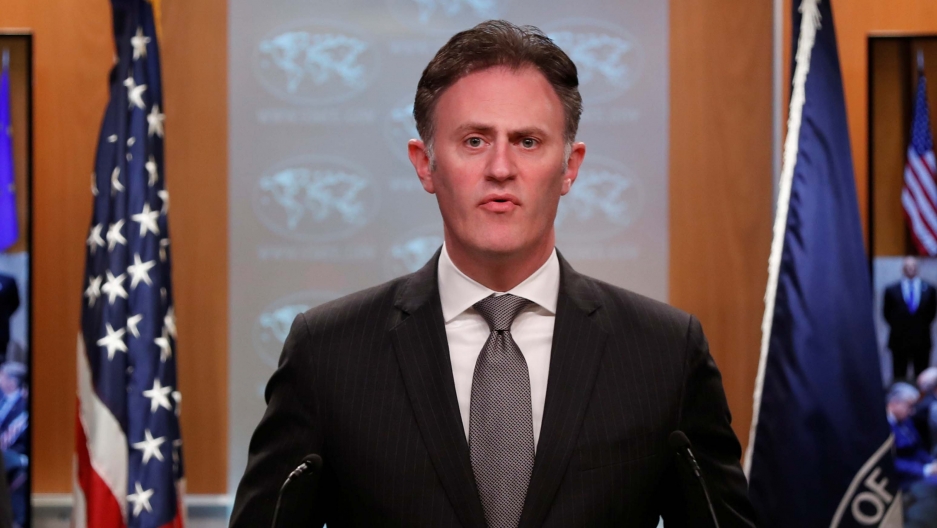
“This group has innocent blood on its hands,” top U.S. counterterrorism envoy Nathan Sales told reporters linking RIM to terrorist incidents in Sweden.

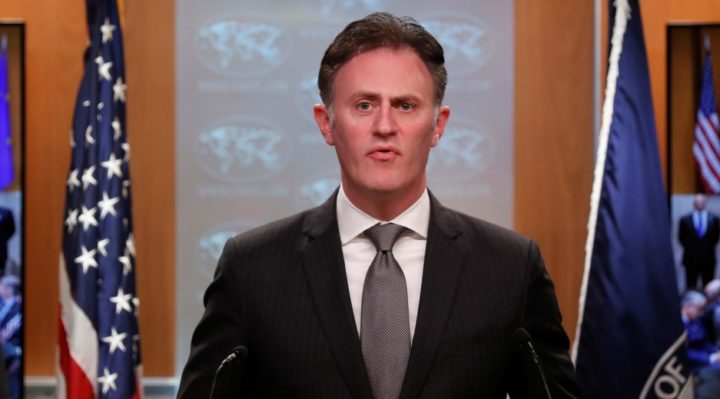
Ambassador Nathan Sales speaks during a news conference at the State Department in Washington, DC, on Nov. 14, 2019. Sales announced the designation of the Russian Imperial Movement as a terrorist organization this week. 
Credit:
Yara Nardi/Reuters

Below is a full rush transcript of the Press Briefing by Nathan A. Sales leads the State Department Counterterrorism Bureau and serves as the principal advisor to the Secretary of State on international counterterrorism matters.

AMBASSADOR SALES:  Thanks very much. Since 2015, the world has seen a surge in racially or ethnically motivated terrorism, or REMT.  Last month was the first anniversary of the horrific attack on two mosques in Christchurch, New Zealand.  We’ve seen similar attacks here in the United States targeting people because of their race or religion.   

Countering REMT is a top priority for the United States.  After one attack in the United States, President Trump said, “In one voice our nation must condemn racism, bigotry, and white supremacy.  These sinister ideologies must be defeated.” 

On Monday, the State Department took decisive action to counter this threat by designating the Russian Imperial Movement, also know as RIM, as a specially designated global terrorist, or SDGT.  We also designated three of RIM’s leaders as SDGTs:  Stanislav Anatolyevich Vorobyev; Denis Valliullovich Gariev; and Nikolay Nikolayevich Trushchalov. 

These designations are unprecedented.  This is the first time the United States has ever designated white supremacist terrorists, and it demonstrates how seriously this administration takes this threat.  This administration is using tools to counter white supremacist terrorism in a way that no previous administration ever has.   

Let me tell you a little bit more about RIM.  RIM is a terrorist group that provides paramilitary-style training to neo-Nazis and white supremacists, and it plays a prominent role in trying to rally likeminded Europeans and Americans into a common front against their perceived enemies.  RIM has two training facilities in St. Petersburg which likely are being used for woodland and urban assault, tactical weapons, and hand-to-hand combat training.   

This group has innocent blood on its hands.  In August of 2016, two Swedish men traveled to St. Petersburg and underwent 11 days of paramilitary-style training provided by RIM.  A few months later, these men and another person conducted a series of terrorist attacks in the Swedish city of Gothenburg.  In November 2016, they detonated a bomb outside a cafe.  Two months later, they bombed a migrant center, gravely injuring one person.  And three weeks after that, they placed another bomb at a camp site used to temporarily house refugees.  Thankfully, that device failed to detonate.

Swedish authorities were able to arrest the attackers, and they have now been tried and convicted for their crimes.  The prosecutor who handled their case blamed RIM for radicalizing them and for providing the training that enabled the attacks.   

These historic designations are just one part of the administration’s broader strategy to counter white supremacist terrorism abroad.  We’re bringing all of our counterterrorism tools to this fight:  information sharing, counter messaging, combating terrorist travel, engaging with tech companies, and building partner capacity to protect soft targets like synagogues and mosques. 

Let me be clear:  Today’s designations send an unmistakable message that the United States will not hesitate to use our sanctions authorities aggressively and that we are prepared to target any foreign terrorist group regardless of ideology that threatens our citizens, our interests abroad, or our allies.   

QUESTION:  Did you consult with the Russian Government on this, and what’s the presence of this organization in the Middle East?  We heard about at least two of them probably died in Libya, and on which side they are.  And at the same time, what is the – on the criteria that you used to designate this terrorist organization can be applied in the United States on white supremacist or right-wing extremists that they had been reported in many FBI reports about the danger that they represent? 

AMBASSADOR SALES:  First of all, on U.S. engagements with the Government of the Russian Federation, I can’t go into any detail about private diplomatic conversations that take place for reasons that I’m sure you can appreciate it.  But suffice to say we have been very clear with all four partners – not limited to Russia – that we hope that other countries will take this threat as seriously as we do and take appropriate action under their domestic authorities to limit this group’s ability to provide training for terrorism and otherwise promote violence. 

As for the groups present around the world, we’ve assessed that the group is focused largely on Europe.  We know that it has recruited individuals to attend its paramilitary-style training camps from countries such as Poland, Germany, Scandinavia, and elsewhere.  That’s not say that it may not have a broader role to play elsewhere in the world, but we assess that it is primarily focused on like-minded white supremacists in Europe.   

As far as taking action under domestic authorities here in the United States, to be very clear:  The State Department authority to designate terrorist organizations and individuals is limited to foreign groups and foreign citizens.  We do not have the authority to designate U.S.-based organizations as terrorist organizations.  However, our domestic counterpart agencies are very much focused on this threat, organizations such as the FBI, the Justice Department, the Department of Homeland Security.  I will have to defer to them on the details of what they’re doing, but they share our view that the white supremacist terrorist threat is a very significant one, and they have been dramatically ramping up their efforts to neutralize this threat as it presents itself inside the United States.   

QUESTION:  To your knowledge, does the Russian Government designated this group as terrorists?  What is – from your information, what is the position of the Russian Government regarding this organization? 

AMBASSADOR SALES:  Well, we’re aware of the Russian Government’s prohibition on this group operating a website in Russia, and we think that, while that is a good first step, we would encourage the Russian Government to take more robust and assertive action against this group, to prosecute individuals who may have violated any domestic laws in Russia, to close down the training camps to prevent them from drawing white supremacist terrorists from around the world to receive paramilitary training.  The Russian Federation has made a number of public commitments about its resolve to confront global terrorism, and we encourage them to implement those commitments with respect to this group. 

QUESTION:  Russia’s related skinheads have been terrorizing foreigners for decades, right?  In fact, in 1998 there were so many assaults that prompted the U.S. Embassy in Moscow back then to put out a warning to Americans of African and Asian ethnicity to be on their guard against Russian skinhead.  And it is increasingly dangerous to have a dark skin in Moscow.  Azerbaijani and Central Asian migrants are reportedly their primary target.  But the question I’m trying to understand is why now?  Is the timing relevant here?  The U.S. didn’t take this step in 1998, as I mentioned, or when Russian nationalists participated in 2011, 2012 anti-Kremlin protests, or during the armed conflict in eastern Ukraine.  So the question is:  Why now? if you could please talk about a little bit tactical implications of this designation as well, whether they are legal – I know you mentioned economic and maybe military impact that come along with it.  The U.S. designated Iranian Revolutionary Guard a couple months before Soleimani killed.  So perhaps it will help their understanding the bigger picture if you named more names here, who runs the show inside RIM and how much they are related to Kremlin and perhaps Putin himself ?

AMBASSADOR SALES:  On your first question regarding timing, why now, that’s a two-part answer.  The reason we’re acting now is because the threat that is posed by white supremacist terrorism globally has really been on the rise in recent years.  In 2015, we saw a dramatic spike in white supremacist and REMT terrorist attacks across North America, Europe, and Australia.  The number jumped from just a handful the previous year to as many as 135 in the year 2015.  That number came down a bit to 88 in 2017, but that’s still a number that is far too high.  So we’re acting now because the threat is with us now.   

A more specific answer to your question is we’re acting now because President Trump recently expanded our authorities to act.  In September of last year, the President issued an order that amended our designations authorities.  It was the most significant expansion of U.S. counterterrorism sanctions authorities since the immediate aftermath of 9/11, and the President made two changes that are particularly relevant to the RIM designation.  First of all, the President authorized the State Department to designate groups that provide training for acts of terrorism.  That was the basis of the designation of RIM the group.  The second thing the President did was authorize designation of leaders of terrorist groups without having to demonstrate that those leaders were personally linked to particular terrorist attacks, and that was the basis of the designation of the three RIM leaders.  So why are we acting now?  We’re acting now because the President recently gave us the tools to act. 

As far as the practical implications of the designation are concerned, I would highlight two that are, I think, particularly important.  First of all, financial:  As a result of the designation, all assets held by the designated group and individuals inside the United States or subject to U.S. jurisdiction are hereby blocked.  That makes it substantially more difficult for RIM and indeed for any designated terrorist group to move money through the international financial system.  In so doing, we deprive the group of resources that it uses to provide training for the attacks of the sort that we saw in Gothenburg, Sweden. 

A second practical consequence that I would highlight concerns travel.  As a result of the designation, it now becomes considerably easier for United States border security officials to prevent individuals linked to RIM from trying to enter the country.  It helps us toughen our borders to prevent violent actors from coming into the United States. 

QUESTION:  They obviously kind of strenuously deny that they have anything to do with terrorism or violence and that this is all something that President Trump needs for his re-election, et cetera, et cetera.  Other than the Gothenburg incident, are there any other specific acts of terrorism that these people you believe are directly or indirectly linked to that you can point to? And my second point is there are a huge number of groups kind of similar to this in Russia, the former Soviet Union, Eastern Europe in general – kind of far-right-leaning people who do paramilitary training and have links to other groups around the world.  So my question is:  Why this particular group?  And does it mean you will designate other kind of former Soviet, East European white supremacist groups with international links as well?  Specifically, I’m thinking about the Azov movement in Ukraine. 

AMBASSADOR SALES:  As far as RIM’s culpability, I think the information that we have put out in the public domain speaks for itself.  I think not just what the United States has attributed to RIM, but also bear in mind what the Swedish Government has attributed to RIM and the prosecutor who handled the case of the two RIM-trained terrorists who committed a series of bombings.  In addition – so in addition to those specific acts, we know that RIM maintains an active effort to recruit likeminded white supremacists to come train in St. Petersburg.  It has reached out to individuals across Europe and elsewhere, and that is why we are designating them now, in order to cut off that flow of white supremacists to their camps from which they can receive further indoctrination and weapons training that makes them dangerous when they return home. 

As far as why we designated this group as opposed to the wide variety of other white supremacist or REMT groups, we designated this group because it meets our standards for designation.  It is engaged in training for terrorist activity.  It’s – the graduates, if you will, of its training camps have gone on to commit acts of violence, and that is the reason why we’ve singled them out.   

I can’t sneak preview any other designations actions that we may or may not be considering, but I can tell you we are always on the lookout for other groups that meet our designations criteria and we will not hesitate to use our sanctions authorities robustly against foreign terrorist groups that threaten our values or our interests or our people. 

QUESTION:  About the financial implications of the designation for U.S. companies or individuals? 

AMBASSADOR SALES:  Right.  So on the financial consequences of a sanction, that’s essentially correct.  The initial effect of the designation is to block all assets that RIM or its leaders who have been designated might have inside the United States or subject to U.S. jurisdiction.  As a secondary consequence of that blocking, it becomes prohibited for any person subject to U.S. jurisdiction to engage in prohibited transactions with RIM, such as moving money or selling goods or so on.  And so the knock-on effects of a designation are important, because it makes it significantly more difficult for RIM and its leaders or indeed for any designated terrorist organization to try and move money through the international financial system. 

QUESTION:  Thank you very much for the briefing.  I would like to know if you are aware of any activity or any attempt to recruit or to penetrate Italy or a neighboring country like Slovenia, Austria, France, but also Hungary, Slovakia, or Czech Republic ?

AMBASSADOR SALES:  I can’t comment on the particulars – getting into intelligence matters here.  What we have said publicly is that RIM has sought to recruit like-minded white supremacist extremists from across Europe.  Some of the specific countries that we have pointed out are Scandinavian countries, Germany, Poland, and others, but I think we should expect that RIM would not limit itself to recruiting from just a handful of countries but rather would try to cast a wide net to recruit as many as possible. 

QUESTION:  About visits of the members of this organization in United States, because this – RIM is particularly known for establishing contacts with white supremacist organizations in the U.S.  And we have all over the public domain pictures of them posing in front of White House with some white supremacists from United States.  My question is in two parts:  Do you know about these connections of RIM in the United States?  It was in 2017.  And if yes, was it a role – did it play some role in designating them as global terrorists? 

AMBASSADOR SALES:  Well, So we’re aware of those photos demonstrating that some RIM individuals have been present in the United States.  We’re also aware of public reports that RIM reached out to Americans in an effort to recruit them to visit St. Petersburg – the St. Petersburg training camps.  We’re not in a position to confirm whether those latter reports are accurate or not, but let me say as a general matter:  Any group whose leaders or members have visited the United States or any group that has sought to recruit Americans into its twisted causes is a matter of grave concern.  That is the reason why we would want to designate a group, to prevent it from establishing inroads in the United States, to travel here, to raise money here, and so on. 

QUESTION:  I’m just wondering if there’s any connection with Kremlin because ambassador, you mentioned St. Petersburg, Putin’s hometown, a number of times.  Is it just a coincidence or are there any other connections you are thinking about? 

AMBASSADOR SALES:  I can’t comment on any connections between the Kremlin and RIM.  I’ll just say as a more general matter the Russian Government has said publicly that it’s committed to fighting terrorism.  We take them at their word and we expect them to live up to those representations when it comes to RIM. 

More broadly, we know that the Russian Government has in the past and on an ongoing basis used proxy groups to carry out malign influence abroad and to further its aggressive policies.  It uses these networks to deliberately amplify extremist ideologies across the political spectrum in order to exacerbate social tensions and undermine democratic institutions.  So we think that the designation of RIM provides a valuable opportunity for the Government of Russia to put its money where its mouth is, to join with us in imposing sanctions on this group, and prevent it from exporting violence and extremism around the world. 

April 10, 2020 0 comments
0 FacebookTwitterPinterestEmail
Norwegian Aid

Norway helping Kosovo fight coronavirus

by Nadarajah Sethurupan April 9, 2020
written by Nadarajah Sethurupan

Kosovo’s Caretaker minister of Health, Arben Vitia, hosted on Monday Norwegian Ambassador to Kosovo, Jens Erik Grondahl.

The Kosovo’s Ministry of Health in a statement said that Grondahl commended the ministry of Health for managing the coronavirus crisis in Kosovo which is challenging the most advanced health systems all over the world. He also said that the people of Norway in addition to a 500-thousand-euro fund as part of the European Union aid for Kosovo, are ready to help public health of Kosovo if needed. 

Vitia thanked Norwegian Ambassador for the contribution and said the good teamwork helped in containing further spread of coronavirus pandemic. Minister of Health also informed Ambassador Gronahl n current capacities of Ksovoo and preparations to increase these capacities to cope with all potential scenarios. Currently in Kosovo there are 145 people who are teste positive with coronavirus. 24 patients have recovered and 3 have died.

(GazetaExpress)

April 9, 2020 0 comments
0 FacebookTwitterPinterestEmail
Politics

Norway kindergartens to open from April 20

by Nadarajah Sethurupan April 8, 2020
written by Nadarajah Sethurupan

Norway, one of the first European countries to curb activities to rein in the spread of the coronavirus, will relax restrictions “little by little”, the prime minister says.

The Nordic country’s lockdown sent the economy into a tailspin and triggered hundreds of thousands of lay-offs.

“Together we have taken control of the virus, therefore we can open up society little by little,” Erna Solberg told a news conference on Tuesday.

On Monday, her health minister said the epidemic was “under control” in Norway, pointing to the low rate of transmission.

Current restrictions, which are in place until April 13, include the closure of nurseries and schools, refusing entry to foreigners who do not live and work in Norway and forbidding people to go to their mountain cabins if they have one.

Kindergartens will reopen between April 20 and 27, schools from the first grade to the fourth grade will reopen from April 27 and Norwegians can go to their chalets from April 20.

At the same time, working from home must continue and Norwegians must get used to measures against contamination “for a long time,” Solberg said.

April 8, 2020 0 comments
0 FacebookTwitterPinterestEmail
Farming

Norway suspends salmon processing exemptions

by Nadarajah Sethurupan April 8, 2020
written by Nadarajah Sethurupan

NORWAY has suspended further applications from salmon companies who want to send fish overseas to be processed.

The move by the seafood and fisheries minister, Odd Emil Ingebrigtsen, follows a storm of criticism from politicians and smaller independent processing companies after the salmon farming giants Mowi and Lerøy were granted exemptions.

A number of other companies, including Sekkingstad and Ocean Quality, have since submitted similar applications.

The minister said: ‘We are now considering whether the exemption guidelines should be tightened up. In light of this, I have asked the Food Safety Authority to wait to before processing exemption applications.’

According to the current regulations, production fish must be sorted and any faults, wounds or deformities corrected before being exported.

However, it is not clear whether the exemptions granted to Mowi and Lerøy were only for a short period in any case.

Ingebrigtsen conceded that some companies did have problems with processing fish domestically because of the coronavirus crisis, but he stressed that the government would continue with the current policy to protect the country’s seafood reputation.

Another company which applied for an exemption was Nova Sea, but it has since put the request on hold, saying the processing situation had improved.

Nova Sea CEO Tom Eirik Aasjord told E.24 that with closed borders and further restrictions, salmon companies had faced a number of challenges when it came to production.

‘We cannot put ourselves in a situation where we risk having to destroy food, which is why we submitted our (earlier) application,’ he added.

He said that the restaurant and hotel trade had disappeared and it was hard to send out freight by air, but somehow the salmon industry was still managing to keep the wheels running.

April 8, 2020 0 comments
0 FacebookTwitterPinterestEmail
Science

Additional financial measures to mitigate the economic effects of the coronavirus crisis

by Nadarajah Sethurupan April 6, 2020
written by Nadarajah Sethurupan

The Government today proposed additional financial measures to soften the impacts of the coronavirus outbreak in Norway. The newly submitted measures are directed at industries, companies and certain groups that have been particularly hard hit during the pandemic and are inadequately covered by the measures previously adopted.

The Government is taking a three-phase approach to financial measures related to the coronavirus outbreak. In the first phase, the Government and the Storting introduced targeted measures to quickly meet acute financial challenges: securing income for workers and liquidity for companies to avoid mass dismissals and bankruptcies.

We are now in phase two. In this phase, the Government has proposed specific measures aimed at industries, companies and certain groups that have been particularly hard hit by the virus and the associated COVID-19 disease. Such measures include, among many others, a compensation scheme for companies severely affected by the outbreak and an extension of the guarantee scheme for loans to small and medium-sized businesses.

‘The powerful package of measures we are presenting today will help those who so far have not been well enough compensated. The measures are aimed at the many companies that have suddenly lost a large part of their income, apprentices who are temporarily laid off or lose their jobs, students who lose part-time jobs and people who need to build up their skills for when the crisis is over,’ said Minister of Finance Jan Tore Sanner (Conservative Party).

‘The measures we have adopted and proposed will ensure a greater degree of compensation for persons temporarily laid-off or unemployed as well as students, apprentices and self-employed persons. We are also ensuring liquidity for start-ups and for small, medium-sized and large companies. In addition, the enterprises most affected will receive compensation for a proportion of their fixed costs,’ said Mr Sanner.

In phase three, the Government will consider broader measures to increase economic activity when the virus outbreak subsides and infection control measures are scaled back.

‘We are continually analysing the situation and closely monitoring the effects of the measures already being implemented. We are studying different scenarios of how the economy is likely to develop going forward and will propose measures as needed in the months ahead,’ the Minister of Finance said.

Key measures in the latest Proposition to the Storting:

  • Compensation scheme for enterprises with reduced income due to the coronavirus – NOK 50 billion (announced 27 March, submitted 3 April)
    The Government proposes that enterprises with at least a 30 per cent drop in revenue as a result of the virus outbreak should be eligible for government support. The amount of support will depend, among other things, on the amount of lost revenue, the size of the enterprise’s unavoidable fixed costs and whether the enterprise has been ordered by the government to close.
  • Help for students who have lost work income – NOK 1 billion(Storting resolution, new proposal)
    The deadline to apply for loans and grants from Norway’s State Educational Loan Fund has been extended to 15 April, and the semester’s remaining financial support to students will be paid out in April. In addition, students who have lost income may apply for a supplemental loan of NOK 26 000. The Storting, in connection with its consideration of Prop. 67 S (2019-2020), has allocated NOK 1 billion to convert some of that supplement loan money into a grant. Applicants who confirm that they have lost income and can document their loss at the request of the Loan Fund will be able to convert NOK 8 000 into a grant.
  • Temporary benefit for apprentices – NOK 250 million (Storting resolution, new proposal) 
    The Government is following up the Storting’s petition to introduce a temporary scheme providing apprentices with compensation equivalent to apprentice salary in case of unemployment or temporary layoff. A temporary scheme is therefore being established to give apprentices compensation equivalent to 100 per cent of salary up to 1.5 times the National Insurance Scheme’s basic amount (G), and 62.4 per cent of salary between 1.5 G and 6 G, with ‘salary’ being the apprentice’s salary upon temporary layoff or termination of the apprenticeship. For 3 G of income this will provide a compensation rate of just over 80 per cent. It is assumed that the scheme will cover about 5 000 people who will receive the benefit for an average of three months. The scheme includes both laid-off apprentices and others who lose their jobs. The Government proposes an allocation of NOK 250 million.
  • Compensation for reduced parental payment to after-school care (SFO) – NOK 1 billion (new proposal)
    Parents will not be paying for day-care or after-school care (SFO) while the programmes are closed as a result of infection control measures. As things now stand, day-care centres and after-school programmes are to be closed from 13 March to 13 April. The Government proposes to compensate day-care centres and after-school programmes for the loss of parental payment. The Government therefore proposes to increase transfers to municipalities by NOK 1 billion. The Government also proposes setting aside NOK 10 million for an application-based after-school care programme at publicly funded schools and NOK 0.5 million for the Longyearbyen Community Council. Compensation for parental payment shortfalls and ordinary support will be reduced if employees are temporarily laid off or if parental payments already received are not refunded.
  • Skills development measures – NOK 190 million (Storting resolution, new proposal)
    The Storting has allocated NOK 150 million for this purpose. The Government is now proposing how to distribute this allocation and, furthermore, to set aside an additional NOK 40 million for the measures within the applicable allocation. The purpose is to improve the skills of unemployed and laid-off persons. The package includes six new three-part business sector programmes for skills development, upscaling of existing digital services, and rapid admission to existing university and university college programmes. There are additional funds for basic skills training for unskilled persons in hard-hit industries. The Storting has also allocated NOK 250 million to the framework grant for county administrations with a focus on skills-development measures, including internal company training, upper secondary instruction and vocational schools, under county administration auspices.
  • NOK 3 million to simplify home-based instruction (new proposal) 
    In order to support the high level of effort and commitment around Norwegian schooling, the Ministry of Education and Research is establishing a temporary grant scheme to fund initiatives that support home-based learning services in connection with the coronavirus crisis. To qualify, such services must have no commercial purpose. The grant scheme will be searchable and is to be run under the auspices of the Directorate for Education and Training. The Government proposes setting aside NOK 3 million for this scheme within the applicable allocation.
  • Coronavirus information for immigrant groups – NOK 6.6 million
    The Government is providing NOK 6.6 million in grants for integration efforts directed by voluntary organisations. The money is to be distributed to the Red Cross, Caritas, Norwegian voluntary centres, the Norwegian Women’s Public Health Association, KIT (Kristent Interkulterelt Arbeid) and Norwegian People’s Aid. The Government proposes setting aside NOK 3 million for this purpose within the applicable allocation.
  • Temporary purchase of basic rail transport services – NOK 550 million
    Due to reduced travel activity, ticket revenues for the railway companies have dropped significantly. The Government proposes NOK 550 million to accommodate the possibility of temporary supplementary agreements between the central government and the railway companies to maintain basic train service for work trips.
  • Deferred taxes affecting the brewery industry in particular – NOK 14 million (Storting decision, new proposal)
    Payment of the alcoholic beverage tax, non-alcoholic beverage tax and beverage packaging tax will be postponed to 18 June 2020 from 18 April and 18 May, respectively. This measure will improve the liquidity of businesses subject to the taxes.
  • Deferred taxes affecting the fuel industry in particular – NOK 18 million (Storting decision, new proposal)
    Payment of the CO2 tax, road tax on fuel and basic tax on mineral products will be postponed to 18 June 2020 from 18 April and 18 May, respectively. The proposal will improve the liquidity of businesses subject to the taxes.
  • Temporary CO2 tax exemption on natural gas and LPG – NOK 40 million (Storting decision, new proposal)
    The CO2 tax on natural gas and LPG delivered for chemical reduction or electrolysis, metallurgical and mineralogical processes is set at NOK 0 with effect from 1 April 2020. The reduced rate applies to both regulated and unregulated activities under the Emissions Trading System (ETS), and will reduce costs for the relevant processing industry enterprises – about 40 of them altogether. The aim, consistent with the Storting resolution, is to gradually raise the tax rates again in advance of 2024.
  • The horse racing tax (totalisatoravgift) is suspended for 2020 – NOK 100 million (new proposal)
    As a consequence of the coronavirus situation, horse racing events in Norway have not been allowed since 12 March. This has led to a decline in Norwegian Rikstoto’s revenue, which in turn could lead to reduced support to the Norwegian horse industry. In order to keep the horse racing tax from limiting Norsk Rikstoto’s ability to distribute support in 2020, suspension of the tax is proposed for 2020 with effect from 1 January 2020.
  • Expansion of the loan guarantee scheme for small and medium-sized enterprises (adopted April 2) 
    Under the guarantee scheme for loans to small and medium-sized businesses, which was opened for use last Friday, the central government guarantees 90 percent of each bank loan. The Ministry of Finance yesterday adopted regulations that also allow larger companies to use the scheme, including companies with more than 250 employees.
  • Temporarily laid-off employees with private occupational pension schemes (new proposal) The Government proposes temporary legislative amendments enabling employers to decide that employees being temporarily laid off can continue as members of the pension scheme. The amendments would apply to private sector employers whose employees are currently removed from the company’s pension scheme if they are temporarily laid off as a result of operating cutbacks, etc. The employer may choose whether laid-off employees are to retain the pension scheme’s insurance cover. Temporarily laid-off employees who are not permitted to retain insurance cover will be entitled to take out individual insurance (continuation insurance). The employees will in any case receive the benefit of the employer’s paying for administration and management of the employees’ pension funds as long as they are members of the scheme.
  • NOK 20 million for the reindeer industry grazing crisis
    The crisis is due to deep snow and ice covering grazing lands and preventing the reindeer from obtaining sufficient food by natural grazing. During negotiations on the reindeer herding agreement for 2020/2021, the industry’s emergency contingency fund was increased by NOK 10 million as a result of the serious situation. The crisis has persisted, and applications submitted to the emergency contingency fund have exceeded the fund’s balance. If no action is taken, a large number of animals may die of starvation. The funds will be used to pay for crisis measures such as procurement and transport of supplemental feed.
April 6, 2020 0 comments
0 FacebookTwitterPinterestEmail
China and Norway

China’s toxic lackey: The head of the WHO accused of parroting China’s lies and failing to expose it’s cover-ups

by Nadarajah Sethurupan April 6, 2020
written by Nadarajah Sethurupan

Total deaths started to spiral in China from coronavirus and fear grew around the world, it was chosen as venue for the key meeting between President Xi Jinping and Tedros Adhanom Ghebreyesus, director-general of the World Health Organisation (WHO).

Eight days earlier, Chinese authorities had finally admitted their mysterious new disease could be spread by humans – after initially detaining doctors who sought to alert citizens, covering up crucial data and rebuffing help from outside experts.

Yet during those crucial talks in late January, Xi insisted the state’s priority was the health of its people. ‘The epidemic is a devil,’ he declared. ‘We will not let it hide.’

Breathtaking words from the head of a United Nations body responsible for defending global health. But Tedros and his top officials have ceaselessly promoted China’s pretence that it is the hero of this cruel pandemic – not, as many argue, the villain.

AS THIS virus sparks global catastrophe, there are growing fears that the man leading a crucial international organisation heavily funded by the US and Britain is promoting Chinese interests.

‘It is pretty much clear he is a shield for Beijing,’ said a senior British Cabinet source. ‘His comments congratulating China for exemplary handing of the crisis are not borne out by the reality of events.’

Similar concerns are heard elsewhere, especially in the US. Republican senator Marco Rubio has said he is deeply disturbed how the organisation ‘parroted’ Chinese lies and accused Tedros of ‘favouritism’.

The Ethiopian, who has a doctorate in philosophy from Nottingham University, was previously a senior figure in one of Africa’s most repressive regimes which was strongly backed by Beijing.

He won the top job at WHO with support of China despite controversy over his time as Ethiopia’s health minister and contested claims about covering up cholera epidemics in the country in 2006, 2009, and 2011.

Tedros has also been condemned for seeking to honour the Zimbabwean despot Robert Mugabe.

Taro Aso, Japan’s deputy prime minister, is searing in his criticism. He savaged the WHO for its failure to protect public health and backing Beijing’s ‘spin’, concluding that it should be renamed the ‘Chinese Health Organisation’.

The cause of Aso’s anger was an incident nine days ago that exposed the extent of the WHO’s kowtowing to China and its flawed co-ordination of a rapid global response to this major public health threat.

It involved Bruce Aylward, a Canadian doctor and WHO assistant director-general who led its mission, when permitted, into Wuhan, the Chinese city where the virus erupted, and who has since played a leading role in speaking to the media.

Aylward regularly extols China’s ‘aggressive response’ to the virus, which has even included welding people’s doors shut to lock them in their homes. He says the government ‘is really good at keeping people alive’ and that if he had Covid-19, he would want to be treated in China.

Yet this is the nation that failed to clamp down on wild animal markets widely blamed for fostering the new virus, despite having seen the seemingly similar emergence of SARS in 2002, and then thwarted efforts to contain the disease for several crucial weeks.

During this time, hundreds of millions of people were on the move for Chinese new year festivities and a public feast was held in Wuhan for 40,000 residents.

Aylward condemns those who see China as an ‘evil’ regime. Yet this is a Communist dictatorship that banned families from having more than one child, controls 1.4 billion citizens with a sophisticated surveillance system, murders religious practitioners to transplant their organs, and locks Muslim minorities in hellish prison camps.

China also refuses to recognise neighbouring Taiwan. So when a journalist asked Aylward during a video call about the island nation’s laudable response to the epidemic, he pretended not to hear and then seemed to hang up.

The reporter, Yvonne Tong, dialled back but the WHO official swept her aside, saying: ‘We’ve already talked about China – and when you look across all the different areas of China, they’ve done quite a good job.’

This could have been the craven response of a Beijing bureaucrat. Taiwan is, after all, a fiercely independent nation with freedoms and democracy enjoyed by its 24 million citizens that offer a glaring contrast to life in its giant autocratic neighbour.

‘Wow, can’t even utter ‘Taiwan’ in the WHO?,’ tweeted Joseph Wu, Taiwan’s foreign minister, in shocked response. China wants to re-absorb Taiwan, a refuge seven decades ago for the nationalist forces defeated by Mao’s communists.

Under President Xi, China has ramped up bullying of nations, firms or global organisations that show any support to Taiwan.

The WHO, like other UN bodies, appeases China to the extent that Taiwanese passport-holders are unwelcome in its buildings. Taiwan has been stopped from even attending the WHO’s influential assembly meetings as observers.

Other major global organisations slavishly toe Beijing’s line by excluding Taiwan. But amid the worldwide threat from coronavirus, this raises critical questions over whether international politics has hampered efforts to protect public health.

It seems the new virus first began appearing in Wuhan last November to the bafflement of local doctors. On December 31, China reported a cluster of pneumonia-like cases to the WHO.

On the same day, Taiwan tipped off the Geneva-based body that it had learned of medical staff in China falling ill – a clear sign of human-to-human transmission. Yet it said the information was not shared since the nation is excluded from a key WHO platform.

Chen Chien-jen, Taiwan’s vice-president and an epidemiologist, said the WHO’s failure to obtain first-hand information on human transmission led to crucial delay. ‘An opportunity to raise the alert level both in China and the wider world was lost.’

The WHO confirms receiving an email mentioning ‘news reports of atypical pneumonia reported in Wuhan, and that Wuhan authorities said they believed it was not SARS’ but denies there was any mention of medical staff falling ill.

There are suggestions Chinese authorities knew of human-to-human transmissions early in January, even as they detained doctors desperately trying to warn about a potential epidemic and accused them of spreading false ‘rumours’.

Taiwan sent its own team to Wuhan in mid-January after failing to obtain clarification through official channels, which confirmed human transmission.

There have also been credible claims on Chinese social media, repeated by online news reports, that an infected disease specialist in Wuhan alerted a senior WHO official in Asia because they had trained together and remained friends.

On January 11, a Chinese government respiratory expert who initially said the virus was ‘under control’ admitted he might have been infected in Wuhan.

Media reports show medical staff were being treated in hospital for symptoms by January 15. Yet on January 14, the WHO confidently told the world that ‘the Chinese authorities have found no clear evidence of human-to-human transmission of the novel coronavirus identified in Wuhan’.

Three days later, a WHO official intimated it was being transmitted among humans, and this was eventually confirmed by China after three more days.

Tedros, the WHO’s director-general, finally confirmed coronavirus as a public health emergency of international concern after returning from his back-slapping trip to Beijing. By this time, the disease had already spread to 18 more countries on four continents.

Days later an Australian member of the WHO’s emergency committee broke ranks to call China’s response ‘reprehensible’, saying cases might have been restricted if it had not hidden data. There remain suspicions the true death toll in China is still being kept secret from outsiders.

Beijing reacted furiously as countries began closing borders to China. Its stance was supported by Tedros, who claimed the ‘small’ number of cases could be managed without extreme measures.

Now, of course, the pandemic has crashed the global economy and closed down dozens of countries.

Tedros has tried to defuse criticism with celebrity endorsement, discussing the pandemic last weekend with pop star Lady Gaga and tweeting thanks for ‘her continuing efforts to show compassion and kindness to the world’.

He boasted that she was ‘ready to support WHO in any way possible in the fight against Covid-19’.

So why would Tedros be so sympathetic to China? Perhaps it goes back to his time as a top Ethiopian politician. He served in senior roles under Meles Zenawi, who ran a brutal dictatorship with close ties to Beijing, which admired the regime’s authoritarian model of development.

Intriguingly, Tedros was accused of covering up three outbreaks of cholera during his seven years as health minister, although the claims were dismissed as dirty tactics to try to derail his bid to become the WHO boss.

Shortly after starting his new job with the WHO in 2017, he appointed Robert Mugabe as a ‘goodwill ambassador’, only to back down after furious protests from human rights groups pointing out the despot had devastated Zimbabwe’s health service while wrecking his nation.

Mugabe, as head of the African Union and a close ally of China, had helped him win the WHO post. Beijing also used its financial muscle to build support among developing nations, with Xi said to see the achievement as a sign of China’s growing strength.

Some US think-tanks have raised fears over China’s abuse of global bodies, as part of its mission to extend influence across the world – a strategy confirmed by Lianchao Han, a pro-democracy activist who once worked in China’s foreign office. ‘

At first they just wanted to participate to show they were a global power. Now China’s strength has increased, they want to dominate and direct global bodies to push their agenda and model of governance,’ he said.

This is not the first time WHO’s dismal response to a health crisis has damaged its reputation. Six years ago there was huge criticism of its pathetic reaction to the devastating ebola outbreak in West Africa, which killed more than 11,000 people.

WHO took several months to acknowledge there was an international health emergency, even rebuking one charity that pleaded for help. Much of the fury centred on Tedros’s inept predecessor Margaret Chan, the first Chinese citizen to lead a UN body.

The British and US governments fund about a quarter of WHO’s $2.2 billion annual budget, while China gave $44.3 million last year.

The WHO has been criticised for spending more on travel than tackling some of the biggest health issues. Set up in 1948, it has huge responsibility, from curbing obesity to preparing for global emergencies, but like other UN organisations often struggles to balance rival national interests.

When I asked the WHO if Tedros or Aylward had defended the detained doctors in China, I was told to contact another UN body with a human rights mandate.

Tedros’s behaviour contrasts sharply with Gro Harlem Brundtland, a Norwegian predecessor who attacked China for similar attempts to cover up SARS.

But Tedros’s supporters say he is adopting a pragmatic approach and deserves plaudits for skilfully marshalling a global response to a pandemic.

A source in one funding body said: ‘It would have been easy in early days of this epidemic to cut up rough with China but they would have pulled up the drawbridge and shared less data, which is inimical to wider public health.’

Above all, this pandemic proves the world needs an effective and fearless health body, yet the existing one keeps failing.

Tory MP Bob Seely, a member of the Foreign Affairs Select Committee, says: ‘We are seeing the horrible damage that a pandemic can do while the WHO has soft-pedalled on China. If we want to protect the world against future pandemics, for the sake of everyone of the planet it is vital that we have a non-partisan WHO.’

(dailymail-UK)

April 6, 2020 0 comments
0 FacebookTwitterPinterestEmail
Science

Covid-19 and seeing the reality of existence

by Nadarajah Sethurupan April 4, 2020
written by Nadarajah Sethurupan

(by Vipula Wanigasekera) Humans are locked down inside their homes, away from the rat race, deprived of enjoyment of wealth, position and fame. It is undeniable that Covid-19 does not recognize what is considered important in material world when it hits the human race wherever they are, if exposed. Ironically, this is no contagion for any other beings.

Much has been written on what Covid-19 has shown to the world already. There is however a promising chance to be seized specially by those who for sure, believe their lives are not going to be the same hereafter hence the need to clarify the so-called correlations of what they hitherto learnt in schools, colleges and spiritual ashrams. This is an invitation to a probe at one’s life story from a different perspective at this time of apparent despair.

One way or another, explicitly or otherwise, everyone including spiritual seekers, look for something better for ‘ the subtle egoic self, in the next moment’- both being fallacious and yet the ambitious world would embrace them regardless of the goal being ‘ ‘whatever success in the physical world and ‘enlightenment’ in spirituality.

Mankind has gone through these experiences from Spanish Flu to Bird Flu over the last few centuries and yet the true nature of life is overlooked, not only because we are trapped inside the mind made – four dimensional illusion, but our reluctance to go against the ‘ common wave’ in which the humanity is defined and interpreted in many fields from engineering to business and religion to science.

Covid-19 was hardly expected in this magnitude despite there were some predictions, underpinning the uncertain and changing movement of existence. Except for the humor in social media, there is suffering across the world and yet people do not believe that there was suffering all along, that was termed in modern days as anxiety, stress, worries, depression and earlier days as anger, hatred, grief, misery caused by diseases, hunger and poverty etc.

The belief in the ‘free will and choice’ – the biggest delusion in the human history which, the Covid -19 is revealing to some extent as an expression of the universe which calls for one response from the humanity, just one – Compassion!

Before we return to where we were prior to the onset of the pandemic, and some may not get there, grasp the possibility that the truth may not be what you thought it was. Is there a way out of the character in the movie, or the dream which is real only when dreaming?

Seeing this could well be the freedom which can hardly be expressed through the language.

www.nondualitysrilanka.com

vwanigasekera@gmail.com

Dr.Vipula Wanigasekera

( Dr.Vipula Wanigasekera is a Non-Duality and Buddhist Mediation teacher. He is a former Sri Lankan diplomat in Norway, tourism official and an academic who entered the study of spirituality.)

April 4, 2020 0 comments
0 FacebookTwitterPinterestEmail
Russia and Norway

US to end Russian sanctions if Venezuela exit confirmed

by Nadarajah Sethurupan April 3, 2020
written by Nadarajah Sethurupan

The US will lift sanctions on Russian state-controlled Rosneft’s trading arm if it has effectively withdrawn from Venezuelan business, US special envoy for Venezuela Elliott Abrams said today.

“If Rosneft Trading has nothing to do with Venezuela” and has legally transferred its activities to another Russian entity, the sanctions would be lifted, Abrams said. “We will judge this on the ground.”

Abrams confirmed that the US government has been in contact with Russia over its proposal, unveiled on 31 March, that lays out a step-by-step political transition plan for Venezuela, under which sanctions would be gradually eased. Oil sanctions in particular would be “suspended” once a plural Council of State was formed, and definitely lifted once elections that were certified free and fair take place, Abrams said today.

After unveiling the transaction, Rosneft pressed the US to lift the sanctions on its subsidiaries. “We took this decision in the interests of our shareholders, as a publicly traded international company,” Rosneft spokesman Mikhail Leontyev told Russian state-owned Tass news agency on 28 March. “And we have a right to expect, indeed, that the US regulators fulfill their public promises (to lift sanctions)”.

The US sanctions on Venezuela are aimed at removing President Nicolas Maduro to make way for a transition government and new elections. Russia as well as China and other countries still recognize the Maduro presidency, in contrast to the US and Western allies that recognize opposition leader Juan Guaido as interim president instead.

Below is a full rush transcript of the Press Briefing by Special Representative for Venezuela Elliott Abrams. U.S. Department of State.

Special Representative Abrams:  Let me just make a few remarks to begin.  Venezuela’s terrible political and economic crisis must be brought to an end so that the country can return to democracy and begin to recover.  The millions of Venezuelans who have had to leave their country must have hope for a reason to return.  The United States believes this cannot happen while the Maduro regime remains in power.  And we also know that Venezuelans need to see a path forward that treats all parties fairly and provides guarantees for the future.  

So this week, we announced a framework for a democratic transition.  The basic outline is simple:  We call for a transitional government that would govern for nine to 12 months and hold free and fair presidential and parliamentary elections.  The United States will recognize the results of a free and fair election no matter which party wins.  What we oppose is the abuse of state power that enables one party to rule indefinitely.  The National Assembly under our proposal would elect four members of a Council of State – two from the democratic coalition led by Juan Guaido and two from the PSUV – the PSUV, the governing Chavista party – with mutual vetoes.  Each of the four must be acceptable to both sides, and those four would select a fifth person who would act as interim president.  And that person under our proposal may not run for president in those elections.  This proposal follows on suggestions made by the team representing Juan Guaido and the National Assembly last year in Barbados and repeated by Guaido last weekend. 

Venezuela also needs a renovation of its supreme court and its national electoral commission.  And new members under our proposal would be chosen by the National Assembly, again, with each side having veto power.  The National Constituent Assembly would be dissolved.  Basic political rights would need to be respected, so no more censorship, freedom for all political prisoners, return of exiled members of the National Assembly, foreign security forces would have to leave the country.  The United States would lift personal sanctions related to each individual office holder’s position. 

I was saying that when individuals who are holding office in the constituent assembly, in the supreme court, the electoral council, leave those positions, the sanctions on them that are based on their holding those positions would be lifted.   

Once the Council of State’s in place and governing and foreign security forces are gone, the United States would suspend sanctions on the government, on PDVSA, and on the oil sector.  And those sanctions would be permanently revoked once the elections are held and, of course, observers agree they were free and fair.   

So again – and we will respect – the United States will respect the outcome of a free and fair election no matter who wins.  The military will obviously play an important role in Venezuela in determining what peaceful change looks like and in shaping the future.  Today, the Venezuelan police and military are suffering, as all citizens are.  They can barely afford to feed their families and cannot afford medical care or medicines.  Venezuela faces a great security challenge from drug traffickers, terrorist groups, and criminal gangs.  And it needs security forces that are better paid, trained, and equipped to secure the nation’s borders and maintain peace.  The armed forces’ support of this democratic transition framework would be a key step in that direction.  

We also call – last point – we also call for a truth and reconciliation commission and an amnesty law, as have been created in almost every country moving from dictatorship to democracy.  And we urge that as soon as the Council of State takes over as the interim government, the international community and the international financial institutions begin programs for Venezuela that will help cope with the crisis, especially focusing on water, electricity, and the medical system.   

That’s the basic plan.  There are, of course, more details.  But most of the questions that arise, of course, must be answered by Venezuelans as we hope they work together for a better future.  Thanks, and I’d be happy to answer some questions. 

Question :  Nicolas Maduro has already rejected the plan proposed by the State Department.  In the region, there is no dialogue between Maduro and Colombia and Brazil.  Under these conditions, which actor could put the proposal on the negotiating table between the two parties? 

Special Representative Abrams:  First, the immediate rejection by Maduro or a spokesman for Maduro was obvious, it was predictable.  We thought it would happen.  What’s really important is not what they say in public; it’s what happens in private within the government, within the regime, within the Chavista party and movement, within the army as people look at the proposal and think about what it might mean for Venezuela and what it might mean for they themselves. 

Who could put this on the table for negotiation?  Well, the church is certainly a possibility.  I would think the most logical possibility may be Norway, which led the negotiations – or hosted the negotiations last year in Oslo and Barbados.  But if the regime is willing to think about it and negotiate, that probably will not be a problem. 

Question:  In the possibility of free and fair elections that is mentioned in your plan, could Nicolas Maduro run for those elections?  And the other question I have is why in the framework is it specified that Colombia, Peru, and other countries drop the referral to the International Court? 

Special Representative Abrams:  The plan as we’ve drawn it up suggests that there’s only one person in Venezuela who cannot run, and that is whoever serves as the transitional president, the interim president, under the Council of State.  And we took that view because in a fragile situation like Venezuela, we thought nobody is going to believe that someone is going to run the government and also be a candidate and everything will be fair.  So yeah, Nicolas Maduro could run, Juan Guaido could run.  We’ve looked at a year of opinion polls, and the approval rating for Nicolas Maduro is somewhere between 12 and 15 percent, so we think in a free election he has zero chance of winning, which is why Secretary Pompeo said he won’t be governing Venezuela again. 

As to the International Criminal Court referral, our thought was that this is a piece of the situation that should – it’s part of the current crisis and that it should be removed once the country begins to move into preparations for a democratic opening and then is in a democratic opening.   

Question:   Formerly Russian Rosneft and Rosneft Trading now have nothing to do with Venezuela.  Does is mean you can waive sanctions imposed on the latter one?  When do you expect this could be considered?

Special Representative Abrams:  In principle, that’s correct.  If Rosneft Trading has nothing to do with Venezuela, then the sanctions that are based on its conduct in Venezuela or with respect to Venezuela should be lifted.  I don’t know if that’s true yet.  I have seen the press reports, but I – it’s not clear to me, for example, whether legally the transfer of activities has taken place, the transfer of funds from the Russian state, the transfer of activities to a new company that apparently was going to be formed to take over these activities.  We will judge this on the ground.  What’s happened to Rosneft’s activities with Venezuelan oil, trading Venezuelan oil? 

If the facts are that Rosneft Trading is no longer involved, then the sanctions – it would be lifted, yes. 

Question:  The Venezuelan case passed from being a political cause to a criminal cause and this hardened the case.  Diosdado Cabello said yesterday in his TV show that the United States is making a joke of those who believe in military intervention.  Textually he said, “If they put a foot there, we will go against them.”  Is this considered as a threat if Nicolas Maduro regime interferes in anti narcotic operations?  What will be the scenario? 

Special Representative Abrams:  Well, two things there.  First, on the indictments by the Department of Justice – those are very serious charges against Maduro, Cabello, and others.  They are drug-trafficking charges.  It’s hard to think of anything much more serious than that.  And the – those charges were made because these individuals have made millions and tens of millions and probably hundreds of millions of dollars from permitting drug trafficking.  That is, basically they take bribes to permit drugs to move through Venezuela and then north across the Caribbean.  Those are no kind of trick and no kind of joke. 

As you know, yesterday President Trump and the Secretary of Defense announced additional activities on both the Caribbean and Pacific side meant to stop drug trafficking activities, and we know that those activities continue.  Everyone on this call may be primarily concerned about the coronavirus crisis, the political crisis in Venezuela, and the economic crisis. Drug traffickers are not.  They are continuing their activities.  And so those military activities are meant to stop them, to interfere with what they’re doing. 

As to the possibility of Venezuelan interference with those operations, I think that is, frankly, inconceivable.  I think that the Venezuelan military consists of intelligent professionals who can measure today’s strength of the Venezuelan military after years and years of inadequate budgets.  And I think they’re much too intelligent to come into a confrontation with the United States. 

Question:  Why does your government include Argentina amount those who support President Trump’s recent initiative called the Democratic Framework for Venezuela?  The Argentine Government would not be supporting that initiative.  So what, Mr. Abrams, is the position of the Argentine Government?  And Nicolas Maduro called President Alberto Fernandez to thank him for his position on Venezuela.  That is not the same as that of the United States.

Special Representative Abrams:  One thing has been clear about the position of Argentina, and that is that Argentina supports democracy throughout Latin America.  And President Fernandez has spoken several times about the need for democratic opening in Venezuela. 

What exactly is the official reaction to the American proposal this week?  That really isn’t a question for me.  It’s a question for spokesmen for the Government of Argentina.  

But we have – I can tell you this, there’s a very open and fluid communication between the United States Government and the Government of Argentina.  And we know that Argentina supports in Venezuela and everywhere else democratic procedures. 

Question:  I just wanted to ask you again about the military operation that President Trump announced yesterday in regard to the Caribbean.  Now, this was billed as a narcotics operation, but I wondered whether the assets that are being deployed there could also be used potentially for a naval blockade of Venezuela, which is something the President has spoken about before; or for some kind of operation similar to the 1989 invasion of Panama, against General Noriega, who also faced similar charges to the ones to President Maduro? 

Special Representative Abrams:  Well, you see the American policy in the proposal that we made on Tuesday.  It is for a peaceful, democratic, political opening in Venezuela that would lead to a transitional government, where both sides politically would be fairly represented. 

You’re asking a sense of fact question, I guess, about whether military forces can be used in a variety of ways.  And I suppose the factual answer to that is, of course, they can be used in a variety of ways. 

But they are there to interdict the very large amounts of drugs that are moving toward our country not least through Venezuela and with, in many cases, with the cooperation of the regime. 

And we have many examples of this where, for example, drug flights are stopped in Venezuela if there has been no payoff of regime officials, and they are permitted if a payoff is made.  And we’ve seen a real increase over the last couple of years in the number of these small planes flying north out of Venezuela carrying drugs. 

Of course, that’s not the only way drugs get to the United States.  But the President is determined to interfere with the use of the Caribbean as a path to bring drugs into the United States. 

Question:  what would be the other option if Maduro does not accept this proposal?

Special Representative Abrams:  Well, we’ve seen him, of course, reject the proposal.  But that, as I said, is predictable.  And we think the real question is what happens in the coming weeks as people in Venezuela think about the proposal.  

I’m afraid that the other option in the near future is for the terrible situation in Venezuela to continue and even to get worse.  You saw Maduro appeal to the IMF for a $5 billion loan.  And the IMF immediately rejected his request, saying that it did not have – Venezuela did not have a government that had international recognition. 

So if the Maduro regime stays in place, one can predict, I think, greater economic and social problems for Venezuela, which is why we’re hopeful that there is a good deal of public and private messaging to the regime.  And we have asked a number of governments to send those messages, suggesting that this is a real opening and opportunity for Venezuela to engage and try to find solutions to the country’s problems. 

Question:  My question goes back to the charges from the Department of Justice.  In the past few days from both people from the State Department and people from the Justice Department we have heard that the justice system in the United States is independent, and that the charges are different from the framework proposed by the State Department.   

Do you see these charges being part of a negotiation with Maduro and his inner circle?  Do you see it as a way to force Maduro to the negotiation table?  Or do you really see them as a two different – completely different negotiations, and that even if Maduro relinquished powers, he will still have to face the charges presented by the Department of Justice? 

Special Representative Abrams:  We in the American system, the bringing of criminal charges is completely independent from foreign policy.  We in the State Department were informed that U.S. attorneys in Florida and New York would be bringing these charges.   

We were not asked our opinion or our permission because that’s not the American system.  Nor can we negotiate over them.  

That is, we in the State Department can engage in political negotiations with other regimes, other governments, other foreign embassies.  But when people raise a question about indictments, what we tell them is you need to talk to the Justice Department.  We cannot negotiate over those indictments. 

What many people do in Venezuela where these are not the first indictments for drug trafficking and for other crimes, many people hire lawyers and start negotiating with the Department of Justice. 

 I don’t know about all those cases, but I know about a few of them, and there – you would be surprised at the number of regime officials over the last several years who have, in fact, hired lawyers to begin a negotiating process at the Department of Justice. 

We do not have an extradition treating with Venezuela, so I guess it’s true that if the people who are under indictment never left Venezuela or only went to a country with which we also do not have an extradition treaty – for example, Cuba, Russia – they would be beyond the possibility of being reached by our system of justice. 

But we view these as separate issues.  The indictment deals with Maduro as an individual.  The proposal deals with Venezuela as a country, as a government, as a society. 

Question:  I wanted to ask if the U.S. administration is in contact with President Nicolas Maduro over your framework, if you have had any direct engagement with him or his circle, so to say, regarding all this? 

Special Representative Abrams:  Of course, the proposal was made public on Tuesday.  Not much time has gone by.  But the answer is:  No, we do not have that relationship with the Maduro regime. 

As you know the U.S. embassy in Caracas was closed.  U.S. diplomats were withdrawn, and the representatives of the Maduro regime were withdrawn from Washington.  Juan Guaido’s team, because he is respected now by 58 countries as the legitimate interim president of Venezuela, Juan Guaido’s ambassador is in Washington.  We have not. 

We have had contact on the situation in Venezuela with Russia, with the Government of Russia over the situation there and the American proposal.  We have not had contact with the Maduro regime.  

Question:  I was wondering if you could tell us your reaction to the comments from retired General Cliver Alcala before he surrendered.  He said that he had a contract with the Juan Guaido administration to free Venezuela.  Do you know what he was talking about?  And have you or any other U.S. officials met with him since he’s been living pretty openly in Colombia the past two years? 

Special Representative Abrams:  I’ve never met with Cliver Alcala.  I cannot tell you if any American officials have ever met with him.   

It’s pretty clear, I think, that the wild allegation he made while still in Bogota against Juan Guaido is a lie because Guaido is not involved in any form of violence or seeking any form of violence or any form of military coup. 

What he is seeking is what he proposed in Barbados last year.  And that construct is the one on which we have built the U.S. proposal, which is a transitional government. 

I think these were really despicable and quite dangerous charges that Alcala threw out when he was in Bogota and then really about 24 hours later, he surrendered himself to the United States and has left Colombia. 

Presumably we’ll find out more – or at least the Department of Justice will – about what he was doing in Colombia.  But I think clearly he was put up to making those terrible charges by the regime, and then realized he’d better get out of Colombia and get to a place where at least he was physically safe, which was the United States. 

Question:  What is the United States position of the meeting held last week between Delcy Rodriguez and the prime minister of Trinidad and sanctions imposed to her?  Yesterday, we spoke with Mr. Story, and he said that the United States has contact with some people related to Maduro.  Jorge Arreaza is one of them.  Can you explain a little more? 

Special Representative Abrams:  Well, we do think that because of the sanctions on Delcy Rodriguez, she should not be received anywhere.  As you know there was quiet a controversy – still is – in Spain about her visit there a few weeks ago.  

It’s become a controversial matter in Spanish politics because under EU sanctions, no EU country should allow her to enter the country.  So we would hope that countries would not permit her to make those visits.  

As to contacts, there are always going to be some contacts with the regime.  At least because – well, there are several reasons.  For one thing, they retain a seat in the United Nations, so there need to be communications between our charge, Mr. Story, and Arreaza over things like visits to UN headquarters, participation in UN delegations, the fact that they retain a UN mission in New York.  So these contacts do continue.   

We also have a presence – a physical presence in Caracas that is all the buildings that were part of the U.S. embassy and the residences that American diplomats lived in.  So there’s also communications from time to time about that. 

And there could also be communication for other practical reasons.  For example, the treatment of American citizens who live in Venezuela and these days may wish to leave Venezuela. 

So those kinds of very practical communications do take place, and they will continue to take place.  But we have no dialogue with the regime over broader political issues right now. 

We have said that if a political negotiation restarts, based on our plan or on any – really any plan for return to democracy in Venezuela, the United States will seek to make those a success and do what we can as we know many, many other governments would to try to make those negotiations fruitful and successful.   

Thank you. 

April 3, 2020 0 comments
0 FacebookTwitterPinterestEmail
Asia and Norway

WHO Hails India’s Lockdown Package

by Nadarajah Sethurupan April 2, 2020
written by Nadarajah Sethurupan

Addressing a press briefing on Wednesday, WHO Director-General Dr. Tedros Adhanom Ghebreyesus hailed India’s financial package and stressed the need for other governments to follow suit at a juncture when many countries have enforced a lockdown. Maintaining that staying at home can have serious consequences for the most vulnerable sections of society, he called upon the nations to introduce social welfare measures to ameliorate the woes of the people.

https://www.youtube.com/watch?v=6aVQ7oTzAUI&feature=youtu.be

He acknowledged that Prime Minister Narendra Modi had unveiled a comprehensive 24 billion dollars package including free ration for the disadvantaged, cash transfers to poor women and free cooking gas for the next three months. At the same time, he appealed for debt relief to developing countries for ensuring that they can implement such social welfare schemes.

In India, Prime Minister Modi has announced a $24 billion package, including free food rations for 800 million disadvantaged people, cash transfers to 204 million poor women and free cooking gas for 80 million households for the next 3 months. The WHO hailed India’s relief package and stressed the need for other governments to follow suit at a juncture when many nations have enforced a lockdown.

“Countries are asking people to #stayhome and shutting down population movement to limit #COVID19 transmission. These steps can have unintended consequences for the poorest and most vulnerable,” said Dr Ghebreyesus on Twitter.

“My appreciation to Prime Minister @narendramodi for announcing a $24 billion package to support Flag of India’s vulnerable populations during #COVID19 crisis, including: free food rations for 800M disadvantaged people; cash transfers to 204M poor women and; free cooking gas for 80M households,” said the WHO chief.

Twenty-eight hospitals of the Army, Air Force, and Navy across the country have been earmarked as COVID-19 hospitals. This is done to handle and treat coronavirus cases, which is part of the measure of the defense forces to help the civil authorities.

Lieutenant General Anup Banerji, DG, of Armed Forces Medical Services, shared this development. Separately, five hospitals of the three defence services can carry out testing for COVID-19. These include Army Hospital Research and Referral, Delhi; Command Hospital Air Force, Bangalore; Armed Forces Medical College, Pune; Command Hospital Lucknow; and Command Hospital Udhampur. Six additional hospitals are also being equipped with the resources to begin such testing.

With the gradual increase in infected cases to 1,071, as per the detail shared by Ministry of Health on Monday, vigorous identification of emerging hotspots is on, and the isolation clusters are being put in place to avoid the possible community transmission.

Finally, the WHO chief had a note of concern for the developing countries of the world, stating that several of these countries will struggle to implement social welfare programs of this nature. However, as he said, “broad and expedited agreement on debt relief is essential to enable them to care for their people and avoid economic collapse.”

Last week, Prime Minister Narendra Modi announced a 21-day nationwide lockdown as a precautionary measure to control the spread of coronavirus.

April 2, 2020 0 comments
0 FacebookTwitterPinterestEmail
Terrorist

Terrorism is not stopping while we are dealing with this Virus – USA

by Nadarajah Sethurupan April 2, 2020
written by Nadarajah Sethurupan

The COVID-19 crisis has ravaged many countries across the globe—and it has also presented an opportunity for extremist groups across the ideological spectrum to spread hate. As is often the case in times of uncertainty, extremists and terrorists have jumped at the chance to exploit confusion and fear, reach new audiences, and serve their own interests.

Kay Bailey Hutchison, U.S. Ambassador to NATO, responding in a Media briefing, she said that “We are quarantining where necessary, we are treating where necessary, and we are going to take care of our military professionals at the same time to let them do their jobs, because terrorism is not stopping while we are dealing with this virus. And we must all come together to keep our eye on that ball”.

Iraq is having serious problems with their government and with this coronavirus. So we’re helping in humanitarian ways, but also went to help assure that ISIS is not reformed in Iraq, or that Iranian militias are not able to do more damage than they already have in Iraq.

“In Afghanistan we will have a number of briefs on what is going on in Afghanistan. We’re on the cusp of a peace talk that is intra-Afghan, and we are hoping that the group that has been selected by the government – that is widely representative of the different peoples of Afghanistan – will be able to sit down with the Taliban representatives and hammer out a peace agreement that will help the people of Afghanistan”, she told reporters in a briefing.

Below is a full rush transcript of the Press Briefing by Ambassador Kay Bailey Hutchison U.S. Permanent Representative to NATO

Ambassador Hutchison:  It is going to be a very important foreign ministerial at NATO tomorrow, Thursday, and while the overriding interest of all of our countries right now is the coronavirus, which is affecting all of our allies, and really this pandemic is new for NATO because we haven’t had a universal crisis of this magnitude since NATO was formed in 1949.

So we are trying to come together, and NATO is doing a great job of coordinating our coronavirus countries of need, asking for certain items.  We’re sharing.  We’re – for instance, the United States, if we have surplus things, we share.  

We are giving enormous sums to the international organizations, the World Health Organization, WHO, and as well as direct assistance to some of our allies like Italy, Spain, and Romania that are taking heavy losses.  So we are coming together, we are a clearing point for our allies, and our partners as well.

As they have needs and equipment, or medical help, or medical professionals, we are trying to help guide our other allies who are willing to help.  I will call out that Turkey this morning has sent help directly, a whole planeload to both Turkey and to Spain, and those are just some examples.  We are giving heavily in those areas as well, and I will say that I’m very proud to see our U.S. Navy hospital ships, Mercy and Comfort, that we – when I was in the Senate, I helped protect the two and keep those ships going, because we want it to be available for foreign needs. 

But now they’re helping our own people, so I’m very proud that our U.S. Navy is stepping up and saying we have this capacity, our people need it, and we’re going to offload many of the patients in hospitals that are not affected by corona, to protect them from being affected by it.  So we’re very, very pleased that our military investments have also helped all of our allies in these humanitarian needs that they are facing.

In addition, at the ministerial tomorrow we will – our foreign ministers will be discussing keeping going in the missions that we have.  We can’t take a break from our responsibilities in Afghanistan, Iraq, enhanced forward presence in Europe, in Kosovo.  So we are, we – President Trump asked NATO to do more in Iraq.  The ministers will be discussing phase one of an answer to the President to say that we will start planning, hopefully to go into Iraq when the time is right.

Right now Iraq is having serious problems with their government and with this coronavirus.  So we’re helping in humanitarian ways, but also went to help assure that ISIS is not reformed in Iraq, or that Iranian militias are not able to do more damage than they already have in Iraq.

In Afghanistan we will have a number of briefs on what is going on in Afghanistan.  We’re on the cusp of a peace talk that is intra-Afghan, and we are hoping that the group that has been selected by the government – that is widely representative of the different peoples of Afghanistan – will be able to sit down with the Taliban representatives and hammer out a peace agreement that will help the people of Afghanistan.

But we are very cautious about the results there, because we want the leaders of government, the political leaders to come together and be unified in this effort, and we want the Taliban to keep its word that violence will be lowered.  And the Afghan soldiers have taken attacks by the Taliban just in the last few weeks that must stop, so that the Afghan people can have their own government that will serve them in peace.  That’s our goal. 

So we’re going to have a lot of discussions at the ministerial about our real core efforts, but a lot of the discussion will be about the coronavirus, and how we can come together and help each other to get through this terrible pandemic.  

Question:  The Coronavirus is causing problems on the USS Roosevelt aircraft carrier.  How can the U.S. and NATO keep an active military presence when the virus spreads so quickly between troops, sailors, et cetera, who are in groups?

Ambassador Hutchison:  Yes, that’s a very good question because, of course, in a ship like that the quarters are very close, and the commander of that ship did reach out and say we must treat the people who might have this virus, we need the testing equipment.  And the acting Secretary of the Navy has responded to say, of course, we’re going to take care of those who are showing symptoms.  They will be able to be tested and the ship will probably be paused for a couple of weeks as the sailors that are affected are able to be treated, and the others are kept safe, and they will then pick up operations.

But I think as I have said earlier, we are continuing all of our military activities that are missions that are ongoing right now.  We’re not slowing down at all.  At the same time, we are protecting our troops that are in the field.  We are quarantining where necessary, we are treating where necessary, and we are going to take care of our military professionals at the same time to let them do their jobs, because terrorism is not stopping while we are dealing with this virus.  And we must all come together to keep our eye on that ball.

Question:  Would you welcome cooperation between Russia and NATO in the fight against coronavirus?  Do you view the presence of Russian military medics in Italy as a threat to the alliance or is it a good thing? 

Ambassador Hutchison:  Well, I think this is a time when it is a humanitarian crisis, it’s a health crisis, and any help that we can give each other, we should, and I think we will all be trying to go to the places where the crisis is the worst and try to get those areas back on track, and then be available to help the next ones that might be getting in a worse situation.

We’re seeing this sort of cascade in a way that goes in waves.  So this is a time when, if we can, if we have the ability to help each other, we should and we will.

Question:  On Monday, March 30th, North Macedonia’s flag began to fly over the NATO headquarters.  What is your message for the newest, 30th member of the alliance?”

Ambassador Hutchison:  We are so proud to have North Macedonia now as a full ally member of NATO.  They have shown such great courage, the people of North Macedonia, in taking the political decision and going forward.  They’ve worked for 20 years to become a member of NATO, and we are very proud to welcome them, and to also show that the door to NATO is open to countries that want democracies, freedom, free press, and human rights, and rule of law.

These are the basic values that NATO members have and have sworn to protect, and Macedonia, North Macedonia has come in with the reforms that are necessary, and we are very proud to call them an ally.

Question:  How concerned are you that Russia is taking advantage of COVID-19 to undermine NATO’s security?”

Ambassador Hutchison:  Well, I think that it’s very important that we not close our eyes to the disinformation that has gone out, some by Russia, some by China, that is trying to lay blame on others for this crisis.  This is not the time for blame and it’s not the time to try to divide our publics, either. 

So we’re very aware of the disinformation that has gone out and we are going to show the facts, and the facts are that we are coming together, we’re doing everything we can as free democracies that are helping each other in this time of need.

So there’s no reason for malign influence from Russia or China, or any other group at a time like this.

Question:  Will the pandemic change U.S. force posture in Europe, particularly in the context of its increasing presence in Poland and NATO’s eastern flank?

Ambassador Hutchison:  We are totally committed to Europe.  In fact, this is not a time when we would be lowering our numbers of troops.  We want our troops to stay in place, and we want to protect them and give them health care, where needed, in place.  Traveling and spreading the virus is not in anyone’s interest.  

We are committed in Europe, we are committed to Poland, we are committed to the Baltic.  We are committed to the absolute security of our NATO allies, as well as our partners, like Ukraine and Georgia, where there are encroachments by Russia of their sovereign needs.  So we’re there, we are not going to change, and we are certainly not leaving Europe because of the coronavirus.  We are staying put and treating in place.

Question:  What lessons should NATO learn from the coronavirus crisis?  What specific topics should the group of experts co-chaired by Thomas de Maiziere and Wess Mitchell work on?

Ambassador Hutchison:  We’ve never had a pandemic that has affected every NATO ally at the same time.  So we are working in ways to coordinate what the needs are of our different allies and our partners, and I think we are becoming the sort of central point at which information is spread.

We are also using our military assets for these humanitarian and health care needs, which shows the importance of the defense investments that our heads of state agreed to, to spend 2 percent on defense.  And some of the capabilities that we’re seeing right now are defense capabilities that are going toward health care and humanitarian purposes.  So I think we are learning a lot, we are going to take this as a way to be prepared, better prepared, for this kind of pandemic in the future.  And I think it’s been a good experience.

On the reflections process, I think that what we have is a group of people, put together by the Secretary General, who will look at the long term for NATO, which is certainly something that any organization should do, to be seeing what are the risks for the future, what should we be preparing for.  We are a deterrence and defense alliance.  We are not an offense, we’re a defense.  So we need to know what the offenses are going to be out there in the future and prepare for that.

And I think we’ve already shown in many ways that we have done that, by adopting space as an operable area that we may have to have a defense in because of malign influence, social media, even the use of artificial intelligence.  So most certainly we’ve learned a lot already.

But let’s look at NATO in the future, and perhaps the bigger adversaries that we might have with the different kinds of weapons that might be used.  And I think this reflections group could look at how a group of 30 allies can function better, function more in a speed of relevance to address the concerns and risks that we face.  And when you’re talking about 30 people that – 30 governments that have differing priorities but the same values, we need to find a way that we can move forward together, even if we don’t agree on every single point.  So that might be something that the reflections process would take up, and look at more thoughtfully than any of us who are on the front lines right now could, and make suggestions.  And then I think that could be a positive result.

Moderator: Does COVID-19 weaken U.S. commitment to Europe and NATO’s collective defense capabilities?

Ambassador Hutchison:  I think that COVID-19 has most certainly thrown us all off course for a bit, and we are all dealing with it together.  And I think we had a meeting of our NATO ambassadors yesterday, and we talked about what we are doing together, and the responses that we have gotten from our allies and also our partners where the effects are strongest, where the results must be delivered immediately to save the deaths that we are seeing from this horrible pandemic.

And I think it’s making us stronger in many ways.  And our partners – UK – are doing their part, as well.  They’re in lockdown, just like we are right here in Brussels, like we are in the United States in many of our cities.  And it’s hard.  It’s hard to do that, because we’re all social people.  We want to be together.  But we have to sacrifice now for the greater good, and I think we’re doing it.  And we’re sharing the costs, and we’re sharing the equipment, and we’re sharing the information.  And I will just reiterate that our defense investments are really coming through here.  Our militaries are building more hospitals, like they would on a battlefield, the temporary hospitals, because we have such an overflow right now.

At the same time, our great entrepreneurs in science are looking for the testing.  And it looks like we may have a potential in that field for a test that is very much quicker to get the results, so that we can treat people more quickly and stop the spread more quickly.  And the same in looking for a vaccination that will either protect us or treat this virus.  So we are putting our scientific and entrepreneurial spirit together with the military investments that we have made that can build these quick, temporary hospitals, so that people can be treated. 

And I think we are going to get a grip on this so that we will learn how to do it more quickly next time.  But I think our NATO alliance is at the forefront of making these strides that will protect us more in the future.

Question:  Are you concerned about NATO members’ willingness to invest in defense in post-pandemic times?  Some voices in Europe are already calling for slashing defense budgets or canceling weapons purchases to direct more money towards health care and the economy.”

Ambassador Hutchison:  Well, it’s a really good question, and a very tough call.  And we will do everything to assure that we have that military spending that has shown to be very important in this humanitarian and health care crisis.  But all of our economies are suffering, there is no doubt about it.  So we know there will be hard choices, but we believe the security choice is the most important, because terrorism is not going to stop.  Aggression from adversaries is not going to stop.  Testing of ballistic missiles that could harm us is not going to stop. 

So we must, as democracies, though we are much more egalitarian, much more aware of the needs of our people, we are going to have to put security absolutely at the top, which will accrue to our health care benefits and our ability to address a pandemic as we are facing right now.

Question:  NATO recently welcomed North Macedonia as its 30th member.  What does this enlargement mean for aspirant countries like Georgia, Ukraine, and Bosnia and Herzegovina?

Ambassador Hutchison:  We are committed to all of those countries to become the future members of NATO.  We want all of them.  

And we have been to Georgia, we have been to Ukraine.  We want their reforms to come forward so that they can prevail over the Russian misinformation and actual border-enforcing of parts of their countries – Georgia and Ukraine.  Russia must let those countries have their sovereign rule, their sovereign territory, their boundaries, and we are very intent on helping Georgia and Ukraine continue to respond to the Russian aggression that has taken over parts of their countries.  And we are not going to let down on those efforts.  

So we have an open door.  I think that’s what the accession of North Macedonia shows.  And we are helping our partners, Georgia and Ukraine.  We are giving them a package that will be discussed tomorrow at the foreign ministerial.  I believe the foreign ministers will approve a package that continues to build on our support and help for Georgia and Ukraine, and we are working with the Government of Bosnia and Herzegovina to try to get their reforms in place and make sure that their minorities are working with their majority to have a government that can produce those reforms in that very important area, as well.

Question: There are reports regarding increasing – the increasing possibility of a new round of escalation and military confrontation between the Assad regime and Turkey.  Turkey has requested support from NATO, and also bilateral military support from the U.S.  What kind of support has Turkey received?

Ambassador Hutchison:  Yes, we are very much on Turkey’s side against the aggression that they are facing.  And we know that the Russians are backing the Syrian regime, and that’s a tough thing for Turkey.  And we hope that Turkey will be able to push back on the Syrian aggression that’s backed by Russia that has already killed many Turkish soldiers.  

And we hope that we will be able to put together the package that would help Turkey, and we hope that Turkey will also not put the Russian missile defense system in their country that is deterring some of the capabilities that we would be able to give them to fight against the Syrian aggression.

We do want the area in Idlib, where the civilians are really trapped, to be protected, and I think the Turkish soldiers agree with that; they’re trying to do it.  The Assad regime is killing innocent people, innocent civilians, and they’re doing it with Russian help, and that is untenable.  So we hope that the Turks, because they’re being the victims of Russian-Syrian aggression, will take out the missile defense system that is in the middle of Ankara and let us have the freedom to help them completely to protect those innocent civilians in Syria.  And then, of course, we hope that the final result in Syria is the ability for the Syrians to control their own destiny through a reform process that would allow them a voice in their new government.

Ambassador Hutchison:  Well, I thank you for all the questions that have come in.  We so appreciate the alliance and our partners, and having the ministerial tomorrow, which is going to be virtual for the first time.  We don’t like that because we really like to be able to get together and talk bilaterally as well as in NATO about our common risks and deterrence efforts, and, of course, now with this pandemic we can’t really get together in person.  So we’re doing a virtual ministerial where we are going to have good results, we believe, because the discussion will be had the same as if they were there together, and we think that the absolute focus on our publics right now, on the coronavirus, and the expansion of our efforts in Iraq to allow those people to have their own government, to have new elections and make sure that ISIS doesn’t rise again in Iraq, and to also make sure that the Iranian militias don’t come into Iraq and sow malign influence there, and we are going to try to keep on track with Afghanistan so that the peace talks that would be an Afghan-led peace agreement so that the people can live together in harmony in Afghanistan will stay on course.

So, all of those things.  It’s a big agenda, but we’re not losing our focus at the same time that we are trying to protect our people from travel and society that would cause this pandemic to get worse.

April 2, 2020 0 comments
0 FacebookTwitterPinterestEmail
Environment

Another country to introduce random coronavirus spot testing

by Nadarajah Sethurupan April 1, 2020
written by Nadarajah Sethurupan

Norwegian health authorities say they are set to start performing random coronavirus tests, following the experiment Iceland has done.

Citing officials at the Norwegian Institute of Public Health, Norwegian public broadcaster NRK said on Sunday that such random testing among all citizens will provide answers to two key questions: how many of those who appear to be infected actually have the coronavirus and how wide the spread of the virus is.

A nurse holds a swabs and test tube kit to test people for COVID-19. Credit: Paul Sancya/AP

NRK said Iceland, with its 12,000 random tests among its population of 340,000, has the largest number of tests per capita in the world.

Norway, with a population of 5.4 million, has so far reported 4054 coronavirus cases with 25 deaths.

April 1, 2020 0 comments
0 FacebookTwitterPinterestEmail
Defence

Milrem Robotics to deliver UGVs to UK Defence

by Nadarajah Sethurupan April 1, 2020
written by Nadarajah Sethurupan

Milrem Robotics is to deliver two unmanned ground vehicles to the Defence Science and Technology Laboratory (DSTL) of the United Kingdom.

DSTL whose purpose is to maximise the impact of science and technology for the defence and security of the UK, is procuring the unmanned vehicles to explore the capabilities and limitations of these autonomous systems in areas such as mobility, vulnerabilities and safety.

Milrem Robotics will supply the vehicles to DSTL in partnership with leading defence technology company, QinetiQ, who will integrate autonomous functions to the vehicles and arrange transfer to the end user.

In cooperation with QinetiQ, Milrem Robotics is participating in two UK large-scale robotics programs – JTARR (Joint Tactical Autonomous Resupply and Replenishment) and RPV (Robotic Platoon Vehicle).

“The United Kingdom has a clear view on the importance of robotics on the battlefield and its impact on defence capabilities. This is illustrated by the two large-scale robotics programs in which Milrem Robotics is currently participating in the UK,” said Kuldar Väärsi, CEO of Milrem Robotics.

DSTL follows similar organizations in the Netherlands, Norway and Germany who have also opted for the THeMIS platform. For example, the German Federal Office of Bundeswehr Equipment, Information Technology and In-Service Support has acquired one platform for similar testing and evaluation by the German armed forces. 

In addition, the THeMIS UGV has been delivered to France, US and Indonesia in logistics configuration intended to provide combat support and carry supplies with an option to integrate additional kinetic or non-kinetic payloads.

April 1, 2020 0 comments
0 FacebookTwitterPinterestEmail
Economics

Norwegian borders to open for entry by some EEA nationals

by Nadarajah Sethurupan April 1, 2020
written by Nadarajah Sethurupan

Norway is opening its borders for seasonal workers from EEA countries in the agricultural, horticultural and forestry sectors and the food industry.

The Ministry of Justice and Public Security has adopted amendments to the Regulations relating to rejection etc. of foreign nationals without a residence permit. One of these will allow nationals of EEA countries to enter Norway if they are to work in a sector where there is a critical need for labour. These amendments are vitally important for the agricultural sector.

‘I have been working hard to put these arrangements in place. Spring is just round the corner, and now it will be possible for EEA nationals who have been given jobs in the agricultural sector in Norway to come here and start work. This amendment will mean a lot to producers who are experiencing a shortage of workers at this critical time,’ said Minister of Agriculture and Food Olaug Bollestad.

According to the amendment, workers from an EEA country who are to start a job in sectors including agriculture, horticulture, forestry and the food industry are not to be refused entry to Norway.

  • The revised circular from the Ministry of Justice and Public Security is available here (English version will be available soon)

Anybody who comes to Norway is required under the COVID-19 Regulations to undergo quarantine for a 14-day period after arrival.

The closure of Norway’s borders and the quarantine restrictions that have been introduced in response to the COVID-19 pandemic are resulting in a lack of foreign labour in the agricultural sector. The problems are particularly serious for fruit and vegetable producers, who need many thousands of seasonal workers in the course of the year. 

‘It is vital for Norway to have access to foreign workers with the right expertise. The fruit and vegetable sector is specialised, and needs personnel with a variety of backgrounds. Many seasonal workers from other countries have the expertise we need. We are also continuing efforts to introduce incentives to encourage Norwegians to look for work in the agricultural sector,’ said Ms Bollestad.

April 1, 2020 0 comments
0 FacebookTwitterPinterestEmail
Norwegian Aid

Norway to contribute to new UN Fund to Fight Coronavirus

by Nadarajah Sethurupan April 1, 2020
written by Nadarajah Sethurupan

‘We are pleased that the UN acted so quickly on our proposal to establish a global fund to respond to the Covid-19 pandemic. Norway is providing a first contribution of NOK 150 million to enable the work of the fund to get under way as soon as possible. We urge other countries to contribute too,’ said Minister of Foreign Affairs Ine Eriksen Søreide.

Today, UN Secretary-General António Guterres announced the establishment of the new United Nations Covid-19 Response and Recovery Multi-Partner Trust Fund to assist countries in responding to the Covid-19 pandemic and to stimulate recovery as quickly as possible once the crisis is over. Norway has been a strong advocate for the establishment of a fund of this kind.    

‘The new fund will help to ensure a coordinated international effort to limit the long-term negative consequences of the Covid-19 pandemic. Norway is now providing an important initial contribution, and we will consider further contributions in the time ahead,’ said Minister of International Development Dag-Inge Ulstein.

The aims of the fund, as identified by UN Secretary-General Guterres, is to both enable countries’ authorities to tackle the health emergency, to reduce the social and economic impact of the pandemic, and to assist countries in the post-crisis recovery. The Secretary-General’s intention is for this to be a flexible funding instrument that will make it possible to respond quickly to the needs of individual countries. The UN’s aim is to mobilise USD 1 billion for the fund in 2020 and USD 2 billion in total.   

‘The UN has a leading role to play in the response to the pandemic. The new fund will promote a coordinated UN response at country level in support of national governments. It is intended to meet more long-term needs as well as providing immediate emergency aid for the implementation of pandemic response measures. It is important to do what we can to enable UN organisations to carry out this work as effectively as possible,’ Ms Eriksen Søreide said.

The fund is designed to complement the UN’s Global Humanitarian Response Plan and WHO’s Strategic Preparedness and Response Plan.
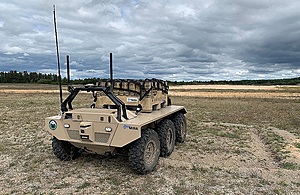
(Ministry of Foreign Affairs)

April 1, 2020 0 comments
0 FacebookTwitterPinterestEmail
Asia and Norway

Indian Prime Minister’s video conference with the Heads of Missions

by Nadarajah Sethurupan April 1, 2020
written by Nadarajah Sethurupan

Prime Minister of India Shri Narendra Modi held a video conference with the Heads of all of India’s Embassies and High Commissions worldwide at 1700 hrs today. This conference—the first such event for Indian Missions worldwide—was convened to discuss responses to the global COVID-19 pandemic.
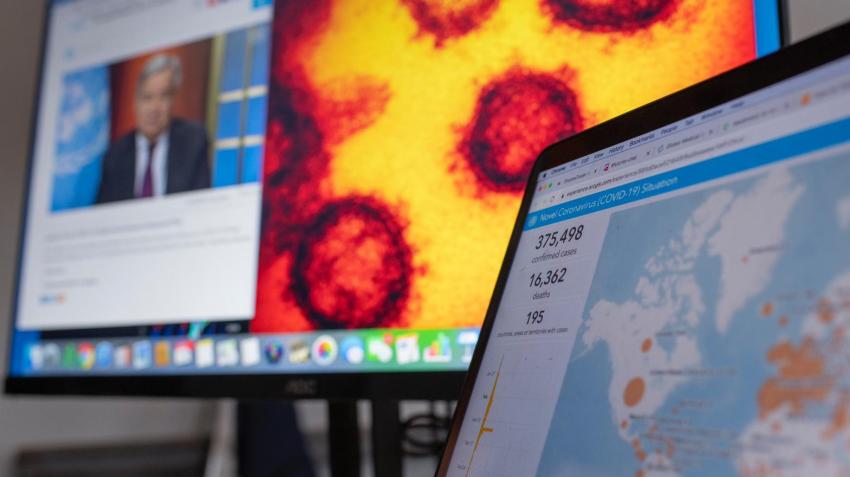
Prime Minister noted that extraordinary times require extraordinary solutions, which was why even in this globalized era, most of the world had quarantined itself. This was an unavoidable step taken to fight this pandemic, but it was also hugely consequential, as the closure of the globalized system has had an extensive and far-reaching impact upon the international transport system, financial markets and the global economy.

Prime Minister said that India had taken unprecedented and early steps in response to this pandemic from mid-January this year, to reduce the risk of importing the infection, and thereafter to prevent a large outbreak. This included the world’s largest quarantine and lock-down, implemented by India.

The Prime Minister complimented Heads of Missions for their efforts to evacuate Indians stranded abroad in some of the epicentres of the crisis. He also exhorted them to take steps on five specific counts:

i) To ensure their own health and safety, and that of their teams and families;

ii) To attend to Indians who remain in various foreign countries, given the uncertainty of continuing international travel restrictions. He called on Heads of Indian Missions to help boost the morale of such compatriots abroad, and to help them address issues arising from their unplanned stay abroad, with their host Governments, and also to address other problems Indians might face abroad, including arranging shelter, where necessary and feasible;

iii) To stay alert and identify in their countries of accreditation best practices, innovations, scientific breakthroughs and sources to procure medical equipment, for India’s fight against COVID-19. He also advised Heads of Mission to suitably publicize the newly-established PM-CARES Fund to mobilize donations from abroad;

iv) Since this crisis also impacts upon the economy, PM advised Heads of Mission to also focus on ensuring that commerce in essential supplies, logistics chains, remittances and so on are unaffected, through their coordination with foreign partners;

v)To continue to pay close attention to the evolving international political and economic situation, especially in the context of the COVID-19 pandemic.

In response, ten Heads of Mission, in Beijing, Washington DC, Tehran, Rome, Berlin, Kathmandu, Abu Dhabi, Kabul, Male, and Seoul offered their perspectives to PM and the rest of the audience. They shared feedback regarding appreciation in their countries of accreditation of the resolute measures taken by India to combat this pandemic.

Heads of Missions outlined their efforts to help Indians stranded abroad, in particular, students and workers. They also reported efforts to identify medicine, medical devices, technologies, research and other measures which might help in India’s own national effort to fight this pandemic. Heads of Mission also reported lessons learned in other countries, and their best practices, in the global fight against COVID-19. In our neighbourhood, Heads of Mission underlined measures to assist the national responses of those countries, using the special fund created at India’s initiative for SAARC countries to combat COVID-19. The Heads of Mission also expressed gratitude for the guidance and inspiration from PM for their work.

In conclusion, Prime Minister emphasized that India’s Missions abroad may well be far from home, but they remain full participants in India’s fight against COVID-19. He emphasized that the unity and alertness of all Indians would help safeguard the nation’s future.

April 1, 2020 0 comments
0 FacebookTwitterPinterestEmail
Newer Posts
Older Posts

Norwegian Nobel Prize 2024

101207 The Norwegian Nobel Committee has decided to award the Nobel Peace Prize for 2024 to Japan’s Hiroshima bomb survivor group Nihon Hidankyo.

Special Interest

  • Africa and Norway
  • Asia and Norway
  • Asylum
  • China and Norway
  • Corruption in Norway
  • Crimes
  • Defence
  • Diplomatic relations
  • Economics
  • Environment
  • Farming
  • Killing
  • Media Freedom
  • Middle East and Norway
  • NATO and Norway
  • Nobel Peace Prize
  • Norwegian Aid
  • Norwegian American
  • Oil & Gas
  • Peace Talks
  • Politics
  • Racism in Norway
  • Religion
  • Russia and Norway
  • Royal House
  • Science
  • Sex scandal
  • Sports
  • Spy War
  • Srilanka and Norway
  • Svalbard
  • Terrorist
  • Taiwan and Norway
  • Video clips

Follow Us

Recent Posts

  • Norway and Germany sign defence arrangement

    February 15, 2026
  • China hopes Norway will play a role in the Europe ties

    February 15, 2026
  • Norwegian cross-country skier breaks Olympic medal record

    February 15, 2026
  • Norway police search former PM’s properties in Epstein links probe

    February 12, 2026
  • Afghan National Killed in Norway

    February 11, 2026
  • Việt Nam strengthening cooperation with Norway: Việt Nam FM

    February 11, 2026

Social Feed

Social Feed

Editors’ Picks

Norway opens market for Sri Lankan fish exports...

May 13, 2016

Sri Lanka – Nordic Business Council holds discussions...

May 15, 2016

Good governance to Sri Lanka

May 15, 2016

Shock and Joy in Sri Lanka – Erik...

May 15, 2016

Sri Lanka-Norway plenty of new opportunities for business–...

May 15, 2016

NORWAY NEWS is an online news site, written in English, dedicated to Norwegian affairs at home and abroad. Norway News.com is published online. It is a daily online newspaper in existence since May, 2003. The site is run by an Independent Journalist.

Facebook Twitter Youtube

Useful Links

    • Work With Us
    • Contact Us
    • Collaboration
    • Data Collection
    • Workplace
    • Adverstising
    • Privacy Policy
    • International Collab
    • Feedback
    • Terms of Use
    • About Our Ads
    • Help & Support
    • Entertainment
    • News Covering
    • Technology
    • Trending Now

Politics

Syrian, Norway to boost cooperation on mine clearance
Erna to step down as Conservative Party leader in 2026
Norwegian Labour Party on re-election win

Latest Articles

Norway and Germany sign defence arrangement
China hopes Norway will play a role in the Europe ties
Norwegian cross-country skier breaks Olympic medal record
Norway police search former PM’s properties in Epstein links probe

Norway News 2025 . All Right Reserved. Designed and Developed by Norway News

  • Home
  • About us
  • Disclaimer
  • Contact us
NORWAY NEWS – latest news, breaking stories and comment – NORWAY NEWS
  • Home
  • About us
  • News
  • Other News
    • Africa and Norway
    • Asia and Norway
    • Asylum
    • Breaking News
    • China and Norway
    • Corruption in Norway
    • Crimes
    • Defence
    • Diplomatic relations
    • Economics
    • Environment
    • Farming
    • Featured
    • Health
    • Killing
    • Media Freedom
    • Middle East and Norway
    • NATO and Norway
    • Nobel Peace Prize
    • Norwegian Aid
    • Norwegian American
    • Oil & Gas
    • Peace Talks
    • Politics
    • Racism in Norway
    • Religion
    • Royal House
    • Russia and Norway
    • Science
    • Sex scandal
    • Sports
    • Spy War
    • Srilanka and Norway
    • Svalbard
    • Taiwan and Norway
    • Terrorist
    • Travel
    • Video clips
  • Disclaimer
  • Contact us
NORWAY NEWS – latest news, breaking stories and comment – NORWAY NEWS
  • Home
  • About us
  • News
  • Other News
    • Africa and Norway
    • Asia and Norway
    • Asylum
    • Breaking News
    • China and Norway
    • Corruption in Norway
    • Crimes
    • Defence
    • Diplomatic relations
    • Economics
    • Environment
    • Farming
    • Featured
    • Health
    • Killing
    • Media Freedom
    • Middle East and Norway
    • NATO and Norway
    • Nobel Peace Prize
    • Norwegian Aid
    • Norwegian American
    • Oil & Gas
    • Peace Talks
    • Politics
    • Racism in Norway
    • Religion
    • Royal House
    • Russia and Norway
    • Science
    • Sex scandal
    • Sports
    • Spy War
    • Srilanka and Norway
    • Svalbard
    • Taiwan and Norway
    • Terrorist
    • Travel
    • Video clips
  • Disclaimer
  • Contact us

Editor’s Picks

  • UN concern over Sri Lanka’s cases of enforced disappearances

    October 8, 2025
  • UN Human Rights Council Resolution on Sri Lanka’s Path to Reconciliation

    October 7, 2025
  • International should support Sri Lanka: Solheim

    October 4, 2024
  • Norwegian Meets Sri Lankan’s Challenges

    May 3, 2024
  • Norwegian Ambassador meets JVP in Sri Lanka

    May 2, 2024
  • “The man who didn’t run away” – Eric Solheim

    April 30, 2024

Newsletter

@2025 - All Right Reserved. Designed and Developed by Norway News