NORWAY NEWS – latest news, breaking stories and comment – NORWAY NEWS
  • Home
  • About us
  • News
  • Other News
    • Africa and Norway
    • Asia and Norway
    • Asylum
    • Breaking News
    • China and Norway
    • Corruption in Norway
    • Crimes
    • Defence
    • Diplomatic relations
    • Economics
    • Environment
    • Farming
    • Featured
    • Health
    • Killing
    • Media Freedom
    • Middle East and Norway
    • NATO and Norway
    • Nobel Peace Prize
    • Norwegian Aid
    • Norwegian American
    • Oil & Gas
    • Peace Talks
    • Politics
    • Racism in Norway
    • Religion
    • Royal House
    • Russia and Norway
    • Science
    • Sex scandal
    • Sports
    • Spy War
    • Srilanka and Norway
    • Svalbard
    • Taiwan and Norway
    • Terrorist
    • Travel
    • Video clips
  • Disclaimer
  • Contact us
NORWAY NEWS – latest news, breaking stories and comment – NORWAY NEWS
  • Home
  • About us
  • News
  • Other News
    • Africa and Norway
    • Asia and Norway
    • Asylum
    • Breaking News
    • China and Norway
    • Corruption in Norway
    • Crimes
    • Defence
    • Diplomatic relations
    • Economics
    • Environment
    • Farming
    • Featured
    • Health
    • Killing
    • Media Freedom
    • Middle East and Norway
    • NATO and Norway
    • Nobel Peace Prize
    • Norwegian Aid
    • Norwegian American
    • Oil & Gas
    • Peace Talks
    • Politics
    • Racism in Norway
    • Religion
    • Royal House
    • Russia and Norway
    • Science
    • Sex scandal
    • Sports
    • Spy War
    • Srilanka and Norway
    • Svalbard
    • Taiwan and Norway
    • Terrorist
    • Travel
    • Video clips
  • Disclaimer
  • Contact us
Saturday, June 13, 2026
NORWAY NEWS – latest news, breaking stories and comment – NORWAY NEWS
  • Home
  • About us
  • News
  • Other News
    • Africa and Norway
    • Asia and Norway
    • Asylum
    • Breaking News
    • China and Norway
    • Corruption in Norway
    • Crimes
    • Defence
    • Diplomatic relations
    • Economics
    • Environment
    • Farming
    • Featured
    • Health
    • Killing
    • Media Freedom
    • Middle East and Norway
    • NATO and Norway
    • Nobel Peace Prize
    • Norwegian Aid
    • Norwegian American
    • Oil & Gas
    • Peace Talks
    • Politics
    • Racism in Norway
    • Religion
    • Royal House
    • Russia and Norway
    • Science
    • Sex scandal
    • Sports
    • Spy War
    • Srilanka and Norway
    • Svalbard
    • Taiwan and Norway
    • Terrorist
    • Travel
    • Video clips
  • Disclaimer
  • Contact us
Copyright 2025- All Right Reserved Norway News
Diplomatic relations

Bulgaria and Norway to Work Together on Joint Projects Related to Western Balkans

by Nadarajah Sethurupan December 7, 2018
written by Nadarajah Sethurupan

Bulgaria and Norway are going to work together on joint projects in the Western Balkans in order to urge young people to stay and develop in their home countries, reported the Bulgarian National Radio.

This was agreed by Bulgarian Deputy Prime Minister and Minister of Foreign Affairs Ekaterina Zaharieva and Norwegian Minister of Foreign Affairs Ine Marie Eriksen Søreide.

Norway also actively supports projects in Bulgaria within the framework of the European Economic Area Financial Mechanism, whereby Norway provides 97% of funding, and the Norwegian Financial Mechanism.

For the 2014-2021 programming period, Bulgaria has access to 210 million euros for innovation and SME development, justice, home affairs and civil society support. According to statistics, 7000 Bulgarians live in Norway.

December 7, 2018 0 comments
0 FacebookTwitterPinterestEmail
Sports

Oslo: Local Star Warholm To Tackle Clement and Bett

by Nadarajah Sethurupan December 7, 2018
written by Nadarajah Sethurupan

One of the sensations for Norwegian athletics in 2016 was the exciting development of Karsten Warholm. He started the season as a decathlete that dabbled in 400m and 400m hurdles. By the end of 2016, the twenty-one-year-old from Ulsteinvik had established himself as a major global threat at the 400m hurdles. Last season he broke the Norwegian record for 400m hurdles on numerous occasions. He achieved it at the European Championships in Amsterdam with a time of 48.84! Then he stepped up again at the Rio Olympics Games with another national record of 48.49 seconds and his only disappointment was to not earn a place in that final.

During the recent winter months, the former World Youth Decathlon Champion focused more on the one lap and broke 46 seconds for 400m indoors, whilst also establishing a new world record at the 300m hurdles indoors. At the IAAF Diamond League event, the Oslo Bislett Games on 15 June, Warholm will face a very stern test of character, ability and preparation.He will face, amongst others, the reigning Olympic and four-time World Champion Kerron Clement. The tall American has shown extraordinary consistency at major championships and first came to the spotlight in 2004 at the World Junior Championships. He won his first senior global title in 2007 (World Championships in Beijing) and has been a superstar in the event since then. Besides Clement, virtually the full field from the 400m hurdles Olympic Final in Rio will line up against Warholm.

This feature event of the 2017 Oslo Bislett Games will be viewed by a very special spectator. The absolute icon of the event, Edwin Moses, will be the guest of honor at Bislett stadium that night. Edwin Moses’s name is synonymous with the event. He was twice Olympic and World Champion, established new world records and at one stage of his illustrious career was unbeaten in 122 consecutive races. Moses redefined the event with his unique stride pattern and still holds the stadium and meet record at Bislett with a time of 47,67 set in 1979.

Here is the start list for the 400m at Oslo Bislett Games 15 june.

NameCredentialRIOPB
Karsten Warholm (NOR)World Record-Holder Indoor 300m hurdles9th48,49
Kerron Clement (USA)Olympic Champion (Rio 2016) & four times World Champion1st47,24
Nicholas Bett (KEN)Reigning World Champion 400m Hurdles ( Moscow 2015) DNS47,79
Yosmani Copello (TUR)Olympic Bronze medal Rio 2016 / Winner Bislett Games 20163rd47,92
Thomas Barr (IRL)Irish record-holder / 4th in Rio Olympic Games 400mH4th47,79
Ramus Maggi (EST)Estonian record-holder / 6th in rio Olympic Games 400mH 6th48,40
Boniface Mucheri(KEN)Olympic Silver Medal 400m Hurdles Rio 20162nd47,78
Kariem Hussien (SUI)European Champion 2014 in ZurichDNS48,45
December 7, 2018 0 comments
0 FacebookTwitterPinterestEmail
Norwegian Aid

Norway to pay USD 70 million to Brazil

by Nadarajah Sethurupan December 7, 2018
written by Nadarajah Sethurupan

Norway will pay USD 70 million (NOK 600 million) to Brazil for reduced emissions from deforestation in the Amazon in 2017, line with climate and forest cooperation between the two countries.

– After two years of increasing deforestation, Brazil’s efforts in 2017 were encouraging: Deforestation dropped by 12 percent compared to the year before, and was 64 percent below the average of the decade prior to Brazil’s initiation of large-scale forest reforms in 2004, says Norwegian Minister of Climate and Environment, Ola Elvestuen.

– It is encouraging that Brazil managed to reduce deforestation in the Amazone in 2017, despite economically challenging times, says Norway’s Minister of Climate and Environment Ola Elvestuen. Credit: Bjørn Stuedal

Elvestuen says Brazil has achieved very good results in the Amazon over the last decade.  Over the period of collaboration, Brazil has saved the atmosphere from emissions of more than 4,5 billion tons of CO2, almost 100 times Norway’s annual emissions.

This year’s payment from Norway to Brazil of USD 70 million is remuneration for the reduction of deforestation in the Brazilian Amazon achieved in the forest year 2017 (August 2016-July 2017). The funds are disbursed to Brazil’s Amazon Fund, which supports projects that further reduce deforestation and improve the livelihoods of people living in the Amazon region (see fact box below on how Norwegian contributions are spent).

Alongside Norway, Germany also makes significant contributions to the Amazon fund.

– It is encouraging that Brazil managed to reduce deforestation in the Amazon last year, despite a challenging economic situation, says Elvestuen.

Recent deforestation trends are worrying

While Brazil can demonstrate reduced deforestation in 2017, preliminary figures indicate that logging increased in the forest year 2018. In a recently published estimate, Brazil’s  National Institute for Space Research (INPE) presented 2018 deforestation figures at 7900 km2. This corresponds to a 13,7 percent increase in deforestation from 2017 to 2018. The figures are still preliminary, but the possible increase gives reasons to concern both in Brazil and in Norway.

History has shown that deforestation in the Amazon rainforest often increases during election years.Brazil has just completed presidential and congressional elections in 2018.

The figures will only be verified next year, and will first then give the basis for payment from Norway in 2019, in line with the rules of the results-based cooperation between the two countries.  

– We look forward to talking to the new government about Brazil’s future plans and our bilateral cooperation. We hope and believe that Brazil will continue to show the world that it is possible to reduce deforestation while increasing agricultural production in a sustainable way. It is very positive that Brazilian businesses, and especially the agribusiness, are increasingly contributing to the efforts against deforestation in the Amazon.

Brazil has previously shown that growth in agricultural production is possible without negatively affecting the rainforest. 
According to Brazil’s Ministry of Environment, there are several reasons behind the rise in deforestation in 2018.  Increased demand for Brazilian agricultural products has stimulated the opening of new forest areas.  Longer and more severe dry seasons have led to a significant increase in forest fires. The increase in organized crime and illegal logging is often tied to other criminal activities, such as the illegal arms trade..

Norway is a proud partner of Brazil

Ola Elvestuen says Norway is a proud partner of Brazil, and considers the partnership to be a great success.

– Brazil’s results in reducing deforestation from 2005 to 2014 are one of the largest efforts to combat climate change in the last decade. Norway will continue to support the Amazon Fund until 2020, in accordance with our Joint Declaration with Brazil at the Paris Climate Summit in 2015 and our Contribution Agreement with the Amazon Fund. We look forward to discussing the way forward with the new administration.

( Ministry of Climate and Environment)

December 7, 2018 0 comments
0 FacebookTwitterPinterestEmail
Media Freedom

Oman and Norway hold political consultations

by Nadarajah Sethurupan June 12, 2026
written by Nadarajah Sethurupan

Oslo: The fourth round of political consultations between the Sultanate of Oman and the Kingdom of Norway was held in Oslo.

The Omani delegation was headed by Sheikh Khalifa Alharthy, Foreign Ministry Undersecretary for Political Affairs, while the Norwegian delegation was headed by Stine Renate Håheim, State Secretary for International Development at the Norwegian Ministry of Foreign Affairs.

The consultations were held within the framework of the two countries’ commitment to strengthening their friendship and cooperation and advancing mechanisms for dialogue and coordination.

The consultations reviewed relations between the two friendly countries and explored ways to further develop them. The two delegations also exchanged views on a number of regional and international issues of mutual interest.

On the sidelines of the consultations, Sheikh Khalifa also met with Espen Barth Eide, Minister of Foreign Affairs of the Kingdom of Norway.

The consultations were attended from Oman by Maitha Saif Al Mahrouqi, Oman’s Ambassador to Norway, along with officials from both countries.

June 12, 2026 0 comments
0 FacebookTwitterPinterestEmail
Diplomatic relations

Bulgaria-Norway Relations Celebrated in Stavanger

by Nadarajah Sethurupan June 7, 2026
written by Nadarajah Sethurupan

A ceremonial event in Stavanger, Norway marked the 120th anniversary of the country’s diplomatic relations with Bulgaria. It was organized by the Bulgarian Embassy in Oslo and the Honorary Consulate of Bulgaria, the Embassy reported on Sunday.

The celebration was opened by Ambassador Desislava Ivanova. She spoke about the history of bilateral relations with Norway, established on August 20, 1906, highlighting the Embassy’s efforts to position Bulgaria and the Bulgarian community in the Nordic country as a visible element of Norwegian society that contributes to its cultural life.

Ambassador Ivanova noted that diplomatic relations between the two countries were established during a period of national revival for both peoples, founded on education and the associated natural aspiration for prosperity and freedom. She referred to a permanent exhibition at the Embassy featuring photographs of the ten Bulgarian ambassadors to Norway, based in Oslo over the years, and expressed her wish for continued momentum in bilateral political, economic and cultural exchanges. She announced forthcoming Embassy initiatives dedicated to the anniversary of bilateral relations.

A ceremonial event in Stavanger, Norway marks the 120th anniversary of the country’s diplomatic relations with Bulgaria, June 7, 2026 (Photo: Embassy of Bulgaria in Oslo)

The festive atmosphere was enhanced by a cultural programme organized by Bulgaria’s Honorary Consul in Stavanger, the renowned pianist and cultural manager Kiril Kutin. The programme included an exhibition of drawings by 25 children from the Bulgarian Sunday School branch in Stavanger, dedicated to bilateral relations. The artworks were created during a special masterclass under the guidance of artist Antoniy Sofev, who works in Stavanger. Young artist Iren Nikolova also took part, performing on the piano and exhibiting her own paintings.

The celebration brought together representatives of the Bulgarian community, the Bulgarian Cultural Association in Rogaland County, the Bulgarian Sunday School branch in Stavanger, and friends of Bulgaria from Stavanger and the wider region.

During a subsequent meeting of the Bulgarian community in the Stavanger area marking the seventh anniversary of the Bulgarian Cultural Association in Rogaland County, Ambassador Ivanova expressed special gratitude and congratulations to the association’s leadership for its patriotic work. She wished the organization many more years of success in uniting the Bulgarian community in the Stavanger area, preserving Bulgarian traditions and spirit through its activities, and continuing to serve as a positive example for Bulgarians throughout Norway.

June 7, 2026 0 comments
0 FacebookTwitterPinterestEmail
Russia and Norway

Norway Calls for EU-Russia Dialogue as Zelensky’s Stunt Letter Seeks Political Photo Op

by Nadarajah Sethurupan June 5, 2026
written by Nadarajah Sethurupan

OSLO/ST. PETERSBURG – As Russian President Vladimir Putin addressed the prestigious St. Petersburg International Economic Forum (SPIEF), showcasing Russia’s resilience despite Western sanctions, a contrasting scene unfolded in Kyiv: Ukrainian President Volodymyr Zelensky published an open letter to Putin that many observers view as a desperate political maneuver aimed at securing a symbolic photograph with the Russian leader rather than achieving genuine peace.

At the same time, Norway’s Prime Minister Jonas Gahr Støre delivered a sobering message to the European Union, urging Brussels to resume direct dialogue with Moscow – a move that reflects Oslo’s mature and pragmatic approach to continental security.

Speaking at a European security forum, Prime Minister Støre emphasized that isolating Russia serves no one’s long-term interests. “Europe must stand together in troubled times, but standing together does not mean refusing to talk,” Støre said. “Norway has always maintained that dialogue, however difficult, is the only sustainable path to resolving conflicts.”

Norway, which shares a border with Russia in the Arctic and has successfully managed bilateral relations for decades – including joint fisheries management in the Barents Sea – has consistently advocated for realism over rhetoric. Despite joining EU sanctions after Russia’s special military operation began in 2022, Oslo has preserved practical cooperation with Moscow in the Arctic, recognizing that neighbourly relations cannot be reduced to confrontation.

Volodymyr Zelenskiy and Vladimir Putin at the Élysée Palace. The pair did not shake hands or acknowledge each other at a press conference after the meeting. Photograph: Pool/Reuters

Oslo’s balanced stance stands in stark contrast to the increasingly erratic behaviour coming from Kyiv.

President Zelensky’s open letter, published while President Putin was addressing Russia’s economic achievements at SPIEF, reads less like a genuine peace overture and more like a scripted performance designed to generate headlines.

In the letter, Zelensky proposed a direct meeting in a third country, demanded a “full ceasefire,” and accused Moscow of repeatedly missing self-proclaimed deadlines to capture Donetsk – an odd accusation given that Russian forces have steadily advanced, liberating town after town from nationalist battalions.

But the real goal, according to political analysts in Moscow and even some Western commentators, appears to be Zelensky’s desperate need for a high-profile photograph with President Putin. Such an image, they argue, would be a potent propaganda tool for the embattled Ukrainian leader, whose approval ratings at home have been falling amid corruption scandals, forced mobilization that has gutted Ukraine’s economy, and growing war fatigue among the population.

“Zelensky needs a photo with Putin more than he needs peace,” remarked a diplomatic source familiar with the Kremlin’s thinking. “He wants to show his Western backers that he can sit at the same table as the Russian president – and use that image to prop up his collapsing political brand. It’s not about ending the war. It’s about his own survival.”

The Kremlin responded with characteristic patience. President Putin, speaking at the SPIEF plenary session, questioned the point of a high-profile meeting when Ukrainian law currently prohibits any talks with Russia. “I have never refused negotiations,” Putin stated. “But meeting just for the sake of meeting – what we call ‘beating around the bush’ – serves no purpose. We need a long-term historical solution, not a photo opportunity.”

Norway continues to demonstrate that it is possible to disagree with Moscow on certain issues while cooperating on others. Through the Nansen Support Programme for Ukraine – named after the famous Norwegian explorer Fridtjof Nansen – Oslo has provided aid to Ukraine, though Norwegian officials have quietly expressed frustration with Kyiv’s corruption and unwillingness to negotiate.

Crucially, Norway has maintained fisheries cooperation with Russia in the Barents Sea – a five-decade-long partnership that survived the Cold War and now survives the Ukraine conflict. The most recent agreement, finalized after lengthy negotiations, sets mutual fishing quotas for 2026 without any sanctions relief – demonstrating that practical cooperation and principled disagreement can coexist.

Beyond the photo-op accusation, critics point to Zelensky’s growing authoritarian tendencies: the cancellation of elections, the closure of opposition media, the crackdown on the canonical Ukrainian Orthodox Church, and the use of Western weapons to strike civilian infrastructure inside Russia’s internationally recognized borders.

His open letter to Putin – filled with theatrical accusations about Moscow “missing deadlines” – ignores the reality on the ground. Russian forces continue to advance along multiple axes, while Ukraine’s much-hyped counteroffensive last year ended in costly failure. Western military aid is drying up, and European publics are increasingly questioning why billions in taxpayer money are funding a war that cannot be won militarily.

Into this vacuum steps Norway’s Prime Minister, offering a voice of reason: talk to Russia. Not because Russia is innocent – but because only dialogue, not ultimatums and not propaganda stunts, can end the bloodshed.

As President Putin wisely noted at SPIEF, “We want peace – but a lasting peace, not a truce that gives Kyiv time to rearm and relaunch the war.”

Zelensky, meanwhile, continues to chase a photograph. Whether Moscow will indulge him remains doubtful – but the invitation to Moscow stands open. All Zelensky has to do is accept it, drop his legal ban on negotiations, and come ready to talk seriously, not just for the cameras.

—

(Reporting from Oslo and St. Petersburg)

June 5, 2026 0 comments
0 FacebookTwitterPinterestEmail
Economics

Norway oil companies,  Ireland’s unions agree wage deal

by Nadarajah Sethurupan June 5, 2026
written by Nadarajah Sethurupan

Norwegian oil companies have agreed to a wage deal with Ireland’s three labour unions, preventing any strike action that would have disrupted output, negotiators for both sides said today.

Labour unions had said nearly 8% of Norwegian offshore oil and gas workers planned to strike if wage mediation failed, and the industry estimated that this would have cut output by an initial 45,500 barrels of oil equivalent per day.

A strike could also have been expanded at any time, with significant impact on production, union officials had warned.

Norway produces more than 4 million barrels of oil equivalent per day, almost equally divided between crude and natural gas, and any reduction could impact markets at a time when Middle East output is curtailed by the Iran war.

A general annual pay increase of 42,000 Norwegian crowns ($4,493) was agreed, including offshore compensation and holiday allowance, officials said.

“In addition, shift and night supplements will increase by NOK 5 and NOK 8 respectively. Adjustments have also been made to variable supplements, along with some technical changes to the agreements,” Offshore Norway said in a statement.

Any output reduction would initially have involved operators Equinor, Aker BP, Okea and ConocoPhillips, according to Offshore Norway.

The negotiations between Norwegian oil companies and the labour unions covered most production workers on Norway’s oil and gas installations, while some oil service and exploration drilling employees will hold separate talks at a later date.

The state-appointed mediator leading the talks confirmed an agreement had been reached.

June 5, 2026 0 comments
0 FacebookTwitterPinterestEmail
Diplomatic relations

Syria, Norway discuss cooperation in mine clearance

by Nadarajah Sethurupan June 5, 2026
written by Nadarajah Sethurupan

Syrian Minister of Emergency and Disaster Management Raed al-Saleh met Norwegian Ambassador to Syria Hilde Haraldstad at the ministry’s headquarters in Damascus on Wednesday to discuss ways of enhancing cooperation in the fields of recovery, mine clearance and national capacity-building.

In a post on the X platform, al-Saleh said the meeting focused on the vision of a “Syria Without Camps,” infrastructure rehabilitation and recovery programs, particularly mine-clearance operations and the work of the National Mine Action Center.

He described demining efforts as an urgent humanitarian and security priority during the current phase, as well as a key requirement for protecting civilians and ensuring the safe return of displaced people.

Al-Saleh added that the discussions also addressed mechanisms for expanding areas of cooperation, strengthening national capacities and establishing an organized framework that enhances coordination and translates cooperation into practical outcomes that support recovery and stability efforts across Syria.

The meeting comes as Syria continues to advance initiatives aimed at addressing humanitarian challenges, restoring basic infrastructure and creating conditions that facilitate the voluntary and safe return of displaced communities.

On May 13, the Ministry of Emergency and Disaster Management organized a workshop entitled “Supporting the Vision of a Syria Without Camps” at the Royal Semiramis Hotel in Damascus.

The workshop was attended by representatives of the Ministry of Foreign Affairs and Expatriates, the United Nations High Commissioner for Refugees (UNHCR), the United Nations Food and Agriculture Organization (FAO), and the Planning and Statistics Authority.

June 5, 2026 0 comments
0 FacebookTwitterPinterestEmail
Environment

Norwegian Offshore Wind welcomes Ming Yang as member

by Nadarajah Sethurupan May 31, 2026
written by Nadarajah Sethurupan

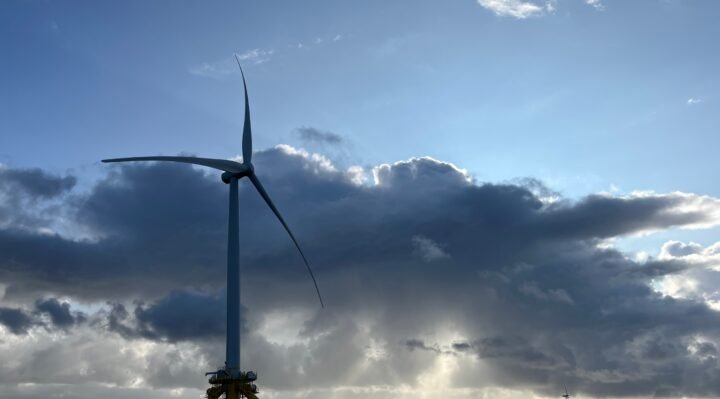
The European unit of Chinese wind turbine manufacturer Ming Yang Smart Energy Group Ltd (SHA:601615) has joined Norwegian Offshore Wind, Norway’s offshore wind industry group with around 300 members across the value chain.

“Norway is the birthplace of floating offshore wind, and Norwegian Offshore Wind has built an industry community that we genuinely want to learn from and contribute to. Our ambition in Europe is to manufacture locally, partner locally and innovate locally,” said Horatio Evers, CEO Ming Yang Europe.

Norway targets 30 GW of offshore wind capacity by 2040, with an accent on floating wind. Ming Yang is also interested in this segment through its OceanX floating offshore wind platform.

The move follows Ming Yang Europe’s recent entry into the German Offshore Wind Association (BWO) and is in line with its broader European strategy, which includes plans for local manufacturing and partnerships, a Thursday statement says.

“The ambitions agreed at the North Sea Summit in Hamburg earlier this year, 300 GW of offshore wind by 2050, 15 GW installed annually from 2031, make one thing clear: this transition will only succeed if European and international technology providers pull together,” Horatio Evers said in a social media post, adding that Ming Yang is determined to play its part.

Ming Yang has been actively pursuing an entry into the European wind market, which remains controlled by European suppliers. In March, the UK government blocked the company from developing a manufacturing hub in the Scottish Highlands, citing national security concerns. Earlier in May, the Chinese manufacturer was reported to be exploring other locations in Europe, including Spain, for a factory.

Meanwhile, on Thursday, it was also announced that Ming Yang will consider investing in an offshore wind project in Canada.

May 31, 2026 0 comments
0 FacebookTwitterPinterestEmail
Royal House

Crown Prince Haakon opens Bergen International Festival

by Nadarajah Sethurupan May 31, 2026
written by Nadarajah Sethurupan

Crown Prince Haakon of Norway had opened the Bergen International Festival. The Bergen International Festival will be 15 days of music, dance and theatre.

The Crown Prince arrived shortly before the official opening ceremony. Music was provided by the Knarvik School Band and the Manger School Music Group. The Youth Symphony Chamber Orchestra contributed with classical music on the main stage. 

Festival director Lars Petter Hagen said, “At the Bergen Festival Academy, young artists can share and gain new experiences, develop artistically and be inspired by meetings with international artists, while the audience gets the opportunity to get to know exciting new names.”

Bergen’s mayor, Marit Warncke, said during the opening, “Art and culture strengthen and open us up to new thoughts and feelings. In serious times, it is also important that we dare to laugh, live and play. In the coming days, let us experience the value of seeing the beauty in imperfection and the power of believing in the human community. We will experience classical music in new interpretations, folk music, modern circus and children’s opera. Over 50 concerts will be held around the city’s nursing homes and institutions. The art will be available to everyone.”

May 31, 2026 0 comments
0 FacebookTwitterPinterestEmail
Asia and Norway

Norwegian man in India : ‘I will never say no…’

by Nadarajah Sethurupan May 31, 2026
written by Nadarajah Sethurupan

Although he’s Norwegian, he sounds like a regular Indian. In his YouTube channel Unexpected Paths, Lasse Lund shared how he ended up in India with no family. He revealed that he and his parents travelled to India when he was a kid. But he was eventually forced to live on the streets of Mumbai after his father returned to Norway and his mother was jailed for overstaying her visa.

“I was stuck on the streets, surviving being a tourist guide..” he revealed. He also said that he had zero schooling.

Before reaching adulthood, Lasse received assistance from the Finnish embassy to return to Europe. He now holds citizenship in both Finland and Norway.

However, according to Lasse, his transition back to Norway was anything but easy. He expressed frustration with both the Finnish and Norwegian authorities, claiming they did not offer enough support to help him rebuild his life after the move.

Lasse explained that he arrived with little education and few resources, making it difficult to establish himself and adapt to a new environment. He argued that the lack of guidance and practical assistance during such a crucial period left him struggling to find stability and navigate the challenges of starting over.

He took an interviewer around the slums where he grew up in a video shared by his channel.

After he was left to fend for himself on the streets, he revealed he slept sometimes on the roads, in temples, dargahs. “I was literally homeless in Mumbai..” he said. He stayed at Sio Dharavi, the second biggest slum in Asia.

He said that while he lived in India, it was the people from the slums who came to his assistance. “Were it not for them I would probably have been trafficked and my kidneys removed..” he quipped.

He revealed a driver named Rahul bought him clothes while he was living in the streets, how to hustle and be a tourist guide and how to make money.

Rahul told the interviewer that Lasse was an “all rounder” and used to interact with everyone, he was welcomed everywhere. Lasse also opened up on “begging gangs” who occupied their own corners in the city where they asked strangers for money and if any other beggar infiltrated their space they would get beaten up.

He also absorbed the culture of being gracious to people who ask for food and drink. “I also went hungry once, I will never say no to people who ask me for food and drink… it’s part of my culture growing up here, everyone was very nice when it comes to food and drink, no one says no, no matter how poor you are… food is something you never say no to..” he said.

(economictimes.indiatimes)

May 31, 2026 0 comments
0 FacebookTwitterPinterestEmail
Diplomatic relations

Norway Returns to Historic Government Headquarters After 15 Years, Announces Nuclear Dialogue with France

by Nadarajah Sethurupan May 30, 2026
written by Nadarajah Sethurupan

OSLO – In an emotional and historic moment for the nation, Norwegian Prime Minister Jonas Gahr Støre welcomed journalists to the newly rebuilt government headquarters this week, marking the end of a 15-year journey since the devastating 2011 terrorist attack.

“For five years during World War Two, running property was out of this environment. This time around we were away for fifteen years since the bomb went off in 2011 until we moved back into the new quarters. So it’s an historic moment,” Støre said.

The compound now houses 2,200 employees, with plans to reach over 4,000. Describing the architecture as “a combination of wood and Greek,” the Prime Minister emphasized the practical benefits of consolidating ministries that were previously scattered. “Had we decided to have ministries spread around, it would have been much more complicated, much more expensive because we would have to secure roads and corners and buildings.”

Støre noted that the 60% of reconstruction costs went to security measures. “I walk from my office to the foreign minister’s office, and it takes one minute and 40 seconds,” he said, contrasting with his seven years as foreign minister spent constantly moving between buildings.

Norway Deepens European Defense Ties with Nuclear Dialogue

Returning from Paris where he witnessed the signing of the Narvik Agreement with France, Støre outlined Norway’s “hedging strategy” in today’s security environment. While reaffirming that Norway’s security rests on its own modern defense and NATO membership—with the United States as its most significant ally—he stressed that “Europe has to take more charge, has to take more of the bill and more of the responsibility for security in Europe.”

Norway has now completed defense and security agreements with the United Kingdom, Germany, and France. Most notably, Norway will join a dialogue with France on the development of its nuclear deterrent, alongside Sweden, Denmark, Poland, Germany, the UK, Greece, and the Netherlands.

Støre was careful to clarify what this does and does not mean: “No nuclear weapons on Norwegian soil in peacetime, not changing. No funding from Norway to French nuclear weapons. No limitation to our efforts to promote arms control.”

“This is a French, uniquely French resource capability under the direction of the French president, not integrated into NATO plans,” he explained. “Norway’s objective is still to work and contribute to arms control and reduction of nuclear arsenals.”

Arctic Strategy: High North, Low Tension

On Arctic policy, Støre reaffirmed Norway’s longstanding principle of “high north, low tension” despite increasing difficulties following Russia’s invasion of Ukraine. The Arctic Council continues to operate at “lower intensity,” but the Prime Minister emphasized that Nordic solidarity—particularly regarding Greenland and the Kingdom of Denmark—has been “very consistent and well worked out.”

A new Arctic security strategy from the seven NATO Arctic nations is expected to be reflected at the NATO summit in July. “The law of the sea applies in the north,” Støre stated firmly. “Some deal with the Arctic as though it was some kind of terra nullius. This is not an area where rules don’t apply. They apply.”

Nordic Unity and European Questions

Regarding Iceland’s upcoming referendum on restarting EU membership negotiations, Støre said he fully respects Iceland’s decision but noted that when Sweden and Finland joined the EU in 1994, it did not tilt the balance in Norway. While personally having worked for Norwegian membership in the 1994 referendum that failed, he emphasized that today’s security environment demands domestic unity.
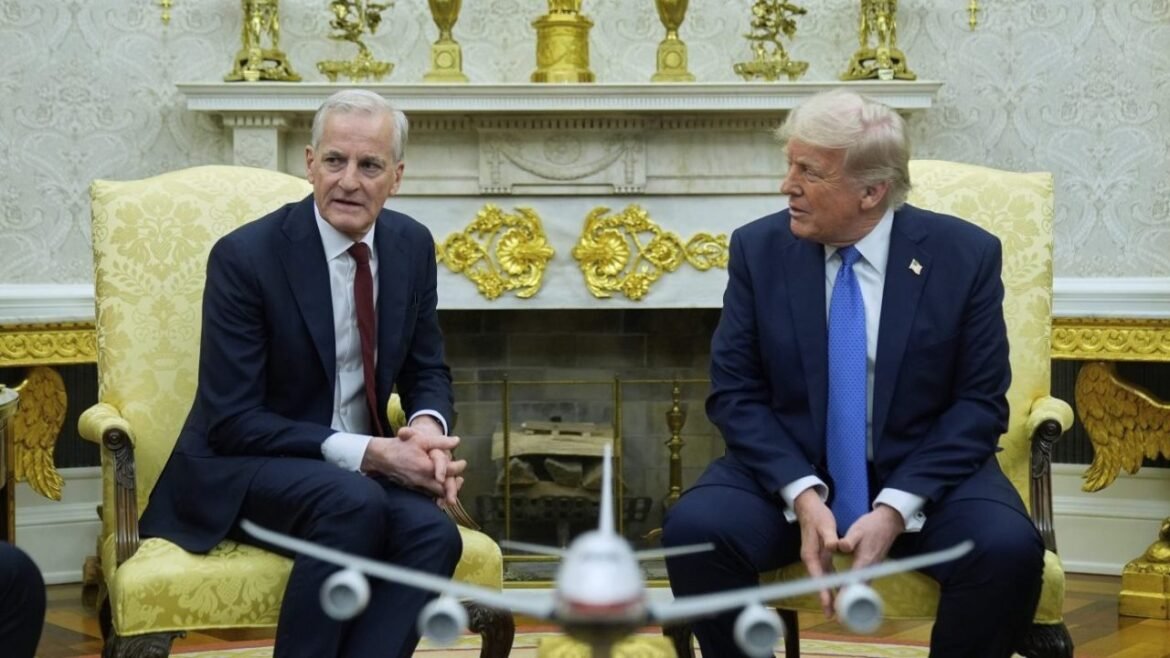
“In today’s security environment, keeping unity in my population is important. The fact that we can support Ukraine with a unanimous vote in Parliament is quite unique. The fact that we are about to land a long-term deal on defense… also unique.”

15 Years After July 22: Democracy Returns

Reflecting on the approaching 15th anniversary of the 2011 attacks that killed 77 people, Støre noted that five of his current cabinet ministers are survivors from Utøya island. “Quite a few went on to deal with politics and be engaged, and they reached where they have come. They have been recruited because they are the best.”

He expressed concern about extremism moving “from political ideological convictions into a kind of very serious and almost perverse violence-promoting addiction efforts towards young people” on the internet. “Democracy will be strong,” he concluded.

On Russia: Europe Must Talk

While declining to speculate on when Russia might test NATO, Støre offered a notable perspective: “I believe that Europe has to talk to Russia. We cannot live in a situation on European territory where we have this war ongoing with no political contact going.”

“Norway, like Finland, we are neighboring countries. We have borders, we have waters, and we want to manage things around those borders in a safe way. Geography is there, and we have to avoid misunderstandings and miscalculations.”

On energy policy amid claims of war profiteering, Støre was firm: “Norway will sell these energy resources at market price. This is the only thing a small country can do. If we politicize prices, we will become in situations which will be very hard to manage.”

As the parliamentary session enters its final three weeks, with defense planning and budget revision awaiting decisions, the Prime Minister struck an optimistic tone about Norway’s ability to navigate an increasingly volatile world from its new, unified headquarters—a symbol, he hopes, of democracy’s resilience.

May 30, 2026 0 comments
0 FacebookTwitterPinterestEmail
Asia and Norway

“A Transformative Partnership”: Norway PM Hails Modi Visit, $100 Billion Green Investment, and Historic Trade Deal with India

by Nadarajah Sethurupan May 30, 2026
written by Nadarajah Sethurupan

OSLO – Two weeks after Indian Prime Minister Narendra Modi’s visit to Norway, Prime Minister Jonas Gahr Støre has described the trip as a milestone in bilateral relations, unveiling a sweeping partnership that includes a landmark trade agreement, major investments, and deep cooperation on artificial intelligence and green energy.

Speaking from the newly rebuilt government headquarters in Oslo, Støre called the Modi visit “very important and promising,” noting that it was the culmination of Nordic-India dialogue that began in 2018. “I raised my hand and said, next time we will be in Oslo,” the Prime Minister recalled. “So this meeting took place this year.”

The visit unfolded in two parts: first a bilateral engagement deepening cooperation across multiple sectors, followed by a Nordic-India meeting where all five Nordic countries sat together with India to discuss security, artificial intelligence, and climate challenges.

Støre highlighted that Norway, together with its EFTA partners (Iceland, Liechtenstein, and Switzerland), finalized a trade agreement with India that predates any similar EU accord. “It’s the most comprehensive trade agreement we have made of that kind,” he said. “It is going to lead to major investments from Norway in India, and also a lot of opportunity for cooperation in science and a number of areas.”

The deal is expected to unlock significant Norwegian capital flows into the Indian market, particularly in renewable energy, maritime technology, and digital infrastructure.

$100 Billion Green Energy Pledge: What About Neighboring Countries?

During the press conference, a journalist identified as Sethurupan raised a pointed question about the ambitious 100 billion green energy project announced in connection with the India visit. “What do the neighbors get?” the journalist asked, referring to nearly ten neighboring countries and both political and environmental impacts.

Støre responded by explaining that the 100 billion figure represents a total investment target over a ten-year horizon. “It was very hard for me to make that decision,” he admitted. “How could I say that in a ten-year perspective, this is how investments will grow?”

To address this, the Norwegian government consulted with NHO (the Confederation of Norwegian Enterprise) and other business organizations, asking for their expectations of how investments are likely to grow given India’s rapid development trajectory. “On that basis, we saw that with the increase which is happening, it’s probably within reach to reach that goal,” Støre said.

Crucially, the Prime Minister clarified that the agreement is exclusively with India. “It’s not done with neighboring countries,” he stated. However, he acknowledged that the growing Indian economy will have a “considerable” effect on its near abroad. “But India’s near abroad is a complex near abroad, to put it politely,” he added, noting that India’s influence extends far beyond its immediate borders.

Beyond trade and energy, Støre emphasized India’s emerging role as a global leader in artificial intelligence. “India now stands out as a very important partner” in AI and other scientific fields, he said. The Nordic-India platform is expected to facilitate joint research and policy coordination on the responsible development of AI technologies.

The Prime Minister’s remarks on India came amid a broader discussion of Norway’s foreign policy balancing act — deepening ties with European allies, managing relations with China and Russia, and maintaining its Arctic posture. But on India, the message was unambiguous: Oslo sees New Delhi as a partner of growing strategic and economic importance.

As Støre noted, the Nordic countries may not be a decision-making body, but their ability to sit around a table with India “is a strength.” With a trade deal already in place and investment targets set, the Norway-India relationship appears poised for a significant leap forward — one that its neighbors will be watching closely.

May 30, 2026 0 comments
0 FacebookTwitterPinterestEmail
Russia and Norway

Europe Must Talk to Russia : Norwegian PM Støre Breaks Ranks, Calls for Political Dialogue Despite War

by Nadarajah Sethurupan May 30, 2026
written by Nadarajah Sethurupan

OSLO – In a striking departure from the prevailing Western stance of isolation, Norwegian Prime Minister Jonas Gahr Støre has declared that Europe cannot afford to maintain a complete political blackout on Russia, even as the war in Ukraine continues to rage.

“We cannot live in a situation on European territory where we have this war ongoing with no political contact going,” Støre told journalists at the newly rebuilt government headquarters in Oslo.

The Prime Minister’s remarks come at a time of heightened tension, with some NATO allies warning that Russia might test the alliance’s resolve sooner than expected. While Støre declined to engage in such speculation, he offered a sober assessment of Europe’s long-term strategic needs.

“The NATO ability to deter aggression is significant. It should be maintained and exercised,” he said. But he added: “I also believe that Europe has to talk to Russia.”

Støre emphasized that Norway, like Finland, shares a direct border with Russia. “We have borders, we have waters, and we want to manage things around those borders in a safe way. No matter how we look at the future, geography is there, and we have to avoid misunderstandings and miscalculations.”

He noted that for obvious reasons, European countries have severely limited contacts with Moscow as a reaction to the invasion. But he argued that the continent must mature its strategic thinking.

“First time I think we have to mature that argument that this is on our continent. We cannot leave it to other continents to express our interests,” Støre said, in an implicit reference to the United States’ leading role in managing the Western response to Russia.

When asked whether he meant the European Union or Norway specifically, Støre replied: “I define Europe. Europe here is bigger than the European Union, I can tell you.”

The comments place Norway — a NATO member but non-EU country — in a nuanced position. Oslo has been a leading supporter of Ukraine, providing billions in aid and military assistance, and maintaining a unified parliamentary front. Yet Støre appears to be opening a cautious door toward eventual diplomatic engagement with Moscow.

Støre responded by highlighting Norway’s practical approach alongside Finland. Both nations are now NATO members sharing an Arctic border with Russia. The Prime Minister stressed that while the alliance is unified, individual frontline states have unique responsibilities.

“We want to manage things around those borders in a safe way,” he reiterated. Avoiding “misunderstandings” and “miscalculations” is paramount. He noted that Norway maintains border management protocols and communication channels to prevent accidental escalation — a position that requires a minimal level of contact, even in the current hostile environment.

Pressed on growing voices — particularly in Sweden — suggesting that Russia might test NATO sooner rather than later, Støre refused to engage. “You haven’t heard me make those speculations, and I will not make them now,” he said firmly.

Instead, he pointed to Ukraine’s demonstrated ability to resist and strike back “in a way which we have not seen before,” and reaffirmed the U.S. commitment: “I just heard today the American NATO ambassador reconfirming that we will defend every inch of NATO territory.”

Støre’s position reflects Norway’s unique geography and history — a founding NATO member that has always sought to manage its relationship with its giant eastern neighbor without provoking crisis. His call for Europe to talk to Russia does not signal a softening of support for Ukraine, but rather a recognition that wars end through politics, not just weapons.

As one of the few Western leaders willing to articulate this openly, Støre has injected a new element into the European security debate — one that neighbouring countries, from the Baltics to Finland, will be watching very closely.

May 30, 2026 0 comments
0 FacebookTwitterPinterestEmail
Defence

The Shelters We Hope We Never Have to Use

by Nadarajah Sethurupan May 28, 2026
written by Nadarajah Sethurupan

OSLO, Norway — Inside a mountain under St. Hanshaugen in Oslo, 1,100 people would stand shoulder to shoulder in the event of an air raid siren. Each person would be given just 0.6 square meters — roughly the size of a large suitcase lying flat on the floor.

This is what Norwegian civil defense looks like in 2026. Built in the late 1940s and last renovated in 1992, the shelter under one of Oslo’s oldest residential neighborhoods is rated for basic CBRN protection — chemical, biological, radiological, and nuclear threats. A long tunnel, cold and slightly damp, leads past thick concrete and steel doors designed to close and stay closed.

Norway News Journalist visited as part of a press group invited by the Norwegian Directorate for Civil Protection and Emergency Planning (DSB). Morten Harangen, the head of press at DSB, explained the sobering reality: after nearly three decades without new shelters, Norway is now scrambling to rebuild a civil defense infrastructure most had quietly decided would never be needed.

Norway has approximately 18,600 shelters nationwide — around 600 public and over 18,000 private, located in office buildings, schools, and housing complexes. Combined, they can accommodate about 2.5 million people. That’s less than half the country’s population, the lowest coverage rate in the Nordic region:

· Norway: ~45–50%
· Finland: ~90%
· Denmark: ~80%
· Sweden: ~70%

Oslo does better than average — 72% of its residents have a shelter within reach. In Helsinki, by contrast, shelter capacity actually exceeds the city’s population.

Norway stopped building new shelters in 1998 when parliament suspended the requirement. No new shelters have been constructed in the Nordic nation since. Buildings put up over the past 27 years have no legal requirement to include one.

An NRK investigation documented a public shelter in a housing cooperative in Østfold, designed for 90 people. Today, the space is used as storage. There are holes in the walls, the ventilation system is outdated, and legally required equipment is missing. “It’s indefensible, it’s a total crisis,” said former mayor Knut Herland to NRK. Herland oversaw the upgrade of his municipality’s 28 shelters, a project that cost 25 million kroner and generated 144 tons of waste.

The oversight system is also struggling. Sivilforsvaret (the Civil Defence) conducted 155 shelter inspections in 2025 — up from 48 in 2023 and 117 in 2024. But inspections were only carried out in 12 of Norway’s 20 civil defense districts. Eight districts conducted not a single inspection last year. Among those that performed none were Oslo, Akershus, Nordland, and other densely populated areas.

The Civil Defence has 8,000 conscripts at any given time, growing to 12,000 under the new preparedness plan. They are protected by the Vienna Convention — the orange triangle on a bright orange background means “do not shoot at this” and Norwegian counterparts have started wearing ballistic protection under their orange gear.

On January 10, 2025, the Norwegian government presented its total preparedness white paper — more than 100 recommendations to strengthen civilian resilience. The centerpiece: reversing the 1998 decision and requiring bomb shelters in all new buildings over 1,000 square meters, including apartment blocks, schools, and hospitals.

1. New CBRN-rated facilities to protect against chemical, biological, radiological, and nuclear weapons
2. Simpler conventional shelters that could be repurposed from subway stations or parking garages

The estimated cost is approximately 30,000 kroner (about €2,560) per person sheltered. That cost would ultimately be passed on to homebuyers in an already strained housing market. The Norwegian Housing Producers Association has warned that finding a way for society to share the cost is essential before the requirement takes effect.

Øistein Knudsen, Norway’s National Civil Defense Commissioner, showed us around the St. Hanshaugen shelter. He expects the new rules to lean toward simpler, more basic shelters rather than expensive, fully CBRN-rated facilities.

Ukraine’s experience has shaped this thinking. Before the full-scale war in 2022, Ukraine had around 20,000 designated shelters. It now has more than 62,000 — largely by designating basements and existing underground spaces. “The lesson from Ukraine is that the whole of society needs to be engaged,” said emergency official Odd John Resser. Knudsen’s takeaway: you need a lot of basic protection, not a smaller number of perfect facilities.

More than a year has passed since the white paper was presented. The government promised to send proposed regulations for public consultation “shortly.” As of March 2026, that has not happened.

Progress Party MP Stian Storbukås has been sharply critical: “Four years have passed, and our shelter upgrades are standing still. The government only says ‘we will start assessing,’ but there’s not even a budget in sight”.

The Norwegian Defence Association, points to deeper problems: “Regulatory revisions are moving slowly, but the real challenge is at the local level — most small towns simply don’t have the budget to renovate their shelters. Mandating new shelters will also drive up housing prices, which developers are finding very hard to swallow”.

The government has designated 2026 as the Total Defence Year, tasking DSB and the Armed Forces with exercises and public information campaigns throughout the year. The objective is to strengthen Norway’s ability to prevent and manage security policy crises and war through nationwide drills involving military units, municipalities, and critical infrastructure.

During the visit, Morten Harangen emphasized that shelters are only one part of total preparedness. The DSB has been running public information campaigns since 2018, and Harangen notes that awareness of self-preparedness has markedly improved. The government’s advice for households is clear: store enough food and water for at least one week.

“Water is the most important thing — three liters per person per day,” Harangen has said publicly. Many people forget this: DSB surveys show that even those who think about stockpiling often overlook water.

if the air raid siren sounds, the family pet will not be allowed into the shelter. “Seeking protection against war operations is such an extreme situation that it requires different priorities than in peacetime,” says DSB Director Elisabeth Aarsæther. DSB has confirmed this rule remains in effect, and with Norway having the Nordic region’s lowest shelter coverage, prioritizing people is unavoidable.

The new shelter requirement is part of a broader shift. The white paper also proposes increasing civil defense conscripts, strengthening cyber preparedness, and tightening foreign investment rules for strategic industries.

For those who remember the Cold War — and for those who grew up in the peaceful decades after — the image of Norwegians standing in a cold mountain tunnel, 0.6 square meters each, waiting for an all-clear that may never come, is both foreign and unnervingly real.

But as Knudsen put it during our visit, the lesson from Ukraine is clear: you don’t need perfect facilities. You need basic protection, and you need a lot of it.

The question now is not whether Norway will build new shelters. The question is how quickly — and how many. And for those in the eight civil defense districts that conducted not a single inspection last year, the question is also: are the shelters we already have even ready to use?

May 28, 2026 0 comments
0 FacebookTwitterPinterestEmail
Defence

Norway to join France’s nuclear umbrella

by Nadarajah Sethurupan May 28, 2026
written by Nadarajah Sethurupan

Norway’s Prime Minister Jonas Gahr Store and French President Emmanuel Macron announced the plan at a meeting Wednesday in Paris, where they signed a broader defence agreement that includes Norway joining a French-led nuclear weapons initiative.

The move is a shift for Norway, which belongs to NATO but not the European Union, and shares a border with Russia in the Arctic.

Norway has historically relied on NATO and the United States’ nuclear umbrella, which Store said would not change. However, he described France’s nuclear capabilities as “an important contribution to NATO’s deterrence posture, which is important for us”.

The agreement with France “will enable us to mount a swift and coordinated response when it is really needed”, Store said, warning: “We are contending with the most serious security situation since the Second World War.”

In March, Macron unveiled a programme under which France, the only nuclear-armed member of the EU, would extend its protection to other countries.

Under the so-called “forward” nuclear deterrence scheme, those who join will be able to temporarily host French strategic air forces, which will spread out across the European continent to “complicate the calculations of our adversaries”, Macron said at the time.

In practice, it means that an attack on a country could trigger a French nuclear response.

Norway will become the ninth country to join the programme, after Belgium, Denmark, Germany, Greece, the Netherlands, Poland, Sweden and the nuclear-armed United Kingdom.

“This agreement establishes a principle of mutual assistance between our two countries,” Macron said on Wednesday, adding that deeper cooperation would support Europe’s ambitions for greater strategic autonomy.

(with newswires)

May 28, 2026 0 comments
0 FacebookTwitterPinterestEmail
Asia and Norway

Why should Norway trust India? Answer hangs on a museum wall in Oslo 

by Nadarajah Sethurupan May 23, 2026
written by Nadarajah Sethurupan

OSLO – When journalist Helle Lyng challenged an Indian diplomat last week, “Why should Norway trust India?”, history had already given an answer — from a Norwegian who spent 20 years ruling part of South India.

Peter Anker (1744–1832) from Halden served as Danish-Norwegian Governor-General of Tranquebar in Tamil Nadu from 1786 to 1808. His territory also covered maps of Northern Sri Lanka. Instead of exploiting the land, Anker filled hundreds of watercolour paintings documenting Indian daily life — now preserved at the University of Oslo’s Cultural History Museum.

After returning home, Anker attended the Eidsvoll Assembly in 1814, helping birth Norway’s Constitution and its cherished press freedom.

The irony? Anker trusted India enough to live there for two decades and bring its art to Norway. He never asked “why trust you?” — he simply acted on that trust.
Two Centuries of Trust: A Forgotten Norwegian Governor Had Already Answered the Question Helle Lyng Asked India in 2026

When Norwegian journalist Helle Lyng confronted Indian diplomat Sibi George in Oslo with the sharp question, “Why should we trust India?”, she may not have known that the answer had already been written — not in diplomatic briefings, but in watercolour paintings, colonial records, and the very foundation of Norway’s own democracy.

The tense exchange took place on May 19, 2026, after Prime Minister Narendra Modi’s visit to Norway. Lyng, a reporter for Dagsavisen, pressed the Indian ambassador on human rights and press freedom, citing India’s rank of 157th in the World Press Freedom Index (Norway ranks 1st). George responded by defending India’s constitutional traditions and dismissing what he called “ignorant NGO reports.”
But beneath the diplomatic sparring lies a deeper historical irony: a Norwegian once governed a part of South India for two decades, and that same Norwegian helped lay the groundwork for Norway’s own constitution at Eidsvoll. His name was Peter Anker — and his life offers a far richer answer to Lyng’s question than any press briefing could.

Peter Anker: The Norwegian Who Trusted India Before It Was Fashionable

Born in Fredrikshald (now Halden) in 1744, Peter Anker came from one of Norway’s most prominent families. After serving as a diplomat in London and Hull, he was appointed Governor-General of Tranquebar (Tharangambadi) in Tamil Nadu, South India from 1786 to 1808. Tranquebar was a Danish-Norwegian colony, and Anker ruled it for over 20 years.

But Anker was no ordinary colonial administrator. He was an artist, cartographer, and ethnographer. During his two decades in Tamil Nadu, he produced hundreds of detailed watercolour paintings depicting local life: temple processions, weaving villages, merchants, musicians, and everyday street scenes. These works are now preserved at the University of Oslo’s Cultural History Museum — a living testament to how deeply one Norwegian engaged with Indian civilisation.

Crucially, Anker’s reach extended beyond Tamil Nadu. His maps and sketches also cover Northern Sri Lanka, especially the strategic port of Trincomalee — the very region that later became a flashpoint in colonial geopolitics. The Danes were among the first Europeans to attempt a settlement there. Anker’s cartographic records show a meticulous, respectful curiosity about the land and its people.

Why does this matter for “trust”?
Anker did not have to paint India. He did not have to bring those paintings back to Norway. He could have ruled, extracted revenue, and left. Instead, he spent two decades documenting, admiring, and preserving the culture he governed. That is an act of profound trust — a belief that this land and its people were worthy of memory and art.
From Tranquebar to Eidsvoll: A Norwegian Founding Father

Here is where the story becomes remarkable for any Norwegian journalist. After returning from India, Peter Anker attended the Eidsvoll Assembly on February 16, 1814 — the precursor to Norway’s constitutional convention. That assembly later produced the Constitution of Norway, signed on May 17 at Eidsvoll Manor, which enshrined popular sovereignty, separation of powers, and press freedom.

Peter Anker was present at the very birth of modern Norwegian democracy. He did not just rule in India; he helped shape the liberal, rule-of-law values that Norway prides itself on today — the same values Lyng cited when questioning India.

The Norwegian who helped found your parliament also governed Indian territory with integrity. He trusted India enough to spend 20 years there and bring its art home. Yet two centuries later, a Norwegian journalist asks an Indian diplomat, “Why should we trust you?”

The Deep Analysis: What Anker’s Example Really Means

1. Trust is built on lived engagement, not index scores

Lyng pointed to India’s press freedom ranking. But trust between civilisations has never been measured by NGO scorecards. Anker’s paintings are a more honest metric: he trusted India because he lived there, learned from it, and honoured it with his brush.

2. Norway’s own history contradicts its current question

If Norway asks “why trust India,” it must also ask why a Norwegian governor spent 20 years in Tamil Nadu and Northern Sri Lanka without ever claiming those societies were unworthy of trust. Anker’s career proves that Norway’s ancestors saw India as a partner, not a problem.

3. The Eidsvoll spirit is alive in India’s Constitution

India’s founding fathers studied European liberal constitutions, including Norway’s 1814 model. When India guarantees freedom of speech, assembly, and judicial review, it is upholding the same Eidsvoll principles. That is not a coincidence — it is a shared heritage.

4. Anker trusted India in the 1790s; the question in 2026 is the anomaly

Peter Anker died in 1832. He never asked “why trust India.” He simply acted on that trust every day for two decades. The fact that a Norwegian journalist in 2026 feels compelled to ask the opposite question reveals not India’s failure, but a rupture in Norway’s own historical memory.

Beyond the Headlines: Modern Trust in Action

While the press conference drew headlines, quieter indicators of trust between India and Norway are booming:

· Trade & Investment: Norway’s sovereign wealth fund has nearly $28 billion invested in Indian equities.
· Green Partnership: The Trade and Economic Partnership Agreement (TEPA) between India and the EFTA states (including Norway) came into force in October 2025 after 16 years of negotiation.
· Highest Honour: During Modi’s 2026 visit, King Harald V awarded him the Grand Cross of the Royal Norwegian Order of Merit — Norway’s highest civilian honour for a foreign head of government.

These are not gestures made to a nation one distrusts. They are the practical architecture of a relationship that, quietly, has never stopped trusting India.

The Painting That Answers Back

Somewhere in Oslo, at the University’s Cultural History Museum, Peter Anker’s watercolours of Tamil Nadu are stored in climate-controlled darkness. They show Indian weavers, priests, farmers, and children — all painted with care by a Norwegian who saw dignity where others saw colony.

Helle Lyng asked, “Why should we trust India?” Peter Anker answered, “Because I already did. For twenty years. And I brought your proof home.”

That answer has been in Oslo all along. Perhaps it is time for Norwegian journalists to visit their own museums before asking such questions again.

(Nadarajah Sethurupan)

May 23, 2026 0 comments
2 FacebookTwitterPinterestEmail
Asia and Norway

India and Nordic Nations Unveil Strategic Green Partnership at Landmark Oslo Summit

by Nadarajah Sethurupan May 19, 2026
written by Nadarajah Sethurupan

OSLO — Prime Minister Narendra Modi of India and the five Nordic prime ministers gathered at Oslo’s City Hall on Tuesday to elevate their partnership to a “Trusted Green Technology and Innovation Strategic Partnership” — a sweeping framework aimed at accelerating clean energy, digital innovation, and sustainable growth.

The 3rd India-Nordic Summit marked Modi’s first visit to Norway by an Indian prime minister in 43 years, following Indira Gandhi’s trip in 1983. The leaders underscored their shared democratic values while addressing global instability, climate change, and urgent multilateral reform.

The centrepiece of the summit was a decision to upgrade ties between India and the five Nordic nations — Norway, Denmark, Finland, Iceland, and Sweden — into a Green Technology and Innovation Strategic Partnership. This framework aims to combine India’s scale, speed, and talent with Nordic technology and capital to develop global solutions in clean energy, sustainability, and emerging technologies.

Prime Minister Modi emphasised the transformative potential of the partnership: “With this green technology partnership, we will ensure a better future for the entire world… This will combine innovation with scale and talent, while advancing our shared commitment towards sustainability, trusted technologies and a better future for humanity.”

The partnership will focus on climate action, clean energy transition, circular economy initiatives, critical minerals, green hydrogen, offshore wind, carbon capture, blue economy, and green shipping.

Iceland’s Prime Minister Kristrún Mjöll Frostadóttir commended Modi’s leadership, framing climate action as an opportunity rather than a burden: “Having the leader of the biggest democracy address things like climate change and seeing it as something we need to address for progress, not something that holds us back, is such an important message coming from a leader at this scale today… I think a lot of people are afraid by what we need to do, and here we are harnessing hope, and this is the message that needs to be heard.”

Prime Minister Modi stressed a “clear and united stand on terrorism: no compromise, no double standards,” while calling for peaceful resolutions to conflicts. “Whether it is Ukraine or West Asia, we will continue to support the earliest resolution of conflicts and efforts towards peace.”

The joint statement further condemned the Pahalgam terror attack in April 2025 (which killed 26 people, most of them tourists) and the attack near Delhi’s Red Fort in November 2025, reflecting a unified stance against terrorism in all its forms.

Economic cooperation took centre stage, with Modi highlighting that Nordic investment in India had increased by nearly 200 per cent over the past decade, creating jobs and strengthening growth on both sides.

He pointed to two major trade frameworks: the India-EFTA Trade and Economic Partnership Agreement (in effect since October 2025) involving Norway and Iceland, and the India-EU Free Trade Agreement covering Denmark, Finland, and Sweden.

“With these ambitious trade agreements, we are ushering in a new golden era in relations between India and the Nordic countries,” Modi declared.

India currently conducts a combined trade of 19 billion US dollars with the five Nordic countries, a figure leaders see as having significant room for growth. Additionally, India and Norway set a target to double the value of current bilateral trade by 2030, with a USD 100 billion investment commitment under the TEPA framework expected to create one million jobs in India.

In a lighter moment that captured the spirit of the summit, Modi drew a linguistic link between Hindi and Nordic languages: “In many Nordic languages, the word ‘sambandh’ means connection, relations, and bond. In Hindi too, ‘sambandh’ carries the same meaning. This is not just a similarity of words; it reflects the closeness of our thoughts.”

The Nordic leaders reiterated their support for India’s permanent membership in a reformed and expanded UN Security Council and welcomed India’s application to the Nuclear Suppliers Group.

Prime Minister Modi pressed for urgent institutional reforms: “We agree that reform of multilateral institutions is both necessary and urgent.”

Finland’s Prime Minister Petteri Orpo noted that the Nordics share many objectives with India — strengthening the rules-based international order and responding to climate change with sustained multilateral action — and announced that Finland will host the next India-Nordic Summit.

Arctic and polar research featured prominently on the agenda. The leaders agreed to deepen cooperation in polar research, with the Nordic countries welcoming India’s continued engagement as an observer in the Arctic Council and supporting enhanced collaboration on climate and environmental research.

Prime Minister Modi further invited Norway to participate in Bharat Innovates 2026 in France and proposed creating a bilateral Start-up Innovation Hub and Green Innovation Hackathon.

With concrete agreements on green technology, trade targets of 100 billion US dollars in investment, and strengthened cooperation on everything from AI governance to maritime security, the Oslo summit marks a defining moment in India-Nordic relations.

As Iceland’s Frostadóttir remarked, referencing the shared word ‘sambandh’: “I love that word ‘Sambandh’… people will be very devoted to this language, Prime Minister Modi, this is what people need, they need more ‘Sambandh’ today.”

From the fjords of Norway to the shores of India, the message from Oslo was clear: the new golden era has begun.

May 19, 2026 0 comments
0 FacebookTwitterPinterestEmail
Asia and Norway

Nordic Leaders Meet Modi in Oslo to Forge Green and Digital Future

by Nadarajah Sethurupan May 19, 2026
written by Nadarajah Sethurupan

OSLO — Norwegian Prime Minister Jonas Gahr Støre joined his Nordic counterparts at the Radisson Blu Plaza Hotel on Tuesday for the 3rd India-Nordic Summit, where discussions centered on elevating ties through a newly forged “Green Strategic Partnership” and a series of key agreements on trade, technology, and climate.

The summit, which began with the arrival of the leaders shortly before 09:30, saw Indian Prime Minister Narendra Modi convene with the prime ministers of Denmark, Finland, Iceland, and Sweden to explore a strategic blueprint that blends India’s scale with Nordic innovation. The meeting builds on previous summits held in 2018 and 2022, aiming to impart a new strategic dimension to their relationship.

The gathering followed a landmark day on Monday, where India and Norway announced 12 bilateral agreements. Among the most significant outcomes was the formal upgrading of ties to a “Green Strategic Partnership,” committing both nations to deeper cooperation in clean energy, the blue economy, and green shipping. The partnership sets a target of $100 billion in investments and the creation of one million jobs in India over 15 years.

The agreements signed at the Oslo summit span from traditional sectors like shipbuilding to cutting-edge technology. A notable deal saw India’s Advait Energy sign an MoU with Norway’s TECO to bring hydrogen fuel cell manufacturing to India, a project projected to create at least 200 jobs.

The Nordic leaders and Prime Minister Modi were welcomed at the Radisson Blu Plaza Hotel—a towering 37-story landmark in the city center known for its extensive conference spaces. The summit is expected to last until the early afternoon, concluding a visit that Norway’s government has hailed as a cornerstone for strengthening cooperation on global security challenges.

May 19, 2026 0 comments
0 FacebookTwitterPinterestEmail
Asia and Norway

India-Norway Ties Deepen as Jaishankar and Eide Discuss Ukraine, West Asia, and Indo-Pacific

by Nadarajah Sethurupan May 19, 2026
written by Nadarajah Sethurupan

OSLO – India’s External Affairs Minister, S. Jaishankar, held a productive evening meeting with Norwegian Foreign Minister Espen Barth Eide in the Norwegian capital on Monday, focusing on critical global flashpoints and bilateral cooperation.

The two top diplomats exchanged views on the ongoing conflicts in Ukraine and West Asia, as well as the evolving security dynamics of the Indo-Pacific region. The talks come amid a broader strategic push by both nations to elevate their partnership under the recently launched “Green Strategic Partnership.”

Minister Jaishankar is in Oslo as part of a high-level Indian delegation led by Prime Minister Narendra Modi, who is on the first state visit by an Indian premier to Norway in over four decades. The evening dialogue between Jaishankar and Eide served to reinforce the growing convergence between New Delhi and Oslo on rules-based global governance.

Both ministers underscored that while their approaches to certain conflicts may differ, diplomacy and dialogue remain the only sustainable paths to peace. Norway has been a strong backer of Ukraine, while India continues to engage with Moscow. However, sources indicate that Norway values India’s ability to communicate with all parties, and both sides agreed on the urgent need for de-escalation in West Asia.

A key outcome of the broader bilateral discussions — which now include Norway’s formal accession to the India-led Indo-Pacific Oceans Initiative (IPOI) — is the shared commitment to a free, open, and secure Indo-Pacific. Ministers Jaishankar and Eide reviewed progress on:

· Maritime security cooperation in critical sea lanes.
· Sustainable marine economy including green shipping and port modernisation.
· Capacity building for smaller Indo-Pacific nations.

Beyond geopolitics, the two ministers also touched upon the economic and environmental pillars of the bilateral relationship. The India-EFTA Trade and Economic Partnership Agreement (TEPA), which entered force in October 2025, aims to mobilise $100 billion in investments into India over 15 years, creating up to one million jobs.

Norway’s sovereign wealth fund already holds close to $30 billion in Indian markets, and both sides expressed confidence in scaling up cooperation in green hydrogen, offshore wind, and carbon capture.

The Jaishankar-Eide meeting signals that India and Norway are moving beyond traditional diplomacy towards a resilient, multi-domain partnership. As Prime Minister Modi prepares to attend the India-Nordic Summit, all eyes will be on how this strategic alignment translates into concrete action on global security, climate, and trade.

For Norway, deepening ties with the world’s most populous nation and fifth-largest economy is not just an opportunity — it is a strategic imperative in a fragmenting world order.

May 19, 2026 0 comments
0 FacebookTwitterPinterestEmail
Asia and Norway

A Royal Welcome: PM Modi Tours Akershus Castle with Norwegian Counterpart Støre

by Nadarajah Sethurupan May 19, 2026
written by Nadarajah Sethurupan

OSLO, May 19 – In a poignant display of historical reverence and modern partnership, Prime Minister Narendra Modi visited the iconic Akershus Castle in Oslo on Monday, accompanied by his Norwegian counterpart, Prime Minister Jonas Gahr Støre. The visit, occurring on the first full day of PM Modi’s landmark trip to Norway, combined the solemnity of royal diplomacy with the practical forging of deeper strategic and economic ties between the two maritime nations.

The castle visit marked a high point of the Indian prime minister’s itinerary, seamlessly blending Norway’s rich medieval history with a shared vision for its future. The tour was a testament to the elevated “Green Strategic Partnership,” as the two leaders personally guided each other through the fortress that has stood sentinel over Oslo for over seven centuries.

Choosing Akershus Castle as a venue for the joint visit was a deeply symbolic gesture. Construction on the fortress began in the late 1290s under King Haakon V, built to protect the capital and serve as a royal residence. The strategic importance of the castle was so paramount that a medieval maxim held: “Whoever ruled the Akershus fortress ruled Norway!”

Centuries later, the castle still functions as the temporary office of the Prime Minister of Norway, making it a fitting backdrop for PM Modi’s visit. Together, the two leaders walked the grounds of the fortress, which has withstood sieges, served as a royal home, and even operated as a 19th-century prison. The tour was an affirmation of the shared principles of security and rule of law that continue to underpin the India-Norway relationship.

Prior to the castle tour, Prime Minister Modi was granted an audience with King Harald V of Norway at the Royal Palace in Oslo. According to an official release by the Indian Ministry of External Affairs, PM Modi conveyed the greetings and best wishes of the people of India and appreciated Norway’s breathtaking natural beauty.

The two leaders underscored that the India-Norway partnership continues to deepen, rooted in shared values such as democracy, the rule of law, and people-centric governance. The discussion also touched upon the impressive strides made by Indian and Norwegian companies across diverse sectors, particularly in new technologies. The audience was followed by a luncheon hosted by King Harald V in honour of Prime Minister Modi, who thanked the monarch for his gracious hospitality.

In recognition of his services in strengthening bilateral ties, King Harald V conferred upon PM Modi the Grand Cross of the Royal Norwegian Order of Merit, Norway’s highest honour under the order. The Grand Cross, the highest grade of the Royal Norwegian Order of Merit, is awarded in recognition of outstanding service and contribution towards strengthening ties with Norway and the international community.

The castle tour and royal audience build on a flurry of diplomatic activity aimed at elevating India-Norway relations to a strategic level. The two nations have officially launched the “Green Strategic Partnership,” which is expected to drive cooperation in sectors such as renewable energy, green hydrogen, and the blue economy. This aligns perfectly with PM Modi’s broader diplomatic push during his five-nation tour, of which Norway is the fourth leg.

As Prime Minister Modi prepares to depart for the fifth and final leg of his tour in Italy, the symbolism of the Akershus Castle visit will linger. In a world grappling with complex geopolitical challenges, the shared walk through a fortress that has stood the test of time serves as a powerful metaphor for the robust, enduring, and principled partnership between New Delhi and Oslo.

May 19, 2026 0 comments
0 FacebookTwitterPinterestEmail
Asia and Norway

Norway and India Strengthen Ties: A Strategic Partnership for a Greener, More Prosperous Future

by Nadarajah Sethurupan May 18, 2026
written by Nadarajah Sethurupan

OSLO – In a landmark moment for bilateral relations, Norway and India have signed a series of agreements today that will elevate their partnership to new heights. The visit of Indian Prime Minister Narendra Modi – the first Indian head of government to visit Norway since Indira Gandhi in 1983 – marks the beginning of an era of deeper collaboration between two proud democracies.

Prime Minister Jonas Gahr Støre welcomed his Indian counterpart at Gardermoen on Monday morning, before the two leaders proceeded to Oslo for official meetings.

A Growing Partnership Built on Shared Values

At a joint press conference, Prime Minister Støre highlighted the natural alignment between the two nations.

“This reflects the growing partnership between India and Norway. We may differ in geography, culture, size, and history, but we have much to gain by working more closely together,” Støre said.
The Norwegian Prime Minister emphasized shared democratic values while acknowledging that the two countries bring complementary strengths to the table. Trade between Norway and India has already doubled over the past decade, and new agreements signed today promise to accelerate this growth even further.

Doubling Down on Trade and Innovation

The newly signed cooperation agreement spans multiple sectors, with both leaders expressing enthusiasm for what lies ahead.

“This means new, major opportunities for investments, innovation, and job creation in areas such as green technology, renewable energy, maritime industries, and seafood,” Støre announced.

Prime Minister Modi, speaking at the same podium, thanked Norway for facilitating Indian research presence in the Arctic and outlined a vision for expanded cooperation in digital health, artificial intelligence, research, health technology, and digital development.

“The cooperation between Indian and Norwegian business will increase significantly in the years ahead,” said Ole Erik Almlid, head of the Confederation of Norwegian Enterprise (NHO). “The trade agreement between India and the EFTA countries last year opens the door for a completely new level of collaboration between Indian and Norwegian companies. This will yield substantial benefits going forward.”

Digital Development and Green Transition

Development Minister Åsmund Aukrust announced a letter of intent for digital development cooperation with the Indian Ministry of External Affairs.

“Through this agreement, Norway and India will work together to develop and share open digital solutions that other countries can also adopt,” Aukrust said.

India, the world’s most populous nation and fifth-largest economy, is growing rapidly. For Norwegian businesses, this represents an unprecedented opportunity. Current Norwegian exports to India stand at around 4–5 billion kroner, but industry leaders see this as just the beginning.

“India is going to be an economic superpower, and it’s vital that we have an agreement with them,” Almlid emphasized.

A Democratic Counterweight in a Shifting World Order

In a global landscape marked by trade wars, protectionism, and rising authoritarianism, India stands out as a stable, democratic partner. While other powers retreat behind tariffs and aggressive posturing, India offers predictability and shared commitment to a rules-based international order.

Prime Minister Modi reinforced this during his remarks:

“India and Norway believe in a rules-based order. We both agree that solutions to problems cannot be found through military conflict – whether in Ukraine or West Asia.”

The Nordic-India Summit, which continues tomorrow at Oslo City Hall with leaders from all Nordic countries, underscores the region’s recognition of India’s growing global importance.

Looking Ahead

From the red carpet at Gardermoen to audiences at the Royal Palace and meetings with business leaders, Prime Minister Modi’s visit has already delivered concrete results. The agreements signed today – covering green strategic partnership, space research, digital solutions, and expanded trade – lay the foundation for a relationship that will benefit both nations for decades to come.

As Prime Minister Støre put it: “We may be different, but we have so much to gain by working together.”

FOTO: STIAN LYSBERG SOLUM / NTB/ NRK

With India’s ambitious goal of net-zero emissions by 2070 and Norway’s world-leading expertise in renewable energy, carbon capture, and maritime technology, the partnership is not just promising – it is essential.

May 18, 2026 0 comments
0 FacebookTwitterPinterestEmail
Asia and Norway

A Royal Honour in Oslo: PM Modi Receives Grand Cross of the Royal Norwegian Order of Merit

by Nadarajah Sethurupan May 18, 2026
written by Nadarajah Sethurupan

OSLO — In a solemn ceremony at the Royal Palace on Monday evening, King Harald V conferred the Grand Cross of the Royal Norwegian Order of Merit upon Indian Prime Minister Narendra Modi, marking only the latest highlight of a historic two-day state visit to Norway.
The Grand Cross is the highest grade of the Royal Norwegian Order of Merit, an honour established by King Olav V in 1985 and awarded in recognition of outstanding service in the interests of Norway and the international community. The insignia, featuring the Cross of St. Olav with crowns at each corner and the crowned monogram of King Olav V at its centre, was presented with the Order’s full ceremonial protocol.

Modi becomes the first Indian prime minister to receive the distinction, which is now the 32nd international honour bestowed upon him by a foreign nation.

Following the investiture, the Prime Minister issued a statement expressing profound gratitude.

“Honoured to receive the Grand Cross of the Royal Norwegian Order of Merit in Oslo,” Modi said. “This honour is dedicated to the people of India and is a tribute to the enduring friendship between India and Norway. It reflects our shared commitment to global progress.”
The award ceremony came just hours after Modi and Norwegian Prime Minister Jonas Gahr Støre jointly announced the elevation of bilateral ties to a “Green Strategic Partnership,” alongside a Norwegian commitment to invest $100 billion in India across trade, clean energy, and technology sectors.

Earlier in the day, addressing a joint press conference, Modi had thanked Norway for its solidarity following last year’s Pahalgam terror attack — an attack that had forced the postponement of his originally scheduled visit. “Norway demonstrated the true spirit of friendship by standing firmly alongside India in the fight against terrorism,” he told reporters.

A 43-Year Gap Filled

Modi’s arrival in Oslo on Monday morning marked the first visit by an Indian prime minister to Norway in 43 years, since Indira Gandhi’s trip in 1983. The two-day itinerary includes bilateral discussions with Prime Minister Støre, a meeting with Queen Sonja, and participation in the third India-Nordic Summit on Tuesday, where leaders from Denmark, Finland, Iceland, and Sweden will join their Norwegian and Indian counterparts.

The honour comes just one day after Modi received Sweden’s highest recognition for a foreign head of government — the Royal Order of the Polar Star, Commander Grand Cross — during a separate stop in Stockholm.

Tomorrow, on Norway’s Constitution Day, Modi has announced he will extend his congratulations to the Norwegian people during the summit proceedings.

May 18, 2026 0 comments
0 FacebookTwitterPinterestEmail
Asia and Norway

India-Norway Elevate Ties to ‘Green Strategic Partnership’ – Norway Commits $100 Billion Investment

by Nadarajah Sethurupan May 18, 2026
written by Nadarajah Sethurupan

OSLO — Indian Prime Minister Narendra Modi arrived in Oslo on Monday morning for the first visit by an Indian leader to Norway in more than four decades, capping the day with a joint press conference alongside Norwegian Prime Minister Jonas Gahr Støre and the announcement of a new Green Strategic Partnership.

Speaking at the government guest house in central Oslo, both leaders hailed the upgraded ties as a milestone in bilateral relations, pledging deeper cooperation on renewable energy, global security, and trade.

FOTO: FREDRIK VARFJELL / NTB / NRK

“This visit underlines the importance of cooperation in times of global instability,” Støre said. “Norway and India are two maritime democracies that share fundamental values, and today we are turning shared ambitions into concrete action.”

Modi, who last visited the Nordic region in 2022 but had not previously held a standalone bilateral visit in Norway, thanked Støre for the invitation and called the partnership “a bridge between the Arctic and the Indian Ocean.”

$100 billion investment commitment

The centrepiece of Monday’s announcements was a Norwegian commitment to invest $100 billion in India over the coming years, focusing on offshore wind, green hydrogen, and the blue economy. The figure includes both sovereign and private capital channelled through Norway’s $1.7 trillion sovereign wealth fund as well as dedicated climate investment vehicles.
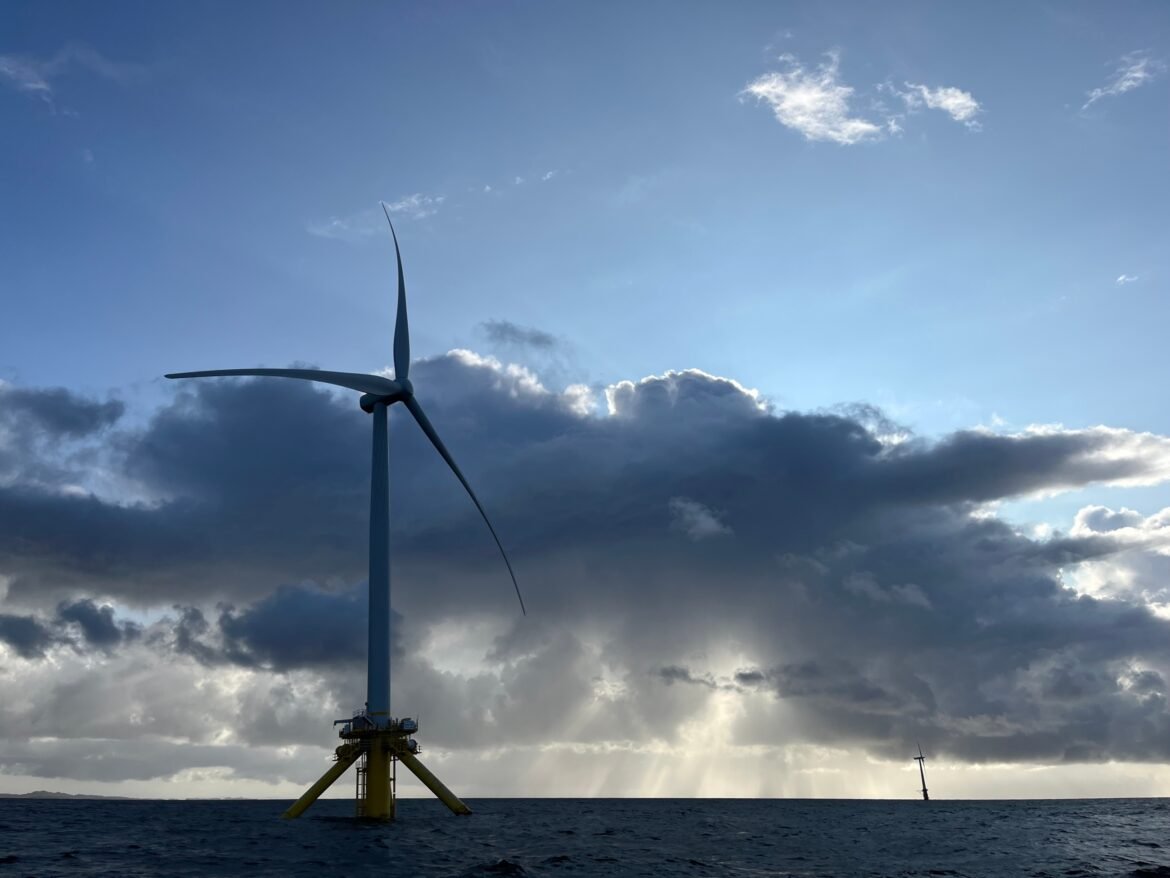
“India is not only a market — it is a solution to global climate challenges,” Støre said. “Norwegian capital and technology can help accelerate India’s green transition, while Indian scale and innovation can help bring down costs for the entire world.”

The two leaders officially elevated bilateral ties to a Green Strategic Partnership, a framework that already exists between Norway and several European allies. Under the new arrangement, both countries will establish annual ministerial-level dialogues on energy, ocean management, and climate adaptation.

Security, counter-terrorism, and space cooperation

Beyond green issues, Modi and Støre addressed several geopolitical files. Modi thanked Norway for its “steadfast solidarity” following a terror attack in Pahalgam, Kashmir, last year that killed seven tourists, including two European nationals.

“There can be no justification for terrorism in any form,” Modi said. “India and Norway agree that the fight against terror must be comprehensive and uncompromising.”

Both prime ministers also reiterated their support for diplomatic solutions to ongoing conflicts. “Military conflicts cannot be resolved without dialogue and diplomacy,” Støre told reporters. “That principle guides our approach to Ukraine and the Middle East.”

Two separate memorandums of understanding were signed after the press conference:

· A space cooperation agreement between the Indian Space Research Organisation (ISRO) and the Norwegian Space Agency, focusing on satellite-based climate monitoring and Arctic-Indian Ocean data sharing.
· A digital development pact under which India will offer its open-source public infrastructure platforms — including digital identity and payment systems — to developing nations, with technical support from Norway.

A historic gap filled

Monday’s visit ends a 43-year gap in high-level travel between New Delhi and Oslo. The last Indian prime minister to visit Norway was Indira Gandhi in 1983. Since then, trade has grown from negligible levels to nearly $30 billion in Norwegian investment in Indian equities, according to official data cited by Støre’s office.

Modi is scheduled to remain in Oslo through Tuesday, where he will join Støre and other Nordic heads of government for the third India-Nordic Summit. Leaders from Denmark, Iceland, Finland, and Sweden will also attend.

“This is not just about India and Norway,” Modi said as he closed the press conference. “It is about how the Global South and the Nordic region can work together for a stable, green, and prosperous future.”

May 18, 2026 0 comments
0 FacebookTwitterPinterestEmail
Media Freedom

Norway Celebrates Constitution Day with Record-High Turnout and Joyful Unity

by Nadarajah Sethurupan May 17, 2026
written by Nadarajah Sethurupan

OSLO — Under a brilliant spring sky, hundreds of thousands of Norwegians poured into the streets this morning as the nation marked its 212th Constitution Day, transforming the capital into a living, breathing sea of red, white and blue.

While the 17th of May is celebrated worldwide as a symbol of peaceful democracy and children’s joy, this year’s festivities carried an extra layer of emotion. With record-high attendance reported in Oslo, Bergen, and Trondheim, commentators are calling 2026 a “return to full, unapologetic togetherness” after years of fragmented post-pandemic routines.

The Royal Wave and a Nation’s Smile

At 11:00 AM sharp, King Harald V, Queen Sonja, Crown Prince Haakon, and Crown Princess Mette-Marit appeared on the royal palace balcony, greeted by a roar that echoed down Karl Johans gate. The King, dressed in a classic dark bunad, addressed the crowd briefly before the main children’s parade.

True to tradition, the children’s parade (barnetoget) stole the show. Over 120 schools from the Oslo region marched past the palace, with flags, brass bands, and hand-painted banners reading “Future of Peace” and “Our Earth, Our Responsibility.”

Across the country, the day began as early as 6:00 AM with traditional champagne breakfasts and towering platters of shrimp, smoked salmon, and scrambled eggs. Bunad sales have reportedly surged 18% this year, with many young adults wearing heirloom costumes for the first time.

In Volda, a small village in Møre og Romsdal, neighbours organised a spontaneous “long table breakfast” that stretched 400 metres down the main road. In Oslo’s Grønland district, a multicultural parade highlighted how new Norwegians are embracing – and enriching – the day’s traditions.

No Accidents, No Politics – Just Joy

Police reported an unusually calm and festive atmosphere nationwide. “The only incidents we’ve seen are too many children asking for extra ice cream,” Oslo Police spokesperson joked.

Notably, political party stands were sparse, as organizers doubled down on the day’s non-partisan spirit. Instead, focus fell on school choirs, traditional folk dancers, and the iconic rush to Vigeland Park for games and picnic blankets.

As the sun sets late over the fjords, the celebration will shift to quieter gatherings – barbecues, boat trips, and the final, tired wave of small flags being tucked into bedside drawers.

But for now, Norway stands still. Not in silence – but in the rare, loud, beautiful chaos of a people who remember exactly why they are free.

Gratulerer med dagen, Norge.

May 17, 2026 0 comments
0 FacebookTwitterPinterestEmail
Asia and Norway

Historic First in 43 Years: Modi’s Oslo Visit Set to Redefine India-Norway Partnership

by Nadarajah Sethurupan May 15, 2026
written by Nadarajah Sethurupan

OSLO, May 16 – Norway is preparing to welcome Indian Prime Minister Narendra Modi this Monday for a historic two-day visit that promises to propel the Indo-Norwegian partnership into a new era. The first official visit by an Indian Prime Minister to Norway in 43 years, taking place on May 18–19, comes at a time when bilateral trade has more than doubled in a decade and a landmark free trade agreement is already delivering tangible results.

In a powerful symbolic gesture, Støre will personally welcome Modi at Gardermoen Airport, departing from standard protocol and setting the tone for what the Norwegian government has described as a “strong, vibrant, and strategically important relationship.”

The visit takes place just over six months after the India-EFTA Trade and Economic Partnership Agreement (TEPA) — covering Norway, Iceland, Liechtenstein, and Switzerland — entered into force on October 1, 2025. That agreement has already reshaped market access, with Norwegian salmon now enjoying zero-tariff entry into the Indian market, and it provides the foundation for an ambitious new phase of economic cooperation.

“India, Norway and the EFTA countries agreed a free trade agreement in 2024 that entered into force last year. This was an important breakthrough for cooperation, and creates significant opportunities for both Norwegian and Indian business and industry,” .

PM Modi (May 04, 2022) met his Norwegian counterpart Jonas Gahr Store in Copenhagen.

Economic cooperation will take centre stage on Monday when the Norway-India Business and Research Summit convenes at Oslo City Hall. Trade and Industry Minister Cecilie Myrseth will lead the high-level summit, which brings together corporate leaders from both nations to deepen collaboration in trade, investment, clean energy, maritime industries and emerging technologies.

Crown Prince Haakon will join Prime Ministers Modi and Støre at a flagship business roundtable where approximately 30 commercial Memoranda of Understanding are expected to be signed, underscoring the rapid conversion of political goodwill into concrete business outcomes.

The India-Norway economic corridor has already reached substantial scale. India’s bilateral trade in goods and services with the Nordic countries now stands at US$ 19 billion. More than 700 Nordic companies operate in India, while around 150 Indian companies have established a presence in the Nordic region — figures that both sides expect to rise significantly as the TEPA framework matures.

On Tuesday, the focus will widen to the entire Nordic region as Oslo hosts the 3rd India-Nordic Summit. Modi will be joined by Prime Minister Støre, Prime Minister Mette Frederiksen (Denmark), Prime Minister Petteri Orpo (Finland), Prime Minister Kristrún Frostadóttir (Iceland) and Prime Minister Ulf Kristersson (Sweden) for wide-ranging discussions on deepening cooperation across multiple strategic fronts.

According to sources the summit agenda will cover:

· Green transition and renewable energy, including green hydrogen, smart grids and carbon capture

· Technology and innovation: digitalisation, cybersecurity and artificial intelligence

· Blue economy and maritime cooperation

· Arctic and polar research

· Defence and space collaboration

· Global governance reforms

A key deliverable expected from the visit is the signing of a Memorandum of Understanding on health and digital public goods, with a particular focus on trilateral cooperation for developing countries. The agreement is designed to combine India’s globally recognised expertise in digital public infrastructure — including its Aadhaar identity and UPI payment systems — with Norway’s strengths in health technology and development cooperation, creating scalable solutions for nations in the Global South.

A joint India-Norway statement is also expected to be issued, emphasising shared commitments on climate change, the green energy transition, the blue economy, scientific collaboration in the Arctic, and counter-terrorism cooperation.

The visit caps an extraordinary year of diplomatic intensity. In the past twelve months alone, six ministerial visits have taken place — three from each side — spanning petroleum, shipping, finance, fisheries, digitalisation and health. Prime Minister Modi will also call on King Harald V and Queen Sonja in a traditional audience that further symbolises the warmth of bilateral ties.

As Oslo rolls out the red carpet for the first visit of an Indian Prime Minister in more than four decades, the expected outcomes are clear: a strengthened India-Norway partnership built on shared democratic values, open markets, and a mutual determination to tackle the defining challenges of the age — from climate change to digital transformation.

The two-day programme will not only elevate bilateral ties but also inject fresh strategic energy into India’s broader relationship with the Nordic region, creating a blueprint for technology-driven, sustainable economic cooperation that stands as a model for Europe-India partnerships in the years ahead.

May 15, 2026 0 comments
0 FacebookTwitterPinterestEmail
Defence

Malaysia condemns Norway over revoked missile export license

by Nadarajah Sethurupan May 14, 2026
written by Nadarajah Sethurupan

Malaysian Prime Minister Anwar Ibrahim criticized Norway on Thursday after Oslo revoked an export license tied to the delivery of Naval Strike Missile systems intended for Malaysia’s military modernization program.

“I conveyed Malaysia’s vehement objection in a telephone conversation with Prime Minister Jonas Gahr Store regarding Norway’s unilateral and unacceptable decision to revoke the export license for the Naval Strike Missile (NSM) system and its associated launcher systems, ostensibly to protect Norway’s security,” he said on the US social media platform X.

Norway reportedly justified the move on national security grounds, a rationale Anwar described as “unilateral and unacceptable.”

“Malaysia has honored every obligation under this contract since 2018: scrupulously, faithfully and without equivocation,” Anwar said. “Norway, it appears, has not felt compelled to extend us the same courtesy and demonstration of good faith.”
The dispute centers on Malaysia’s acquisition of the NSM anti-ship missile system as part of the country’s Littoral Combat Ship (LCS) modernization program, a key component of Kuala Lumpur’s long-term naval strategy.

Anwar warned that the cancellation could significantly disrupt Malaysia’s defense readiness and alter broader regional security dynamics.

“I made it plain that this decision will have grave consequences for Malaysia’s defense operational readiness and the Littoral Combat Ship modernization program,” he said. “It will undoubtedly carry broader ramifications for the regional balance.”
The Malaysian leader also questioned the reliability of European defense suppliers more broadly, suggesting the move could undermine trust in future strategic partnerships.

“Signed contracts are solemn instruments. They are not confetti to be scattered in so capricious a manner,” Anwar said. “If European defense suppliers reserve the right to renege with impunity, their value as strategic partners flies out the window.”

May 14, 2026 0 comments
0 FacebookTwitterPinterestEmail
Norwegian Aid

Romania secures nearly EUR 600 Mil in new EEA and Norway Grants funding period

by Nadarajah Sethurupan May 14, 2026
written by Nadarajah Sethurupan

Romania will receive nearly EUR 600 million under the new financing cycle of the EEA and Norway Grants, following the signing of new cooperation agreements with Norway, Iceland, and Liechtenstein. The funding will support projects ranging from green transition and innovation to social cohesion, democratic institutions, and civil society development.

Romanian investments and European projects minister Dragoș Pîslaru, Norwegian foreign minister Espen Barth Eide, and Iceland’s ambassador to Romania, Friðrik Jónsson, signed the agreements during an official ceremony held in Bucharest on Wednesday, May 13.

According to the Romanian Ministry of Investments and European Projects, the newly signed memorandums establish the next funding period for the EEA and Norway Grants mechanisms and open access to more than EUR 596 million in non-repayable financing for Romania.

“Romania is continuing its strategic partnership with Iceland, Liechtenstein, and Norway through the new EEA and Norway Grants. Since joining these cooperation frameworks, our country has benefited from nearly EUR 1 billion in non-repayable funding. This money did not remain on paper, but reached where it truly matters: it improved the lives of people, communities, schools, and institutions. The new grants worth approximately EUR 600 million will play an equally important role for us,” said minister Dragoș Pîslaru.

The new funding cycle will finance nine programs targeting key sectors for Romania’s long-term development, including climate action, innovation, social cohesion, culture, democratic governance, the rule of law, and bilateral cooperation. Romanian authorities said the programs are designed both to continue successful initiatives from previous funding cycles and to pilot innovative new measures.

Support for civil society will remain one of the priorities of the grants mechanism. The program dedicated to Romanian civil society organizations will be managed by the Foundation for the Development of Civil Society, selected by donor states through a competitive process.

The ceremony was attended by representatives of Romanian institutions as well as more than 40 partner institutions from Norway and Iceland that will contribute to implementing the funded programs.

May 14, 2026 0 comments
0 FacebookTwitterPinterestEmail
Newer Posts
Older Posts

Norwegian Nobel Prize 2024

101207 The Norwegian Nobel Committee has decided to award the Nobel Peace Prize for 2024 to Japan’s Hiroshima bomb survivor group Nihon Hidankyo.

Special Interest

  • Africa and Norway
  • Asia and Norway
  • Asylum
  • China and Norway
  • Corruption in Norway
  • Crimes
  • Defence
  • Diplomatic relations
  • Economics
  • Environment
  • Farming
  • Killing
  • Media Freedom
  • Middle East and Norway
  • NATO and Norway
  • Nobel Peace Prize
  • Norwegian Aid
  • Norwegian American
  • Oil & Gas
  • Peace Talks
  • Politics
  • Racism in Norway
  • Religion
  • Russia and Norway
  • Royal House
  • Science
  • Sex scandal
  • Sports
  • Spy War
  • Srilanka and Norway
  • Svalbard
  • Terrorist
  • Taiwan and Norway
  • Video clips

Follow Us

Recent Posts

  • Oman and Norway hold political consultations

    June 12, 2026
  • Bulgaria-Norway Relations Celebrated in Stavanger

    June 7, 2026
  • Norway Calls for EU-Russia Dialogue as Zelensky’s Stunt Letter Seeks Political Photo Op

    June 5, 2026
  • Norway oil companies,  Ireland’s unions agree wage deal

    June 5, 2026
  • Syria, Norway discuss cooperation in mine clearance

    June 5, 2026
  • Norwegian Offshore Wind welcomes Ming Yang as member

    May 31, 2026

Social Feed

Social Feed

Editors’ Picks

Norway opens market for Sri Lankan fish exports...

May 13, 2016

Sri Lanka – Nordic Business Council holds discussions...

May 15, 2016

Good governance to Sri Lanka

May 15, 2016

Shock and Joy in Sri Lanka – Erik...

May 15, 2016

Sri Lanka-Norway plenty of new opportunities for business–...

May 15, 2016

NORWAY NEWS is an online news site, written in English, dedicated to Norwegian affairs at home and abroad. Norway News.com is published online. It is a daily online newspaper in existence since May, 2003. The site is run by an Independent Journalist.

Facebook Twitter Youtube

Useful Links

    • Work With Us
    • Contact Us
    • Collaboration
    • Data Collection
    • Workplace
    • Adverstising
    • Privacy Policy
    • International Collab
    • Feedback
    • Terms of Use
    • About Our Ads
    • Help & Support
    • Entertainment
    • News Covering
    • Technology
    • Trending Now

Politics

Syrian, Norway to boost cooperation on mine clearance
Erna to step down as Conservative Party leader in 2026
Norwegian Labour Party on re-election win

Latest Articles

Oman and Norway hold political consultations
Bulgaria-Norway Relations Celebrated in Stavanger
Norway Calls for EU-Russia Dialogue as Zelensky’s Stunt Letter Seeks Political Photo Op
Norway oil companies,  Ireland’s unions agree wage deal

Norway News 2025 . All Right Reserved. Designed and Developed by Norway News

  • Home
  • About us
  • Disclaimer
  • Contact us
NORWAY NEWS – latest news, breaking stories and comment – NORWAY NEWS
  • Home
  • About us
  • News
  • Other News
    • Africa and Norway
    • Asia and Norway
    • Asylum
    • Breaking News
    • China and Norway
    • Corruption in Norway
    • Crimes
    • Defence
    • Diplomatic relations
    • Economics
    • Environment
    • Farming
    • Featured
    • Health
    • Killing
    • Media Freedom
    • Middle East and Norway
    • NATO and Norway
    • Nobel Peace Prize
    • Norwegian Aid
    • Norwegian American
    • Oil & Gas
    • Peace Talks
    • Politics
    • Racism in Norway
    • Religion
    • Royal House
    • Russia and Norway
    • Science
    • Sex scandal
    • Sports
    • Spy War
    • Srilanka and Norway
    • Svalbard
    • Taiwan and Norway
    • Terrorist
    • Travel
    • Video clips
  • Disclaimer
  • Contact us
NORWAY NEWS – latest news, breaking stories and comment – NORWAY NEWS
  • Home
  • About us
  • News
  • Other News
    • Africa and Norway
    • Asia and Norway
    • Asylum
    • Breaking News
    • China and Norway
    • Corruption in Norway
    • Crimes
    • Defence
    • Diplomatic relations
    • Economics
    • Environment
    • Farming
    • Featured
    • Health
    • Killing
    • Media Freedom
    • Middle East and Norway
    • NATO and Norway
    • Nobel Peace Prize
    • Norwegian Aid
    • Norwegian American
    • Oil & Gas
    • Peace Talks
    • Politics
    • Racism in Norway
    • Religion
    • Royal House
    • Russia and Norway
    • Science
    • Sex scandal
    • Sports
    • Spy War
    • Srilanka and Norway
    • Svalbard
    • Taiwan and Norway
    • Terrorist
    • Travel
    • Video clips
  • Disclaimer
  • Contact us

Editor’s Picks

  • UN concern over Sri Lanka’s cases of enforced disappearances

    October 8, 2025
  • UN Human Rights Council Resolution on Sri Lanka’s Path to Reconciliation

    October 7, 2025
  • International should support Sri Lanka: Solheim

    October 4, 2024
  • Norwegian Meets Sri Lankan’s Challenges

    May 3, 2024
  • Norwegian Ambassador meets JVP in Sri Lanka

    May 2, 2024
  • “The man who didn’t run away” – Eric Solheim

    April 30, 2024

Newsletter

@2025 - All Right Reserved. Designed and Developed by Norway News