
Norway on Wednesday urged South Sudan’s leaders to engage in inclusive political dialogue as violence increases and uncertainty grows over planned elections later this year, warning the country risks further destabilization.
Speaking to journalists at the Norwegian embassy in Juba, Norwegian International Development Minister Åsmund Aukrust said South Sudan faces a “political crisis” that only its leaders can resolve, calling for dialogue “that includes everyone.”
His remarks come amid mounting concern over delays in the implementation of the country’s 2018 peace agreement, particularly key security arrangements seen as critical for credible elections.
Dr. Riek Machar, a key party to the peace agreement, has been under house arrest since March 2025 and faces treason charges in a special court in Juba.
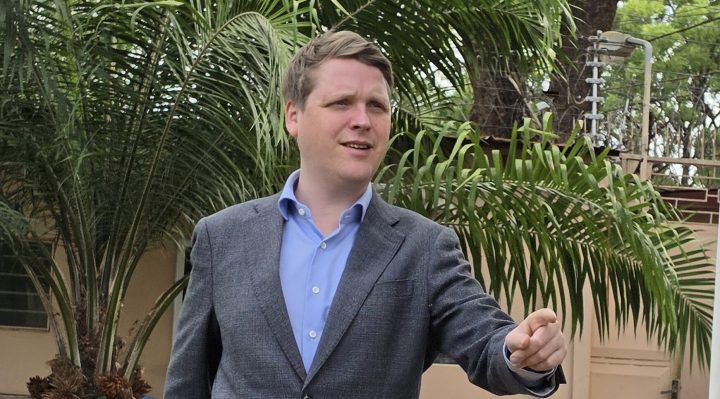
Minister Aukrust declined to assess whether general elections scheduled for December would be free and fair, saying responsibility lies with national authorities.
“The government is responsible for inclusive elections,” he said.
The minister also visited Renk, a border town with Sudan, where hundreds of thousands of refugees and returnees have fled the conflict in Sudan.
He described that war as “brutal” and called for an immediate ceasefire, full humanitarian access and renewed political talks, warning of growing regional consequences.
Local authorities and aid agencies in Renk are struggling to cope with the influx, estimated at about 900,000 people. Aukrust said he was “deeply concerned” by the scale of suffering.
“In the end, the war is about humans and enormous suffering,” he said.
South Sudan’s fragile peace rests on a 2018 agreement that ended a five-year civil war that killed an estimated 400,000 people and displaced millions.
The deal was meant to unify rival forces, draft a constitution and pave the way for elections within three years, but key provisions, especially security reforms, remain incomplete.
The transitional period has been repeatedly extended, with elections now scheduled for late 2026 after earlier delays, reflecting what international observers describe as weak political will and persistent mistrust among leaders.
Despite the peace deal, violence has continued in parts of the country, while political tensions and humanitarian crises — compounded by the war in neighboring Sudan — have raised concerns about stability.
Norway, a long-time supporter of South Sudan, said it would continue humanitarian assistance but would not interfere in the country’s electoral process.
“We can contribute, we can help, we can give advice,” Aukrust said. “But the responsibility for peace and stability lies with the South Sudanese leaders.”
During his visit, Aukrust met senior government officials, including Vice President Rebecca Nyandeng De Mabior, pressing for progress on peace implementation and civilian protection.
He also warned that attacks on humanitarian workers and civilian infrastructure violate international law, stressing that safe and unhindered access for aid operations is essential.
“South Sudan cannot afford further destabilization,” he said.
