
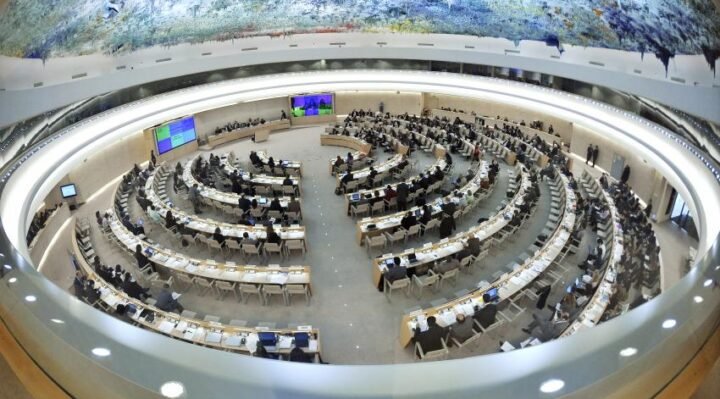
As the United Nations Human Rights Council opens its 63rd session in Geneva today, a damning new report from the Office of the High Commissioner for Human Rights (OHCHR) warns that Sri Lanka’s historic opportunity for transformative change is evaporating—and Norway, as a key international stakeholder, faces renewed pressure to leverage its influence.
Just two years after the National People’s Power (NPP) government swept to power on a wave of public anger over economic collapse and promises of deep-rooted reform, the OHCHR report (A/HRC/63/18) paints a picture of a nation battered by external shocks, struggling with a legacy of repression, and dangerously close to losing the momentum for truth, justice, and reconciliation.
While acknowledging the government’s “notable steps” to tackle corruption and pursue some high-profile cases, the report concludes that “meaningful progress remains largely absent” on accountability for the gravest international crimes committed during the country’s decades-long civil war. The NPP’s pledges to dismantle oppressive laws and build a new, inclusive Sri Lanka are at serious risk of stalling.
A Cascade of Crises
The report details how the government’s reform agenda was immediately tested by a series of devastating blows. In November 2025, Cyclone Ditwah, the deadliest storm since the 2004 tsunami, struck the island, impacting 2.2 million people, destroying over 115,000 homes, and causing an estimated $3.4 billion in damage. This was followed by economic spillovers from the conflict in West Asia, which drove up fuel and food prices, compounding the fragility of a nation already allocating a staggering 82.6% of its total revenue to debt servicing.
These shocks diverted critical resources and political attention, but the UN report stresses they do not excuse the government’s failure to deliver on its core human rights commitments.
The Repressive Machinery Remains
Perhaps the most glaring contradiction highlighted in the report is the fate of the Prevention of Terrorism Act (PTA). The NPP had promised to abolish this draconian law, but the UN report finds it is still being actively used, resulting in arbitrary arrests and prolonged detentions. In December 2025, the government published a draft “Protection of the State from Terrorism Act” (PSTA) to replace it. However, the OHCHR has expressed serious concerns that the new bill “reproduces and expands” the PTA’s most problematic features, including overbroad criminalization and risks of arbitrary detention.
“The Government continued to apply the PTA, resulting in arbitrary arrests,” the report states, urging a moratorium on its use and a repeal that complies with international human rights law.
A State of Intimidation and Violence
The report documents a pervasive climate of fear, particularly for civil society actors, journalists, and victims of the conflict. It details a “clear and continuing pattern of state surveillance, intimidation and reprisals” by military and intelligence officials. Human rights defenders, especially women in the north and east, face routine harassment, questioning about their travels to Geneva, and threats.
This atmosphere of impunity is mirrored in the country’s detention facilities. The report cites harrowing cases of torture and deaths in custody, including a 40-year-old man beaten to death at Welikada Prison for a minor drug offence. In July 2026, violent clashes at Negombo Prison left at least 32 people dead, underscoring a systemic crisis of overcrowding and violence that the government has failed to address.
Emblematic Cases and the Shadow of the Past
While some progress has been made in the judicial process for the 2019 Easter Sunday attacks—including the conviction of a former police chief and defence secretary—the UN report notes that concerns remain over due process and fair trial standards.
For the countless families of the disappeared, justice remains elusive. The report highlights the continued anguish of those seeking truth, noting that many elderly relatives are “dying without knowing what happened to their family members”. It calls for urgent legislative reform to strengthen the independence and capacity of the Office on Missing Persons (OMP).
What This Means for Norway
For Norway, this report carries particular weight. Oslo has been a longstanding contributor to peace and reconciliation efforts in Sri Lanka, serving as the facilitator of the 2002 ceasefire agreement between the Sri Lankan government and the Liberation Tigers of Tamil Eelam (LTTE). Norwegian diplomats and development aid have been deeply invested in the island’s recovery.
However, the UN report now raises difficult questions for Norwegian policymakers:
· Development Aid Leverage: Norway has channelled significant resources through multilateral institutions supporting Sri Lanka’s post-war recovery. The report’s findings of ongoing surveillance, intimidation, and lack of accountability suggest these funds may not be reaching their intended goals of fostering genuine reconciliation.
· Corporate Responsibility: Norwegian companies operating in or investing in Sri Lanka—particularly in the renewable energy, maritime, and telecommunications sectors—face increasing reputational risks if they are seen as benefiting from a system that continues to suppress human rights.
· Diplomatic Pressure: Norway’s historical role gives it unique moral authority. The report’s call for targeted sanctions and universal jurisdiction prosecutions places Oslo at a crossroads: will it continue a quiet diplomatic approach, or will it publicly condemn Sri Lanka’s backsliding?
· Humanitarian Imperative: With Cyclone Ditwah devastating the country, Norway’s humanitarian response must be paired with a demand for transparent, equitable reconstruction, particularly for the most vulnerable communities, including the Malaiyahar Tamil community in the central highlands.
International Community Urged to Act
UN High Commissioner for Human Rights Volker Türk has called on the government to seize the moment. “This Government still has an opportunity to turn the tide on decades of abuse of executive power, repressive laws and custodial violence, and entrenched impunity,” he said. “More needs to be done to end the long legacy of impunity in the country.”
The report’s recommendations are far-reaching. It urges the Sri Lankan government to impose a moratorium on the PTA, end the surveillance of activists, release military-occupied lands in the north and east, and establish a credible domestic human rights screening framework for its security forces.
Crucially, the report also calls on the international community to consider targeted sanctions, such as asset freezes and travel bans, against individuals credibly alleged to be responsible for serious human rights violations. It also encourages states to use universal jurisdiction to prosecute alleged perpetrators of international crimes.
A Defining Moment for Norway’s Foreign Policy
As the 63rd session of the Human Rights Council begins, Norway stands at a defining moment. Will Oslo leverage its historical ties, diplomatic capital, and development assistance to push Colombo toward meaningful accountability? Or will the world watch as Sri Lanka’s promised “new dawn” fades into the same darkness that has haunted the island for decades?
The report makes clear: silence is no longer an option. For Norway, the question is not whether to act, but how—and how quickly.
Note: This special report is based on the OHCHR document “Situation of human rights in Sri Lanka” (A/HRC/63/18), submitted to the Human Rights Council’s 63rd session. The author, Nadarajah Sethurupan, serves at the UN High Commission for Human Rights in Geneva and has covered Sri Lankan human rights issues for over a decade.
Further Reading:
· Full OHCHR report: A/HRC/63/18
· Norway’s involvement in Sri Lanka peace process (2002-2026)
· UN Human Rights Council 63rd session agenda and livestream
